What it does
It can print the resulting offenses as text, JSON or GitHub annotations; actual checks require a TypeSafe key.
Apps & data pipelines
Lintus turns plain-language YAML rules into Jev checks and reports threshold-crossing answers as lint offenses.
Only you can see your notes.
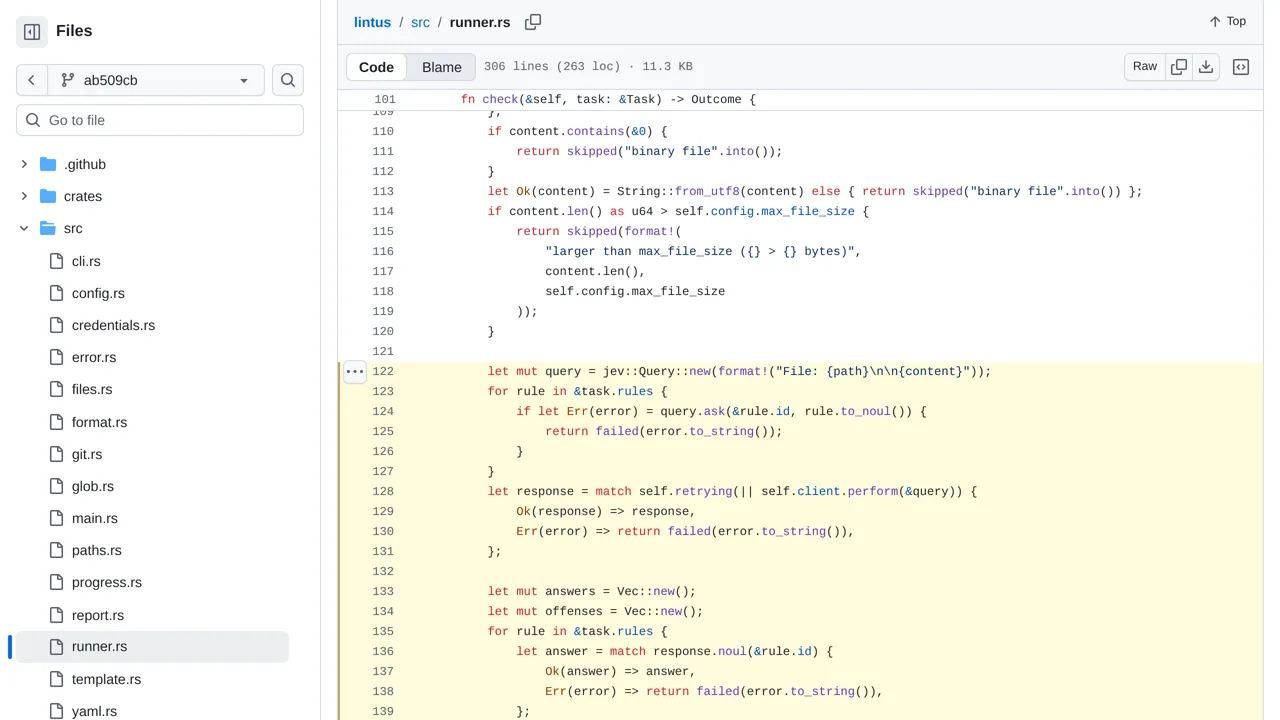
Screenshot unavailable. Open the experiment ↗
It can print the resulting offenses as text, JSON or GitHub annotations; actual checks require a TypeSafe key.
A developer can set up this tool to review your code automatically. They write custom rules as simple questions in a text file. For example, a rule could ask if a specific file contains the wrong kind of logic. The tool then checks matching files against these questions.
To answer the questions, the tool sends your code files to an outside AI service called Jev. A developer must provide an access key that connects the tool to Jev. The service calculates if a file breaks a rule, and the tool prints a warning for any violations.