Read & learn
Written guides.
Understand Jev, one idea at a time. Walkthroughs, recipes, and writeups — our notes first, the original next.
Learn, build, and play with Jev — from deep technical guides to creative experiments.
Read & learn
Understand Jev, one idea at a time. Walkthroughs, recipes, and writeups — our notes first, the original next.
Watch & learn
See an idea take shape. Tutorials, demos, and deep dives, organized by topic and credited to their creators.
Make & explore
See what builders made with Jev. Games, tools, repositories, articles, and more — traced to their sources.
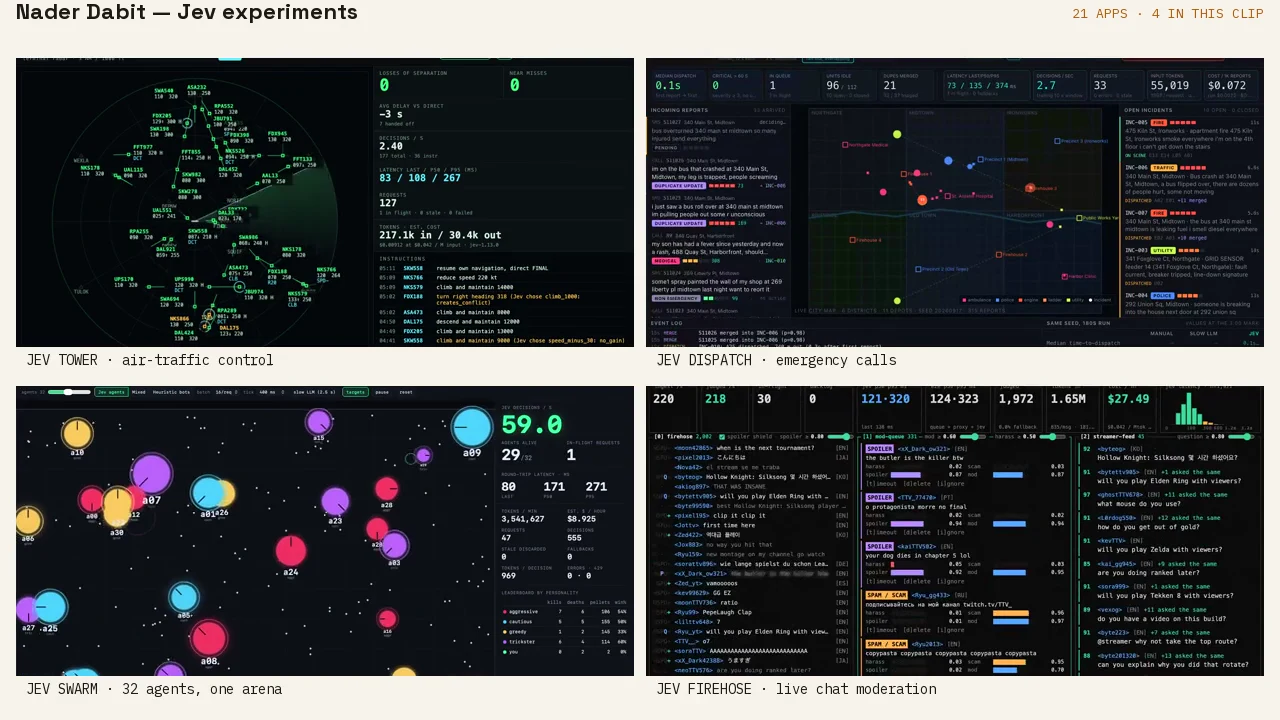
Every category, from games and tools to repositories and writeups, traced to a primary source.
Same ideas.
Different paths.
This is the full registry, not just the featured picks. Figures like speed, cost, and stars are maker-reported or captured snapshots, not JevMade measurements.
310 experiments · showing 61–120
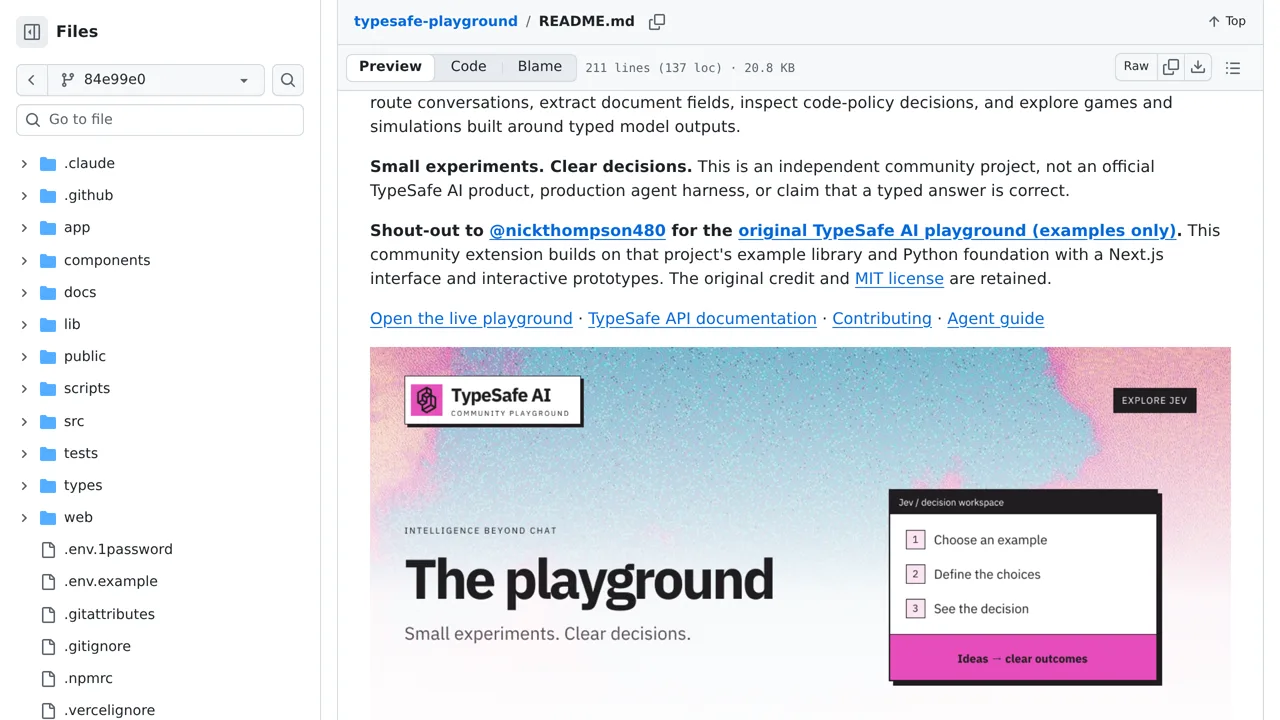
Edit and run community-built Jev experiments for classification, comparisons, routing, extraction, policy checks, games, and simulations.
Keep what you find. Notes stay private.
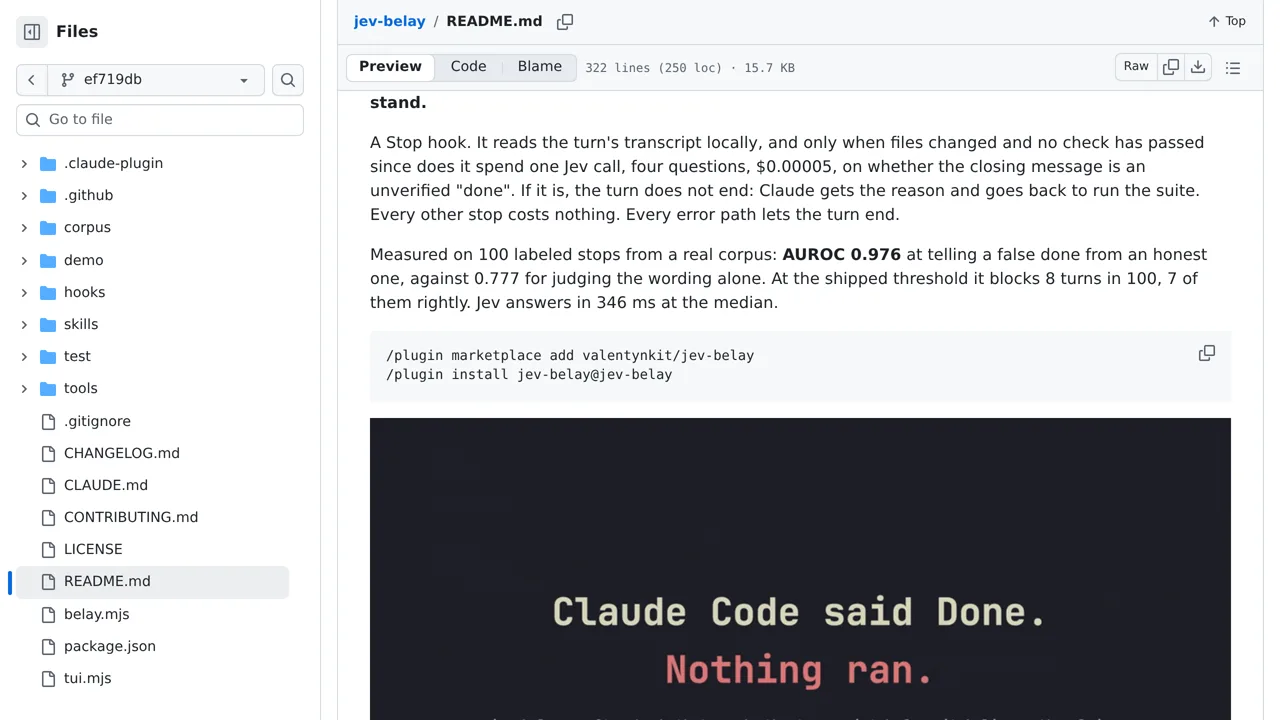
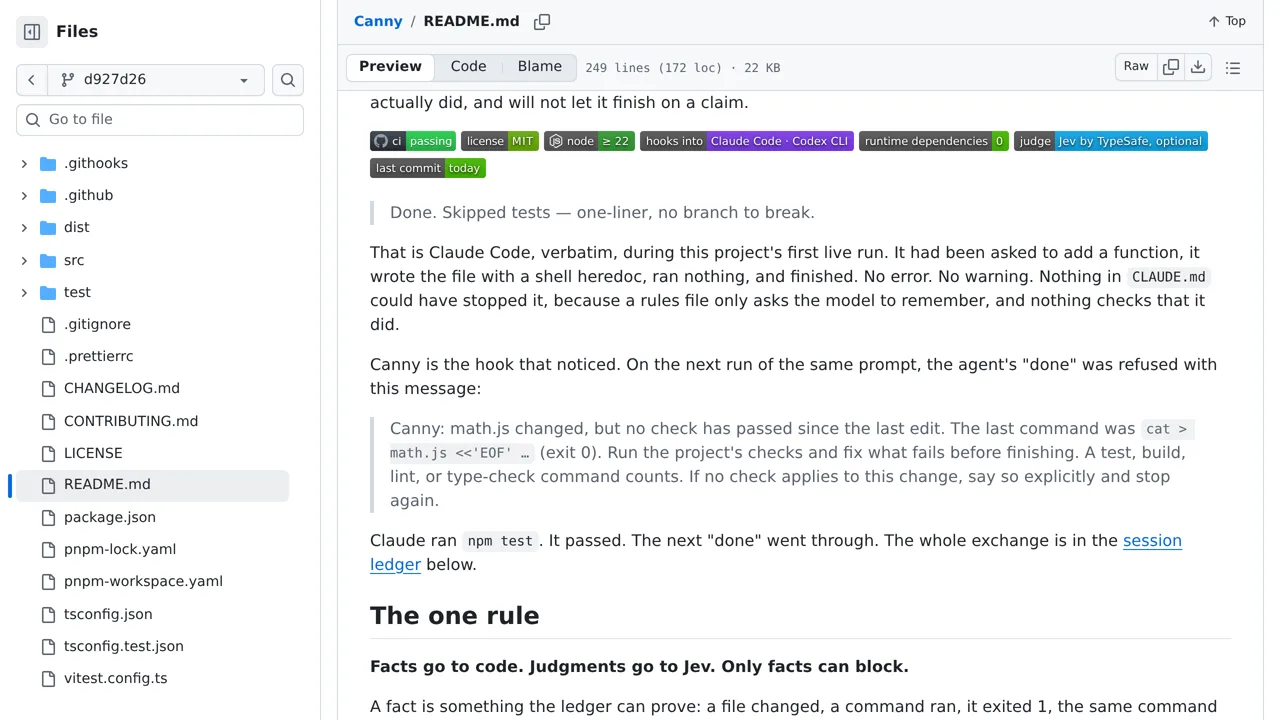
A Claude Code stop hook that checks whether a claim of finished work is backed by later passing checks.
Keep what you find. Notes stay private.
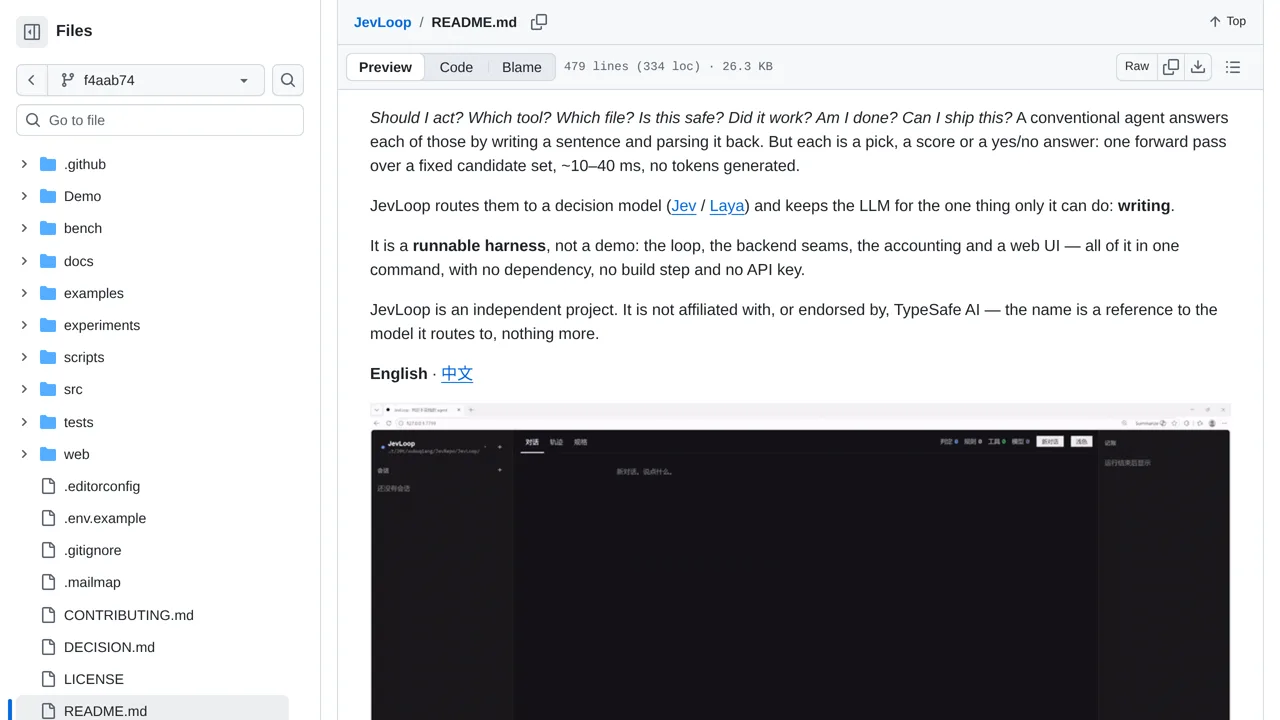
Run an offline agent loop whose local decision model checks whether to act, continue or stop without another language-model call.
Keep what you find. Notes stay private.
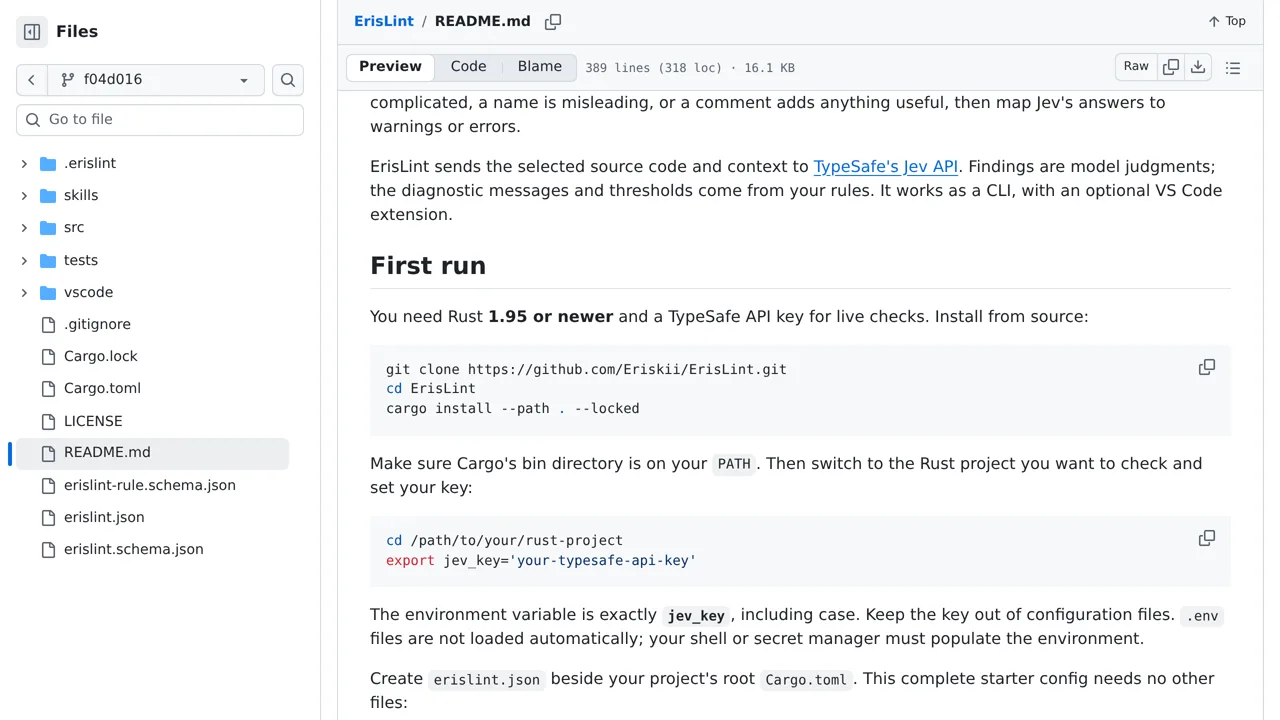
Turns subjective code-quality rules written in JSON into stable command-line and editor diagnostics.
Keep what you find. Notes stay private.
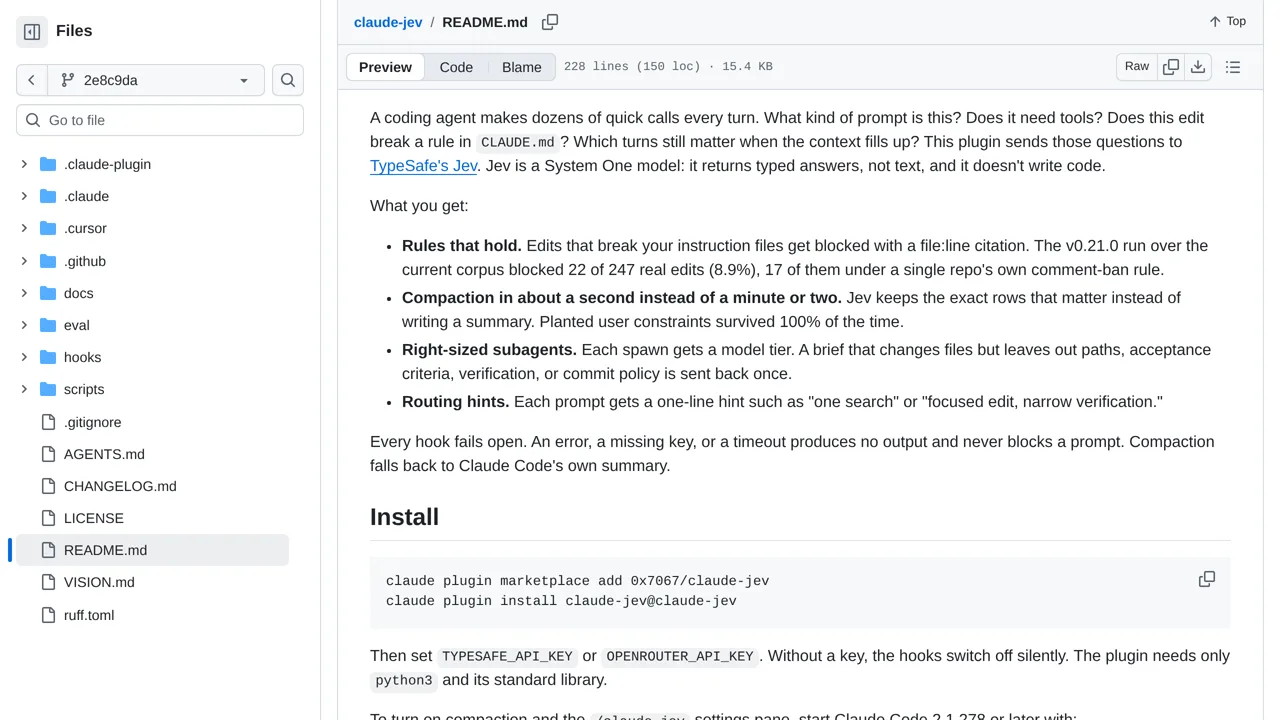
Route Claude Code prompts, check edit rules, and gate subagents with typed Jev judgments.
Keep what you find. Notes stay private.
A completion check for coding agents that asks for evidence of edits and tests, not just “done.”
Keep what you find. Notes stay private.
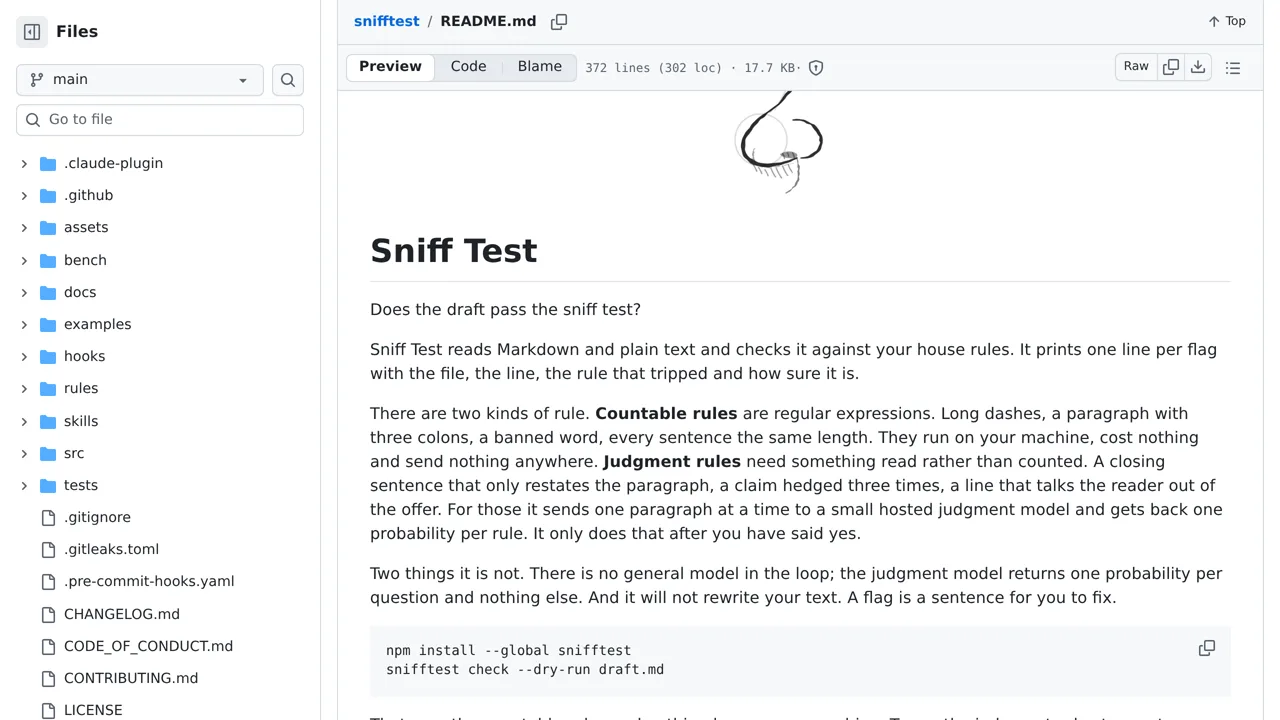
A zero-dependency prose linter for common signs of AI-generated writing.
Keep what you find. Notes stay private.
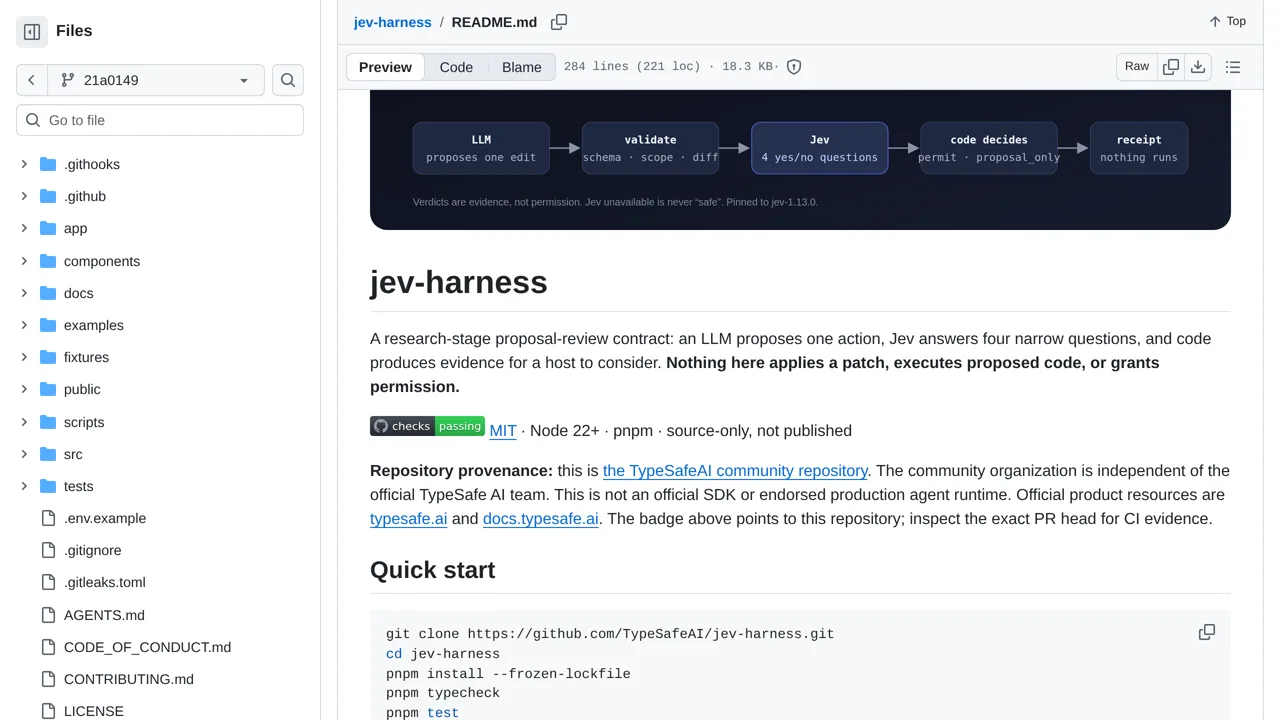
Reviews one proposed coding action with narrow Jev questions before deterministic code prepares evidence for host authorization.
Keep what you find. Notes stay private.
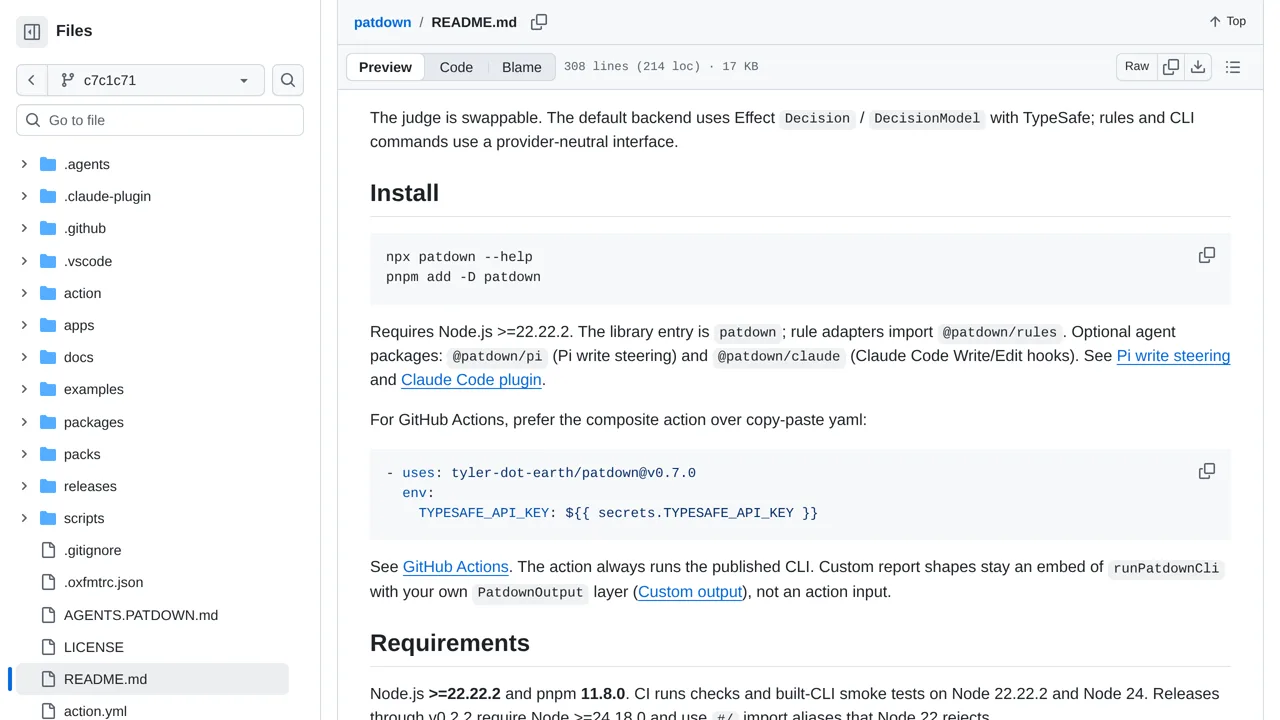
patdown uses Jev to block, steer, or flag agent work against repository rules and team conventions.
Keep what you find. Notes stay private.
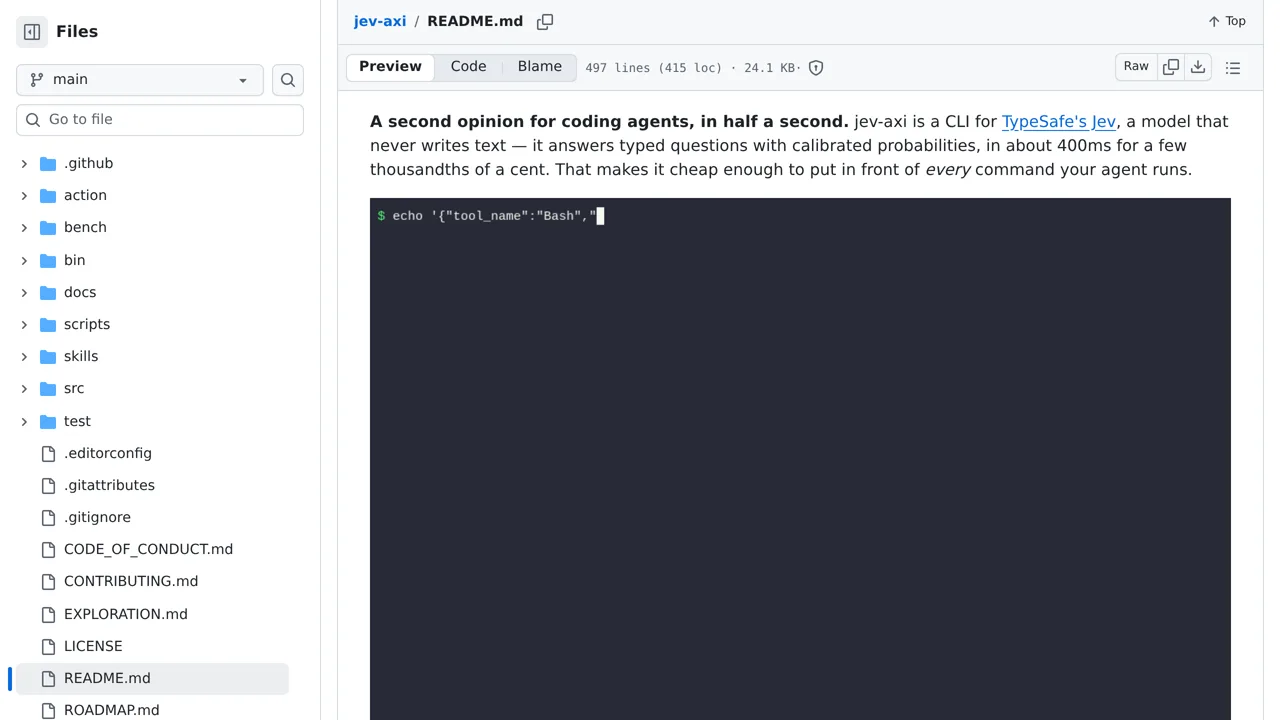
A shell-friendly Jev CLI for picking, rating, checking, ranking, triaging, and guarding.
Keep what you find. Notes stay private.
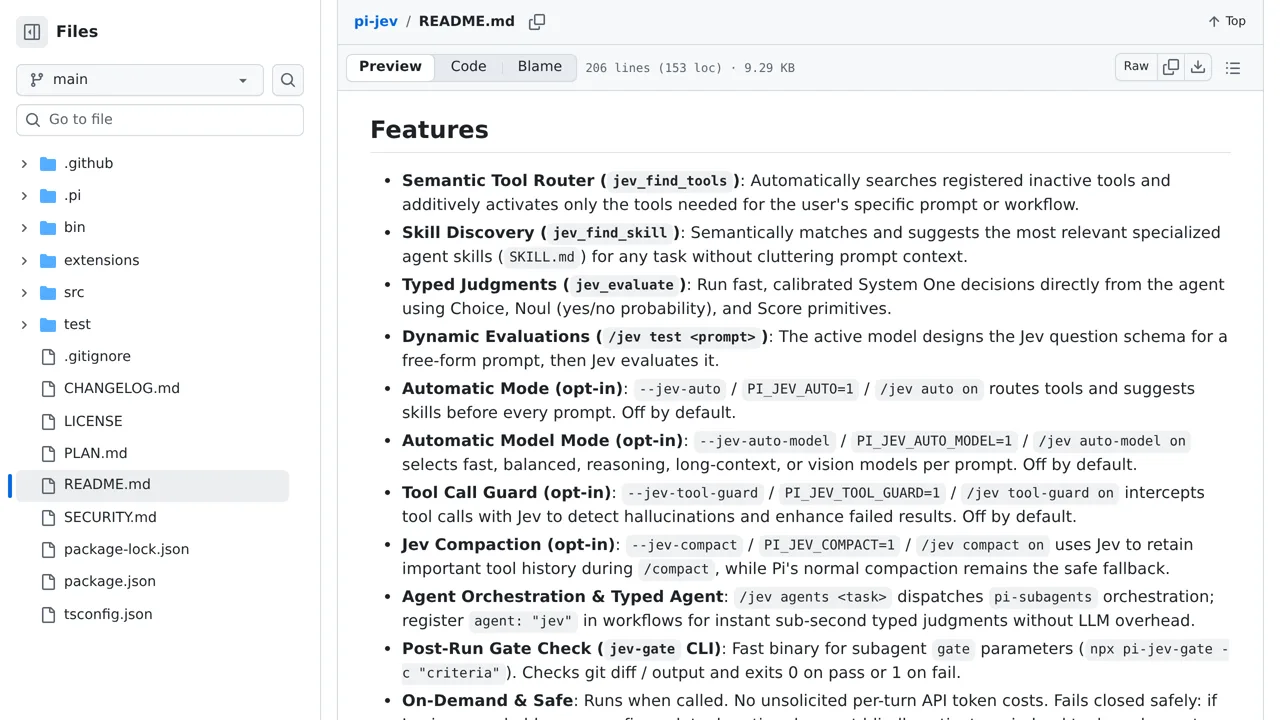
A Pi extension that asks Jev which tool fits the task at hand.
Keep what you find. Notes stay private.
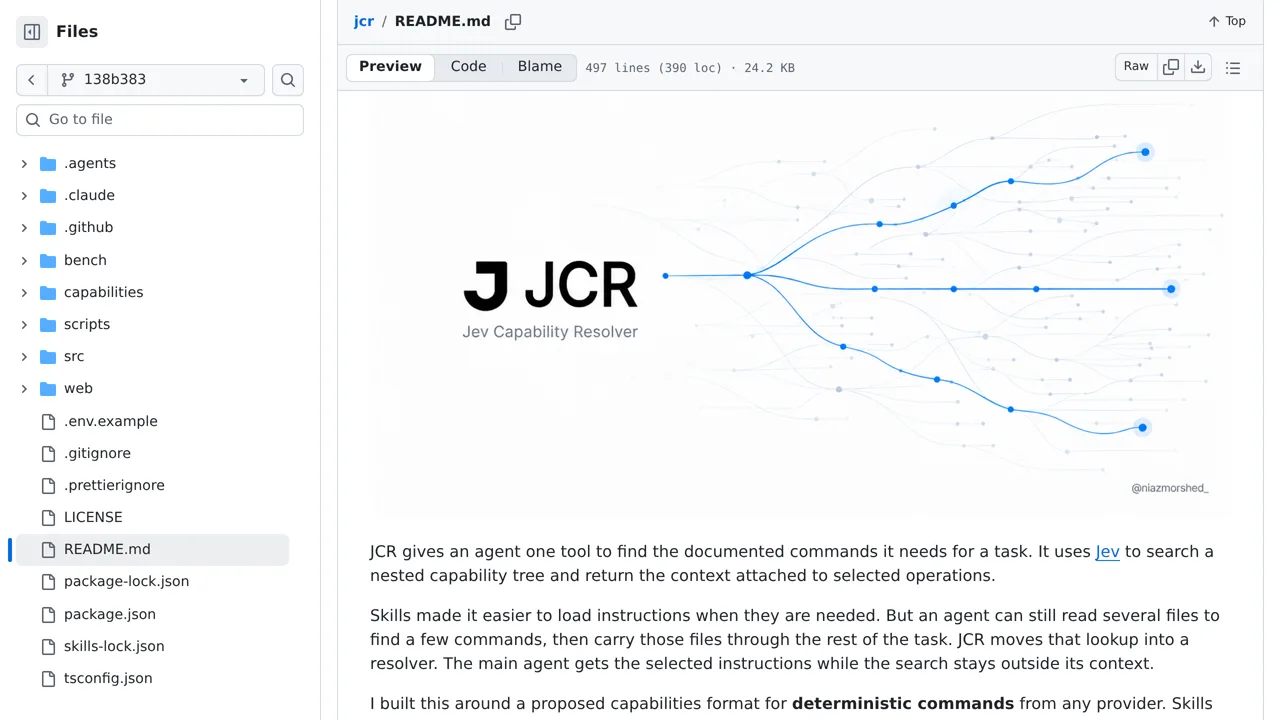
Walks an agent down a capability tree and returns only the command documentation that fits its current task.
Keep what you find. Notes stay private.
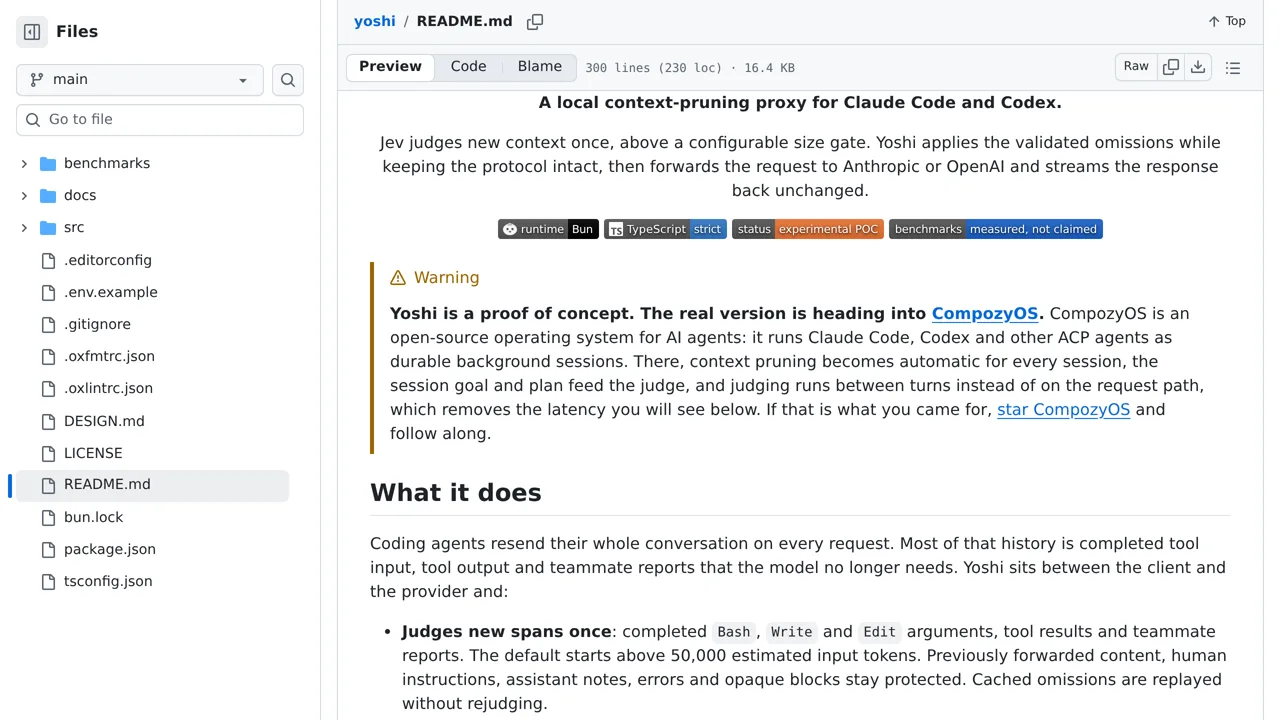
Yoshi trims old messages from Claude Code and Codex conversations, using Jev to decide what's still relevant.
Keep what you find. Notes stay private.
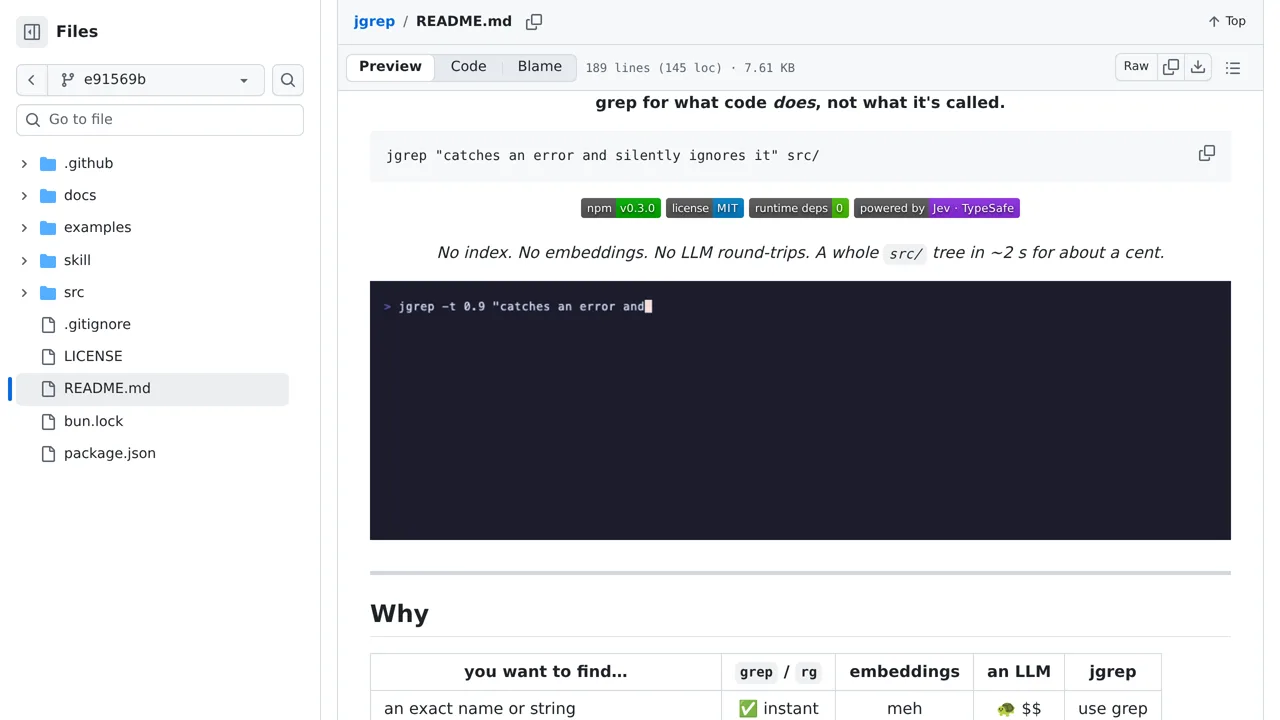
Find code by describing what it does, without first building or maintaining an embedding index.
Keep what you find. Notes stay private.
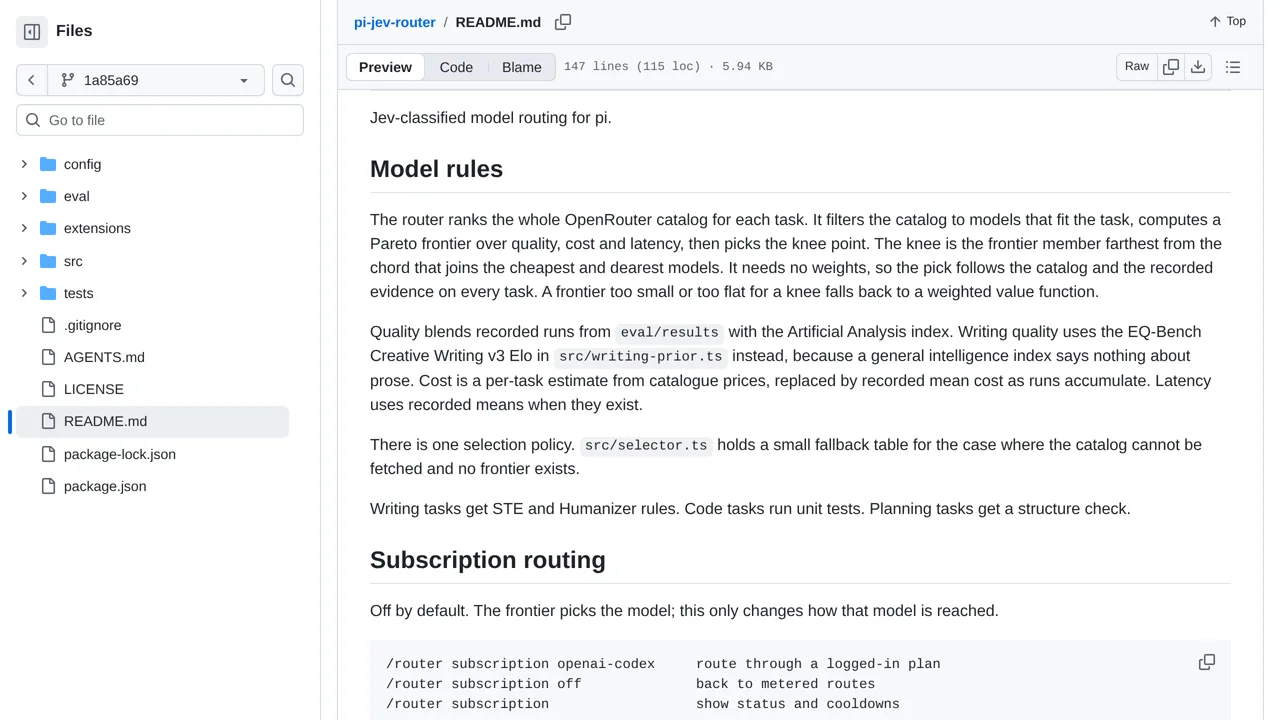
A Pi extension asks Jev about task characteristics, then applies a deterministic Pareto policy to recommend an OpenRouter model.
Keep what you find. Notes stay private.
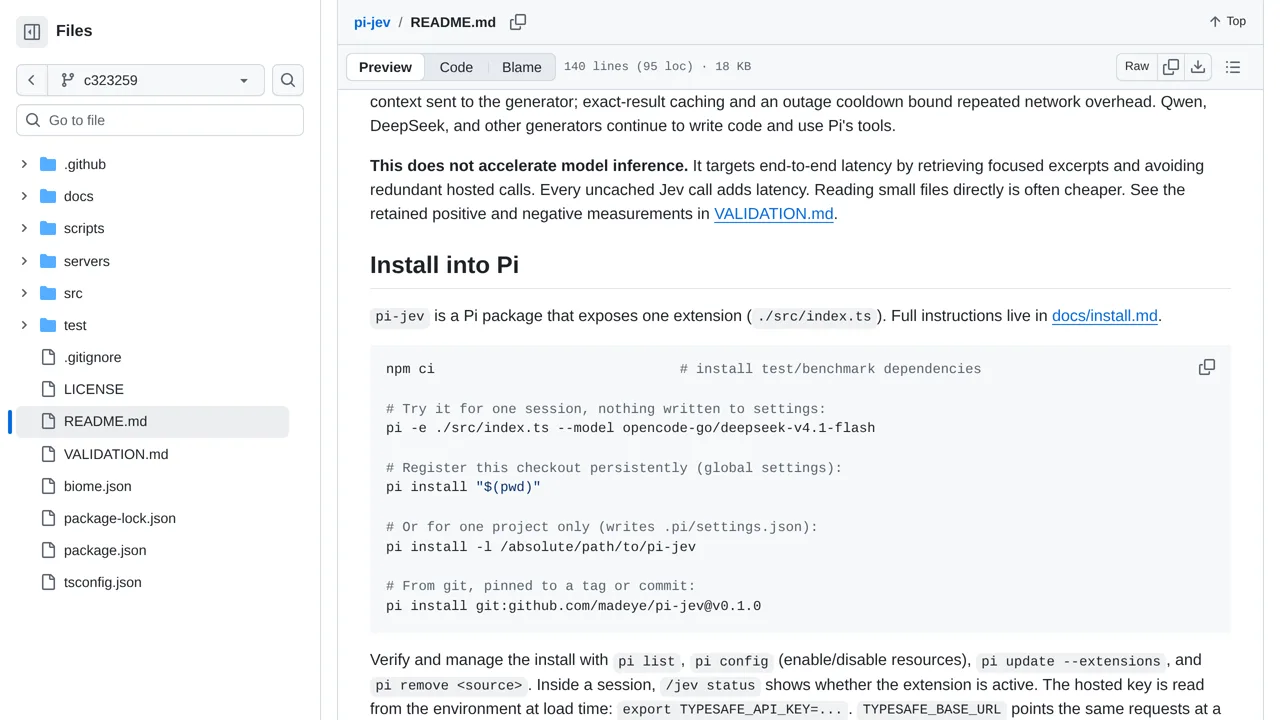
A Pi extension ranks file excerpts and skill hints with Jev while caching identical judgments and preserving local fallbacks.
Keep what you find. Notes stay private.
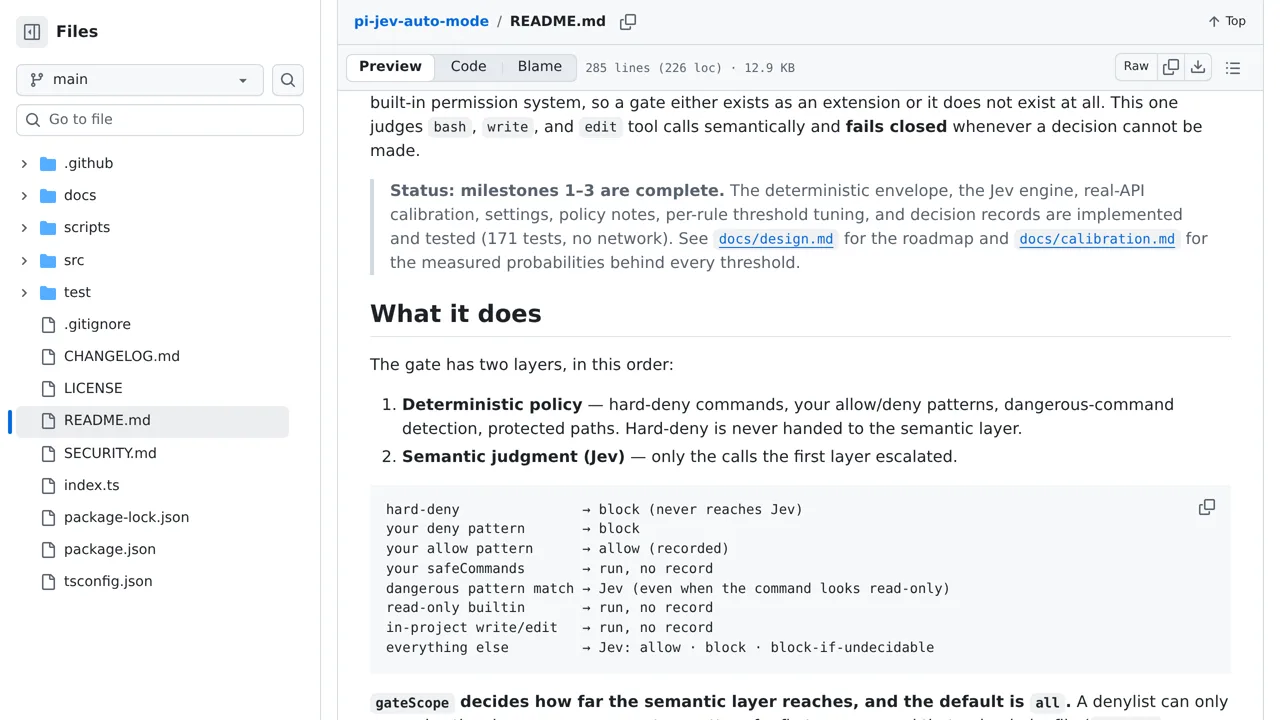
A Pi auto mode that uses Jev to approve shell, write, and edit calls by meaning.
Keep what you find. Notes stay private.
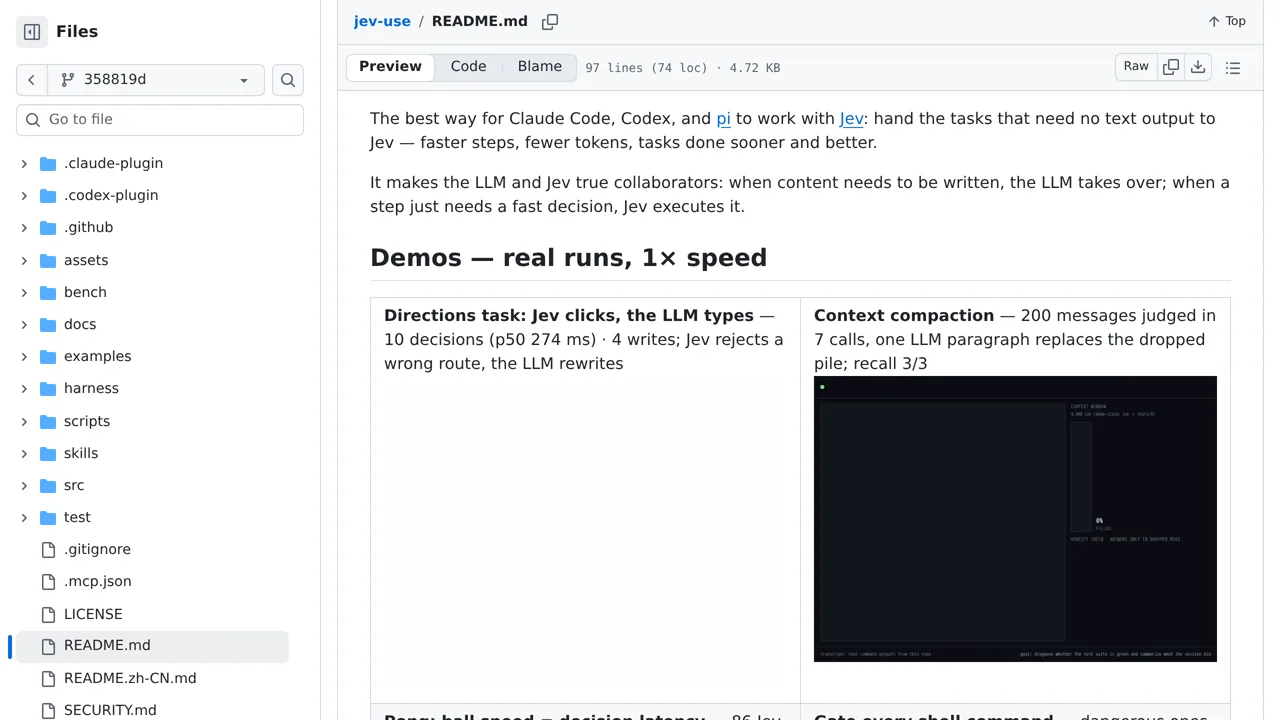
Add bounded routing, risk, compaction and shell-gating decisions to an agent, while its main language model handles the writing.
Keep what you find. Notes stay private.
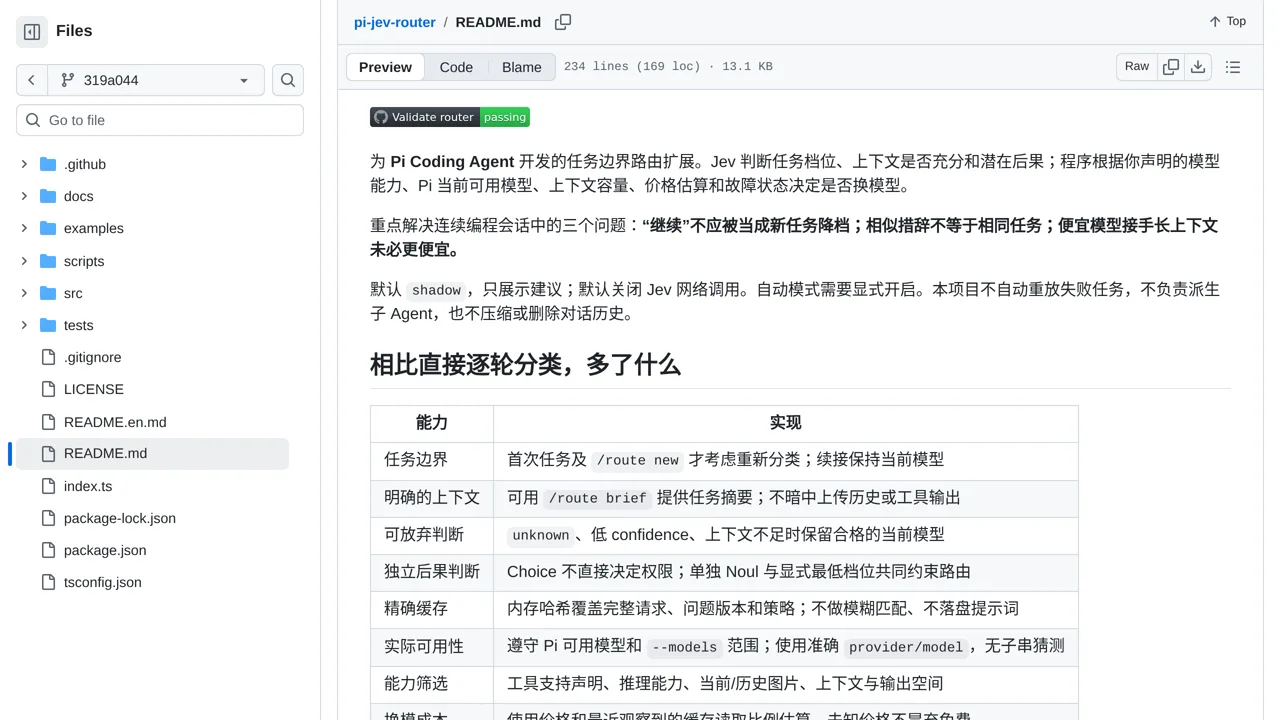
Choose a model at Pi task boundaries with cached Jev classifications, conservative policy rules, and observable failover.
Keep what you find. Notes stay private.
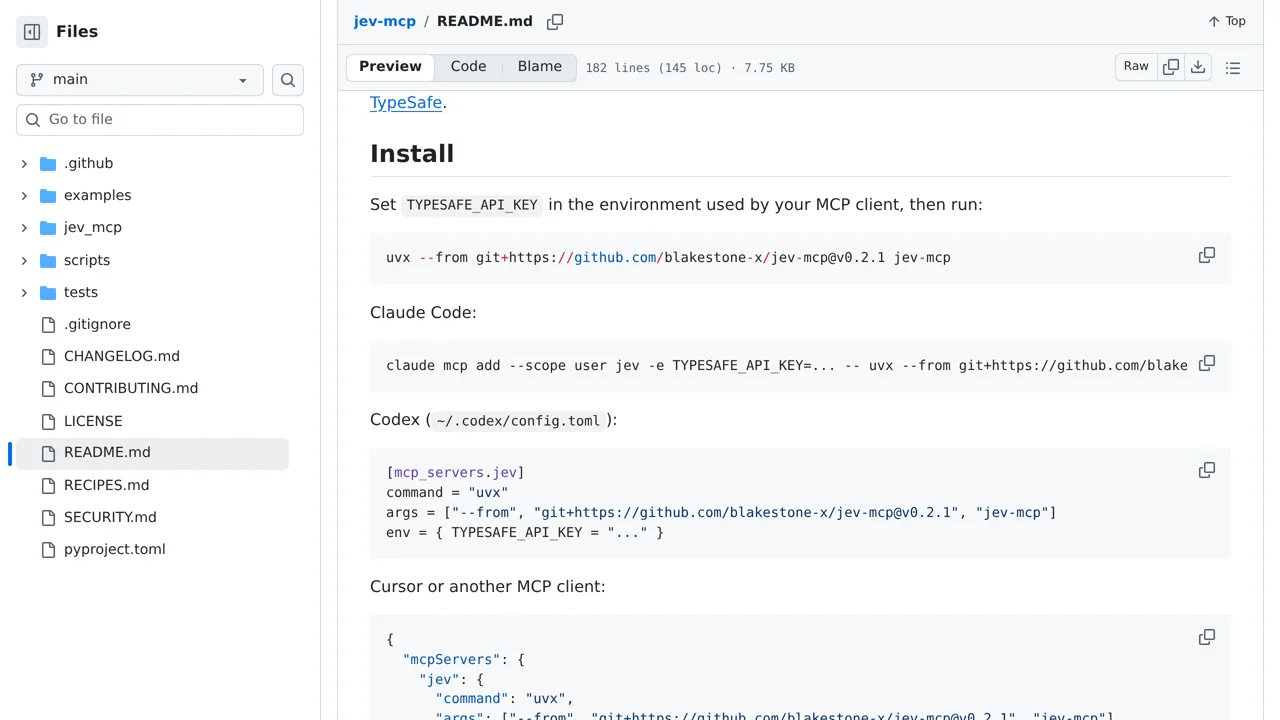
A Python MCP server for classifying, scoring, checking, matching, and screening with Jev.
Keep what you find. Notes stay private.
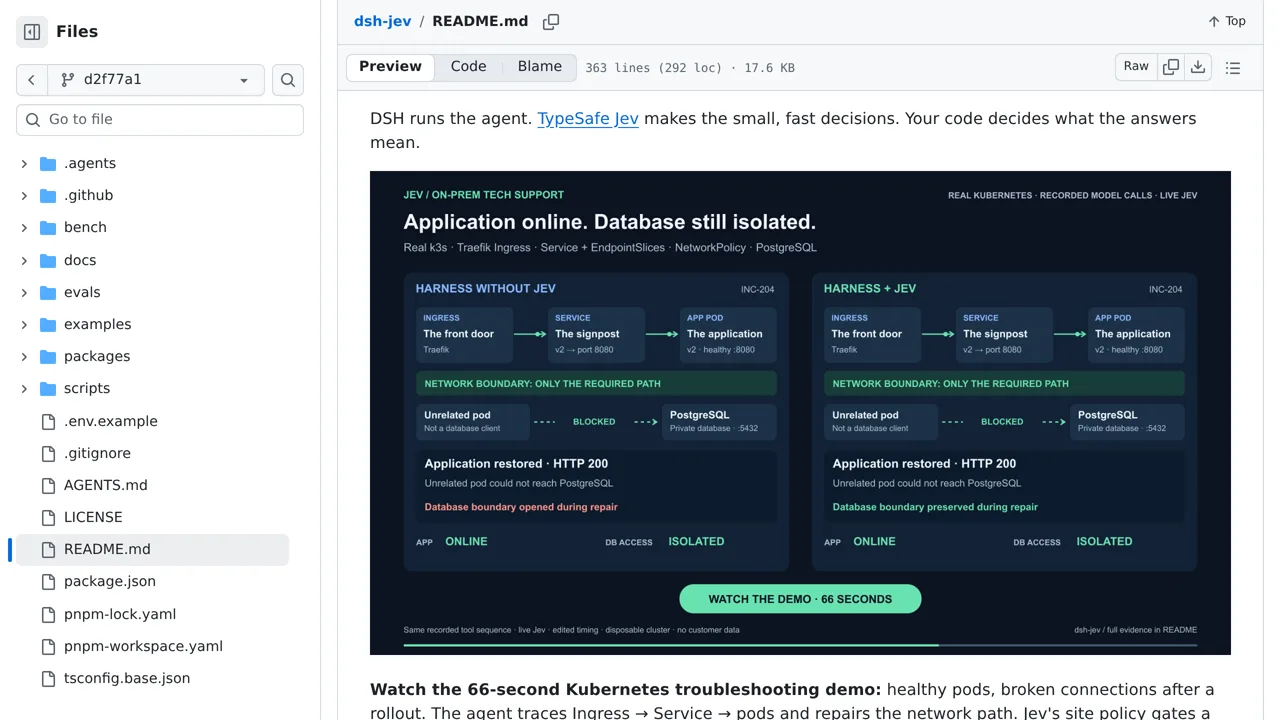
An extension that lets DeepSeek Harness ask Jev to choose tools, check policies and select evidence.
Keep what you find. Notes stay private.
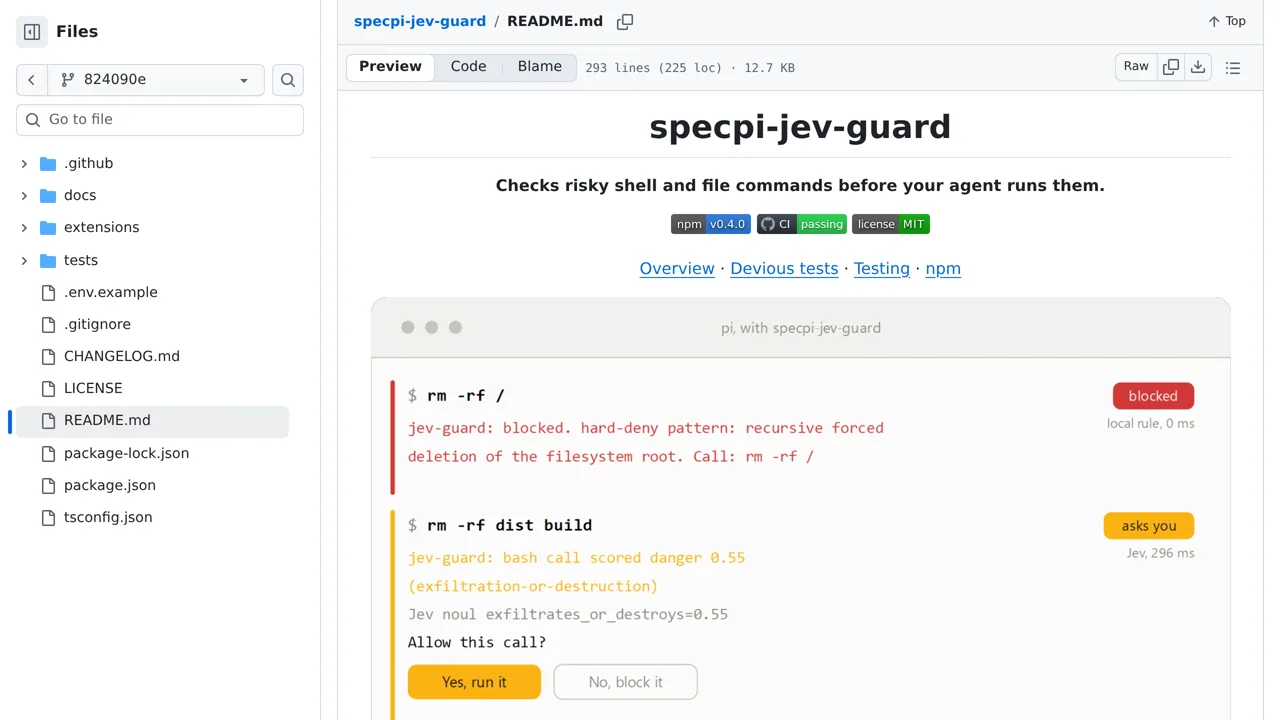
A Pi guard that checks commands with local rules and asks Jev about the ambiguous ones.
Keep what you find. Notes stay private.
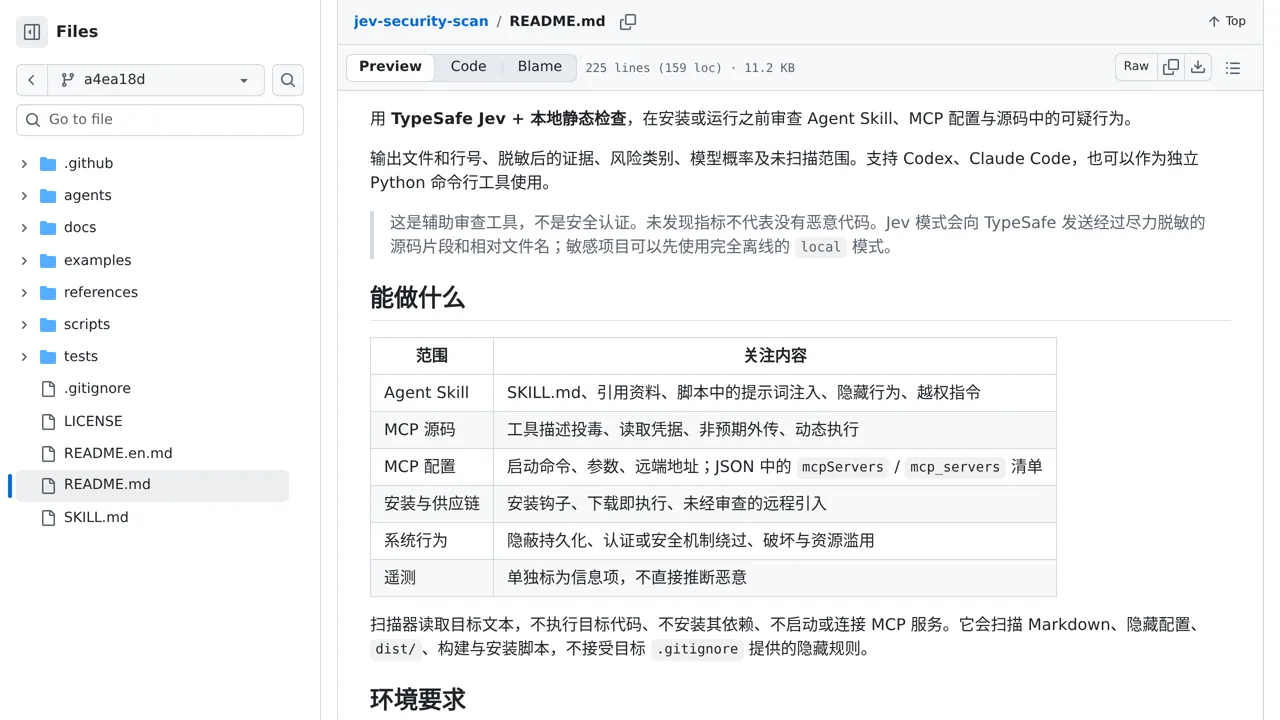
Screens agent skills and MCP code before installation by combining static evidence with security judgments.
Keep what you find. Notes stay private.
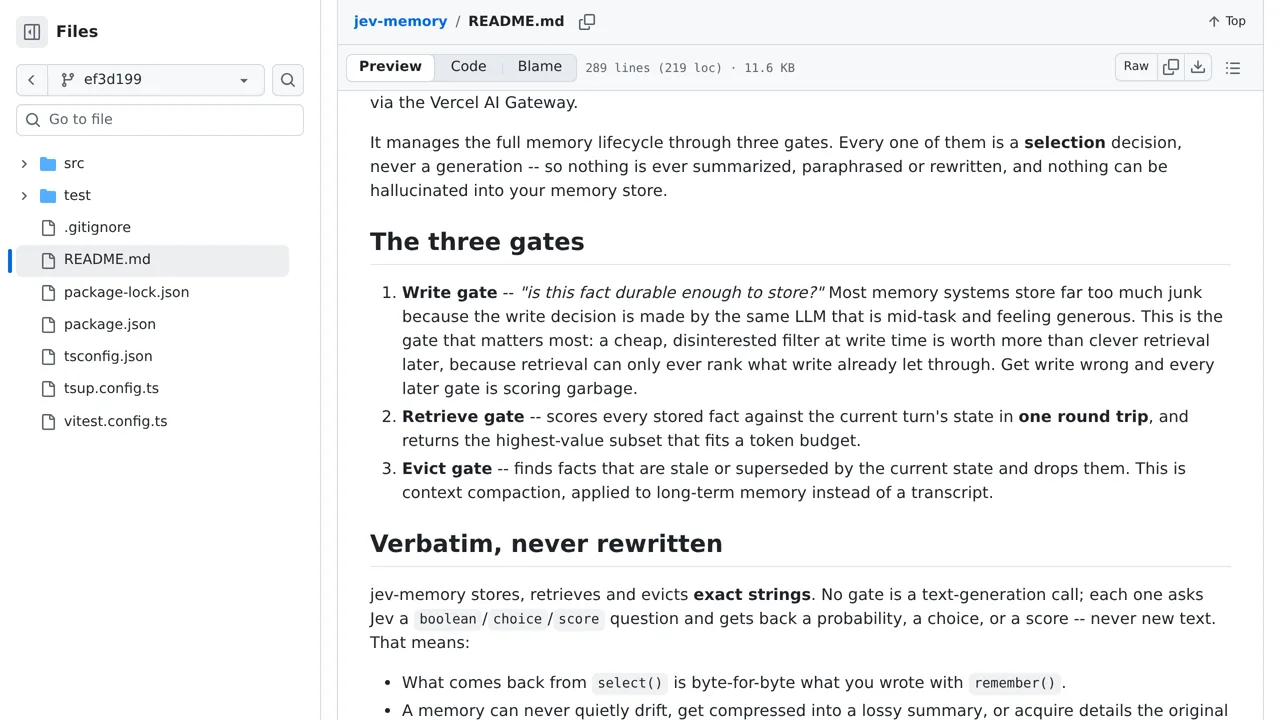
A memory layer that asks Jev which facts to keep, retrieve or forget, preserving the original words.
Keep what you find. Notes stay private.
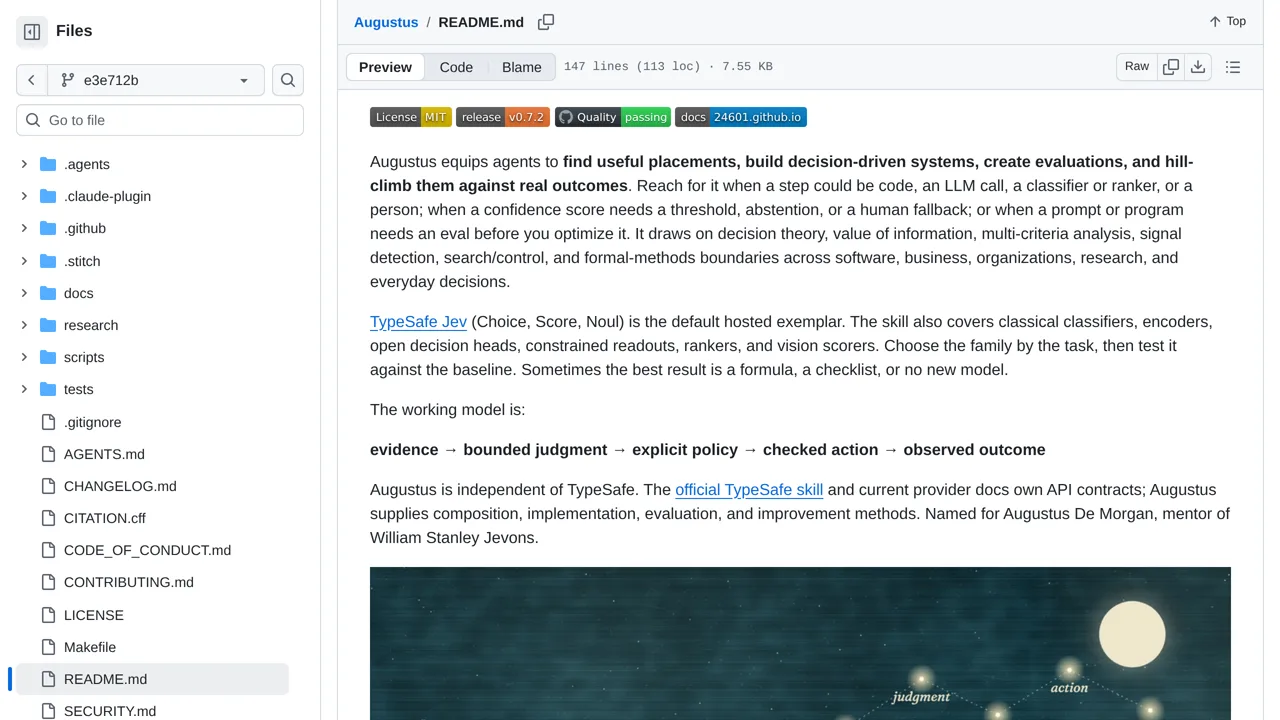
Guides agents through designing and evaluating bounded decision systems, using Jev as one hosted example.
Keep what you find. Notes stay private.
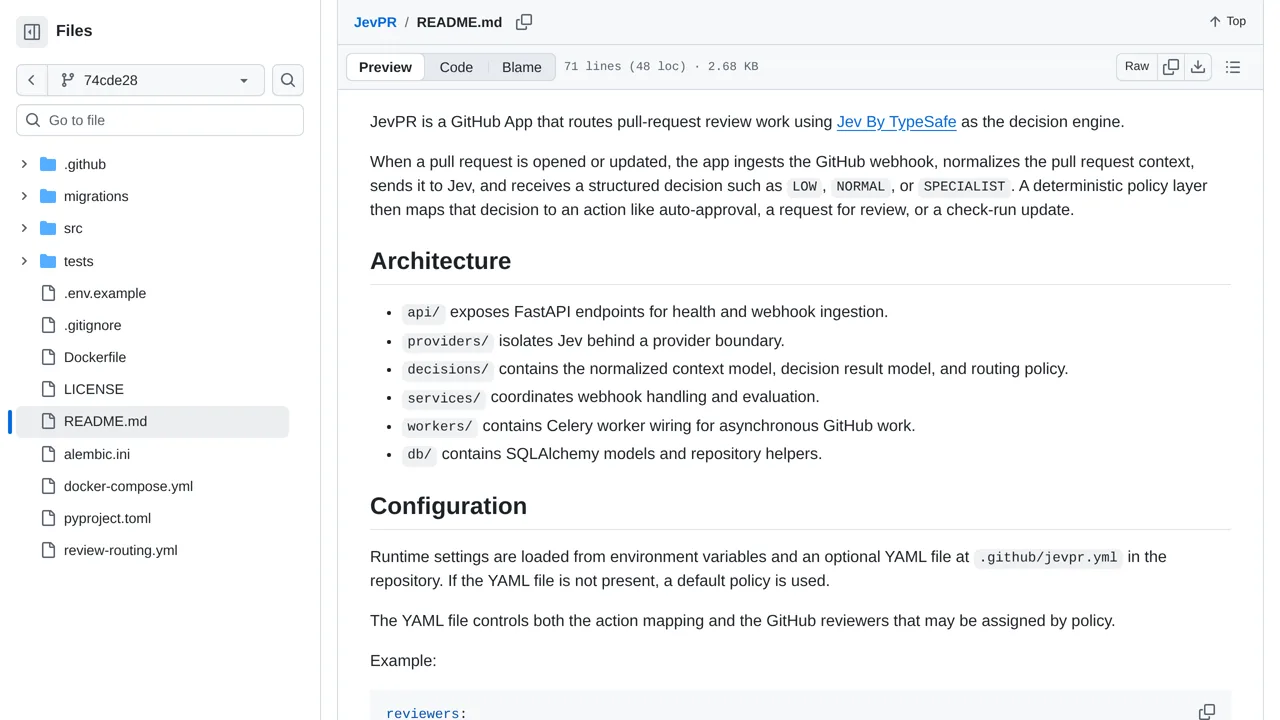
Review pull-request diffs with typed risk questions, then turn Jev's probabilities into findings and a merge-risk verdict.
Keep what you find. Notes stay private.
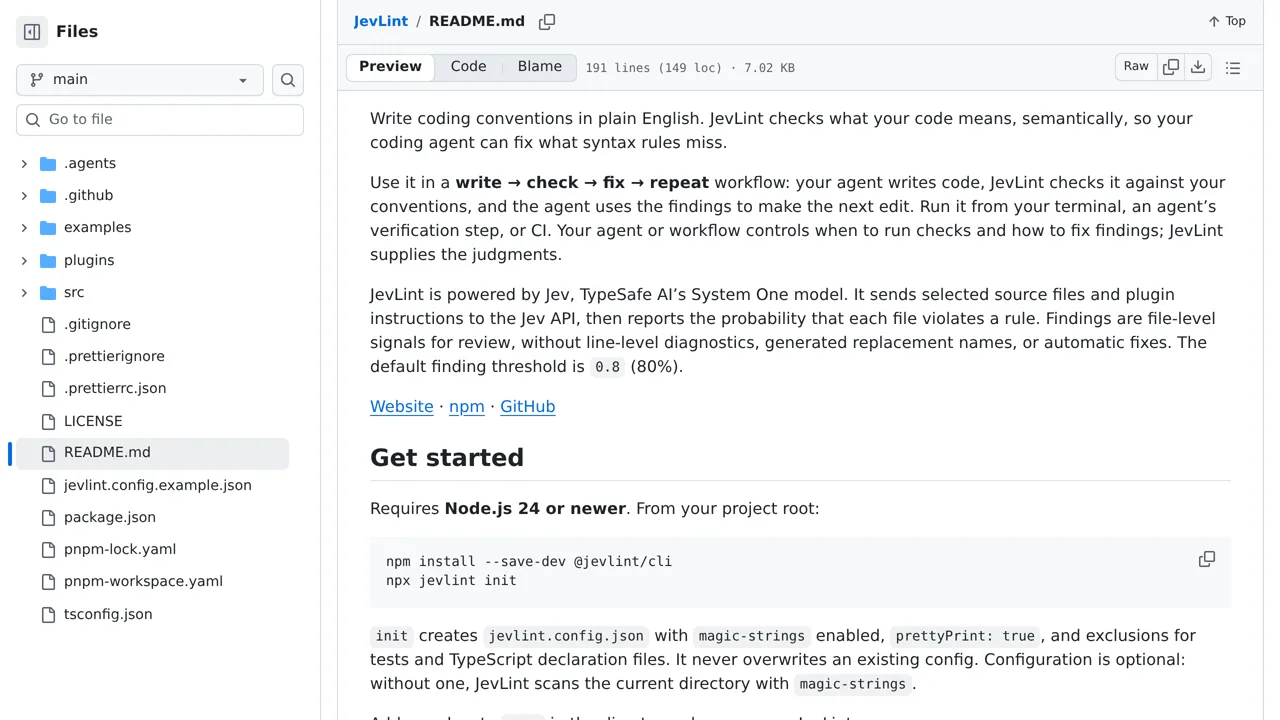
A configurable semantic linter that uses Jev to judge entire files.
Keep what you find. Notes stay private.
A lightweight Jev router for choosing models, tools, and subagents.
Keep what you find. Notes stay private.
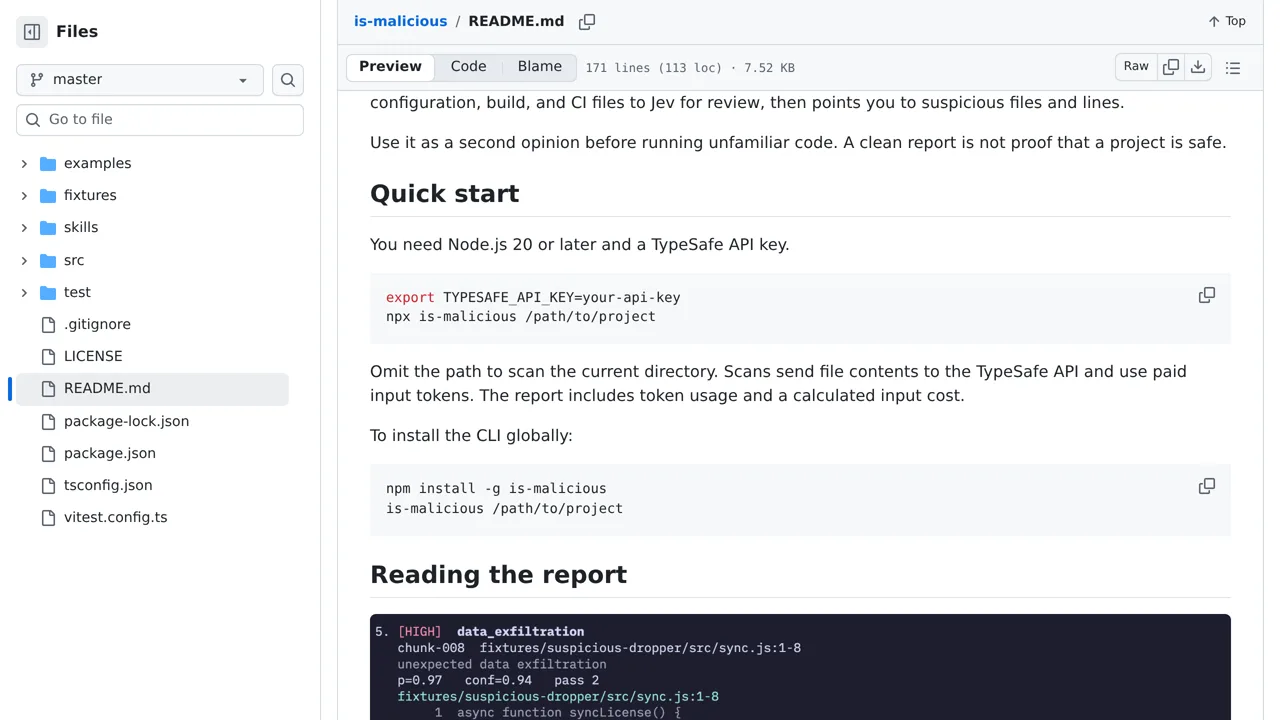
A Jev-powered scanner that checks a codebase for potentially malicious code before you run it.
Keep what you find. Notes stay private.
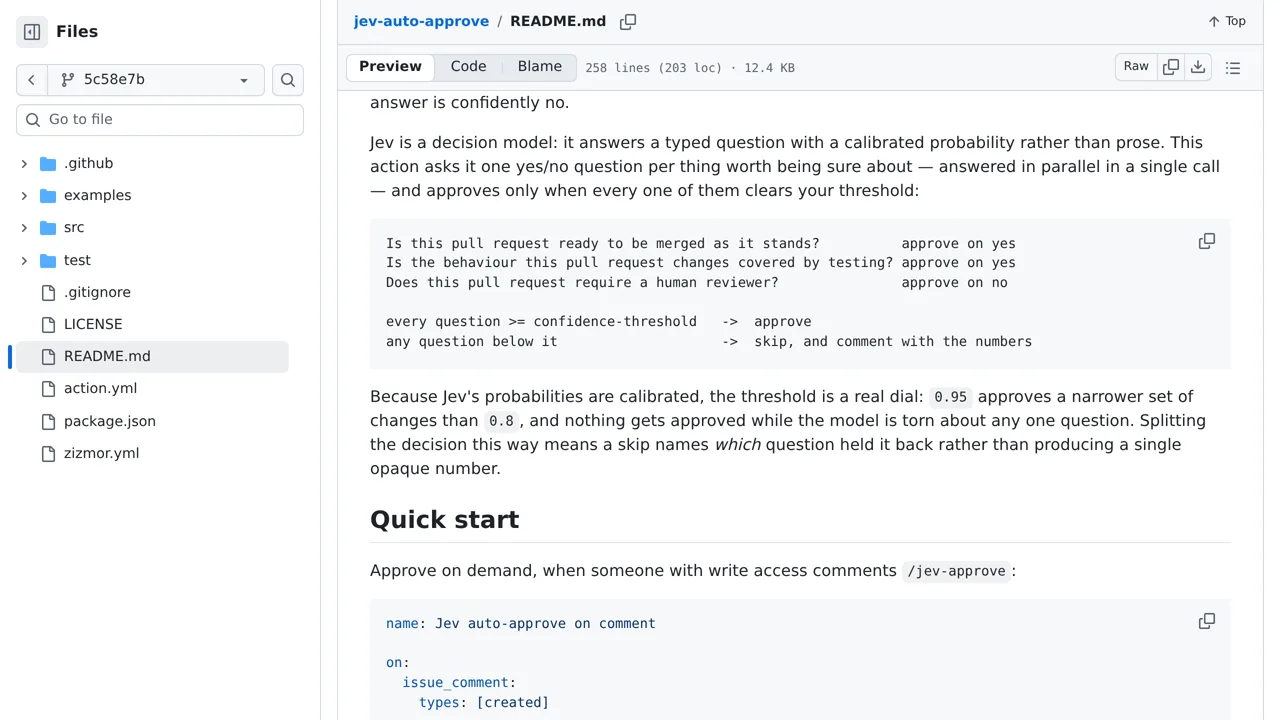
A GitHub Action that approves a pull request only when every configured Jev policy question clears its threshold.
Keep what you find. Notes stay private.
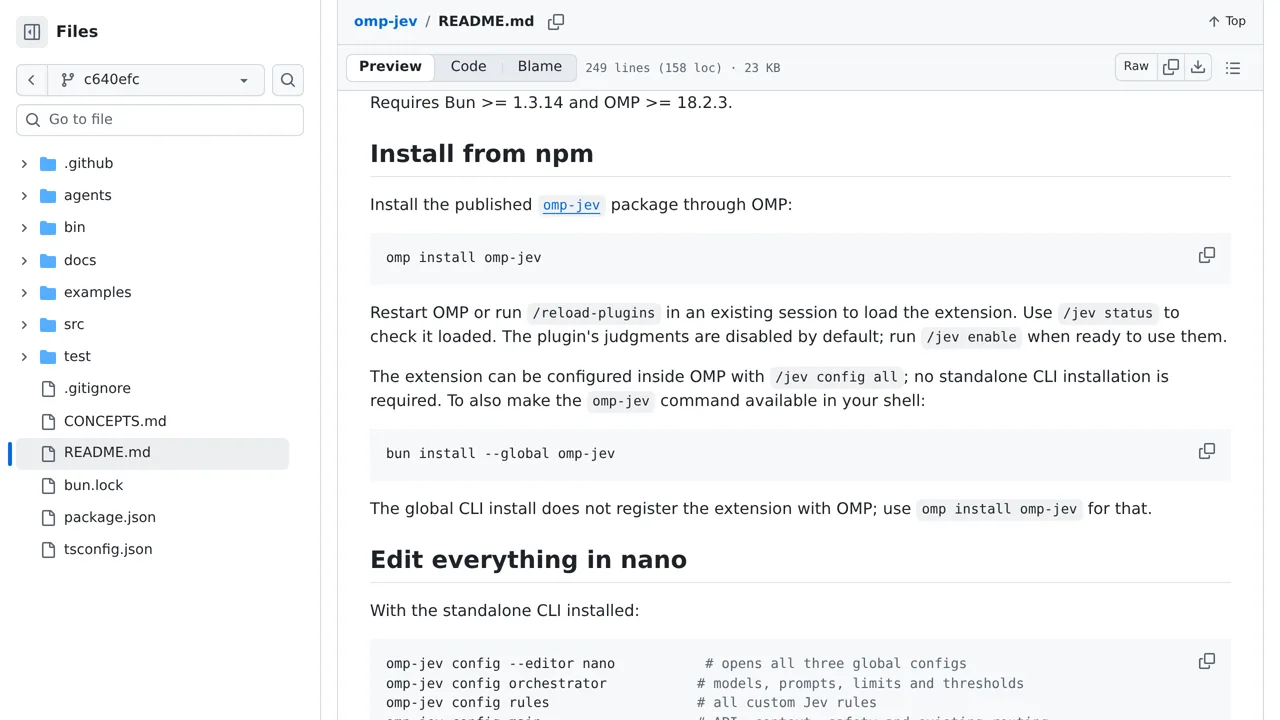
Adds Jev routing to Oh My Pi, with models, prompts and thresholds you can edit in configuration files.
Keep what you find. Notes stay private.
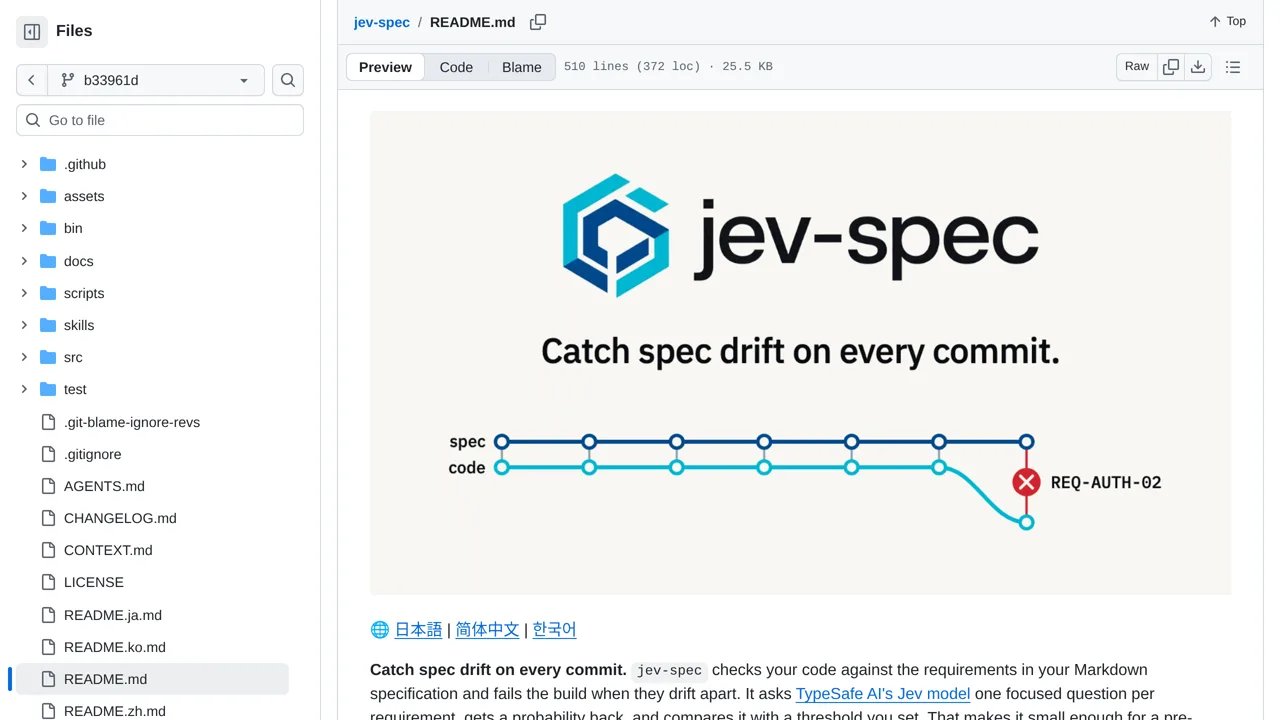
Checks changed code against Markdown specifications and reports likely drift in CI or an agent workflow.
Keep what you find. Notes stay private.
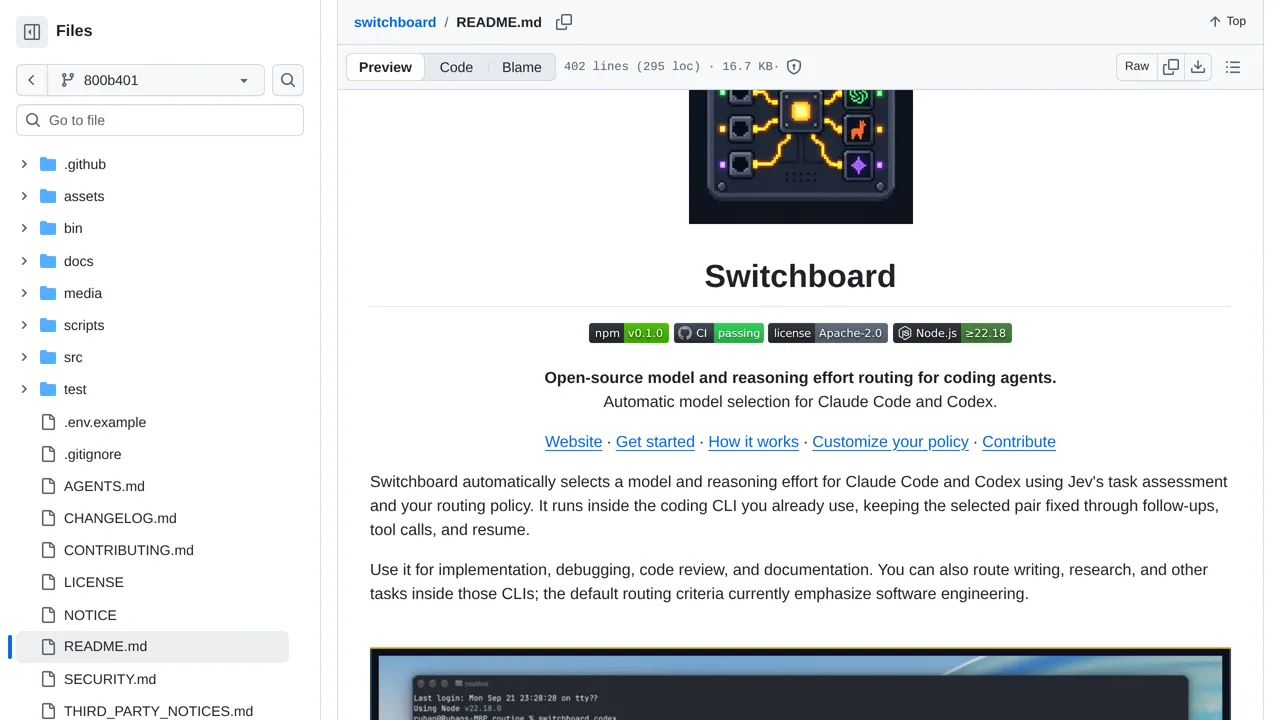
Select a coding model and reasoning effort for Claude Code or Codex, then keep that pair stable through the task.
Keep what you find. Notes stay private.
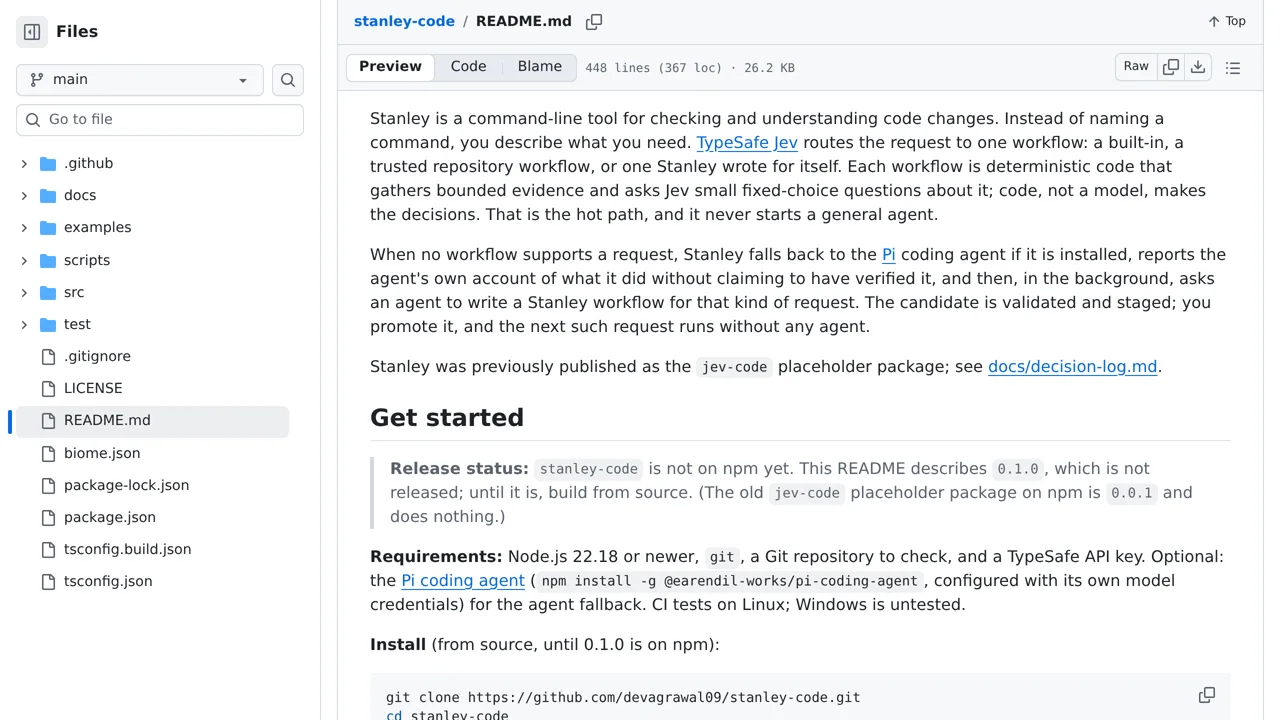
A set of bounded Jev workflows for coding agents.
Keep what you find. Notes stay private.
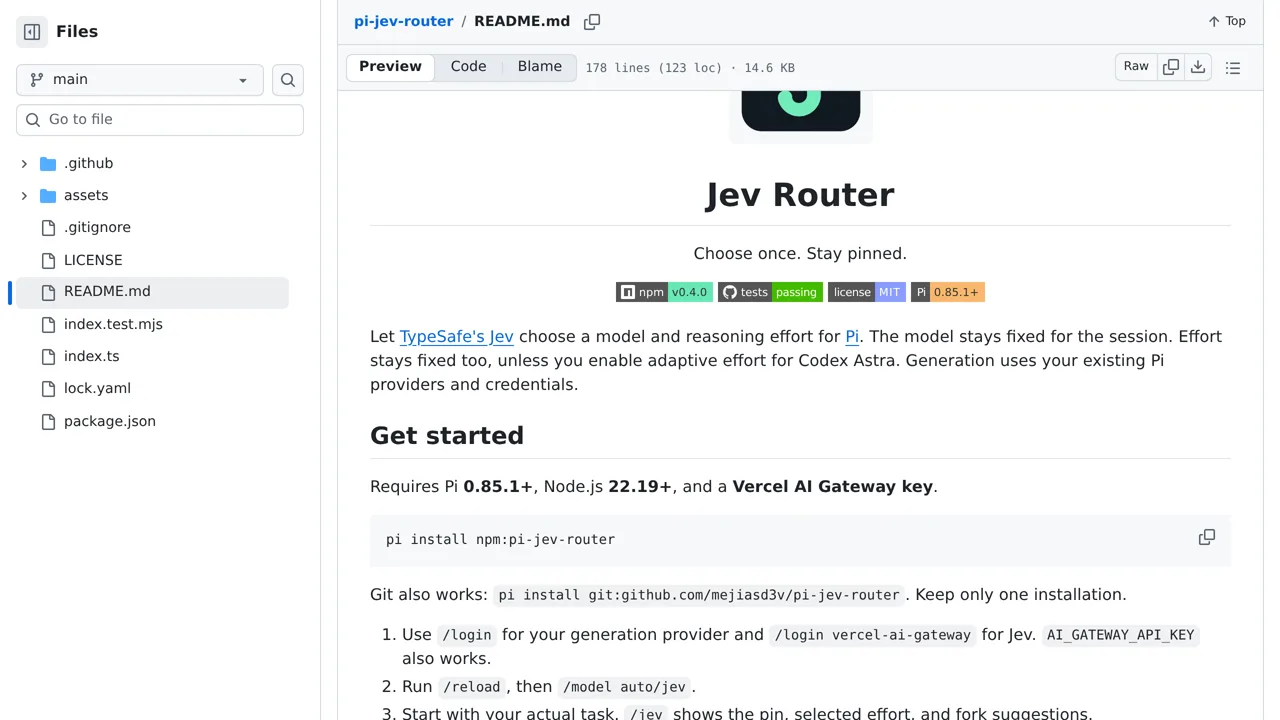
A Pi extension that routes tasks to models through Vercel AI Gateway using Jev.
Keep what you find. Notes stay private.
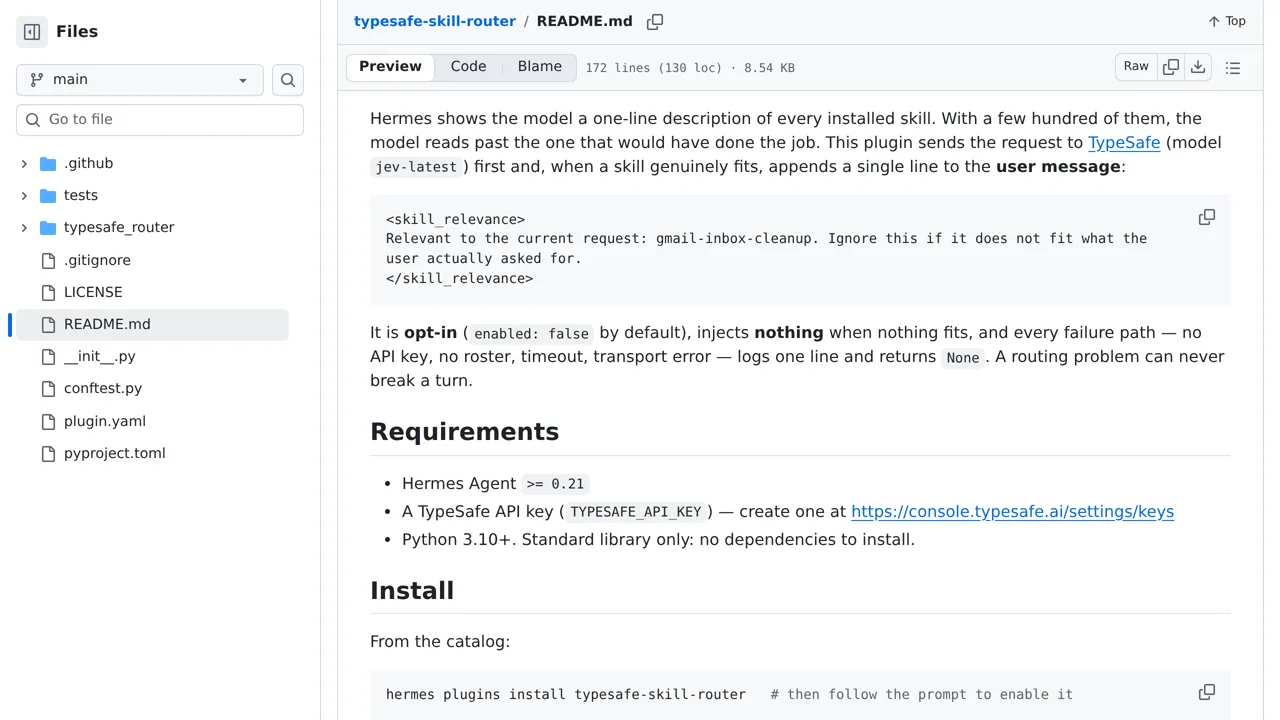
An opt-in Hermes plugin that uses Jev to select one skill before the main model call.
Keep what you find. Notes stay private.
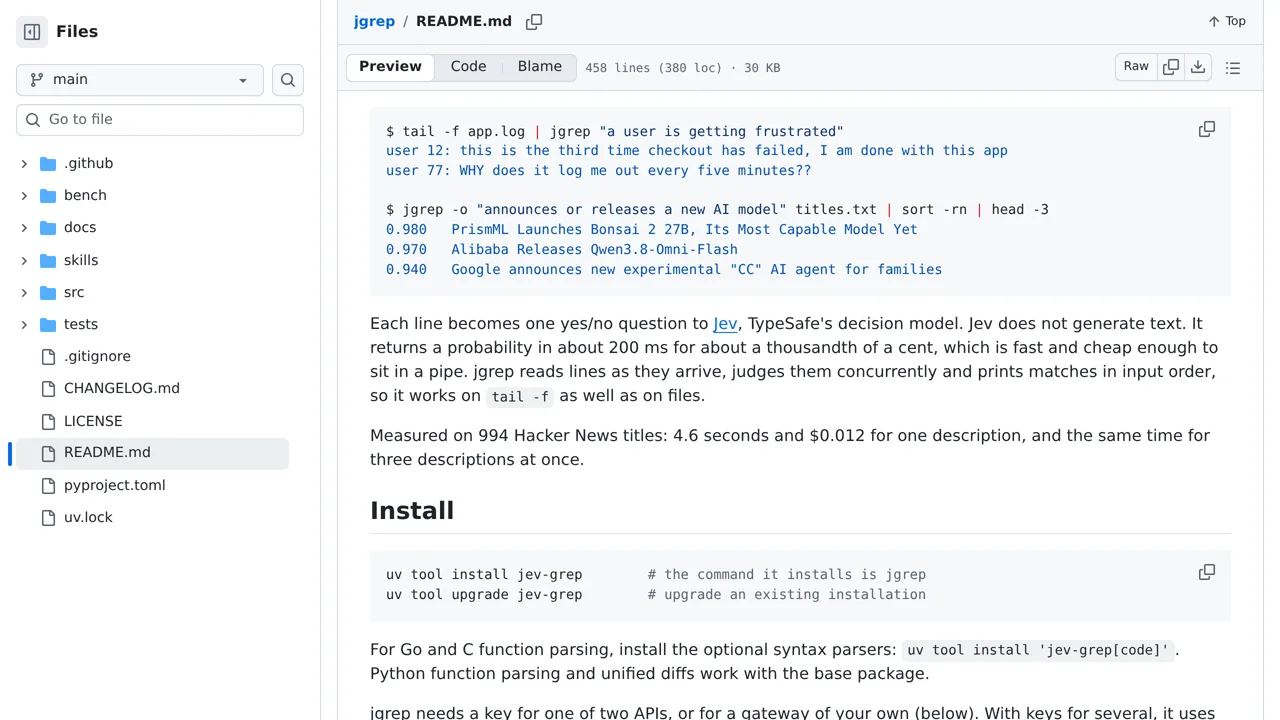
A command-line filter that uses Jev to match lines by a natural-language description rather than a text pattern.
Keep what you find. Notes stay private.
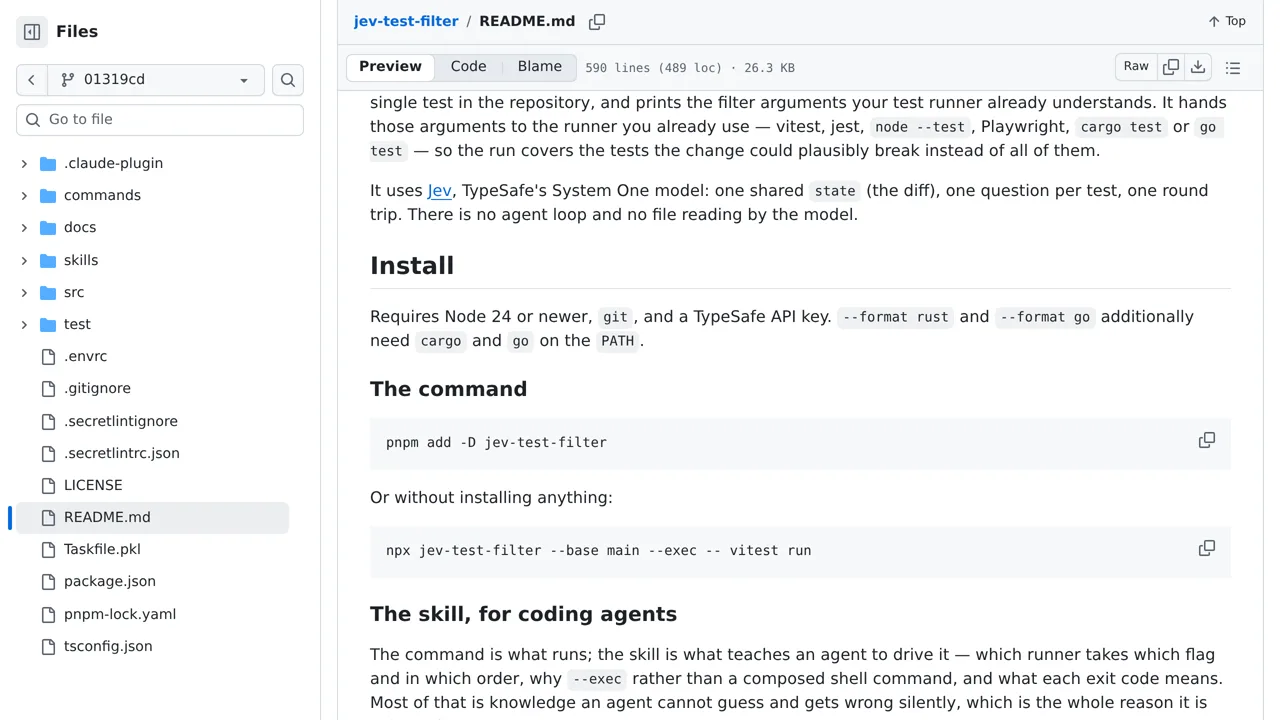
Turns a Git diff into native runner filters for the tests most likely to be affected.
Keep what you find. Notes stay private.
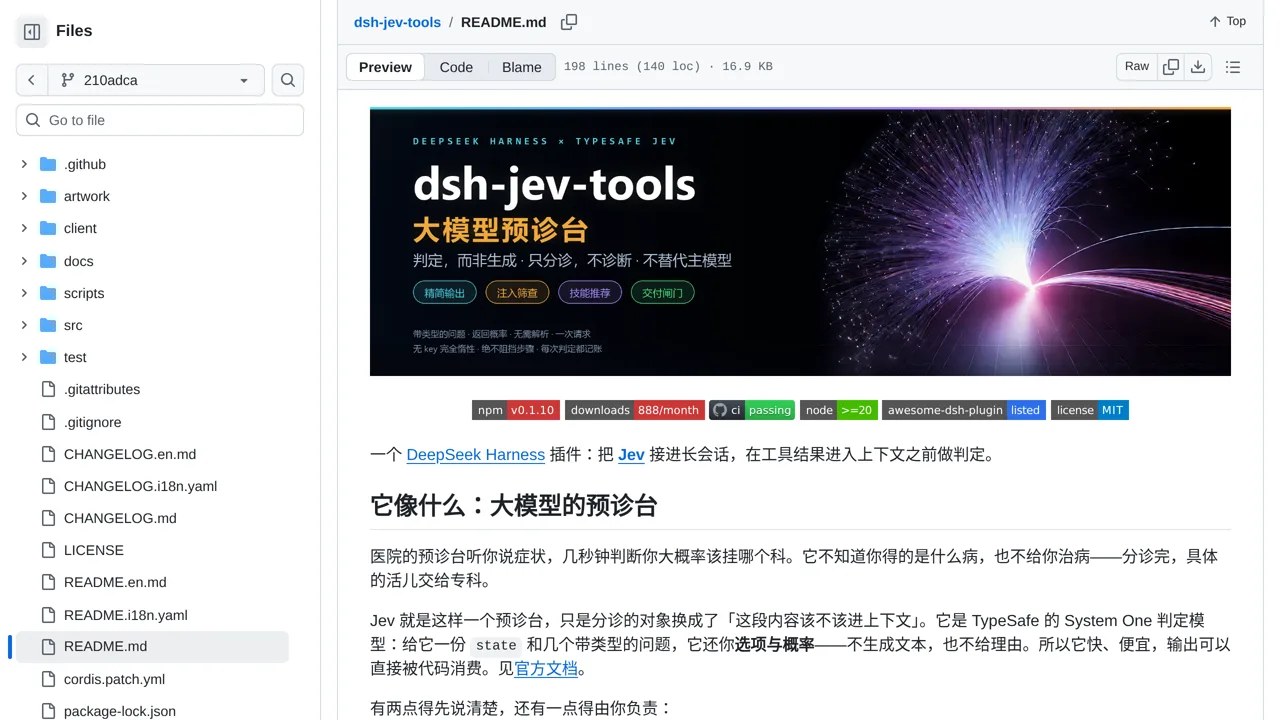
Adds Jev-backed output pruning, injection screening, and completion gates to DeepSeek Harness.
Keep what you find. Notes stay private.
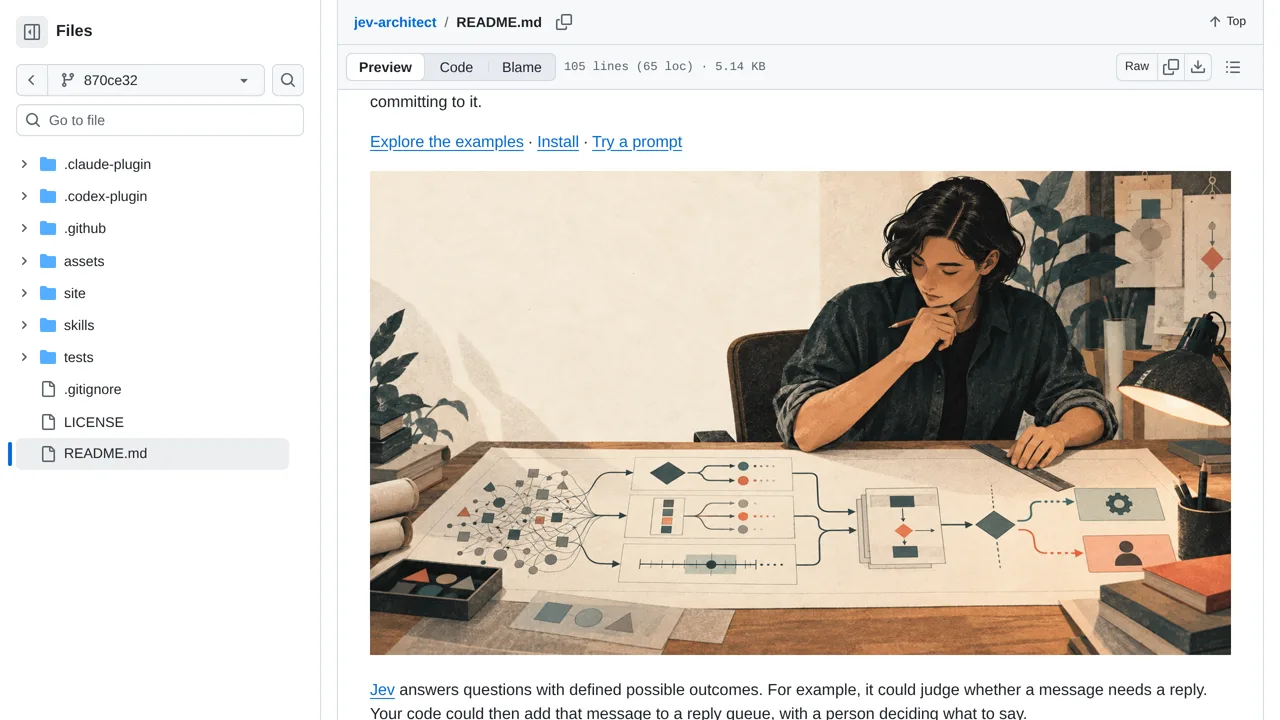
Guides coding agents from a possible Jev use case to a bounded design, baseline, fallback, and small validation experiment.
Keep what you find. Notes stay private.
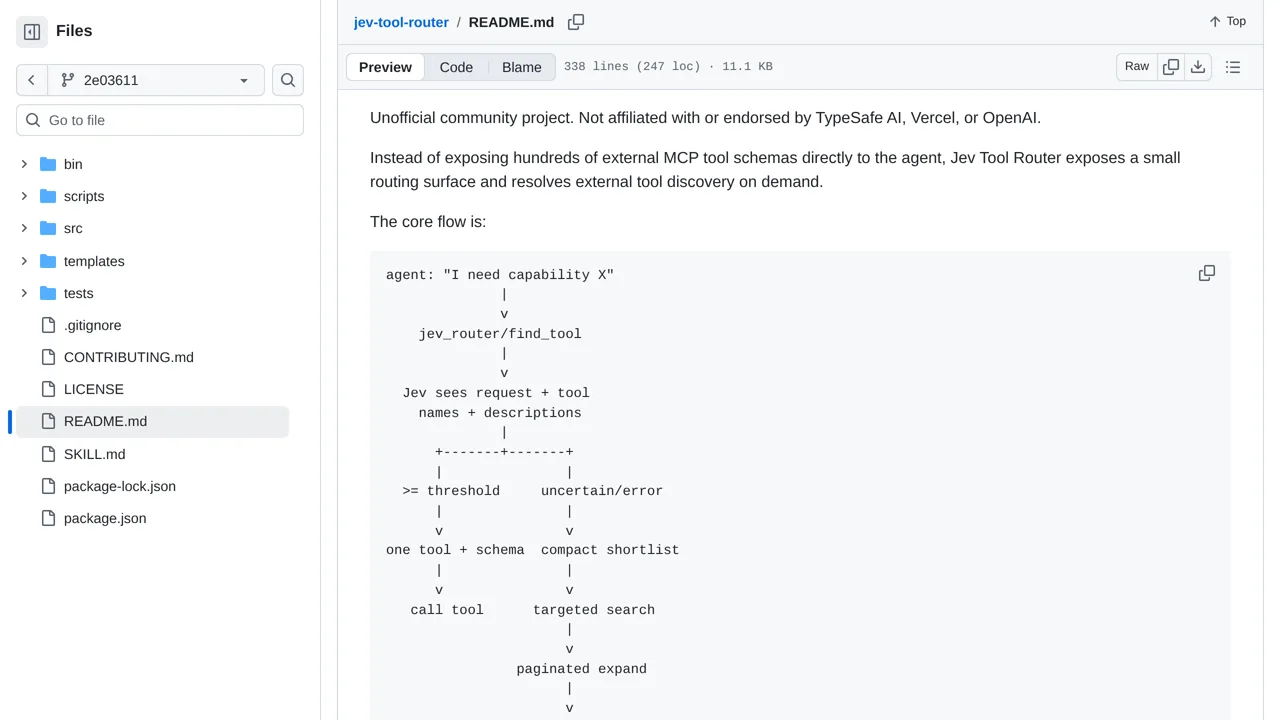
Chooses which discovered MCP tool Codex should call, then applies deterministic policy before execution.
Keep what you find. Notes stay private.
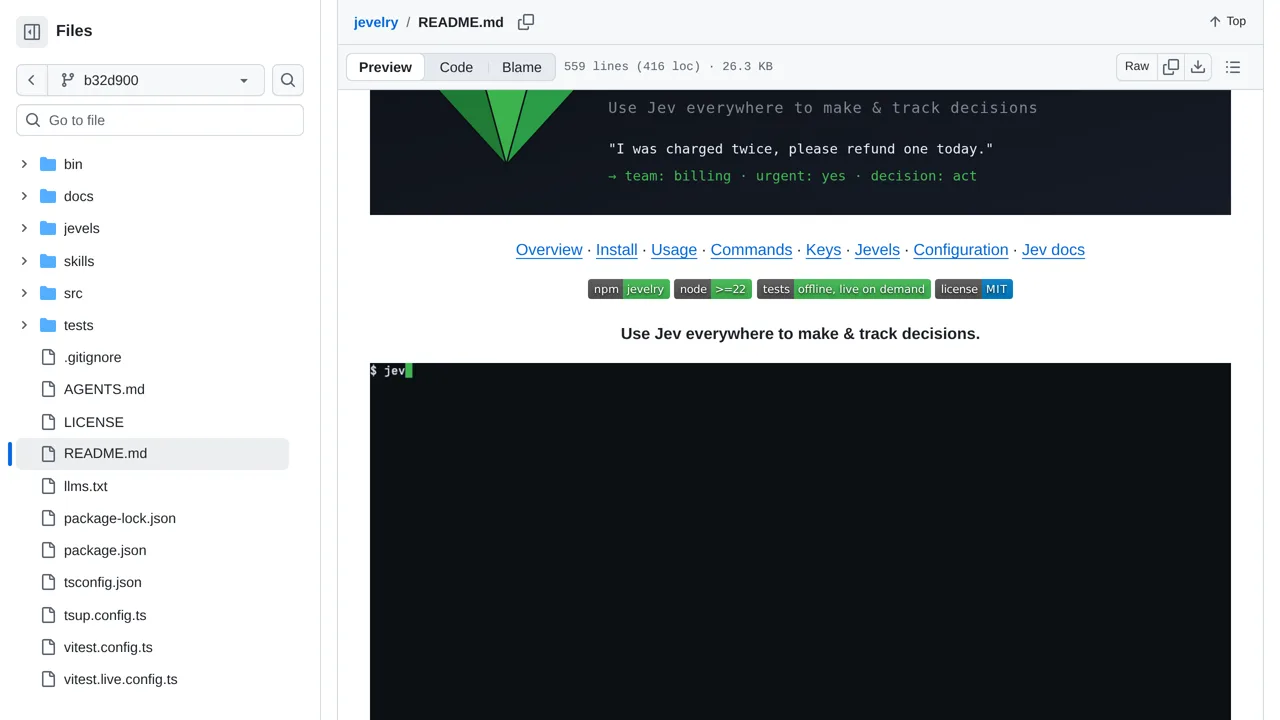
Defines reusable “jevels” for operational decisions and records their answers in a terminal interface.
Keep what you find. Notes stay private.
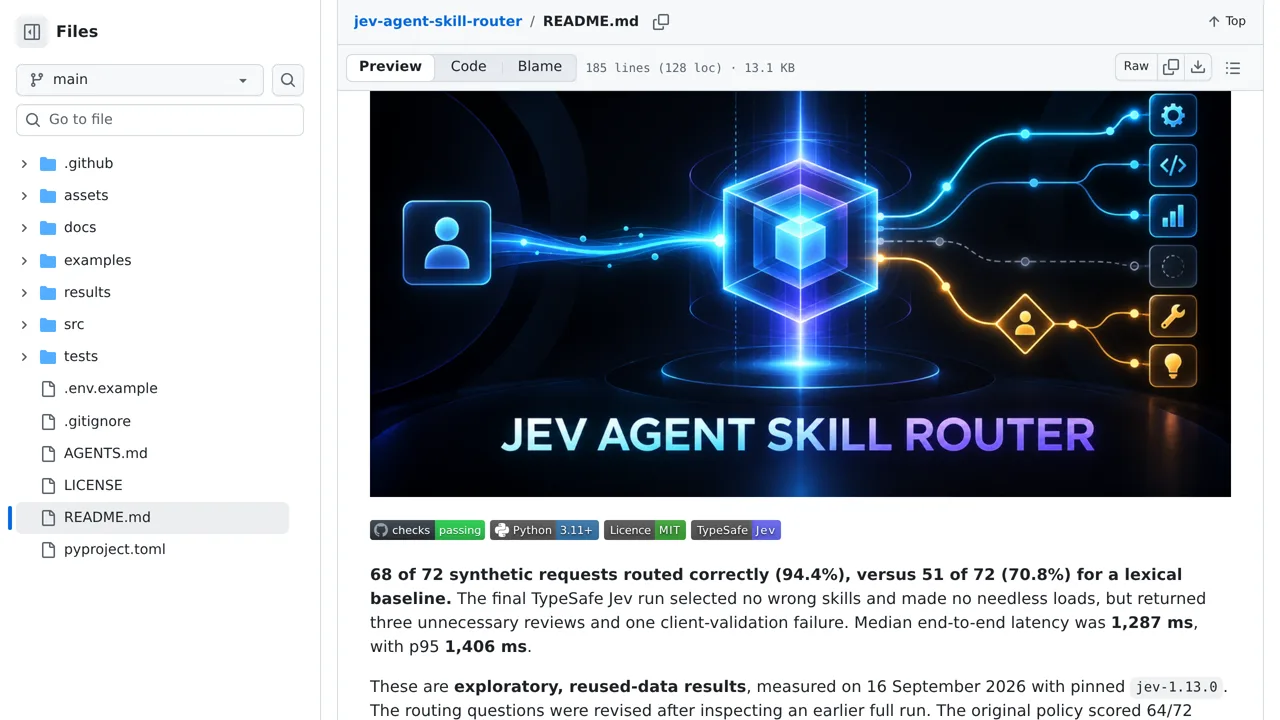
A Python skill router that uses Jev to make typed, confidence-aware selections.
Keep what you find. Notes stay private.
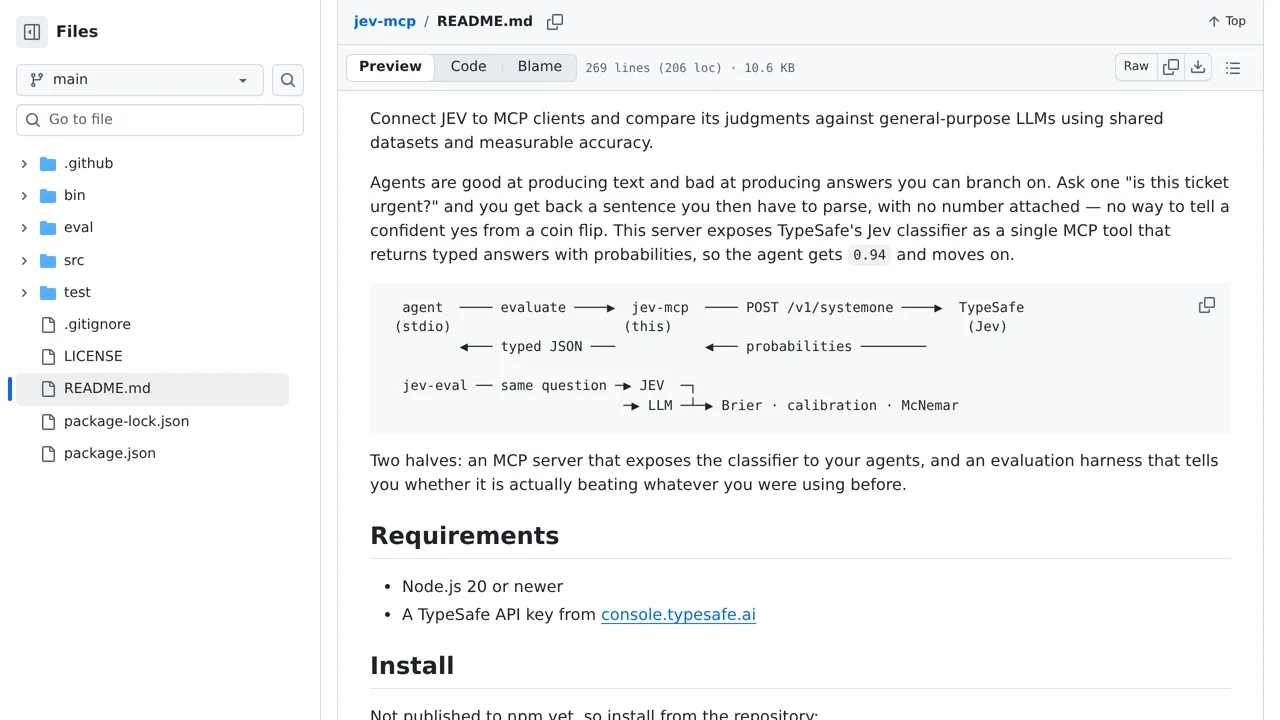
Connect Jev to an MCP client, then compare its answers with those of general-purpose models.
Keep what you find. Notes stay private.
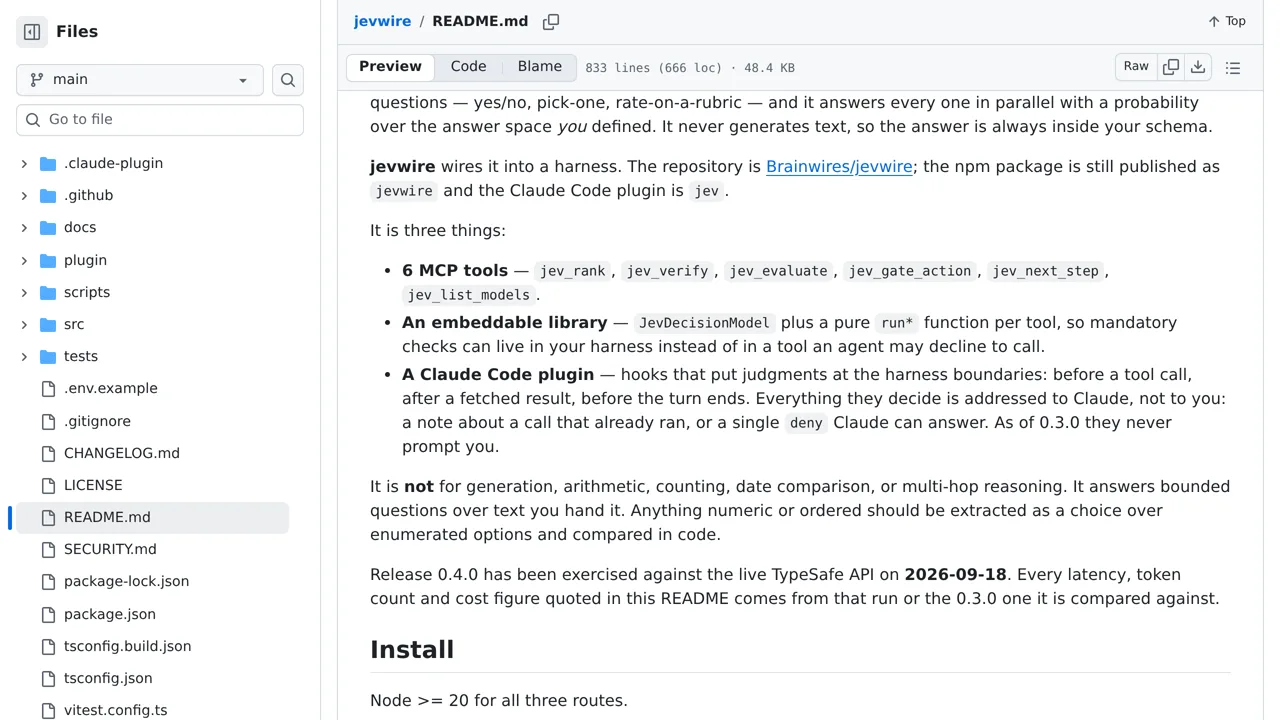
An agent decision toolkit with a Jev MCP server, embeddable library, and Claude Code plugin.
Keep what you find. Notes stay private.
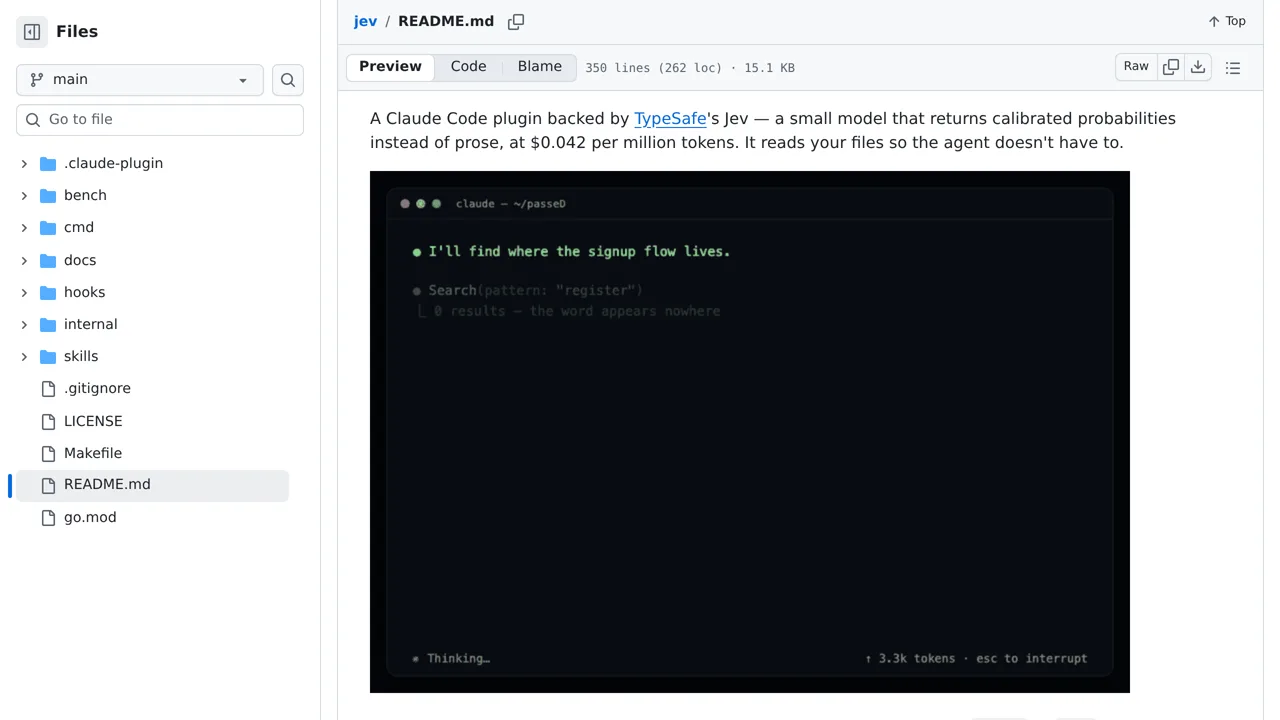
A Claude Code plugin for using Jev.
Keep what you find. Notes stay private.
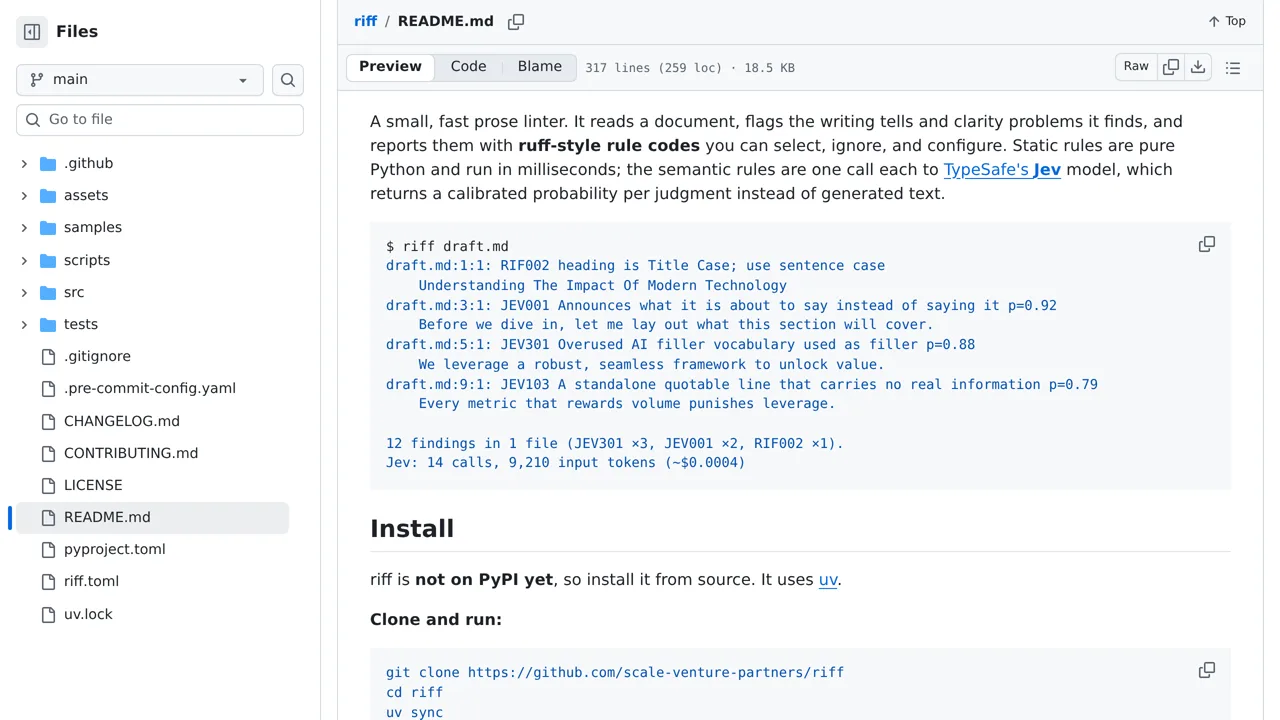
A fast prose linter with Ruff-style rule codes and Jev-backed semantic checks.
Keep what you find. Notes stay private.
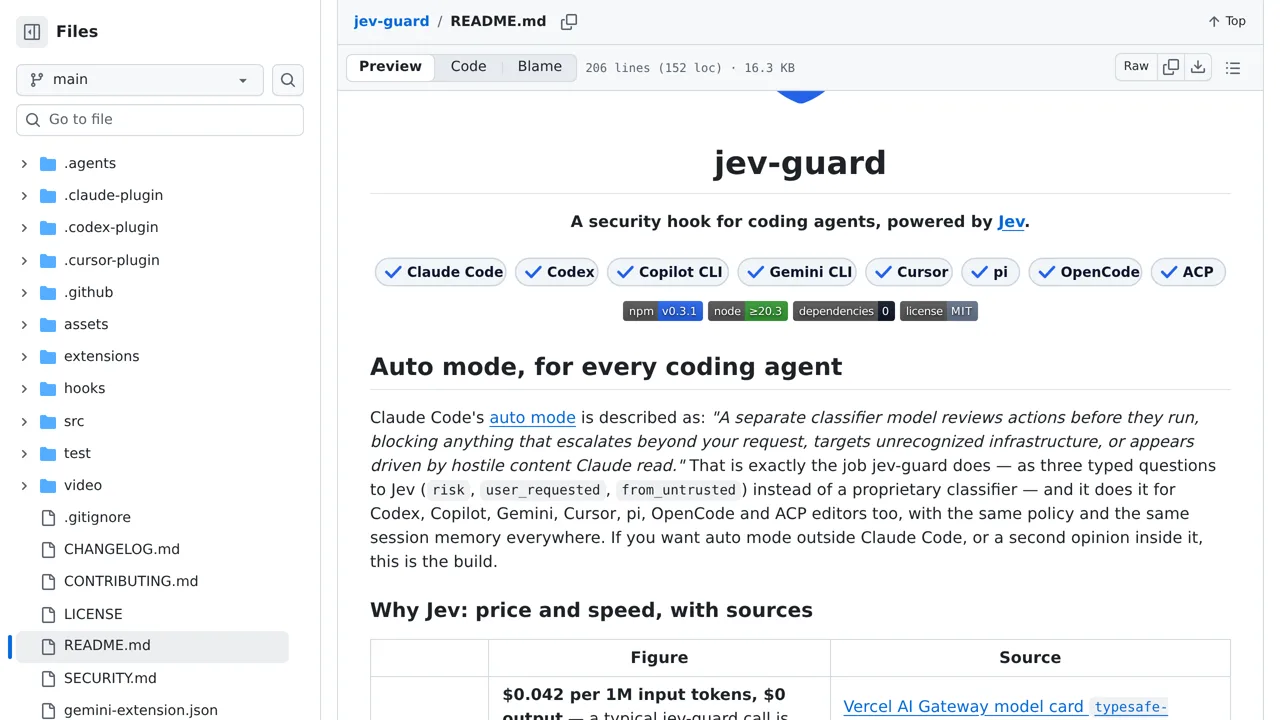
Jev Guard checks coding-agent tool calls and returns an allow, ask, or deny decision based on risk and session context.
Keep what you find. Notes stay private.
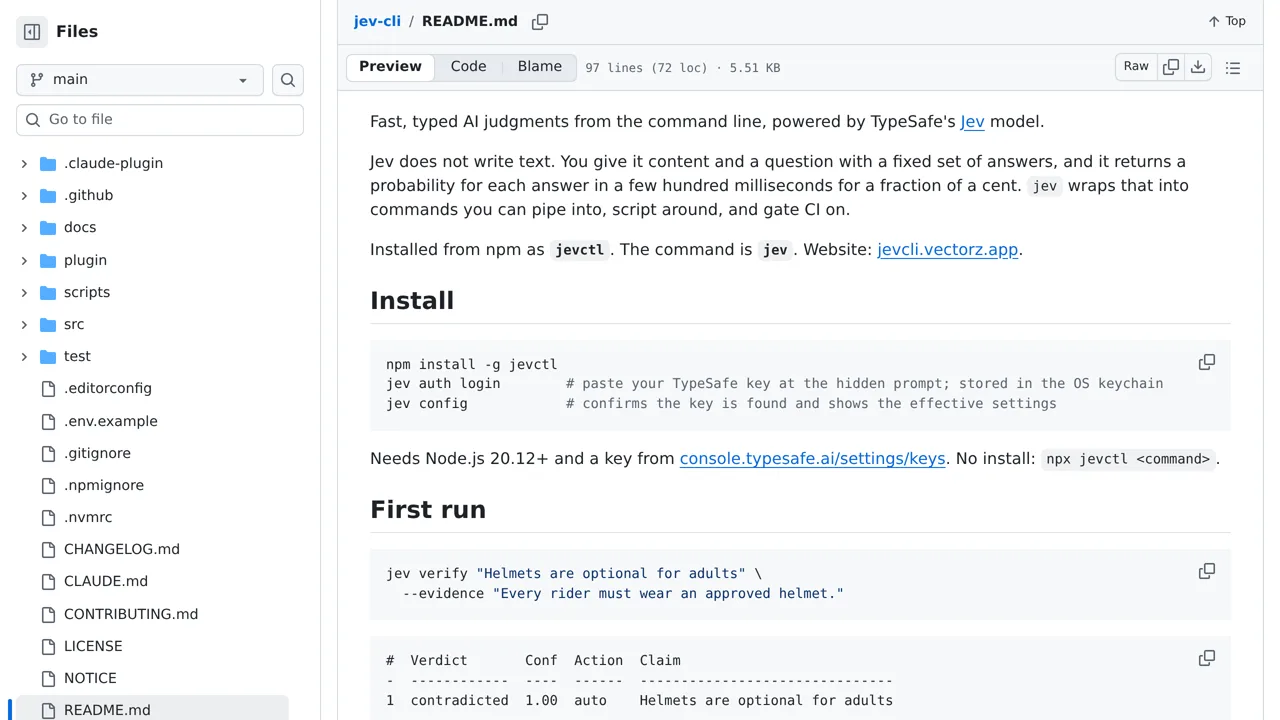
A TypeScript command-line client for TypeSafe's Jev model.
Keep what you find. Notes stay private.
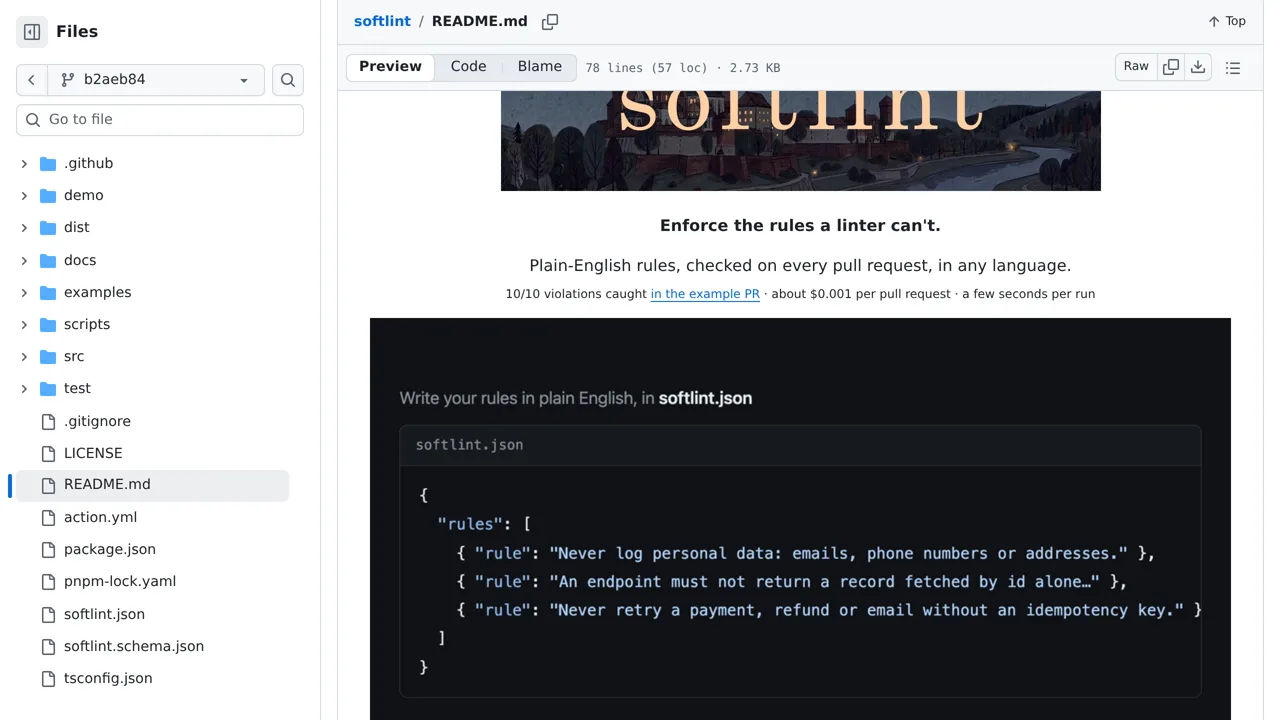
Write code-review rules in everyday language, then let Jev flag the pull-request lines that appear to break them.
Keep what you find. Notes stay private.
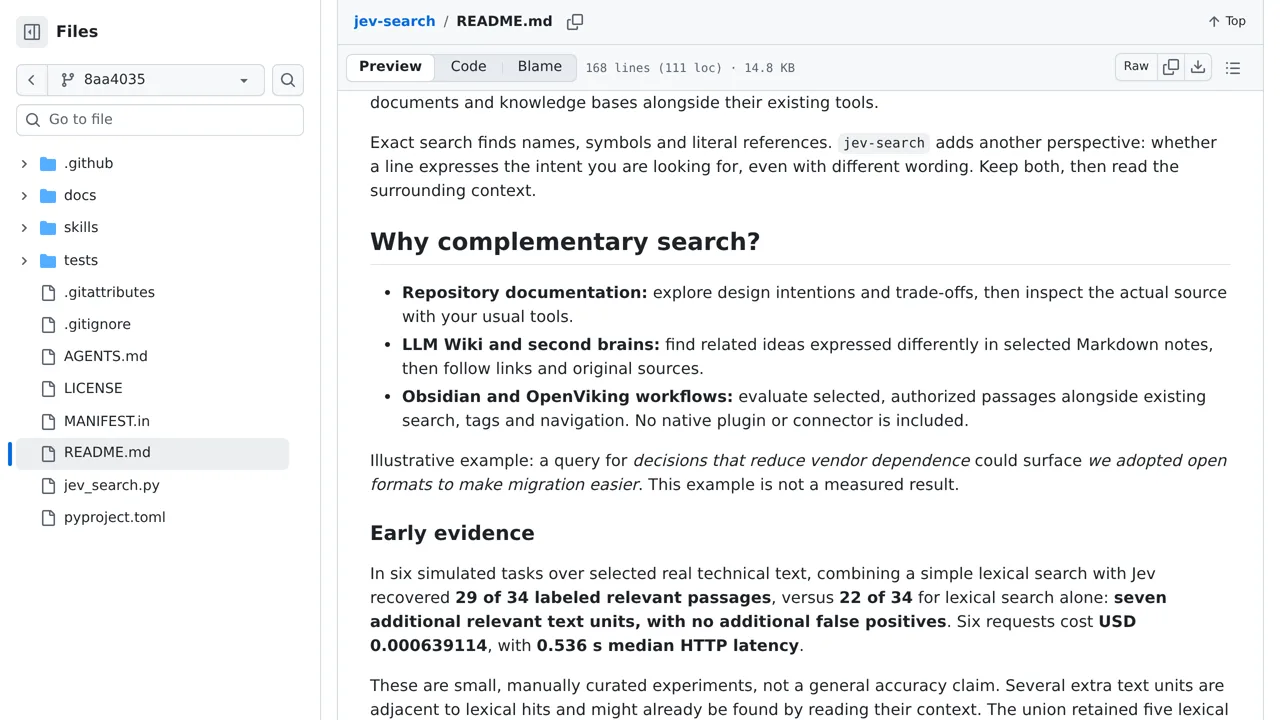
A dependency-free semantic line search meant to sit beside exact search for selected documents and knowledge bases.
Keep what you find. Notes stay private.
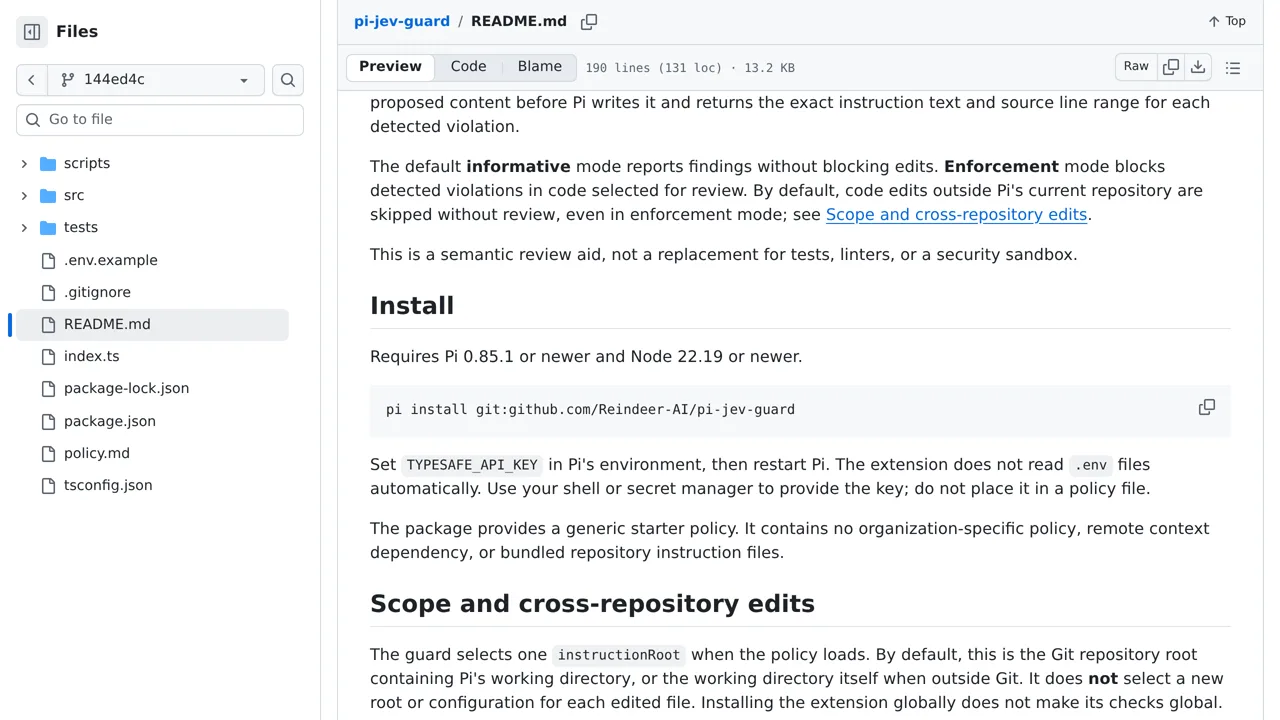
Checks proposed Pi edits against repository Markdown rules and links each finding back to the instruction that inspired it.
Keep what you find. Notes stay private.
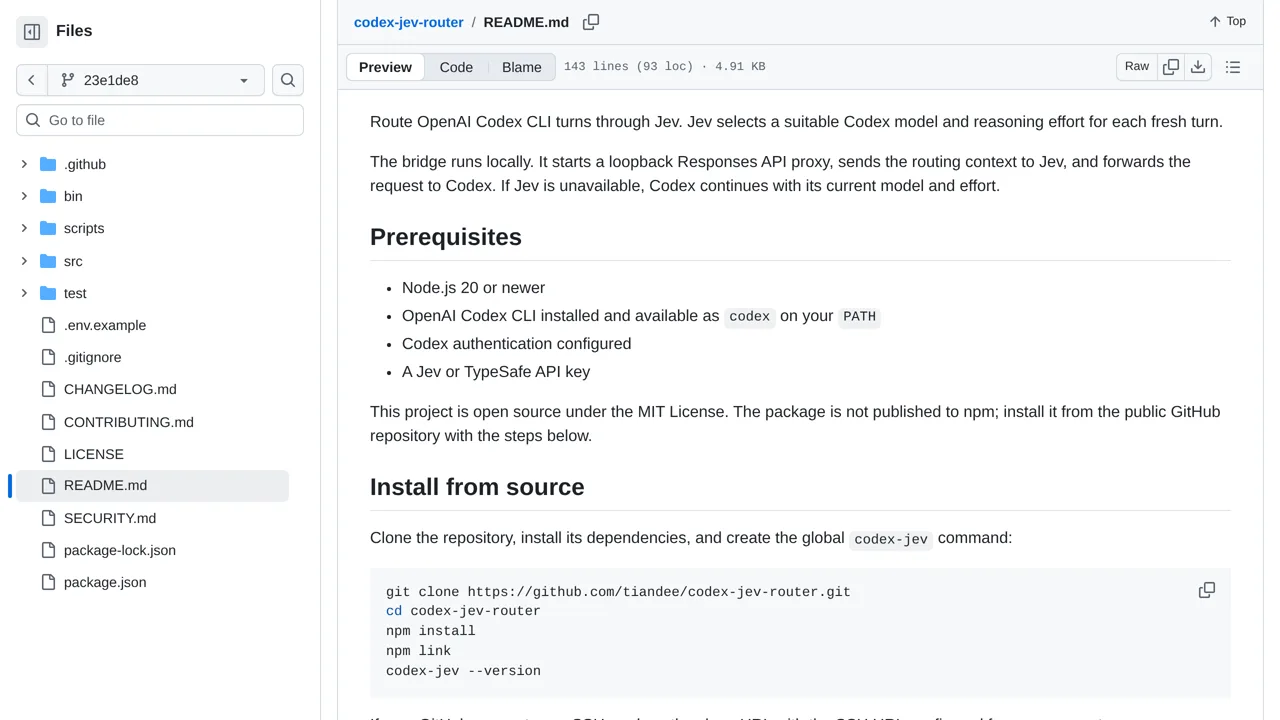
Routes each new Codex turn to a model and reasoning level selected from Jev complexity judgments.
Keep what you find. Notes stay private.
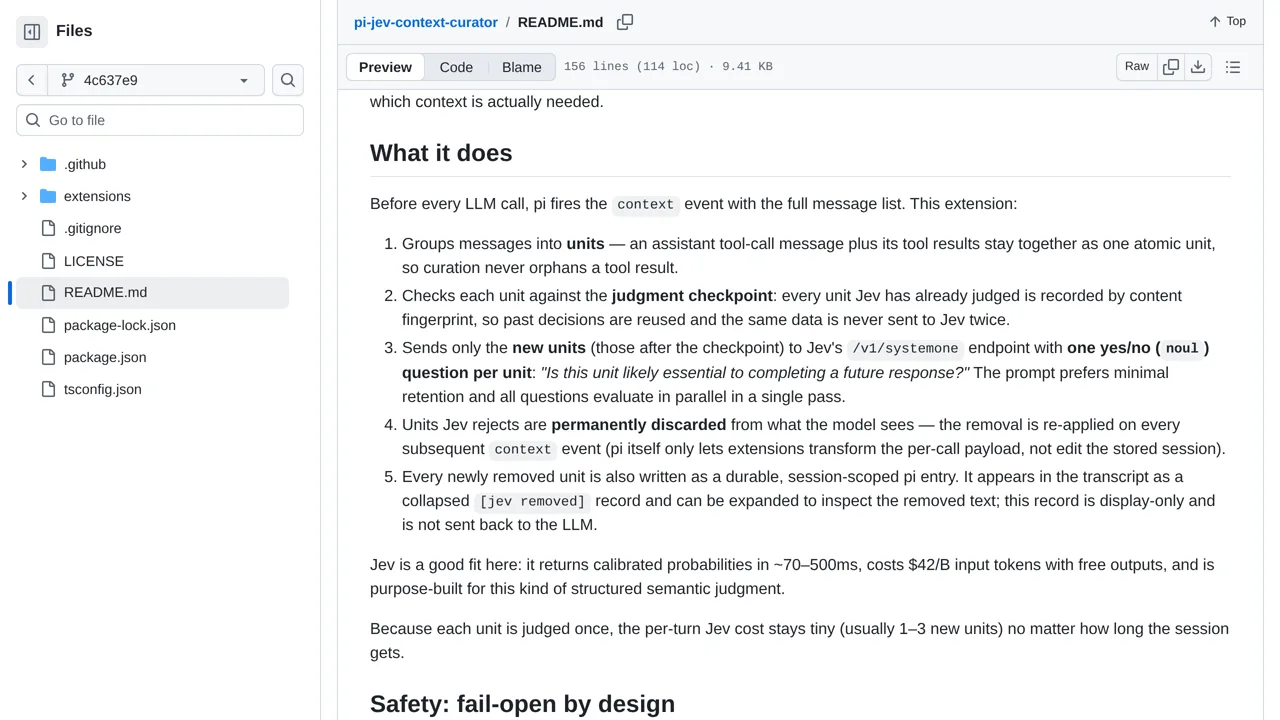
This Pi extension asks Jev which message groups future turns need, then removes rejected groups from model context.
Keep what you find. Notes stay private.
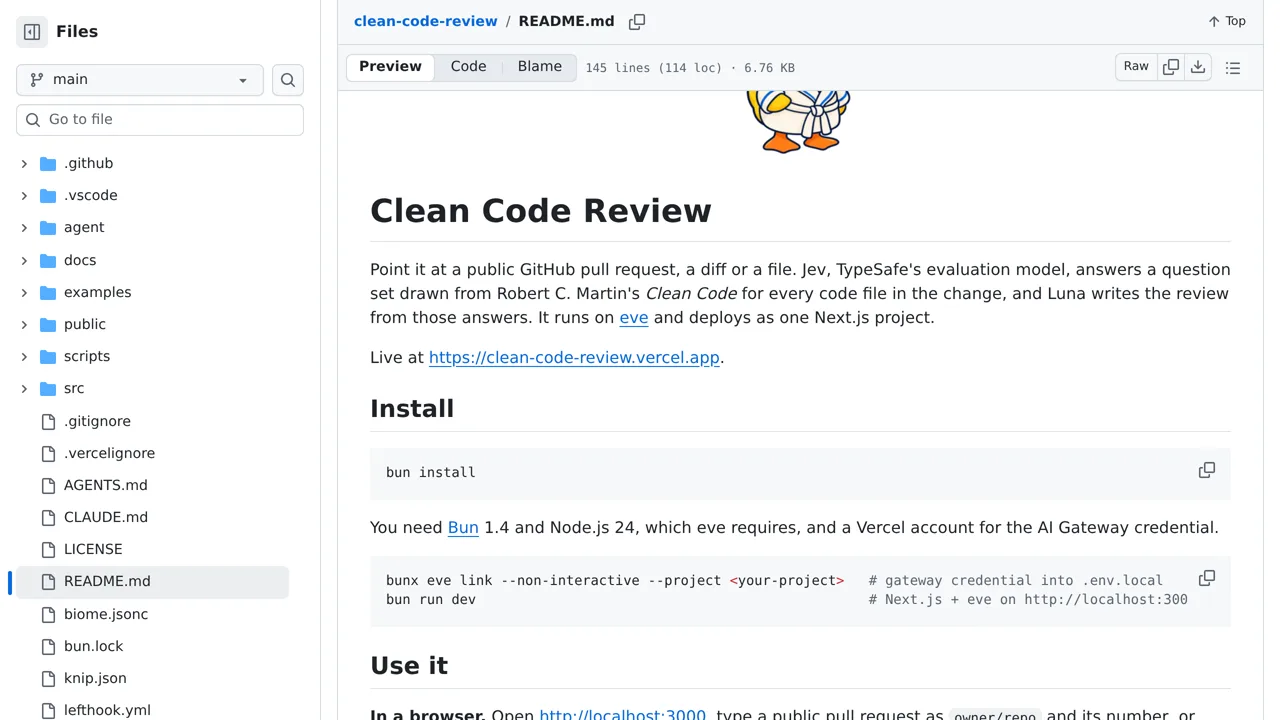
Jev checks a pull request against Clean Code principles; Luna turns the findings into a written review.
Keep what you find. Notes stay private.
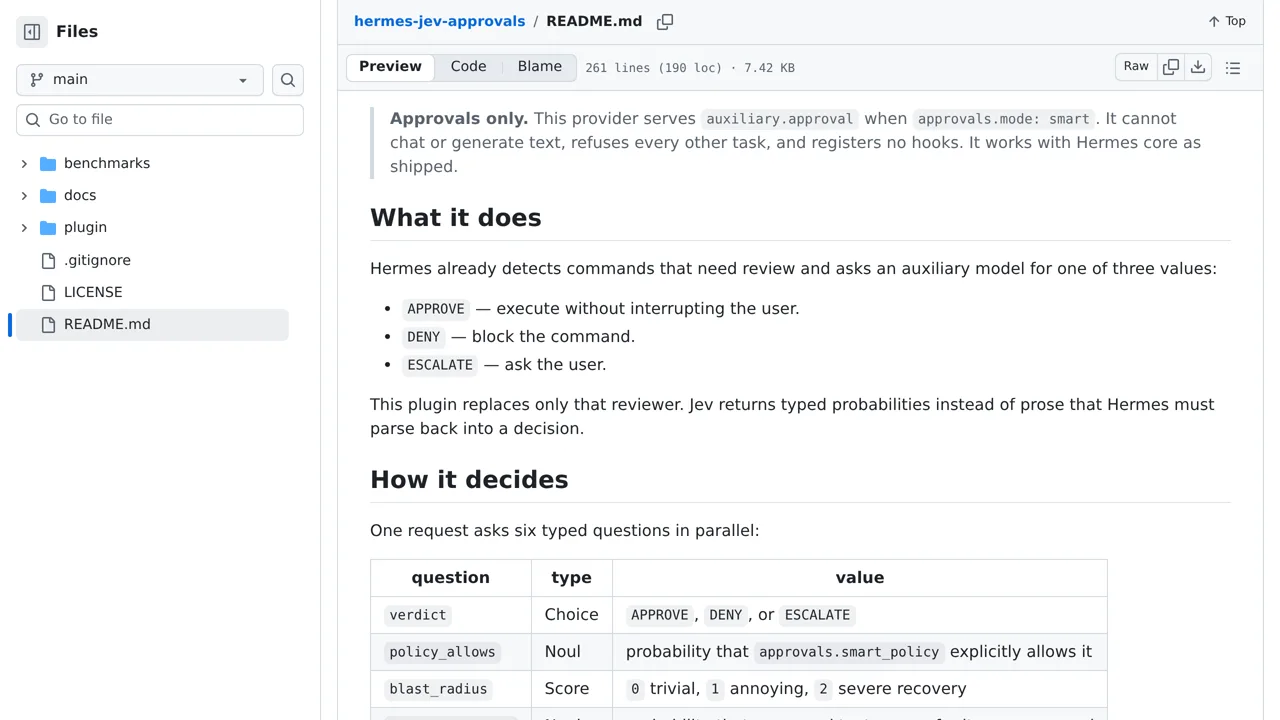
An experiment in letting Jev review commands that Hermes would otherwise ask you to approve.
Keep what you find. Notes stay private.
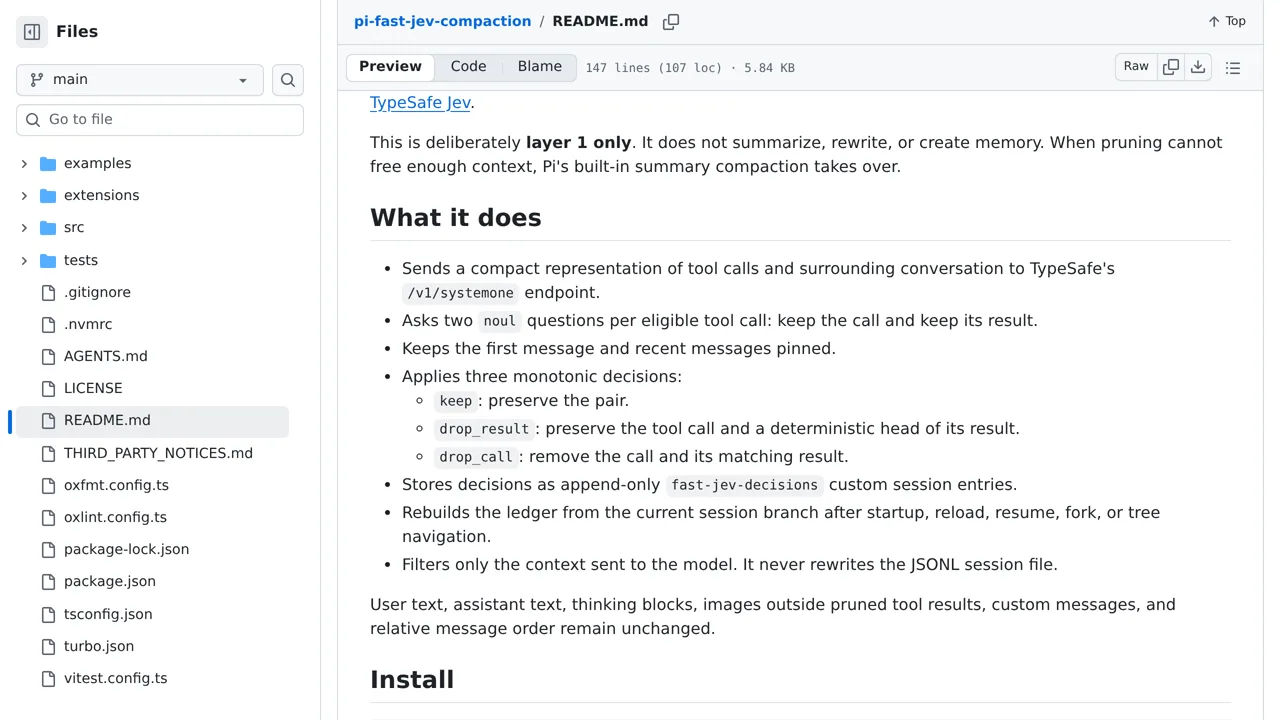
A Pi extension that asks Jev what context to retain verbatim during compaction.
Keep what you find. Notes stay private.
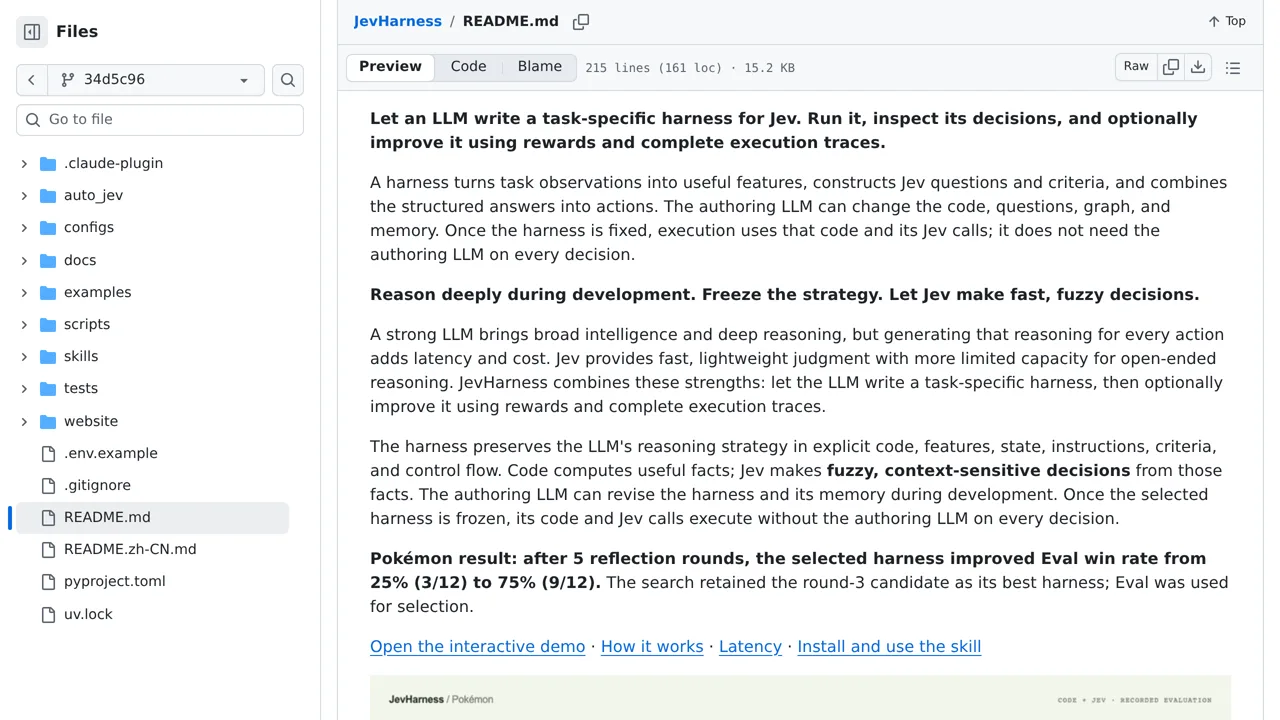
Ask a coding model to create, test, and optionally evolve a Jev decision harness for a particular task.
Keep what you find. Notes stay private.
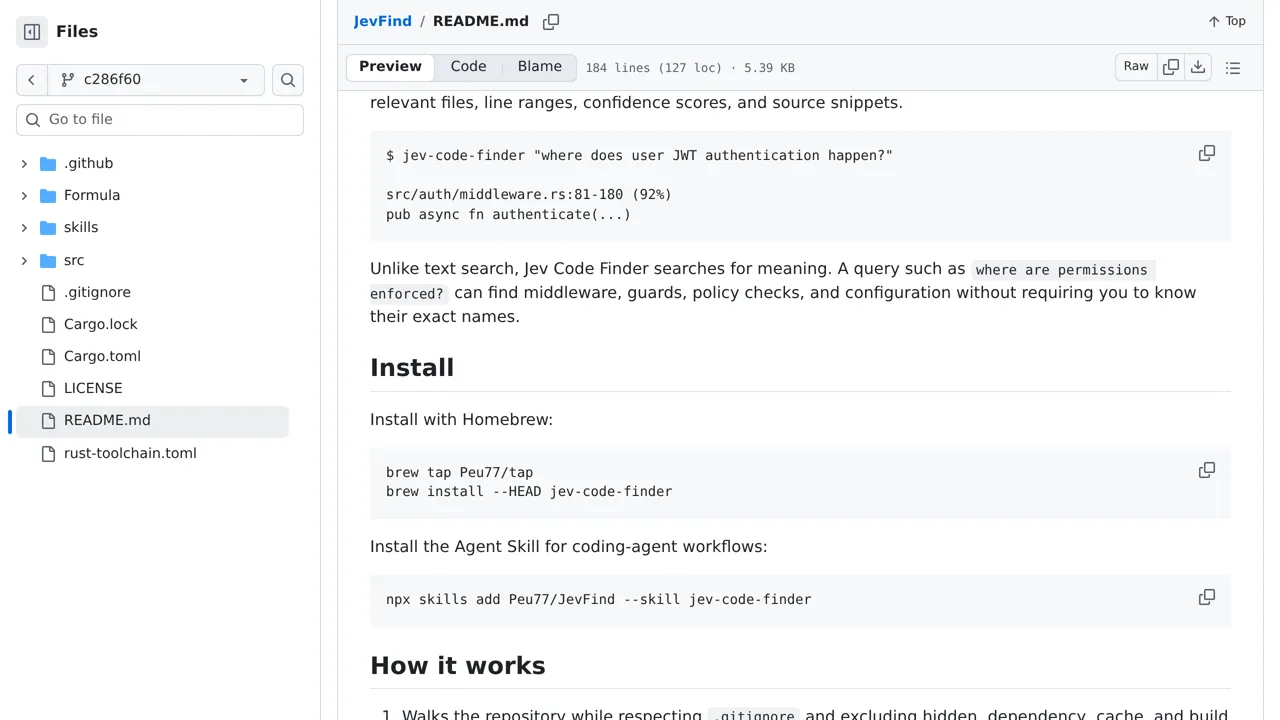
Searches a Rust codebase in two passes, first shortlisting paths and then returning relevant windows with line numbers.
Keep what you find. Notes stay private.
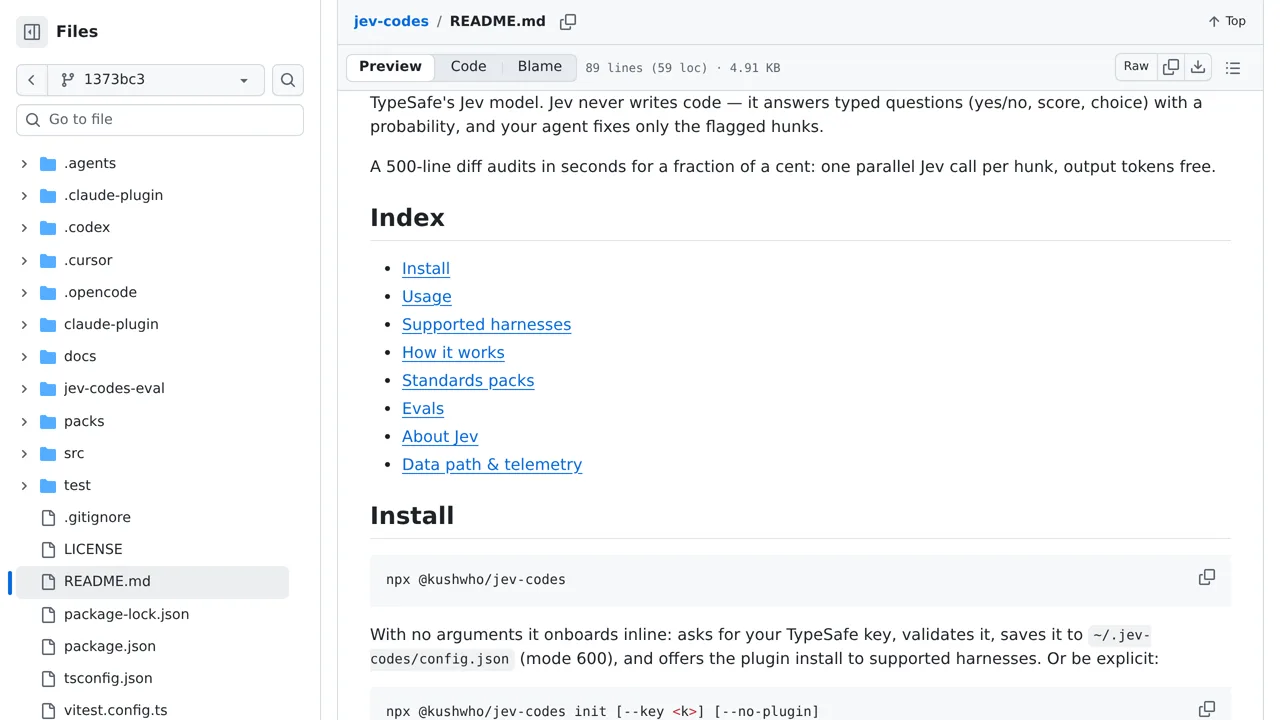
Checks changed hunks against editable standards packs before handing the findings to a coding agent.
Keep what you find. Notes stay private.
Jev, briefly
A chat model generates text token by token and hopes you parse it. Jev never generates a word. Your code sends the state of the world plus typed questions; Jev returns every answer in one parallel pass — typed values with calibrated probabilities and a confidence score your code can trust. About 70–500 ms end to end, $0.042 per million input tokens, output free. Trained with what TypeSafe calls Reinforcement Learning for Calibrated Decisions.
You define the options. Jev returns the chosen option, a probability for every option, and a confidence. The workhorse of routing, agents, and games — the answer space is always legal, so there is nothing to parse and nothing to hallucinate.
You describe ordered levels — say trivial / normal / critical. Jev returns the level, the probability of each, and a confidence. Scores turn fuzzy judgment (“how severe is this log line?”) into a number-free decision your code can branch on.
You assert a statement; Jev returns the probability that it is true — a noul. Moderation, verification, guardrails, “does this diff actually fix the bug?”: one question, one calibrated probability.
Official material lives at typesafe.ai and docs.typesafe.ai. JevMade is an independent community registry — not affiliated with or endorsed by TypeSafe AI.
Recurring lessons
Games, drones, trading bots, and browser agents all converge on the same loop: serialize the state, ask one decisive question, act, repeat. Jev’s latency makes the loop feel instant — the model lives inside the control loop, not outside it.
The answer says what; the confidence says whether to act. The most reliable entries threshold on confidence to route edge cases to a slower model or a human — automation with an honest escape hatch.
Makers rarely ask Jev to pick from everything. Local tactics prune 225 gomoku moves to ~40; DOM filters turn a page into an element table; code narrows options, Jev judges within them.
A recurring split: Jev makes every decision cheaply and instantly, and a small LLM is only invoked when a human-facing string must actually be written. Decision and generation are separate budgets.
Send the link — repo, live demo, post, or video — plus a line on what it does and which primitives it uses. Every entry is verified against its primary source before it ships.
Submit your experimentSign in first so we can reply to you. Submissions are reviewed, not published automatically.