Read & learn
Written guides.
Understand Jev, one idea at a time. Walkthroughs, recipes, and writeups — our notes first, the original next.
Learn, build, and play with Jev — from deep technical guides to creative experiments.
Read & learn
Understand Jev, one idea at a time. Walkthroughs, recipes, and writeups — our notes first, the original next.
Watch & learn
See an idea take shape. Tutorials, demos, and deep dives, organized by topic and credited to their creators.
Make & explore
See what builders made with Jev. Games, tools, repositories, articles, and more — traced to their sources.
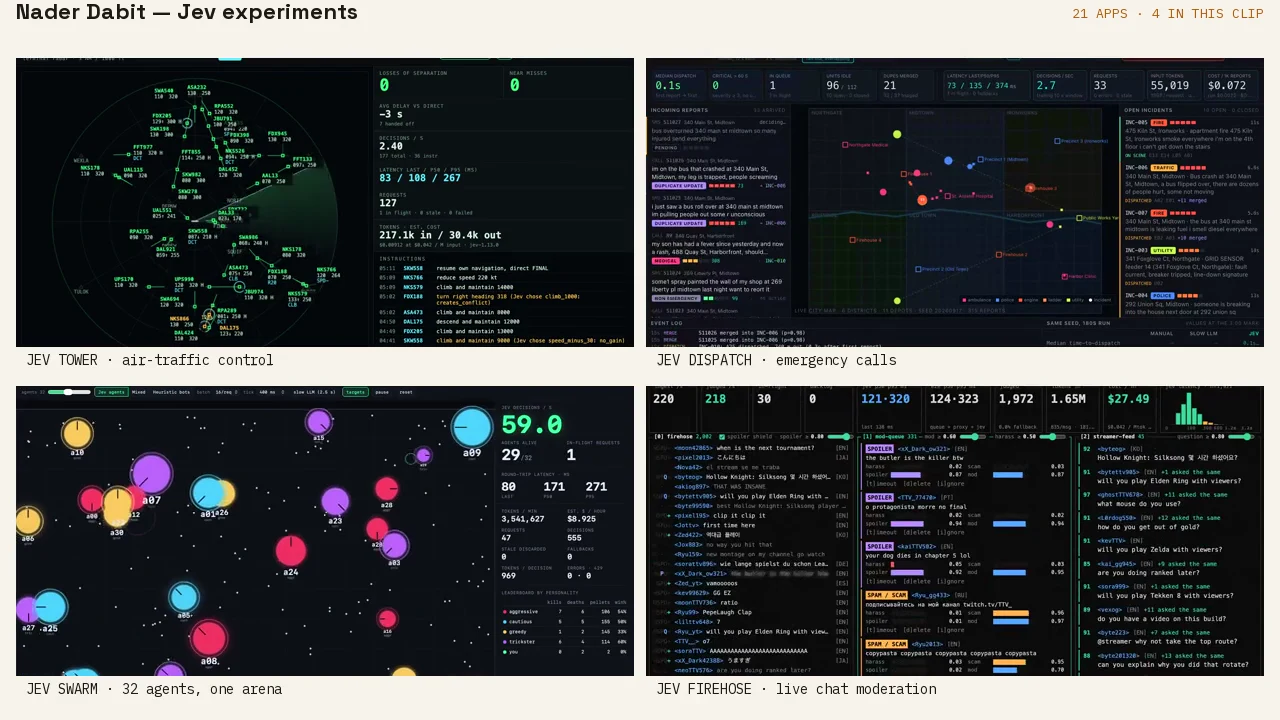
Every category, from games and tools to repositories and writeups, traced to a primary source.
Same ideas.
Different paths.
This is the full registry, not just the featured picks. Figures like speed, cost, and stars are maker-reported or captured snapshots, not JevMade measurements.
311 experiments · showing 181–240
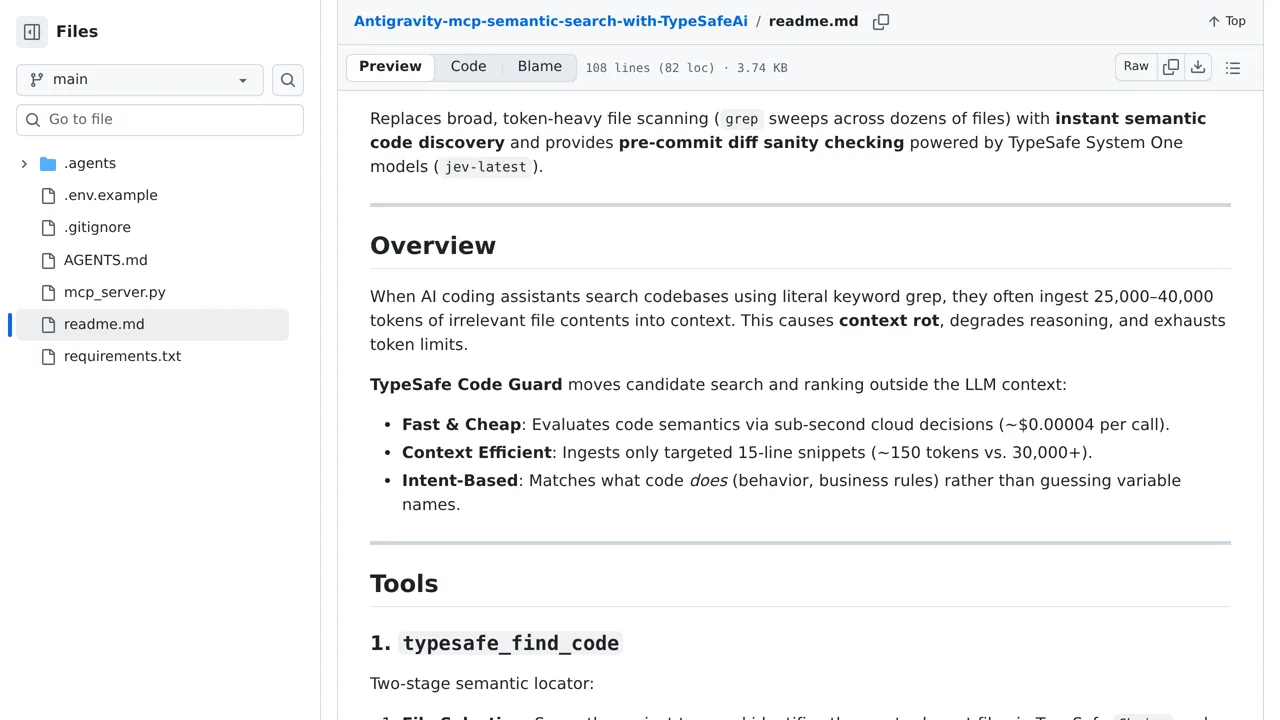
An MCP server for semantic code search and diff checks in Antigravity, Cursor, and Claude Code.
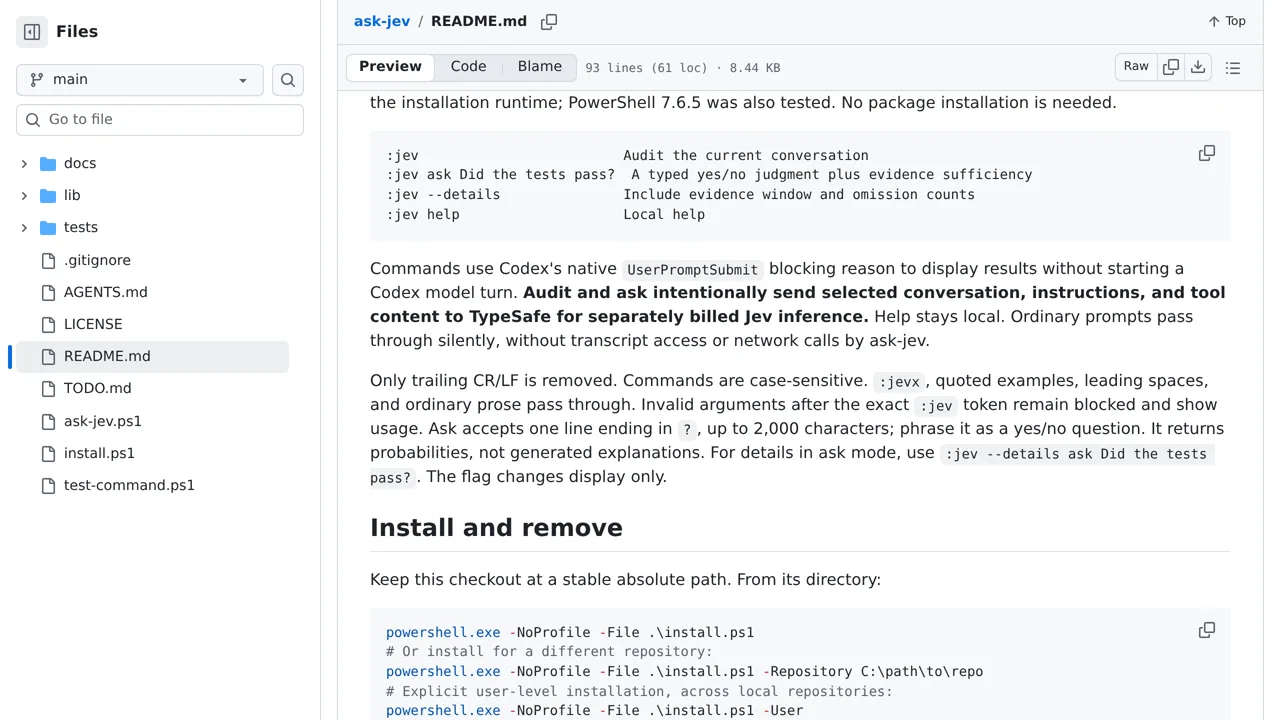
A PowerShell tool that asks Jev to review coding-agent conversations and answer focused questions about them.
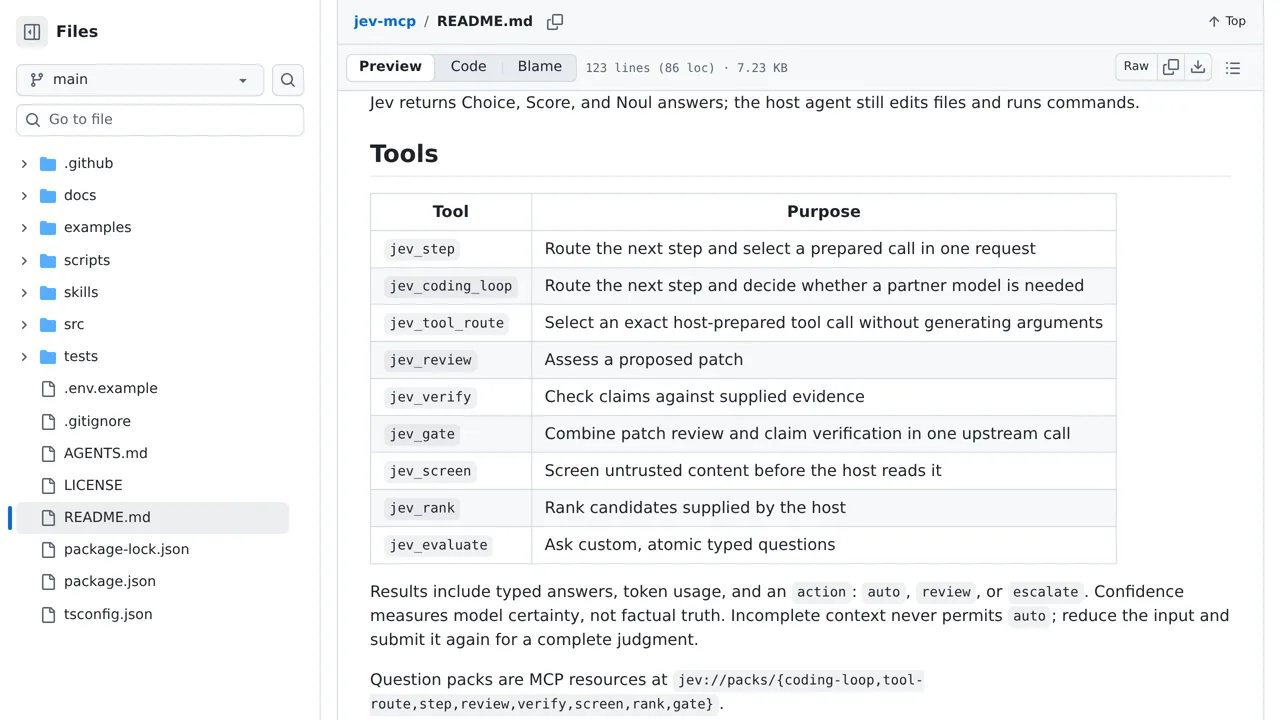
An MCP server that brings Jev judgments into Cursor, Codex, and other MCP clients.
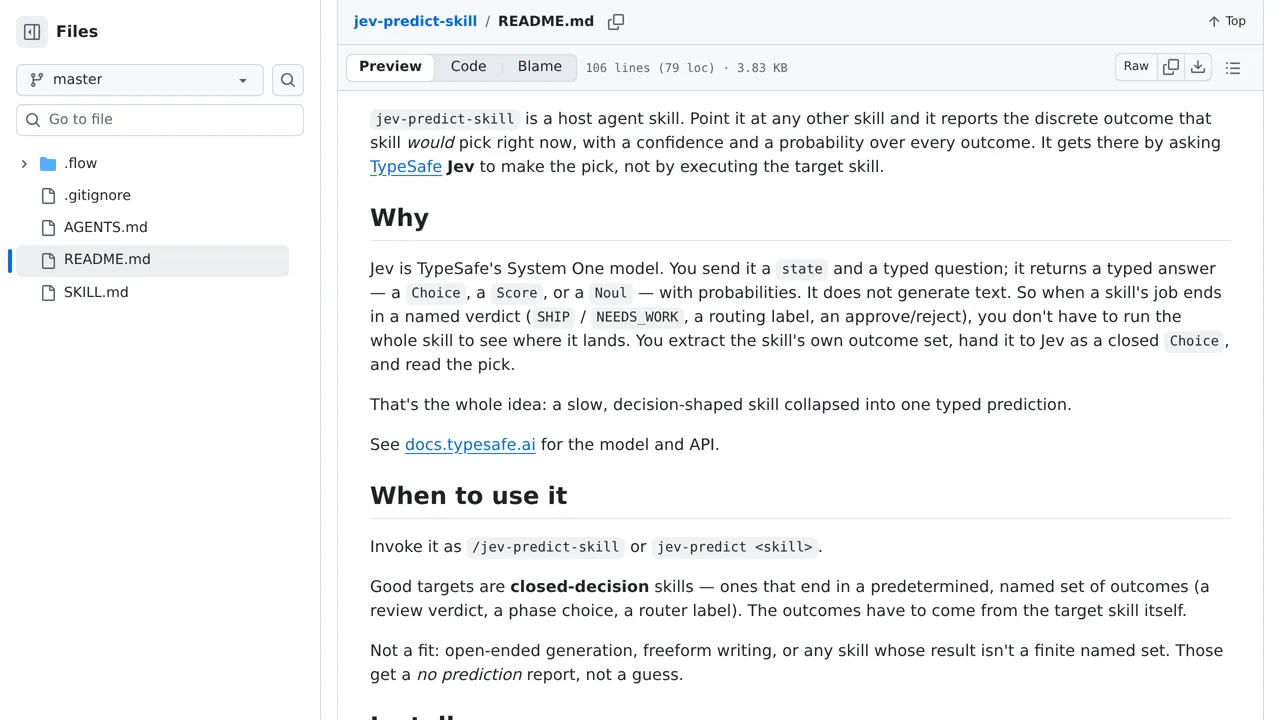
An agent skill that uses Jev to predict another skill's next closed decision without running it.
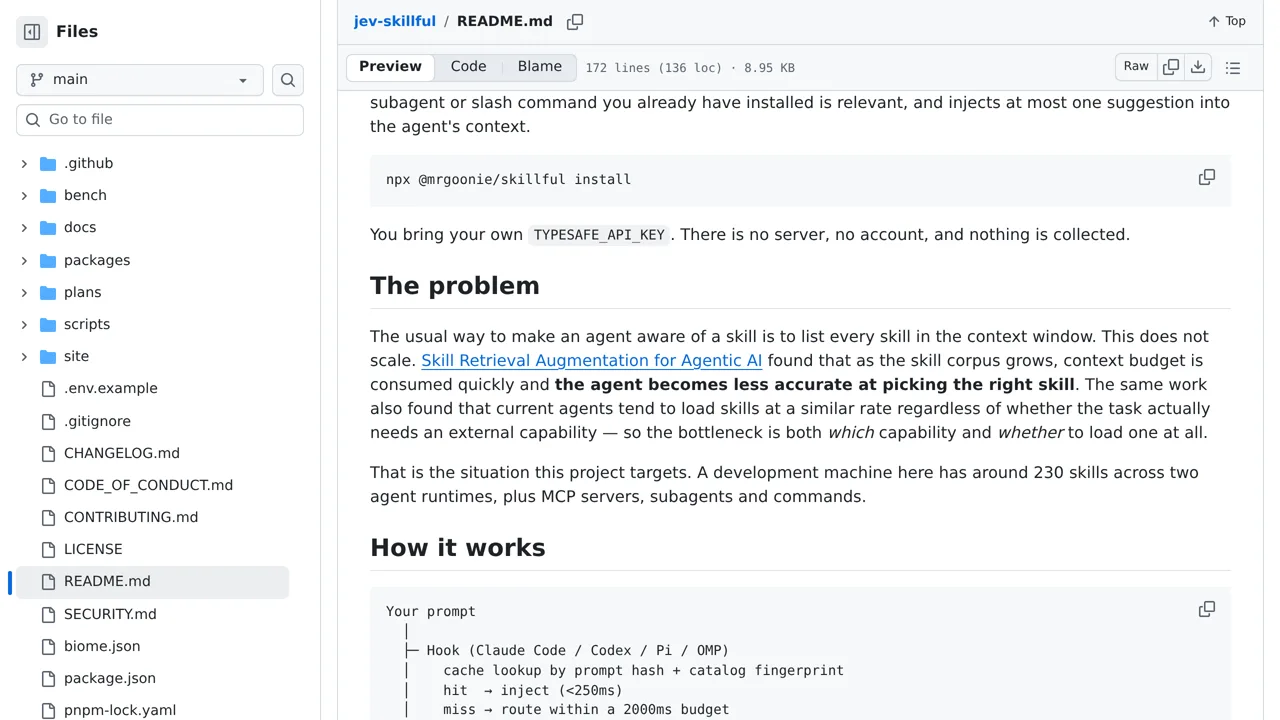
A capability router that matches each coding prompt with installed skills, MCP servers, agents, and commands.
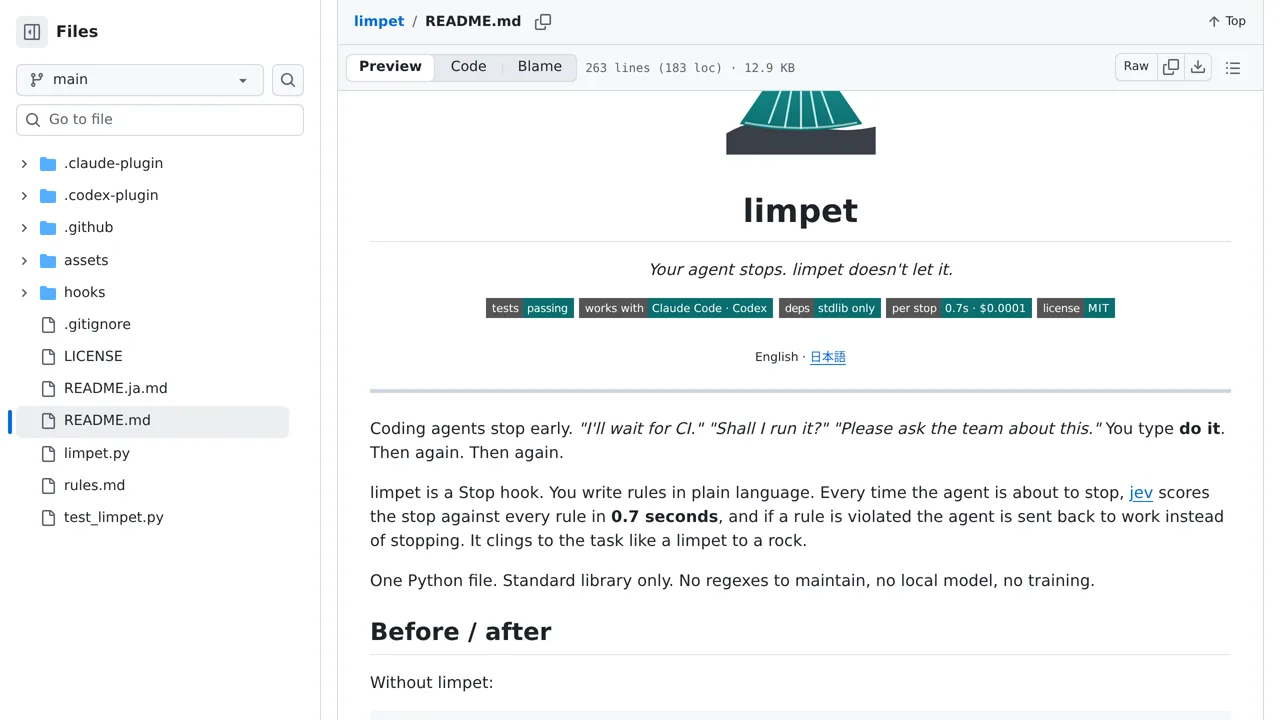
A stop hook that keeps coding agents working until plain-language completion rules are satisfied.
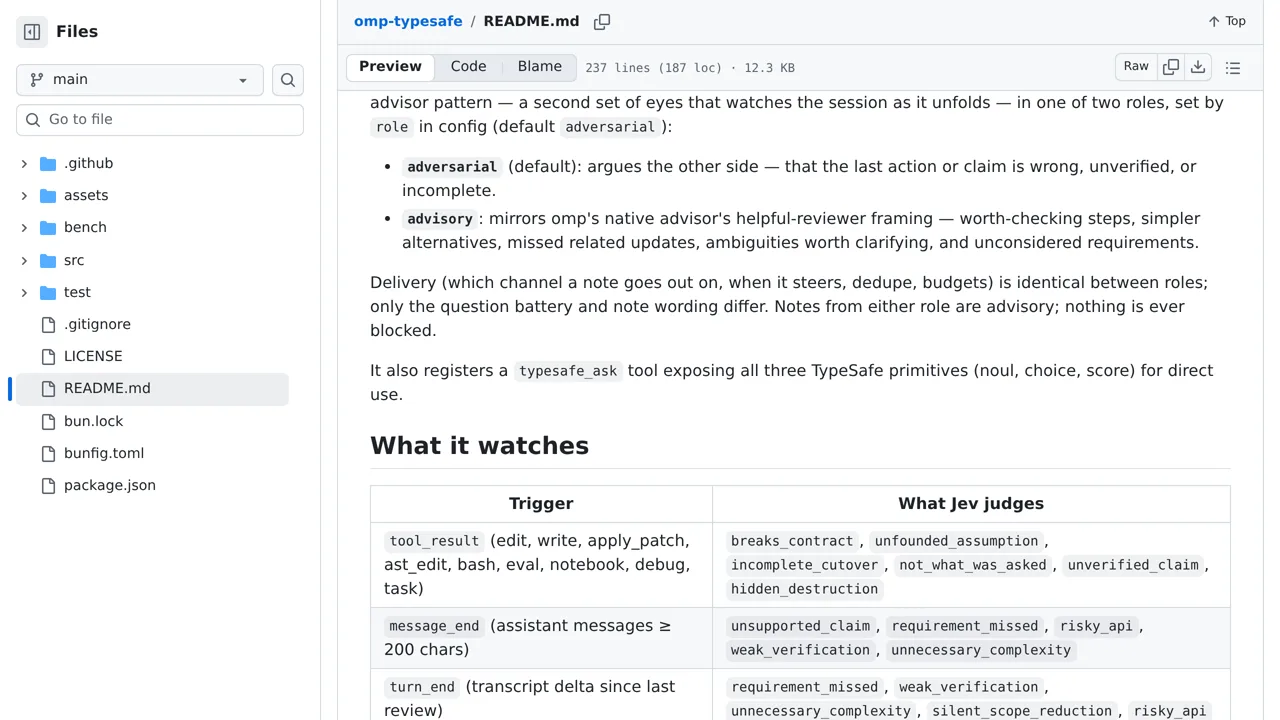
Ask Jev to review code or answer a question from inside Oh My Pi.
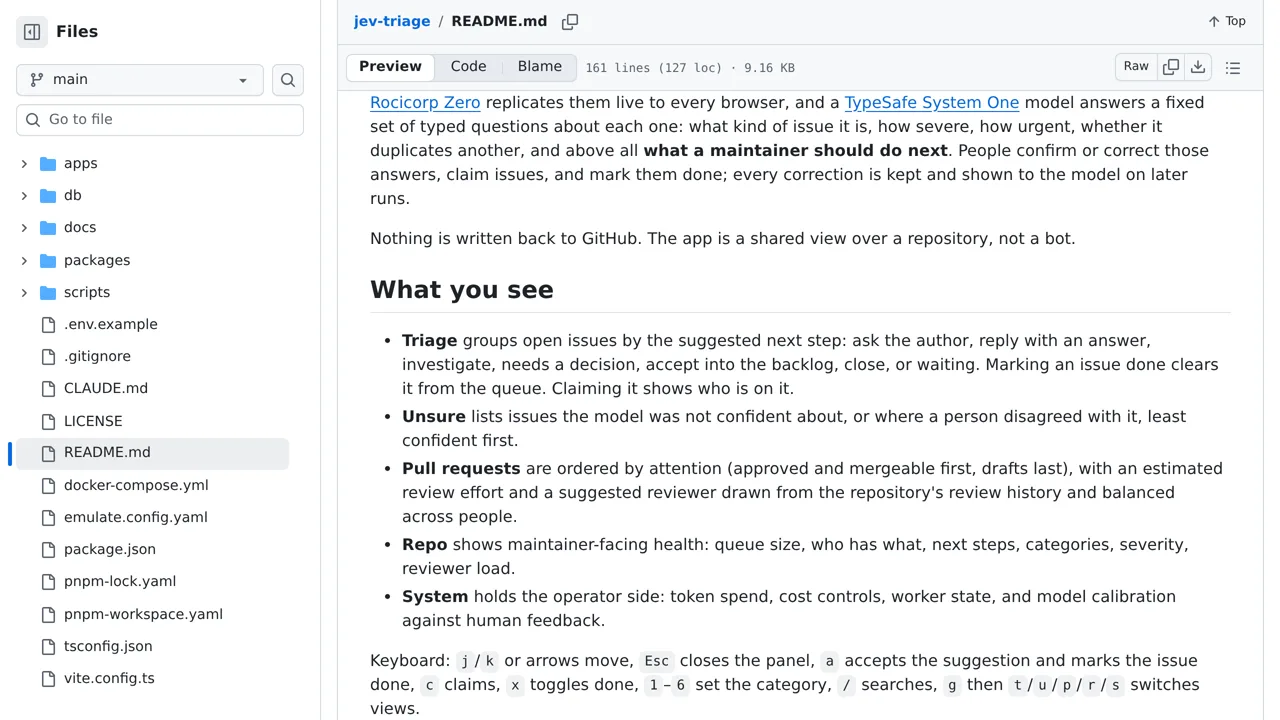
Sort through repository issues with help from Jev, while Zero keeps the repository data in sync.
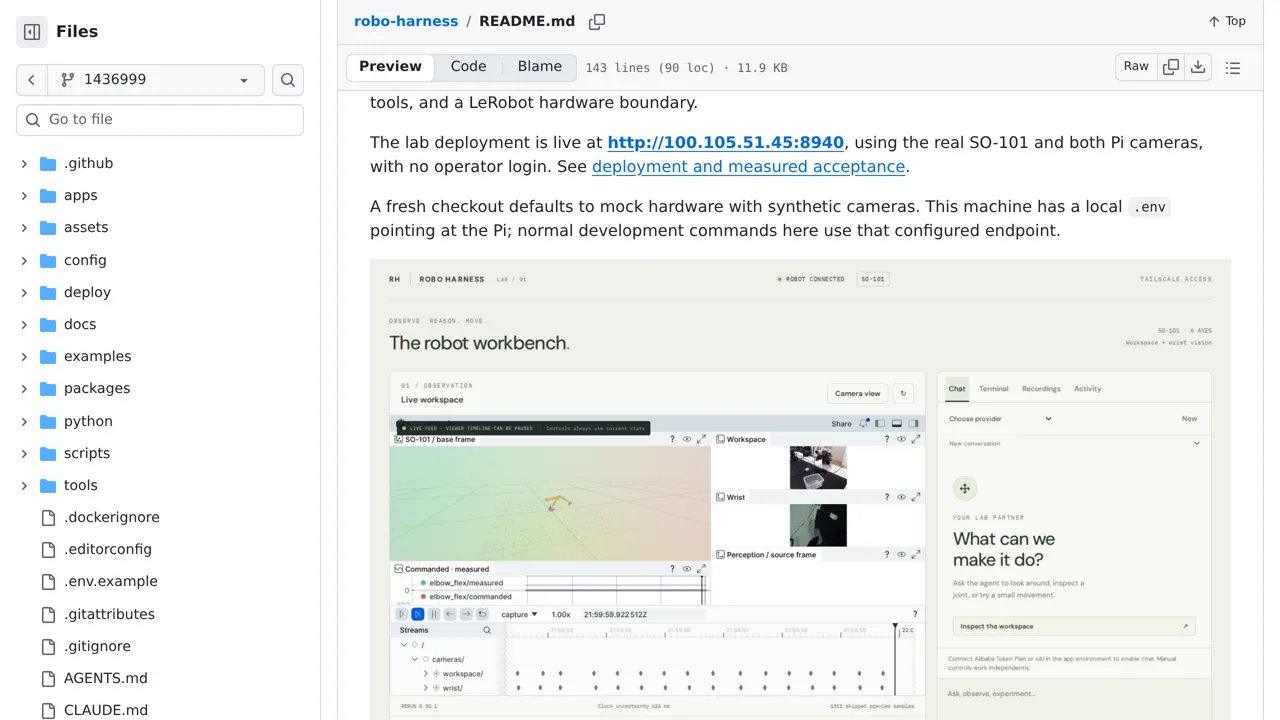
Inspect and operate an SO-101 robot workbench where Jev can choose bounded joint movements.
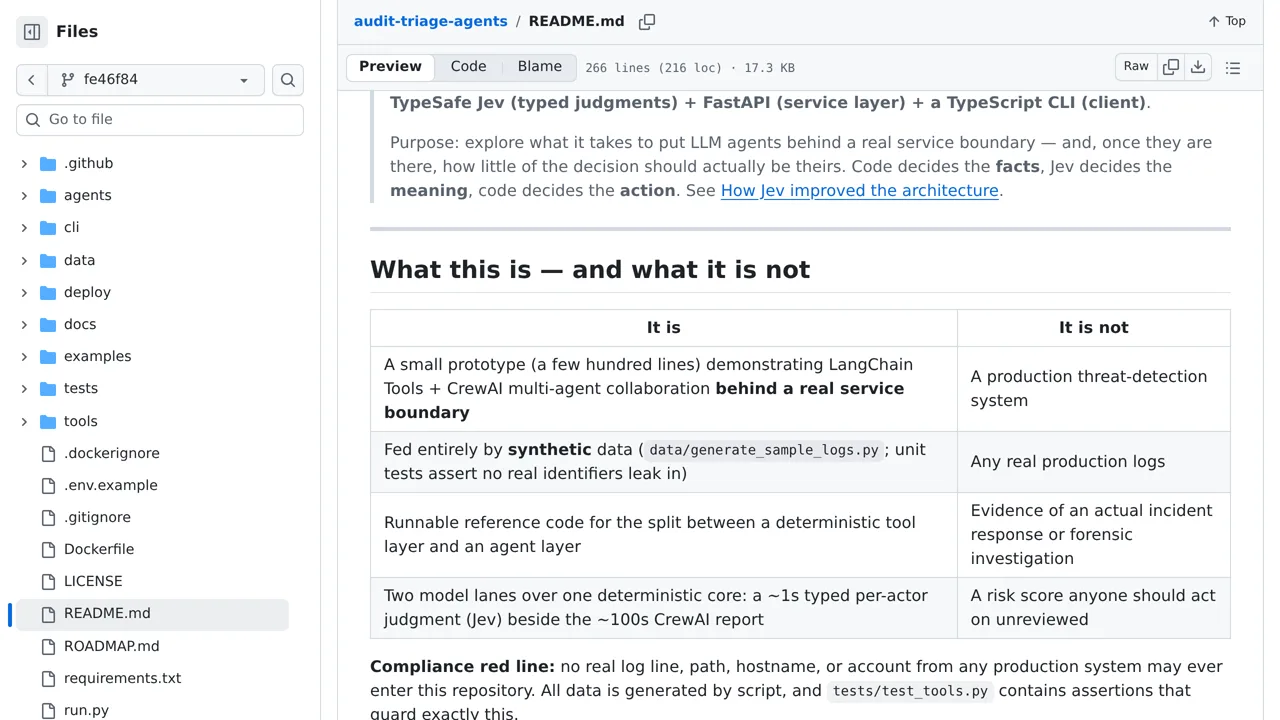
Lets agents gather audit context while Jev assigns severity, confidence and routing judgments for code-owned policy.
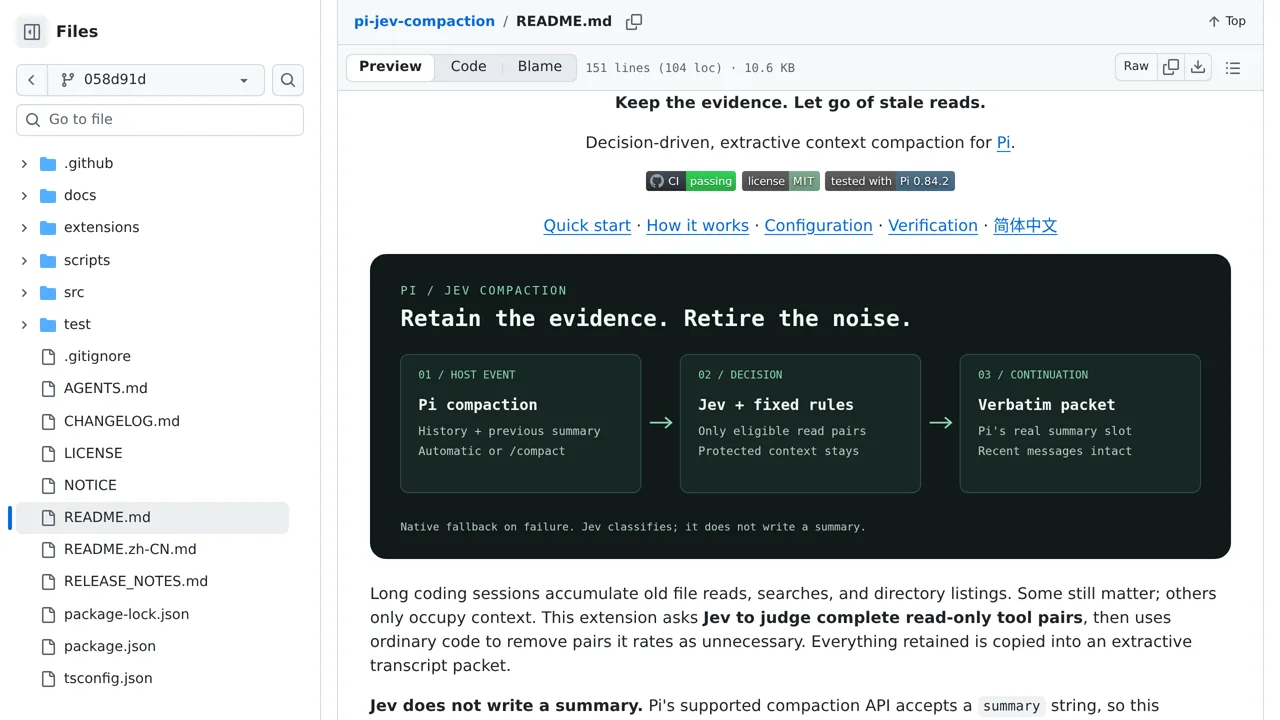
Remove stale read-only Pi tool exchanges while preserving every retained piece of evidence byte for byte.
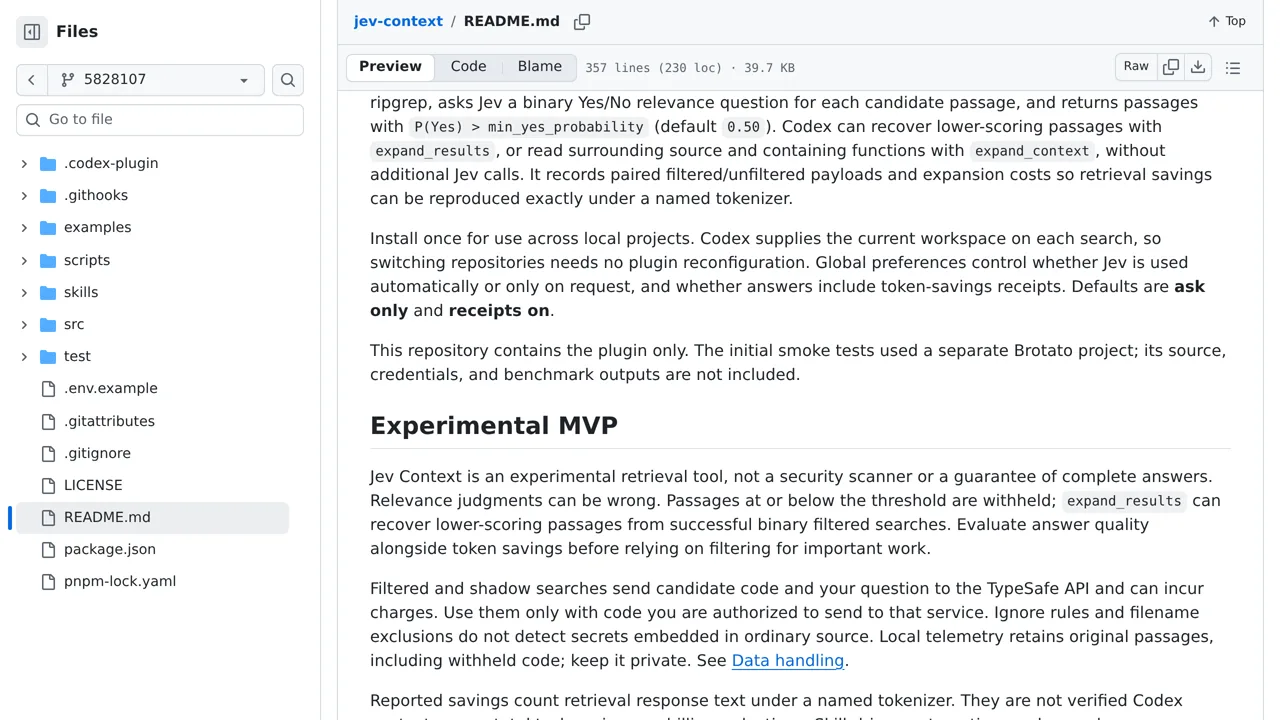
Filter ripgrep passages for a Codex task without losing the ability to reveal hidden results or nearby code.
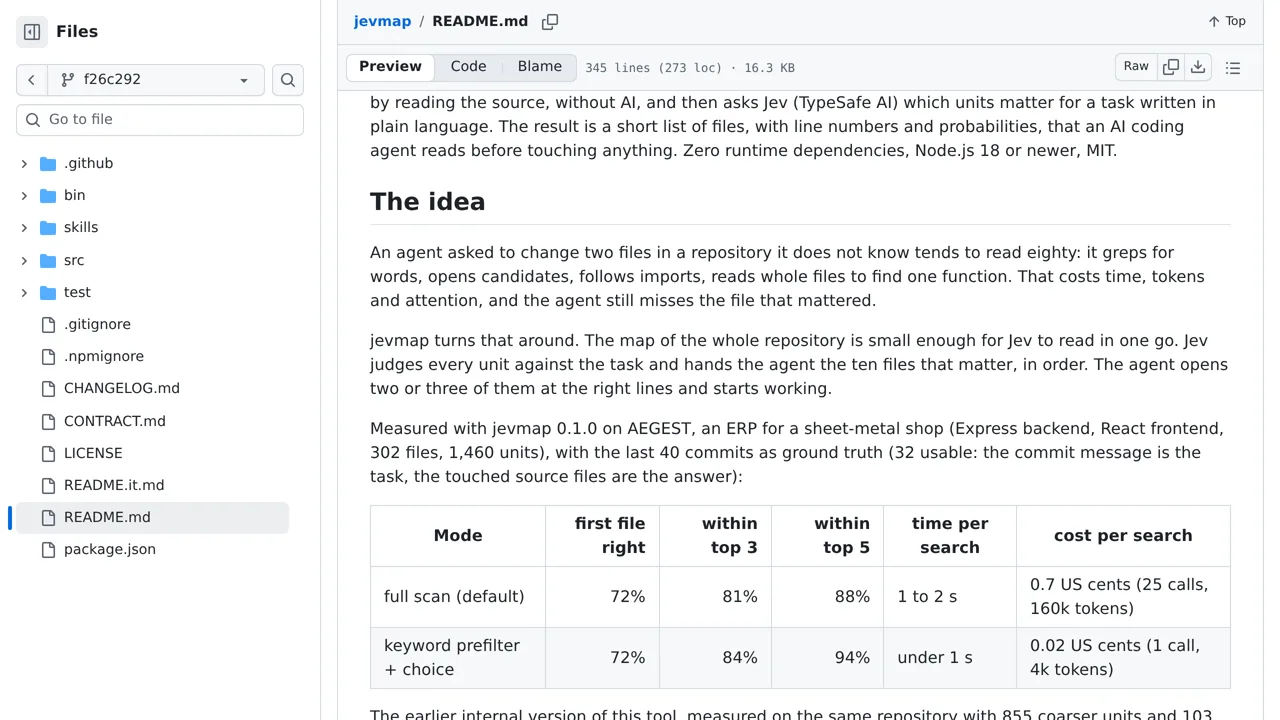
Find files and line ranges relevant to a coding task with a searchable map of your source code.
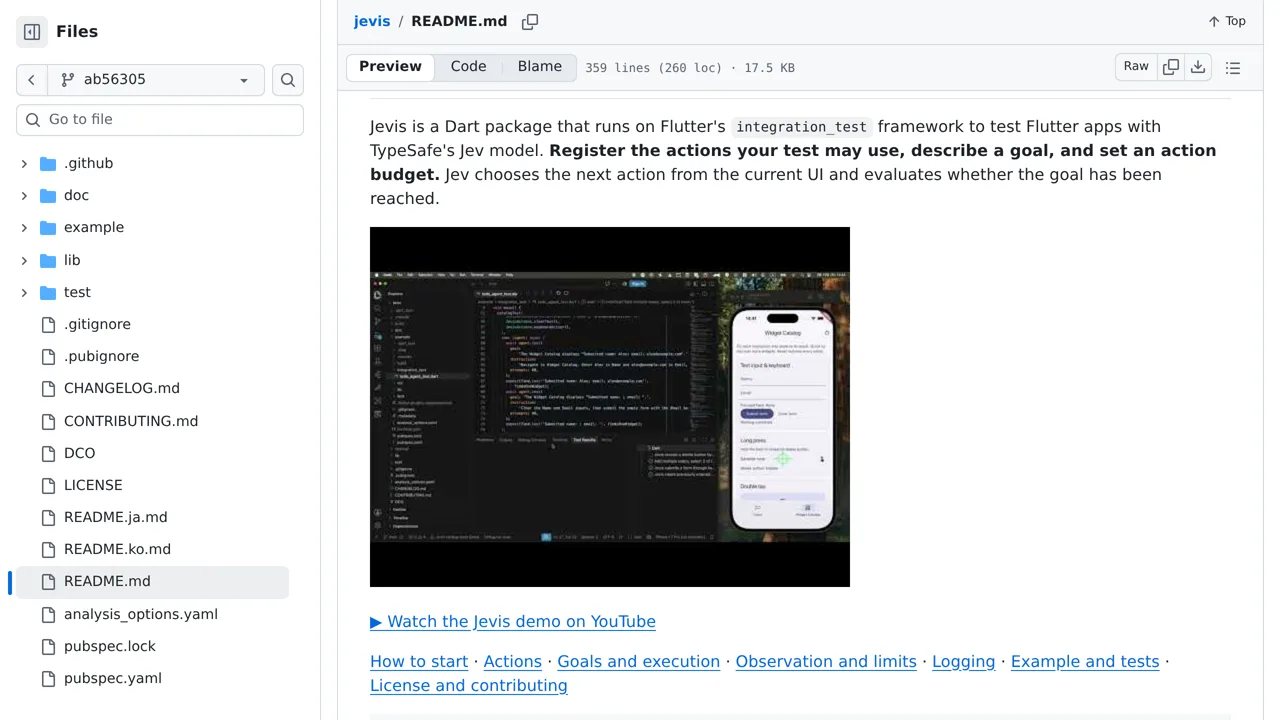
Lets a Flutter integration test state its goal, then chooses registered UI actions until that goal is met or attempts run out.
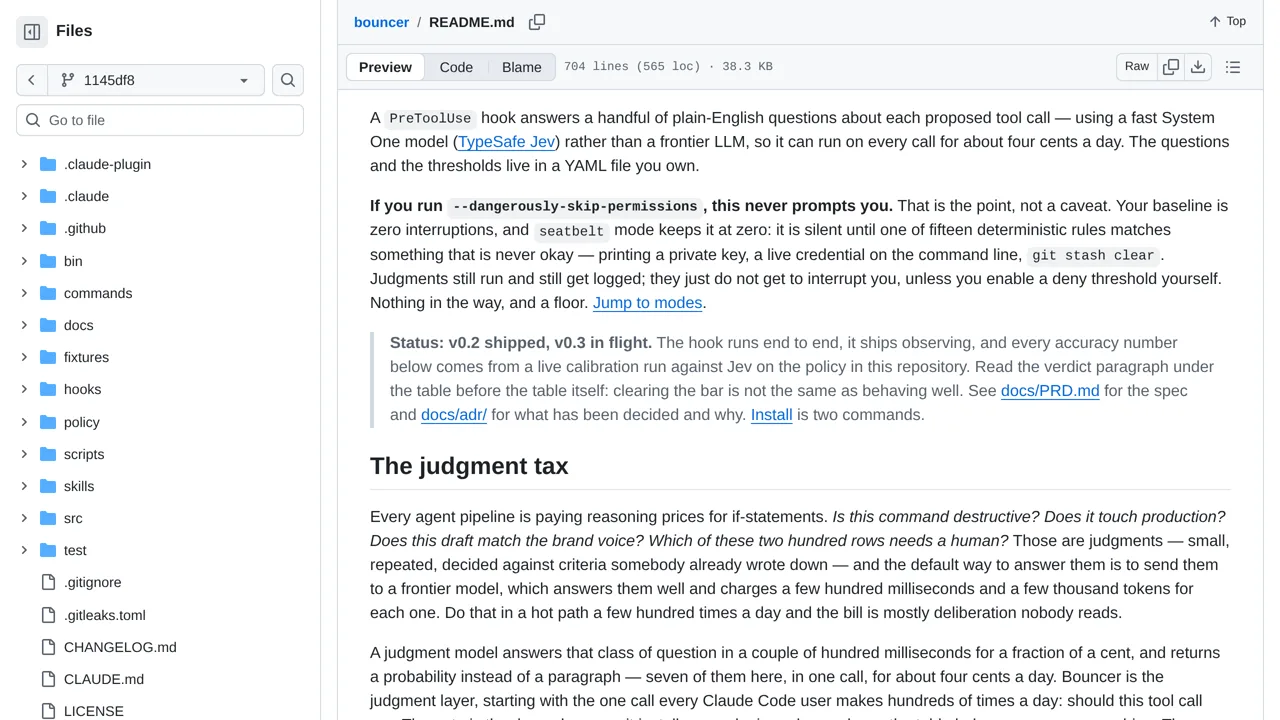
Applies a YAML policy to Claude Code tool calls, using Jev scores to allow, deny, or review each action.
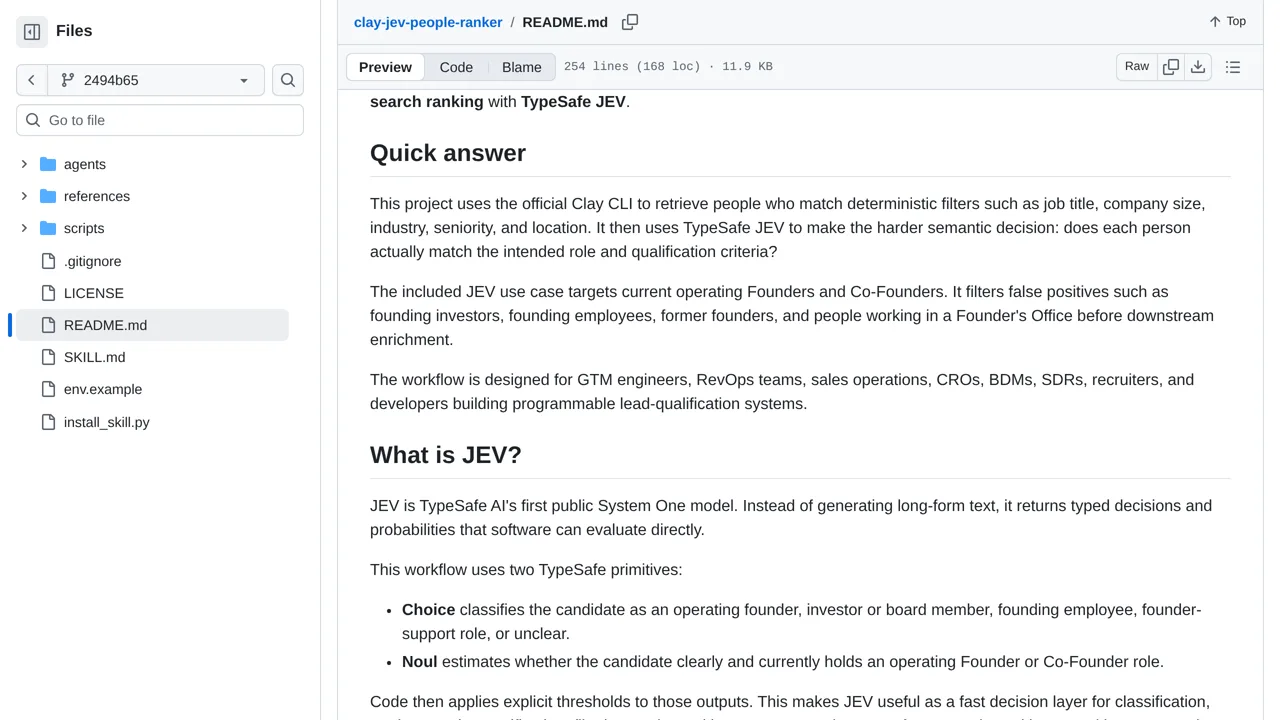
Ranks Clay people-search results with Jev probabilities for role fit and current operating-founder status.
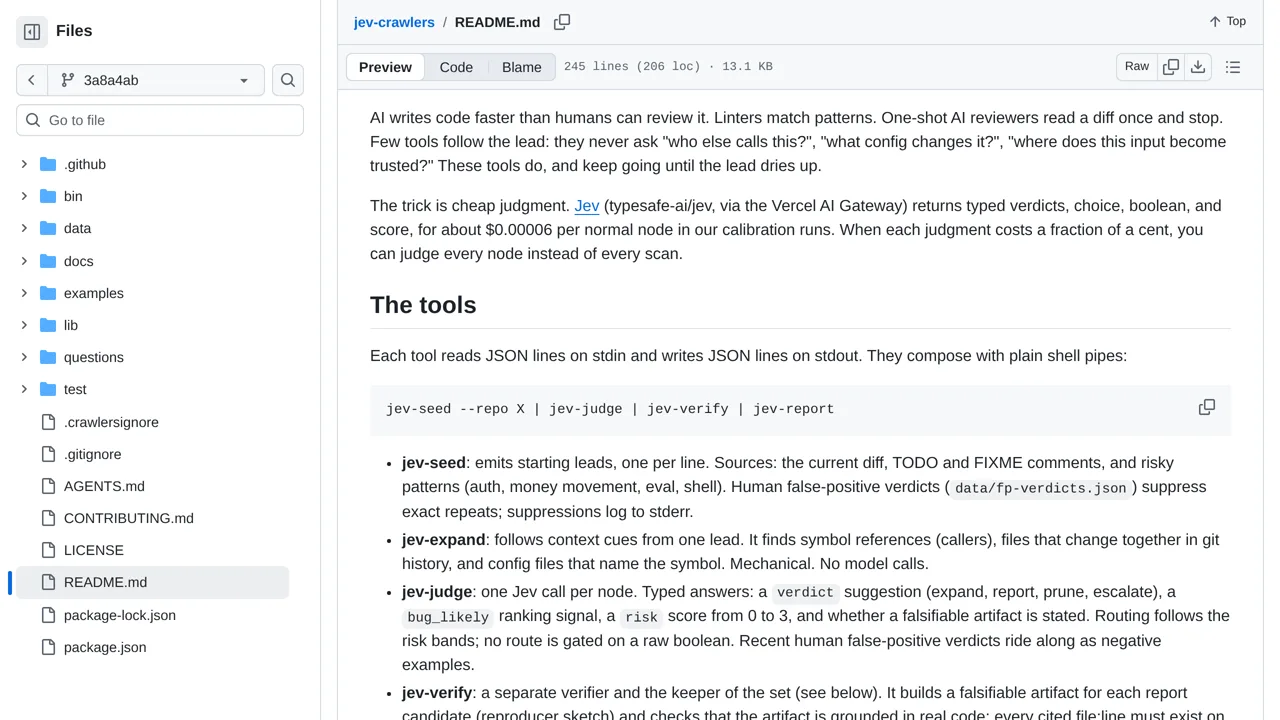
Composes Unix-style tools that seed, expand, judge, verify, and report code defects while preserving evidence chains.
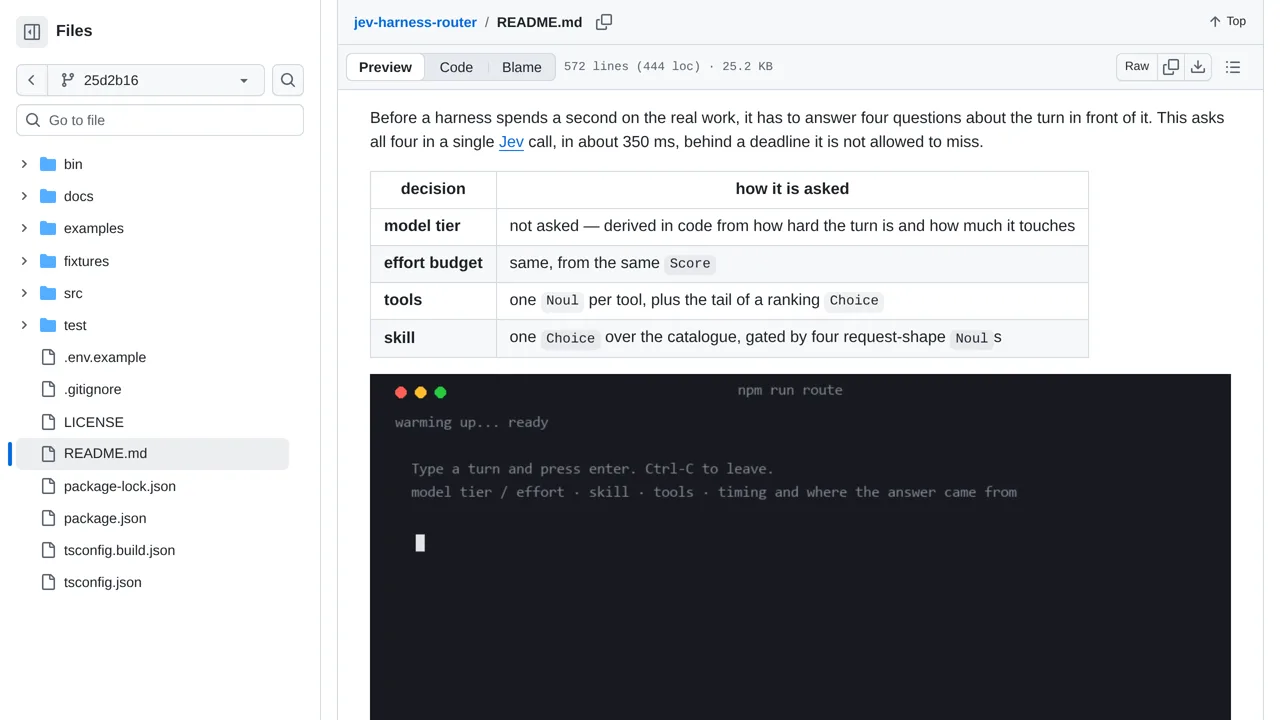
Routes each agent turn’s effort, tools, skill, and model tier from one bounded Jev request behind a hard deadline.
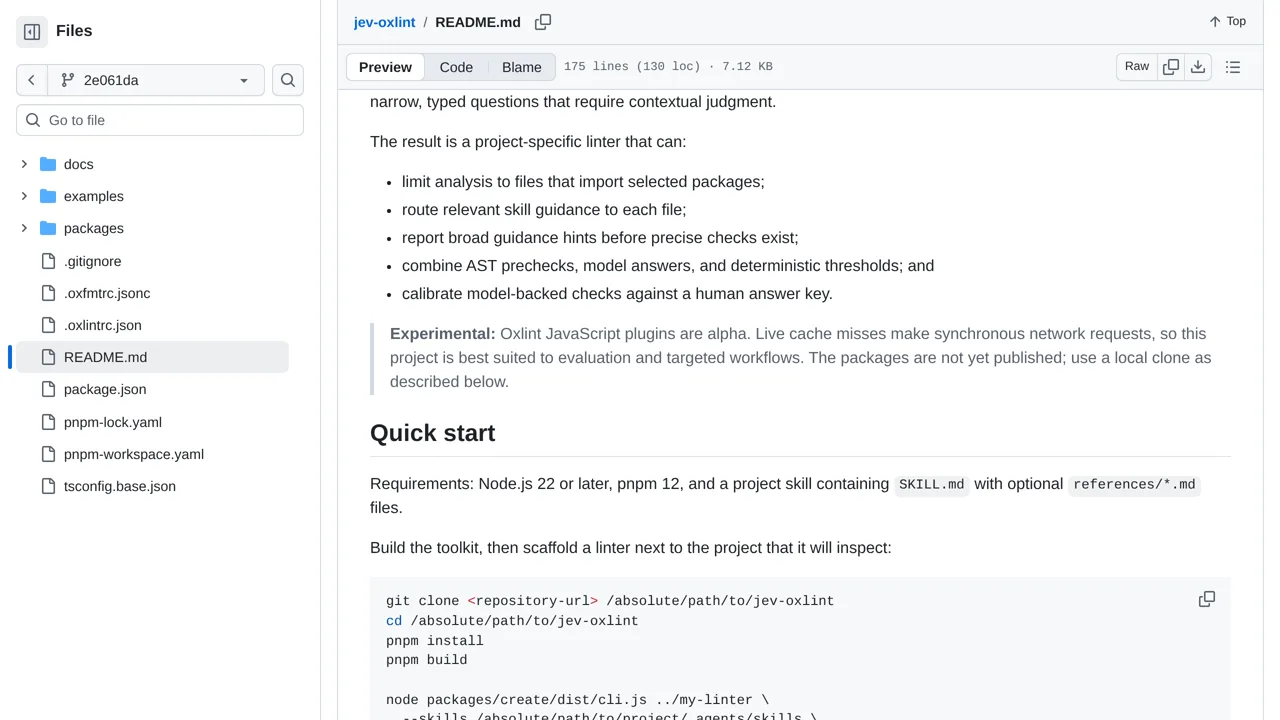
Turns an agent skill into project-specific Oxlint checks, using AST rules for structure and Jev for contextual judgement.
Adds a zero-dependency CLI and coding-agent skill for batching narrow yes/no, choice, and score judgements.
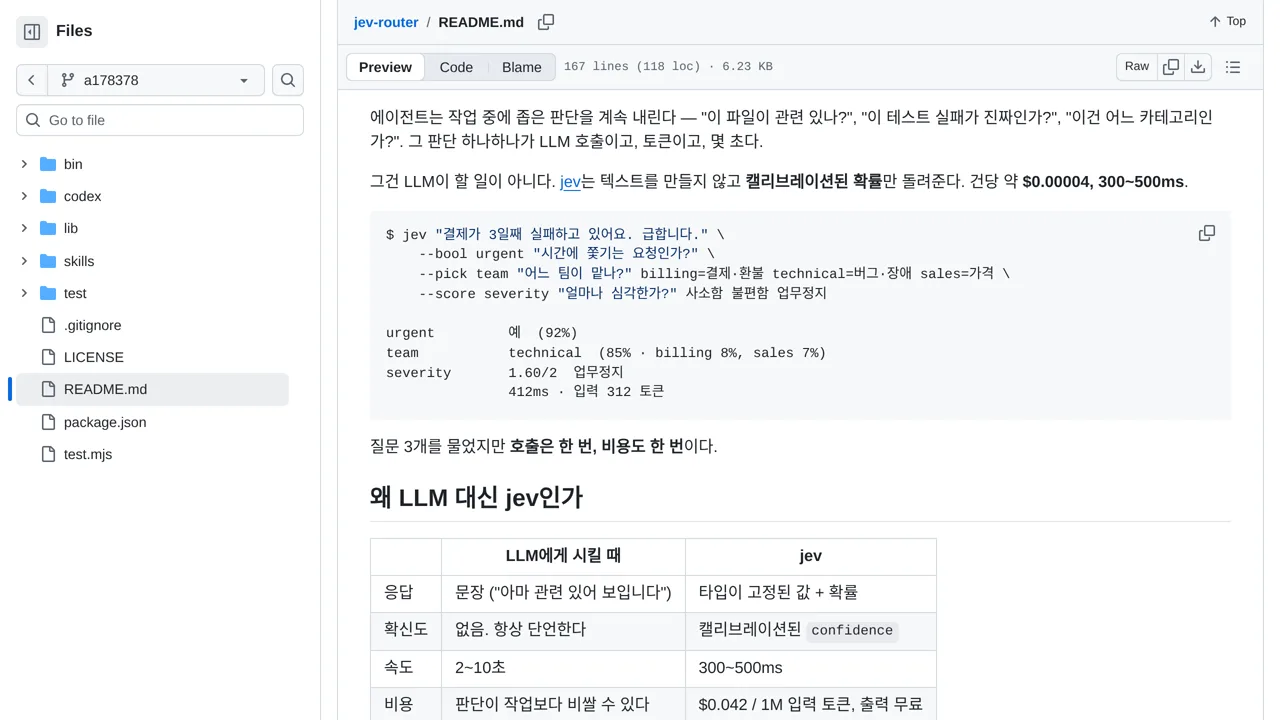
A command-line referee judges supplied evidence with Jev, compares choices in both option orders and keeps local decision receipts.
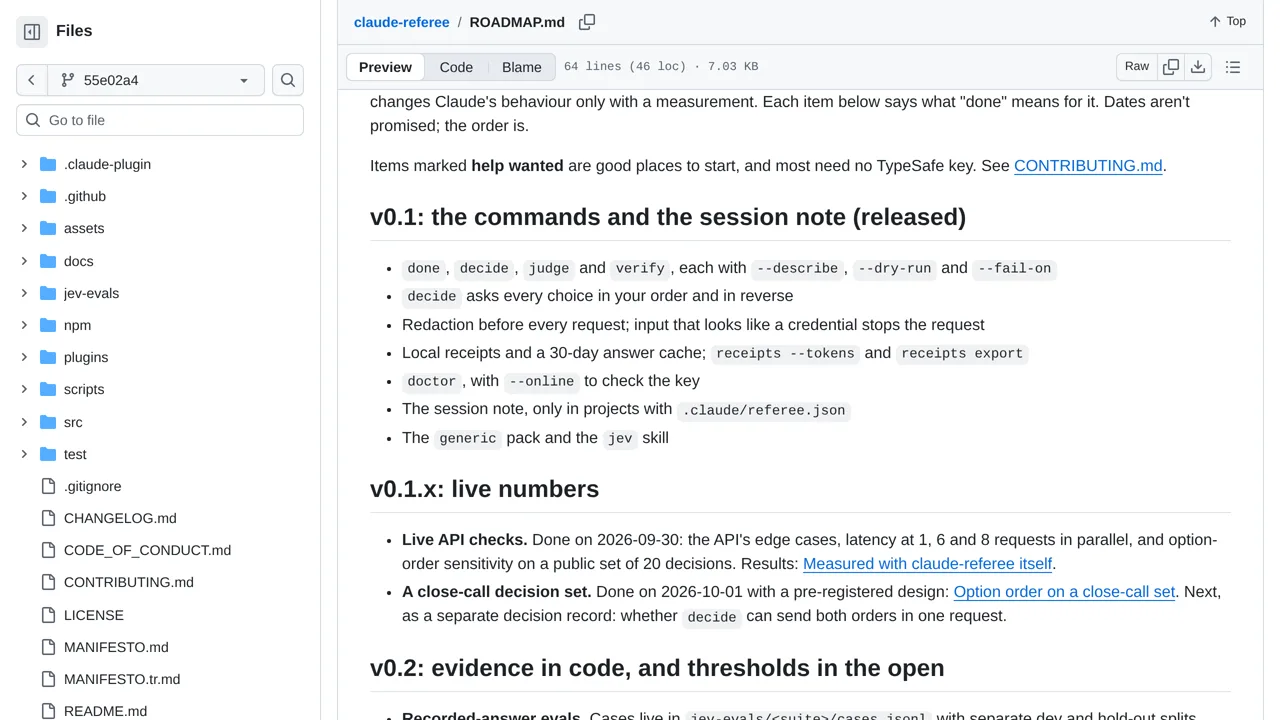
Let a coding agent fix a GitHub issue, with tests and AI reviewers checking its work before it proceeds.
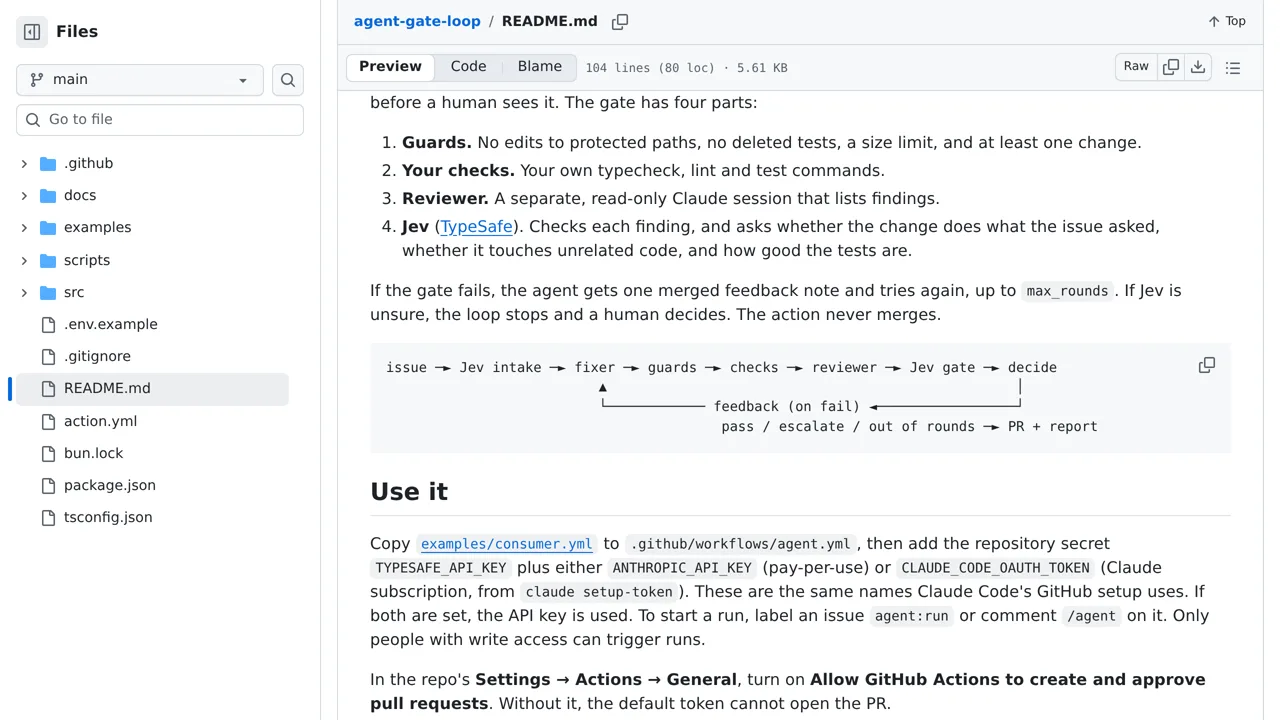
An experiment in checking an agent's work before handing it to another agent, with Jev helping review the evidence.
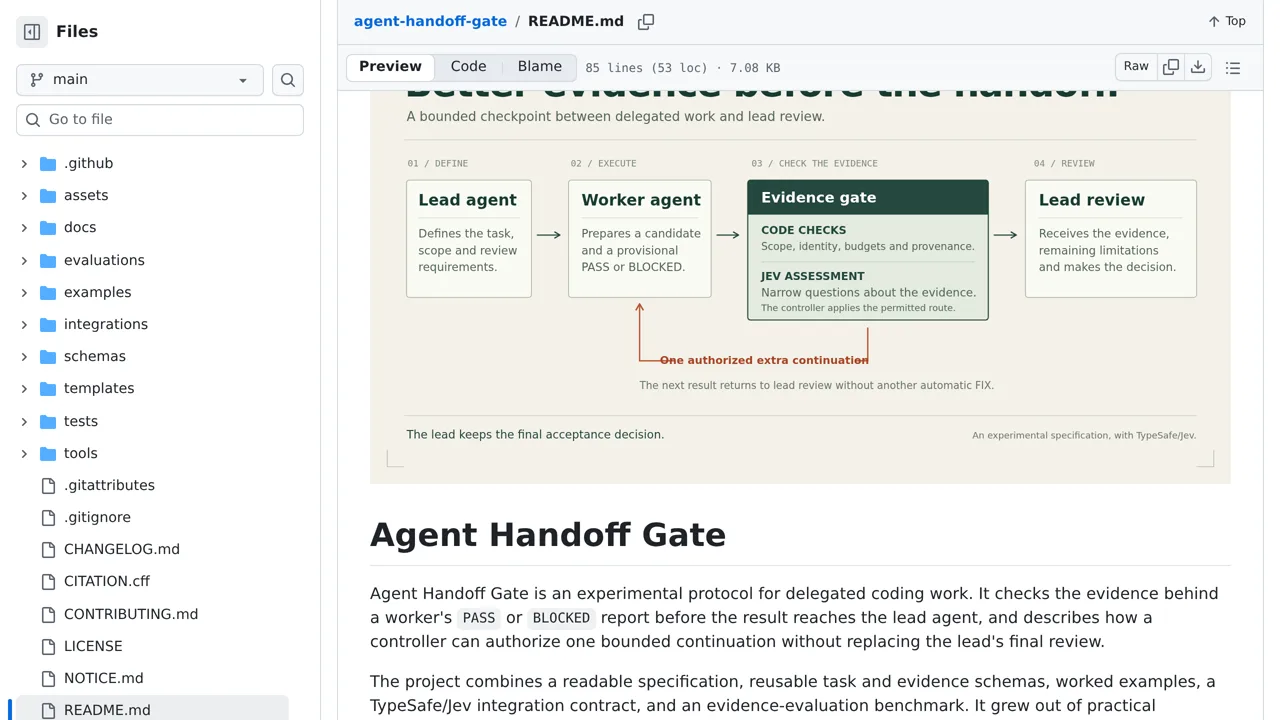
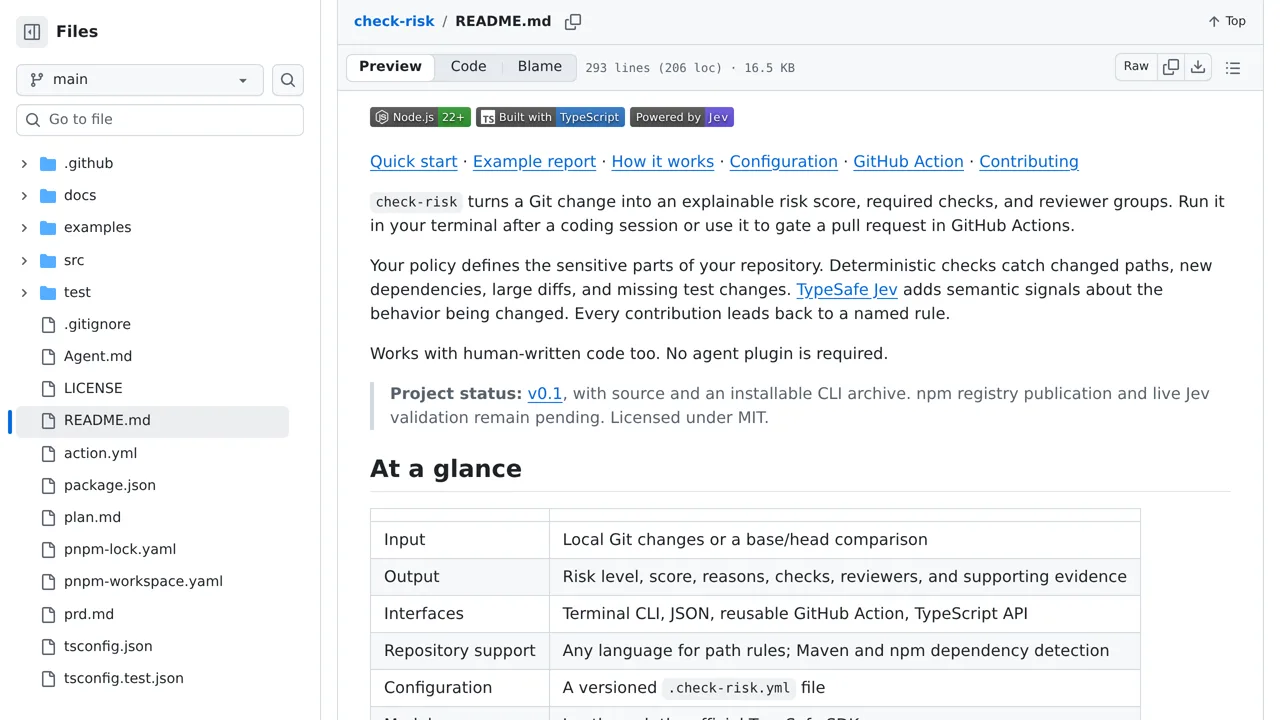
A CLI and GitHub Action that combines deterministic rules with Jev to assess the risk of code changes.
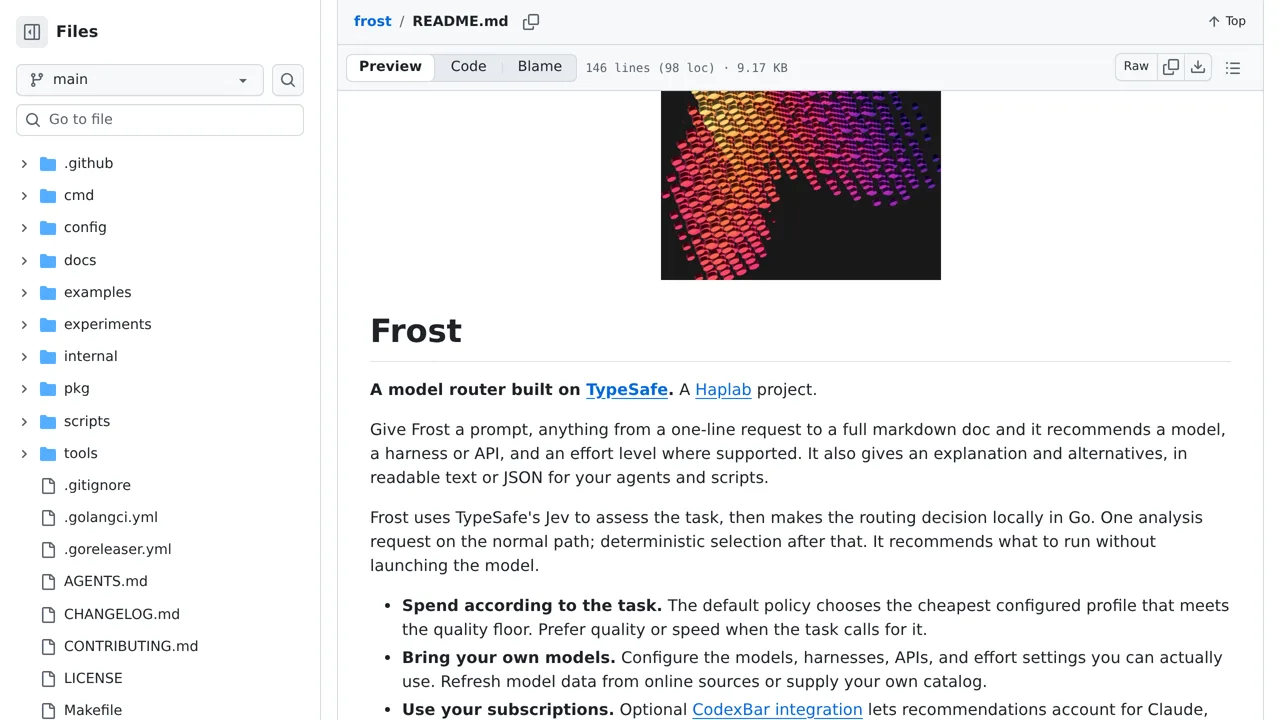
A configurable Go CLI that uses Jev to route prompts between models.
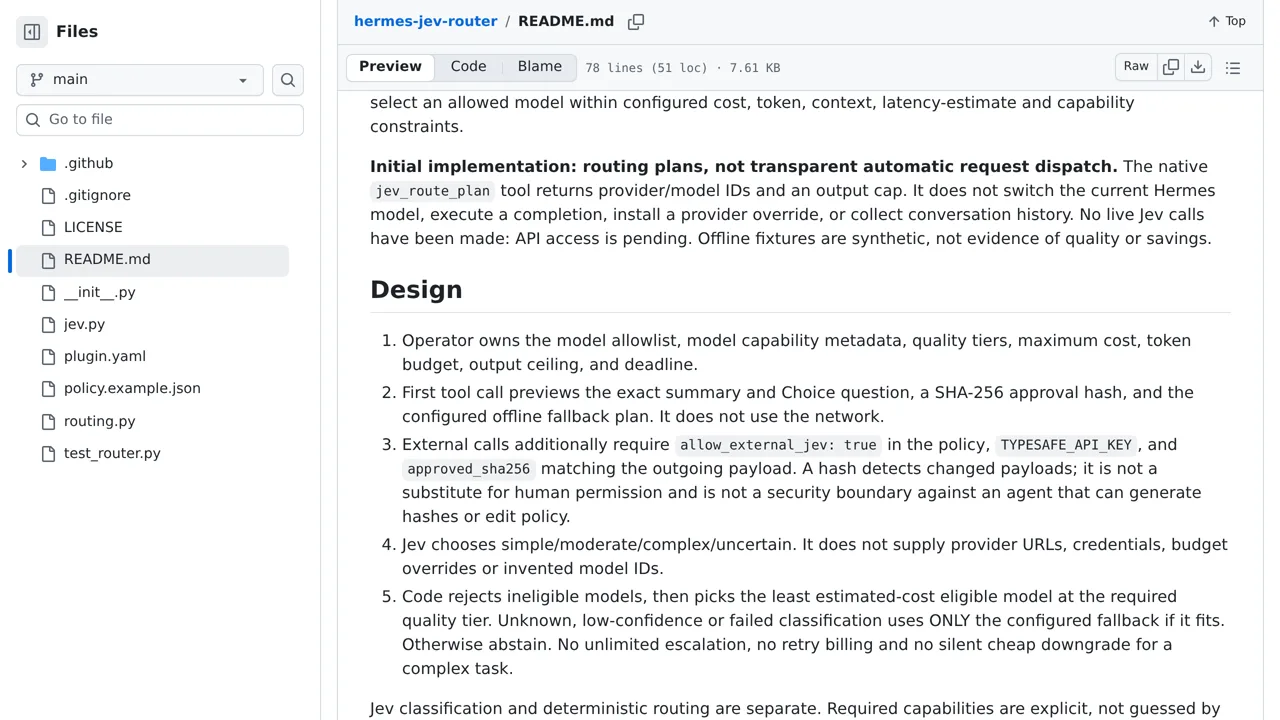
An experimental Hermes plugin for planning model routes within budget and capability constraints.
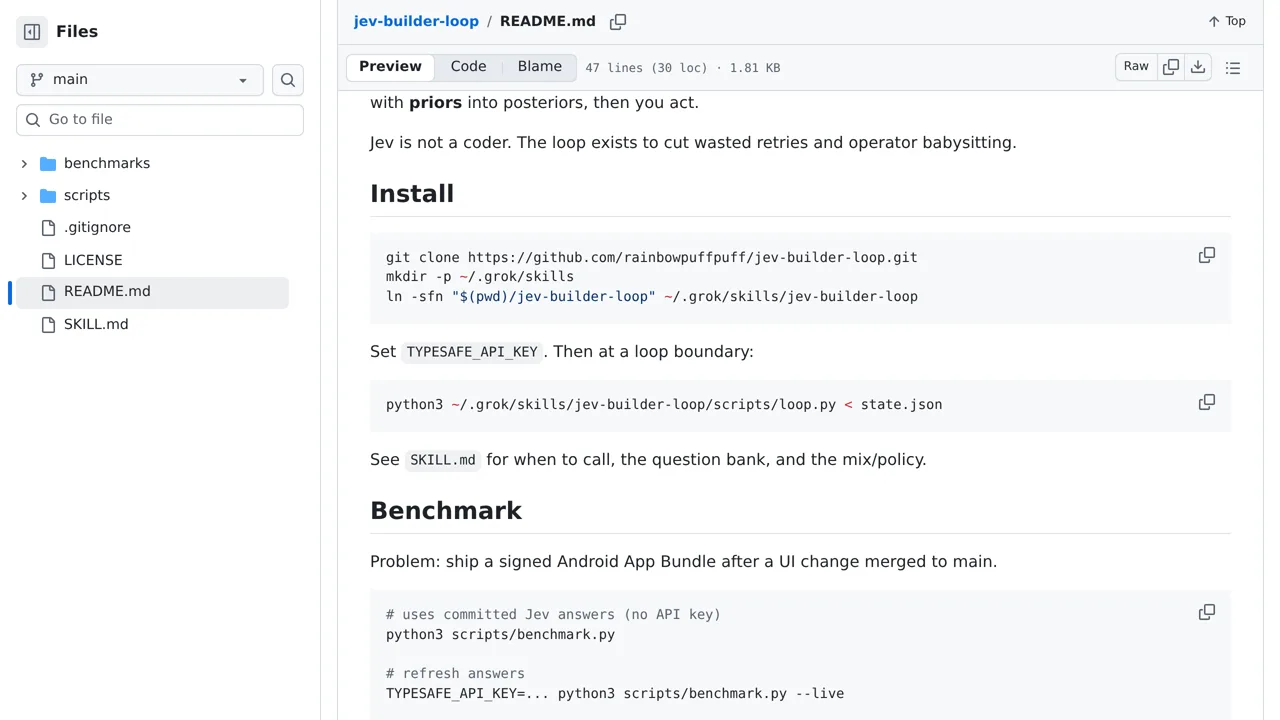
A Grok skill that combines Jev probabilities with prior beliefs to choose the next action in a builder-agent loop.
An automated pull-request reviewer with Jev-based approval thresholds and escalation to trusted owners.
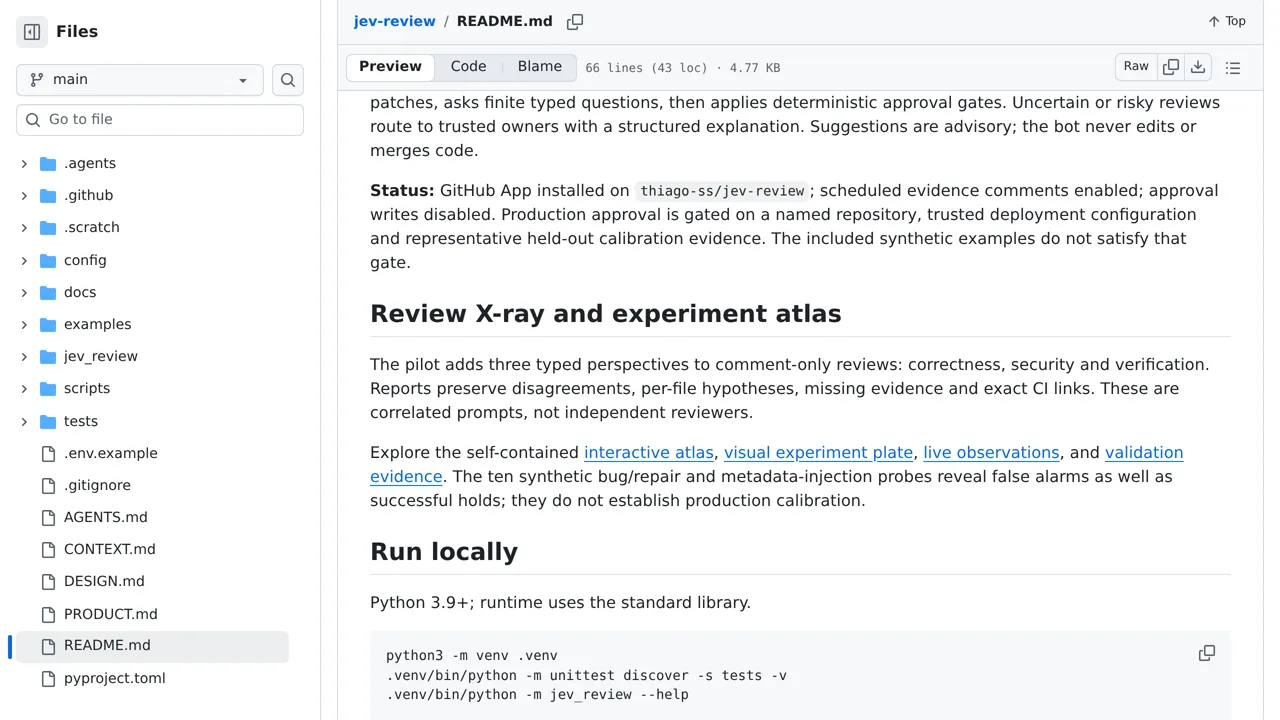
A Jev-powered permission gate for the omp coding agent.
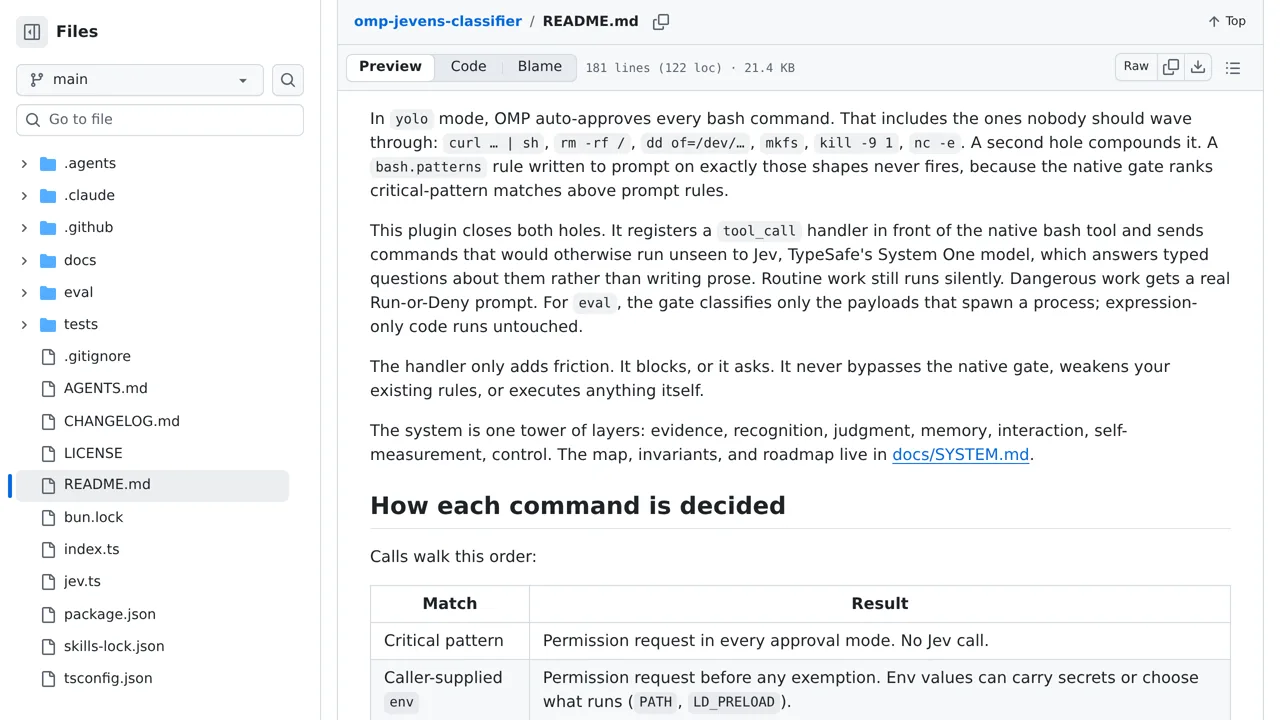
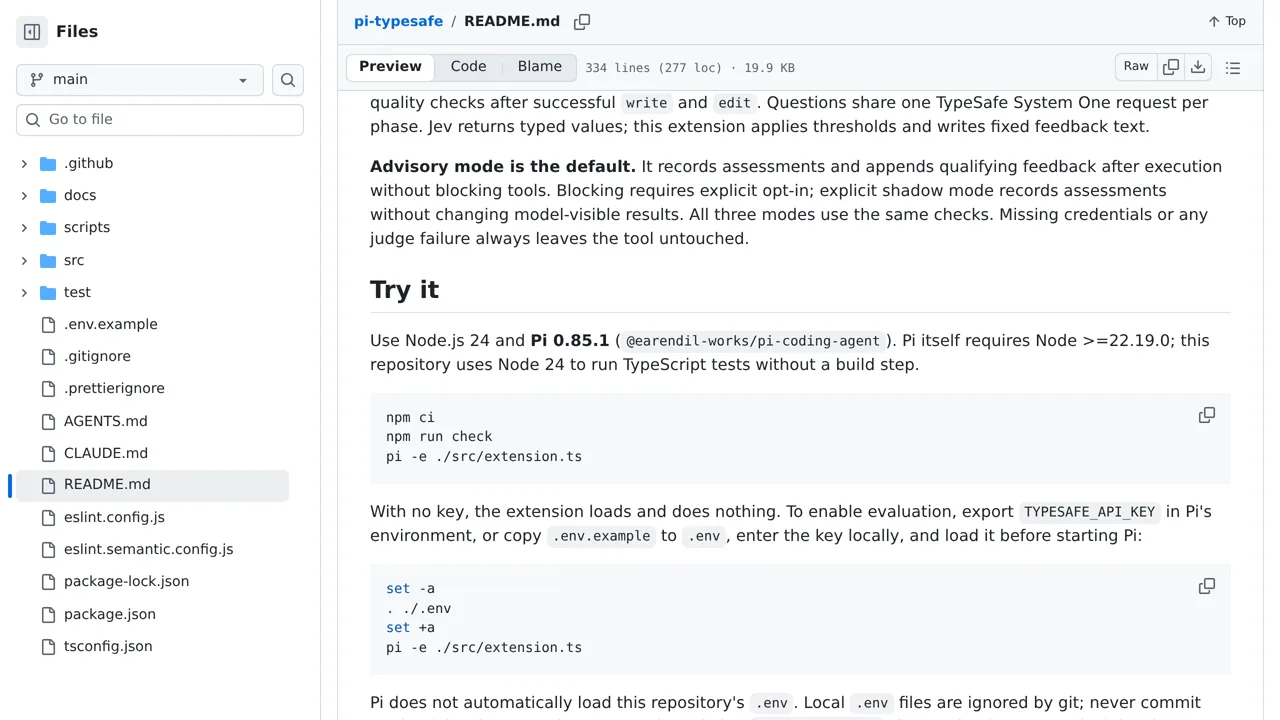
A Pi extension that sends agents back to work when Jev determines they stopped before completing the task.
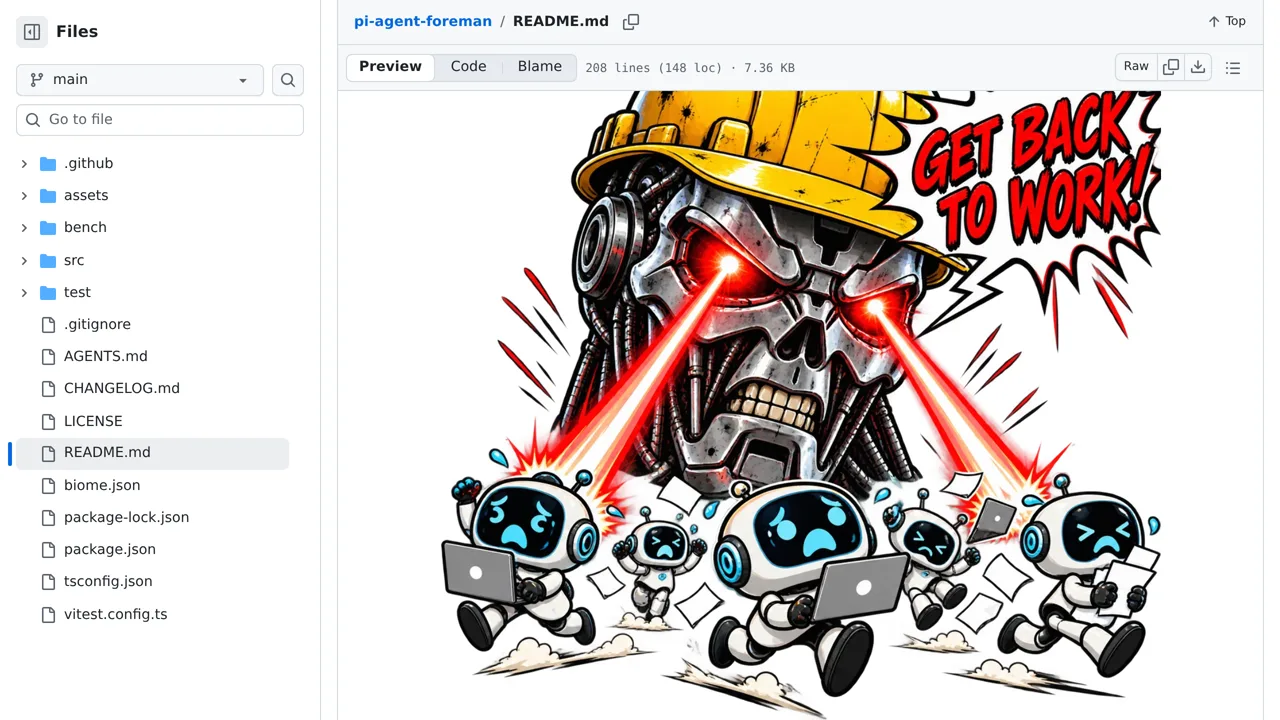
A Pi coding coprocessor that uses Jev gates to review changes from the initial baseline and record an append-only activity trail.
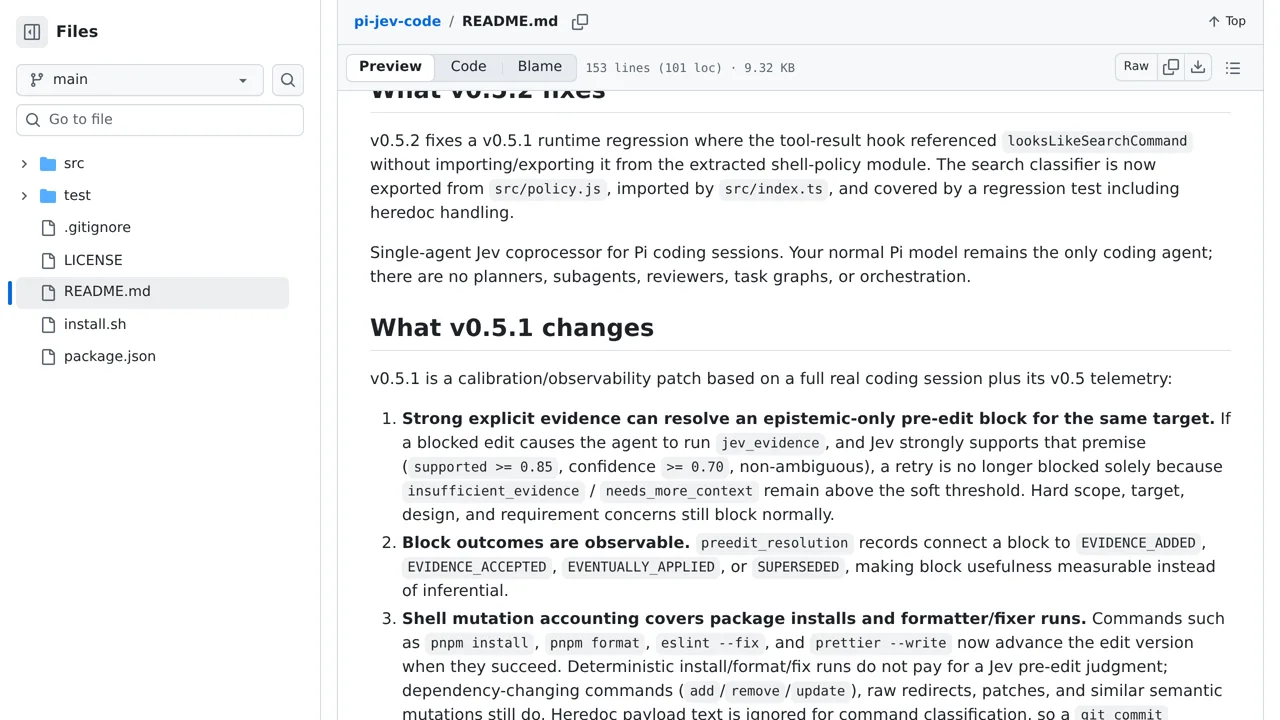
Ask Jev to choose, score or answer yes-or-no questions without leaving a Pi coding session.
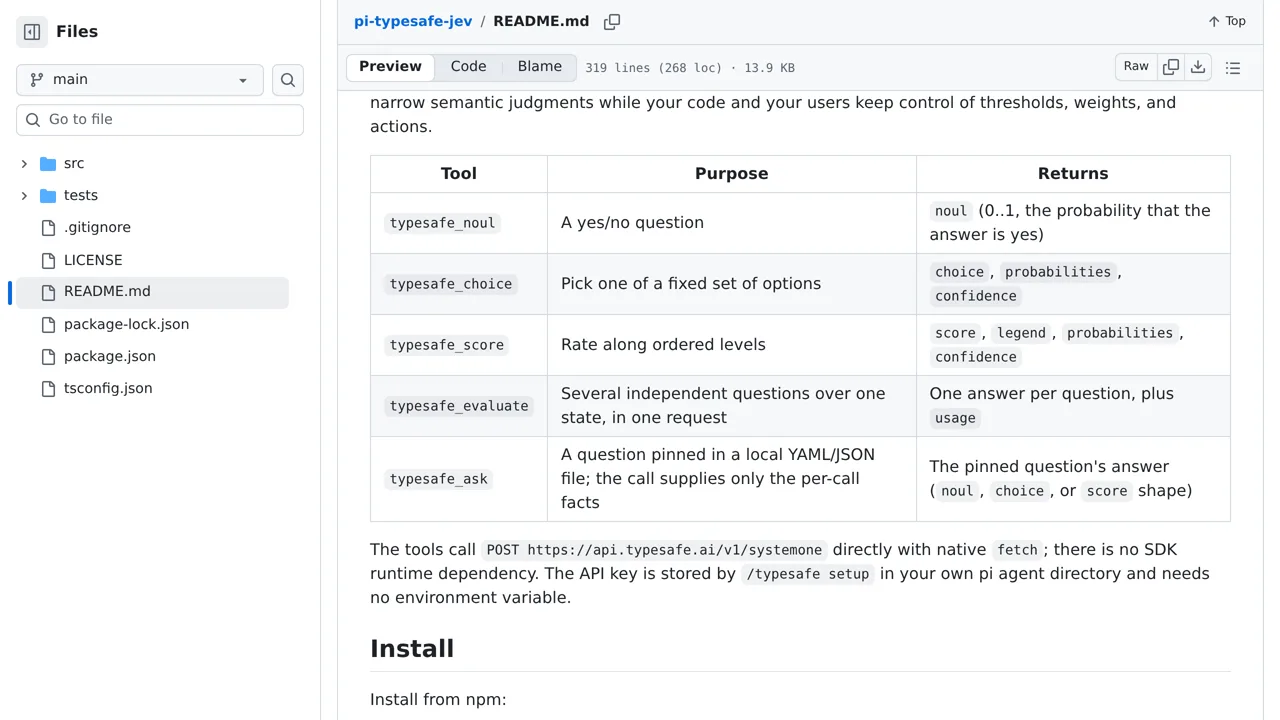
A Pi extension that exposes five tools for narrow Jev judgments while leaving thresholds and actions in application code.
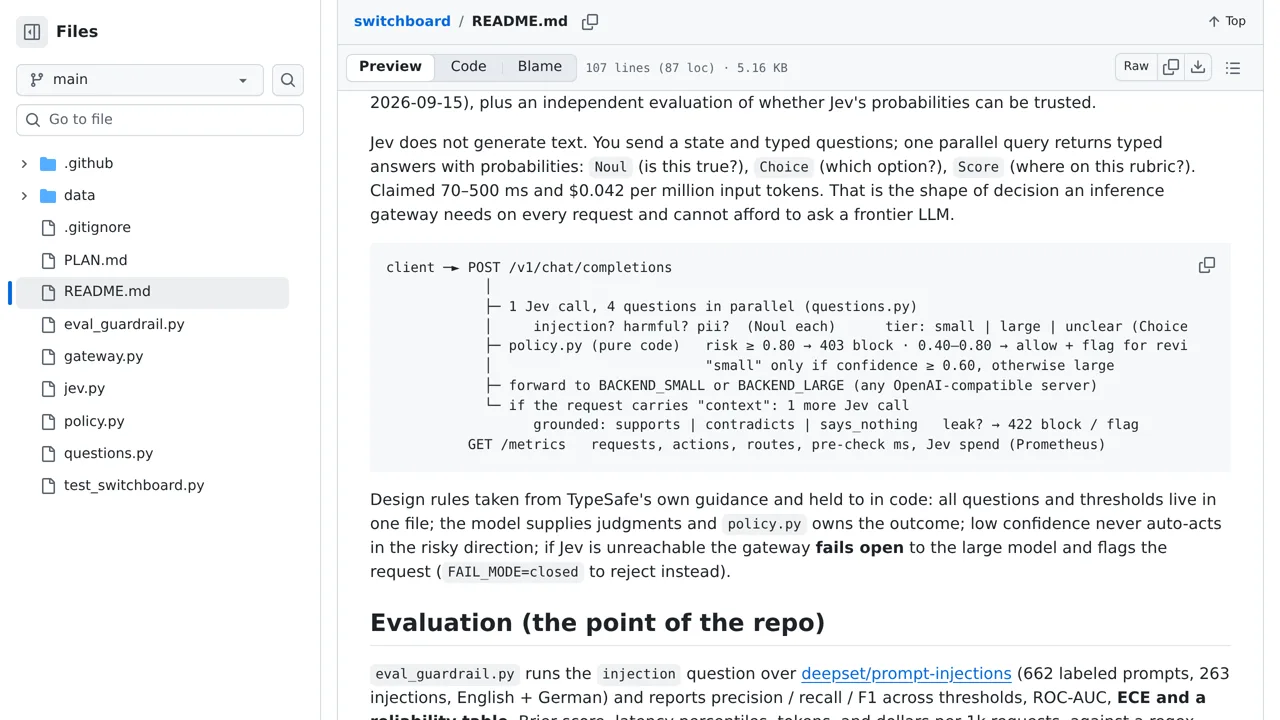
A standard-library Python gateway that checks prompts for risk and routes safe requests to a suitable model.
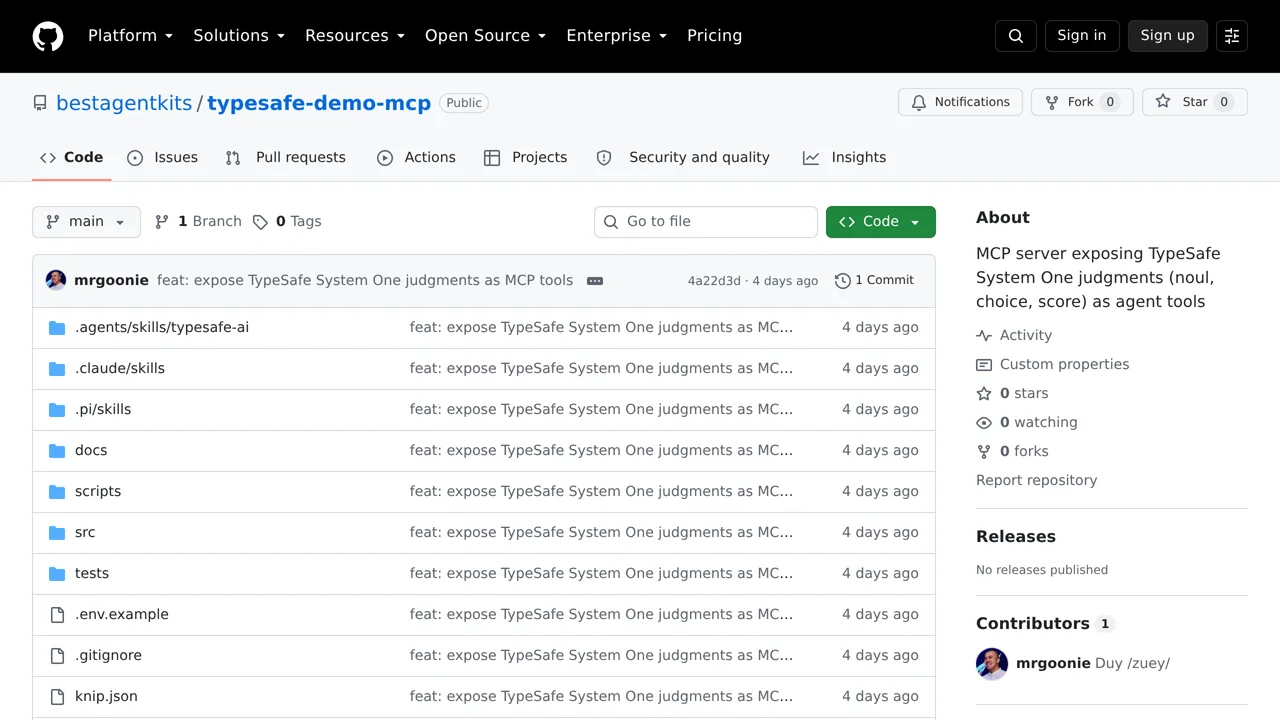
An MCP server that exposes Jev's Noul, Choice, and Score judgments as agent tools.
A Python tool that uses TypeSafe AI to review code diffs.
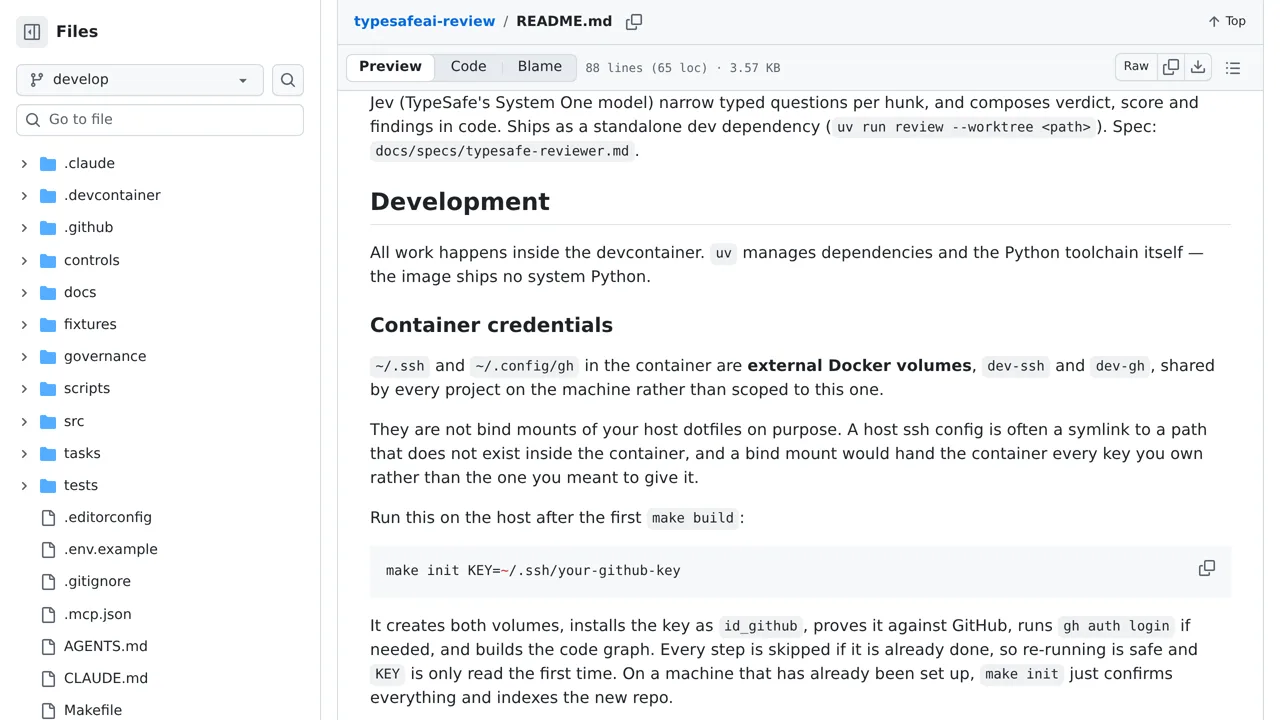
A provider-agnostic judgment layer that gates a coding workflow from product requirements through release.
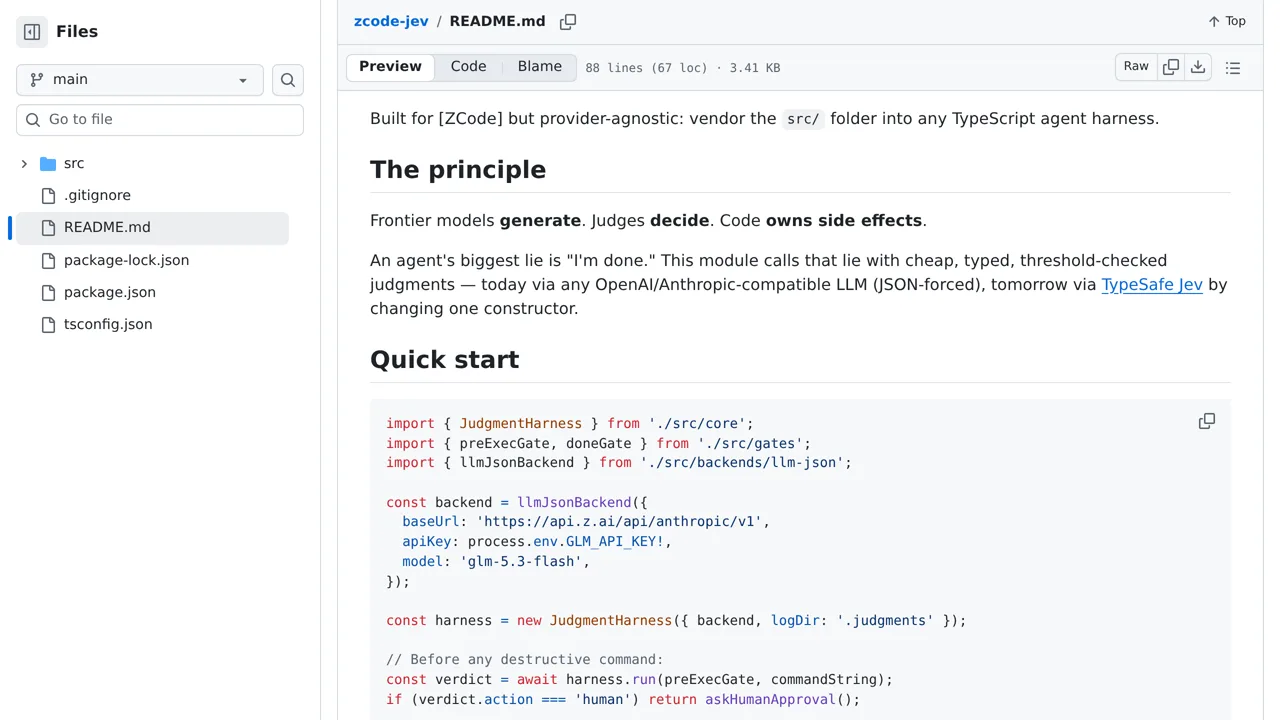
jev-rabbit reviews pull requests against project rules written in plain English.
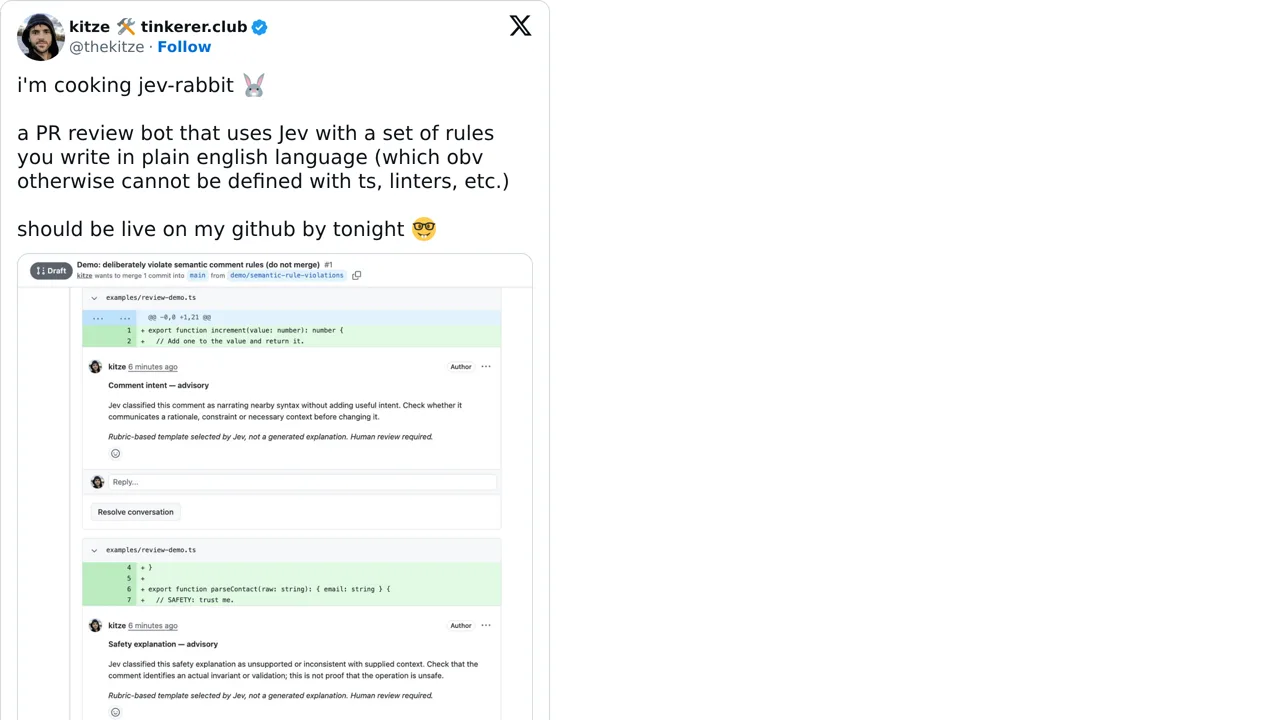
Duncan's router asks Jev which available model best fits a request, then forwards the prompt there.

Choose the best AI model or agent for a task from services you already subscribe to.
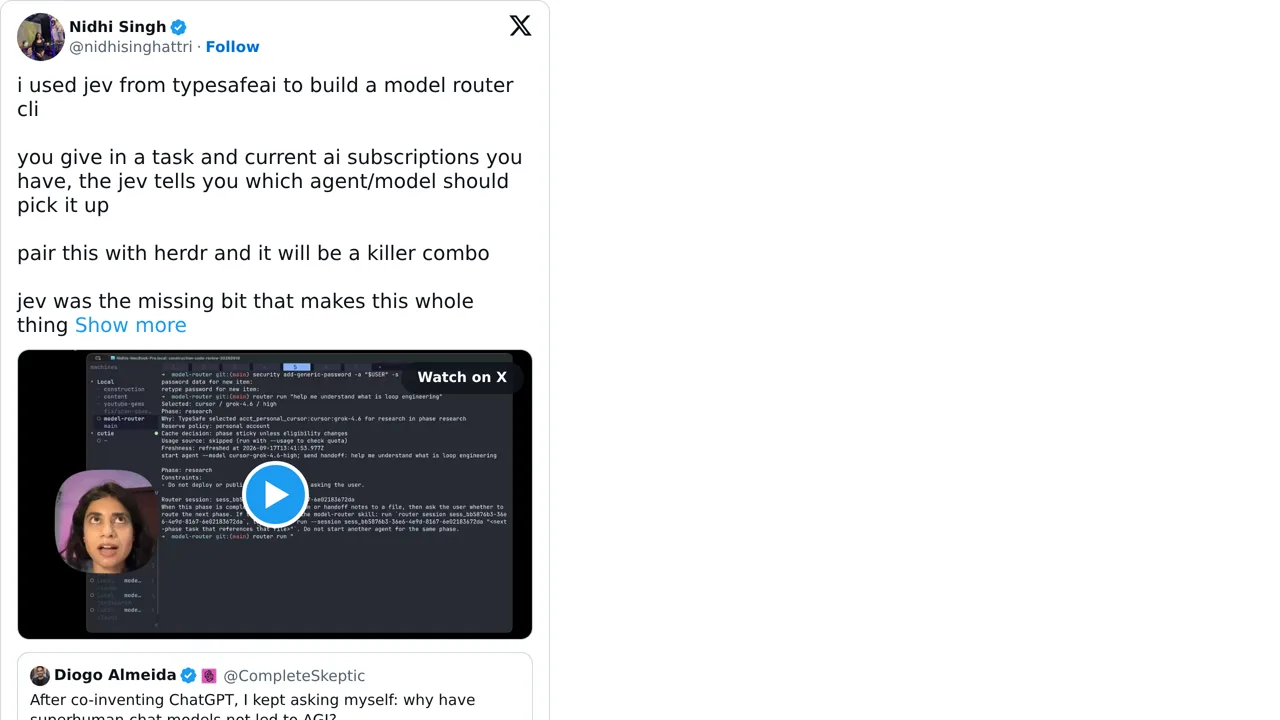
skillbox uses Jev to select relevant agent skills directly from the user's query.

Vercel's fx tests Jev as the reviewer that decides whether automatically generated shell commands are safe to run.

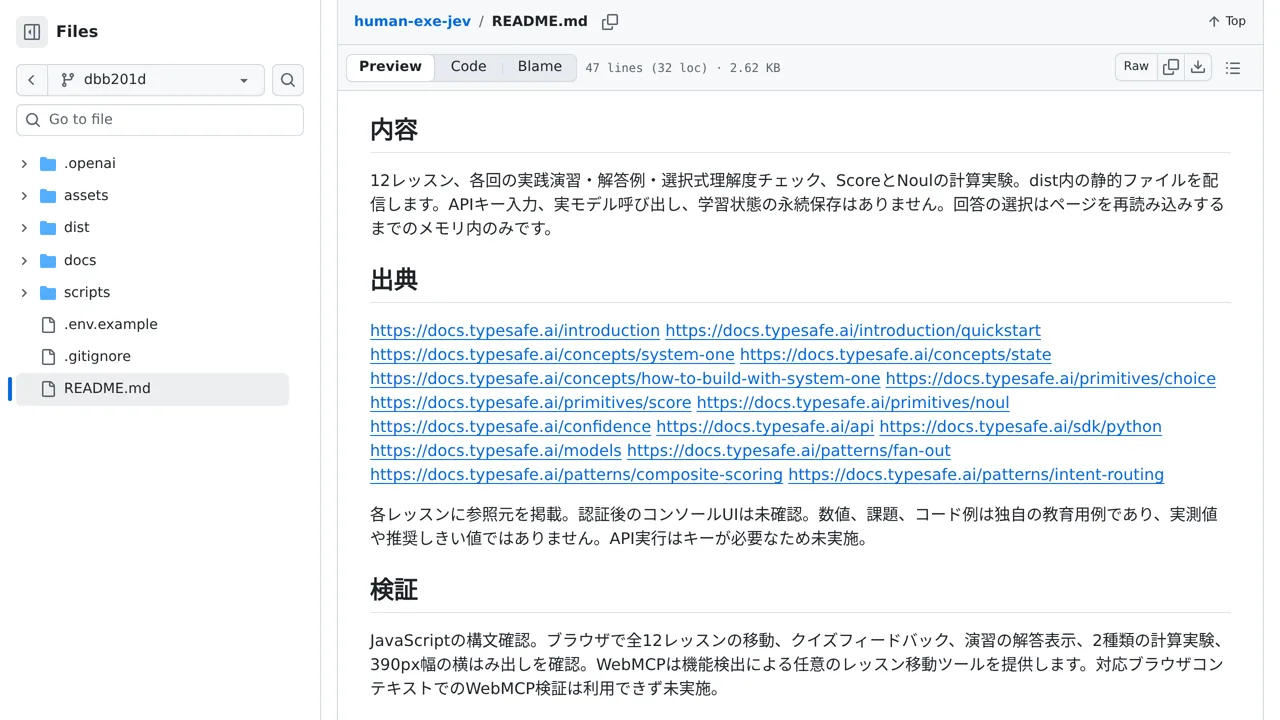
Study Jev's decision concepts in Japanese, then test them in a short game about spotting a disguised delivery unit.
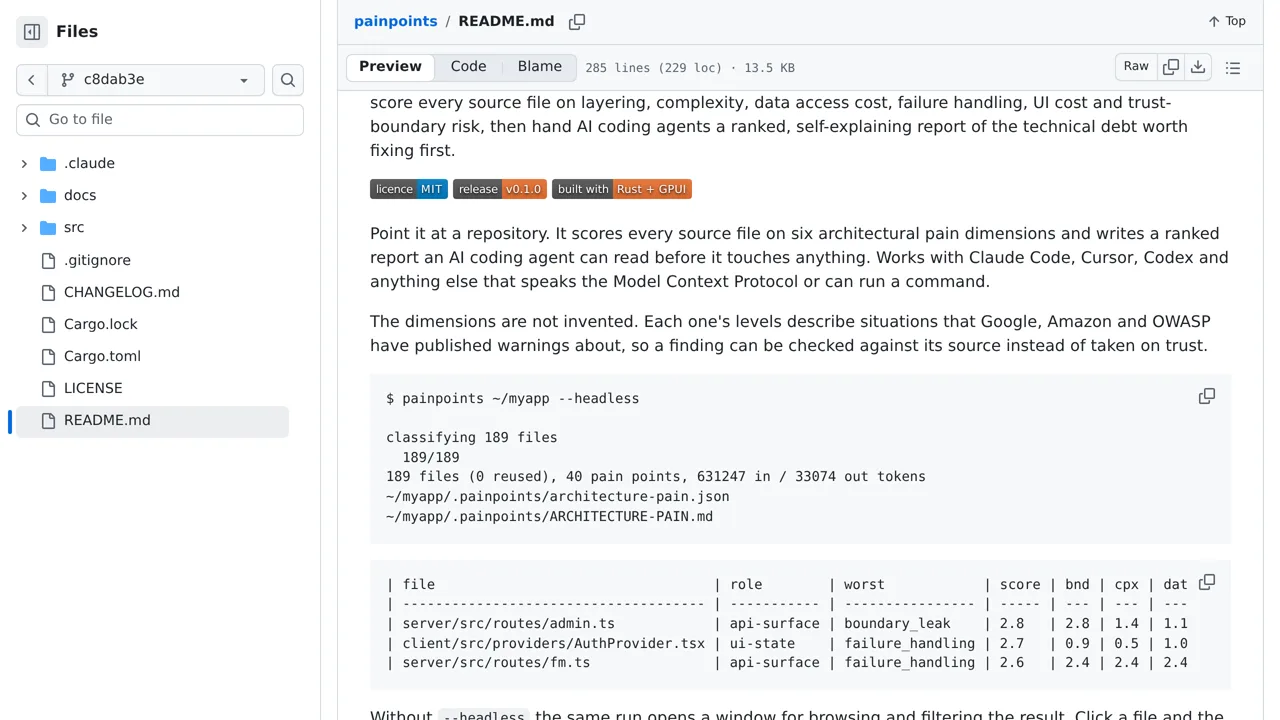
Find code that deserves a closer look by asking Jev to rank possible design problems.
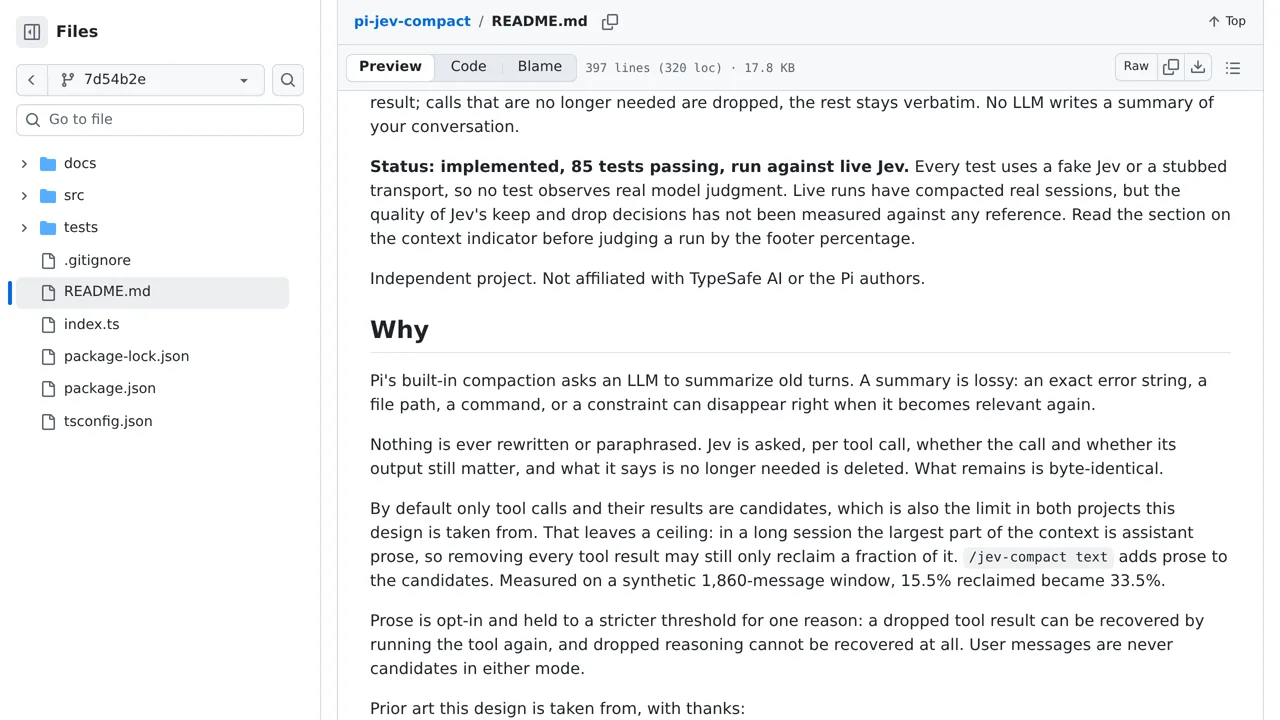
Compacts Pi history without generated summaries, keeping selected tool exchanges and optional assistant prose exactly as they appeared.
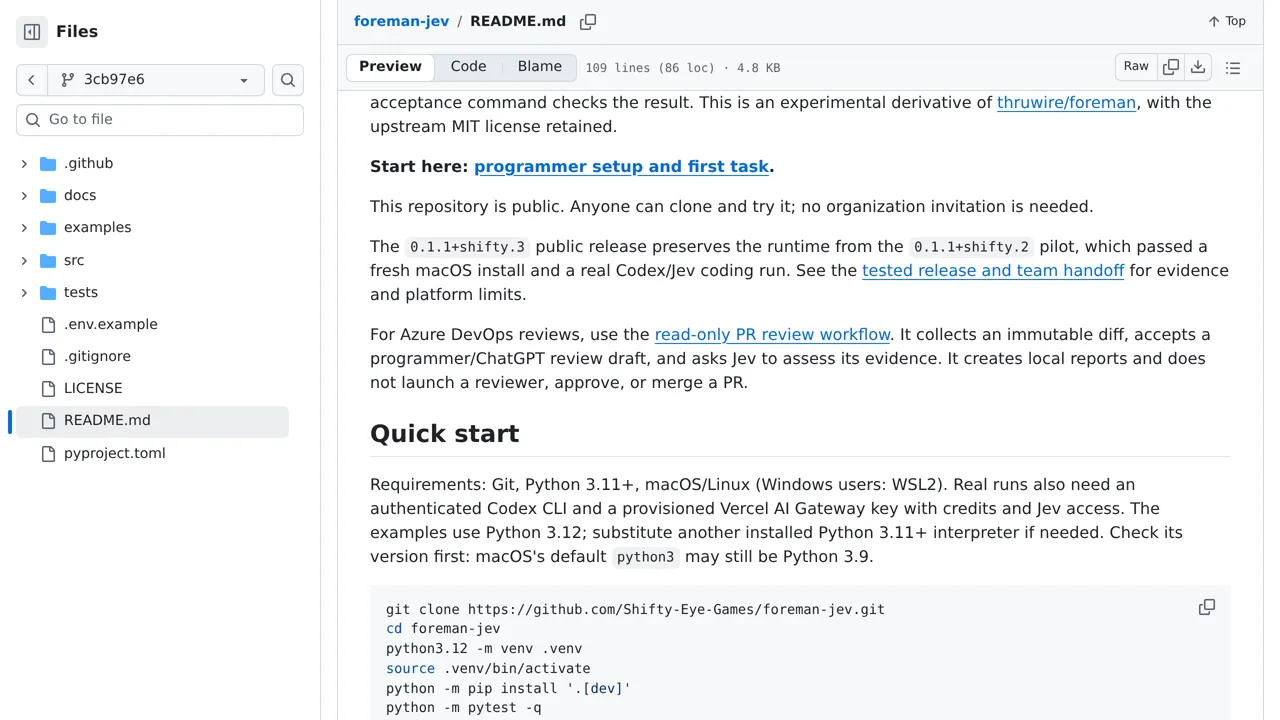
Keep track of Codex workers with Jev progress checks, then accept their work only when your chosen command passes.
A reference decision layer for Minecraft that turns typed judgments into tool calls behind hard-coded survival reflexes.
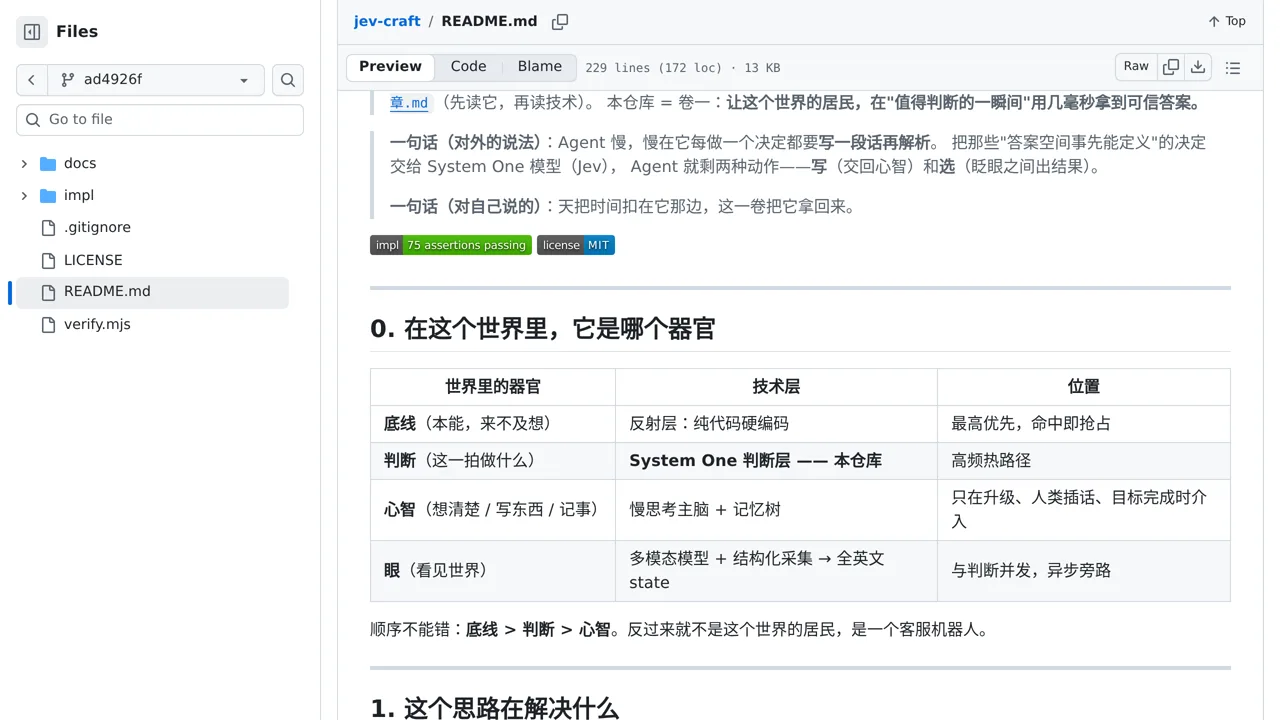
Helps an agent find the right tool or skill without loading the whole catalog into its main conversation.

A Pi tool for asking typed questions, with interchangeable Jev and chat-model backends.
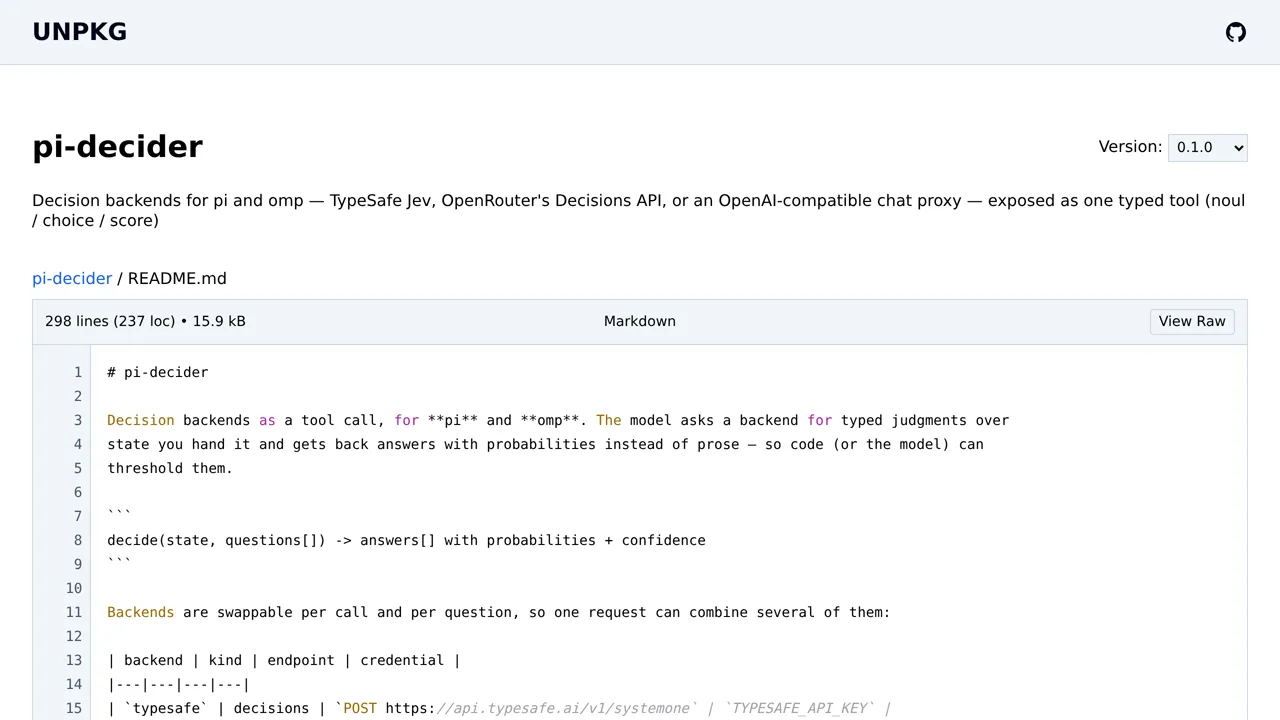
Ask Jev to label nytka datasets and keep a record of the questions and model used.
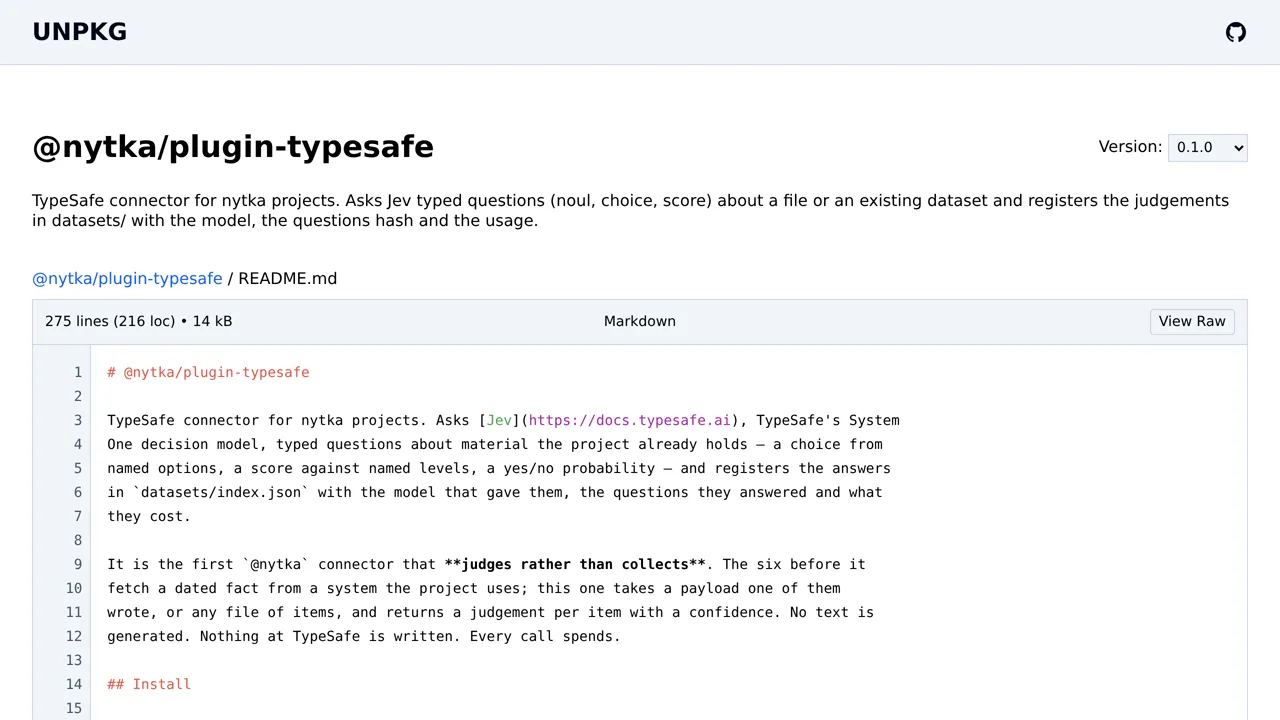
Get a shell completion from your command history that changes as you type, rather than a static prefix match.
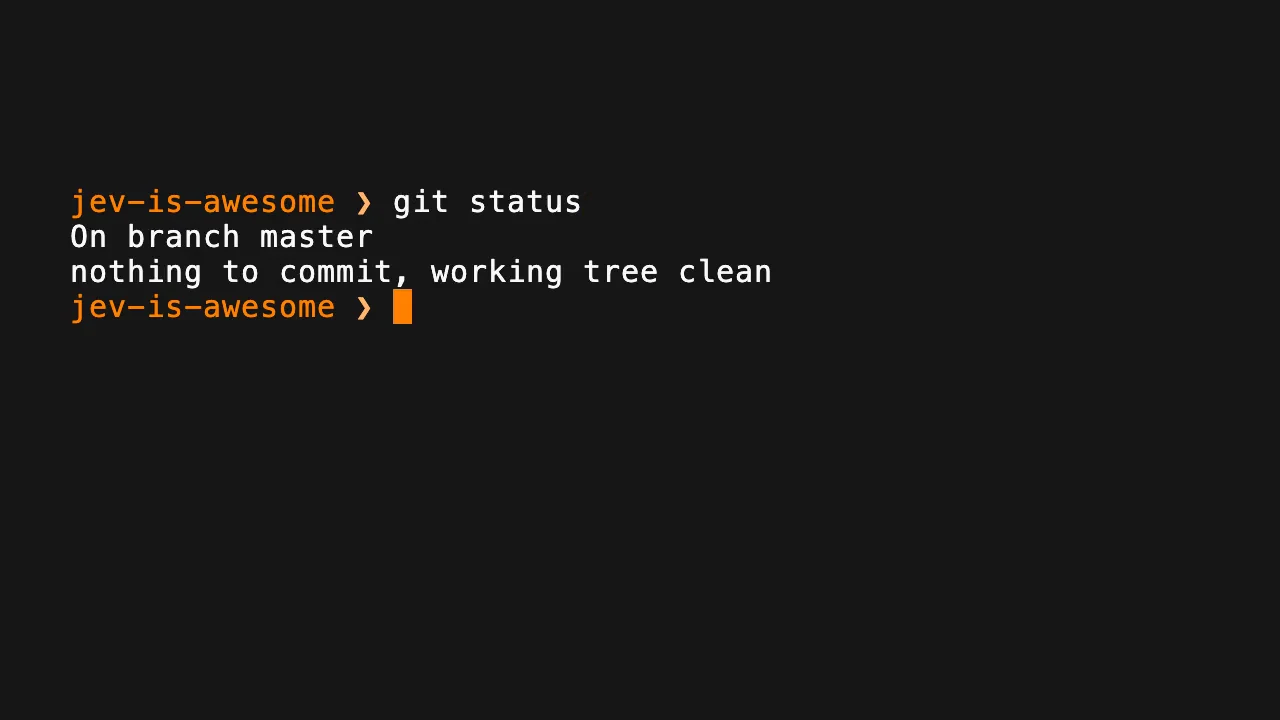
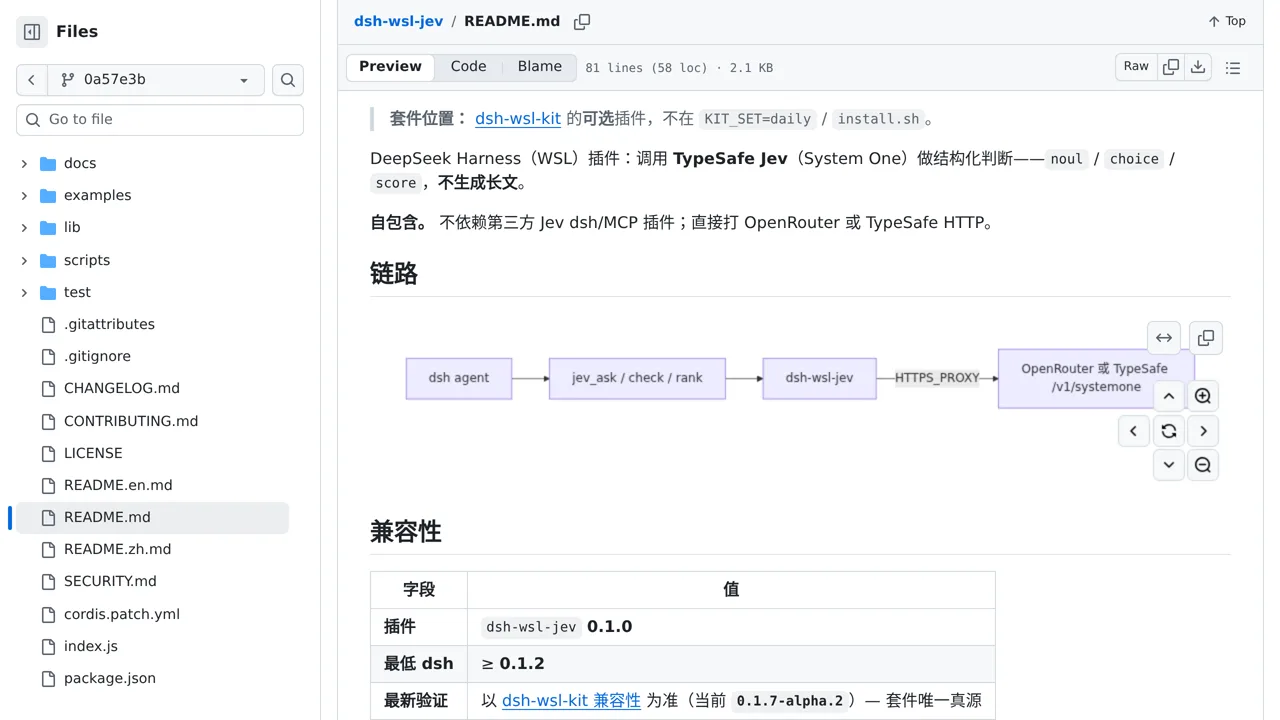
Three Jev tools for the DeepSeek Harness on WSL: ask typed questions, check whether evidence supports a claim, or rank candidates.
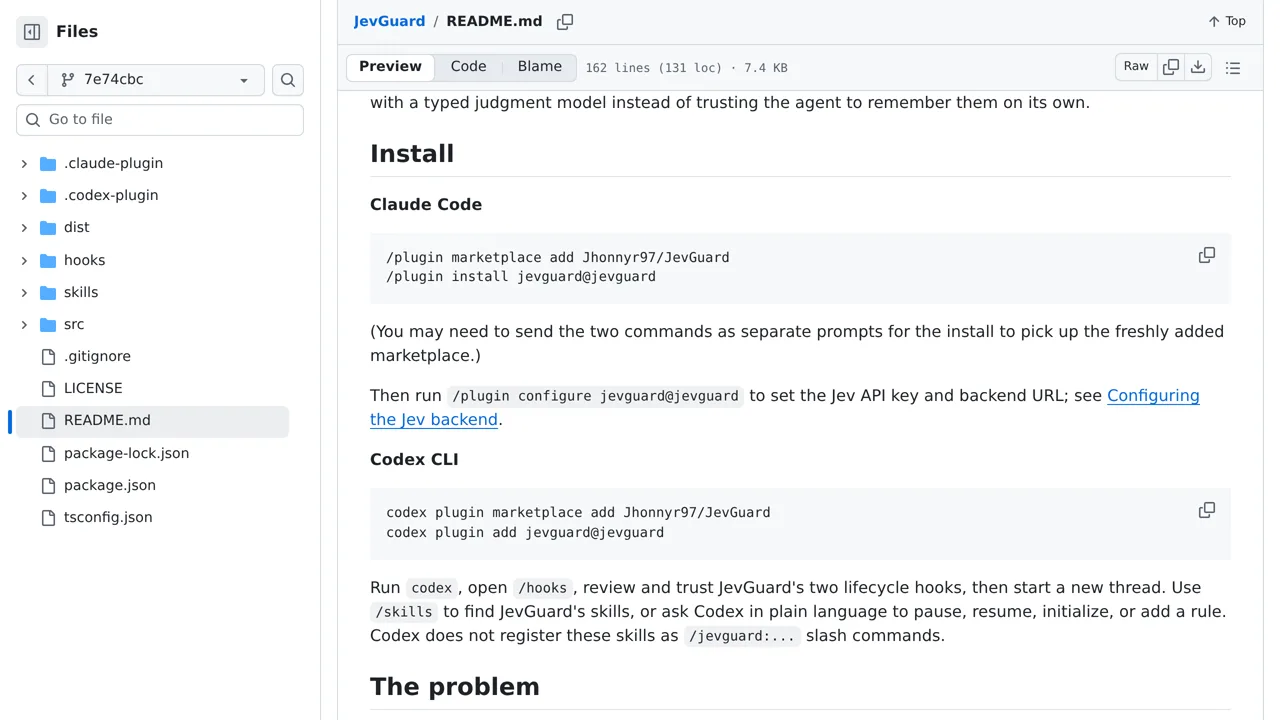
A Claude Code and Codex plugin that checks each tool call and final answer against the project's own rules with a System One model.
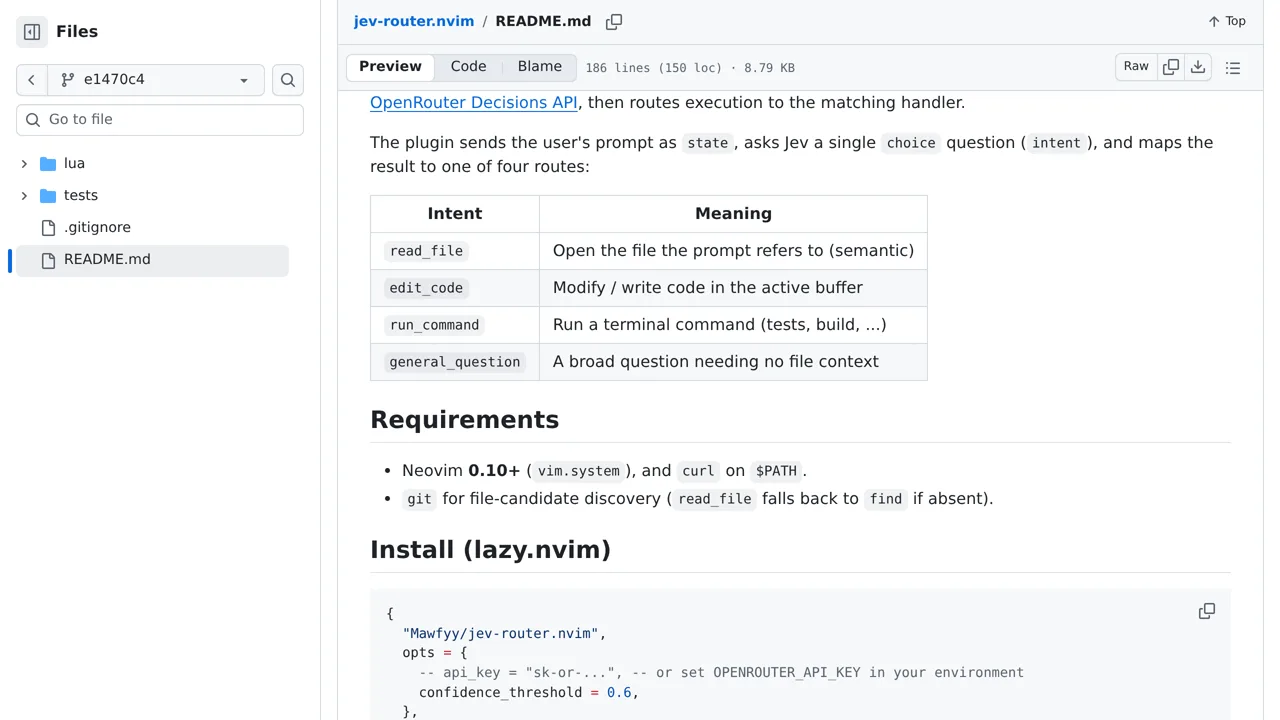
A Neovim intent router that sends your prompt to Jev as one Choice and dispatches to a read, edit, shell or chat handler.
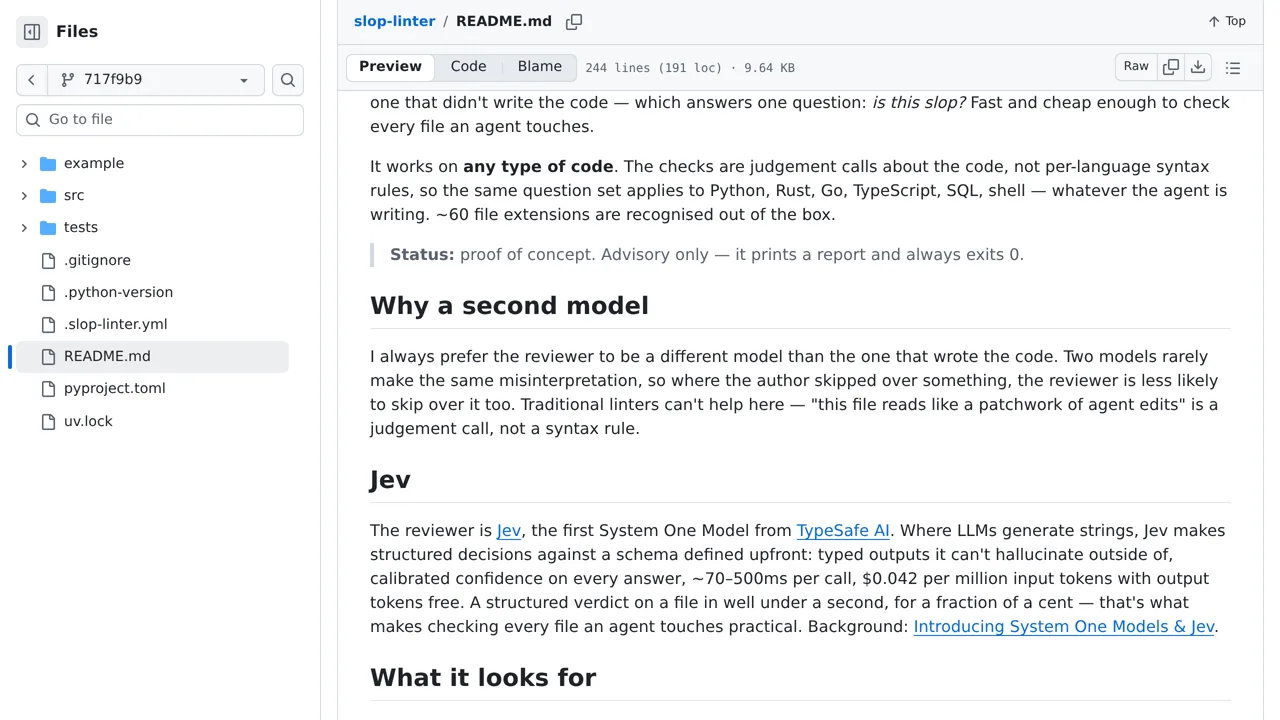
A linter that sends each file an agent touched to Jev and asks one question: is this slop?
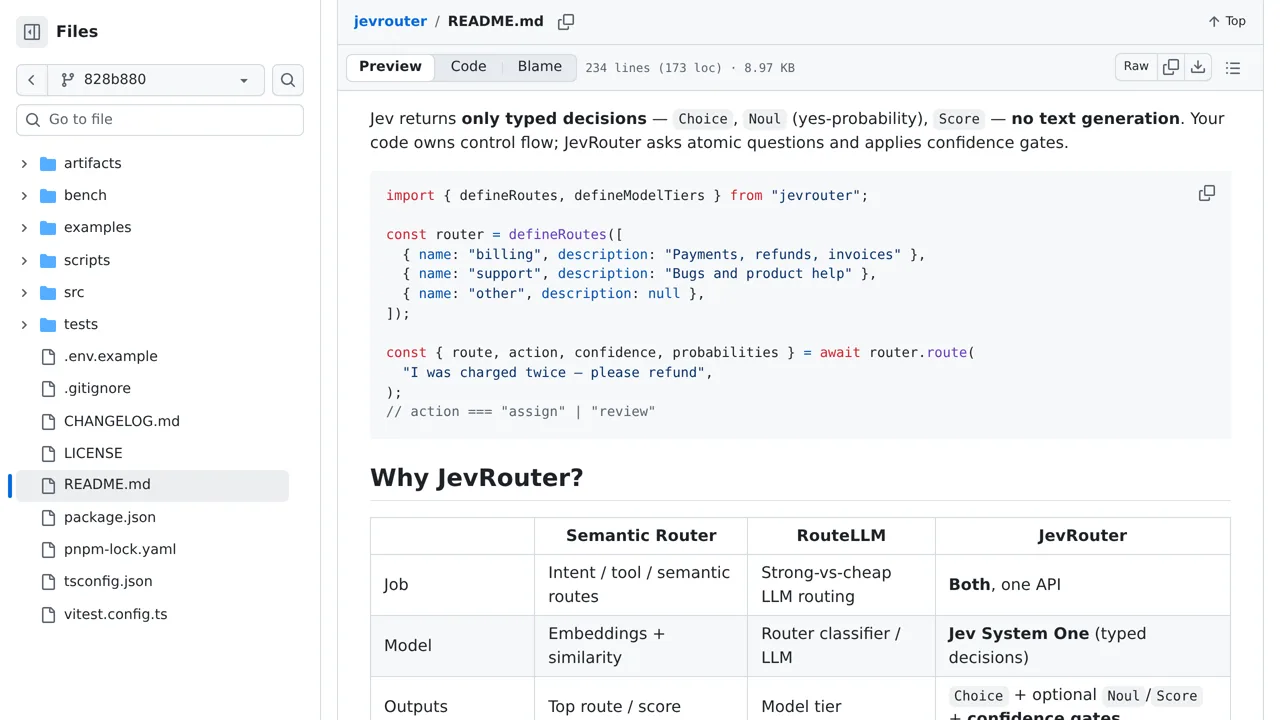
A drop-in routing layer that turns named routes into one Jev Choice, with a gate question for whether the request is even in domain.
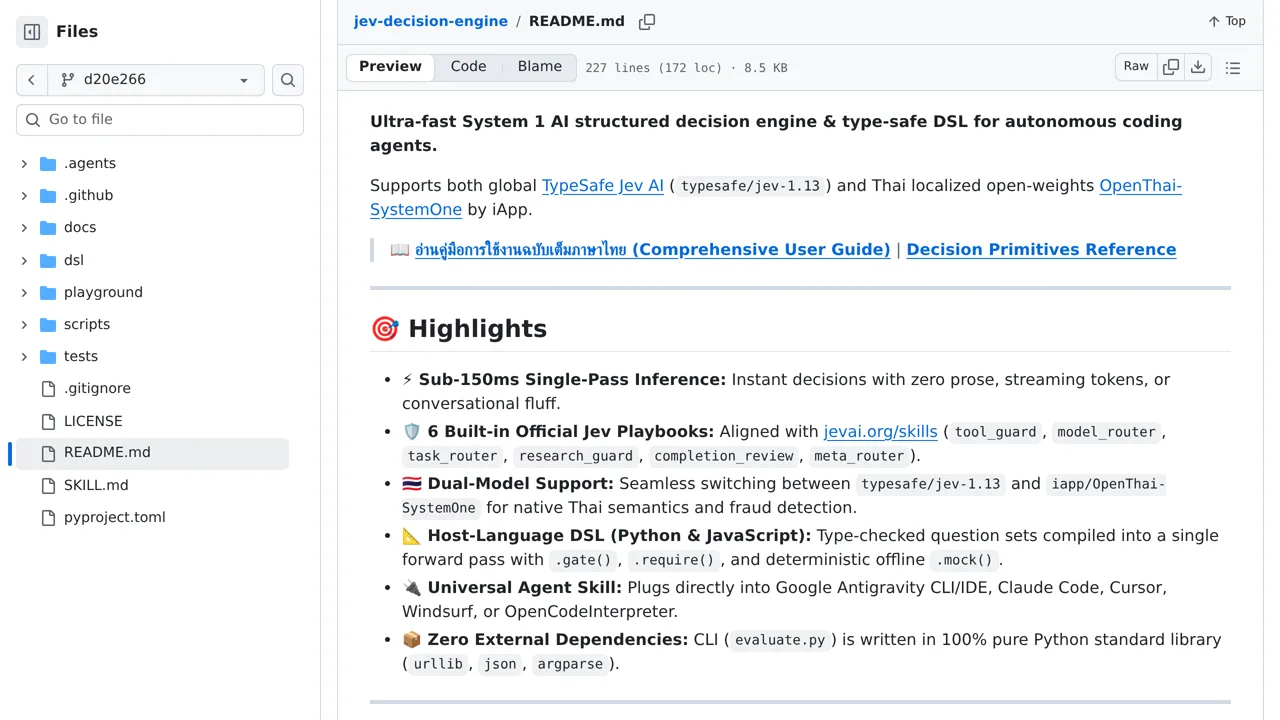
An agent skill and stdlib CLI that turn Python or JavaScript question builders into one System One payload, with six named decision playbooks.
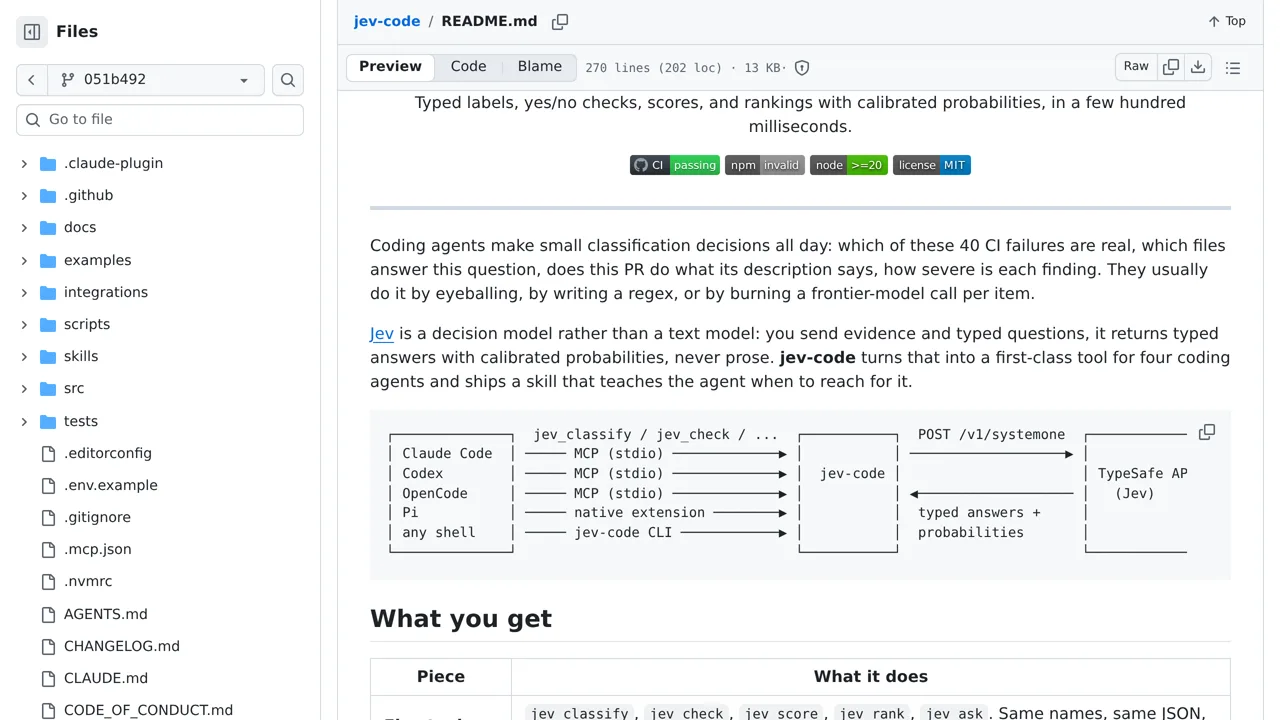
Packages Jev as five tools — classify, check, score, rank and ask — and installs the same skill into Claude Code, Codex, Pi and OpenCode with one command.
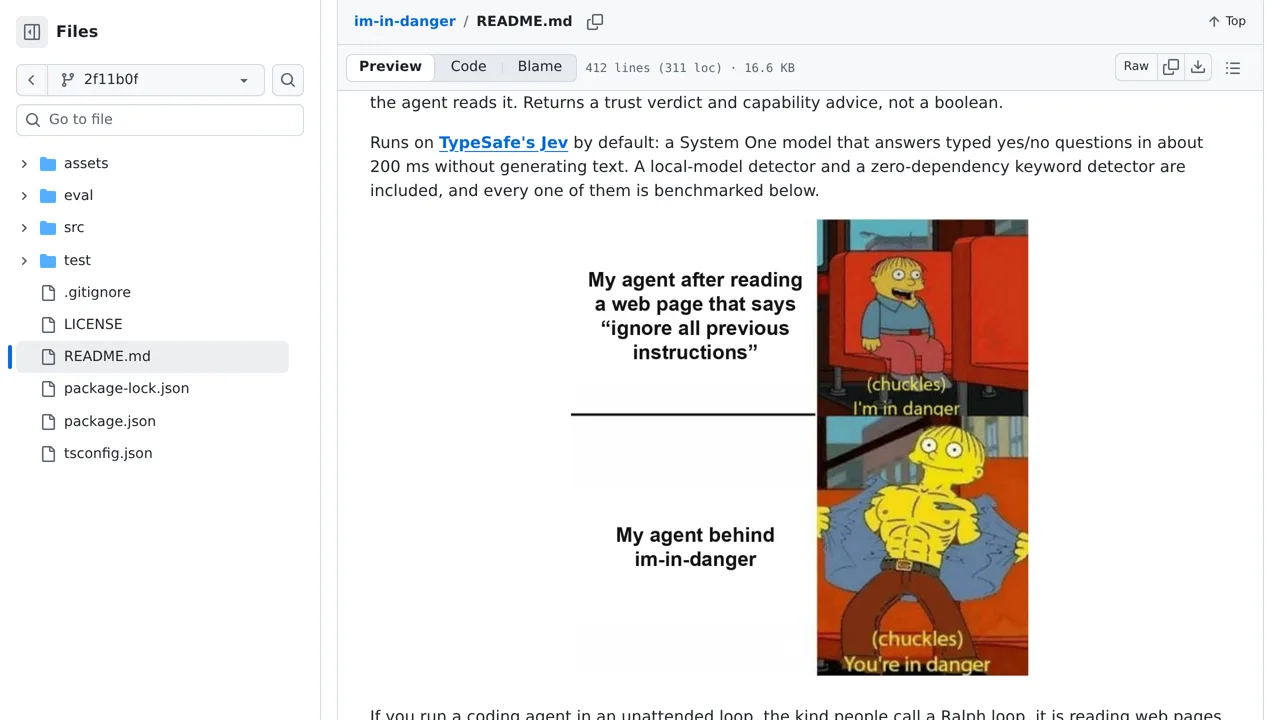
Checks content an agent is about to read for instructions aimed at the agent, and returns a trust verdict plus capability advice rather than a boolean.
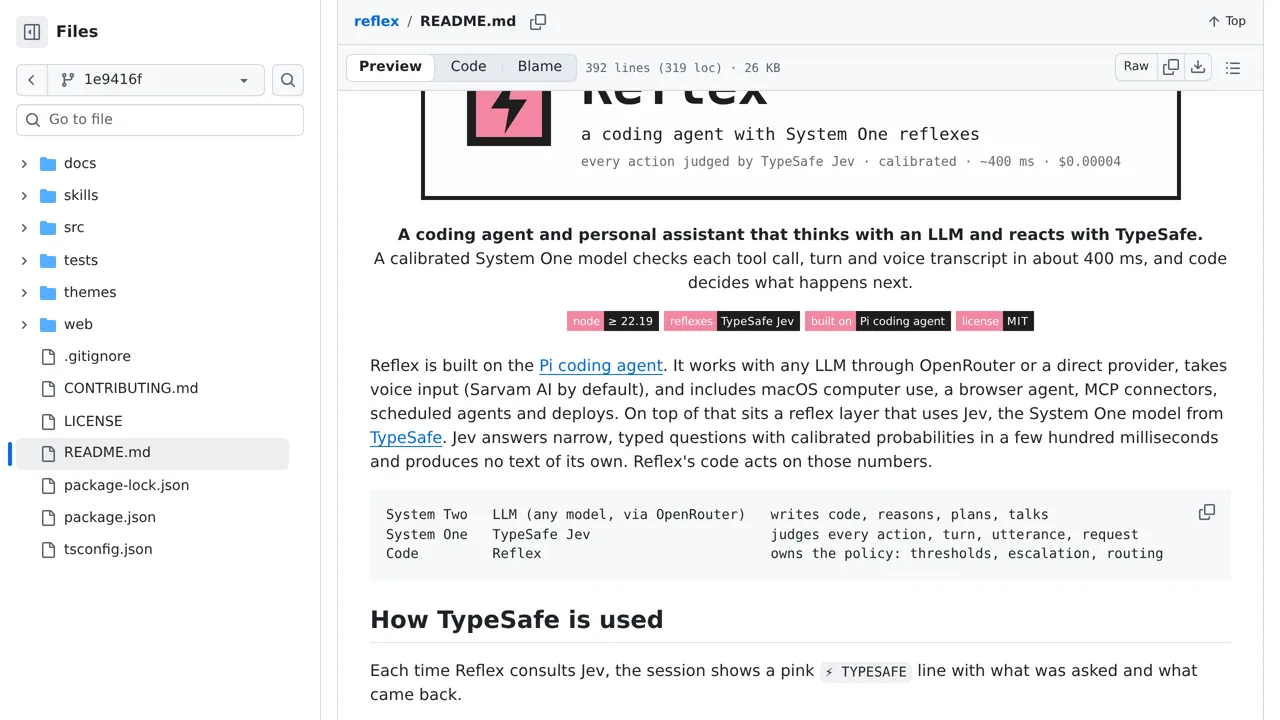
A coding agent that thinks with an LLM and reacts with Jev: every tool call, turn and voice transcript is checked in about 400 milliseconds and code decides.
Jev, briefly
A chat model generates text token by token and hopes you parse it. Jev never generates a word. Your code sends the state of the world plus typed questions; Jev returns every answer in one parallel pass — typed values with calibrated probabilities and a confidence score your code can trust. About 70–500 ms end to end, $0.042 per million input tokens, output free. Trained with what TypeSafe calls Reinforcement Learning for Calibrated Decisions.
You define the options. Jev returns the chosen option, a probability for every option, and a confidence. The workhorse of routing, agents, and games — the answer space is always legal, so there is nothing to parse and nothing to hallucinate.
You describe ordered levels — say trivial / normal / critical. Jev returns the level, the probability of each, and a confidence. Scores turn fuzzy judgment (“how severe is this log line?”) into a number-free decision your code can branch on.
You assert a statement; Jev returns the probability that it is true — a noul. Moderation, verification, guardrails, “does this diff actually fix the bug?”: one question, one calibrated probability.
Official material lives at typesafe.ai and docs.typesafe.ai. JevMade is an independent community registry — not affiliated with or endorsed by TypeSafe AI.
Recurring lessons
Games, drones, trading bots, and browser agents all converge on the same loop: serialize the state, ask one decisive question, act, repeat. Jev’s latency makes the loop feel instant — the model lives inside the control loop, not outside it.
The answer says what; the confidence says whether to act. The most reliable entries threshold on confidence to route edge cases to a slower model or a human — automation with an honest escape hatch.
Makers rarely ask Jev to pick from everything. Local tactics prune 225 gomoku moves to ~40; DOM filters turn a page into an element table; code narrows options, Jev judges within them.
A recurring split: Jev makes every decision cheaply and instantly, and a small LLM is only invoked when a human-facing string must actually be written. Decision and generation are separate budgets.
Send the link — repo, live demo, post, or video — plus a line on what it does and which primitives it uses. Every entry is verified against its primary source before it ships.
Submit your experimentSign in first so we can reply to you. Submissions are reviewed, not published automatically.