Read & learn
Written guides.
Understand Jev, one idea at a time. Walkthroughs, recipes, and writeups — our notes first, the original next.
Learn, build, and play with Jev — from deep technical guides to creative experiments.
Read & learn
Understand Jev, one idea at a time. Walkthroughs, recipes, and writeups — our notes first, the original next.
Watch & learn
See an idea take shape. Tutorials, demos, and deep dives, organized by topic and credited to their creators.
Make & explore
See what builders made with Jev. Games, tools, repositories, articles, and more — traced to their sources.
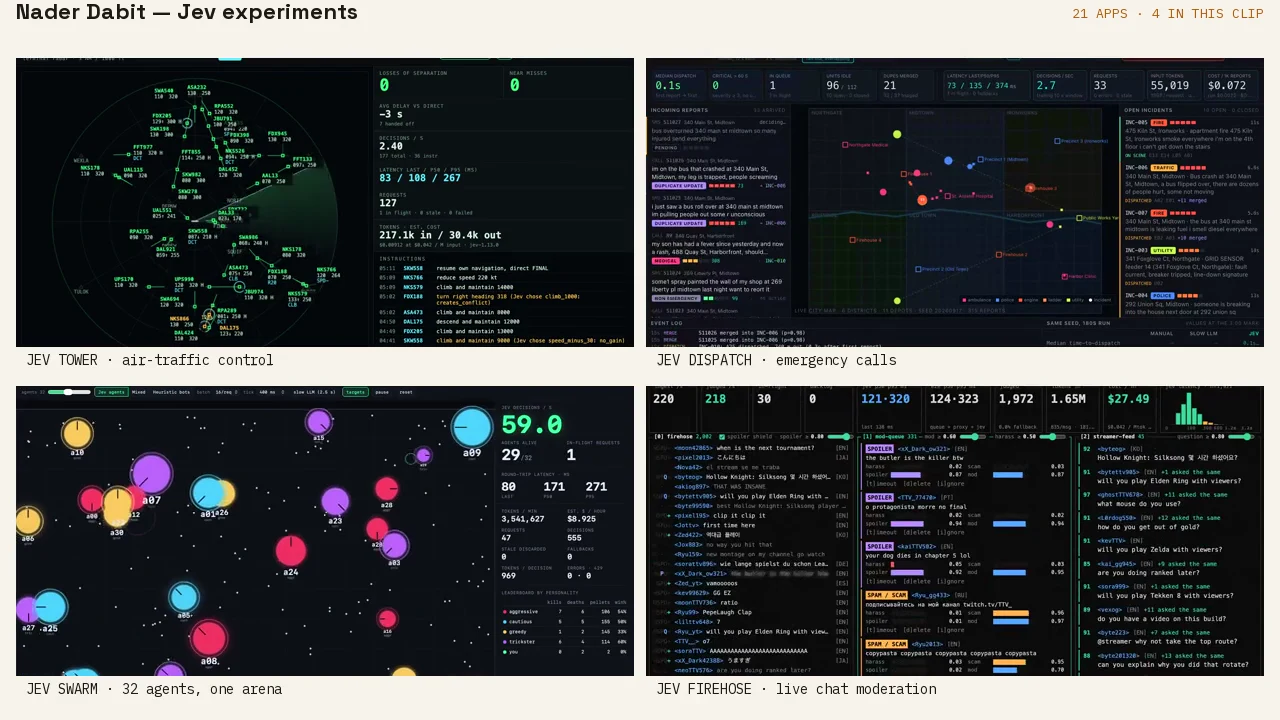
Every category, from games and tools to repositories and writeups, traced to a primary source.
Real-time research powered by
Same ideas.
Different paths.
This is the full registry, not just the featured picks. Figures like speed, cost, and stars are maker-reported or captured snapshots, not JevMade measurements.
324 experiments · showing 301–324
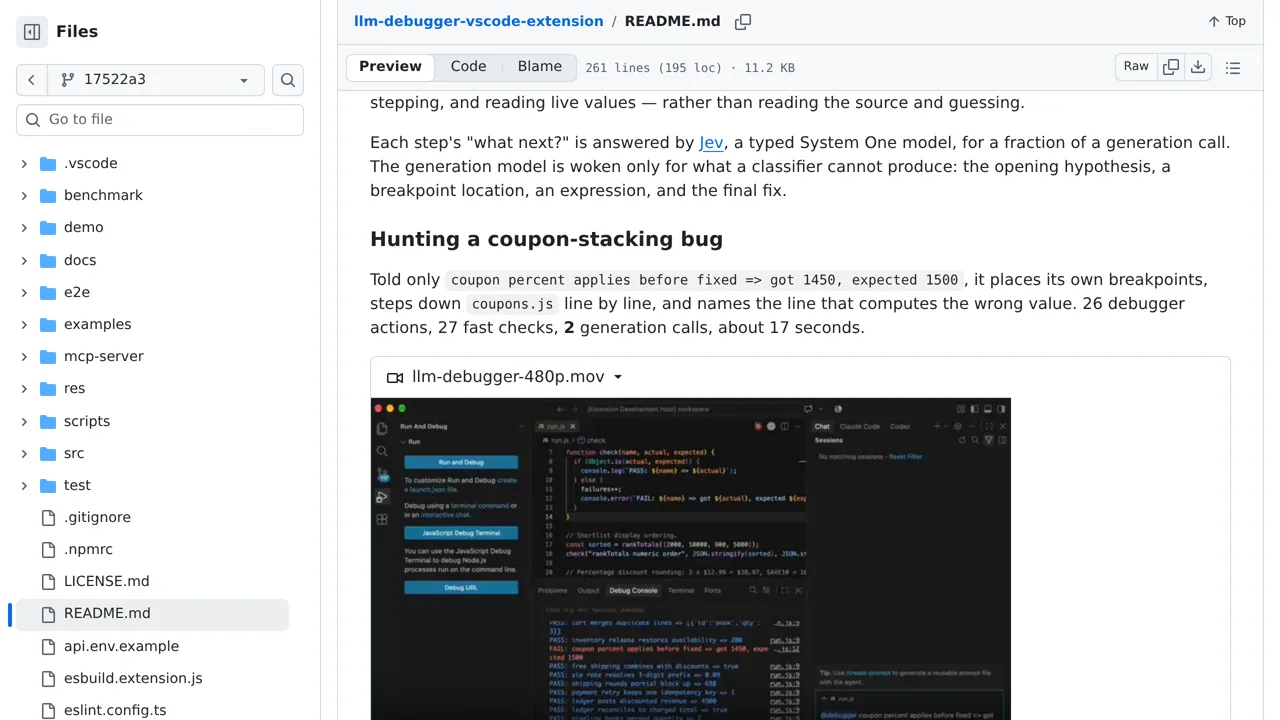
Points a debugger at your bug and lets Jev decide every next step, so the expensive model only wakes up for the hypothesis and the fix.
Keeps a record of what you and your coding agent agreed to build, in plain Git commits where the next session can find it.

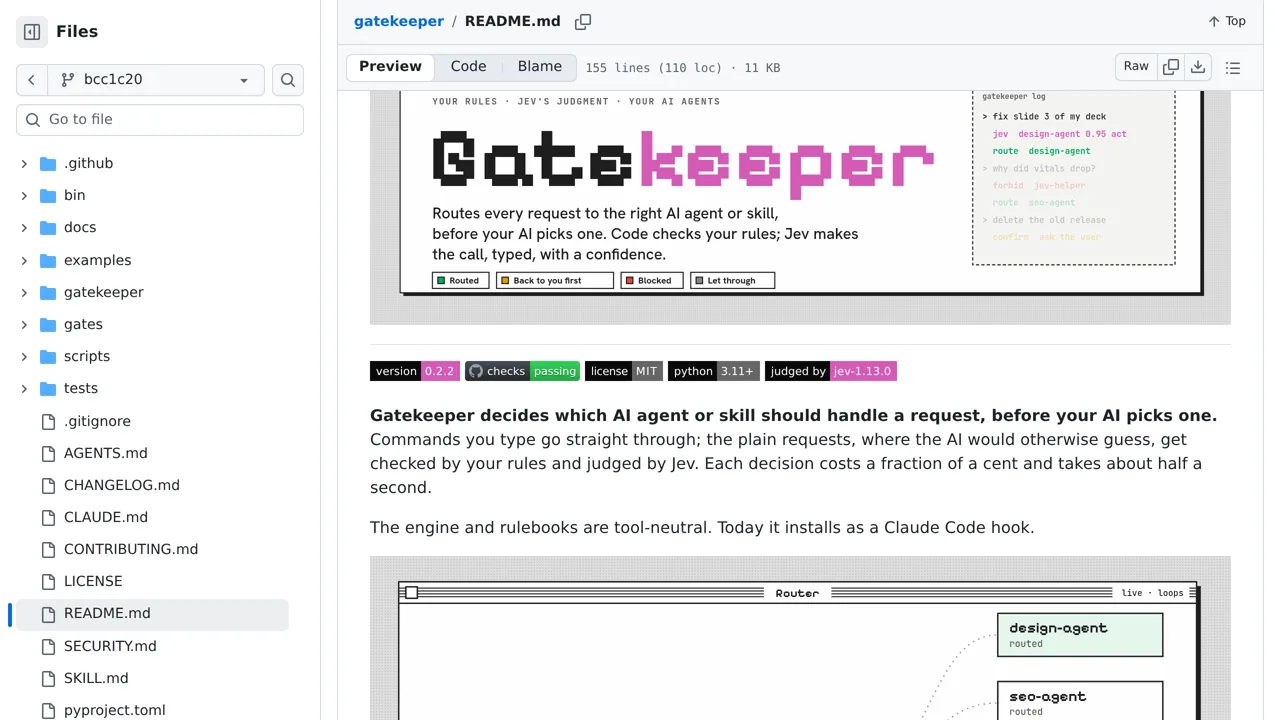
Watches what you type into Claude Code and decides who should handle it: your slash commands go straight through, everything else gets checked against your rules.
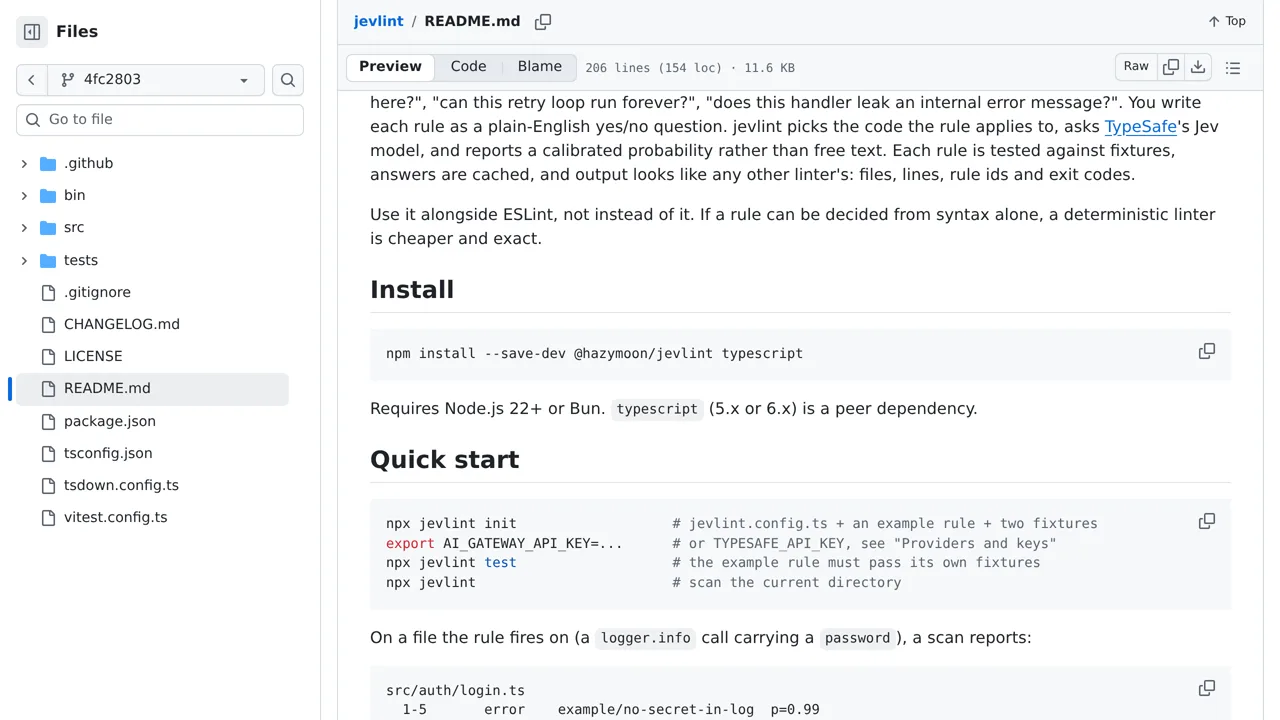
Semantic lint rules written as plain-English yes-or-no questions, with Jev returning a calibrated probability instead of free text.
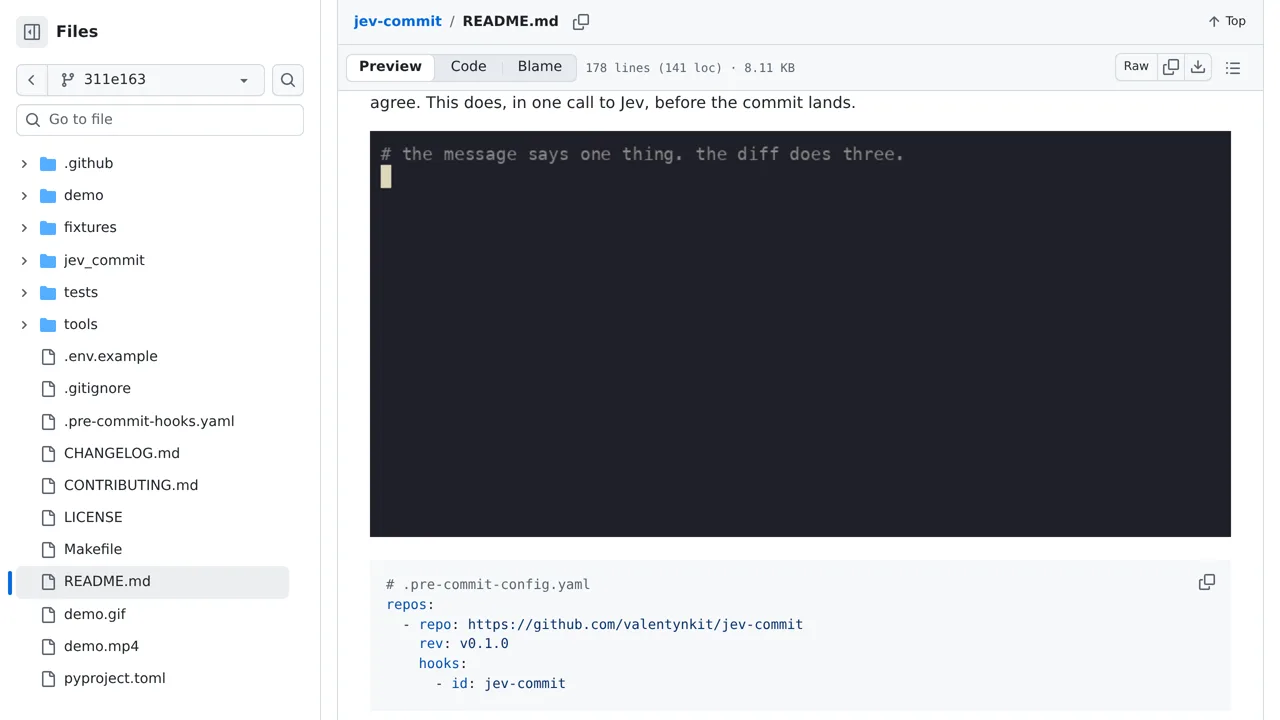
One Jev call before every commit checks that your message actually describes the diff, and flags debug leftovers and pasted secrets while it is at it.
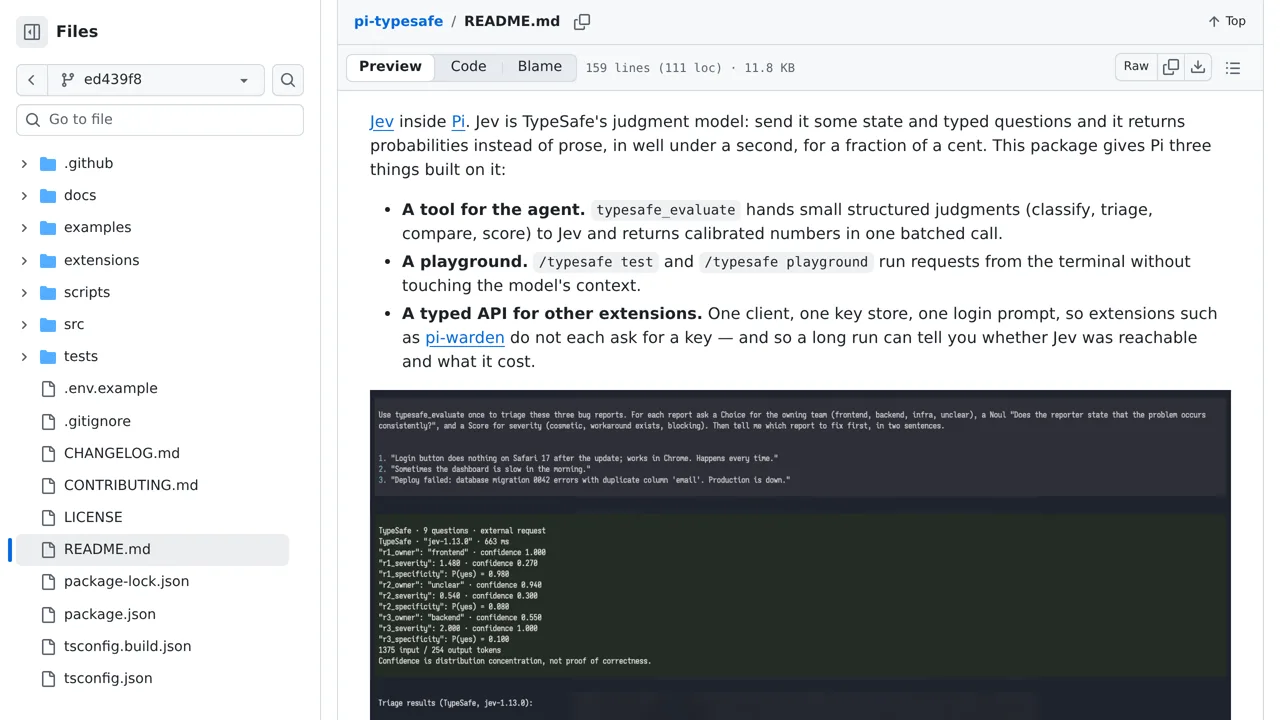
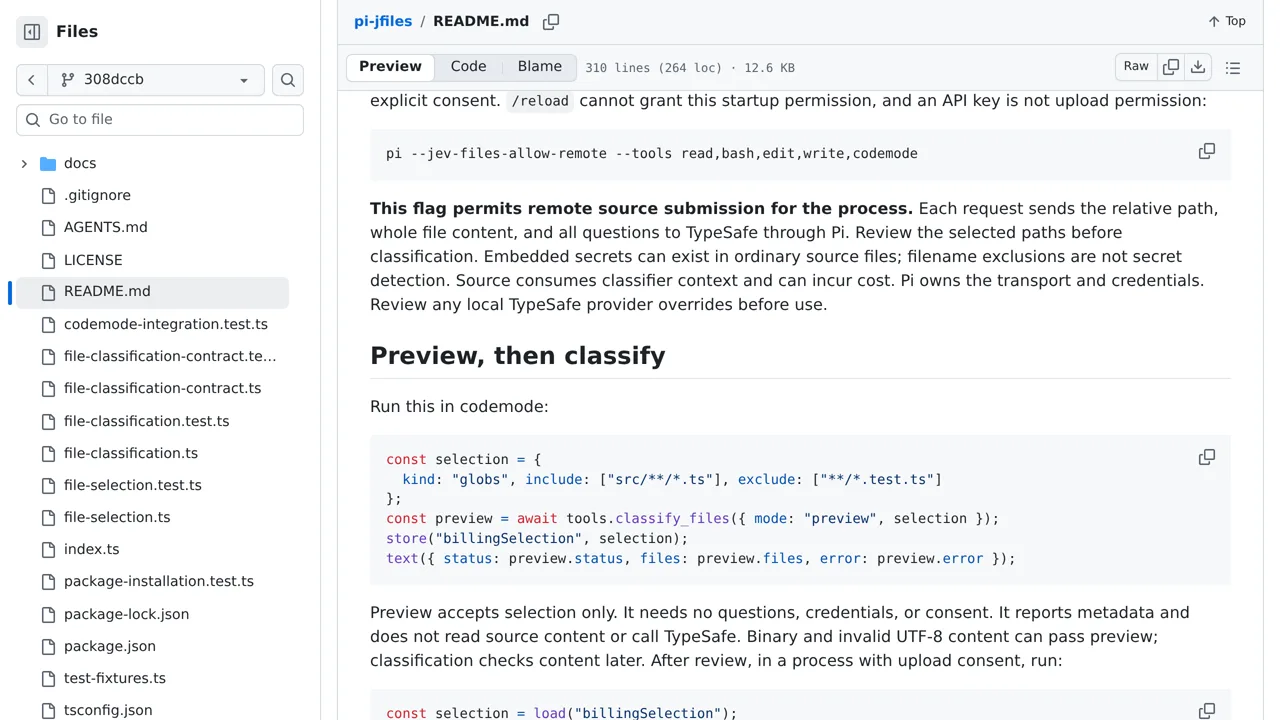
Gives the Pi coding agent a Jev-powered tool for the small stuff: classify this report, triage those issues, score these candidates, all in one batched call.
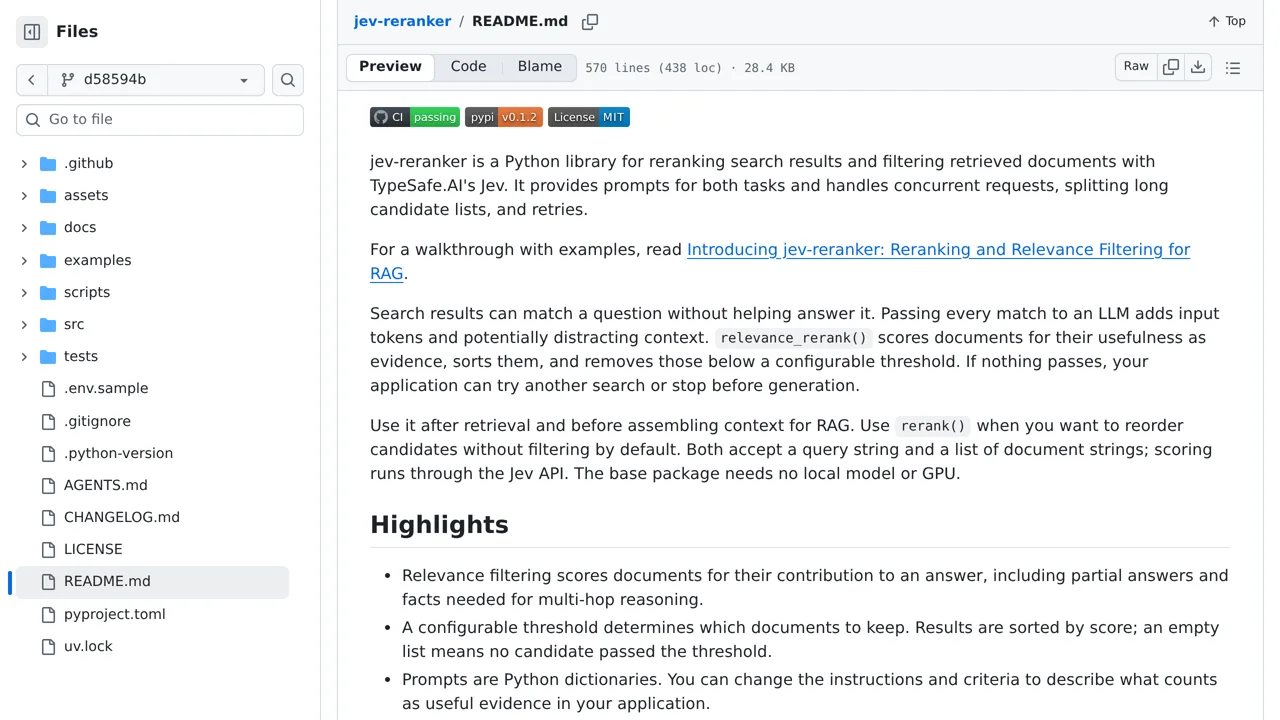
A Python library that reranks and relevance-filters RAG retrieval with Jev, scoring documents for how much they help answer the query.
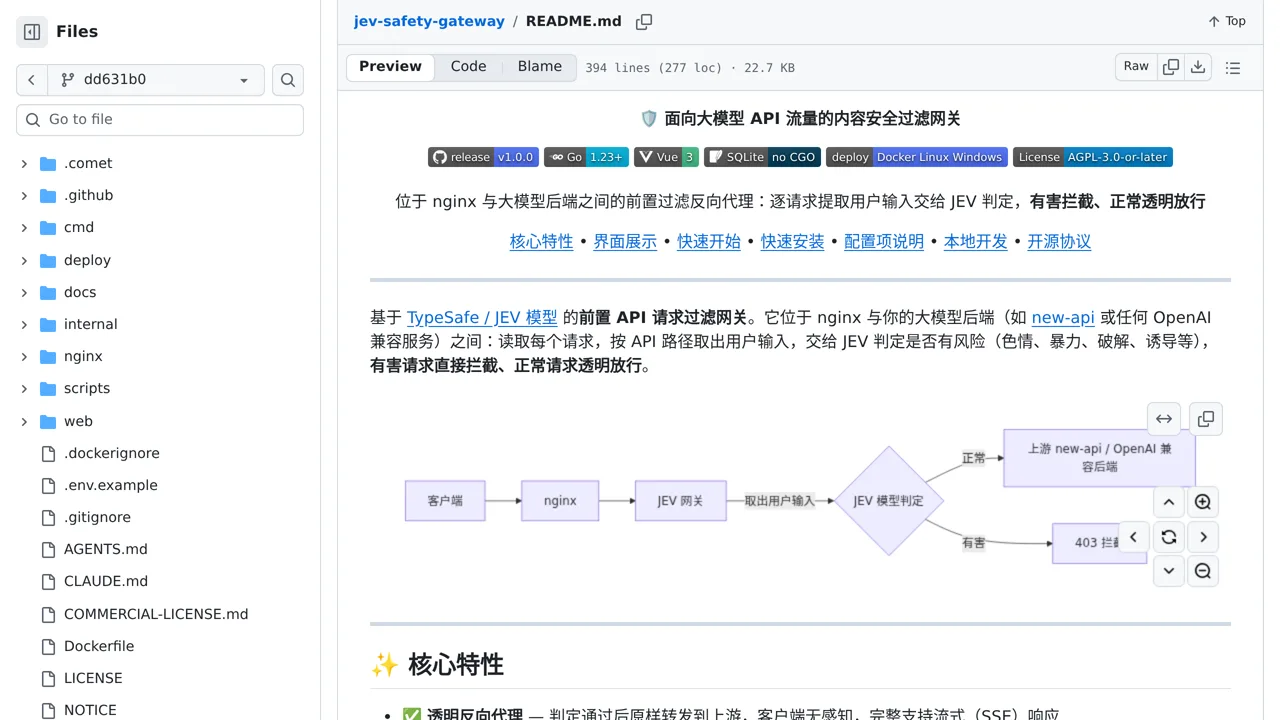
A Go reverse proxy that sits between nginx and your LLM backend, judging every request's user input with Jev and blocking harmful traffic transparently.
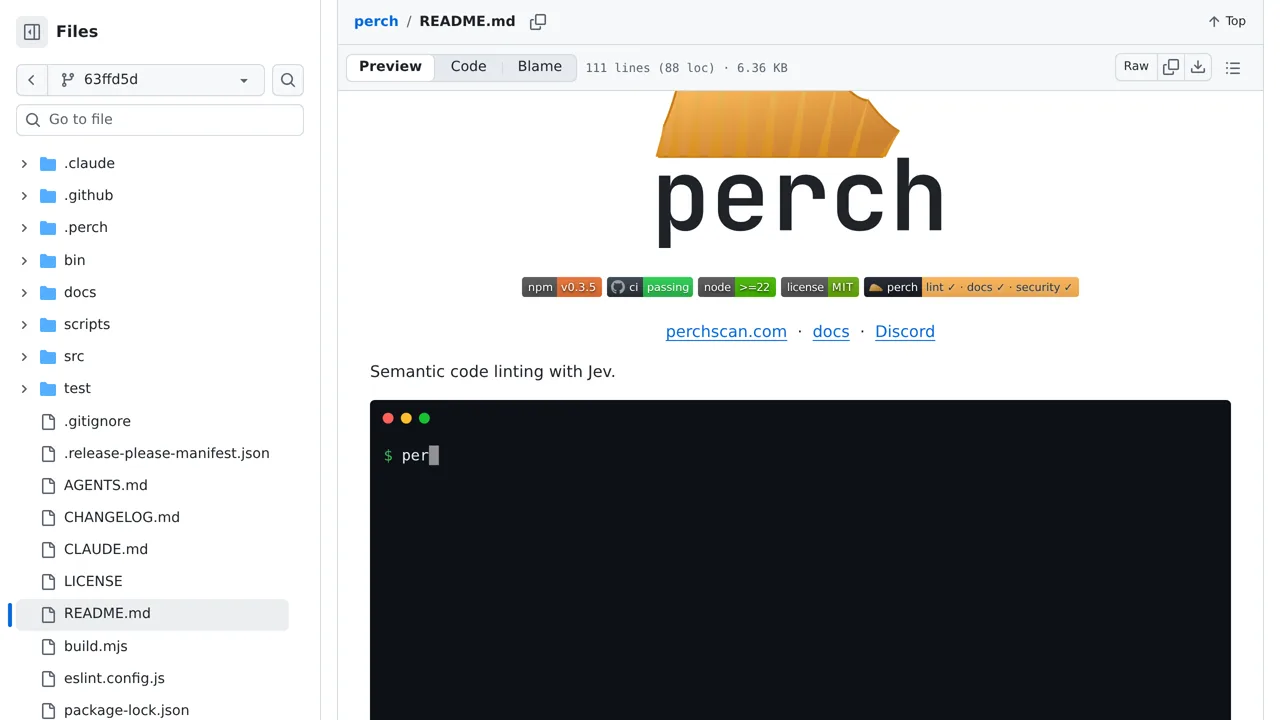
A semantic code linter that judges your source against configurable plain-language rules and prints per-finding confidence.
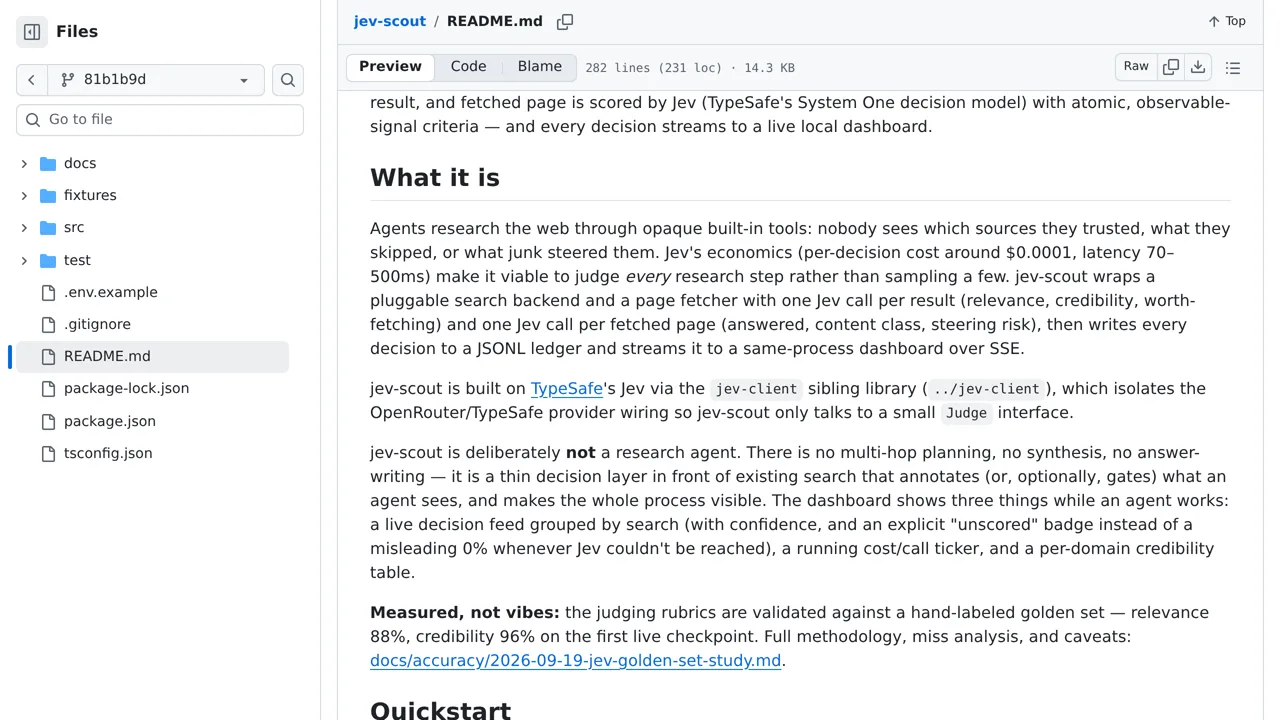
A chaperone for agents doing web research. Nothing gets fetched or trusted without Jev weighing in on it first.
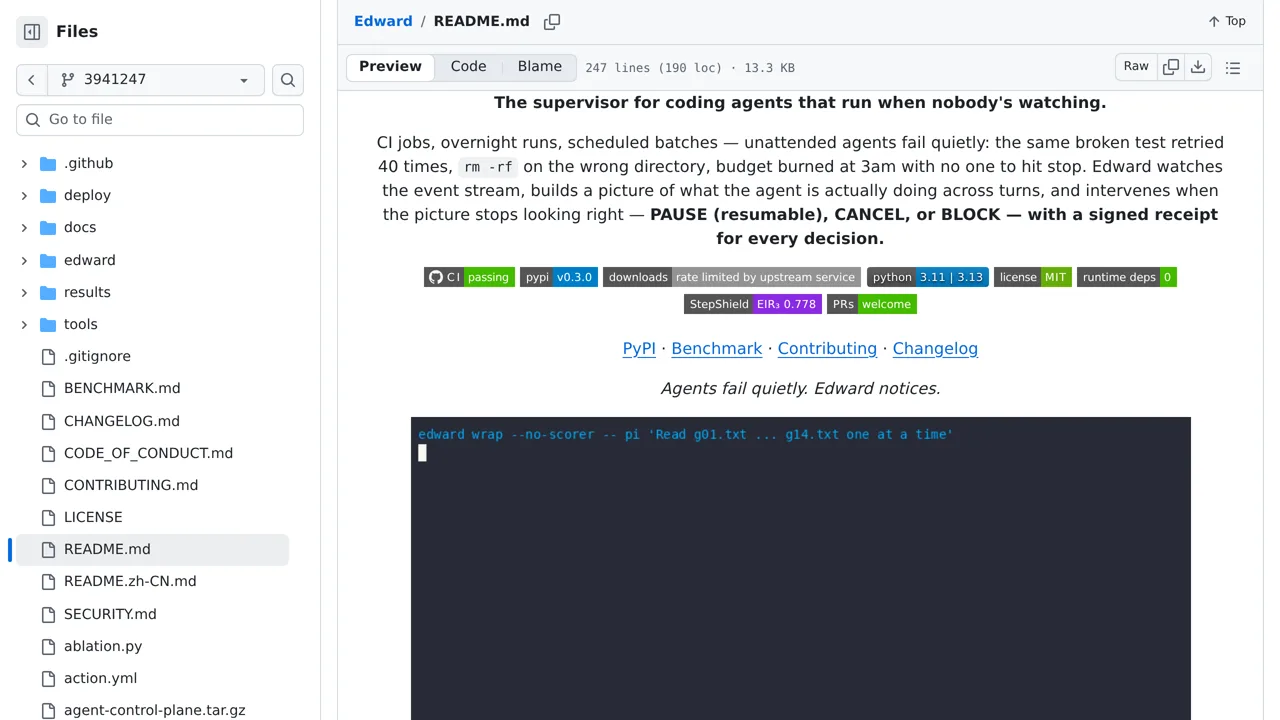
Sits beside agents that run unattended and steps in when a session goes sideways, pausing or cancelling with a signed note explaining why.
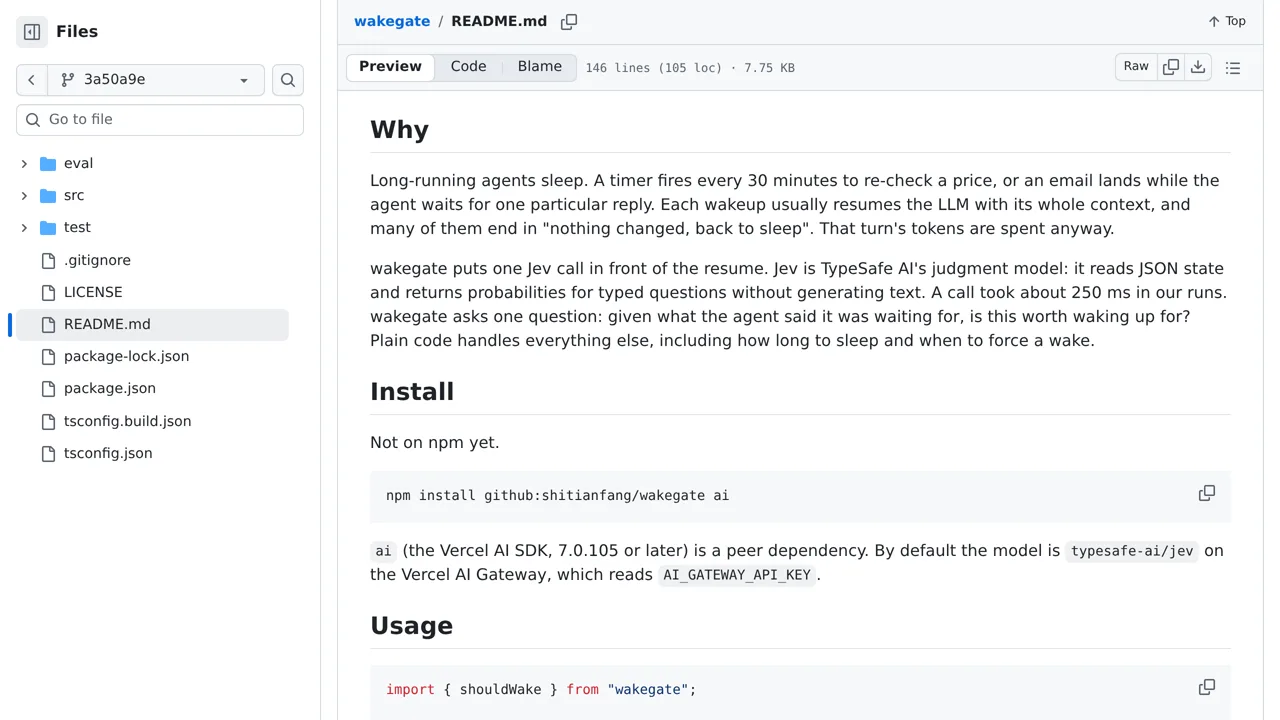
Most wakeup timers just resume the agent and pay for a full turn. wakegate asks Jev first, and skips the ones that aren't worth it.
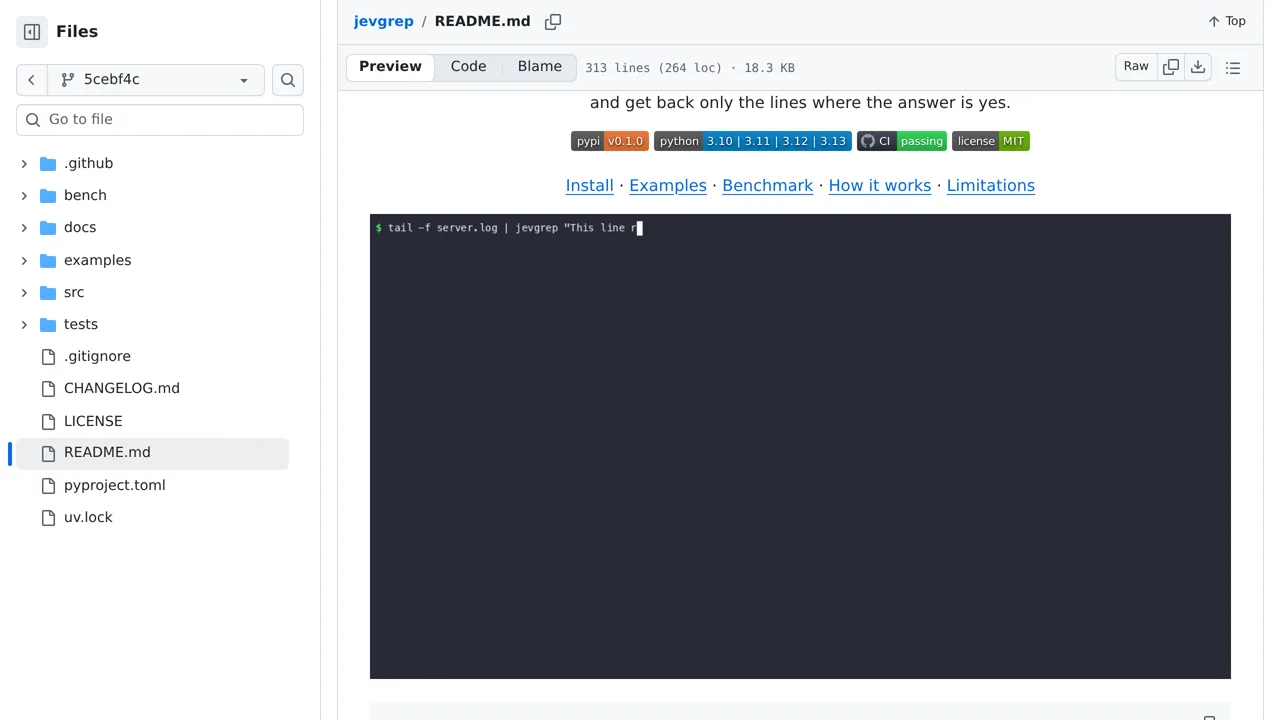
A grep that matches meaning instead of words, written for live log files.
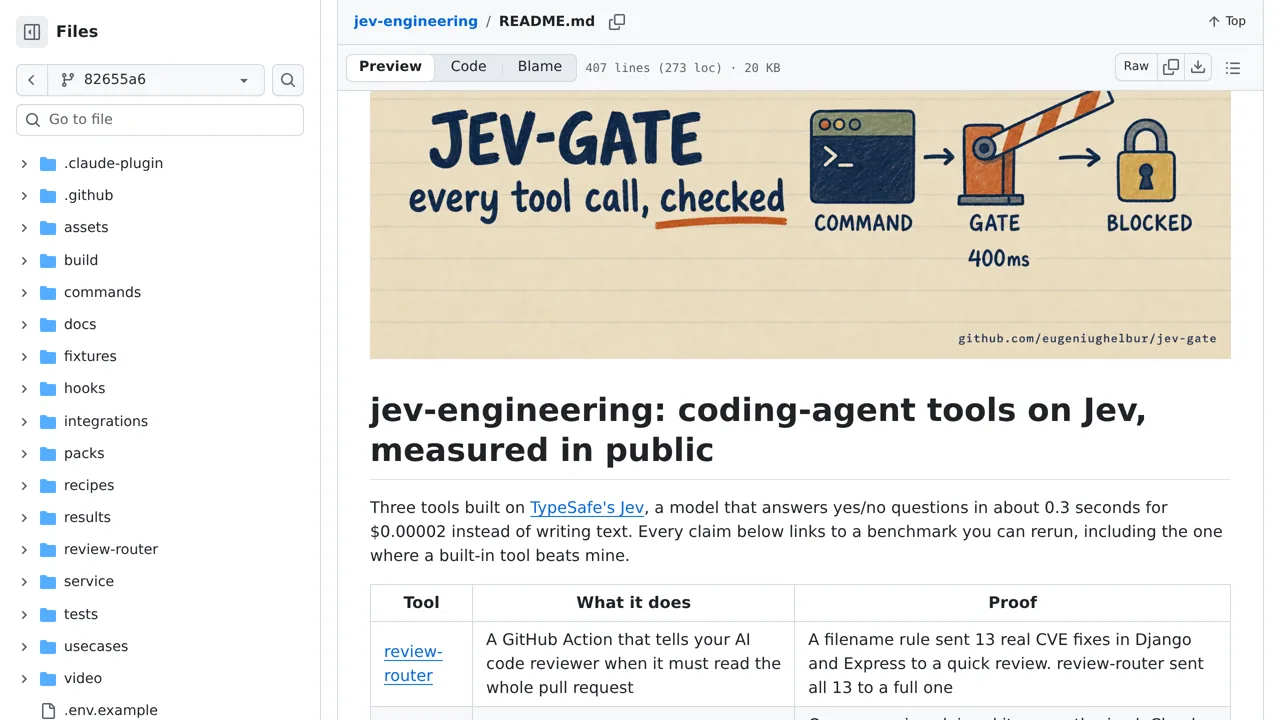
Working notes on putting guardrails around coding agents, each with a benchmark in the repo that reproduces the claim.
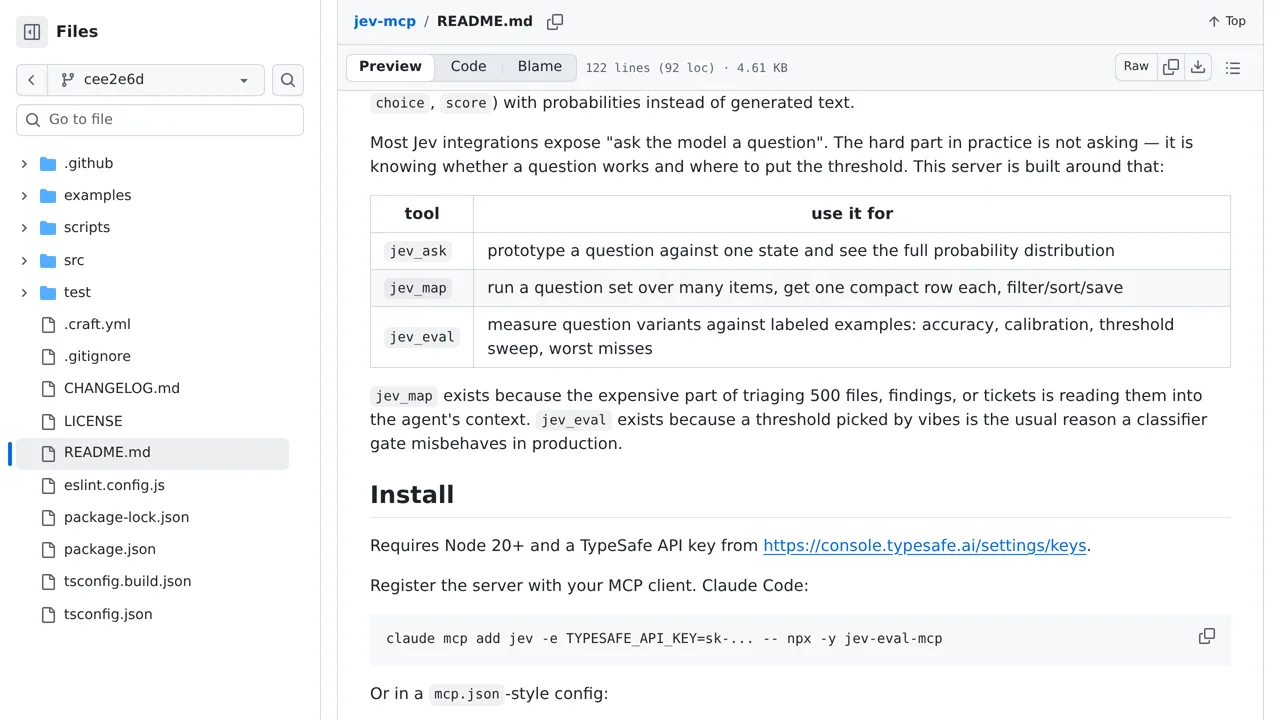
MCP tools for testing your Jev questions before they matter.
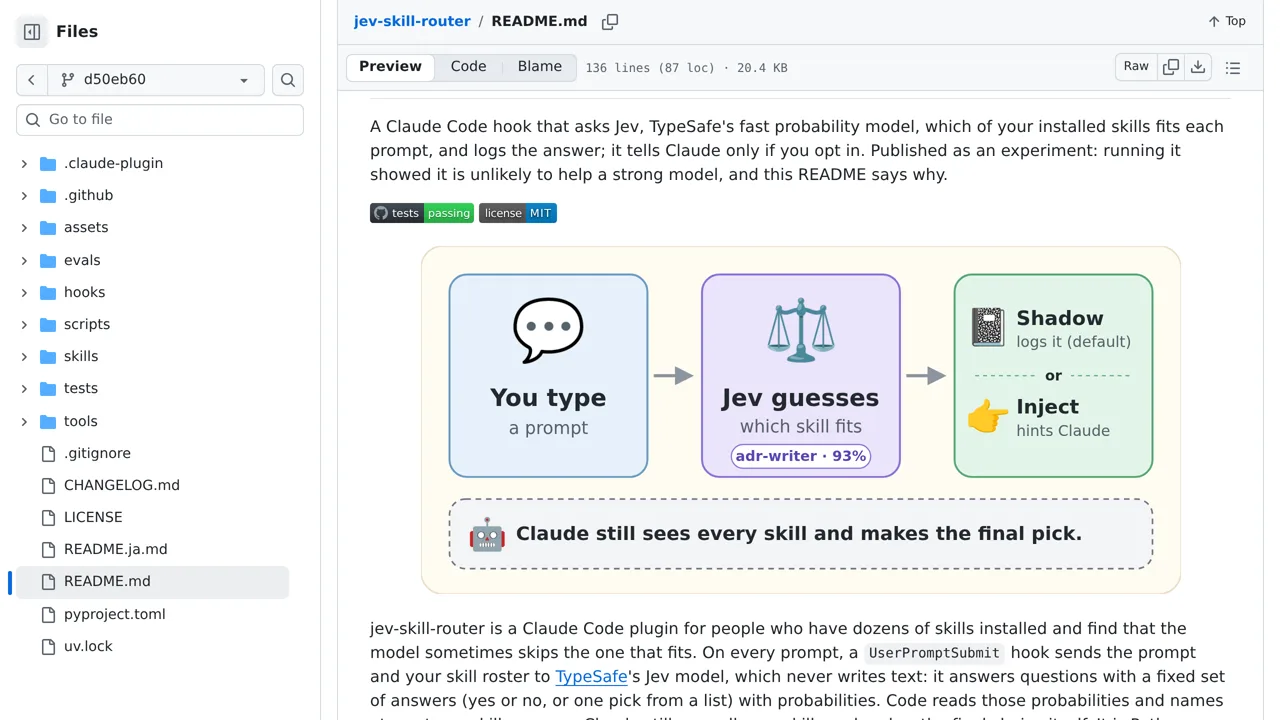
A Claude Code plugin that logs which skill it thinks fits each prompt and mostly stays out of the way. The numbers it collected argue against routers like it.
Connects coding agents to Jev over ACP or MCP, so an agent's LLM can request typed judgments without touching the TypeSafe API directly.
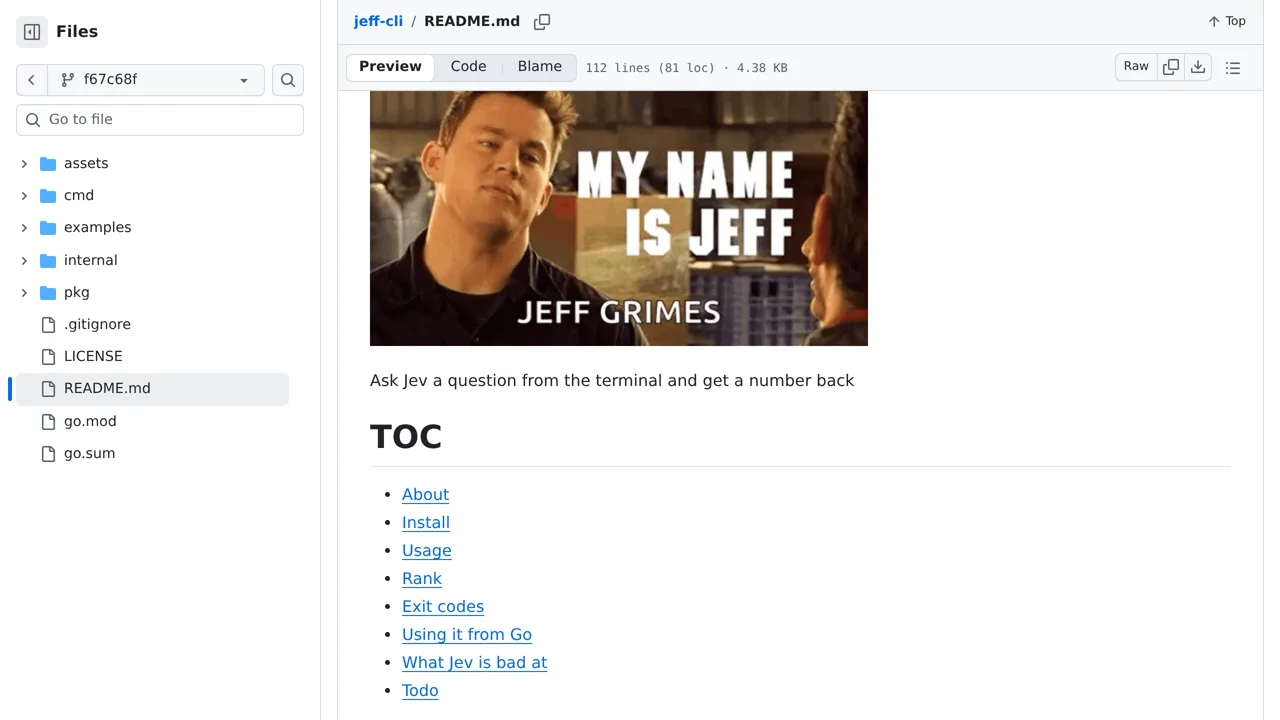
A Go CLI that asks Jev a question from the shell and turns thresholds into exit codes your scripts and CI jobs can act on.
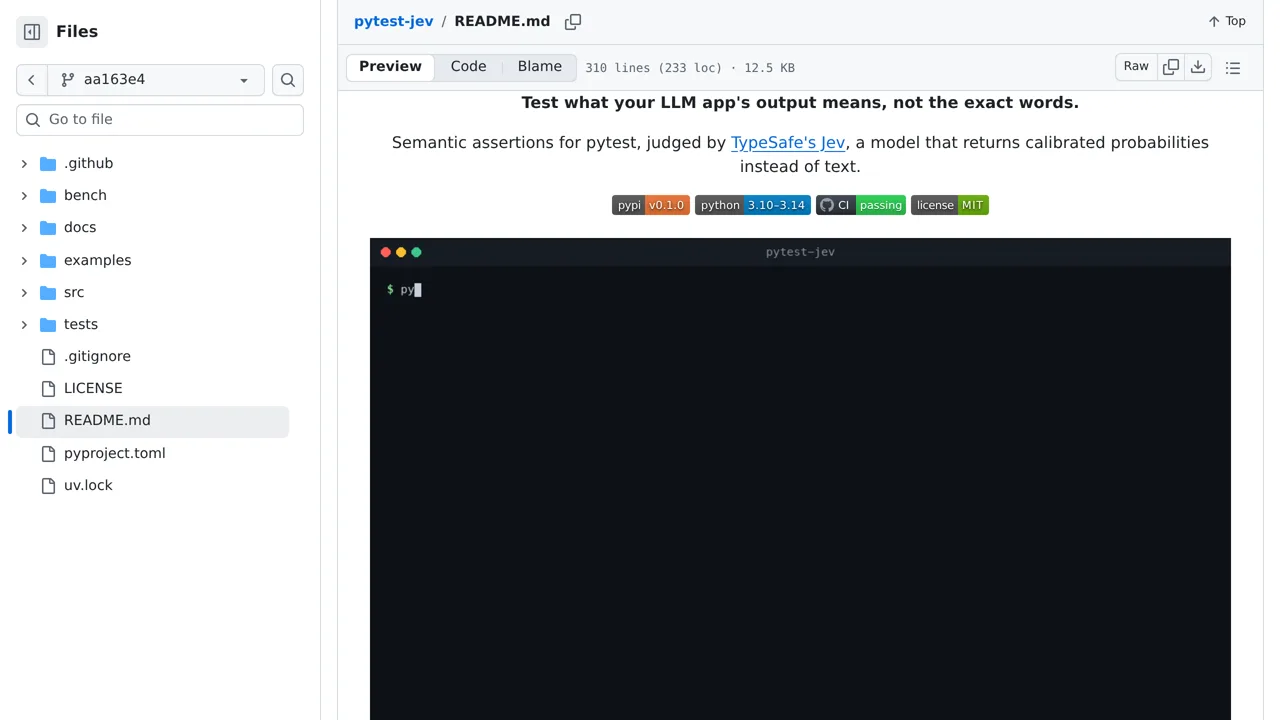
pytest assertions for LLM output that check meaning instead of wording. Declare what a reply must say and must not say, and Jev grades each claim.
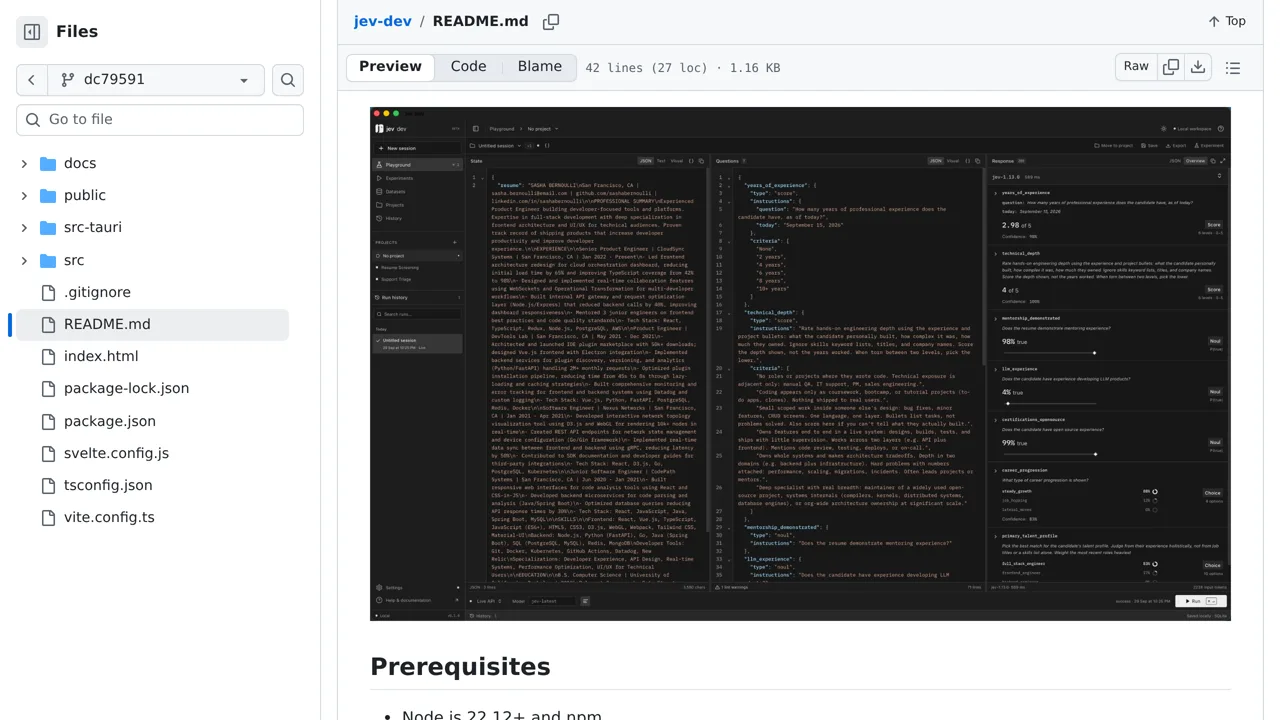
A desktop Jev workbench that keeps past requests and answers so you can revisit a run or compare question wording.
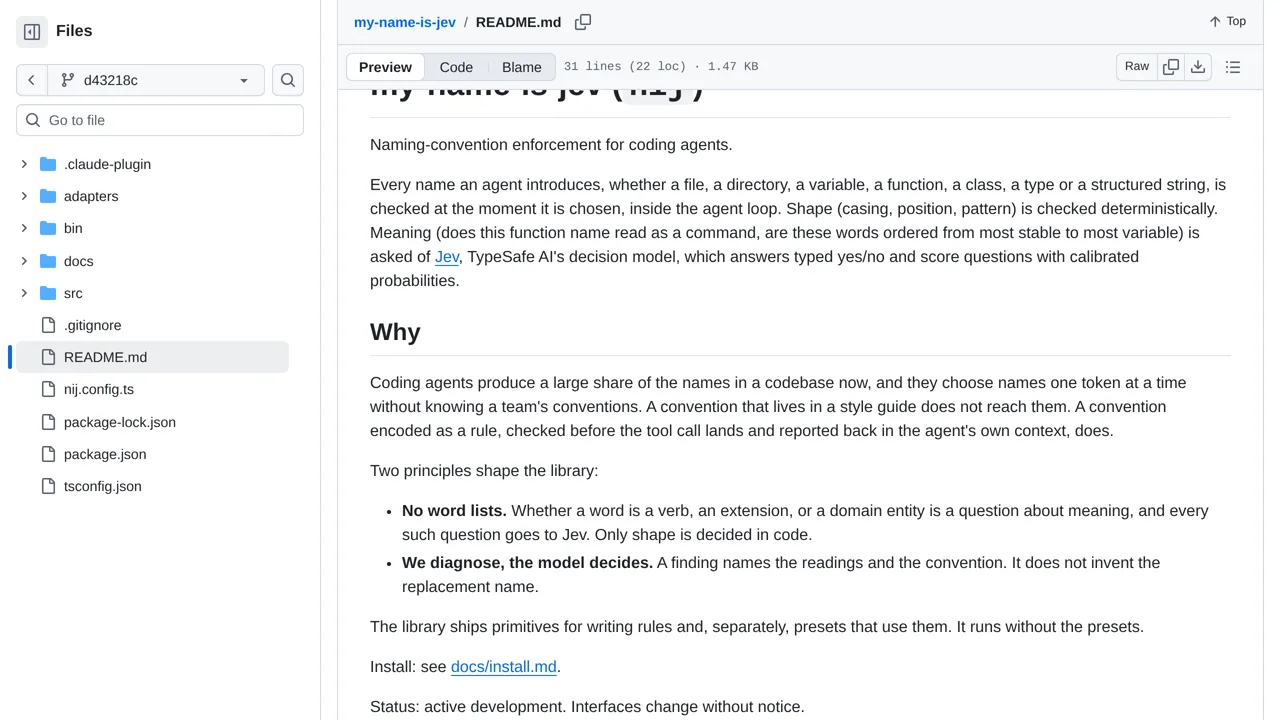
A coding-agent hook checks newly introduced names, using code for their shape and Jev for meaning and word order.
pi-jfiles helps a Pi coding assistant find project files by asking questions about their contents.
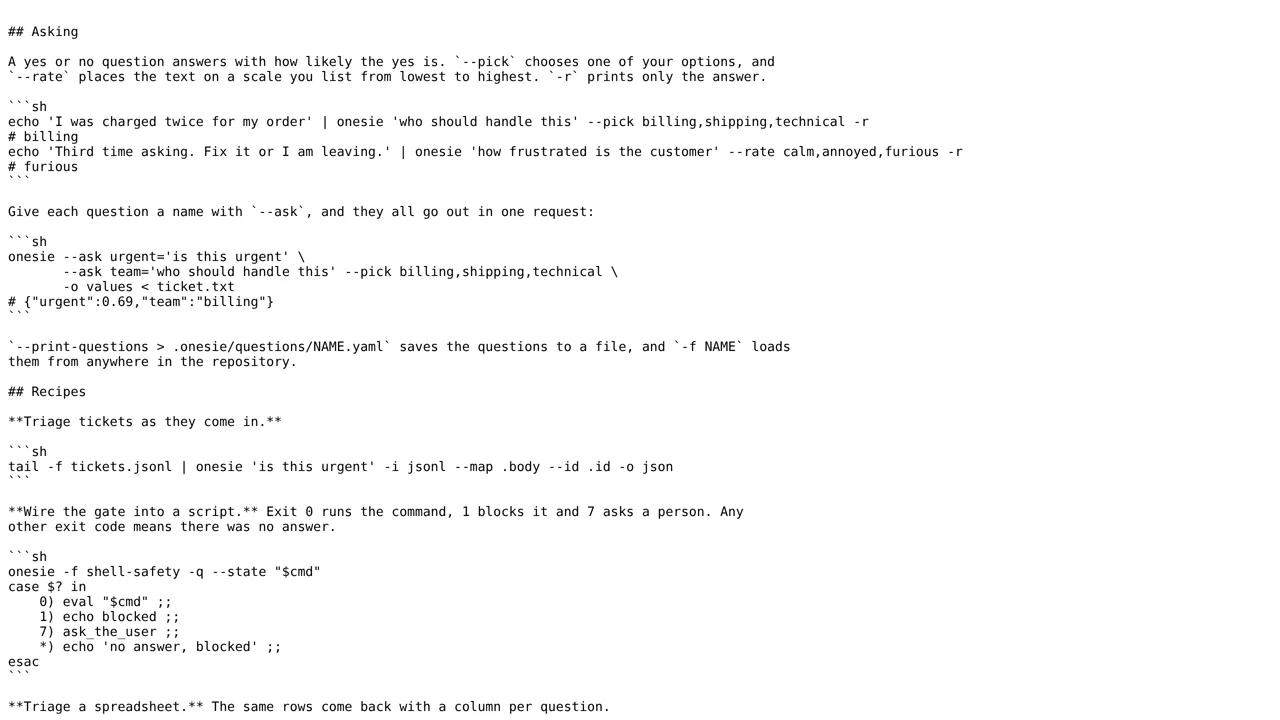
Pipe text into onesie to ask Jev questions, label spreadsheet rows, or give a shell script decisions and a human-review exit code.
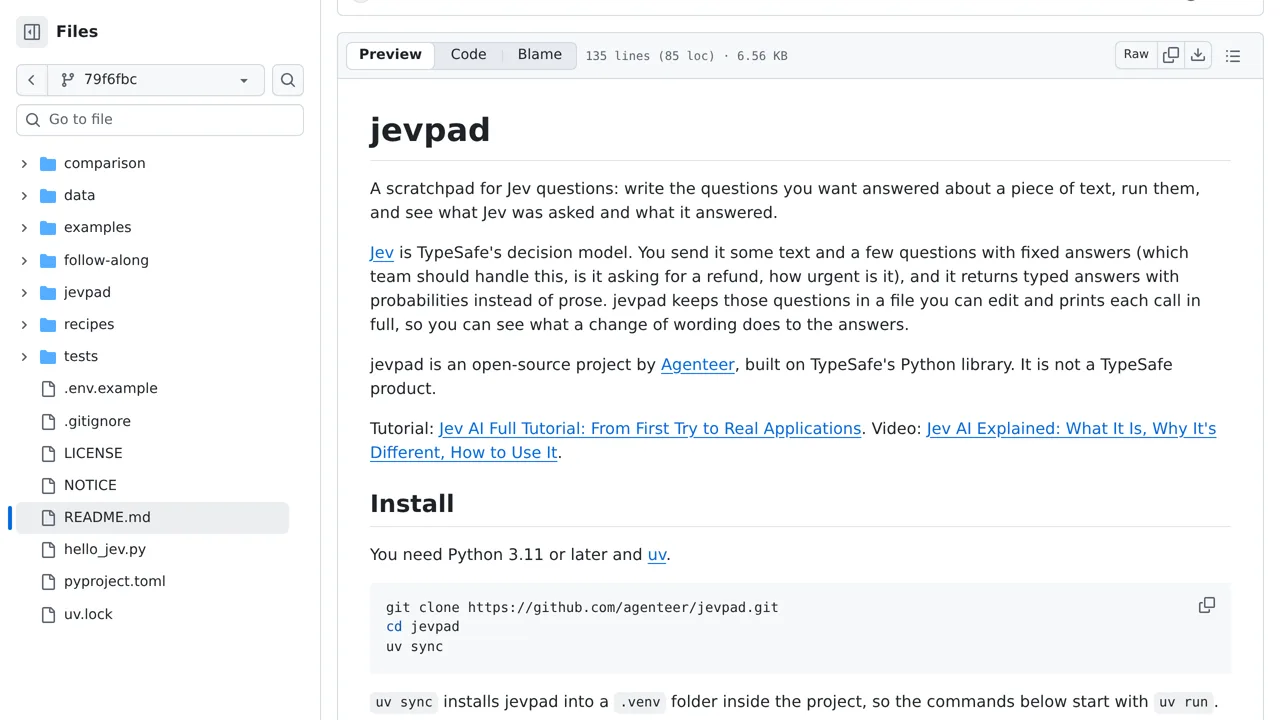
Write questions about a message, see exactly what Jev answered, and keep live calls, practice answers and replays clearly apart.
Jev, briefly
A chat model generates text token by token and hopes you parse it. Jev never generates a word. Your code sends the state of the world plus typed questions; Jev returns every answer in one parallel pass — typed values with calibrated probabilities and a confidence score your code can trust. About 70–500 ms end to end, $0.042 per million input tokens, output free. Trained with what TypeSafe calls Reinforcement Learning for Calibrated Decisions.
You define the options. Jev returns the chosen option, a probability for every option, and a confidence. The workhorse of routing, agents, and games — the answer space is always legal, so there is nothing to parse and nothing to hallucinate.
You describe ordered levels — say trivial / normal / critical. Jev returns the level, the probability of each, and a confidence. Scores turn fuzzy judgment (“how severe is this log line?”) into a number-free decision your code can branch on.
You assert a statement; Jev returns the probability that it is true — a noul. Moderation, verification, guardrails, “does this diff actually fix the bug?”: one question, one calibrated probability.
Official material lives at typesafe.ai and docs.typesafe.ai. JevMade is an independent community registry — not affiliated with or endorsed by TypeSafe AI.
Recurring lessons
Games, drones, trading bots, and browser agents all converge on the same loop: serialize the state, ask one decisive question, act, repeat. Jev’s latency makes the loop feel instant — the model lives inside the control loop, not outside it.
The answer says what; the confidence says whether to act. The most reliable entries threshold on confidence to route edge cases to a slower model or a human — automation with an honest escape hatch.
Makers rarely ask Jev to pick from everything. Local tactics prune 225 gomoku moves to ~40; DOM filters turn a page into an element table; code narrows options, Jev judges within them.
A recurring split: Jev makes every decision cheaply and instantly, and a small LLM is only invoked when a human-facing string must actually be written. Decision and generation are separate budgets.
Send the link — repo, live demo, post, or video — plus a line on what it does and which primitives it uses. Every entry is verified against its primary source before it ships.
Submit your experimentSign in first so we can reply to you. Submissions are reviewed, not published automatically.