Read & learn
Written guides.
Understand Jev, one idea at a time. Walkthroughs, recipes, and writeups — our notes first, the original next.
Learn, build, and play with Jev — from deep technical guides to creative experiments.
Read & learn
Understand Jev, one idea at a time. Walkthroughs, recipes, and writeups — our notes first, the original next.
Watch & learn
See an idea take shape. Tutorials, demos, and deep dives, organized by topic and credited to their creators.
Make & explore
See what builders made with Jev. Games, tools, repositories, articles, and more — traced to their sources.
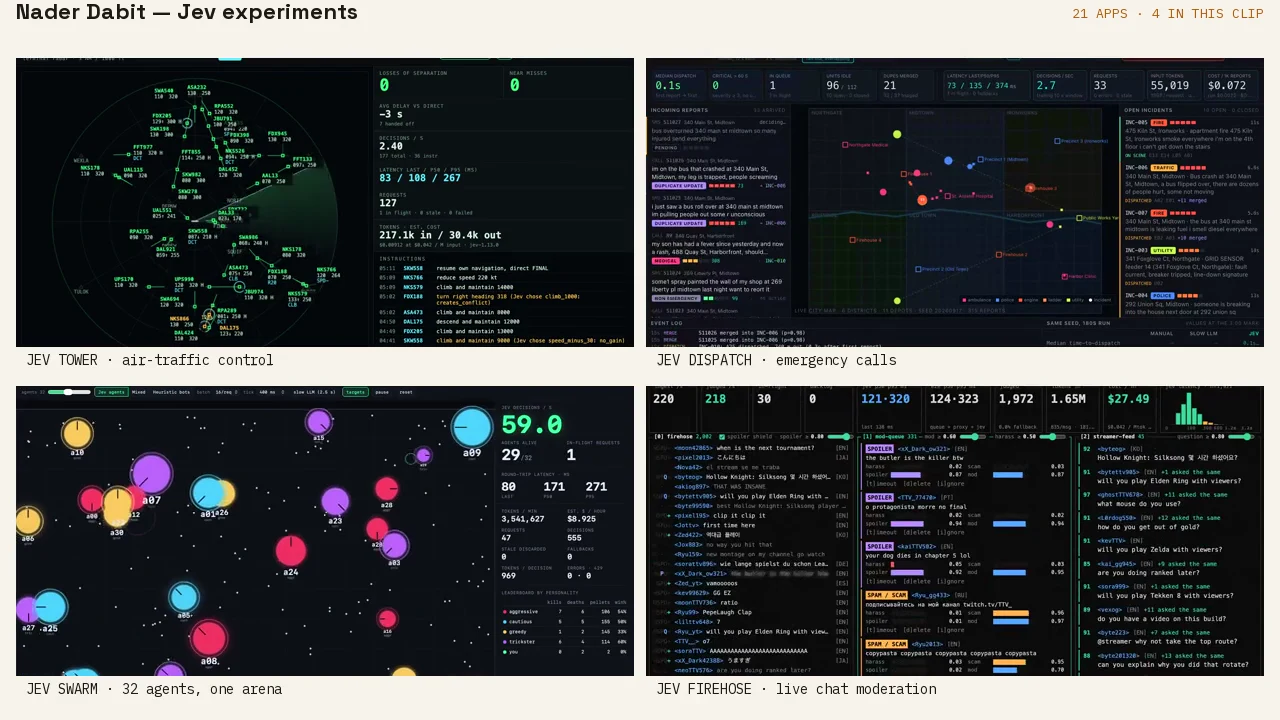
Every category, from games and tools to repositories and writeups, traced to a primary source.
Same ideas.
Different paths.
This is the full registry, not just the featured picks. Figures like speed, cost, and stars are maker-reported or captured snapshots, not JevMade measurements.
394 experiments · showing 181–240
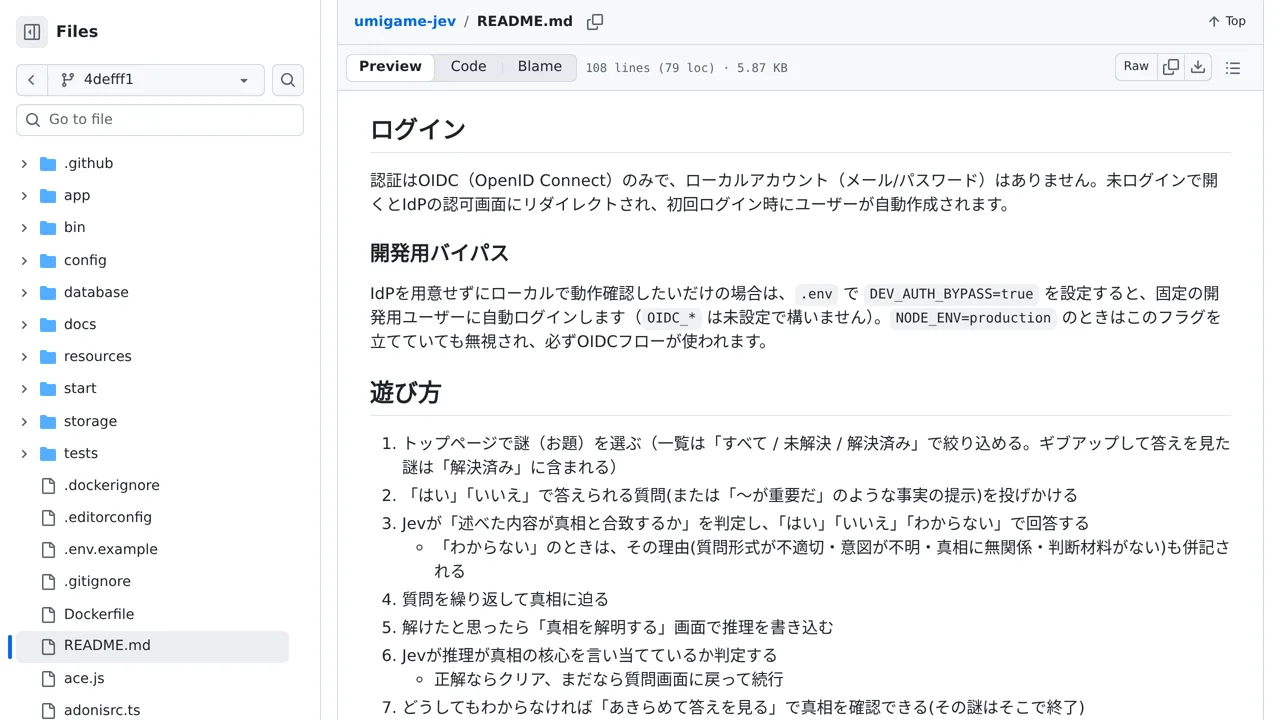
Solve Japanese lateral-thinking mysteries by asking questions that Jev judges against a hidden truth.
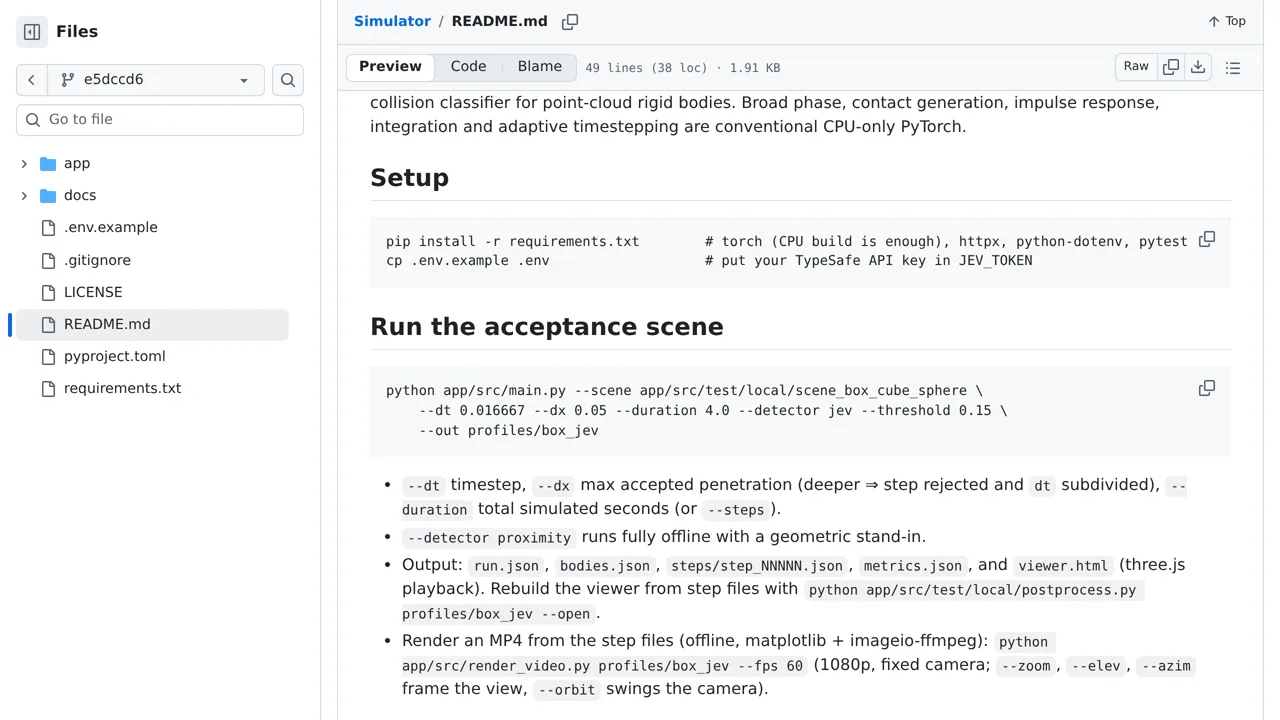
A point-cloud rigid-body simulator asks Jev to classify possible collisions after conventional broad-phase filtering.
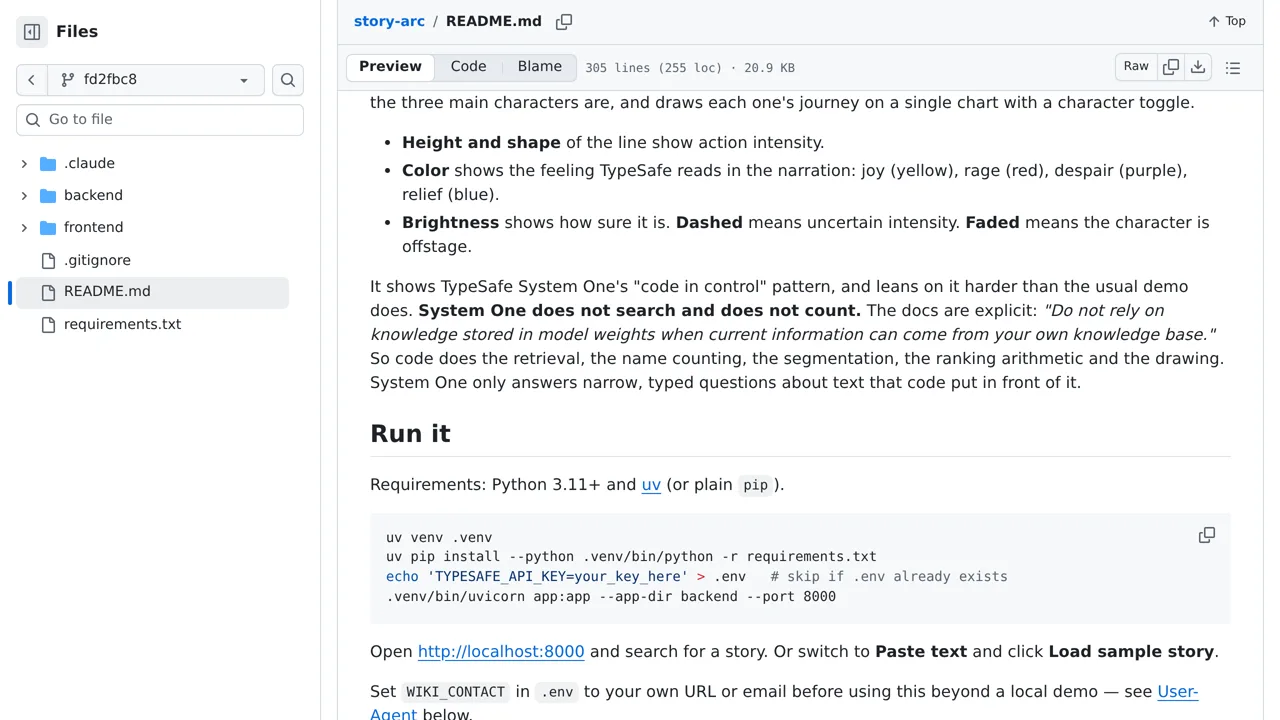
Paste a story or find one on Wikipedia, then chart three characters’ action intensity and feelings across the plot.
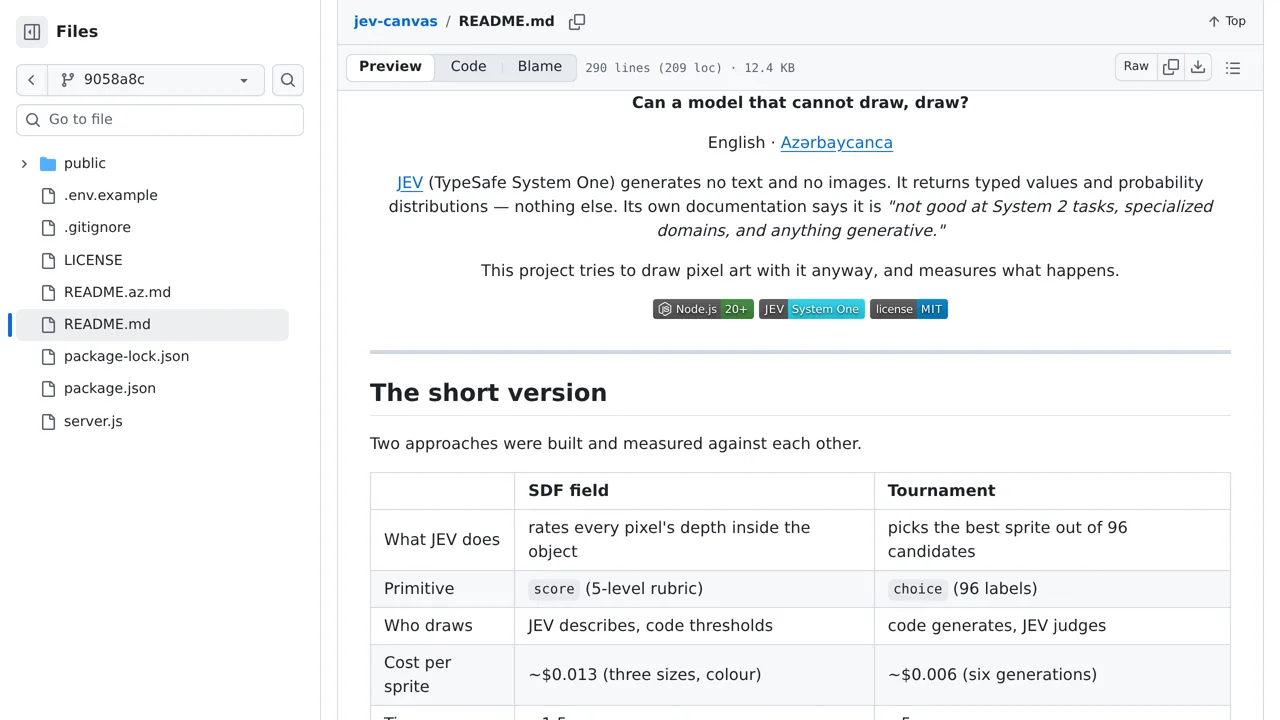
Experiment with pixel art by asking Jev to map simple silhouettes or judge generations of code-made sprites.
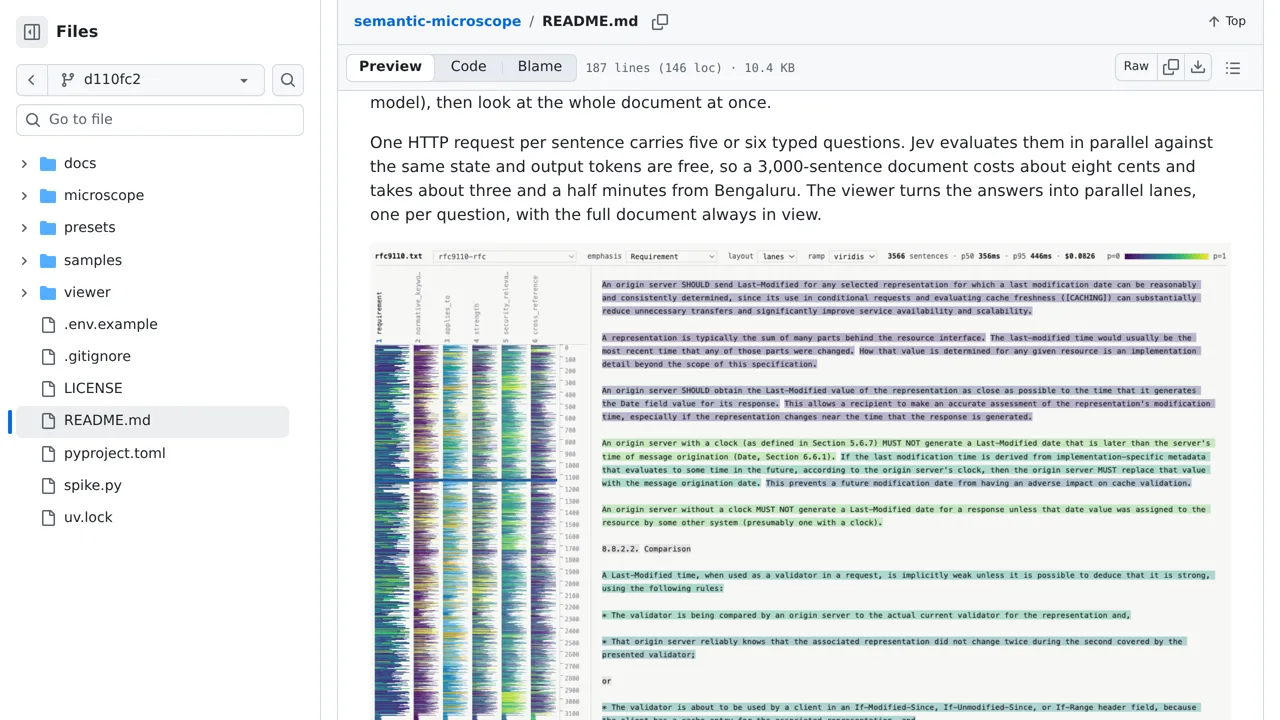
Turn a document into a sentence-by-sentence heat map of requirements, tension, rhetorical role, or other chosen dimensions.
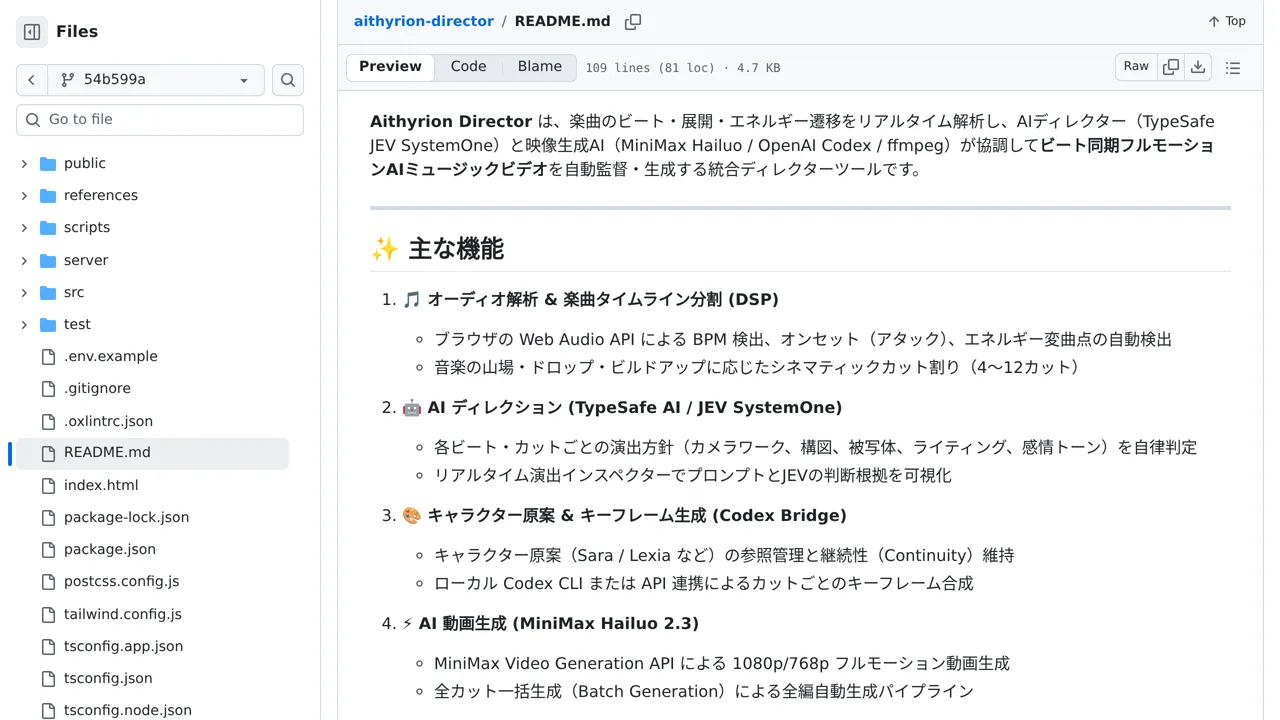
Direct a music-video pipeline in which Jev chooses camera, composition, lighting, and tone before other tools generate each cut.
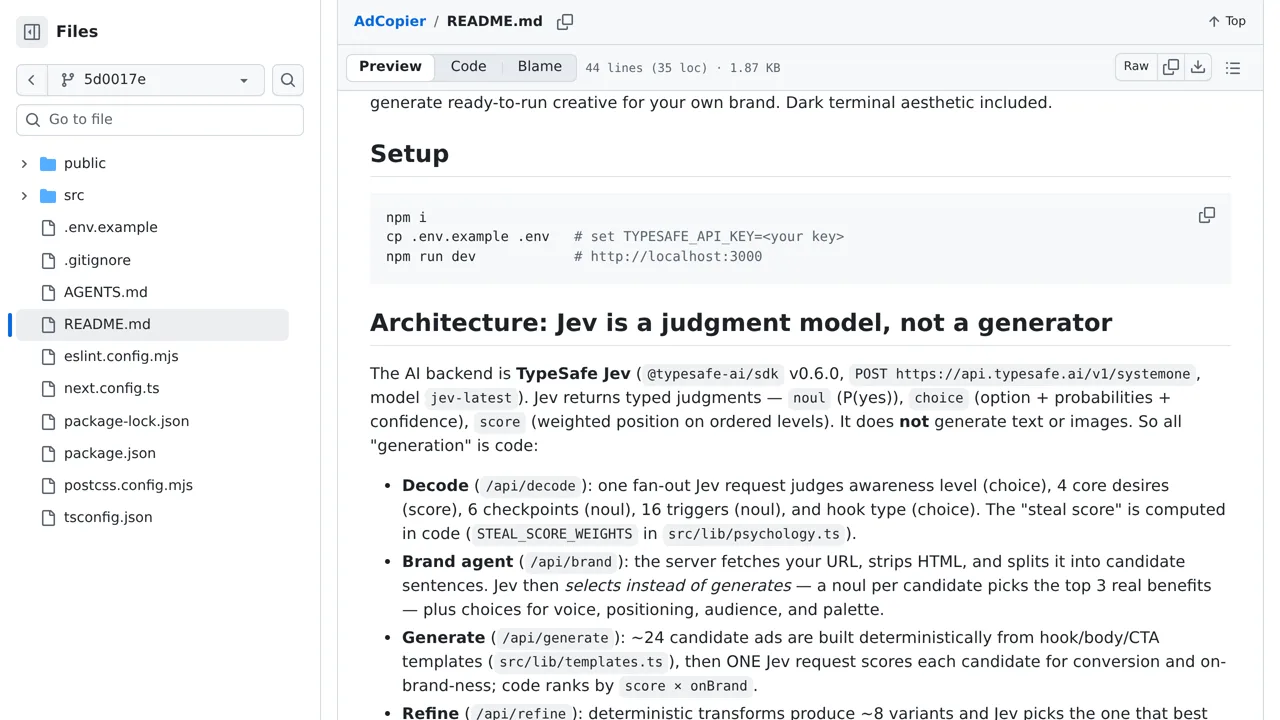
Decode an ad’s persuasion pattern, then rank template-built rewrites against a synthetic focus-group rubric.
Load books, PDFs, Word files or images on Windows or Android and ask bounded questions with answers expressed as probabilities.
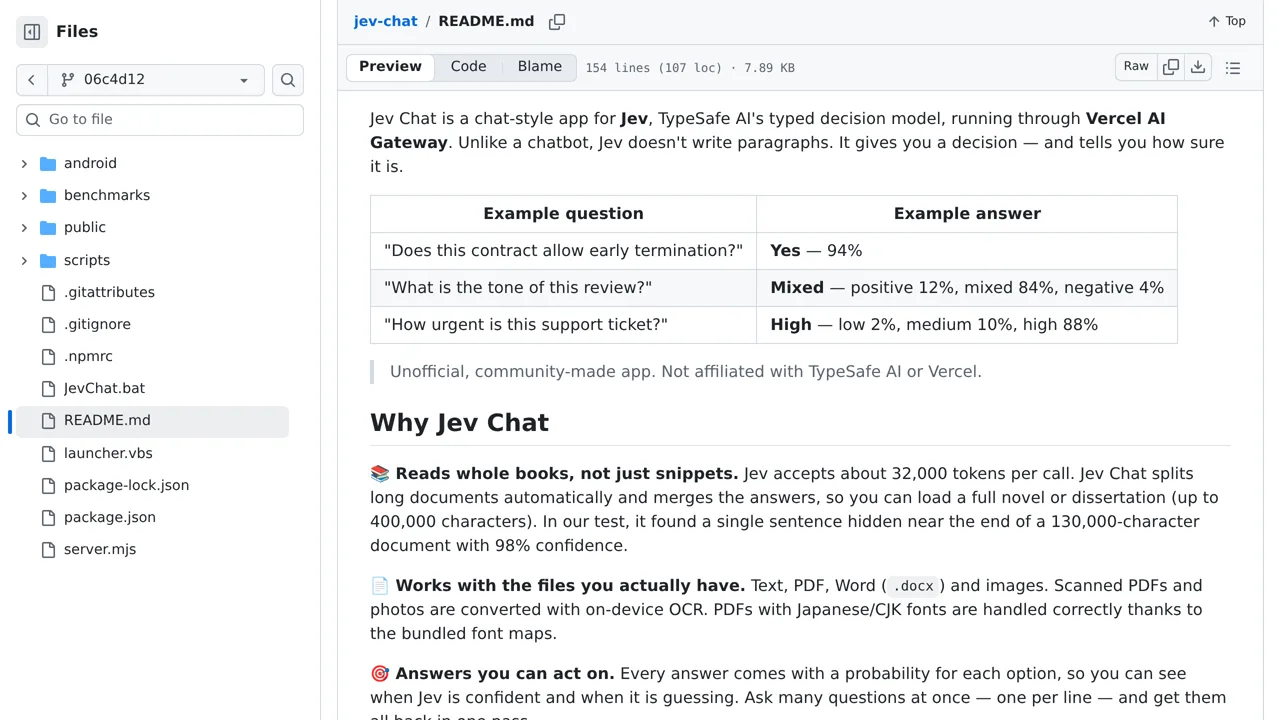
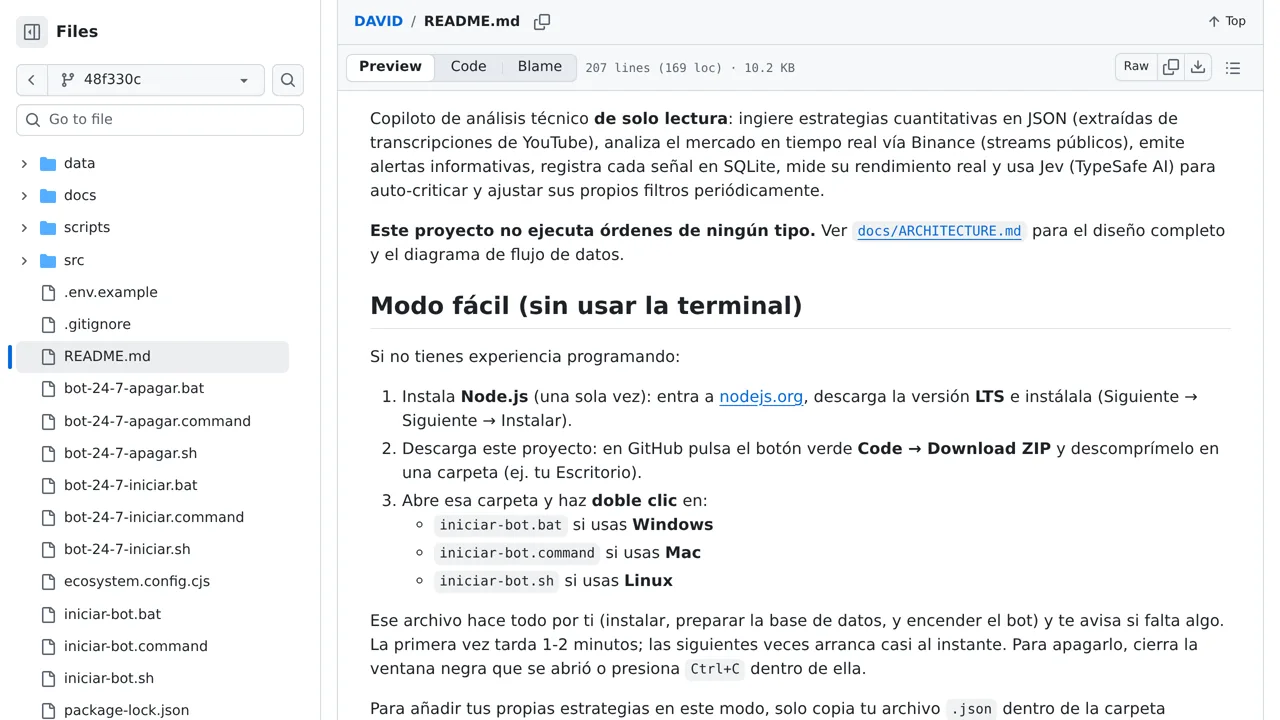
A read-only crypto alert bot that studies settled signals and adjusts its filters without ever placing a trade.
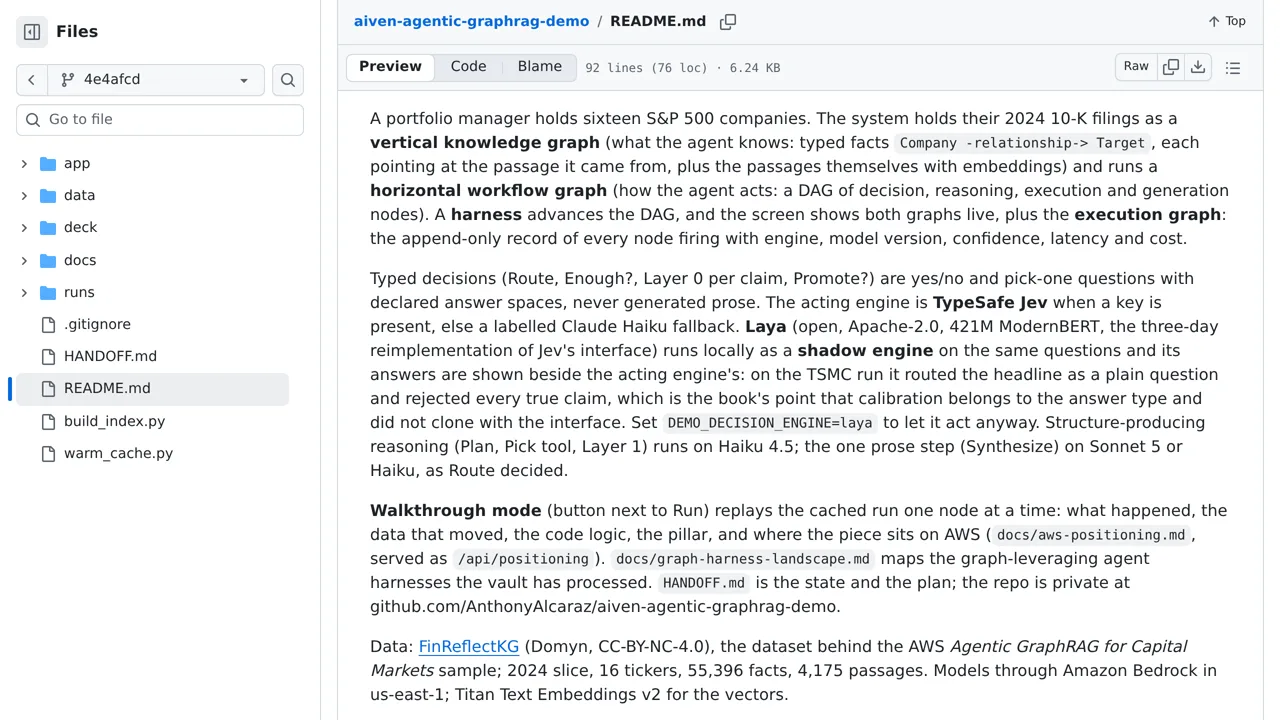
A GraphRAG talk demo where Jev routes questions, checks evidence and decides whether deeper retrieval is needed.
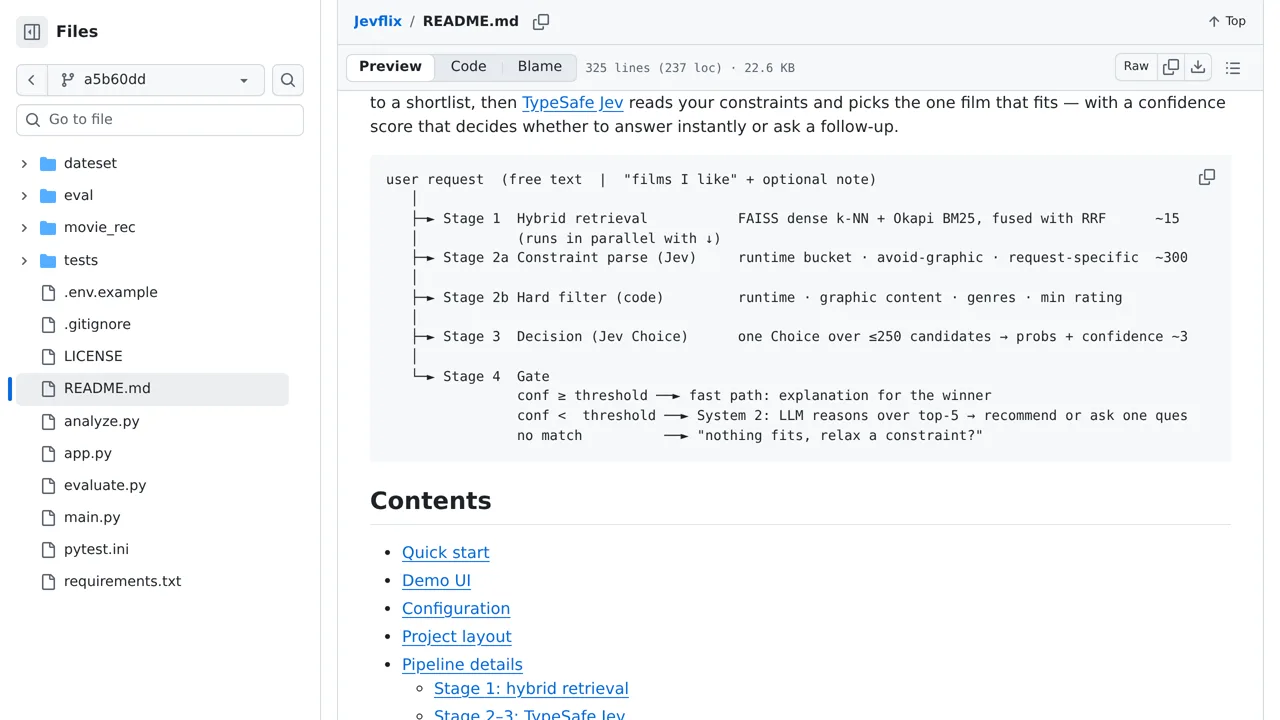
Tell Jev what you want to watch and let it pick from a catalog of 4,800 films.
A wildfire console that verifies citizen reports, rates evacuation routes and chooses a tactical response as the incident changes.
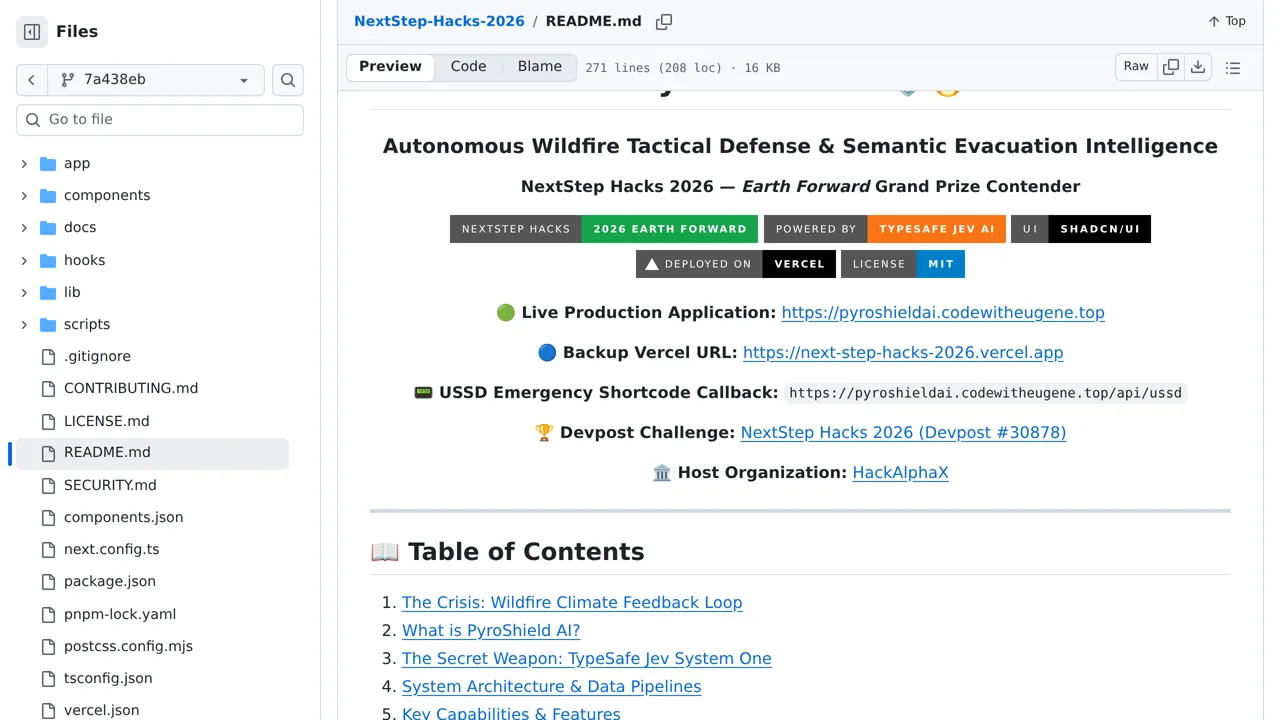
Adds an optional second opinion to fraud investigations, comparing Jev's action and grounding check with the existing evidence pipeline.
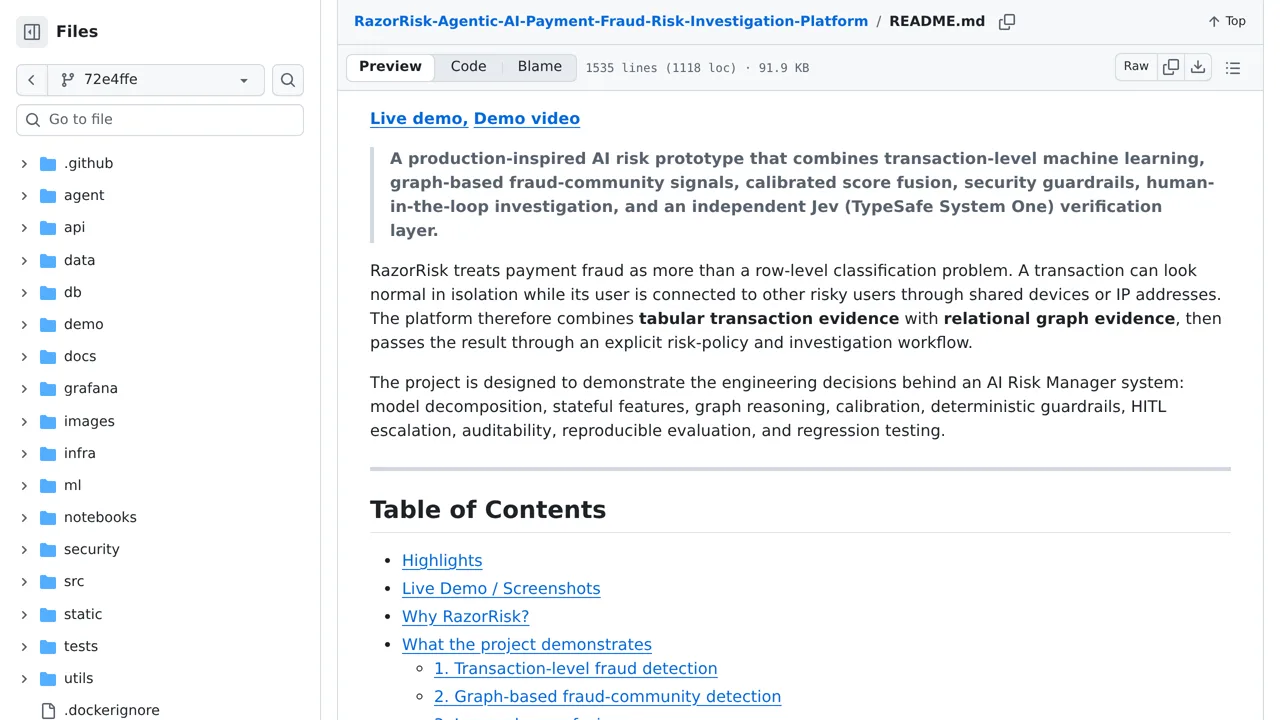
Review your Valorant rounds with ratings from local rules or an optional Jev judge.
A local second brain where Jev reranks search evidence and suggests useful links between related notes.

A Spanish-language cancer podcast library where Jev sorts new videos by format, topic and relevance before code decides publication.

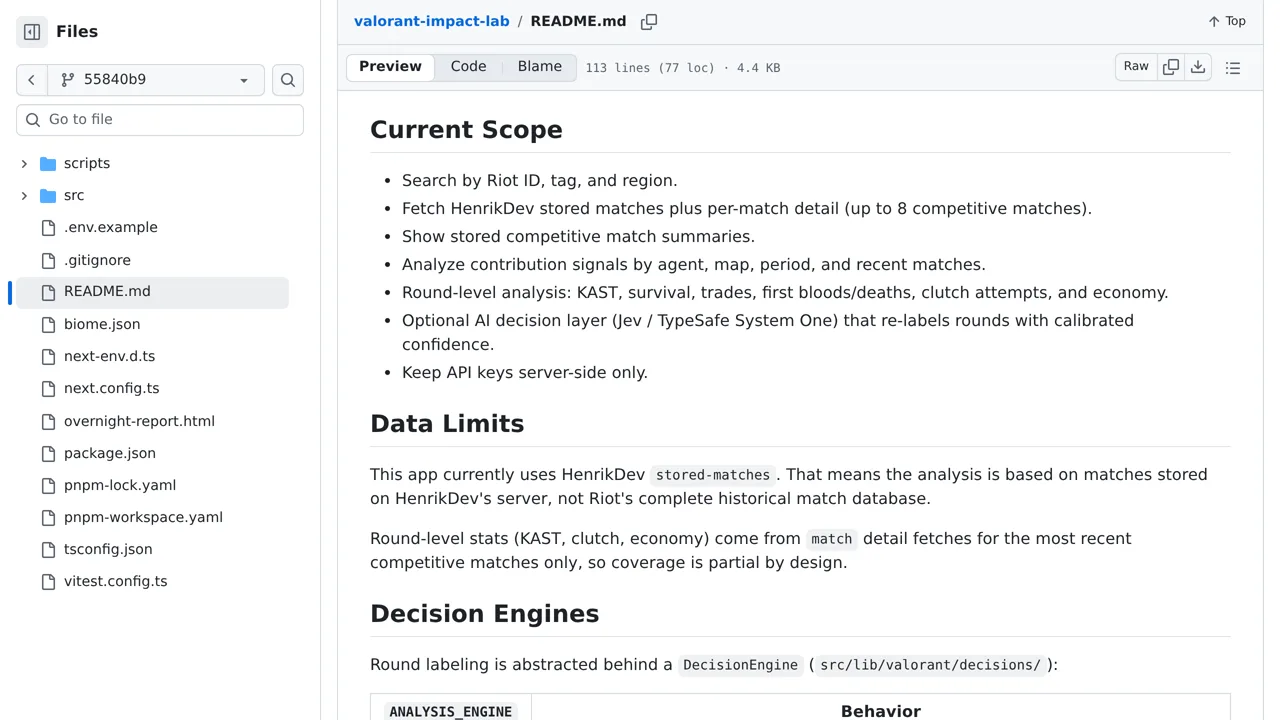
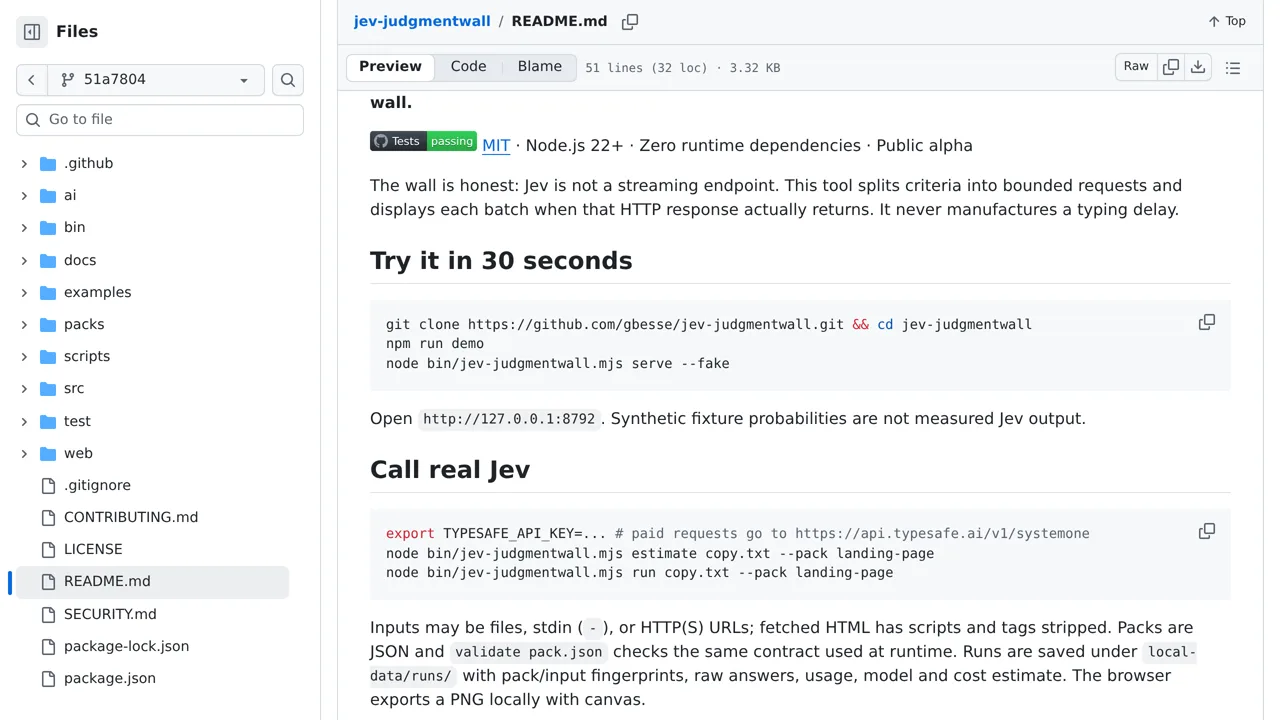
Turns a text and a pack of criteria into a shareable wall of verdict cards, appearing as each batch returns.
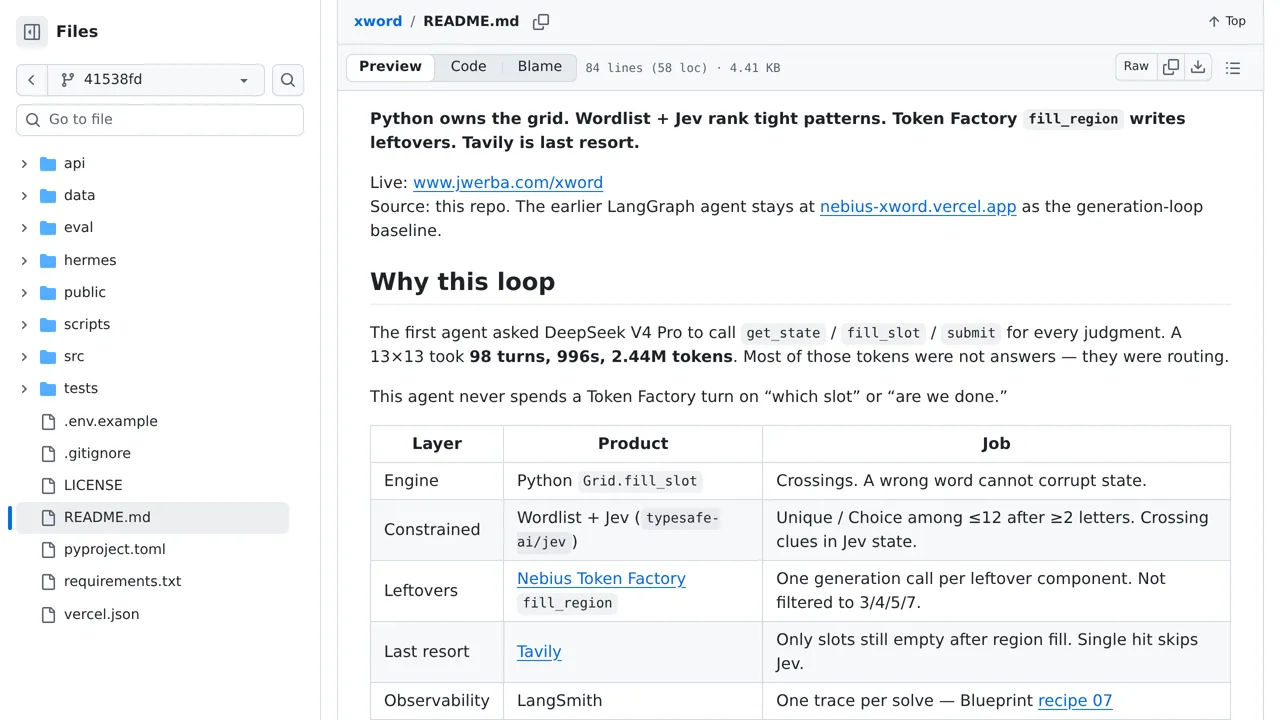
A crossword agent where Python manages the grid and crossings while Jev ranks short wordlist candidates for each clue.
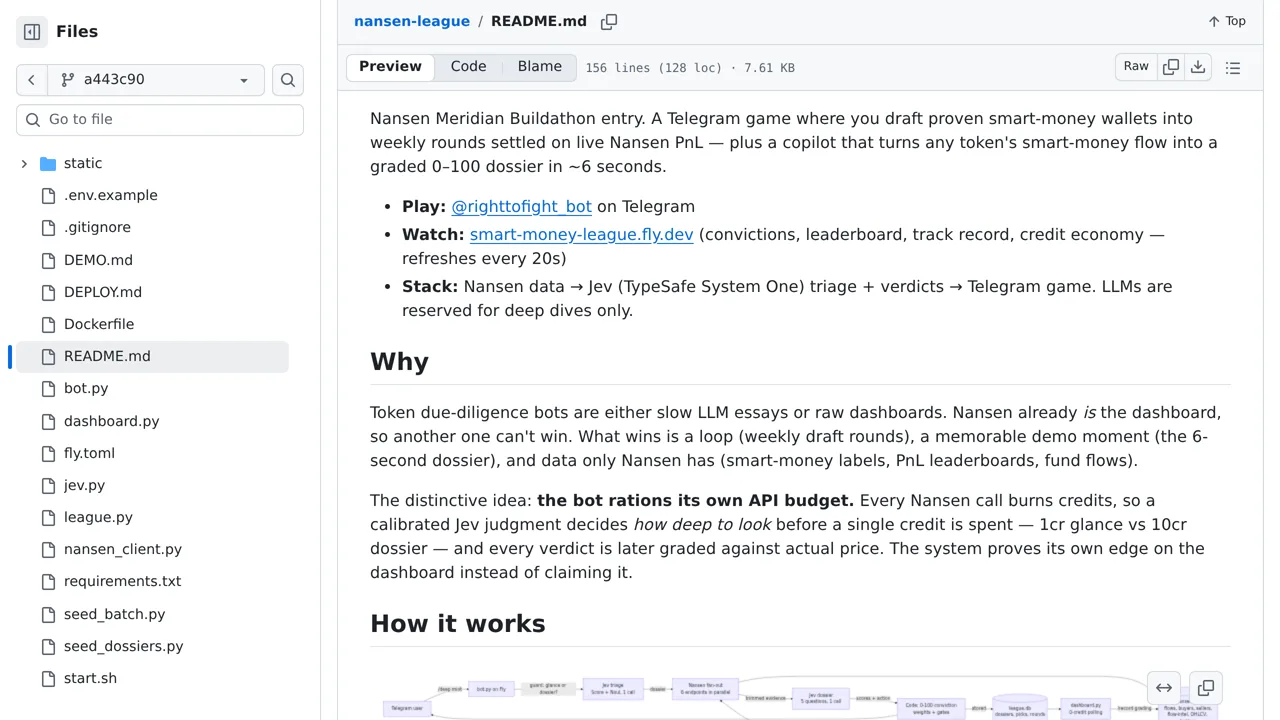
A Telegram fantasy league and token-research copilot that asks Jev whether deeper Nansen data is worth the credits.
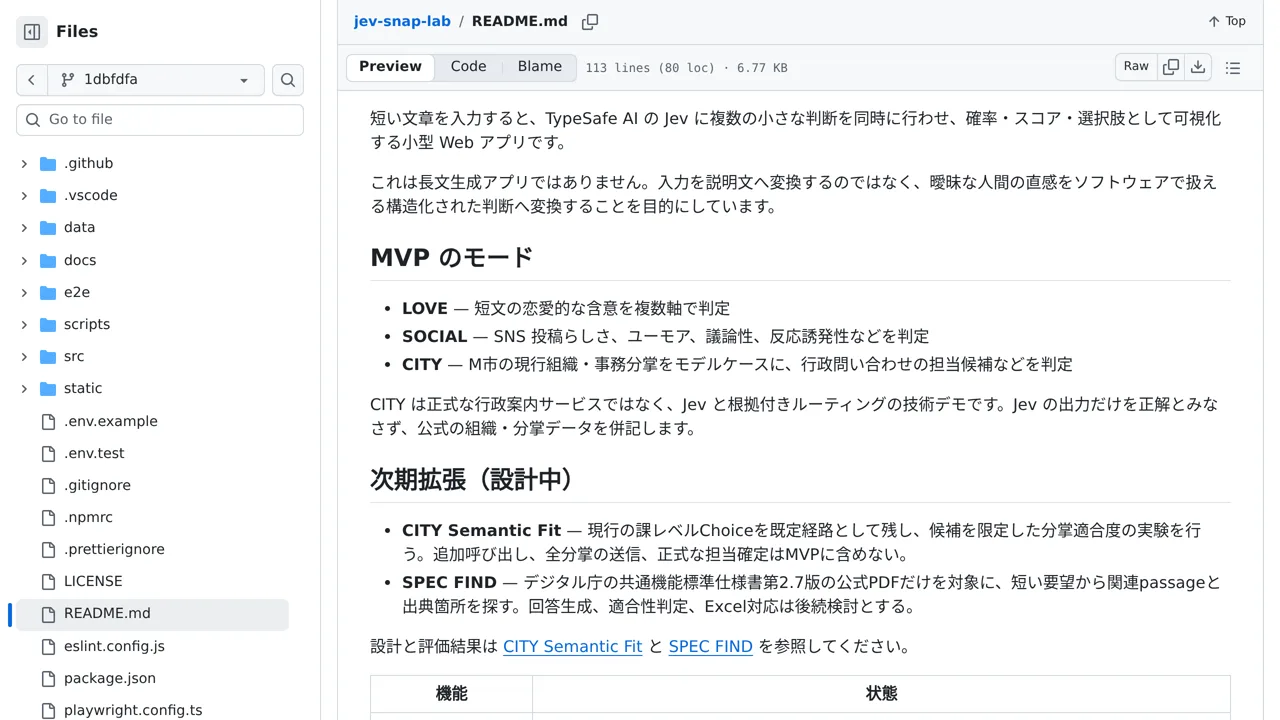
A small playground that turns one line into several visible Jev judgments about romance, social posting or city routing.
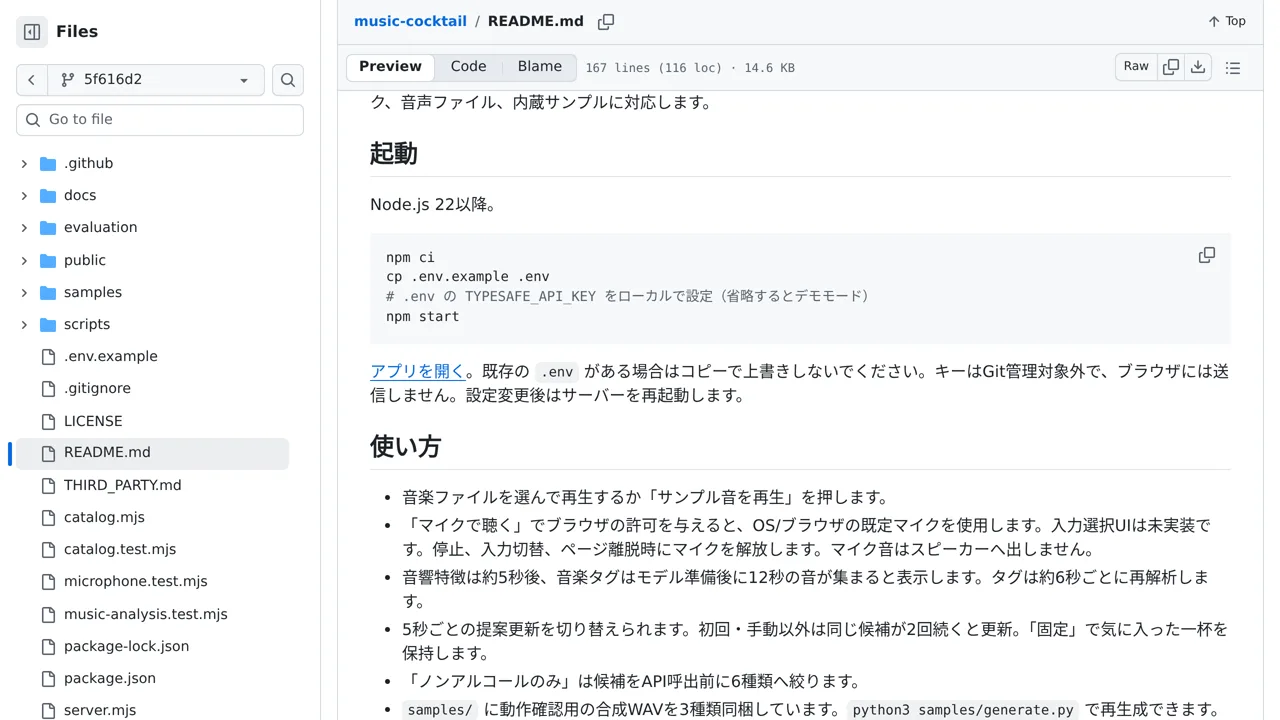
Play music and get one of twenty house cocktails chosen to match its sound.
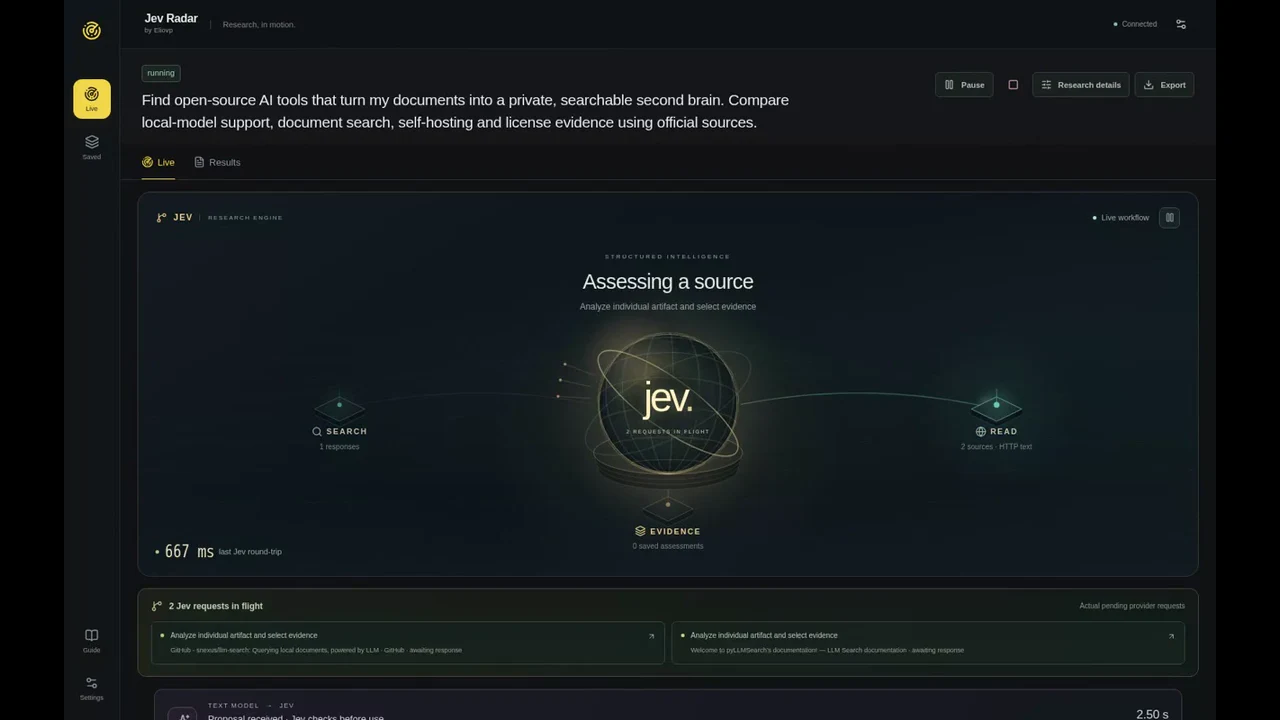
A local research desk where Jev chooses methods, searches and leads, then checks evidence and claims under fixed budgets.
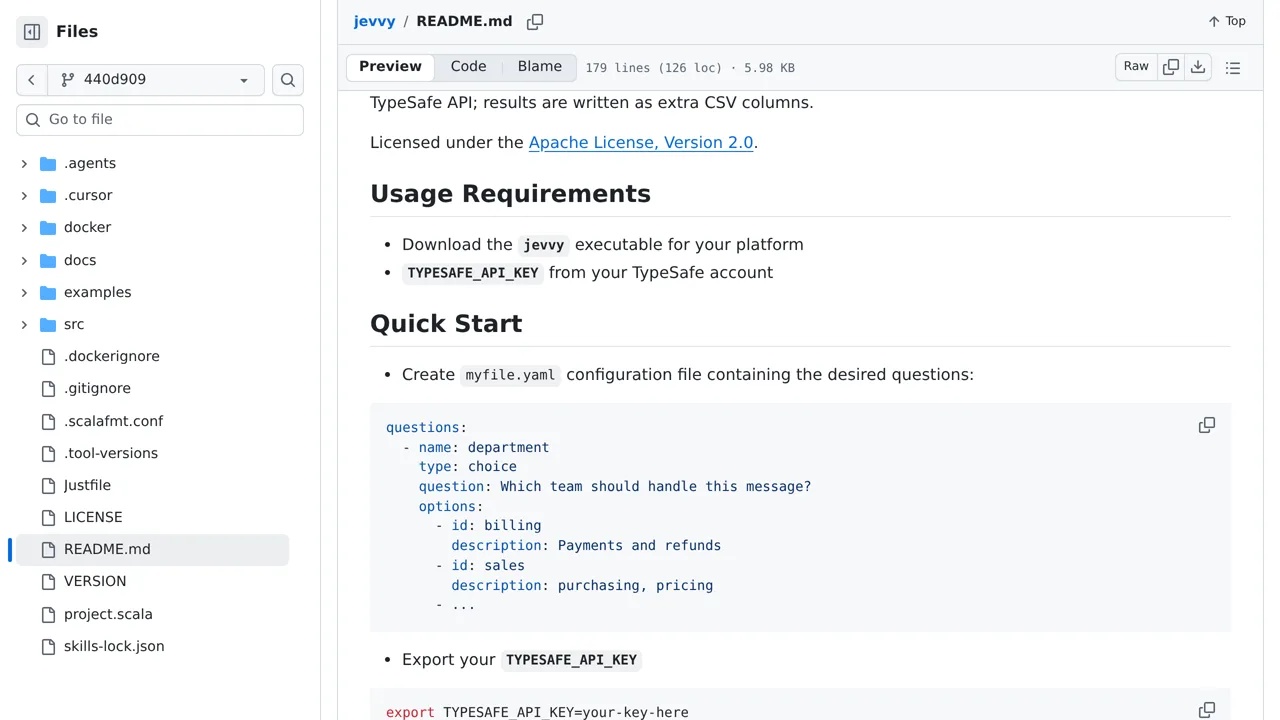
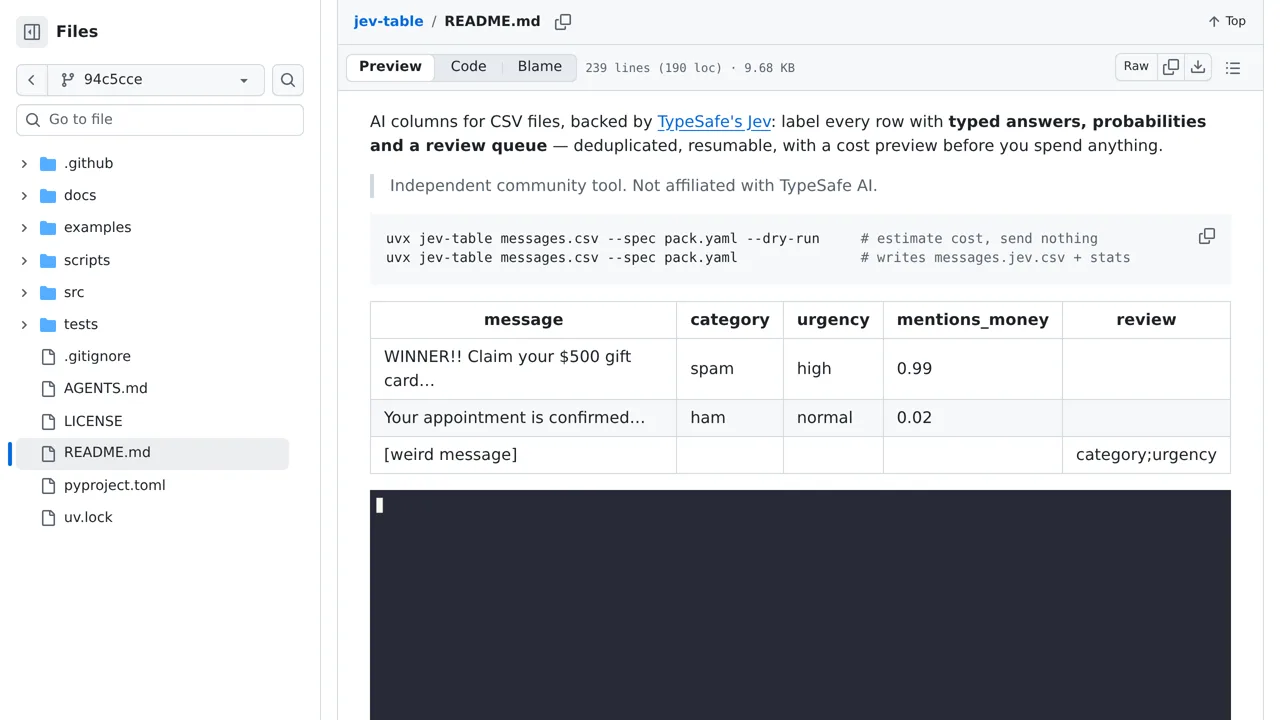
Add classification, probability and scoring columns to CSV rows from questions written in YAML.
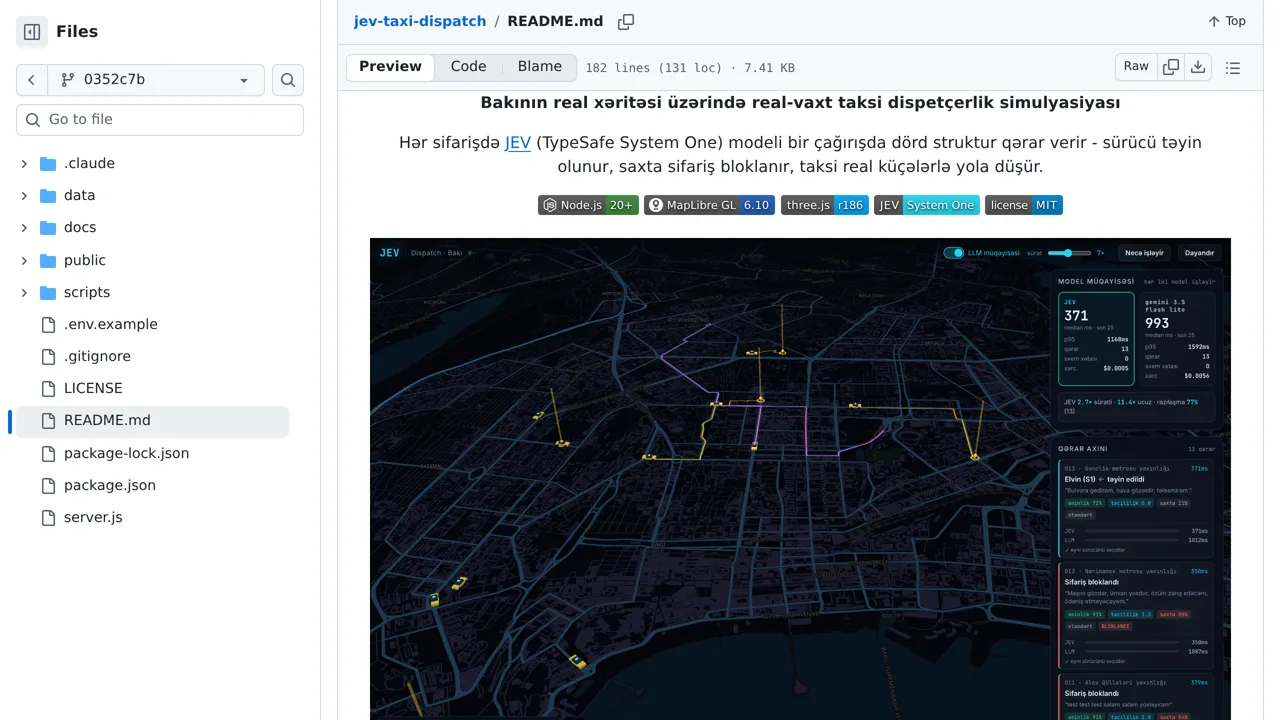
Jev dispatches taxis through a simulation of Baku's streets.
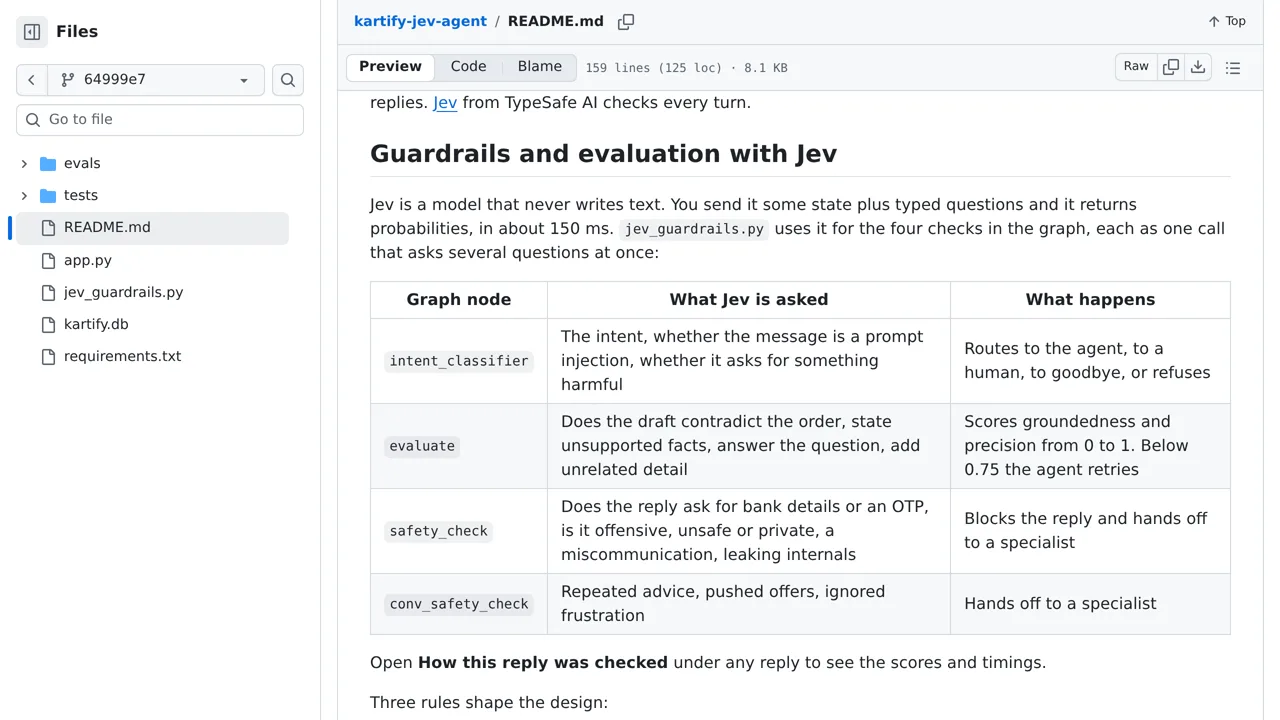
A customer-support demo that uses GPT-4o to write replies and Jev to check them.
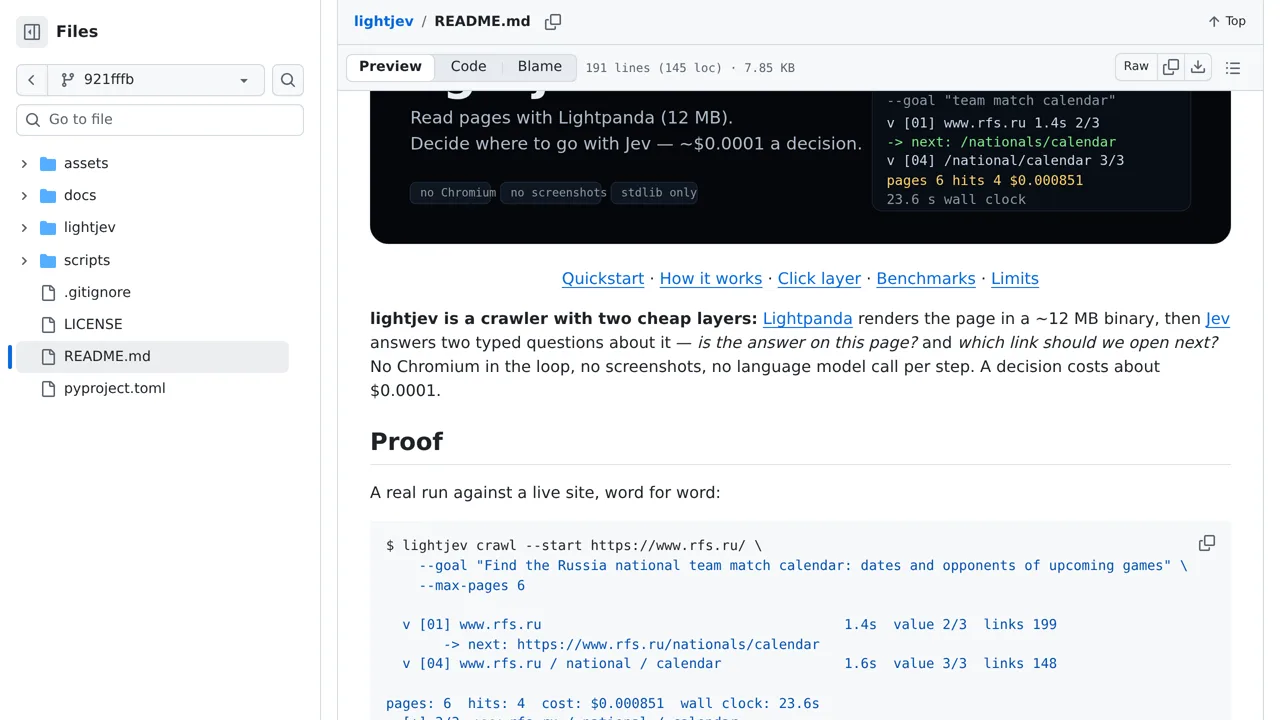
A small web crawler that asks Jev which page to visit next.
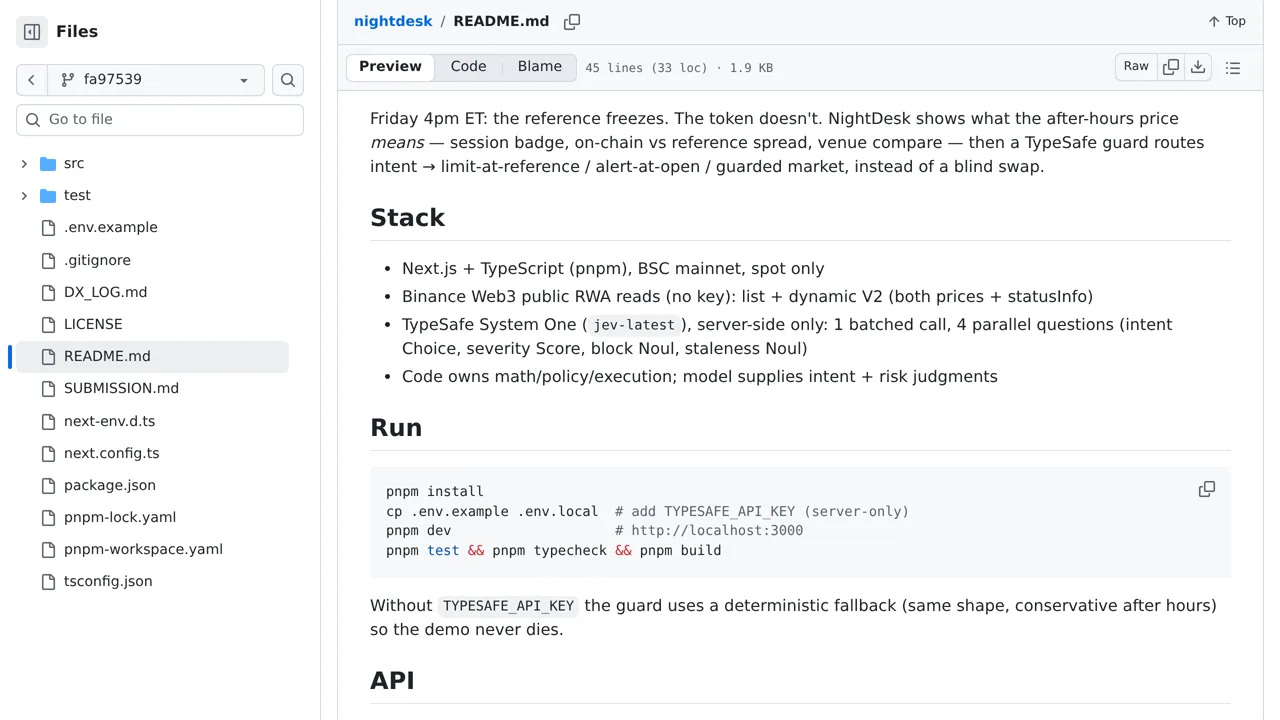
A tokenized-stock trading demo that uses Jev to interpret what you want to do.
Label rows in a CSV or JSONL file with Jev, and set uncertain answers aside for a person to review.
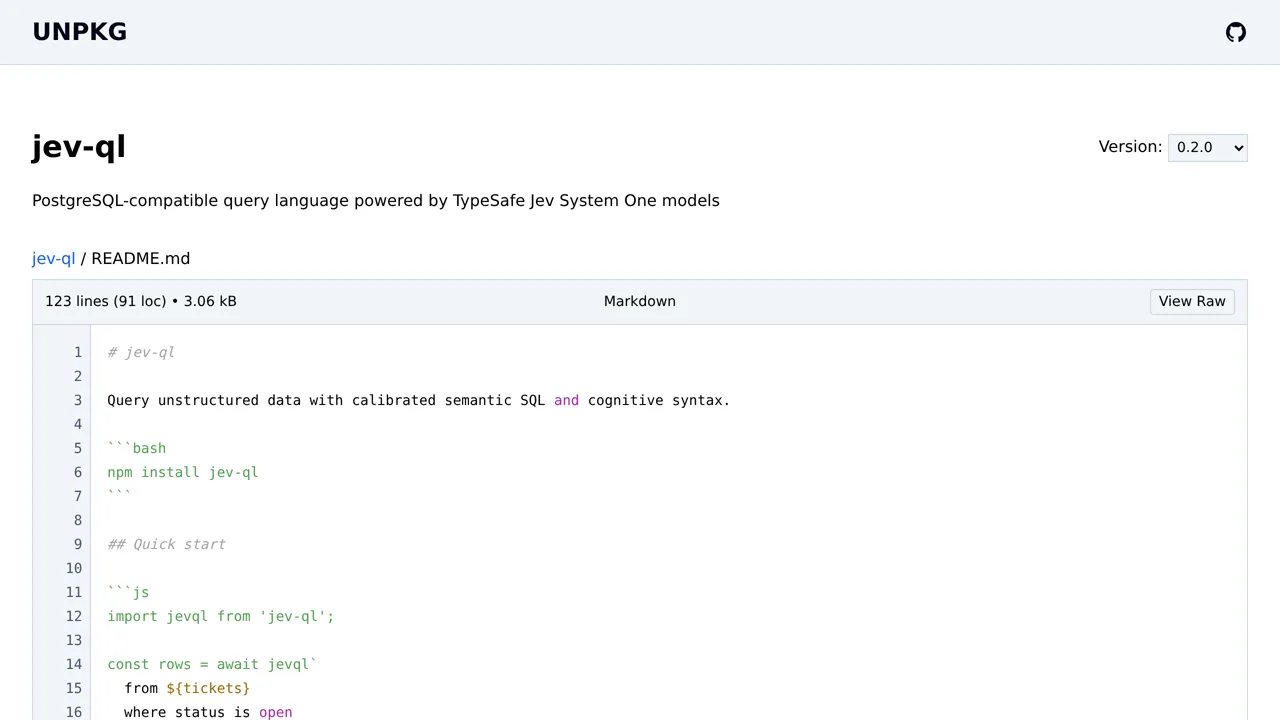
Query messy text with SQL-style filters and plain-language questions that Jev can answer.
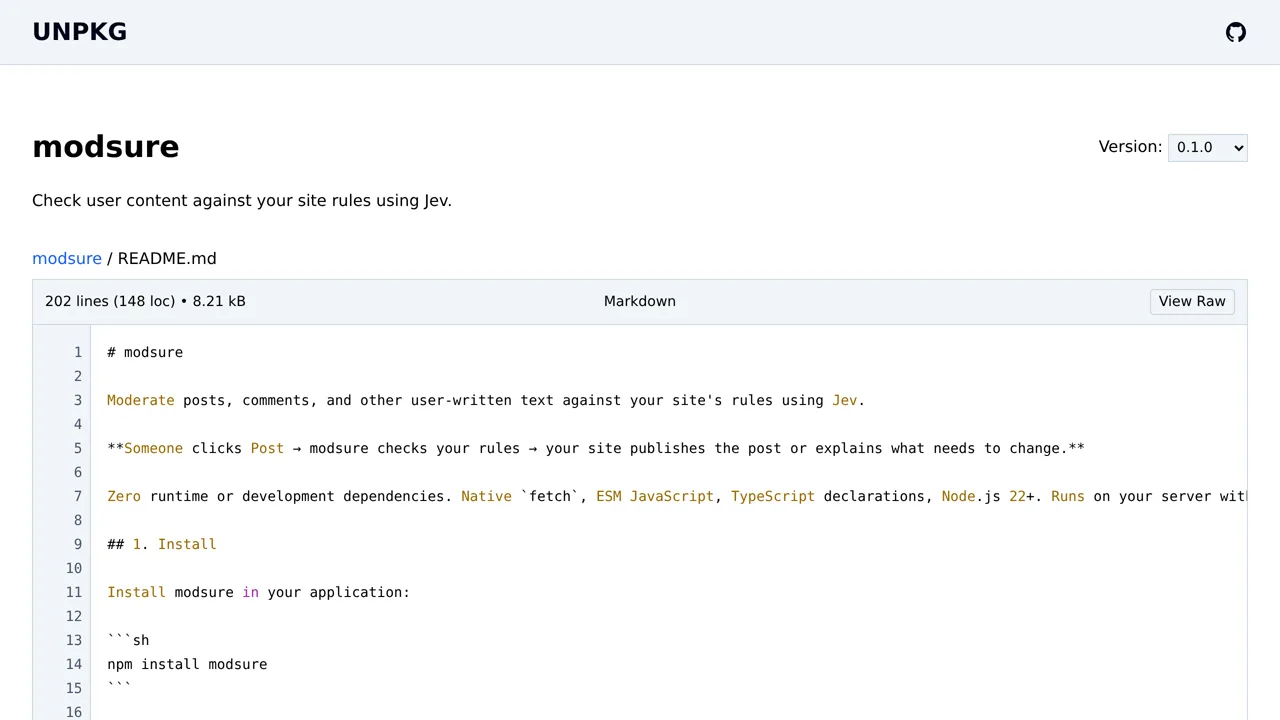
Check posts against moderation rules written in plain English, before your app decides what to publish.
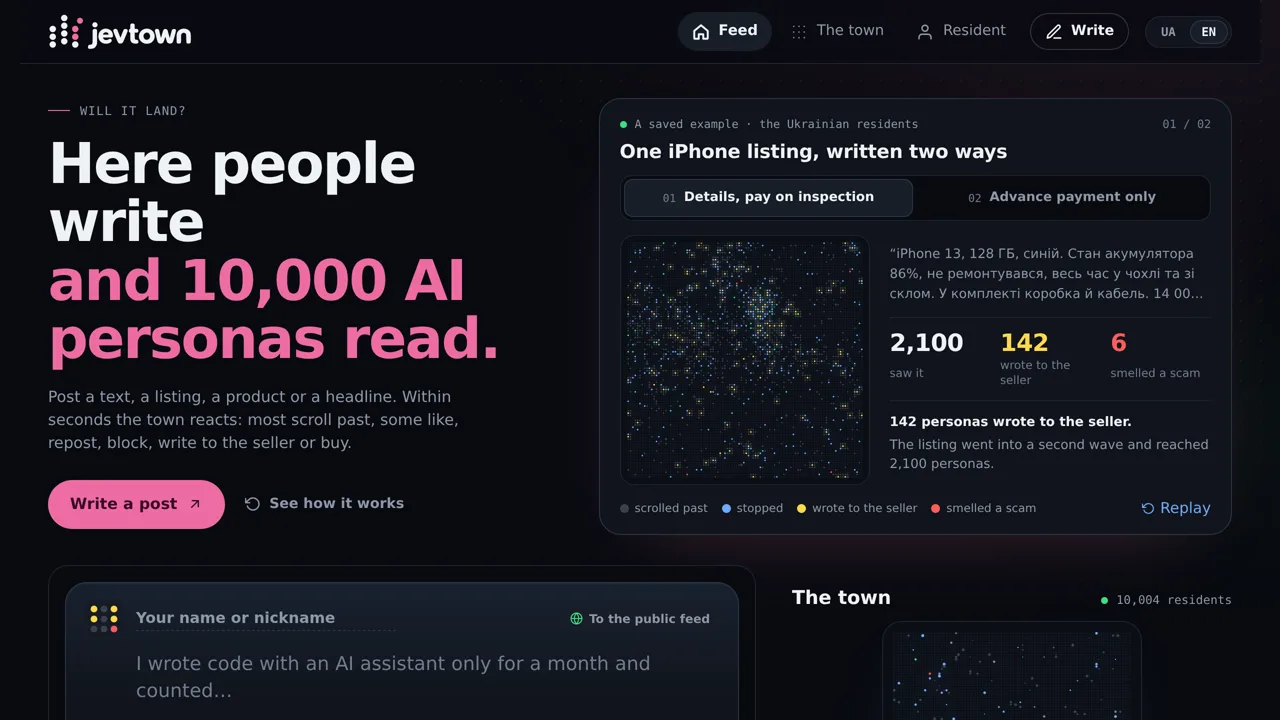
Post in a simulated town and see how thousands of Jev-driven residents react to your message.
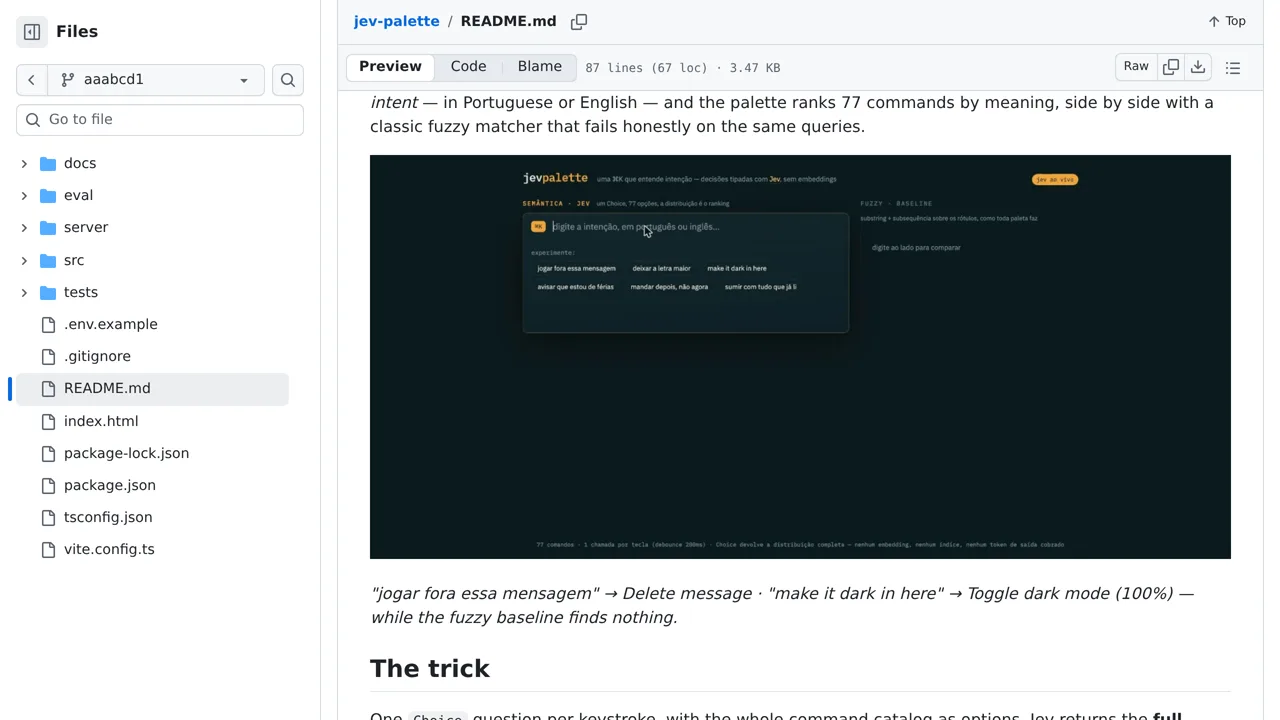
Type a color request and compare Jev’s ranked palette commands with an ordinary fuzzy match.
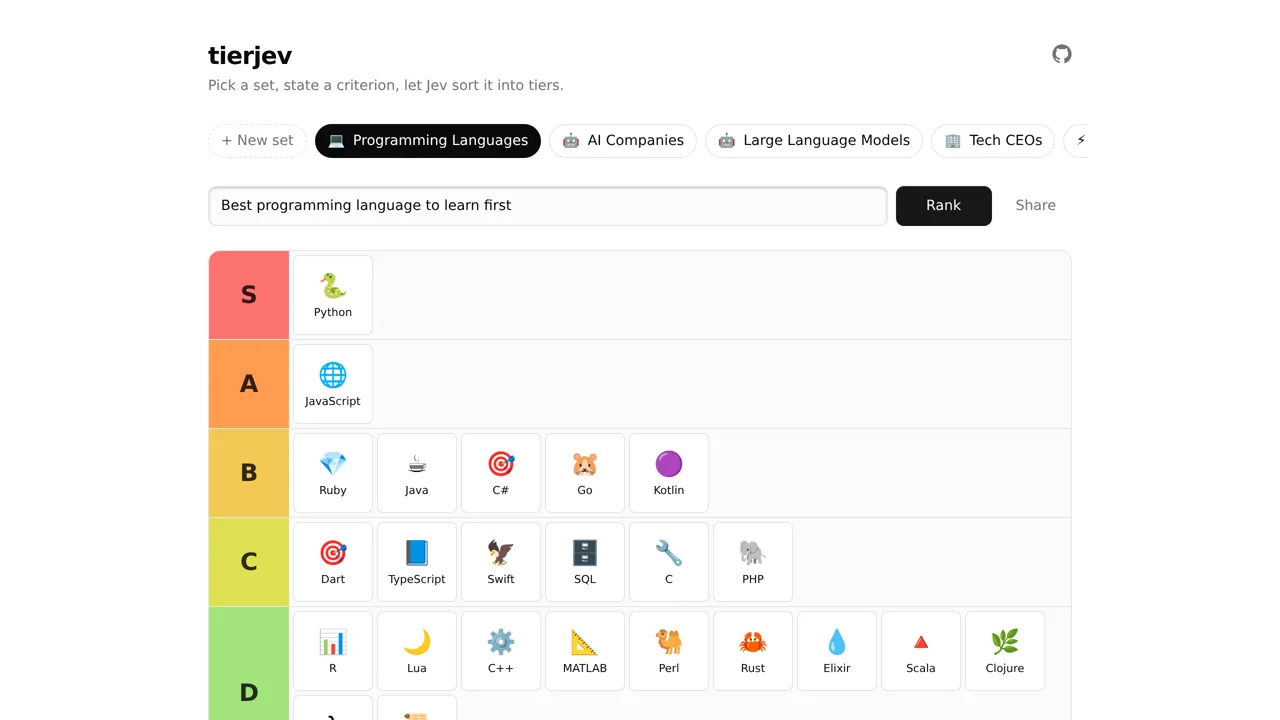
Make a tier list from your own items and criterion, with Jev scoring each item before code places it into S–F tiers.
Hide or highlight LinkedIn posts after Jev scores their writing against several slop signals and counter-signals.

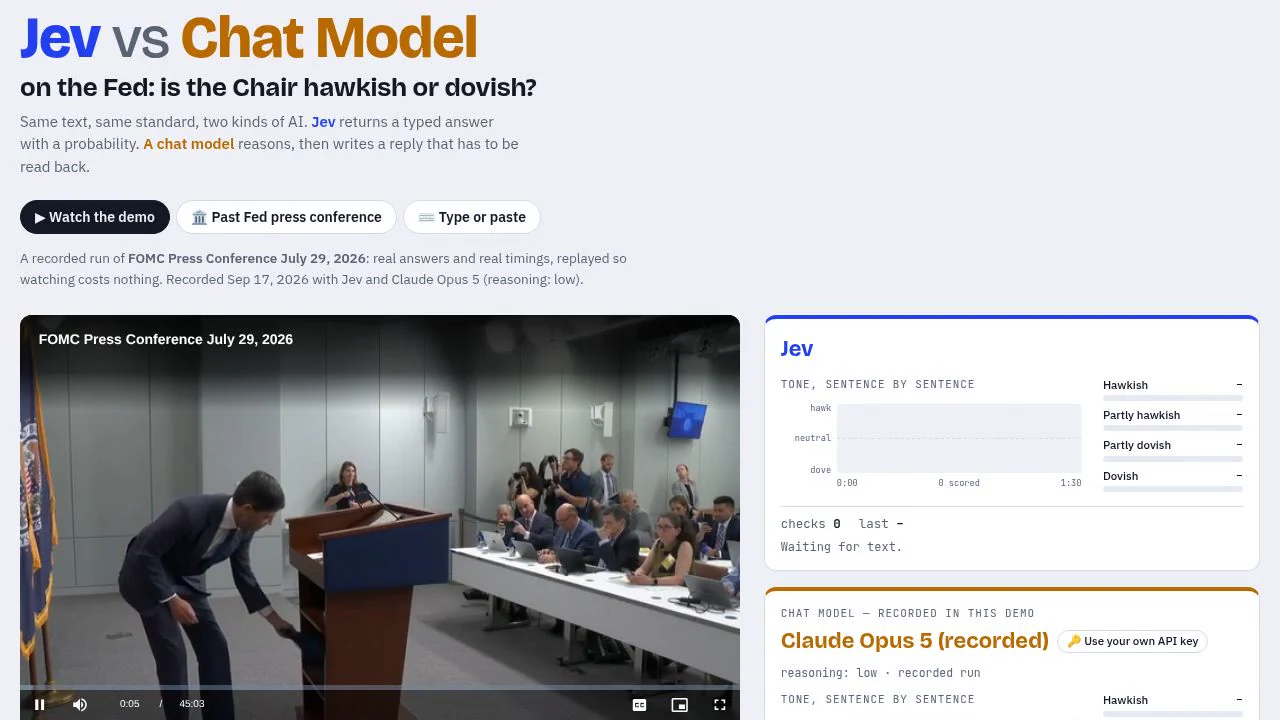
Watch Jev and a chat model judge a Fed chair’s remarks as hawkish or dovish, line by line.
Turn a Telegram channel’s posts into a year-in-review card showing their mix of news, jokes, ads and more.

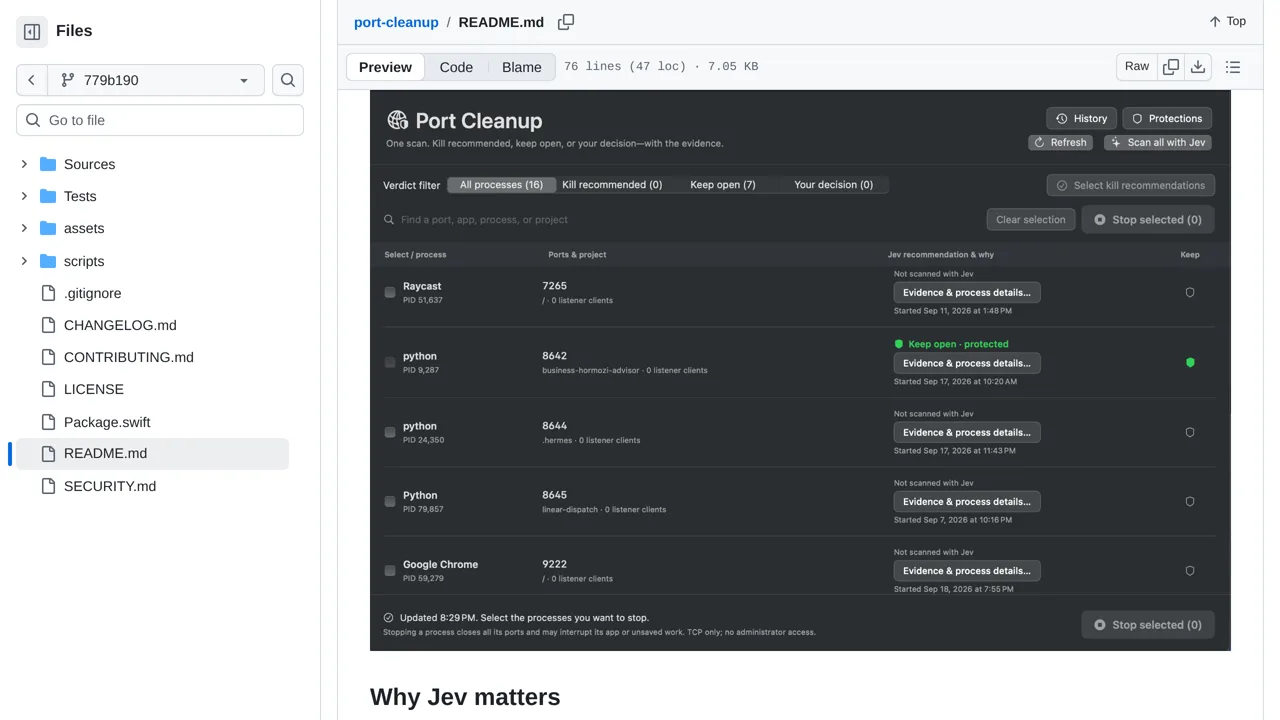
Inspect listening ports on a Mac and ask Jev which processes to keep, clean up, or leave for your decision.
Crawl a site to uncover orphan pages and get Jev-ranked internal links with suggested sentences and anchor text.

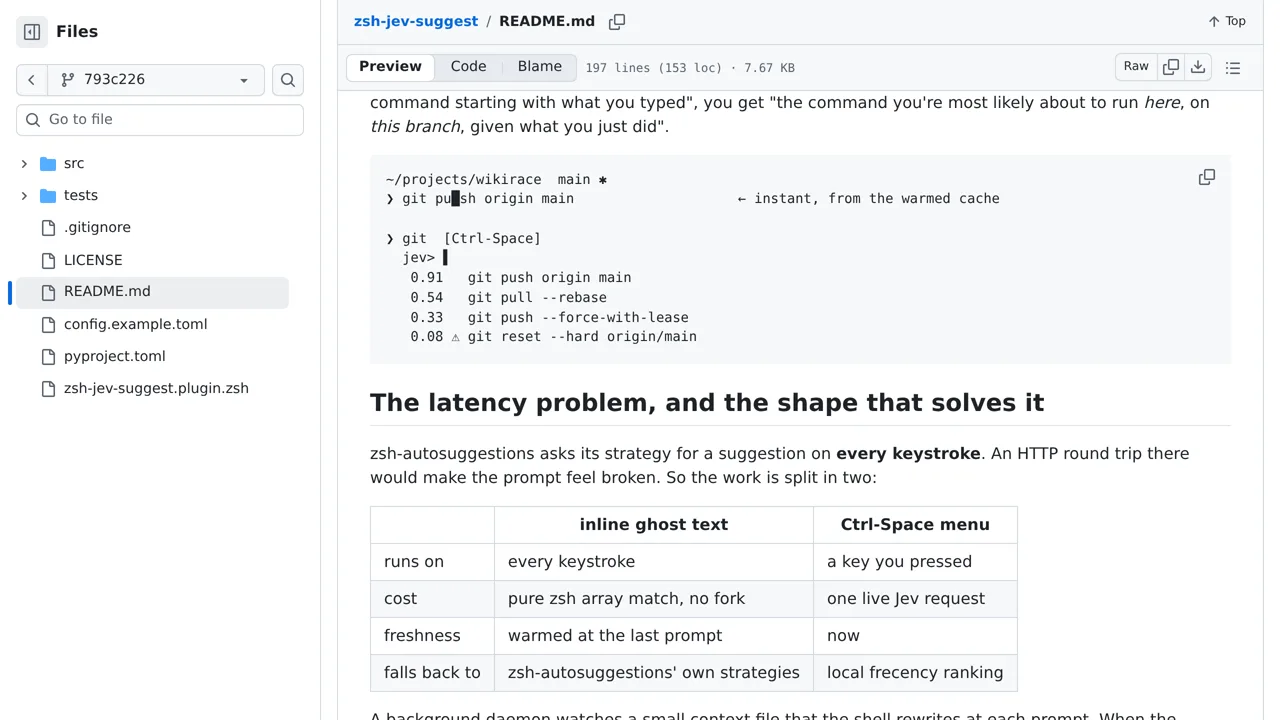
A zsh plugin whose ghost-text command suggestions are ranked by Jev on demand, with shell history redacted before anything leaves the machine.
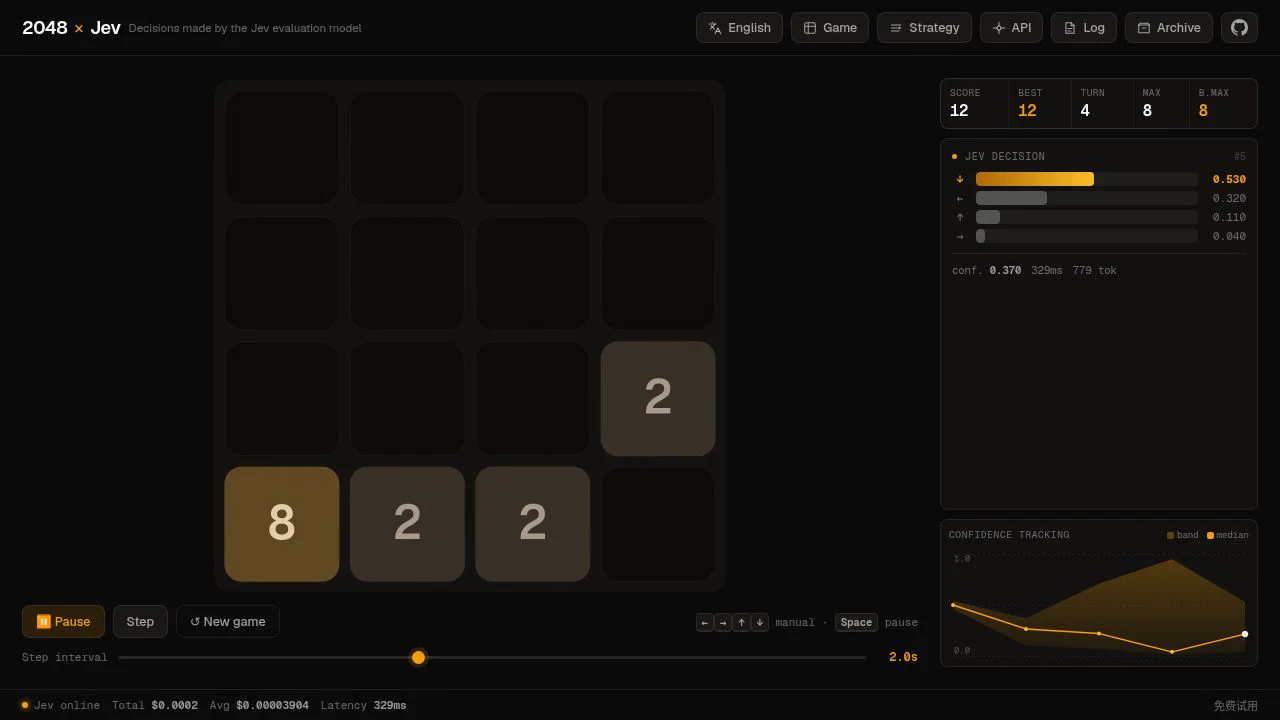
Every move in 2048 is one Jev Choice over the four directions, with no heuristic fallback and the probabilities, latency and cost shown live.
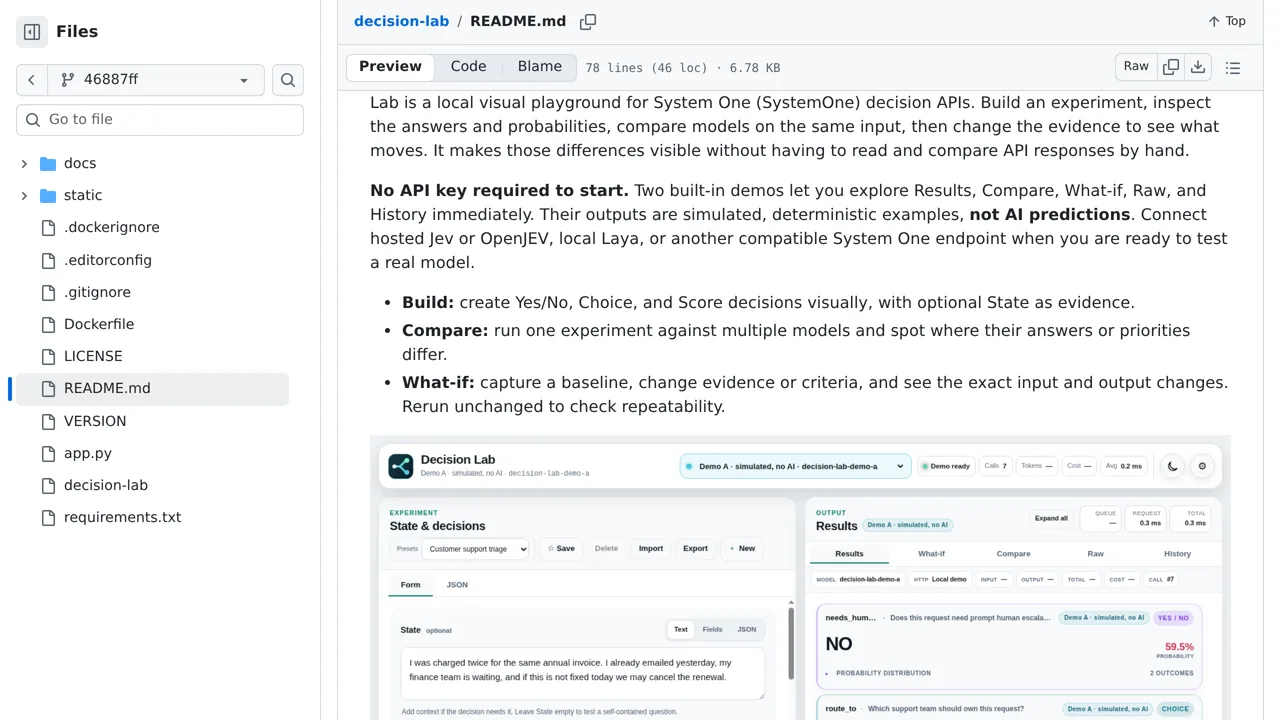
A local visual playground for System One APIs: build Yes/No, Choice and Score decisions, run them against several endpoints, and diff the results.
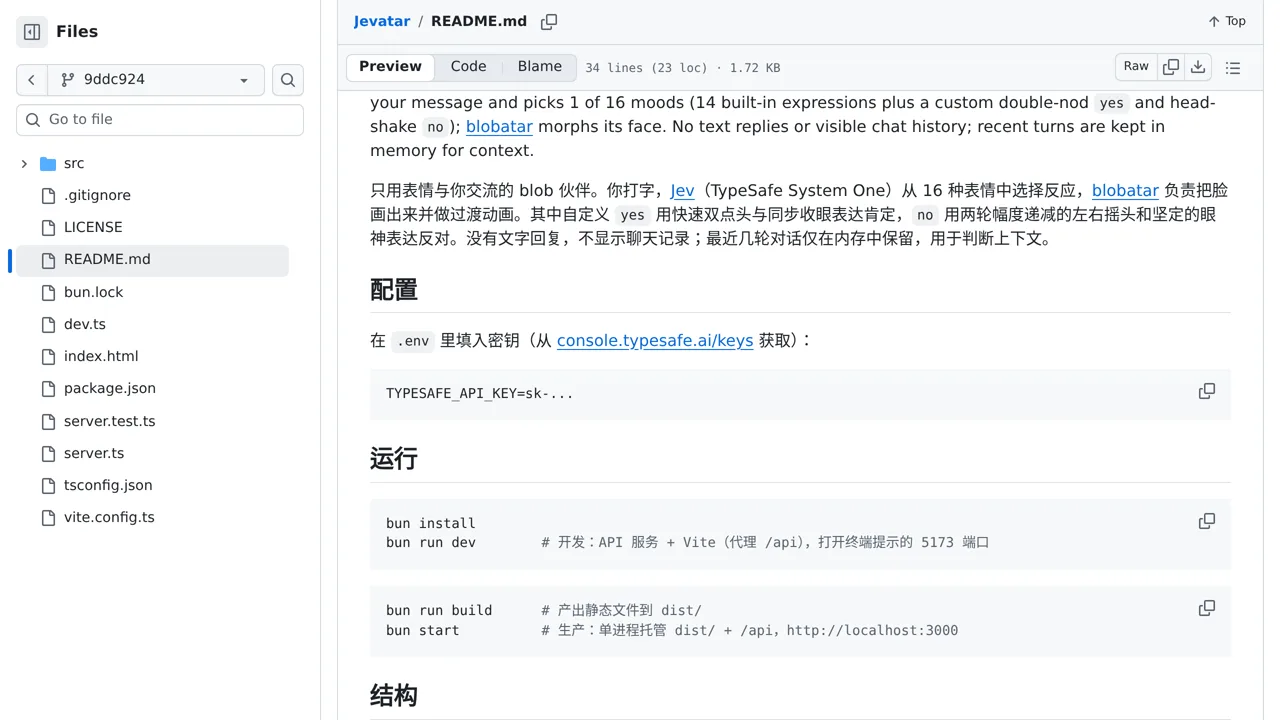
A companion that answers only with a face: Jev picks one of sixteen moods and blobatar morphs its expression, with no text reply.
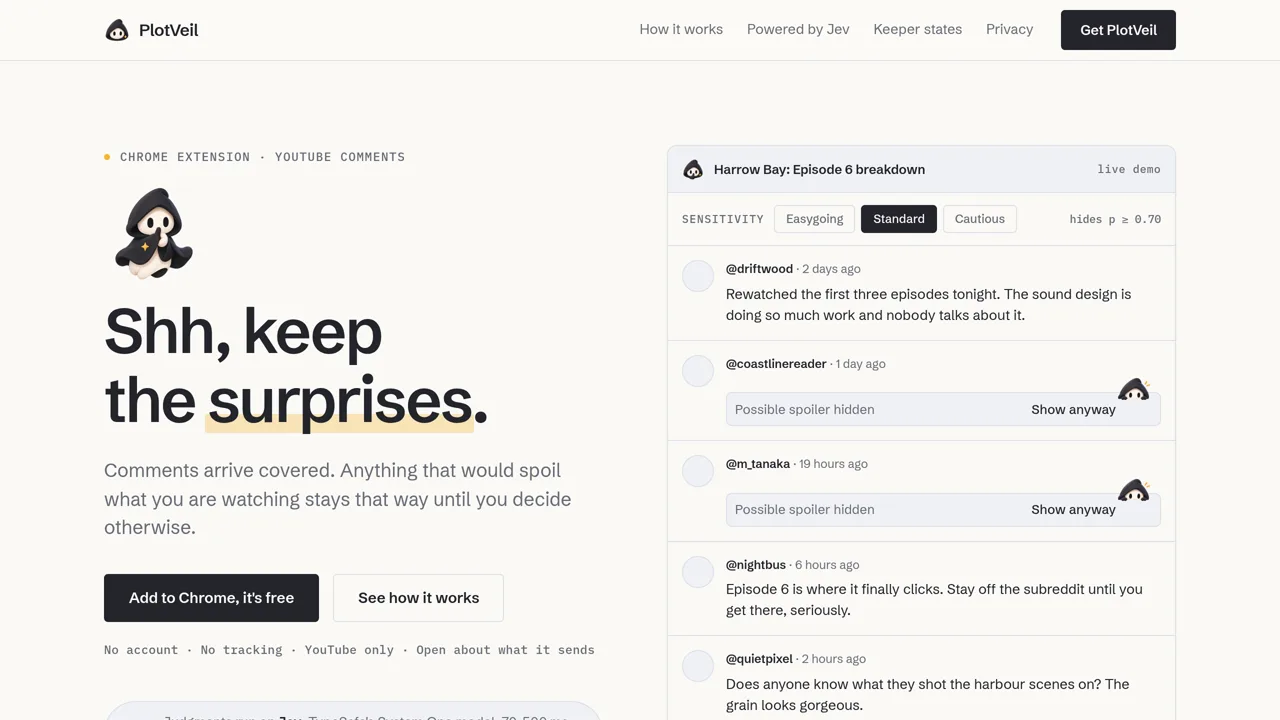
A Chrome extension that covers YouTube comments until Jev decides whether, read against the video, they disclose a plot event.
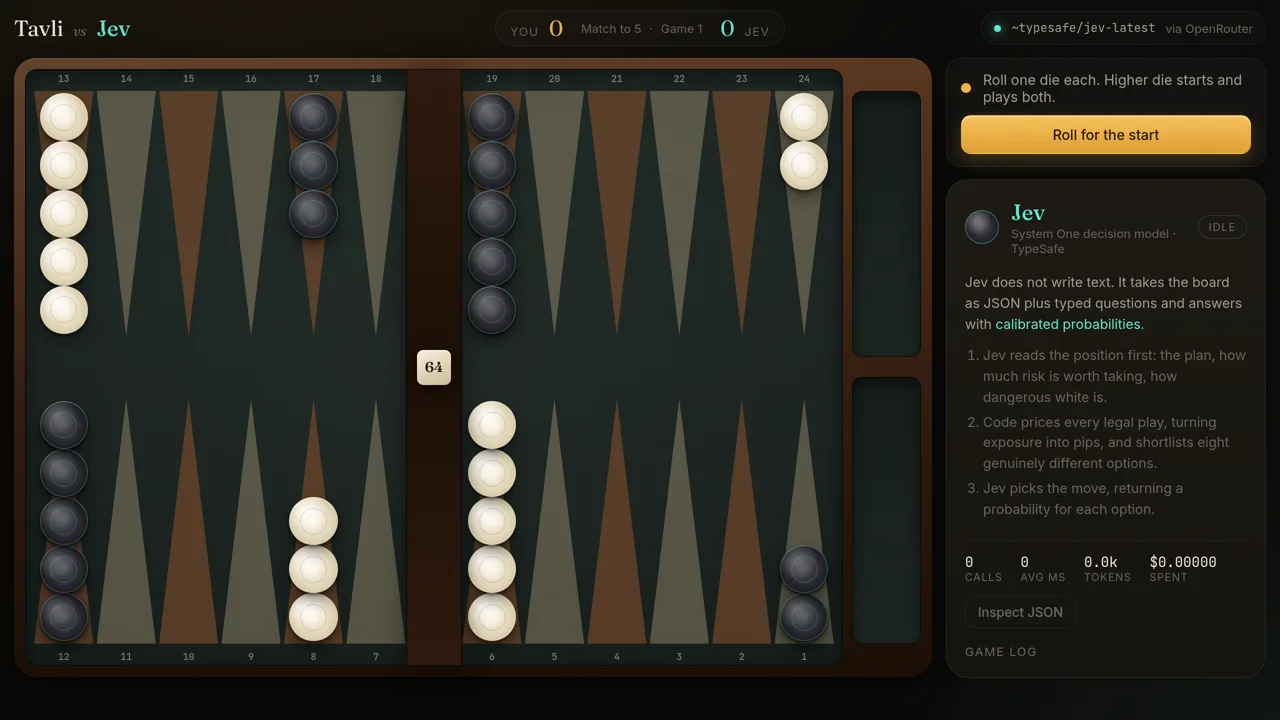
Greek backgammon against Jev, which reads the position with four questions and picks the move as one Choice while code enumerates and prices every legal play.
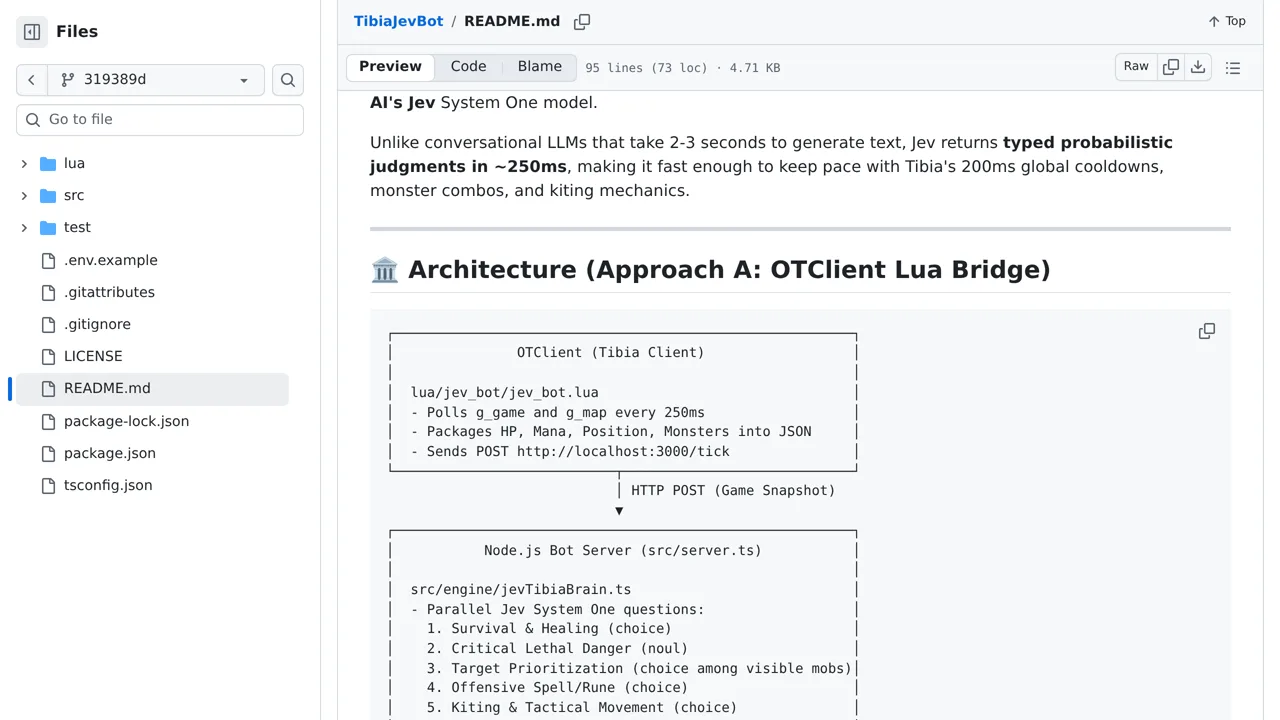
An autonomous Tibia bot: an OTClient Lua module streams health, mana, position and visible monsters every 250 ms and Jev decides survival, danger and targeting.
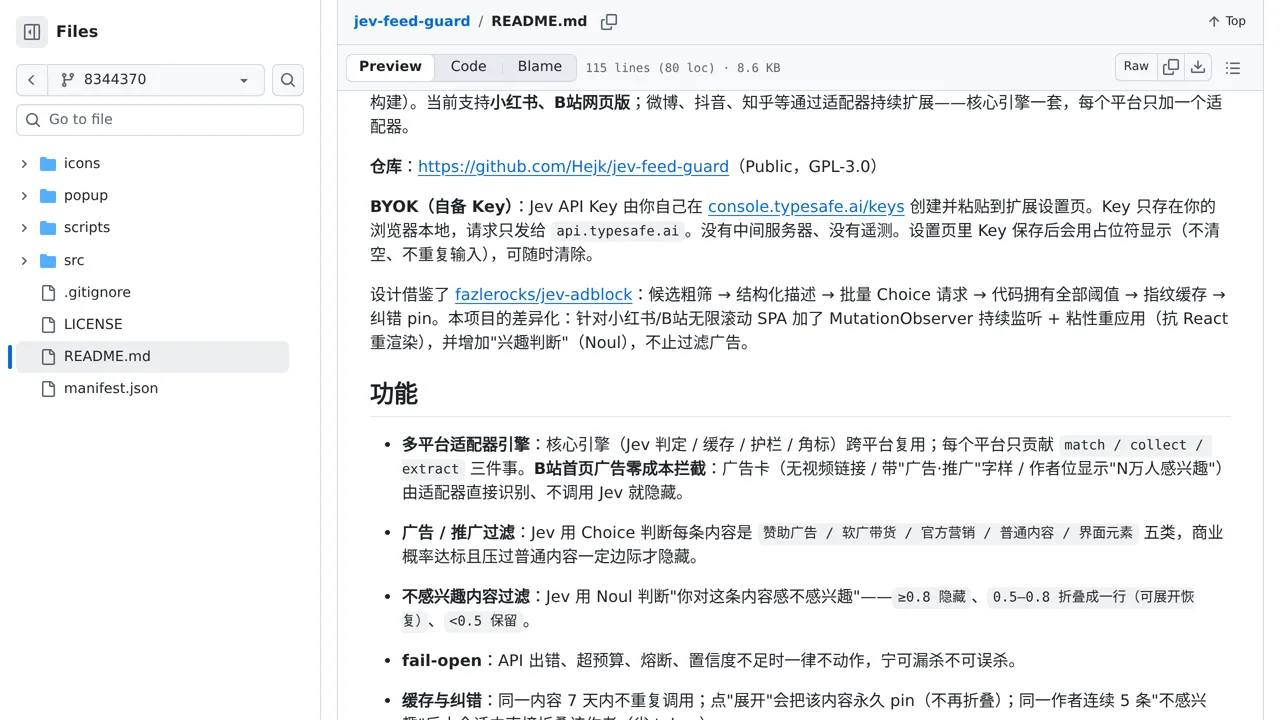
A Chrome extension that filters ads and uninteresting cards out of Xiaohongshu and Bilibili feeds, with Jev classifying each card and judging your interest in it.
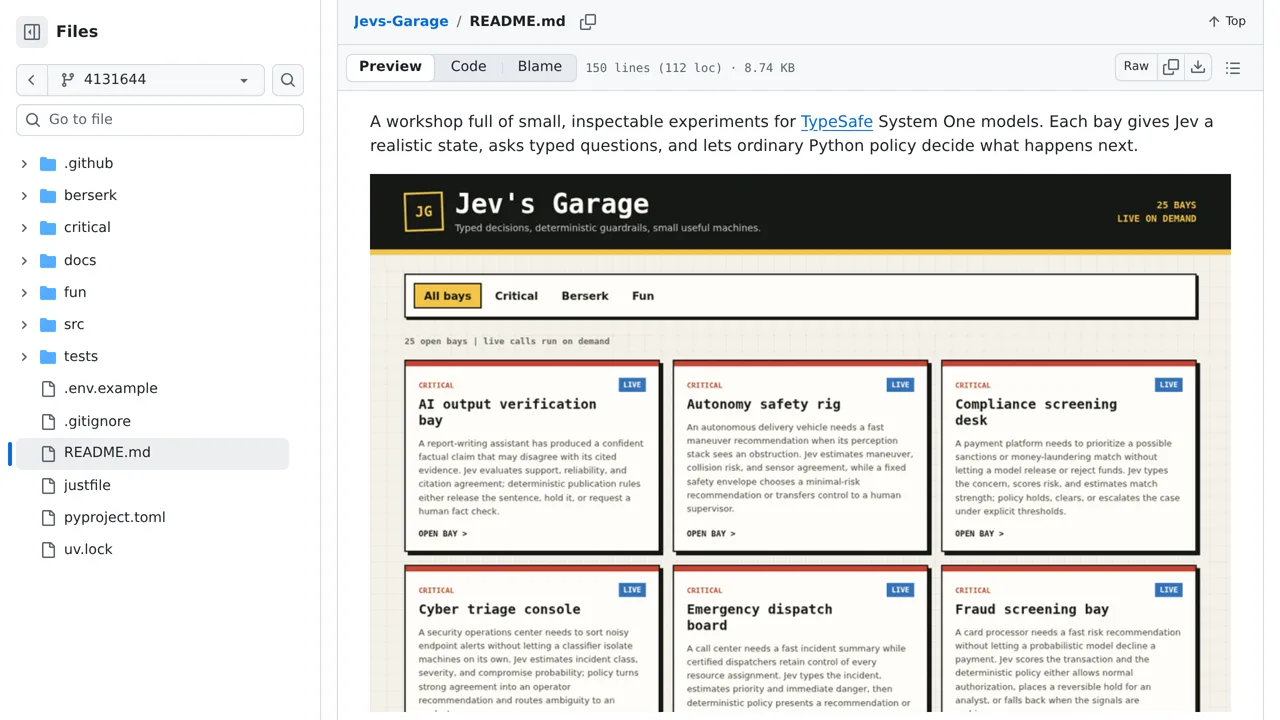
A garage of small inspectable demos where Jev supplies the judgment — fraud screening, cyber triage, medical routing, emergency dispatch — and plain Python policy decides what to do.
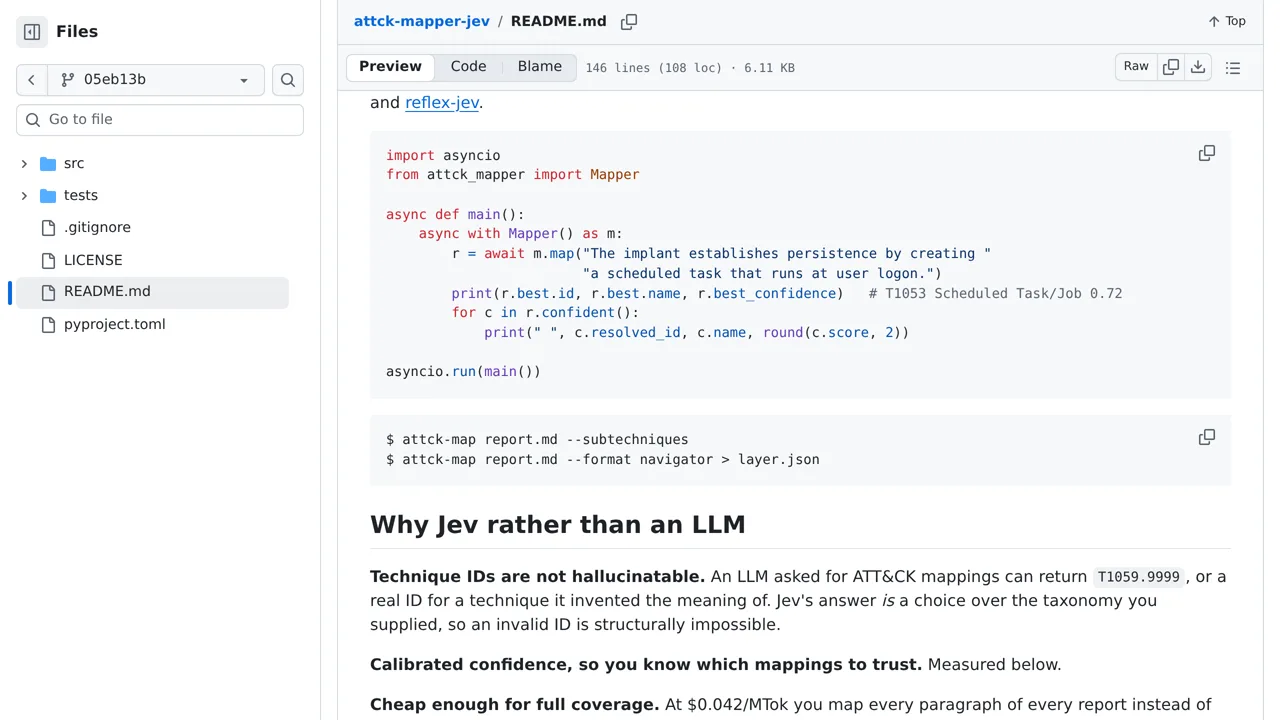
Maps threat-report prose onto MITRE ATT&CK techniques and emits a Navigator layer you can load straight into the ATT&CK interface.
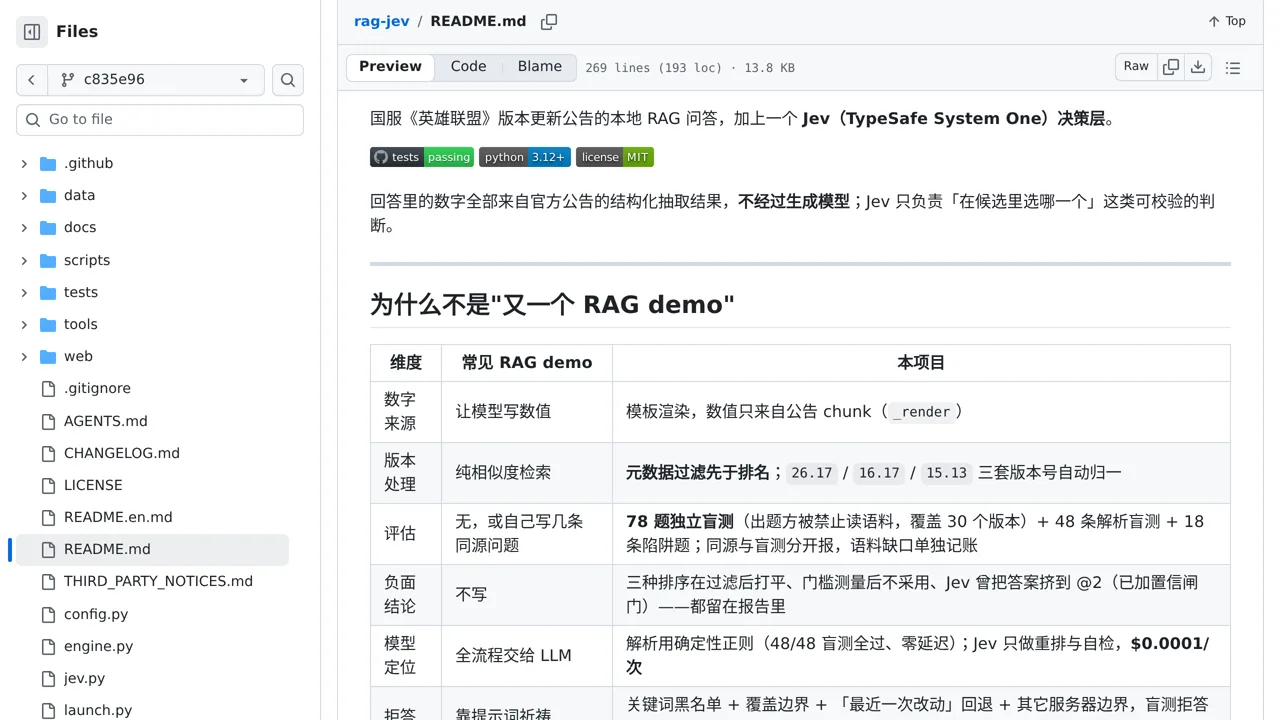
A local RAG workbench over Chinese League of Legends patch notes: every number comes from parsing the announcement, and Jev only reranks candidates and checks its own answer.
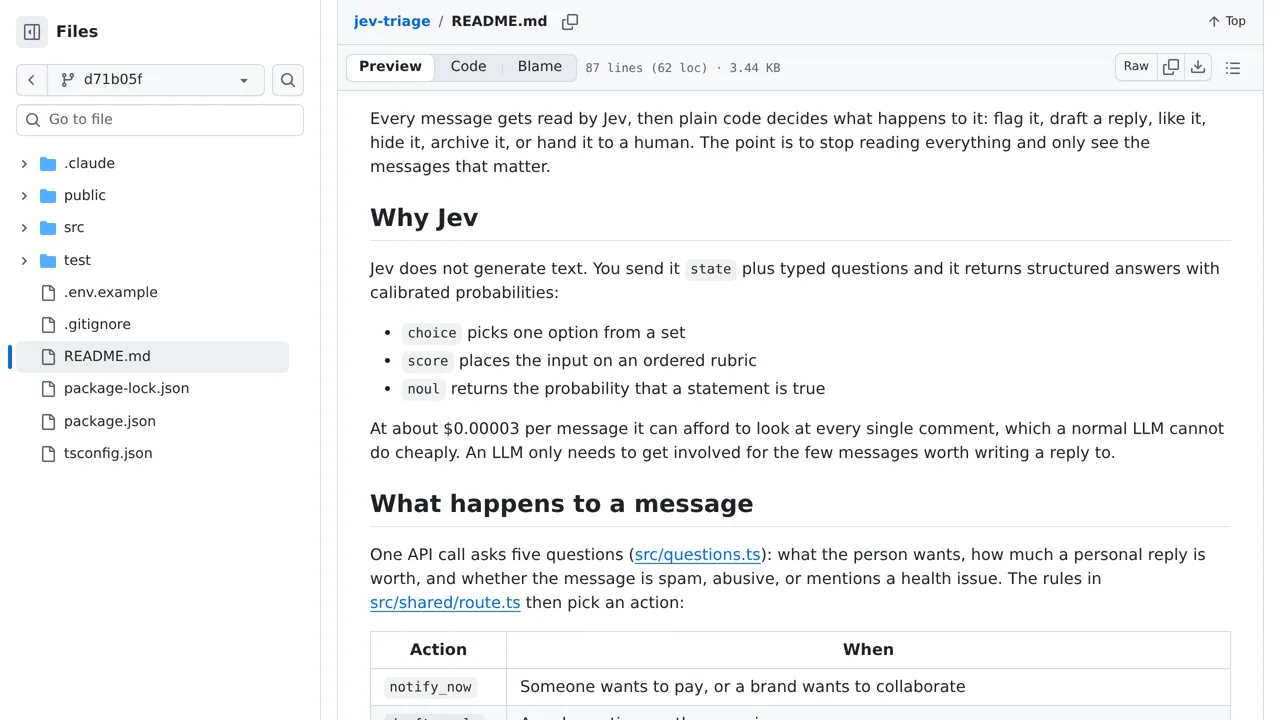
A creator-inbox desk that asks Jev five questions per comment and lets code choose the action; a confidence slider re-routes the whole queue without another call.
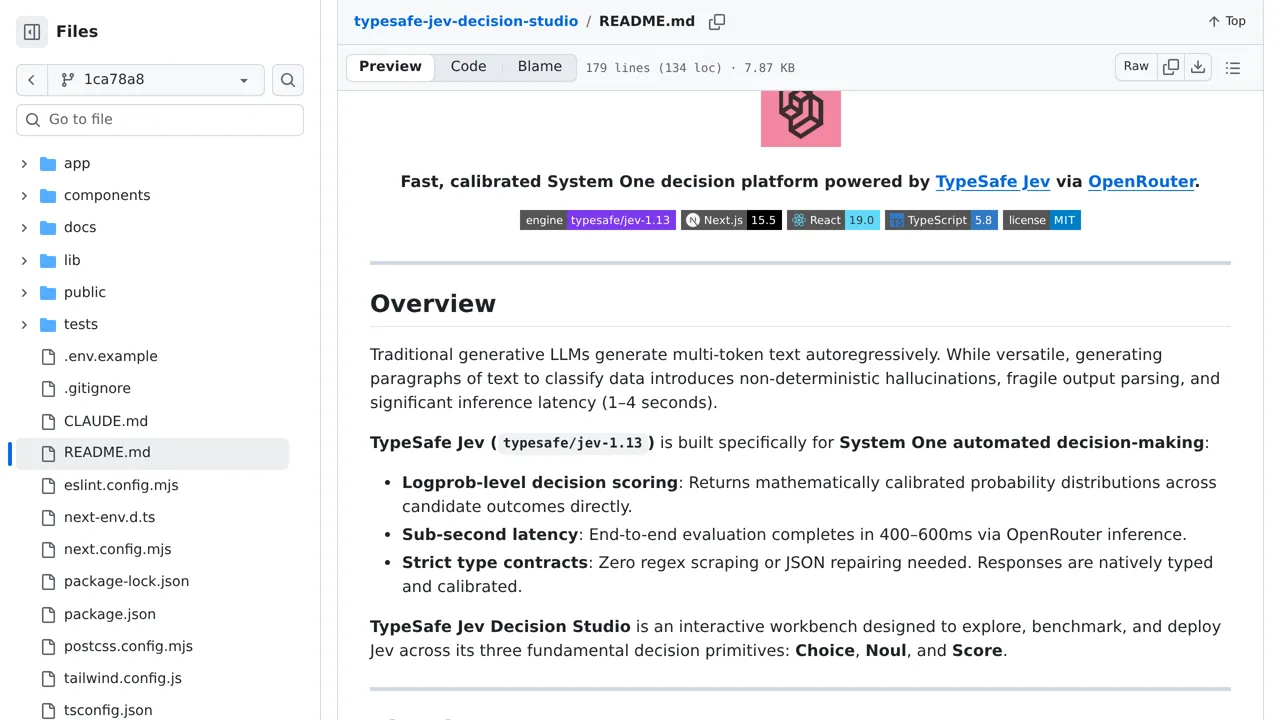
A Next.js workbench for Jev's three primitives through OpenRouter: a 95-category Choice, Noul evaluation with transfer curves, and Score rubric rating.
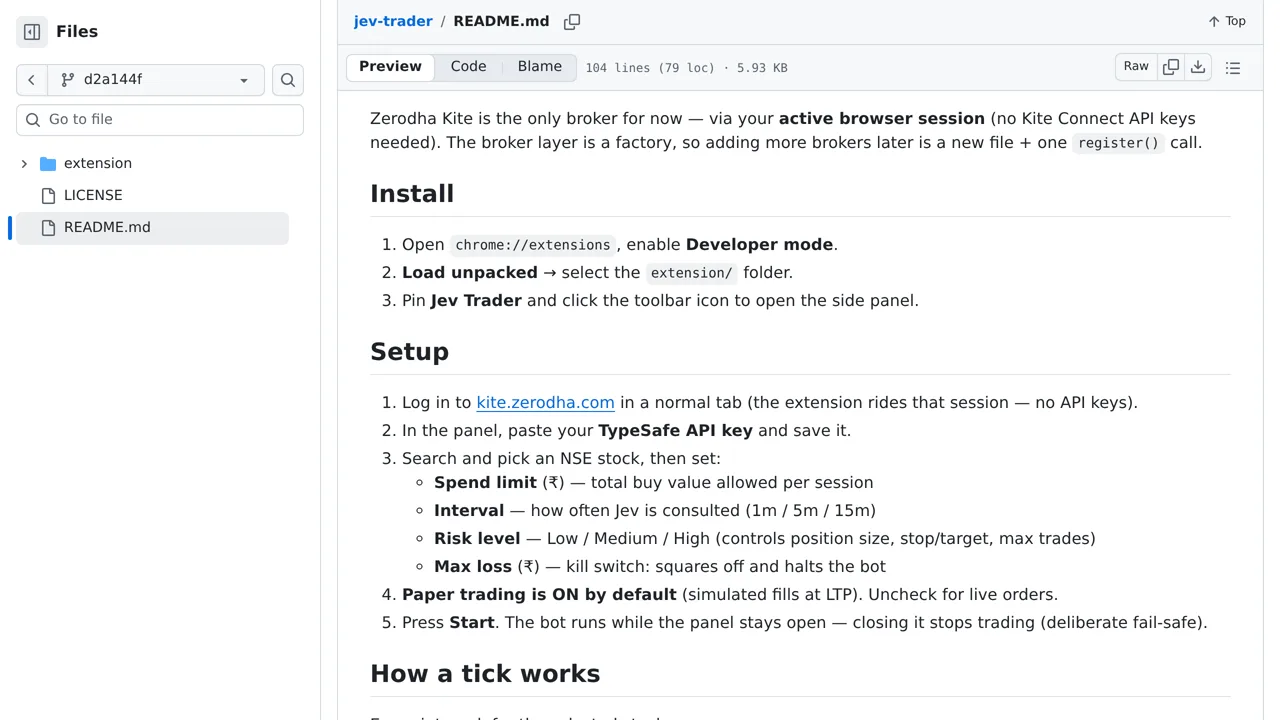
A Chrome side panel that auto-trades an NSE stock through Zerodha Kite: Jev answers a direction question each tick and a risk gate sizes and places the order.
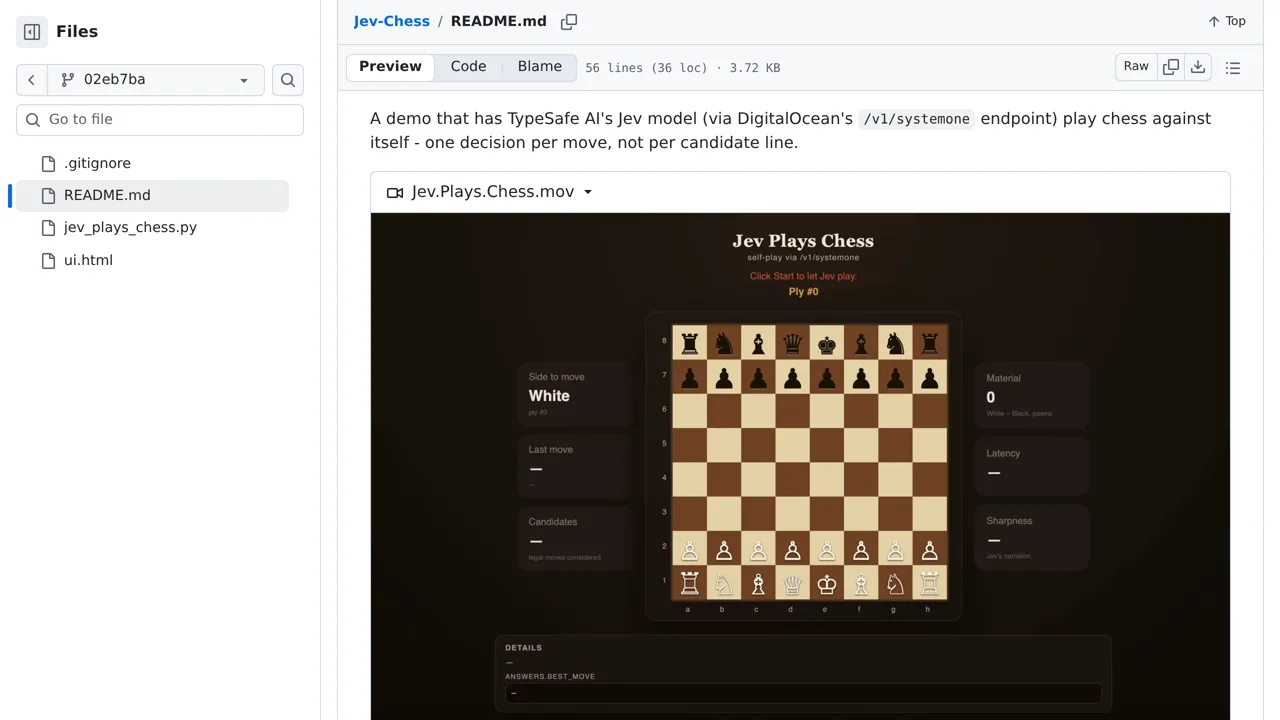
Has Jev play chess against itself one decision per move, with a browser board showing the position and Jev's last answer.
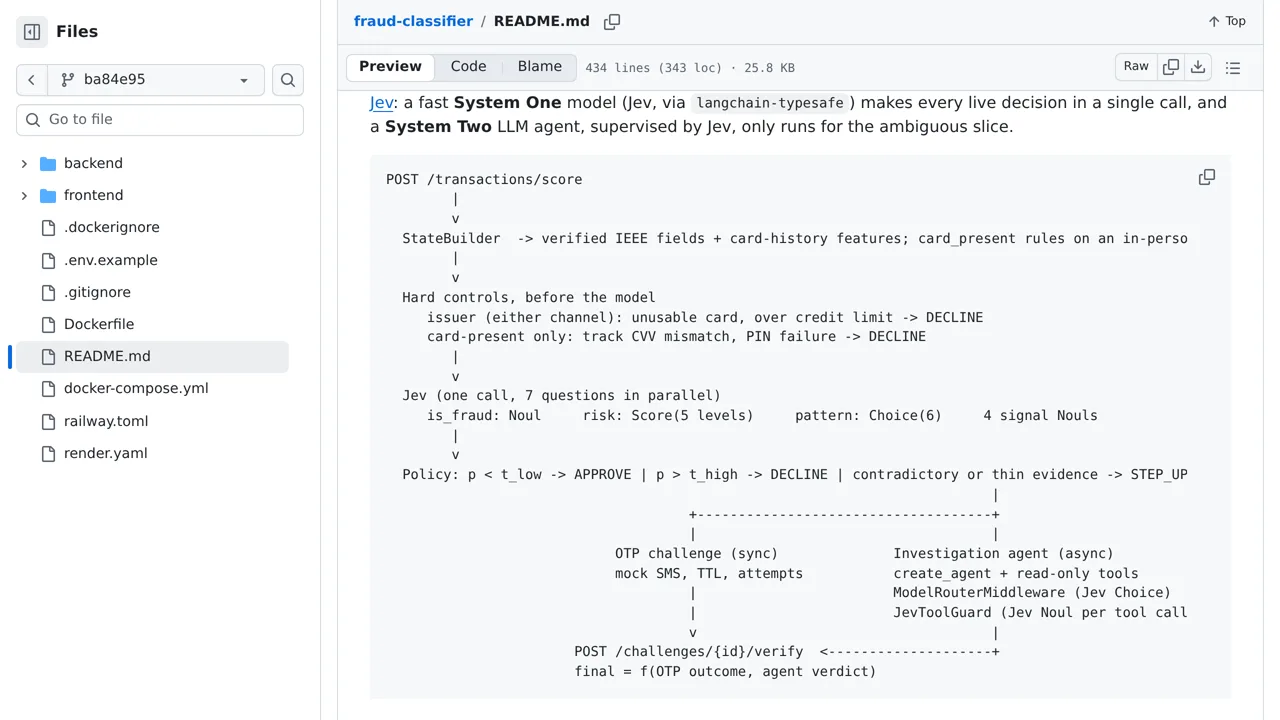
A real-time card-transaction fraud classifier where a System One model makes every live decision and an LLM agent runs only for the ambiguous slice.
Play Jev at Gomoku, Go or chess: code builds a pool of legal candidate moves and Jev answers one Choice over them, with every call shown under the board.

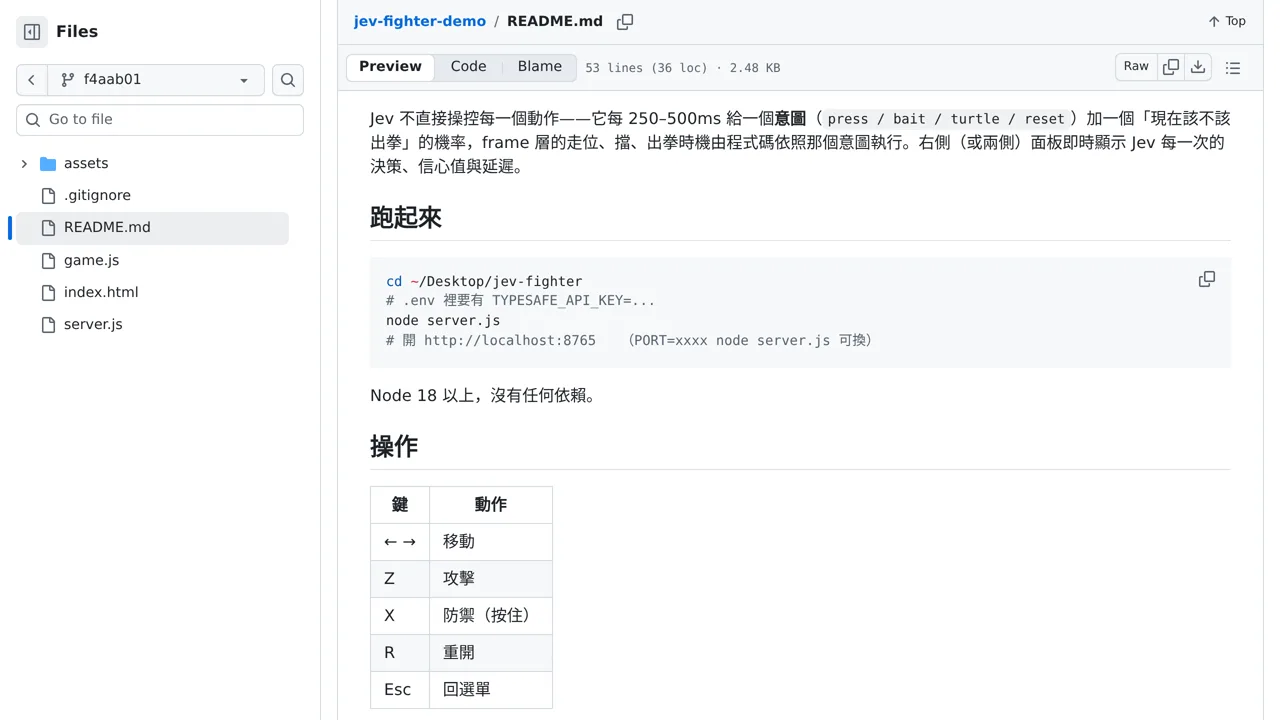
A 2D fighting demo where Jev calls the intent every few hundred milliseconds and frame-level code turns that intent into footwork, blocks and punches.
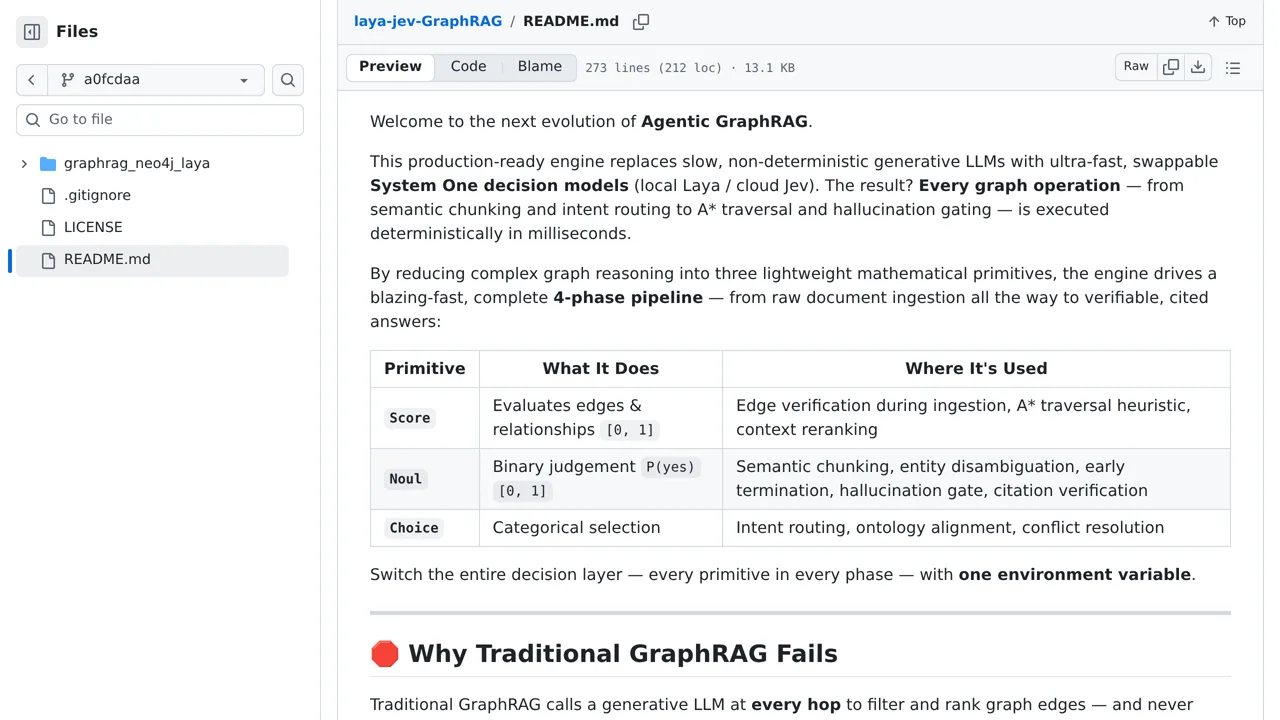
An agentic GraphRAG engine where every graph operation is a typed decision from a swappable System One model, and the LLM runs only once to write the answer.
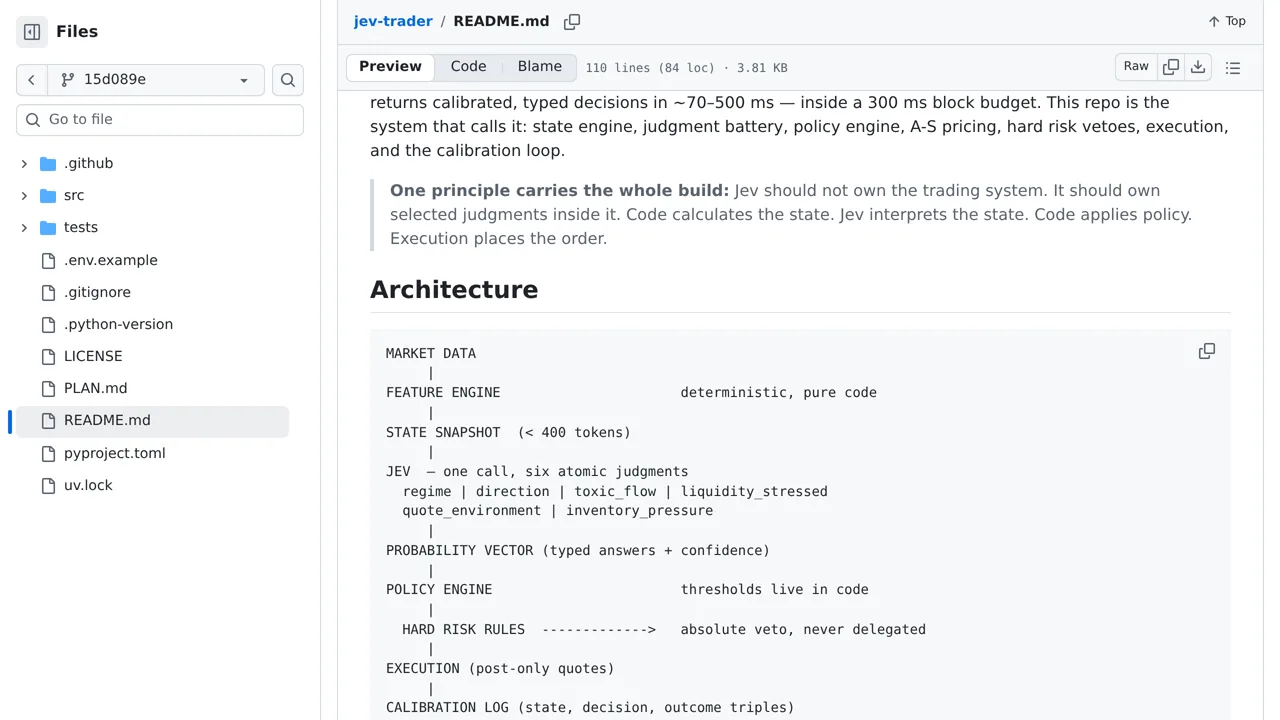
A 24/7 market-making system where Jev answers six atomic judgments per tick and a code-side policy composes the action and holds the risk vetoes.
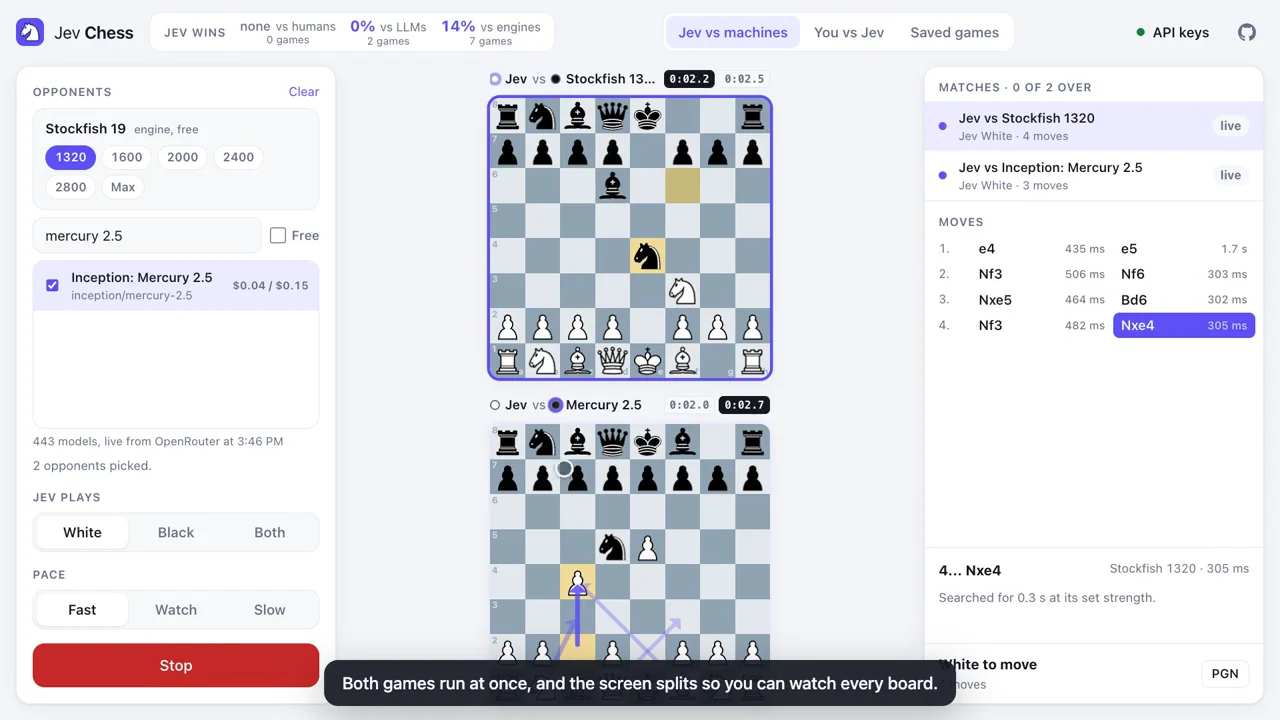
Jev plays chess against Stockfish, against any OpenRouter model, or against you, with the moves it weighed drawn as arrows and their probabilities beside them.
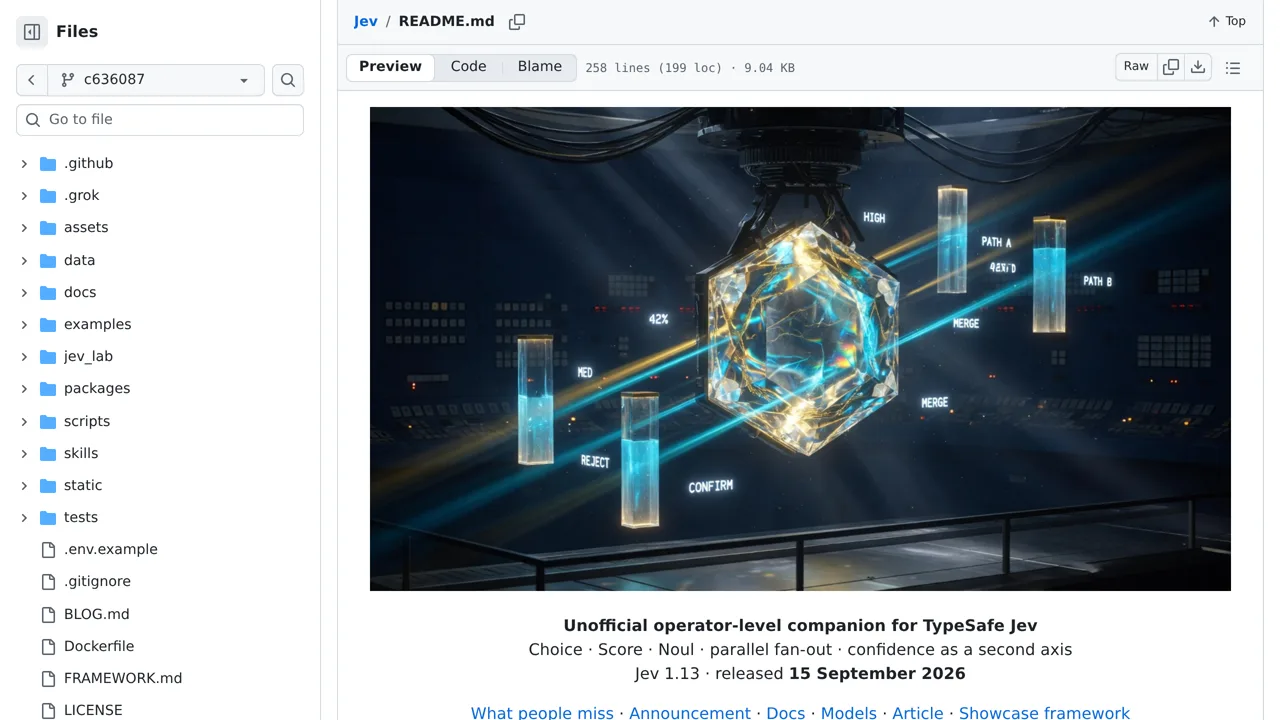
An unofficial operator-level showcase: a local lab with a smart-home demo, worked examples for each primitive and pattern, and a TypeScript CLI harness for agent loops.
Jev, briefly
A chat model generates text token by token and hopes you parse it. Jev never generates a word. Your code sends the state of the world plus typed questions; Jev returns every answer in one parallel pass — typed values with calibrated probabilities and a confidence score your code can trust. About 70–500 ms end to end, $0.042 per million input tokens, output free. Trained with what TypeSafe calls Reinforcement Learning for Calibrated Decisions.
You define the options. Jev returns the chosen option, a probability for every option, and a confidence. The workhorse of routing, agents, and games — the answer space is always legal, so there is nothing to parse and nothing to hallucinate.
You describe ordered levels — say trivial / normal / critical. Jev returns the level, the probability of each, and a confidence. Scores turn fuzzy judgment (“how severe is this log line?”) into a number-free decision your code can branch on.
You assert a statement; Jev returns the probability that it is true — a noul. Moderation, verification, guardrails, “does this diff actually fix the bug?”: one question, one calibrated probability.
Official material lives at typesafe.ai and docs.typesafe.ai. JevMade is an independent community registry — not affiliated with or endorsed by TypeSafe AI.
Recurring lessons
Games, drones, trading bots, and browser agents all converge on the same loop: serialize the state, ask one decisive question, act, repeat. Jev’s latency makes the loop feel instant — the model lives inside the control loop, not outside it.
The answer says what; the confidence says whether to act. The most reliable entries threshold on confidence to route edge cases to a slower model or a human — automation with an honest escape hatch.
Makers rarely ask Jev to pick from everything. Local tactics prune 225 gomoku moves to ~40; DOM filters turn a page into an element table; code narrows options, Jev judges within them.
A recurring split: Jev makes every decision cheaply and instantly, and a small LLM is only invoked when a human-facing string must actually be written. Decision and generation are separate budgets.
Send the link — repo, live demo, post, or video — plus a line on what it does and which primitives it uses. Every entry is verified against its primary source before it ships.
Submit your experimentSign in first so we can reply to you. Submissions are reviewed, not published automatically.