Read & learn
Written guides.
Understand Jev, one idea at a time. Walkthroughs, recipes, and writeups — our notes first, the original next.
Learn, build, and play with Jev — from deep technical guides to creative experiments.
Read & learn
Understand Jev, one idea at a time. Walkthroughs, recipes, and writeups — our notes first, the original next.
Watch & learn
See an idea take shape. Tutorials, demos, and deep dives, organized by topic and credited to their creators.
Make & explore
See what builders made with Jev. Games, tools, repositories, articles, and more — traced to their sources.
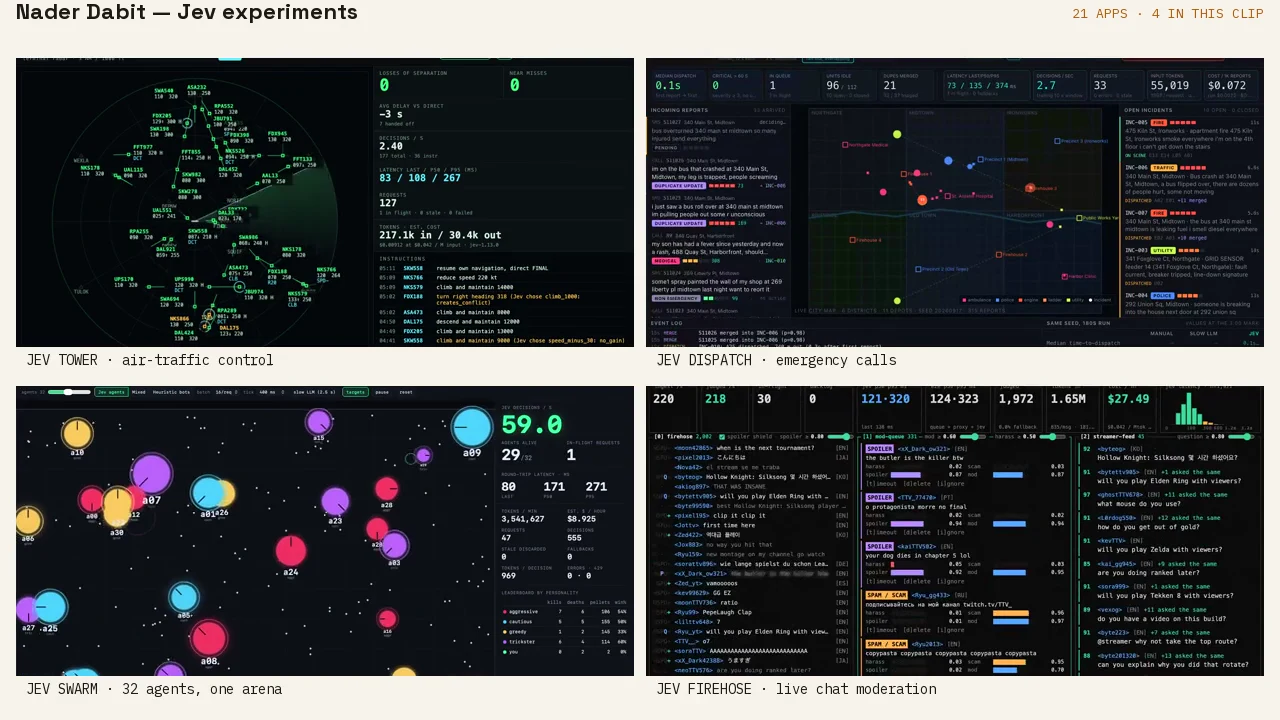
Every category, from games and tools to repositories and writeups, traced to a primary source.
Same ideas.
Different paths.
This is the full registry, not just the featured picks. Figures like speed, cost, and stars are maker-reported or captured snapshots, not JevMade measurements.
394 experiments · showing 301–360
Jason Torres uses Jev as a multi-purpose router, filter and intent judge before his chatbot calls tools.

A family-only LINE bot verifies IDs, uses Jev for classification and controls lights and air conditioning through chat.

Ackerman’s feed filter asks Jev four binary questions about every post before deciding what reaches the reader.

Frevana uses Jev to score and cluster top TikTok ads across a chosen category.

Ghostfeed uses Jev and Gemini to make a library of reaction videos searchable by structure, reaction and who appears.

Mnimiy’s copy-trading bot uses Jev and Grok Bot to evaluate watched-wallet moves before copying a buy.

RazeDen’s workflow has Jev ask six questions before Grok opens selected material for a campaign.

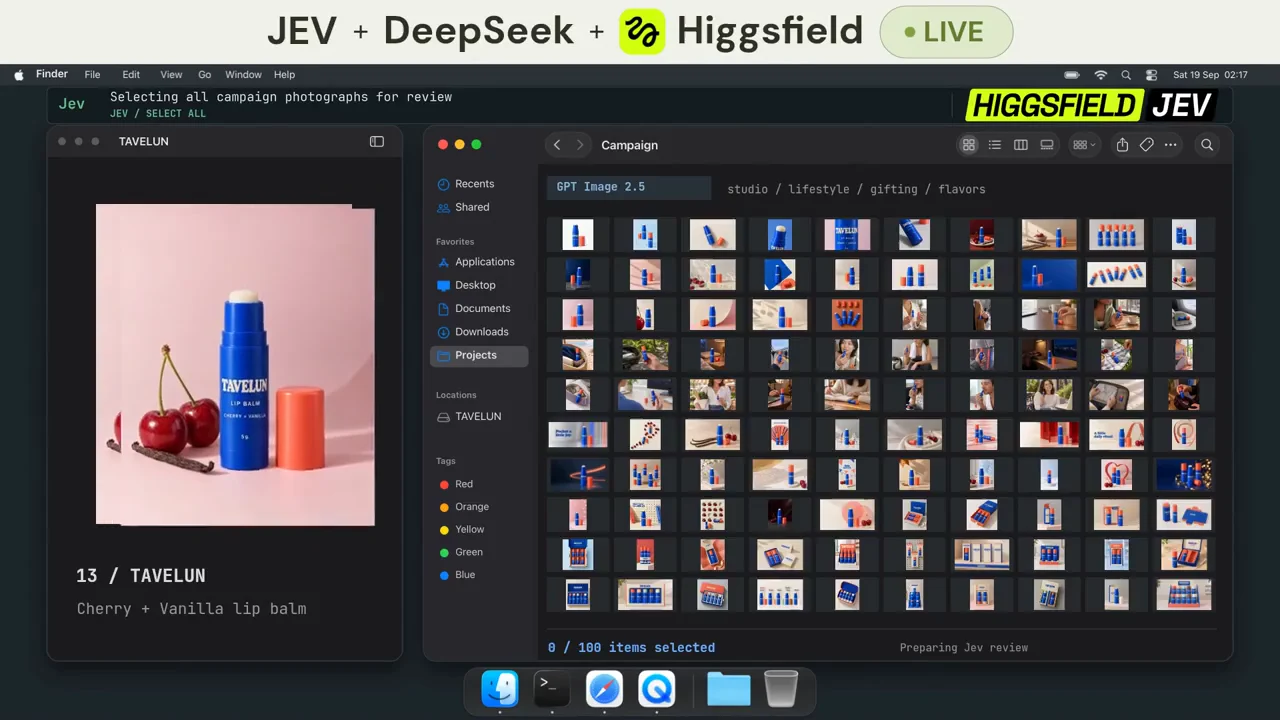
Higgsfield uses Jev to filter content and select assets before DeepSeek and Higgsfield turn them into ad creatives.
iagolast uses Jev to review a company’s invoices and classify them for accounting in seconds.

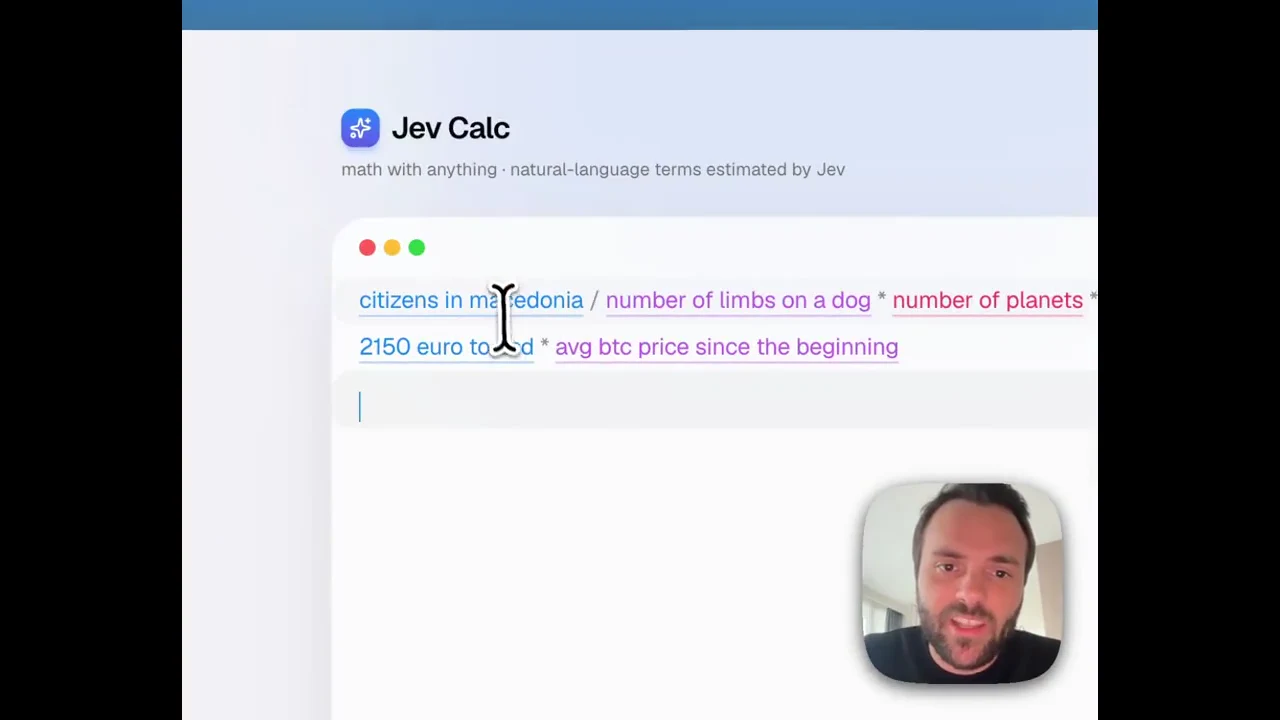
Jev Calc is Kitze’s smart calculator notebook for working through free-form calculations.
Prasad Pilla’s team built an internal Jev candidate qualifier, while warning that recruiting cannot fit neatly into one rubric.

Jev Detector scans text for AI slop without sign-up; its maker reports processing roughly 10,000 words in two seconds.

Jevの扉 lets people create and upload genres, with WebMCP support so an agent can make them too.

JevedIn is Akshat’s LinkedIn extension that uses Jev to detect and block AI slop in the feed.

Kai’s crawler starts at company homepages, finds careers pages, and selects jobs matching a profile.
Edwin Mesa tests Jev and Laya selecting support documents while a customer is still typing.

Adam Chester tests Jev selecting sensitive files from a shared drive.

Adithya Thatipalli used Jev for decisions and routing inside a Hermes AI-video pipeline before comparing it with local model Laya.

A userscript asks Jev to classify X posts and hide unwanted promotions, politics, and rage bait.

Jev ranks 400 companies against one candidate profile, scores confidence, and flags job-candidate mismatches.

A Jev-powered Kalshi bot makes live decisions in volatile 15-minute Bitcoin markets while publishing its real-time profit and loss.

keep.md uses Jev to rerank search results and tag saved content on Cloudflare Workers.

Jev predicts outreach performance for 700 leads, scores confidence, and detects lead-message mismatches.

A lead-qualification workflow uses Jev to screen an agent’s proposed steps before they enter Obsidian.

TomorrowLab uses Jev to screen live campaign leads for fit with each client’s ideal customer profile.

A live editor uses Jev to assess a post’s viral potential and category half a second after typing stops.

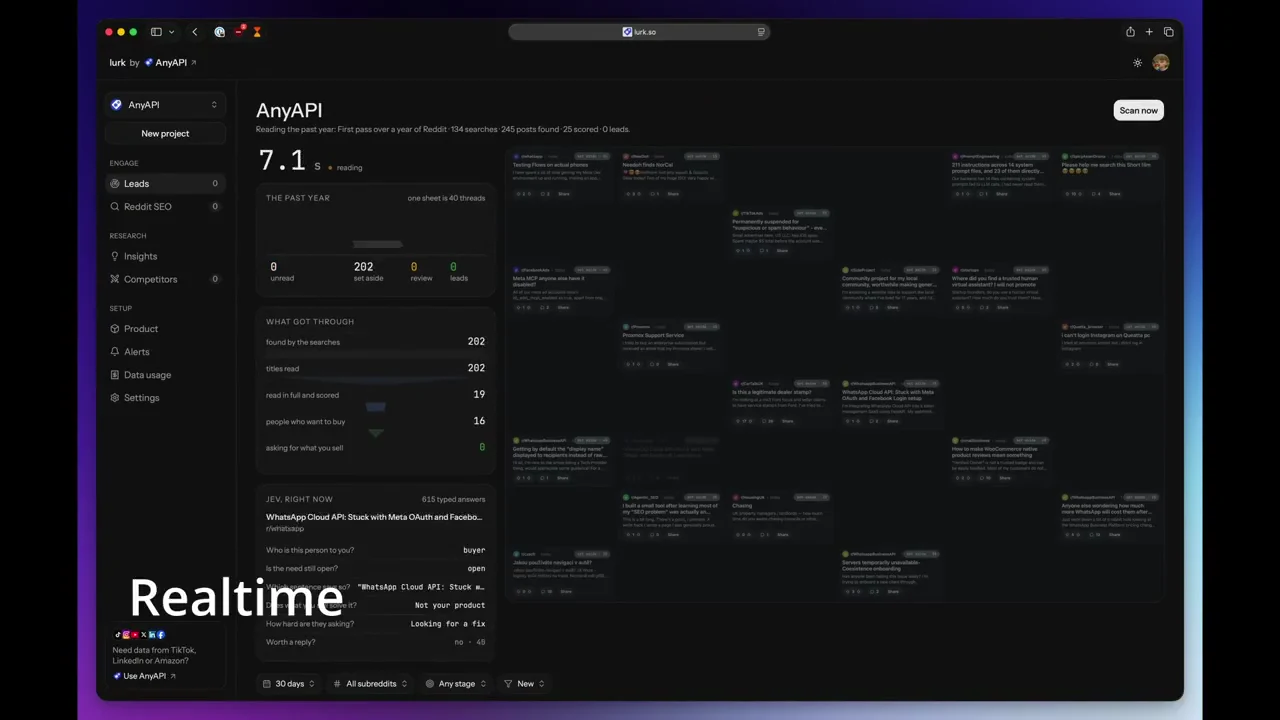
Lurk monitors Reddit threads for citation opportunities and sends matches through email, Discord, or Slack.
A Mac app uses Jev and its built-in manual to answer setup and troubleshooting questions when no other model is loaded.

Treg collects Meta ads while Jev classifies their landing pages, offers, and sales language.

gabidev used Jev to classify 50 Morpho vaults on Base by risk and rank their curators and vaults by trust.

Artem built a Jev-powered picker that recommends OpenRouter models from a plain-language description of the task.

Nitpicky zooms into faces, fingers, text, numbers and poses, then asks Jev to judge whether a photo was AI-generated.

Eric Yang’s browser extension uses Jev to flag suspected AI slop on LinkedIn and X as the reader scrolls.

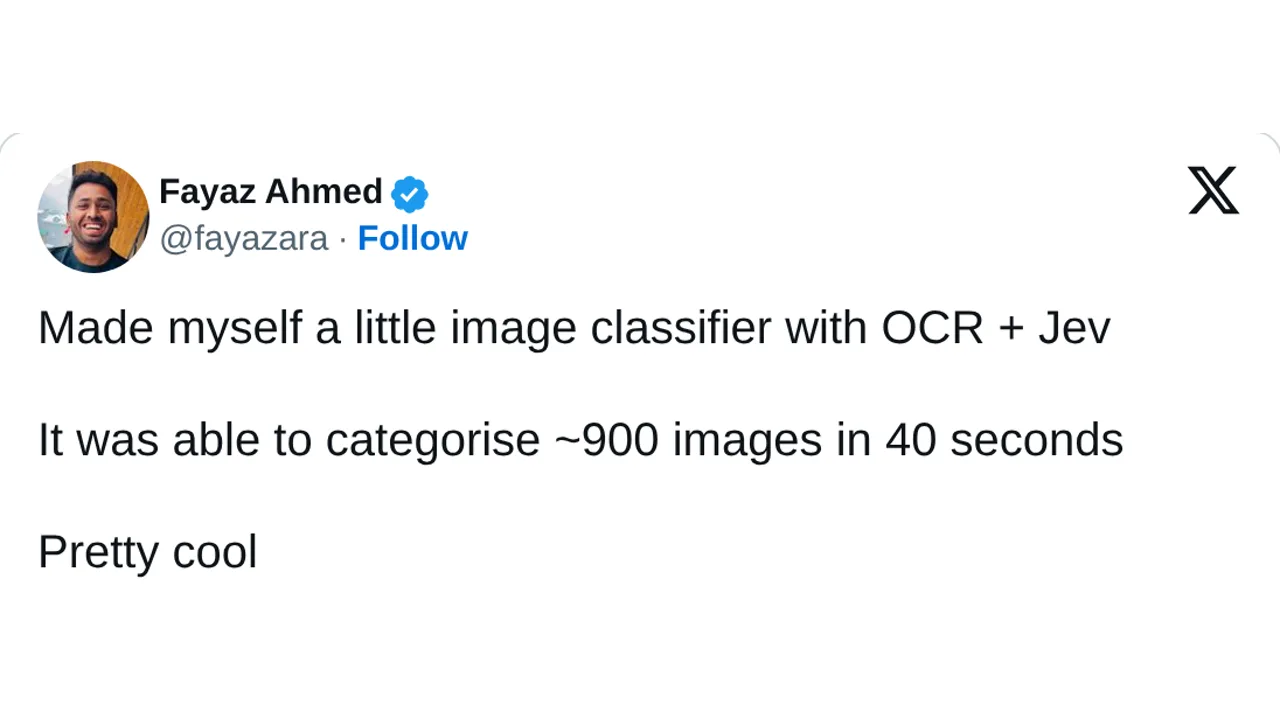
Fayaz Ahmed combined OCR with Jev to categorise roughly 900 images in a reported 40 seconds.
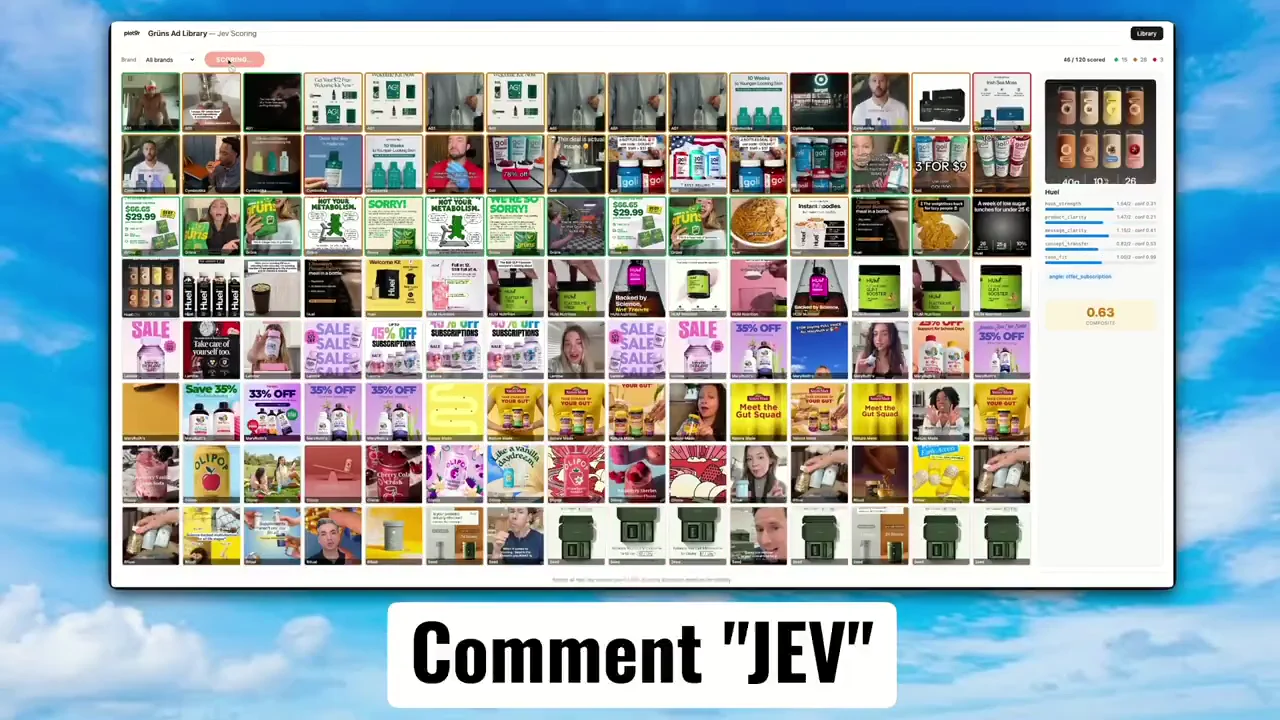
Raph Guilhem used Jev to score 120 competitor ads and shortlist ten before Opus 5.5 created adapted versions.
Pierre-Eliott Lallemant used Jev to identify which intent signals produced booked demos across thousands of outreach messages.

Sim Audience let more than 4,000 survey-participant personas vote between two launch posts in a simulated A/B test.

Choroshin Alex built a Skills IL tool that checks pasted SMS, WhatsApp and email messages for phishing with Jev.

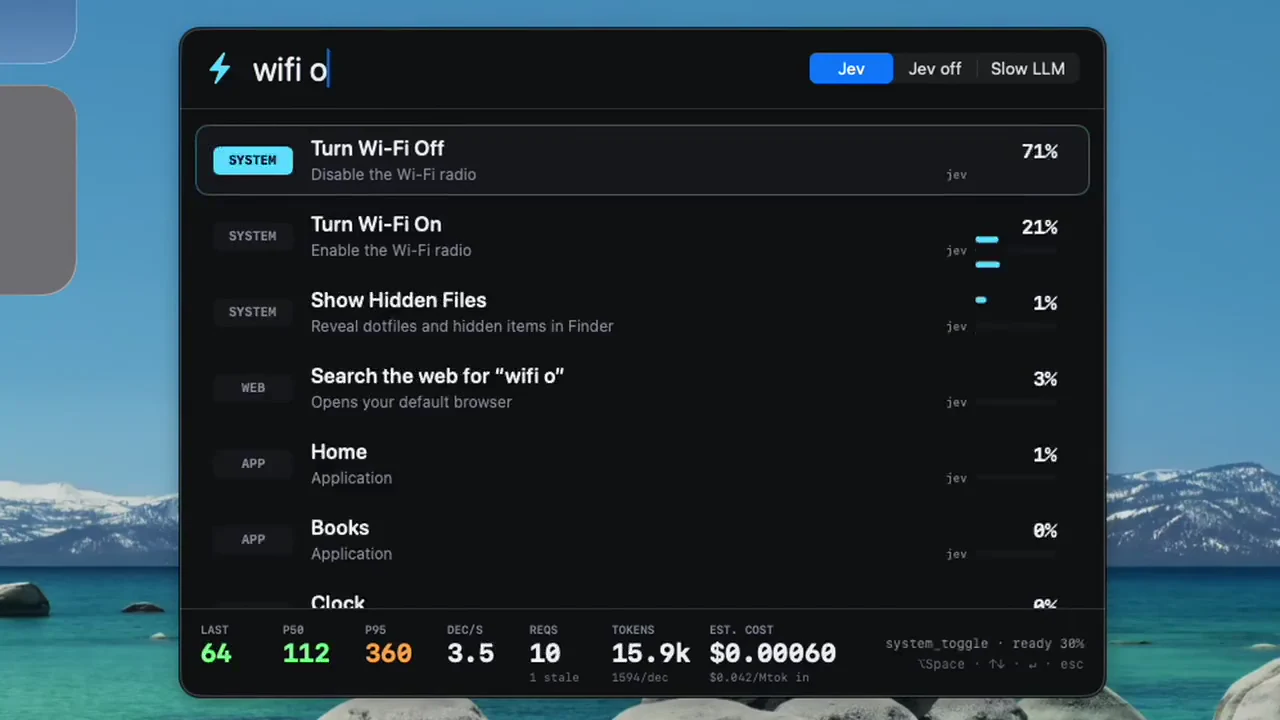
Nader Dabit’s predictive launcher combines aliases and fuzzy matching with Jev to rerank choices from each keystroke.
Nader Dabit’s spreadsheet experiment turns a column heading such as “Urgency” into live semantic ratings for every row.
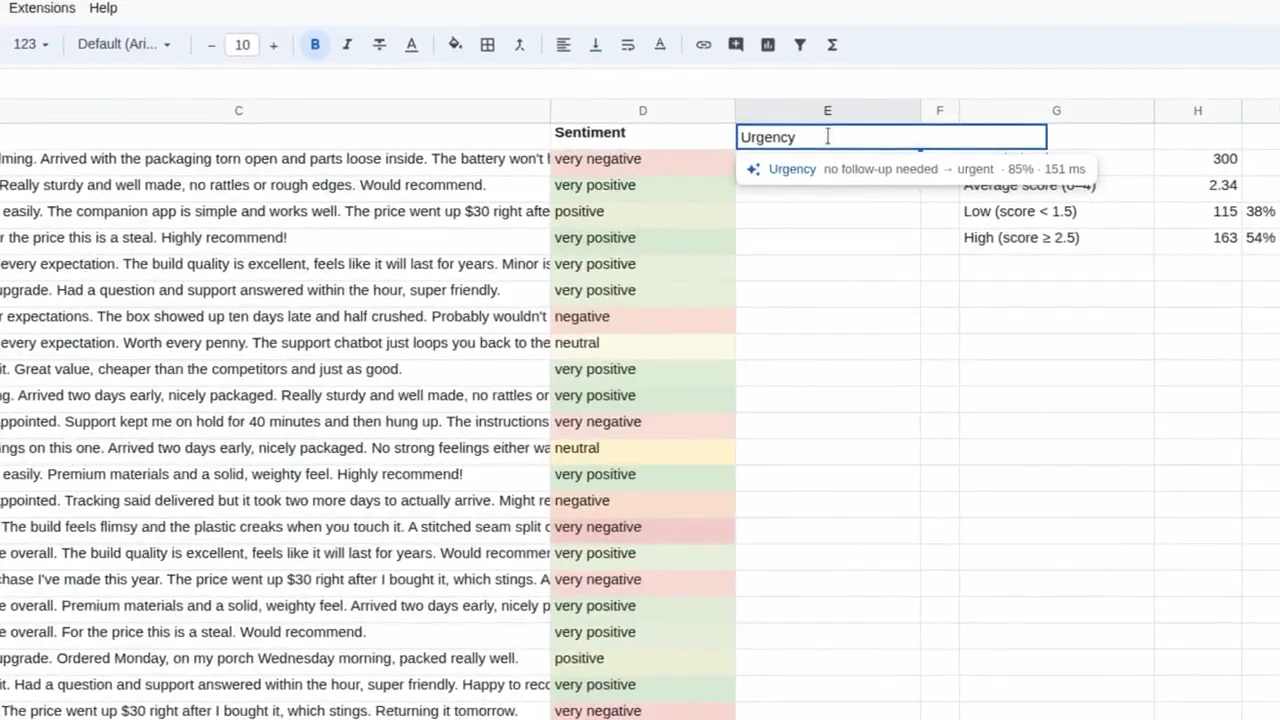
Proliquid uses Jev to label news sentiment inside its trading terminal and expose one-click trades on bullish stories.

Amit Rawat’s Chrome extension labels each X post READ, MAYBE or SKIP with Jev before it reaches the viewport.

Zachi built a browser extension that asks Jev whether each DOM element is an ad and removes those classified as ads.

Marek Sotak’s Jev-powered Clippy watches product use, appears when someone seems stuck and chooses its own reaction.

Ali built an open-source LinkedIn filter that scores visible posts against a user-editable Jev prompt in real time.

Yannis built a Jev product that scans Reddit for sales leads, though his launch post reports no traction.

Ira Bodnar uses Jev to score competitor pages and automate SEO and generative-search optimisation checks and fixes.

Moritz Kremb’s Sales Copilot listens to calls and uses Jev to track stages, surface objections and suggest what to say next.

Tanav’s extension classifies visible posts as scam, slop or clean and adds a compact confidence badge to each one.

A shopping concierge combines public statistics, Jev, and an LLM, with scientific thresholds between evidence and action.

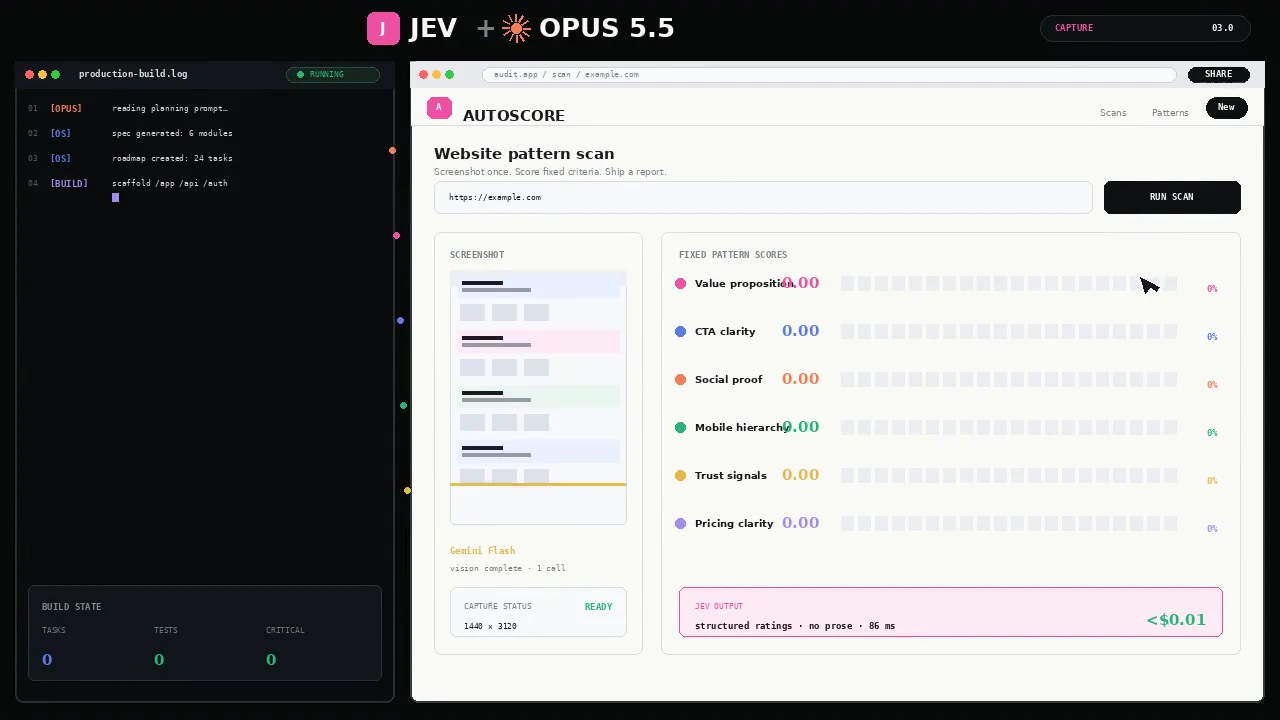
Give this scanner a URL to receive a screenshot-based pattern score and a shareable report.
A Jev-powered 404 page corrects mistyped paths and redirects visitors to the intended page.

This portfolio-aware engine uses Jev for non-mathematical analysis before scoring stocks and suggesting positions.

SuperX asks 61 questions about each draft, helping writers score and revise a post before publishing.

Speak on a prompted topic for 30 seconds, then receive Jev-based scores and feedback on delivery.

Lessons from testing Jev became a simpler rule engine whose maker says responds better to outdoor temperature.

Submit a project URL for a launch-readiness score, evidence-backed issues, and Codex-ready repair prompts.

Score an X draft against 800 viral posts, then inspect the closest examples and the checks behind the result.

Jev screens videos in a niche before they reach the user, turning a content database into a ranked research feed.

One prompt gathers 100 visual references from Cosmos, NASA, and The Met for creative research.

Jev, briefly
A chat model generates text token by token and hopes you parse it. Jev never generates a word. Your code sends the state of the world plus typed questions; Jev returns every answer in one parallel pass — typed values with calibrated probabilities and a confidence score your code can trust. About 70–500 ms end to end, $0.042 per million input tokens, output free. Trained with what TypeSafe calls Reinforcement Learning for Calibrated Decisions.
You define the options. Jev returns the chosen option, a probability for every option, and a confidence. The workhorse of routing, agents, and games — the answer space is always legal, so there is nothing to parse and nothing to hallucinate.
You describe ordered levels — say trivial / normal / critical. Jev returns the level, the probability of each, and a confidence. Scores turn fuzzy judgment (“how severe is this log line?”) into a number-free decision your code can branch on.
You assert a statement; Jev returns the probability that it is true — a noul. Moderation, verification, guardrails, “does this diff actually fix the bug?”: one question, one calibrated probability.
Official material lives at typesafe.ai and docs.typesafe.ai. JevMade is an independent community registry — not affiliated with or endorsed by TypeSafe AI.
Recurring lessons
Games, drones, trading bots, and browser agents all converge on the same loop: serialize the state, ask one decisive question, act, repeat. Jev’s latency makes the loop feel instant — the model lives inside the control loop, not outside it.
The answer says what; the confidence says whether to act. The most reliable entries threshold on confidence to route edge cases to a slower model or a human — automation with an honest escape hatch.
Makers rarely ask Jev to pick from everything. Local tactics prune 225 gomoku moves to ~40; DOM filters turn a page into an element table; code narrows options, Jev judges within them.
A recurring split: Jev makes every decision cheaply and instantly, and a small LLM is only invoked when a human-facing string must actually be written. Decision and generation are separate budgets.
Send the link — repo, live demo, post, or video — plus a line on what it does and which primitives it uses. Every entry is verified against its primary source before it ships.
Submit your experimentSign in first so we can reply to you. Submissions are reviewed, not published automatically.