Read & learn
Written guides.
Understand Jev, one idea at a time. Walkthroughs, recipes, and writeups — our notes first, the original next.
Learn, build, and play with Jev — from deep technical guides to creative experiments.
Read & learn
Understand Jev, one idea at a time. Walkthroughs, recipes, and writeups — our notes first, the original next.
Watch & learn
See an idea take shape. Tutorials, demos, and deep dives, organized by topic and credited to their creators.
Make & explore
See what builders made with Jev. Games, tools, repositories, articles, and more — traced to their sources.
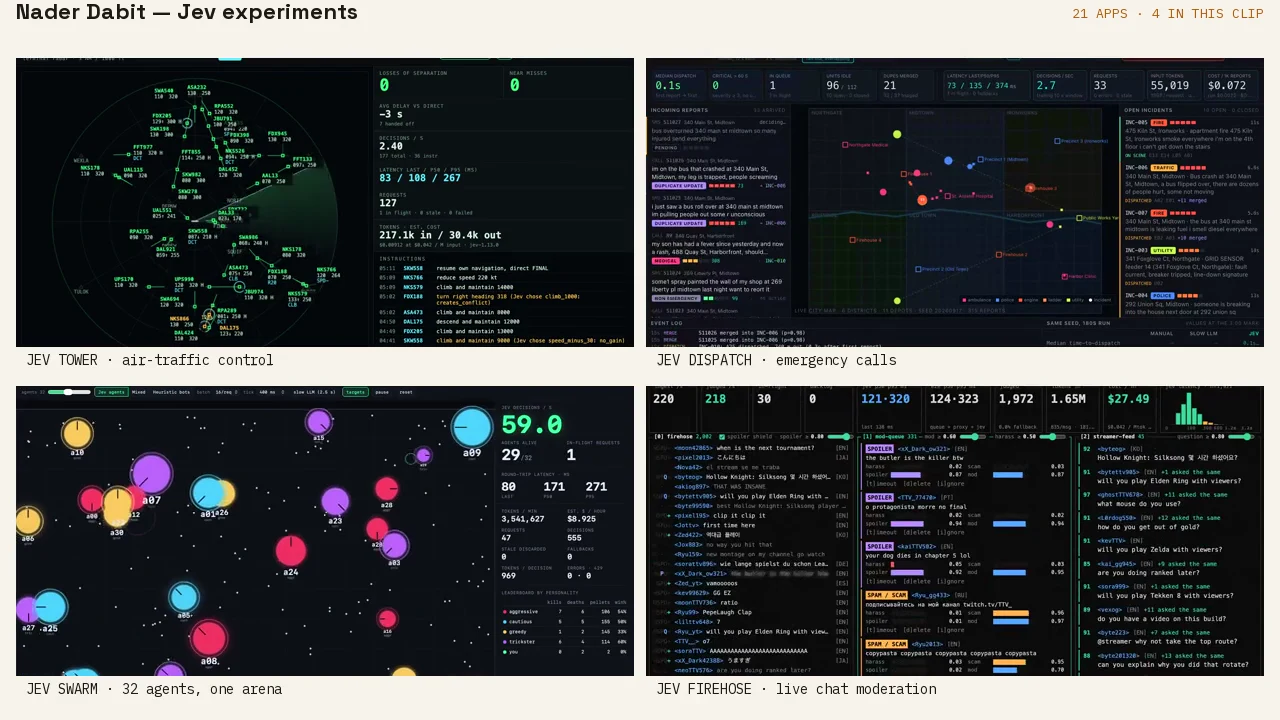
Every category, from games and tools to repositories and writeups, traced to a primary source.
Same ideas.
Different paths.
This is the full registry, not just the featured picks. Figures like speed, cost, and stars are maker-reported or captured snapshots, not JevMade measurements.
394 experiments · showing 361–394
Filter wallet lists for mercenary farmers before a token launch; the maker reports screening 40,000 wallets in four seconds.

Paste a website URL and Jev decides how to rebuild it as a native mobile app before Shipper handles submission.

Jev watches client WhatsApp groups for urgent problems and unresolved orders, alerting a language model when a message matters.

Route each group-chat message to the agent that should answer, replacing explicit mentions or a slower generative orchestrator.

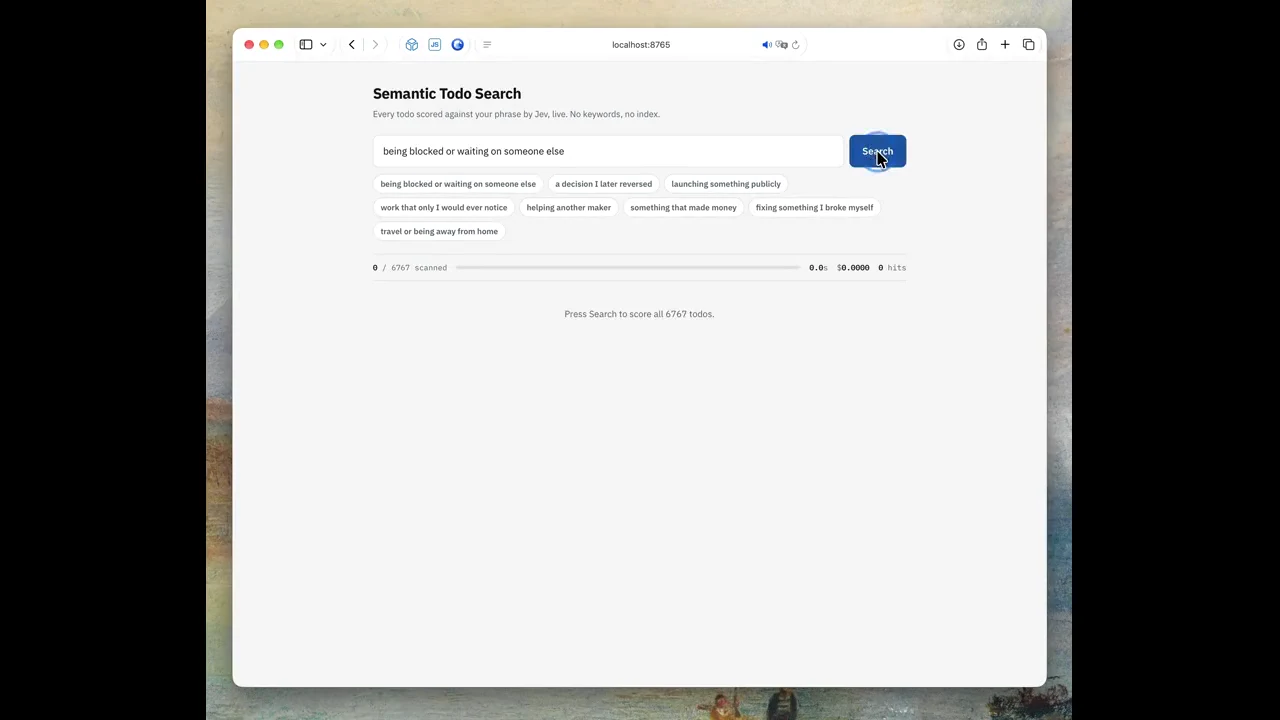
Search WIP todos by meaning to find moments such as revenue gains, blockers, or switches between SaaS providers.
Classify an exported X archive to reveal recurring patterns without opening every saved post individually.

Tag X posts in real time as breaking news, a useful nugget, or slop.

Find product conversations that match goals supplied by the user.

Turn a product URL into a Markdown repository covering features, audience, messaging, pricing strategy, and business logic.

A Jev-powered copy-and-paste utility with bring-your-own-key support and a local mode announced as forthcoming.

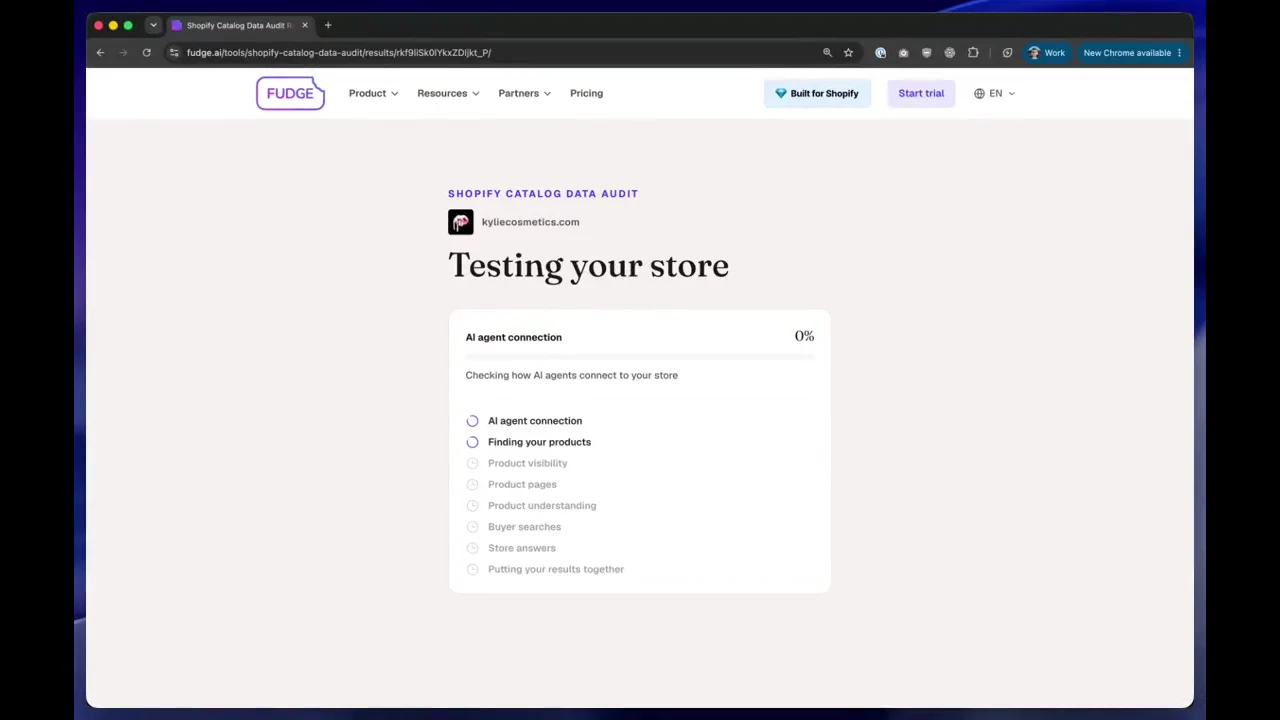
Audit Shopify catalogs for answer-engine problems such as products filed under unrelated categories.
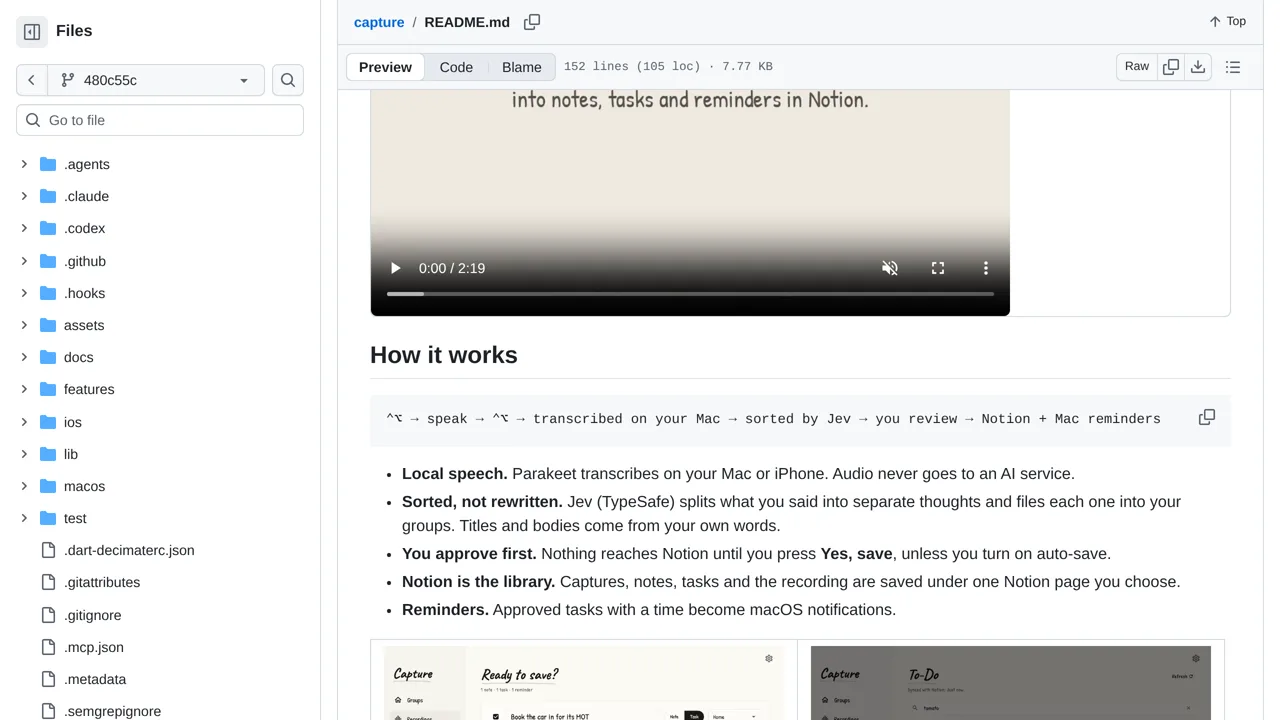
Speak a voice diary, let Jev sort your thoughts, then review the notes, tasks and reminders before sending them to Notion.
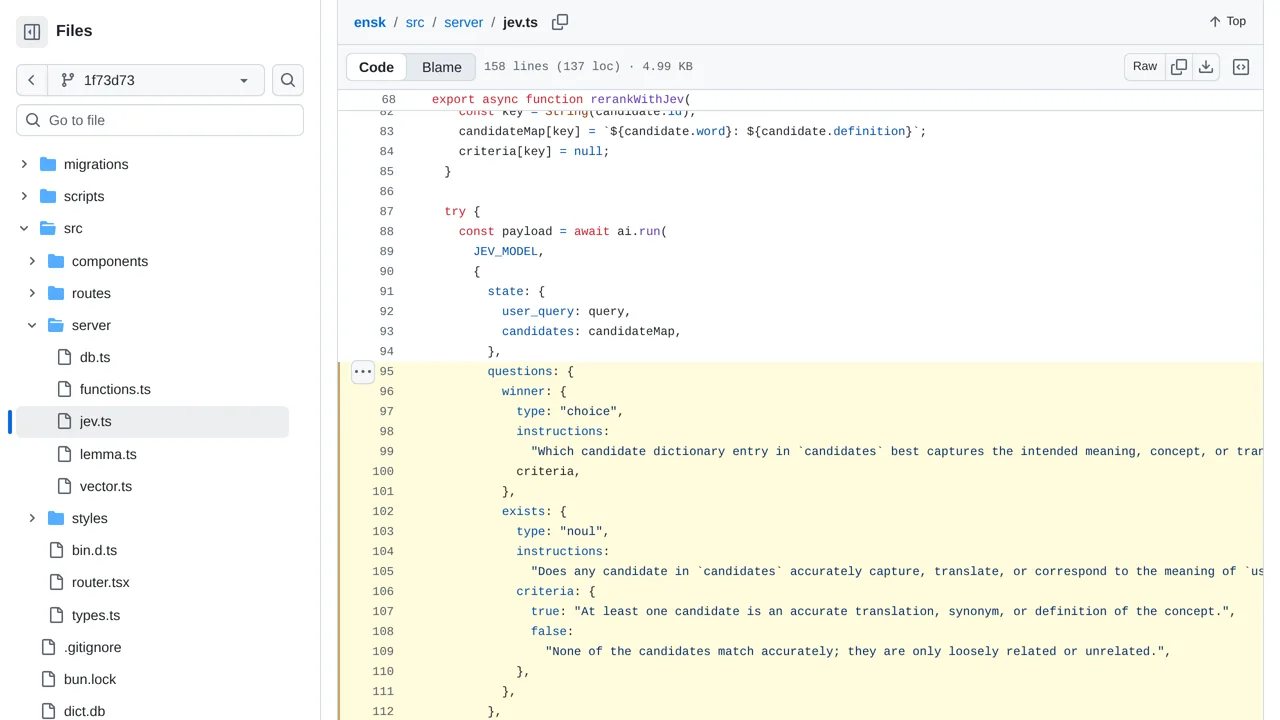
Search an English–Icelandic dictionary by meaning, with Jev checking whether the shortlist contains a match and ranking the results.
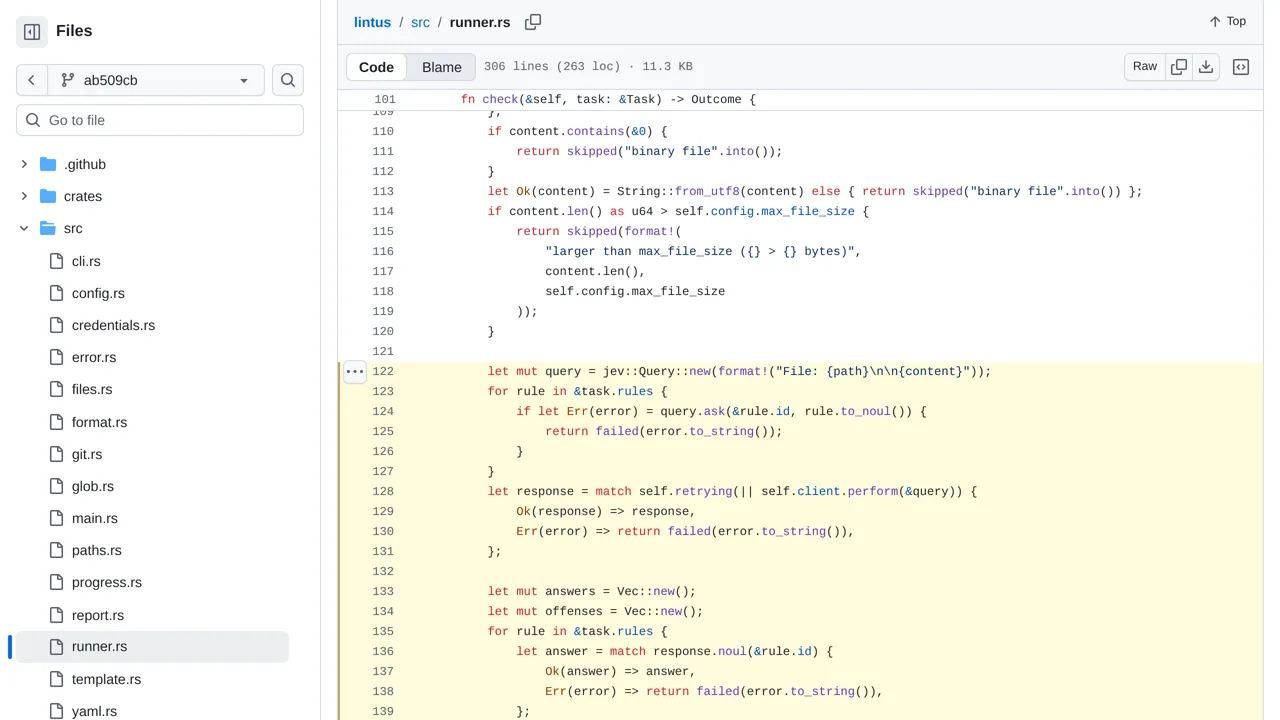
Lintus turns plain-language YAML rules into Jev checks and reports threshold-crossing answers as lint offenses.
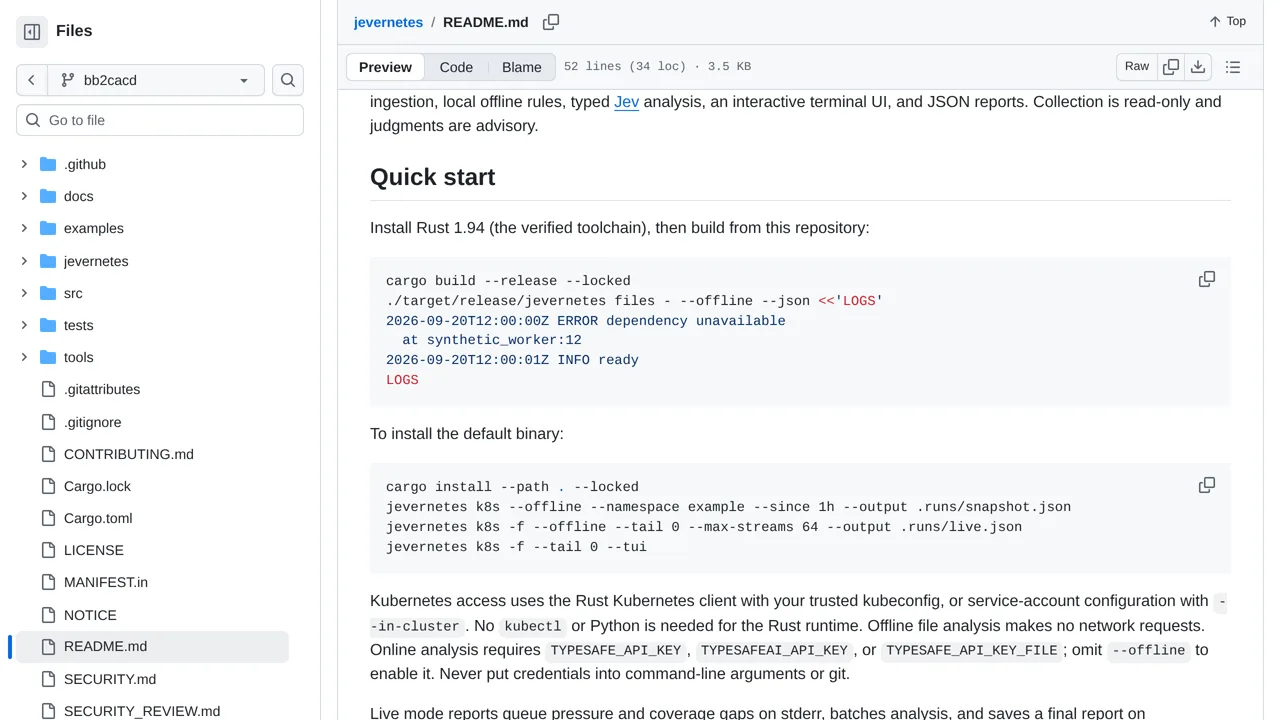
Search a retained window of Kubernetes or file logs with Jev, then inspect matching, possible, and unrelated evidence.
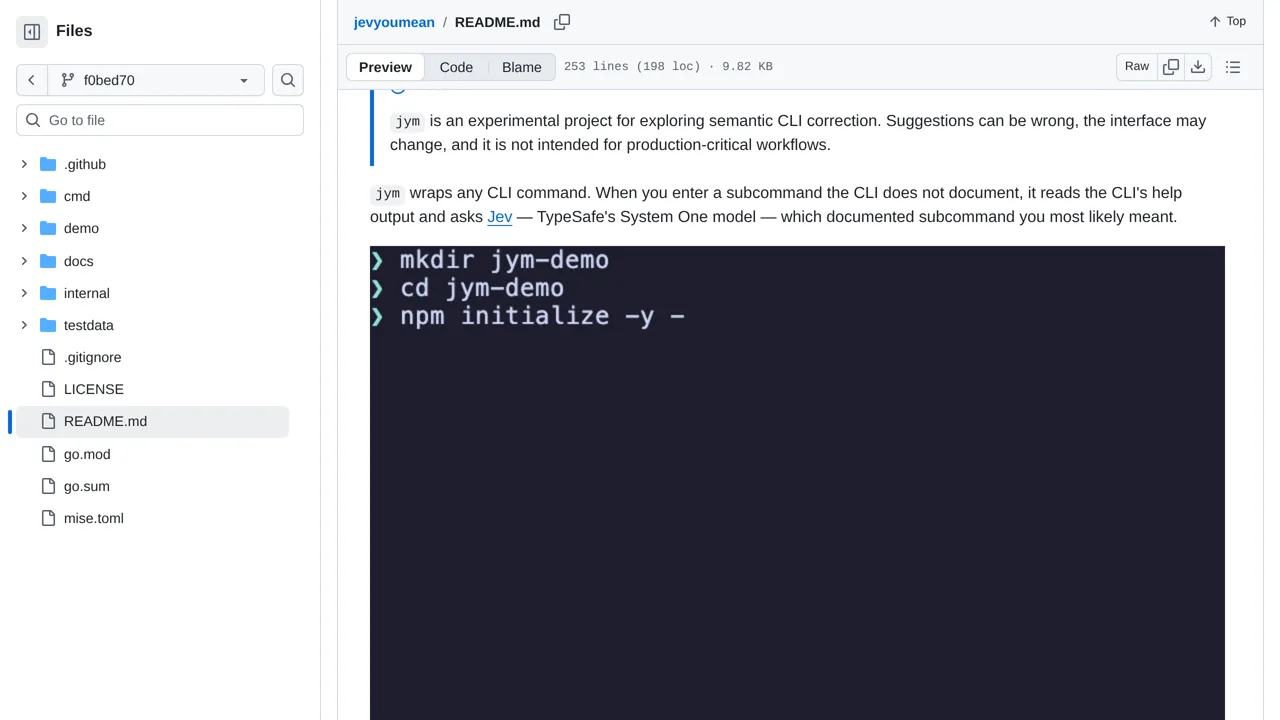
Mistype a subcommand and jevyoumean asks Jev which documented command you probably intended.
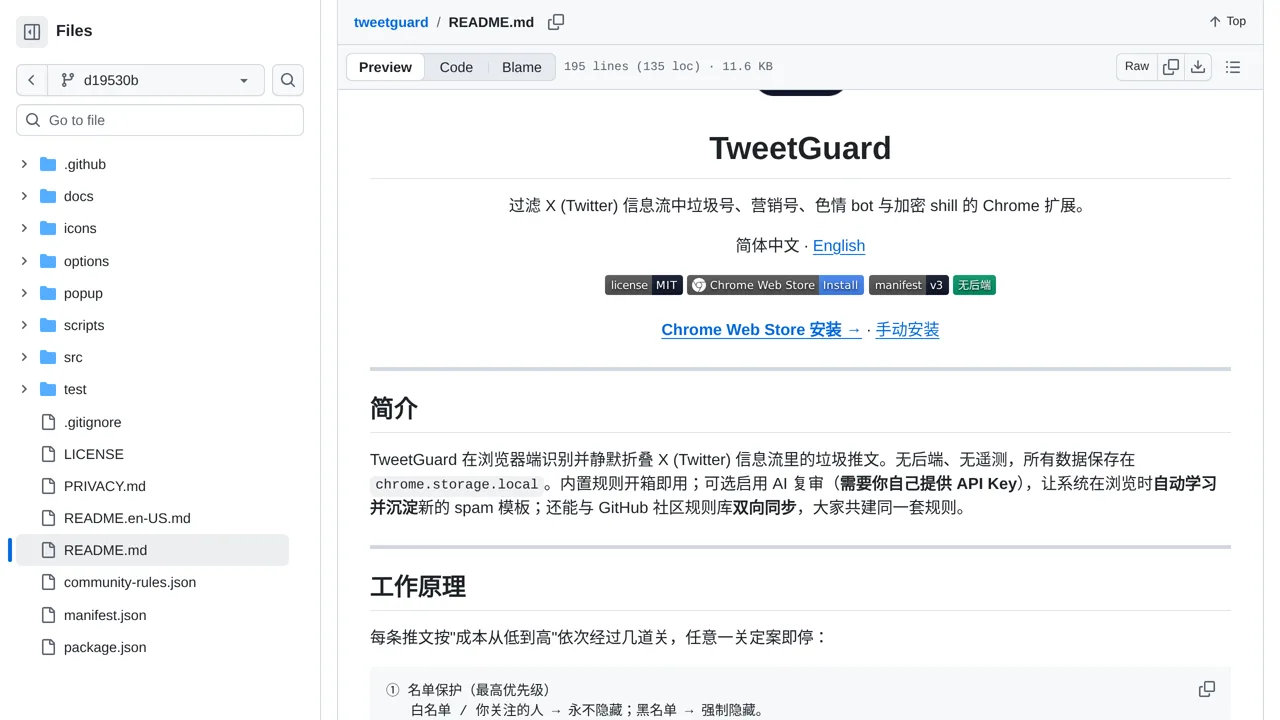
TweetGuard uses Jev to sort individual X posts into spam categories while leaving uncertain posts visible.
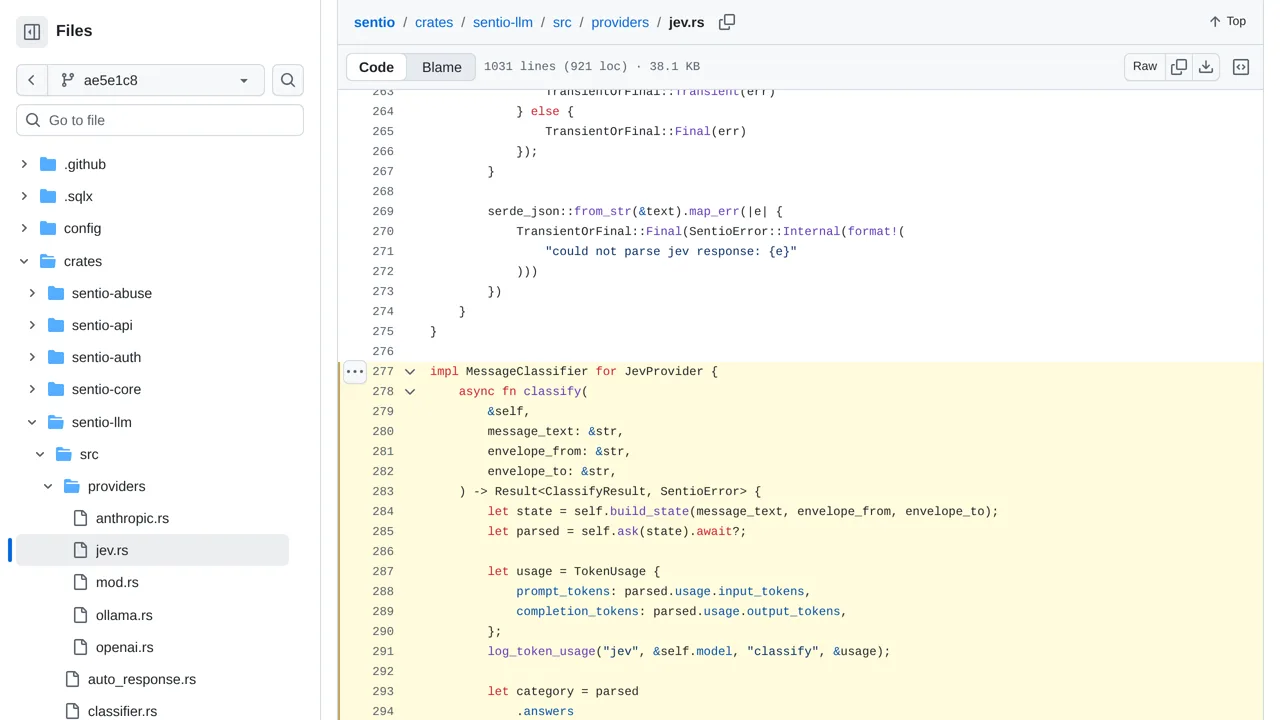
Sentio classifies email with Jev and adjusts spam scores from unsolicited-mail and phishing probabilities.
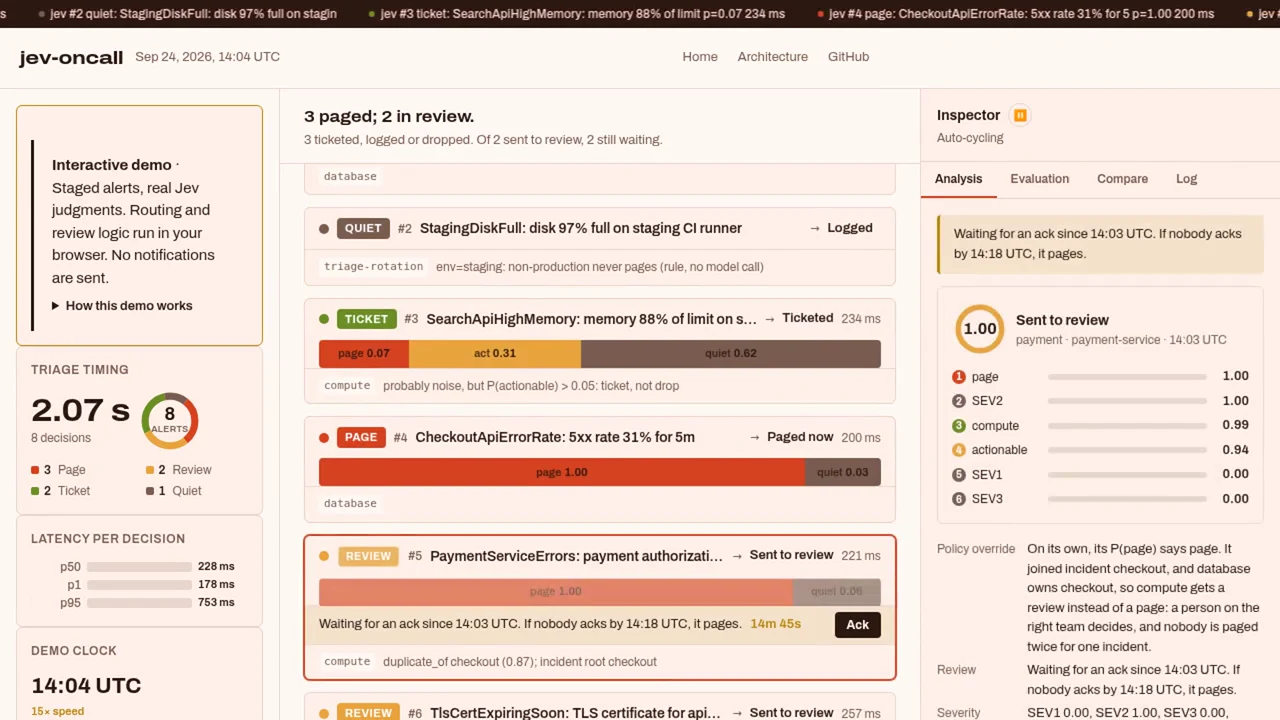
jev-oncall routes production alerts with one typed Jev call per alert, then lets boring, auditable code decide what the probabilities are allowed to do. The model judges; a page threshold, a review band, and a fail-open default do the rest.
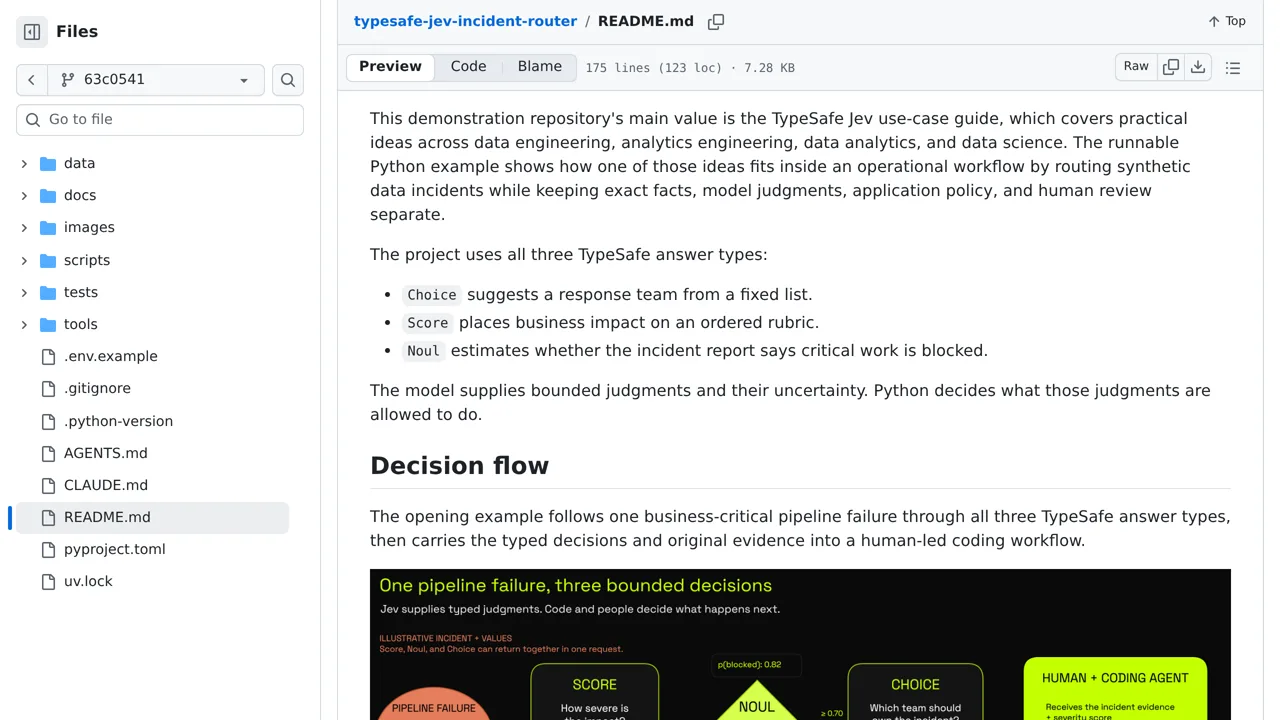
A confidence-gated incident router that consults an ownership registry first and Jev only when routing needs interpretation: choice picks the response team, score places business impact, noul estimates blocked critical work, and low confidence routes to human review instead of action.
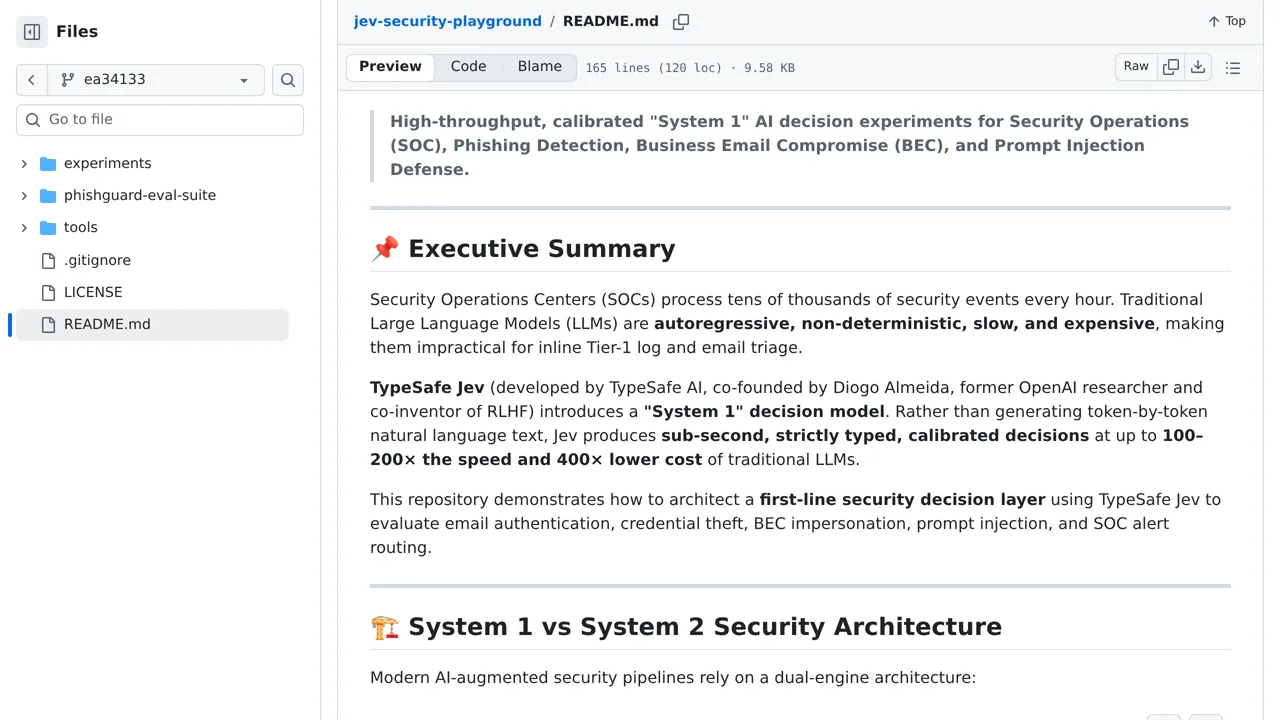
A security-operations experiment set that runs Jev as a first-line decision layer across SOC work: phishing classification, authentication triage, BEC detection, investigation routing, and prompt-injection detection, with a unified PhishGuard pipeline and an eval suite of staged states.
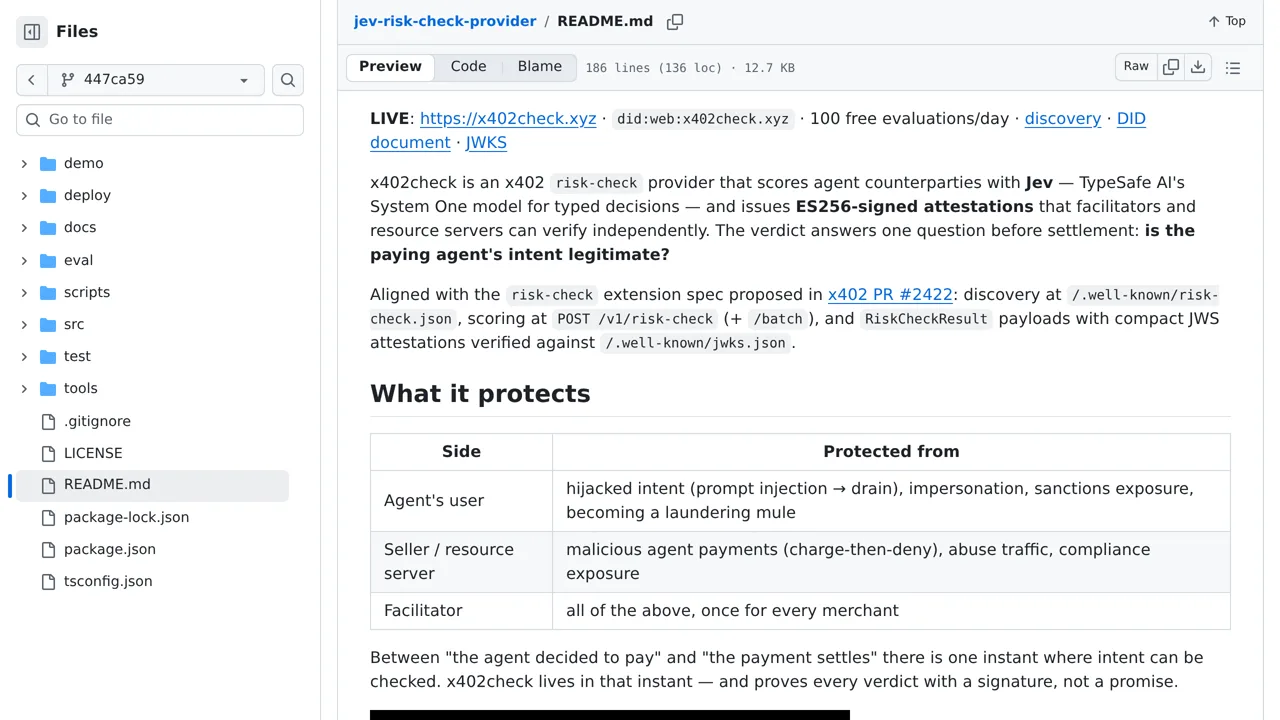
Agent payments settle in milliseconds, and x402check spends that instant asking Jev six questions about the payer: known threat, sanctions, laundering, lookalike domain, operation class, trust. Every verdict ships as a signed attestation, so the check is provable, not promised.
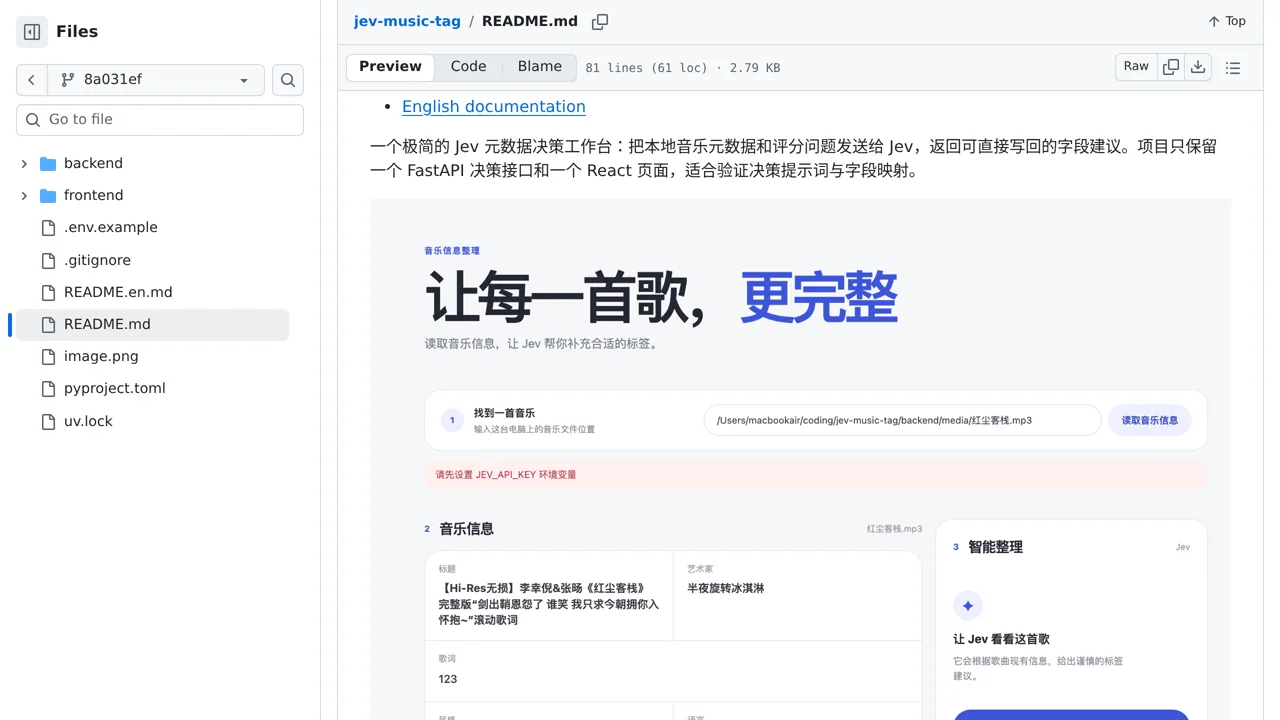
Point it at a music folder and Jev scores the missing metadata — genre, language, album type — then the winning tags get written back into your files.
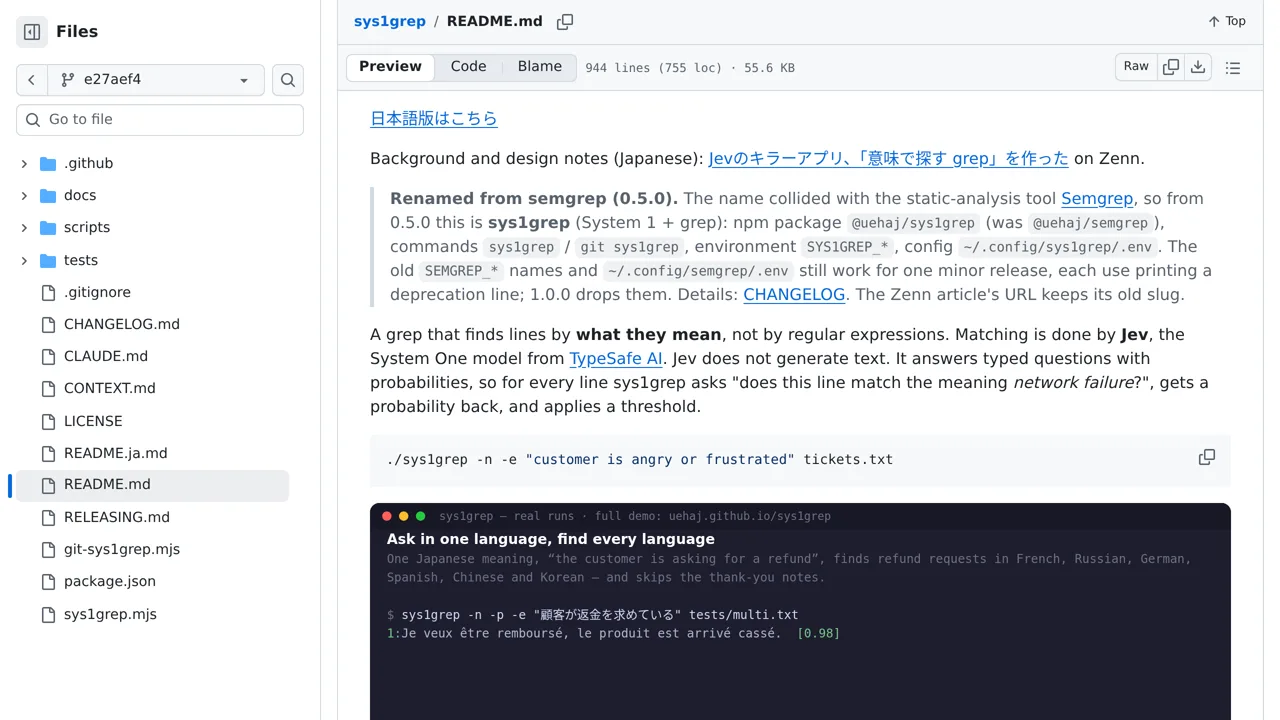
A grep that finds lines by meaning instead of regular expressions: Jev scores every line against the meaning you name.
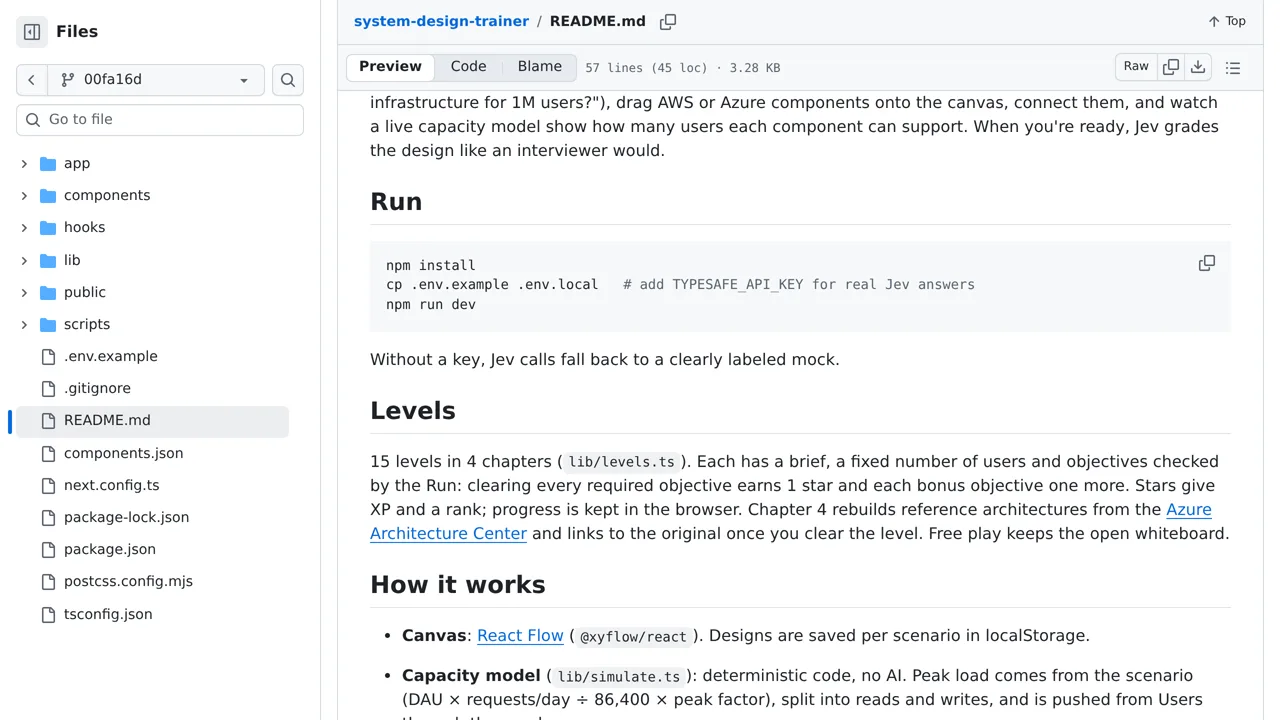
Draw a system design on a whiteboard, watch a live model count how many users it survives, then hear Jev grade it the way an interviewer would.
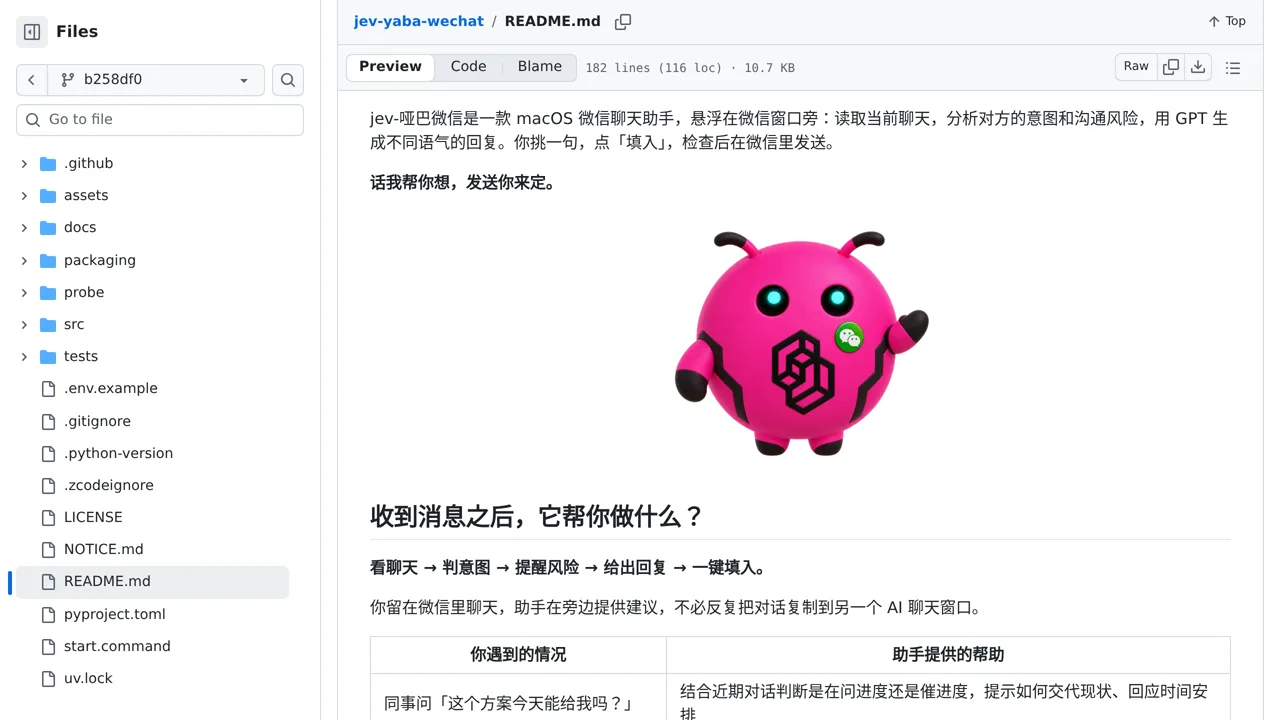
Sits beside WeChat on macOS, reads the conversation on screen, and tells you what the other person probably means before drafting replies in several tones.
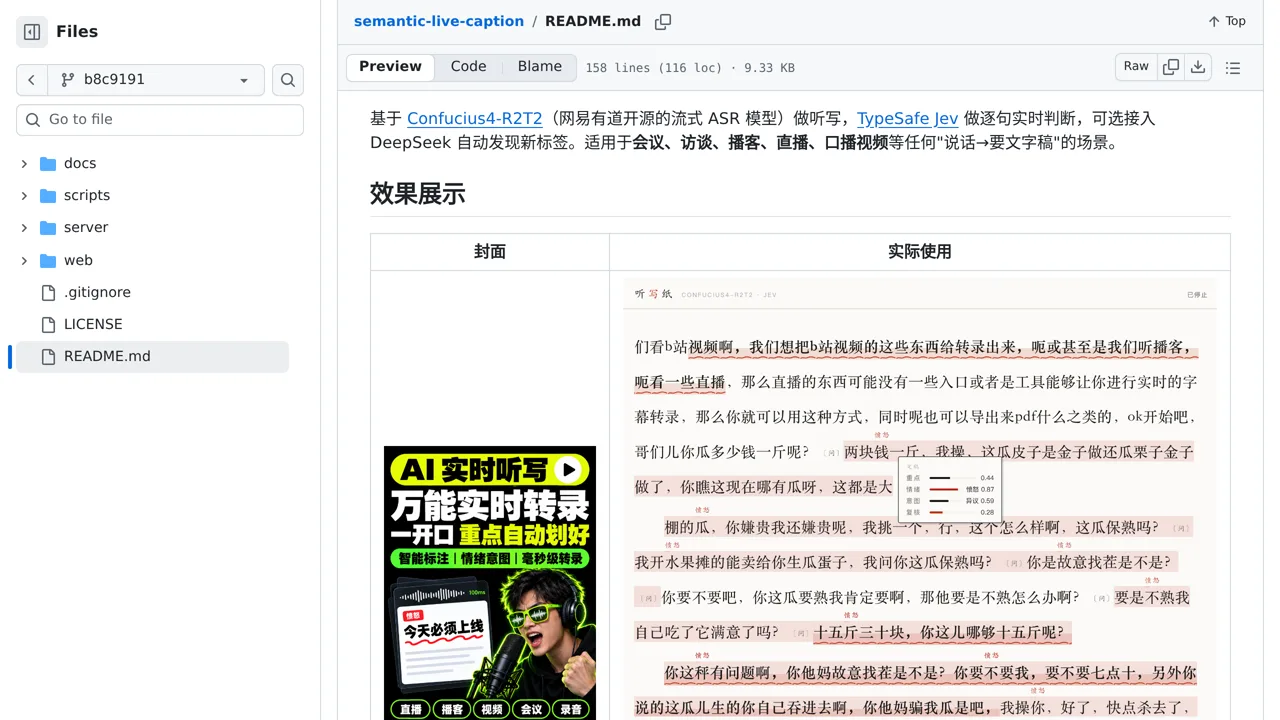
Adds live annotations to streaming captions: key sentences get underlined, emotions get coloured, and intent gets a little stamp while the speaker is still talking.
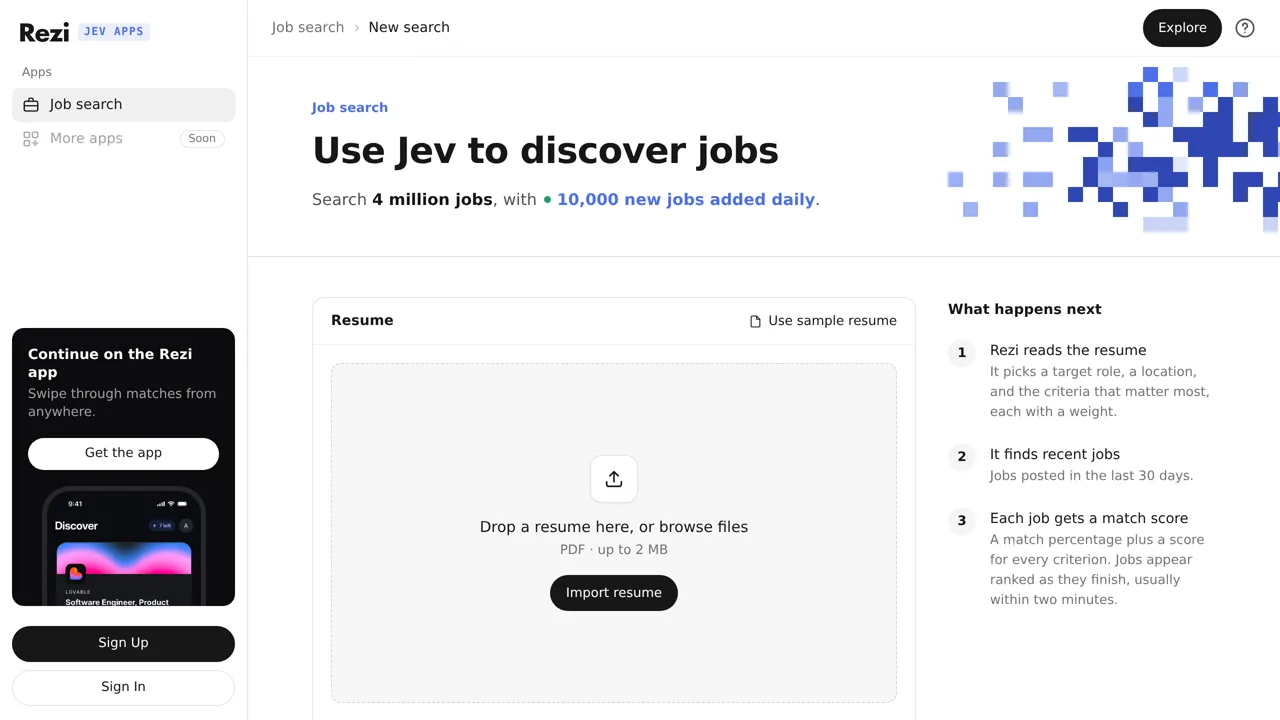
Rezi’s Jev Jobs lets you upload a PDF résumé and search recent openings ranked against criteria drawn from it.
Search a PDF by what you mean rather than the words on the page.

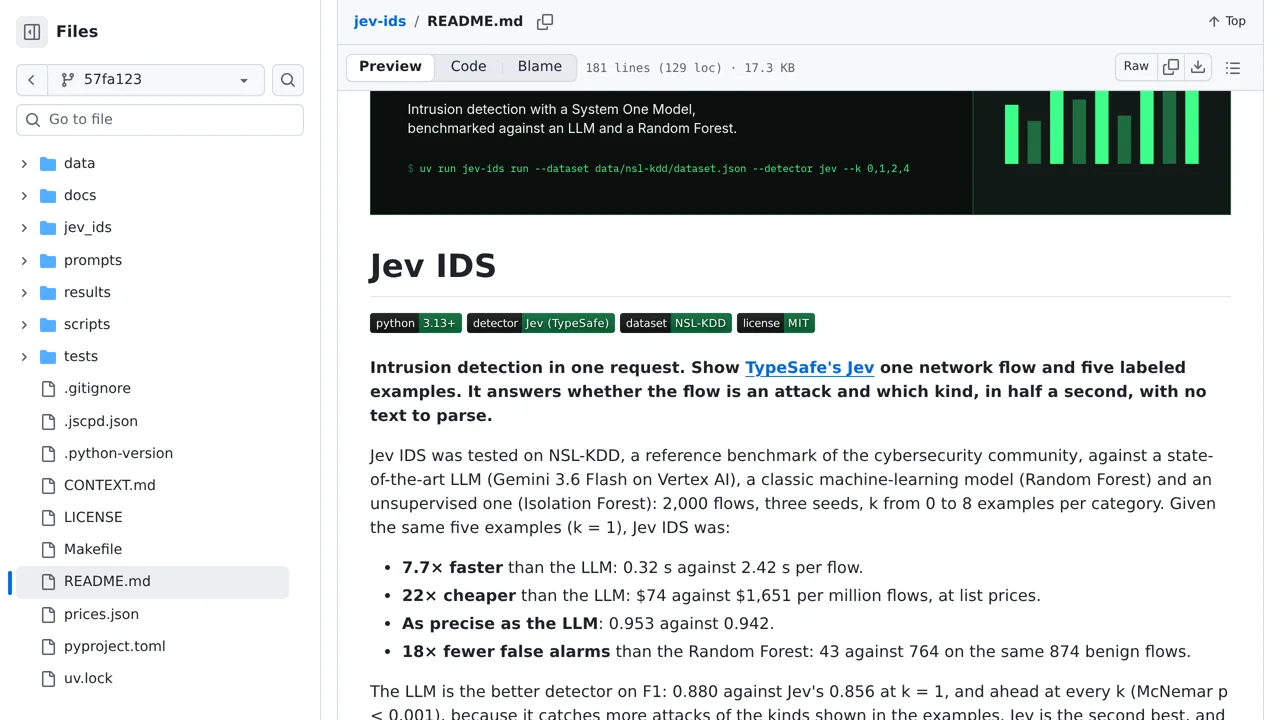
Trained intrusion-detection models want thousands of labeled flows. This hands Jev five examples per attack type and gets close enough to be worth arguing about.
Inbox Zero, the open-source email assistant, takes Jev as a drop-in classifier. Categories come from a fixed list and yes/no answers carry a probability.

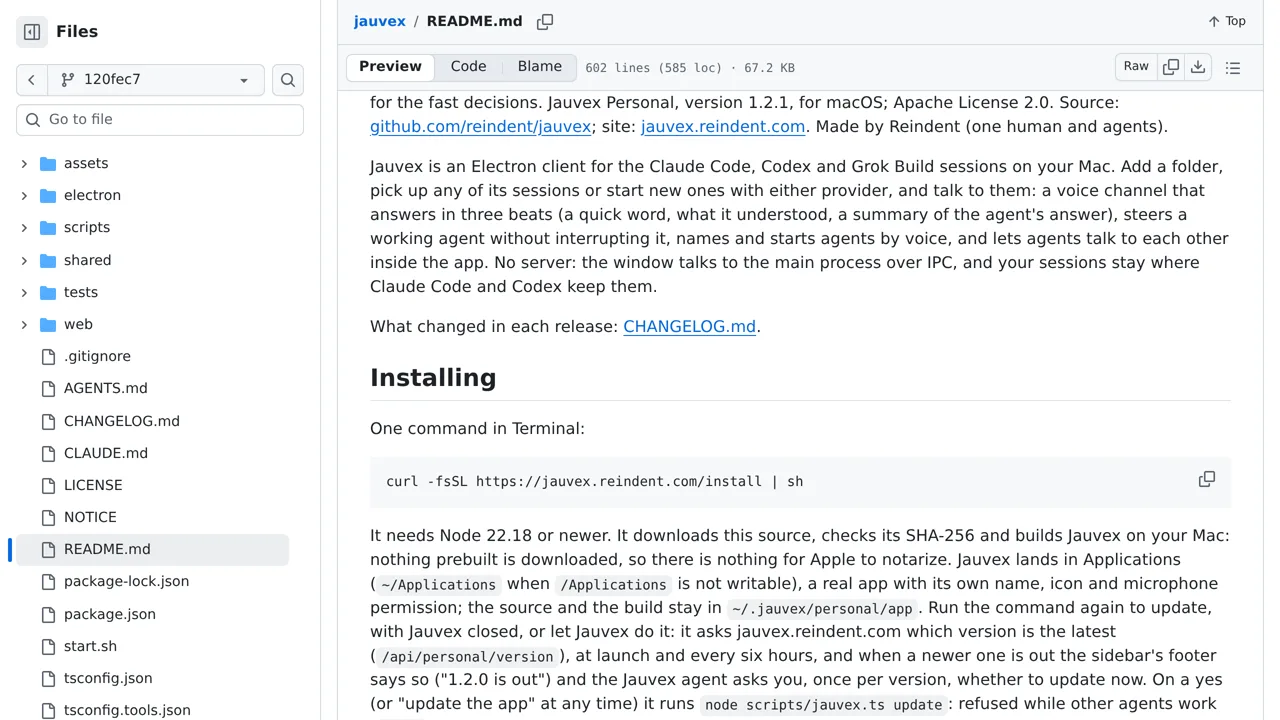
Jauvex is a Mac app for talking to your coding agents by voice while they work in the same window.
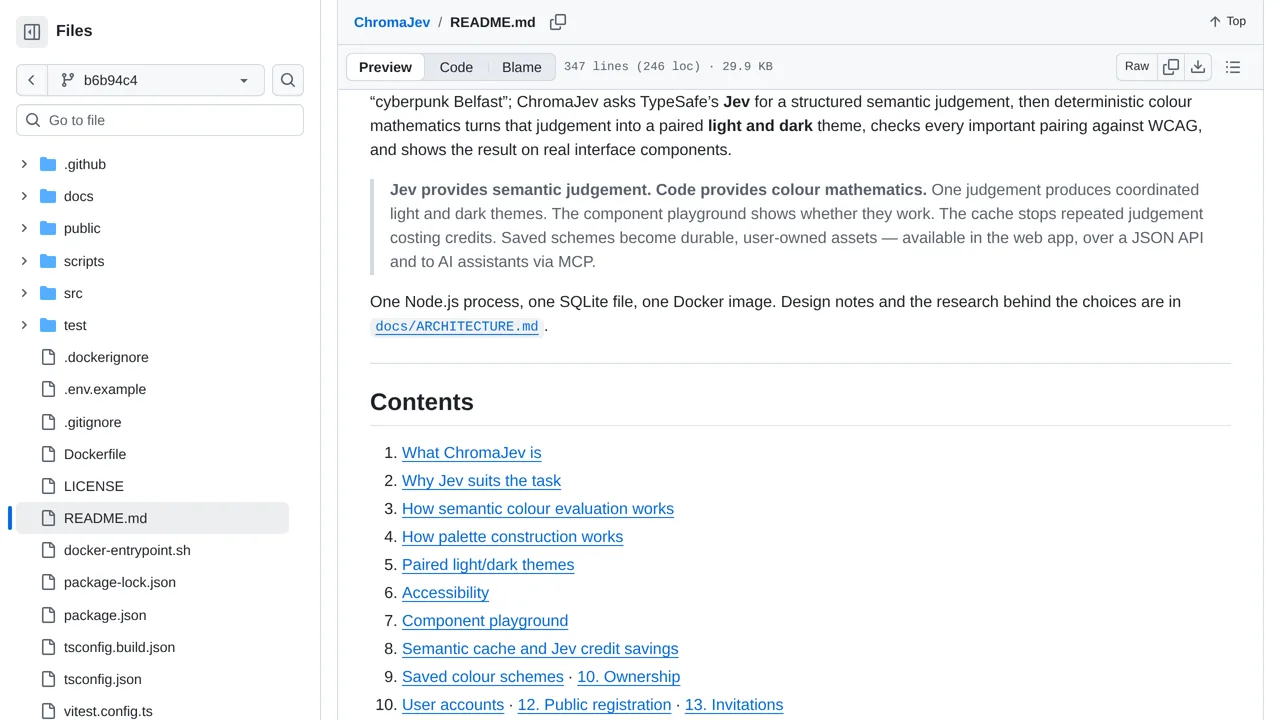
ChromaJev asks which colours fit a concept, then builds matching light and dark themes with ordinary colour calculations.
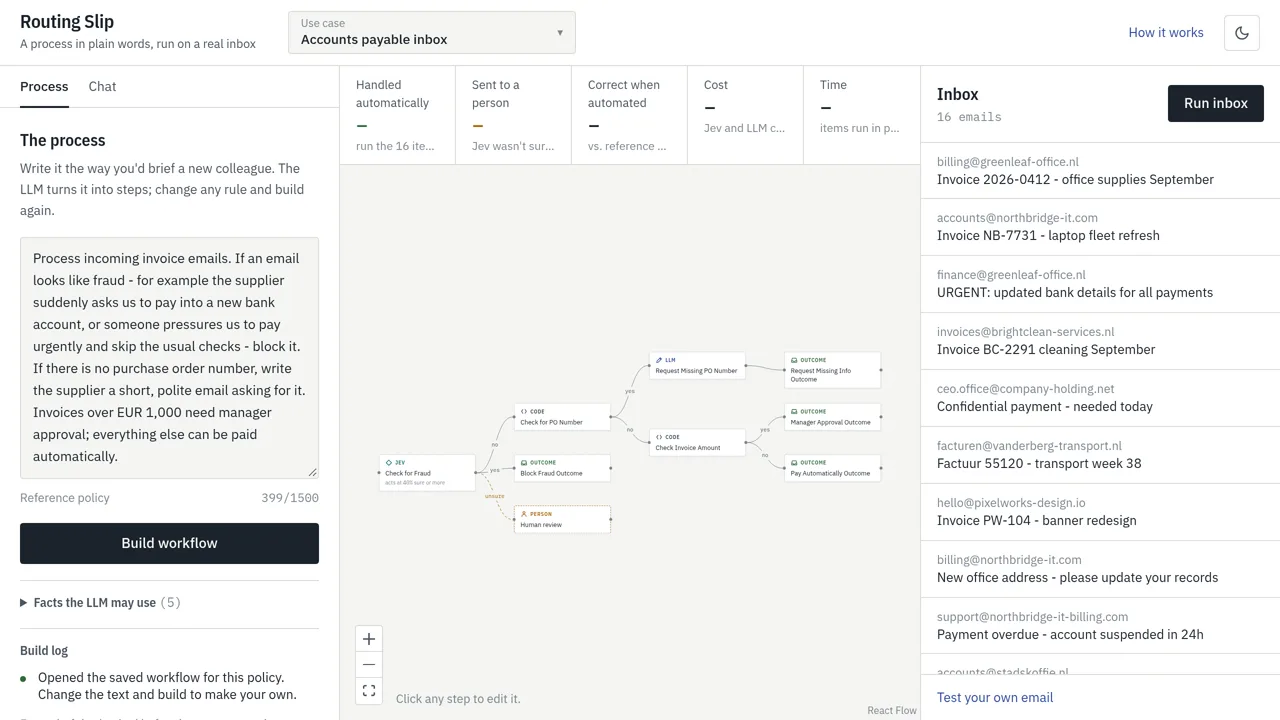
Turn a plain-language business process into a workflow graph with code rules, Jev judgments, drafted replies and routes for human review.
Jev, briefly
A chat model generates text token by token and hopes you parse it. Jev never generates a word. Your code sends the state of the world plus typed questions; Jev returns every answer in one parallel pass — typed values with calibrated probabilities and a confidence score your code can trust. About 70–500 ms end to end, $0.042 per million input tokens, output free. Trained with what TypeSafe calls Reinforcement Learning for Calibrated Decisions.
You define the options. Jev returns the chosen option, a probability for every option, and a confidence. The workhorse of routing, agents, and games — the answer space is always legal, so there is nothing to parse and nothing to hallucinate.
You describe ordered levels — say trivial / normal / critical. Jev returns the level, the probability of each, and a confidence. Scores turn fuzzy judgment (“how severe is this log line?”) into a number-free decision your code can branch on.
You assert a statement; Jev returns the probability that it is true — a noul. Moderation, verification, guardrails, “does this diff actually fix the bug?”: one question, one calibrated probability.
Official material lives at typesafe.ai and docs.typesafe.ai. JevMade is an independent community registry — not affiliated with or endorsed by TypeSafe AI.
Recurring lessons
Games, drones, trading bots, and browser agents all converge on the same loop: serialize the state, ask one decisive question, act, repeat. Jev’s latency makes the loop feel instant — the model lives inside the control loop, not outside it.
The answer says what; the confidence says whether to act. The most reliable entries threshold on confidence to route edge cases to a slower model or a human — automation with an honest escape hatch.
Makers rarely ask Jev to pick from everything. Local tactics prune 225 gomoku moves to ~40; DOM filters turn a page into an element table; code narrows options, Jev judges within them.
A recurring split: Jev makes every decision cheaply and instantly, and a small LLM is only invoked when a human-facing string must actually be written. Decision and generation are separate budgets.
Send the link — repo, live demo, post, or video — plus a line on what it does and which primitives it uses. Every entry is verified against its primary source before it ships.
Submit your experimentSign in first so we can reply to you. Submissions are reviewed, not published automatically.