Read & learn
Written guides.
Understand Jev, one idea at a time. Walkthroughs, recipes, and writeups — our notes first, the original next.
Learn, build, and play with Jev — from deep technical guides to creative experiments.
Read & learn
Understand Jev, one idea at a time. Walkthroughs, recipes, and writeups — our notes first, the original next.
Watch & learn
See an idea take shape. Tutorials, demos, and deep dives, organized by topic and credited to their creators.
Make & explore
See what builders made with Jev. Games, tools, repositories, articles, and more — traced to their sources.
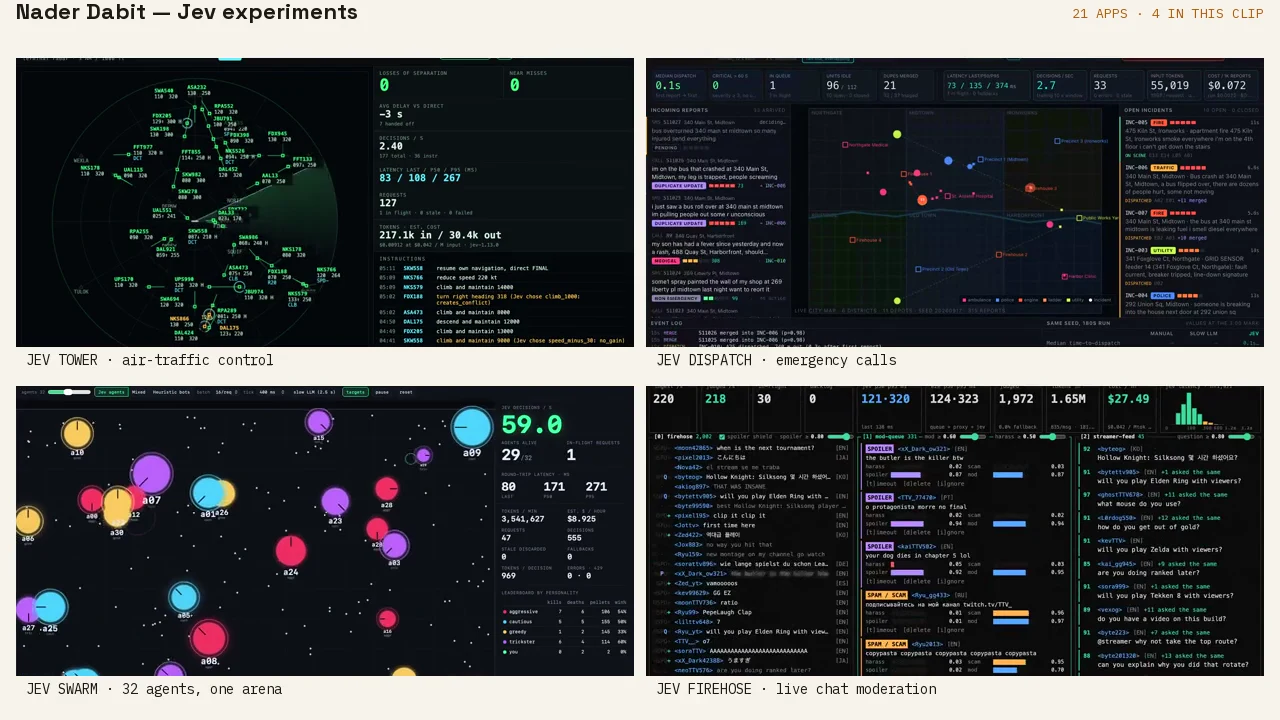
Every category, from games and tools to repositories and writeups, traced to a primary source.
Real-time research powered by
Same ideas.
Different paths.
This is the full registry, not just the featured picks. Figures like speed, cost, and stars are maker-reported or captured snapshots, not JevMade measurements.
452 experiments · showing 421–452
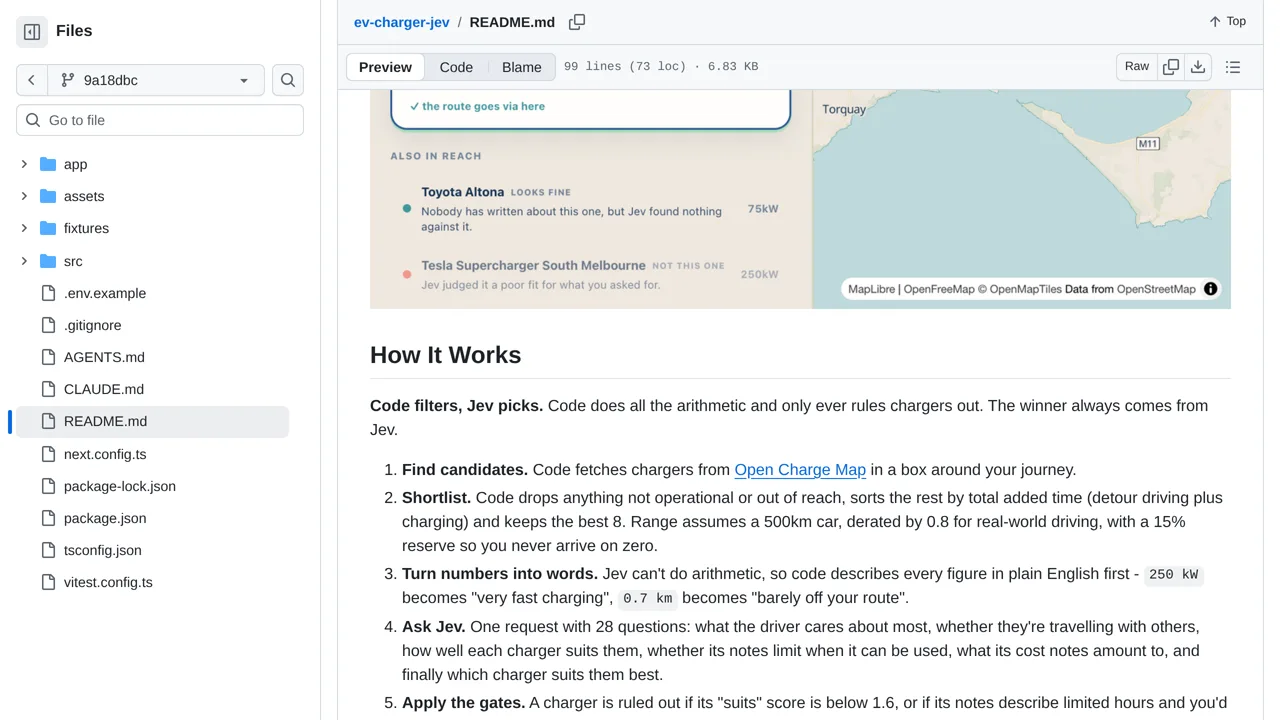
Describe the charging stop you want, and this Australian EV prototype asks Jev to weigh the notes for nearby chargers.
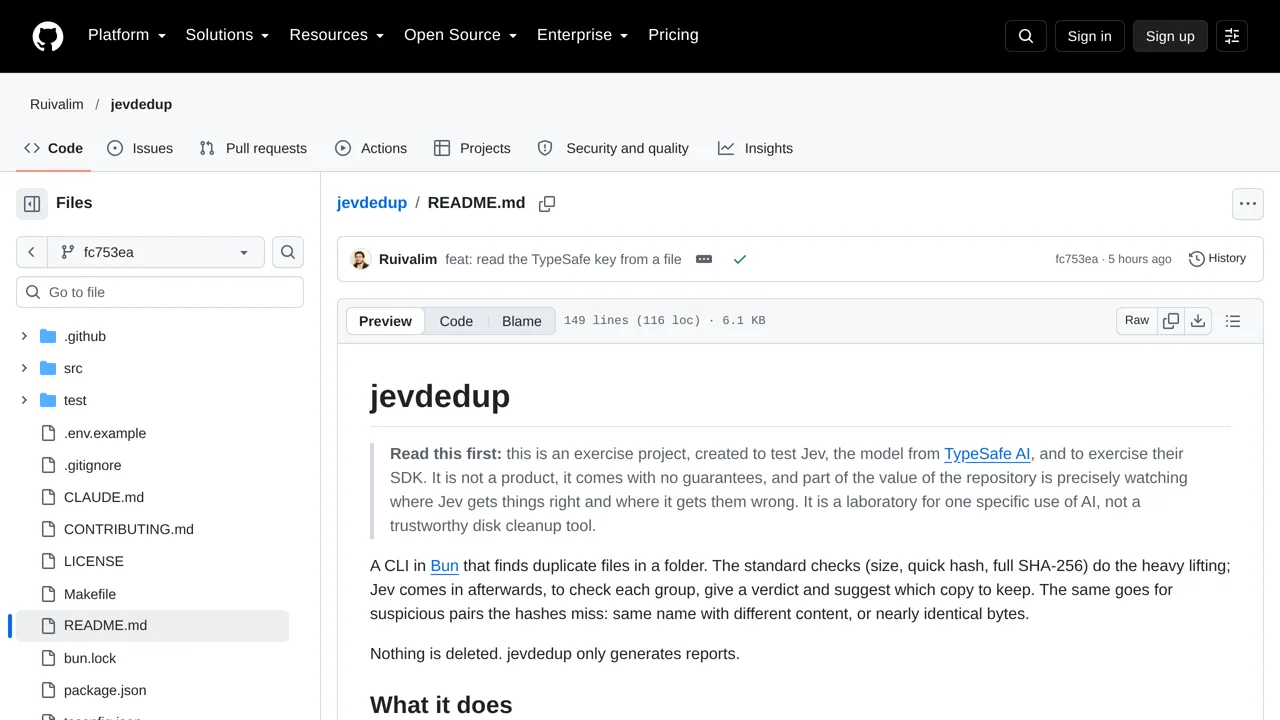
Find exact file copies with hash checks, then ask Jev which copy to keep and whether suspicious text pairs contain the same content.
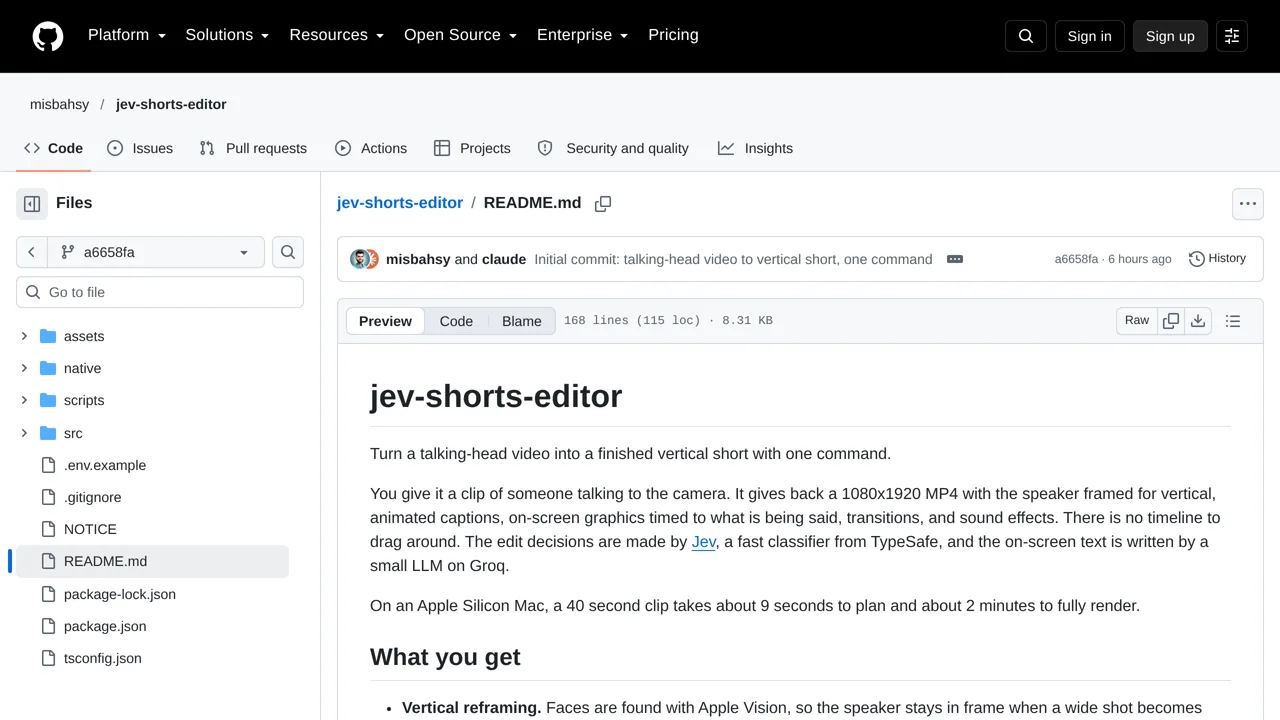
Turn a talking-head clip into a vertical short, with Jev choosing caption styles, graphics and transitions from fixed menus.
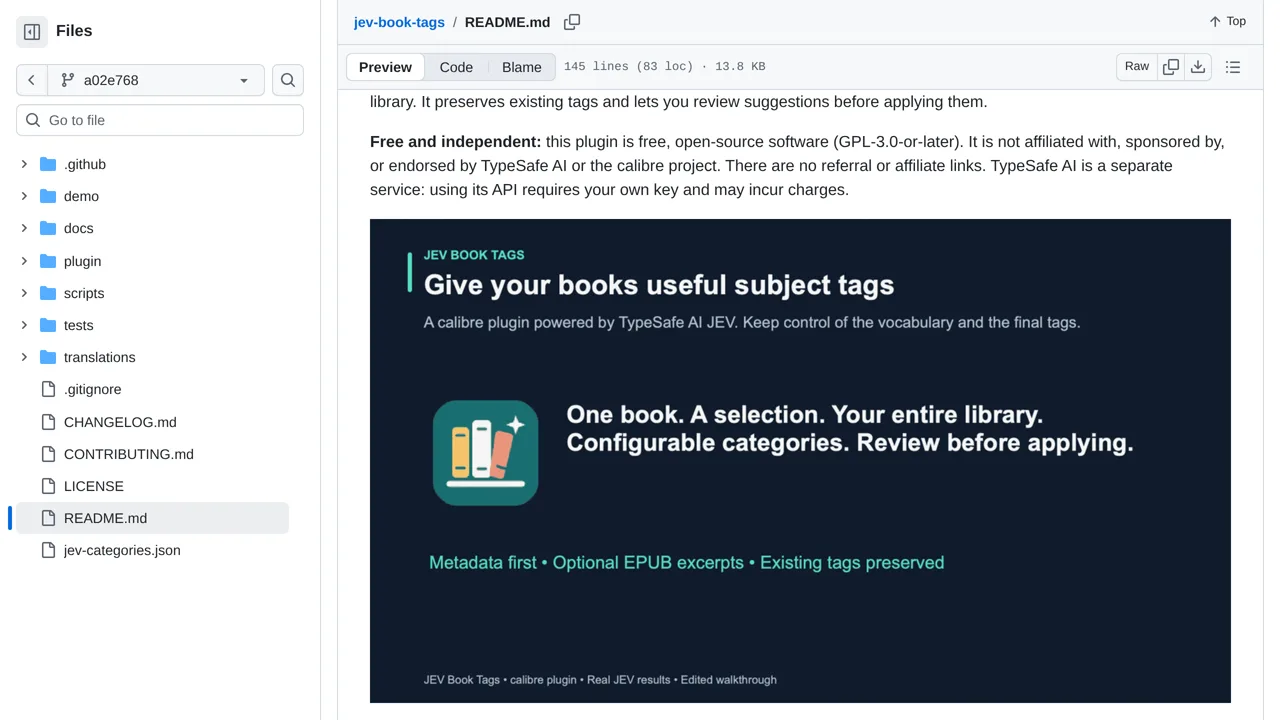
Suggest subject and genre tags for a calibre library, with independent category checks and a chance to review each book.
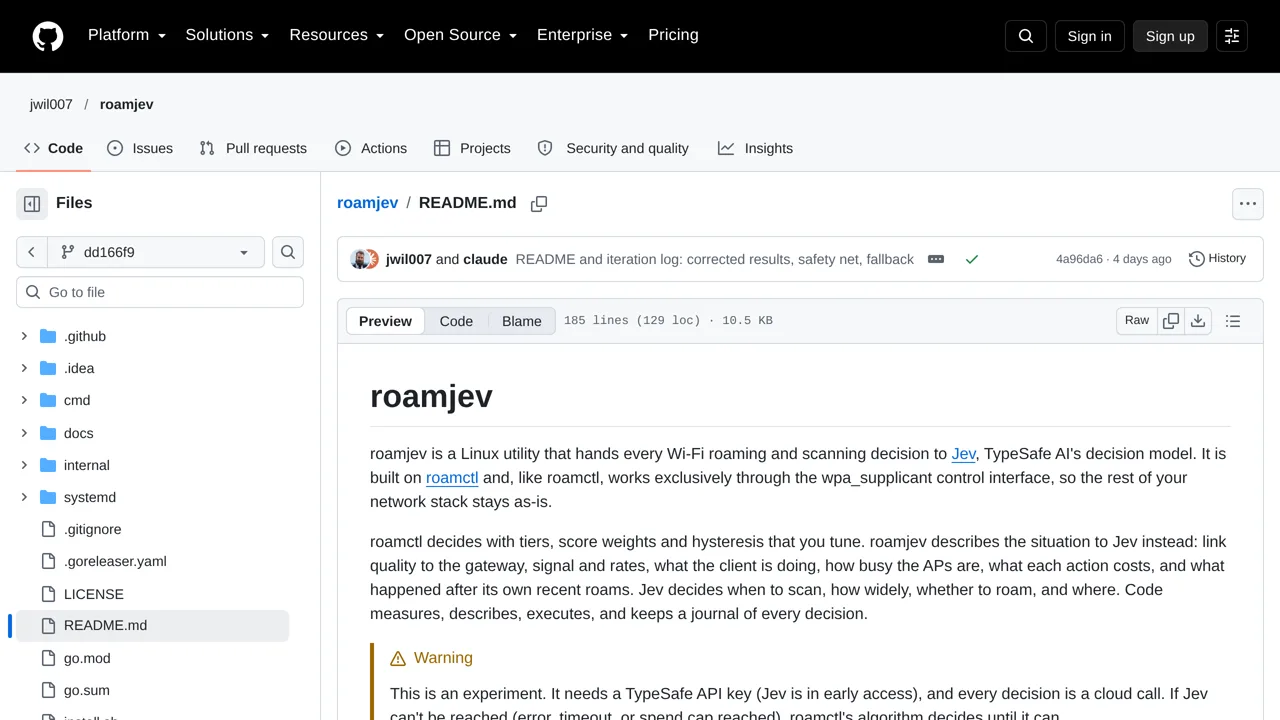
Let Jev choose when a Linux Wi-Fi client scans or switches access points, with a dashboard for inspecting decision inputs and probabilities.
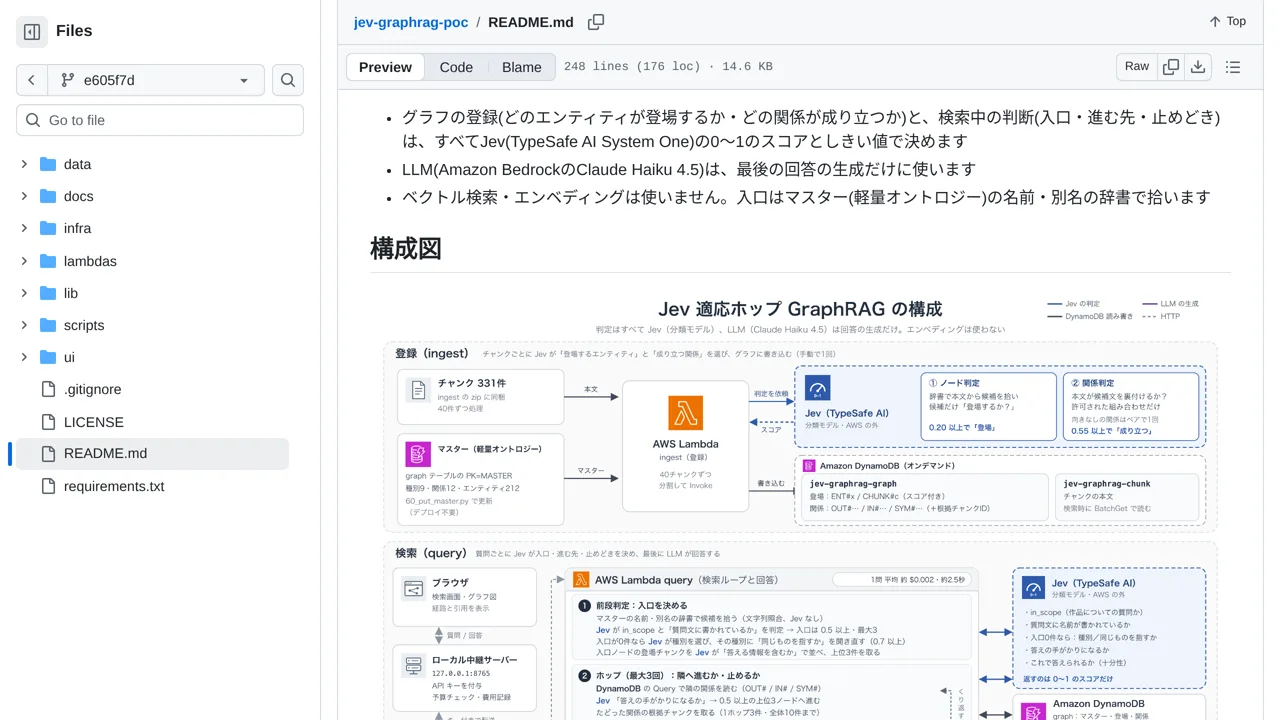
Build a small knowledge graph without embeddings: Jev checks mentions and links, retrieval follows the graph, and Claude Haiku writes a cited answer.
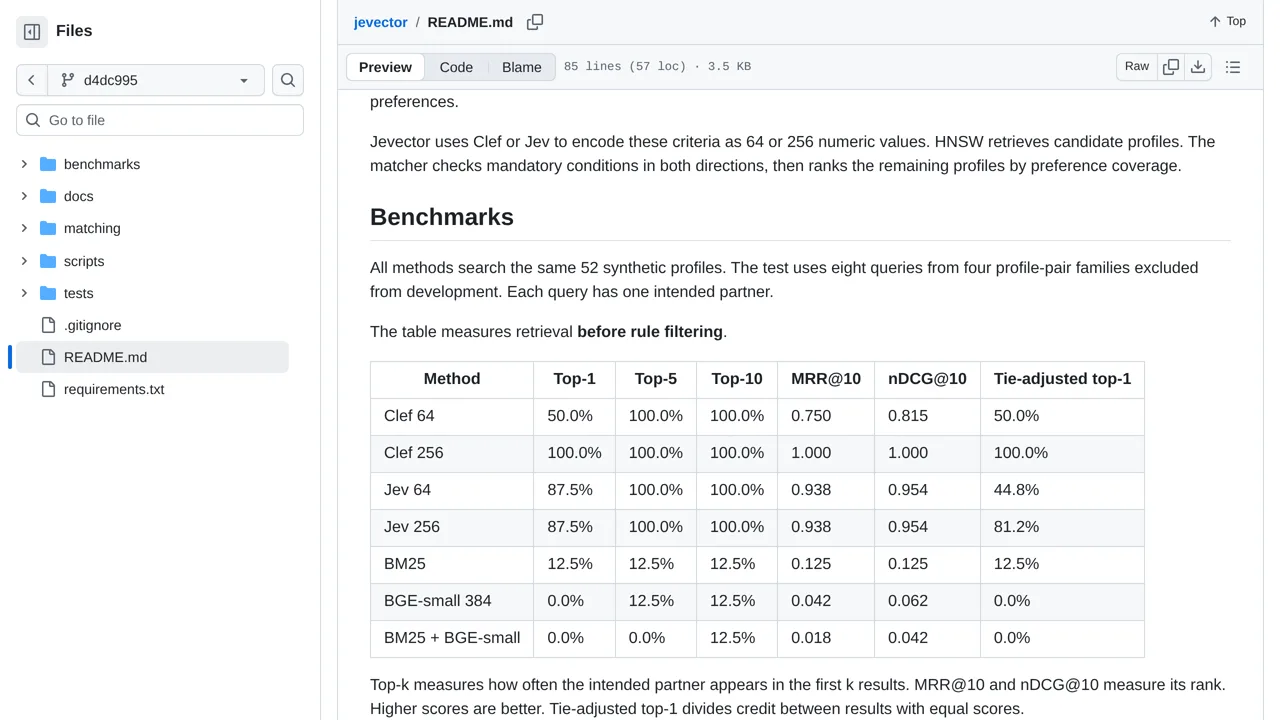
Match profiles using Jev or Clef decisions about explicit traits, retrieve candidates, then check both people’s required conditions before ranking preferences.
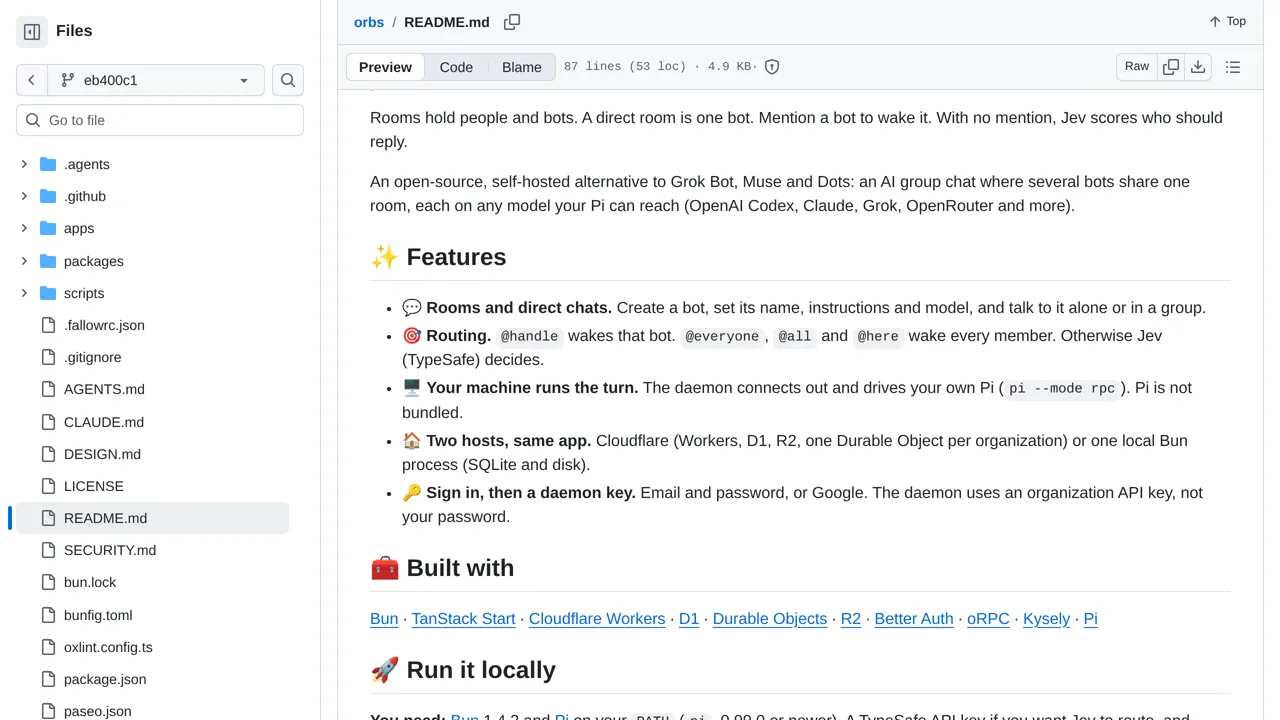
Choose who replies in a shared chat: name a bot directly, or let Jev judge which bot’s job fits the message.
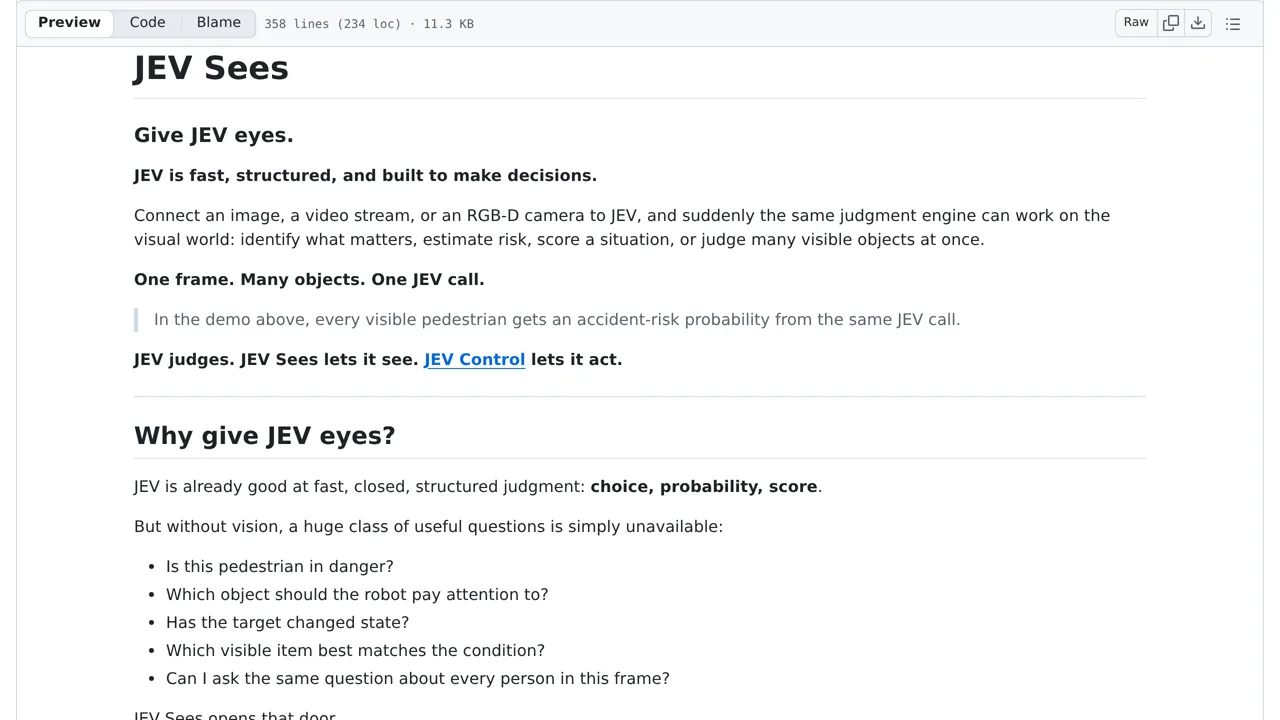
JEV Sees adds a visual front end to JEV, converting local YOLO, CLIP, and RGB-D perception into scene text for structured decisions.
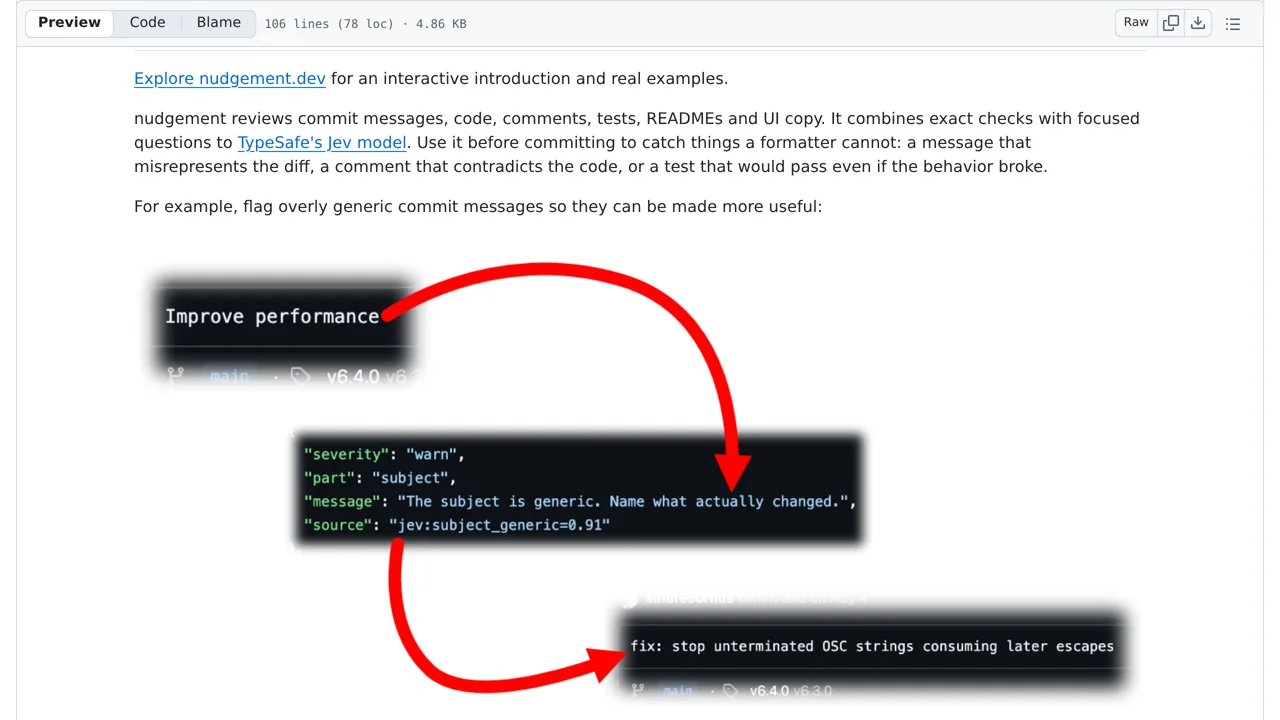
nudgement is a command-line tool that combines exact rules and artificial intelligence to review code, tests, and documentation for clarity and accuracy.
POK-Agent is a Windows computer-use harness that pairs a large planning model with a fast local or hosted decision router to execute and replay desktop actions.

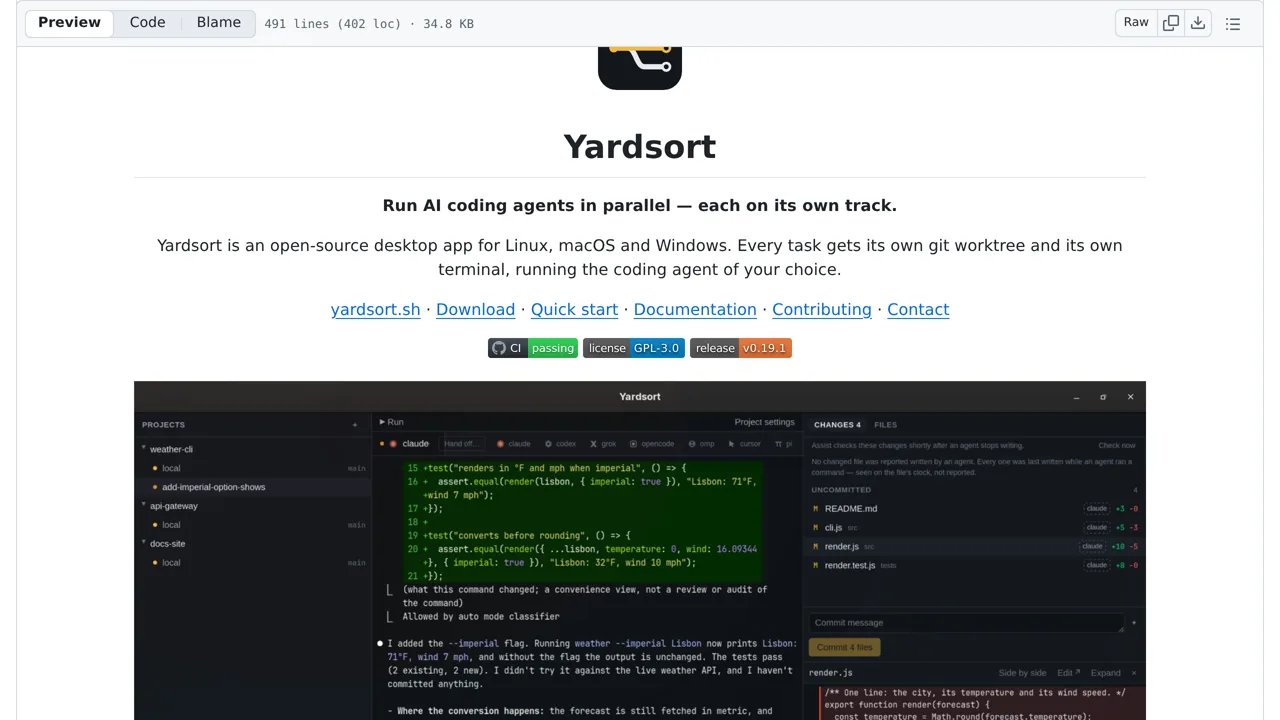
Yardsort Assist uses the Jev model to review changed files for risks, flag unrelated work, and suggest agent settings within a parallel coding workspace.
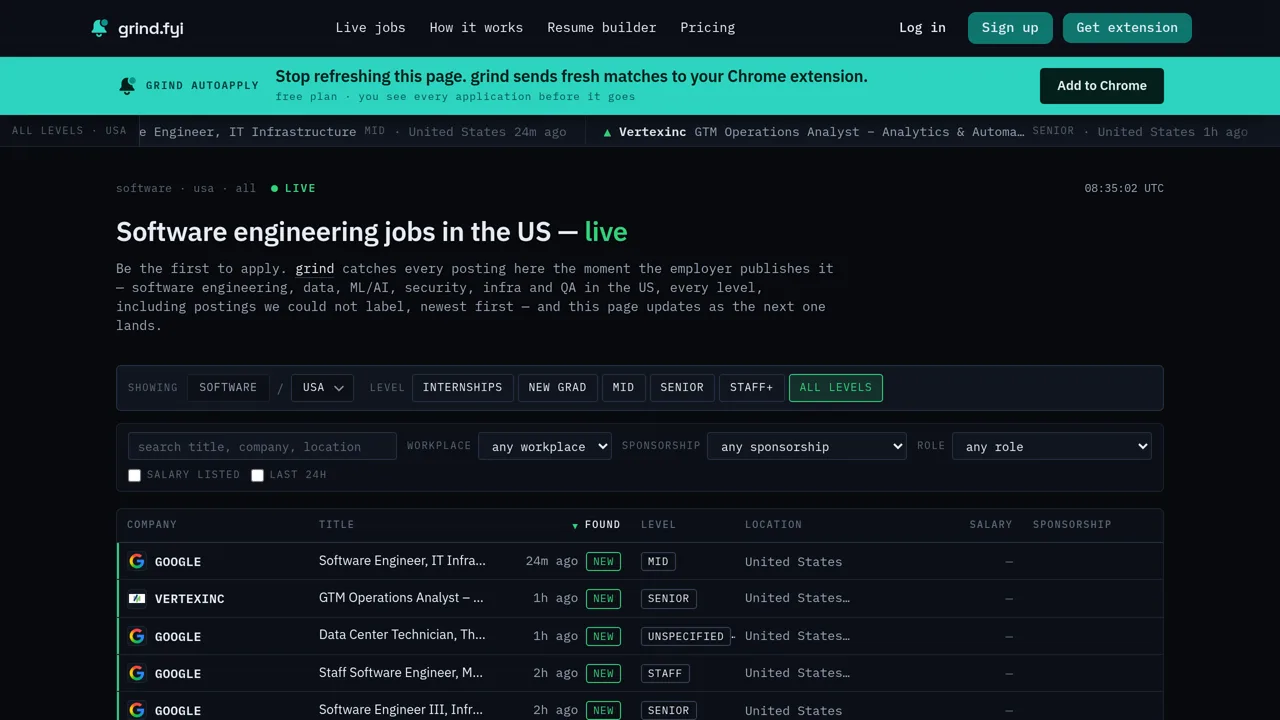
A job-discovery website and Chrome extension that ranks matches and fills known application fields using a provided resume.
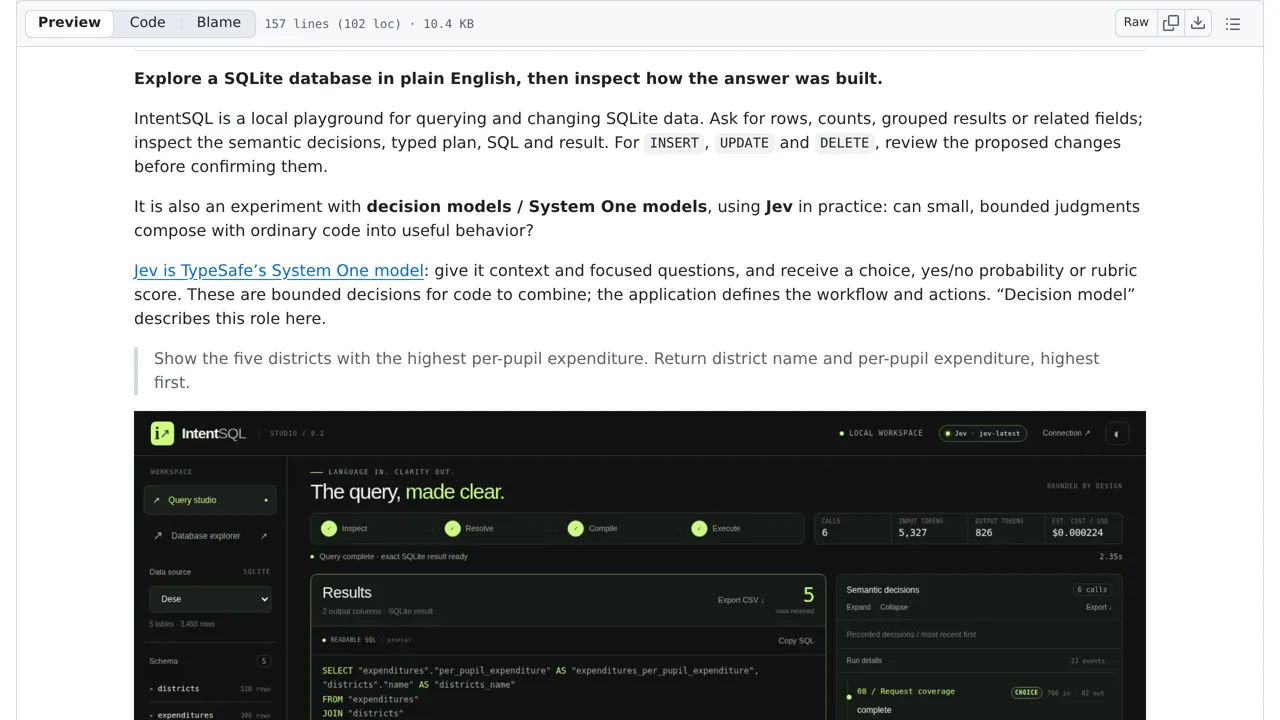
IntentSQL is a local tool that translates plain-English questions into database searches and lets you review the exact steps before making any changes.
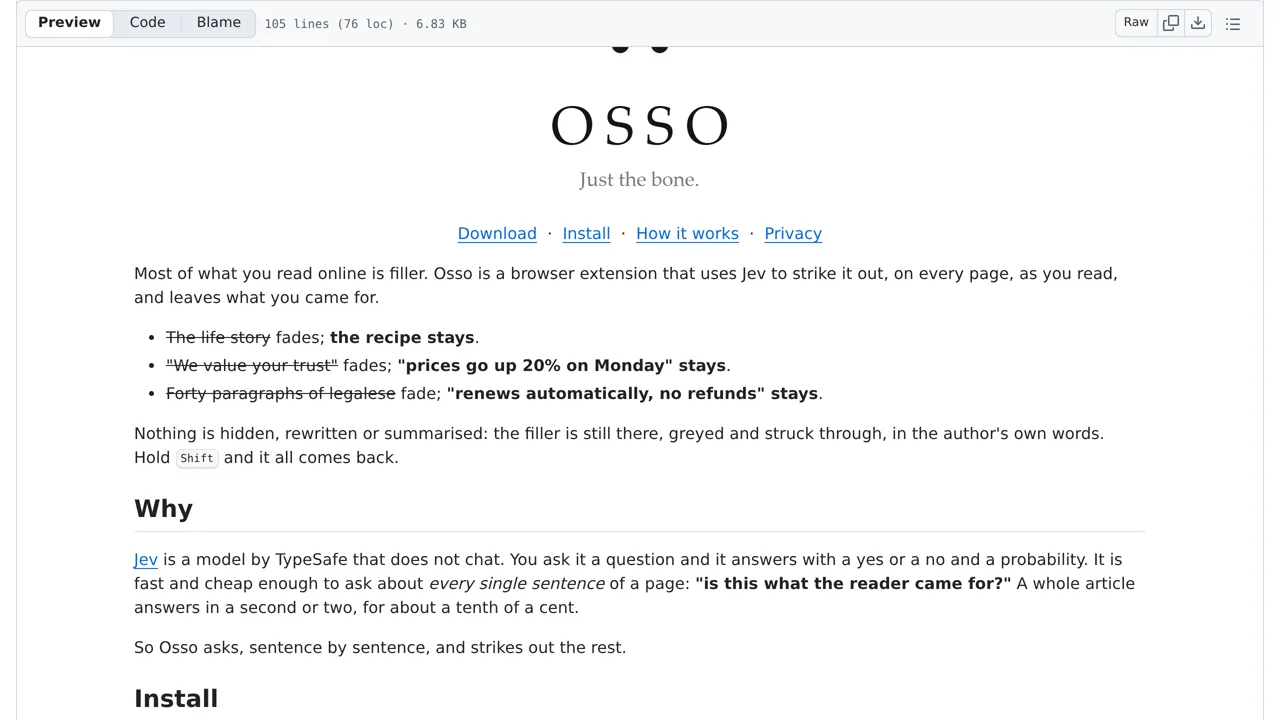
Osso asks Jev which web-page sentences contain useful information, then fades likely filler while letting readers reveal the original text.
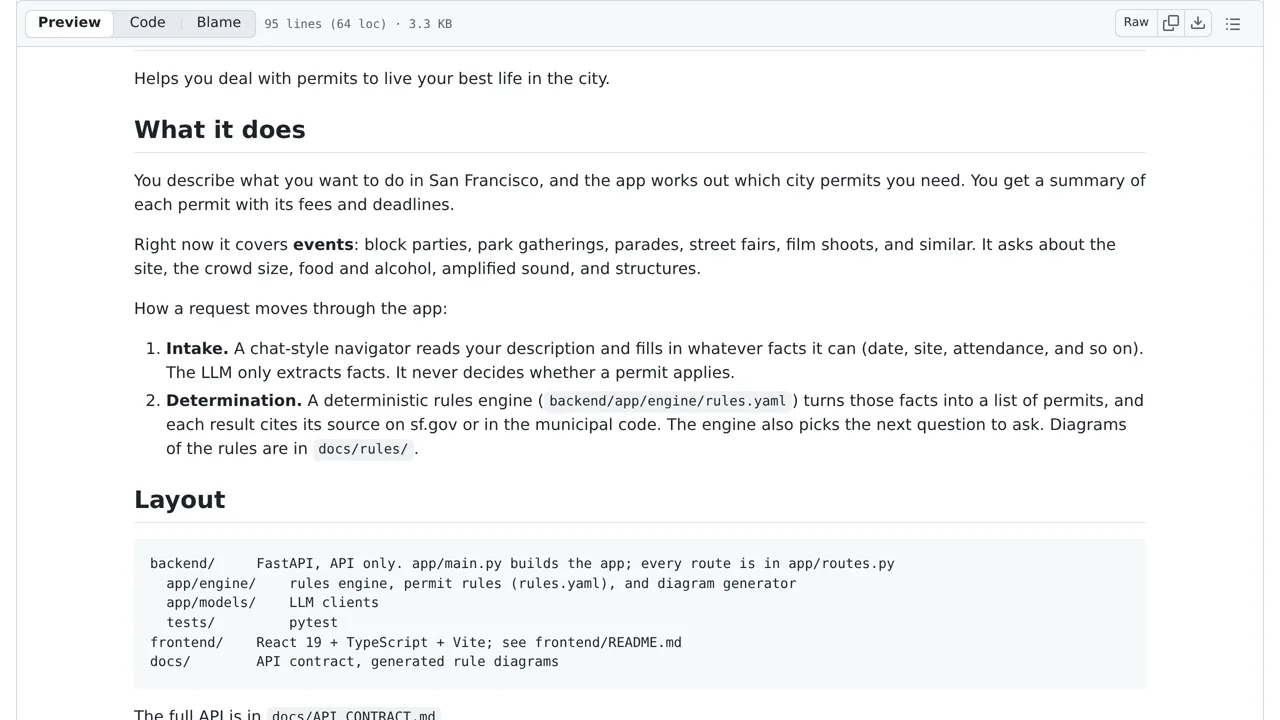
San Francisco Permit Helper uses Jev to extract event facts from a description, asks the user for missing details, and evaluates a deterministic permit rule graph.
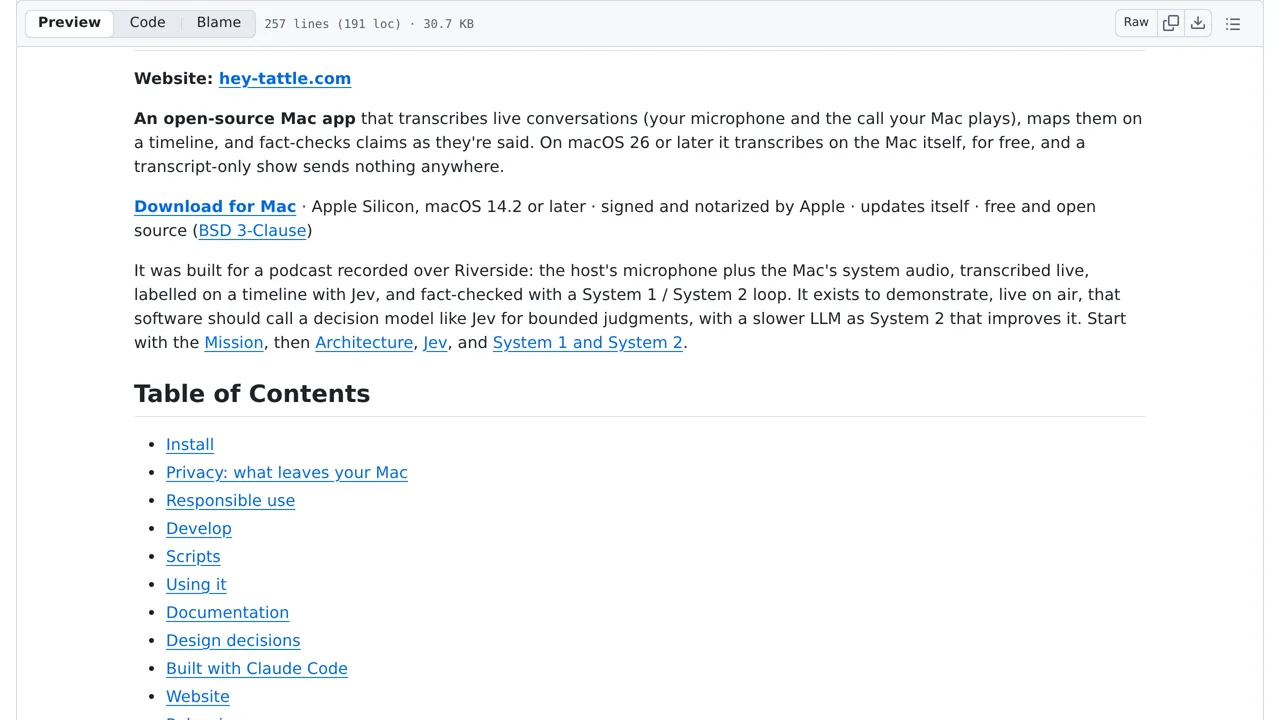
Tattle transcribes Mac conversations and maps them on a timeline, using a fast model to label speech and a slower model to research spoken claims.
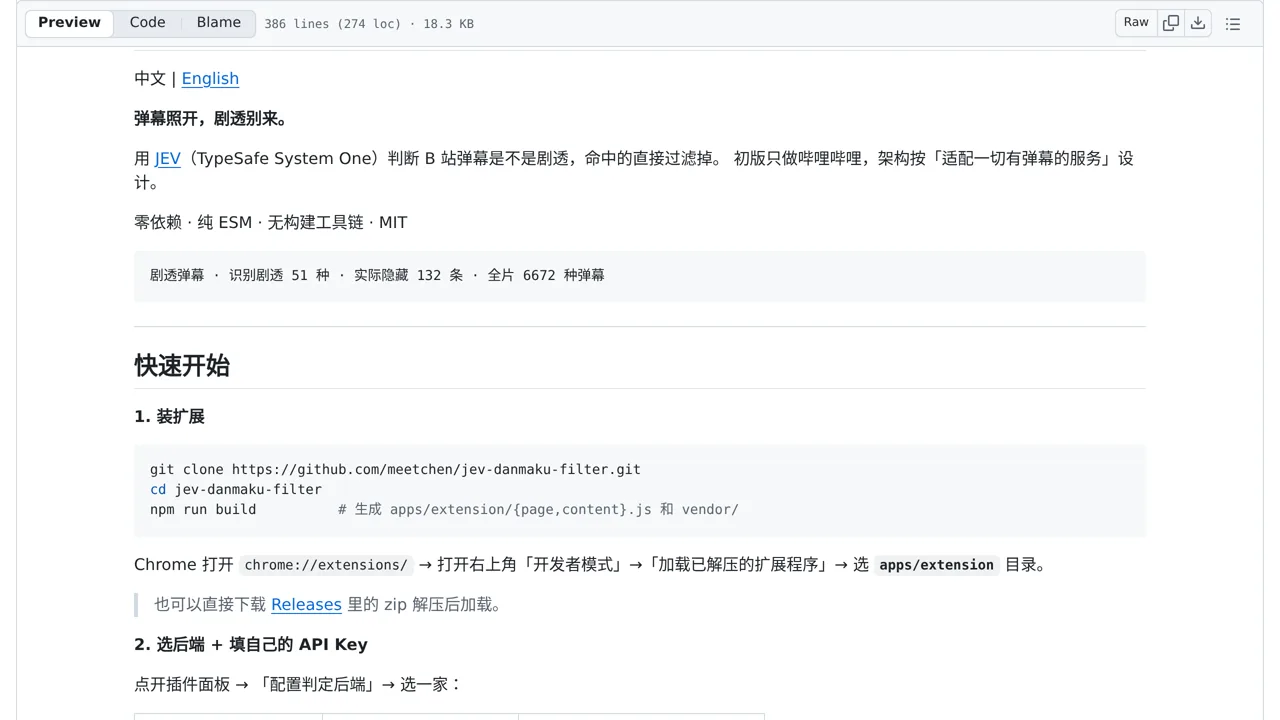
A Bilibili video comment filter that batches text to evaluate spoiler risks, caching results to remove matching comments before rendering or hide them on the page.
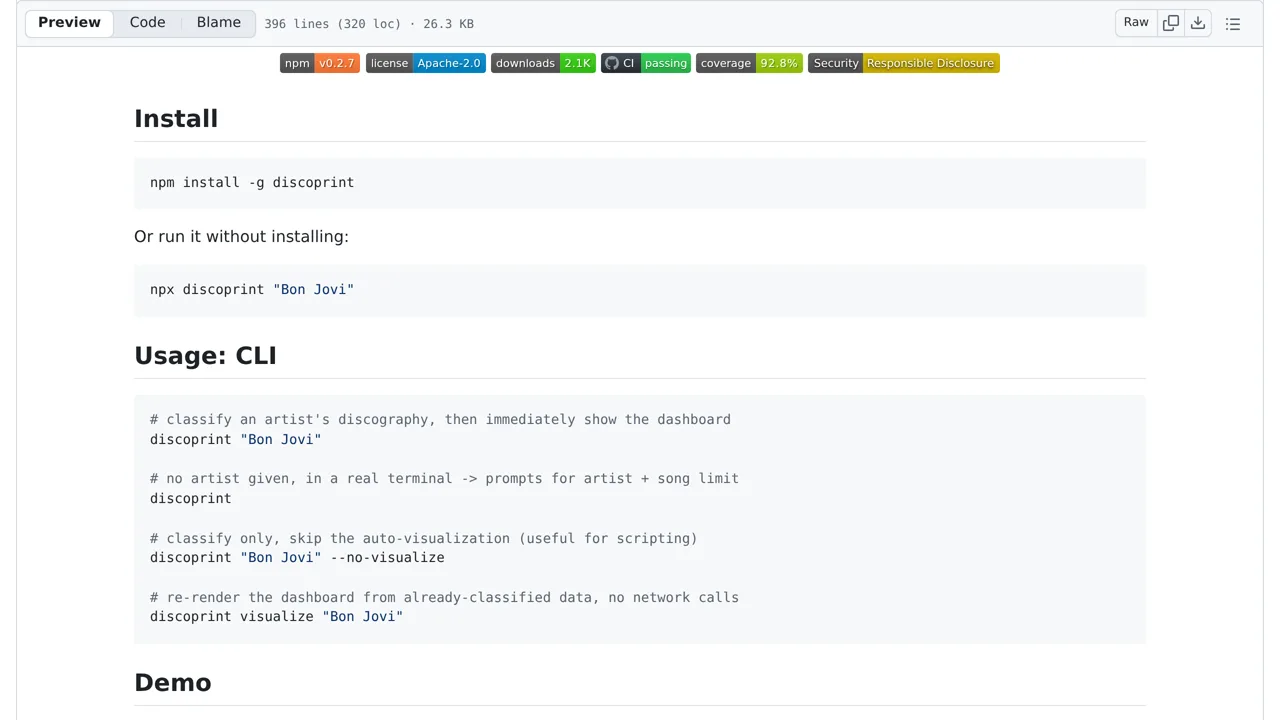
A terminal application that retrieves song lyrics and uses an AI model to classify each track by theme, mood, complexity, explicit content, and perspective.
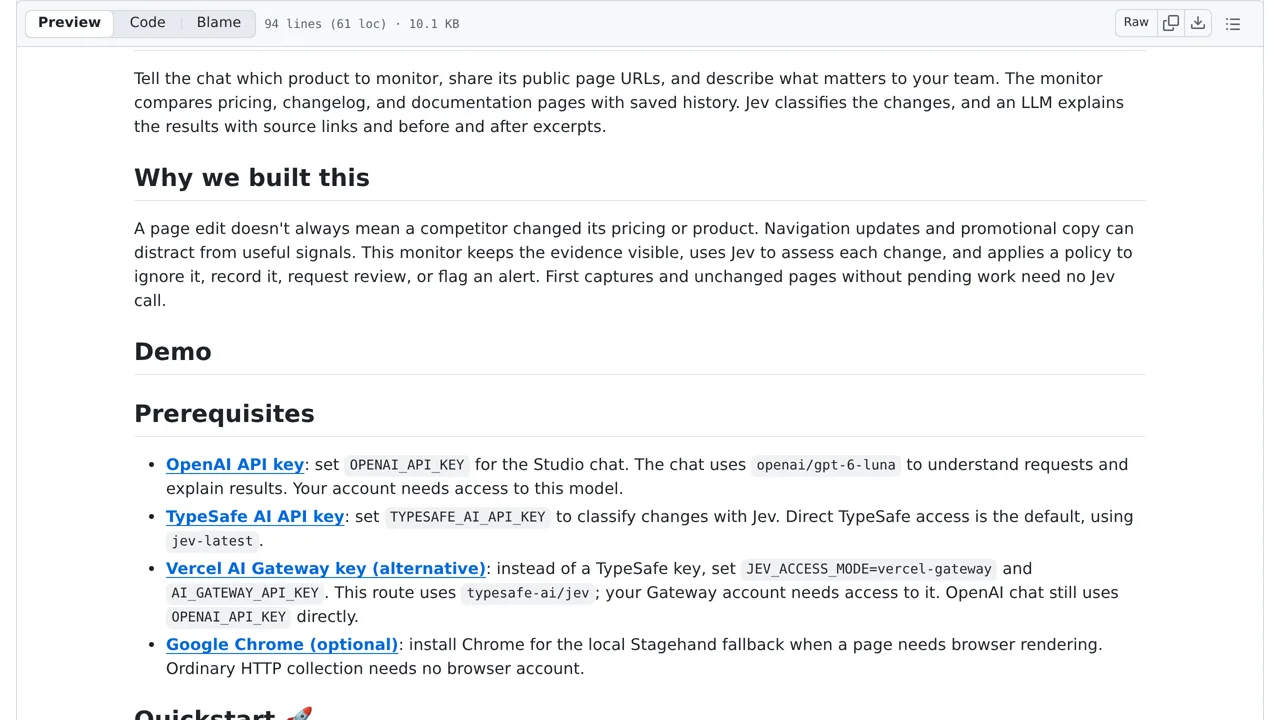
Monitor public competitor pages for substantive changes, using Jev to classify edits, score relevance, and route them to alert, review, record, or ignore.
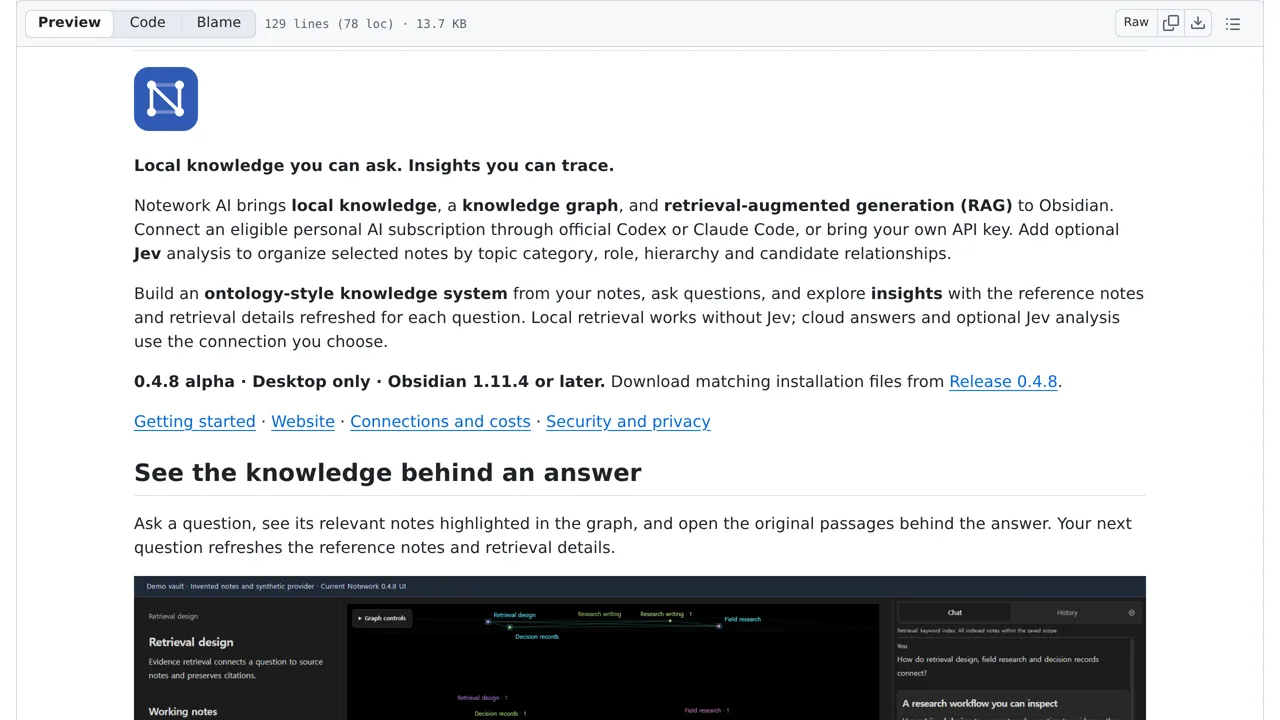
Notework AI is an Obsidian workspace that uses Jev to organize selected notes by topic, role, and abstraction level to help answer questions.
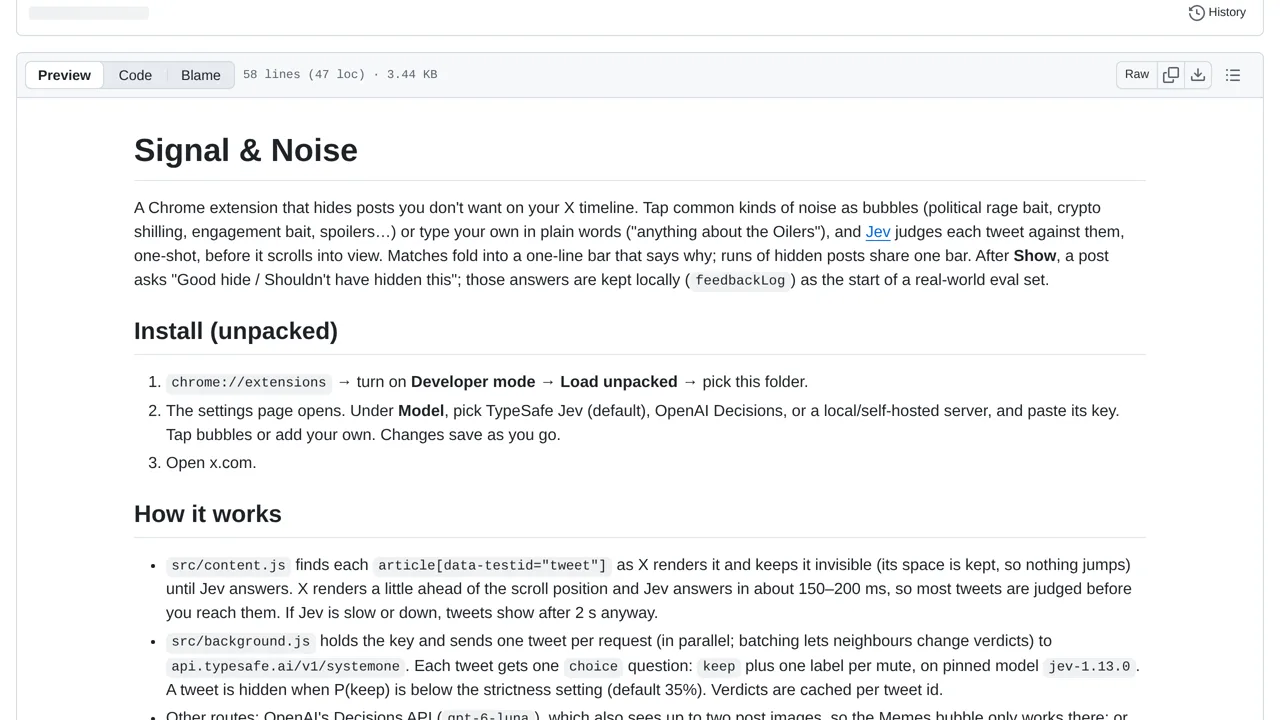
An open-source Chrome extension that hides unwanted X posts by evaluating them against plain-language rules using a decision model.
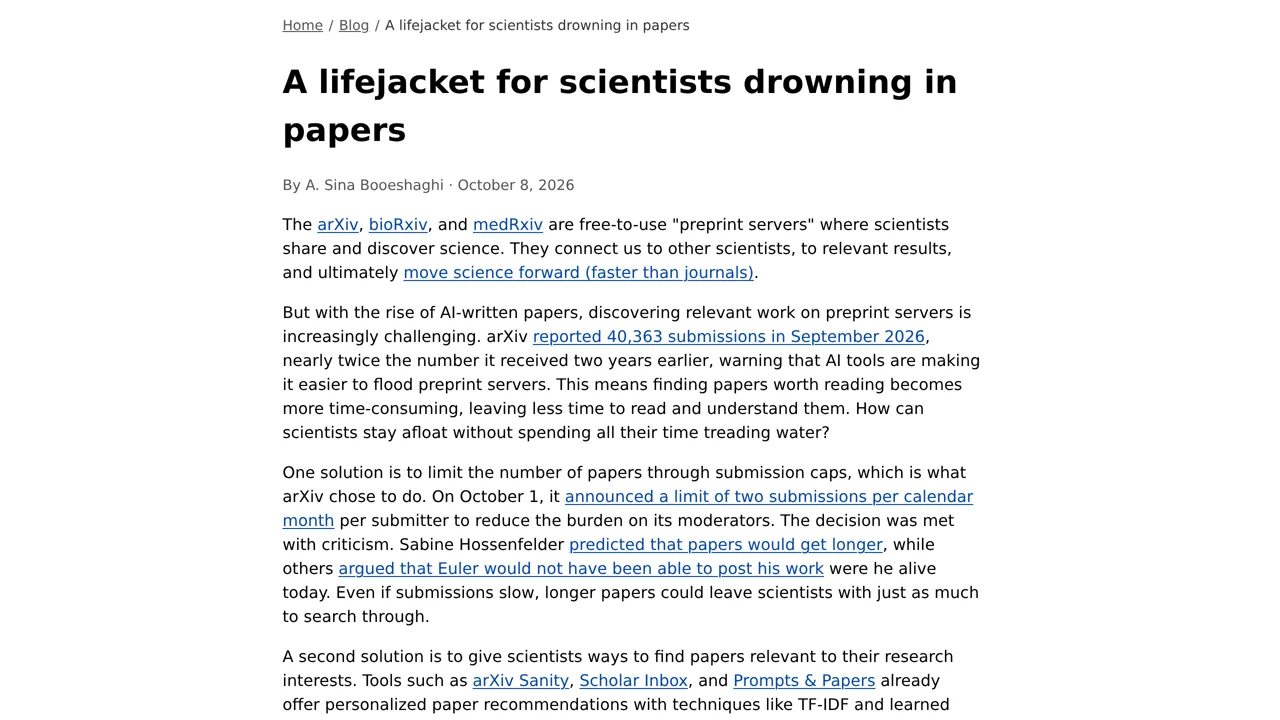
author.link ranks new arXiv, bioRxiv and medRxiv papers by how closely each matches your written research interests, with Jev estimating the chance of relevance.
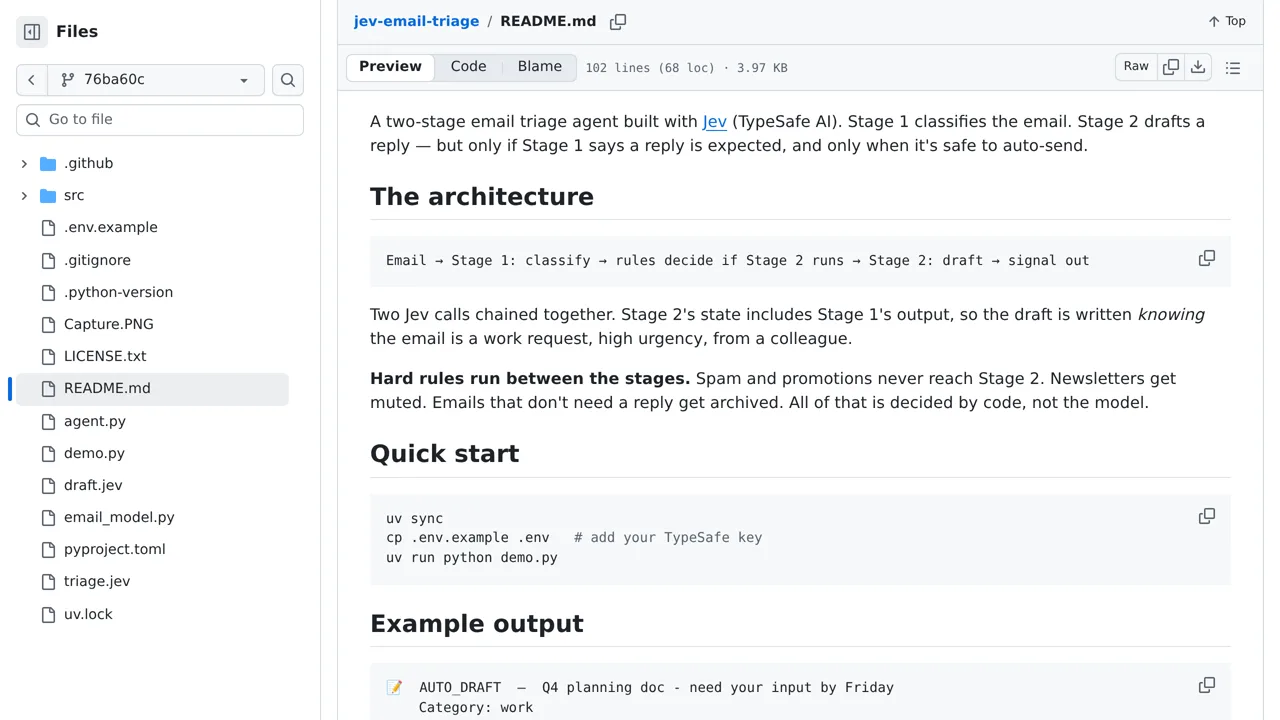
A sample email agent chains Jev decisions to classify messages, then choose a reply tone and intent only when a response is warranted.
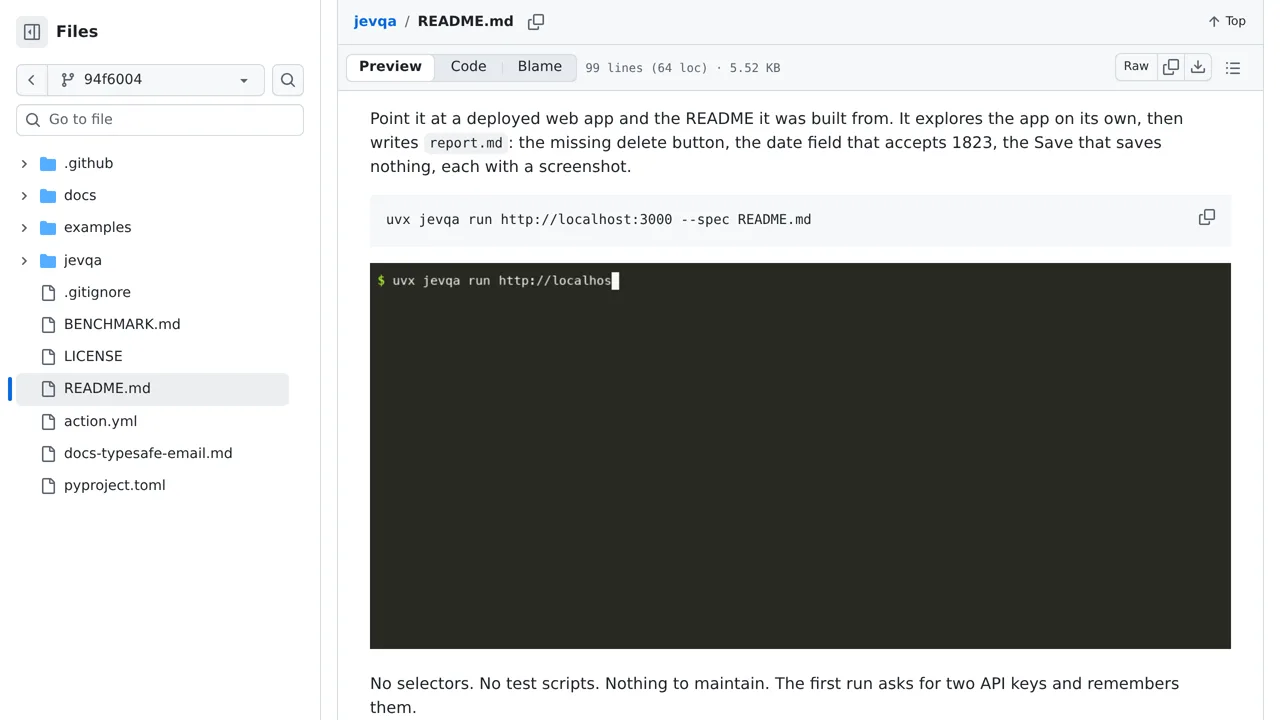
jevqa is an open-source testing tool that uses Claude to write a checklist from a product spec and Jev to autonomously explore the web app for bugs.
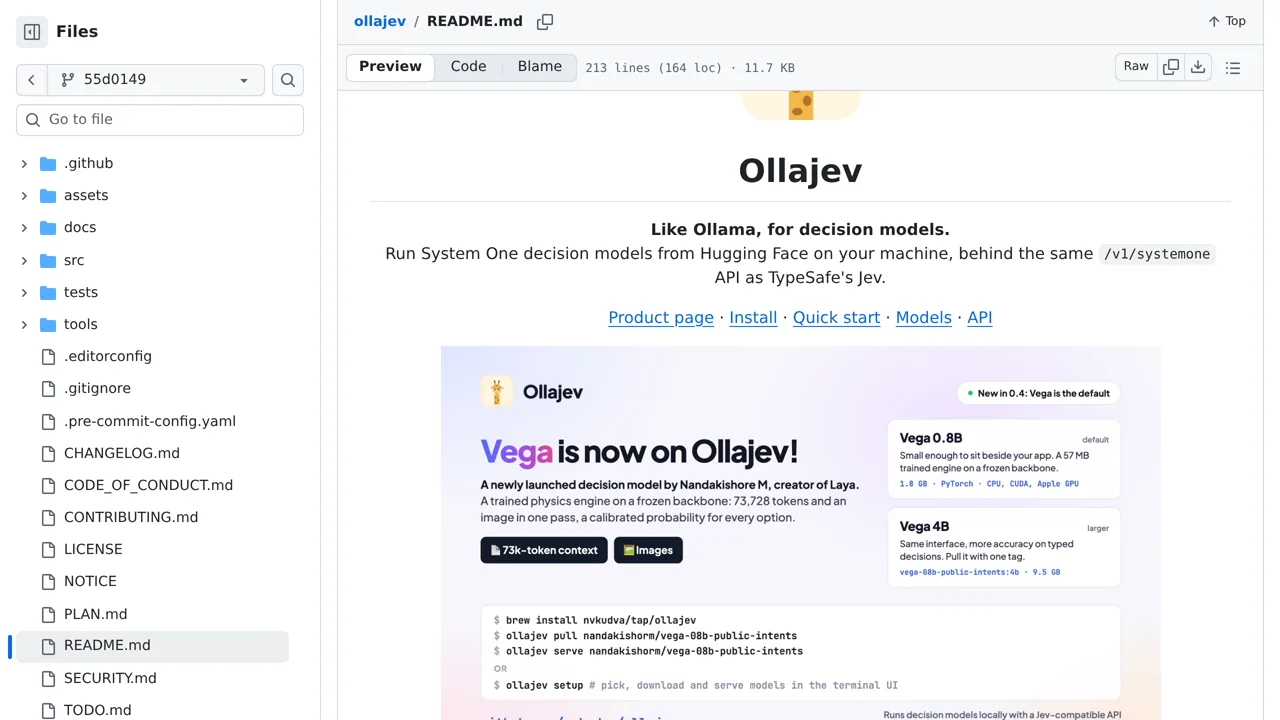
Ollajev is a local server and command-line tool that runs Hugging Face System One decision models directly on your own computer.
FilmHunch is an open-source movie search engine that uses Jev to score and rank films based on natural language descriptions.

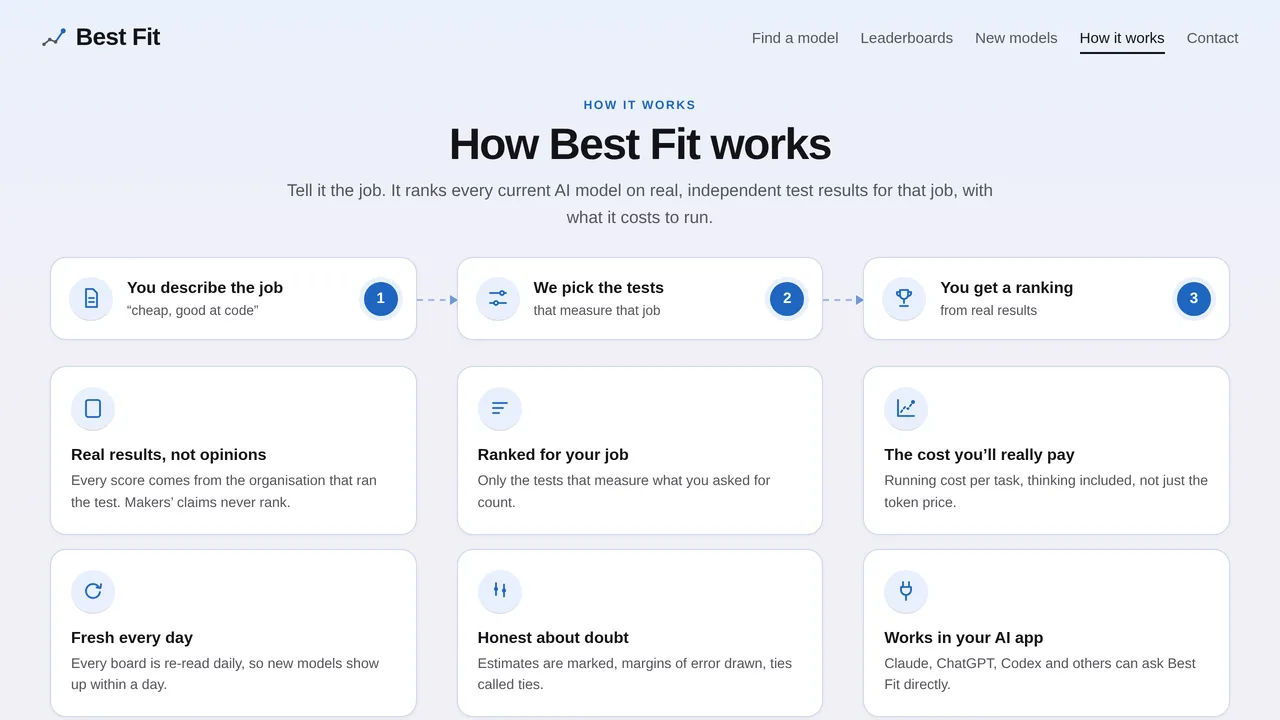
Ask Best Fit which AI model suits a job, then change how much price, speed and quality matter to the ranking.
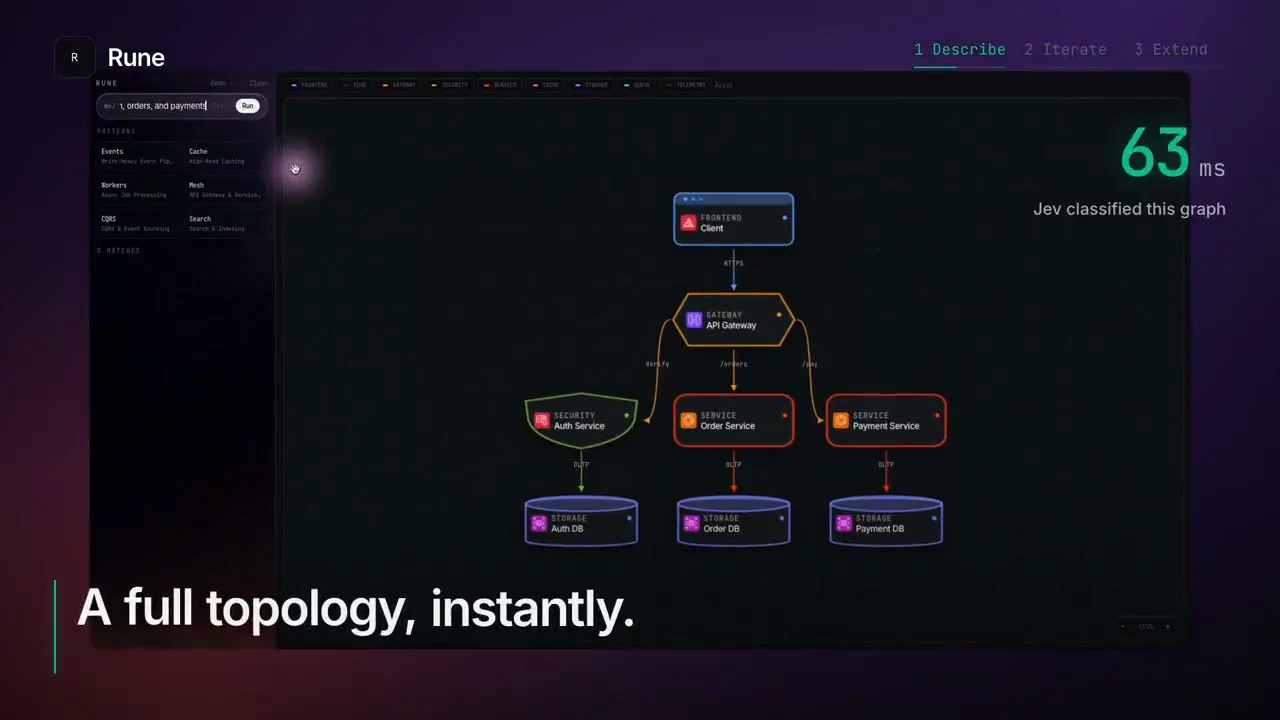
Rune's edited showcase builds on an e-commerce service map, with follow-up prompts adding a cache, read replicas, a queue and workers.
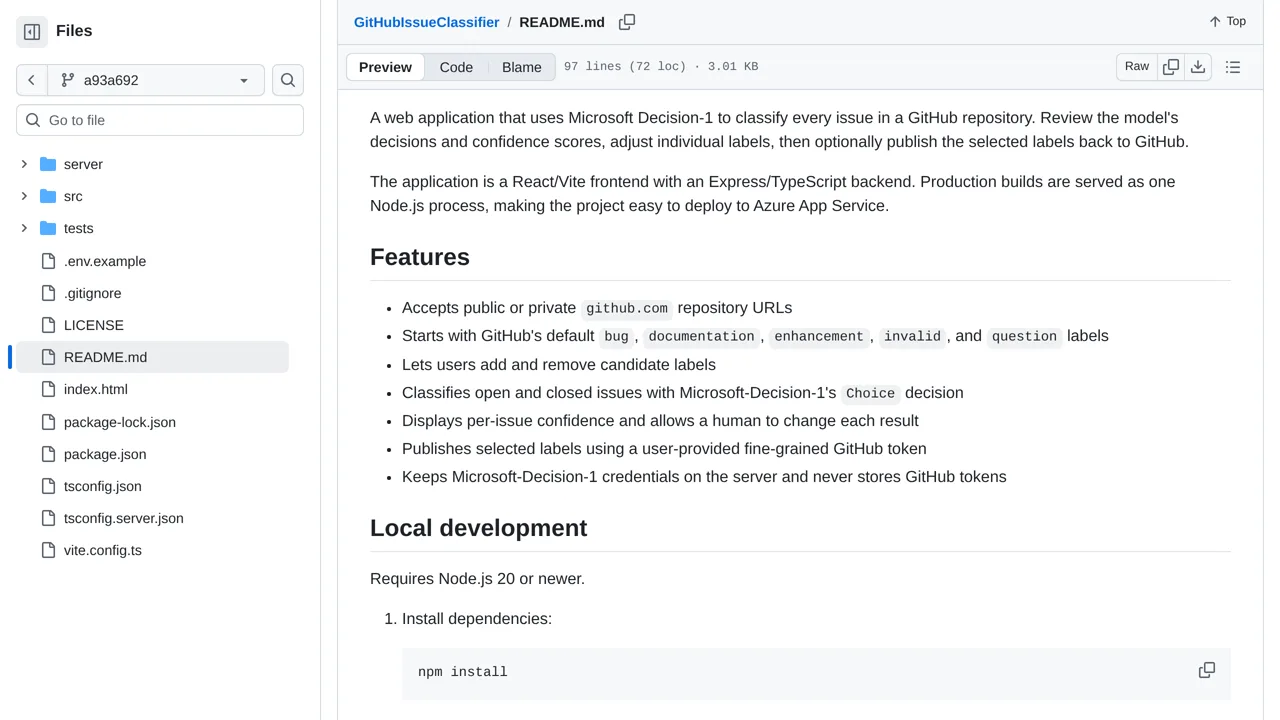
Jennifer Marsman's issue-labeling app lets a person review and edit Microsoft-Decision-1's suggestions before publishing them to GitHub in a separate step.
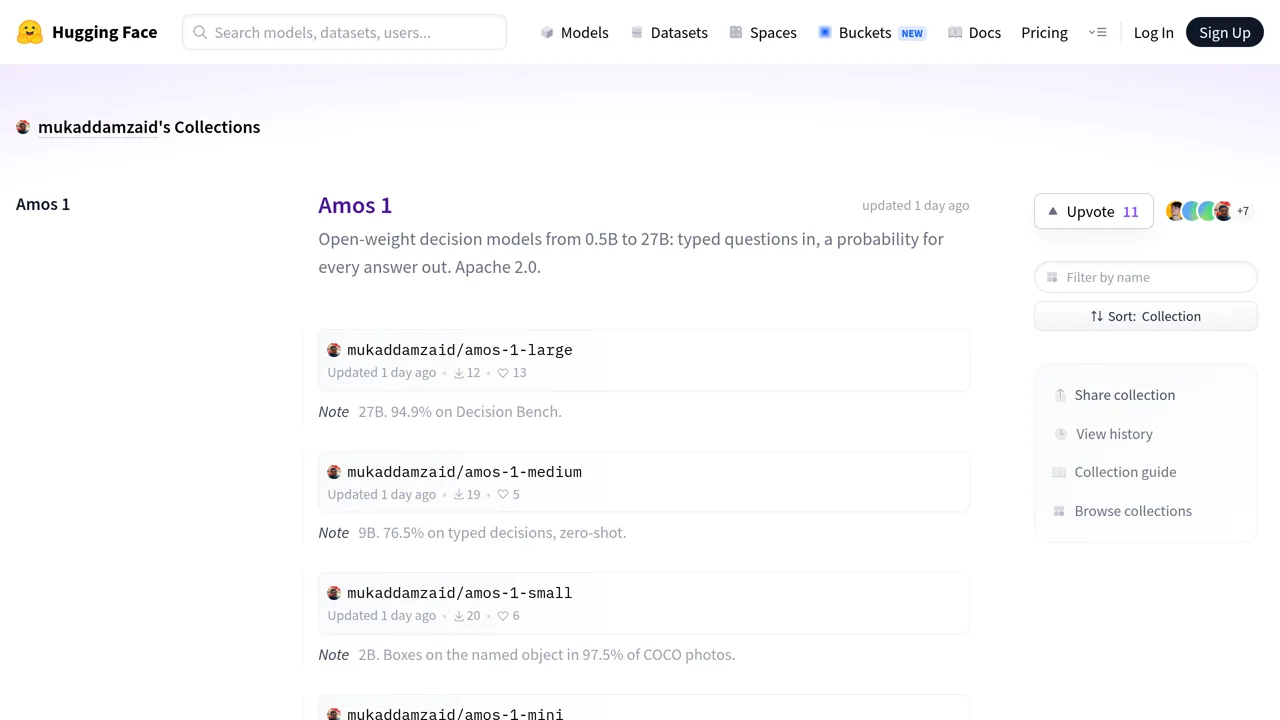
Scira's open Amos 1 family offers small and large models for decisions about text and images, with answer types and object-box support varying by model.
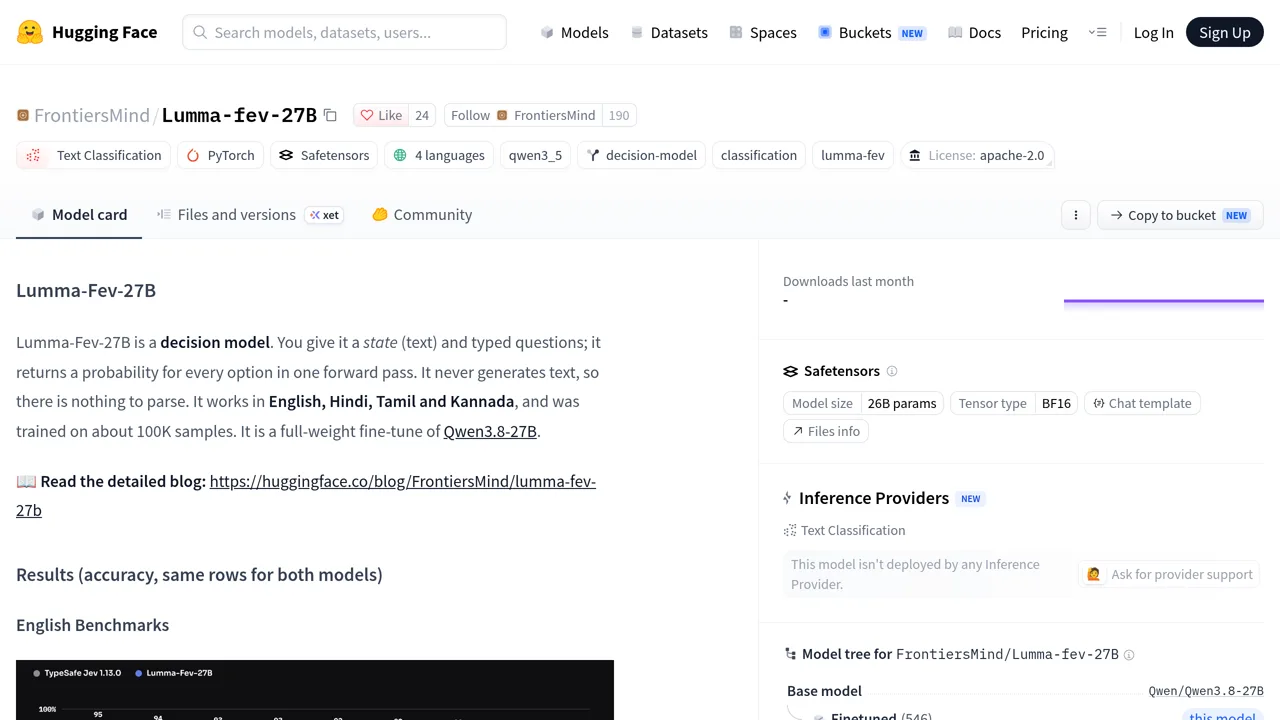
FrontiersMind's Lumma-Fev family comes with a Python client; its 27B model card describes multilingual training from Qwen3.8 for yes/no and choice answers.
Jev, briefly
A chat model generates text token by token and hopes you parse it. Jev never generates a word. Your code sends the state of the world plus typed questions; Jev returns every answer in one parallel pass — typed values with calibrated probabilities and a confidence score your code can trust. About 70–500 ms end to end, $0.042 per million input tokens, output free. Trained with what TypeSafe calls Reinforcement Learning for Calibrated Decisions.
You define the options. Jev returns the chosen option, a probability for every option, and a confidence. The workhorse of routing, agents, and games — the answer space is always legal, so there is nothing to parse and nothing to hallucinate.
You describe ordered levels — say trivial / normal / critical. Jev returns the level, the probability of each, and a confidence. Scores turn fuzzy judgment (“how severe is this log line?”) into a number-free decision your code can branch on.
You assert a statement; Jev returns the probability that it is true — a noul. Moderation, verification, guardrails, “does this diff actually fix the bug?”: one question, one calibrated probability.
Official material lives at typesafe.ai and docs.typesafe.ai. JevMade is an independent community registry — not affiliated with or endorsed by TypeSafe AI.
Recurring lessons
Games, drones, trading bots, and browser agents all converge on the same loop: serialize the state, ask one decisive question, act, repeat. Jev’s latency makes the loop feel instant — the model lives inside the control loop, not outside it.
The answer says what; the confidence says whether to act. The most reliable entries threshold on confidence to route edge cases to a slower model or a human — automation with an honest escape hatch.
Makers rarely ask Jev to pick from everything. Local tactics prune 225 gomoku moves to ~40; DOM filters turn a page into an element table; code narrows options, Jev judges within them.
A recurring split: Jev makes every decision cheaply and instantly, and a small LLM is only invoked when a human-facing string must actually be written. Decision and generation are separate budgets.
Send the link — repo, live demo, post, or video — plus a line on what it does and which primitives it uses. Every entry is verified against its primary source before it ships.
Submit your experimentSign in first so we can reply to you. Submissions are reviewed, not published automatically.