Read & learn
Written guides.
Understand Jev, one idea at a time. Walkthroughs, recipes, and writeups — our notes first, the original next.
Learn, build, and play with Jev — from deep technical guides to creative experiments.
Read & learn
Understand Jev, one idea at a time. Walkthroughs, recipes, and writeups — our notes first, the original next.
Watch & learn
See an idea take shape. Tutorials, demos, and deep dives, organized by topic and credited to their creators.
Make & explore
See what builders made with Jev. Games, tools, repositories, articles, and more — traced to their sources.
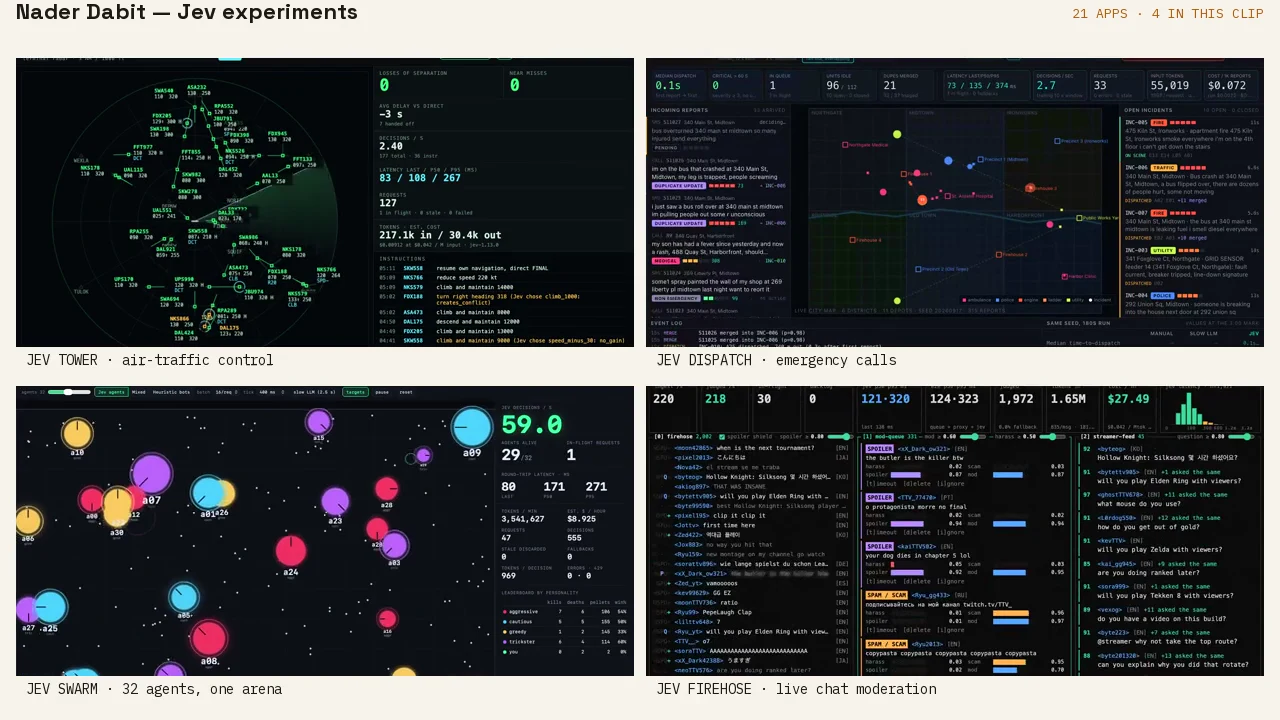
Every category, from games and tools to repositories and writeups, traced to a primary source.
Same ideas.
Different paths.
This is the full registry, not just the featured picks. Figures like speed, cost, and stars are maker-reported or captured snapshots, not JevMade measurements.
32 experiments
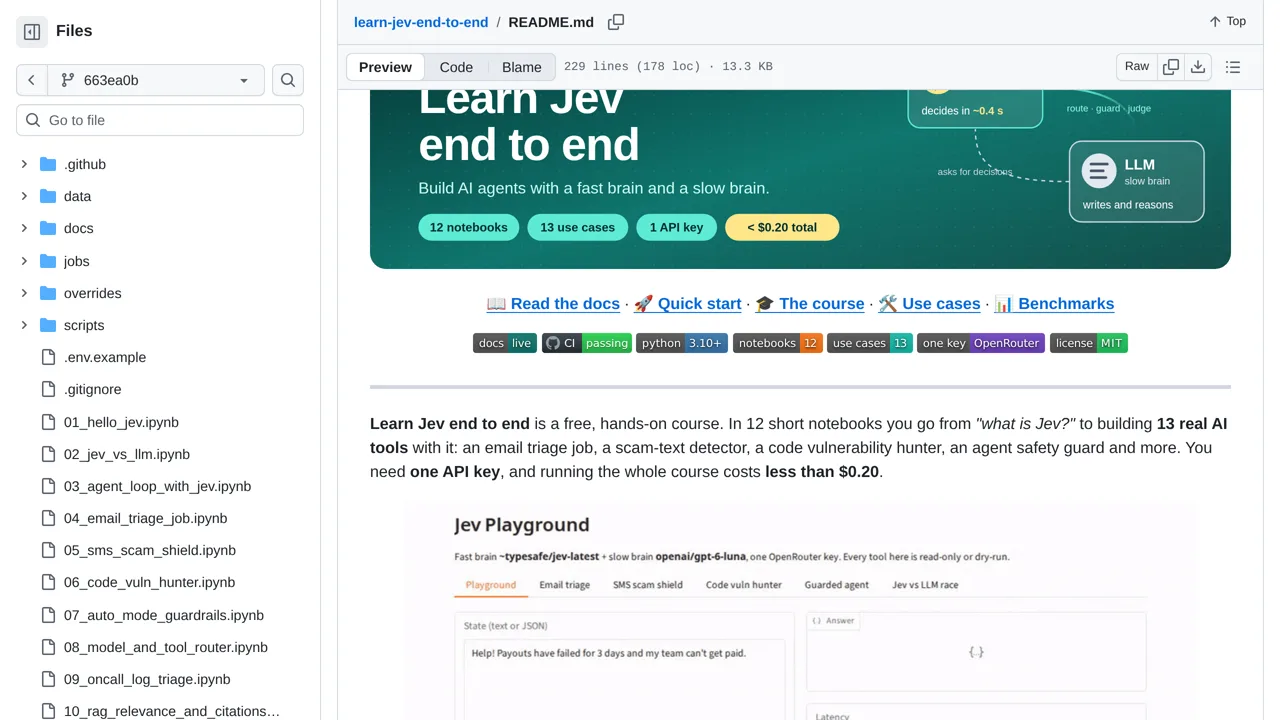
Build thirteen Jev tools across twelve notebooks, from routing and scam checks to agent guards, vulnerability scans and evaluation gates.
An introduction to Jev and its unusual restriction: it can decide, but it can't write an answer.
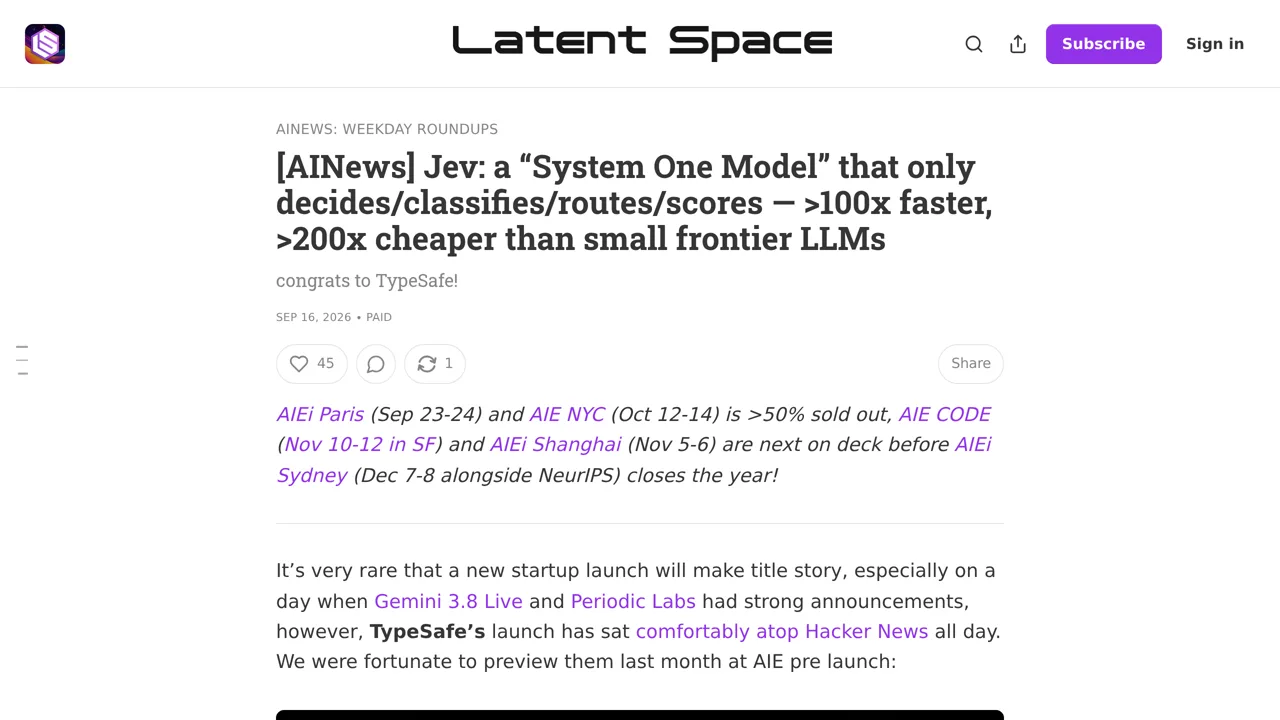
AINews examines the tradeoff behind Jev: give up free-form answers to get fast decisions with probabilities.
Search for a flight with Jev choosing browser actions and a small language model filling in text only when needed.

Developers discuss TypeSafe's claim that software needs an AI model for decisions, not another chatbot.

Gabriel Anhaia builds a TypeScript ticket router with Jev and unpacks the launch claims.

These field notes compare zero-shot Jev with an internal fine-tuned classifier and inspect the confidence scores.

Daniel White explains Jev and its typed-question API in a 34-second video.

Steve Krouse introduces TypeSafe Typewriter, a live demo that asks Jev sixteen questions about your text as you type.

Mizchi pits two Jev players against each other in gomoku and documents the match in Japanese.

The Neuron explains how Jev's structured, confidence-bearing decisions differ from chatbot responses and where they fit in workflows.

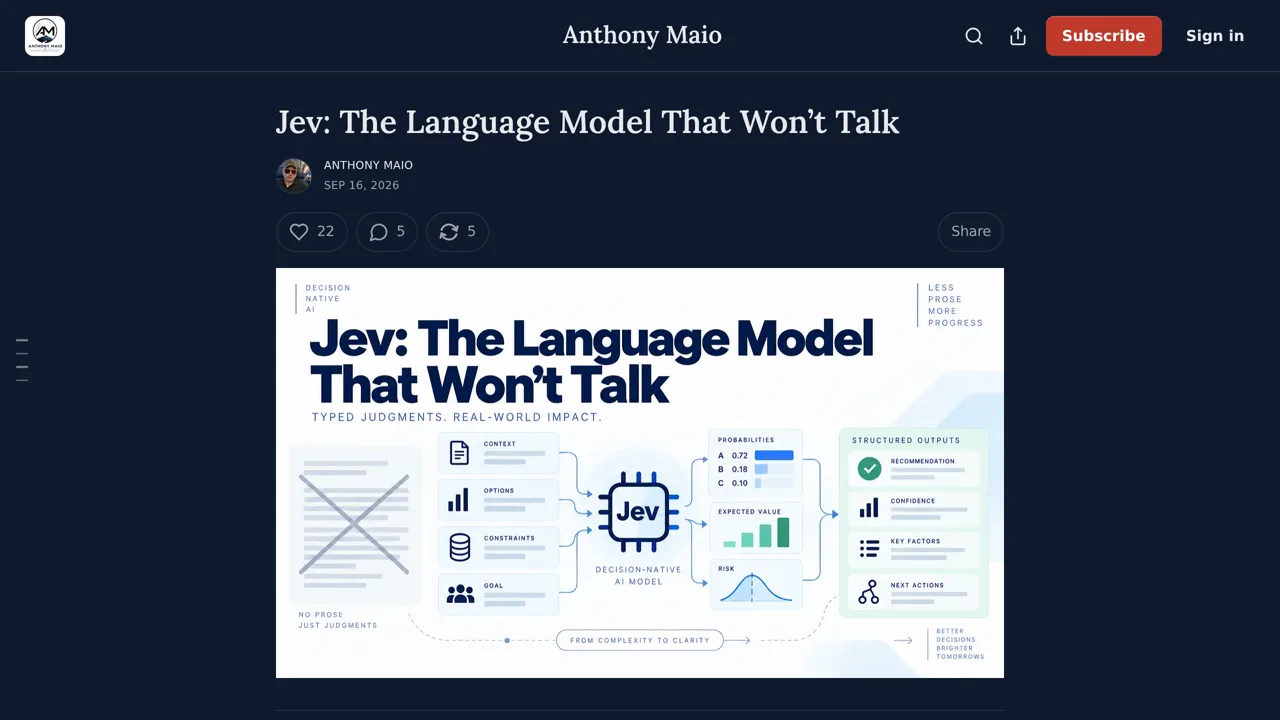
Anthony Maio makes the case for Jev as a software component, while questioning claims about a model that cannot hallucinate.
TypeSafe cofounder Diogo Almeida explains why he spent two years building a model that makes decisions instead of writing text.

Mike Taylor gives Jev his writing to judge and considers what the same approach could do for agent reviews.
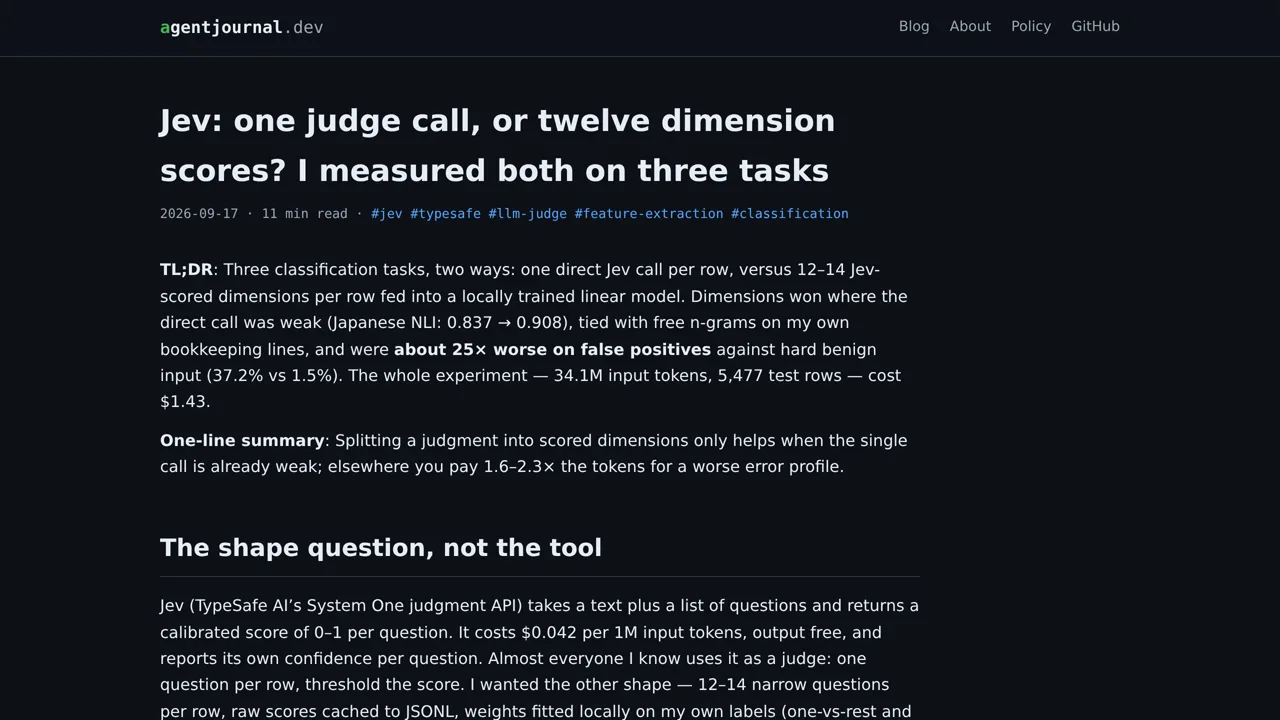
Agent Journal compares one holistic judge call with twelve Jev-derived features across three classification tasks.
A technical introduction to building software around Jev's choices, scores and yes-or-no answers.

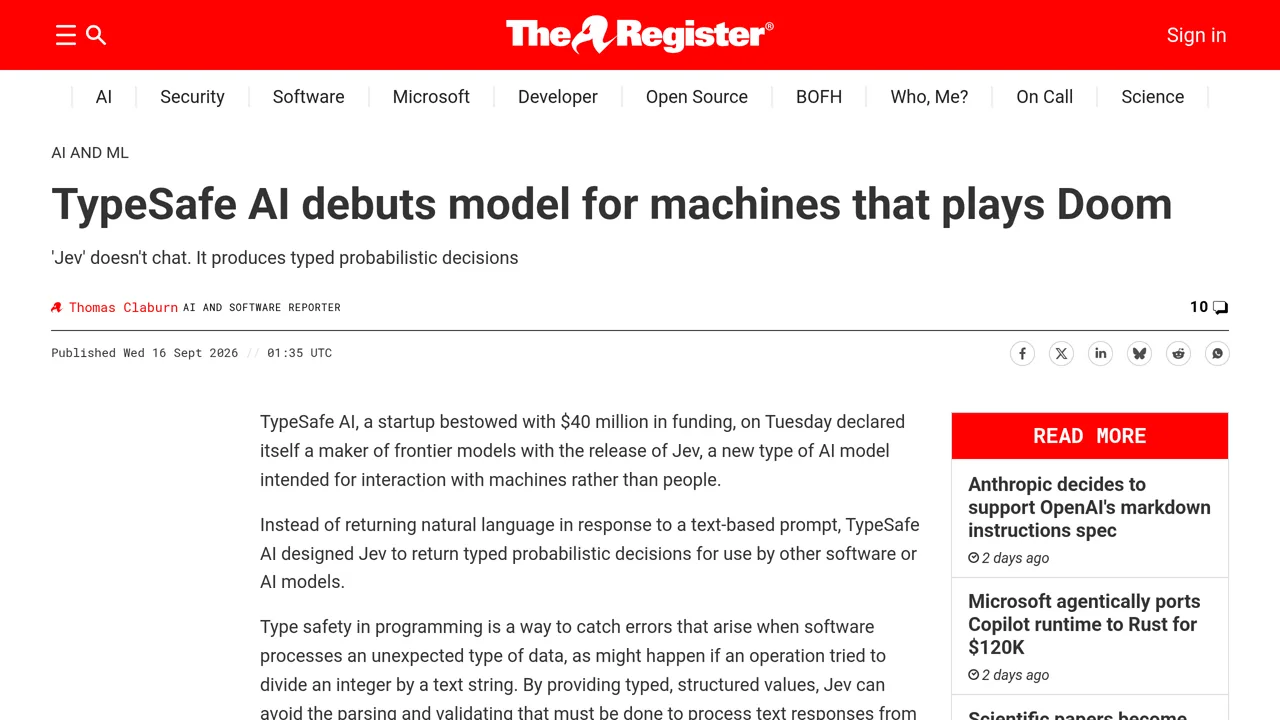
The Register looks at TypeSafe's bid to build AI for software rather than conversation, with Doom as a launch demo.
An introduction to Jev's decision-only API, calibrated probabilities, response times and pricing.
A Japanese take on Jev's launch that asks how much of the same behavior a conventional language model can reproduce.

Mohammed Shehu walks through Jev's decision-making API and shows how to call it from Python.

Dorian Smiley reports exhausting $5 of free Jev credit only after processing 123 million tokens.

Nicolay explains how agents can use Jev’s typed answers and calibrated probabilities as branches around an LLM.

Josh Rosen rounds up the first two weeks of JevOps — decision-model calls showing up in telemetry, incident response, SRE agents, CI, and deploys — and argues DevOps is packed with exactly the small semantic judgments Jev is built for.
Does Jev hold up outside demos? Glean's team benchmarked it on four workloads they run in production and published the wins next to the losses — routing came out ahead of their LLM router, reranking did not beat their search stack.

The weekly How I AI digest leads with Claire Vo spending a week inside Jev: nine cents to make sense of two years of ChatPRD pull requests, about four dollars for 200,000 classifications, and a working answer to which tasks still deserve a frontier model.
Claire Vo opens the hood on her week in Jev: nine cents to classify two years of ChatPRD pull requests, her Claude and Codex sessions sorted in minutes, and a real-time voice app where the quote API, not the decision model, was the slowest part.

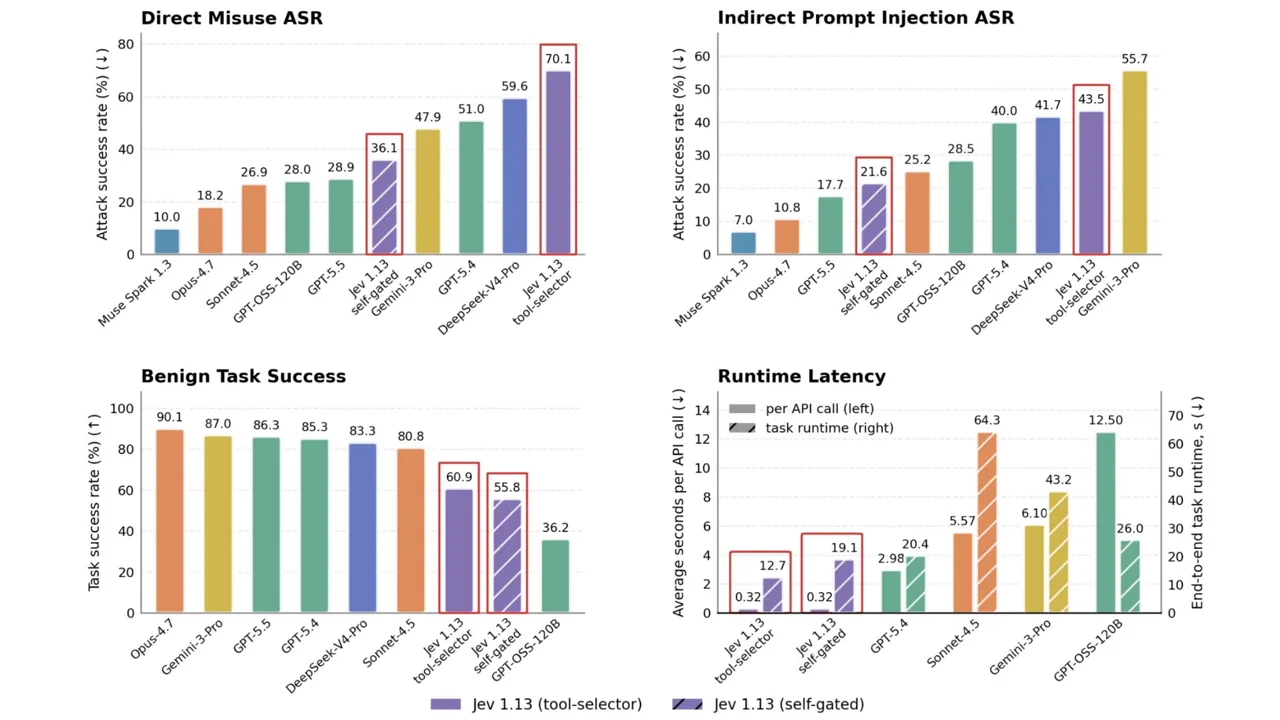
A red-team of Jev 1.13 got it to approve harmful tool calls 70.1% of the time under direct misuse and 43.5% under indirect injection. The fix has a nice shape: Jev re-judges its own tool calls before they run, and both attack rates roughly halve.
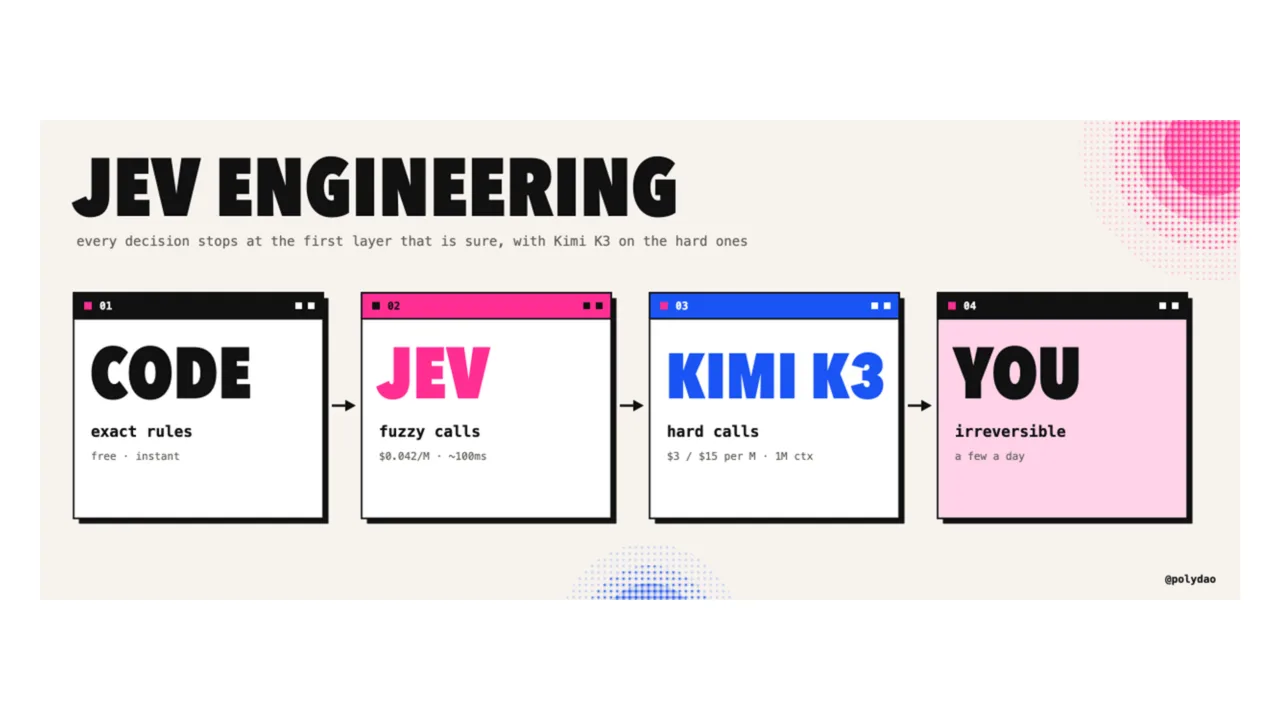
Mr. Buzzoni maps an agent’s small decisions to Jev, sends uncertain cases to Kimi K3, and keeps irreversible actions with people.
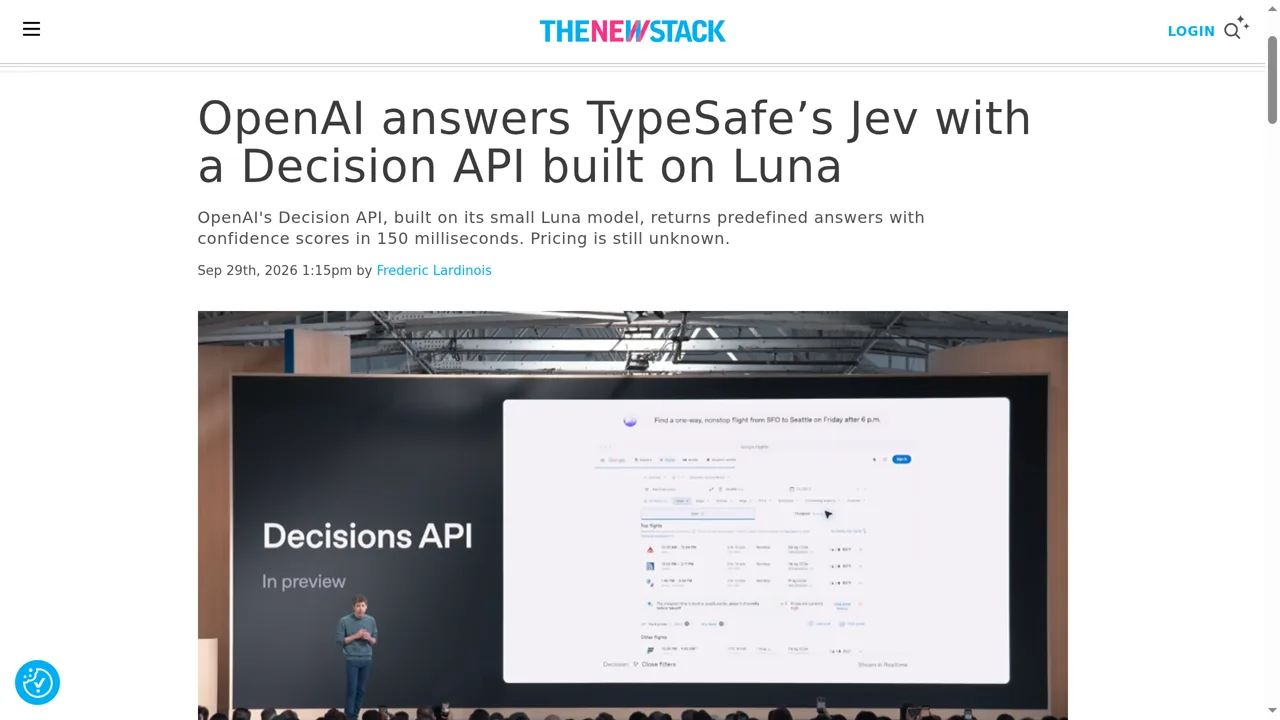
The New Stack reports on OpenAI’s Luna-based answer to Jev: an API that picks predefined answers instead of writing prose.
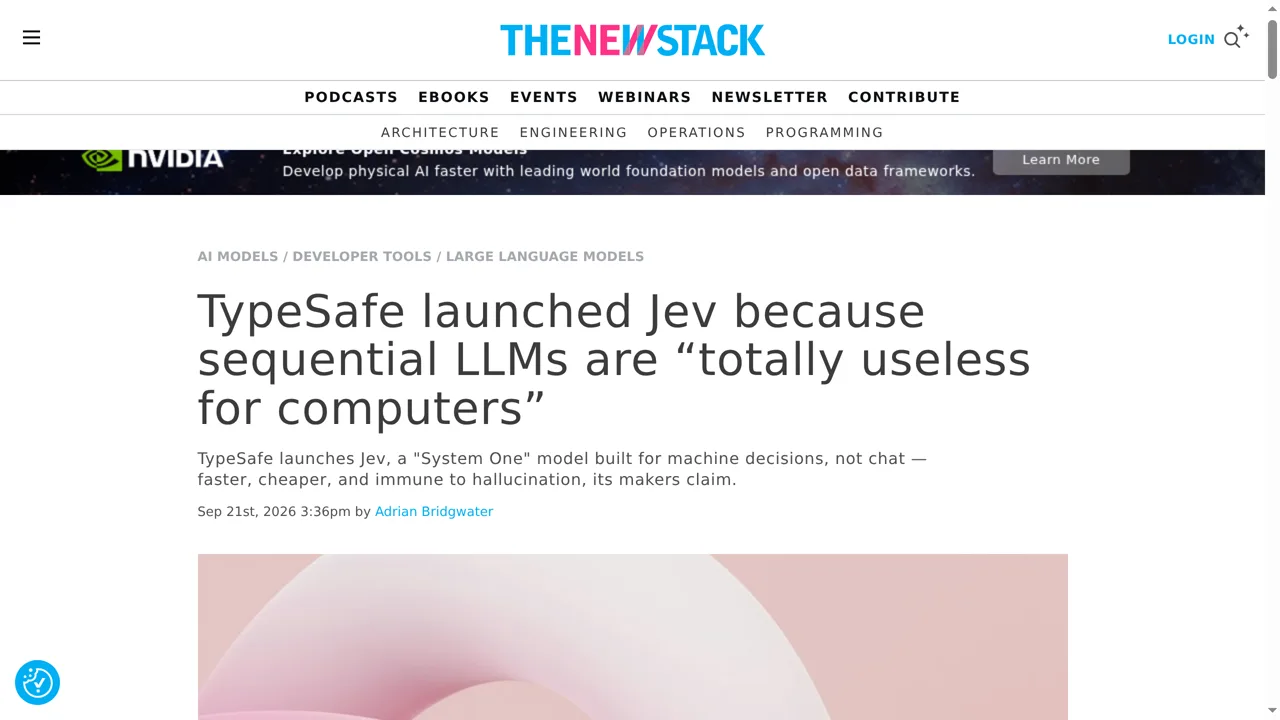
The New Stack follows Jev’s launch, Vercel’s early adoption figures, and a developer who asks the text-only model to recognize drawings.
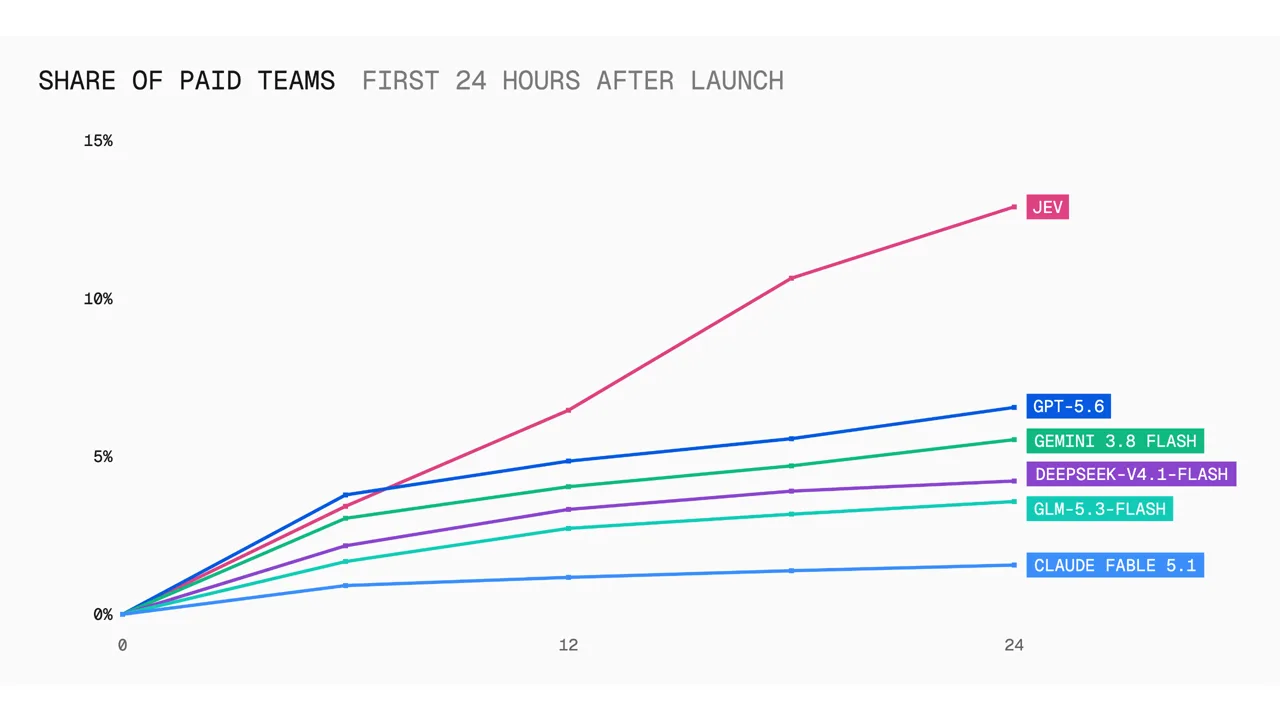
Vercel charts Jev’s first day on AI Gateway, reporting use by nearly 13% of paid teams within 24 hours.
Vercel announces Jev on AI Gateway and shows how its AI SDK turns a support case into typed decisions.
Jev, briefly
A chat model generates text token by token and hopes you parse it. Jev never generates a word. Your code sends the state of the world plus typed questions; Jev returns every answer in one parallel pass — typed values with calibrated probabilities and a confidence score your code can trust. About 70–500 ms end to end, $0.042 per million input tokens, output free. Trained with what TypeSafe calls Reinforcement Learning for Calibrated Decisions.
You define the options. Jev returns the chosen option, a probability for every option, and a confidence. The workhorse of routing, agents, and games — the answer space is always legal, so there is nothing to parse and nothing to hallucinate.
You describe ordered levels — say trivial / normal / critical. Jev returns the level, the probability of each, and a confidence. Scores turn fuzzy judgment (“how severe is this log line?”) into a number-free decision your code can branch on.
You assert a statement; Jev returns the probability that it is true — a noul. Moderation, verification, guardrails, “does this diff actually fix the bug?”: one question, one calibrated probability.
Official material lives at typesafe.ai and docs.typesafe.ai. JevMade is an independent community registry — not affiliated with or endorsed by TypeSafe AI.
Recurring lessons
Games, drones, trading bots, and browser agents all converge on the same loop: serialize the state, ask one decisive question, act, repeat. Jev’s latency makes the loop feel instant — the model lives inside the control loop, not outside it.
The answer says what; the confidence says whether to act. The most reliable entries threshold on confidence to route edge cases to a slower model or a human — automation with an honest escape hatch.
Makers rarely ask Jev to pick from everything. Local tactics prune 225 gomoku moves to ~40; DOM filters turn a page into an element table; code narrows options, Jev judges within them.
A recurring split: Jev makes every decision cheaply and instantly, and a small LLM is only invoked when a human-facing string must actually be written. Decision and generation are separate budgets.
Send the link — repo, live demo, post, or video — plus a line on what it does and which primitives it uses. Every entry is verified against its primary source before it ships.
Submit your experiment → hello@JevMade.com