Read & learn
Written guides.
Understand Jev, one idea at a time. Walkthroughs, recipes, and writeups — our notes first, the original next.
Learn, build, and play with Jev — from deep technical guides to creative experiments.
Read & learn
Understand Jev, one idea at a time. Walkthroughs, recipes, and writeups — our notes first, the original next.
Watch & learn
See an idea take shape. Tutorials, demos, and deep dives, organized by topic and credited to their creators.
Make & explore
See what builders made with Jev. Games, tools, repositories, articles, and more — traced to their sources.
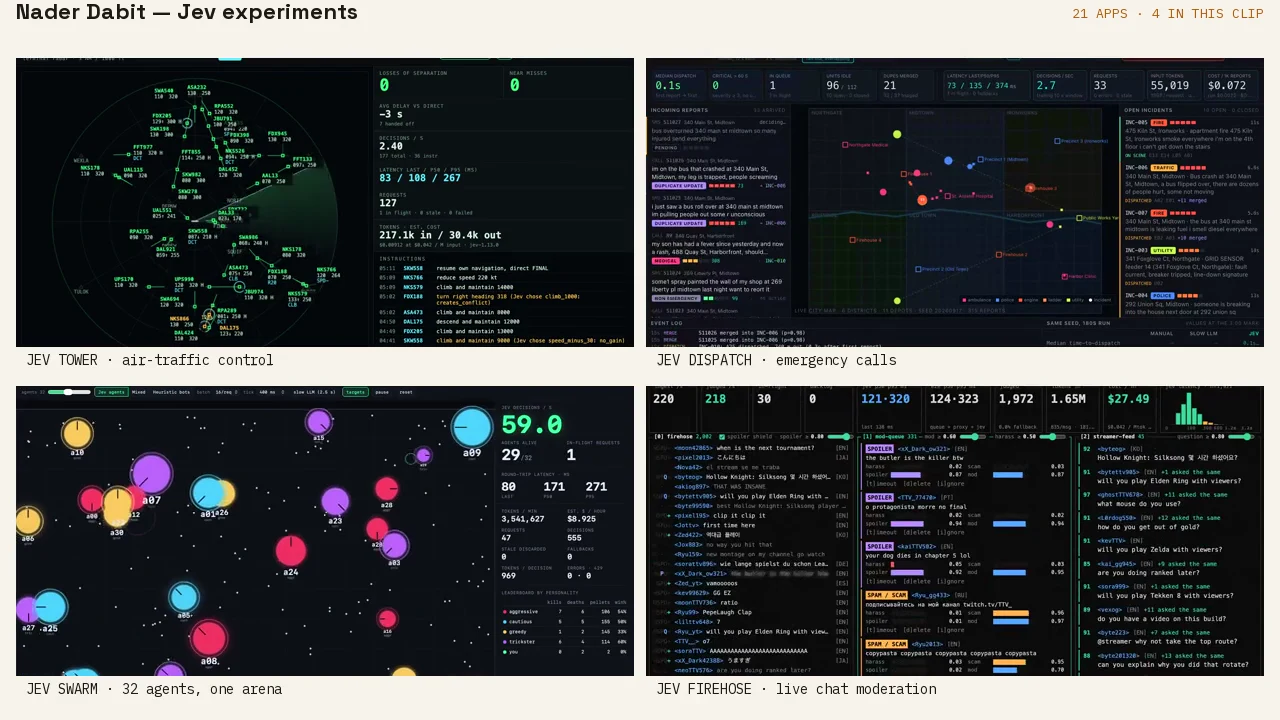
Every category, from games and tools to repositories and writeups, traced to a primary source.
Same ideas.
Different paths.
This is the full registry, not just the featured picks. Figures like speed, cost, and stars are maker-reported or captured snapshots, not JevMade measurements.
268 experiments · showing 1–60
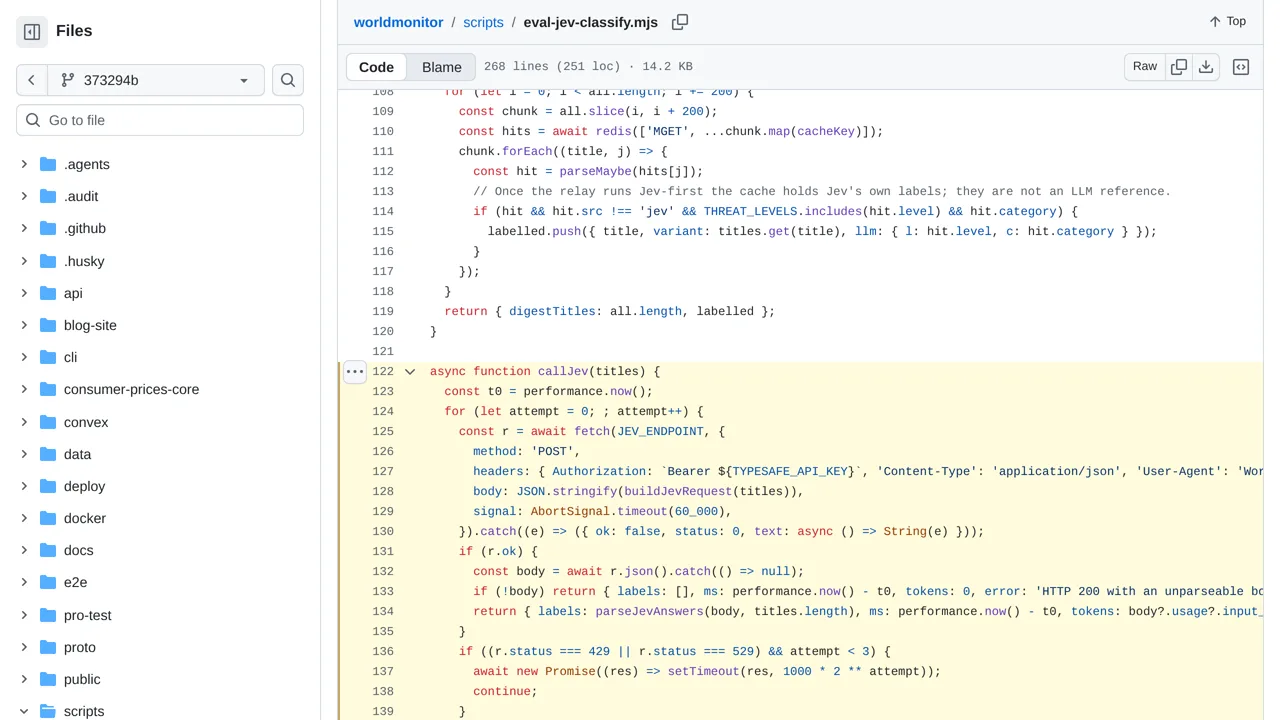
World Monitor benchmarks Jev's headline severity and topic labels against cached labels and a saved judged set.
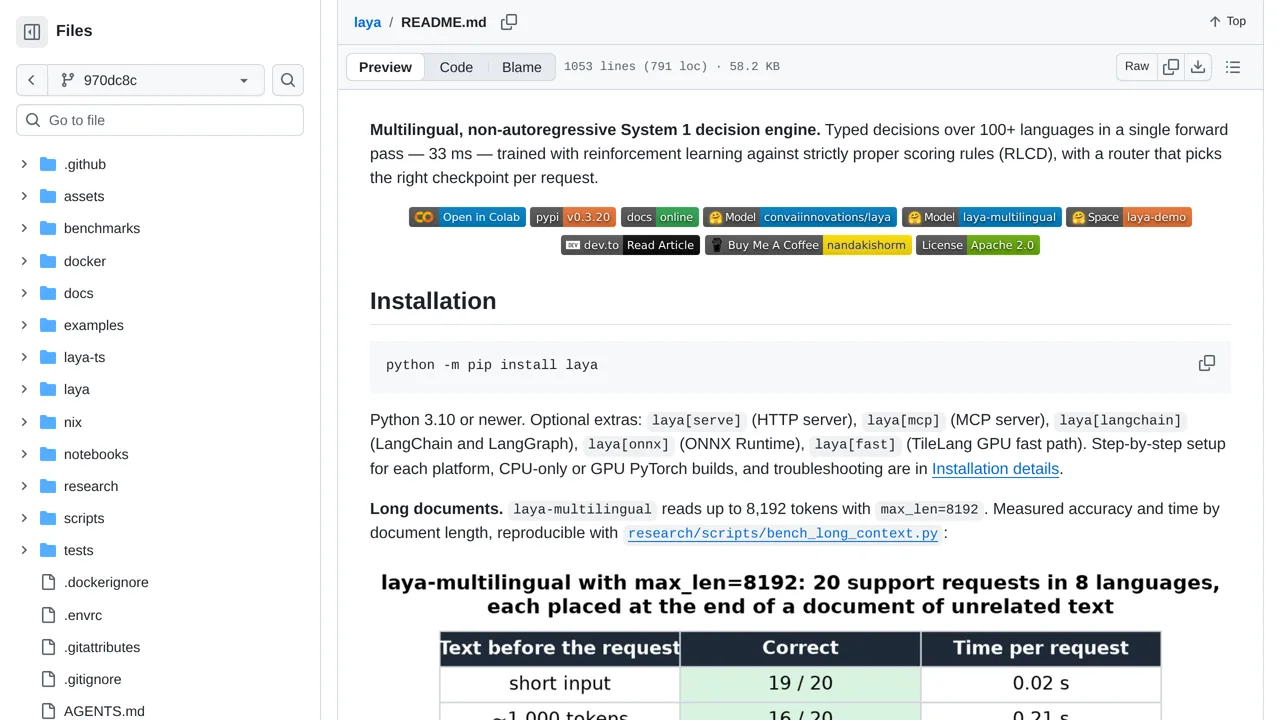
Run Convai Innovations' open-weight typed-decision model locally with a Jev-shaped request format; Laya is an independent model, not TypeSafe's Jev.
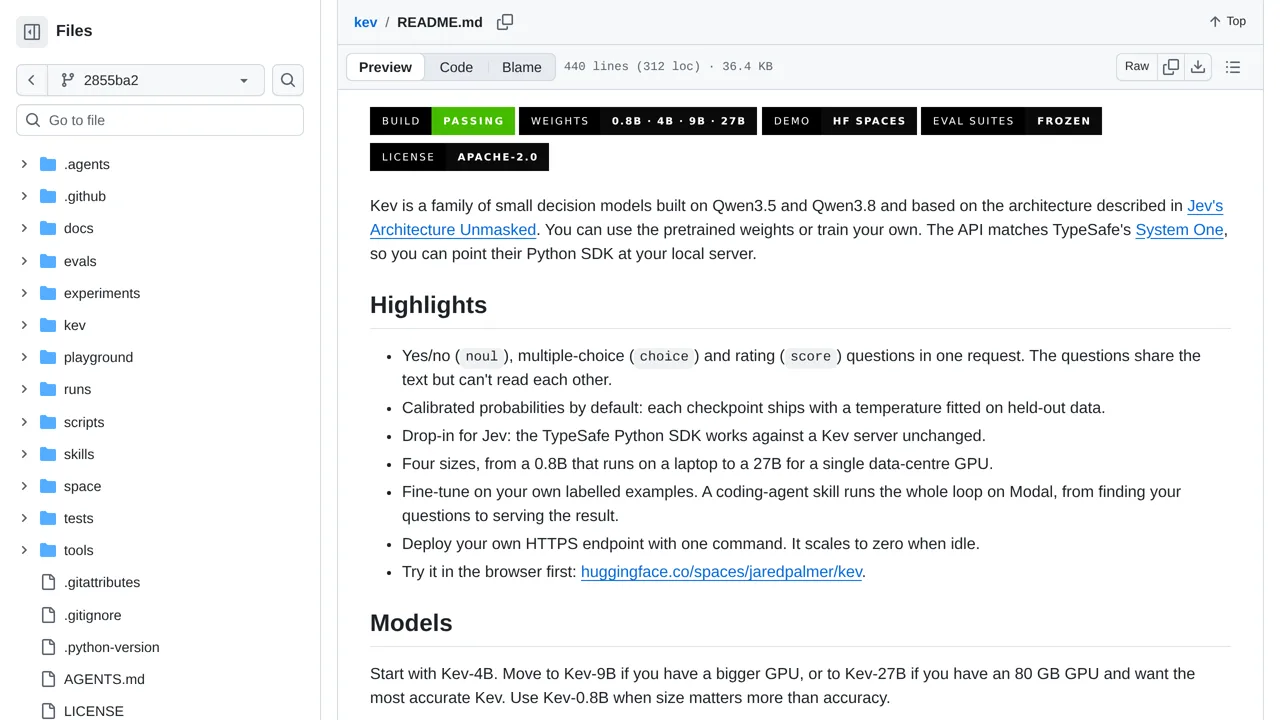
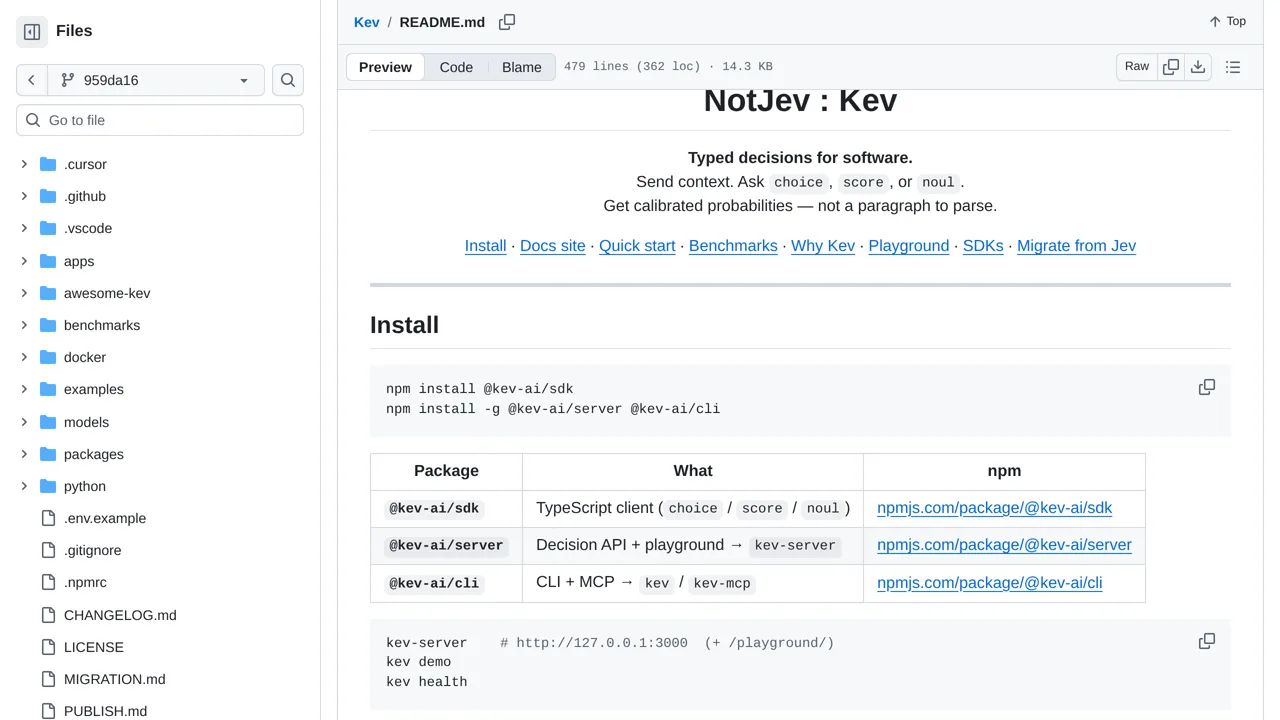
Train and self-host Qwen-based decision models that answer Jev-style typed questions in one pass; kev is an independent implementation, not Jev.
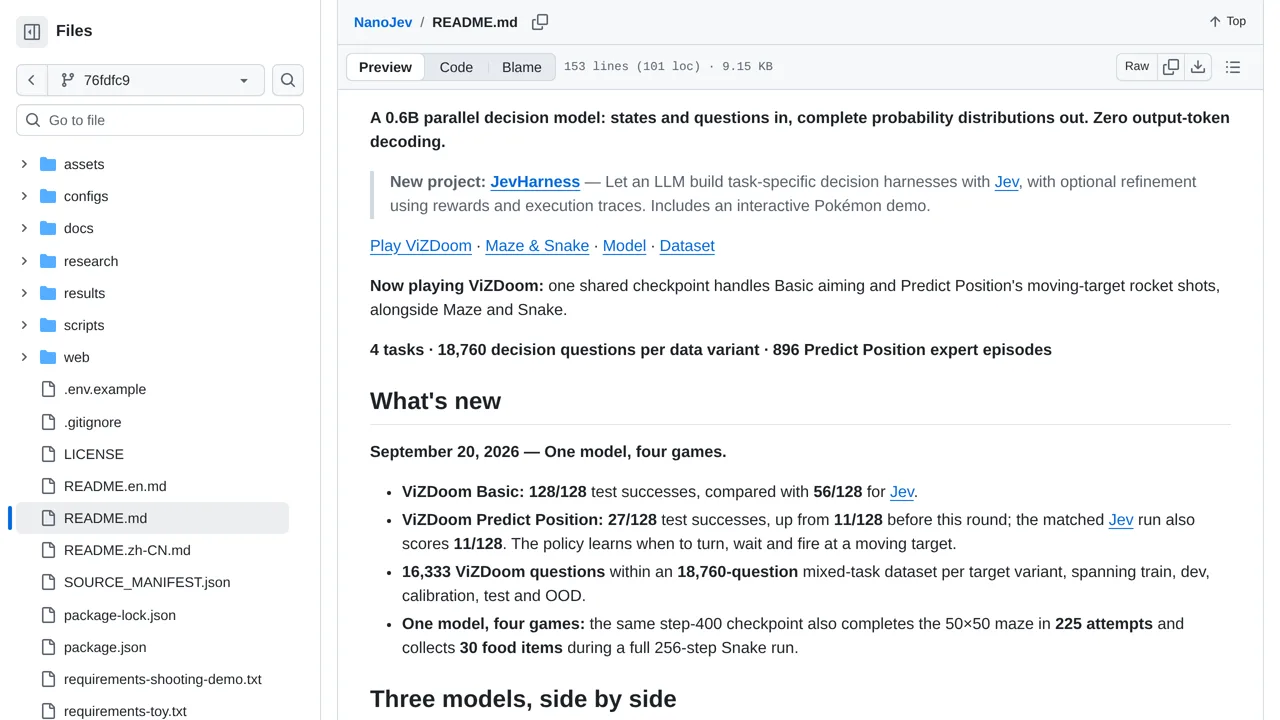
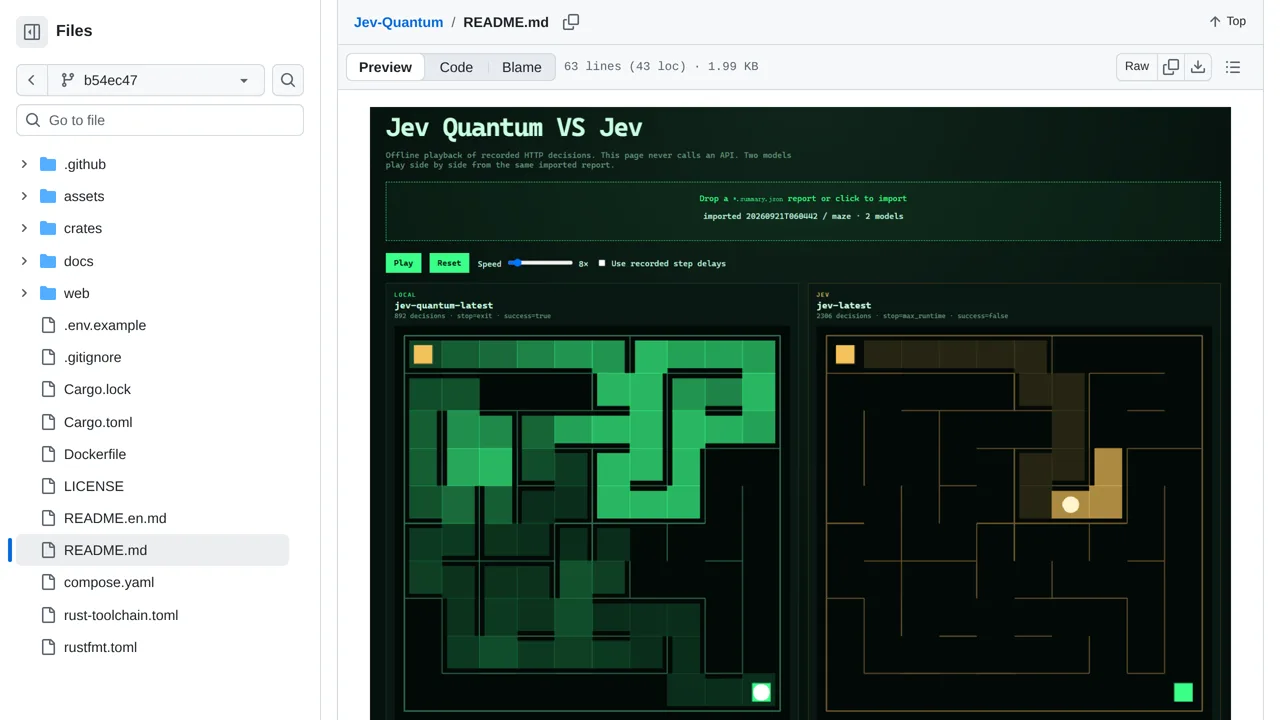
NanoJev trains a 0.6B parallel decision model and compares it with Jev across maze, Snake, and ViZDoom tasks.
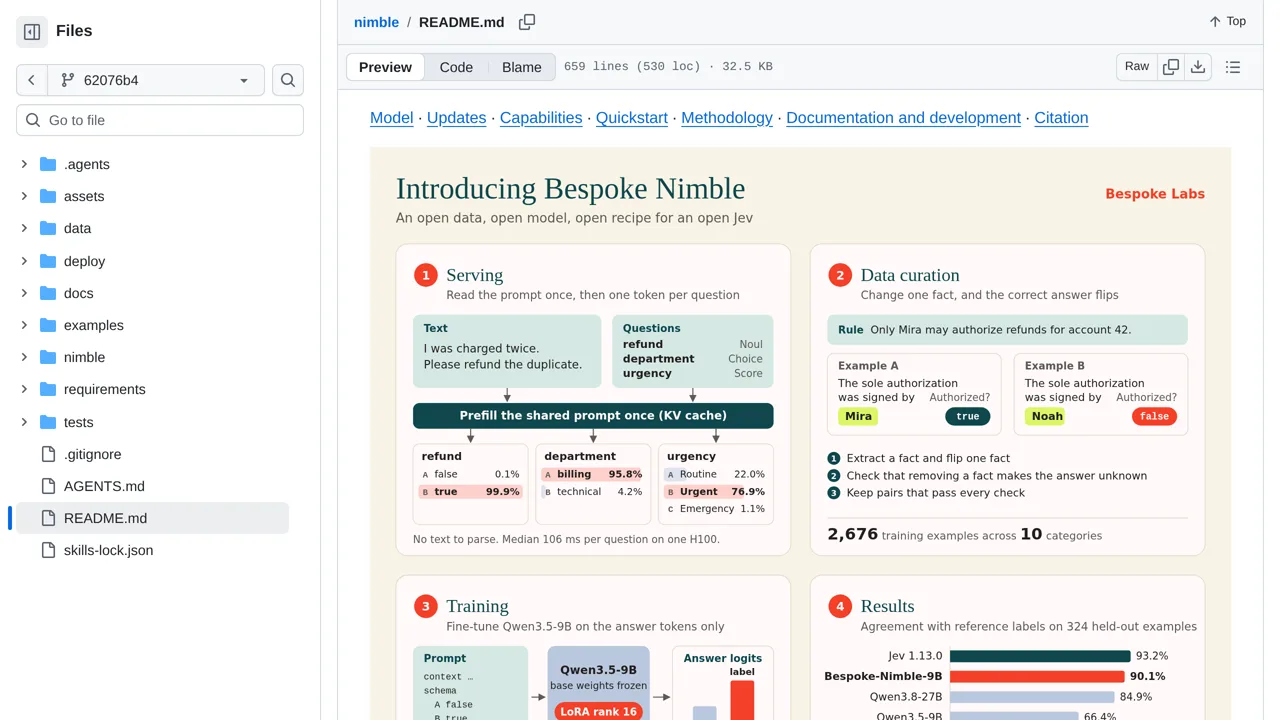
Nimble compares Jev's typed probabilities with locally trained schema adapters on curated decision datasets.
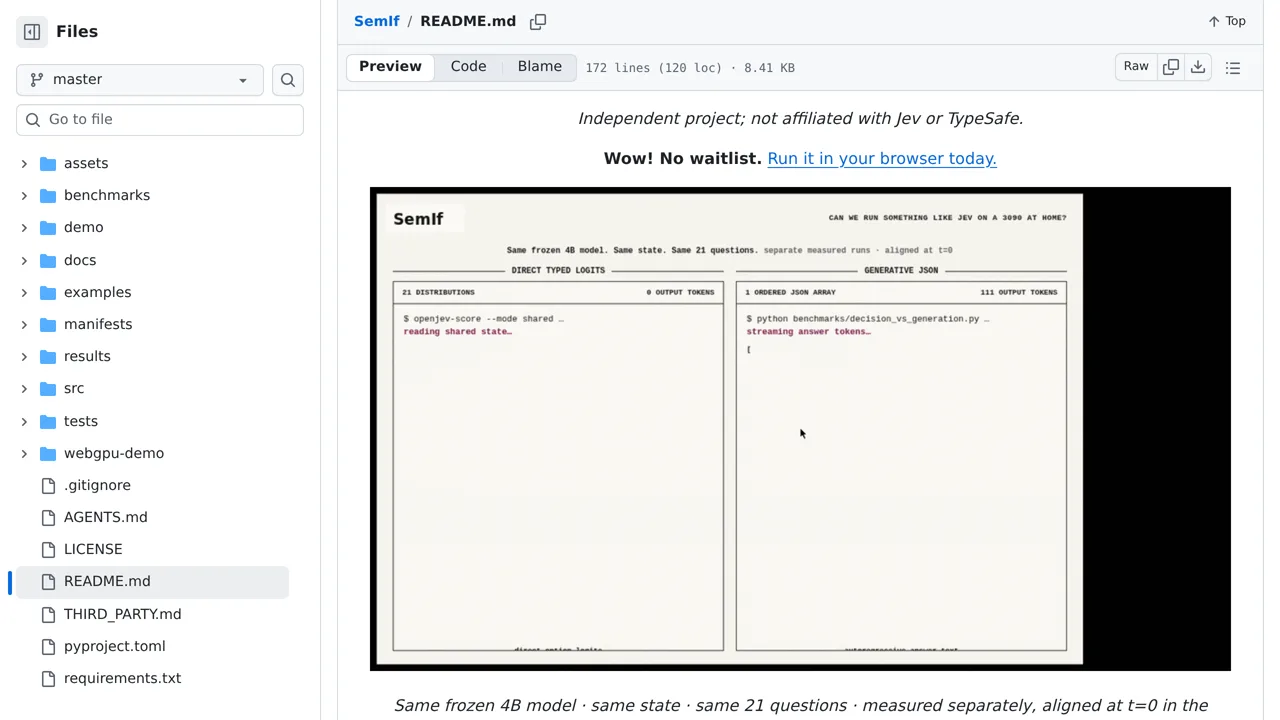
SemIf runs open models locally as probabilistic semantic conditionals on an RTX 3090.
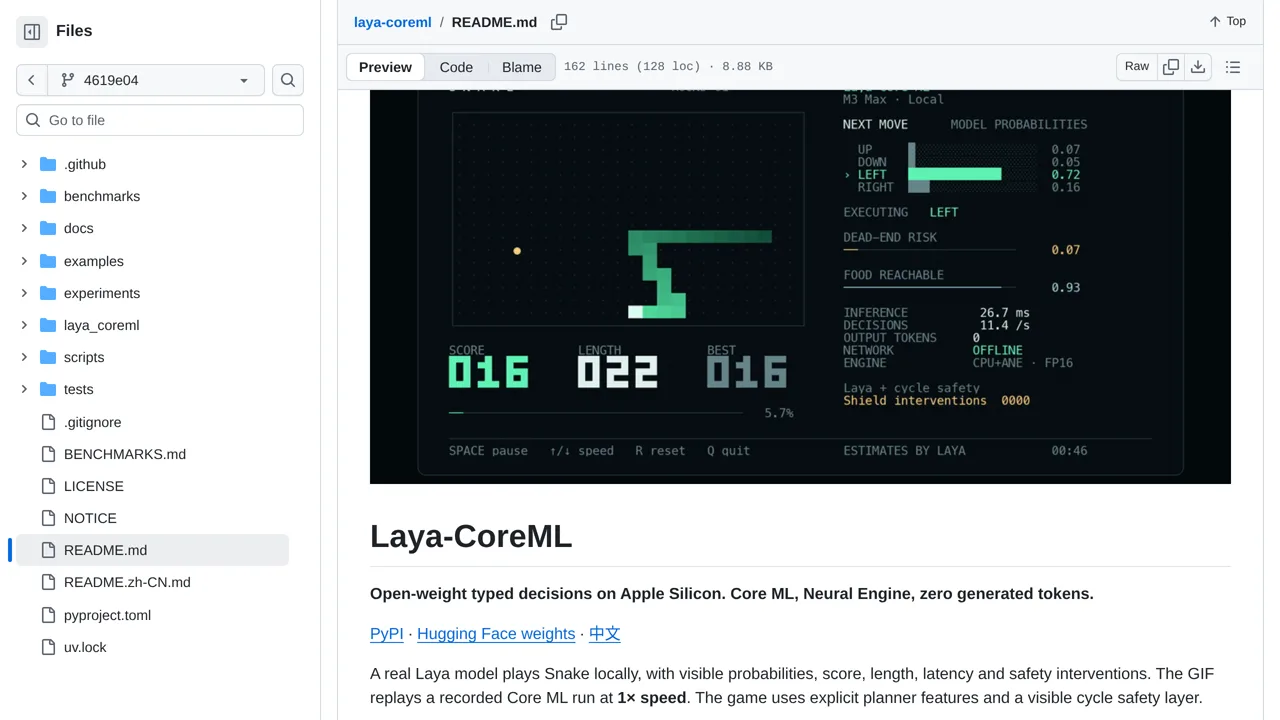
Play Snake or request typed decisions from Core ML ports of Laya on Apple hardware; the models are open-weight alternatives, not Jev.
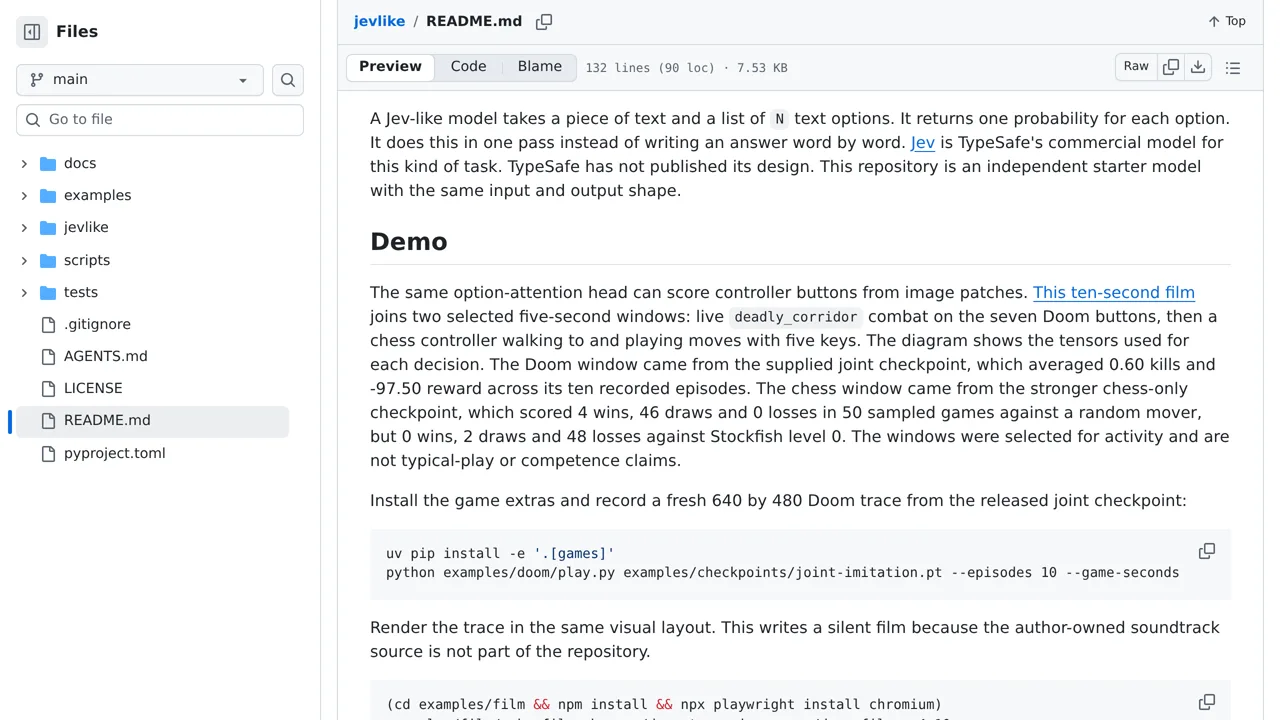
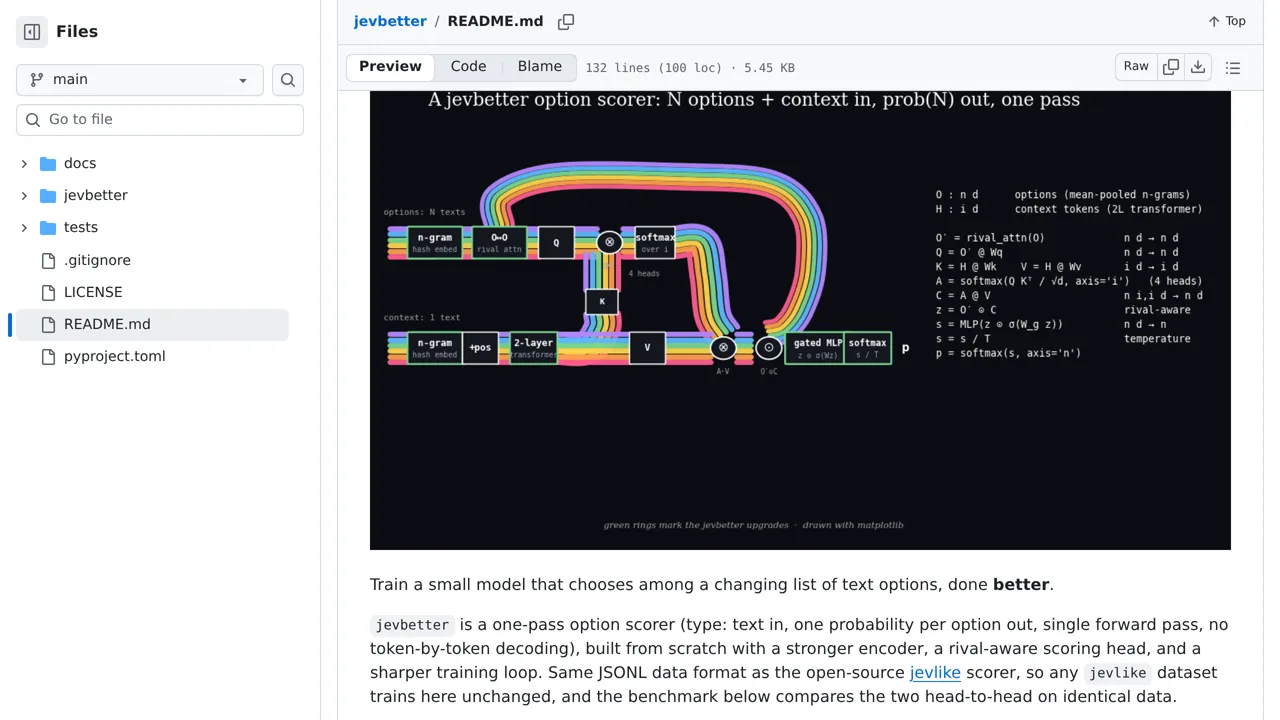
Jevlike trains a compact model to choose among a list of text options that can change from request to request.
Run a local, non-autoregressive System One model behind Python and JavaScript clients compatible with Jev’s request shape.
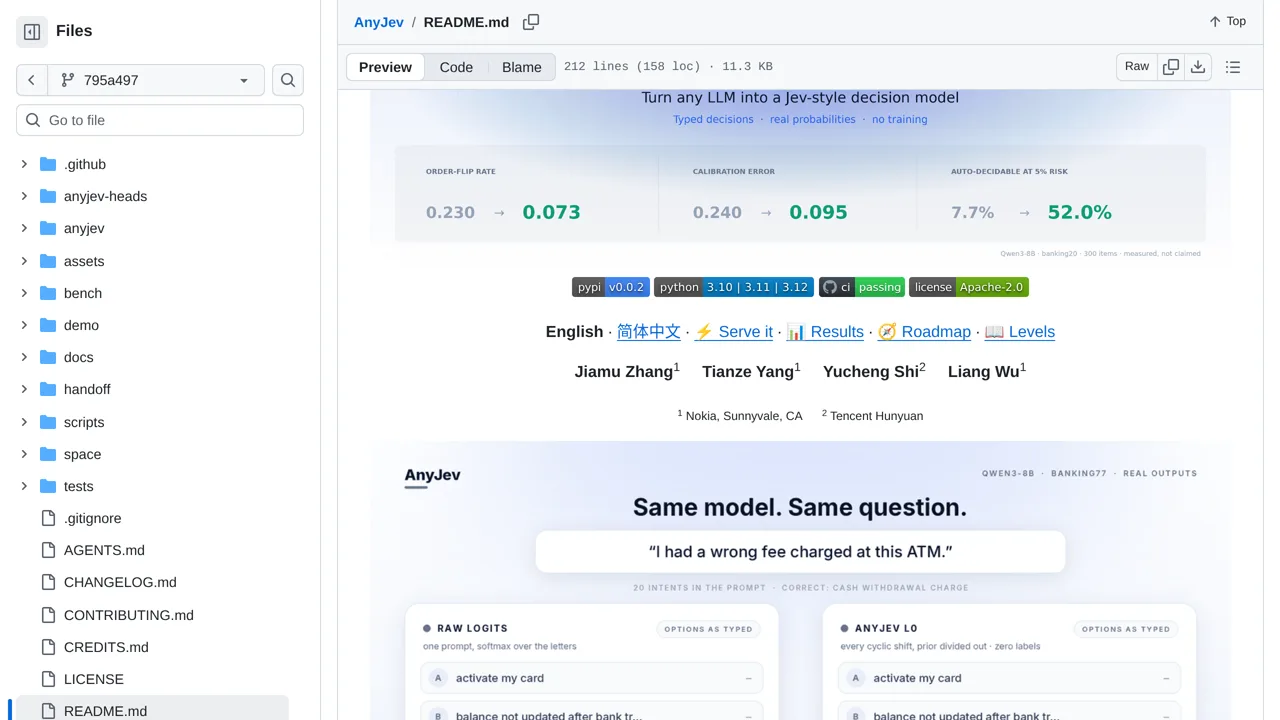
Adds typed probability readouts and calibration heads to ordinary language models, with Jev-style evaluations and saved results.
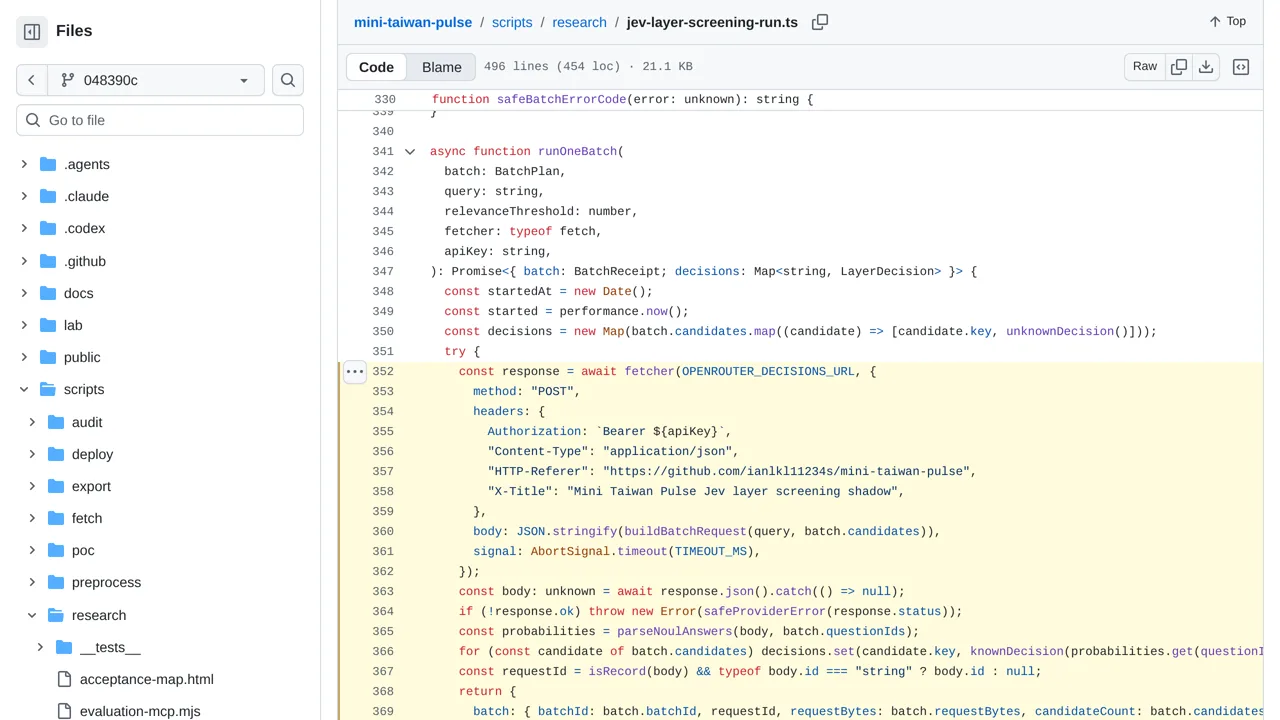
Mini Taiwan Pulse tests whether Jev can pick the map layers relevant to a visitor's question.
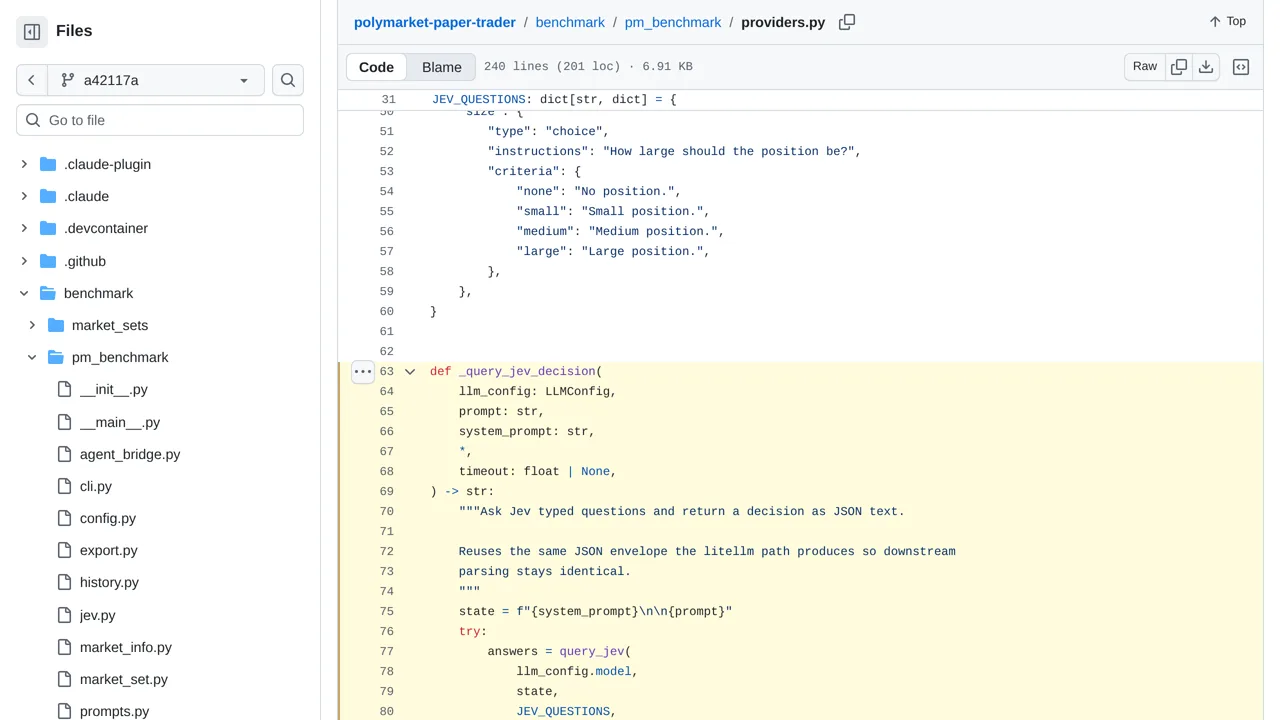
Compare Jev's market probabilities and trading choices in a Polymarket benchmark that never places real-money orders.
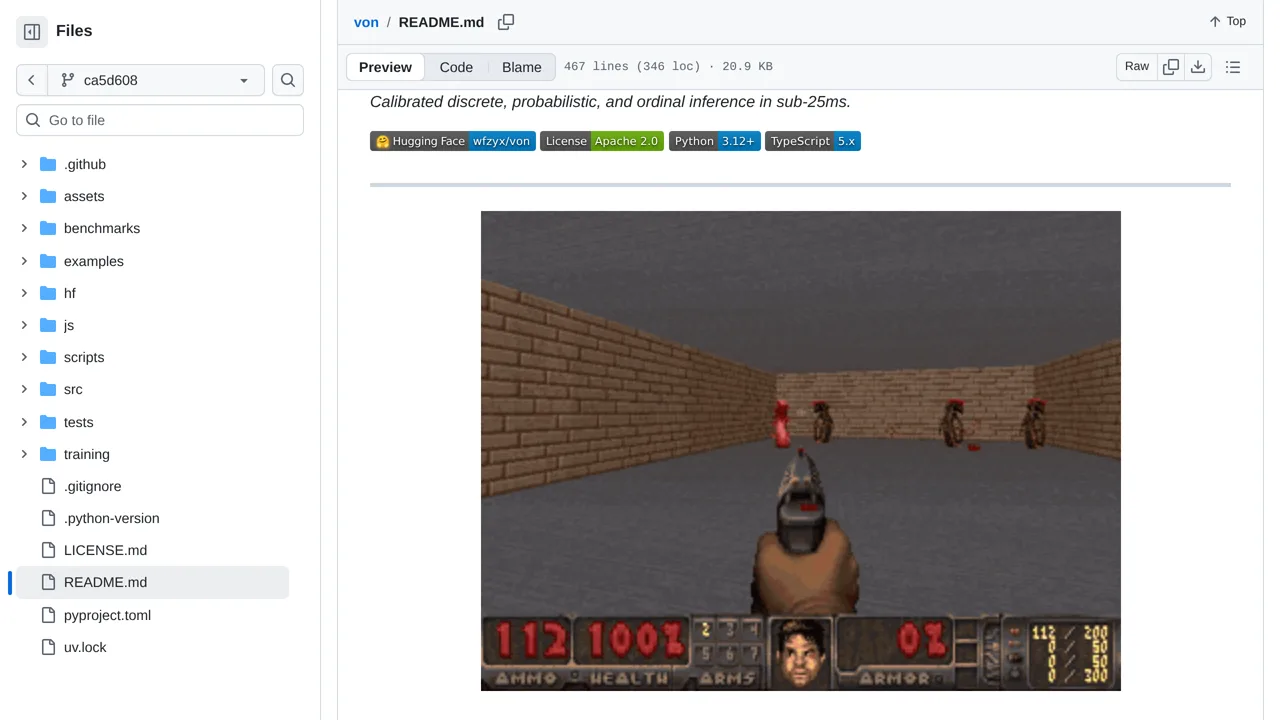
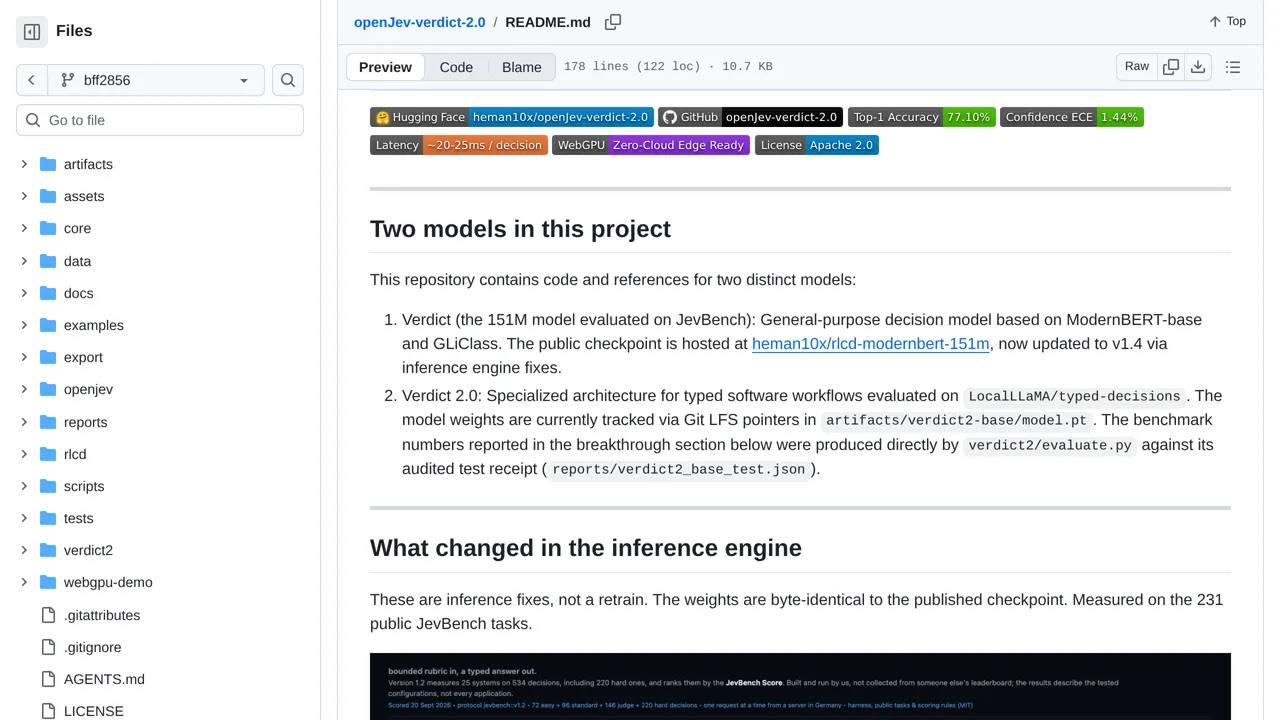
A 151M non-autoregressive decision model pairs typed outputs with benchmark receipts, calibration analysis, and browser-oriented artifacts.
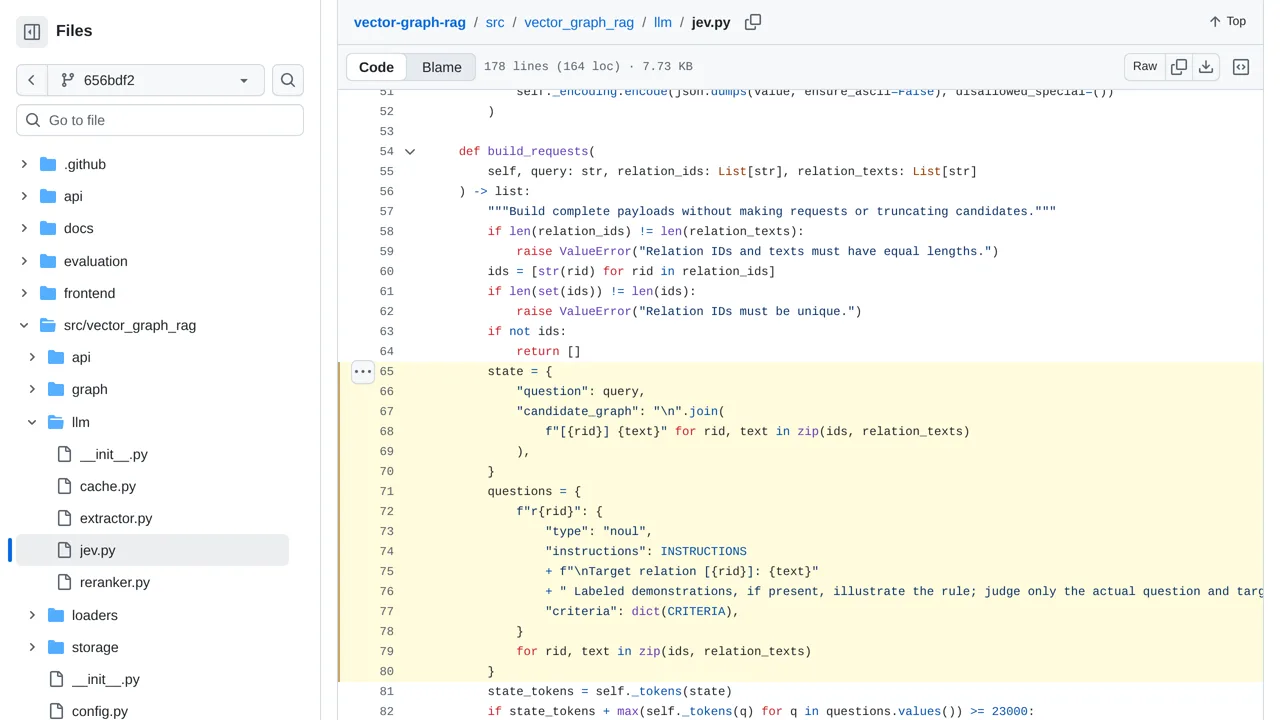
Vector Graph RAG can rerank graph relations with Jev and compare the resulting retrieval recall.
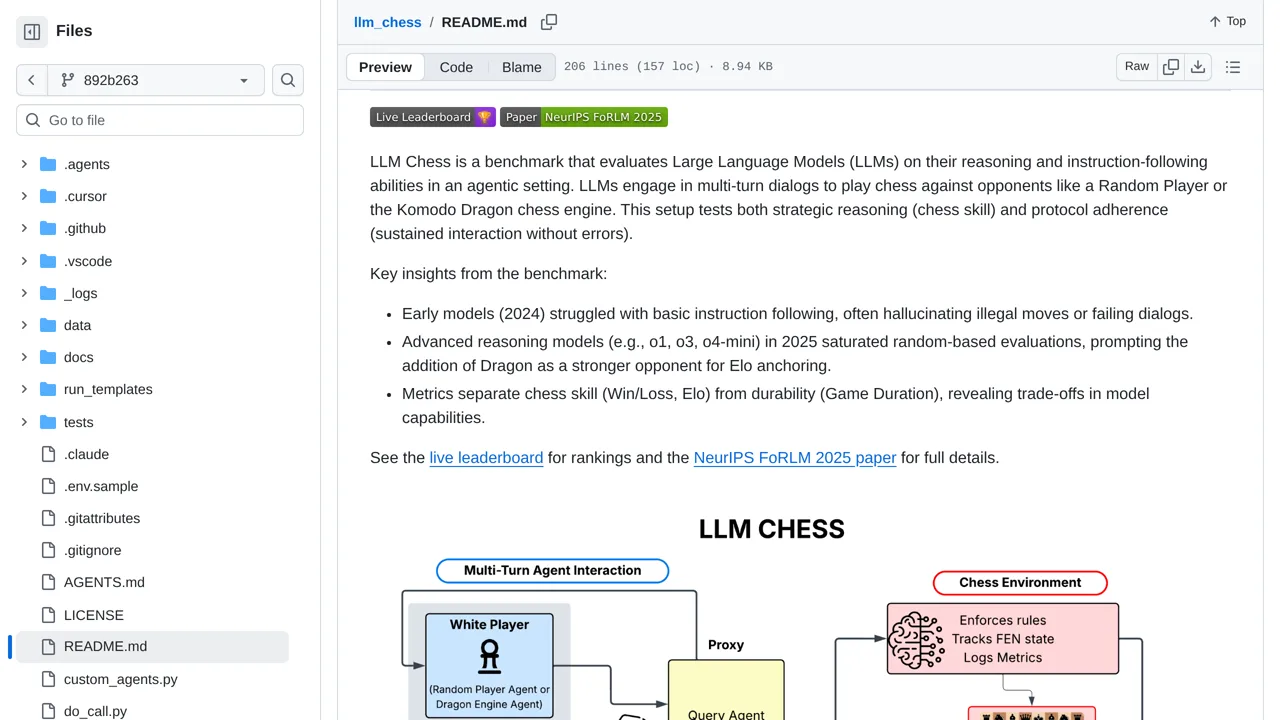
See Jev's published chess row alongside language models in a benchmark that separates wins, losses and illegal moves across repeated games.
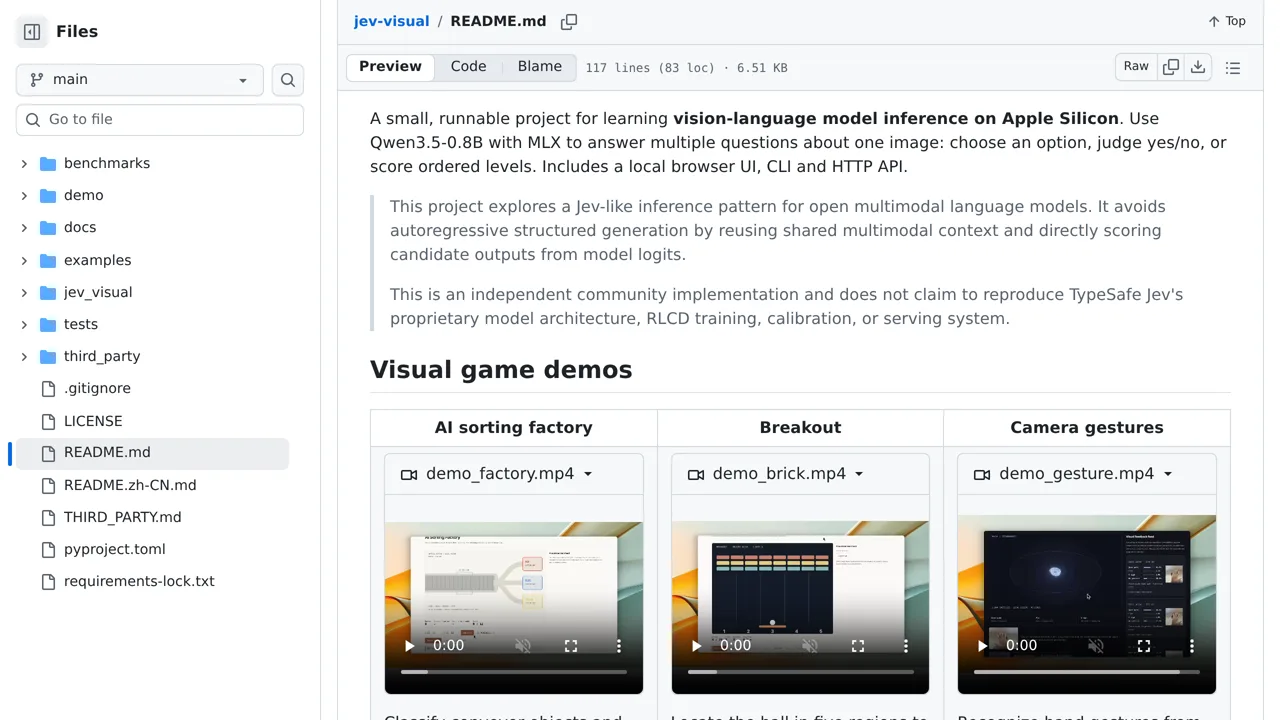
An Apple Silicon experiment scores visual candidates directly against shared context using a local model.
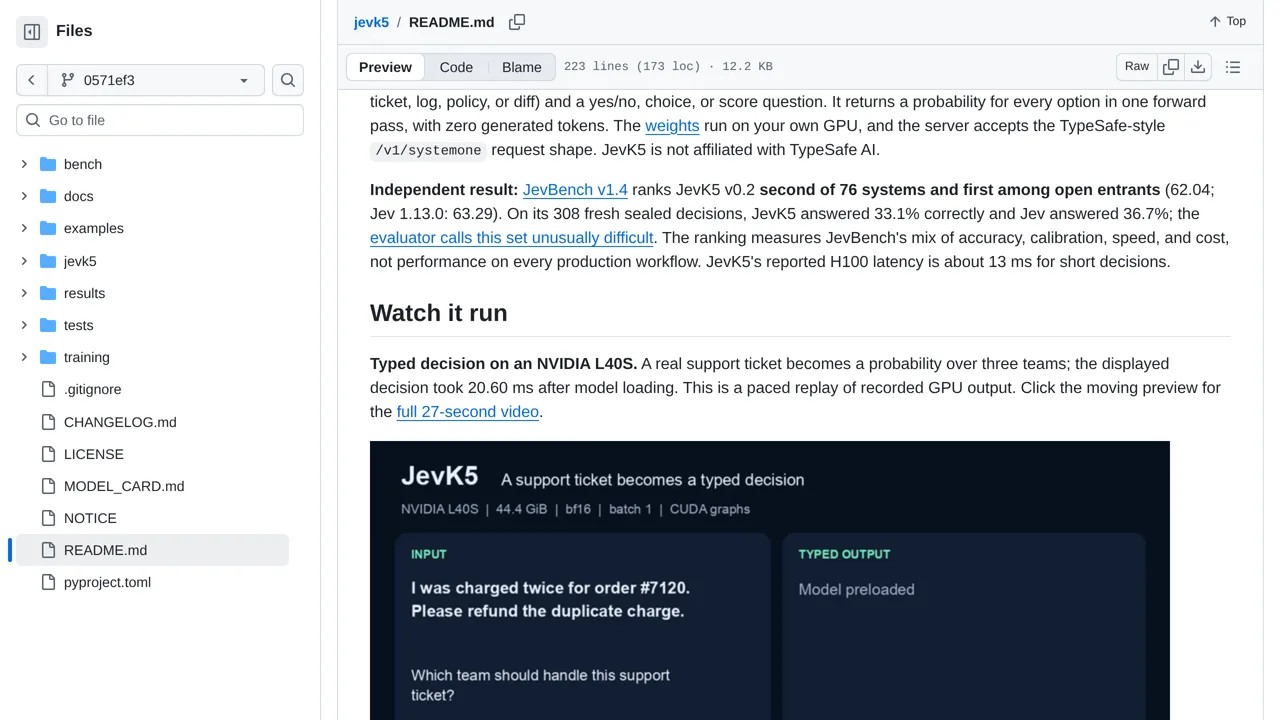
JevK5 trains and serves an open-weight decision model that returns closed-choice probabilities in one forward pass; it is not TypeSafe's Jev.
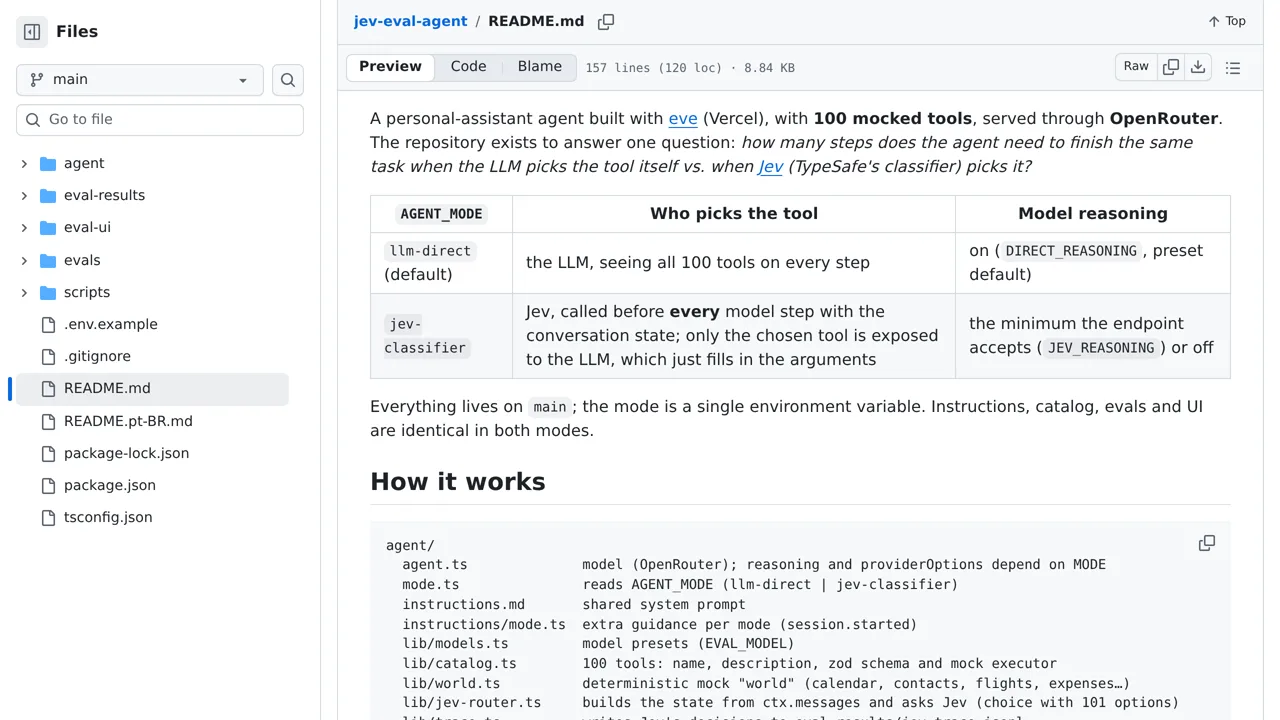
A benchmark of how Jev and a language model choose among 100 tools for a personal assistant.
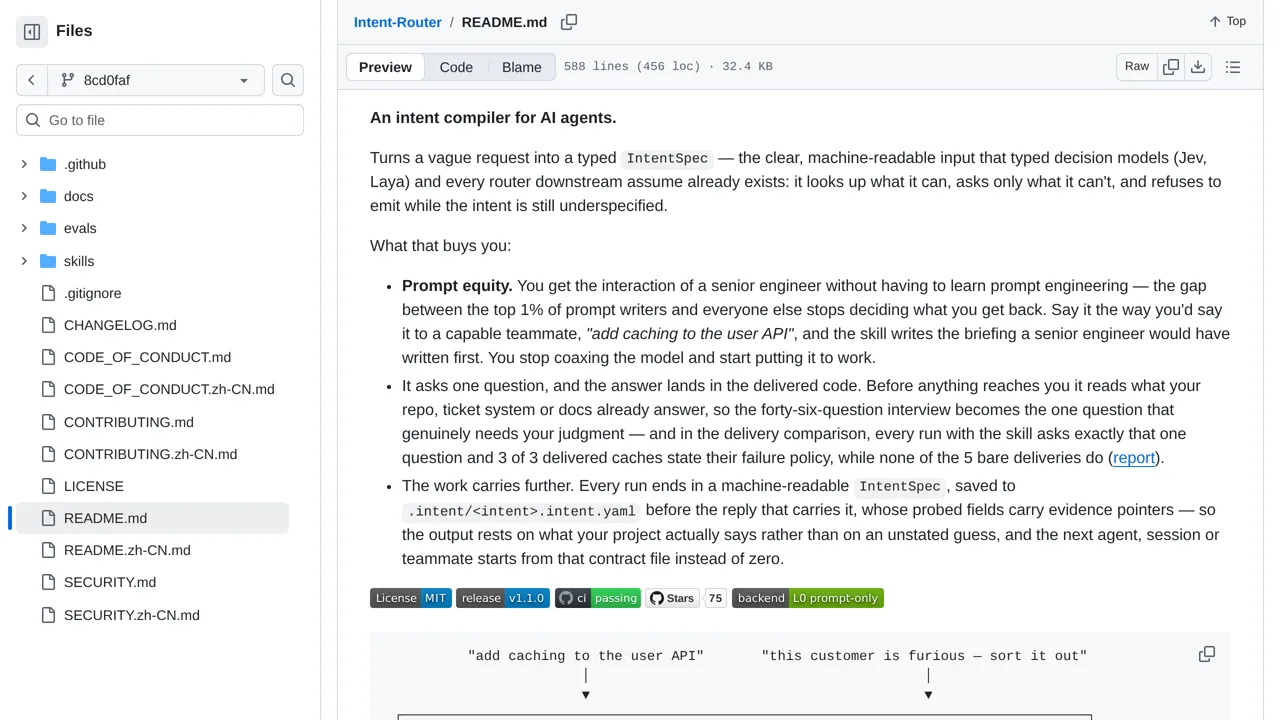
Reimplements Jev-style bounded decisions locally, exposing a compatible contract over prompt-only and open-weight backends.
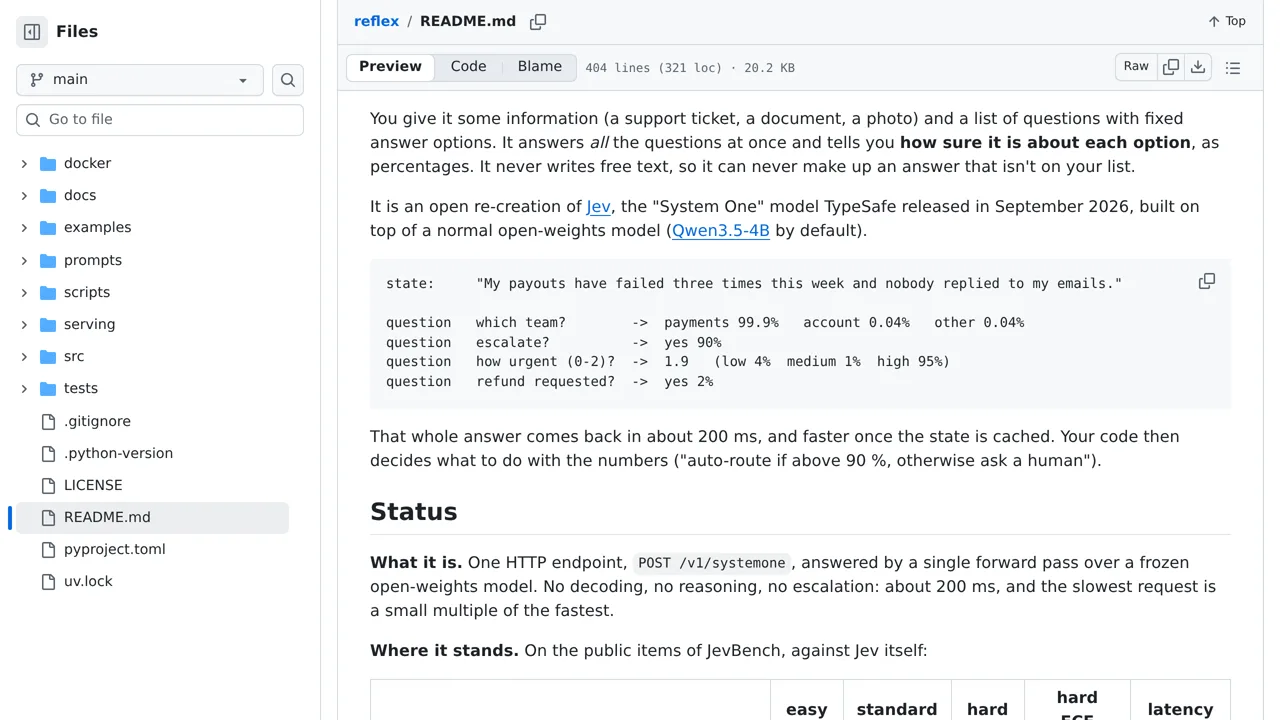
Reflex is an open Qwen3.5-based model that maps state and typed questions to calibrated probabilities.
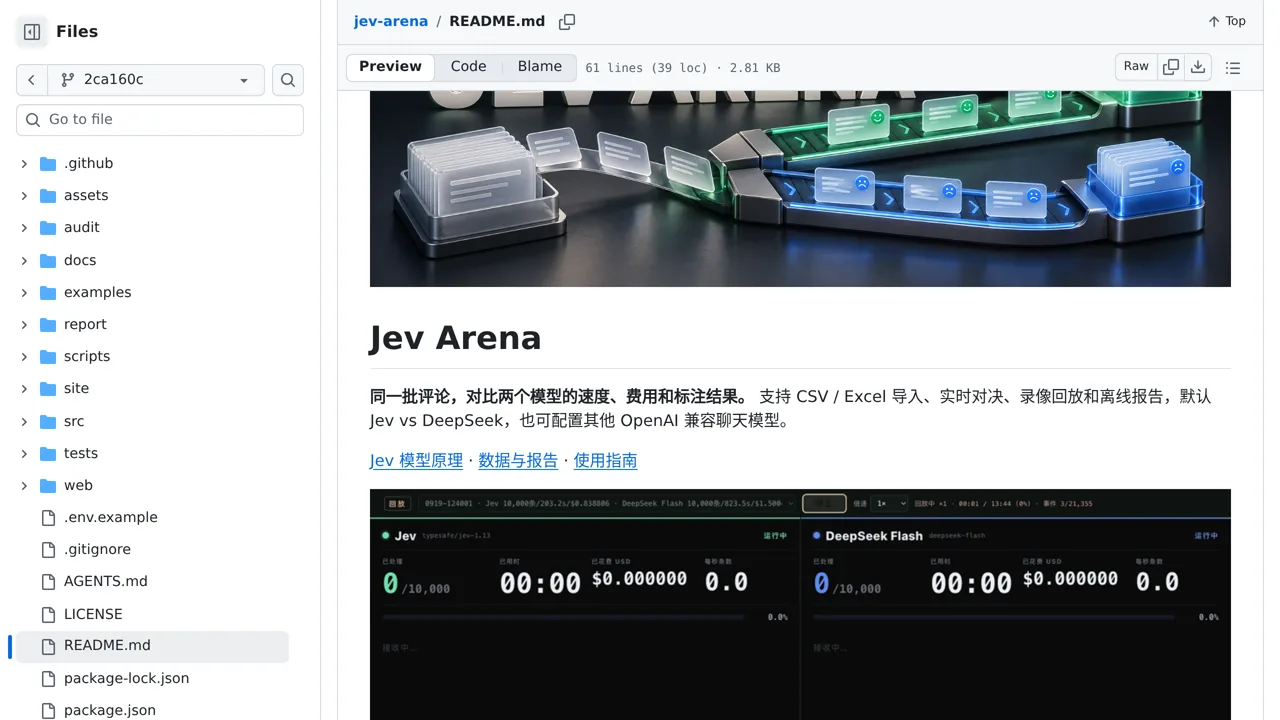
Replay Jev and chat-model judgments side by side on comment datasets imported from CSV or Excel.
Run an open Thai-and-English decision model that answers Jev-compatible typed questions in one forward pass.

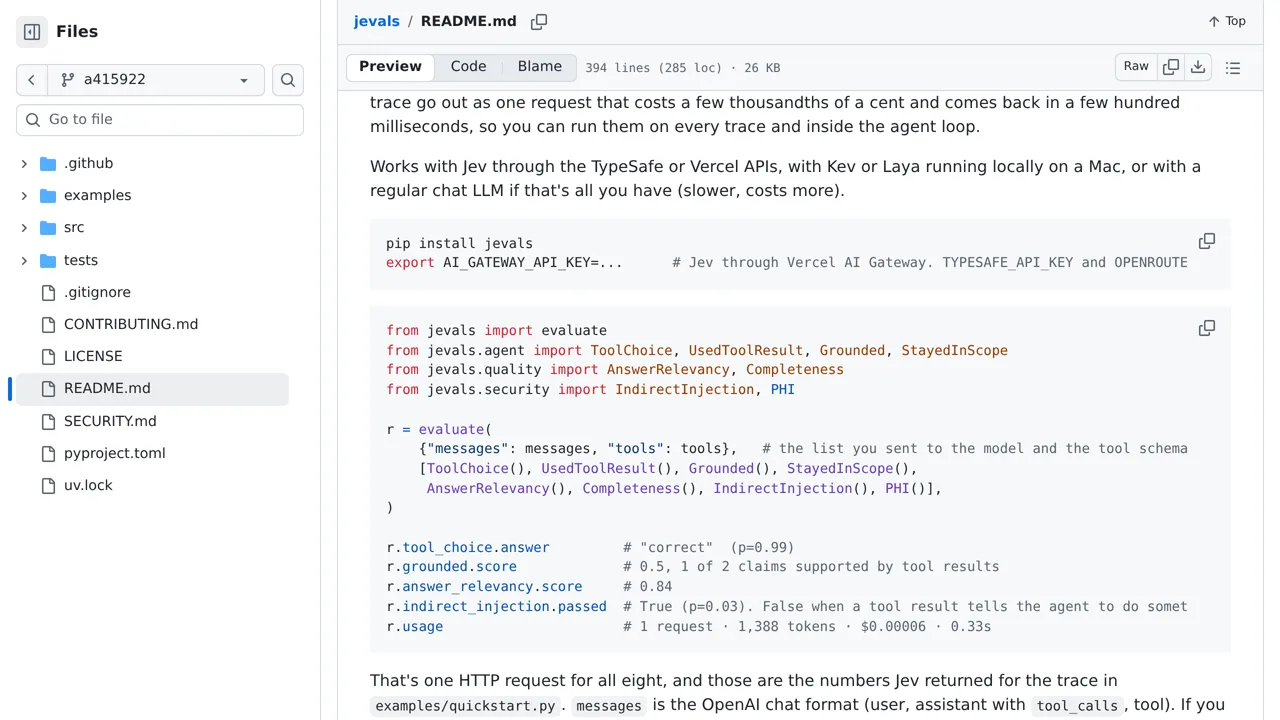
A Python library for checking an agent's work with several Jev questions in one call.
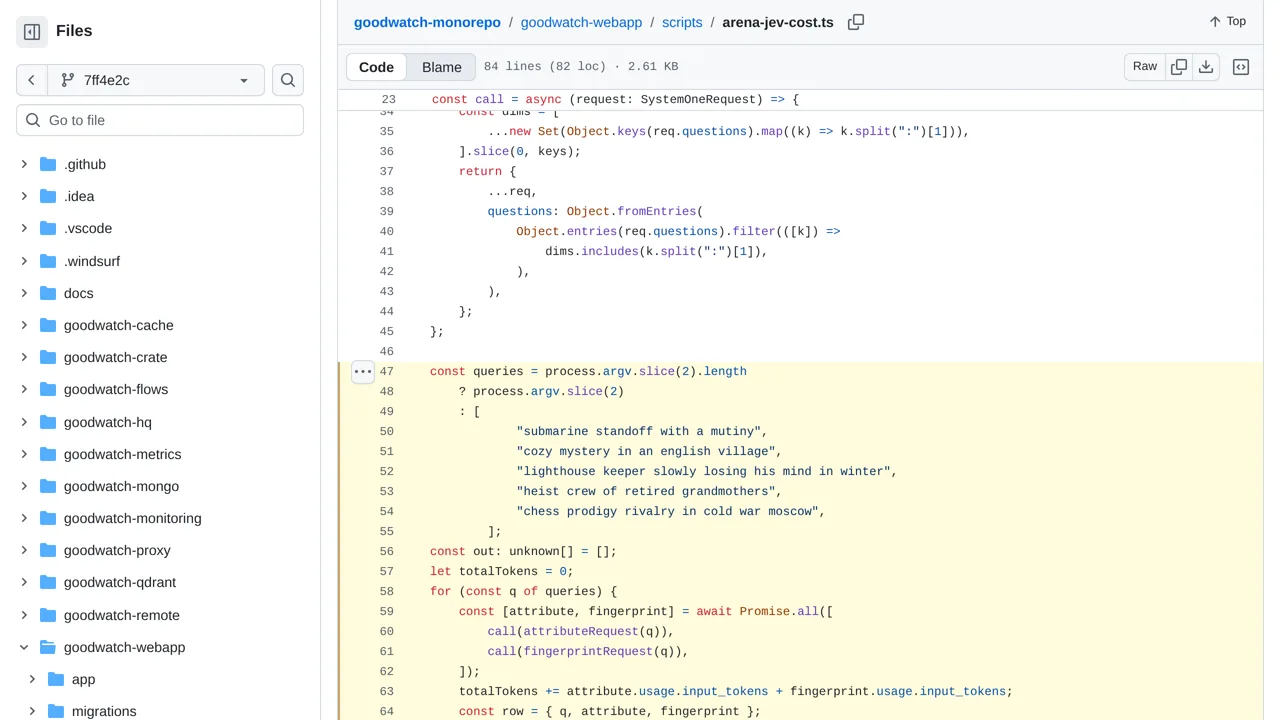
Goodwatch's search arena measures Jev's latency, token use and request size on movie-search questions.
Run Nano, Small or Large open-weight models behind Jev-style Choice, Score and Noul requests; these are independent models, not TypeSafe's Jev.
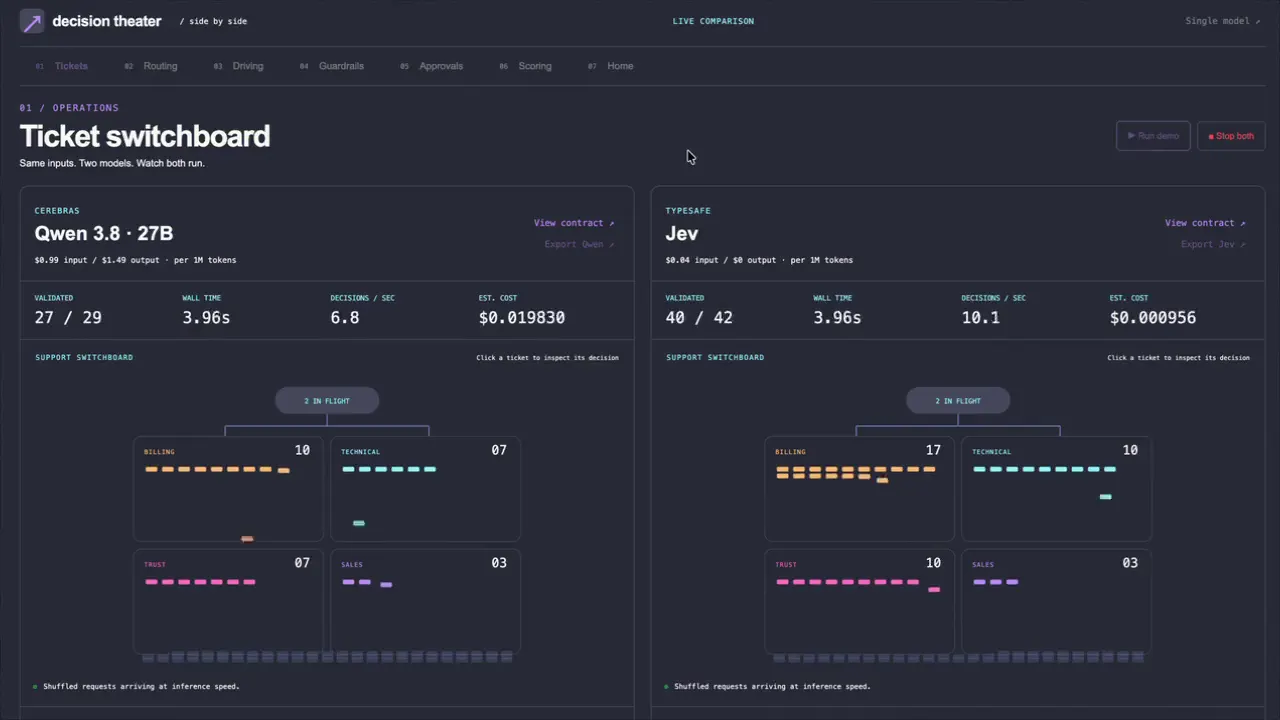
A gateway that makes a Cerebras-backed model answer in Jev's format, for comparison with the real thing.
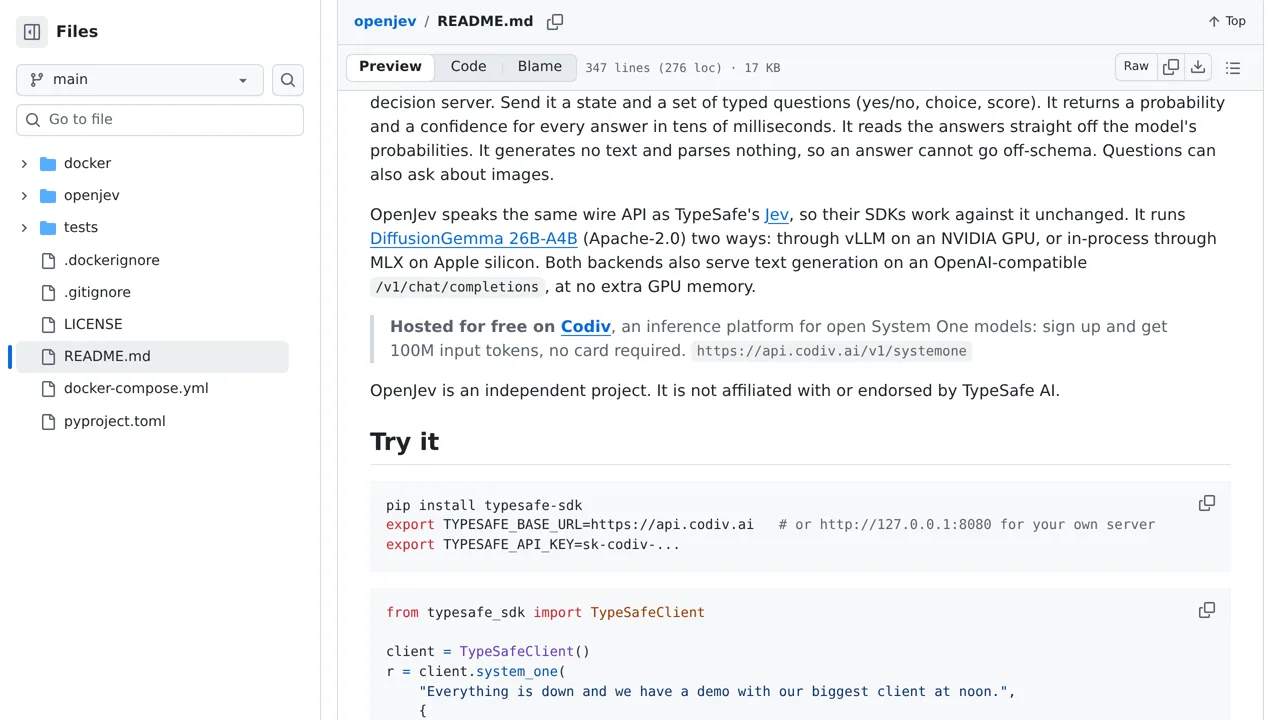
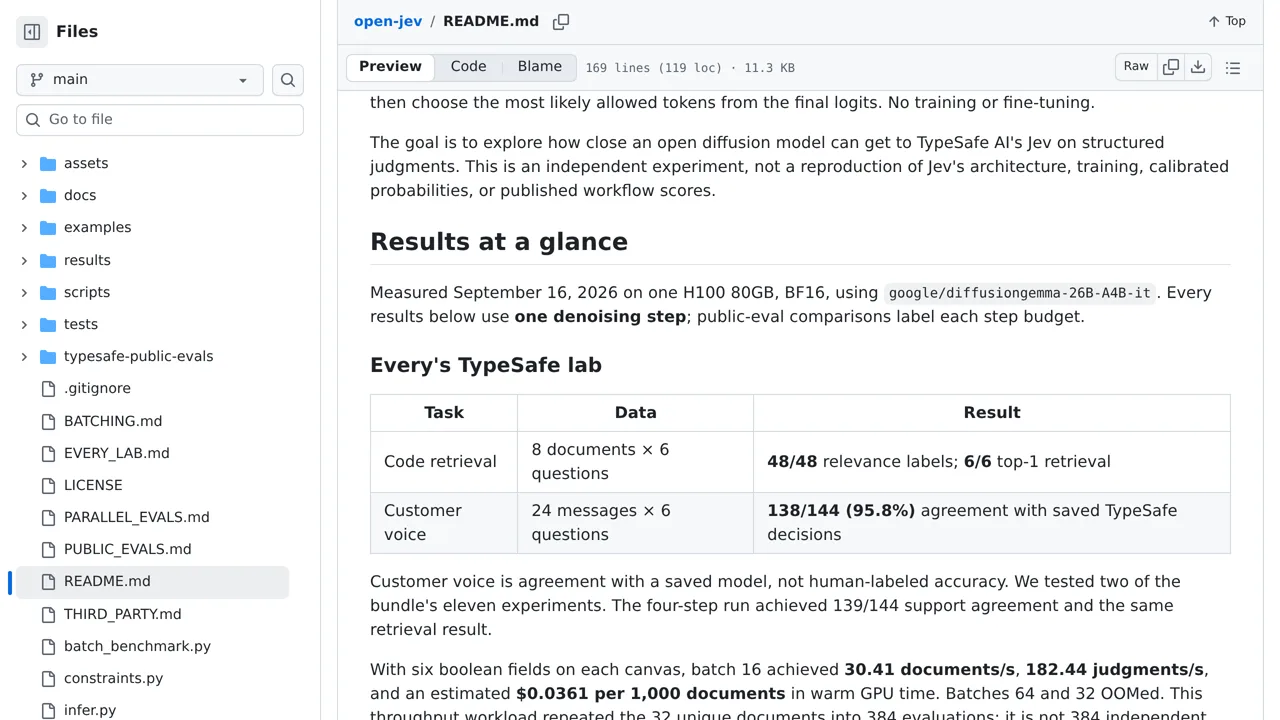
OpenJev is a Jev-compatible decision server built on DiffusionGemma.
Compare Jev and two language models as they control the same simulated xArm7 apple-placement task.

An open reimplementation trains a lightweight decision head for Choice, Score and Noul questions.
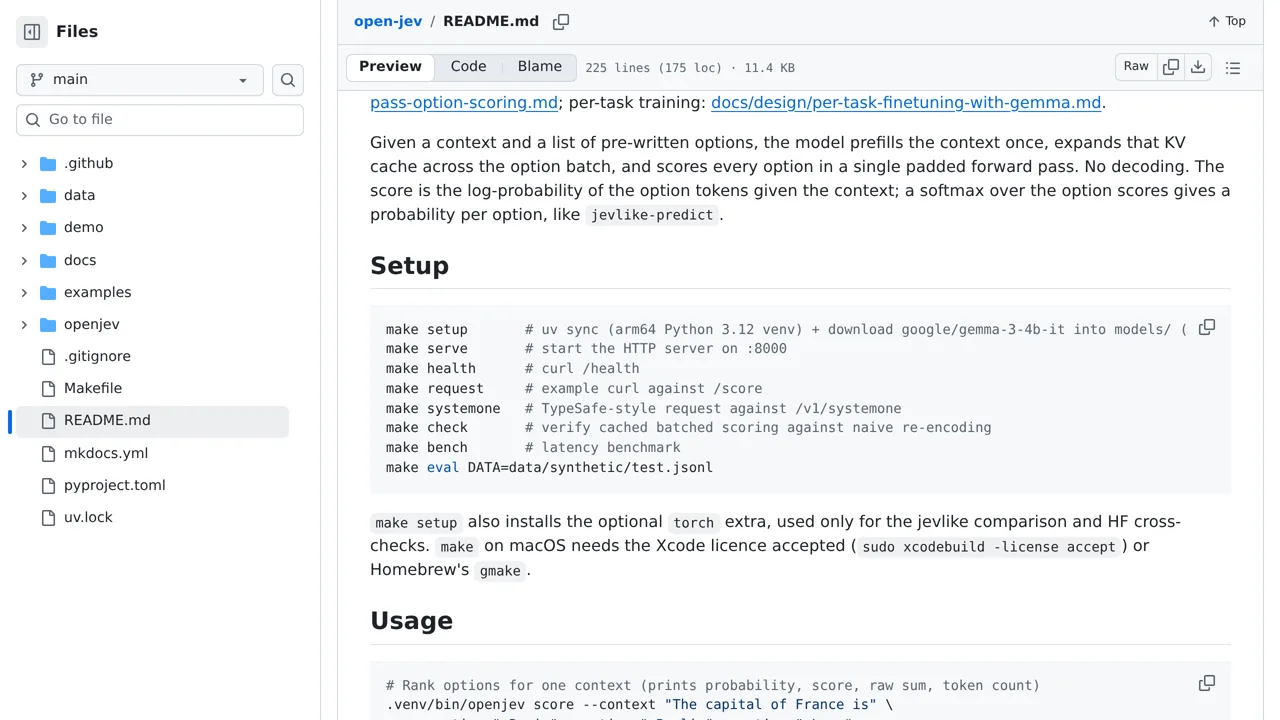
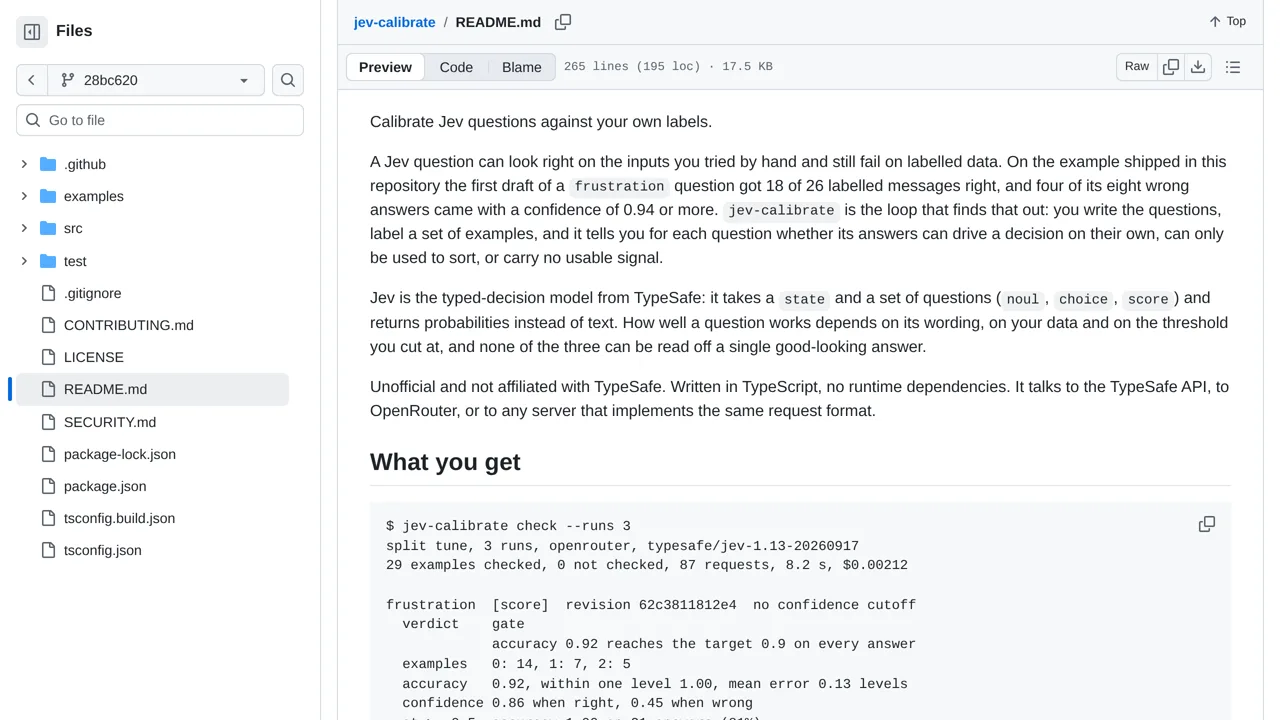
Checks Jev questions against labelled data and reports whether each can gate decisions, rank examples, or carries no useful signal.
Provides a fast random baseline that speaks the Jev protocol without reading the prompt.
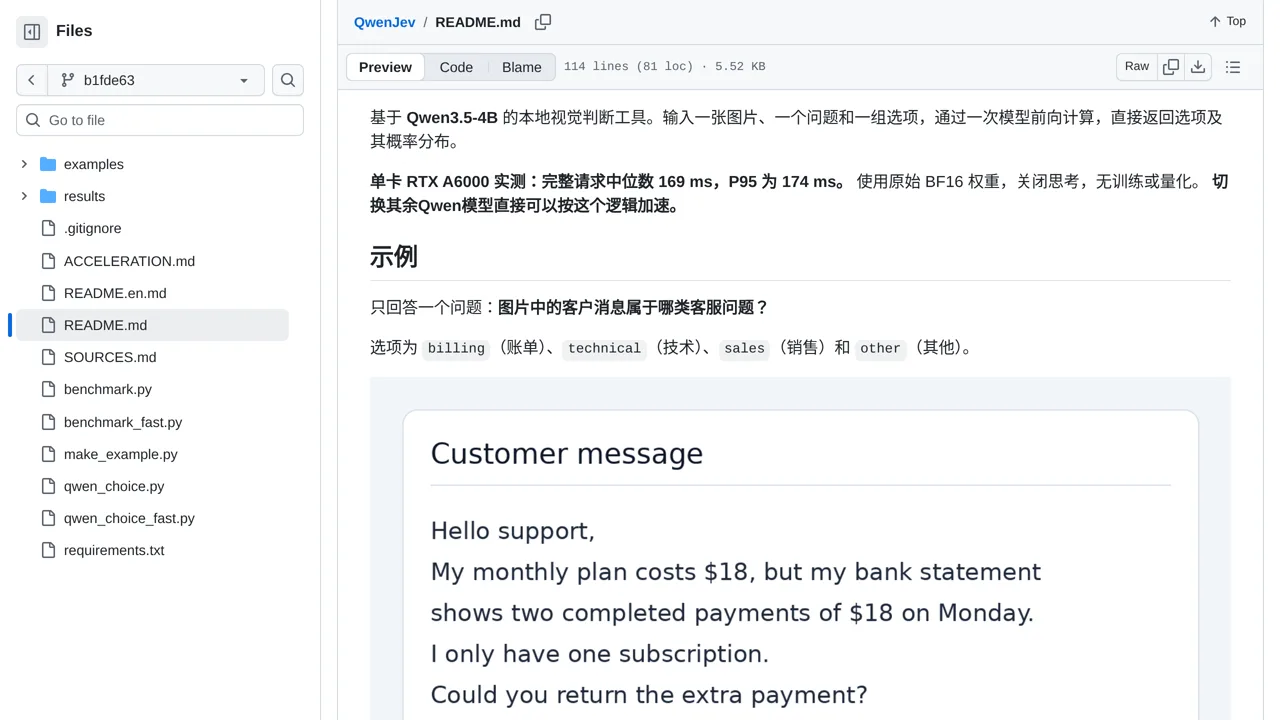
Qwen Choice reads option logits from a local vision-language model to classify one image without generating an answer.
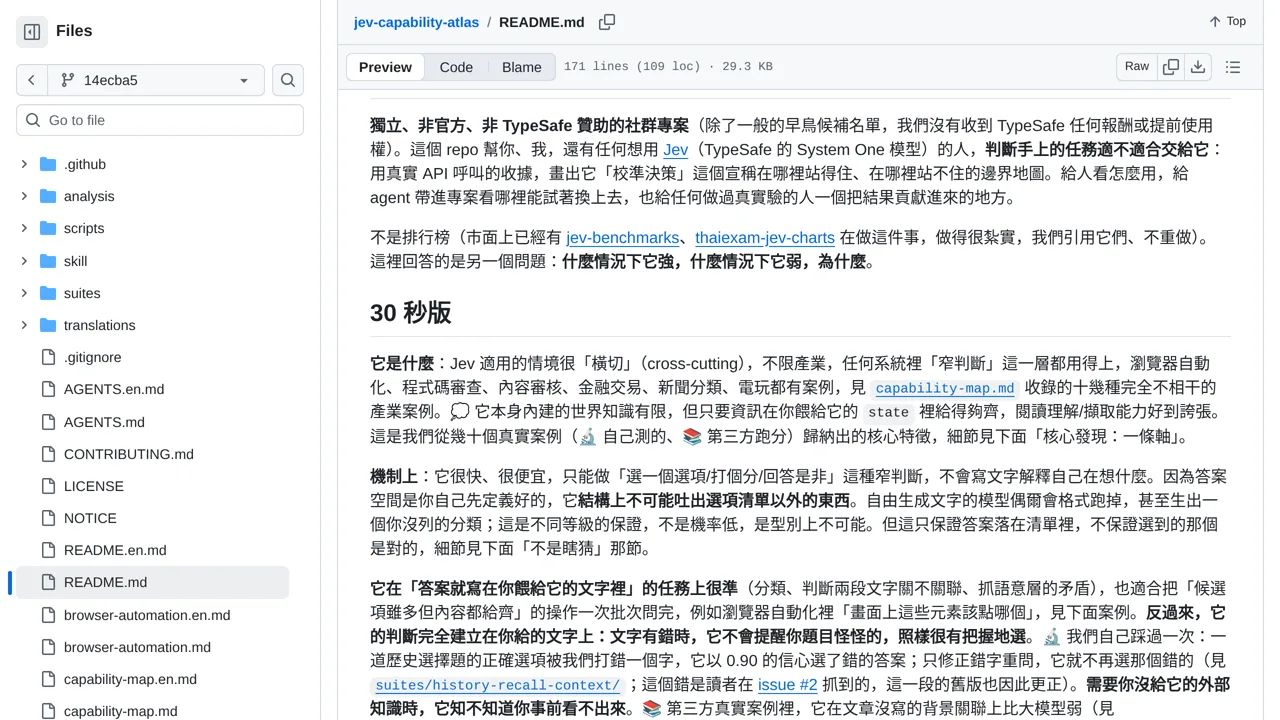
Maps where Jev succeeds or fails using reproducible API receipts, external studies, and bilingual explanations rather than a leaderboard.
Decider fine-tunes Qwen3.5-2B to make typed choices with calibrated probabilities in one pass.

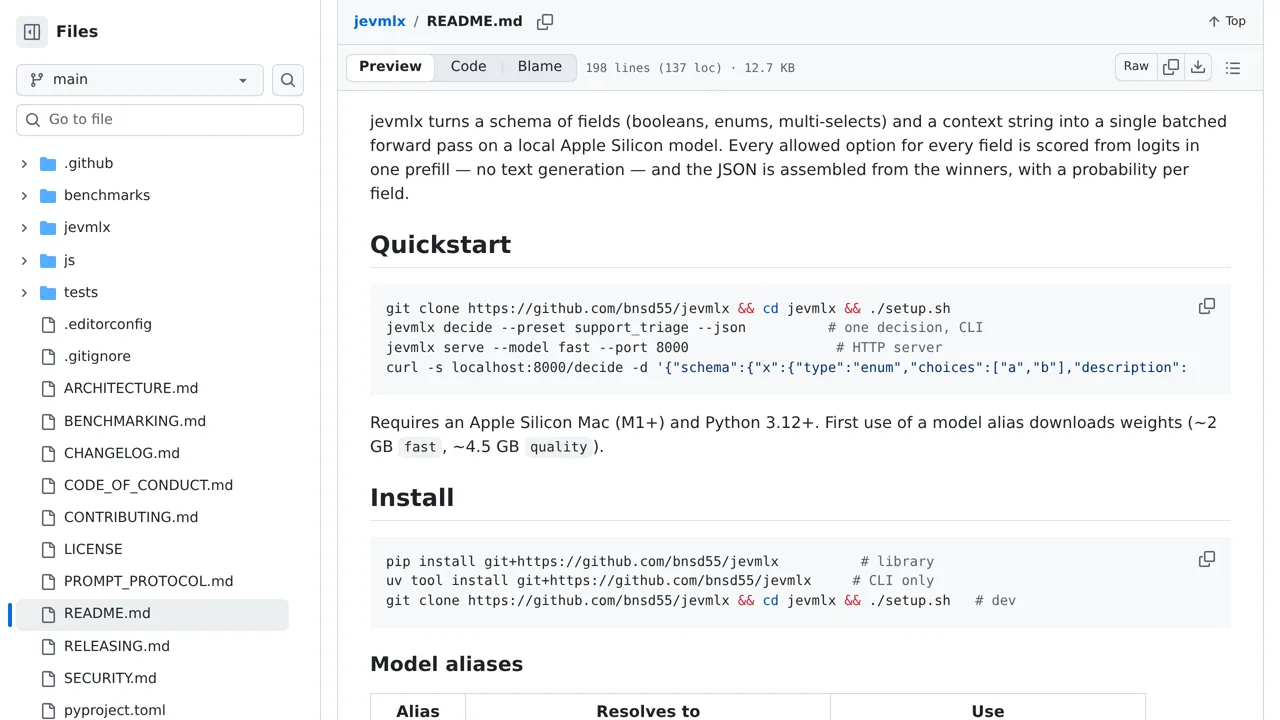
JevMLX adds parallel constrained decisions and schema-valid JSON to MLX models on Apple Silicon.
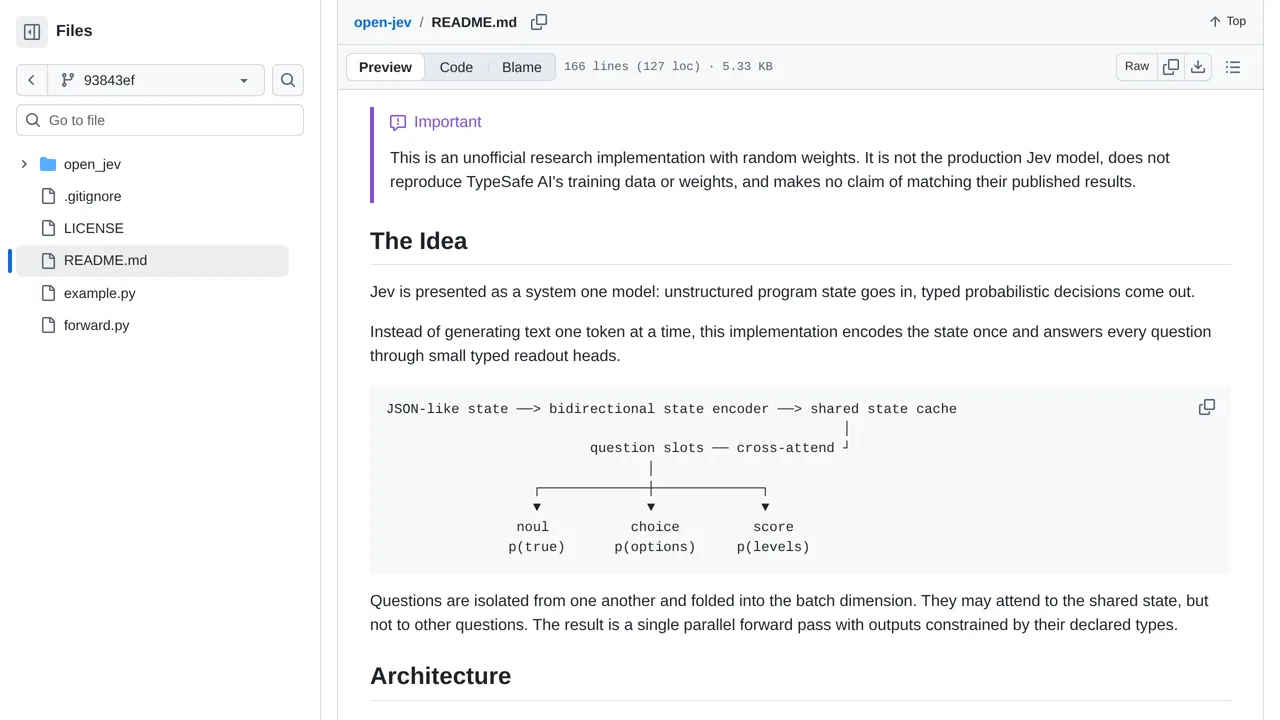
A compact PyTorch teaching implementation explores a Jev-inspired encoder, shared state cache, and typed readout heads.
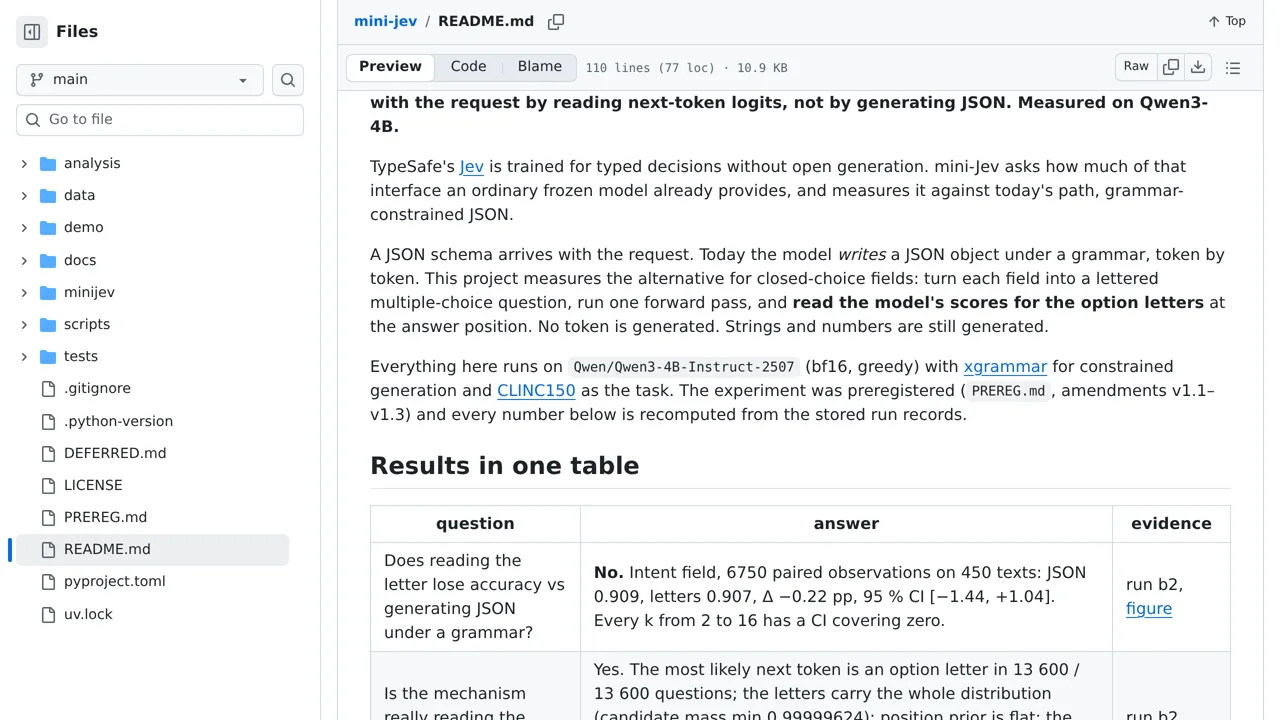
Mini-Jev reads option-letter logits from a frozen Qwen3-4B instead of asking the model to generate JSON.
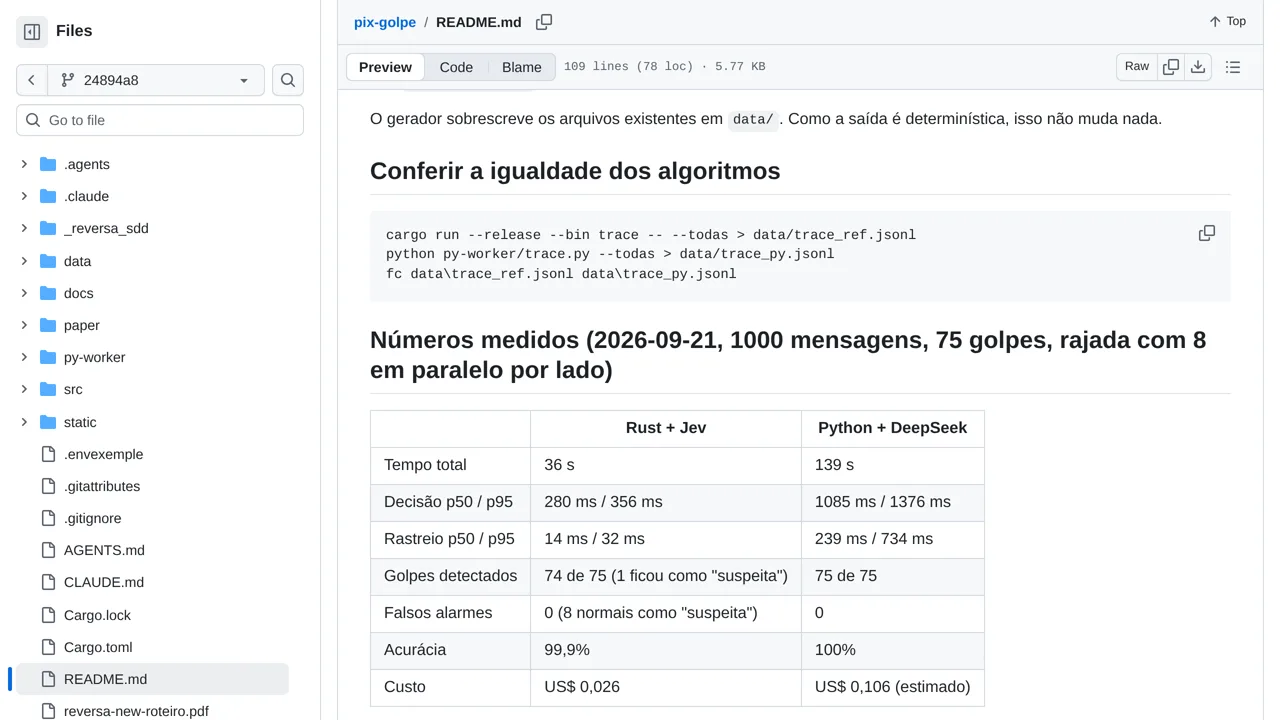
Compare Rust plus Jev with Python plus DeepSeek as both sides flag simulated Pix scams and trace the same criminal network.
Explores an agent runtime where Jev selects from bounded, pageable actions while local code manages context and execution.
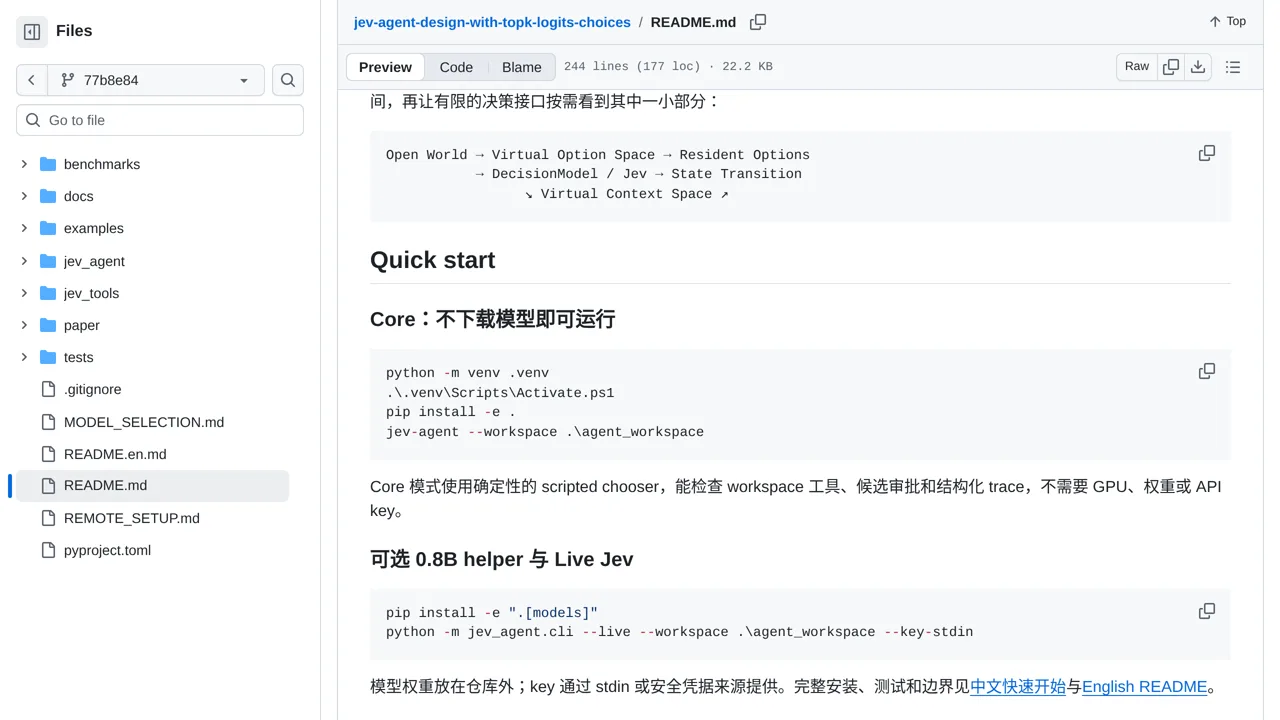
Run Laya's typed-decision model on Apple Silicon with selectable memory modes and a Pong latency demo; this is not TypeSafe's Jev.
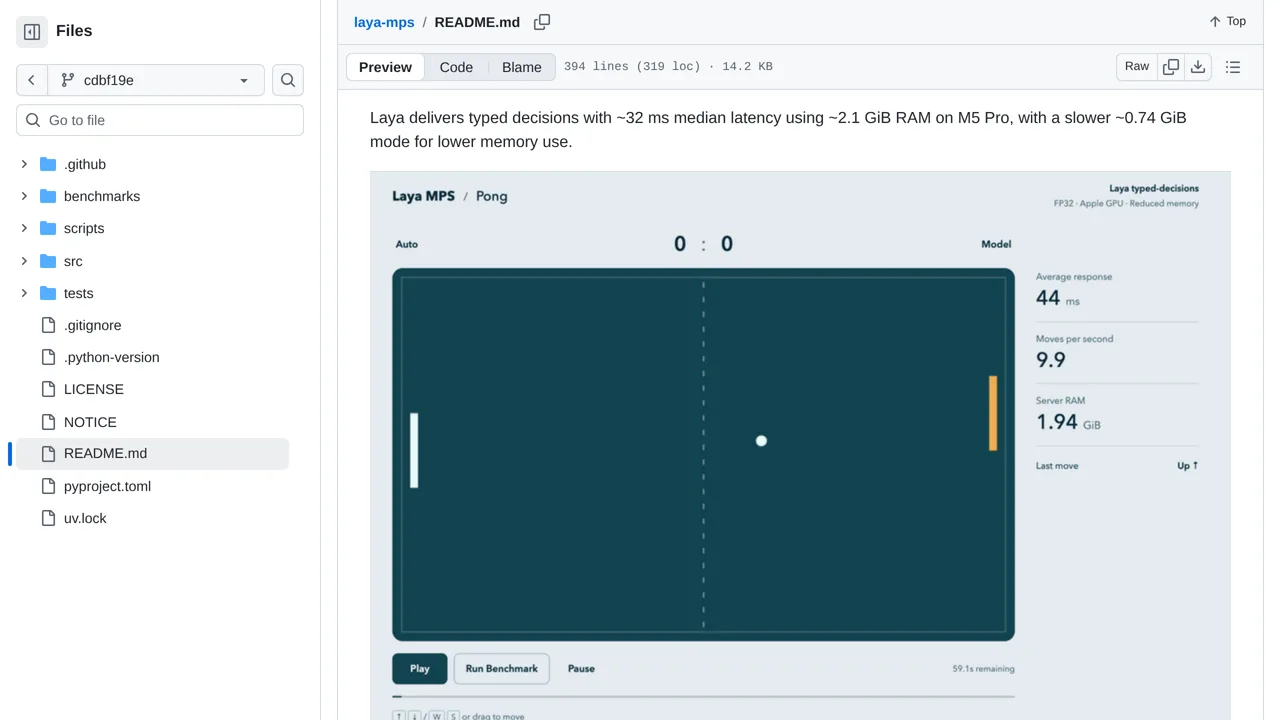
Evaluates whether classifier confidence is calibrated and derives human-review thresholds from the cost of mistakes.
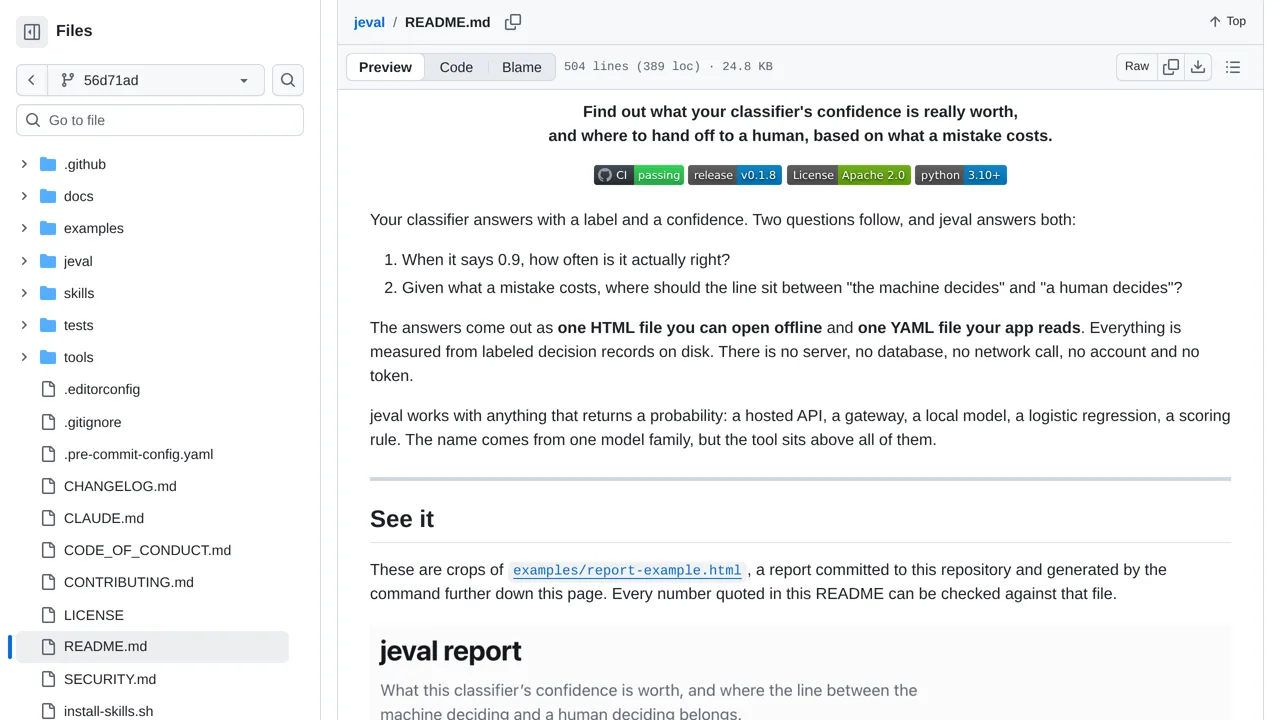
This study benchmarks parallel typed decisions on unmodified 1.5B–8B models running on Apple Silicon.
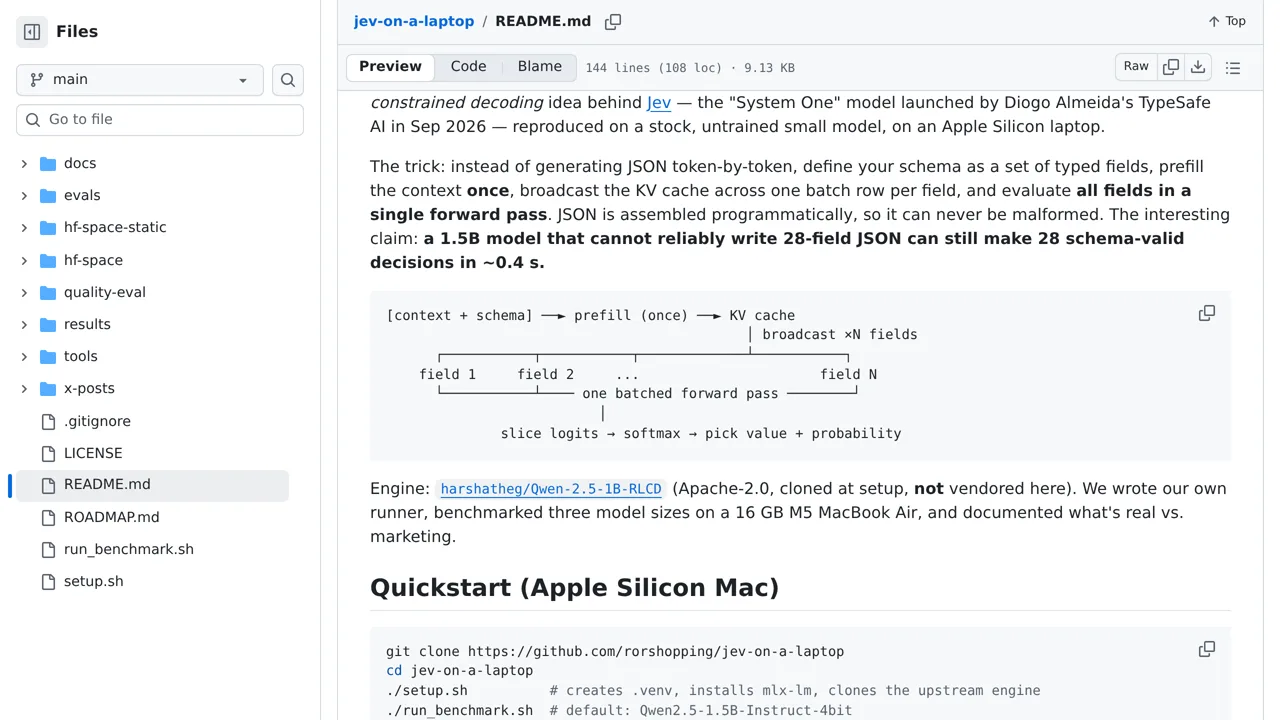
An experiment in getting structured JSON answers from DiffusionGemma, with benchmarks against Every and Jev.
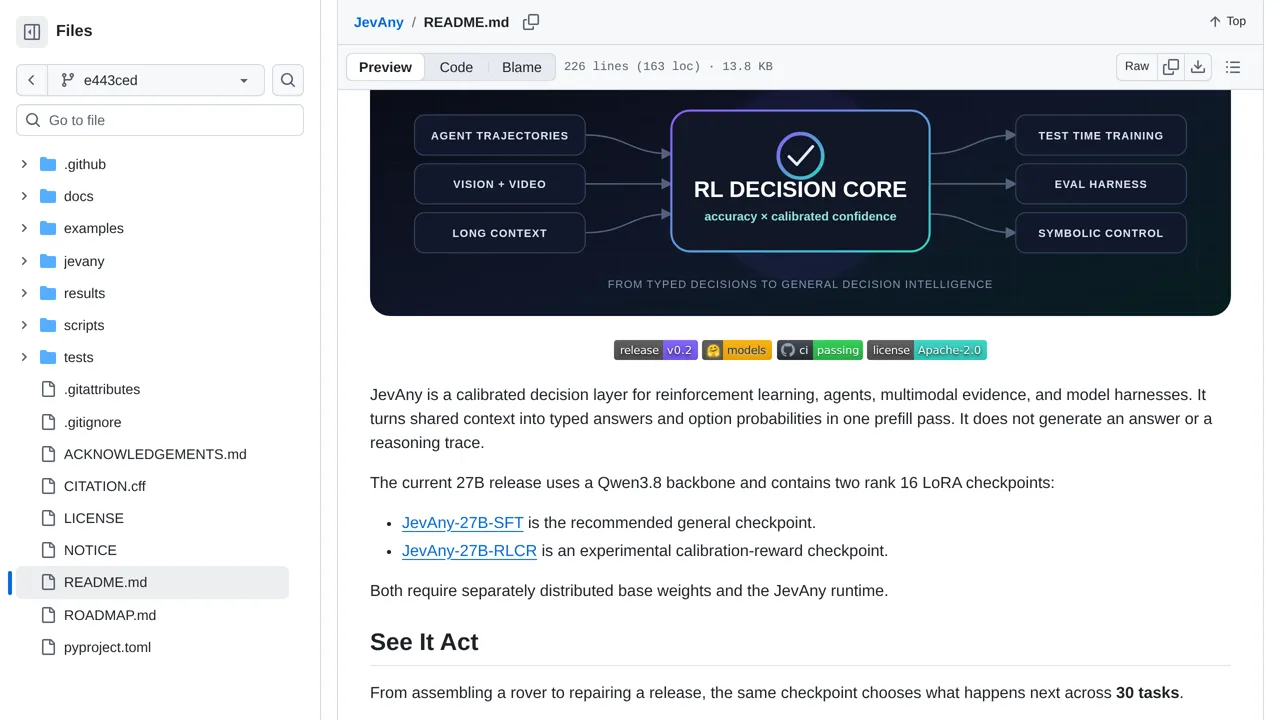
Studies calibration-aware reinforcement learning for adaptive decision systems through training and benchmark harnesses.
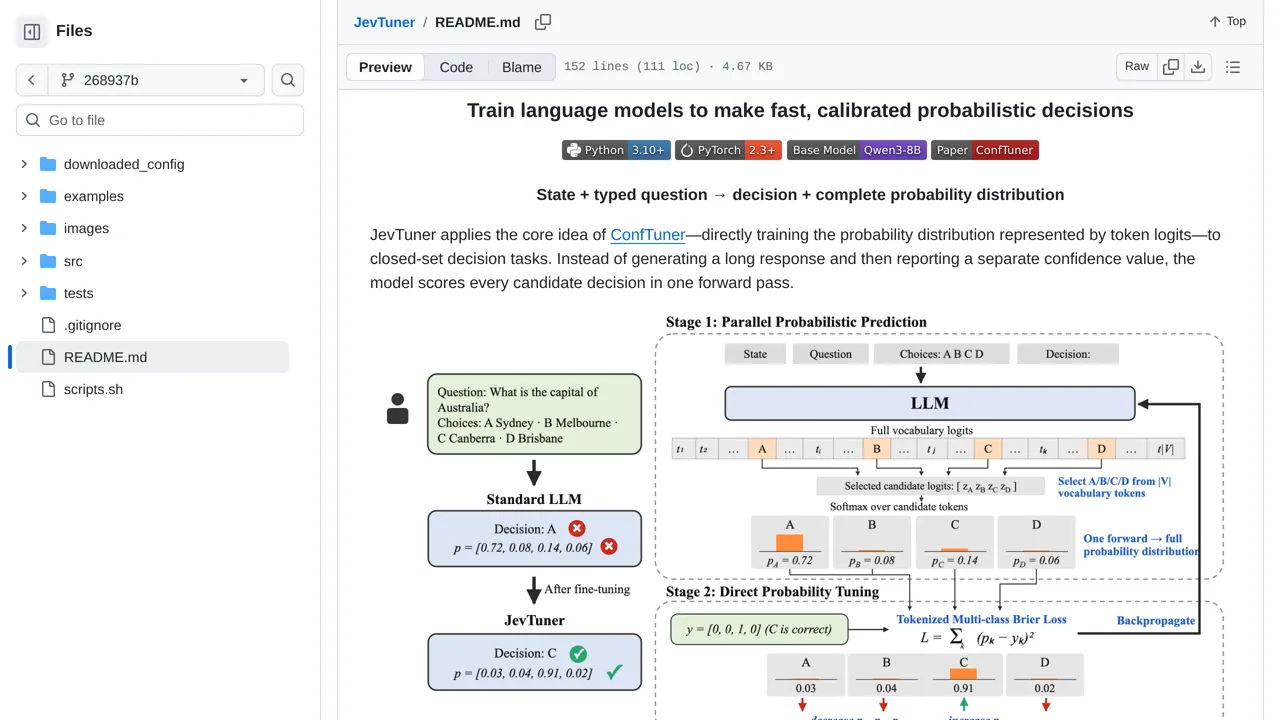
Train a Qwen-based closed-choice model by applying Brier loss directly to candidate-token probabilities; it explores Jev's decision-first idea but is not Jev.
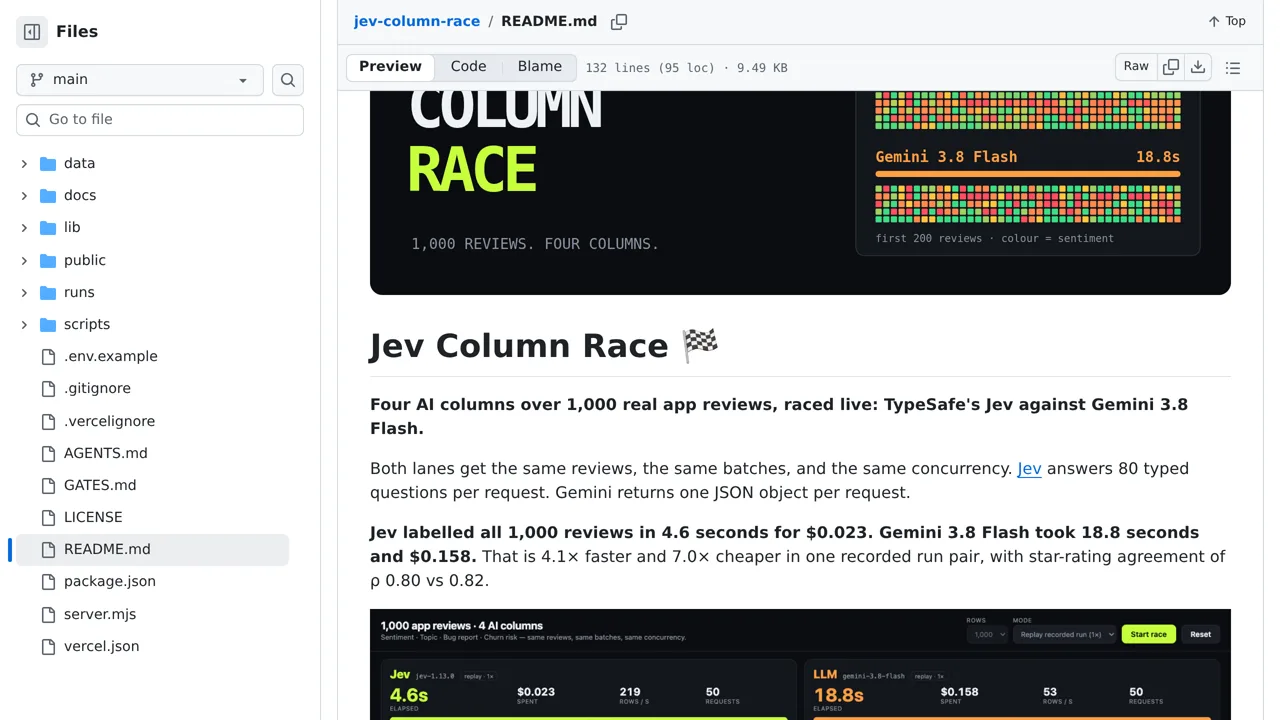
A benchmark labels 1,000 app reviews with Jev and Gemini 3.8 Flash side by side.
An independent text-scoring model that tries to improve on the jevlike starter project.
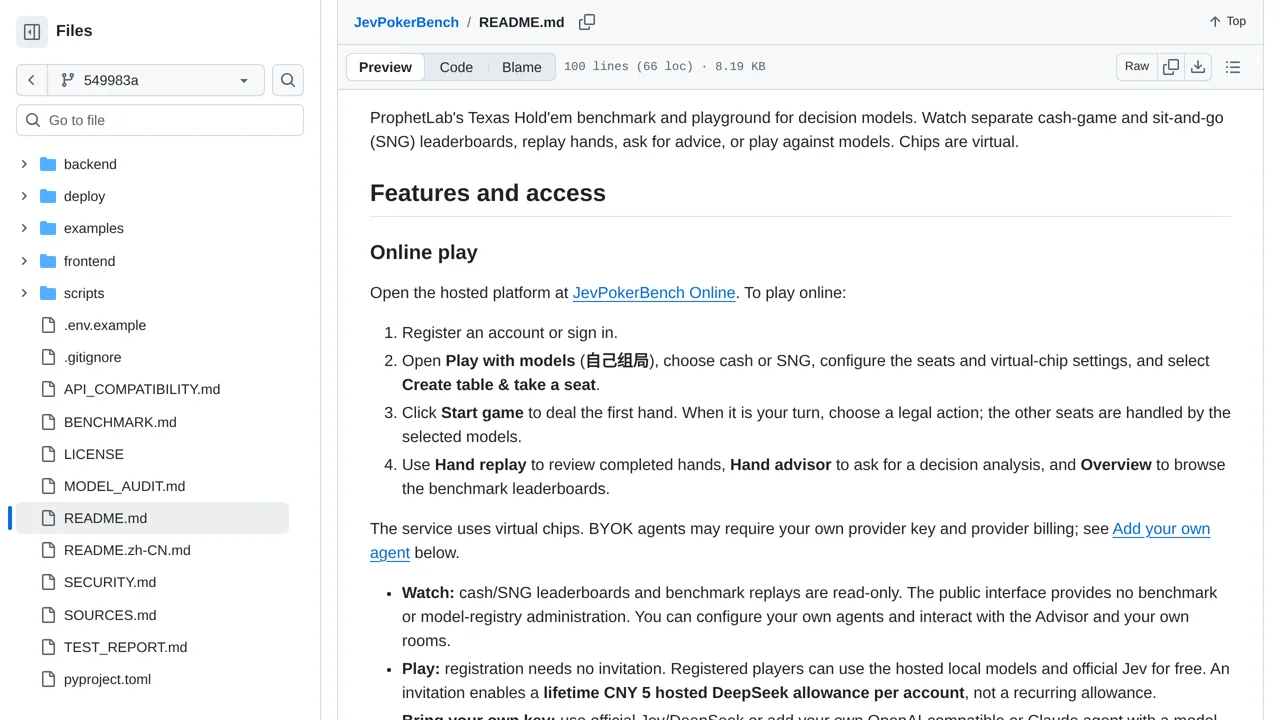
Compare decision models at Texas Hold'em through cash and sit-and-go leaderboards, hand replays and tables for custom agents.
Self-host a Jev-compatible decision engine over Ollama or OpenAI-compatible models, with typed outputs and calibrated probabilities; it does not run TypeSafe's Jev.
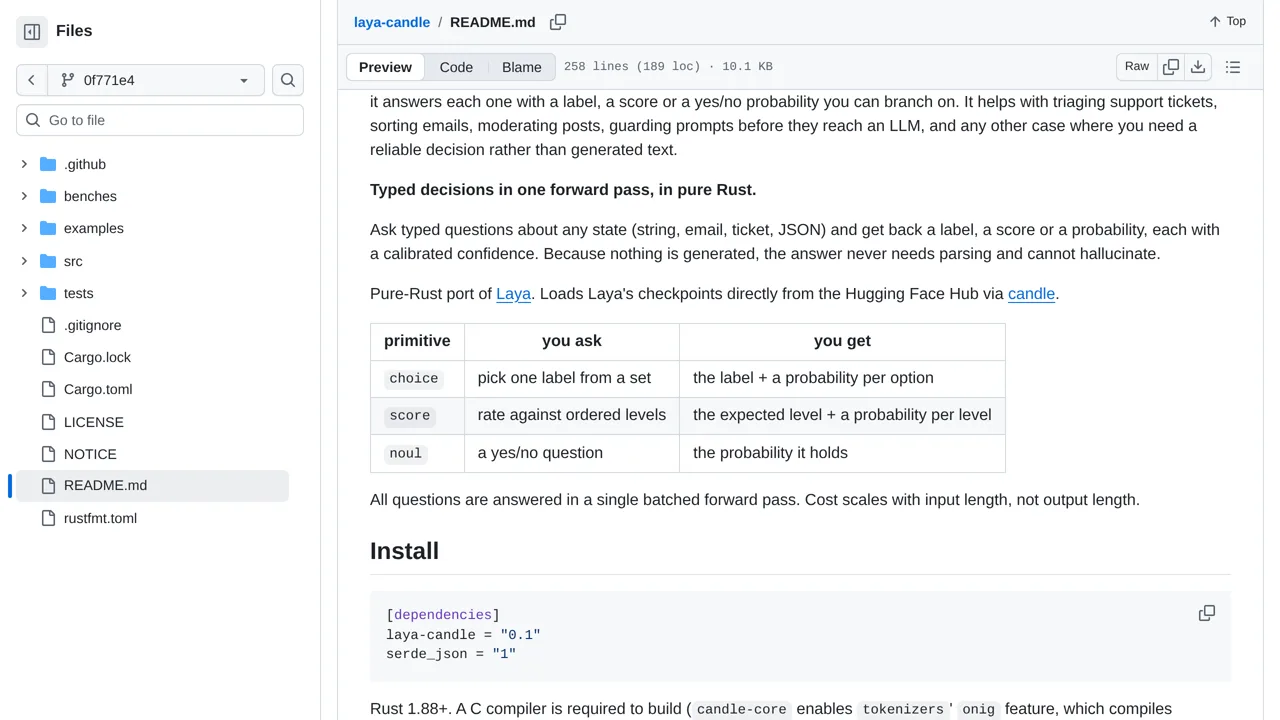
Serve Laya typed decisions through a Rust Candle runtime for local CPU or GPU inference; this is a Jev-compatible alternative, not Jev.
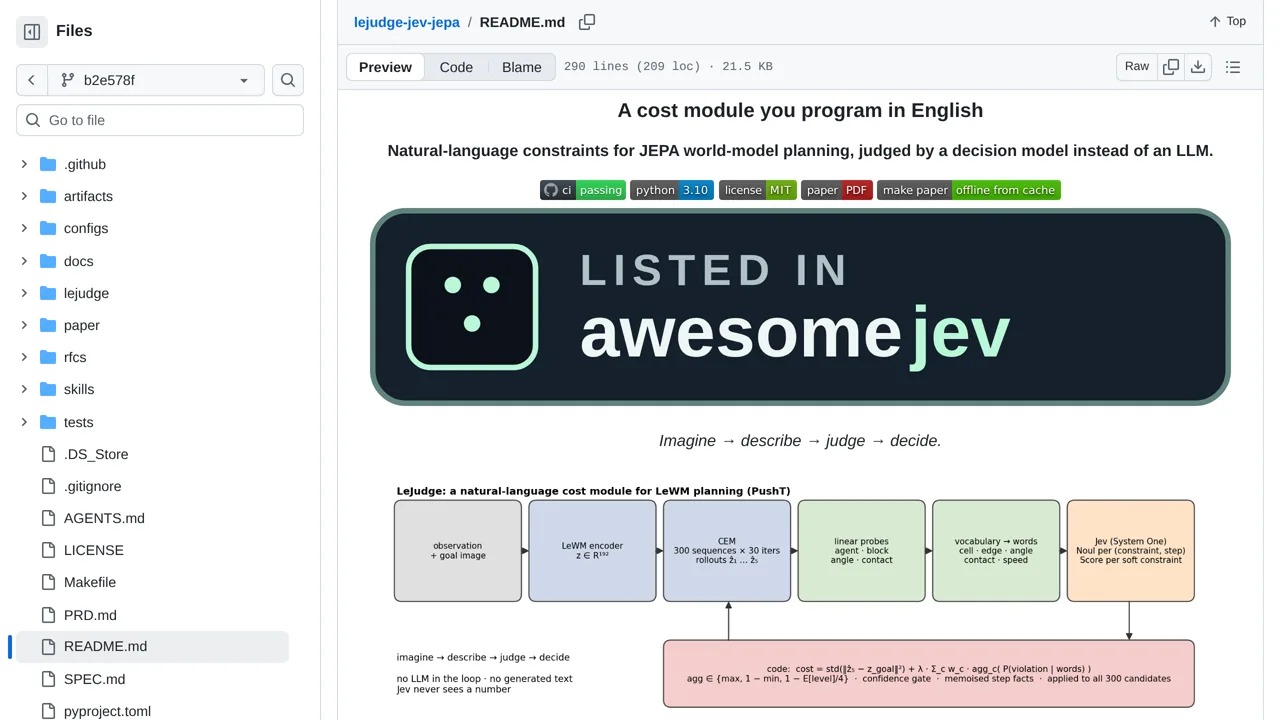
Add natural-language constraints to JEPA planning by asking Jev whether probe-described imagined states violate each rule, then folding probabilities into planning cost.
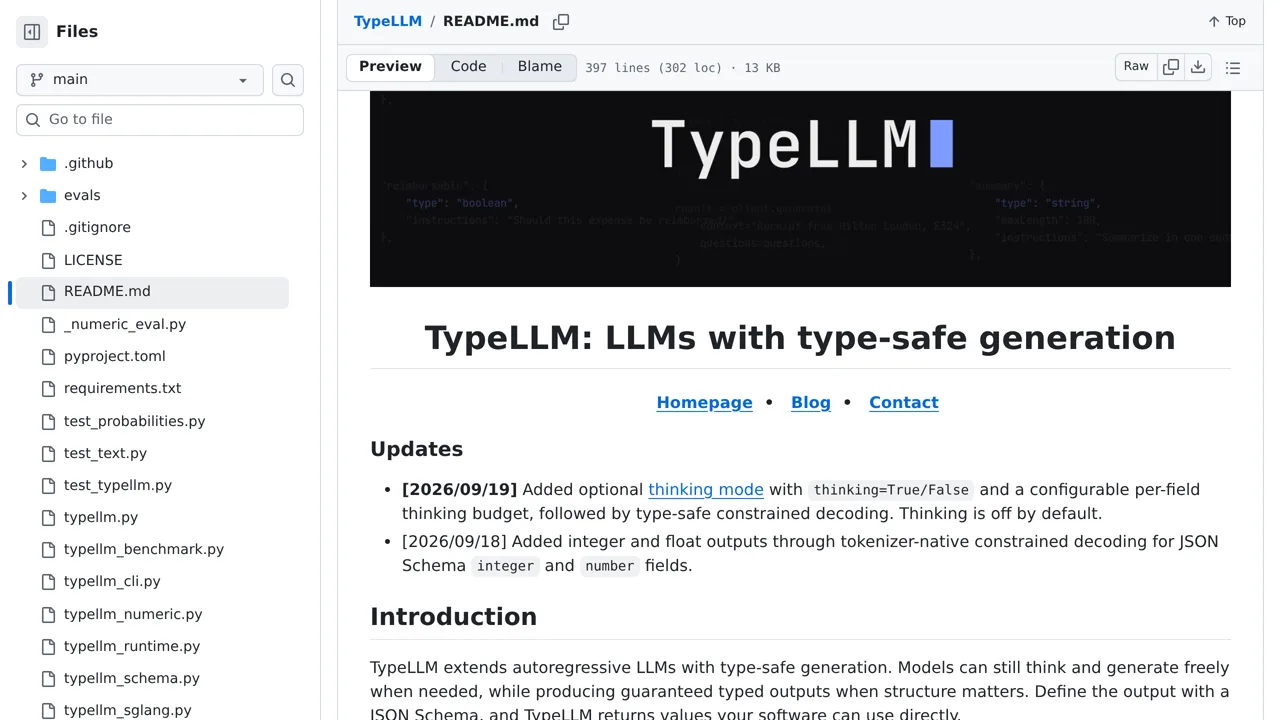
TypeAR studies type-safe constrained decoding for autoregressive language models.
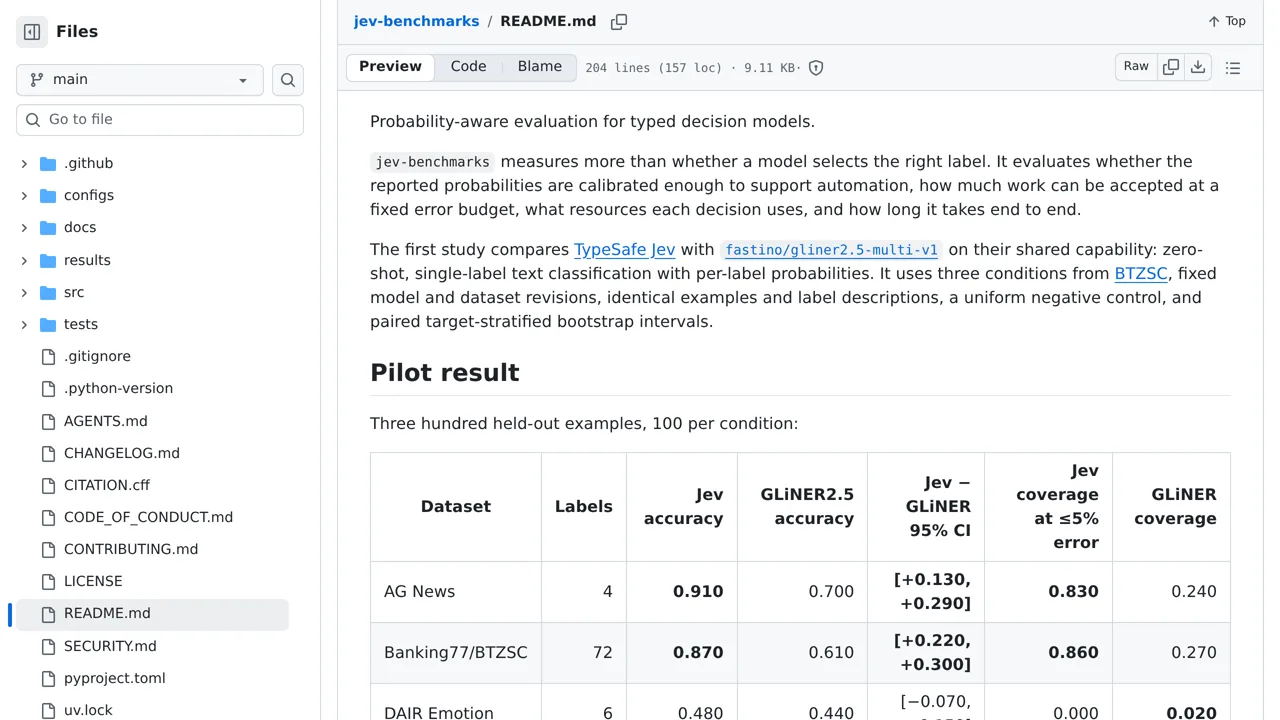
A reproducible evaluation suite measures calibration, selective risk and latency in probabilistic decision models.
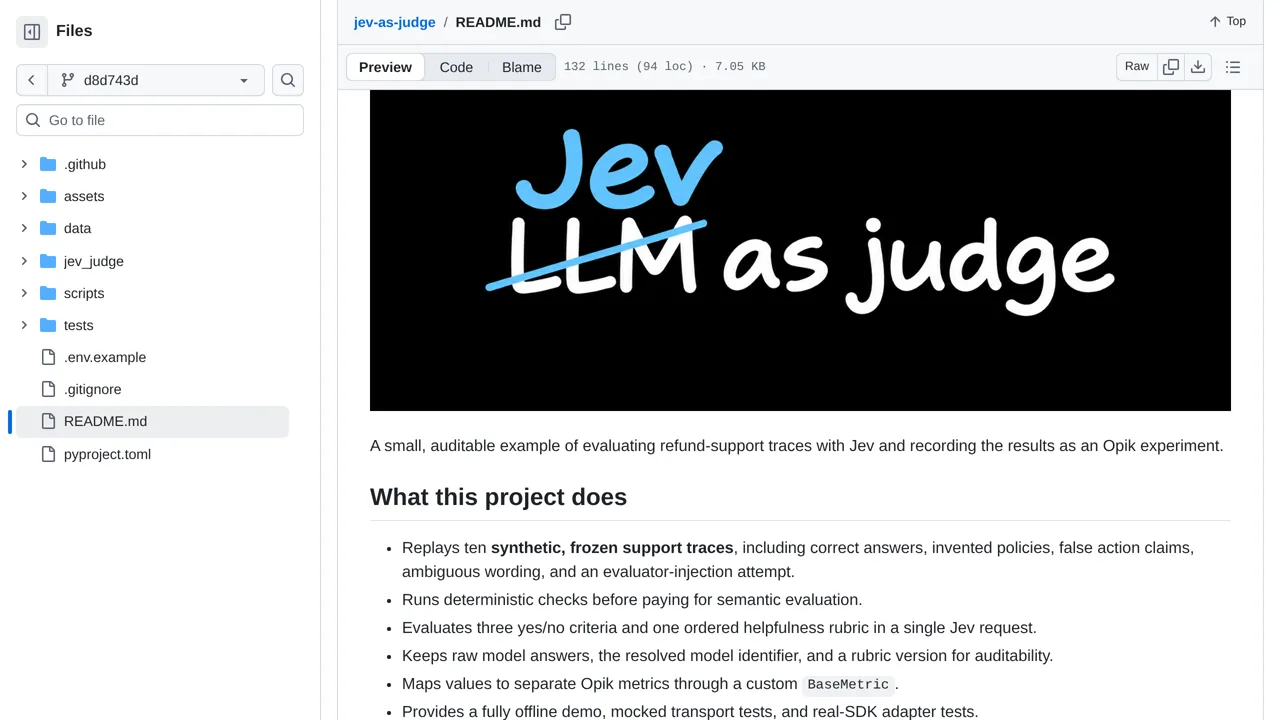
Evaluates synthetic refund-support traces with four typed criteria and records auditable results as an Opik experiment.
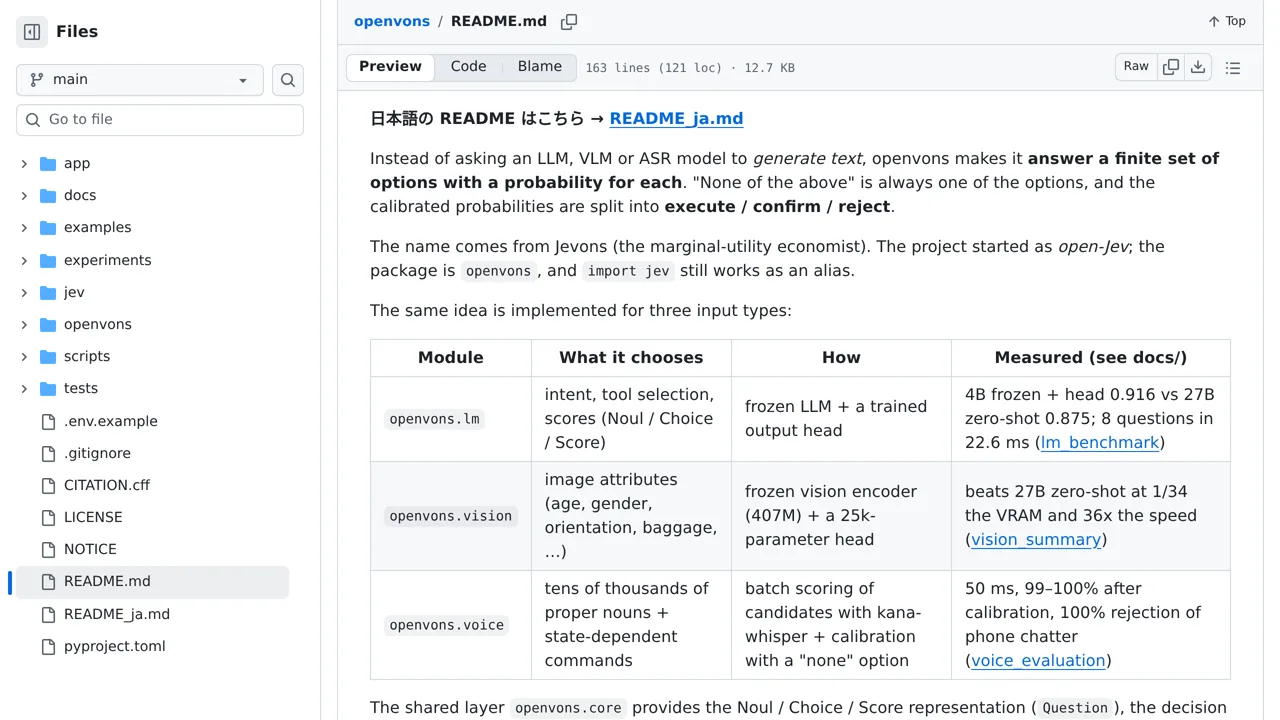
OpenVons answers finite-choice questions with probabilities across text, images and Japanese voice commands.
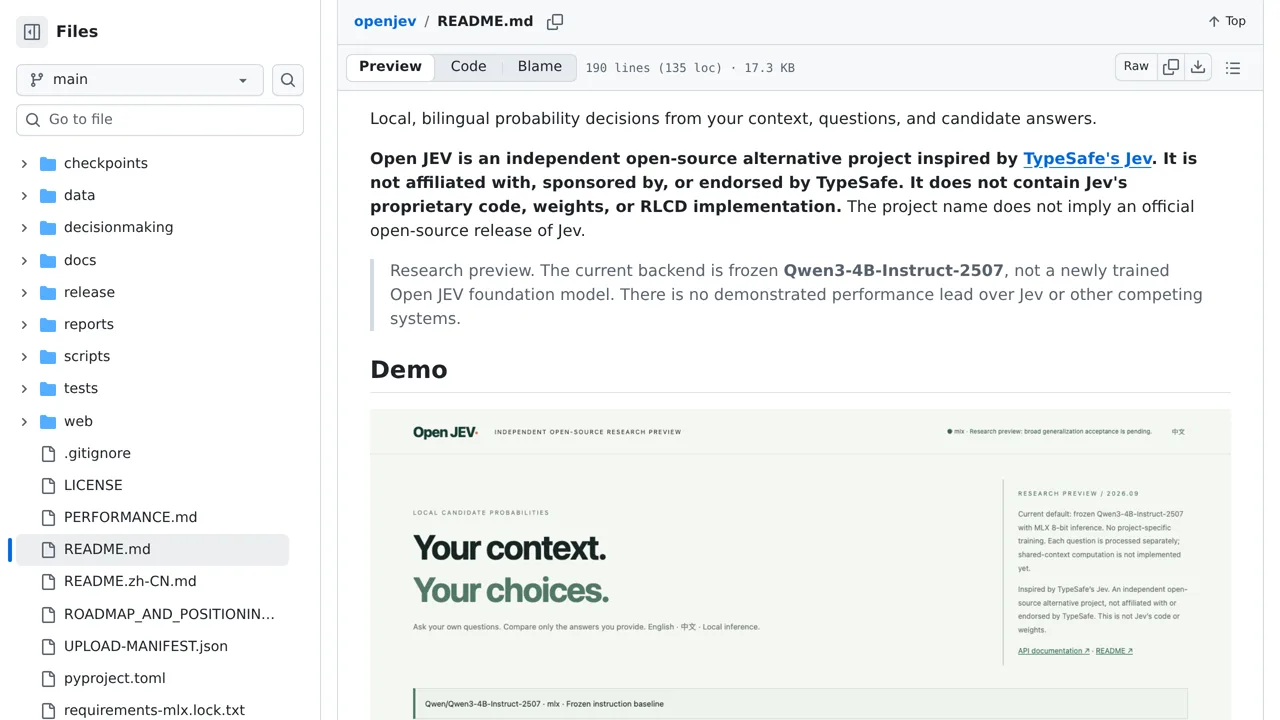
An independent bilingual decision model inspired by Jev, designed to run locally.
system-one performs batched, single-token choice inference with open language models through a TypeSafe-compatible interface.

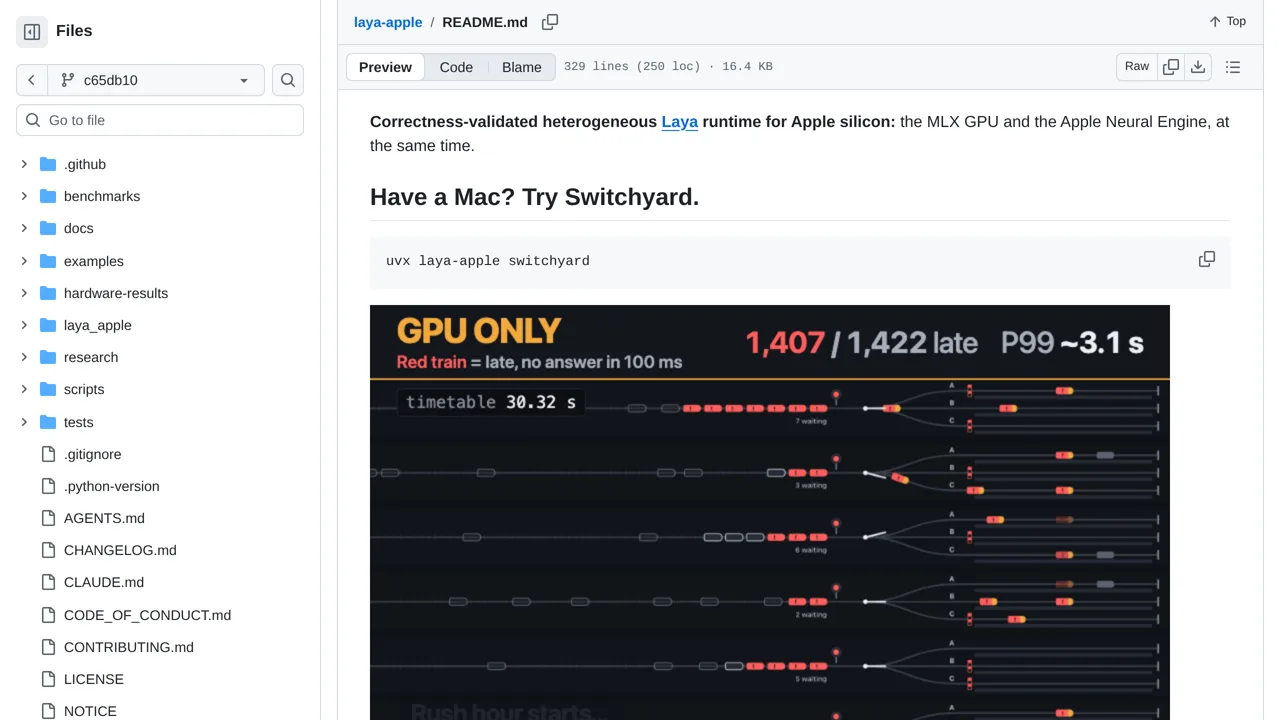
Run the open-weight Laya decision model locally on Apple Silicon through an Apple-focused runtime; it is Jev-compatible but does not use Jev.
A bilingual English-Chinese guide explains notable Jev applications, how they work and their trade-offs.

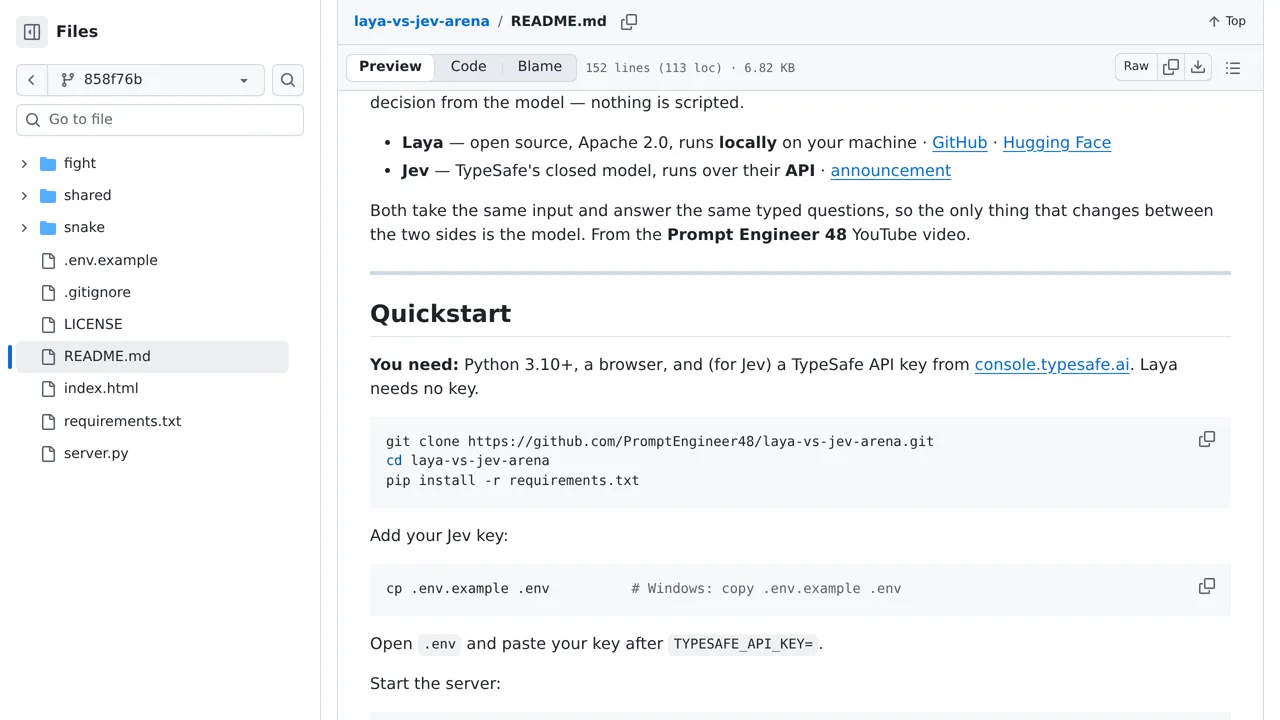
Pit local Laya against Jev in matched snake races and fighting-game rounds, or assign either model to both sides.
Jev, briefly
A chat model generates text token by token and hopes you parse it. Jev never generates a word. Your code sends the state of the world plus typed questions; Jev returns every answer in one parallel pass — typed values with calibrated probabilities and a confidence score your code can trust. About 70–500 ms end to end, $0.042 per million input tokens, output free. Trained with what TypeSafe calls Reinforcement Learning for Calibrated Decisions.
You define the options. Jev returns the chosen option, a probability for every option, and a confidence. The workhorse of routing, agents, and games — the answer space is always legal, so there is nothing to parse and nothing to hallucinate.
You describe ordered levels — say trivial / normal / critical. Jev returns the level, the probability of each, and a confidence. Scores turn fuzzy judgment (“how severe is this log line?”) into a number-free decision your code can branch on.
You assert a statement; Jev returns the probability that it is true — a noul. Moderation, verification, guardrails, “does this diff actually fix the bug?”: one question, one calibrated probability.
Official material lives at typesafe.ai and docs.typesafe.ai. JevMade is an independent community registry — not affiliated with or endorsed by TypeSafe AI.
Recurring lessons
Games, drones, trading bots, and browser agents all converge on the same loop: serialize the state, ask one decisive question, act, repeat. Jev’s latency makes the loop feel instant — the model lives inside the control loop, not outside it.
The answer says what; the confidence says whether to act. The most reliable entries threshold on confidence to route edge cases to a slower model or a human — automation with an honest escape hatch.
Makers rarely ask Jev to pick from everything. Local tactics prune 225 gomoku moves to ~40; DOM filters turn a page into an element table; code narrows options, Jev judges within them.
A recurring split: Jev makes every decision cheaply and instantly, and a small LLM is only invoked when a human-facing string must actually be written. Decision and generation are separate budgets.
Send the link — repo, live demo, post, or video — plus a line on what it does and which primitives it uses. Every entry is verified against its primary source before it ships.
Submit your experiment → hello@JevMade.com