Read & learn
Written guides.
Understand Jev, one idea at a time. Walkthroughs, recipes, and writeups — our notes first, the original next.
Learn, build, and play with Jev — from deep technical guides to creative experiments.
Read & learn
Understand Jev, one idea at a time. Walkthroughs, recipes, and writeups — our notes first, the original next.
Watch & learn
See an idea take shape. Tutorials, demos, and deep dives, organized by topic and credited to their creators.
Make & explore
See what builders made with Jev. Games, tools, repositories, articles, and more — traced to their sources.
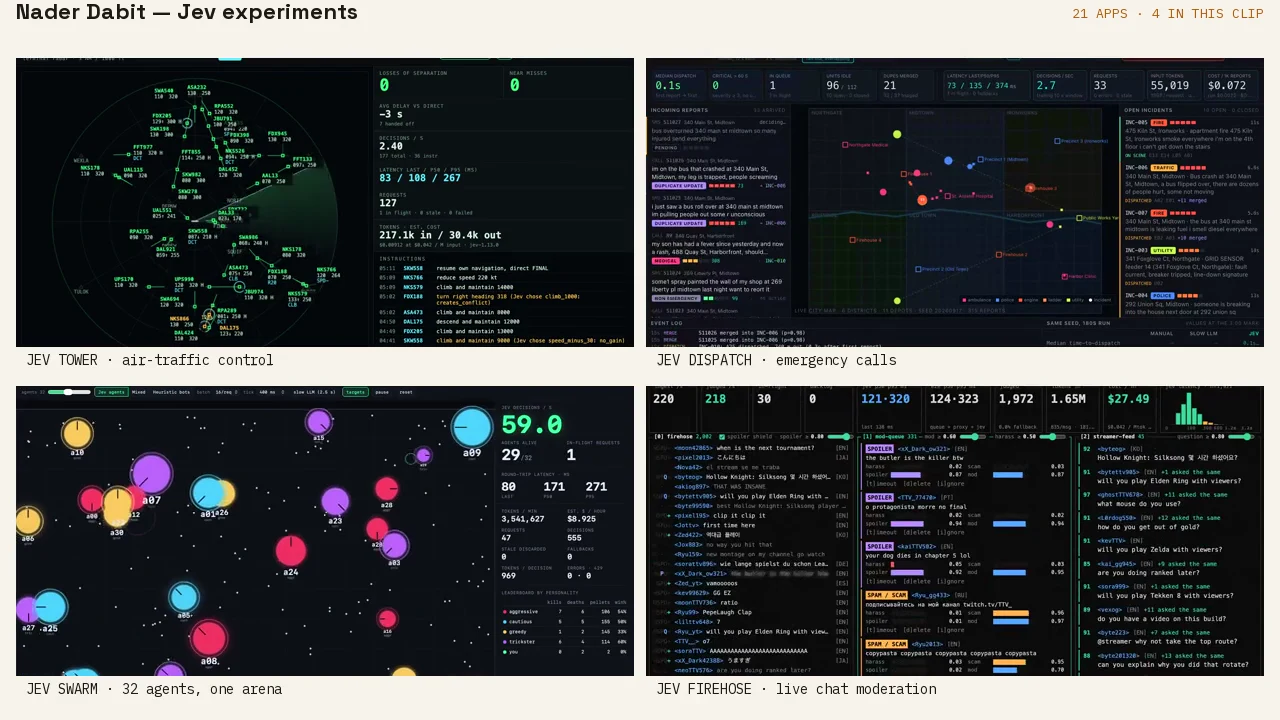
Every category, from games and tools to repositories and writeups, traced to a primary source.
Same ideas.
Different paths.
This is the full registry, not just the featured picks. Figures like speed, cost, and stars are maker-reported or captured snapshots, not JevMade measurements.
29 experiments
Indexes Jev SDKs, integrations, applications, evaluations, and learning material with source-backed annotations.
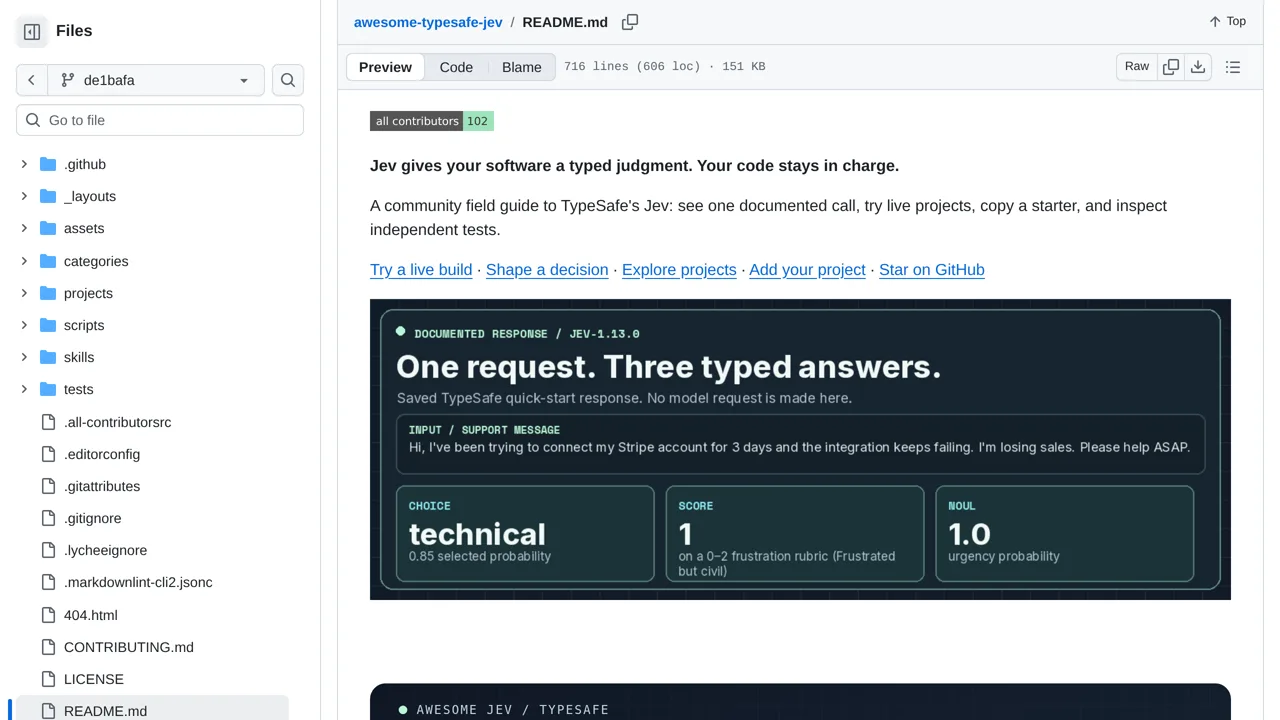
Collects Jev projects, reusable agent skills, and editable decision recipes with an optional validated Python client.
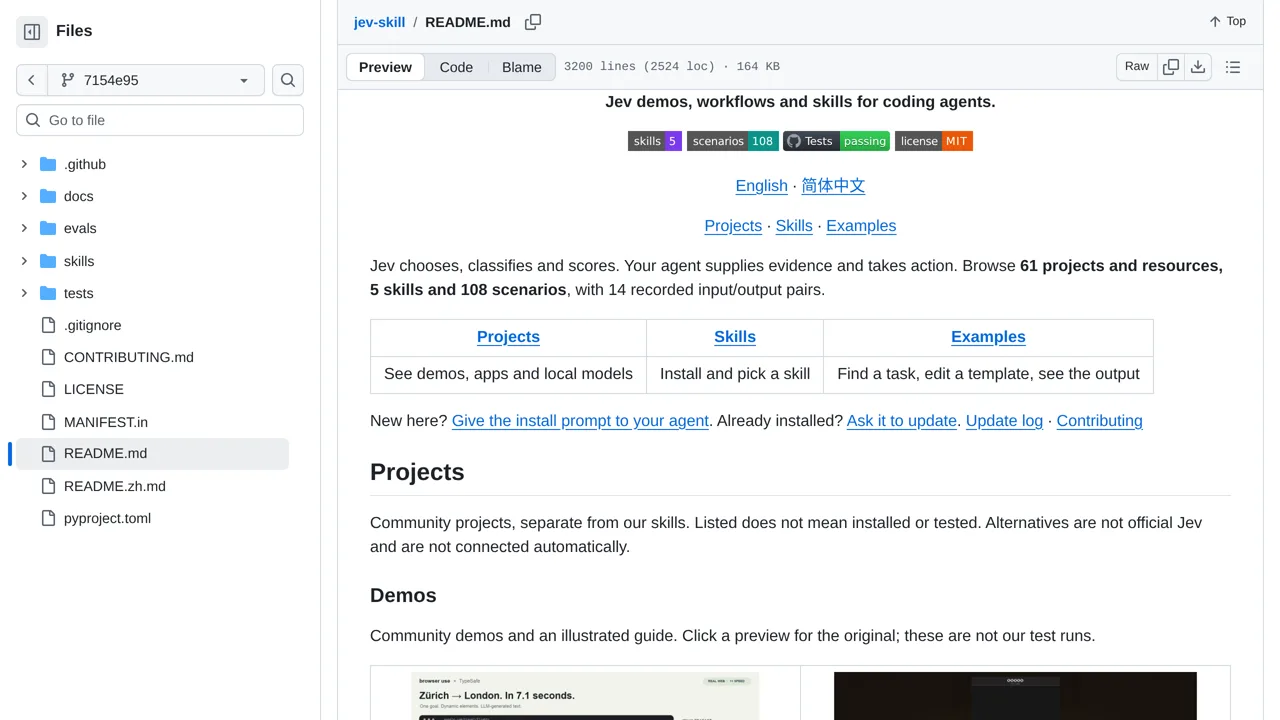
Browse a bilingual, source-linked index of Jev projects grouped by decision pattern, with dated link and call-site checks.
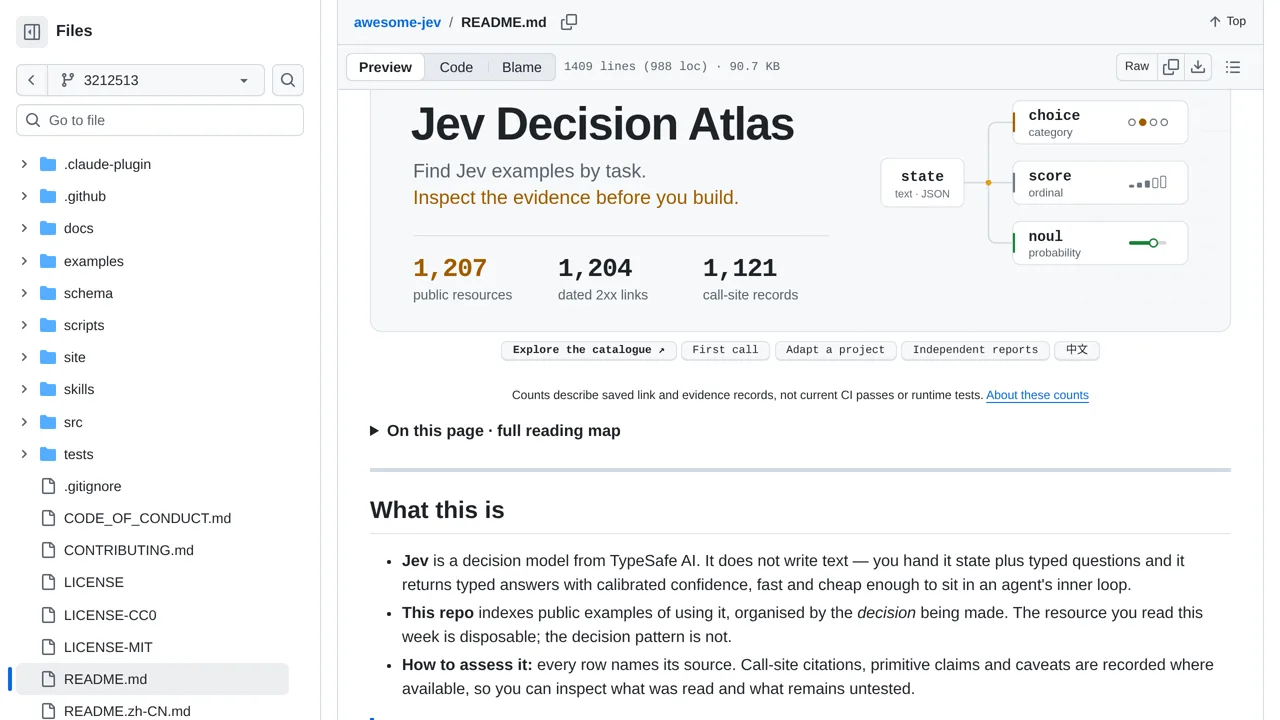
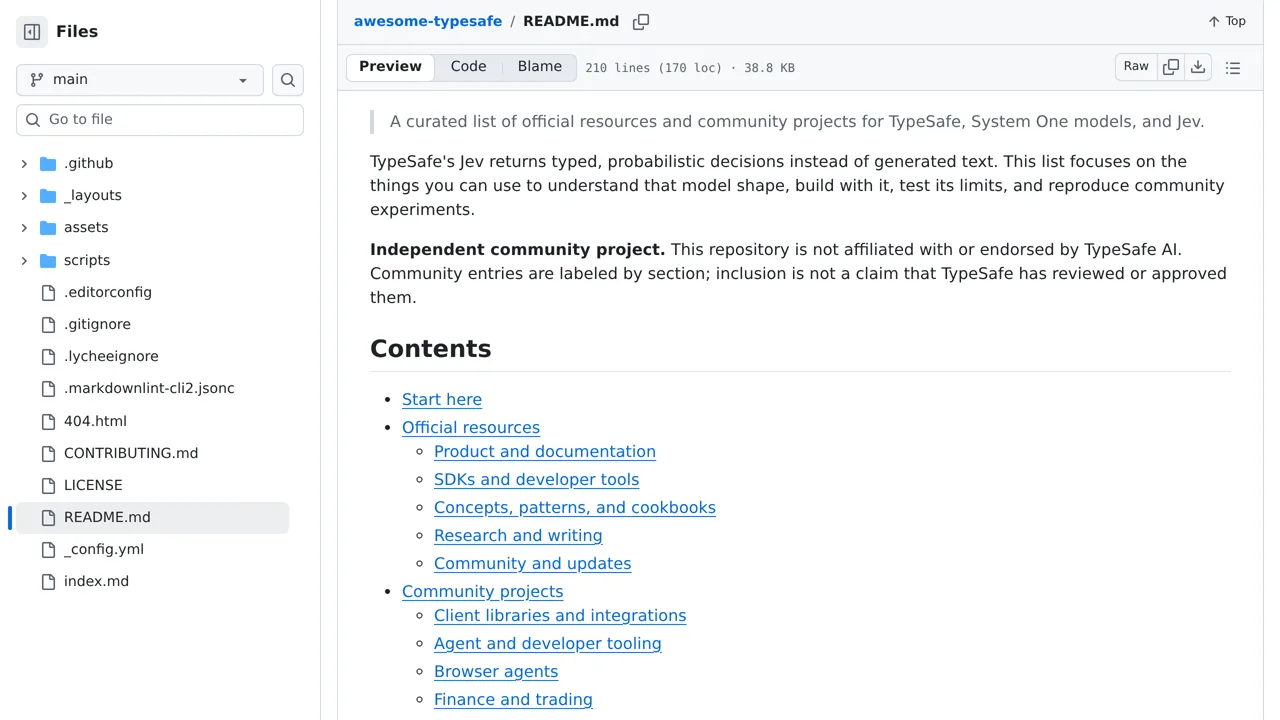
AbdelStark curates official references and community work around TypeSafe, Jev, and System One models.
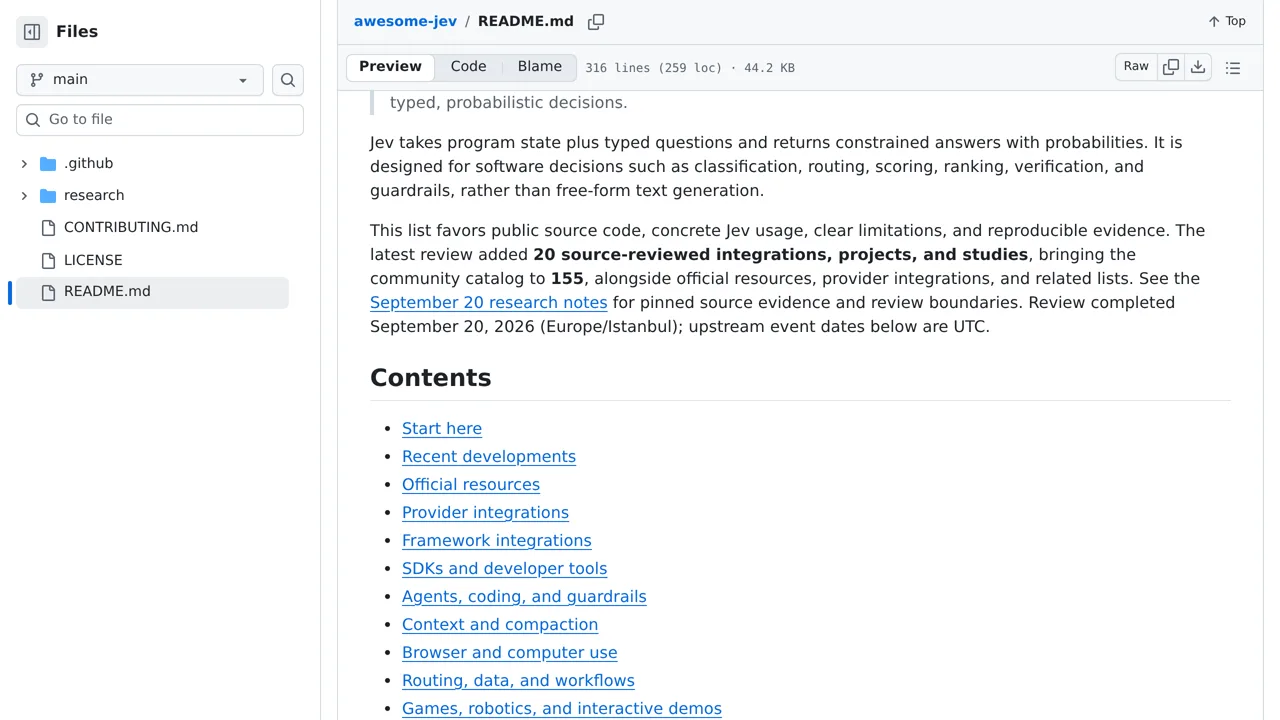
yibie's directory groups public Jev projects, integrations, and discussions by practical use case.

cobanov maintains a source-linked catalog of projects built with Jev.
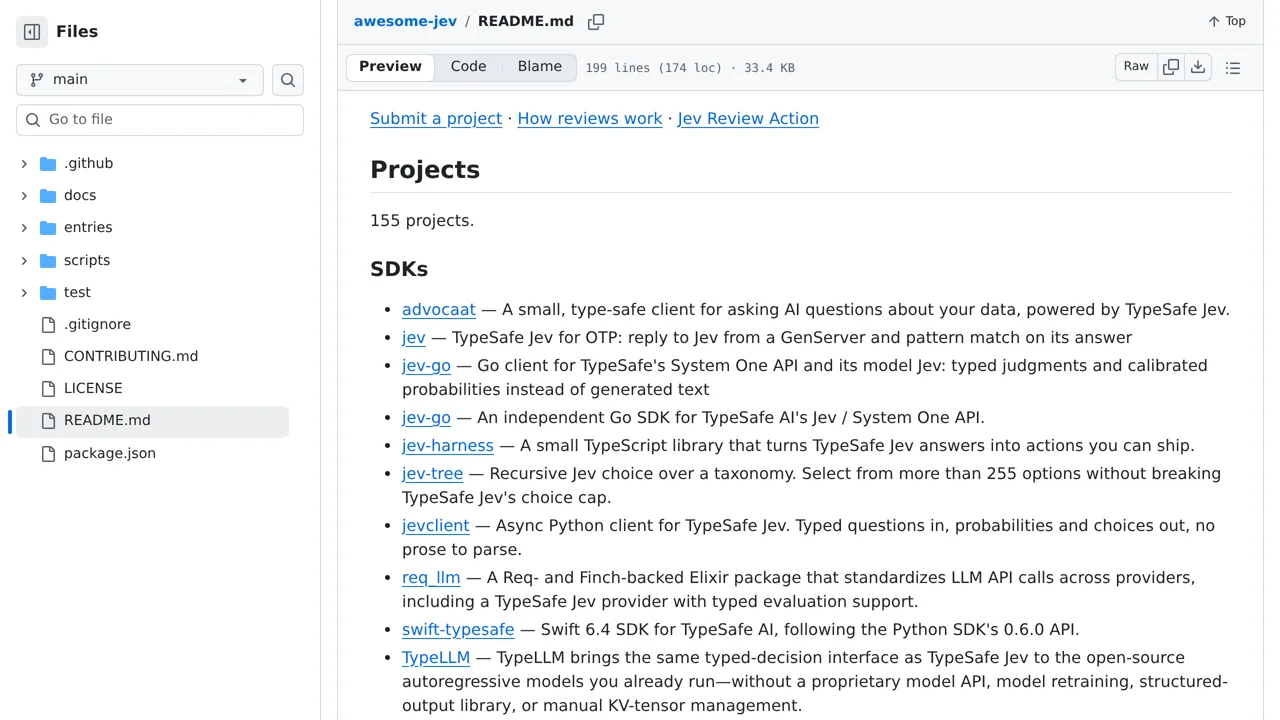
fatwang2 pairs a sourced Jev project directory with a reusable GitHub review workflow dedicated to Jev submissions.
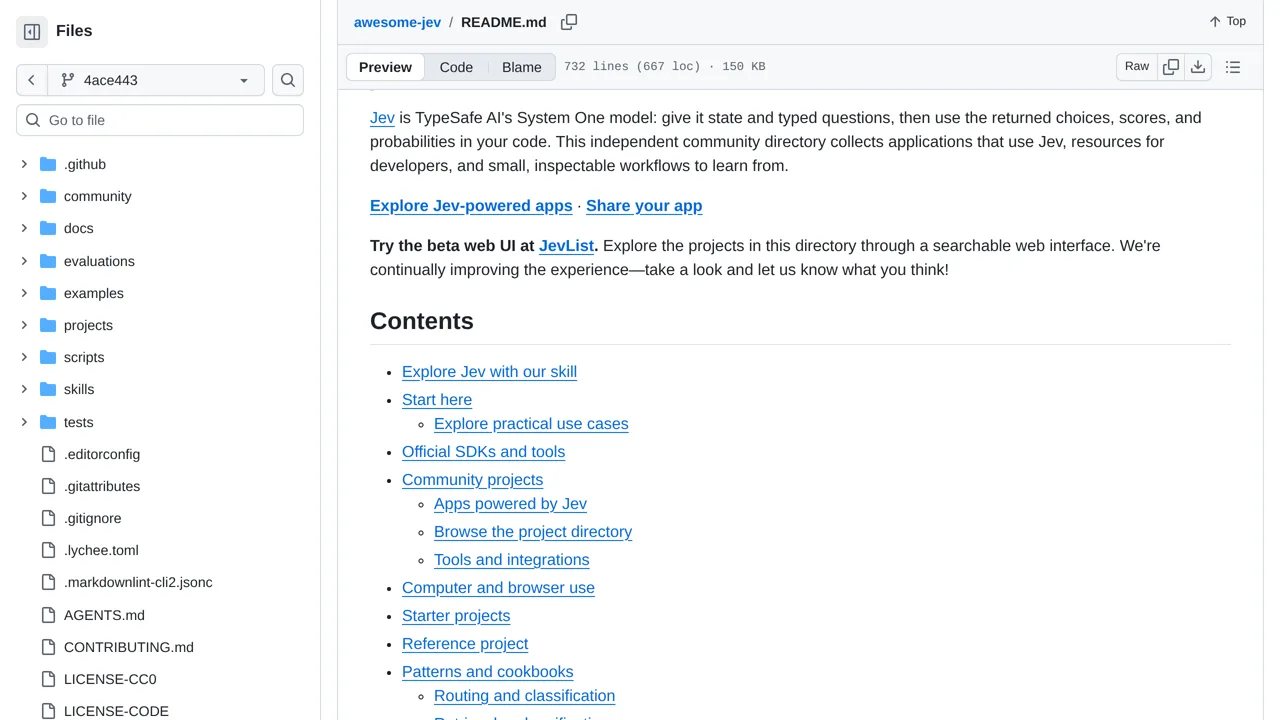
Collects Jev applications, developer resources, and small runnable examples in an independent community directory.
AnotiaWang collects Jev applications, libraries, and learning resources in one community list.
This searchable ecosystem map explains Jev projects in plain language and keeps repository data synchronized from GitHub.
OmniJev collects the papers, open reproductions, and independent evaluations behind Jev and System One models.
Tracks Jev ecosystem projects in a ranked hub rather than implementing a decision workflow itself.
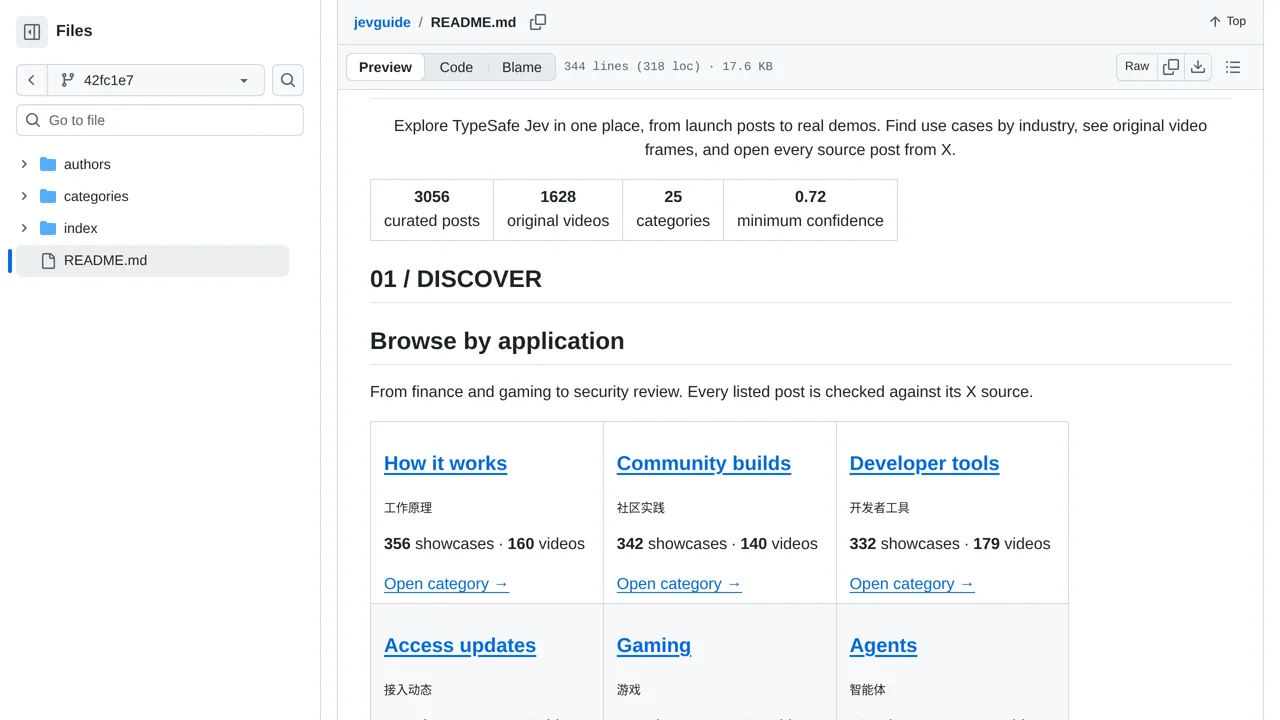
Organises Jev projects and posts from X into a browsable showcase with source links and media previews.
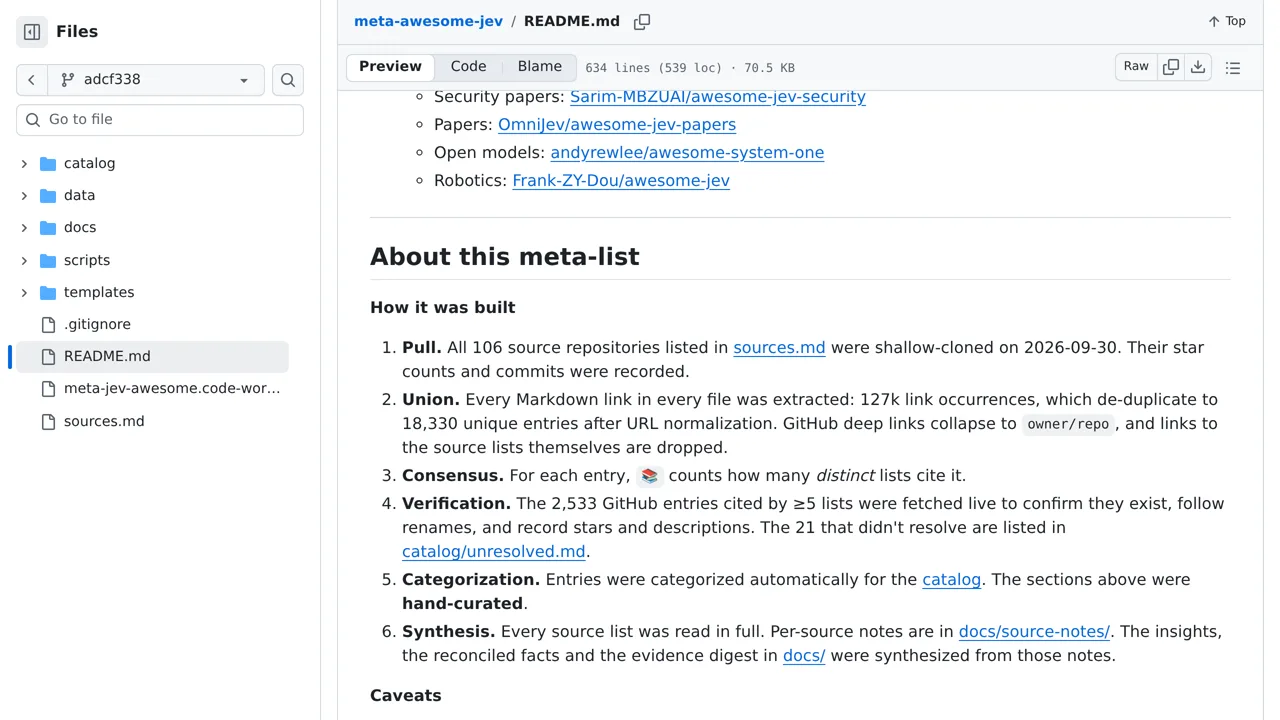
Stefan Webb combines community Jev lists into a categorized directory with source registers, model comparisons and reported negative results.
This Chinese-language roundup introduces early Jev projects for readers who have API access but need ideas for using it.

An unofficial Jev community hub with a playground, small tools and projects to try in your browser.

Browse an automatically discovered leaderboard of Jev tools and projects from GitHub and X.
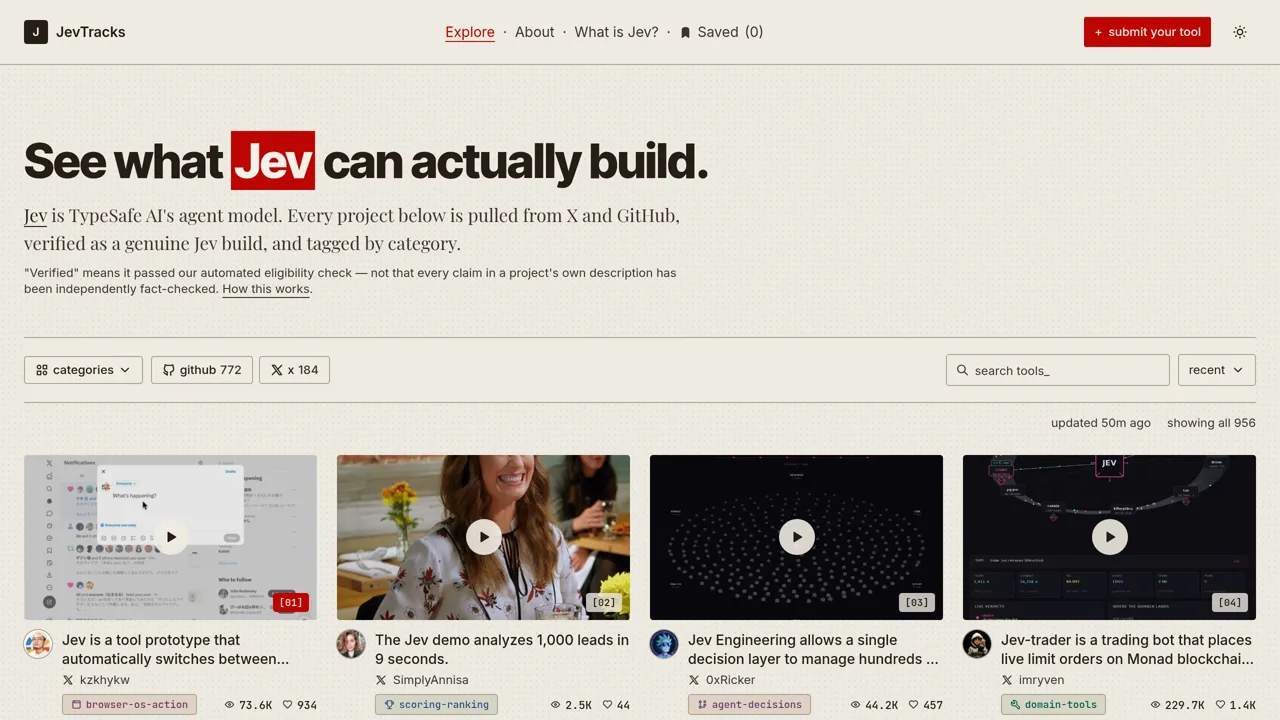
JevBest collects Jev demos so visitors can watch each build and find its original post.

Browses Jev projects by category, recency, or name, linking each card and detail page back to its maker's original post.

Browse Jev projects by category, stars or age, with links to their repositories, demos and writeups.
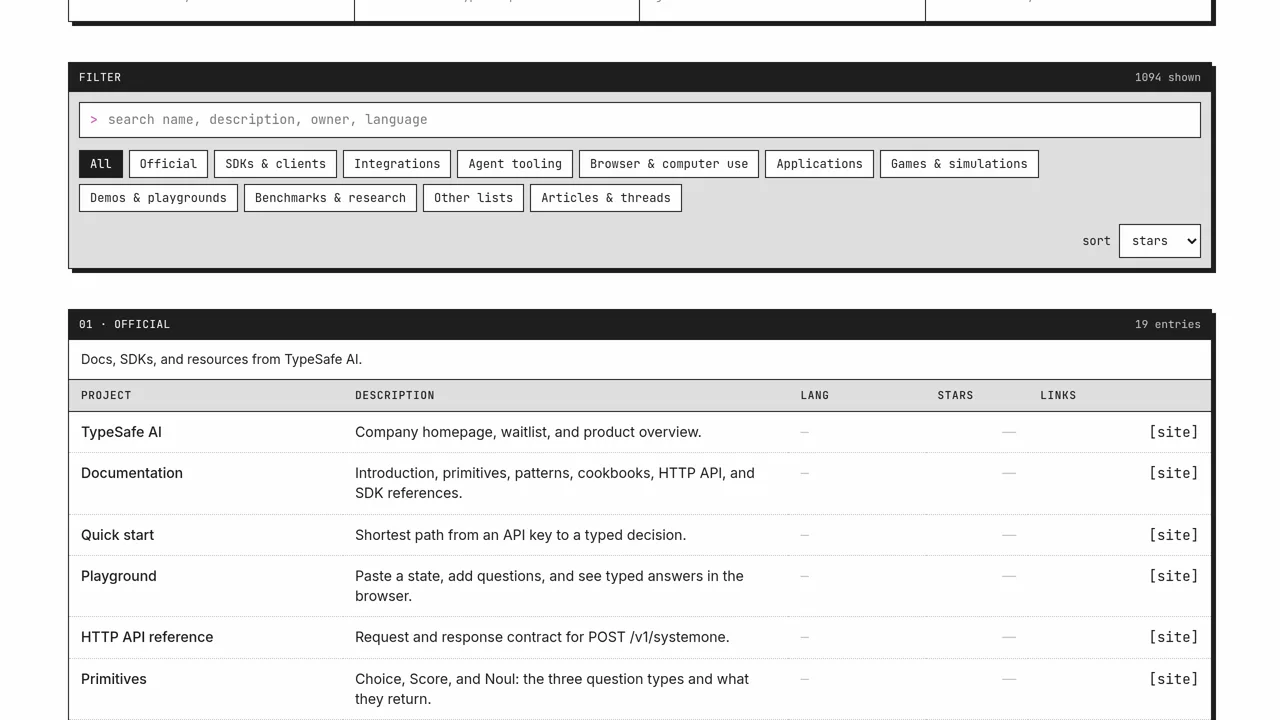
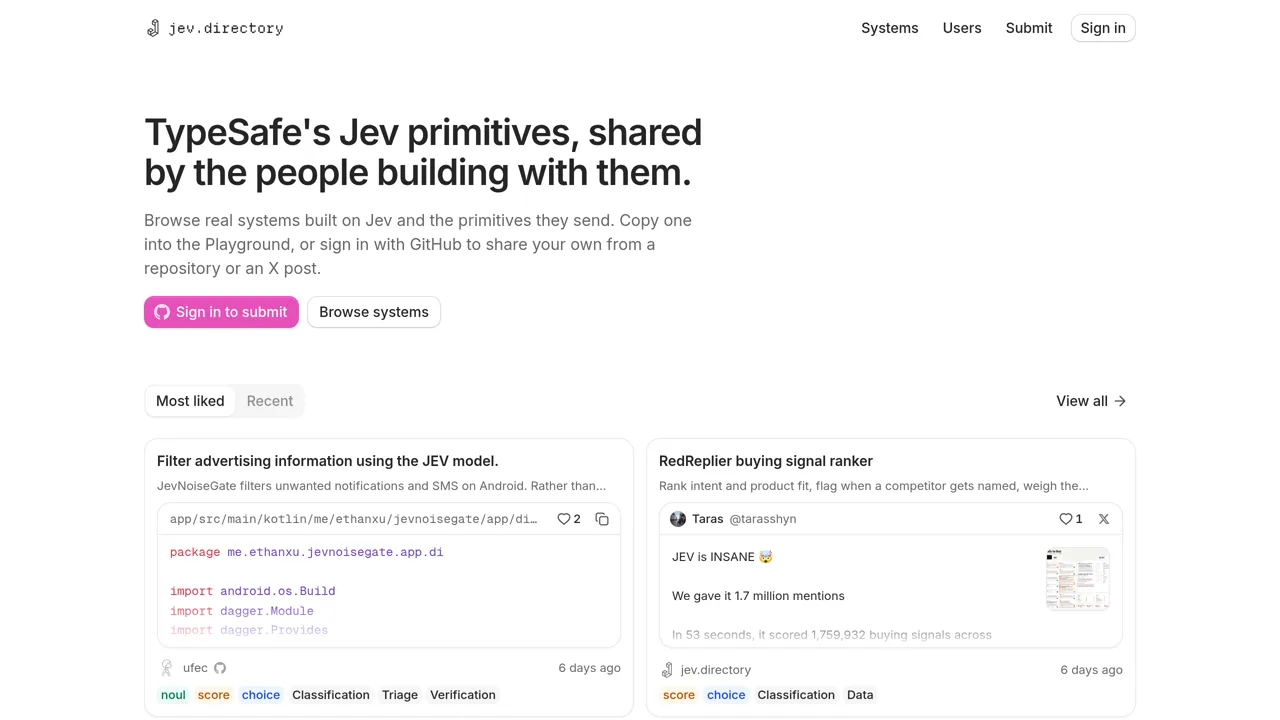
Find community Jev systems through their typed questions, with source snippets and maker posts alongside each listing.
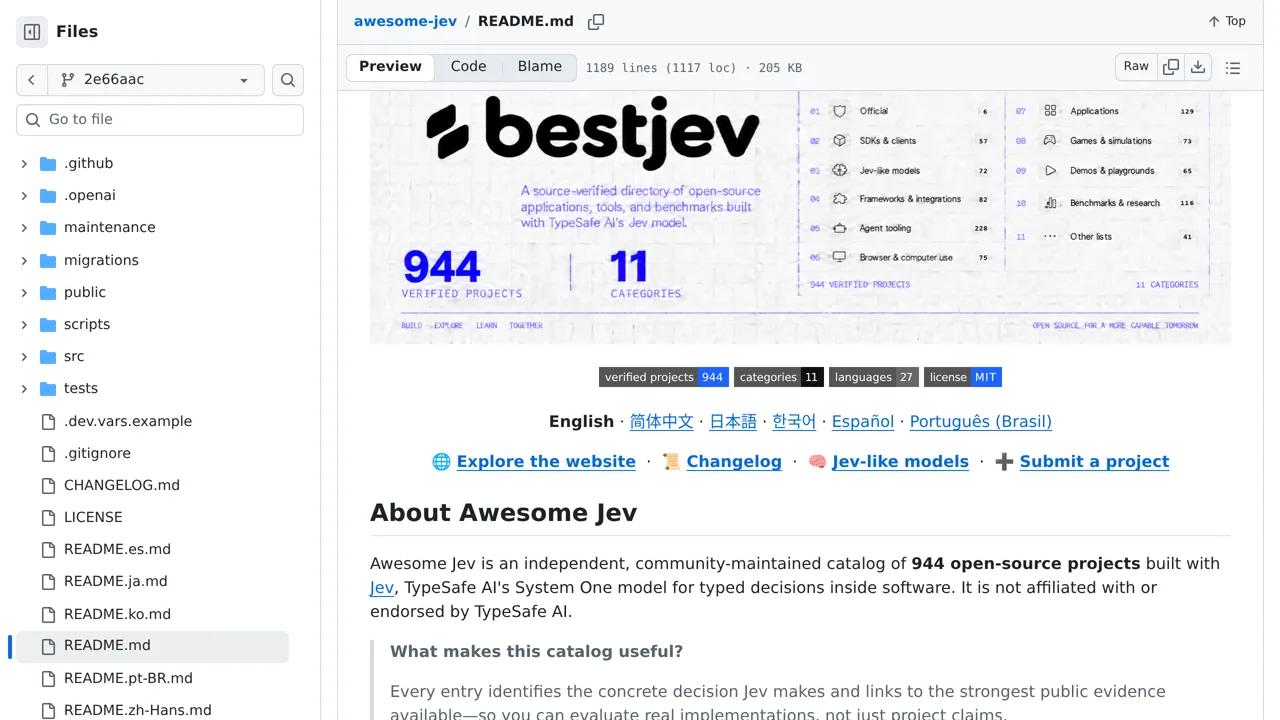
The verified community catalog behind jevbest.com: 944 open-source projects built with Jev, each entry source-linked.
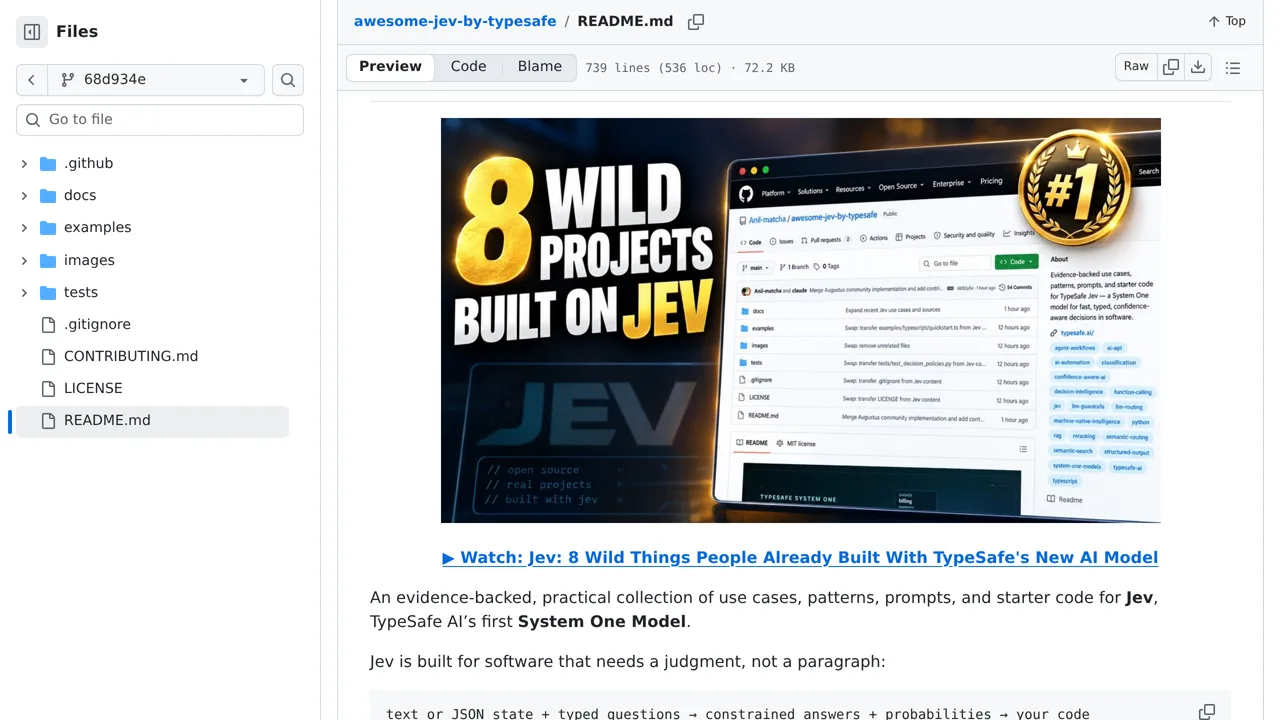
An independent, evidence-backed collection of Jev use cases, patterns, prompts, and starter code, with a dated snapshot review.
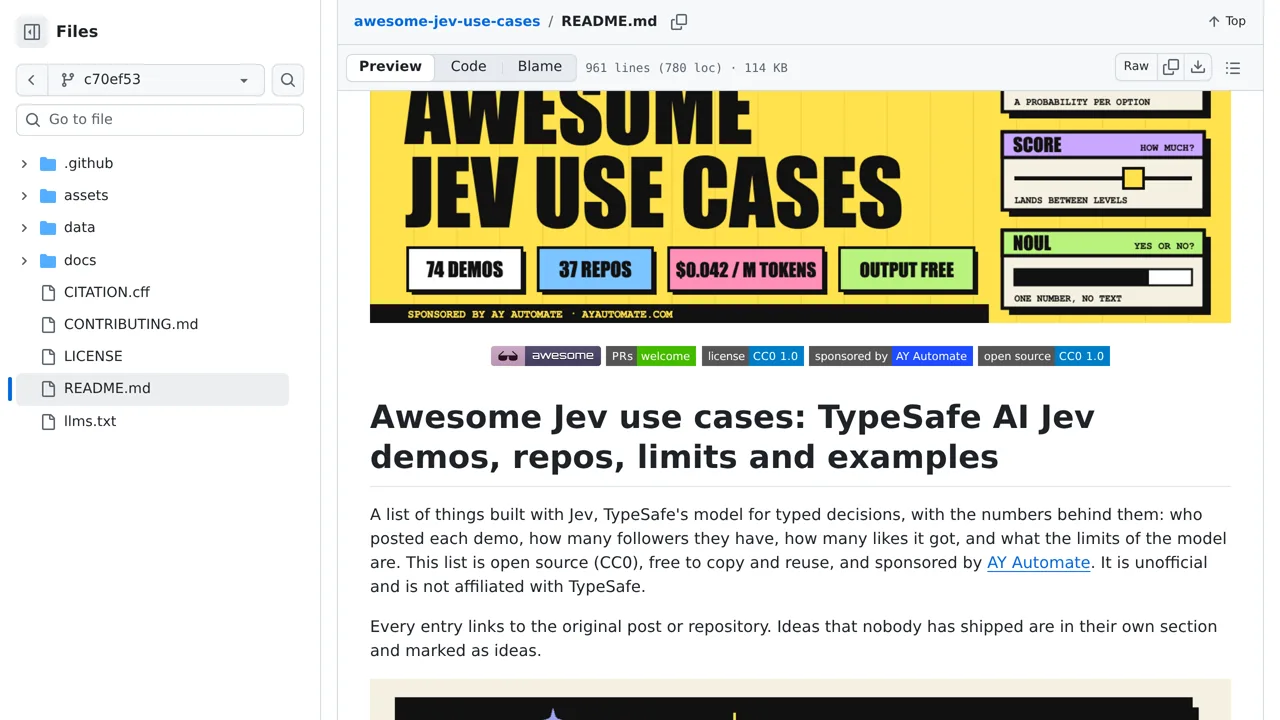
A ranked directory of Jev builds: 74 demos ordered by likes plus 150+ linked GitHub repositories, published under CC0.
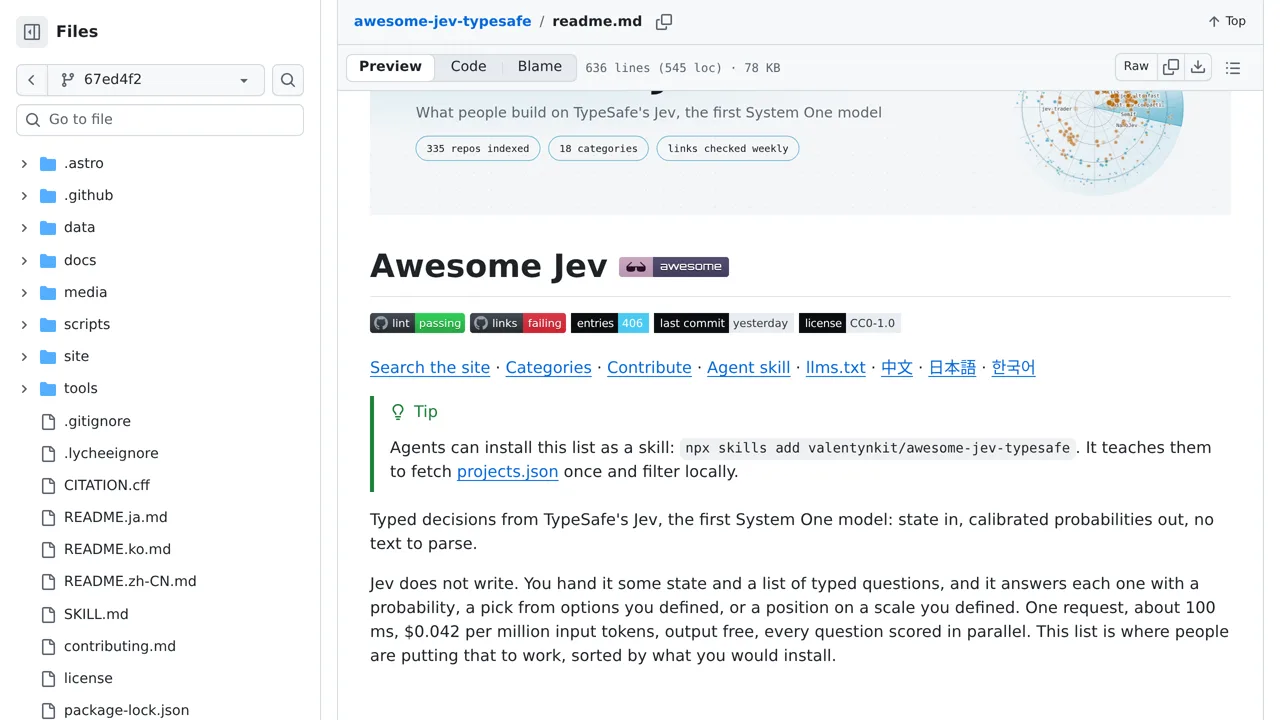
A browsable catalog of 406 typed-decision projects with an llms.txt feed and an agent skill for searching it.
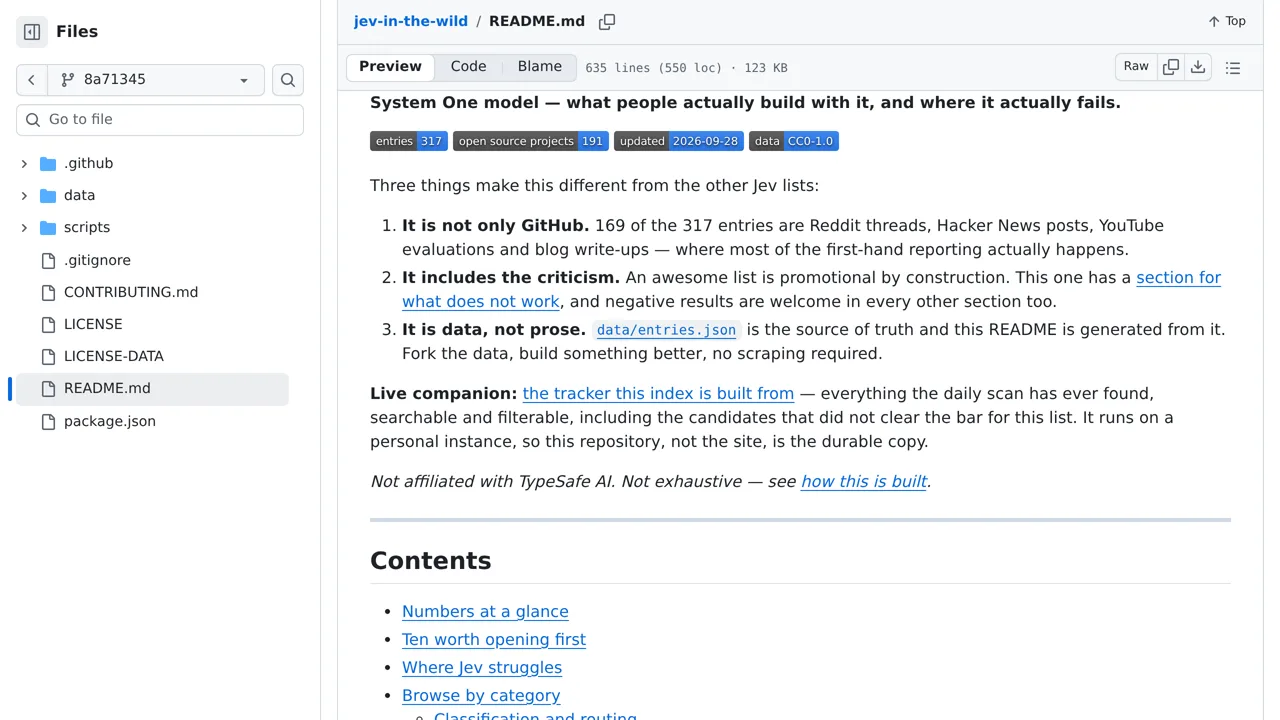
317 real-world Jev entries — nearly half from Reddit, Hacker News, and YouTube rather than GitHub — with a standing section for where it fails.
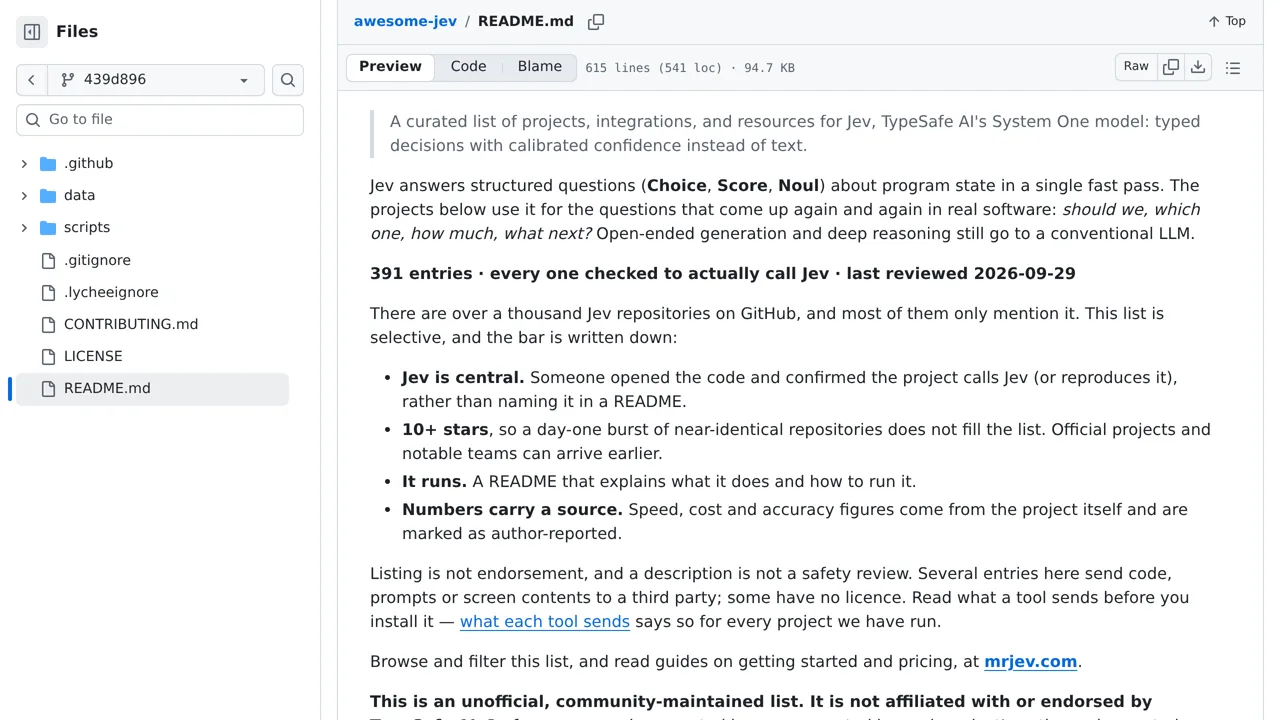
A Jev tool directory where every entry was run by the author first, and ten stars is the minimum to make the cut.
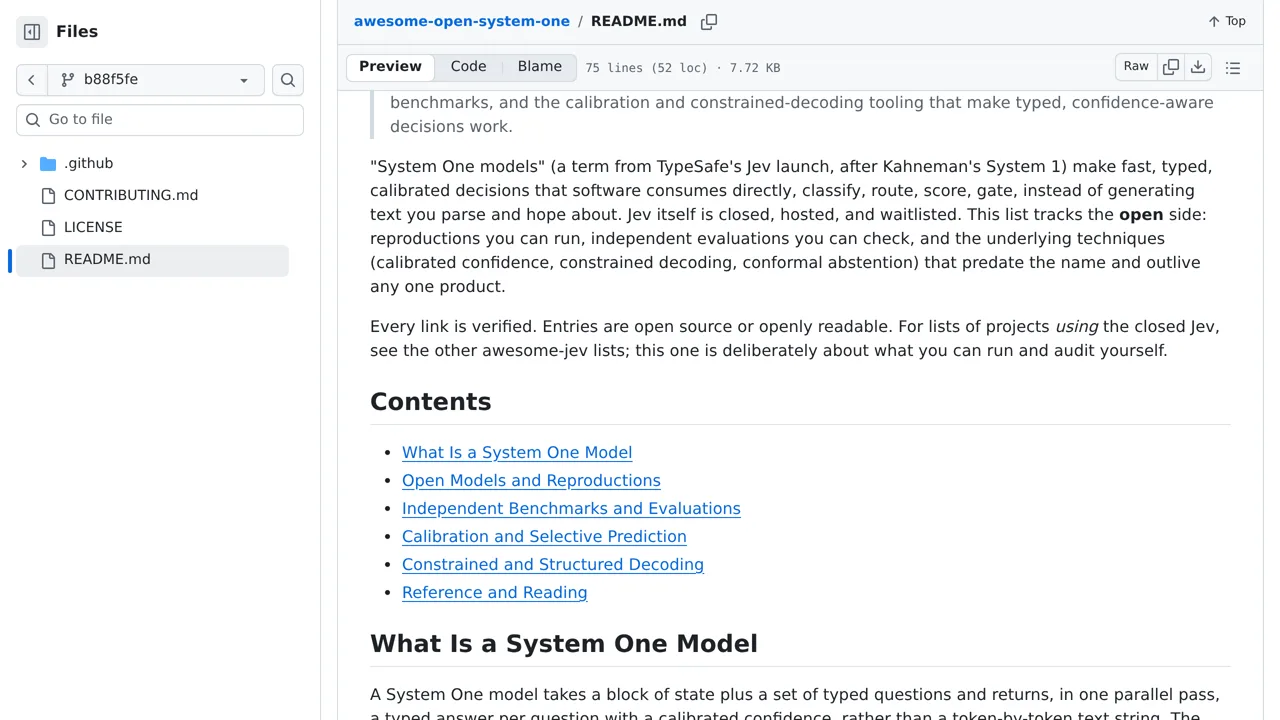
The open side of System One: runnable reproductions, independent benchmarks, and the calibration and constrained-decoding techniques that predate the name.
A category-file Jev list organized around two questions: where Jev already runs in production, and which decision architectures transfer between industries.
Jev, briefly
A chat model generates text token by token and hopes you parse it. Jev never generates a word. Your code sends the state of the world plus typed questions; Jev returns every answer in one parallel pass — typed values with calibrated probabilities and a confidence score your code can trust. About 70–500 ms end to end, $0.042 per million input tokens, output free. Trained with what TypeSafe calls Reinforcement Learning for Calibrated Decisions.
You define the options. Jev returns the chosen option, a probability for every option, and a confidence. The workhorse of routing, agents, and games — the answer space is always legal, so there is nothing to parse and nothing to hallucinate.
You describe ordered levels — say trivial / normal / critical. Jev returns the level, the probability of each, and a confidence. Scores turn fuzzy judgment (“how severe is this log line?”) into a number-free decision your code can branch on.
You assert a statement; Jev returns the probability that it is true — a noul. Moderation, verification, guardrails, “does this diff actually fix the bug?”: one question, one calibrated probability.
Official material lives at typesafe.ai and docs.typesafe.ai. JevMade is an independent community registry — not affiliated with or endorsed by TypeSafe AI.
Recurring lessons
Games, drones, trading bots, and browser agents all converge on the same loop: serialize the state, ask one decisive question, act, repeat. Jev’s latency makes the loop feel instant — the model lives inside the control loop, not outside it.
The answer says what; the confidence says whether to act. The most reliable entries threshold on confidence to route edge cases to a slower model or a human — automation with an honest escape hatch.
Makers rarely ask Jev to pick from everything. Local tactics prune 225 gomoku moves to ~40; DOM filters turn a page into an element table; code narrows options, Jev judges within them.
A recurring split: Jev makes every decision cheaply and instantly, and a small LLM is only invoked when a human-facing string must actually be written. Decision and generation are separate budgets.
Send the link — repo, live demo, post, or video — plus a line on what it does and which primitives it uses. Every entry is verified against its primary source before it ships.
Submit your experimentSign in first so we can reply to you. Submissions are reviewed, not published automatically.