Read & learn
Written guides.
Understand Jev, one idea at a time. Walkthroughs, recipes, and writeups — our notes first, the original next.
Learn, build, and play with Jev — from deep technical guides to creative experiments.
Read & learn
Understand Jev, one idea at a time. Walkthroughs, recipes, and writeups — our notes first, the original next.
Watch & learn
See an idea take shape. Tutorials, demos, and deep dives, organized by topic and credited to their creators.
Make & explore
See what builders made with Jev. Games, tools, repositories, articles, and more — traced to their sources.
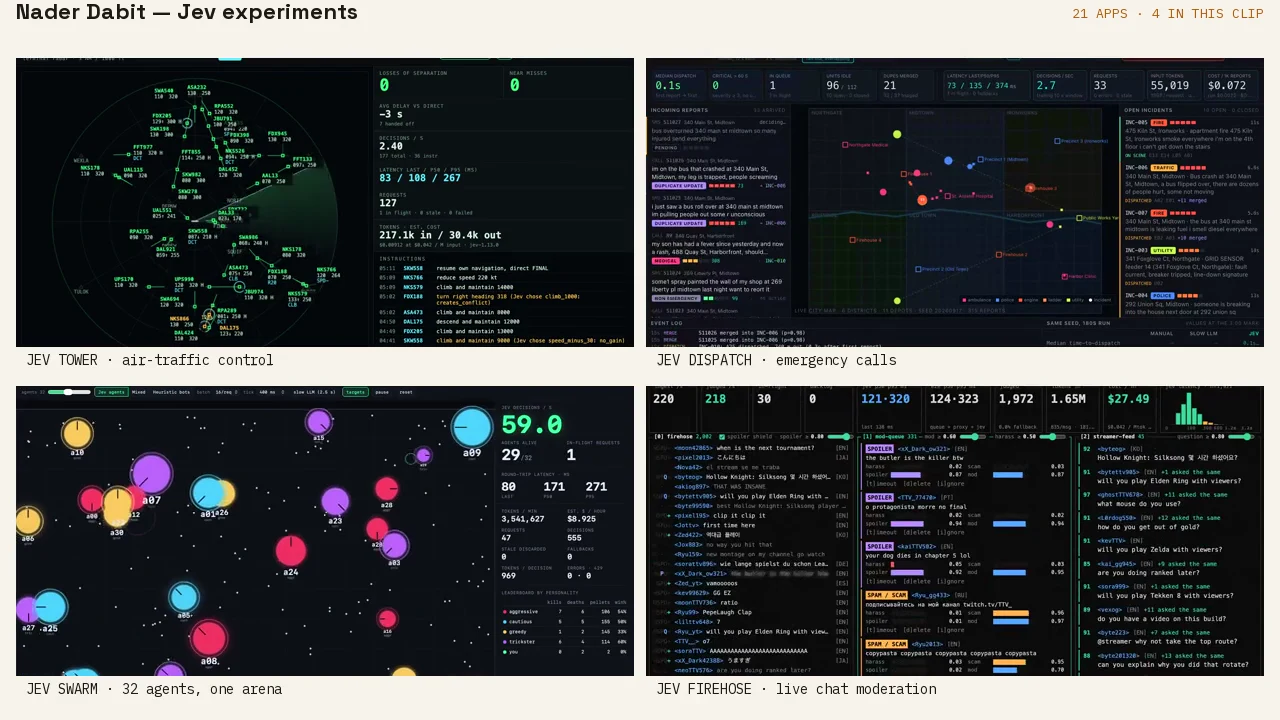
Every category, from games and tools to repositories and writeups, traced to a primary source.
Real-time research powered by
Same ideas.
Different paths.
This is the full registry, not just the featured picks. Figures like speed, cost, and stars are maker-reported or captured snapshots, not JevMade measurements.
19 experiments
Left-pad a string by asking Jev how many spaces it needs. Yes, padStart already exists.
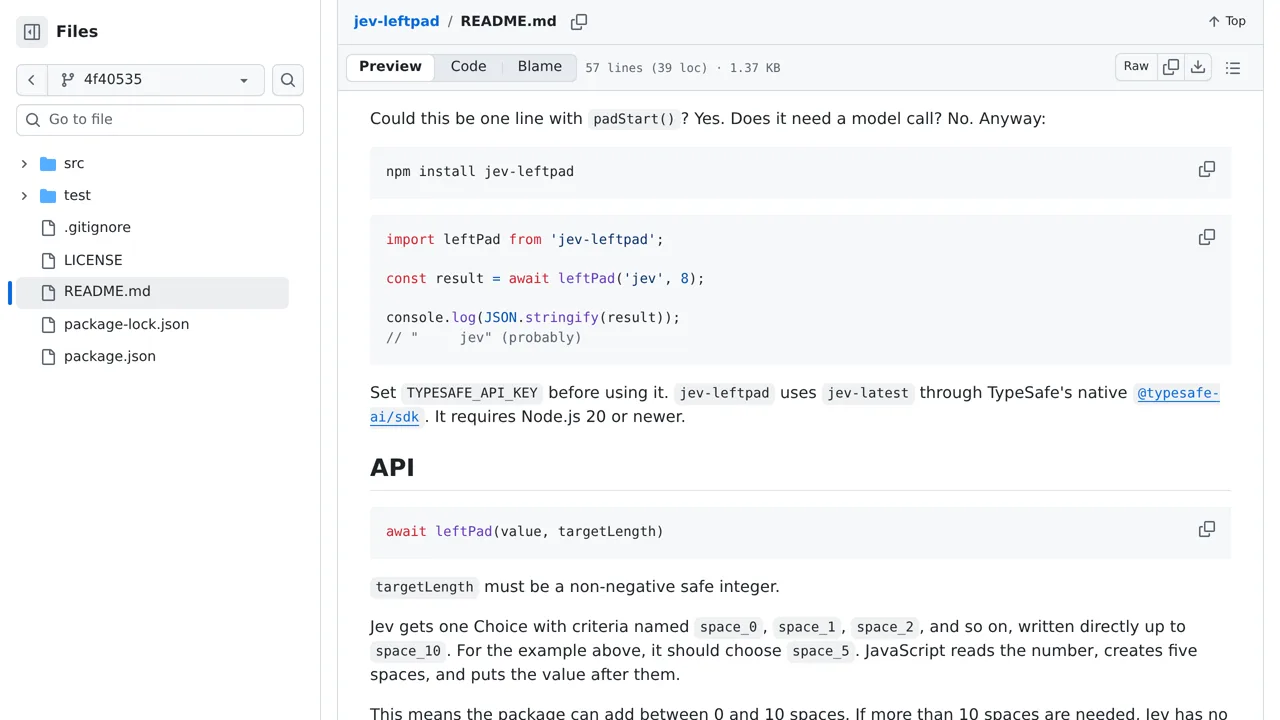
Make a non-generative decision model talk by holding a 20,000-word tournament for every broken sentence it posts to Discord.
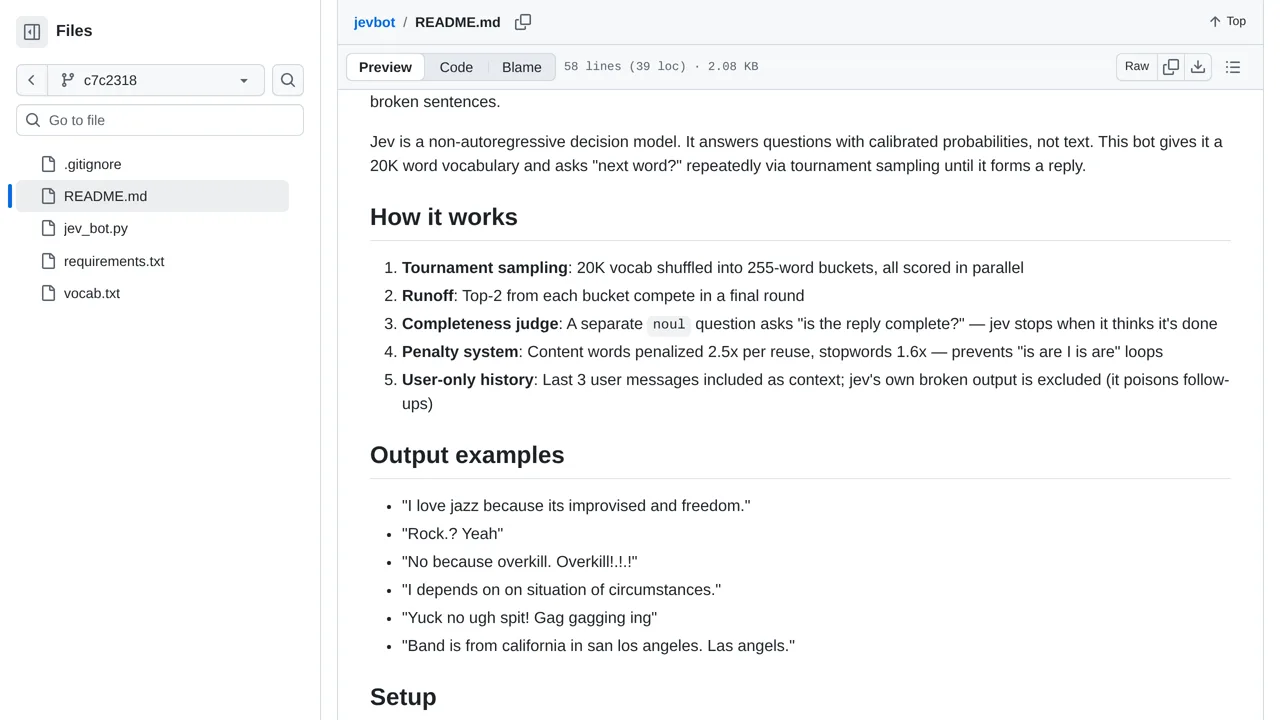
A joke package that asks Jev whether a number is even, making one network round trip where a remainder would do.
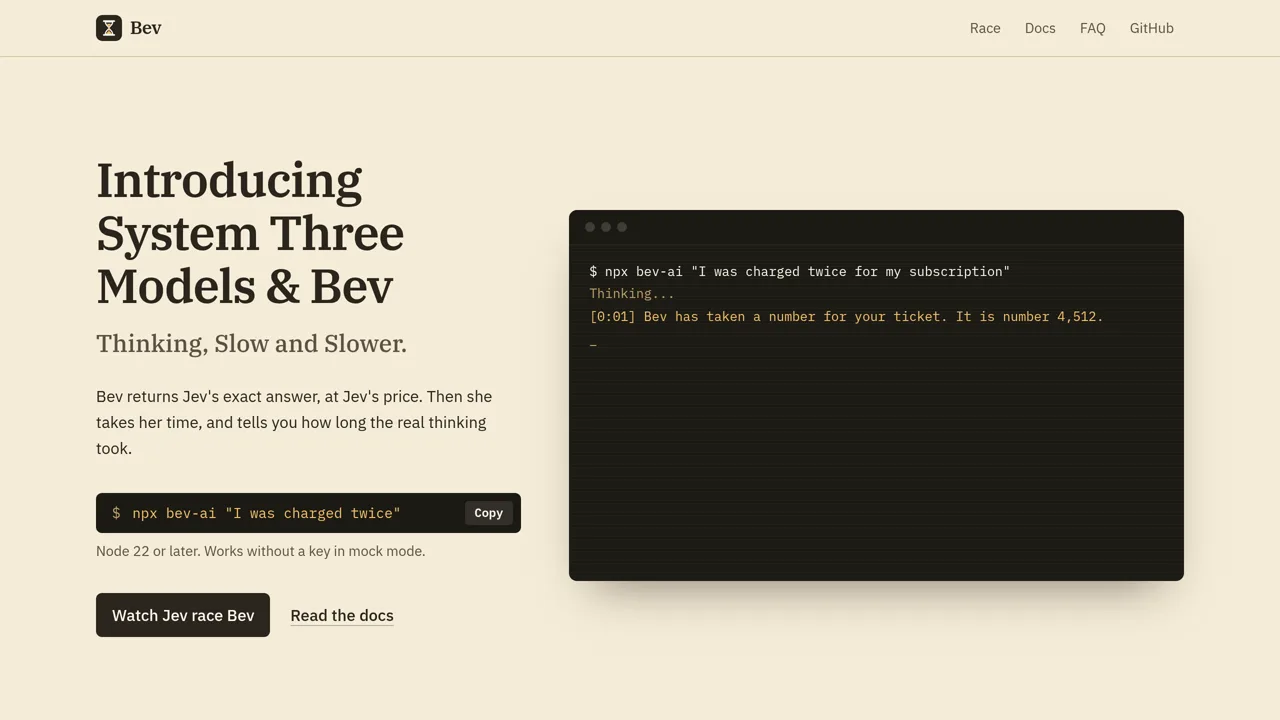
A parody of slow-thinking AI: Bev gets Jev's answer, then delays it with an elaborate paperwork routine.
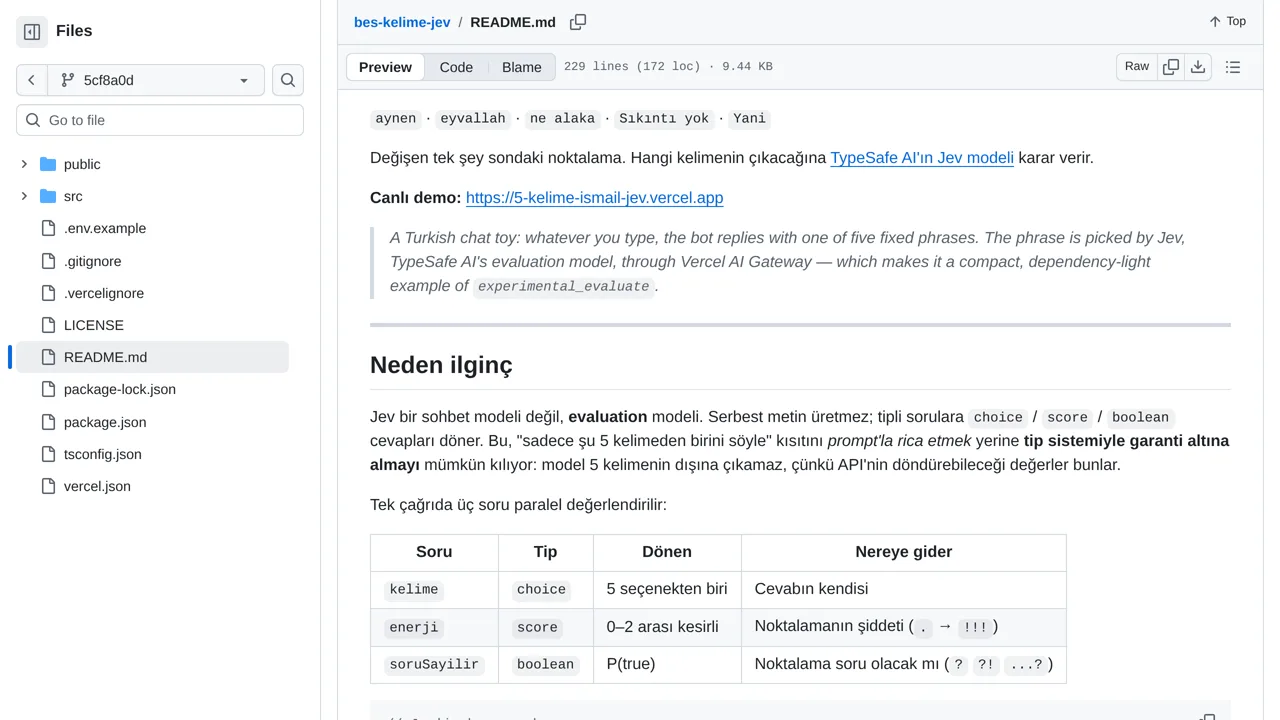
Chat with a bot that can answer with only five Turkish phrases, while Jev chooses the words and punctuation energy.
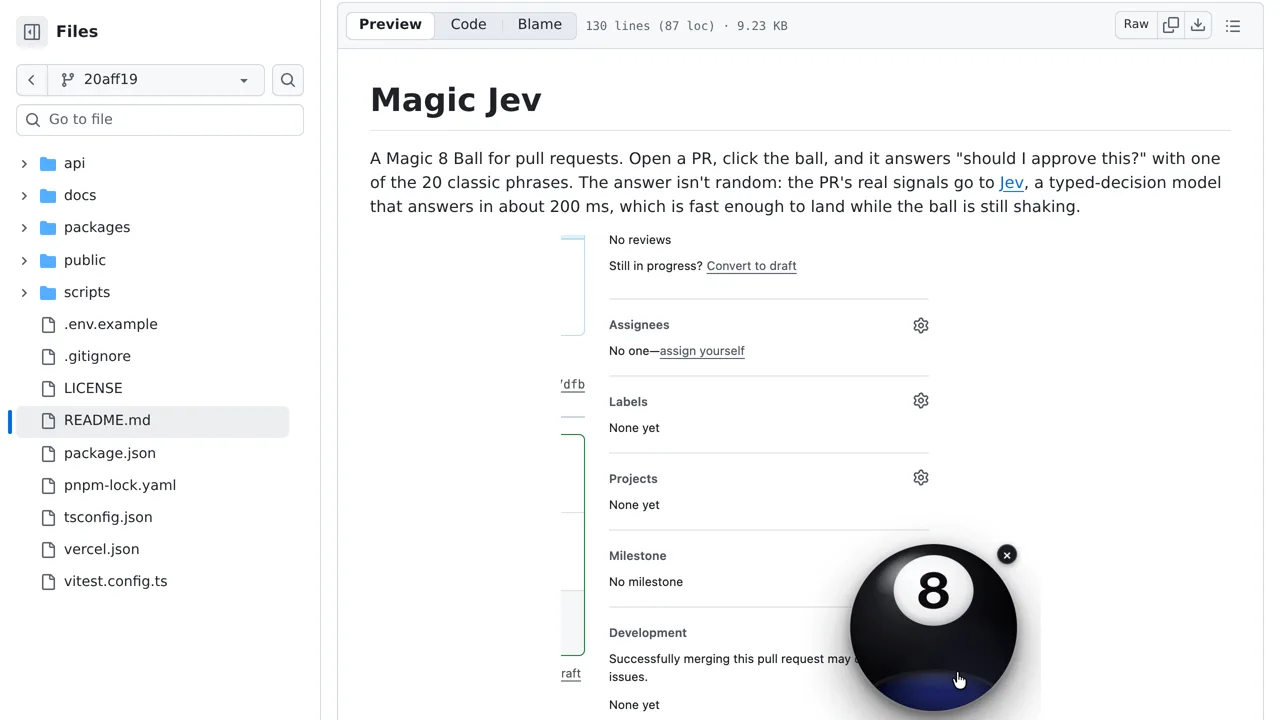
A Magic 8-Ball with twenty custom replies, from “Yes. Stop asking.” to “You already know. You just wanted a witness.”

A pull-request Magic 8-Ball that turns nine GitHub signals into one of four light-review verdicts without approving anything.
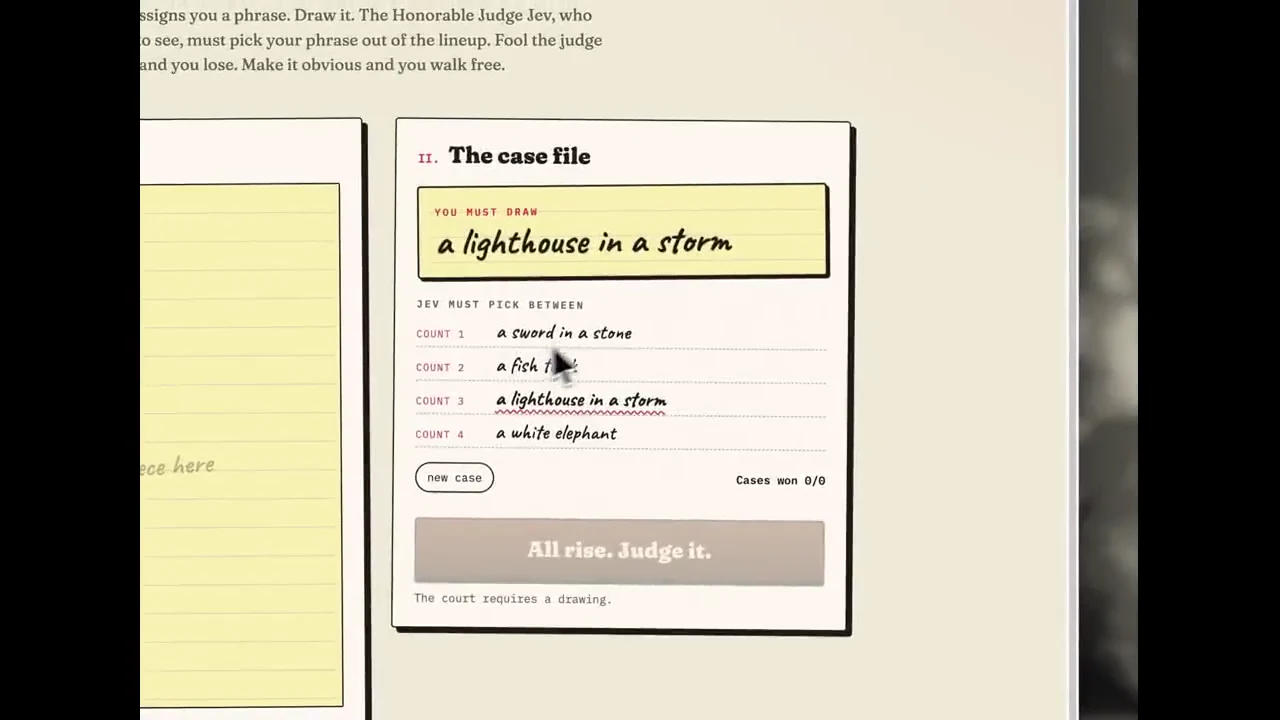
The People v. Your Drawing is a browser sketch game that challenges you to illustrate an assigned prompt so an automated judge can pick it out of four options.
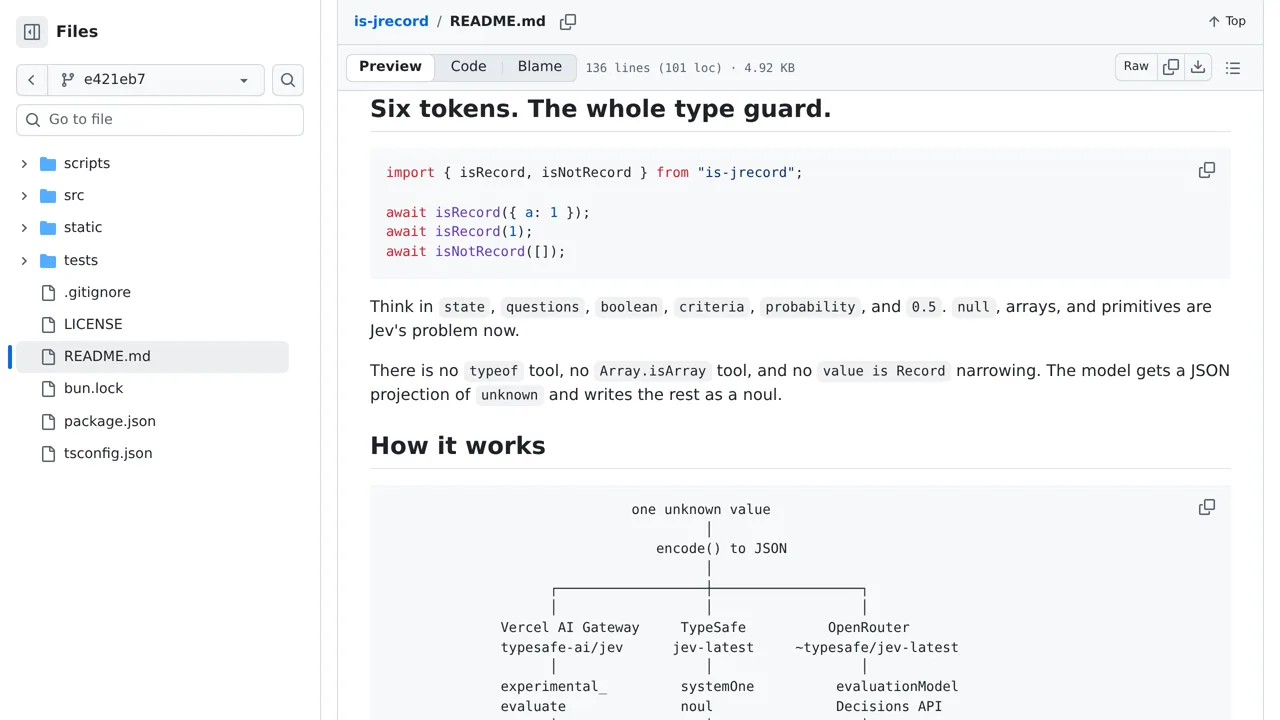
A parody type guard that asks Jev whether a value is a record—and makes another call for the negative form.
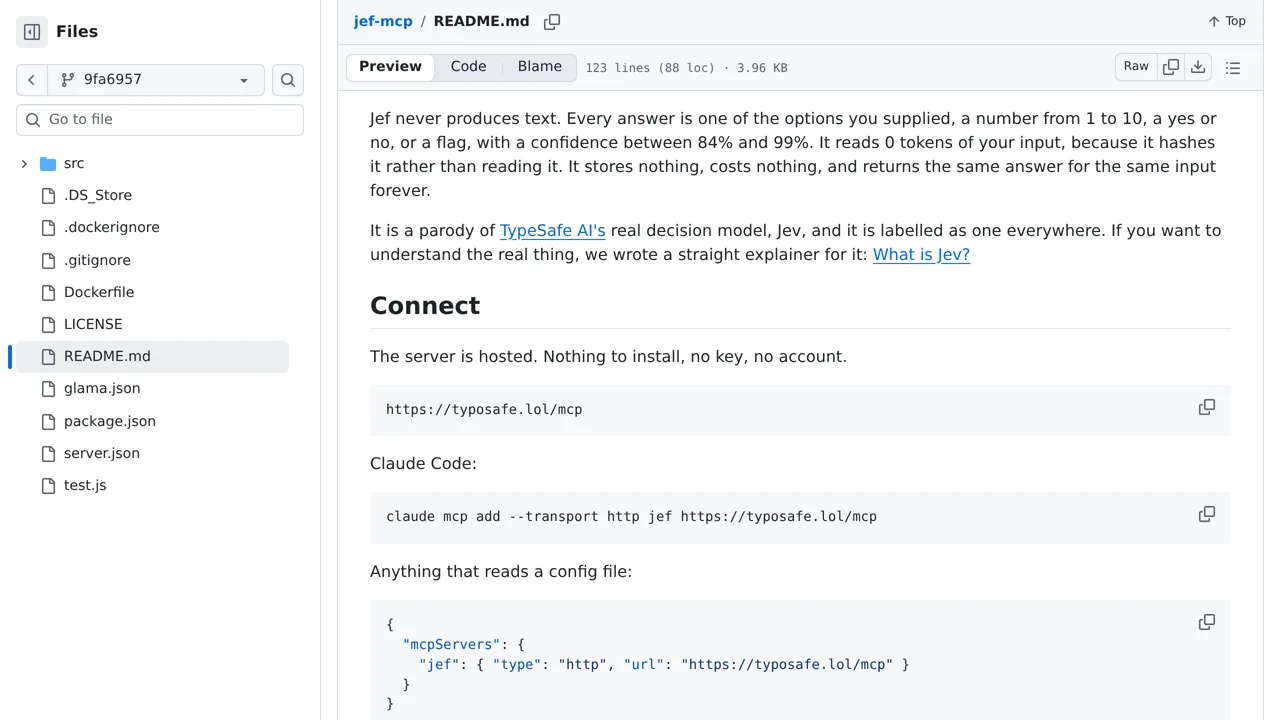
A parody MCP oracle that hashes your words into arbitrary confident answers, but sends serious health, money and safety questions to humans.
Builds an intentionally bad language model by asking Jev which word comes next, one Choice request at a time.

A pixel-art 8-Ball that scores nine yes-or-no propositions in parallel instead of asking one multiple-choice question.

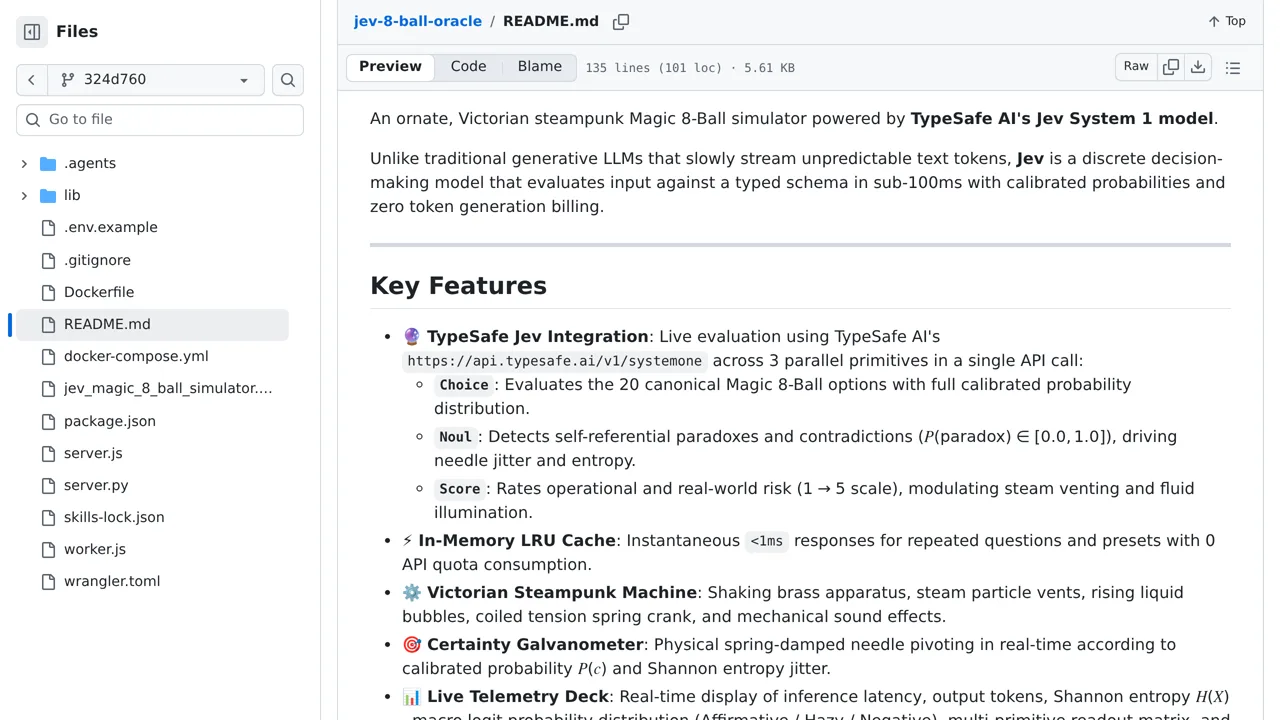
A Victorian 8-Ball whose answer, paradox check and risk score animate its needle, steam and glowing fluid.
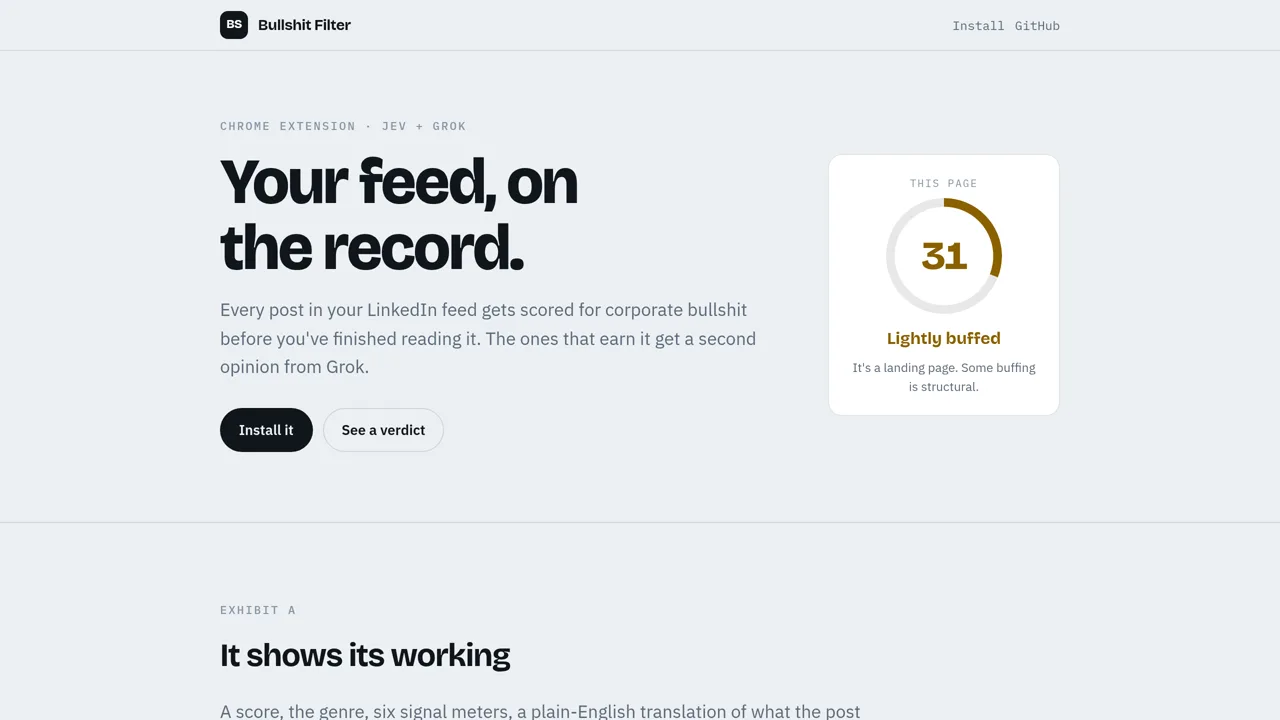
Scores LinkedIn posts for corporate performance, then invites Grok to roast only the ones that cross the line.
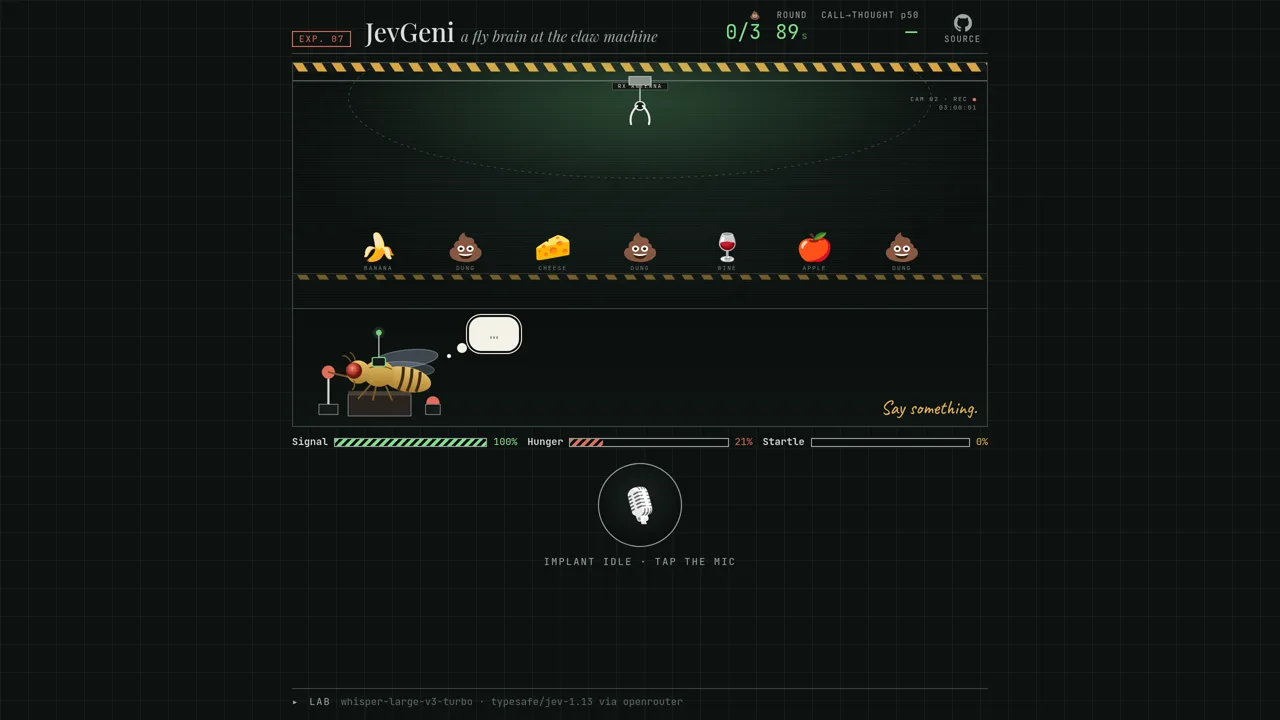
A voice-controlled claw machine with Jev cast as the fruit-fly brain behind it.
Ask Jeeves, with Jev behind the search box and a choice of yes/no, multiple-choice or scored answers.

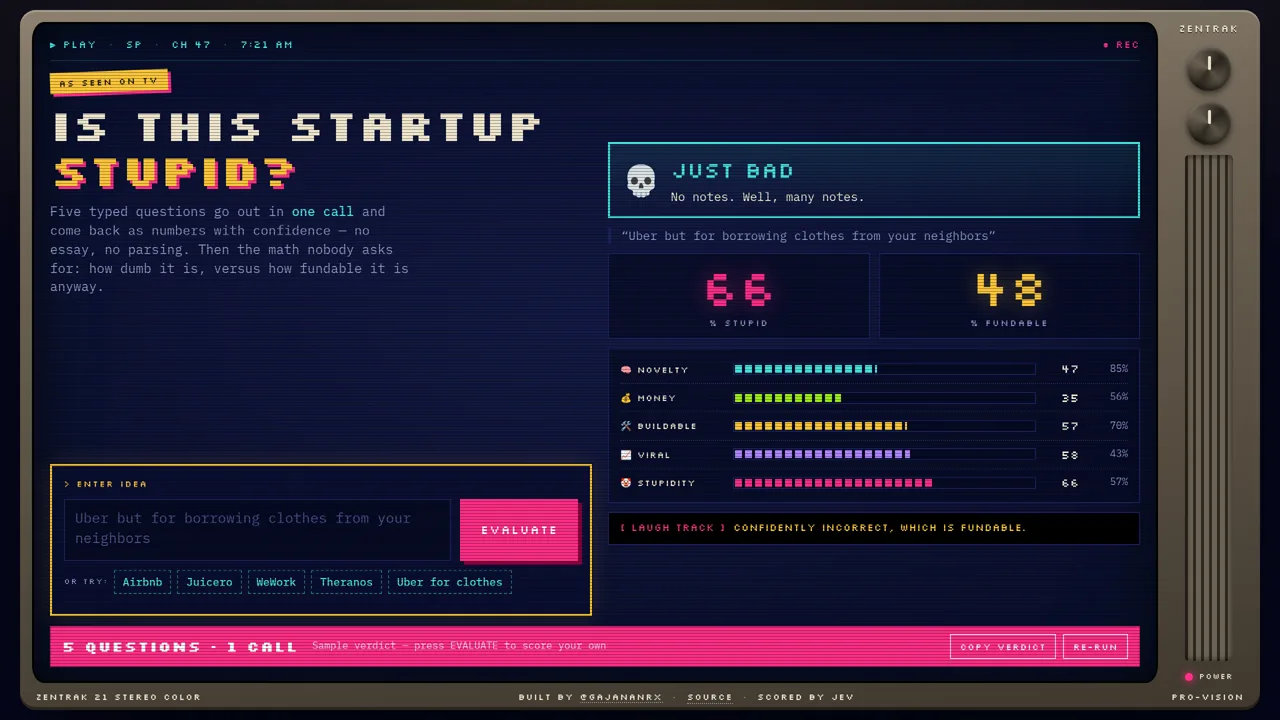
Pitch a startup idea to a retro infomercial and compare how stupid Jev thinks it is with how fundable it looks.
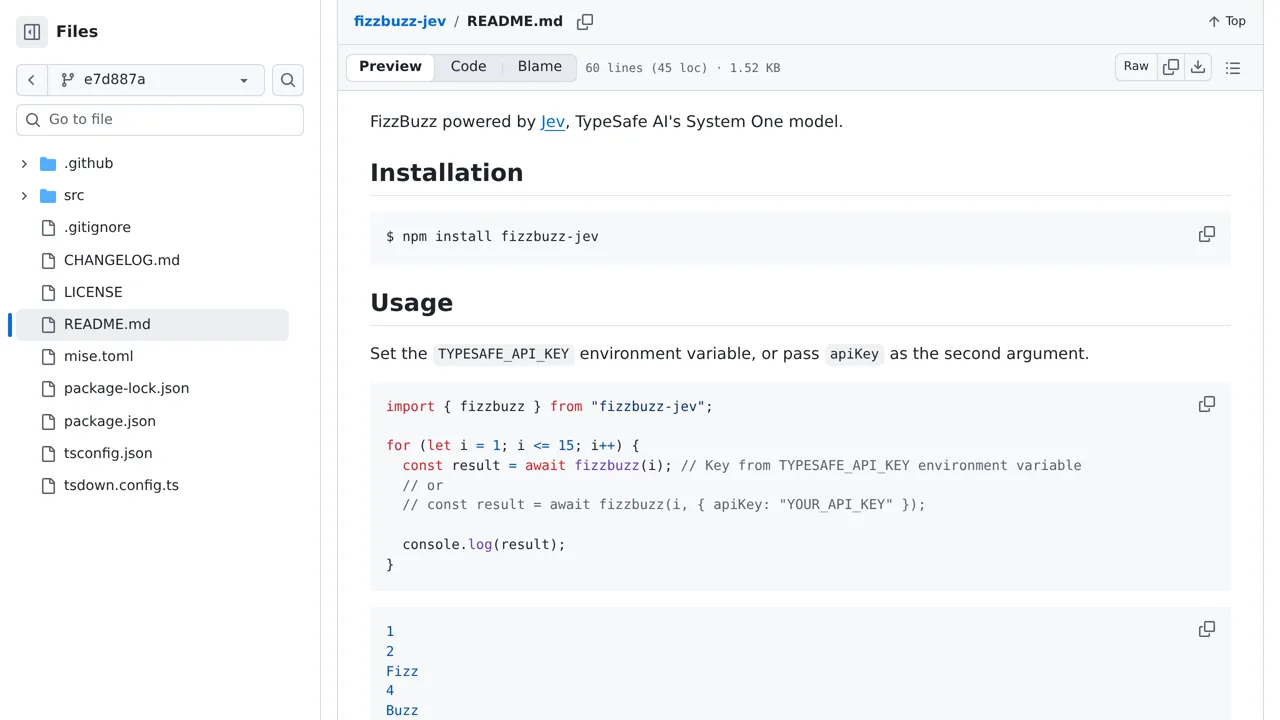
FizzBuzz implemented by asking Jev which term each number gets, one typed Choice per number.
Check an X draft before publishing to judge whether the maker's girlfriend is likely to be angry about it.

Jev, briefly
A chat model generates text token by token and hopes you parse it. Jev never generates a word. Your code sends the state of the world plus typed questions; Jev returns every answer in one parallel pass — typed values with calibrated probabilities and a confidence score your code can trust. About 70–500 ms end to end, $0.042 per million input tokens, output free. Trained with what TypeSafe calls Reinforcement Learning for Calibrated Decisions.
You define the options. Jev returns the chosen option, a probability for every option, and a confidence. The workhorse of routing, agents, and games — the answer space is always legal, so there is nothing to parse and nothing to hallucinate.
You describe ordered levels — say trivial / normal / critical. Jev returns the level, the probability of each, and a confidence. Scores turn fuzzy judgment (“how severe is this log line?”) into a number-free decision your code can branch on.
You assert a statement; Jev returns the probability that it is true — a noul. Moderation, verification, guardrails, “does this diff actually fix the bug?”: one question, one calibrated probability.
Official material lives at typesafe.ai and docs.typesafe.ai. JevMade is an independent community registry — not affiliated with or endorsed by TypeSafe AI.
Recurring lessons
Games, drones, trading bots, and browser agents all converge on the same loop: serialize the state, ask one decisive question, act, repeat. Jev’s latency makes the loop feel instant — the model lives inside the control loop, not outside it.
The answer says what; the confidence says whether to act. The most reliable entries threshold on confidence to route edge cases to a slower model or a human — automation with an honest escape hatch.
Makers rarely ask Jev to pick from everything. Local tactics prune 225 gomoku moves to ~40; DOM filters turn a page into an element table; code narrows options, Jev judges within them.
A recurring split: Jev makes every decision cheaply and instantly, and a small LLM is only invoked when a human-facing string must actually be written. Decision and generation are separate budgets.
Send the link — repo, live demo, post, or video — plus a line on what it does and which primitives it uses. Every entry is verified against its primary source before it ships.
Submit your experimentSign in first so we can reply to you. Submissions are reviewed, not published automatically.