Read & learn
Written guides.
Understand Jev, one idea at a time. Walkthroughs, recipes, and writeups — our notes first, the original next.
Learn, build, and play with Jev — from deep technical guides to creative experiments.
Read & learn
Understand Jev, one idea at a time. Walkthroughs, recipes, and writeups — our notes first, the original next.
Watch & learn
See an idea take shape. Tutorials, demos, and deep dives, organized by topic and credited to their creators.
Make & explore
See what builders made with Jev. Games, tools, repositories, articles, and more — traced to their sources.
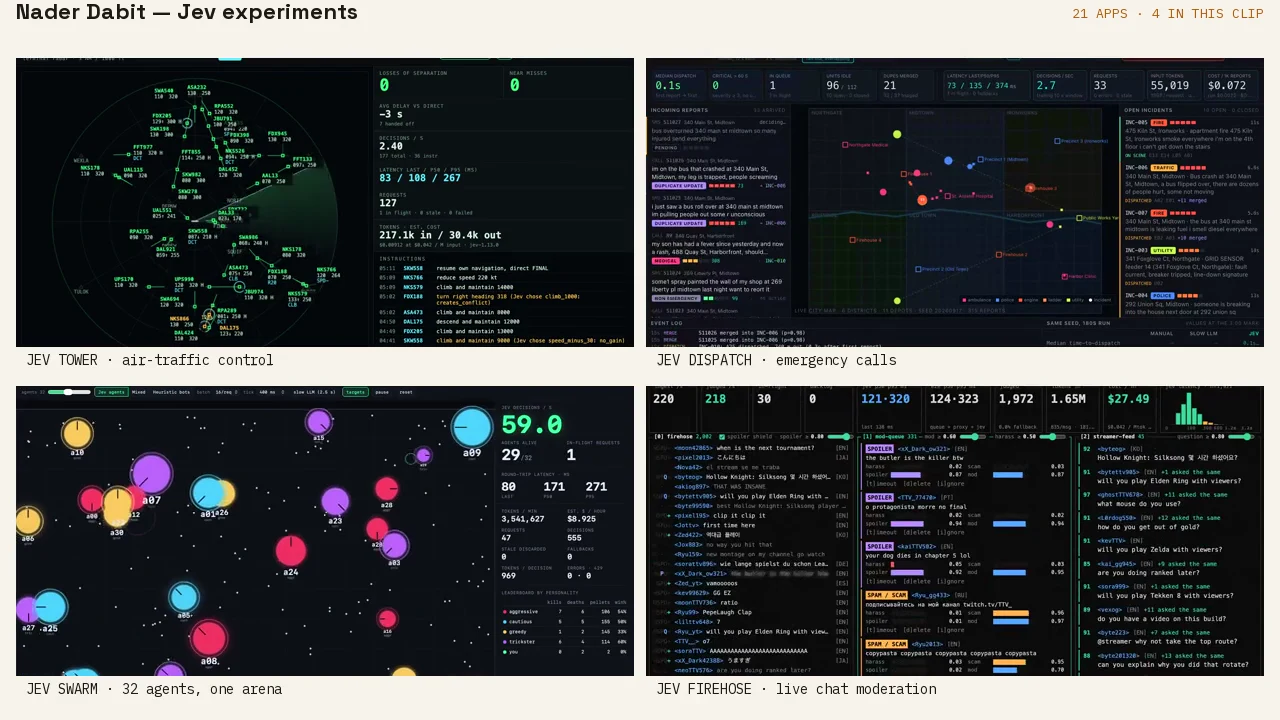
Every category, from games and tools to repositories and writeups, traced to a primary source.
Same ideas.
Different paths.
This is the full registry, not just the featured picks. Figures like speed, cost, and stars are maker-reported or captured snapshots, not JevMade measurements.
86 experiments · showing 61–86
Cesar Favero added an early Jev integration to CodexRouter and is using it to streamline the coding workflow.

New API exposes Jev’s Choice, Score, and Noul decisions through its gateway and the TypeSafe SDK.

B.AI offers Jev through its API for typed, probabilistic decisions over application state.

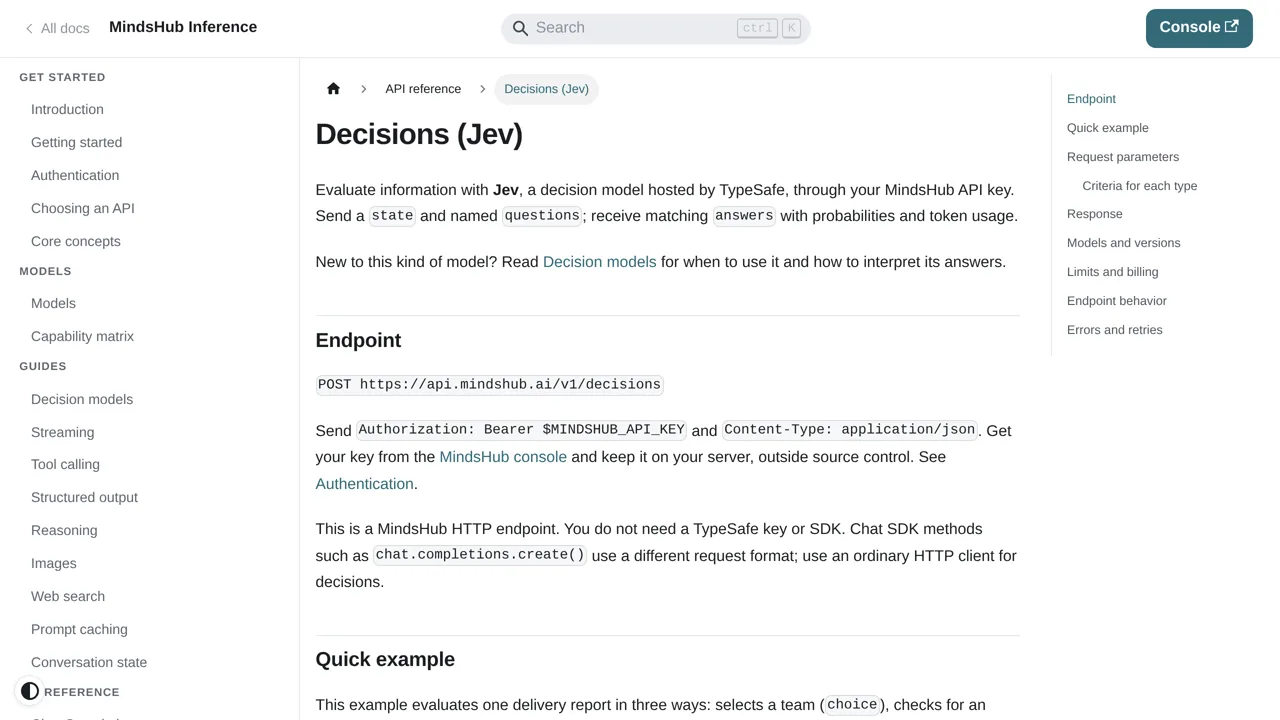
MindsHub added Jev’s decision API to its free tier.
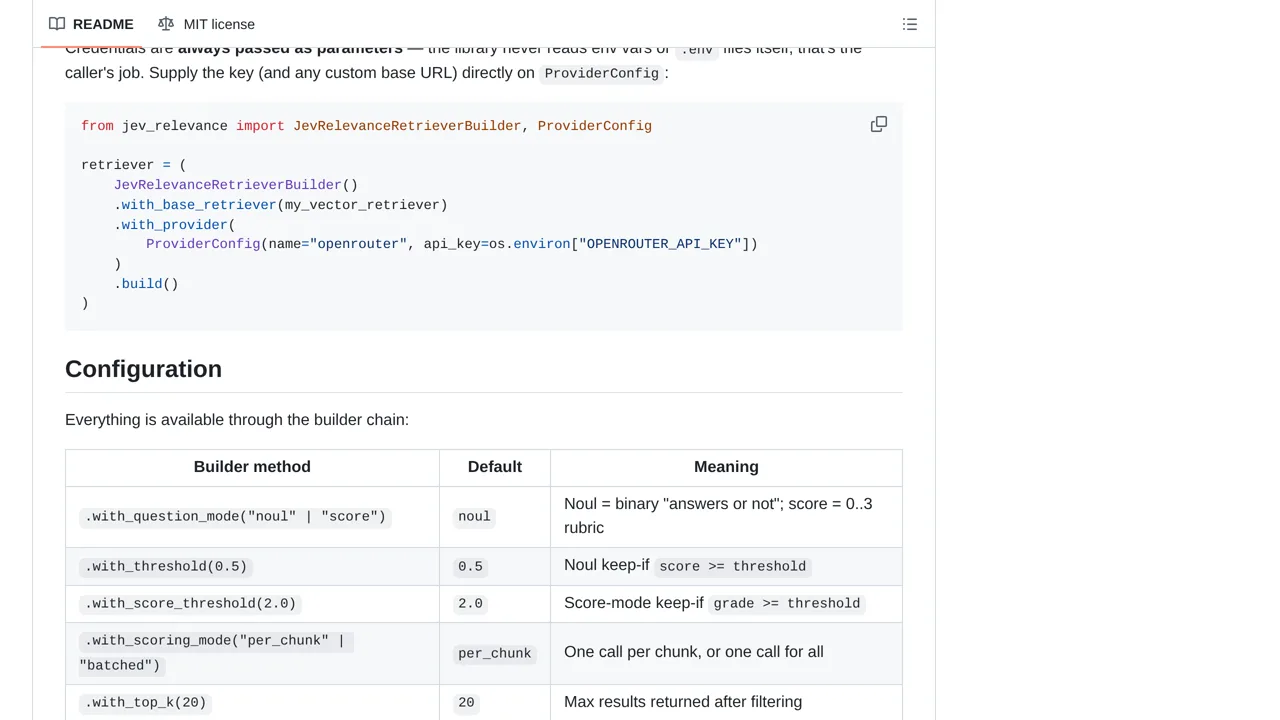
jev-ranker adds Jev-powered reranking and relevance filtering to retrieval pipelines.

JevRelevanceRetriever is a LangChain BaseRetriever that scores relevance without requiring chain changes.
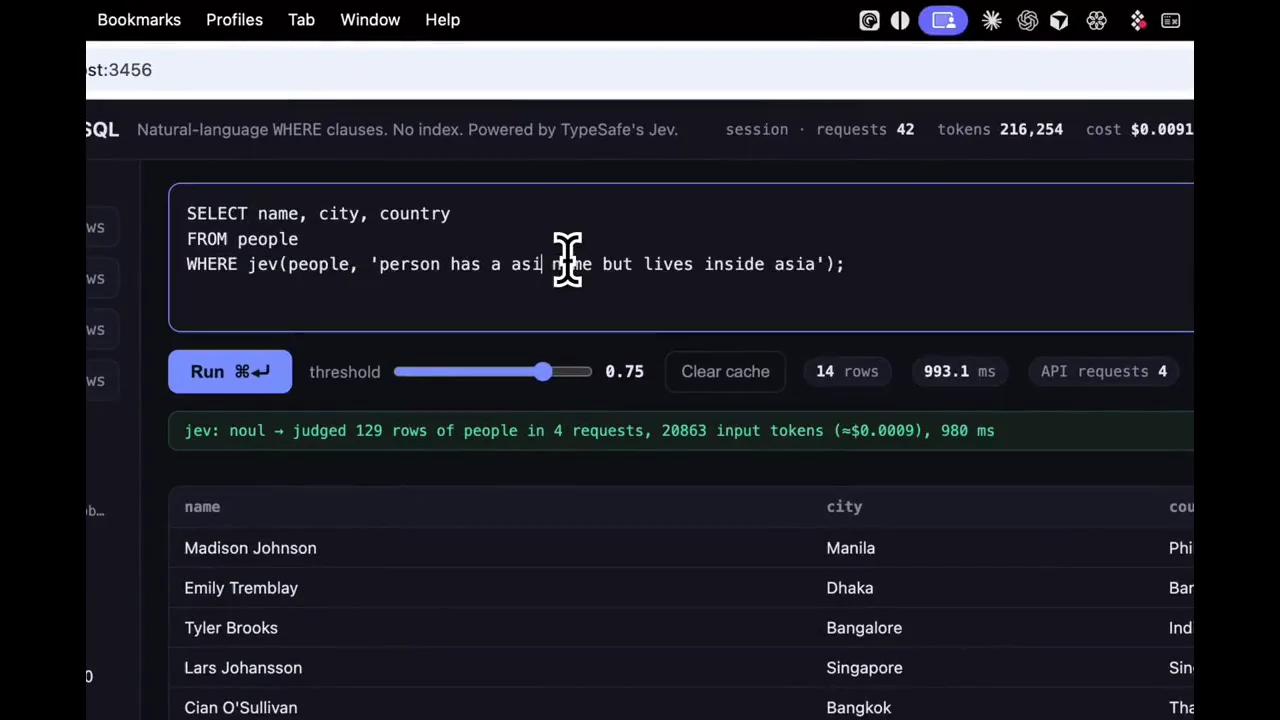
Zachi’s PostgreSQL extension uses a jev() function to filter database rows with natural-language conditions, without indexes or embeddings.
A Minecraft server plugin blocks severe chat content and flags harassment or grooming before players send it.

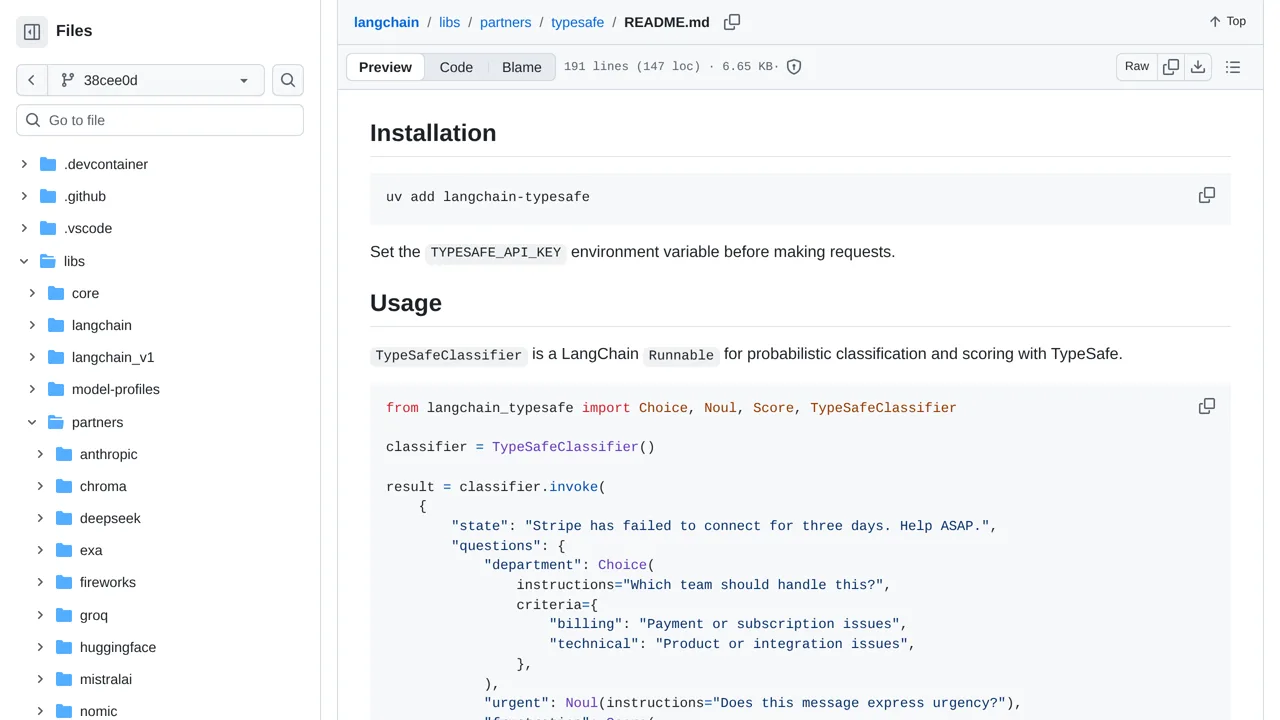
Adds Jev's typed decisions as a LangChain Runnable, with experimental middleware for model routing and tool-risk checks.
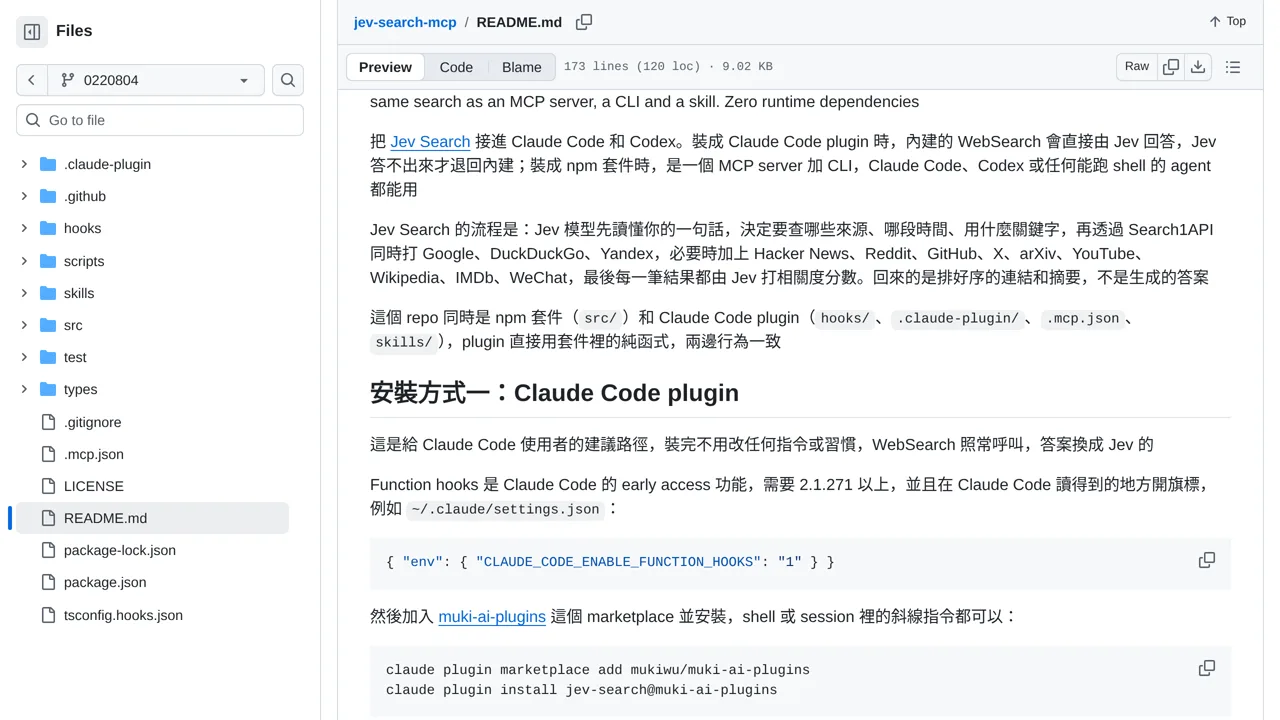
Bring Jev Search's ranked links into Claude Code, Codex or a terminal through an MCP server, CLI and optional WebSearch hook.
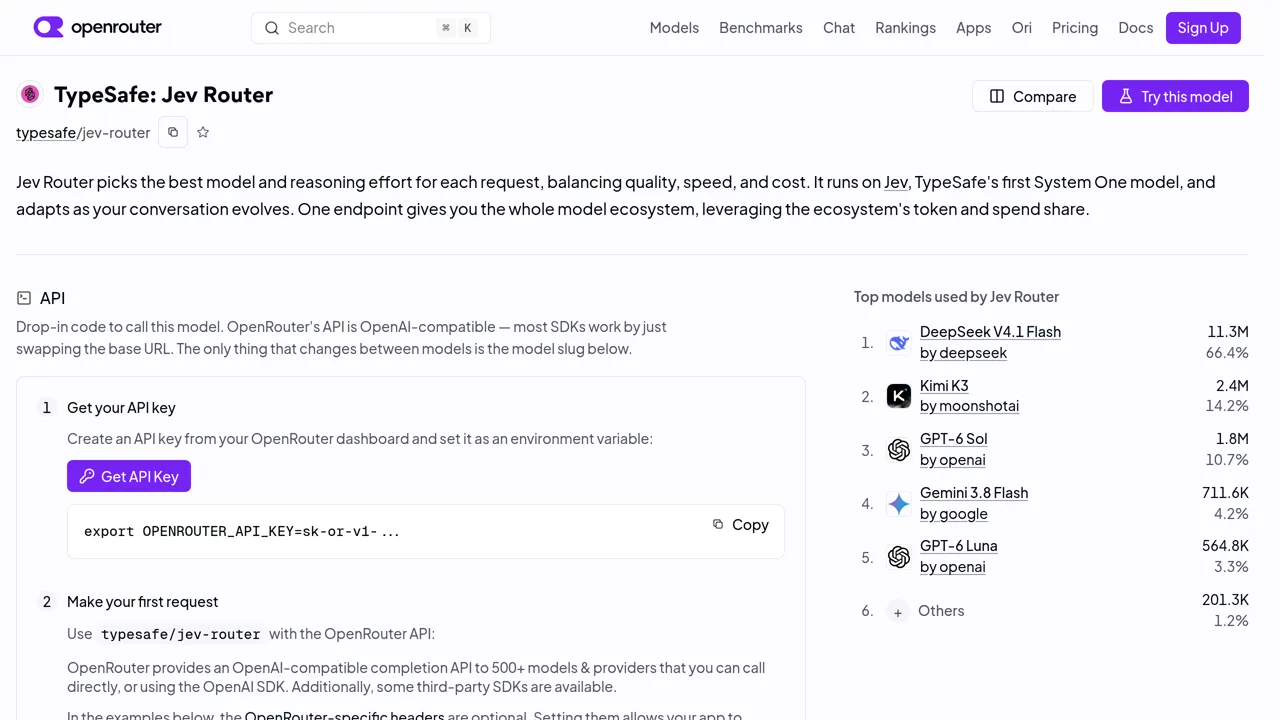
OpenRouter's Jev Router picks the model and reasoning effort for each request, and holds a model while its prompt cache stays warm.
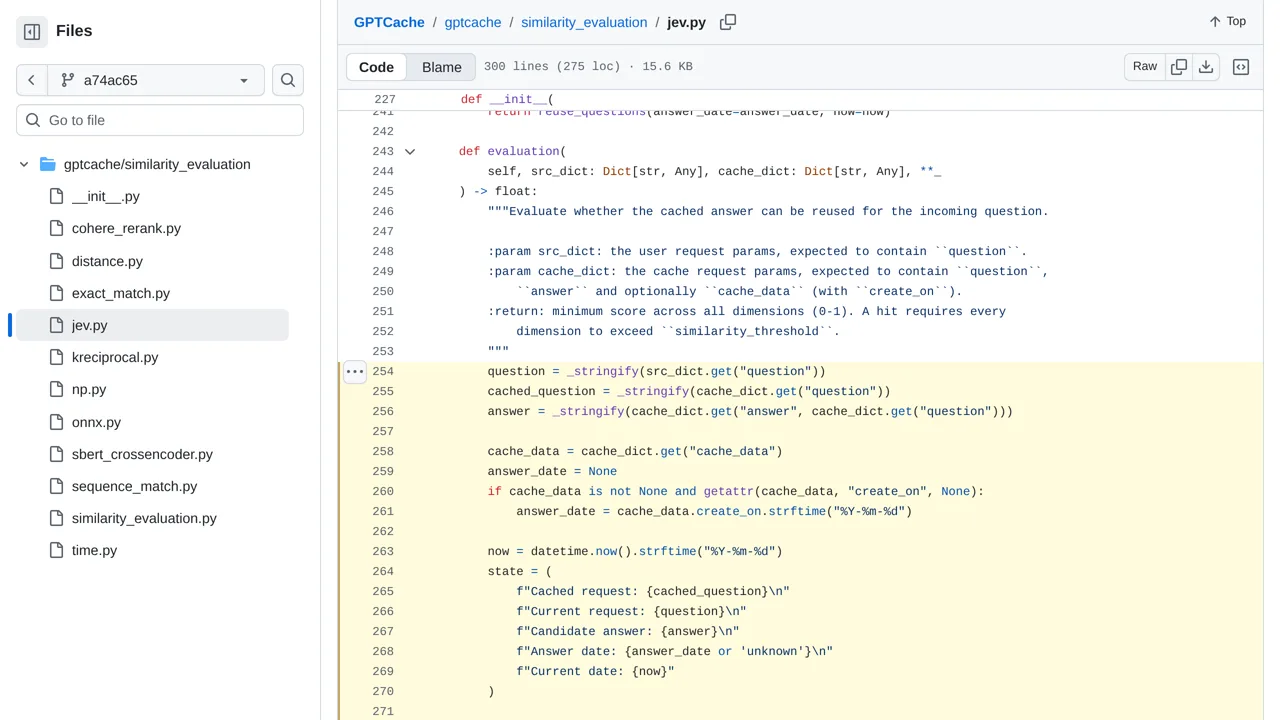
GPTCache asks Jev whether a cached answer still fits a new request, taking differences in the requests, answer, and dates into account.
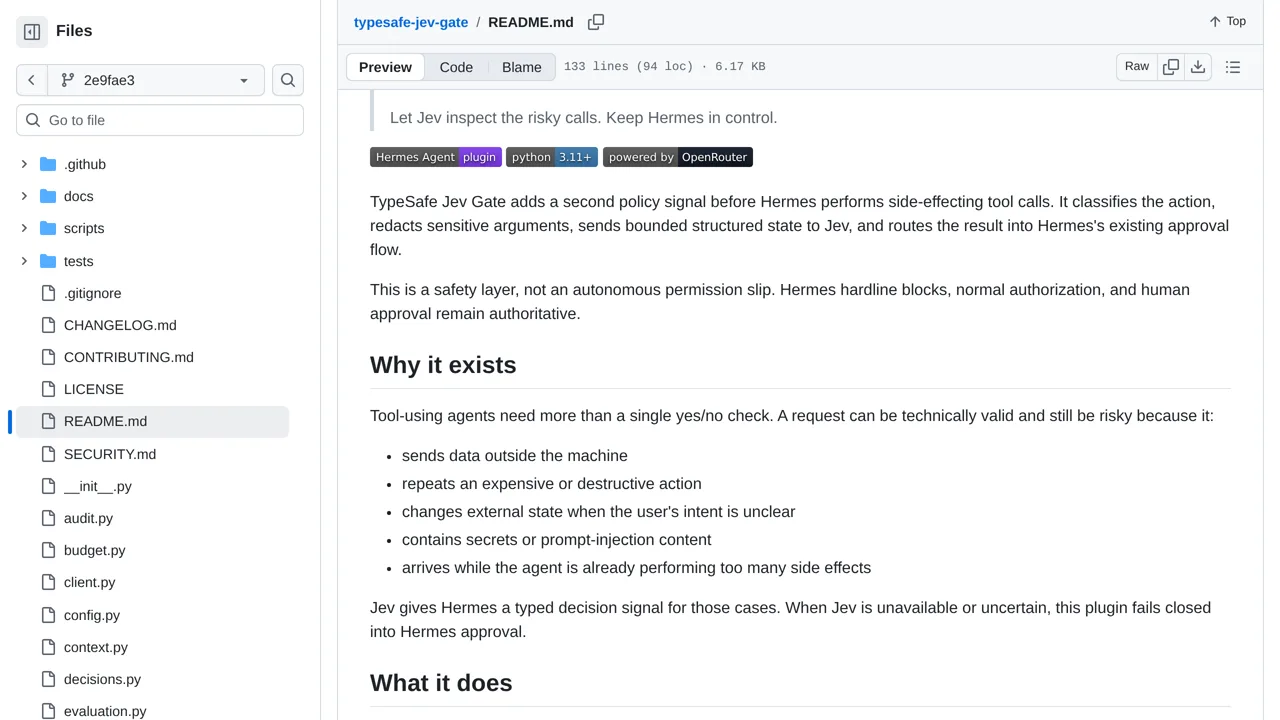
TypeSafe Jev Gate adds a fail-closed review step to Hermes Agent's consequential tool calls.
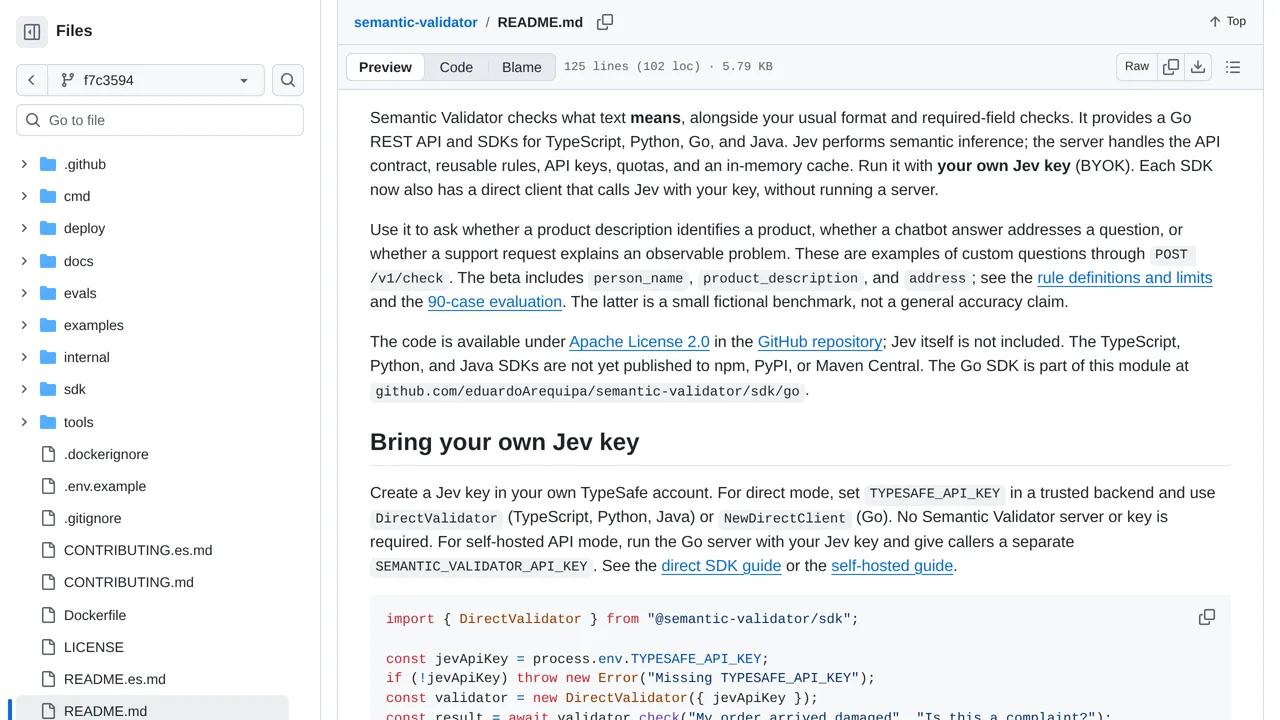
Send text through a named semantic rule or your own question and receive a valid, invalid, or uncertain result.
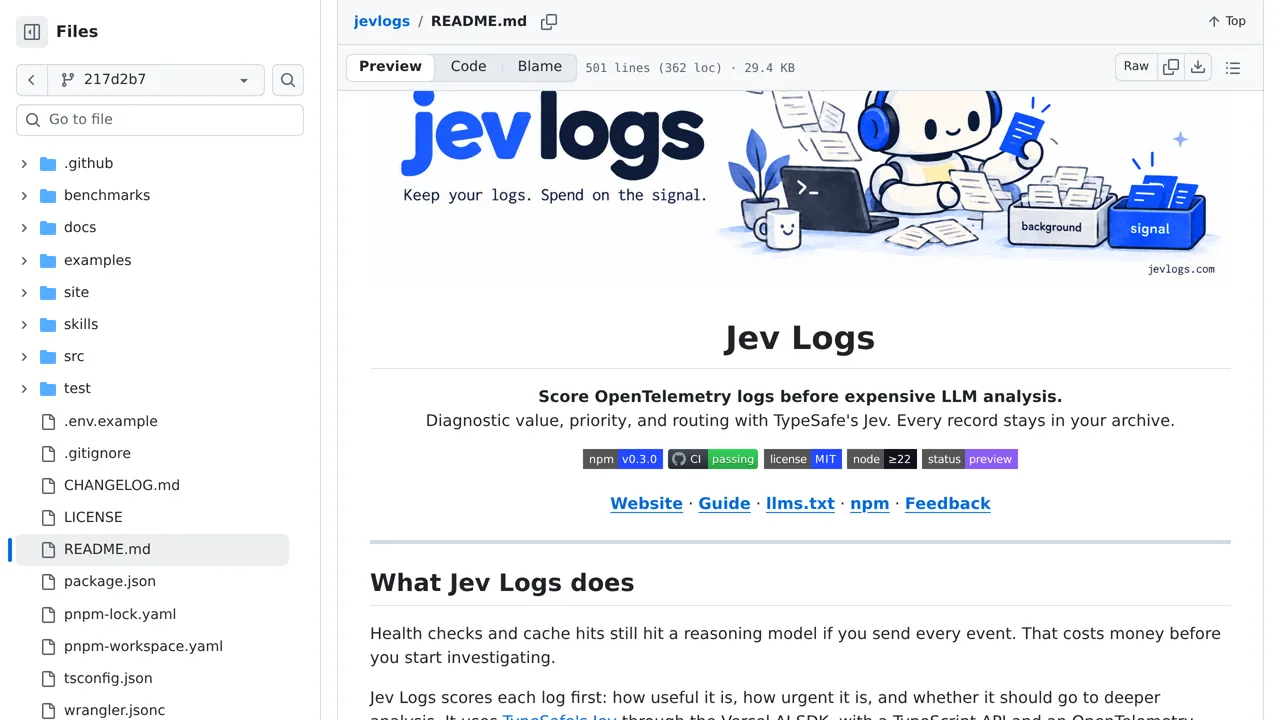
Most log records never need a language model's opinion, so Jev Logs scores each one first: how diagnostically useful it is, how urgent, and whether deeper analysis is warranted. Only confident, low-value records skip the expensive branch, and the archive always gets everything.
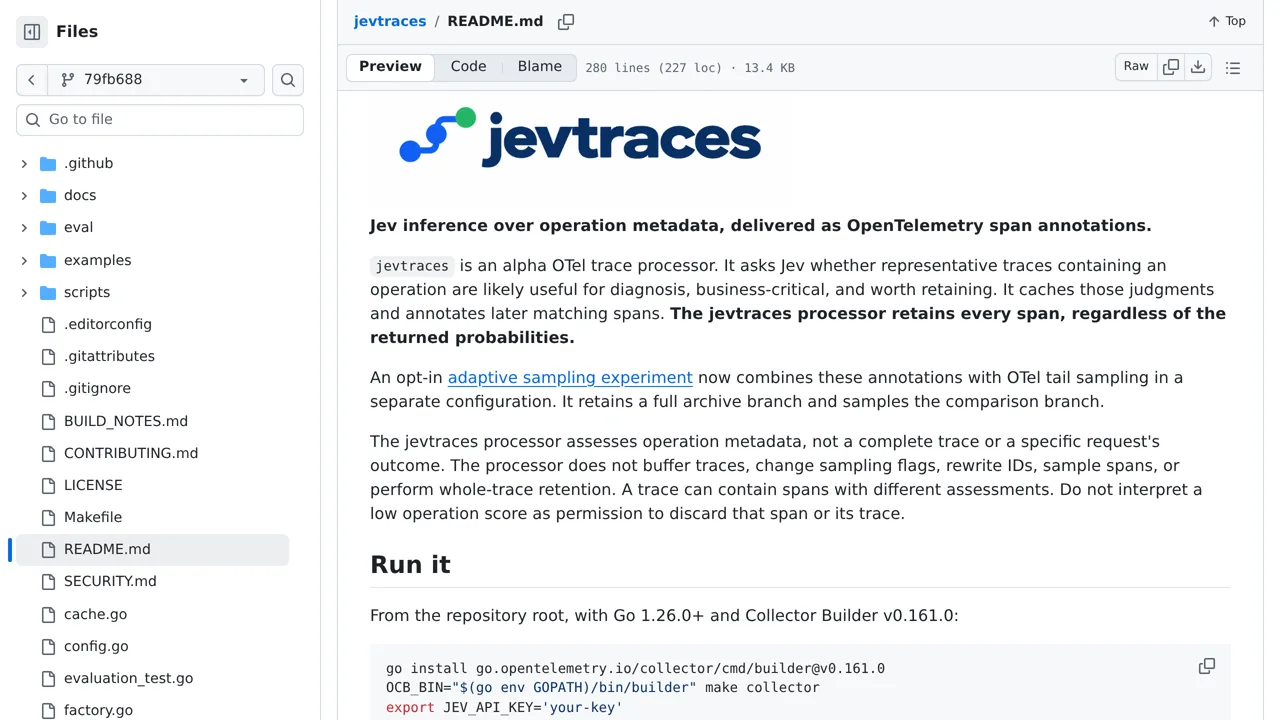
jevtraces brings the same annotation idea to spans: an alpha OpenTelemetry processor asks Jev whether an operation looks worth diagnosing, whether it's business-critical, and whether to keep it, then caches the verdicts and stamps them on later matching spans. Every span is retained regardless.
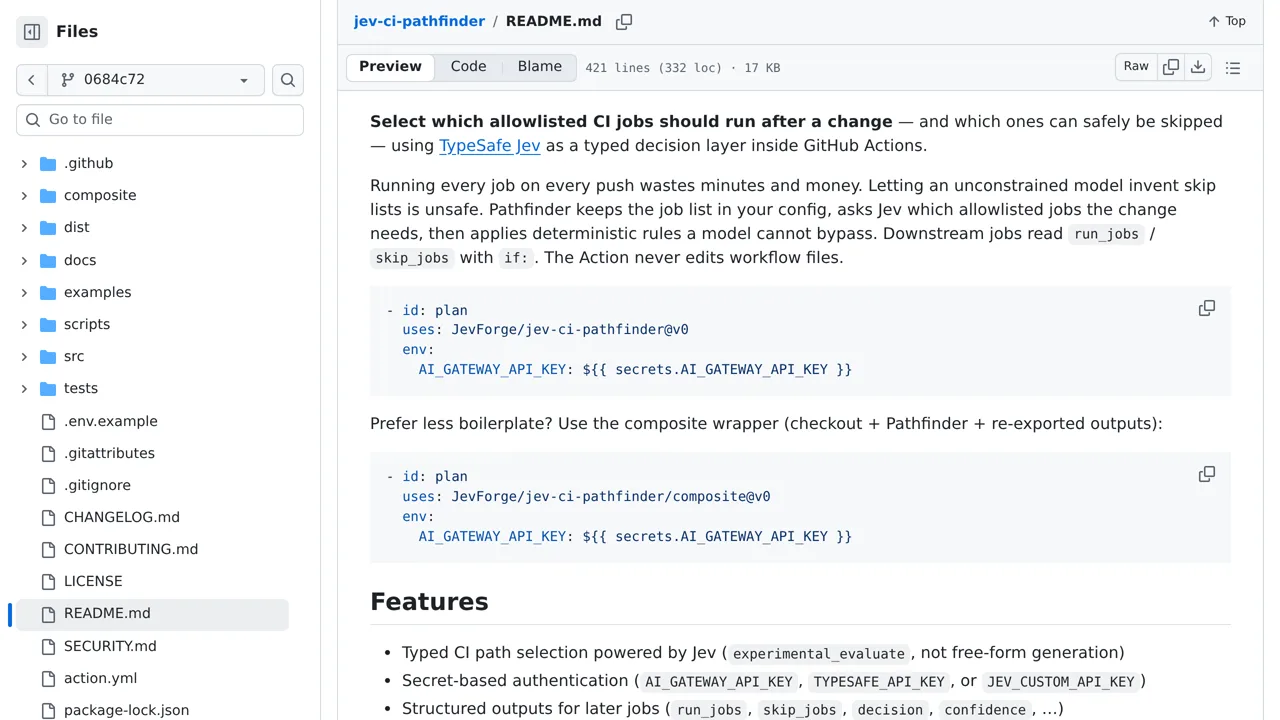
jev-ci-pathfinder lets Jev decide which optional CI jobs a change actually needs, one allowlisted job at a time. Always-on jobs, path rules, and dependency closure never leave code, and when Jev is unavailable the action runs its configured conservative set rather than guessing.
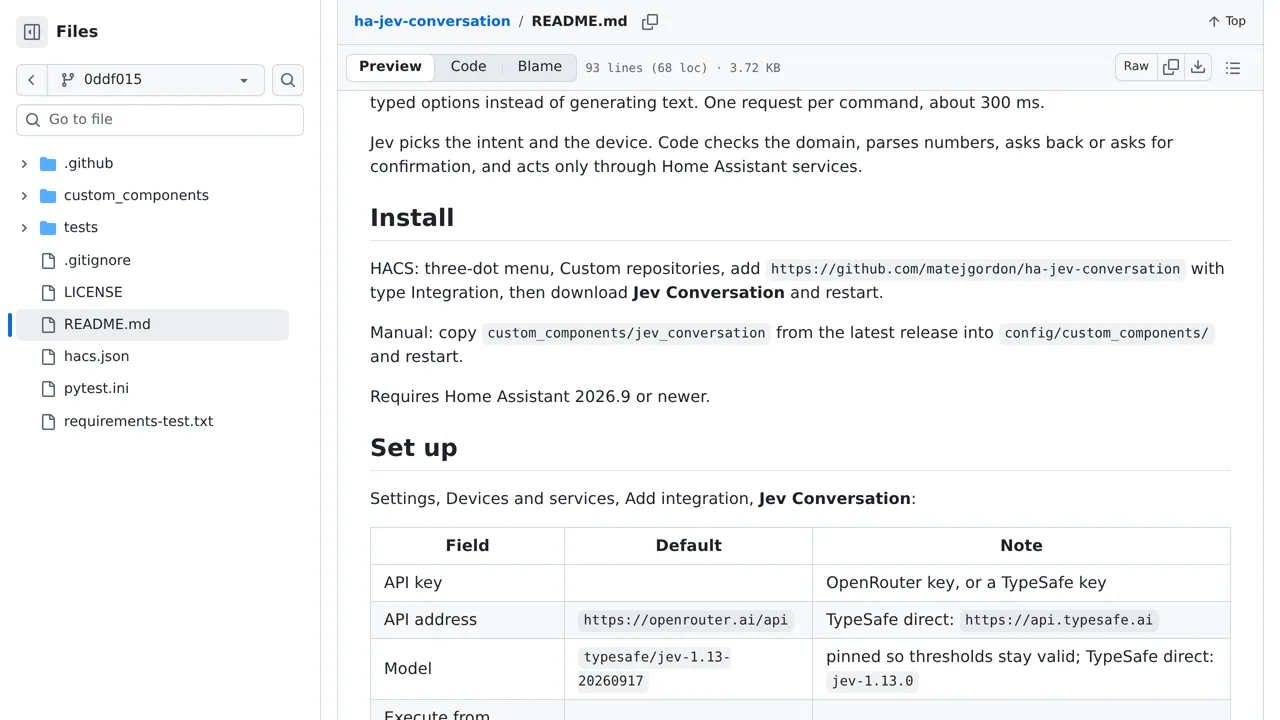
Matěj Gordon's Home Assistant integration speaks Czech, lets Jev choose which device to act on, and lands the whole decision in about 300 milliseconds.
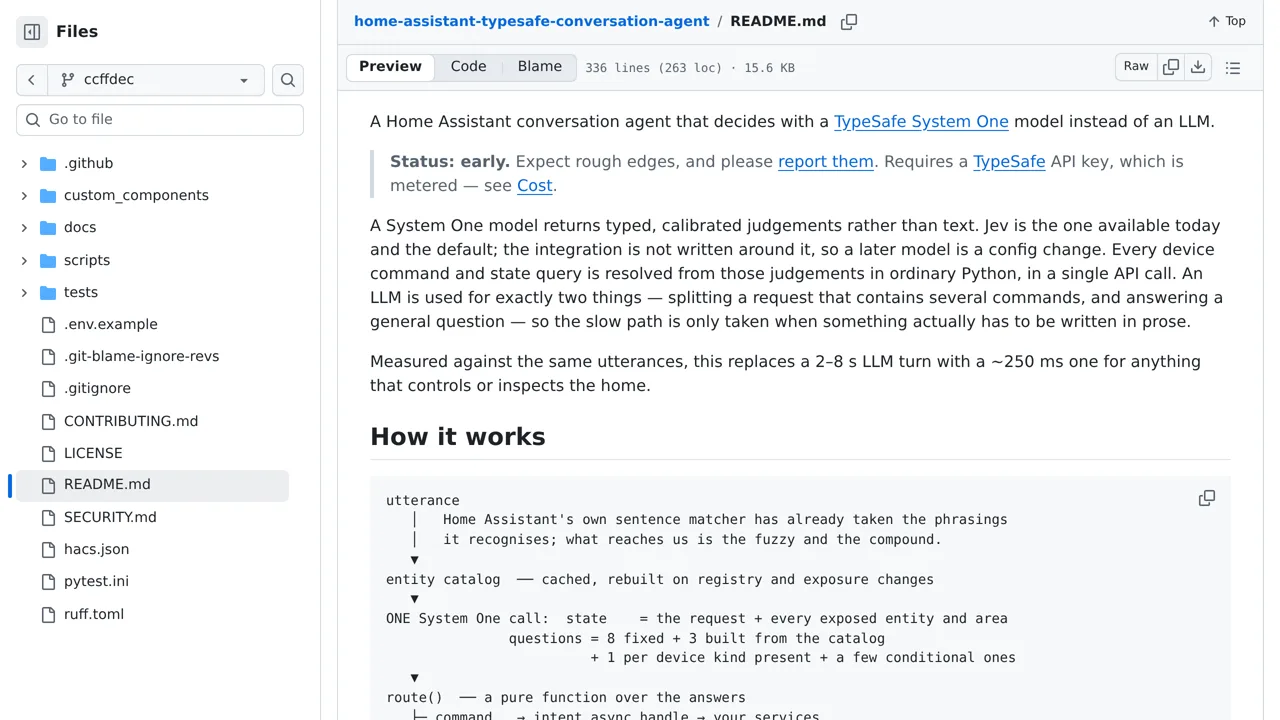
A Home Assistant voice agent that routes each command through typed, calibrated Jev judgments instead of free-text parsing.
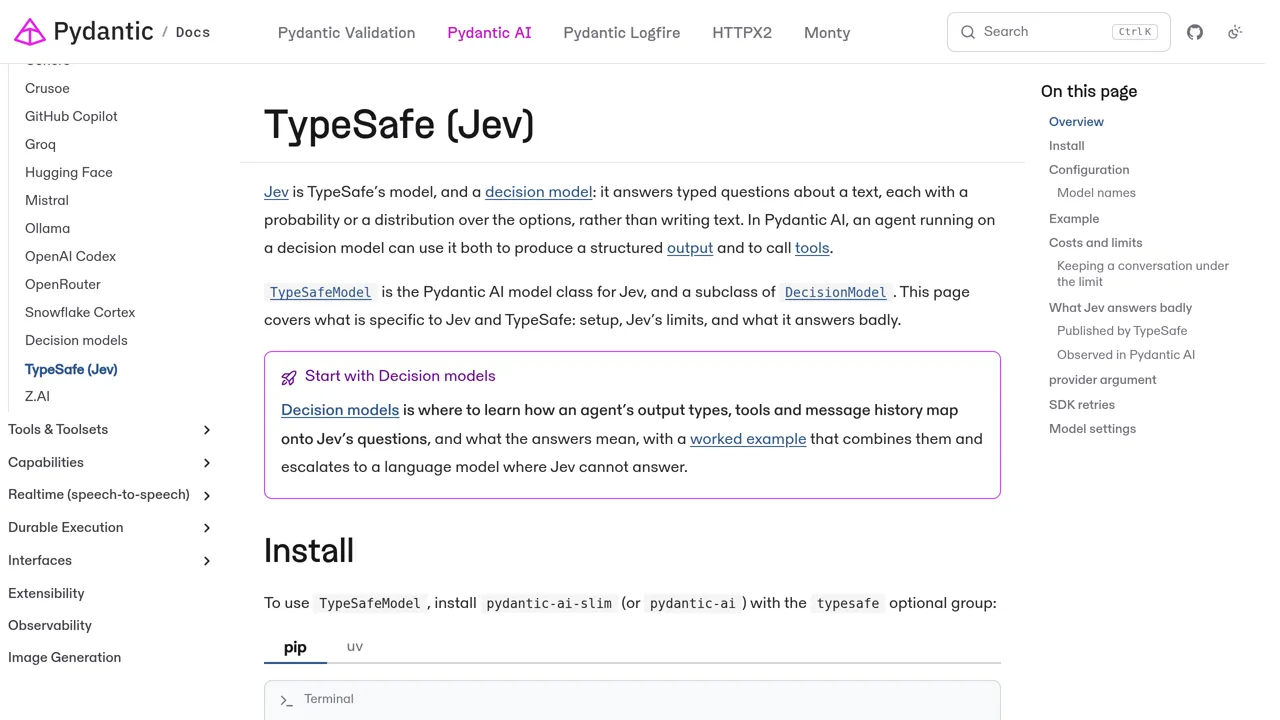
Pydantic AI maps typed agent outputs and tool choices to Jev questions, with per-field confidence for routing uncertain answers.
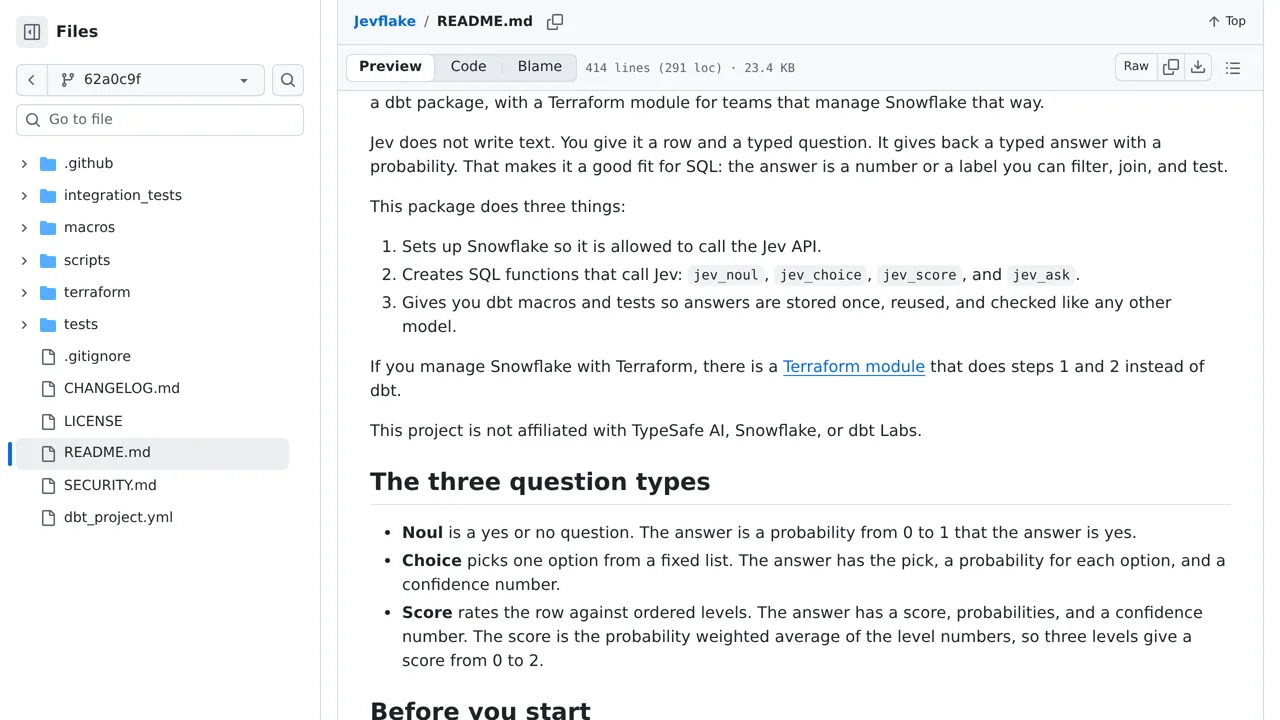
A dbt package that lets Snowflake query Jev through SQL functions — jev_noul, jev_choice, jev_score, and jev_ask — with a Terraform module as an alternative setup.
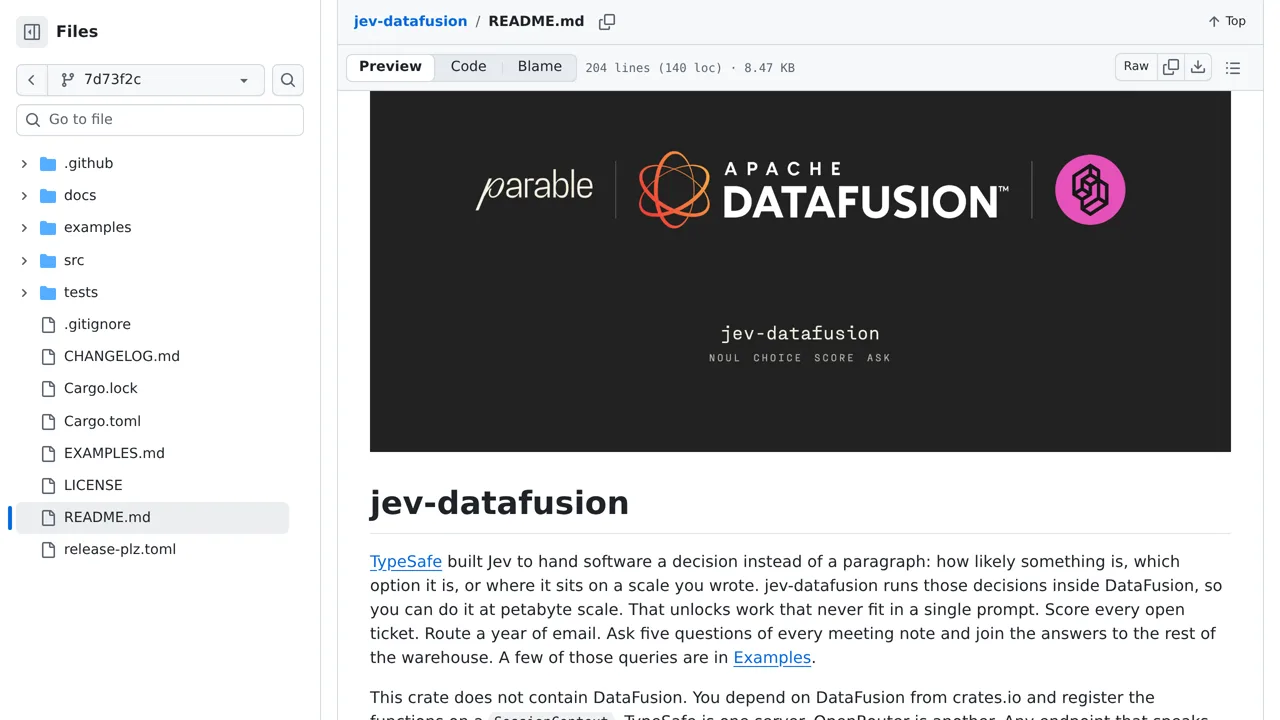
Runs Jev's judgments inside Apache DataFusion, so a SQL query can score every ticket or classify a year of email without leaving the database.
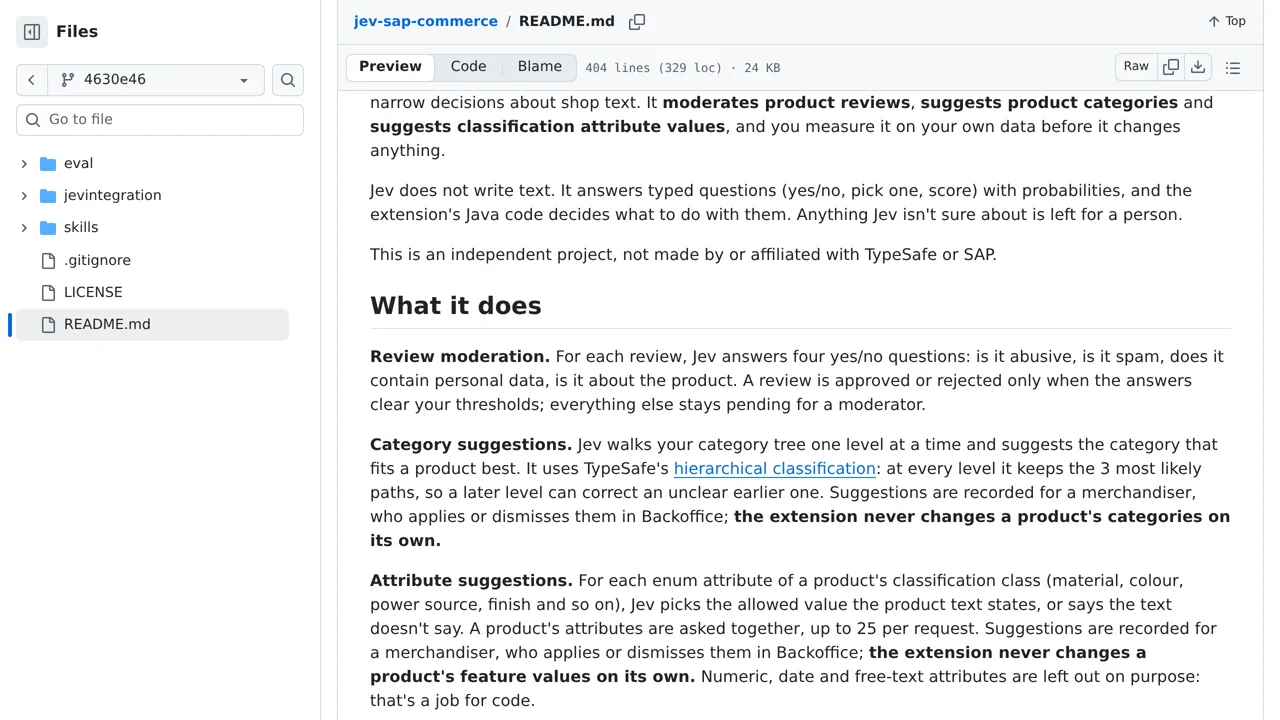
Brings Jev into SAP Commerce to moderate product reviews and suggest categories, with dry runs on your own catalogue before anything goes live.
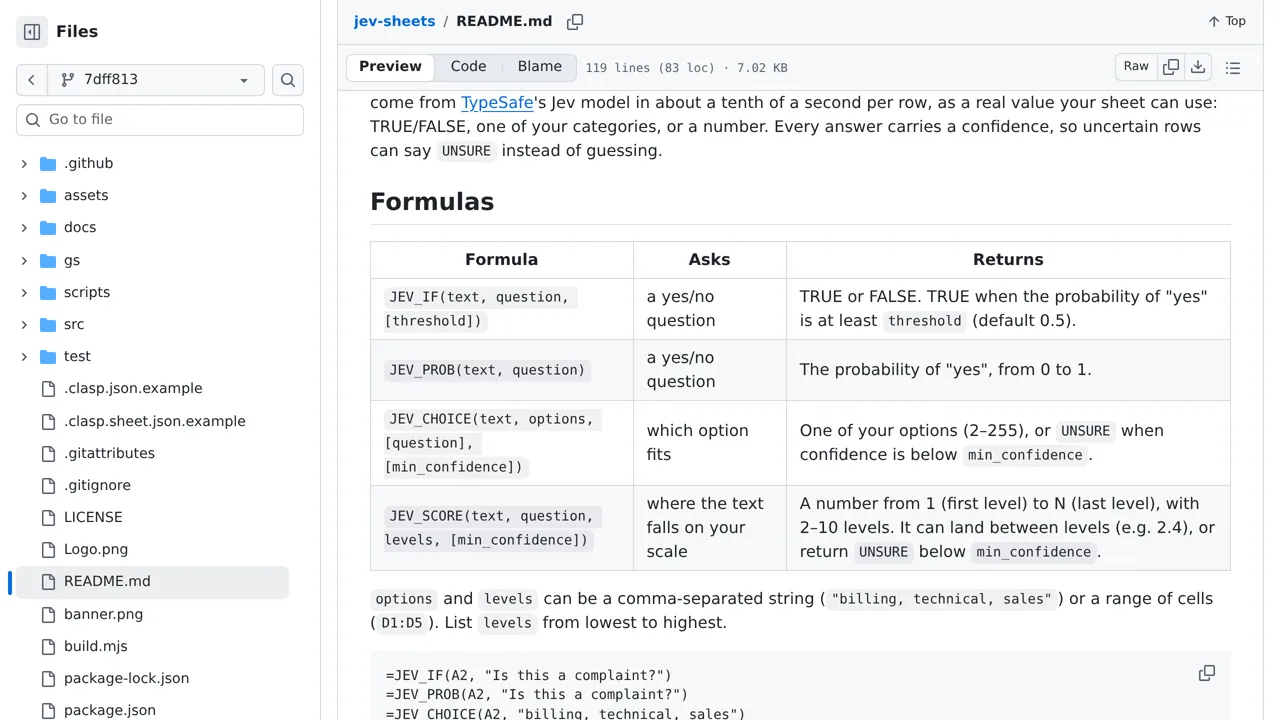
Google Sheets formulas — JEV_IF, JEV_PROB, JEV_CHOICE, JEV_SCORE — that classify, tag, and score cells with Jev in about a tenth of a second per row.
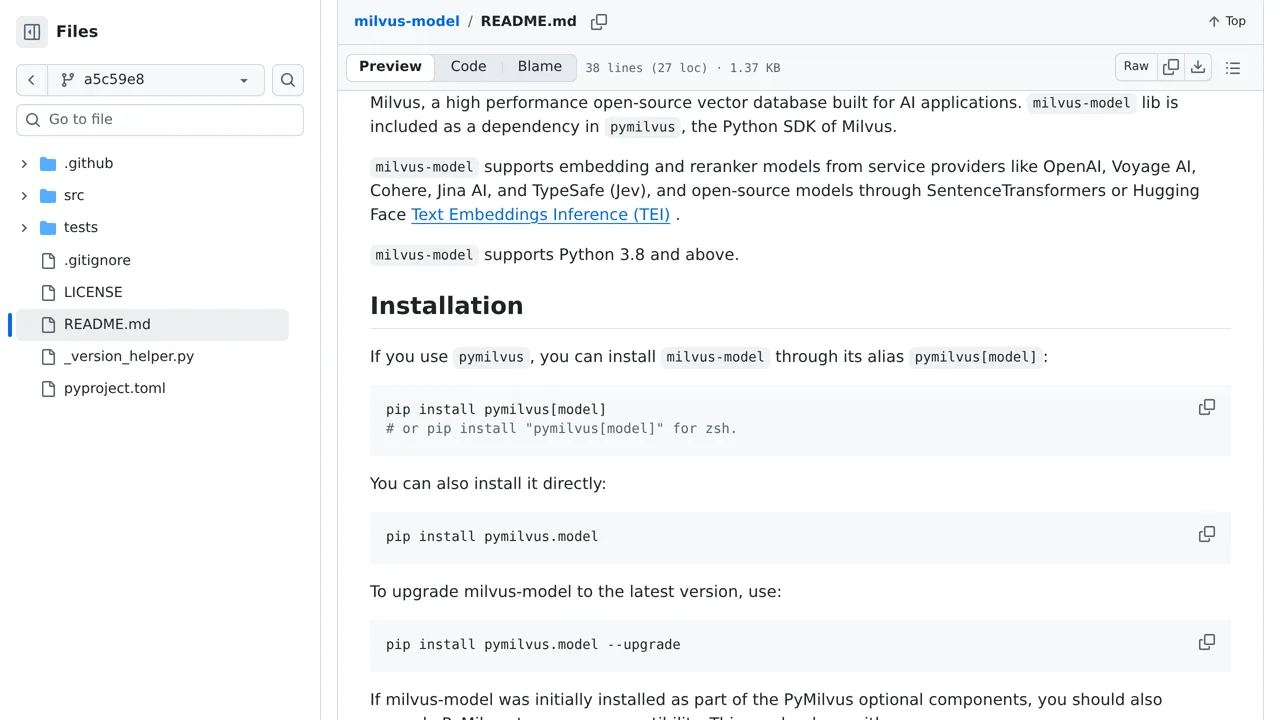
Milvus's model library ships a Jev reranker next to its Cohere and Voyage ones. Each candidate document becomes one yes/no question about the query.
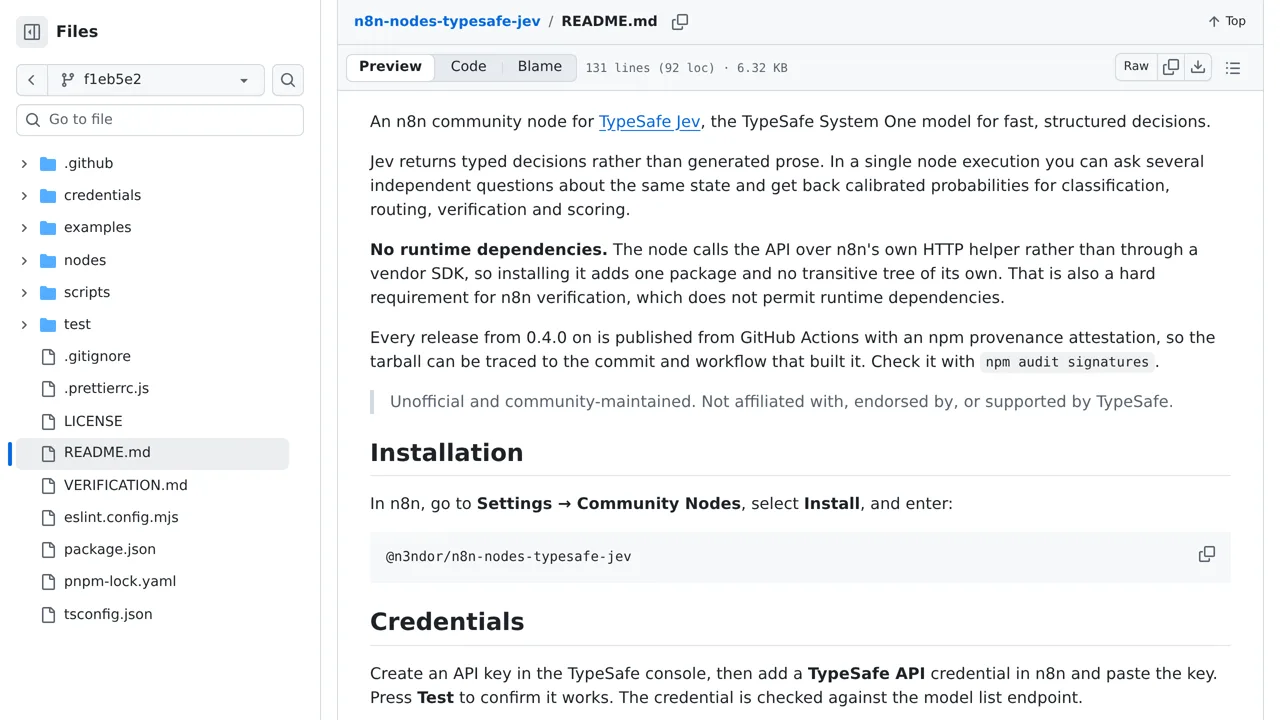
Add Jev to an n8n workflow with a visual question builder, or supply questions as JSON from an earlier step.
Jev, briefly
A chat model generates text token by token and hopes you parse it. Jev never generates a word. Your code sends the state of the world plus typed questions; Jev returns every answer in one parallel pass — typed values with calibrated probabilities and a confidence score your code can trust. About 70–500 ms end to end, $0.042 per million input tokens, output free. Trained with what TypeSafe calls Reinforcement Learning for Calibrated Decisions.
You define the options. Jev returns the chosen option, a probability for every option, and a confidence. The workhorse of routing, agents, and games — the answer space is always legal, so there is nothing to parse and nothing to hallucinate.
You describe ordered levels — say trivial / normal / critical. Jev returns the level, the probability of each, and a confidence. Scores turn fuzzy judgment (“how severe is this log line?”) into a number-free decision your code can branch on.
You assert a statement; Jev returns the probability that it is true — a noul. Moderation, verification, guardrails, “does this diff actually fix the bug?”: one question, one calibrated probability.
Official material lives at typesafe.ai and docs.typesafe.ai. JevMade is an independent community registry — not affiliated with or endorsed by TypeSafe AI.
Recurring lessons
Games, drones, trading bots, and browser agents all converge on the same loop: serialize the state, ask one decisive question, act, repeat. Jev’s latency makes the loop feel instant — the model lives inside the control loop, not outside it.
The answer says what; the confidence says whether to act. The most reliable entries threshold on confidence to route edge cases to a slower model or a human — automation with an honest escape hatch.
Makers rarely ask Jev to pick from everything. Local tactics prune 225 gomoku moves to ~40; DOM filters turn a page into an element table; code narrows options, Jev judges within them.
A recurring split: Jev makes every decision cheaply and instantly, and a small LLM is only invoked when a human-facing string must actually be written. Decision and generation are separate budgets.
Send the link — repo, live demo, post, or video — plus a line on what it does and which primitives it uses. Every entry is verified against its primary source before it ships.
Submit your experiment → hello@JevMade.com