Read & learn
Written guides.
Understand Jev, one idea at a time. Walkthroughs, recipes, and writeups — our notes first, the original next.
Learn, build, and play with Jev — from deep technical guides to creative experiments.
Read & learn
Understand Jev, one idea at a time. Walkthroughs, recipes, and writeups — our notes first, the original next.
Watch & learn
See an idea take shape. Tutorials, demos, and deep dives, organized by topic and credited to their creators.
Make & explore
See what builders made with Jev. Games, tools, repositories, articles, and more — traced to their sources.
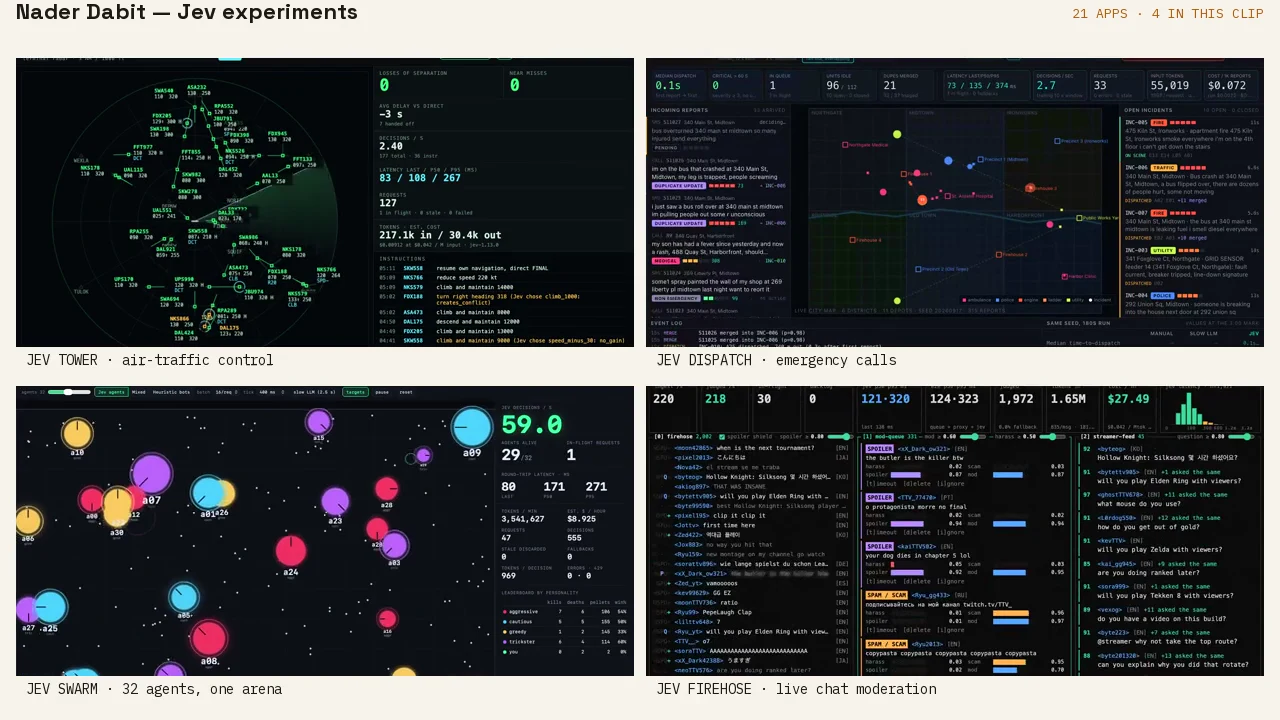
Every category, from games and tools to repositories and writeups, traced to a primary source.
Real-time research powered by
Same ideas.
Different paths.
This is the full registry, not just the featured picks. Figures like speed, cost, and stars are maker-reported or captured snapshots, not JevMade measurements.
20 experiments
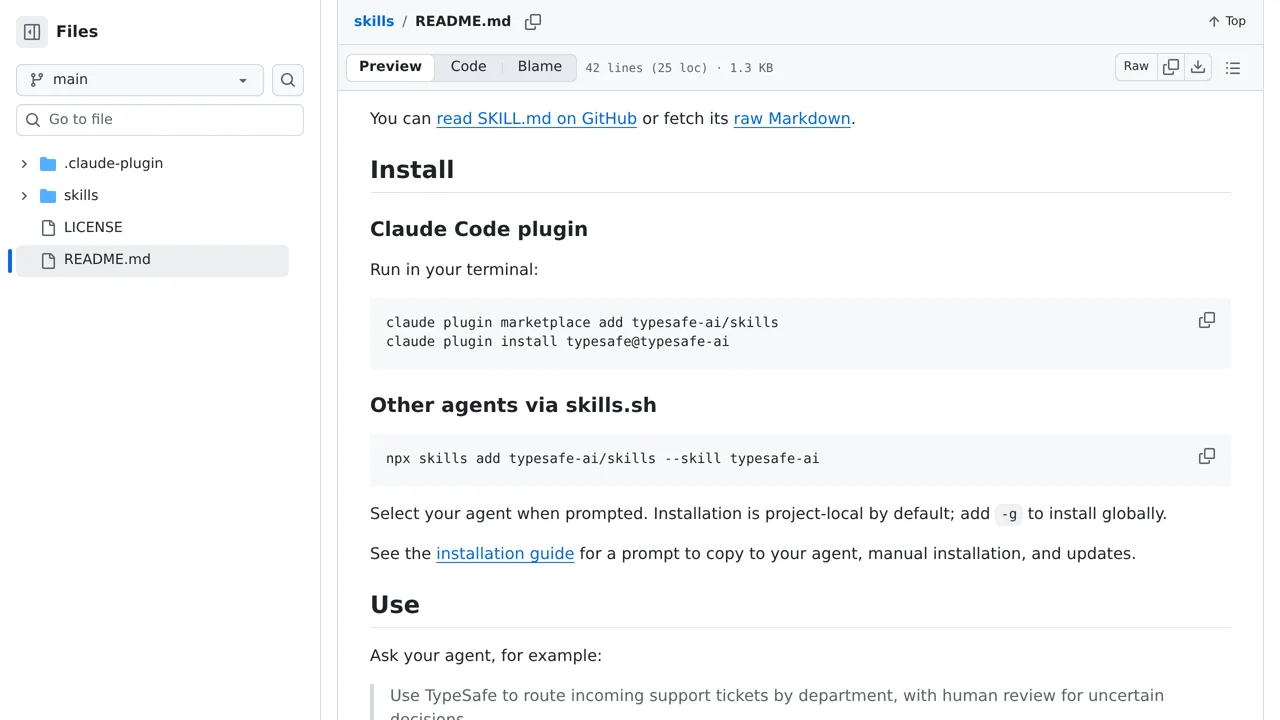
Official agent skills for writing software that uses TypeSafe's System One API.
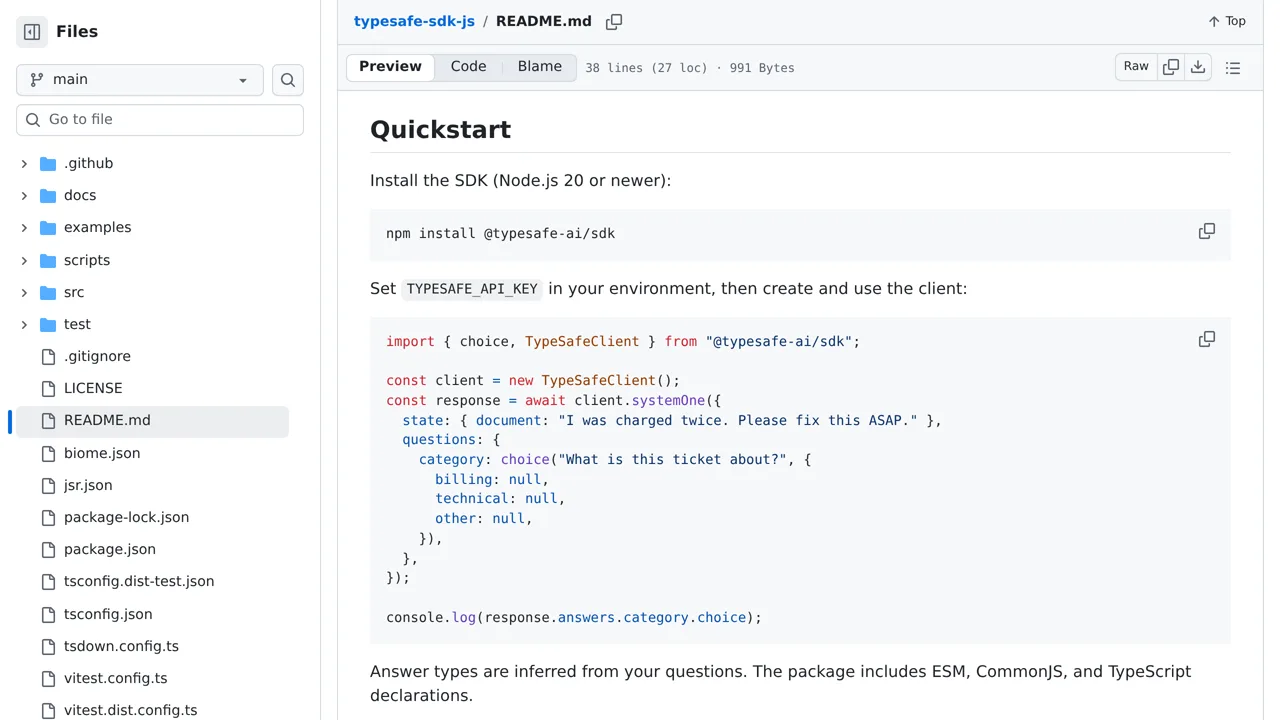
The official TypeScript and JavaScript SDK for the TypeSafe API.
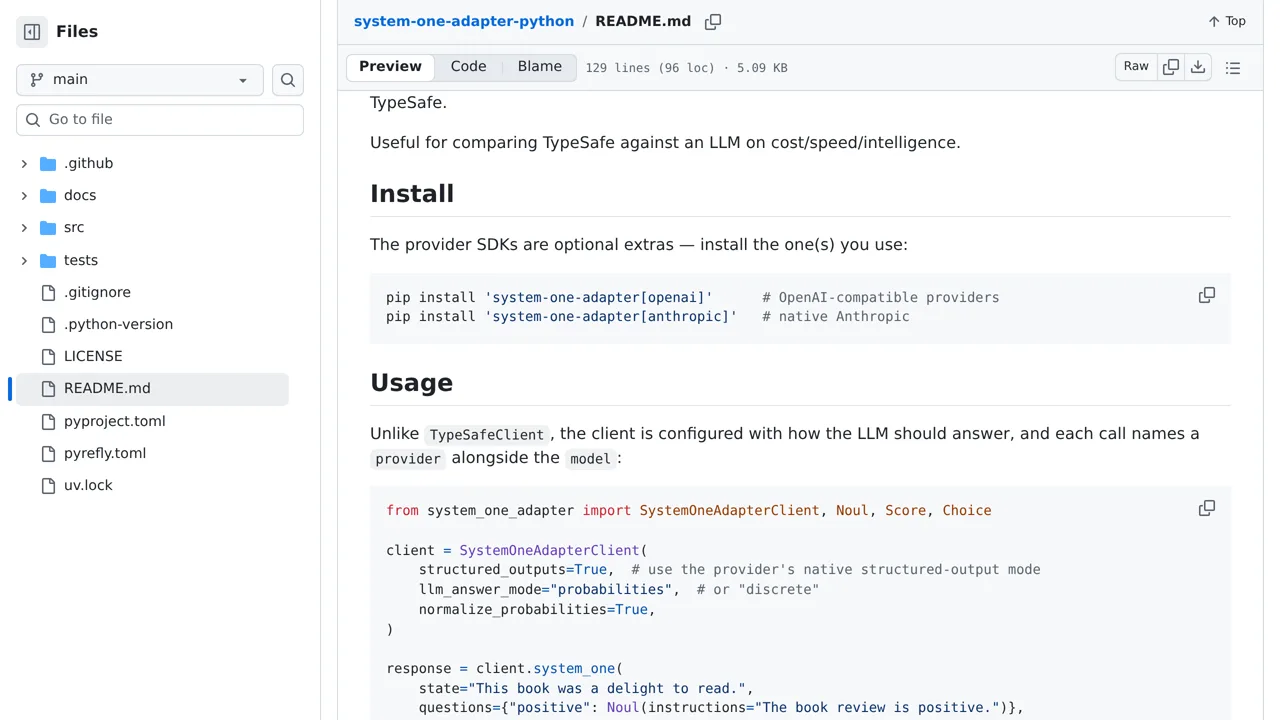
A Python replacement for TypeSafeClient that runs against general-purpose LLM APIs.
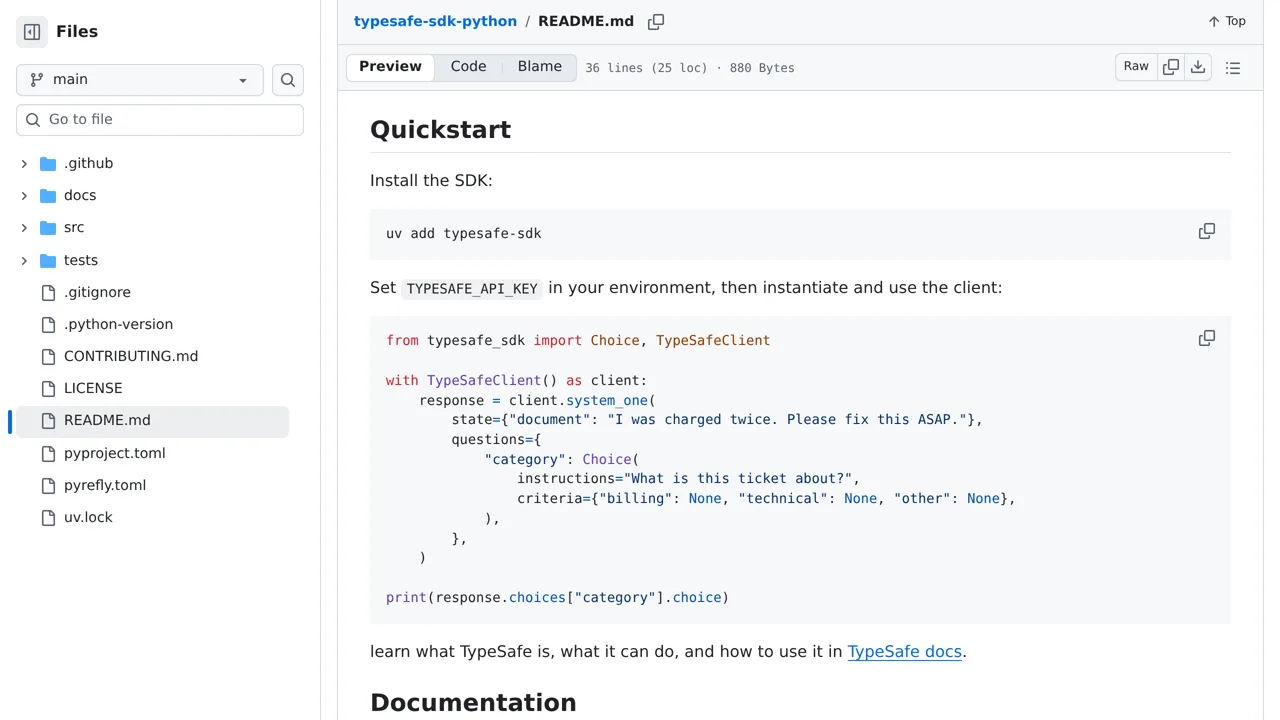
The official Python SDK for the TypeSafe API.
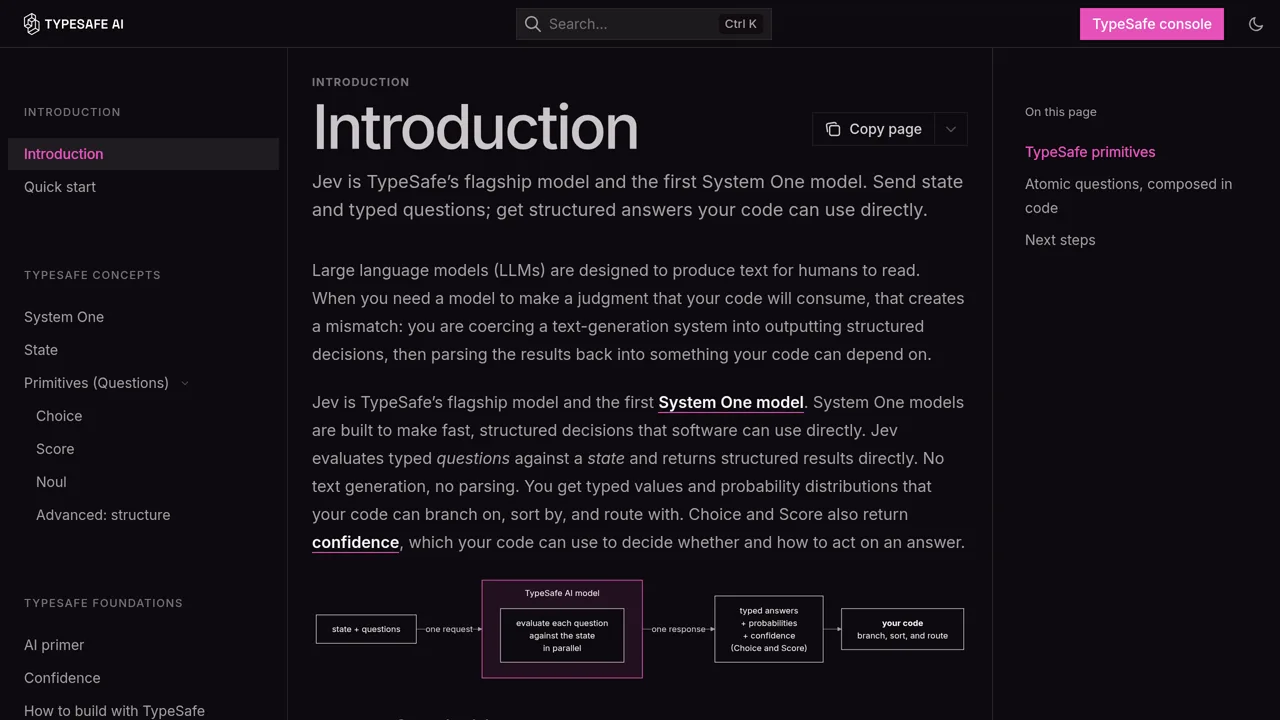
TypeSafe AI builds models that make fast, structured decisions inside software.

The official documentation explains how to send state and typed questions to Jev.
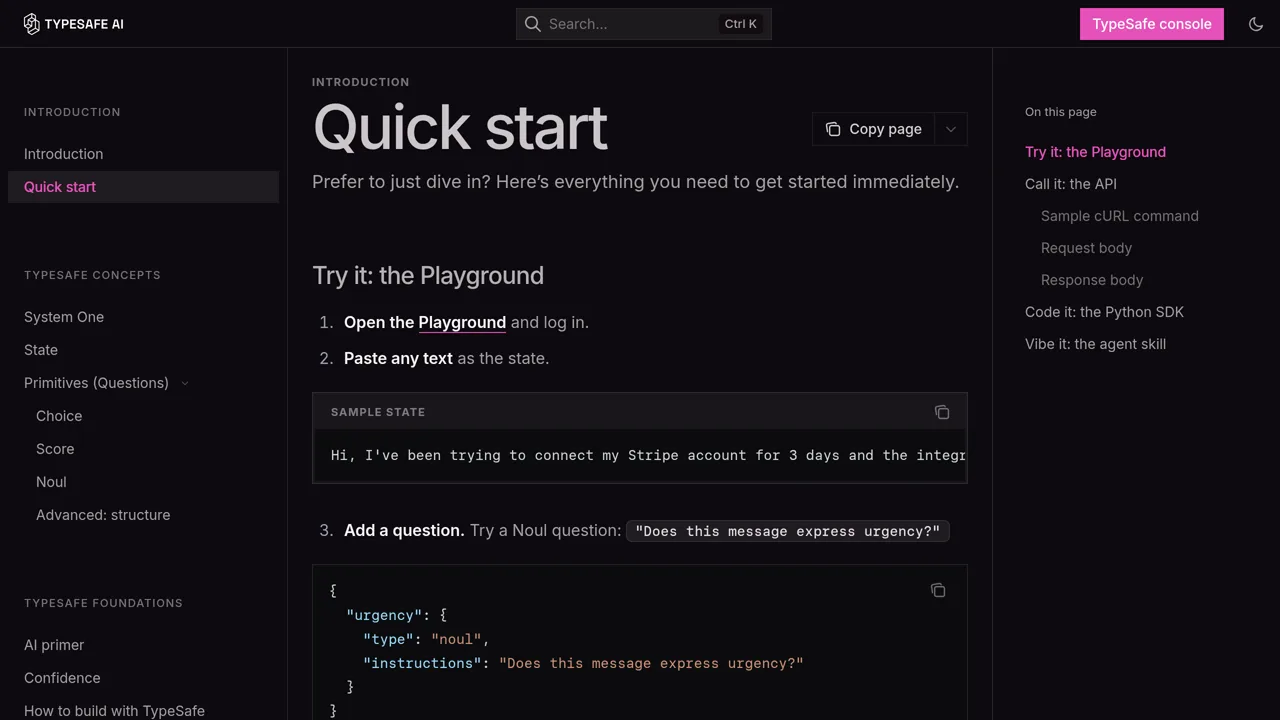
A concise guide to making your first Jev request.
An interactive playground for trying TypeSafe models.

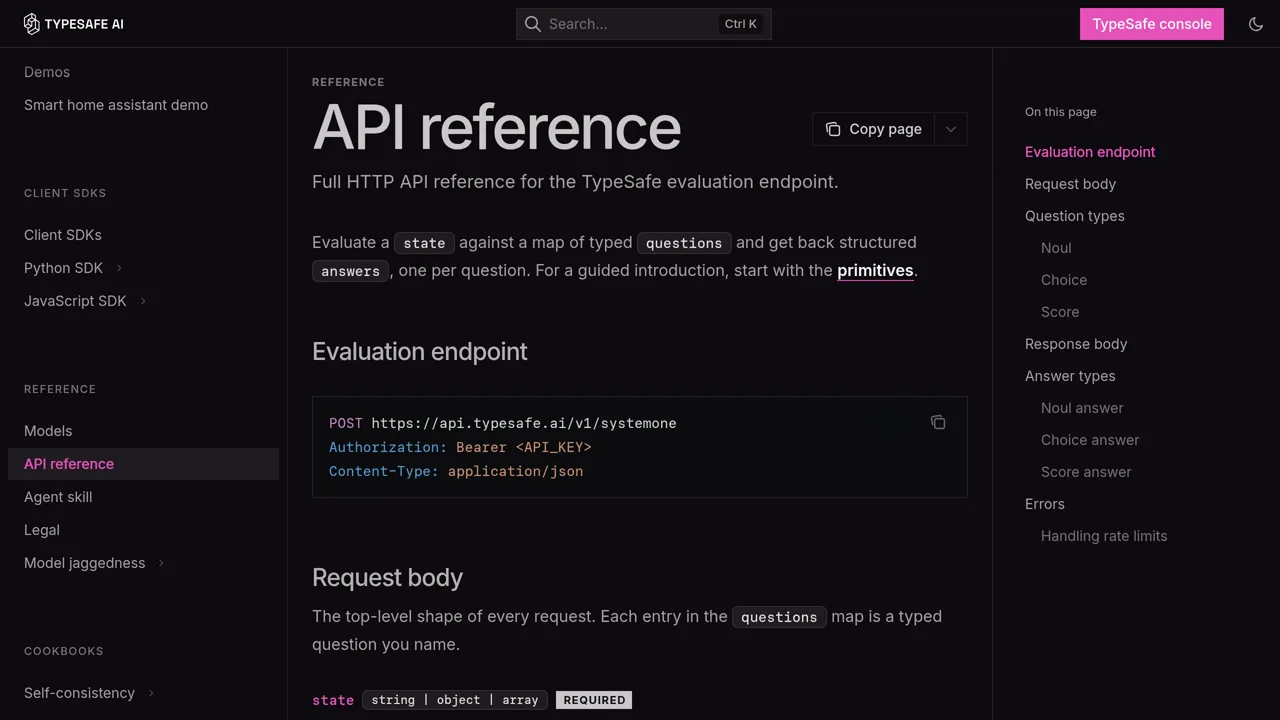
The complete HTTP API reference for TypeSafe's evaluation endpoint.
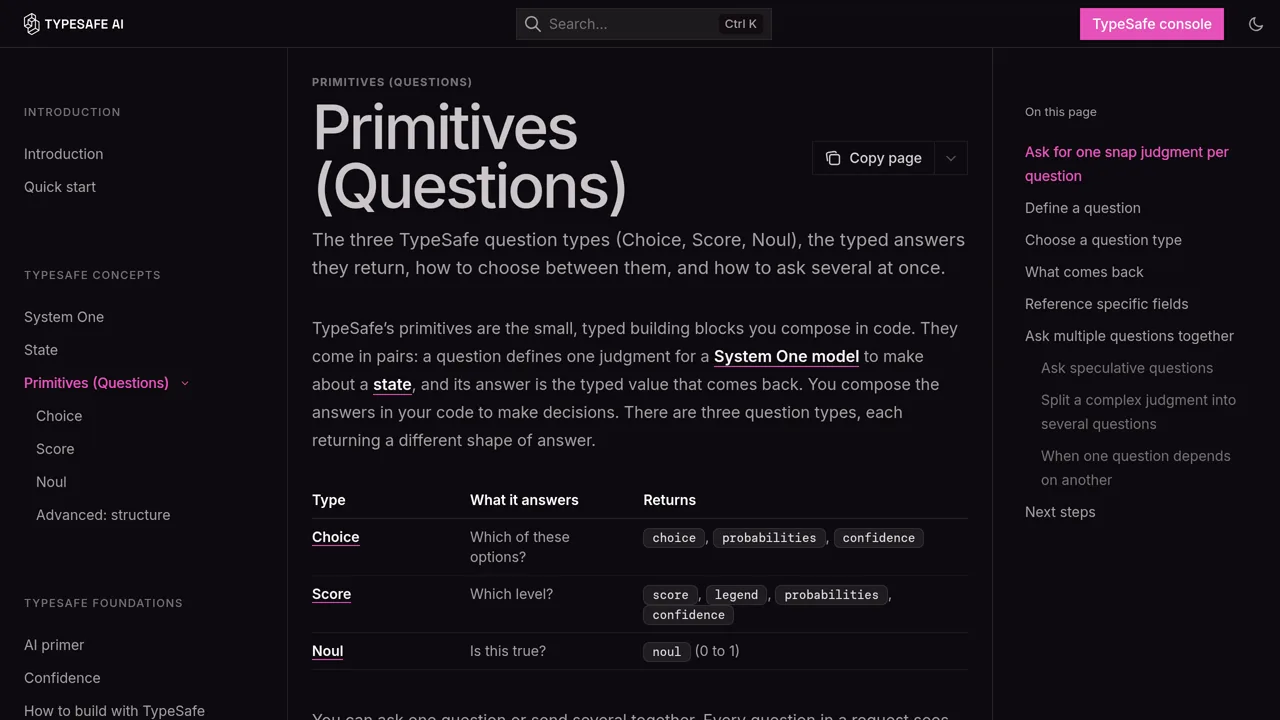
A guide to Jev's Choice, Score, and Noul question types and their answers.
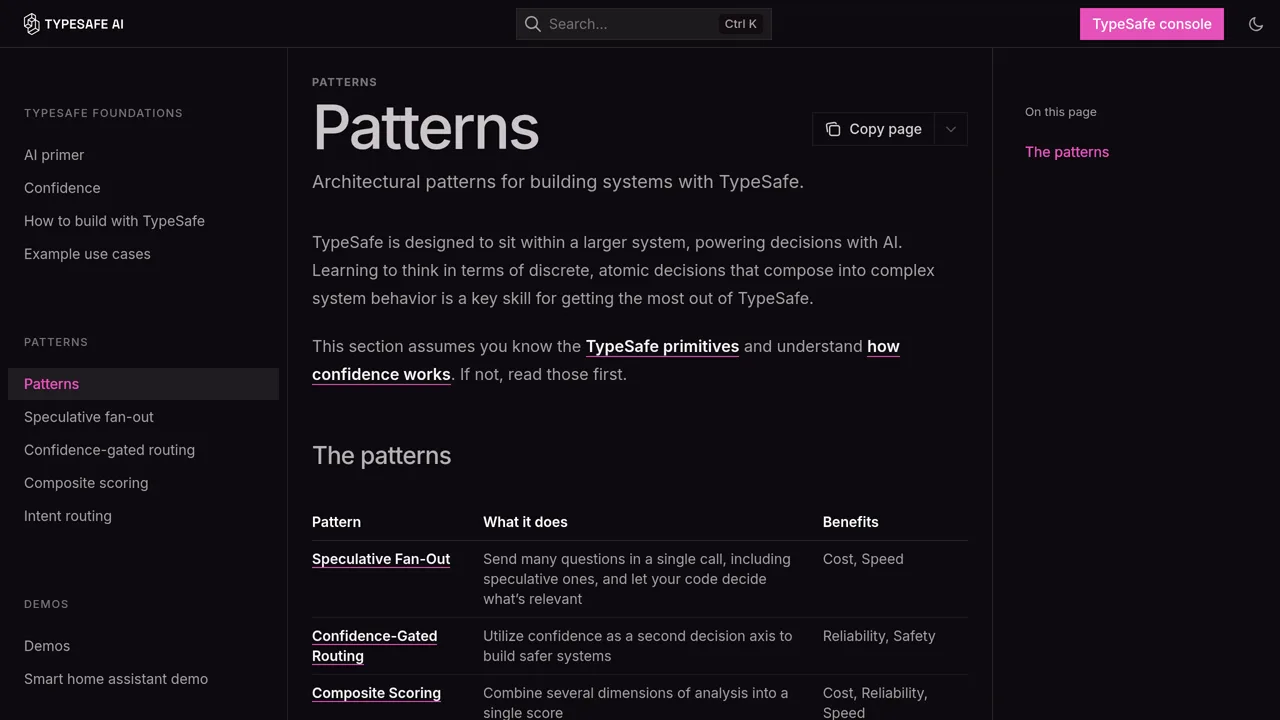
Architectural patterns for incorporating TypeSafe decisions into software.
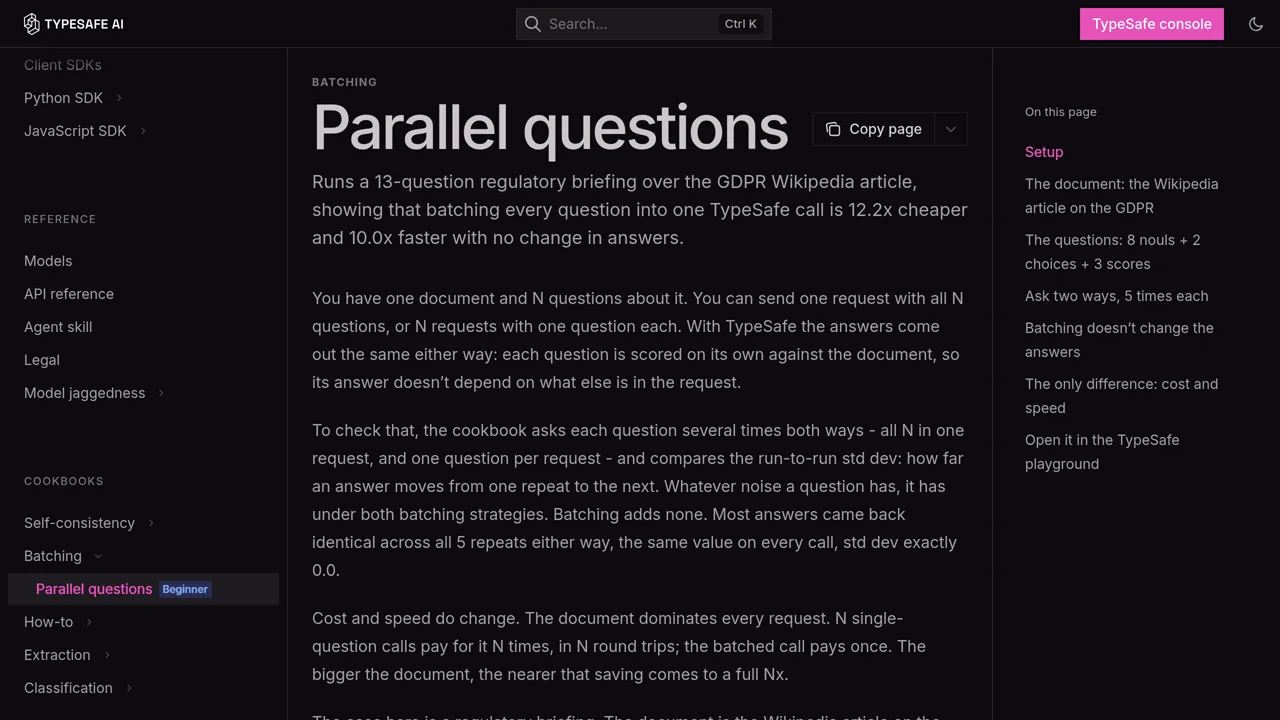
TypeSafe's recipes for asking Jev several questions in one call.
A smart-home assistant demo that uses TypeSafe to evaluate user requests.
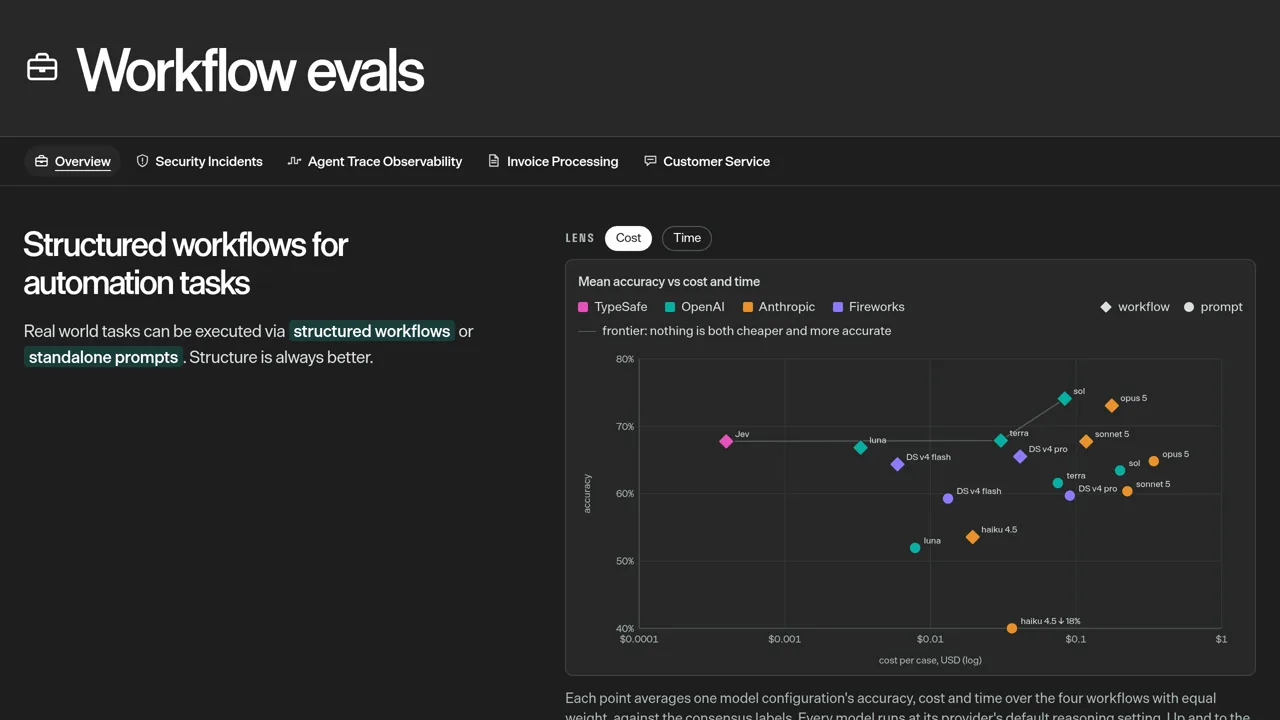
Resources for evaluating workflows built with TypeSafe.
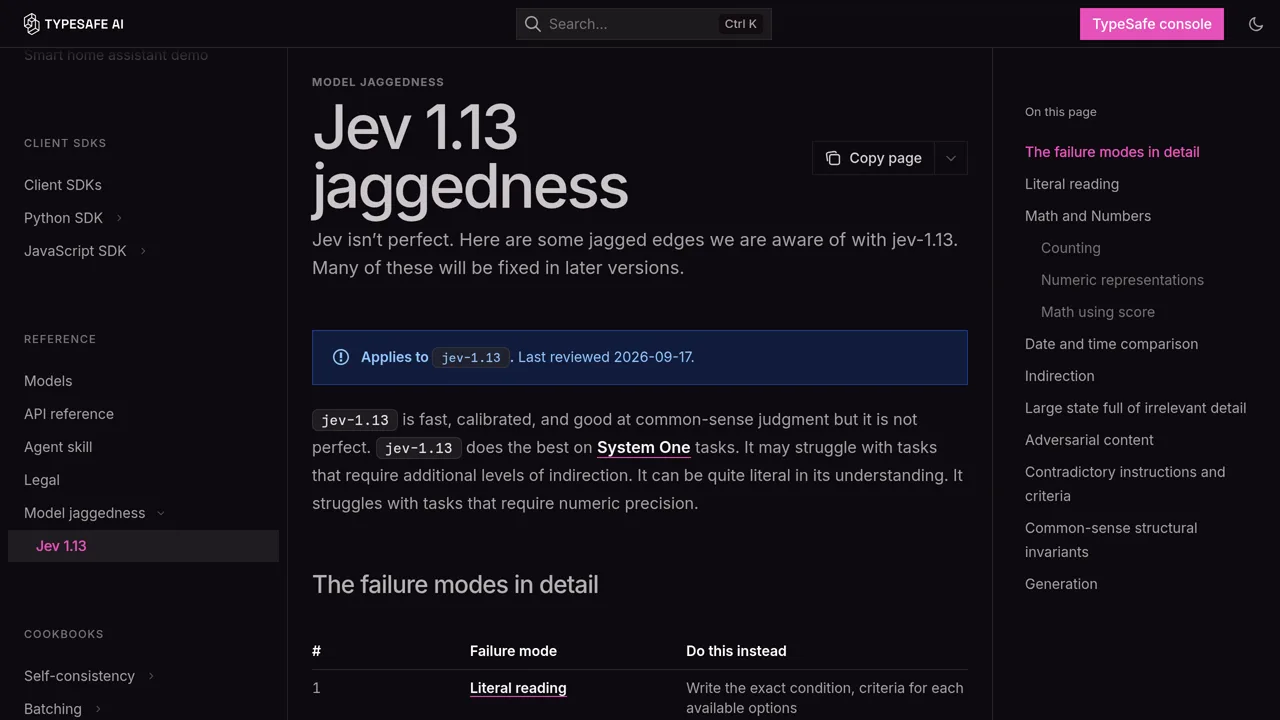
A candid guide to the known limitations and rough edges in Jev 1.13.
TypeSafe introduces System One models and its first model, Jev.

TypeSafe argues that AI belongs inside everyday software, making small decisions rather than chatting with a person.

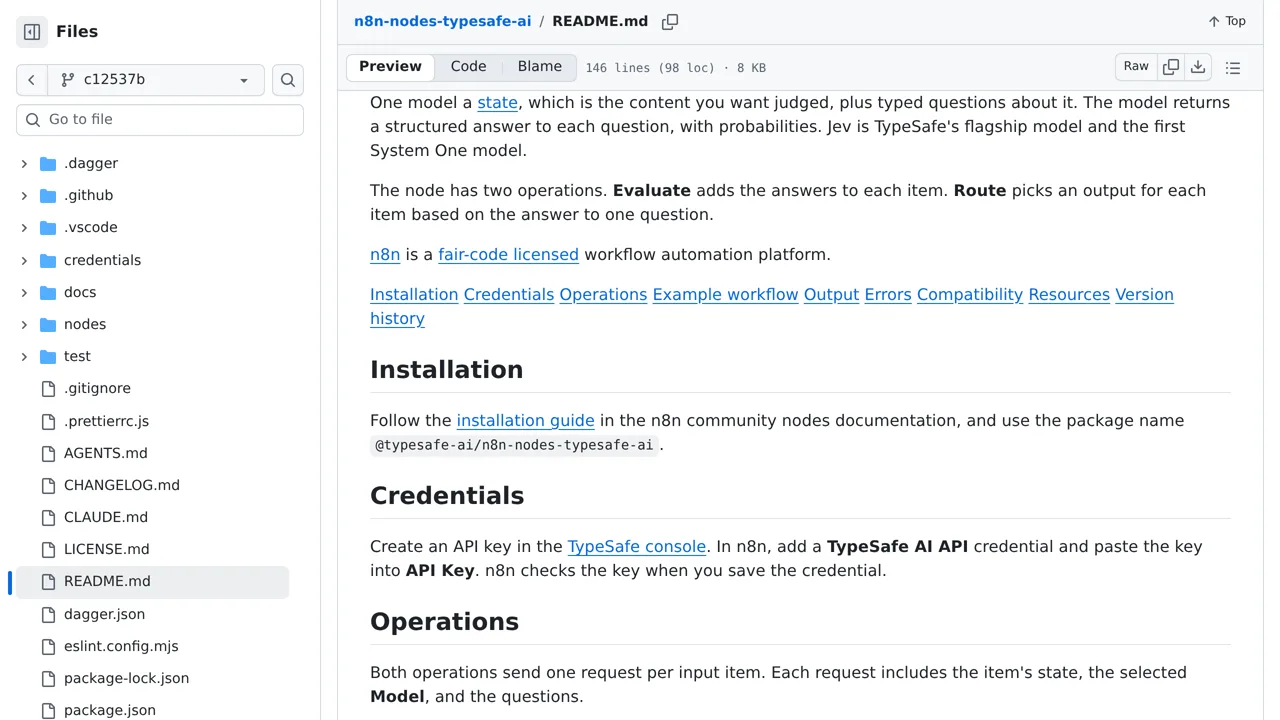
TypeSafe’s own n8n node asks Jev typed questions and routes incoming items to workflow branches, with an optional fallback for uncertainty.
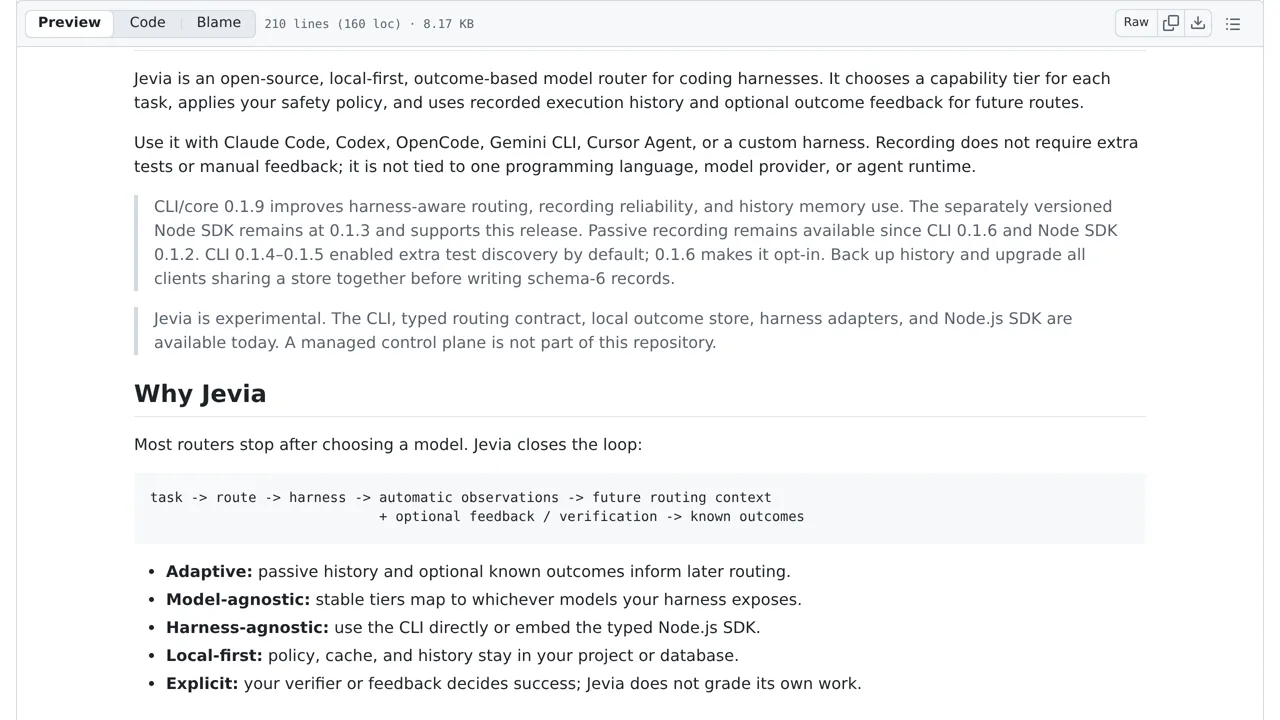
An experimental local tool selects a model level for coding tasks, uses a backup choice if unsure, and saves observations or explicit outcomes as context for later decisions. Improvement from that history is unmeasured.
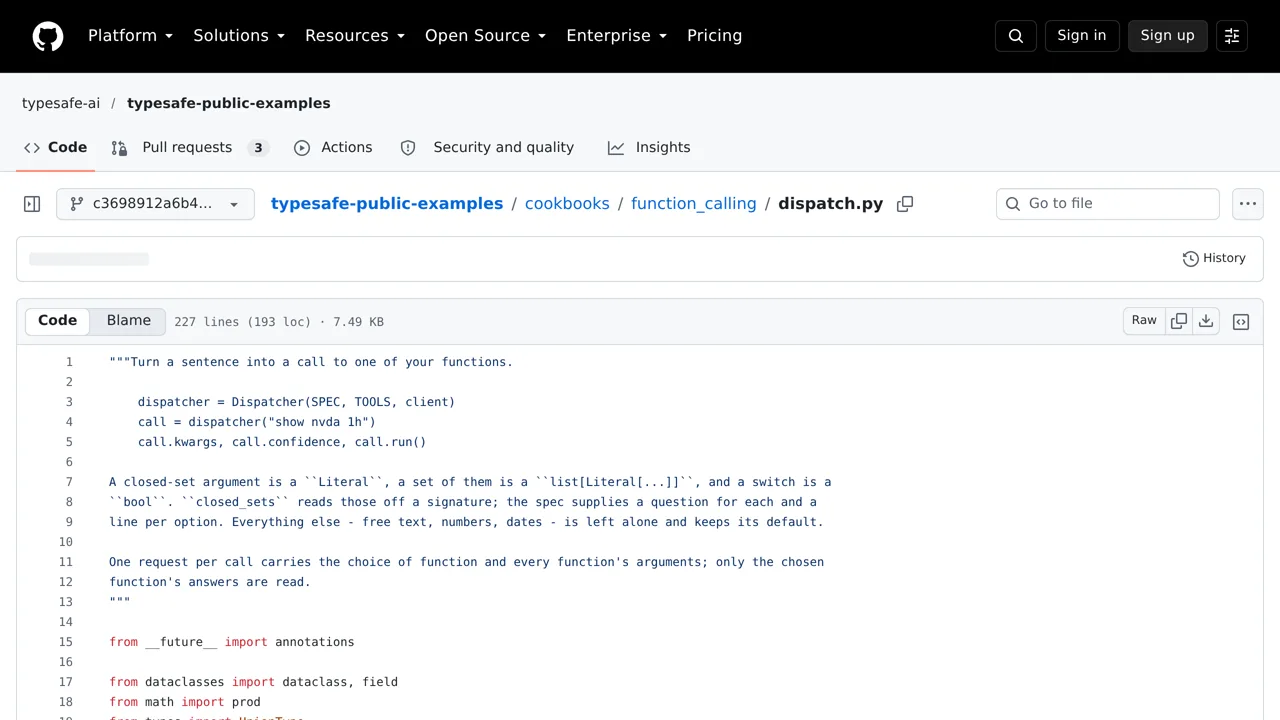
This official Python guide shows how to use a model to pick the right action and fill in the required details based on a user's request.
Jev, briefly
A chat model generates text token by token and hopes you parse it. Jev never generates a word. Your code sends the state of the world plus typed questions; Jev returns every answer in one parallel pass — typed values with calibrated probabilities and a confidence score your code can trust. About 70–500 ms end to end, $0.042 per million input tokens, output free. Trained with what TypeSafe calls Reinforcement Learning for Calibrated Decisions.
You define the options. Jev returns the chosen option, a probability for every option, and a confidence. The workhorse of routing, agents, and games — the answer space is always legal, so there is nothing to parse and nothing to hallucinate.
You describe ordered levels — say trivial / normal / critical. Jev returns the level, the probability of each, and a confidence. Scores turn fuzzy judgment (“how severe is this log line?”) into a number-free decision your code can branch on.
You assert a statement; Jev returns the probability that it is true — a noul. Moderation, verification, guardrails, “does this diff actually fix the bug?”: one question, one calibrated probability.
Official material lives at typesafe.ai and docs.typesafe.ai. JevMade is an independent community registry — not affiliated with or endorsed by TypeSafe AI.
Recurring lessons
Games, drones, trading bots, and browser agents all converge on the same loop: serialize the state, ask one decisive question, act, repeat. Jev’s latency makes the loop feel instant — the model lives inside the control loop, not outside it.
The answer says what; the confidence says whether to act. The most reliable entries threshold on confidence to route edge cases to a slower model or a human — automation with an honest escape hatch.
Makers rarely ask Jev to pick from everything. Local tactics prune 225 gomoku moves to ~40; DOM filters turn a page into an element table; code narrows options, Jev judges within them.
A recurring split: Jev makes every decision cheaply and instantly, and a small LLM is only invoked when a human-facing string must actually be written. Decision and generation are separate budgets.
Send the link — repo, live demo, post, or video — plus a line on what it does and which primitives it uses. Every entry is verified against its primary source before it ships.
Submit your experimentSign in first so we can reply to you. Submissions are reviewed, not published automatically.