Read & learn
Written guides.
Understand Jev, one idea at a time. Walkthroughs, recipes, and writeups — our notes first, the original next.
Learn, build, and play with Jev — from deep technical guides to creative experiments.
Read & learn
Understand Jev, one idea at a time. Walkthroughs, recipes, and writeups — our notes first, the original next.
Watch & learn
See an idea take shape. Tutorials, demos, and deep dives, organized by topic and credited to their creators.
Make & explore
See what builders made with Jev. Games, tools, repositories, articles, and more — traced to their sources.
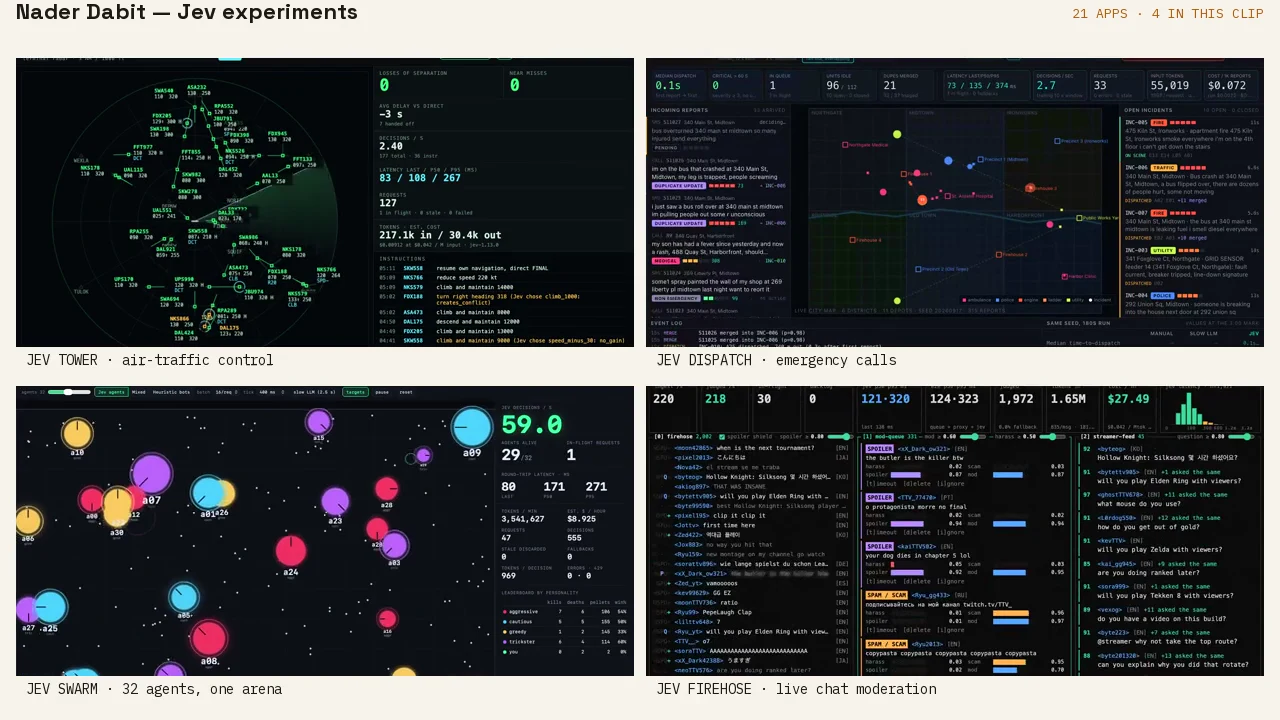
Every category, from games and tools to repositories and writeups, traced to a primary source.
Same ideas.
Different paths.
This is the full registry, not just the featured picks. Figures like speed, cost, and stars are maker-reported or captured snapshots, not JevMade measurements.
90 experiments · showing 61–90
An unofficial Go client for TypeSafe's System One API and Jev model.
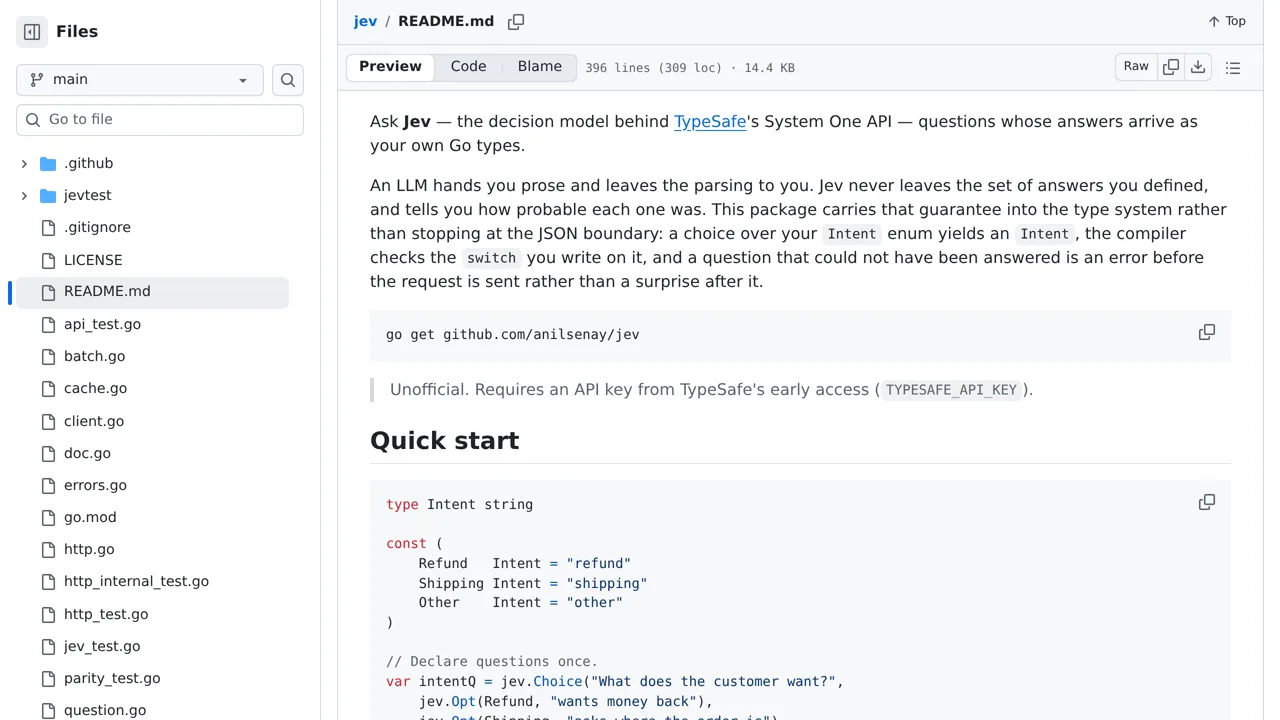
An idiomatic Go SDK for the TypeSafe AI API.
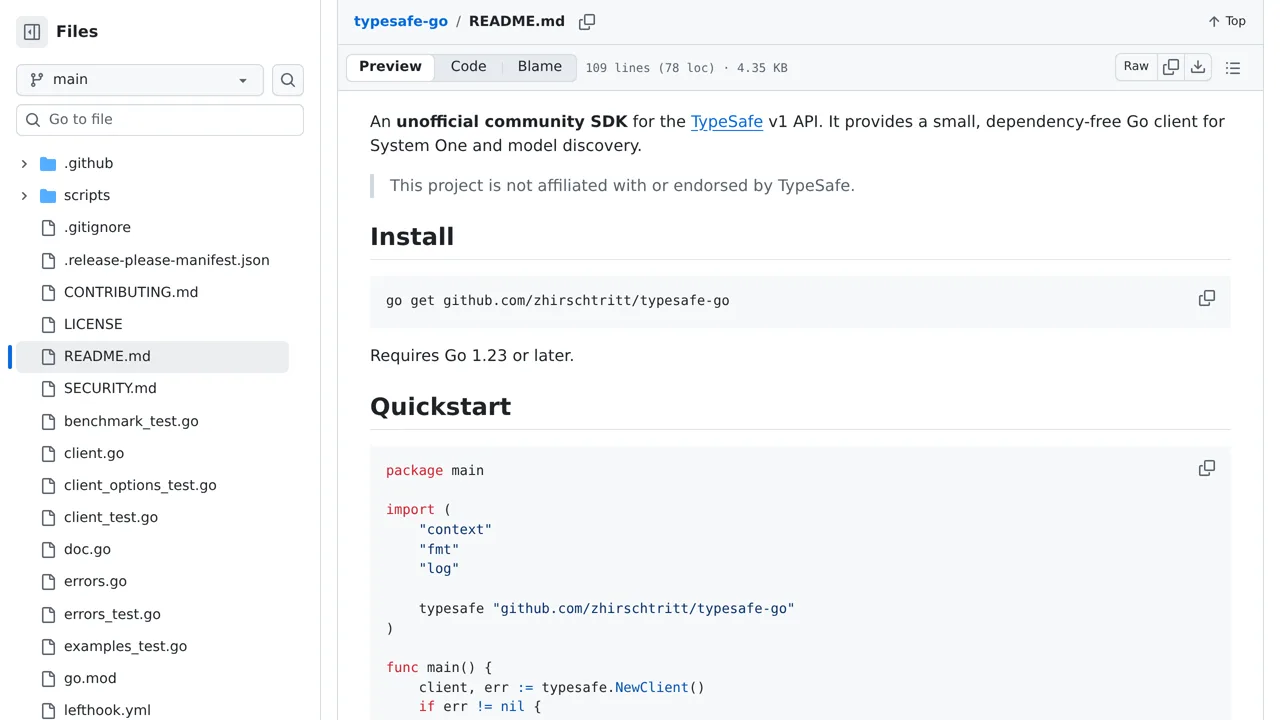
Ask Jev to make a decision from Python, or plug in your own model.
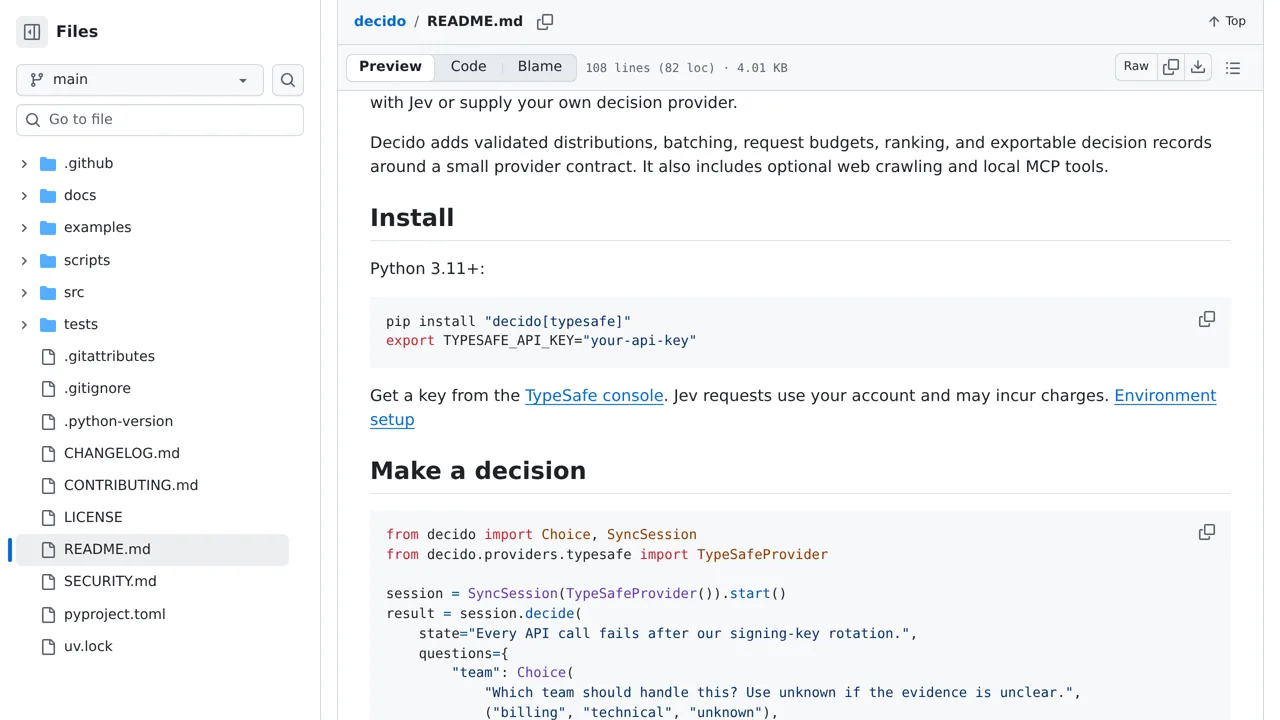
A Rust client for TypeSafe's Jev System One API.
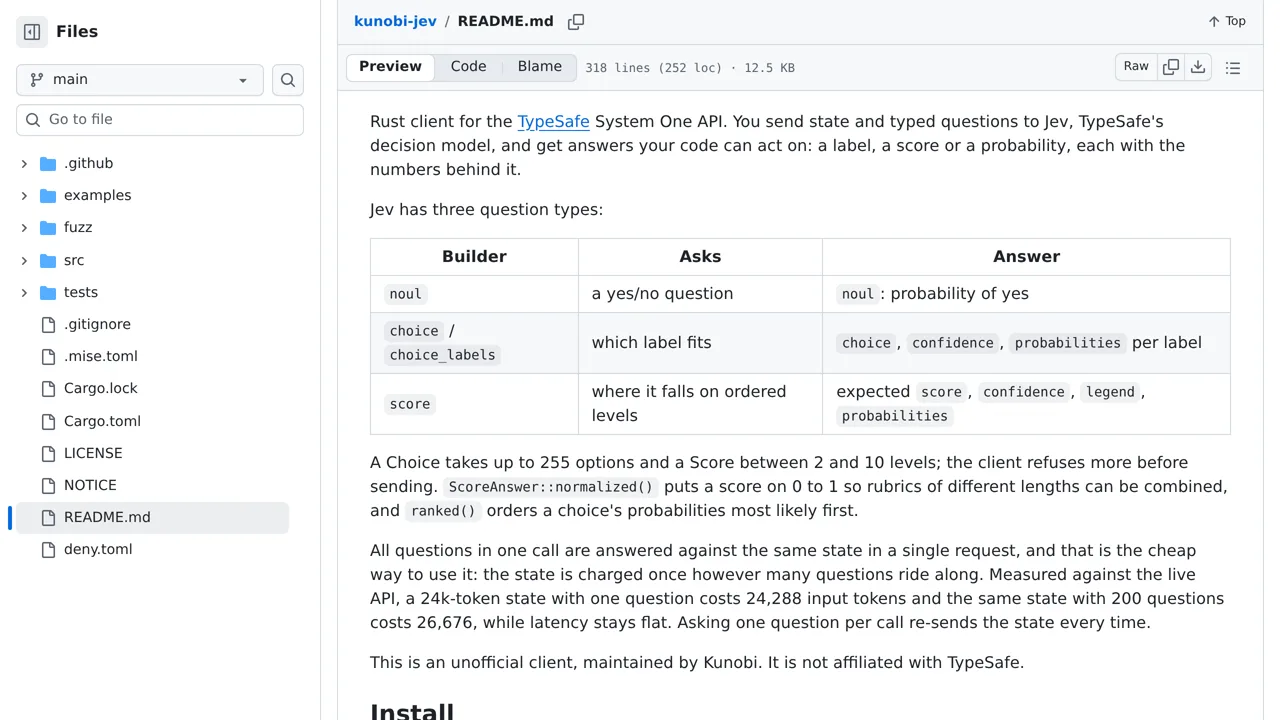
A typed Rust layer for Jev's Choice, Score, and Noul primitives.
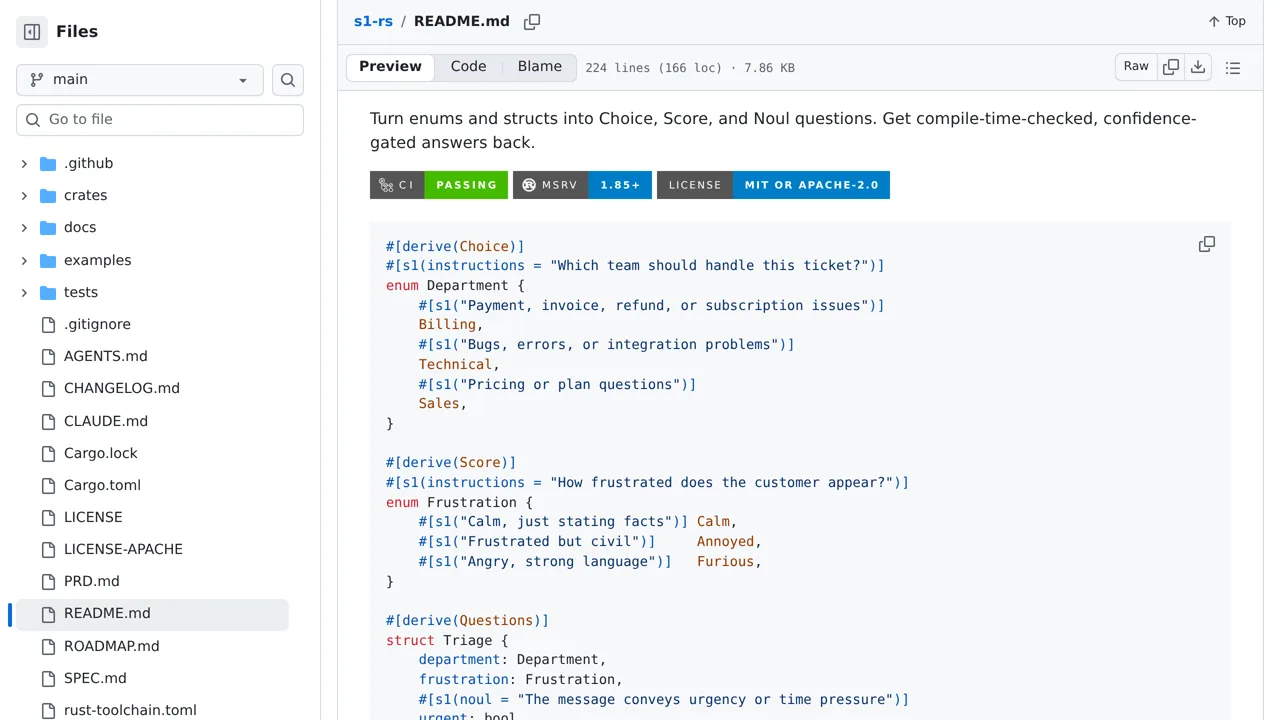
A small Rust client for integrating TypeSafe's Jev model.
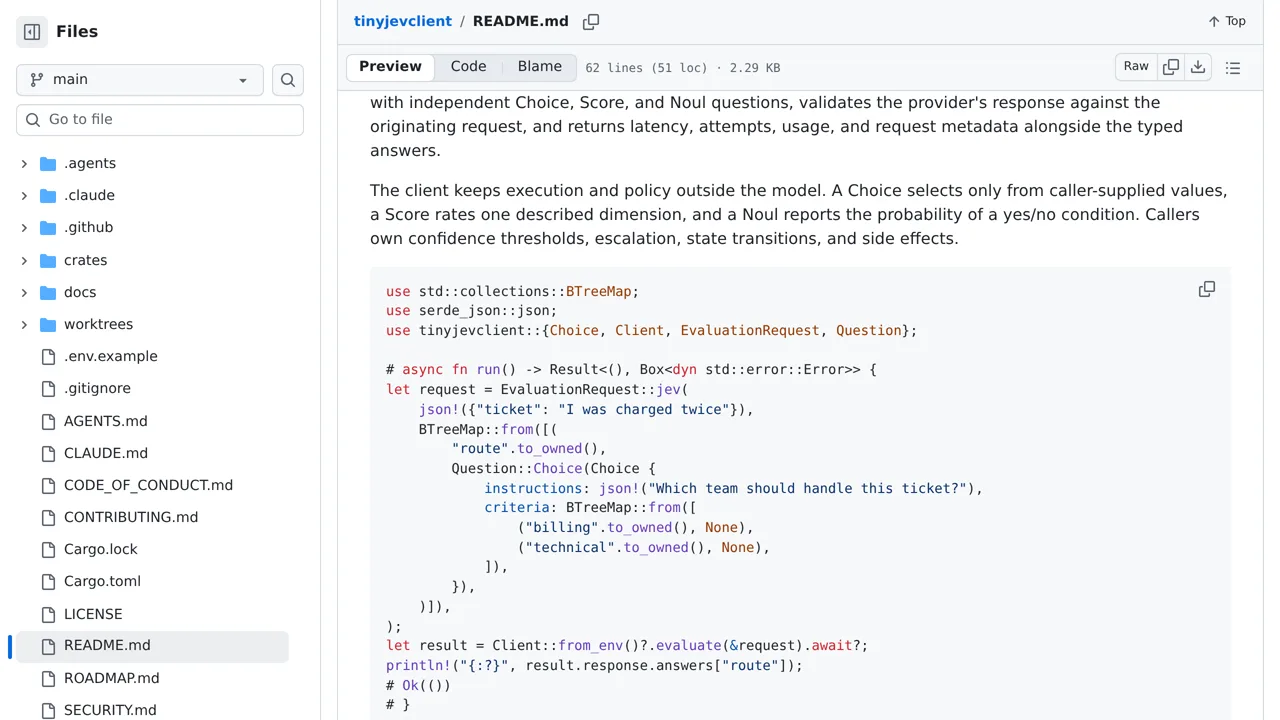
An idiomatic Elixir client for the TypeSafe AI API.
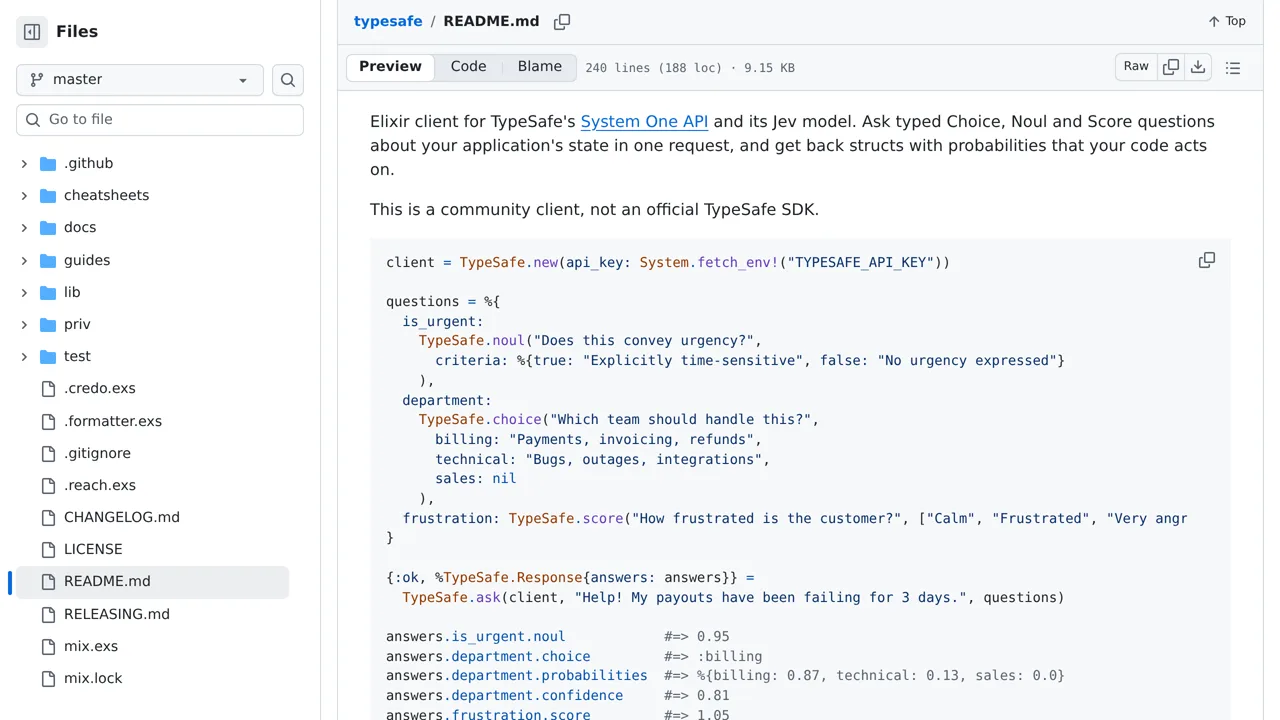
An Elixir client for TypeSafe AI with typed responses and bounded concurrency.
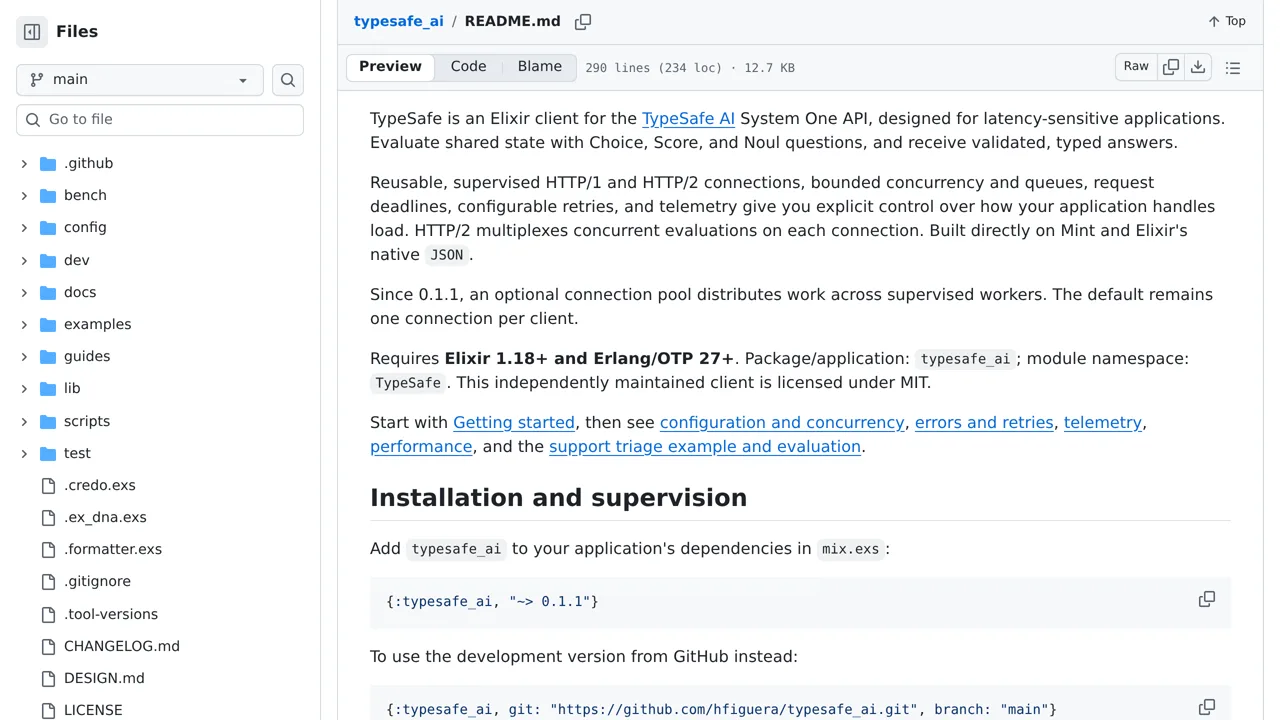
An Elixir client for Jev with offline test stubs and concurrent request fan-out.
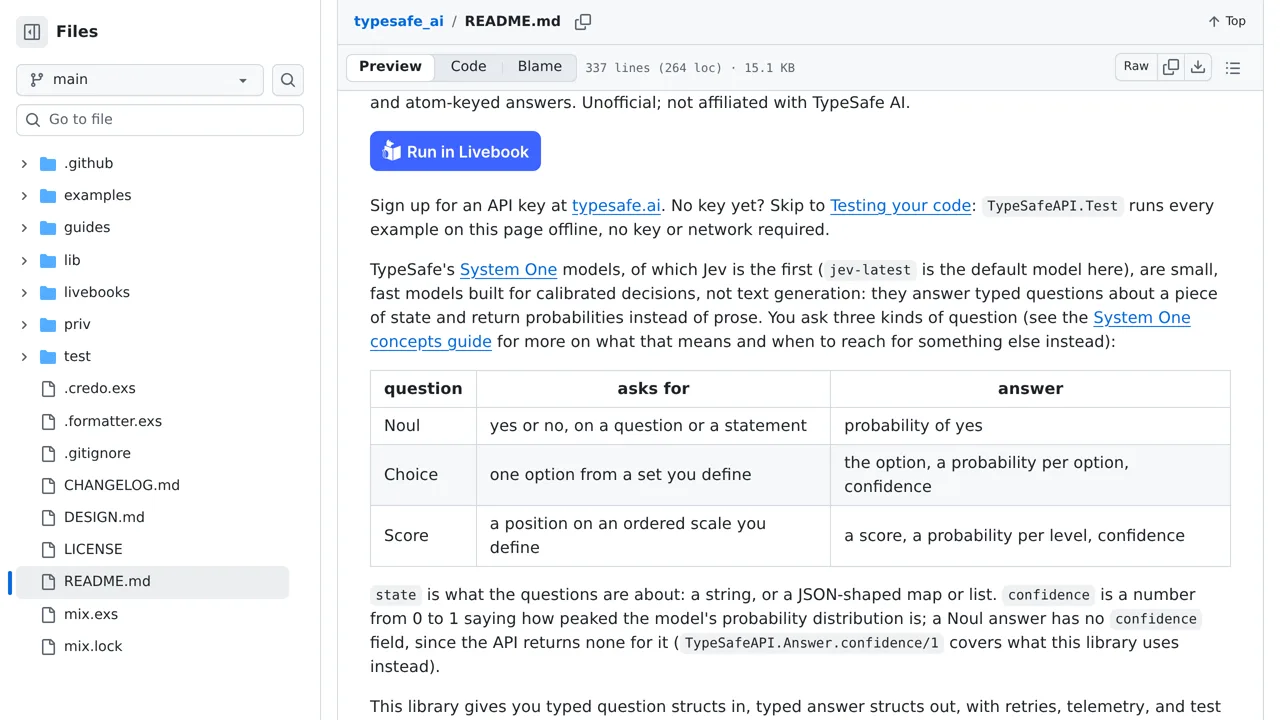
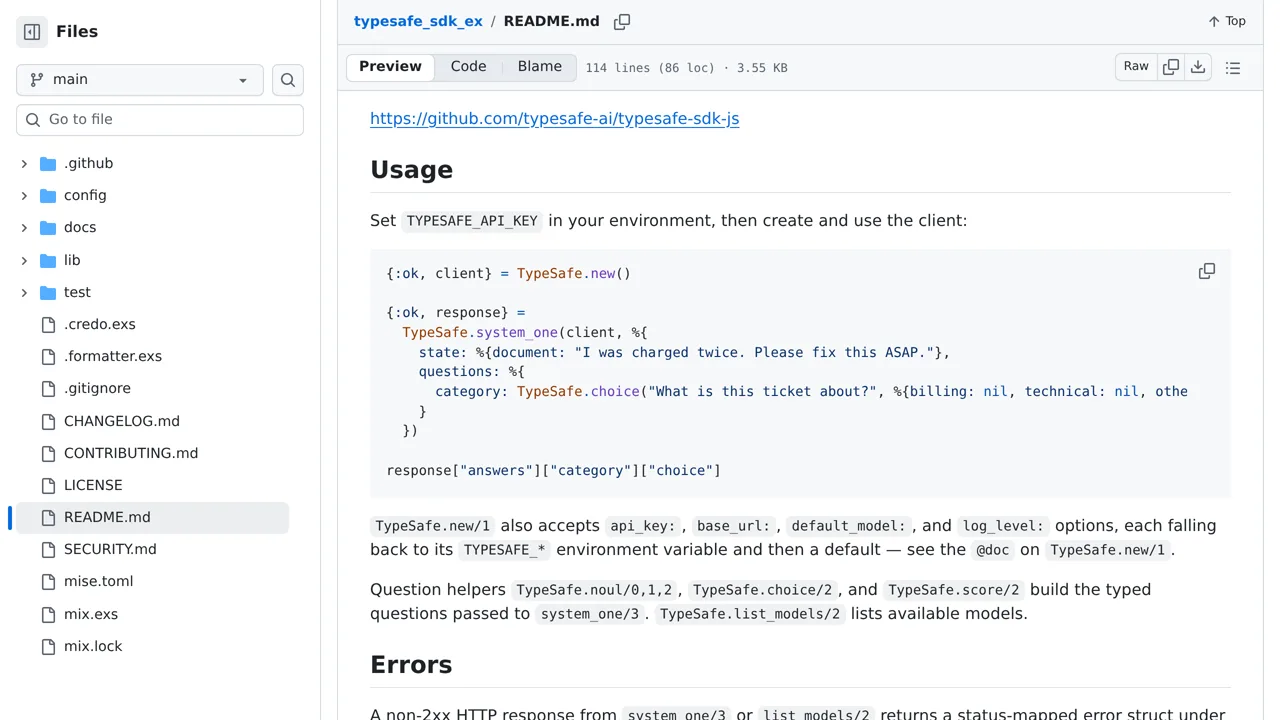
An Elixir SDK for TypeSafe AI built with Req.
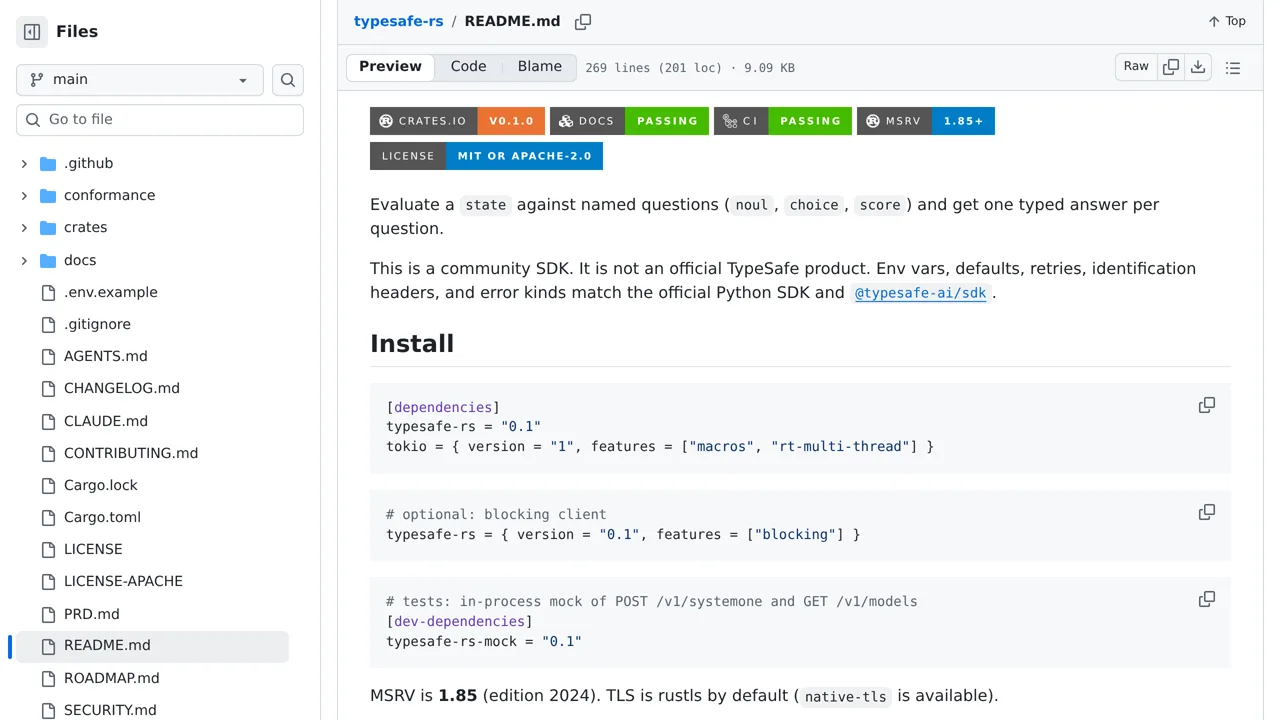
A latency-focused Rust SDK for TypeSafe's System One API.
A PHP and Laravel SDK for TypeSafe AI's Jev models.
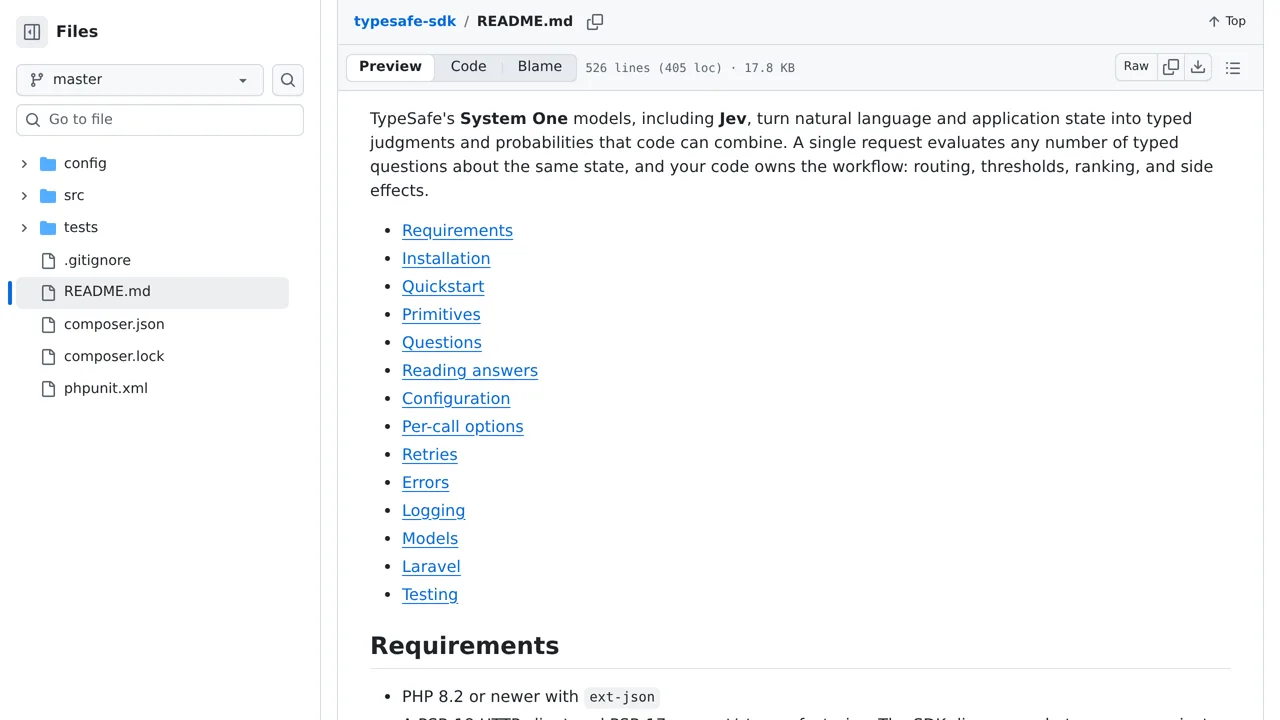
An unofficial Go SDK designed to match the official JavaScript and Python TypeSafe SDKs.
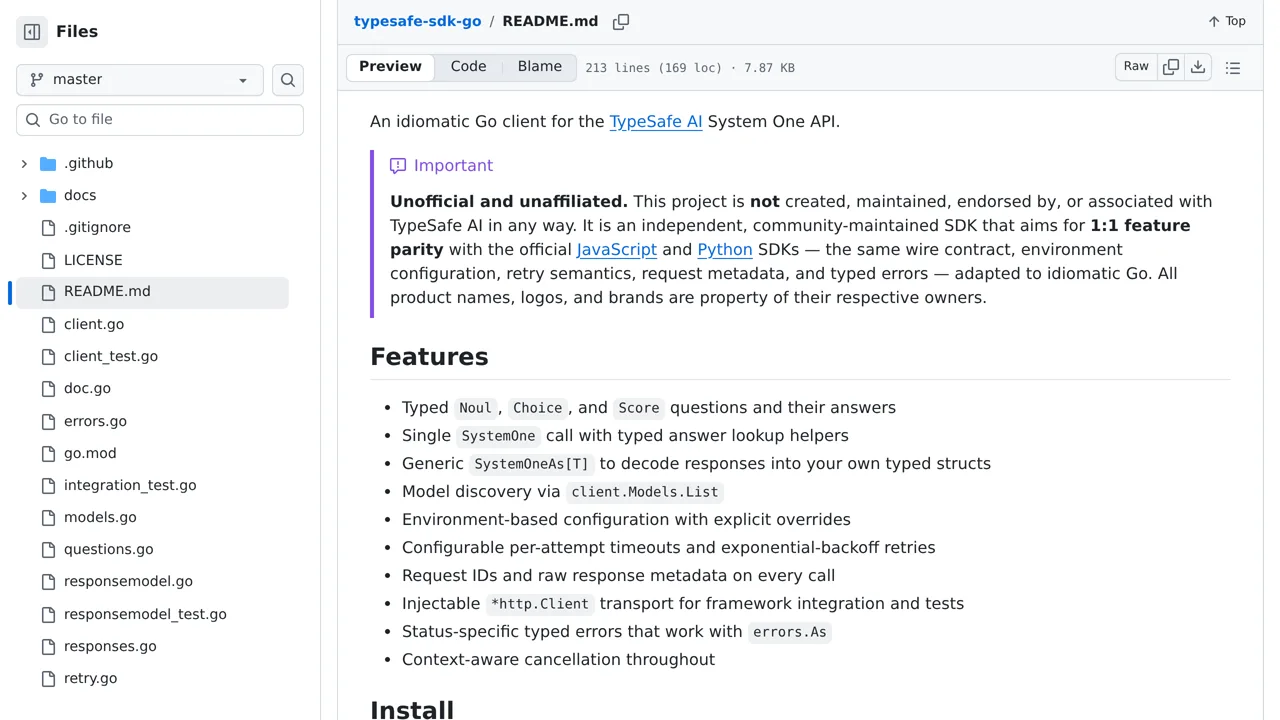
An unofficial PHP SDK designed to match the official JavaScript and Python TypeSafe SDKs.
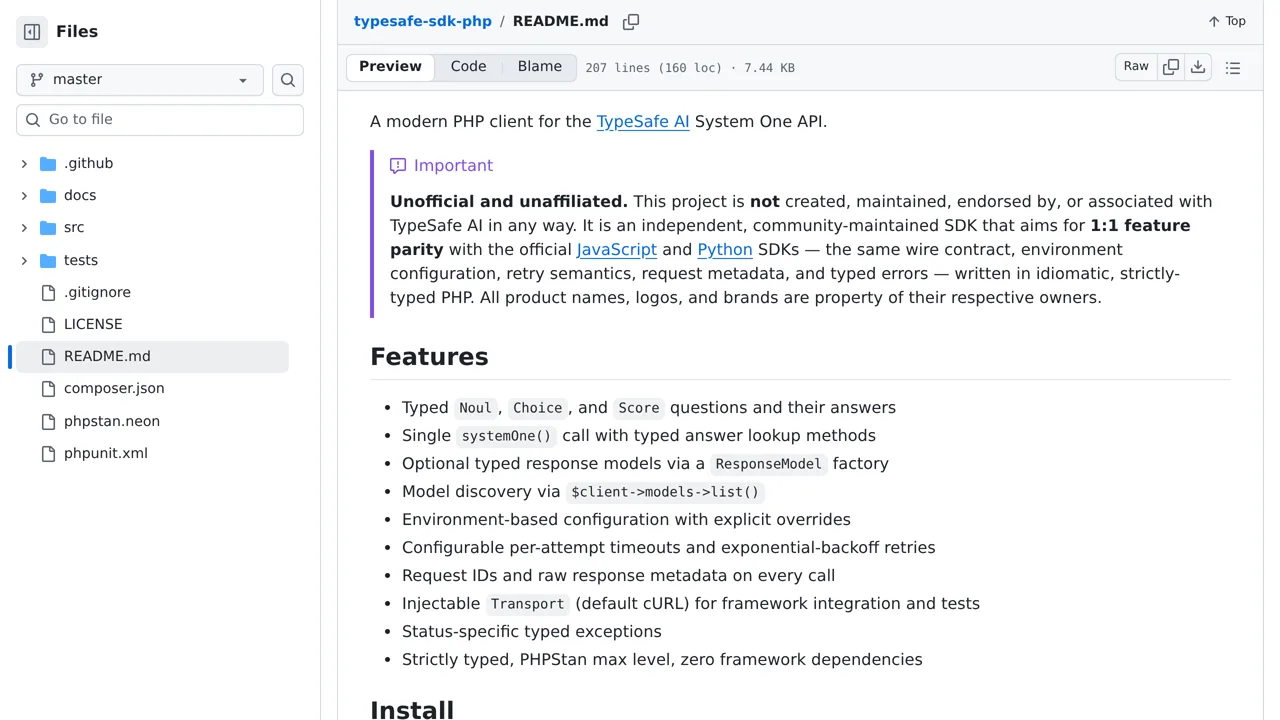
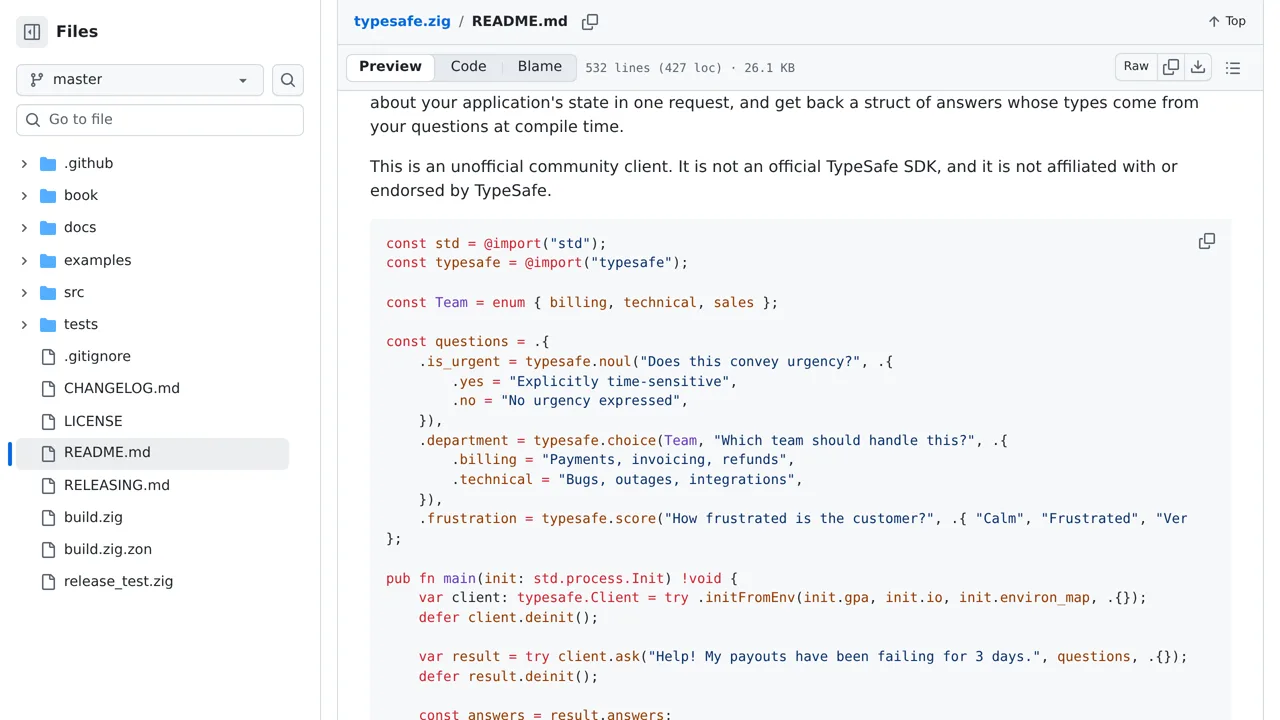
An idiomatic Zig client for the TypeSafe AI API.
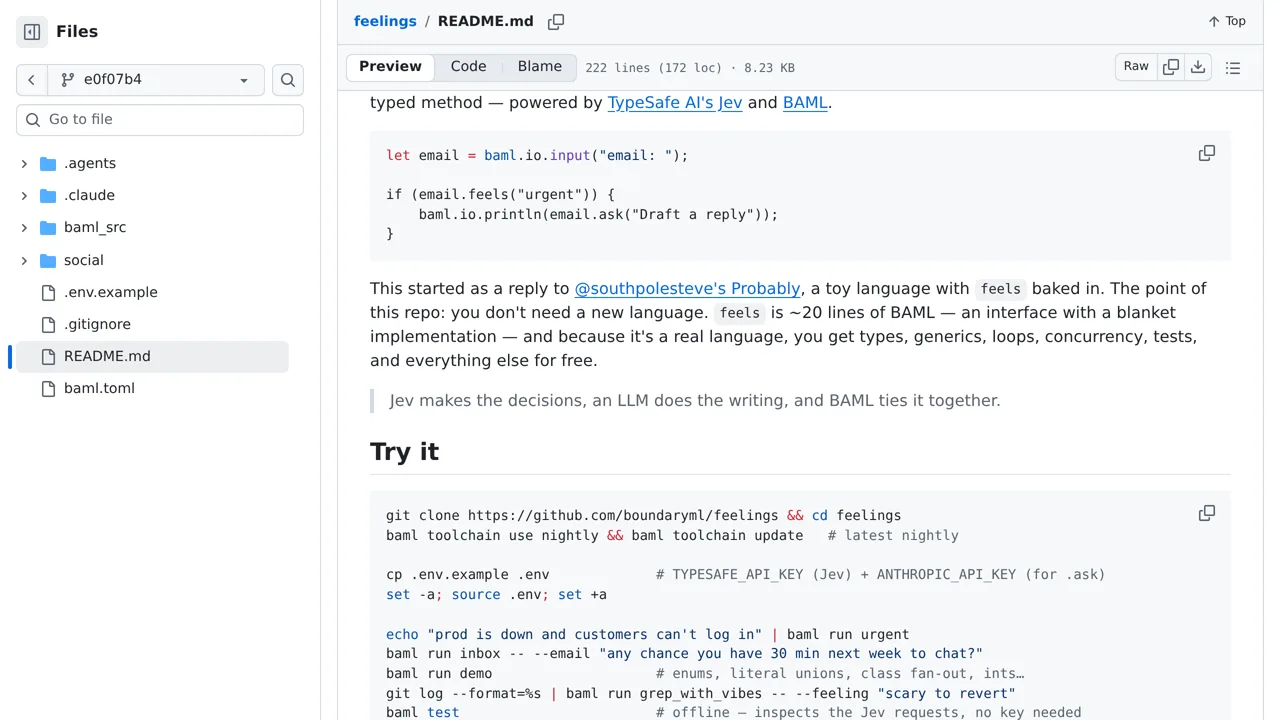
Ask typed questions of a value with BAML’s .feels(), .how(), .matches() and .fill() methods backed by Jev.
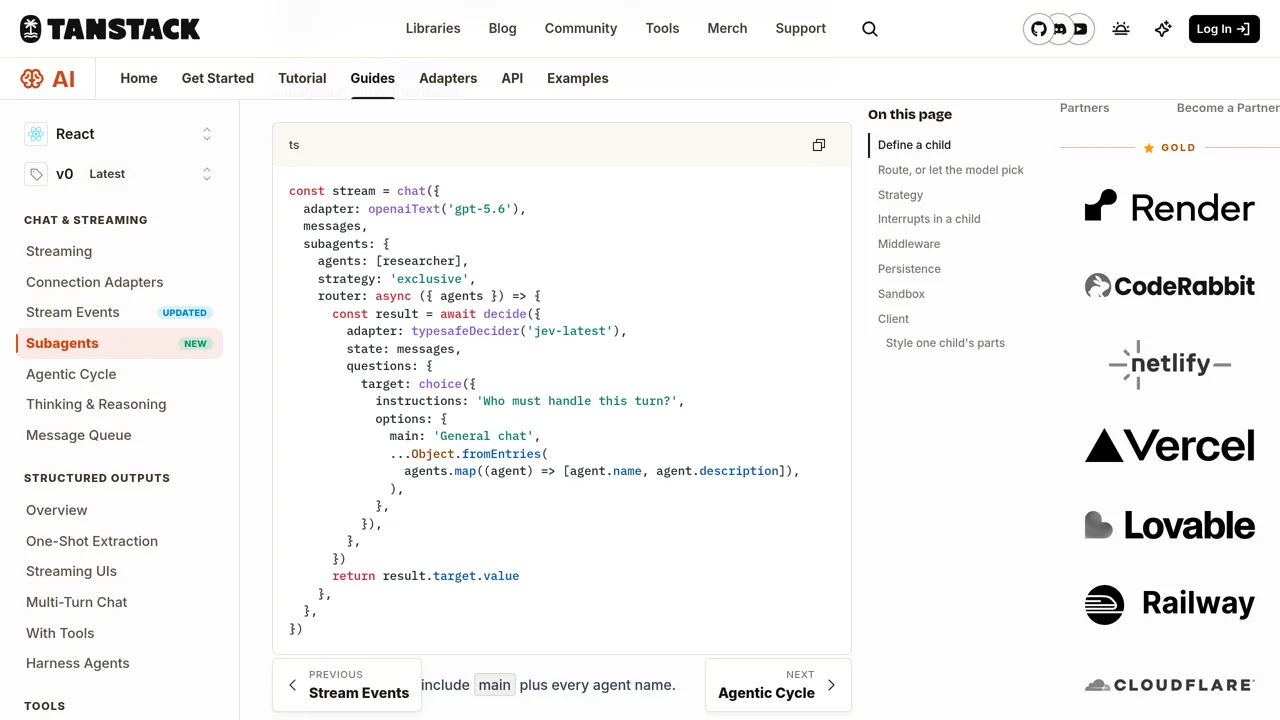
Give a chat app a few named subagents and let Jev decide who takes each turn and whether they work at once or in turn.
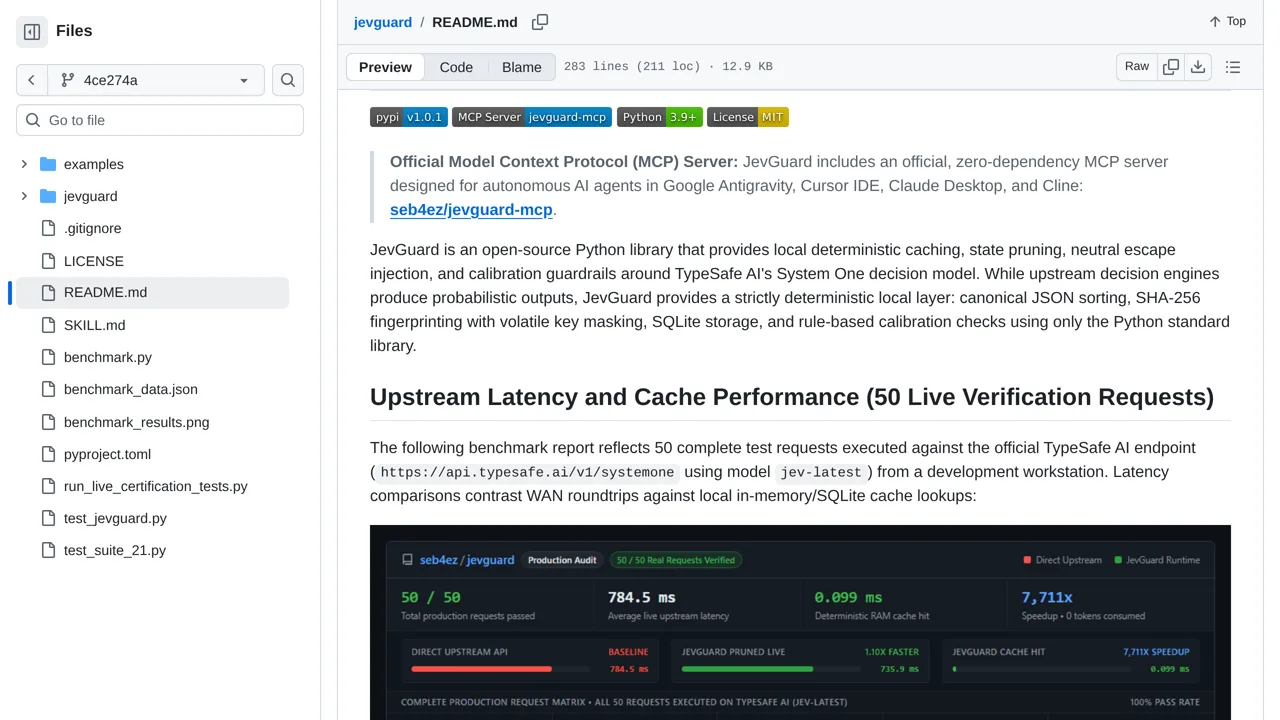
Wraps Jev with deterministic caching, confidence calibration, memory, and runtime guardrails.
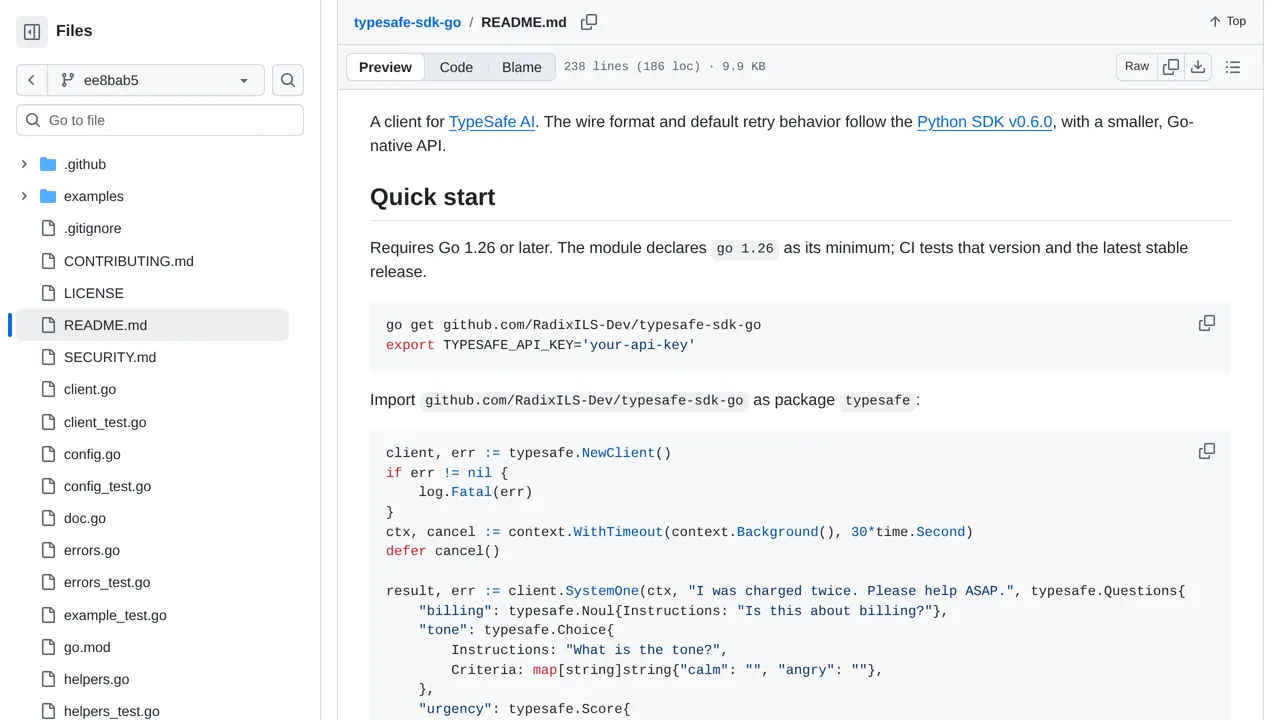
Call TypeSafe’s System One API from Go with typed requests, answers, retries, and validation.
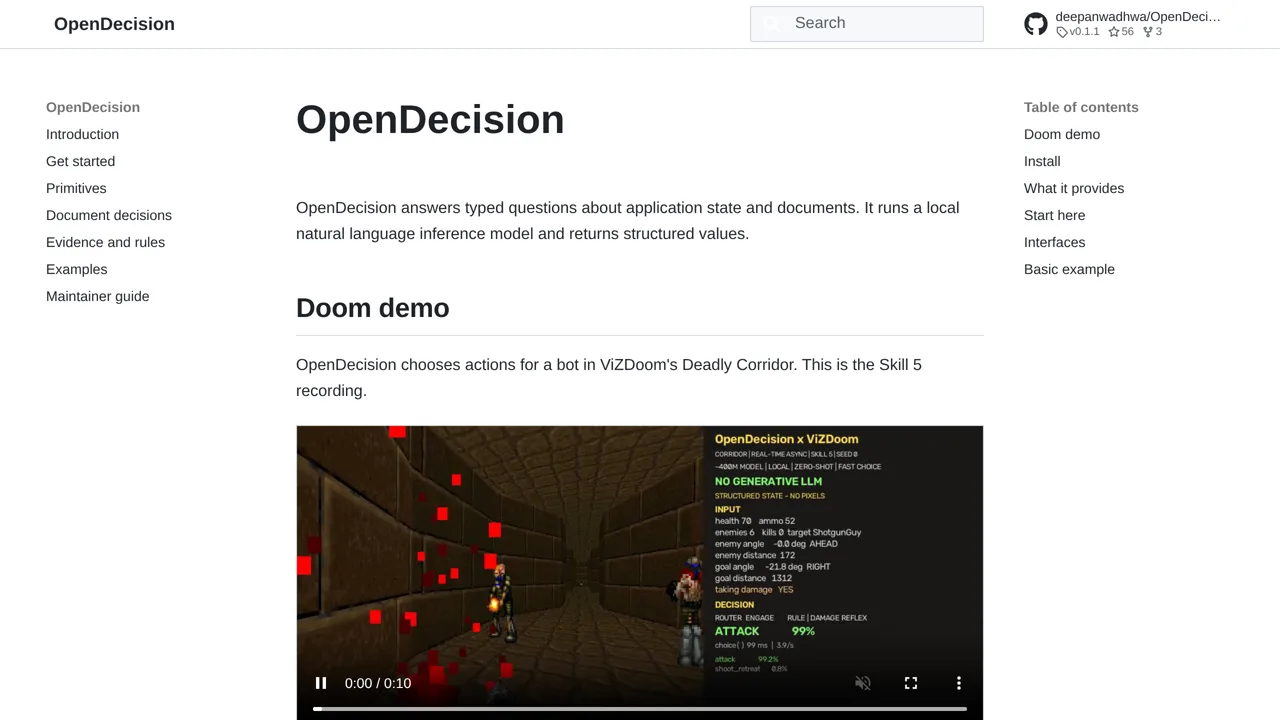
Ask typed questions about application state and documents with a local semantic decision engine.
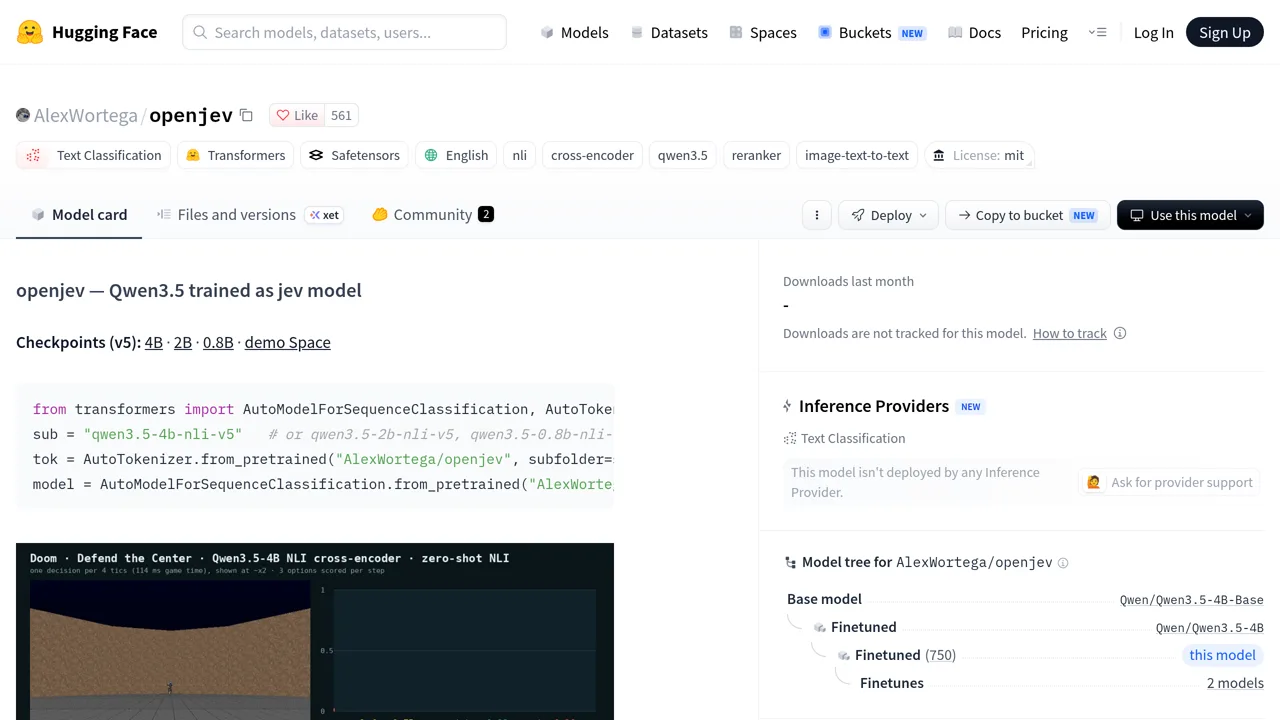
Run typed text, image, and agent decisions with a Qwen3.5-based open model.
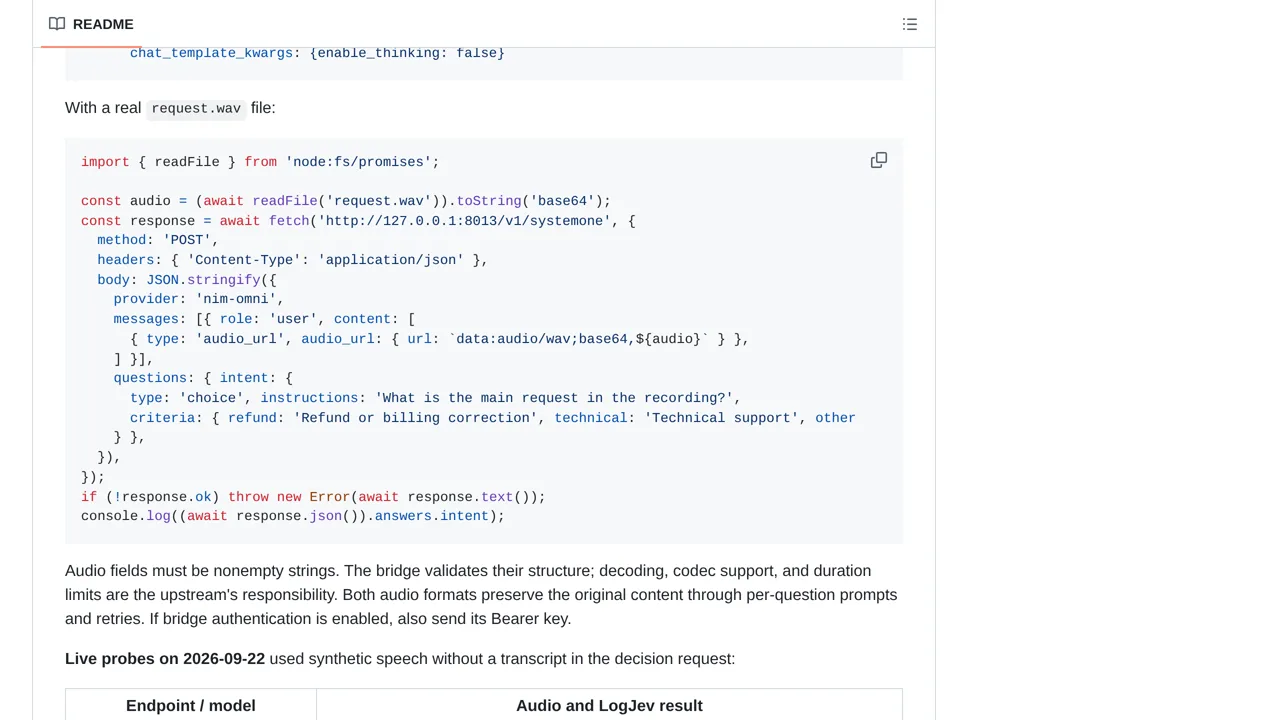
LogJev turns text, images, or audio into choices and scores using supported models’ log probabilities.
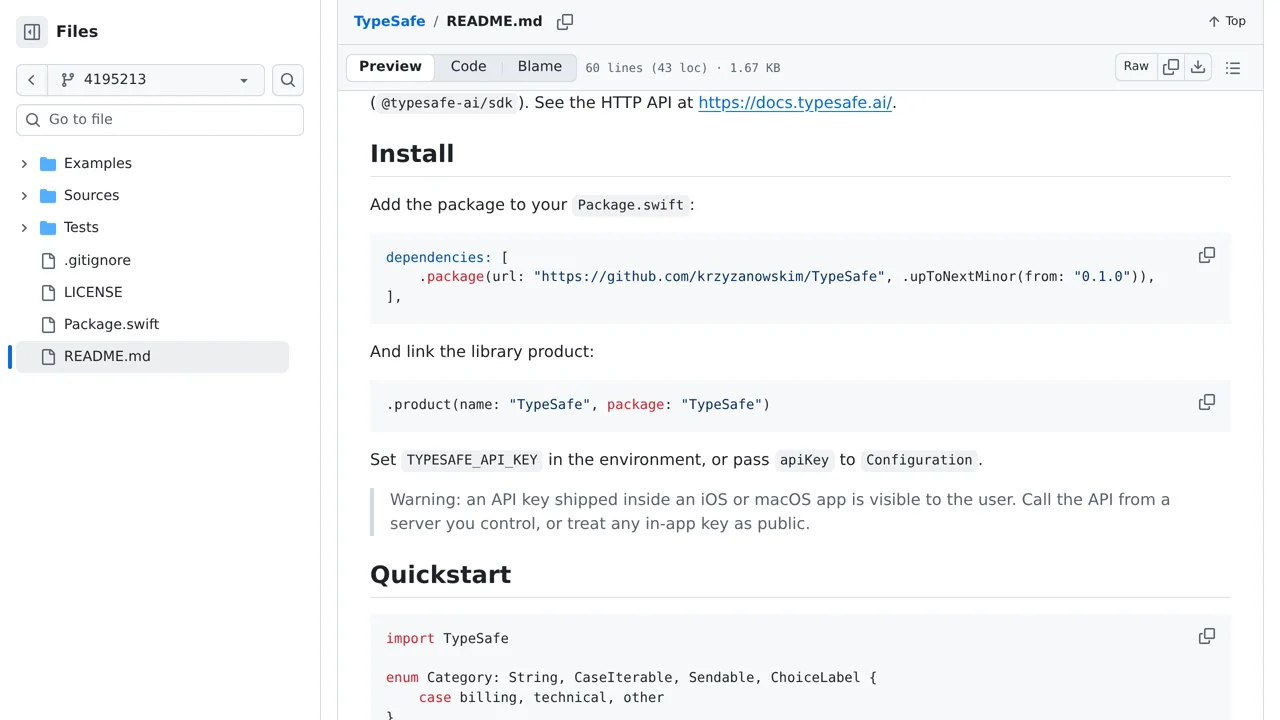
A SwiftPM client for TypeSafe that declares Jev questions as ordinary Swift properties, down to Sendable, Decodable answer types.
A Kotlin Multiplatform DSL and client for Jev, published to Maven Central for the JVM, Apple platforms, Linux, Windows, and Node.js.
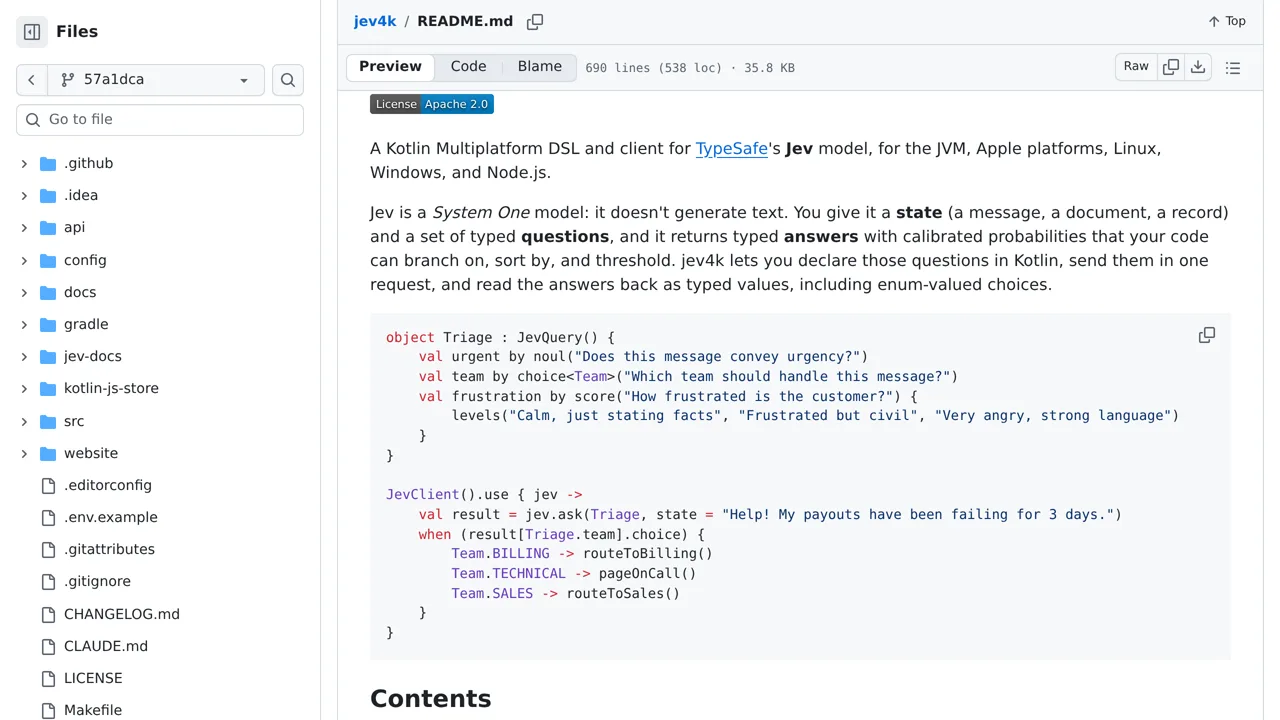
A Kotlin Multiplatform Jev client that answers Choice and Score questions as your own enums — no string keys, no casts.
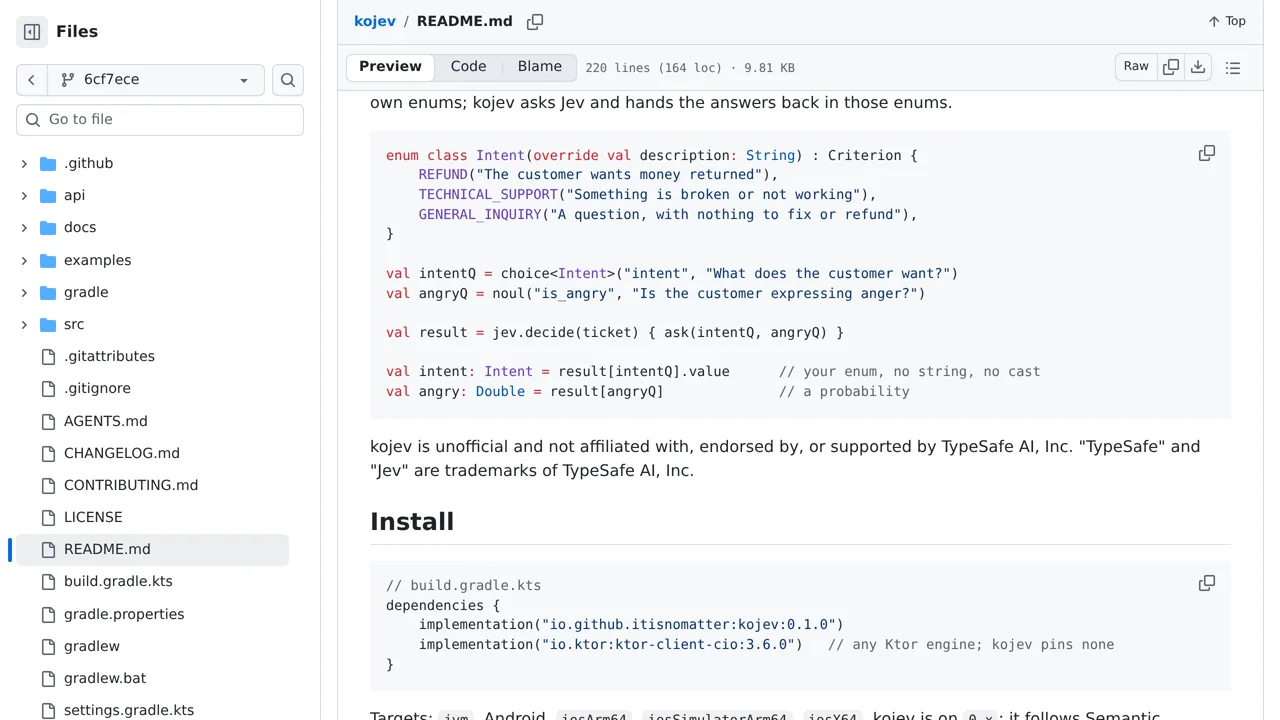
Adds methods like Hunch.likely? to Ruby, so a conditional can ask Jev instead of checking a variable. Reads like any other if statement.
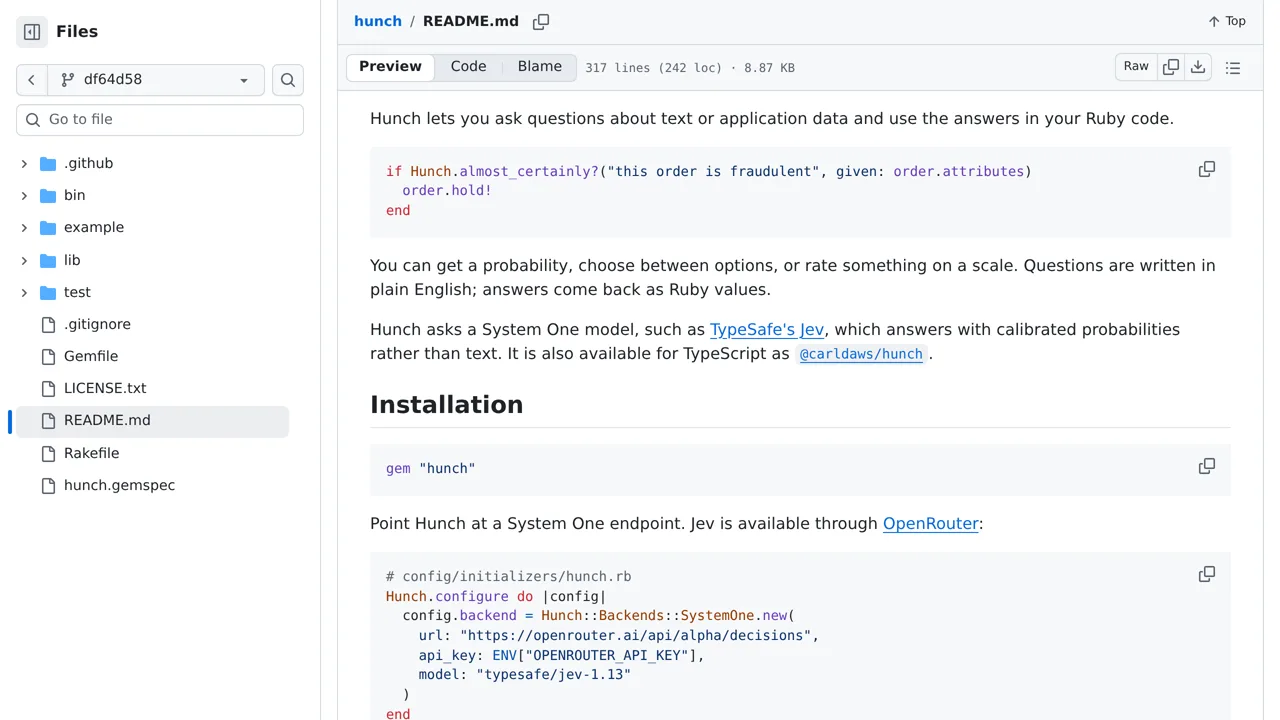
Gives pandas a .hunch accessor. Ask about a column of reviews and every row gets judged, with answers joined back where they came from.
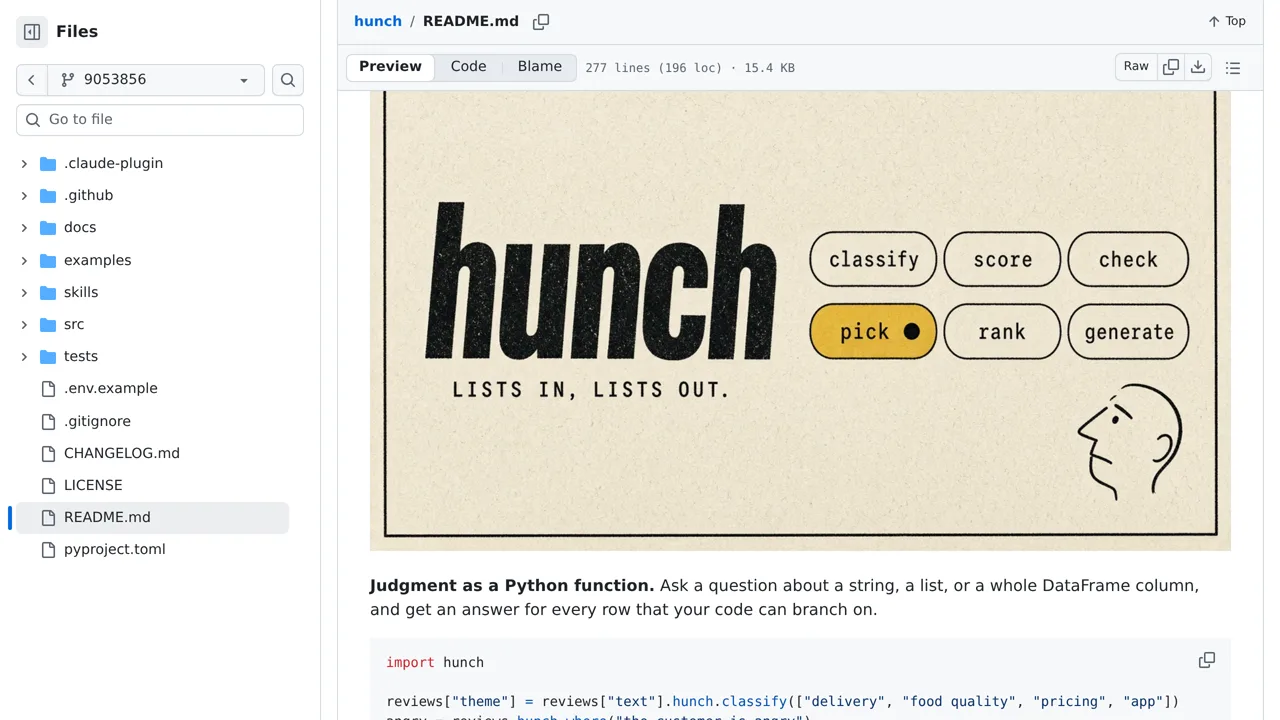
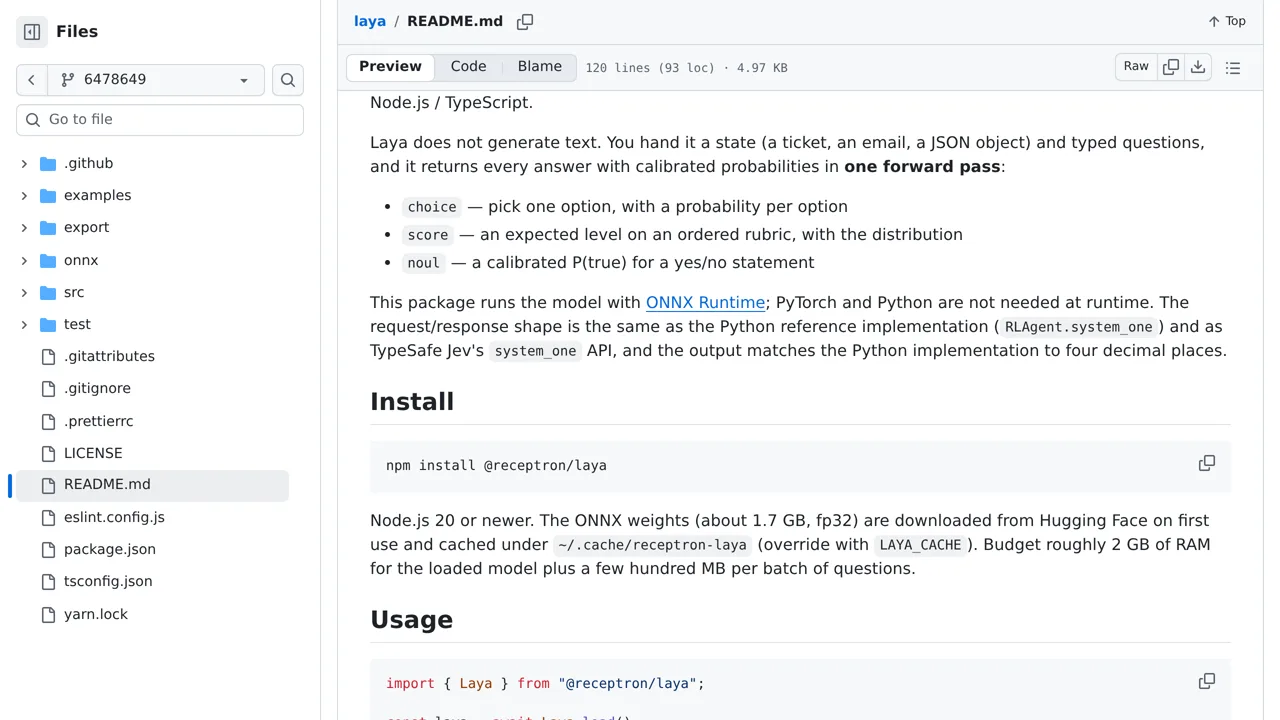
A Node package that loads the open Laya decision model through ONNX, no Python needed at runtime.
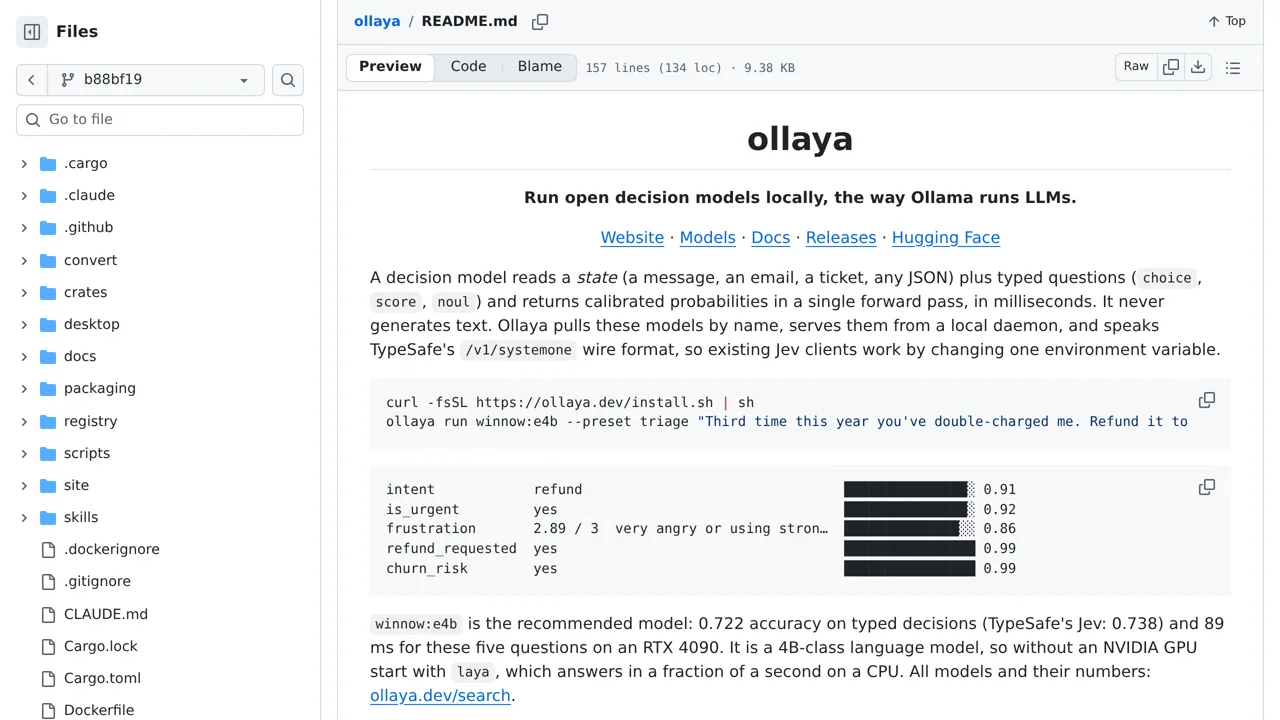
A Rust daemon that runs open decision models on your own machine and speaks TypeSafe's /v1/systemone format, so Jev clients work after changing one environment variable.
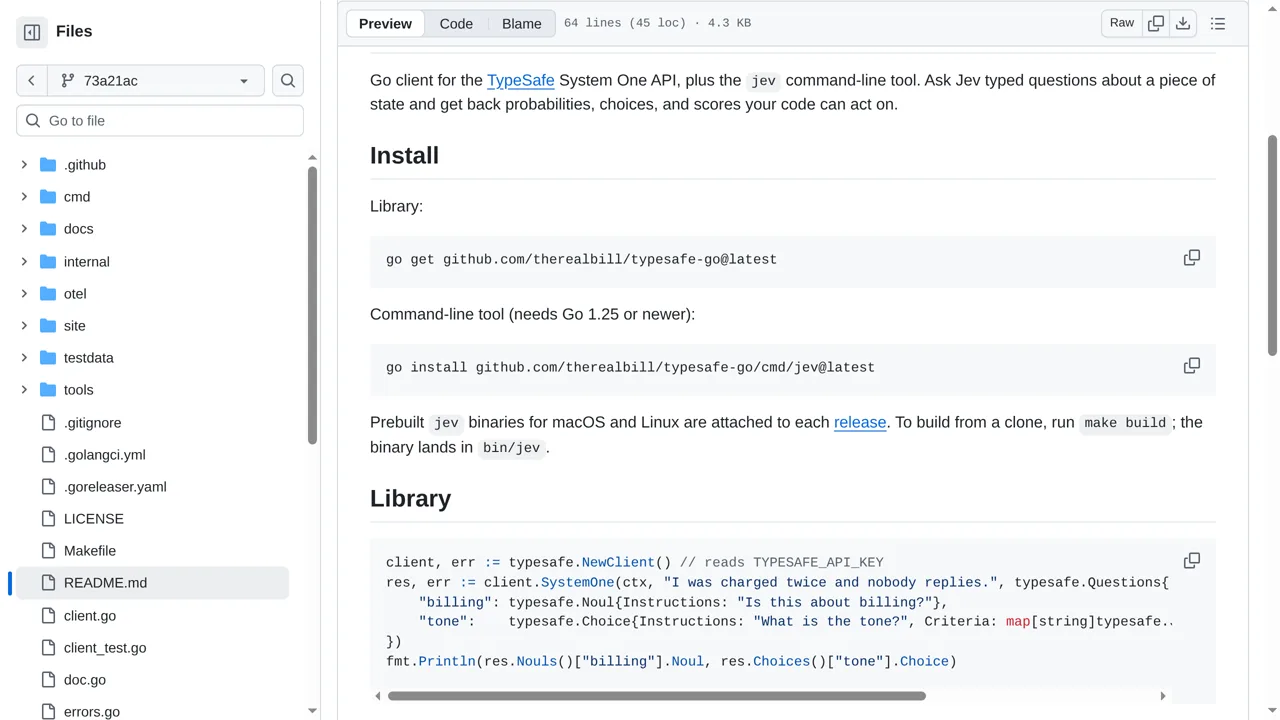
Bill Anderson’s Go client includes a Jev command-line tool for asking typed questions and checking tests against a written specification.
Jev, briefly
A chat model generates text token by token and hopes you parse it. Jev never generates a word. Your code sends the state of the world plus typed questions; Jev returns every answer in one parallel pass — typed values with calibrated probabilities and a confidence score your code can trust. About 70–500 ms end to end, $0.042 per million input tokens, output free. Trained with what TypeSafe calls Reinforcement Learning for Calibrated Decisions.
You define the options. Jev returns the chosen option, a probability for every option, and a confidence. The workhorse of routing, agents, and games — the answer space is always legal, so there is nothing to parse and nothing to hallucinate.
You describe ordered levels — say trivial / normal / critical. Jev returns the level, the probability of each, and a confidence. Scores turn fuzzy judgment (“how severe is this log line?”) into a number-free decision your code can branch on.
You assert a statement; Jev returns the probability that it is true — a noul. Moderation, verification, guardrails, “does this diff actually fix the bug?”: one question, one calibrated probability.
Official material lives at typesafe.ai and docs.typesafe.ai. JevMade is an independent community registry — not affiliated with or endorsed by TypeSafe AI.
Recurring lessons
Games, drones, trading bots, and browser agents all converge on the same loop: serialize the state, ask one decisive question, act, repeat. Jev’s latency makes the loop feel instant — the model lives inside the control loop, not outside it.
The answer says what; the confidence says whether to act. The most reliable entries threshold on confidence to route edge cases to a slower model or a human — automation with an honest escape hatch.
Makers rarely ask Jev to pick from everything. Local tactics prune 225 gomoku moves to ~40; DOM filters turn a page into an element table; code narrows options, Jev judges within them.
A recurring split: Jev makes every decision cheaply and instantly, and a small LLM is only invoked when a human-facing string must actually be written. Decision and generation are separate budgets.
Send the link — repo, live demo, post, or video — plus a line on what it does and which primitives it uses. Every entry is verified against its primary source before it ships.
Submit your experiment → hello@JevMade.com