Our summary
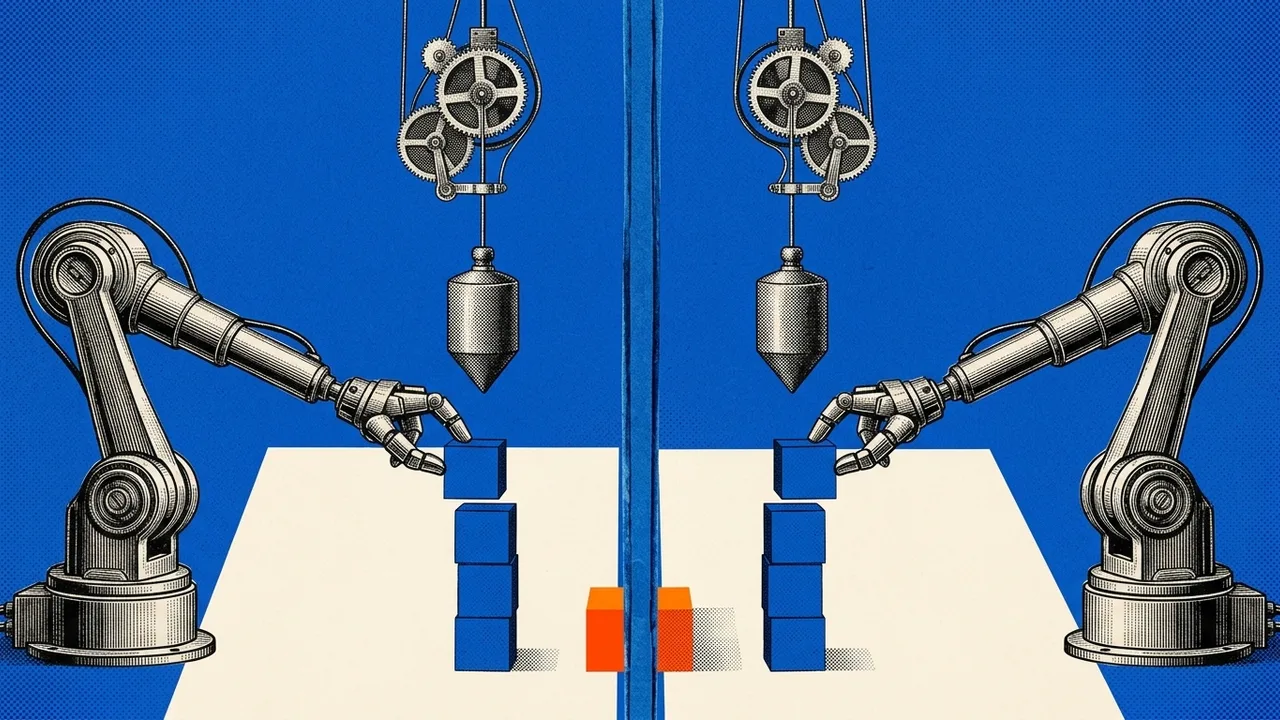
RoboJEV is a virtual testing space for a robot arm. It measures how well Jev, an AI tool that chooses from options rather than writing an answer, completes tasks like stacking blocks. People use this to see if the AI can make reliable movement choices in a controlled setting.
The software gives the AI exact measurements about the robot and nearby objects instead of using pictures. The AI selects a goal and picks movement directions. The system then moves the virtual arm, follows the laws of physics, and checks if the task was actually completed successfully.
This project is useful for researchers studying robot decision-making. It only works in a computer simulation using exact location data, not on physical robots or with cameras. In these tests, simple programmed rules matched or beat the AI, and the small number of tries leaves the true success rate uncertain.
Key takeaways
- The system separates measuring the robot, choosing an action, and checking if the task succeeded.
- Testing the AI ten times per task leaves a wide range of uncertainty about its true reliability.
- The software saves the records of failed attempts instead of deleting them when a test restarts.