TypeSafe AI and EliseAI Take Jev’s Photo Mode to an a16z Panel on 7 December
TypeSafe AI announced a 7 December panel in San Francisco with EliseAI on using Jev to judge blurry field photos. EliseAI's own test of 140 serial plate photos is the evidence behind it, and its limits are stated.
On 23 November 2026, TypeSafe AI announced a panel about what happens when Jev has to judge photos that are blurry, dark or crooked. It is called “Building with Jev: Applied AI at EliseAI & TypeSafe AI” and takes place on Monday 7 December 2026 at the Andreessen Horowitz office in San Francisco.
The panel follows a written test EliseAI published on 12 November. It is a small, self-reported experiment with clear caveats, and this article sets out both the event and what that test does and does not show.
In short
- The panel is on 7 December 2026: doors at 6 pm, panel at 6:30 pm, approval-only registration on Luma.
- EliseAI says Jev’s experimental photo mode ranked readable and unreadable serial plate photos about as well as larger models, about 30 times faster and at roughly 2% of Sol’s estimated cost.
- The results are from a 140-photo training set, not a held-out test, and at the chosen cutoff Jev missed 3 of 35 unreadable photos.
The event
The Luma listing, hosted by EliseAI, names three speakers: Erik Gafni, CTO and co-founder of TypeSafe AI; Mario Martone, Head of Applied Research at EliseAI; and Shruti Goli, Staff Product Manager at EliseAI, who moderates. Registration is “Approval Required” and the exact address is shown only to registered guests.
| Time (Mon 7 Dec 2026) | What |
|---|---|
| 6:00 pm | Doors open, food and drinks |
| 6:30 pm | Panel: Building with Jev |
| 7:00 pm | Open Q&A and technical deep dive |
| 7:15 pm | Networking and community |
| 8:30 pm | Doors close |
They’ll share how they evaluated Jev against larger models, why thresholds need to be tuned per model, and the tradeoffs between accuracy, speed, and cost.
Luma event listing, “Building with Jev: Applied AI at EliseAI & TypeSafe AI”
What EliseAI tested
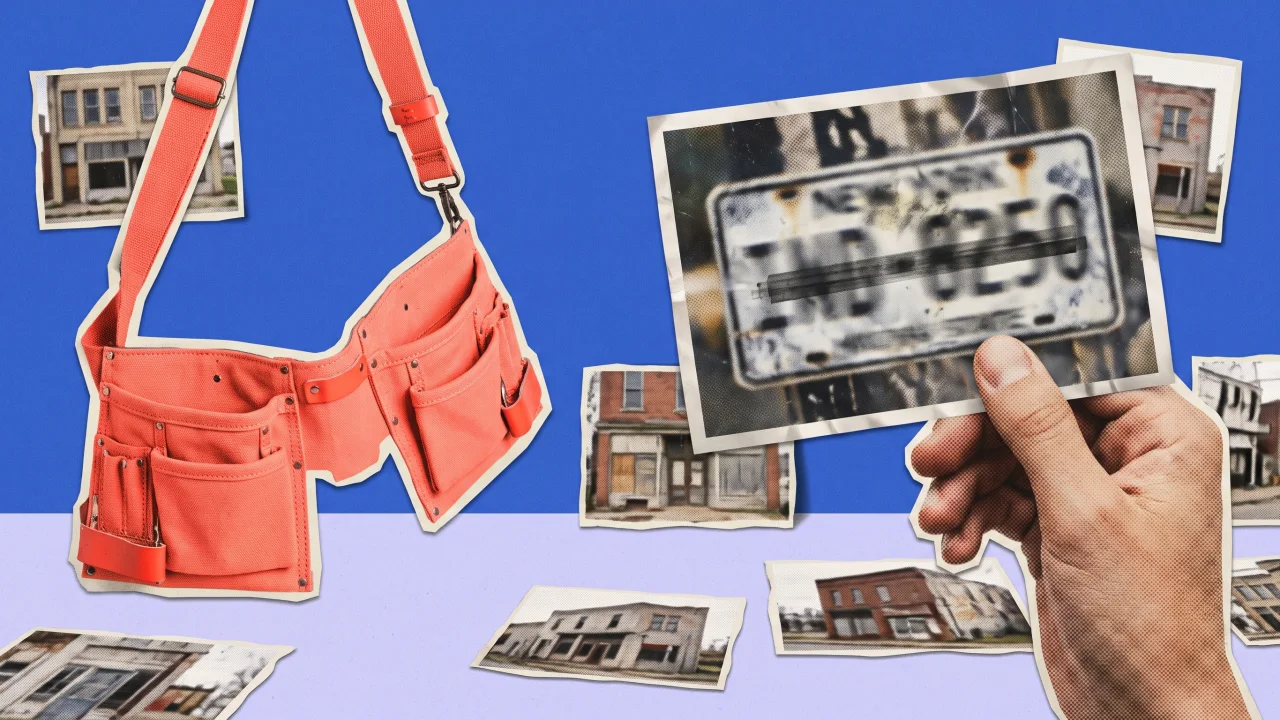
EliseAI builds AI for rental housing and says it reaches one in five US apartments. Its Maintenance App lets a technician photograph the model and serial label inside an appliance to create an asset record. A blurry photo is a problem because one wrong character can point to the wrong equipment or warranty record, so the app needs to ask for a retake while the technician is still there.
In an article published on 12 November, Mario Martone and EliseAI researcher Kyran Flynn tested whether the experimental photo mode in Jev 1.14.0 could spot unreadable photos fast enough for that. They labelled 140 training photos: 105 had at least one complete readable identifier and 35 did not. Each model scored two questions, whether a complete model number is readable and whether a complete serial number is readable. The higher score became the photo’s score, and a retake was flagged only if both were at or below 0.60.
94 ms
Jev’s median check time, against 2.83 seconds for Sol 6.1
$0.013
Estimated Jev cost per 100 photos, against $0.65 for Sol and $1.68 for Opus
32 of 35
Unreadable photos Jev flagged at the 0.60 cutoff
| Model | ROC-AUC | PR-AUC (AP) | Median check time | Estimated cost per 100 photos |
|---|---|---|---|---|
| Jev (1.14.0, experimental photo mode) | 0.9952 | 0.9984 | 0.094 s | $0.013 |
| Sol 6.1 | 0.9989 | 0.9996 | 2.83 s | $0.65 |
| Opus 5.5 | 0.9951 | 0.9980 | 2.99 s | $1.68 |
On ranking alone, the three are close: Sol has the highest ROC-AUC at 0.9989, while Jev (0.9952) and Opus (0.9951) are effectively level. The gap is in time and cost, which is the point TypeSafe made the next day.
Why the cutoff matters
Ranking well is not the same as asking for retakes at the right moments. At the 0.60 cutoff the models behaved differently, and EliseAI’s conclusion is the same line the panel is built around.
Thresholds therefore need to be tuned per model.
Mario Martone and Kyran Flynn, EliseAI, 12 November 2026
| Setting | Unreadable photos caught (of 35) | Readable photos wrongly flagged (of 105) |
|---|---|---|
| Jev, cutoff 0.60 | 32 | 2 |
| Sol 6.1, cutoff 0.60 | 35 | 10 |
| Opus 5.5, cutoff 0.60 | 35 | 10 |
| Sol 6.1, cutoff 0.10 | 35 | 3 |
Read plainly: with the same 0.60 rule, Jev wrongly asked for two retakes where Sol and Opus asked for ten each, but Jev let three unreadable photos through where the other two let none through. Lowering Sol’s cutoff to 0.10 kept all 35 unreadable detections and cut its false retakes to three. The result is a trade-off between missed photos and unnecessary retakes, not a clean win for either side.
These results suggest Jev could provide a fast, low-cost first check while a technician is still in front of the appliance.
Mario Martone and Kyran Flynn, EliseAI, 12 November 2026
Limits
- The 0.60 results come from the training set. EliseAI says they are not a held-out estimate.
- Median times exclude preprocessing and queue time and do not measure concurrent production latency.
- Costs are estimates from recorded token usage and October 2026 rates. Sol’s estimate uses base rates of $2 per million input and $10 per million output tokens, with no cache or regional adjustments.
- One request timed out and succeeded on retry; the reported time and cost use the completed response.
- The photo mode is experimental. TypeSafe has said it does not yet vouch for images in production.
What do ROC-AUC and PR-AUC measure here?
ROC-AUC measures how well a model separates readable from unreadable photos across all possible cutoffs, where 1.0 is perfect. PR-AUC in EliseAI’s table is average precision with “readable” as the positive class. Neither says where to set the retake cutoff, which is why EliseAI also reports results at fixed cutoffs.
 Jev News · Releases & Updates
TypeSafe AI Ships Jev 1.14.0 With “Danger Zone” Images, Bounding Boxes, and 262K Context
TypeSafe’s first major update since launch upgrades multilingual performance in Jev 1.14.0 and unlocks opt-in headers for composable images, a new box type, and 262K context.
 Written guide
Try Jev 1.14's experimental images, boxes and longer inputs
TypeSafe separates the Jev 1.14 preview from experimental Danger Zone images, boxes and longer inputs, which it does not yet vouch for in production.
What to watch
- Whether EliseAI repeats the retake test on new photos. It says that is next, along with measuring the full capture workflow: missed unreadable photos, unnecessary retakes and time from photo to prompt.
- Whether the panel gives held-out numbers rather than training-set ones.
- Whether the photo mode leaves the experimental Danger Zone, which would be the sign TypeSafe is ready to vouch for it in production.
Sources
- TypeSafe AI, panel announcement on X, 23 November 2026
- TypeSafe AI, registration follow-up on X, 23 November 2026
- EliseAI, panel announcement on X, 23 November 2026
- Luma, “Building with Jev: Applied AI at EliseAI & TypeSafe AI”
- EliseAI, “How Typesafe AI’s Jev helps read appliance serial plates in the field”, 12 November 2026
- TypeSafe AI, summary of EliseAI’s result on X, 13 November 2026