What it does
The examples route a support message, report urgency and decide when to involve a person. The library checks response shapes and preserves probabilities; retry policy and action thresholds remain the caller’s job.
SDKs & clients
Johan Yngman’s unofficial Haskell client gathers several independent Jev questions into one request and returns typed answers.
Only you can see your notes.
Screenshot unavailable. Open the experiment ↗
The examples route a support message, report urgency and decide when to involve a person. The library checks response shapes and preserves probabilities; retry policy and action thresholds remain the caller’s job.
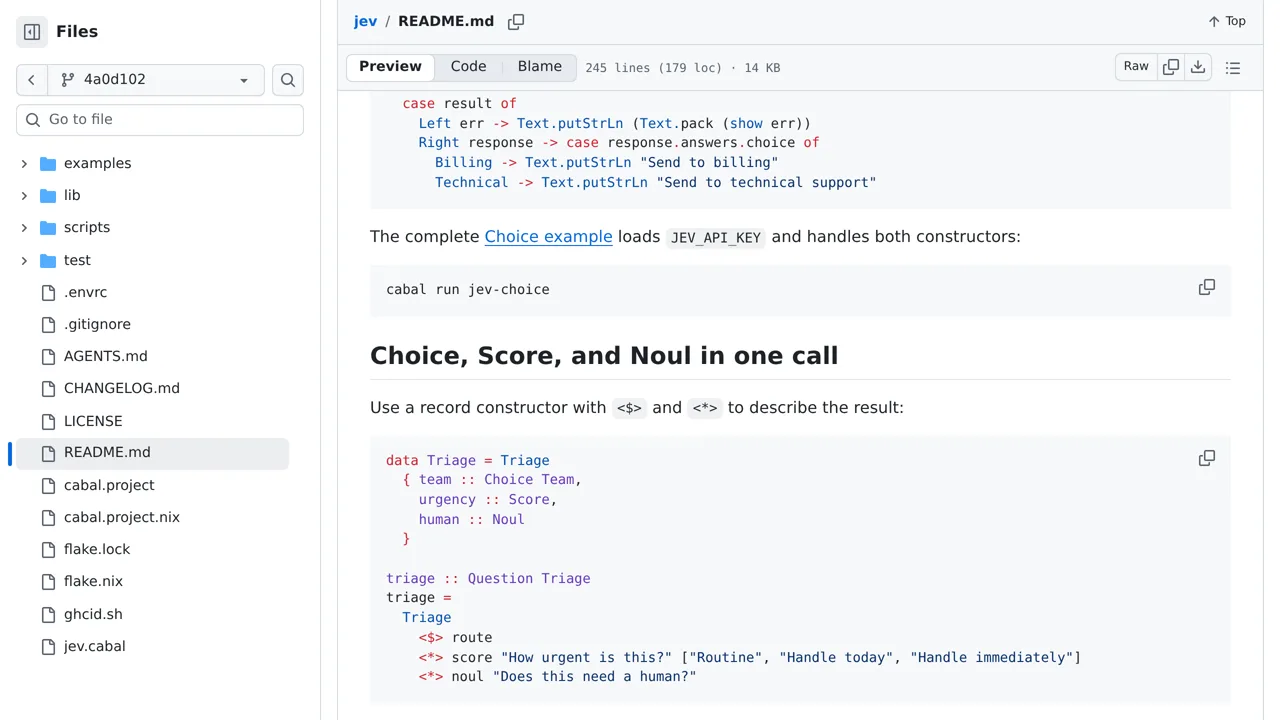
If your app is written in Haskell, your developer can start with this library’s support-message example. It asks Jev, an outside AI service, to choose a team, rate urgency and estimate whether a person needs to help. The example uses an OpenRouter access key to send these questions.
Ask independent questions together, but ask a question that needs an earlier answer separately. Your developer must decide when the answers should lead to human review. The example brings in a person when the chance of needing help is high; the AI can still make a wrong judgment.