What it does
The guardrails decide, not the model. Routing reads the recommended-action choice's confidence, because a yes/no answer carries no confidence field.
Apps & data pipelines
Real-time triage of last-mile delivery exceptions: a customer note and parcel constraints go in, four typed answers come back, and guardrails turn them into a verdict.
Only you can see your notes.
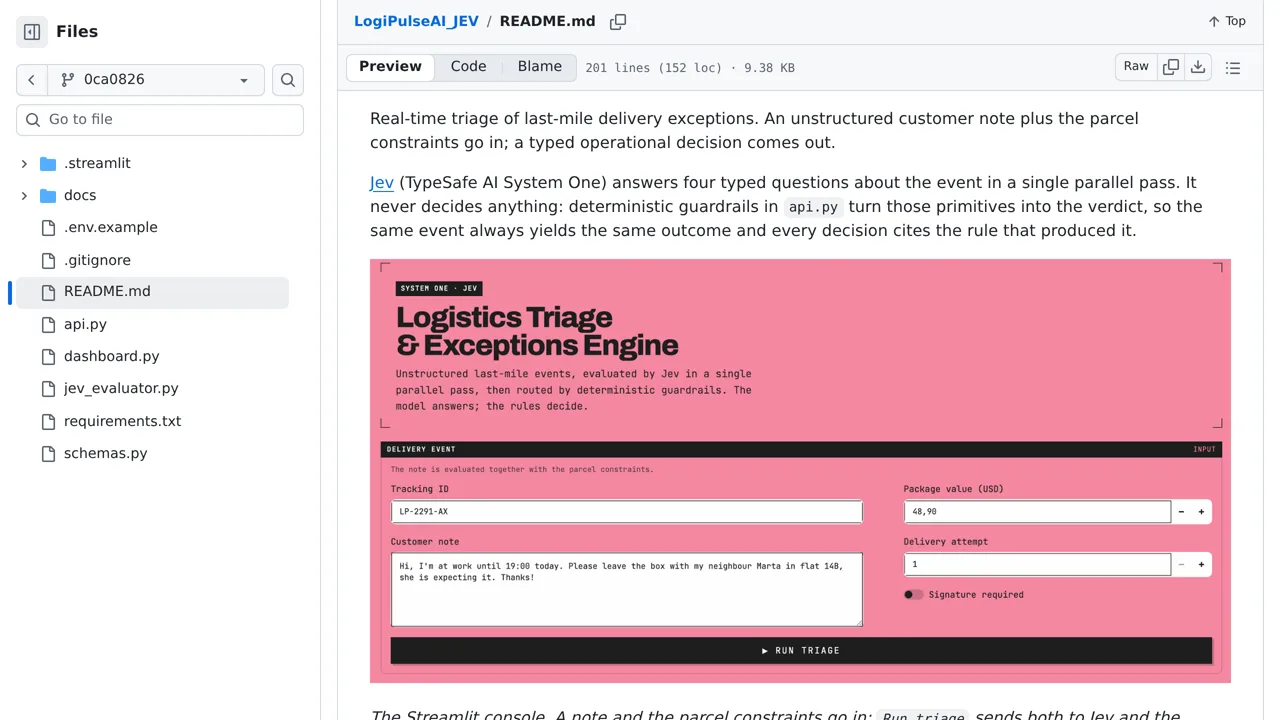
Screenshot unavailable. Open the experiment ↗
The guardrails decide, not the model. Routing reads the recommended-action choice's confidence, because a yes/no answer carries no confidence field.
To use this idea, write down your delivery rules and collect real delivery notes from customers. A developer can build a Python app that links to TypeSafe using an API key, which is a software access code rather than your personal password. When a customer adds a note, your app forwards that text to TypeSafe for evaluation.
TypeSafe returns risk scores and action choices. Your code then checks those scores against your delivery rules, such as stopping packages that try to skip a required signature. Keep in mind that customer messages leave your servers, and automated scores cannot guarantee an unusual request is completely safe.