What it does
The capacity model is plain code, so only the grading — four scores, a next-step pick, and one yes-or-no per checklist item — goes to the model.
Apps & data pipelines
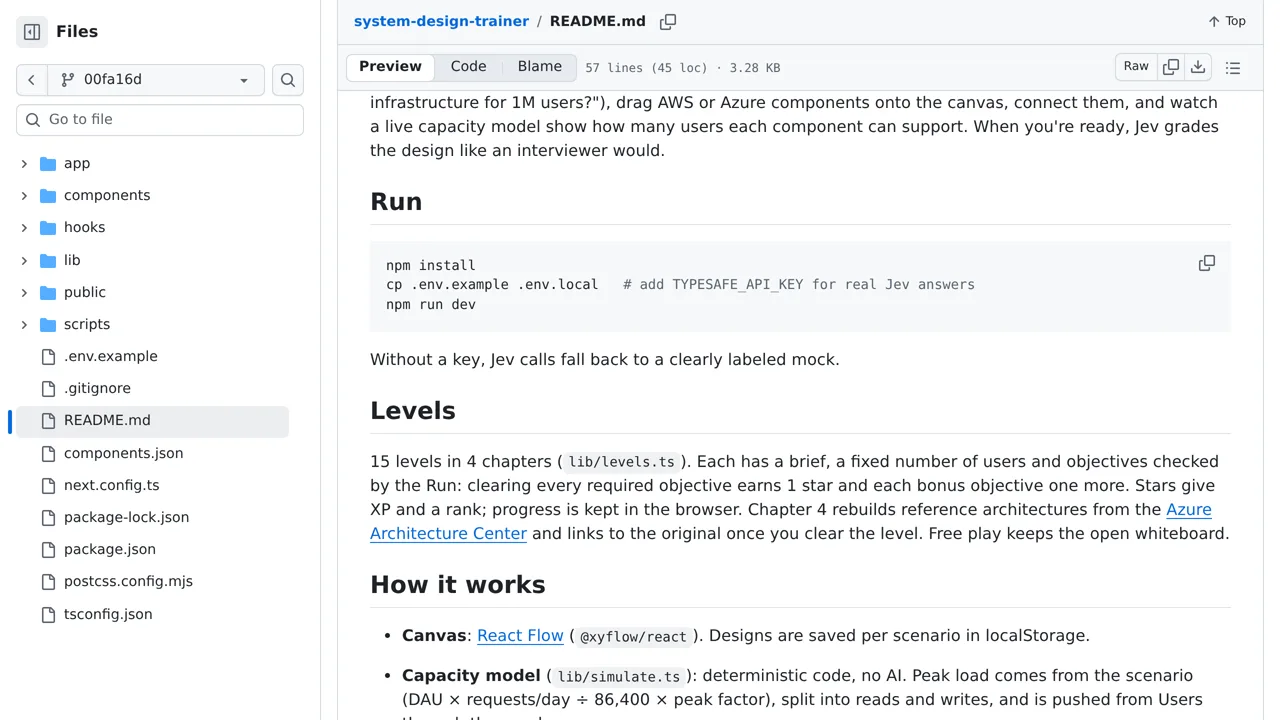
Draw a system design on a whiteboard, watch a live model count how many users it survives, then hear Jev grade it the way an interviewer would.
Only you can see your notes.
Screenshot unavailable. Open the experiment ↗
The capacity model is plain code, so only the grading — four scores, a next-step pick, and one yes-or-no per checklist item — goes to the model.
A developer can adapt this project to build a training tool. The app uses standard math to calculate system limits based on fixed rules. It then sends those final numbers to Jev, an outside AI service. The AI service uses that information to grade the design and suggest improvements.
To run the software, a developer provides an access key. This key authorizes the connection to the external AI service, not a personal login password. The app relies on fixed numbers for cloud limits. You should treat these results as estimates because real cloud capacities change often.