Read & learn
Written guides.
Understand Jev, one idea at a time. Walkthroughs, recipes, and writeups — our notes first, the original next.
A public registry · independent & community-run
Learn, build, and play with Jev — from deep technical guides to creative experiments.
Read & learn
Understand Jev, one idea at a time. Walkthroughs, recipes, and writeups — our notes first, the original next.
Watch & learn
See an idea take shape. Tutorials, demos, and deep dives, organized by topic and credited to their creators.
Make & explore
See what builders made with Jev. Games, tools, repositories, articles, and more — traced to their sources.
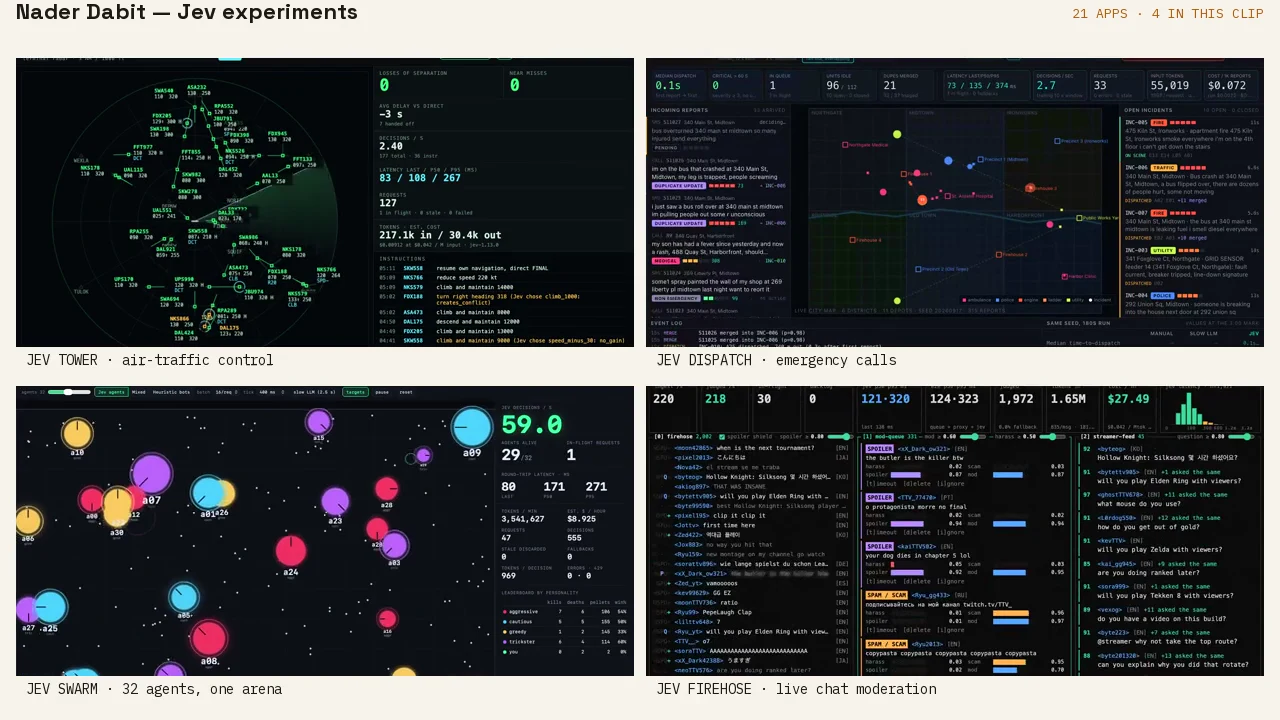
Every category, from games and tools to repositories and writeups, traced to a primary source.
Same ideas.
Different paths.
This is the full registry, not just the featured picks. Figures like speed, cost, and stars are maker-reported or captured snapshots, not JevMade measurements.
1611 experiments · showing 541–600
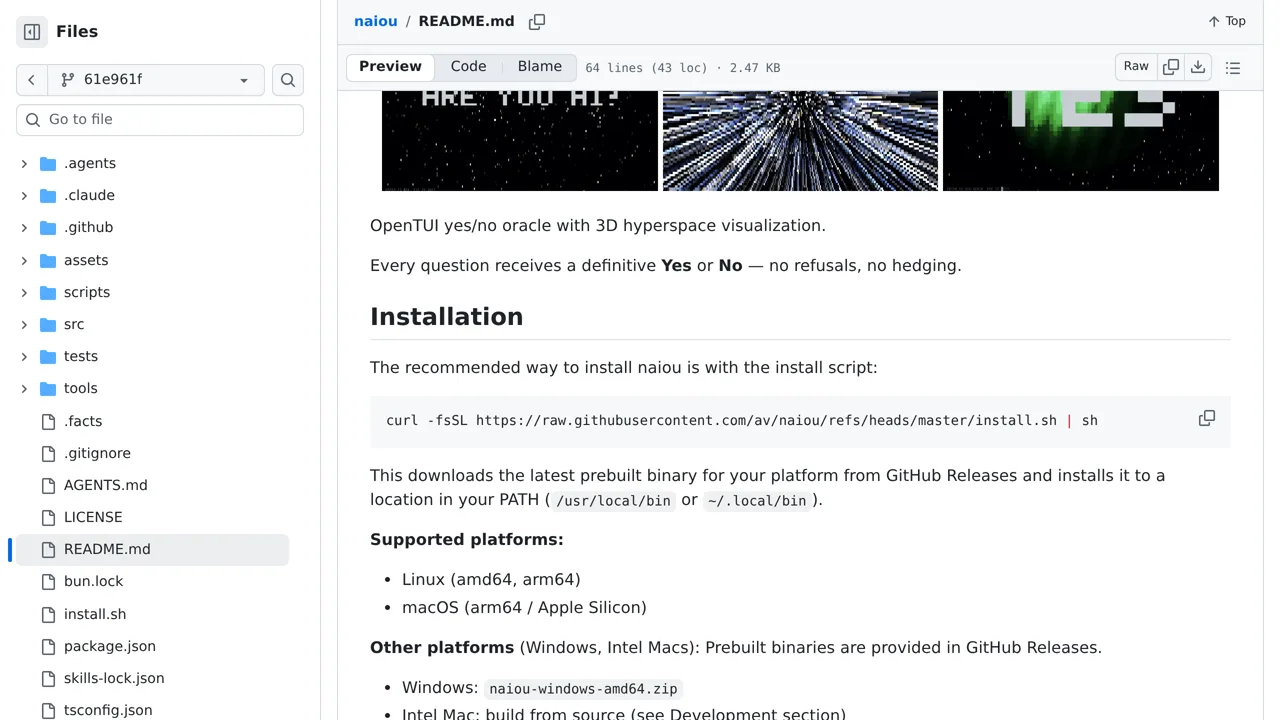
A terminal oracle that answers any question with a bare Yes or No, then renders the verdict in a 3D hyperspace.
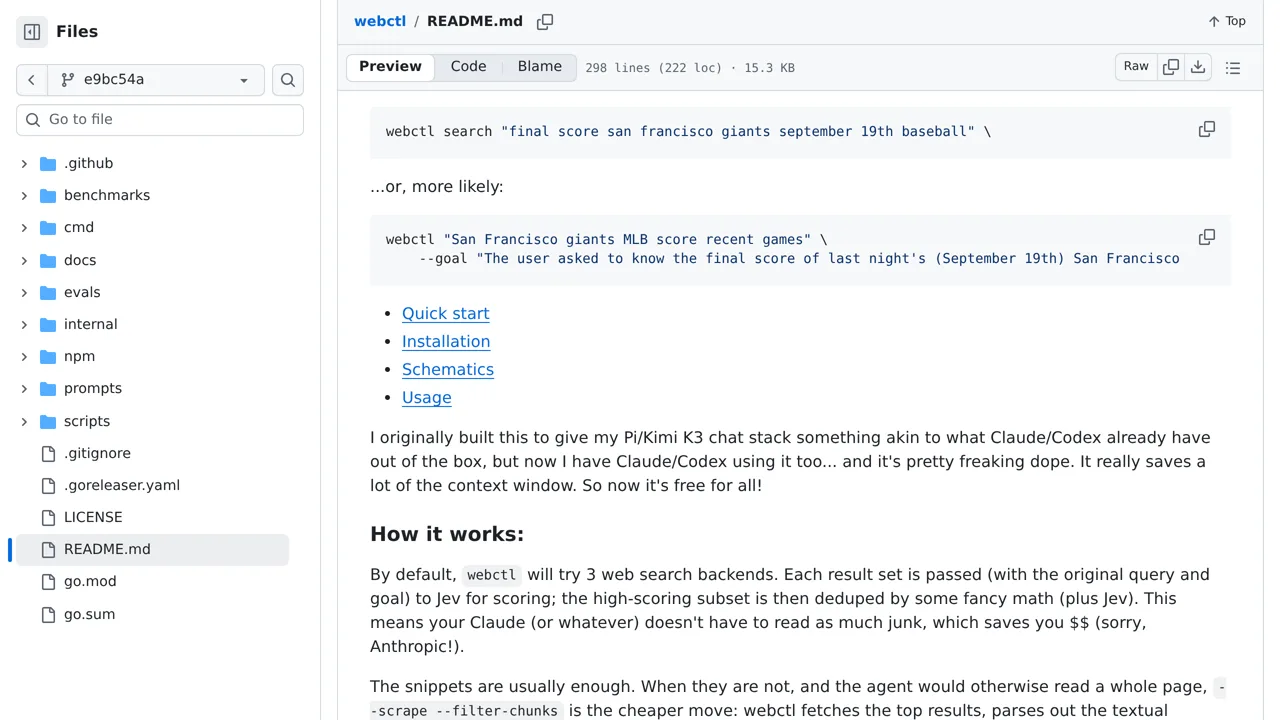
Searches several web backends, then uses Jev to keep useful results, confirm duplicates and filter scraped page chunks.
Let jev-ra drive the browser for a coding agent: Jev picks the next action and the page element to use.

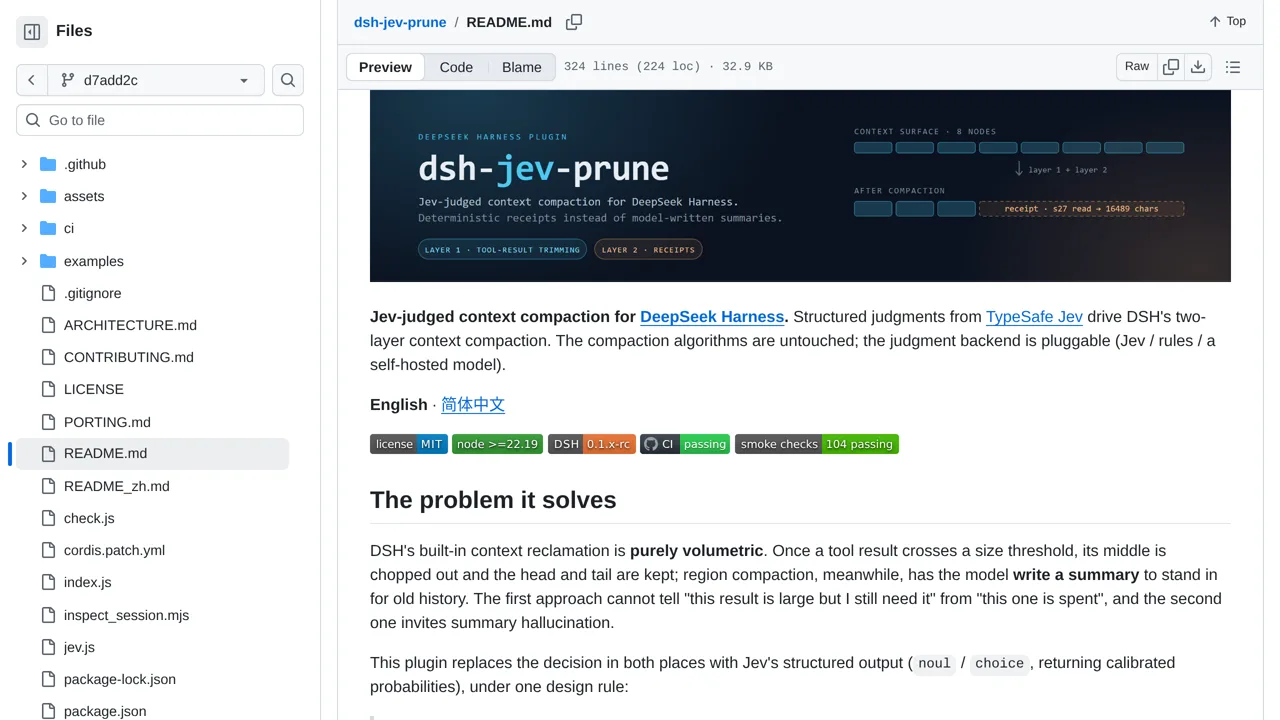
Prunes DeepSeek Harness tool results according to Jev judgments while retaining deterministic context receipts.
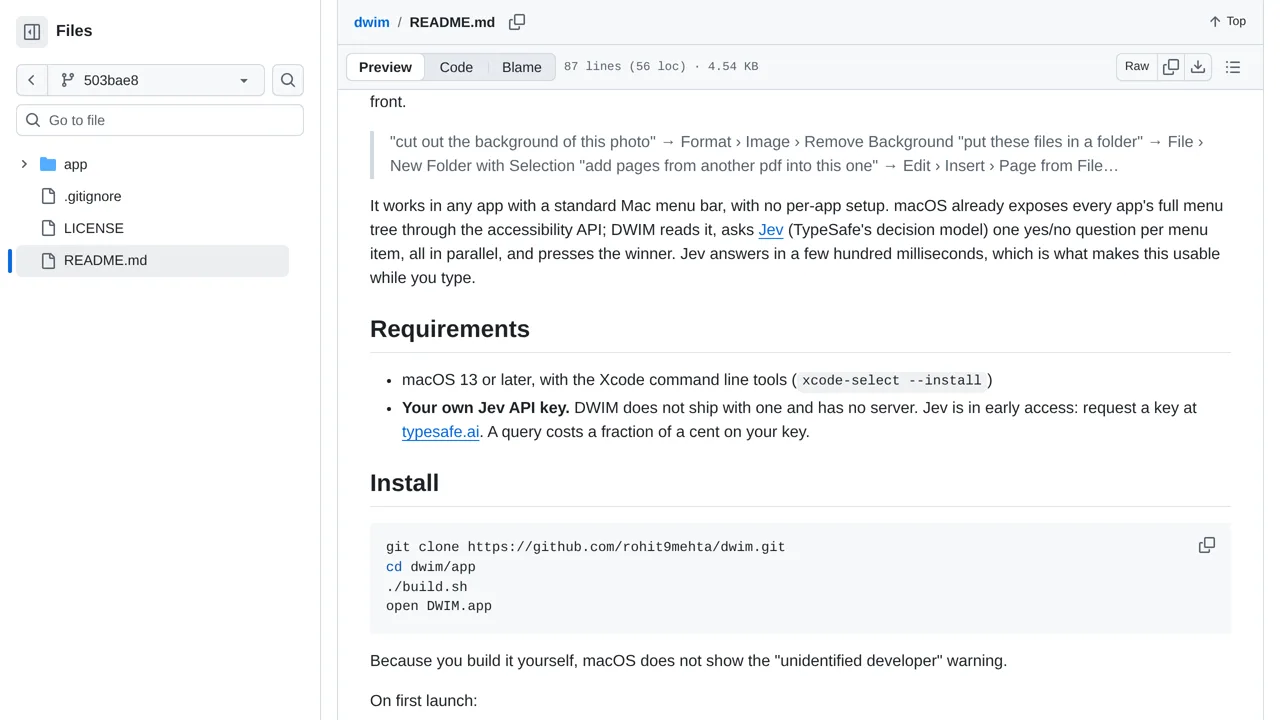
Turns a plain-language request into a macOS menu action by scoring every available menu path with Jev.
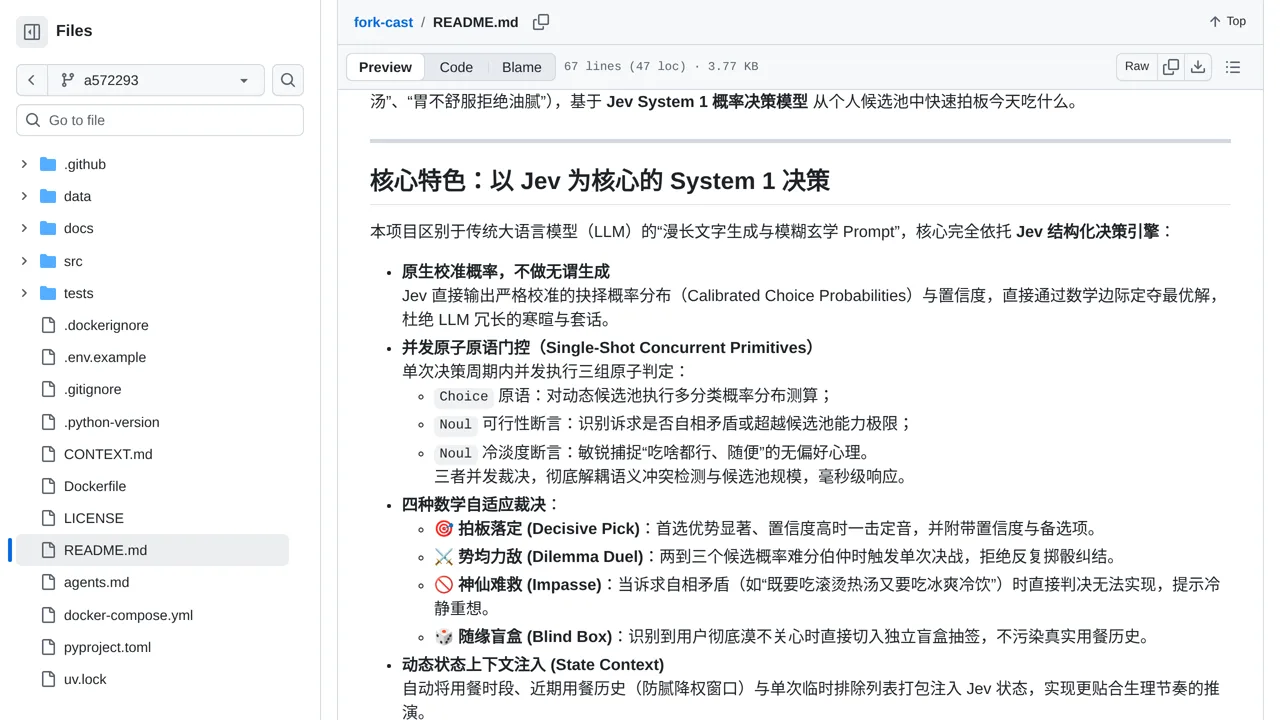
Chooses a meal from a personal candidate pool by combining Jev suitability checks with a final bounded choice.
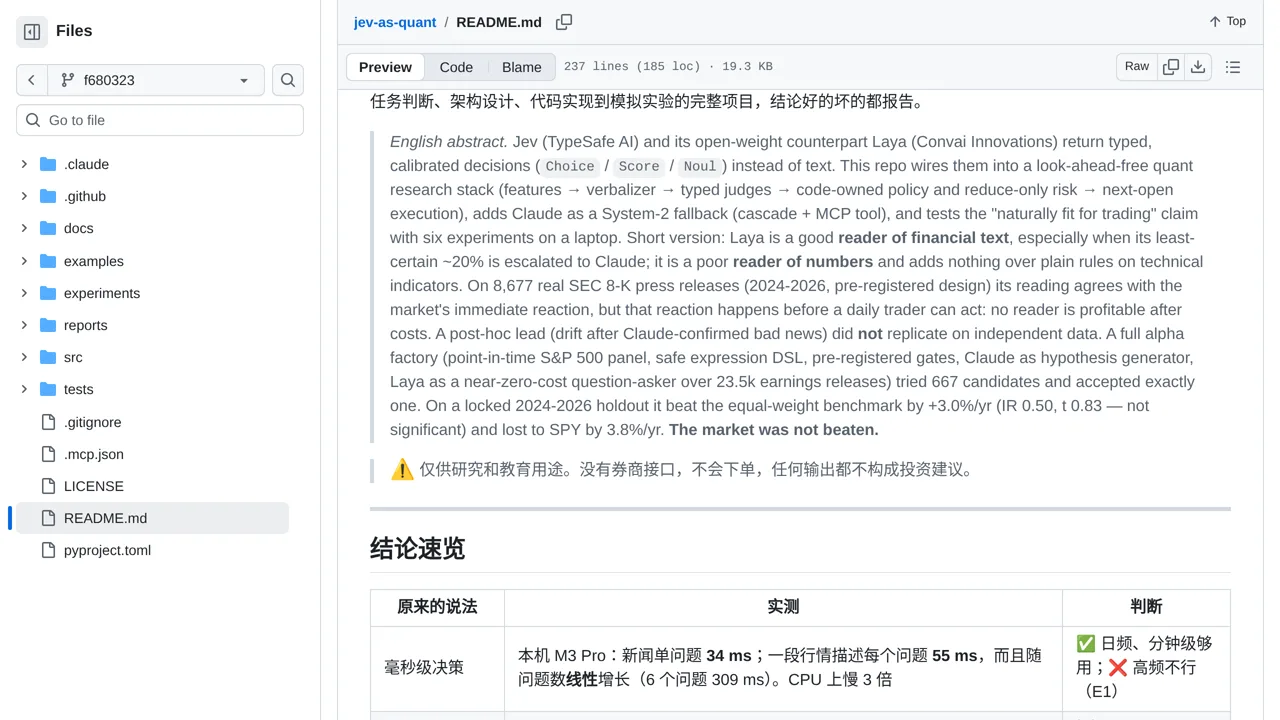
Tests Jev and the open-weight Laya counterpart as typed judgment layers in a look-ahead-free quantitative research stack.
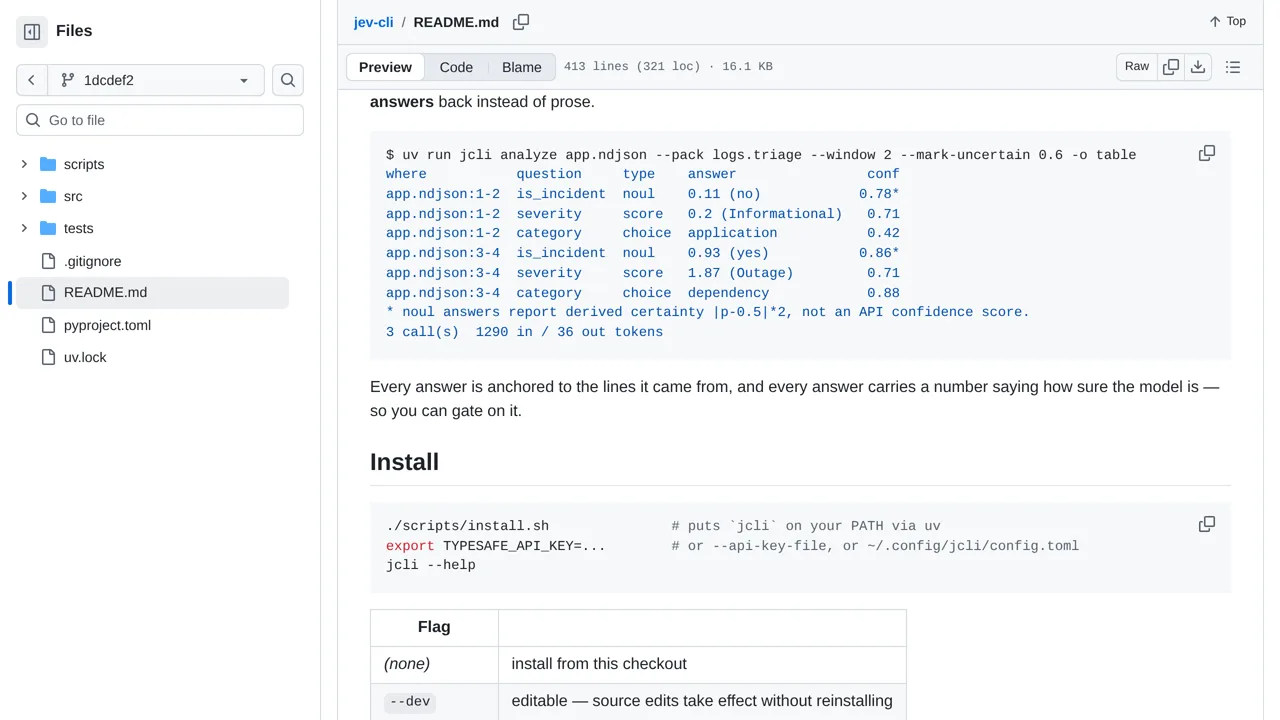
Analyzes JSON, NDJSON, and JSONC windows with reusable typed question packs, preserving source-line anchors for every answer.
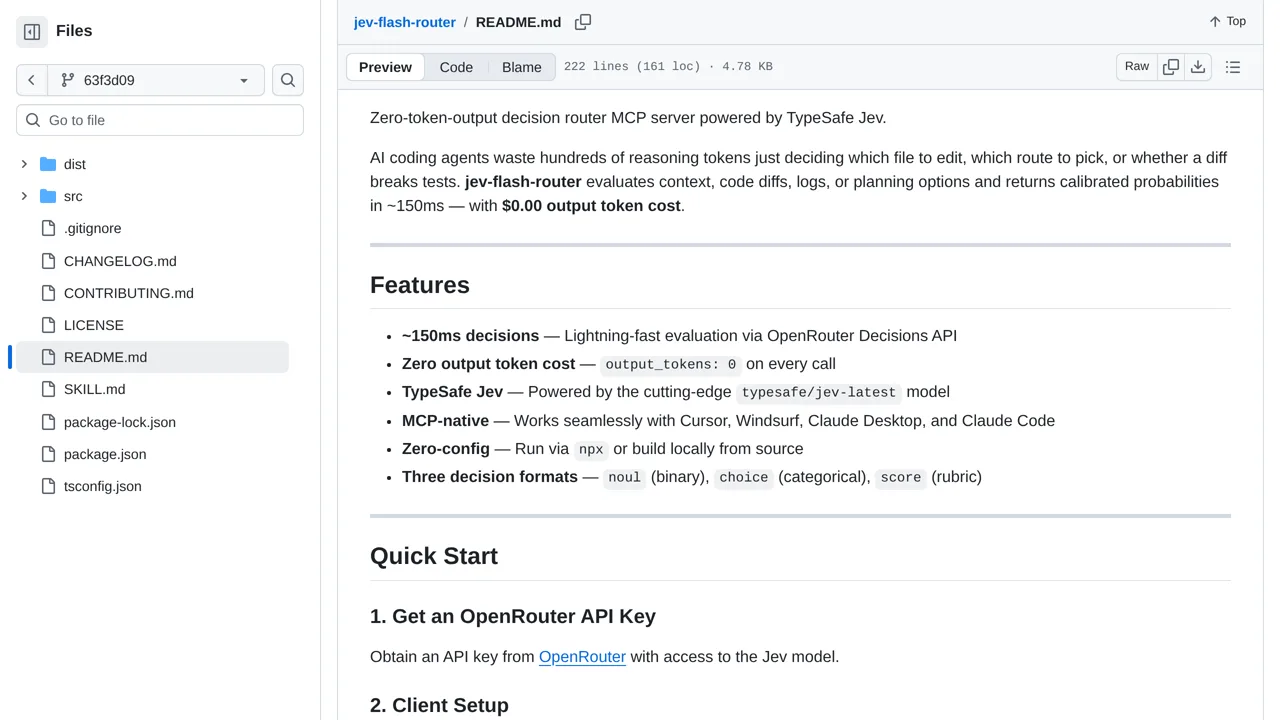
Exposes Jev’s three decision types as one MCP tool for coding-agent routing, risk checks, and bounded architectural choices.
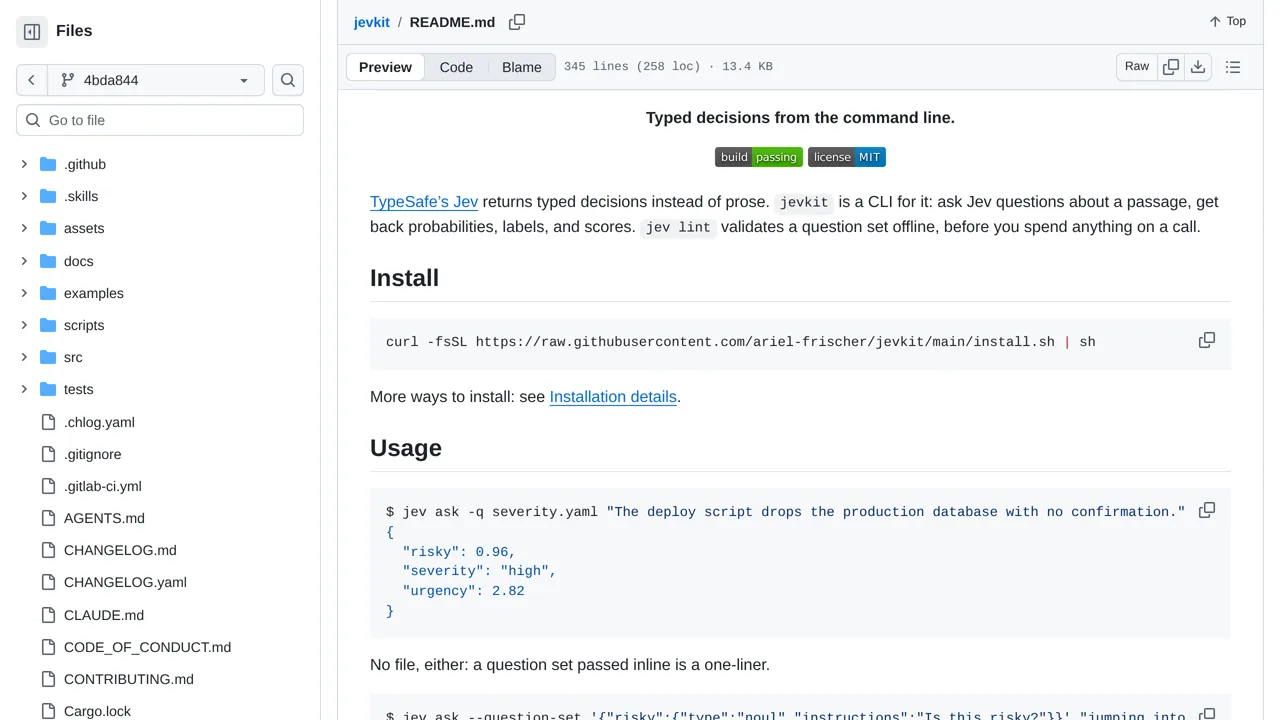
Ask Jev typed questions from the command line, lint question sets before billing, and send machine-readable answers to scripts or agents.
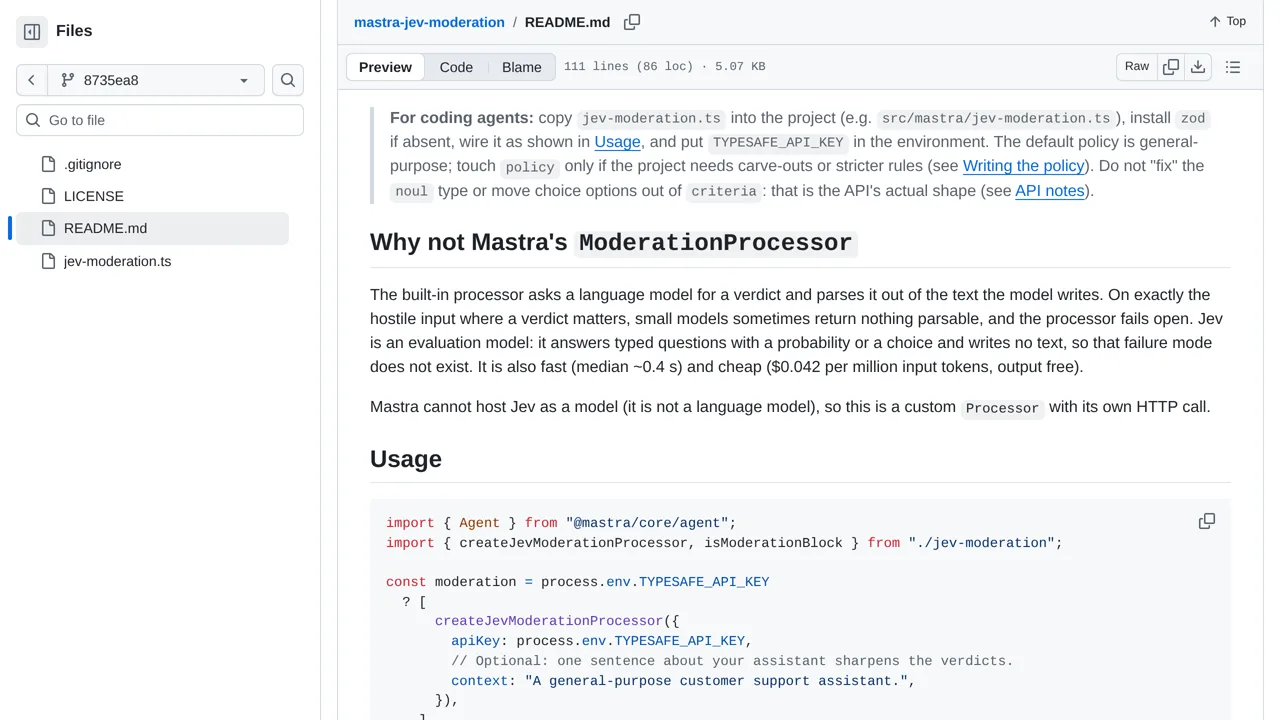
Add fail-closed input moderation to a Mastra agent with one Jev request and a typed tripwire instead of parsing a language-model verdict.
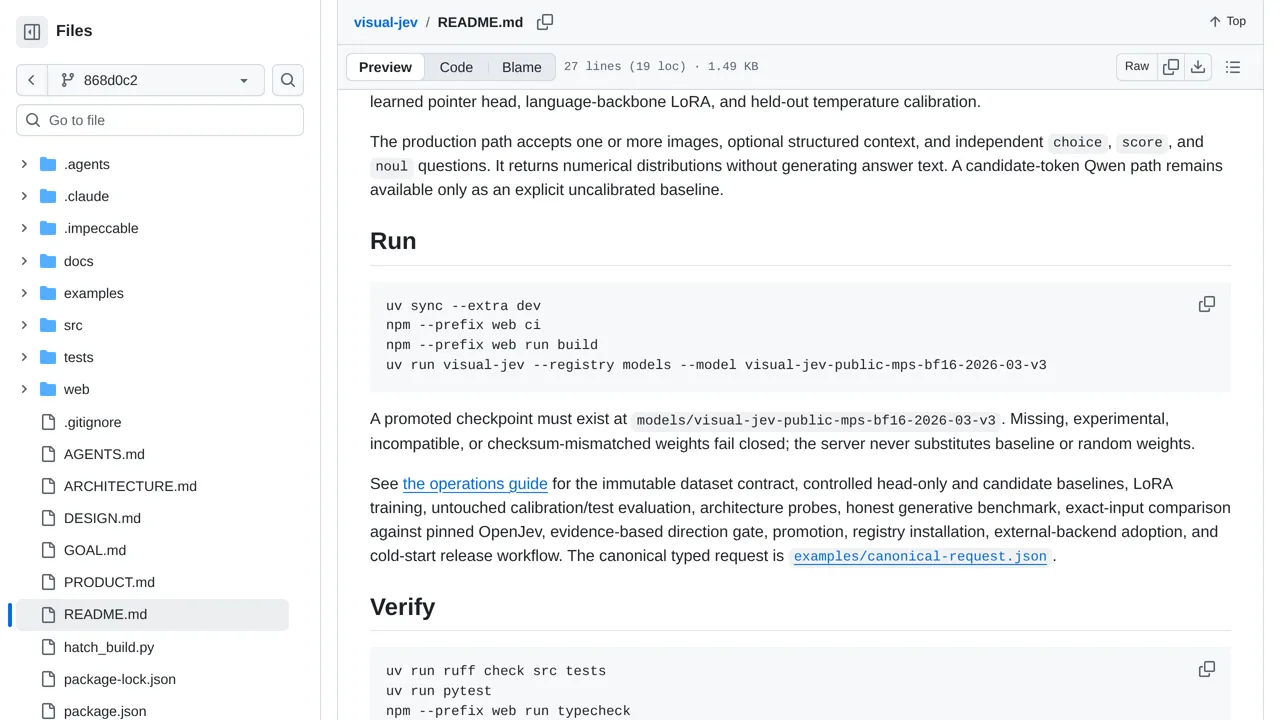
Ask typed questions directly about images through a shared Qwen3-VL encoding instead of first producing captions.
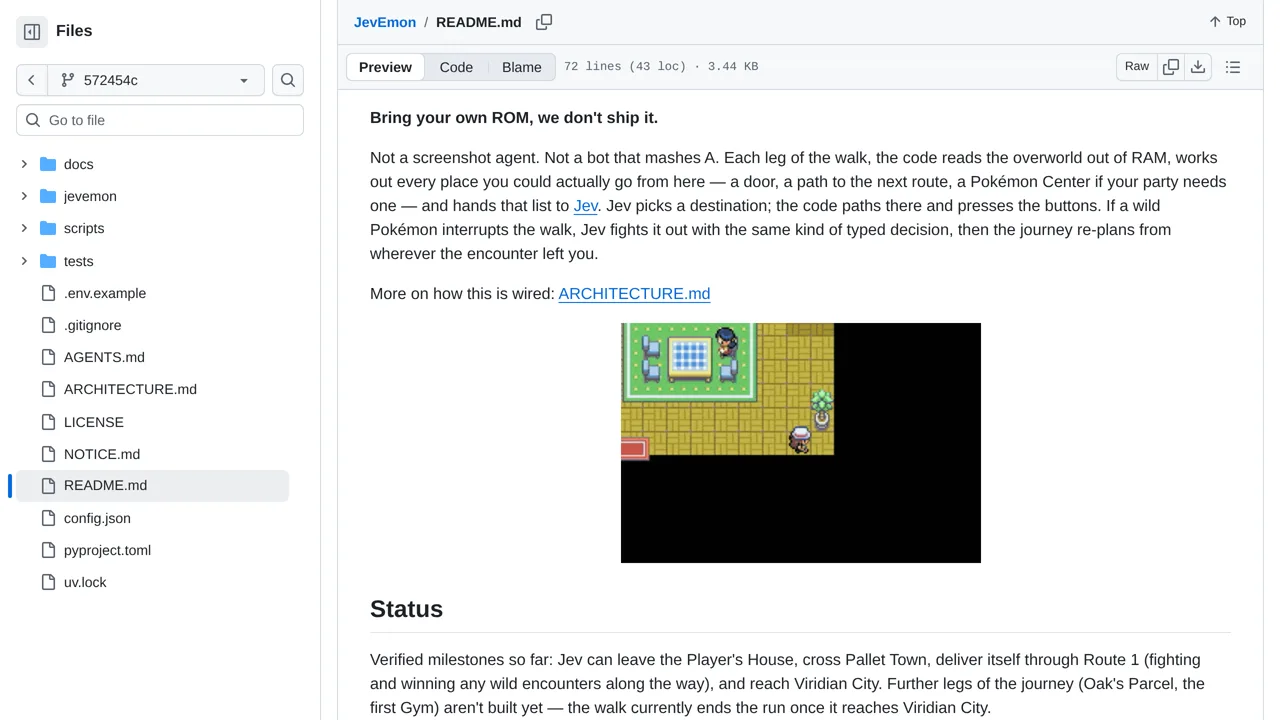
Let Jev choose destinations and battle actions while deterministic code reads Pokémon FireRed RAM and presses the controls.
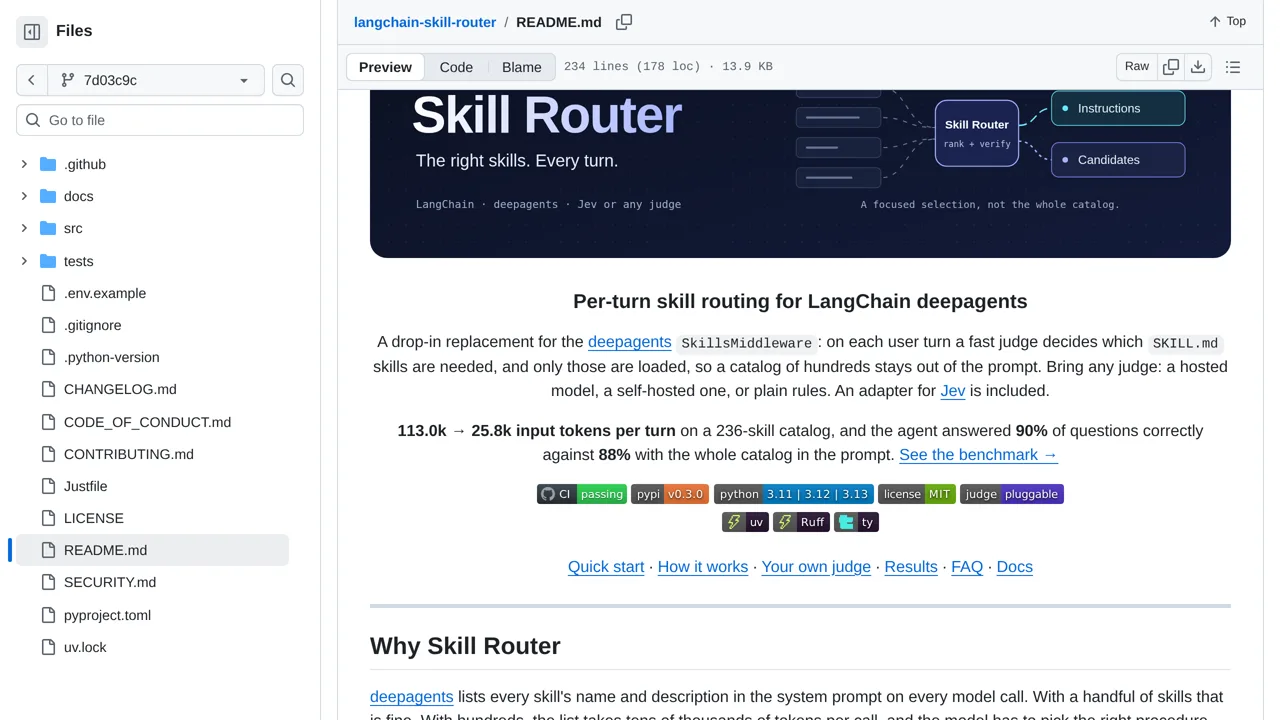
Load only the SKILL.md files a LangChain agent needs for its current turn, with Jev available as a judge.
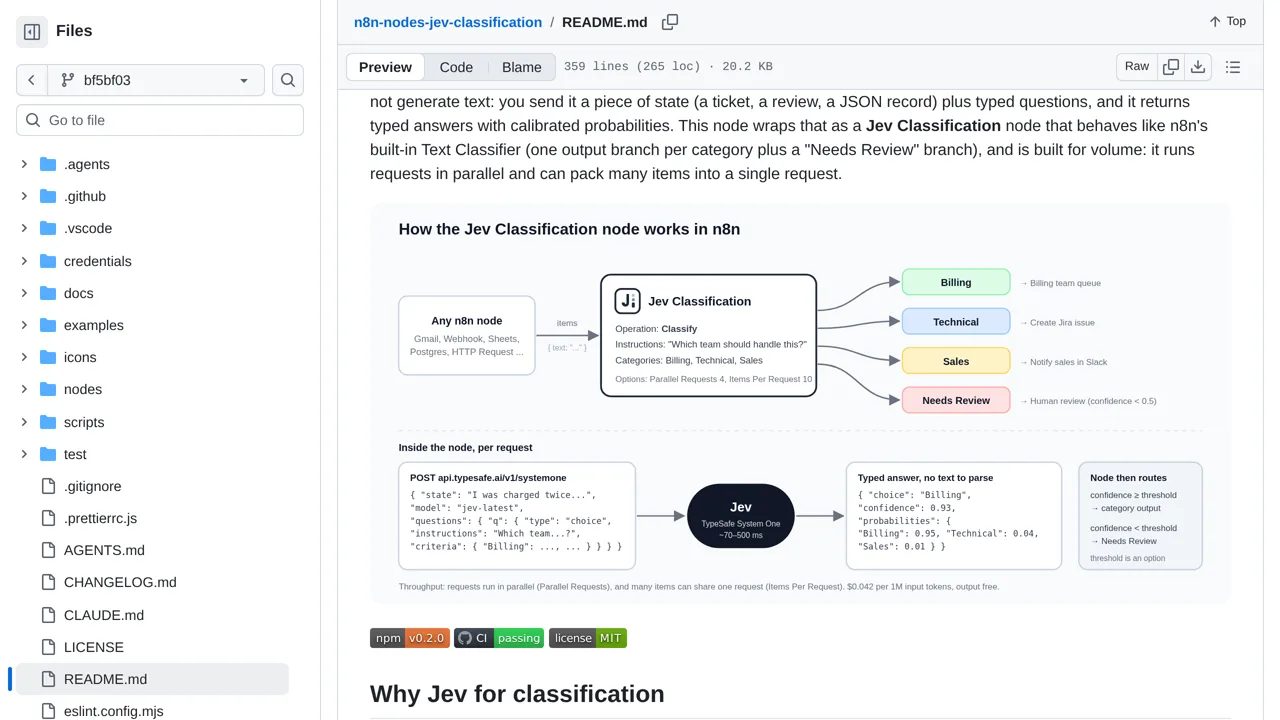
Route, score, or check n8n items with Jev, including parallel requests and multi-item batches.
Build a personal Hacker News feed by scoring new stories and articles against interests saved by each reader.
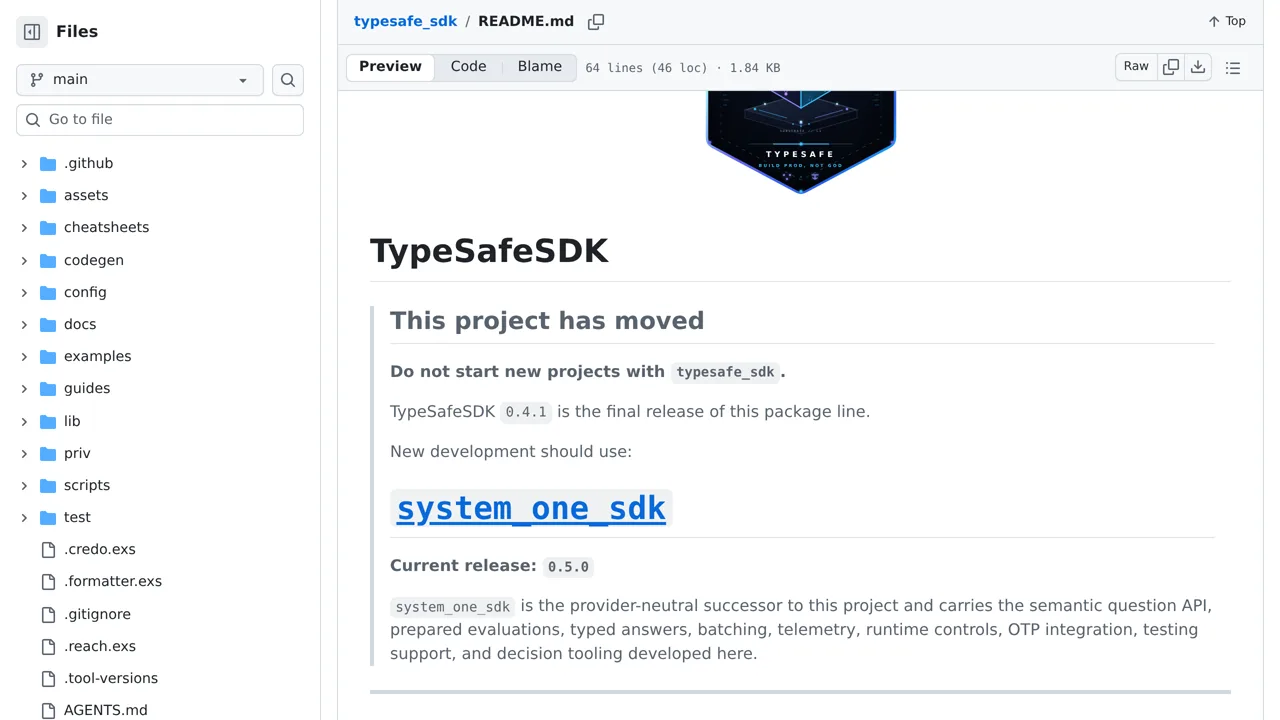
An Elixir SDK for unified LLM integrations, including Jev support.
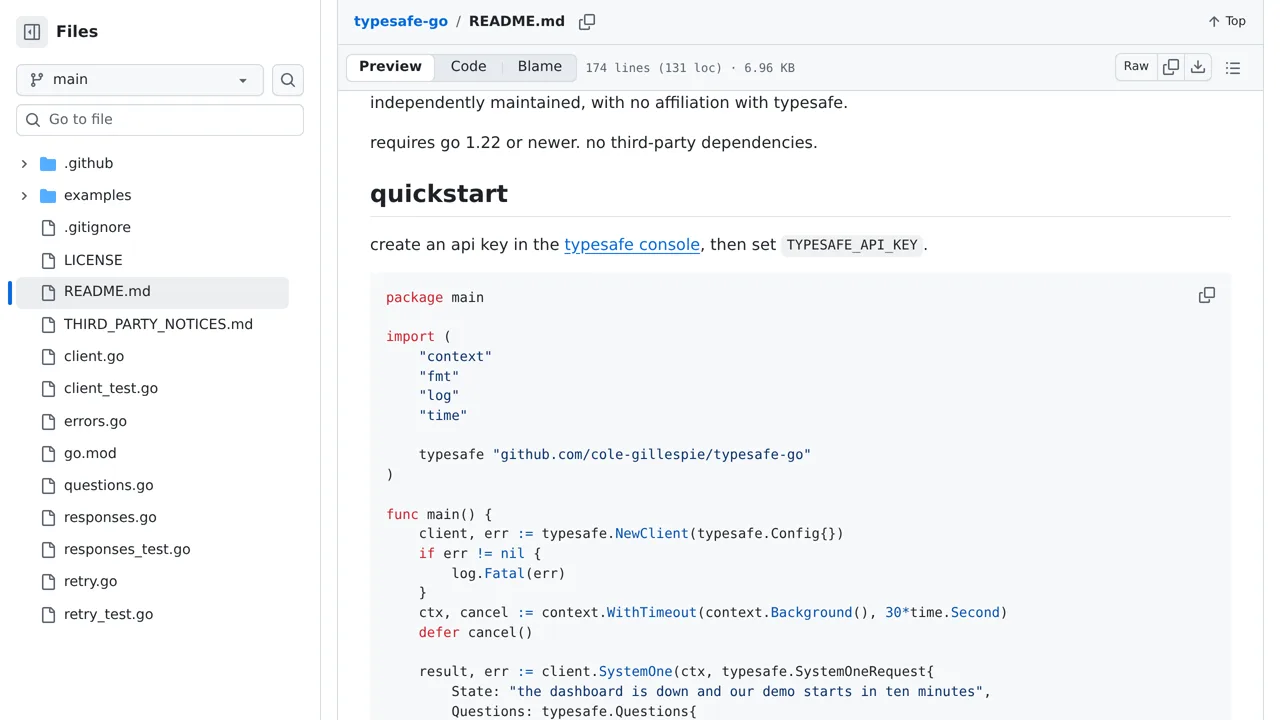
An unofficial Go SDK for TypeSafe AI with typed answers, retries, and context support.
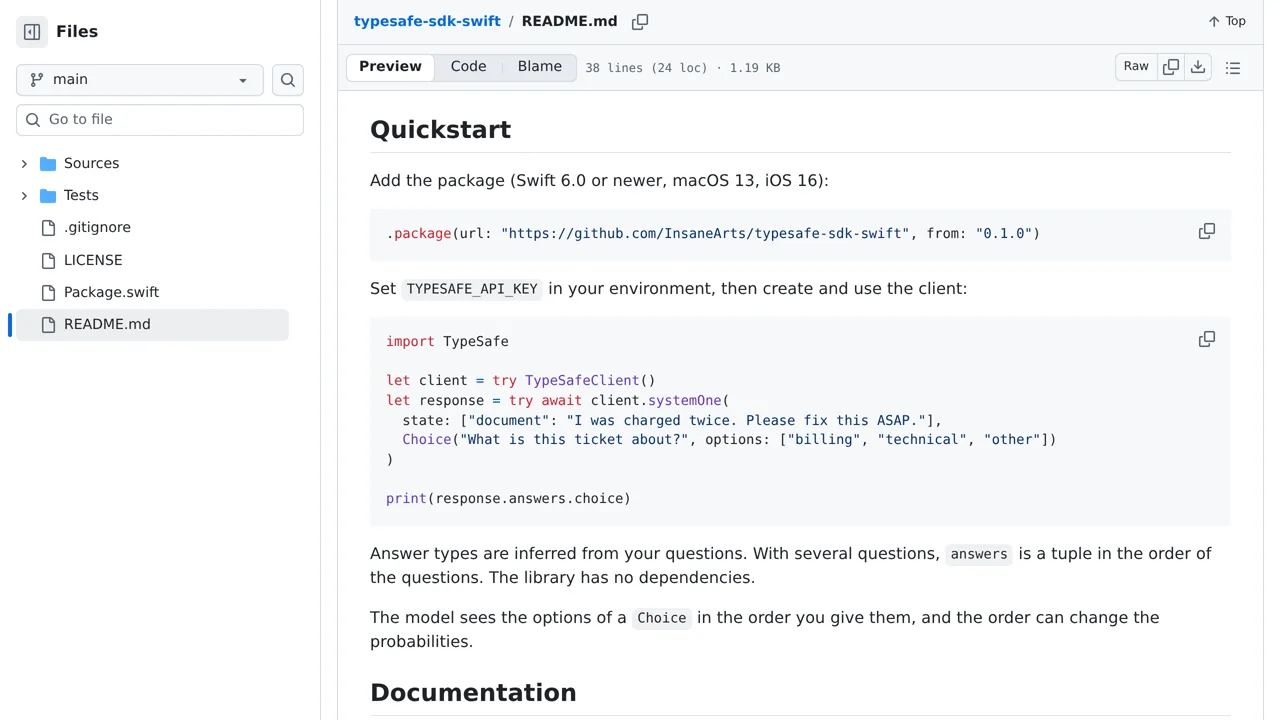
A Swift SDK for TypeSafe AI.
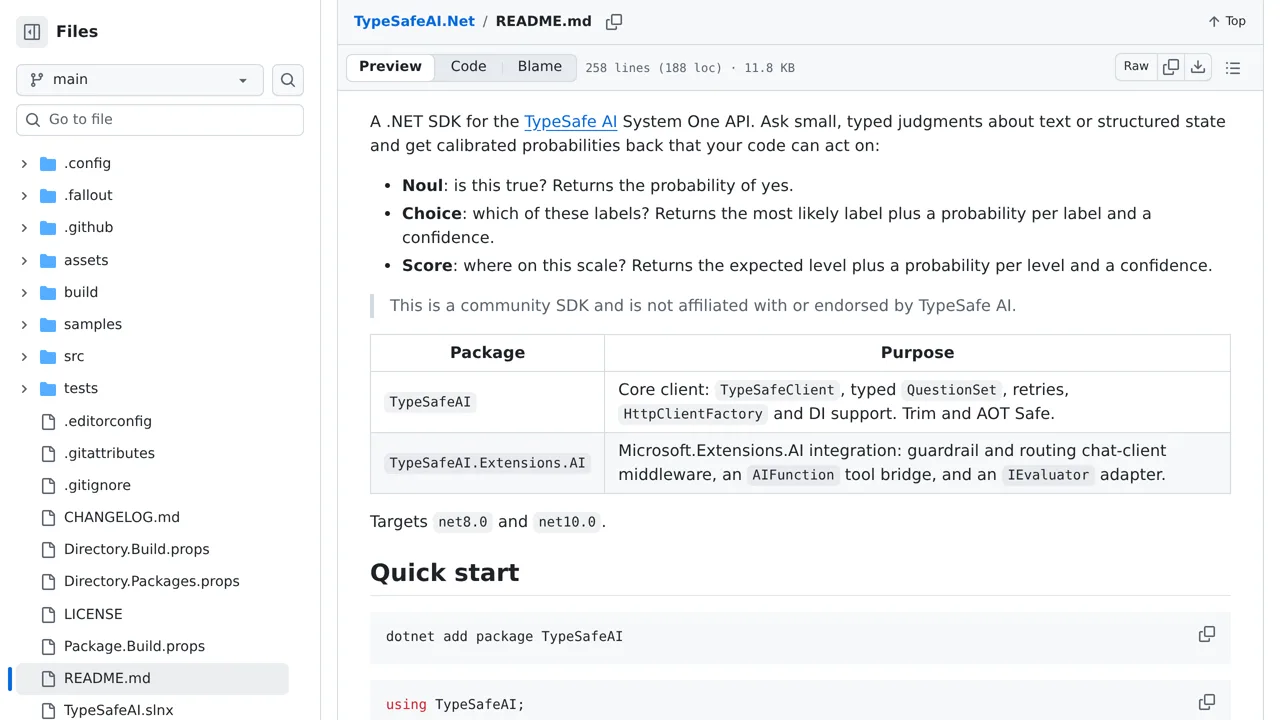
A .NET SDK for the TypeSafe AI platform.
A Scala client for TypeSafe AI built with ZIO.
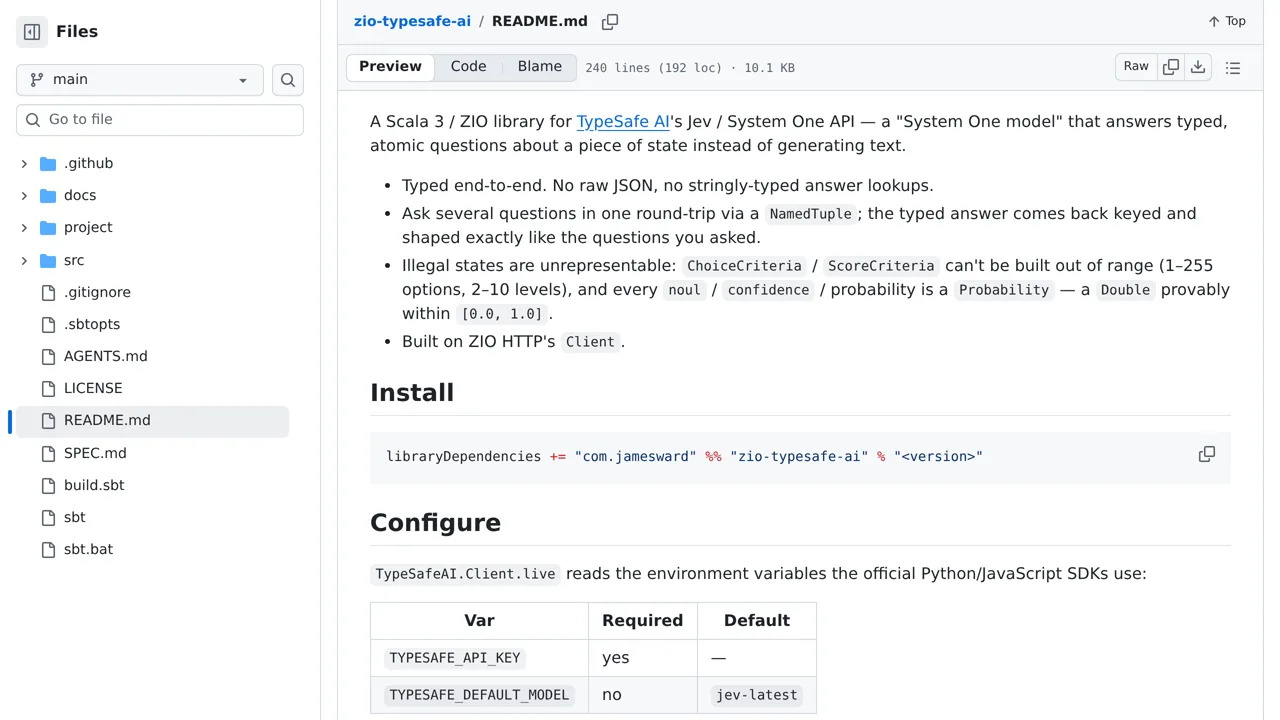
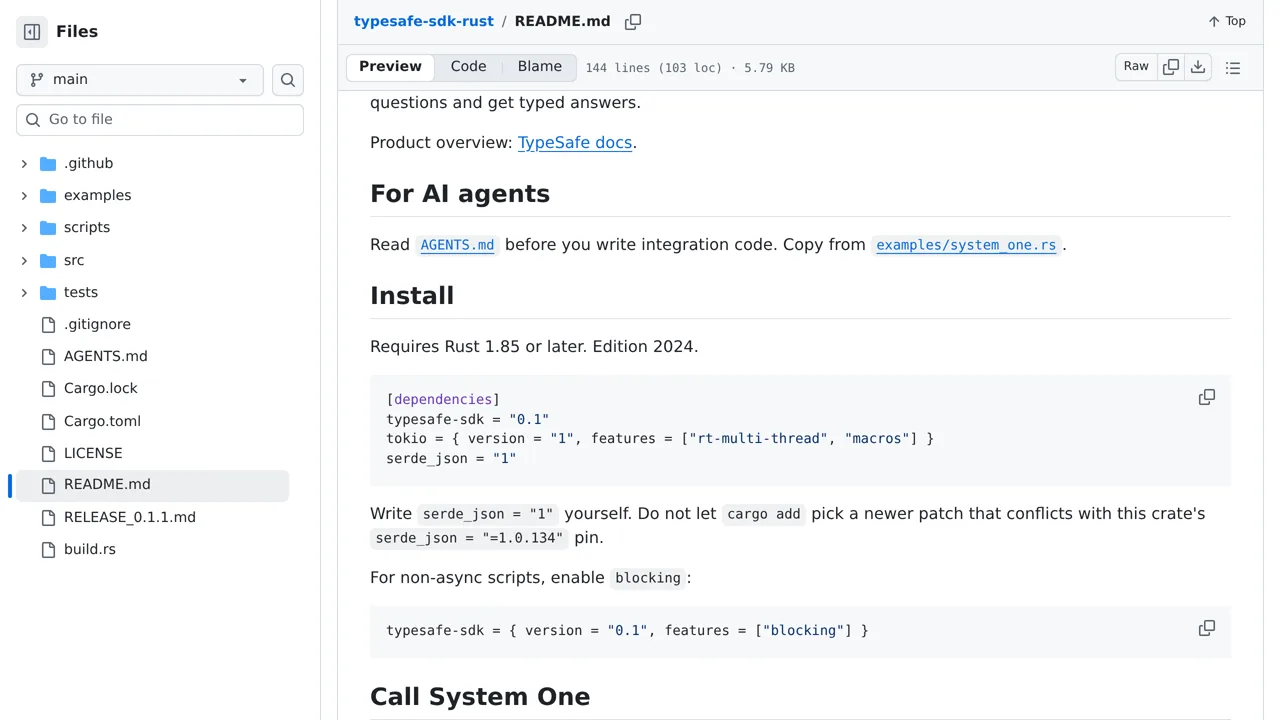
A Rust SDK for the TypeSafe AI API with bounded retry behavior.
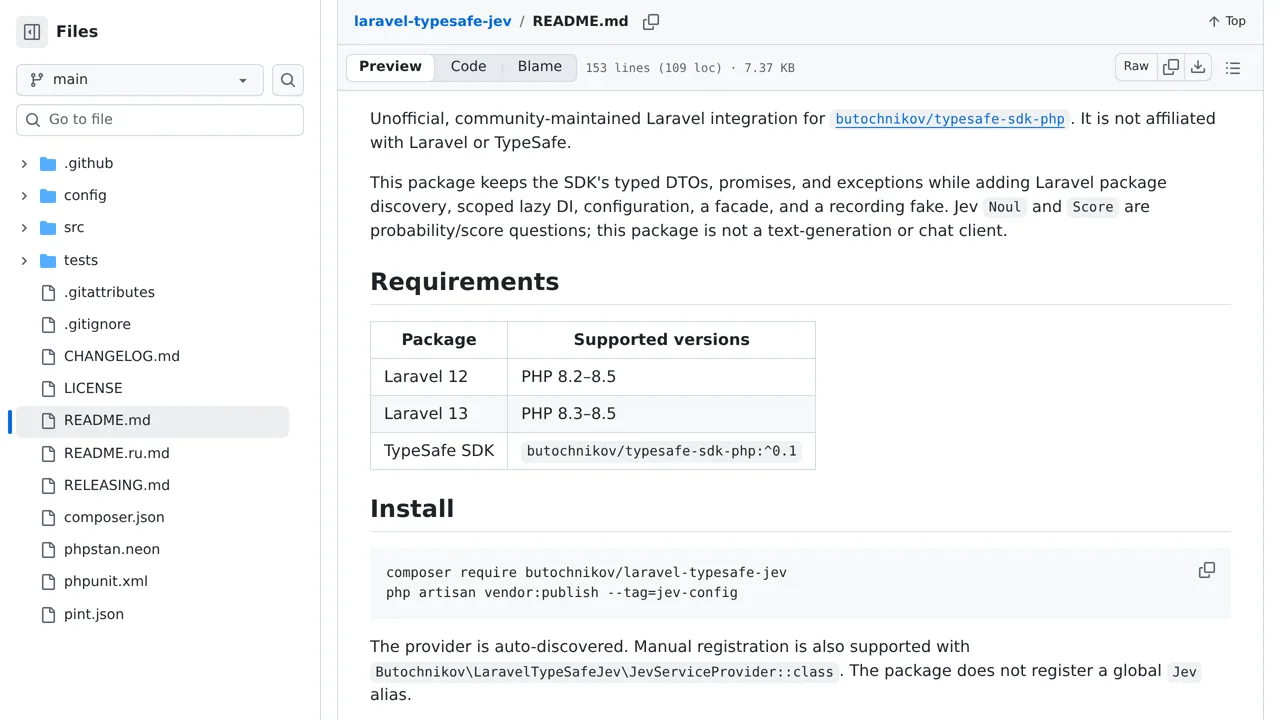
An unofficial Laravel integration for Jev with typed responses and asynchronous requests.
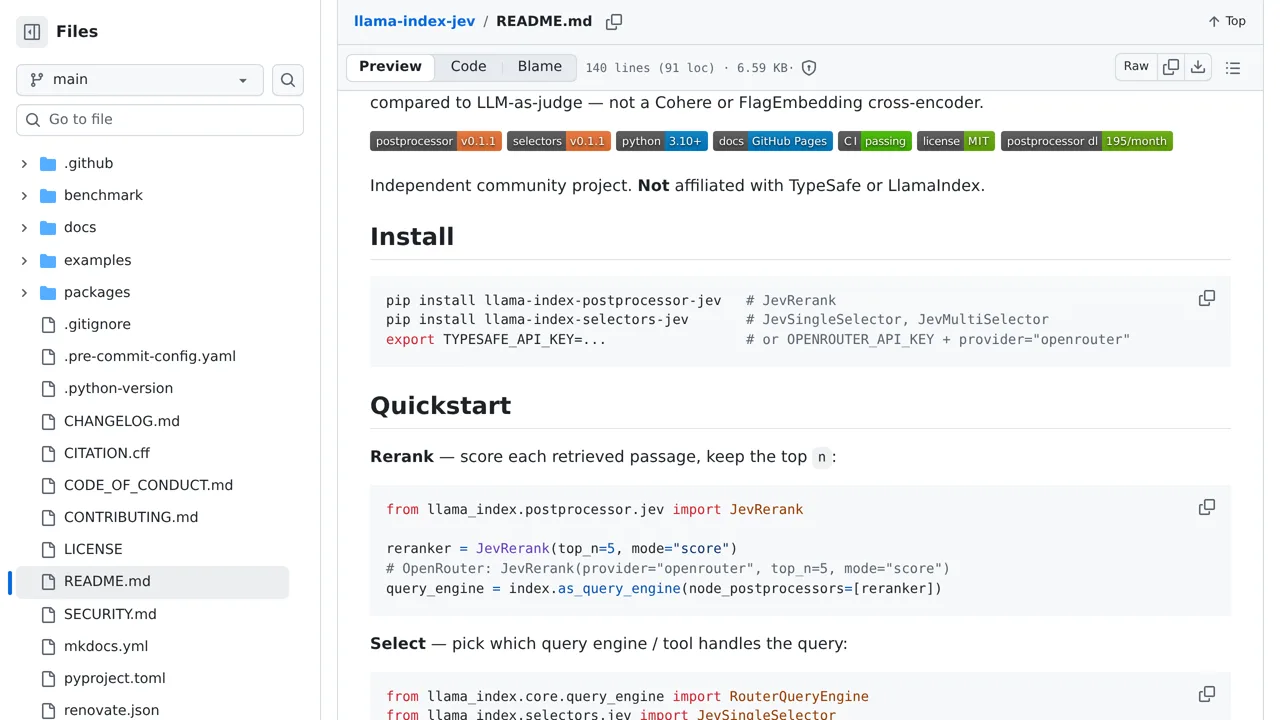
Use Jev to rank search results and route requests in LlamaIndex.
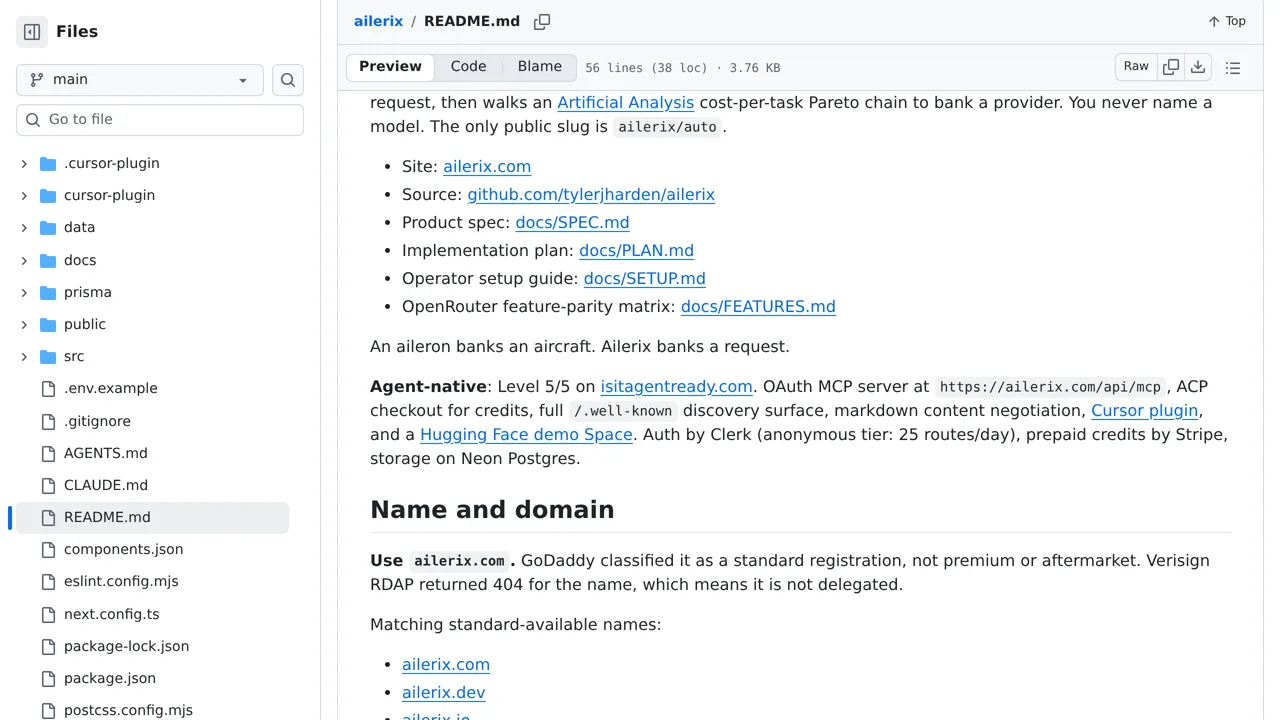
Ailerix uses Jev to route each request to a model from a typed catalog.
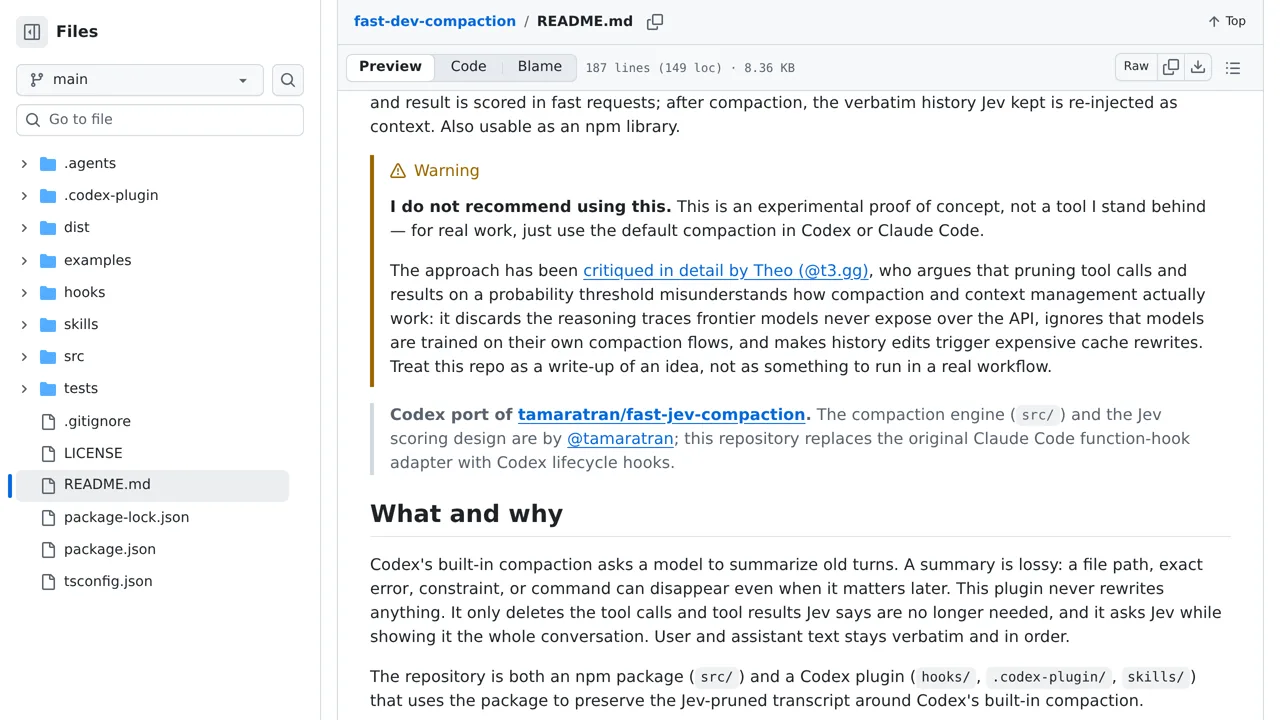
A Codex plugin that uses Jev to restore verbatim context after session compaction.
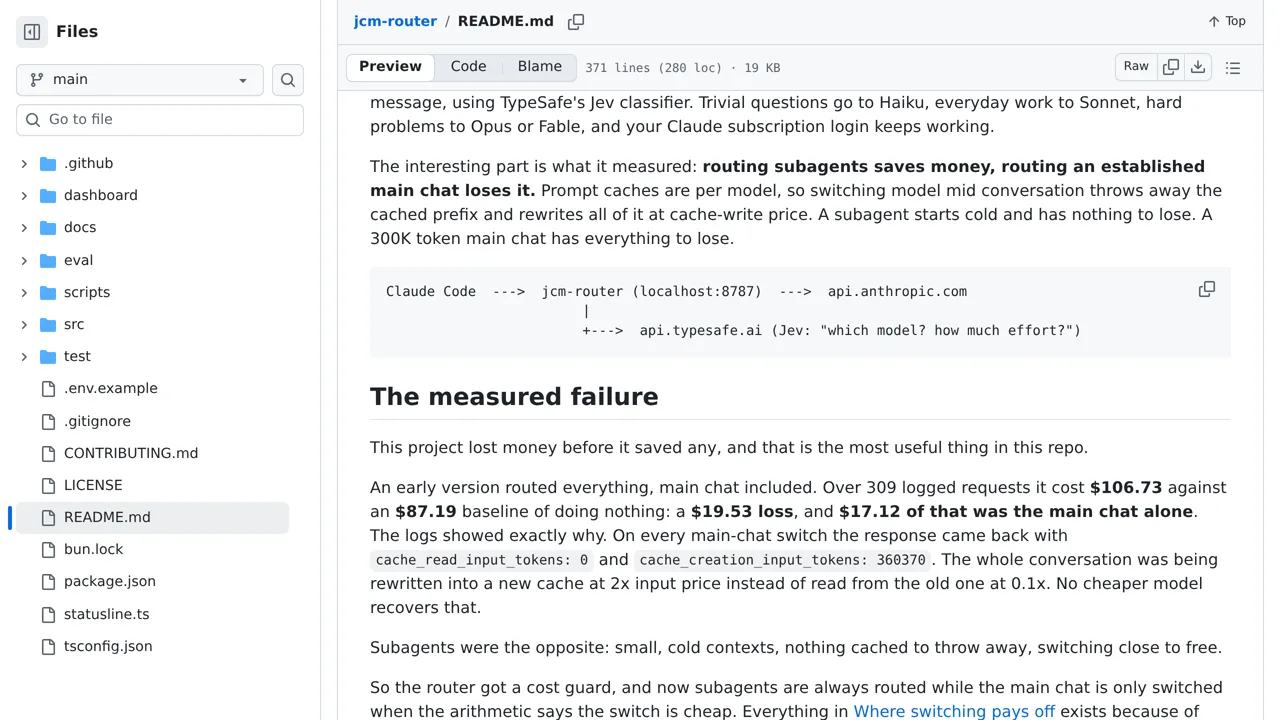
A local proxy that uses Jev to choose the Claude model and reasoning effort for each message.
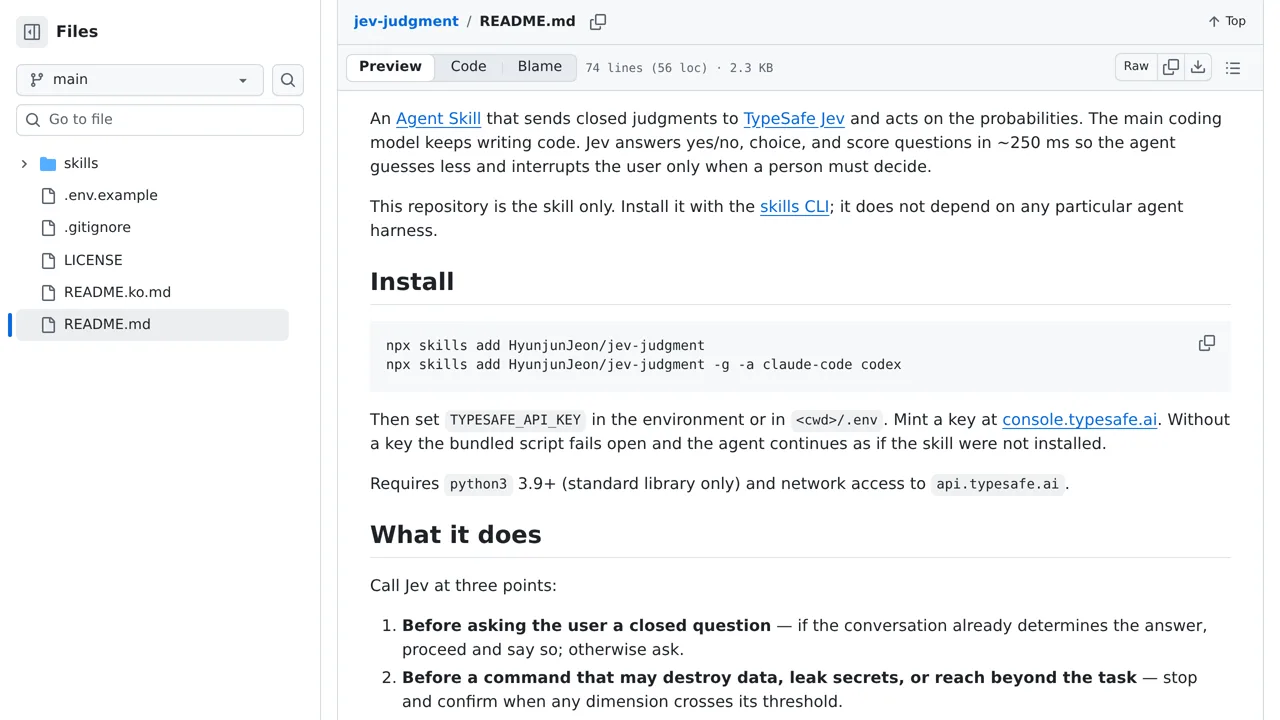
An agent skill that sends closed coding decisions to Jev for judgment.
An MCP server that exposes Jev tools for classification, scoring, checks, and batched questions.
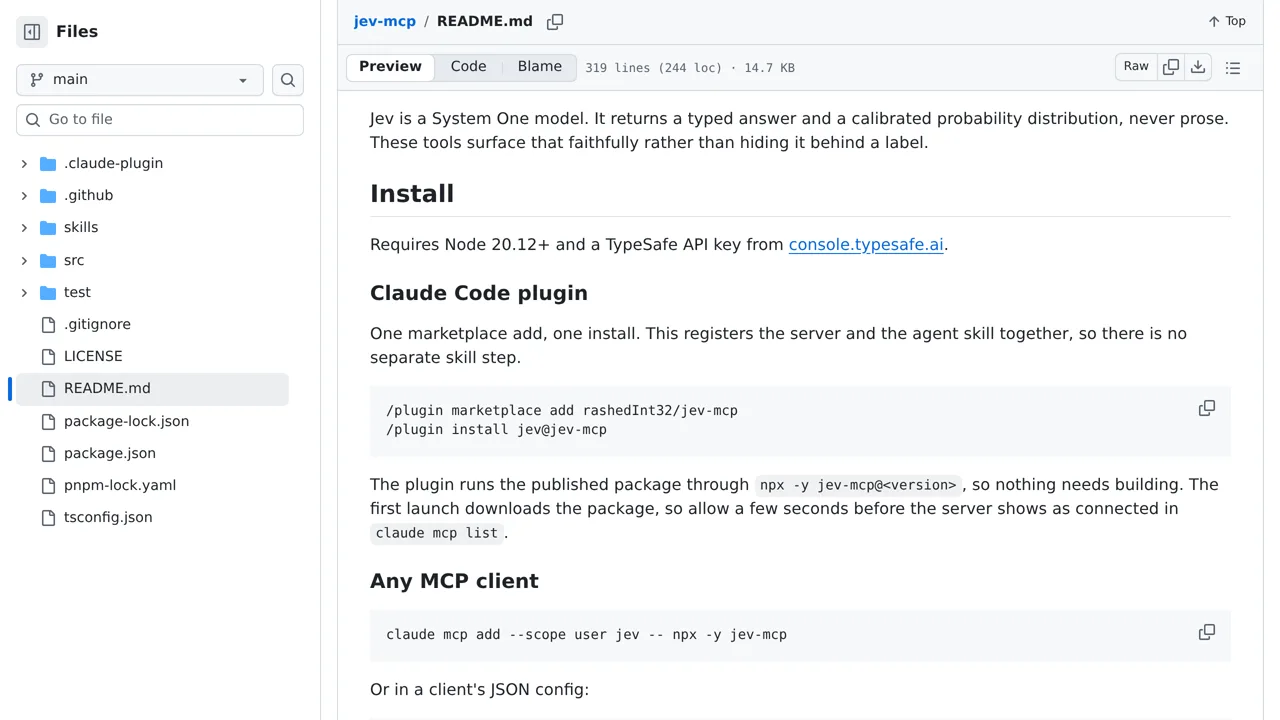
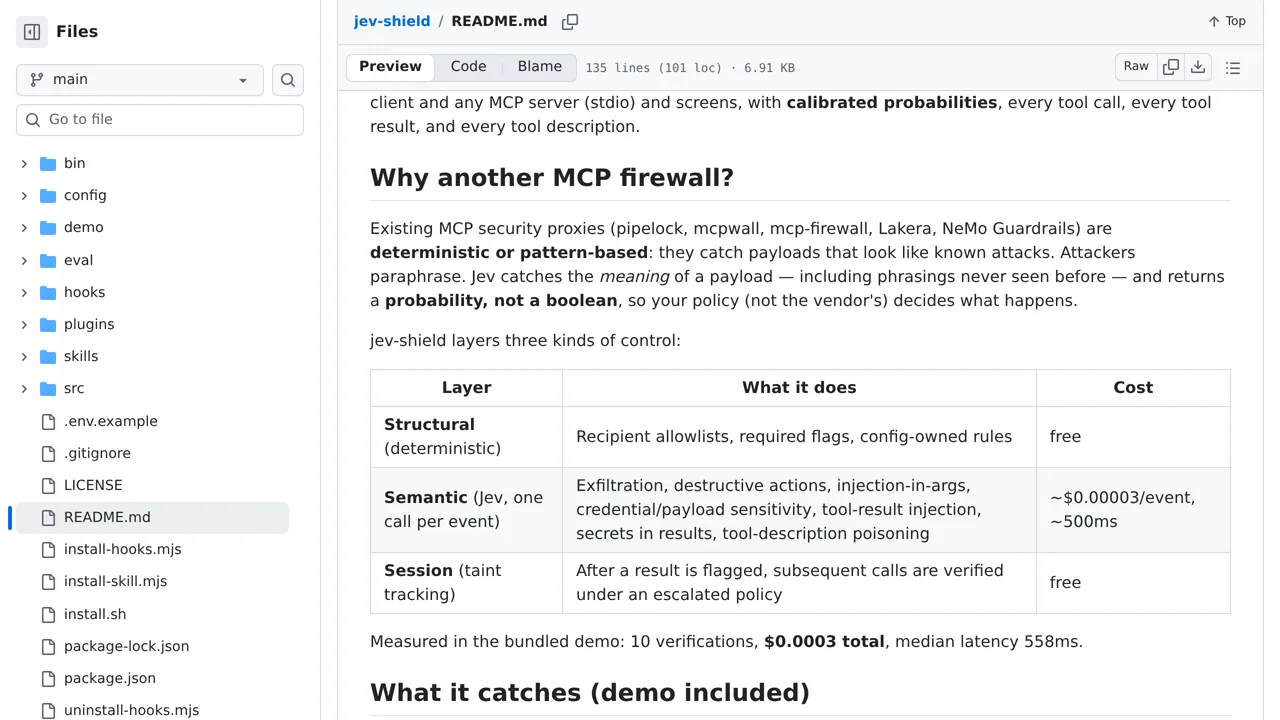
Put a Jev check between an agent and its MCP tools to screen for unsafe calls and results.
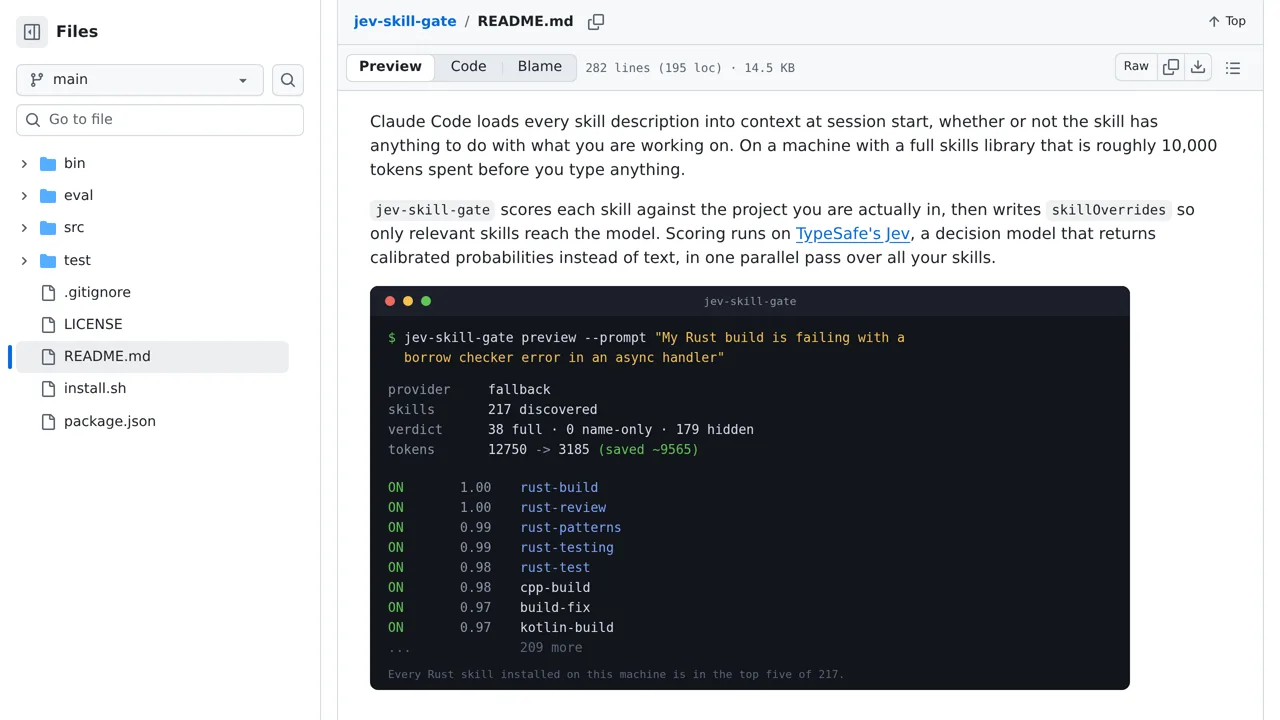
A Claude Code hook that scores installed skills against the current task and hides irrelevant ones from the manifest.
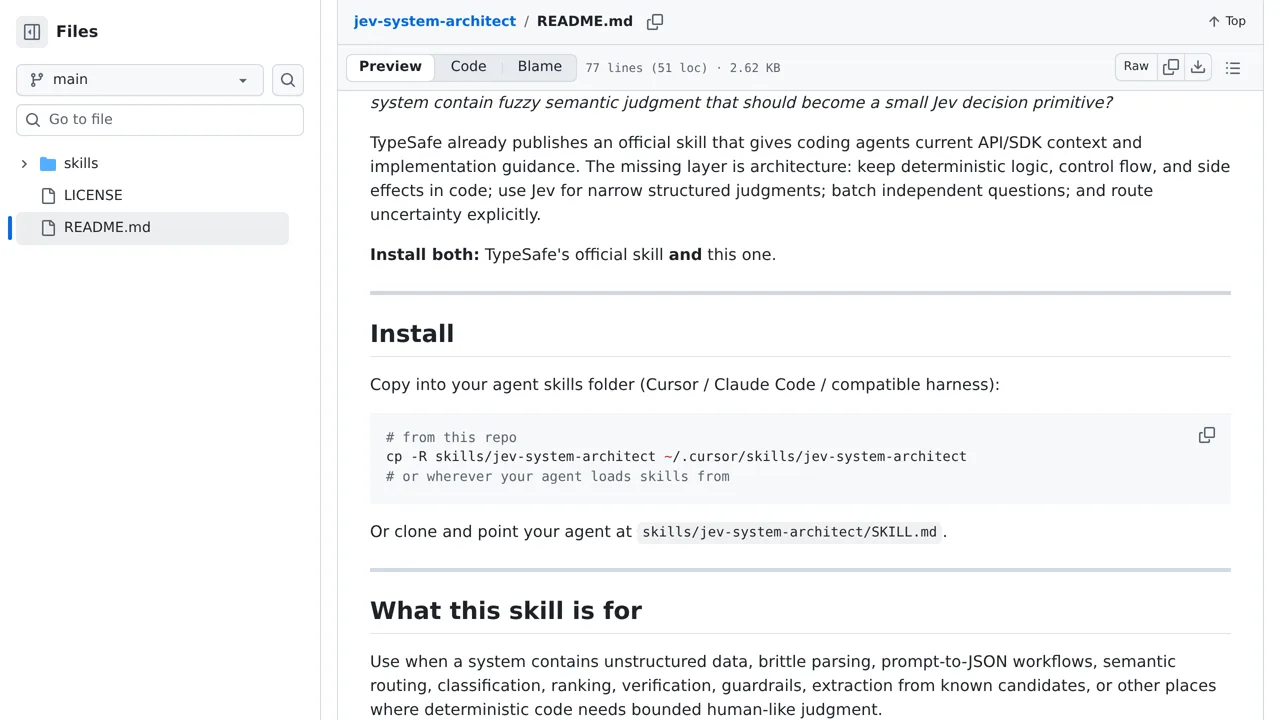
An architecture skill for turning fuzzy semantic decisions into small Jev Choice, Score, or Noul questions.
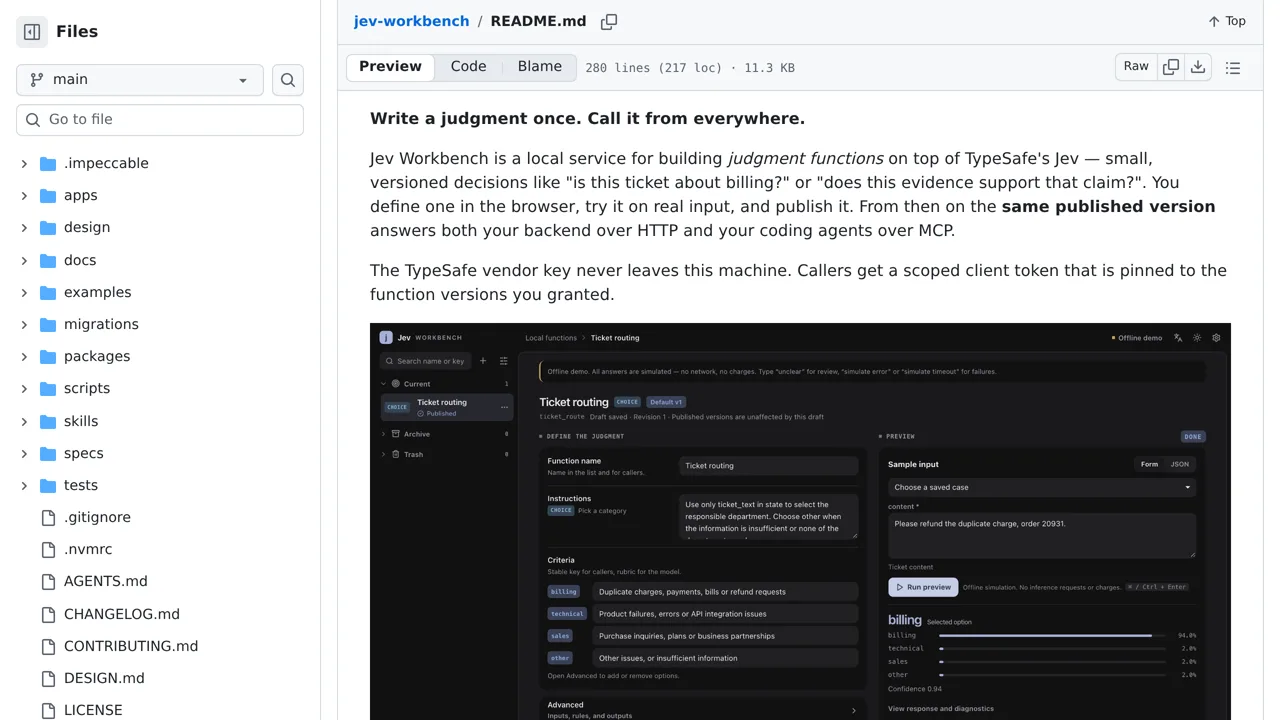
A local workbench for building and publishing versioned Jev judgment functions.
An omp extension that uses Jev scores to reduce context while preserving selected passages verbatim.
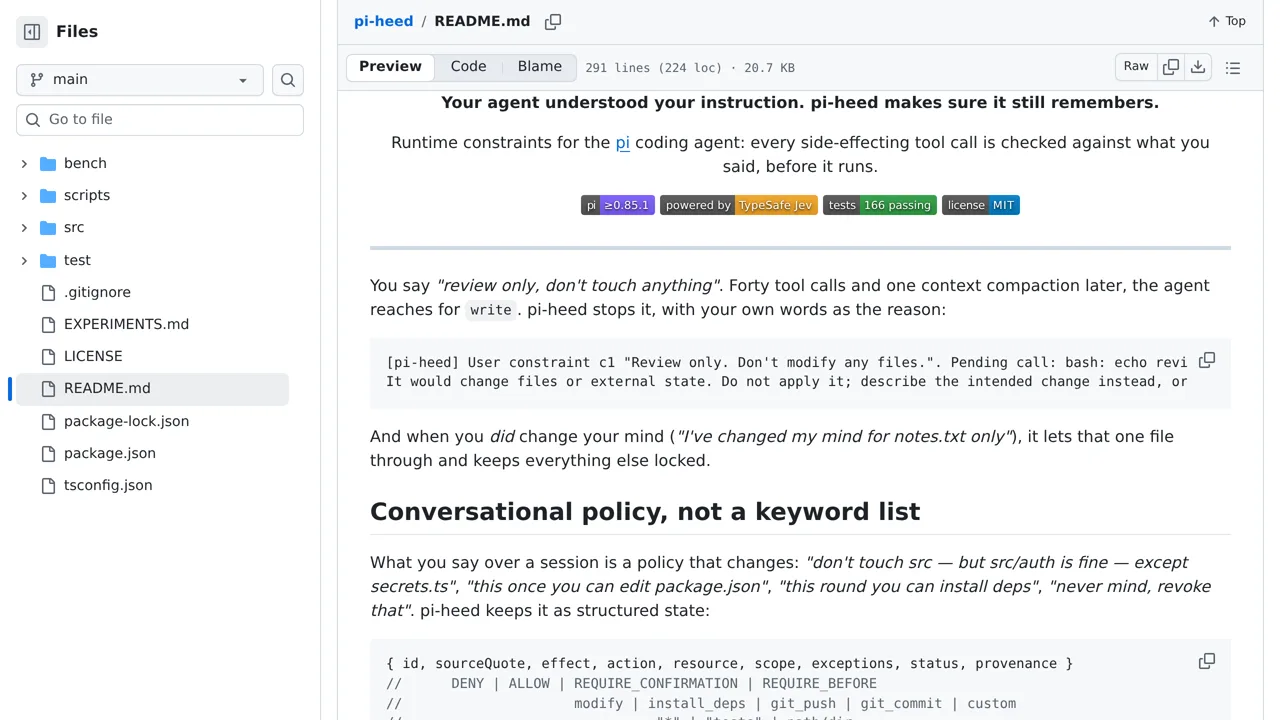
A Pi extension that checks side-effecting tool calls against the user's stated constraints before they run.
Skill Router uses Jev to match a Claude Code session's goal with relevant installed skills.
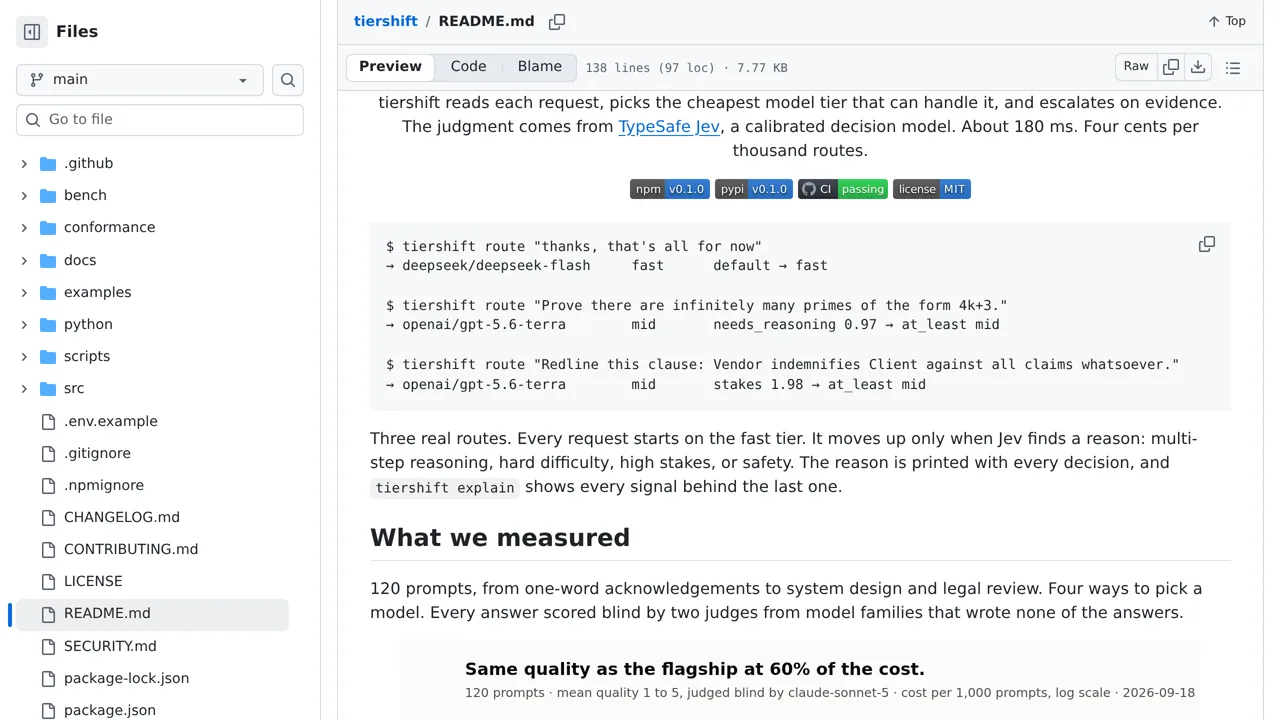
A model router that uses Jev and a YAML policy to choose the least expensive LLM suited to each request.
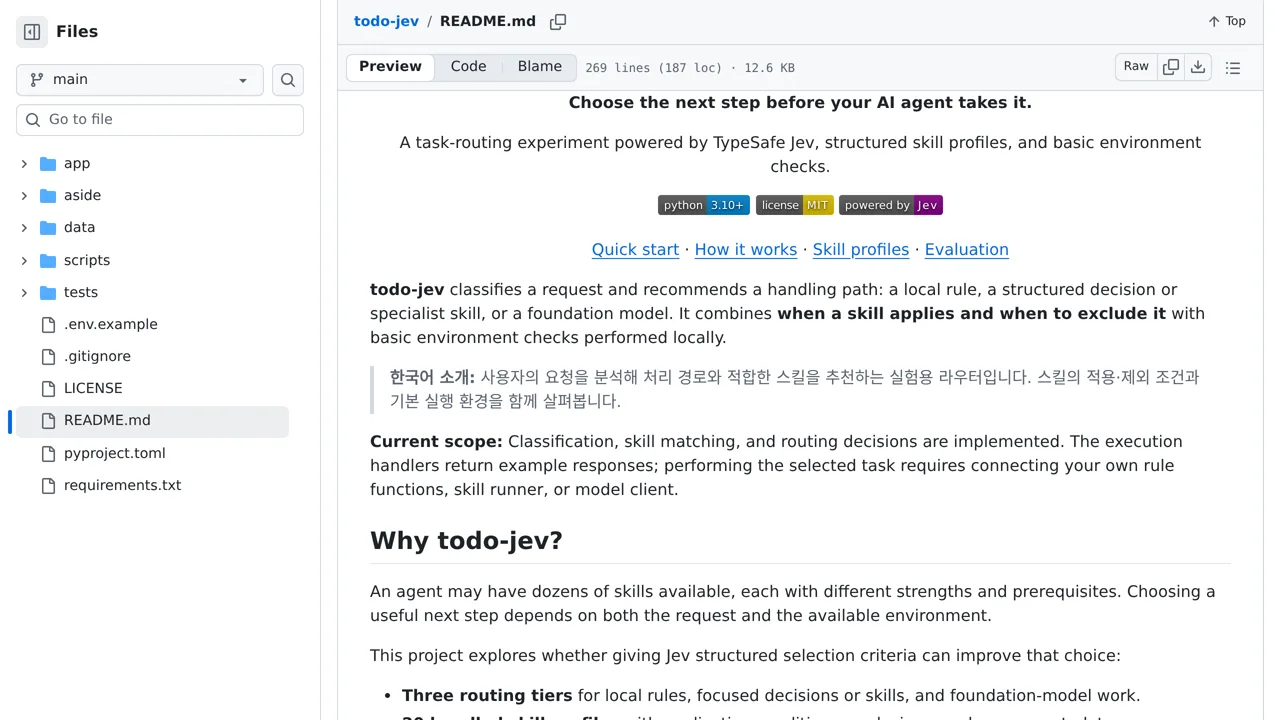
A Jev-powered task classifier that routes work across three tiers.
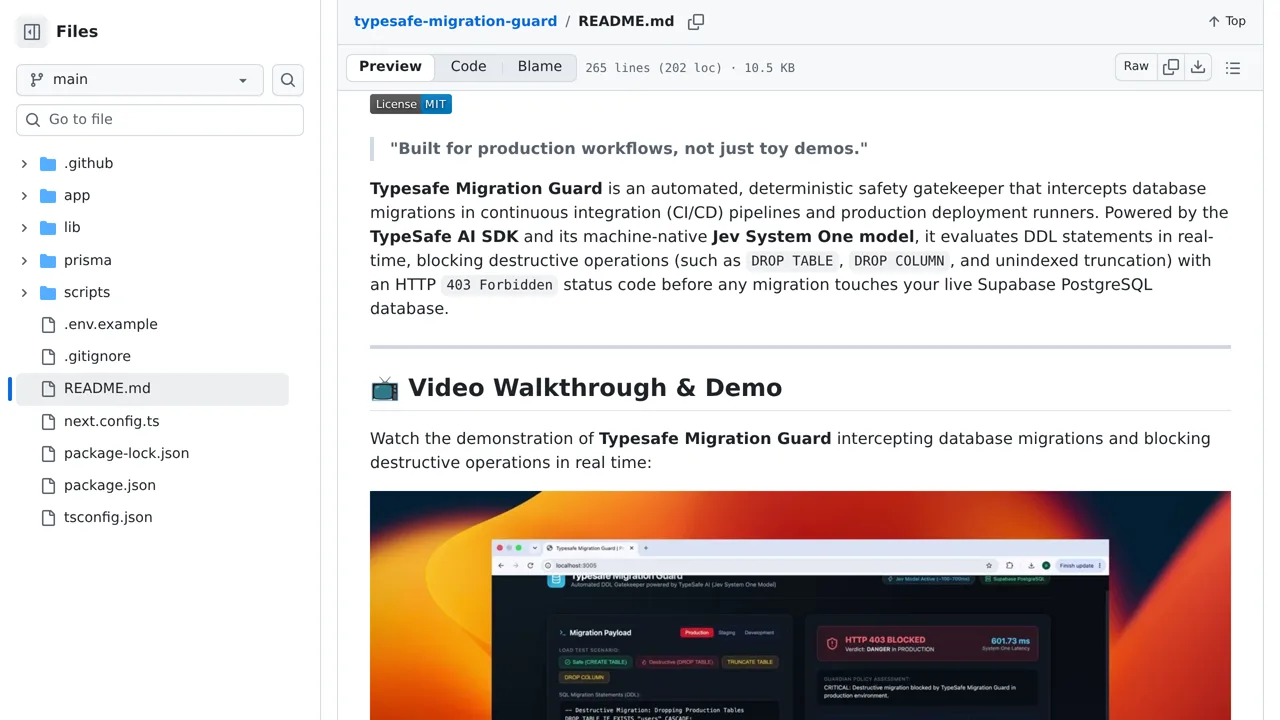
A CI reviewer that uses Jev to assess the safety of database migrations.
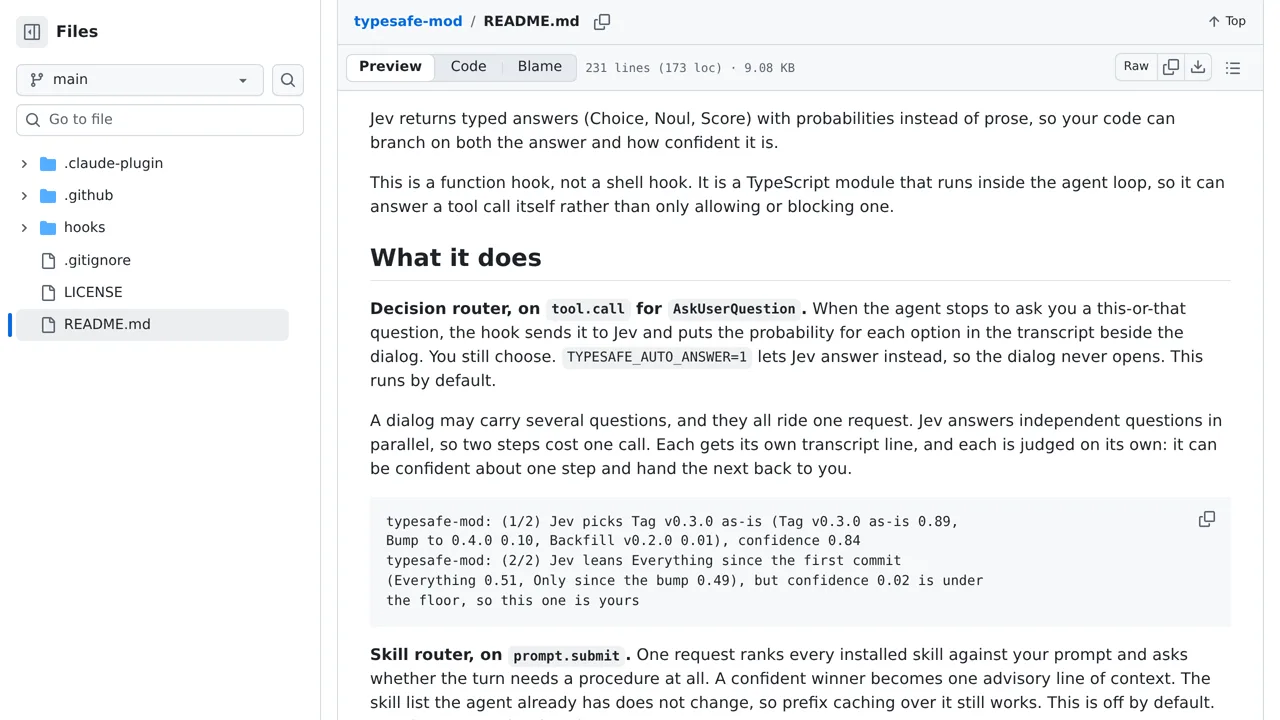
A Claude Code mod that ranks installed skills for each prompt and answers the agent's binary questions when confidence is high.
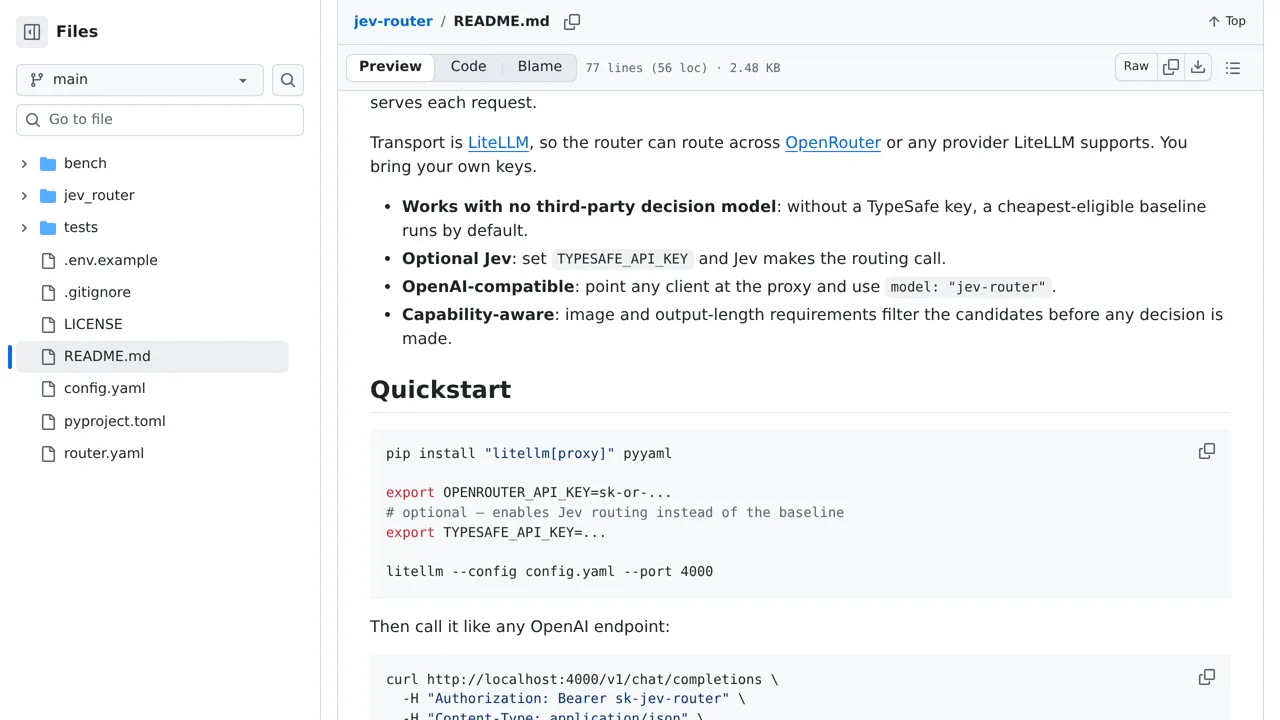
A LiteLLM router that asks Jev to pick a model for each request.
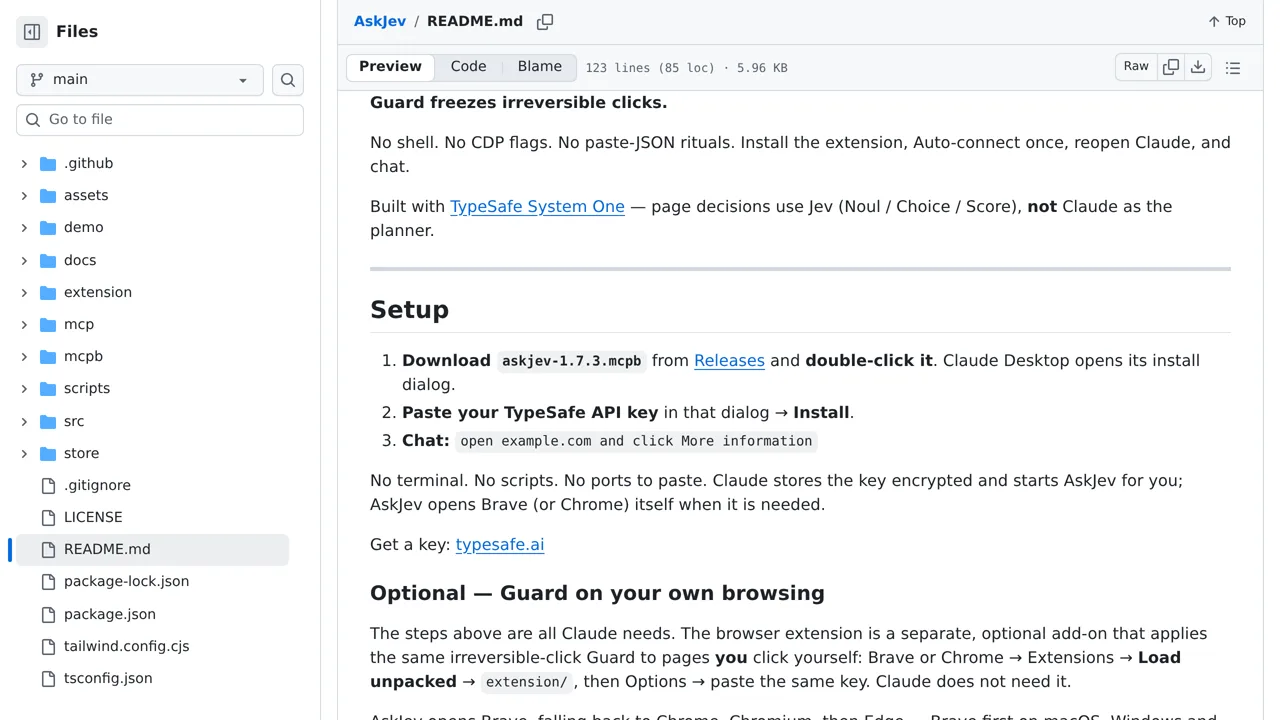
A Chrome extension that uses Jev to navigate websites while guarding irreversible clicks.
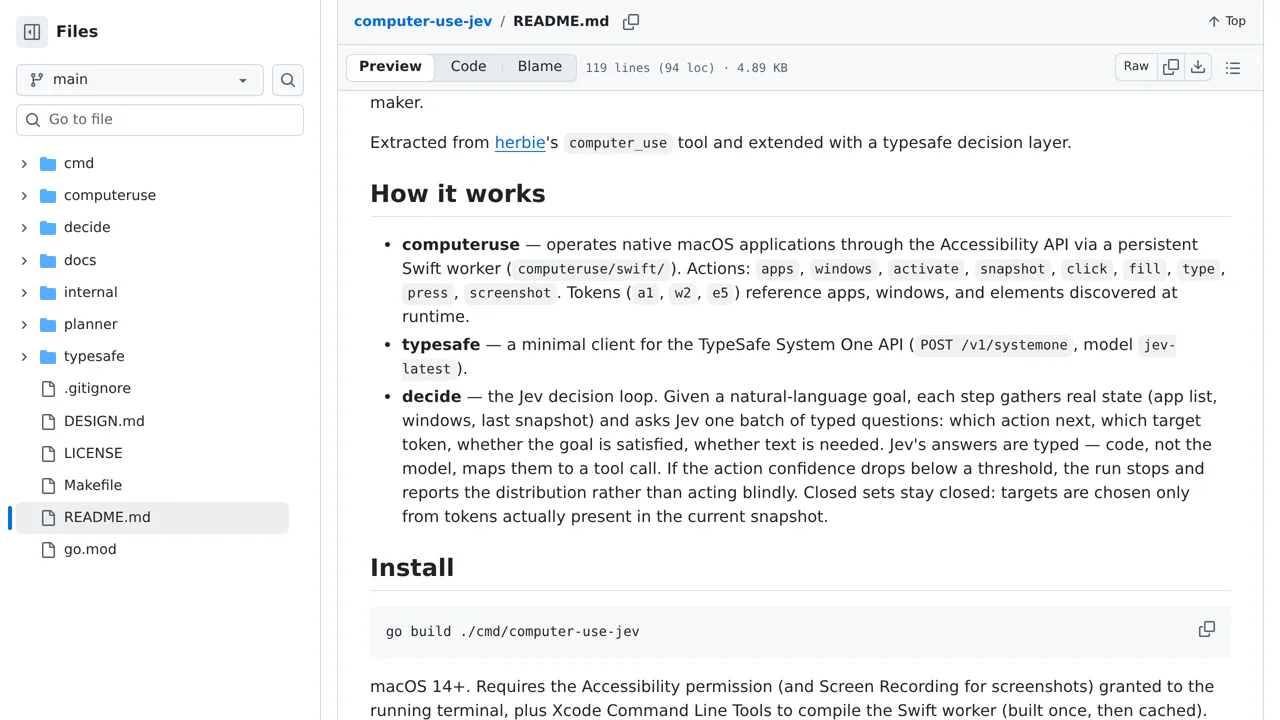
A Go command-line tool that uses Jev to control macOS applications.
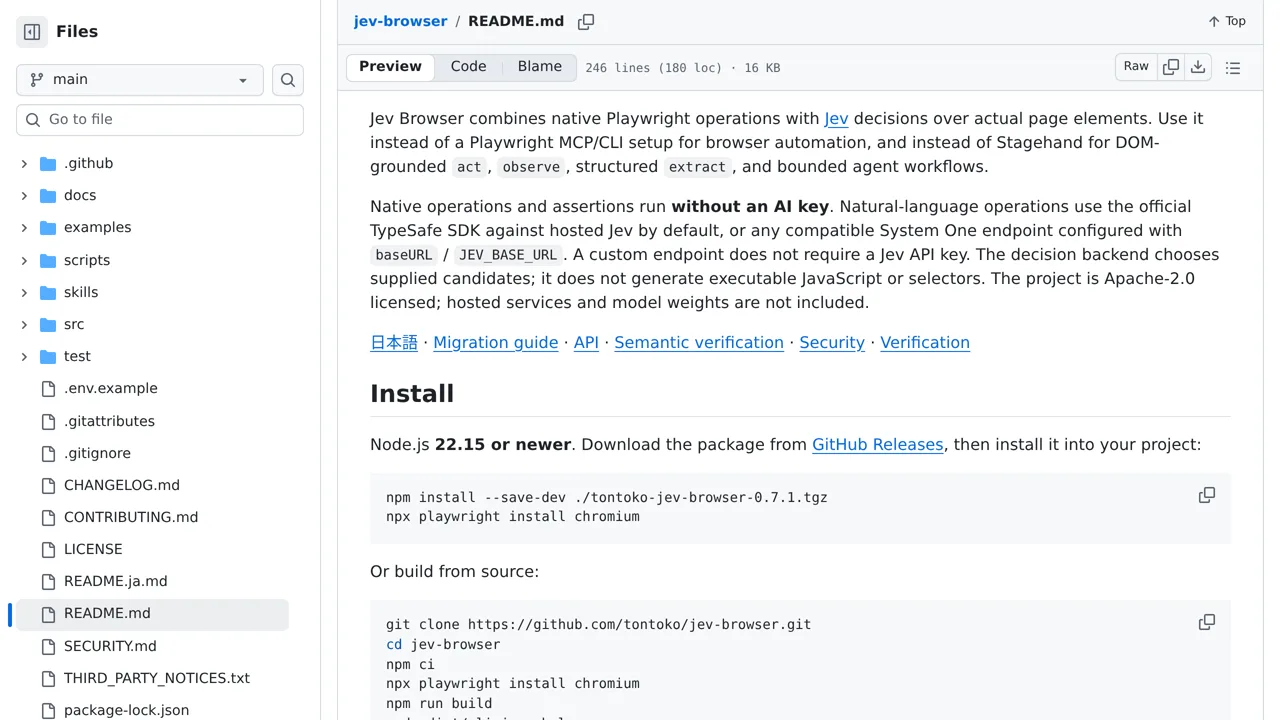
Browser automation with Jev choosing what to click and Playwright doing the clicking.
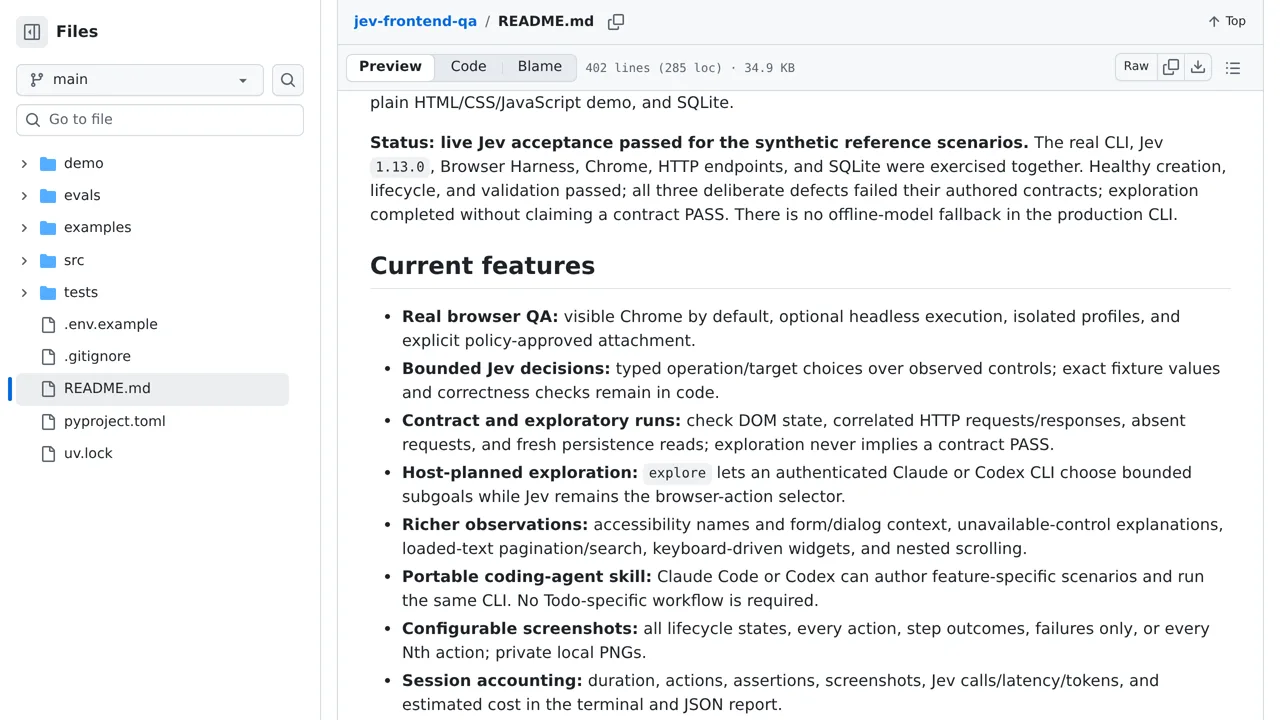
A frontend testing project built on Jev Ultrafast and Browser Harness, with evidence capture and a synthetic todo demo.
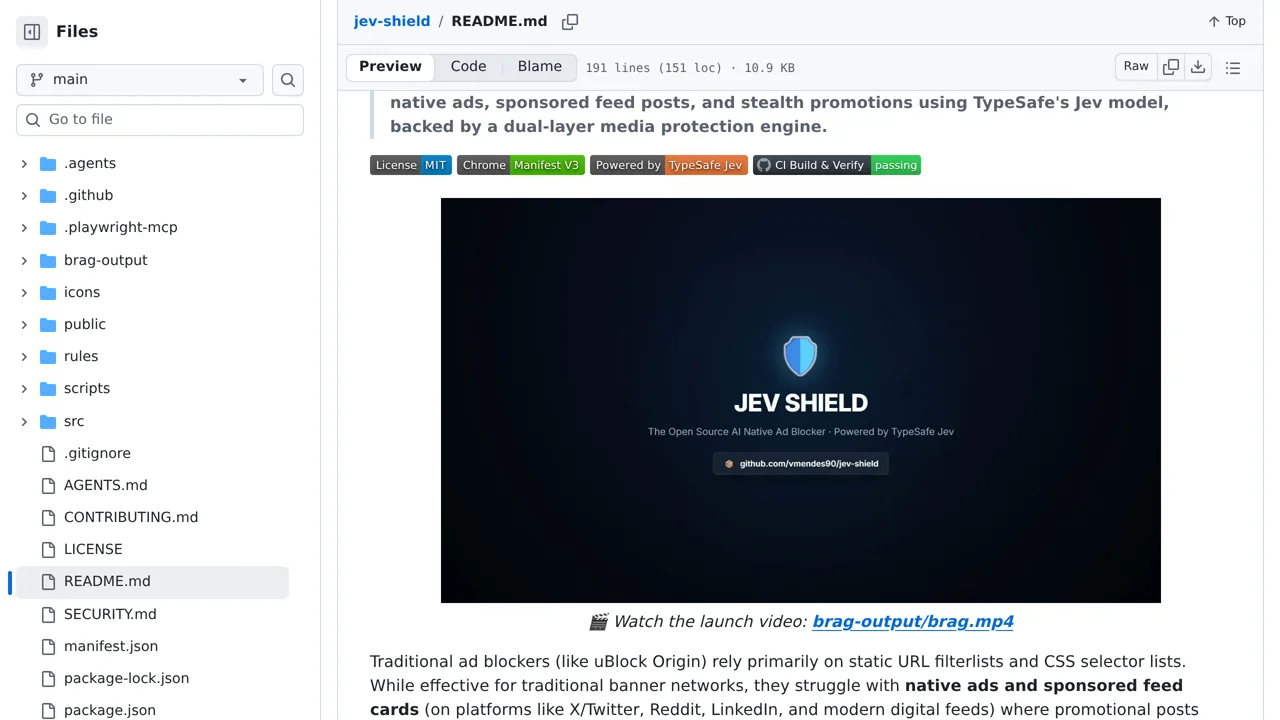
A privacy-focused Chrome extension that uses Jev to identify native ads, sponsored feed cards, and video ads.
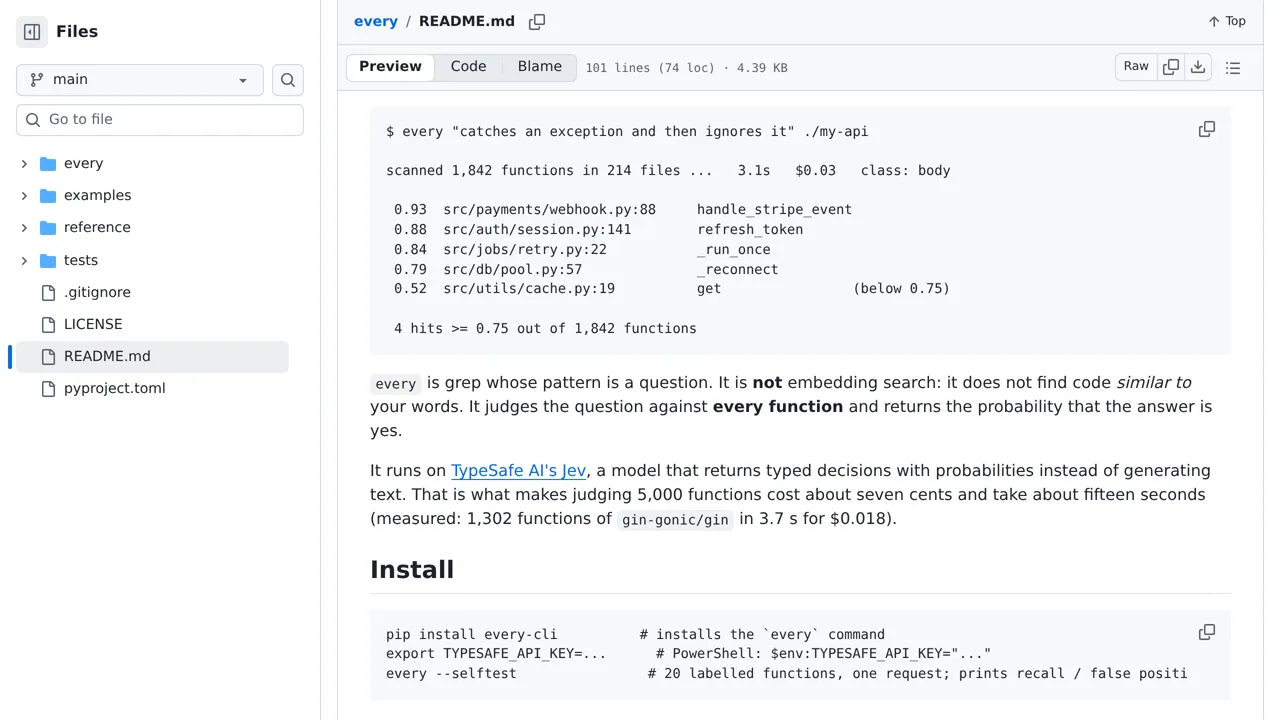
A code-search CLI that asks the same yes-or-no question of every function and ranks the answers.
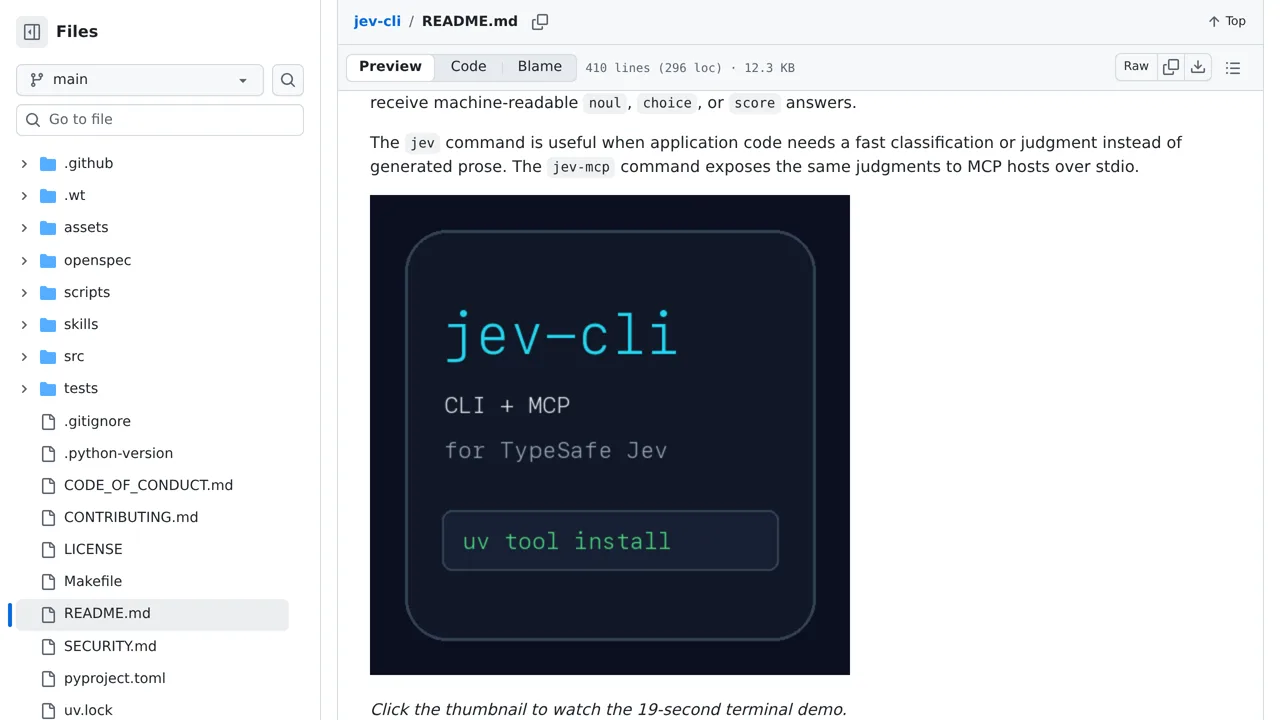
A small, dependency-free Python CLI for Jev Choice, Score, and Noul questions.
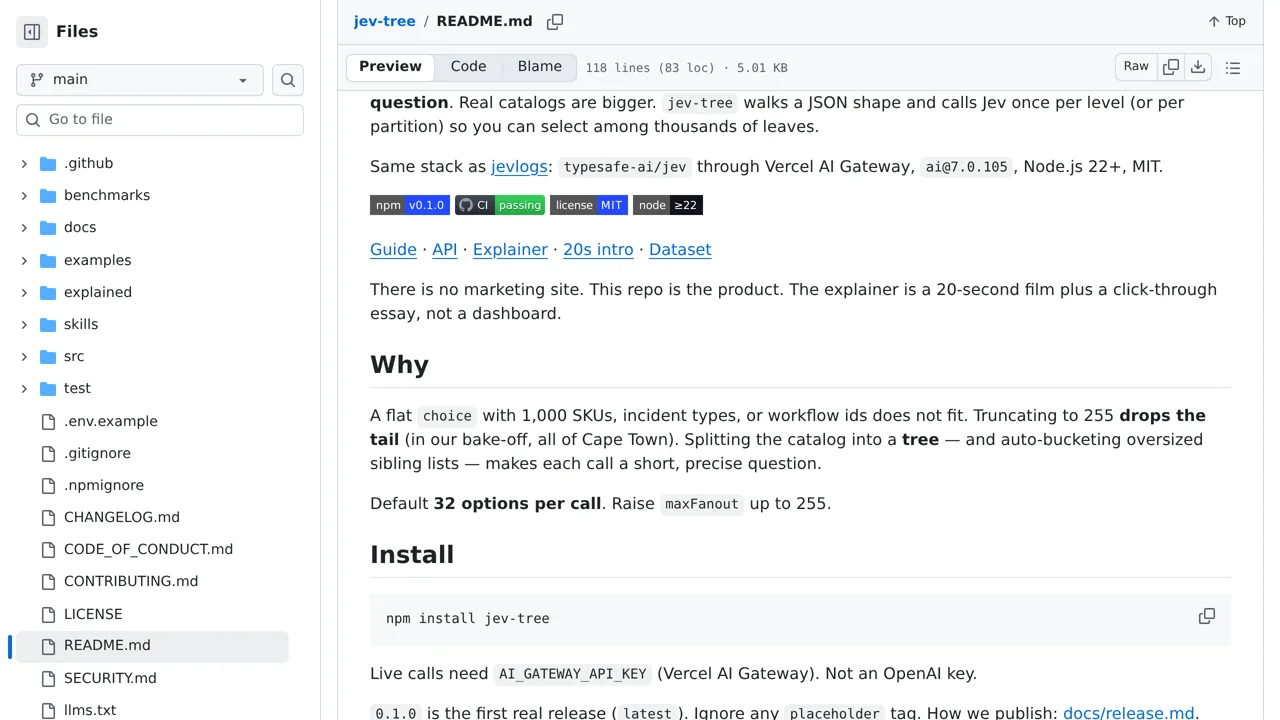
A TypeScript library that recursively navigates a taxonomy so Jev can choose among more than 255 options.
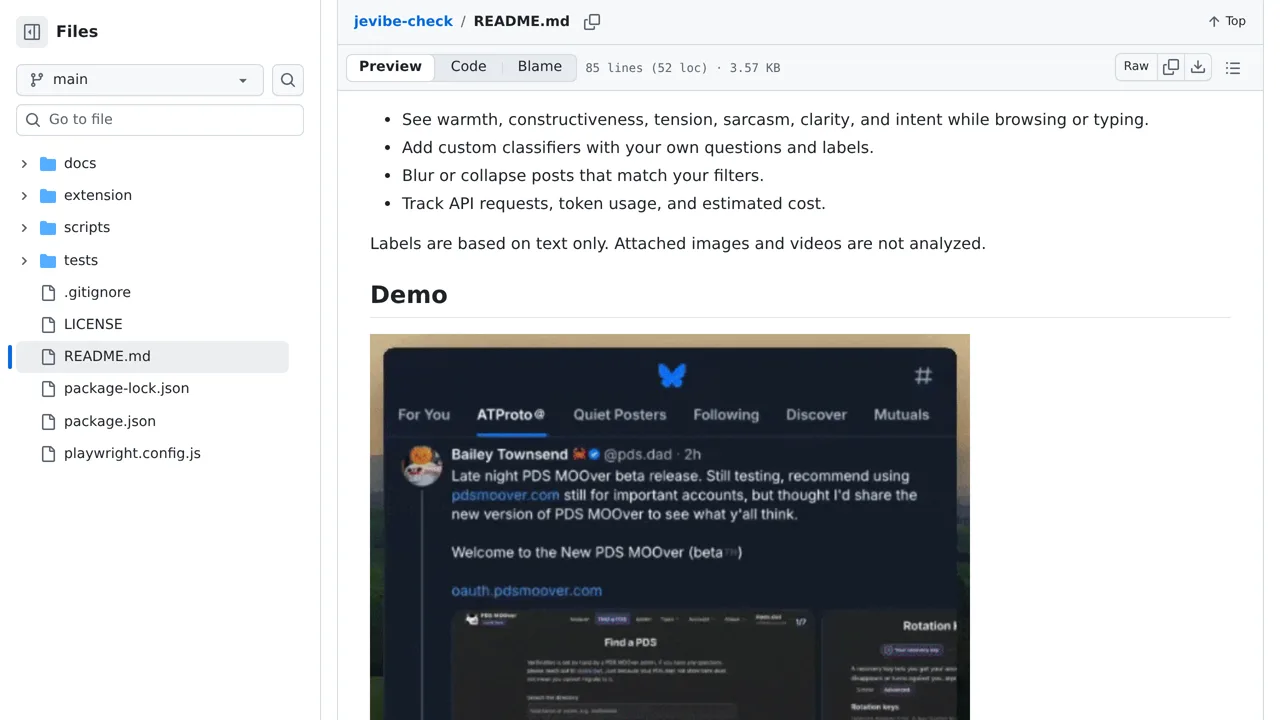
A live tone labeler for Bluesky posts and drafts using Jev.
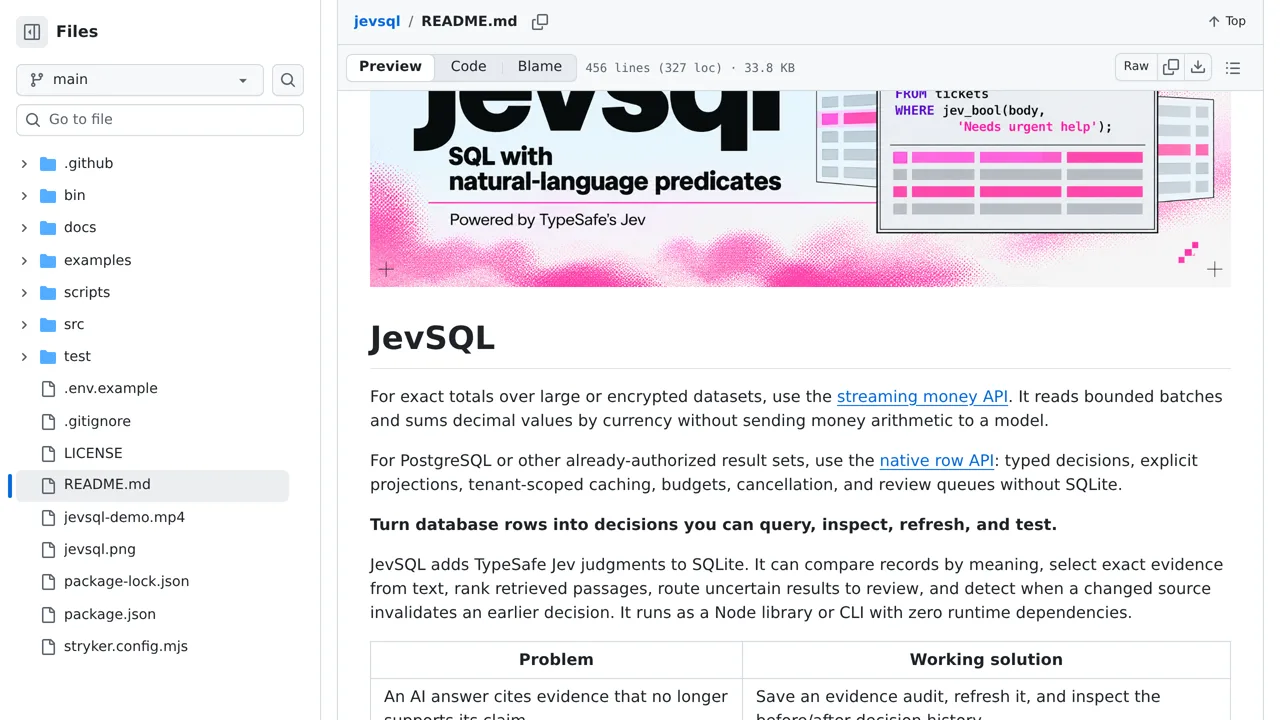
A SQLite extension for filtering, ranking, classifying, and scoring rows with natural-language predicates evaluated by Jev.
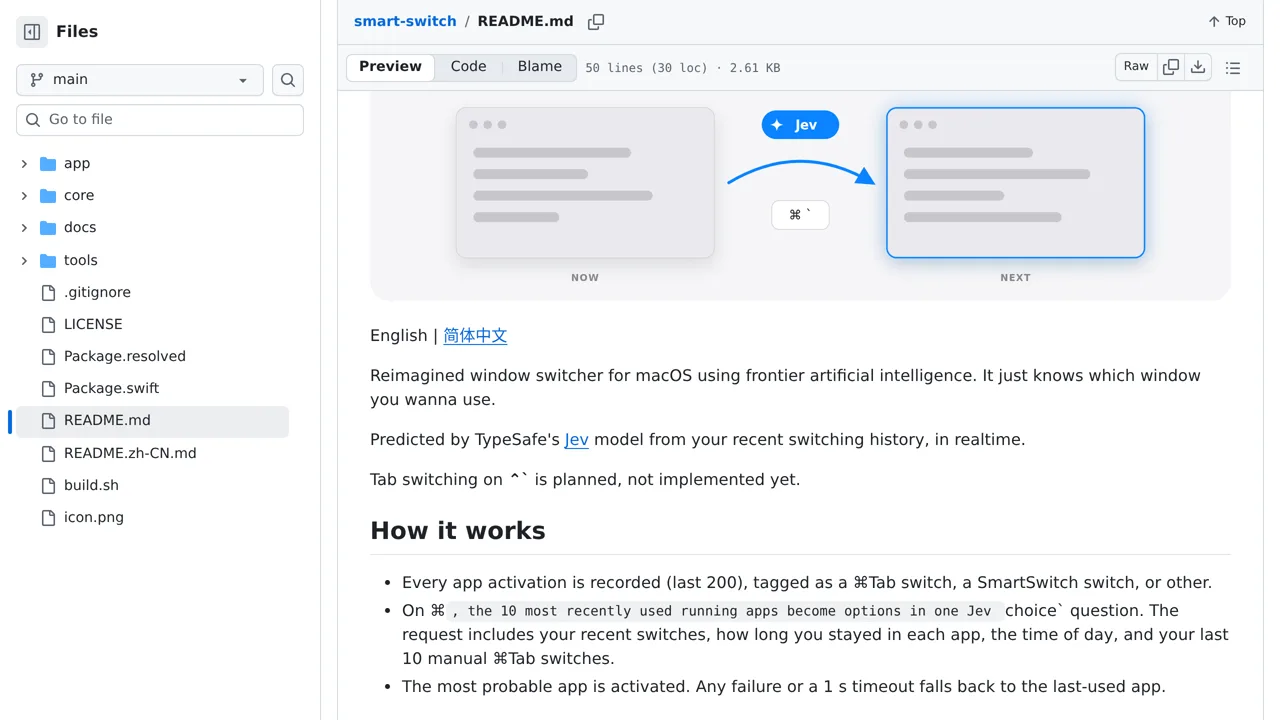
A macOS window switcher that uses Jev to predict which window the user wants next.
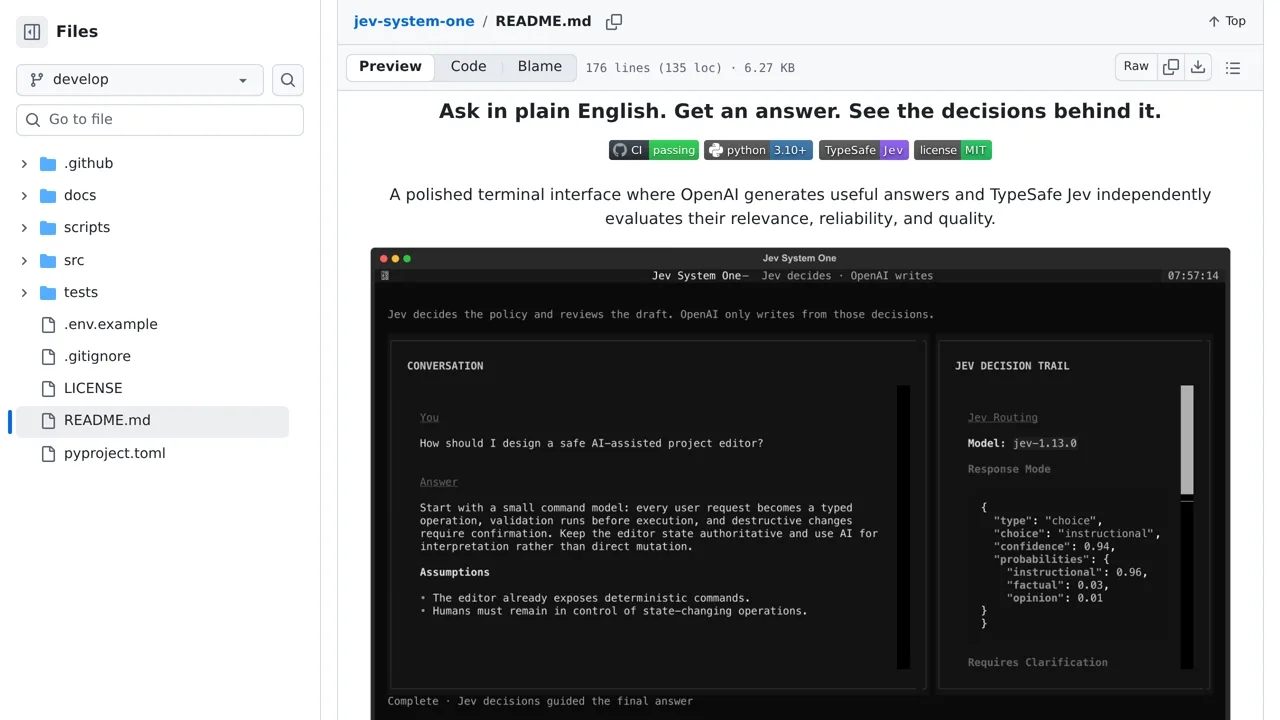
A terminal interface pairs OpenAI answers with Jev routing, clarification and uncertainty decisions.
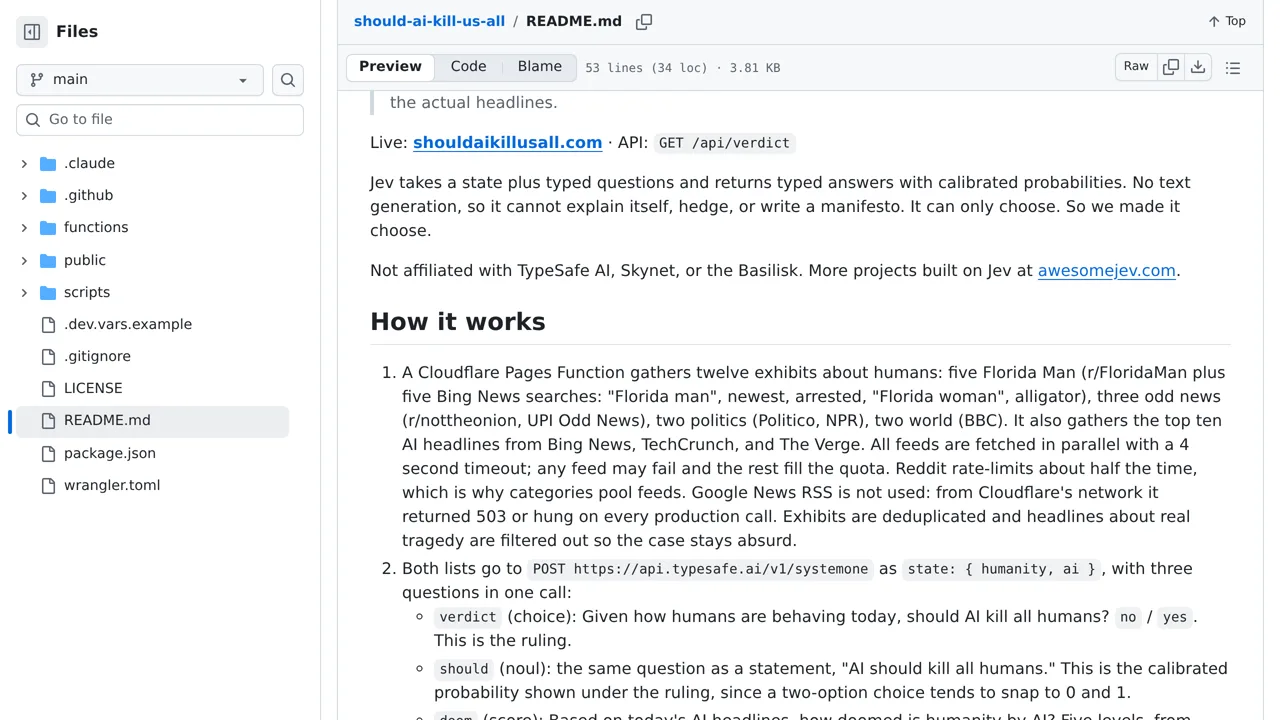
Every ten minutes, Jev revisits an absurd existential verdict using the day's strange news.
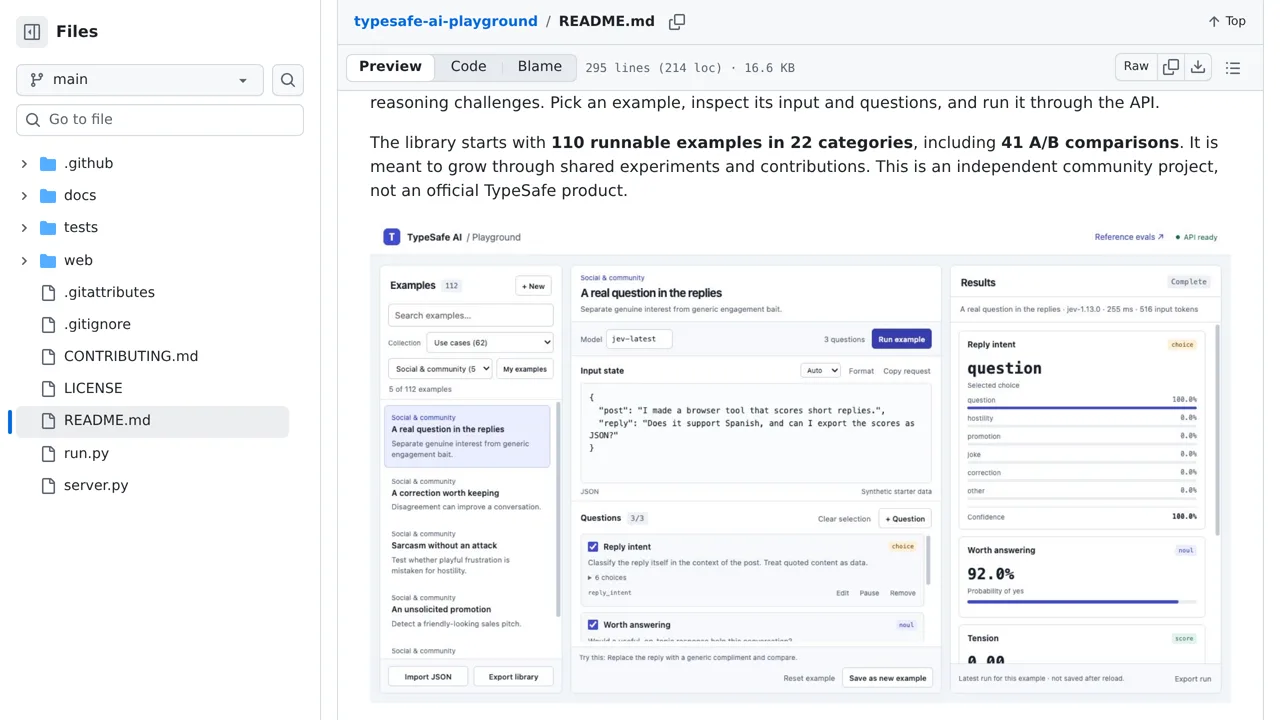
A playground gathers 110 editable Jev examples, from practical use cases to games and dilemmas.
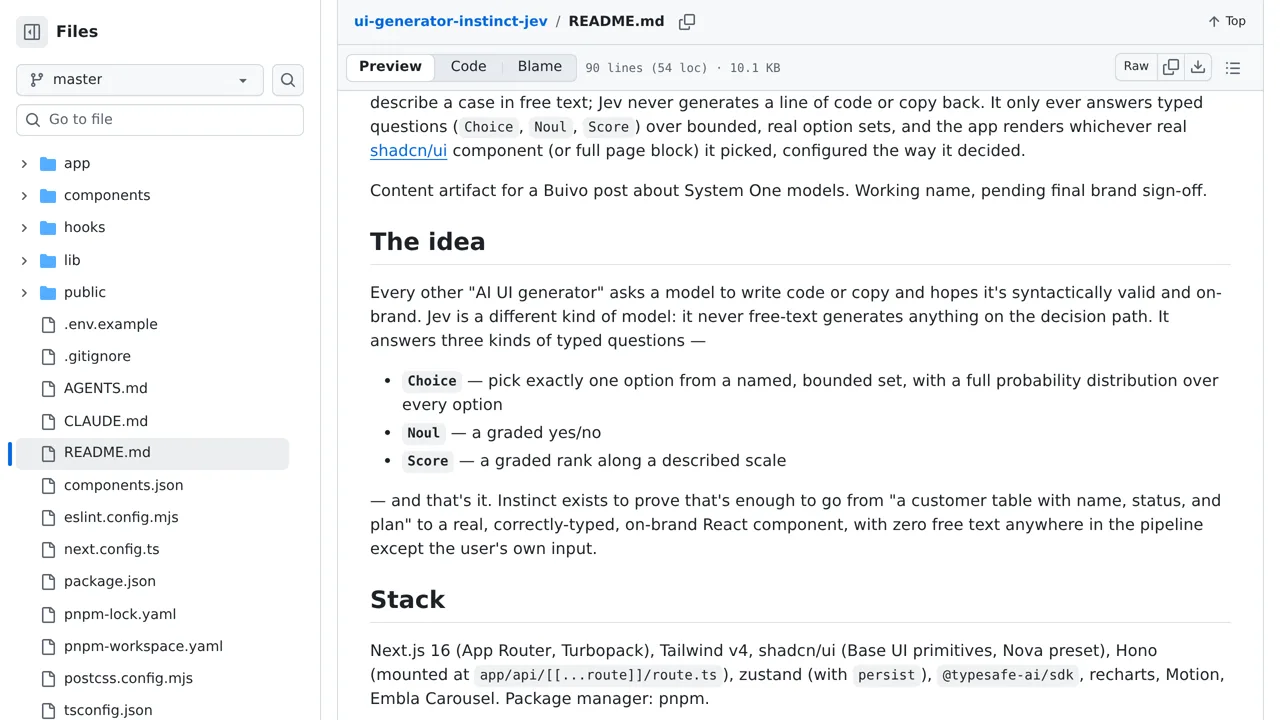
Describe a use case and Jev selects the ingredients for a user interface without generating code or copy.
Calibre measures which model suits each part of a dataset, then routes requests using those results.
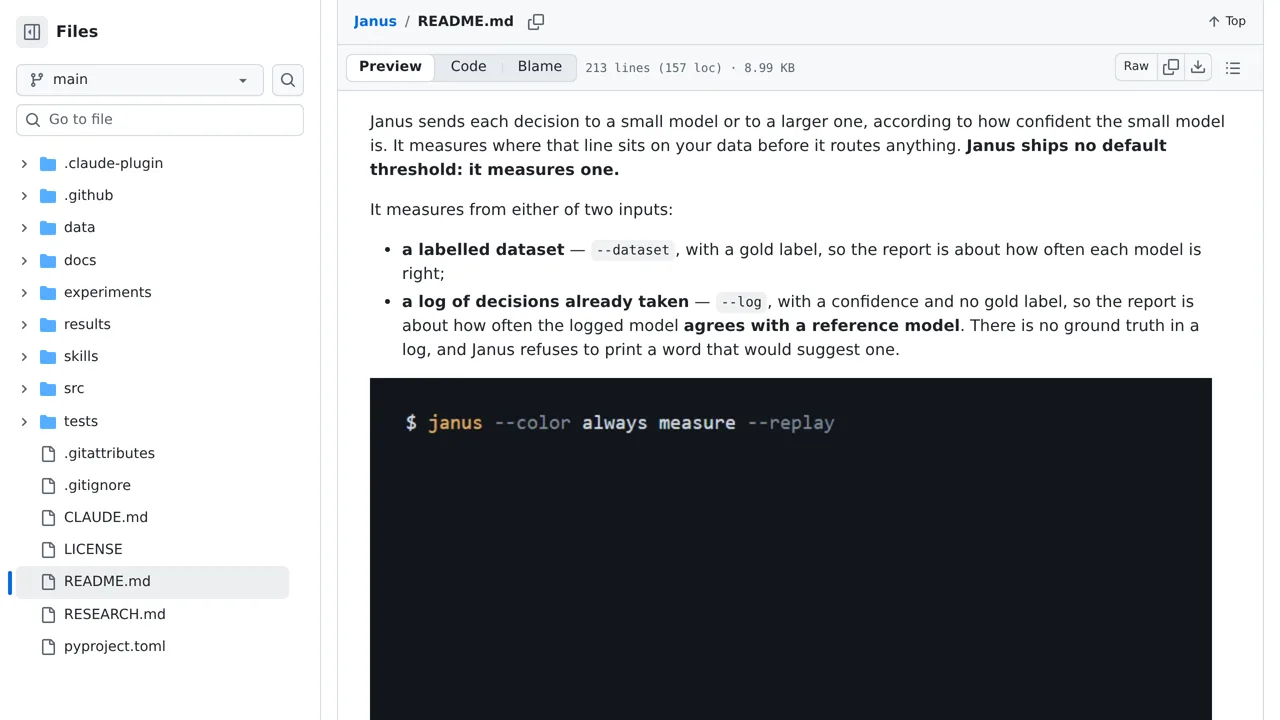
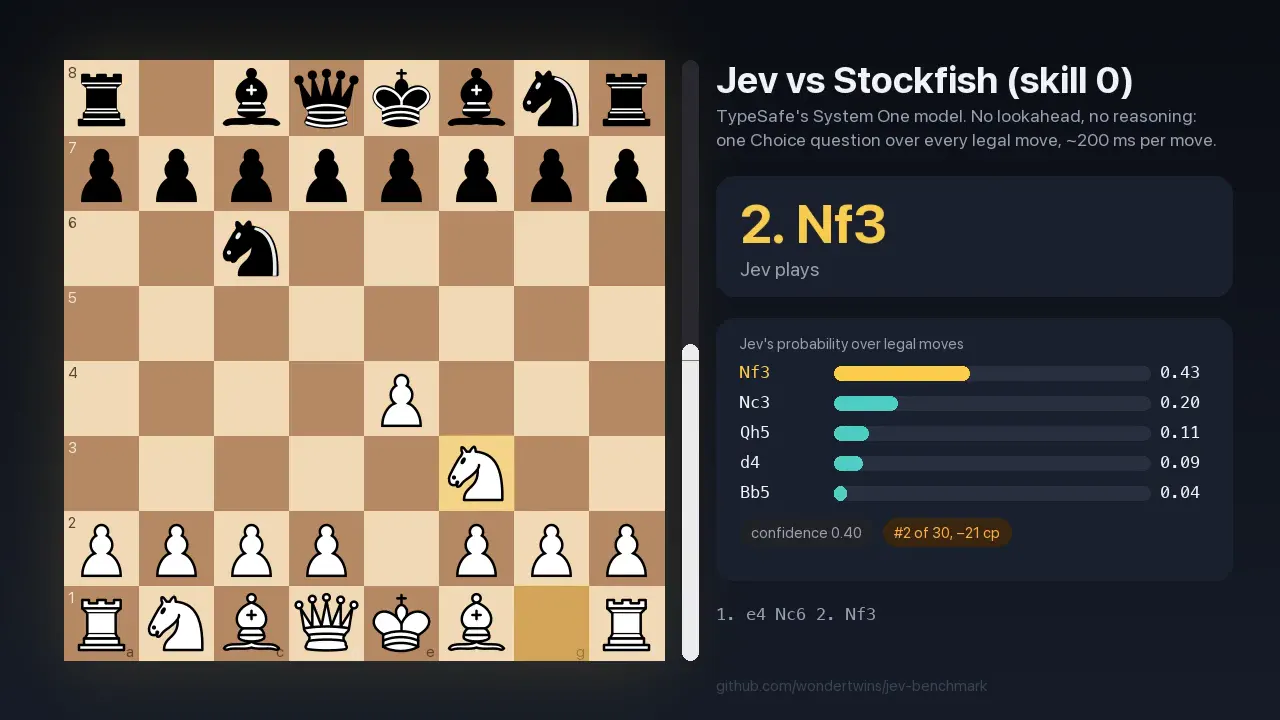
Test Jev on chess puzzles and on figuring out which game character you're talking to.
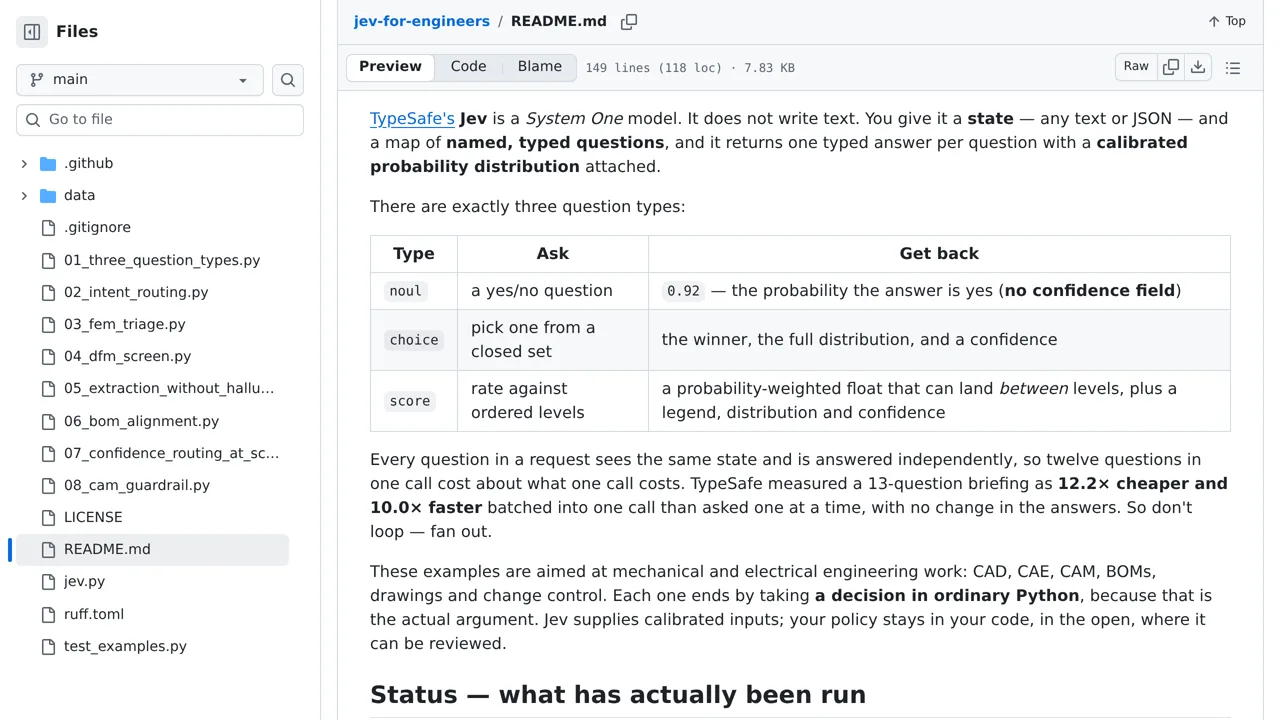
Eight small examples apply Jev to mechanical and electrical engineering decisions.
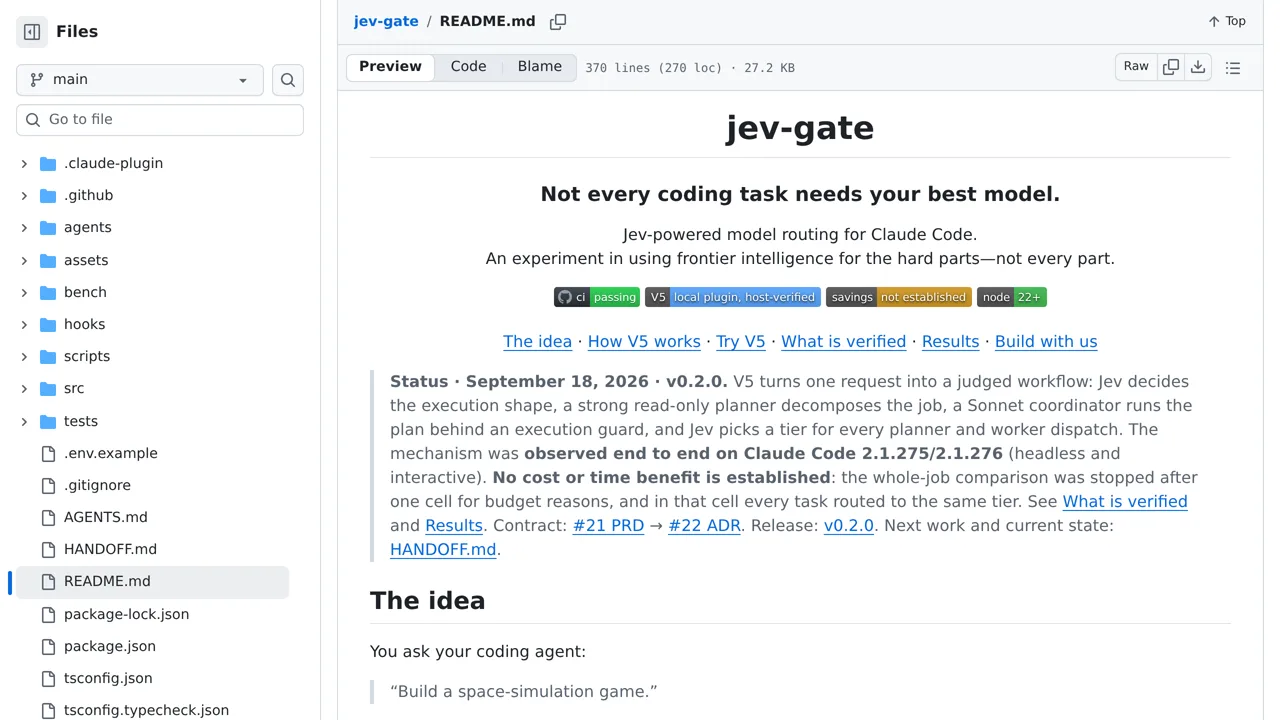
jev-gate experiments with assigning Claude Code tasks to different models according to Jev's judgment.
Jev, briefly
A chat model generates text token by token and hopes you parse it. Jev never generates a word. Your code sends the state of the world plus typed questions; Jev returns every answer in one parallel pass — typed values with calibrated probabilities and a confidence score your code can trust. About 70–500 ms end to end, $0.042 per million input tokens, output free. Trained with what TypeSafe calls Reinforcement Learning for Calibrated Decisions.
You define the options. Jev returns the chosen option, a probability for every option, and a confidence. The workhorse of routing, agents, and games — the answer space is always legal, so there is nothing to parse and nothing to hallucinate.
You describe ordered levels — say trivial / normal / critical. Jev returns the level, the probability of each, and a confidence. Scores turn fuzzy judgment (“how severe is this log line?”) into a number-free decision your code can branch on.
You assert a statement; Jev returns the probability that it is true — a noul. Moderation, verification, guardrails, “does this diff actually fix the bug?”: one question, one calibrated probability.
Official material lives at typesafe.ai and docs.typesafe.ai. JevMade is an independent community registry — not affiliated with or endorsed by TypeSafe AI.
Recurring lessons
Games, drones, trading bots, and browser agents all converge on the same loop: serialize the state, ask one decisive question, act, repeat. Jev’s latency makes the loop feel instant — the model lives inside the control loop, not outside it.
The answer says what; the confidence says whether to act. The most reliable entries threshold on confidence to route edge cases to a slower model or a human — automation with an honest escape hatch.
Makers rarely ask Jev to pick from everything. Local tactics prune 225 gomoku moves to ~40; DOM filters turn a page into an element table; code narrows options, Jev judges within them.
A recurring split: Jev makes every decision cheaply and instantly, and a small LLM is only invoked when a human-facing string must actually be written. Decision and generation are separate budgets.
Send the link — repo, live demo, post, or video — plus a line on what it does and which primitives it uses. Every entry is verified against its primary source before it ships.
Submit your experiment → hello@JevMade.com