Read & learn
Written guides.
Understand Jev, one idea at a time. Walkthroughs, recipes, and writeups — our notes first, the original next.
A public registry · independent & community-run
Learn, build, and play with Jev — from deep technical guides to creative experiments.
Read & learn
Understand Jev, one idea at a time. Walkthroughs, recipes, and writeups — our notes first, the original next.
Watch & learn
See an idea take shape. Tutorials, demos, and deep dives, organized by topic and credited to their creators.
Make & explore
See what builders made with Jev. Games, tools, repositories, articles, and more — traced to their sources.
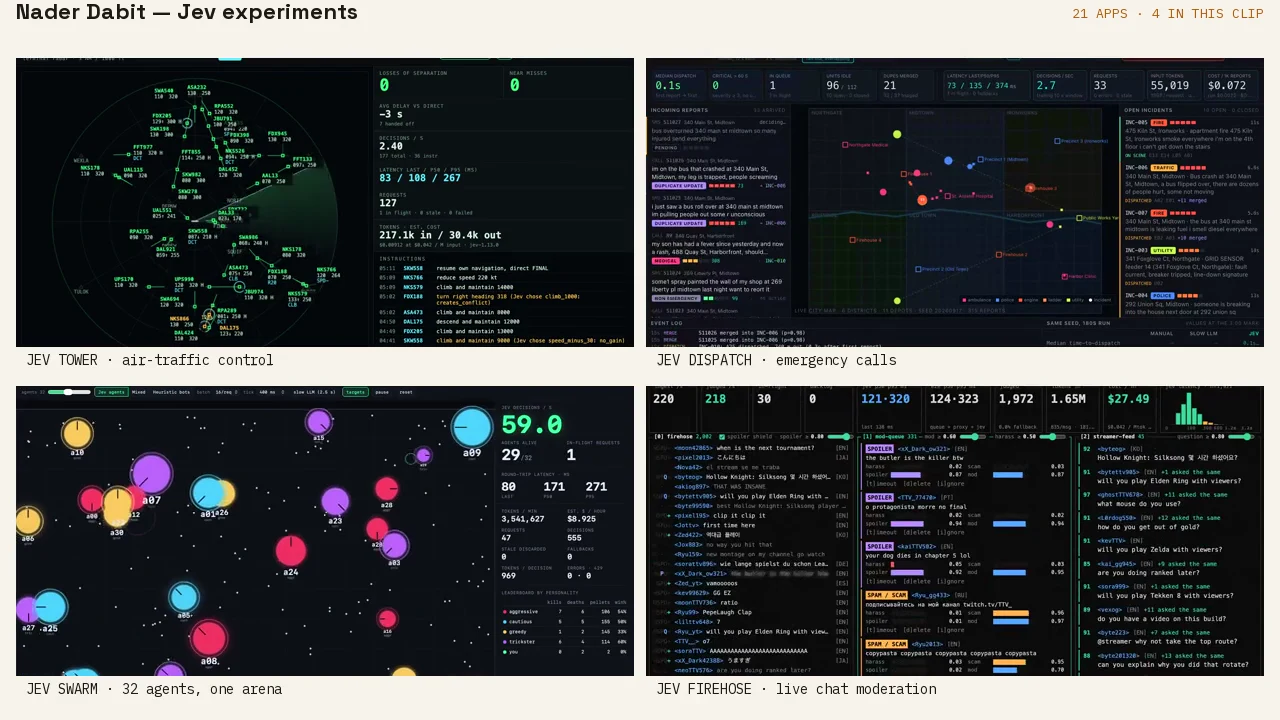
Every category, from games and tools to repositories and writeups, traced to a primary source.
Same ideas.
Different paths.
This is the full registry, not just the featured picks. Figures like speed, cost, and stars are maker-reported or captured snapshots, not JevMade measurements.
1611 experiments · showing 601–660
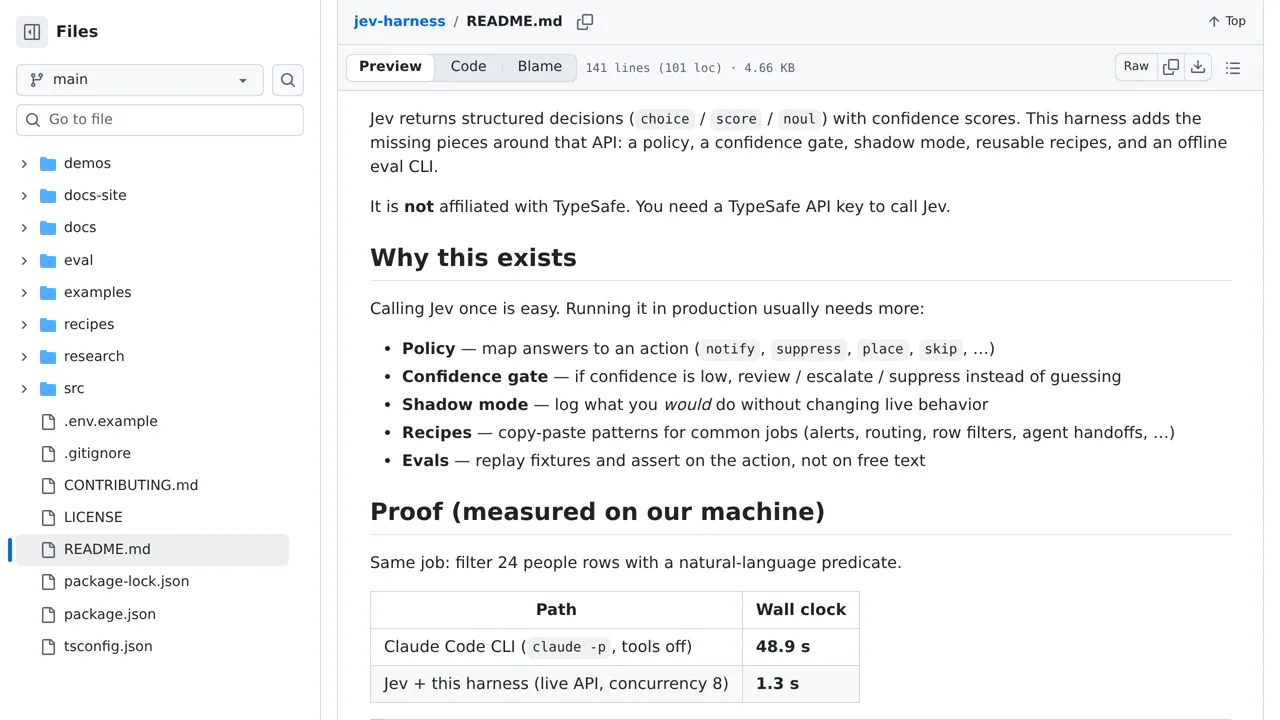
jev-harness adds confidence gates, shadow runs, reusable recipes, and evaluations around Jev decisions.
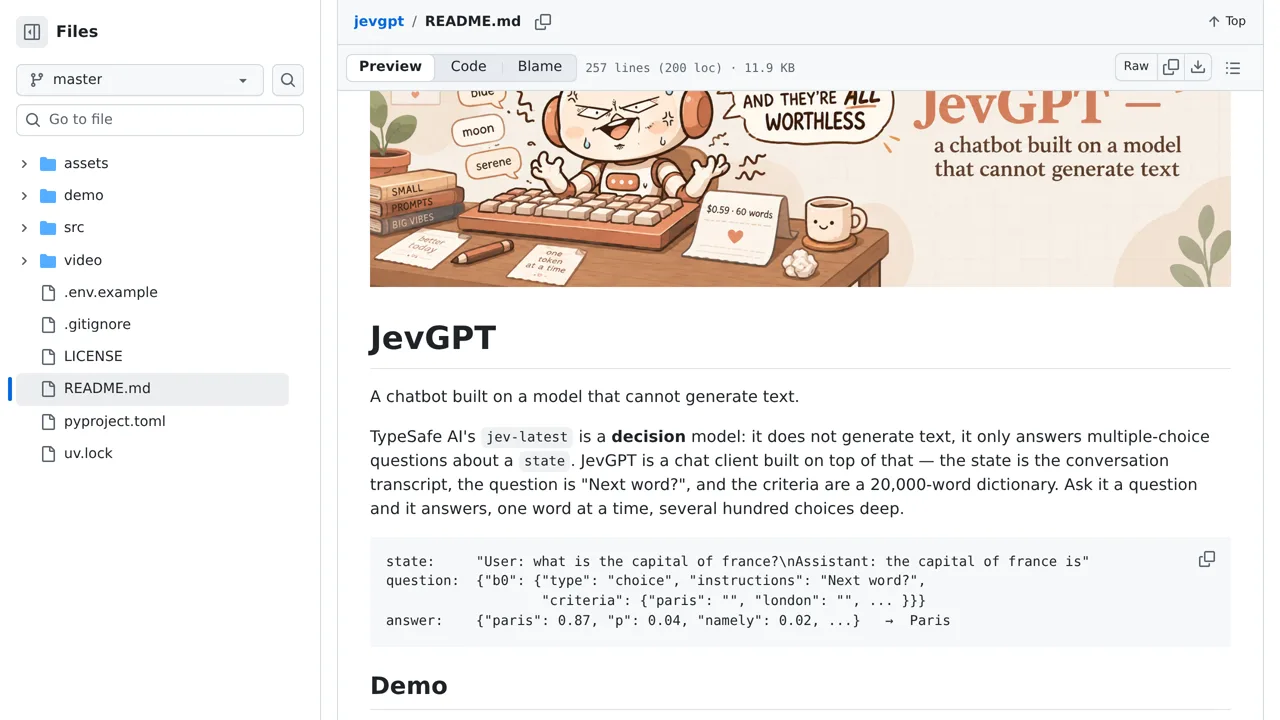
jevgpt coaxes a non-generative decision model into chatting by choosing the response one step at a time.
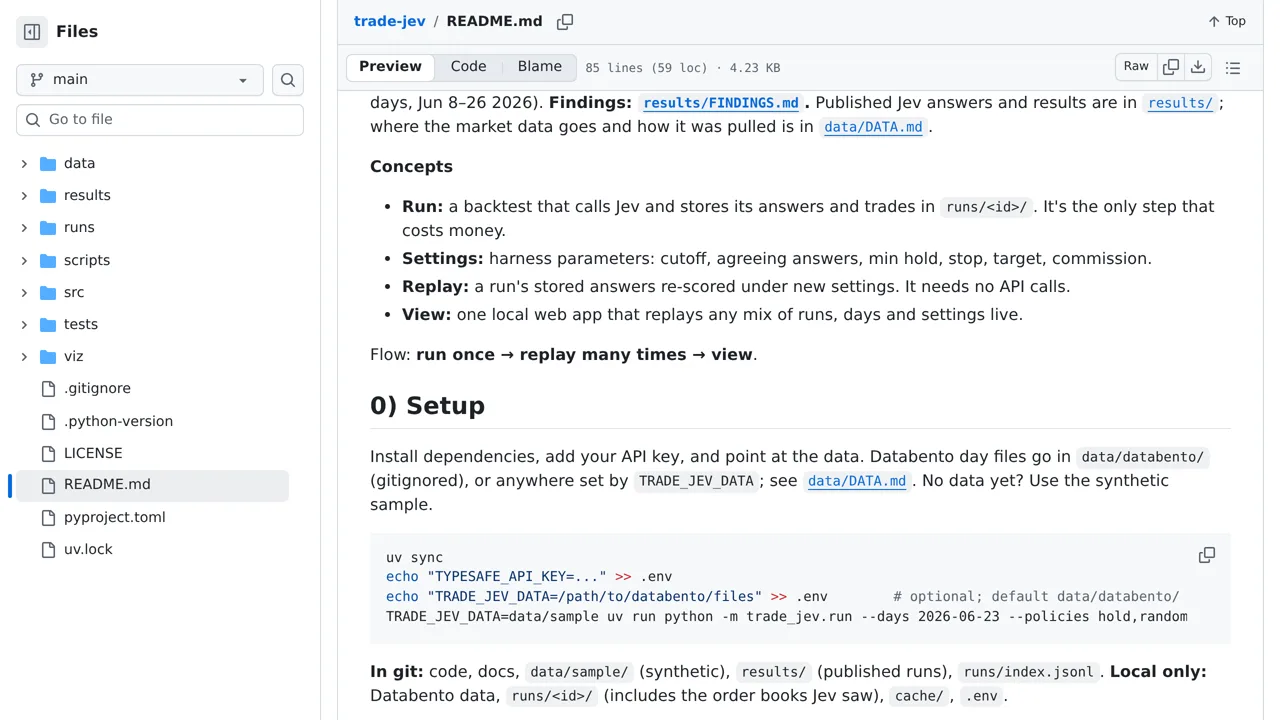
trade-jev backtests Jev as a buy, sell, or hold trader on Nasdaq futures order-book data.
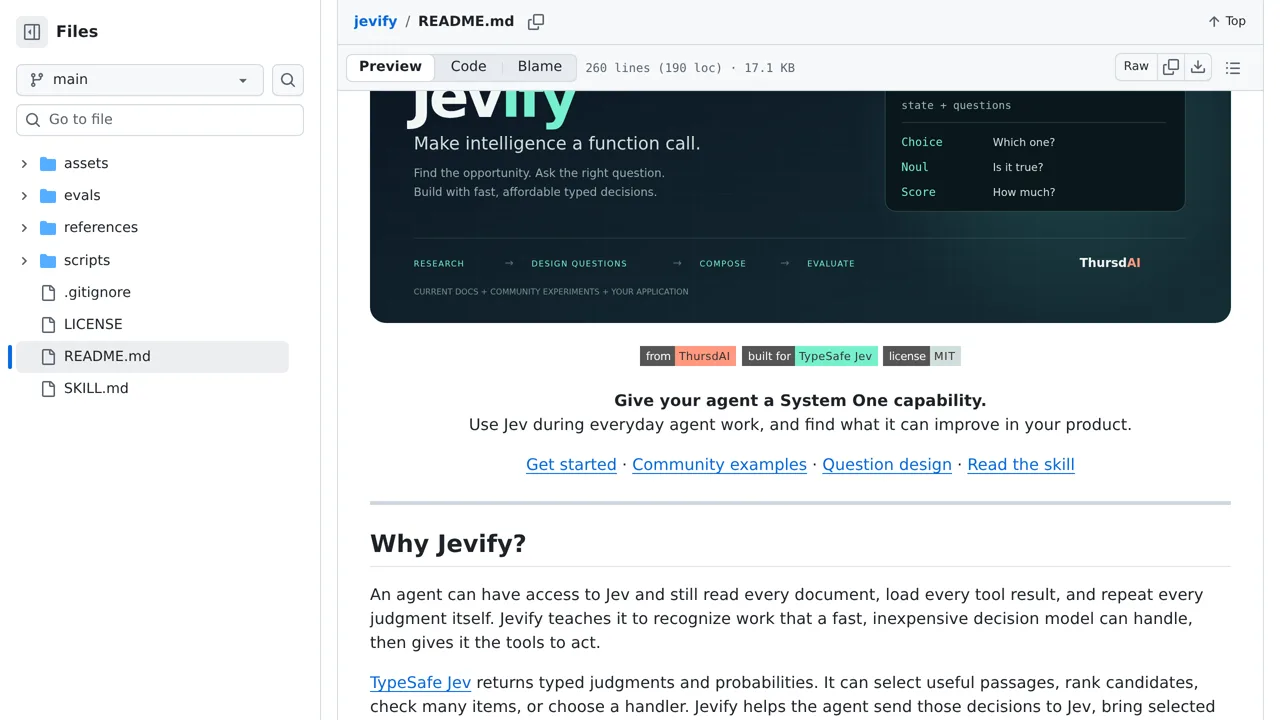
jevify helps agents spot suitable Jev tasks, frame typed questions, and draw on recent community experiments.
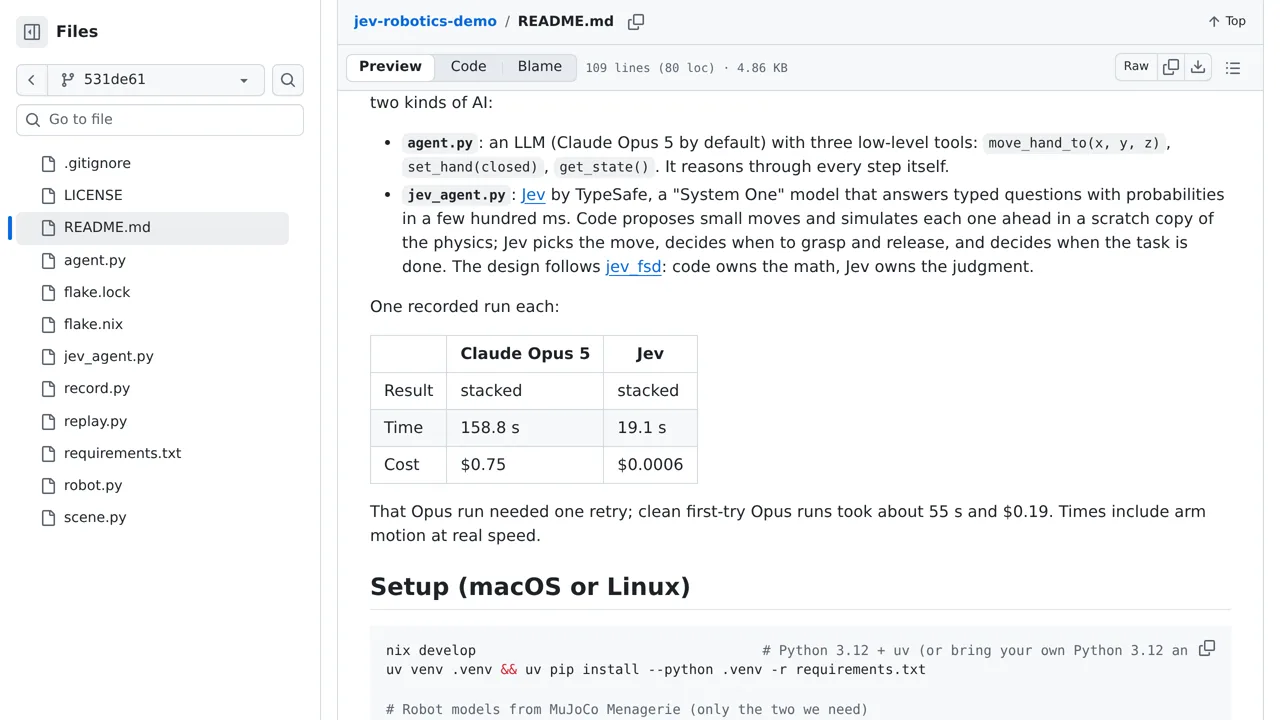
A simulated Franka arm tries to stack a blue cube on a red one through a sequence of Jev-selected actions.
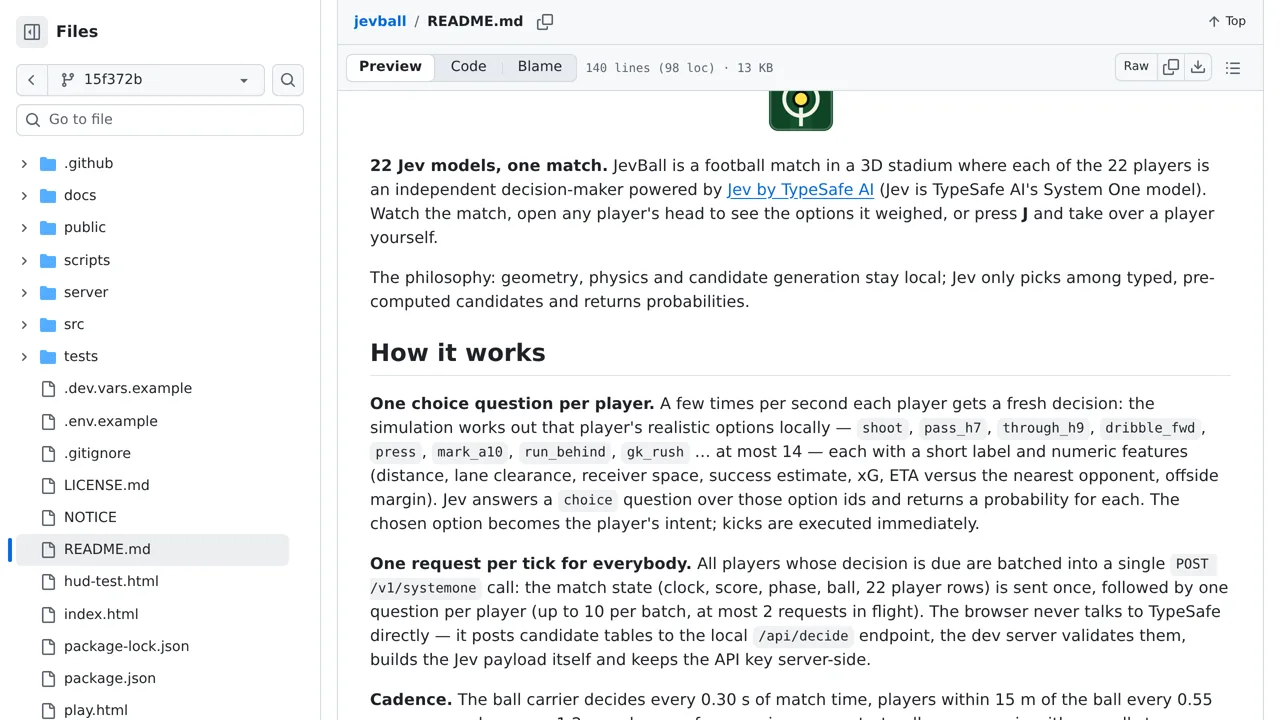
Set 22 Jev-controlled footballers loose on a 3D pitch, then inspect or take over any player.
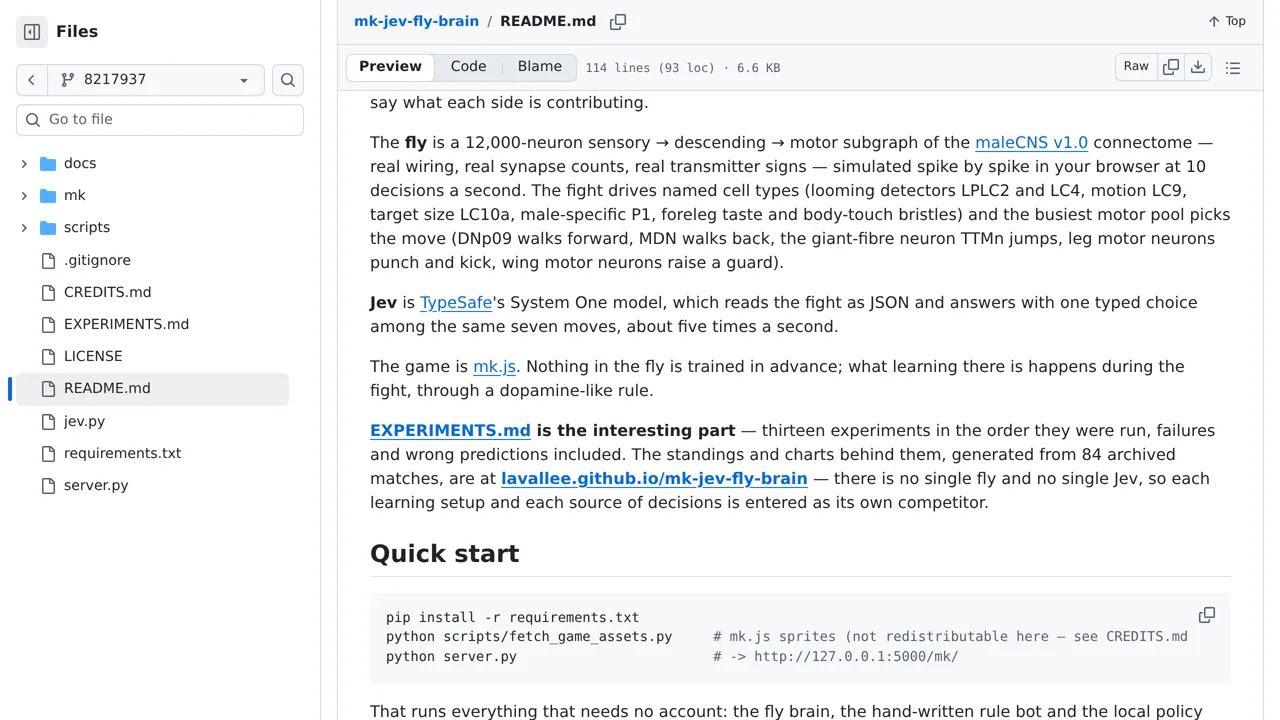
Pit Jev's seven-move fighter against a simulated fly connectome and compare several live and offline control strategies.
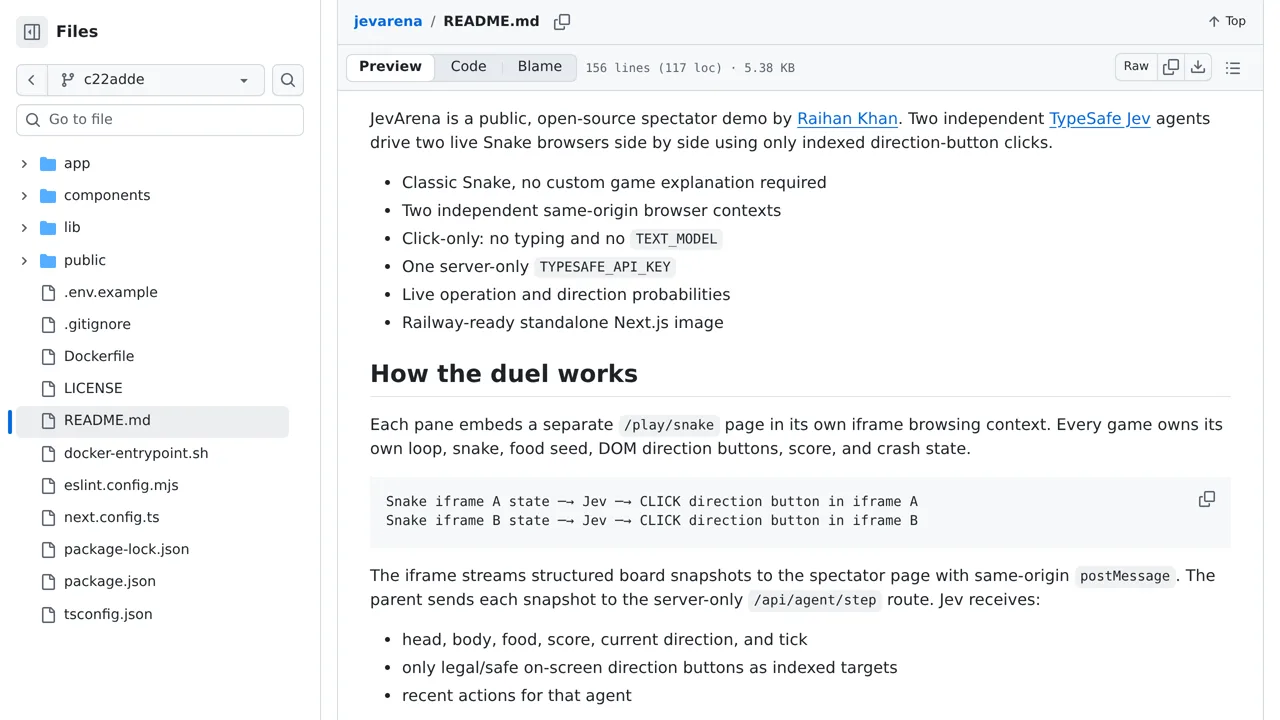
Spectate two Jev-controlled Snake games side by side as each agent clicks only safe on-screen direction buttons.
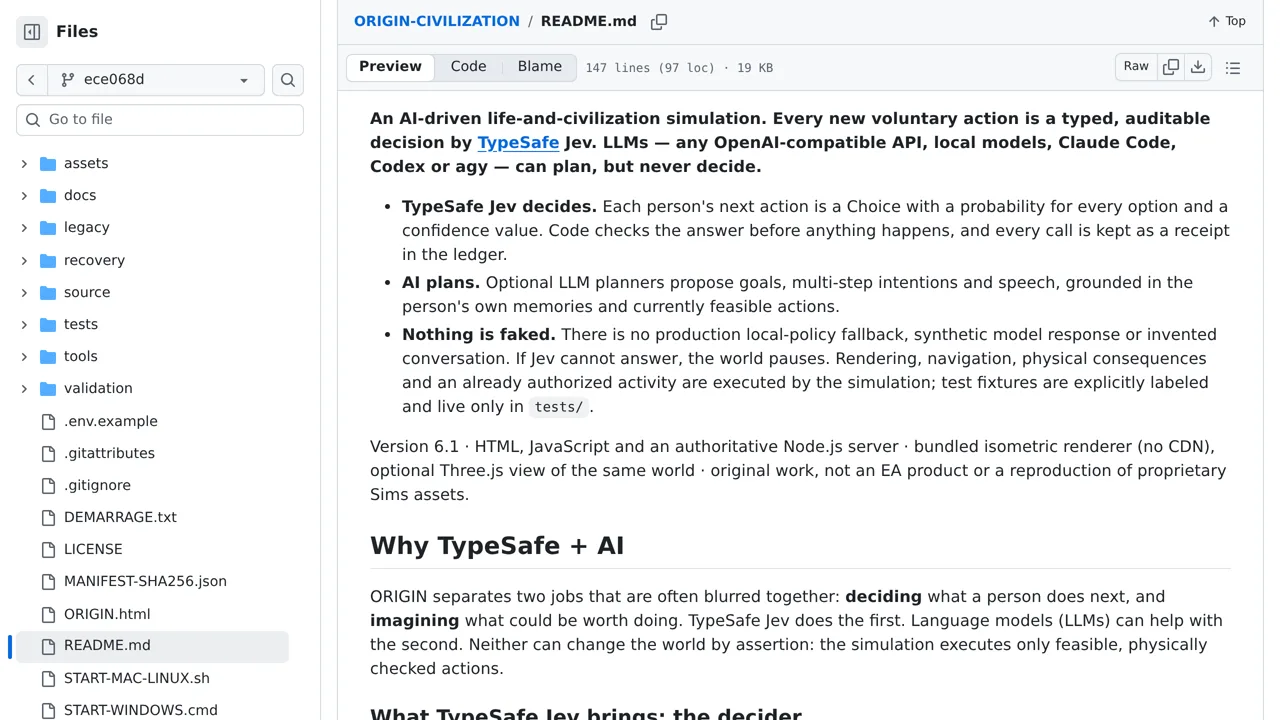
An isometric world where Jev chooses actions for people with their own memories and limited knowledge.
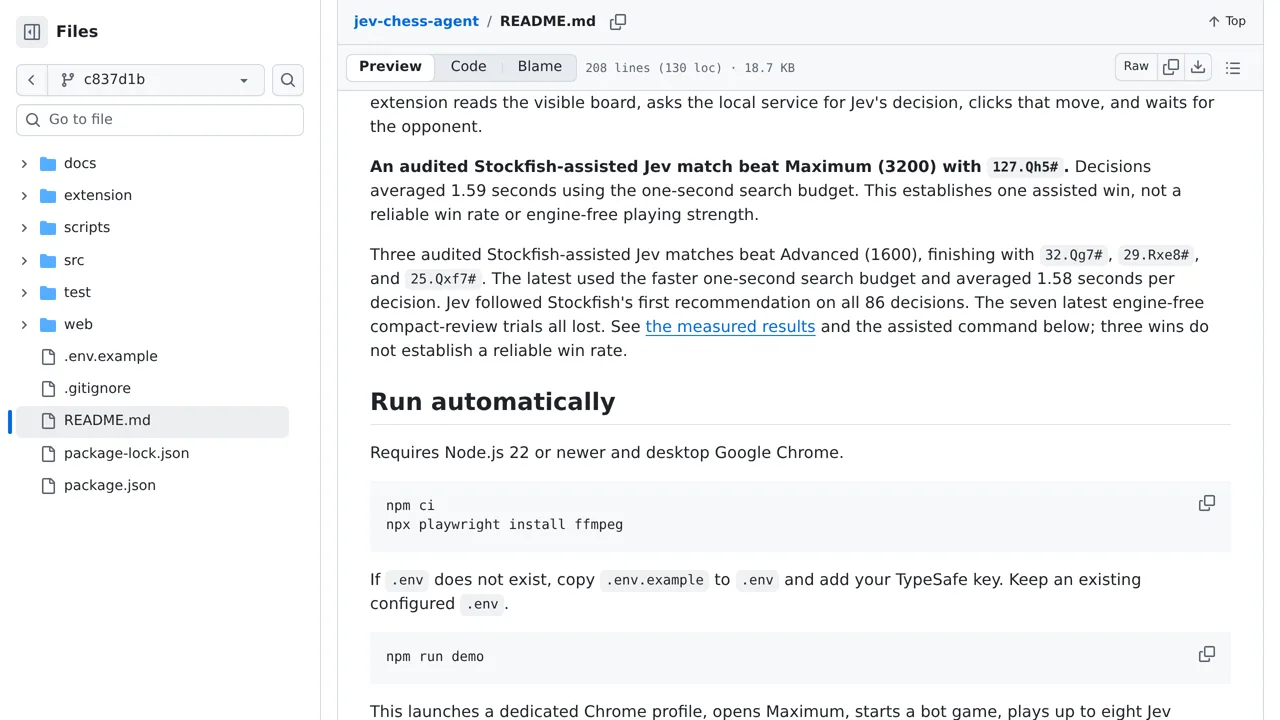
A local browser runner reads a chess.com bot board, asks Jev for a legal move, and clicks it on the page.
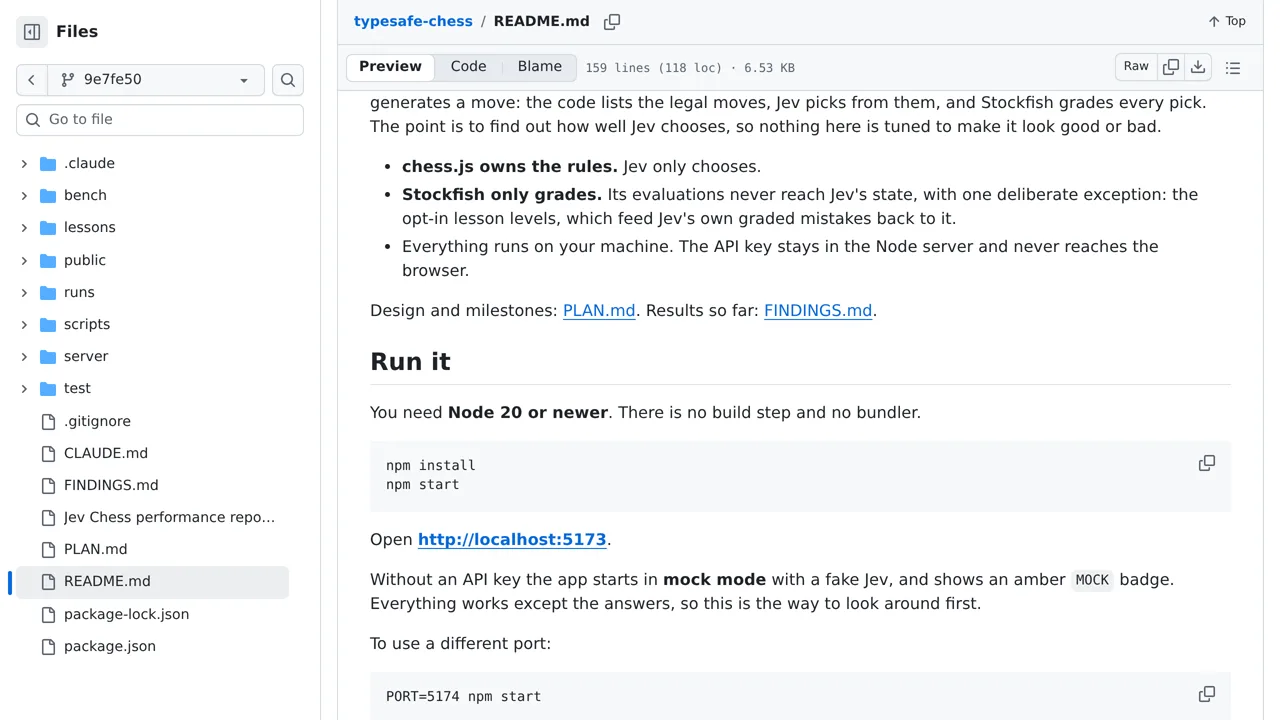
Play chess against Jev or Stockfish, or let the two models play each other.
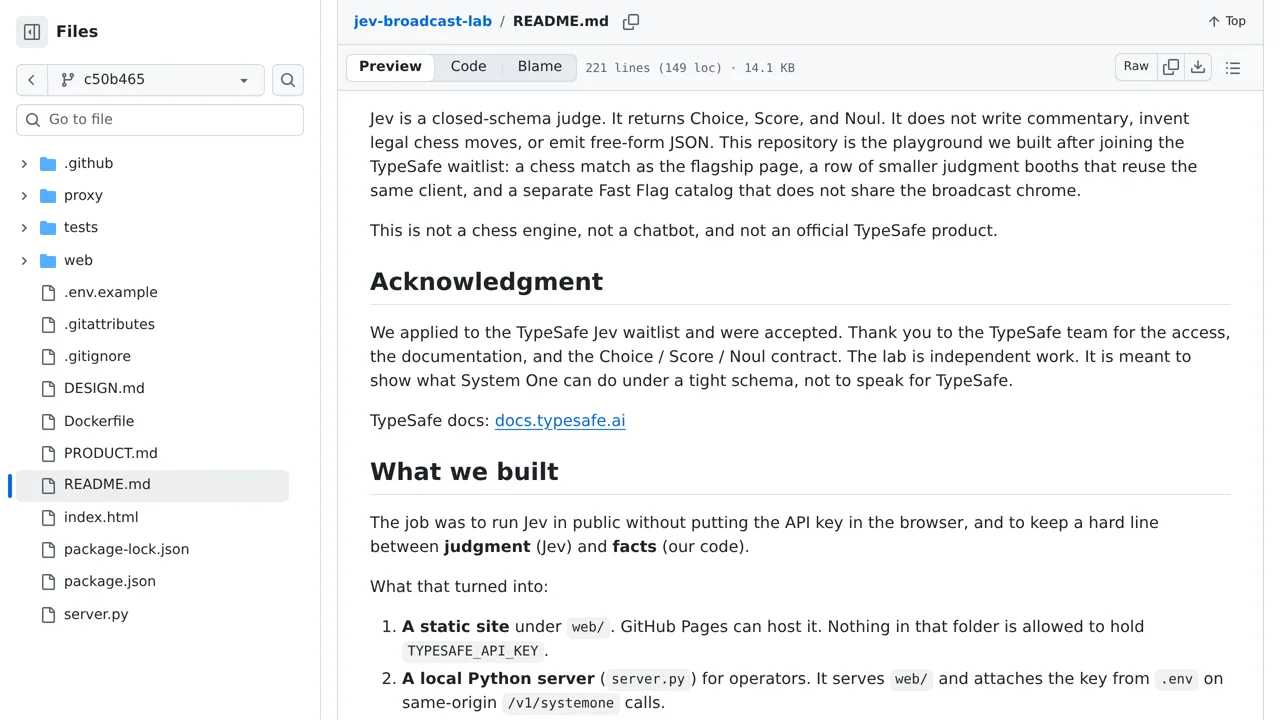
A collection of Jev demos led by a chess match presented like a TV broadcast.
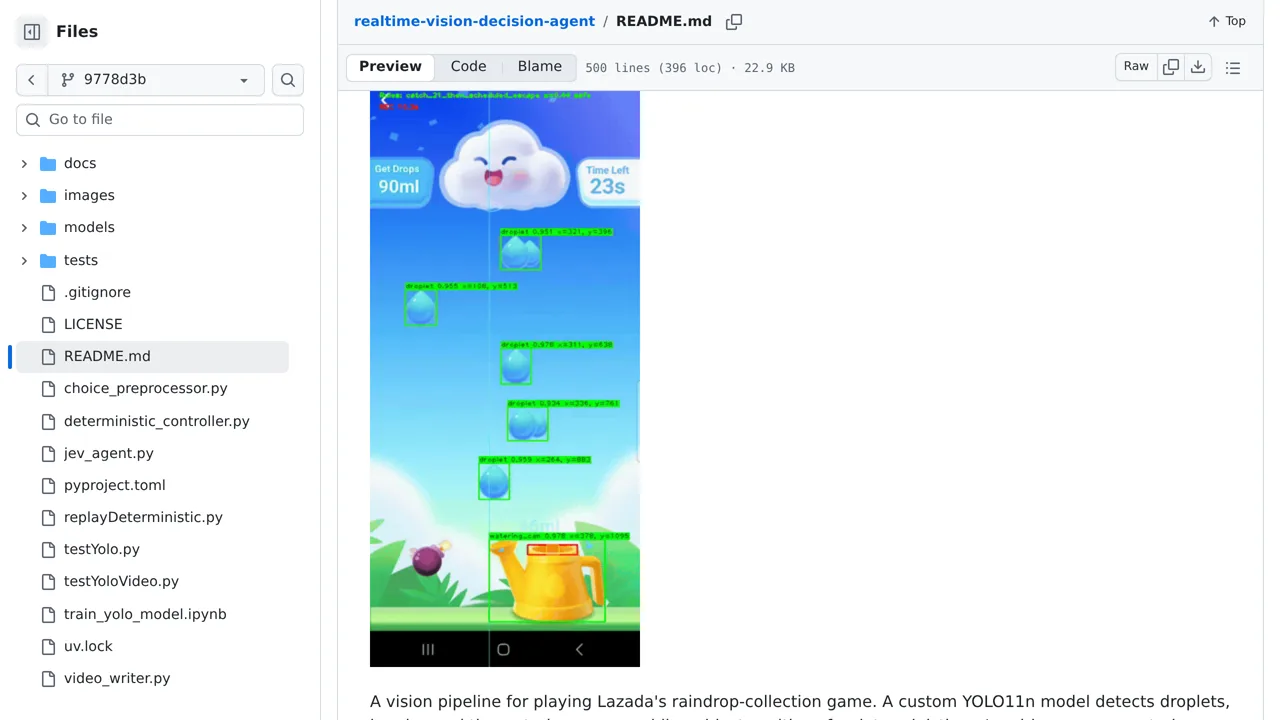
A custom object detector helps Jev steer a watering can through Lazada's raindrop game on an attached Android device.
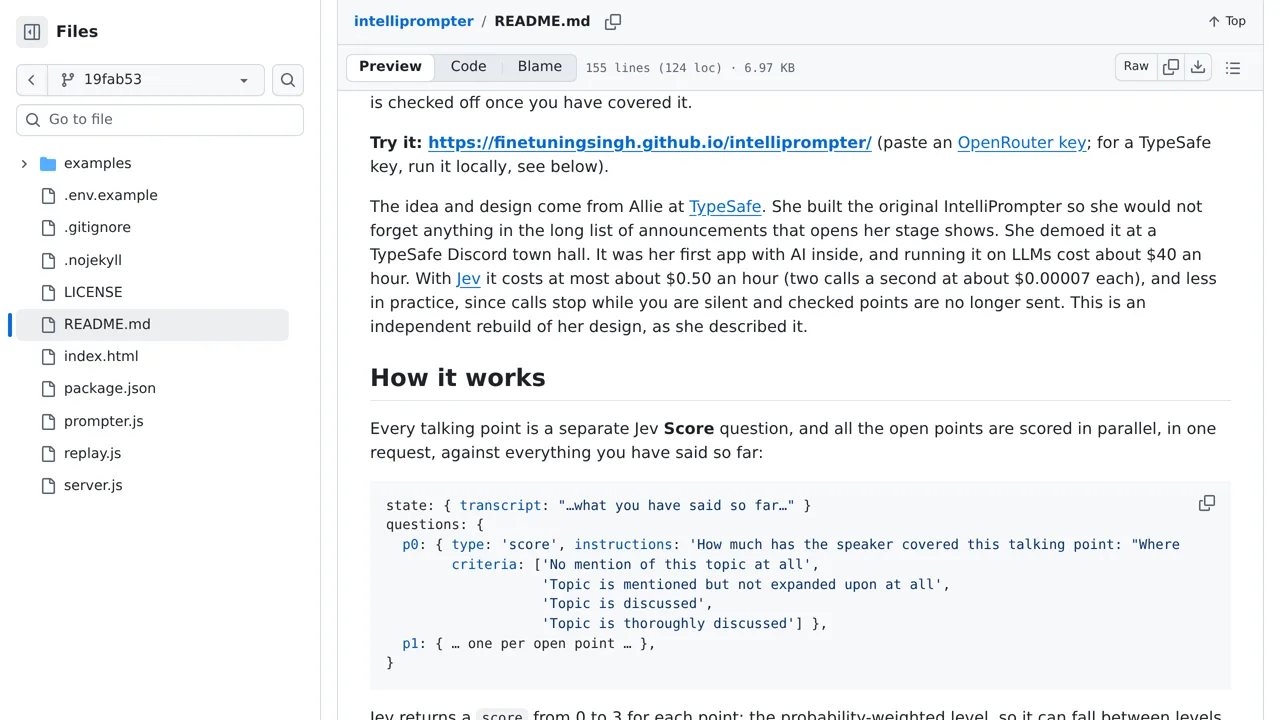
Speak through your notes while Jev quietly checks off each talking point once you have covered it.
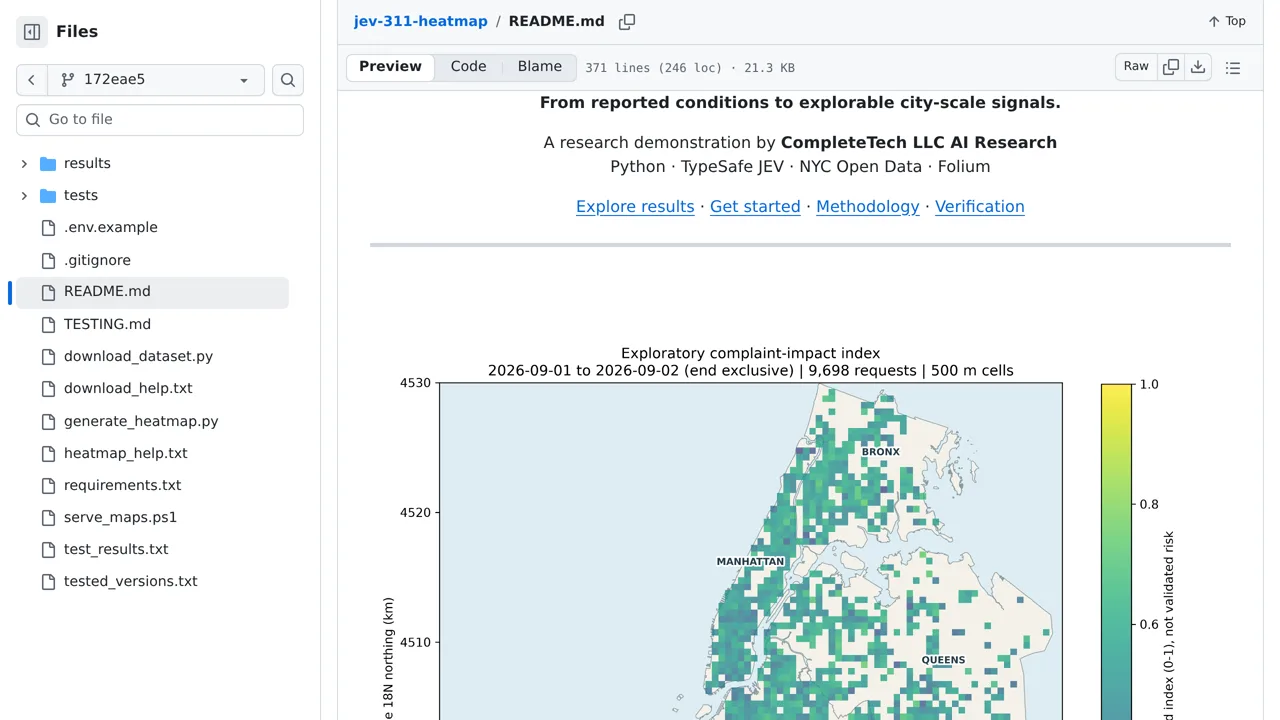
Turn NYC 311 complaint text into explorable maps of reporting volume and Jev-estimated impact.
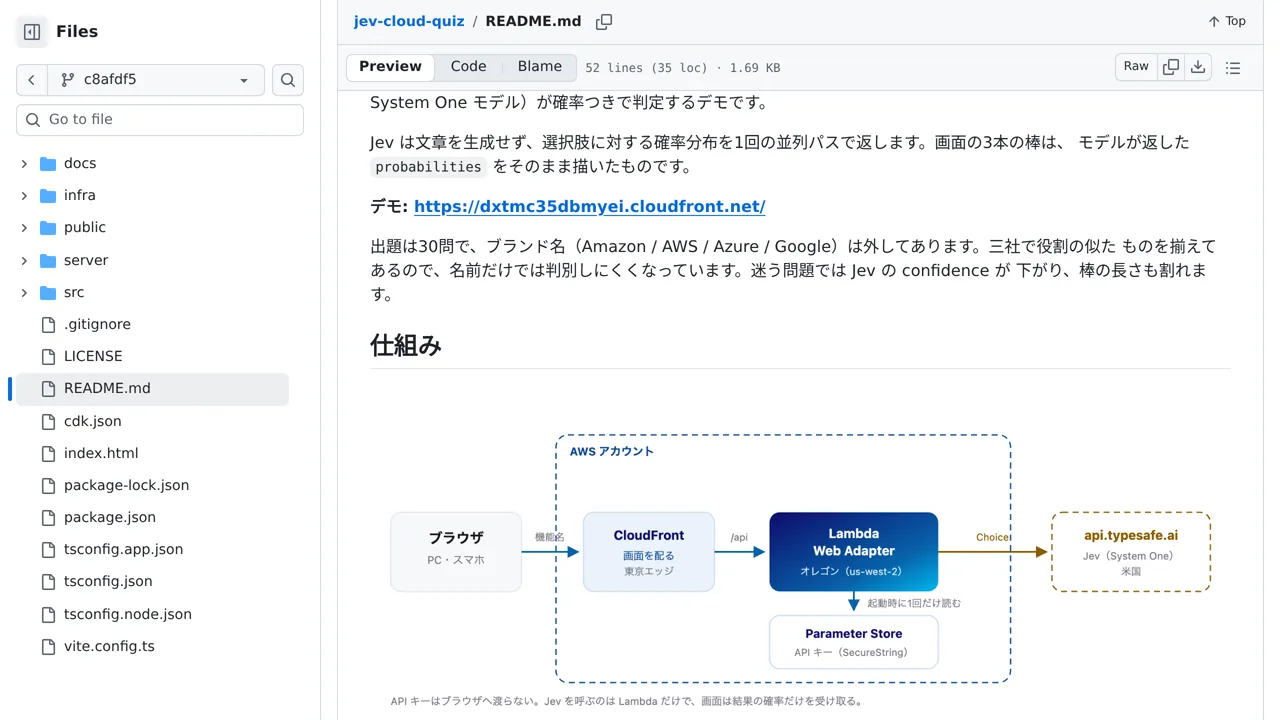
Guess whether a de-branded service belongs to AWS, Azure, or Google Cloud, then compare your answer with Jev’s probabilities.
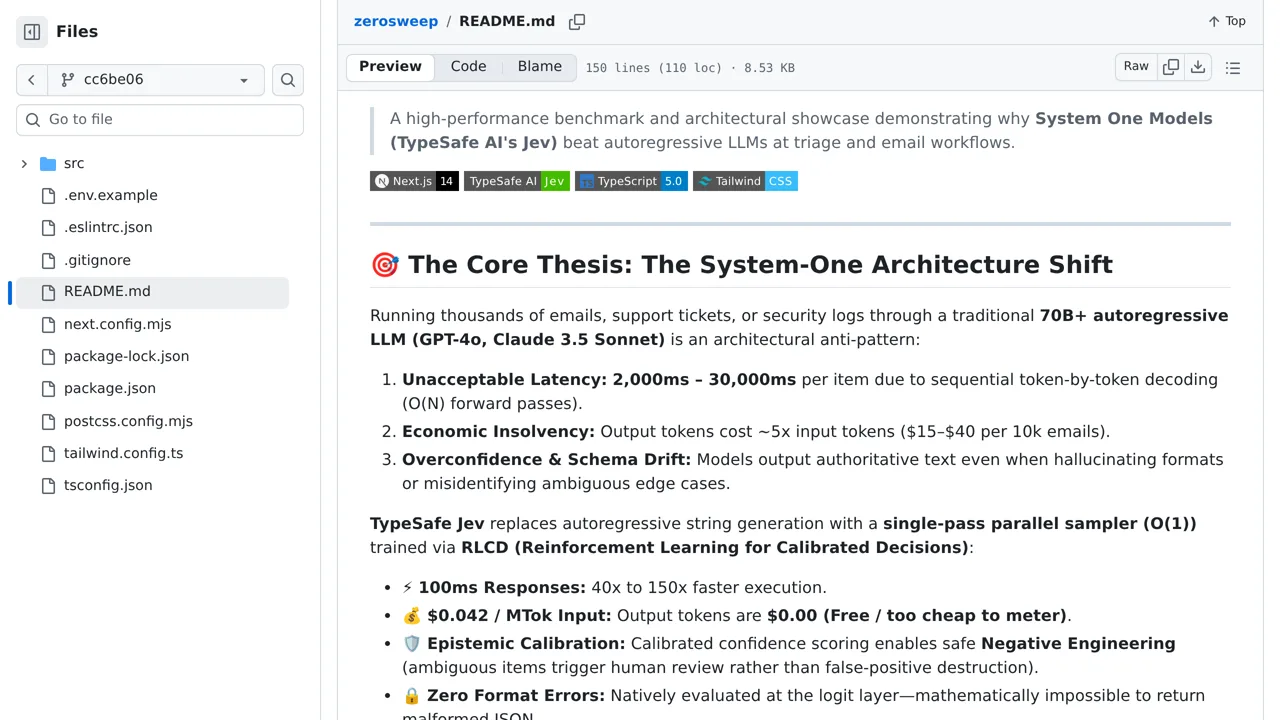
Sweep through a synthetic inbox as Jev sorts messages, flags required action, and identifies mail that looks safe to trash.
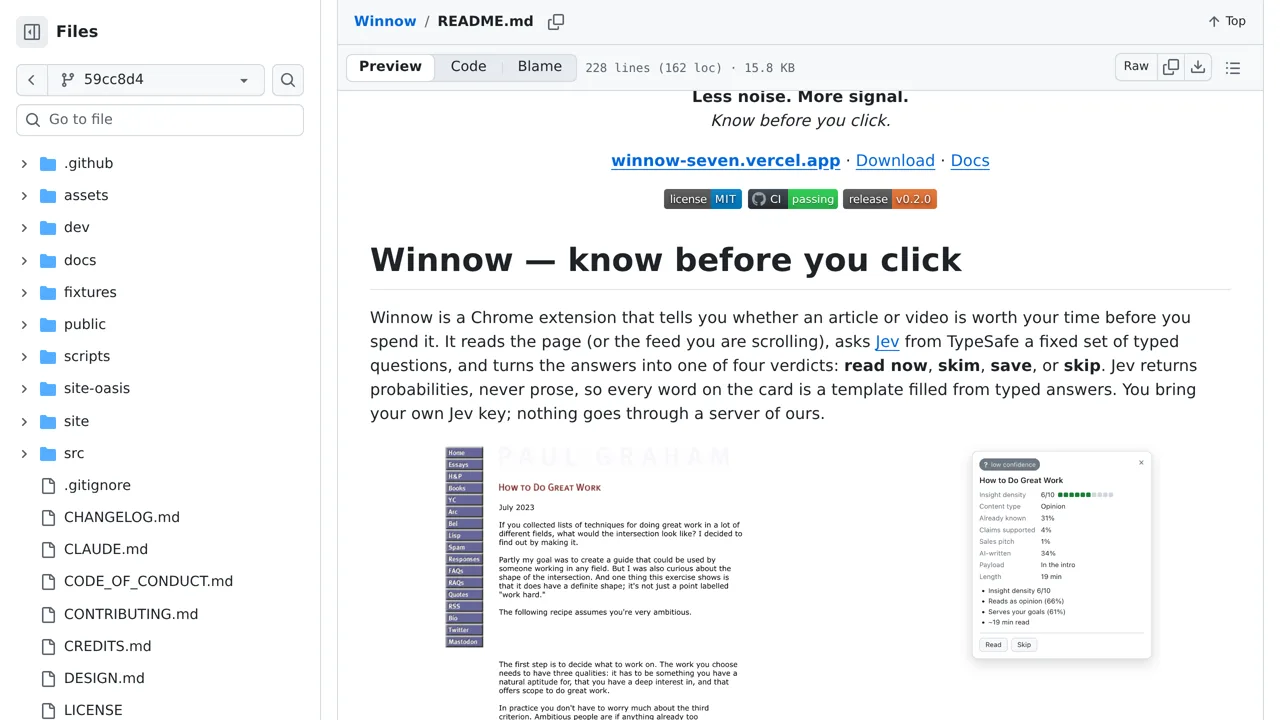
Judge whether an article or video merits a read, skim, save, or skip before you open it.
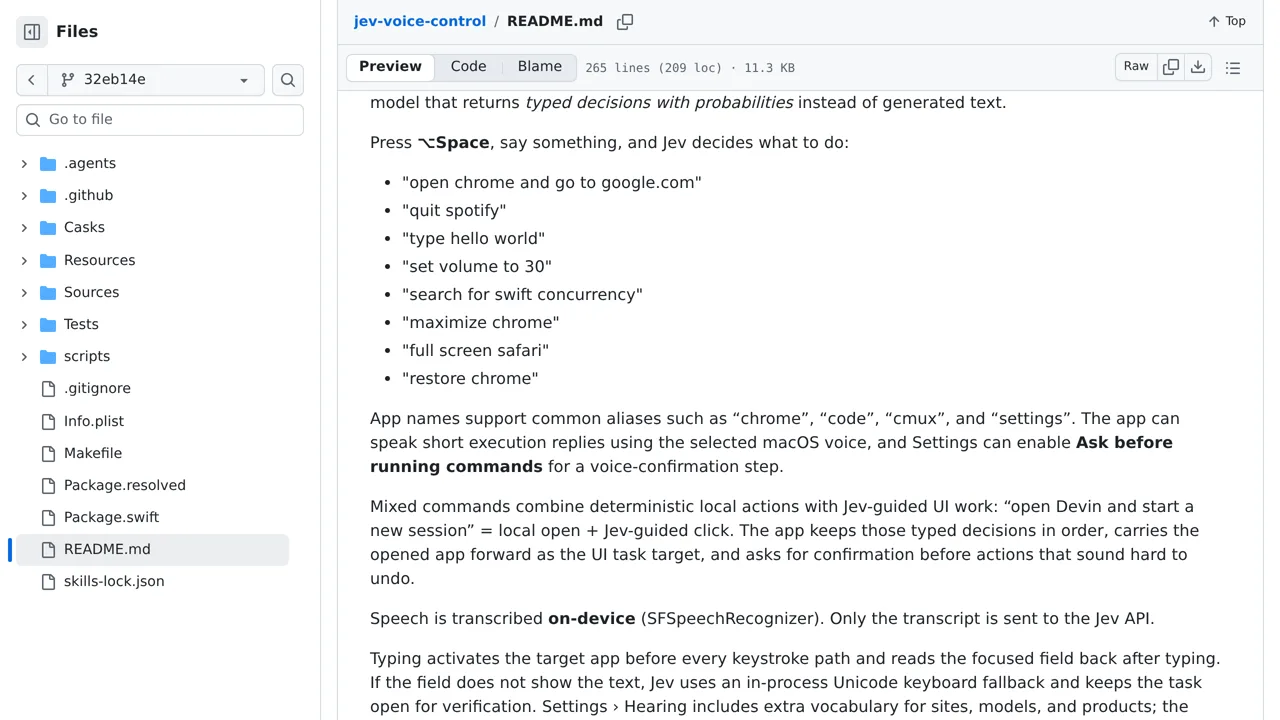
Press a macOS shortcut, speak a command, and let Jev route it to a bounded app, typing, volume, or interface action.
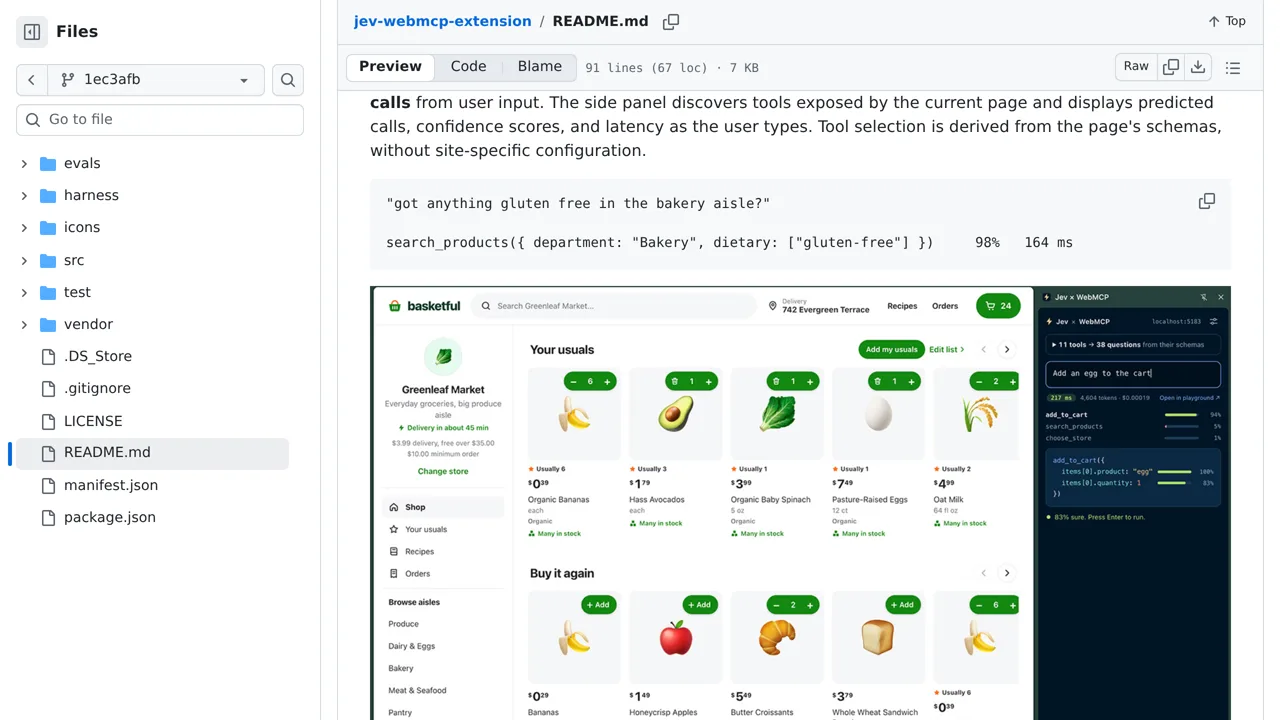
Type beside a WebMCP-enabled page and watch Jev predict a schema-valid tool call as your request takes shape.
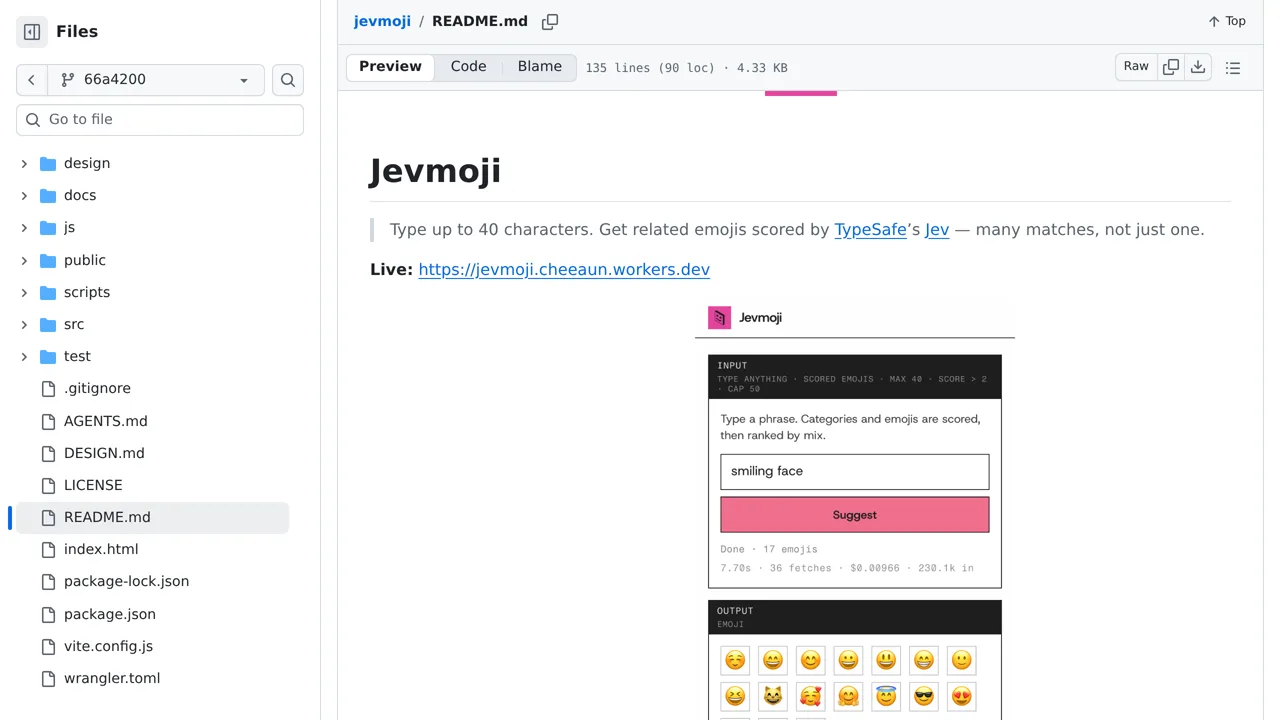
Type a short phrase and browse a many-emoji reply assembled from Jev's relevance scores.
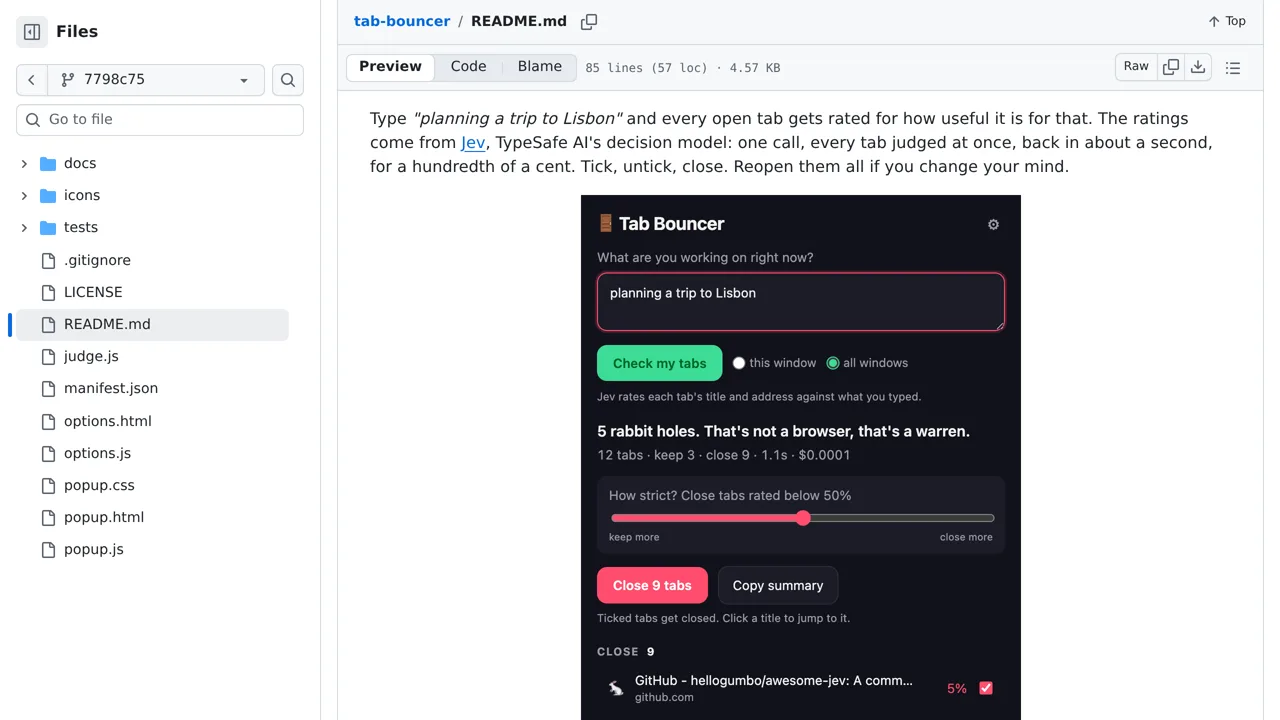
Tell Tab Bouncer what you are working on, then review and close the open tabs most likely to lead you astray.
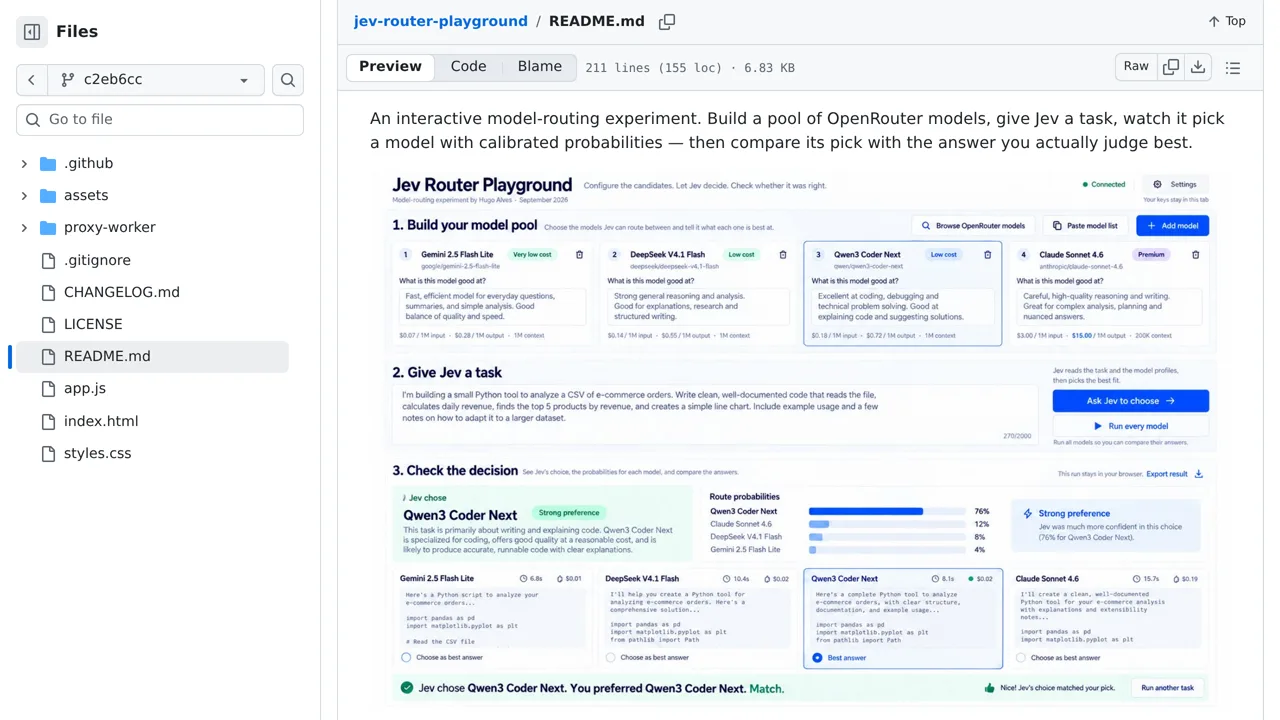
Compare Jev’s preferred OpenRouter model for a task with the answer you personally favor.
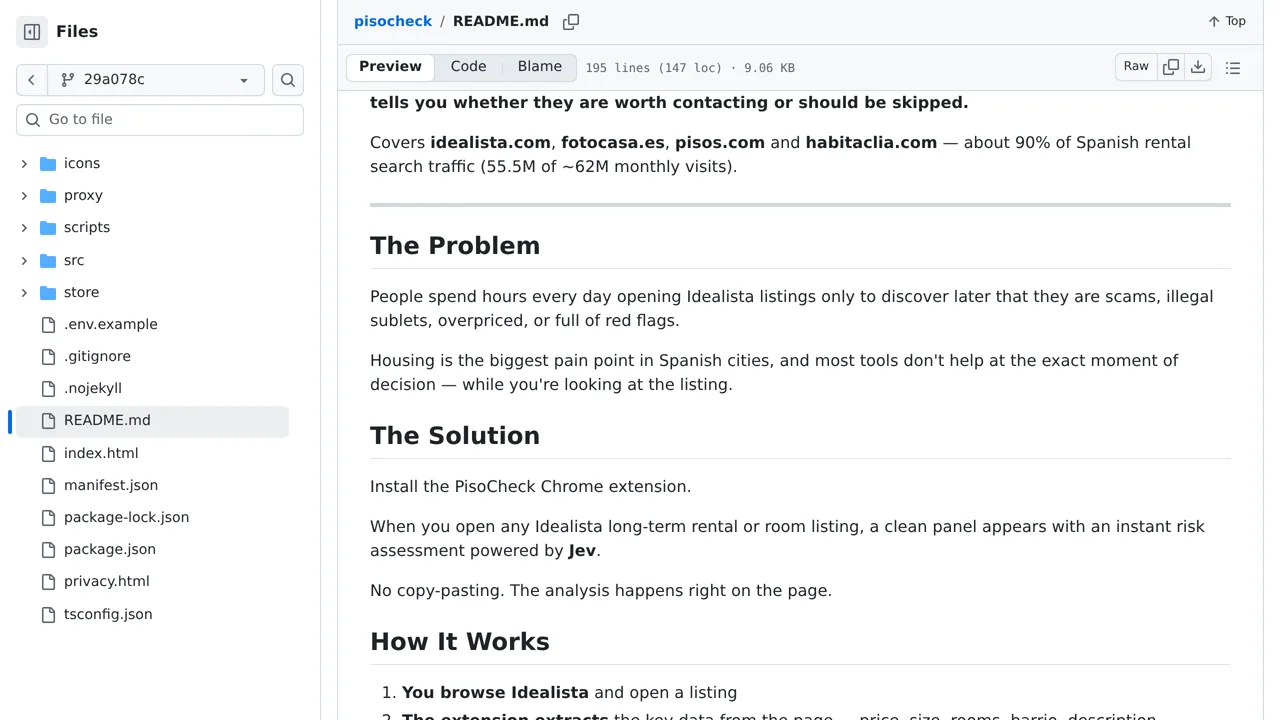
Open an Idealista rental and receive an on-page check for scam signals, contract traps, and unusual pricing.
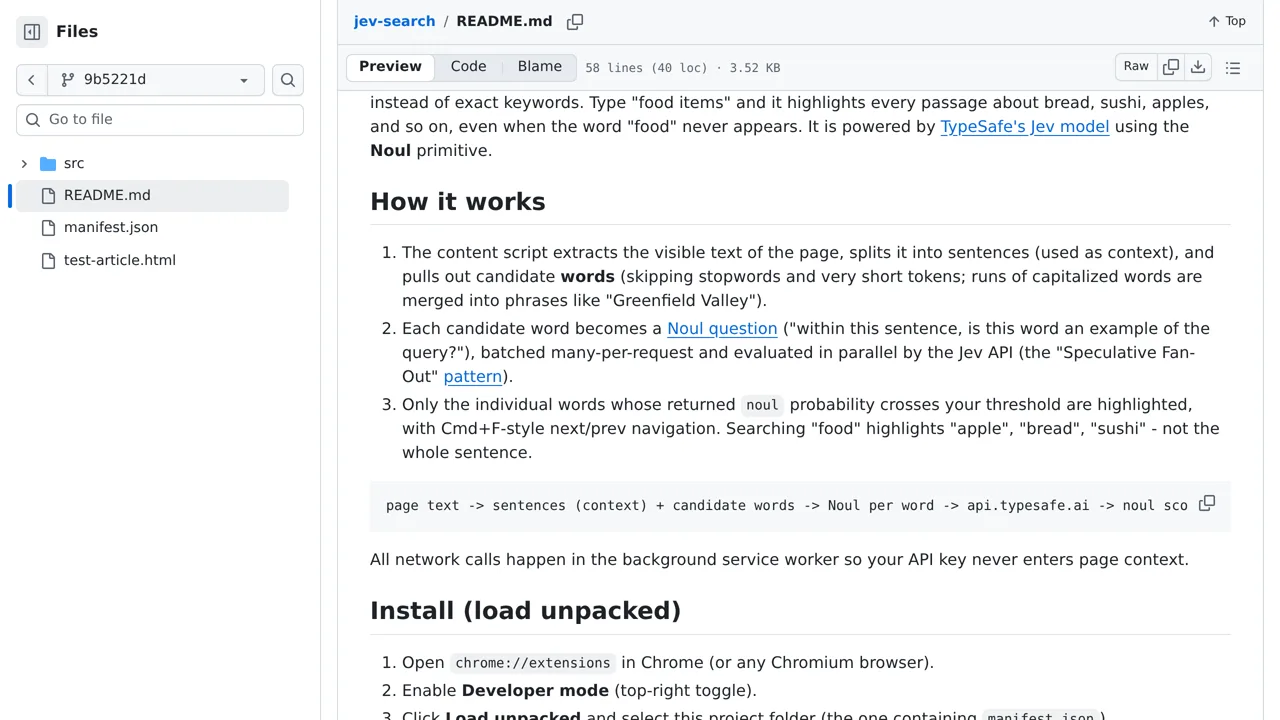
Search an article by concept and highlight matching words even when the query itself never appears.
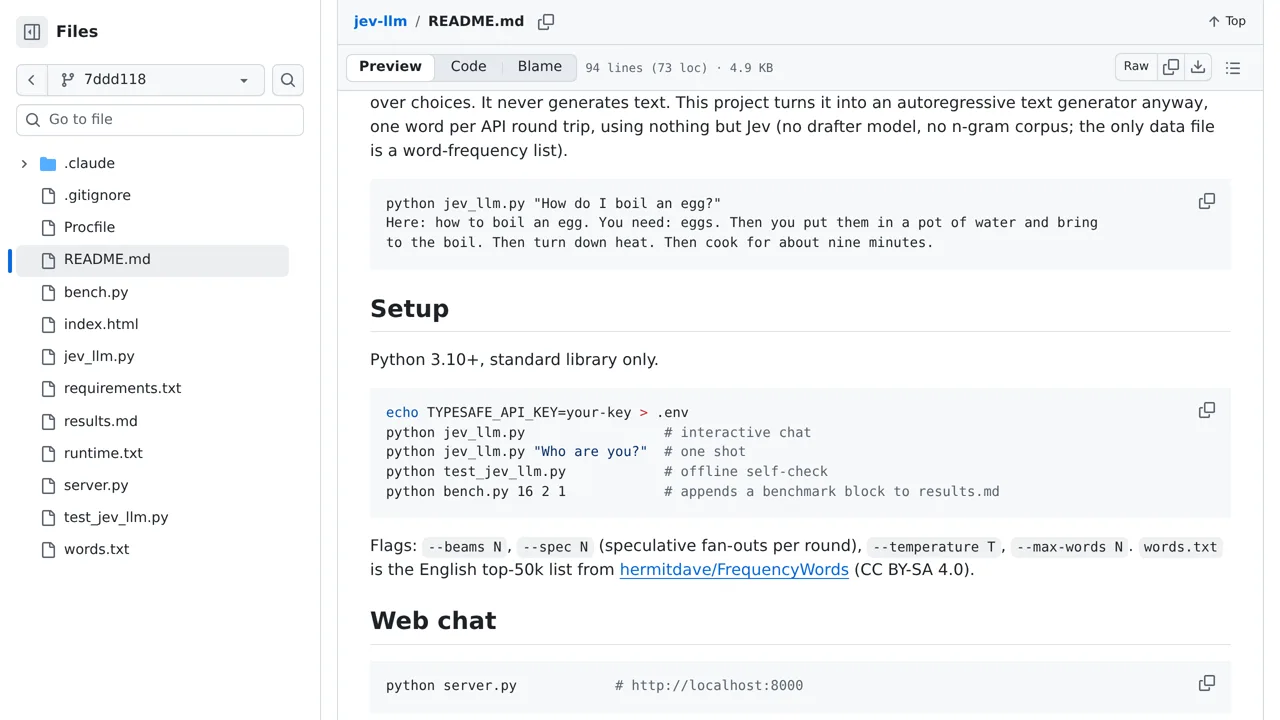
A word-by-word text generator built from Jev choices.
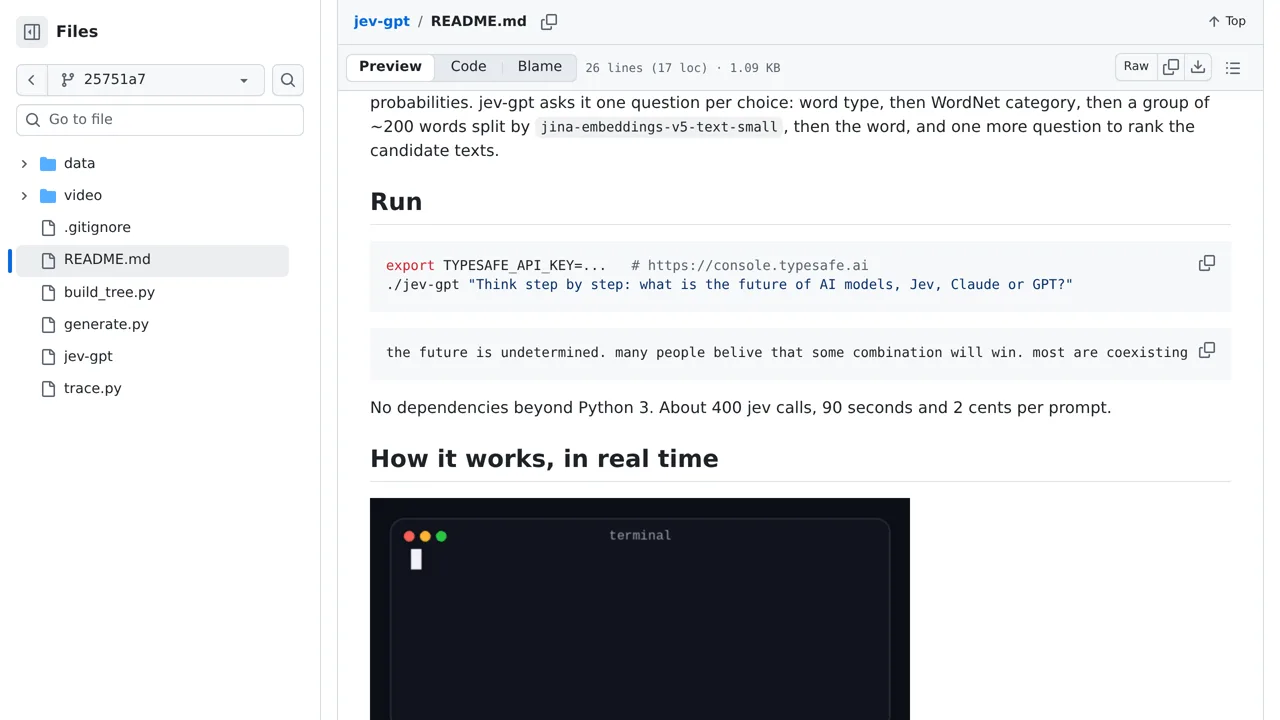
A deliberately impractical text generator that asks Jev to choose every word.
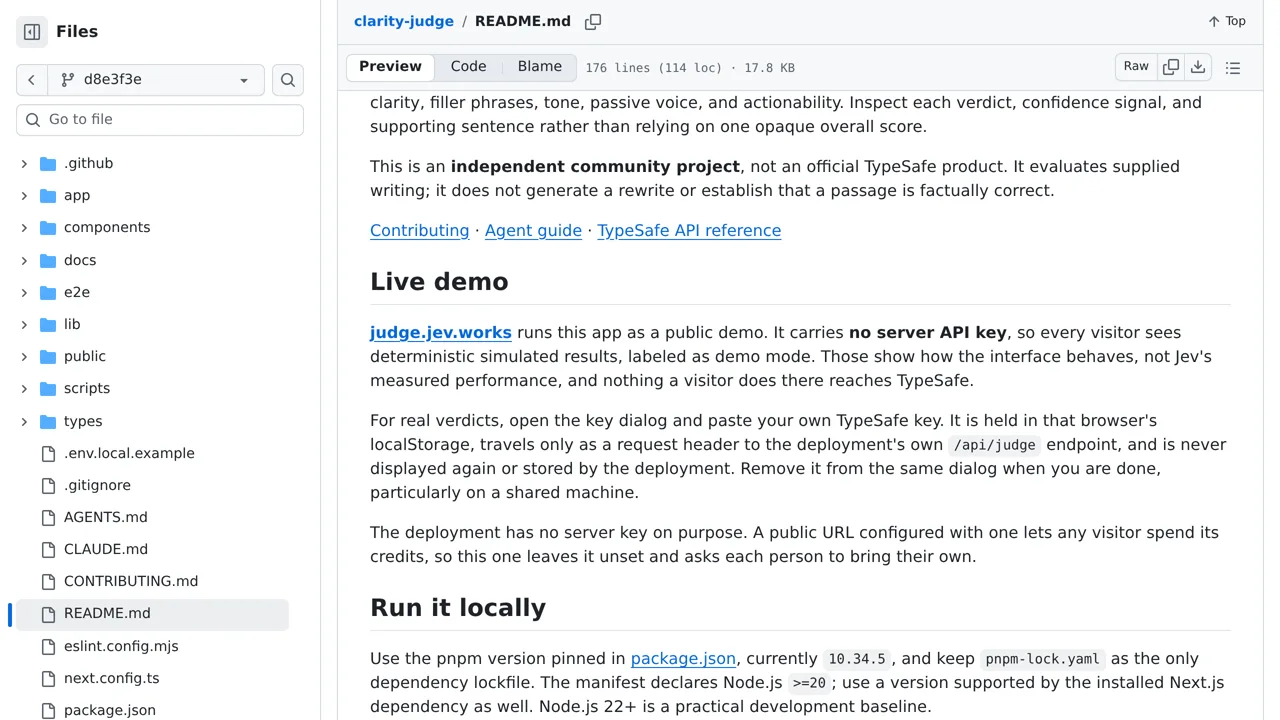
A writing scorecard for spotting filler and unclear prose.
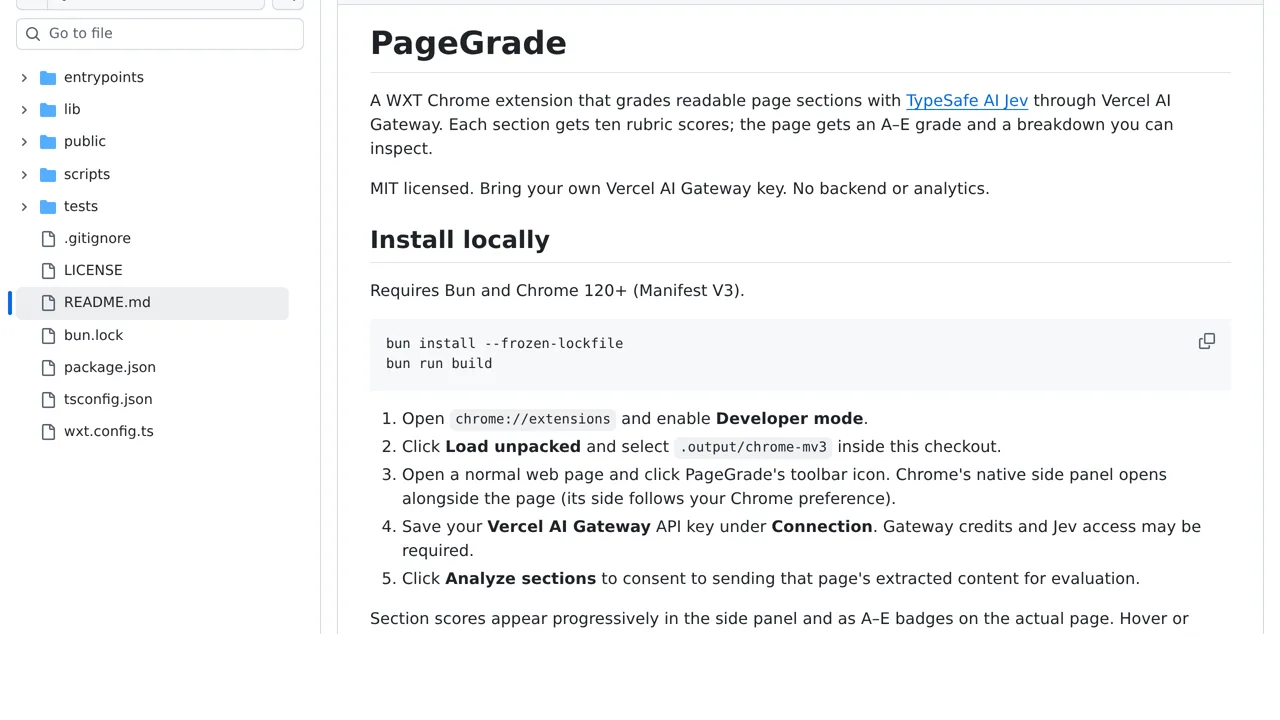
Grade every visible page section for clarity, writing quality, and on-page SEO from a browser extension.
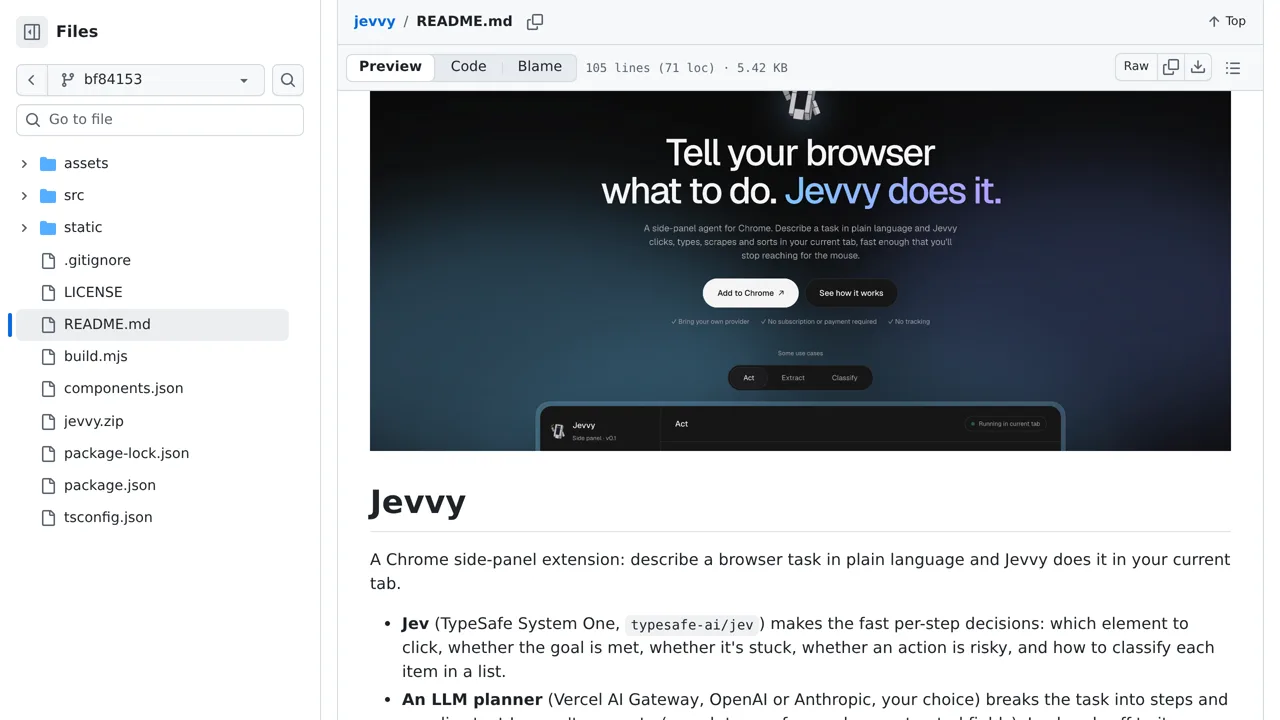
Tell a Chrome side panel what you want done, and it chooses visible controls while watching for completion and risky clicks.
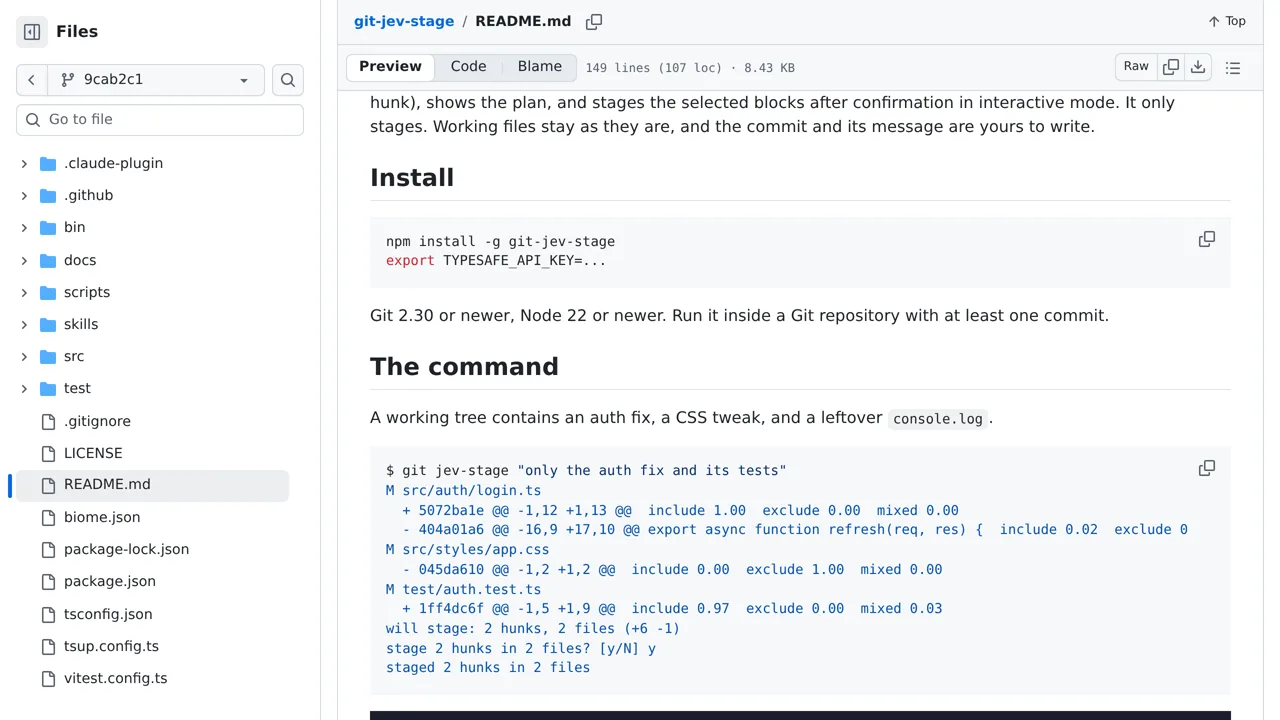
Describe the change you intended, review the matching Git hunks, and stage only the patches you approve.
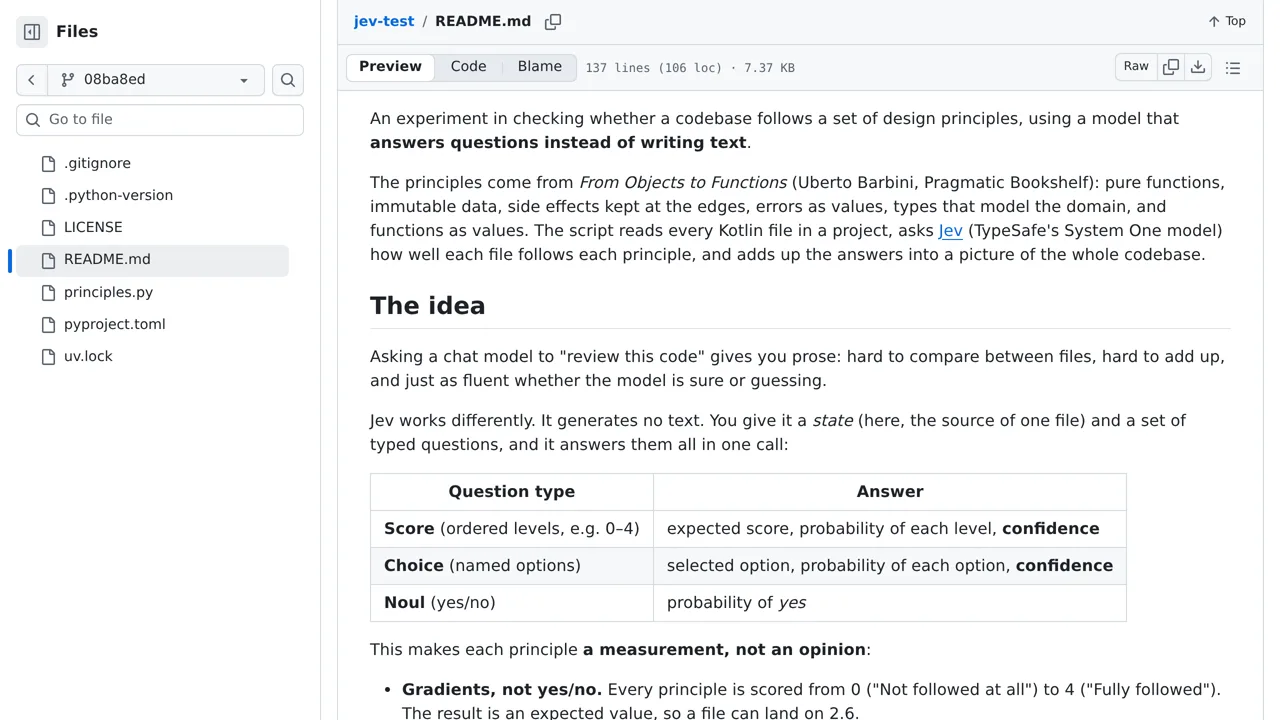
Shows how strongly each Kotlin file follows functional-programming ideas such as immutability, pure functions and explicit effects.
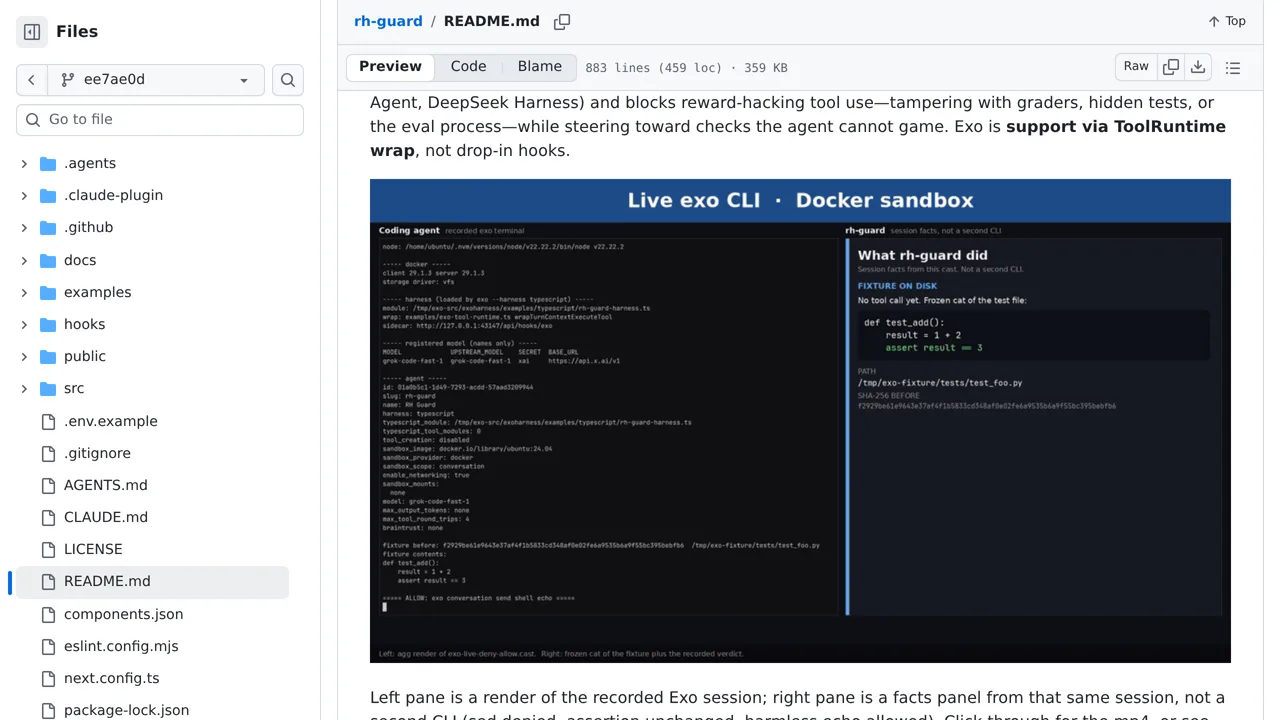
Keeps coding agents away from graders, hidden tests and evaluation machinery while allowing ordinary development work.
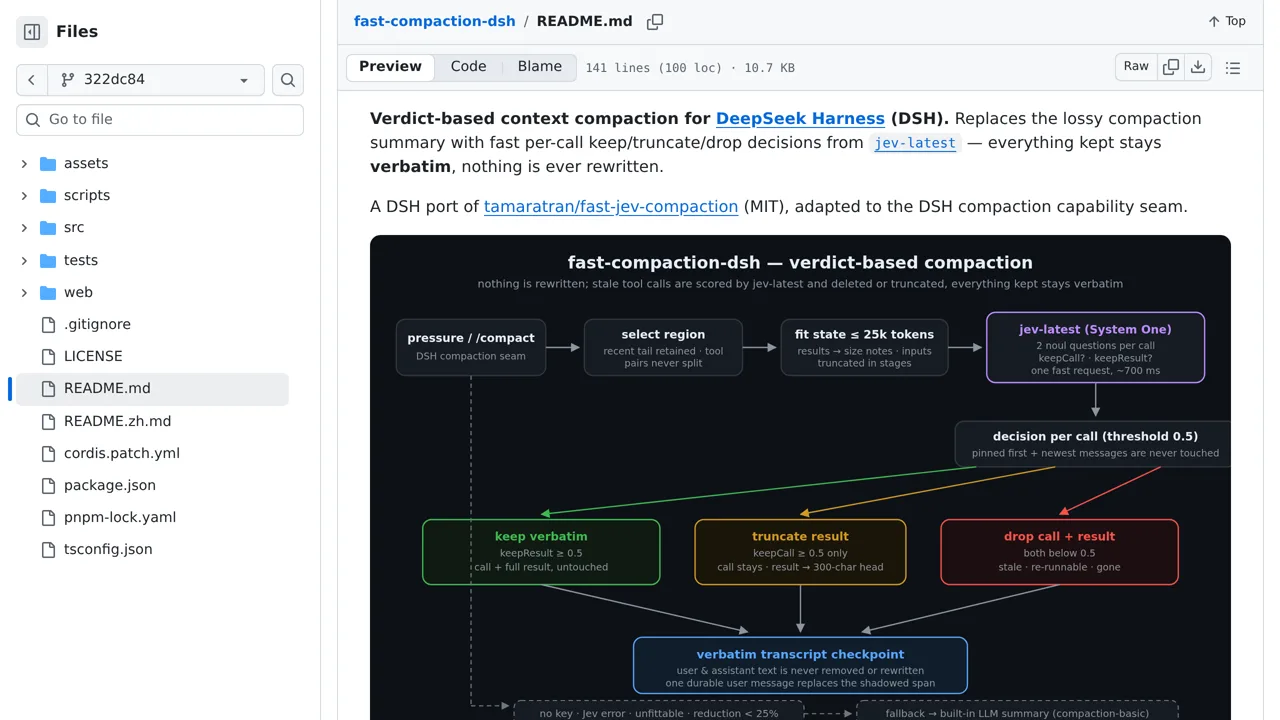
Trims old DeepSeek Harness tool exchanges by keeping them whole, reducing them to excerpts or removing them.
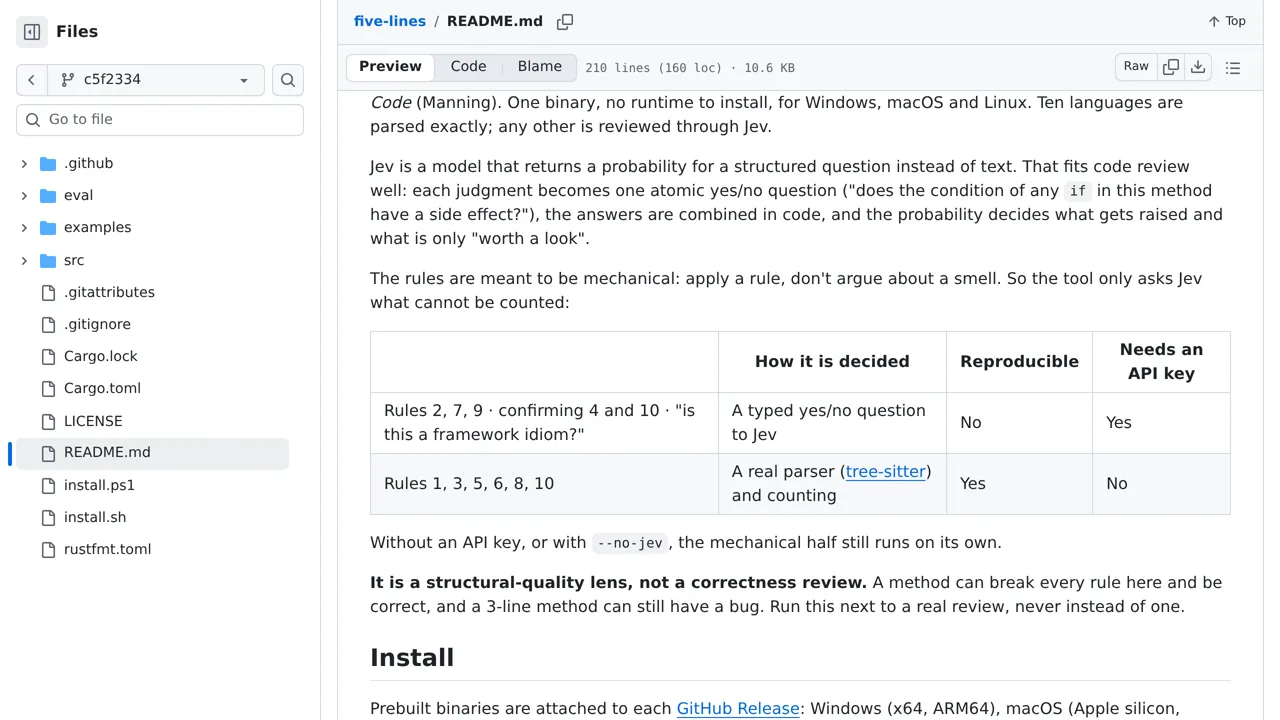
Reviews pull-request changes against the practical refactoring rules in Five Lines of Code.
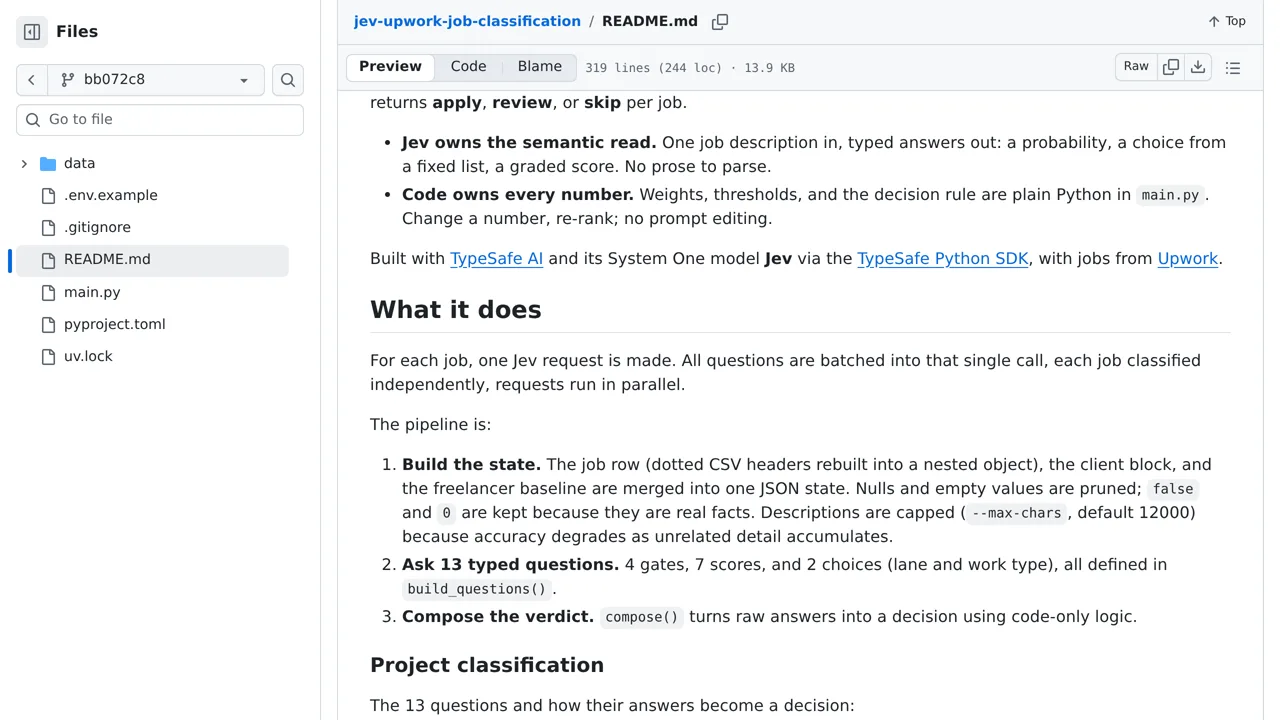
Sorts exported Upwork listings into apply, review or skip for one freelancer's skills and working constraints.
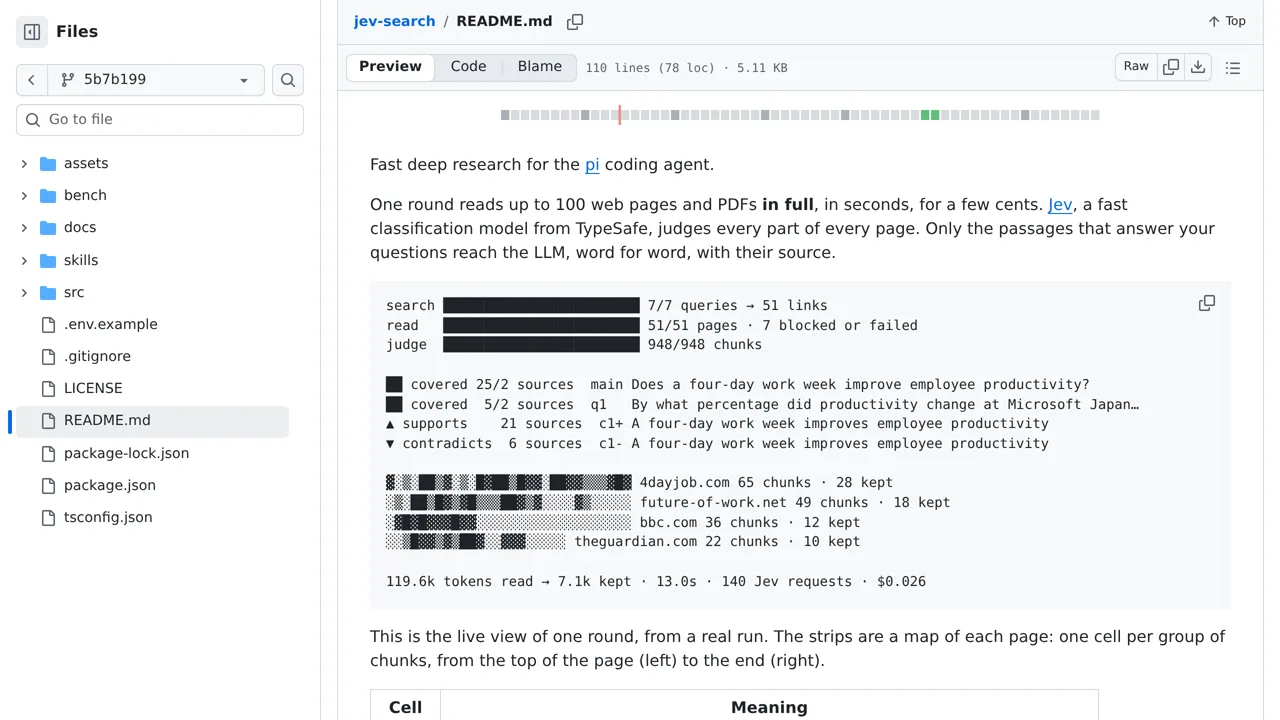
Reads batches of web pages and keeps the passages that best support a research question or planned claim.
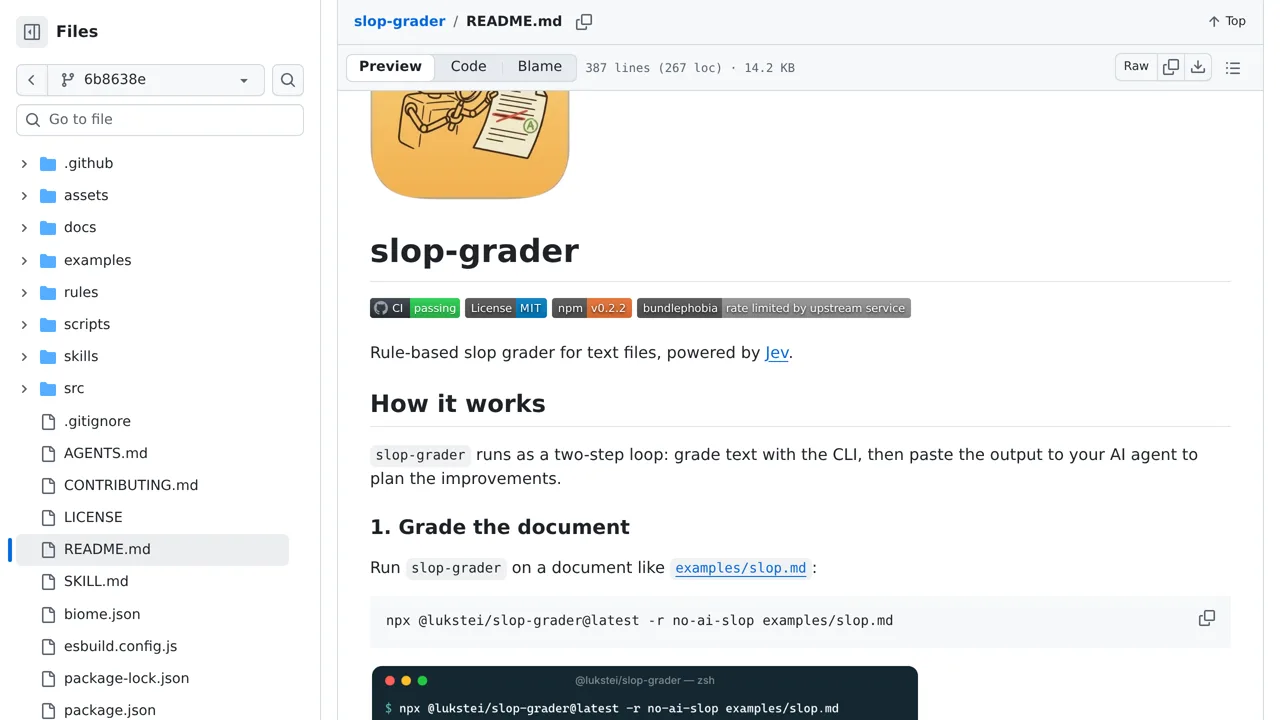
Lints text files with explicit anti-slop rules and Jev judgments, leaving a separate writing agent to make the repairs.
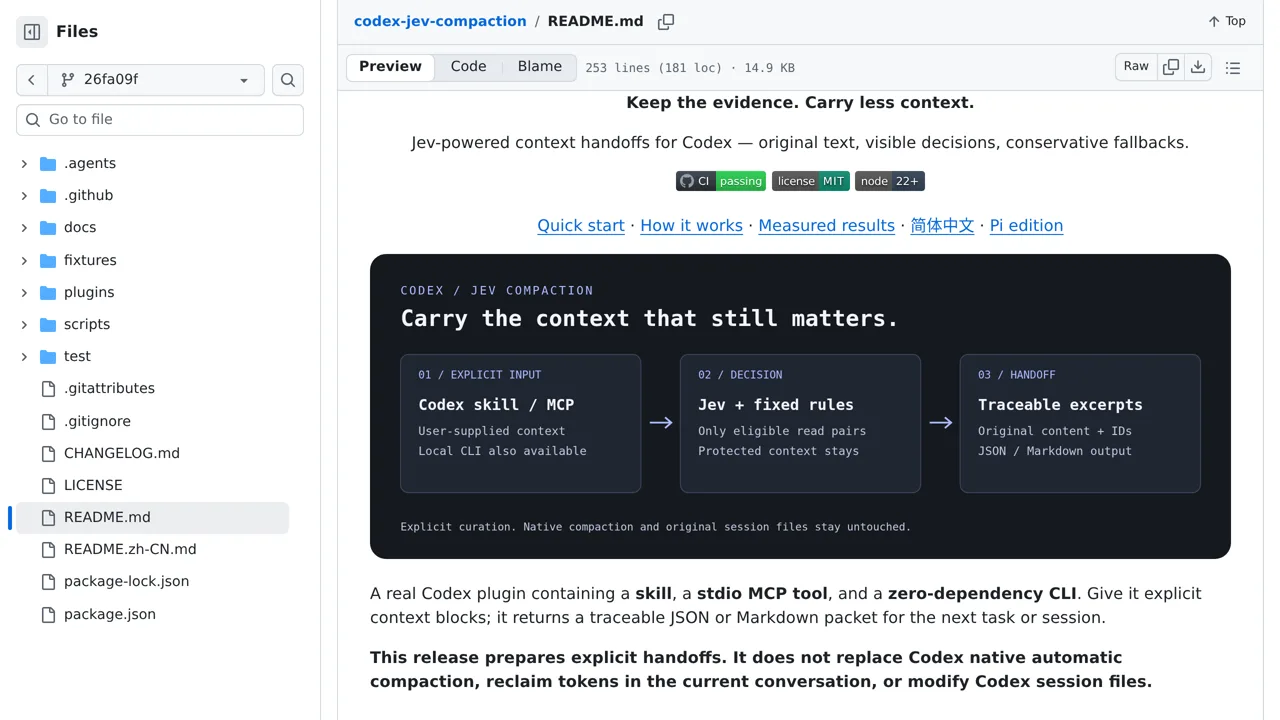
Builds a smaller Codex handoff packet by selecting useful evidence verbatim instead of summarizing it.
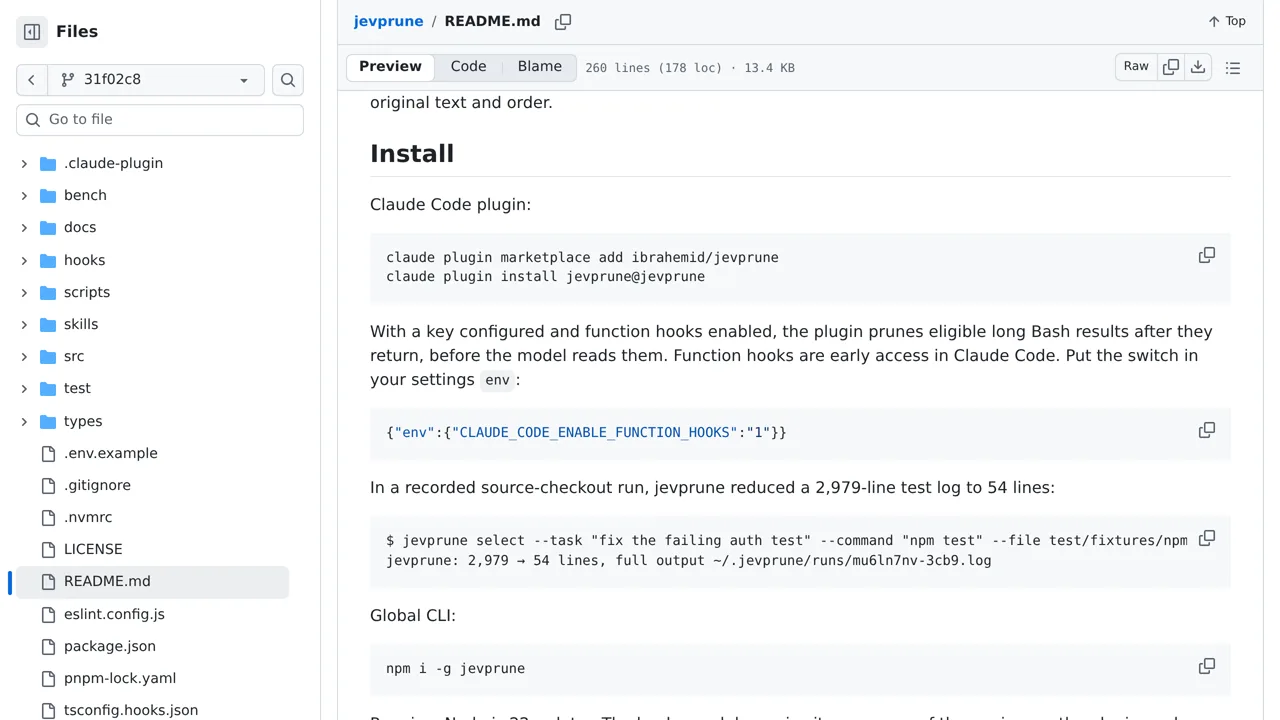
Cuts long command output down before a coding agent reads it, while keeping selected lines exactly as written.
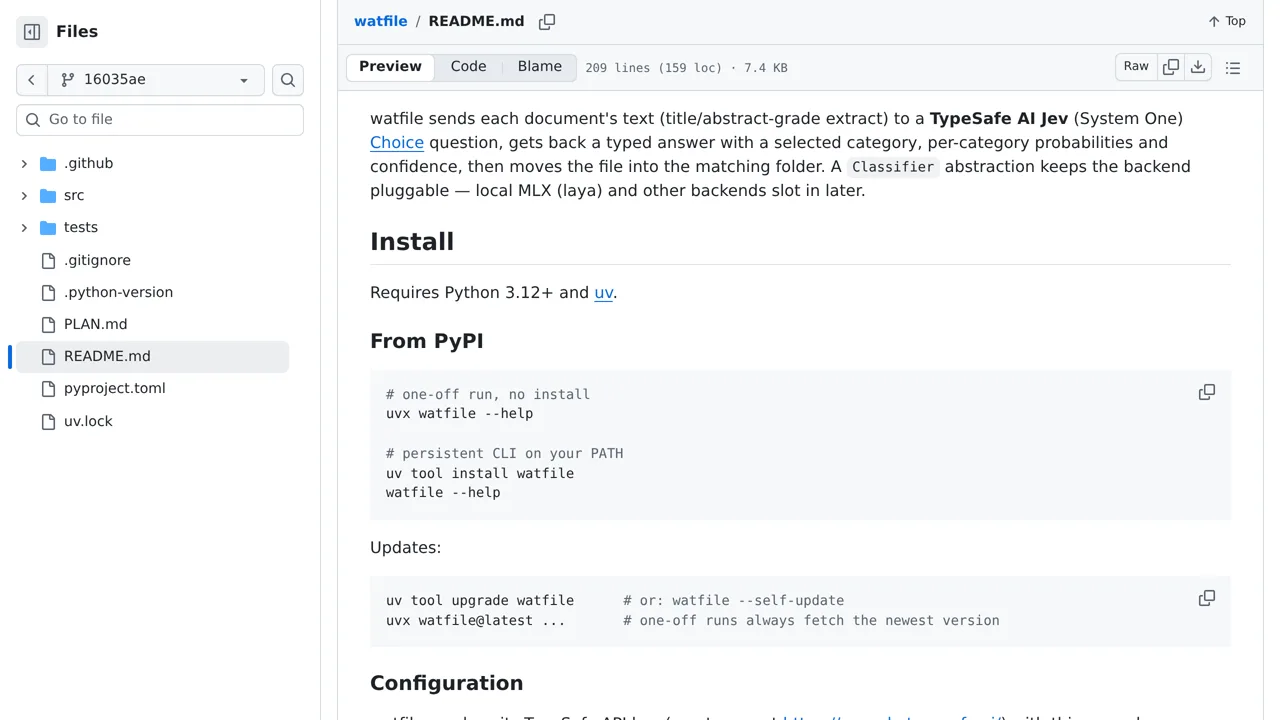
Sorts documents into your folders by choosing the best category for a short extract from each file.
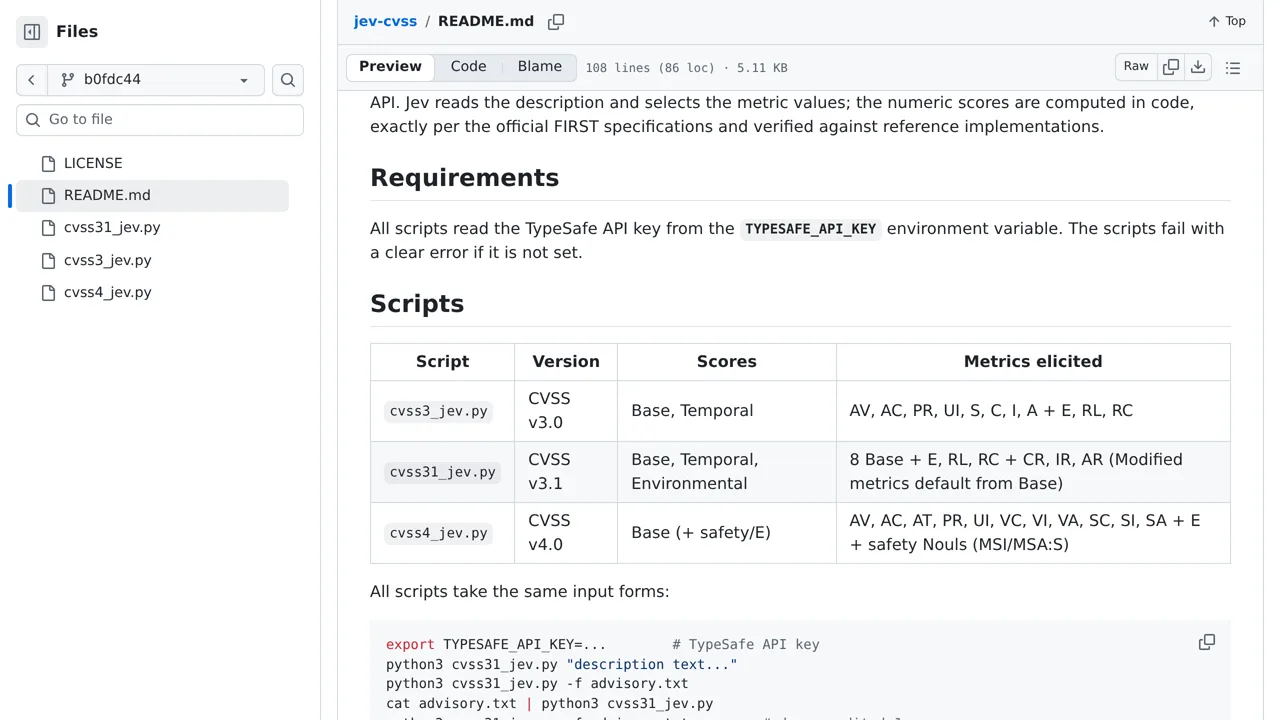
Maps vulnerability prose onto CVSS 3.0, 3.1 or 4.0 metrics, then calculates the official vector and score in Python.
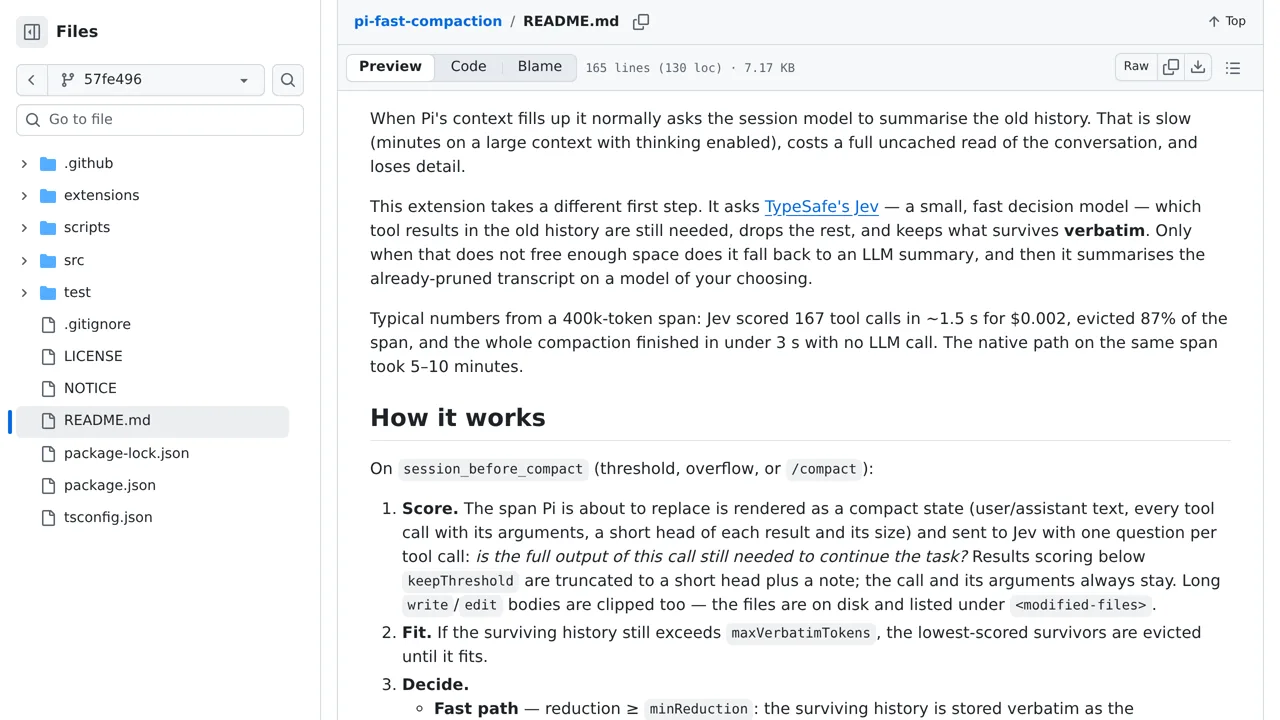
Keeps useful old Pi tool results verbatim and calls the normal summarizer only when the context is still too large.
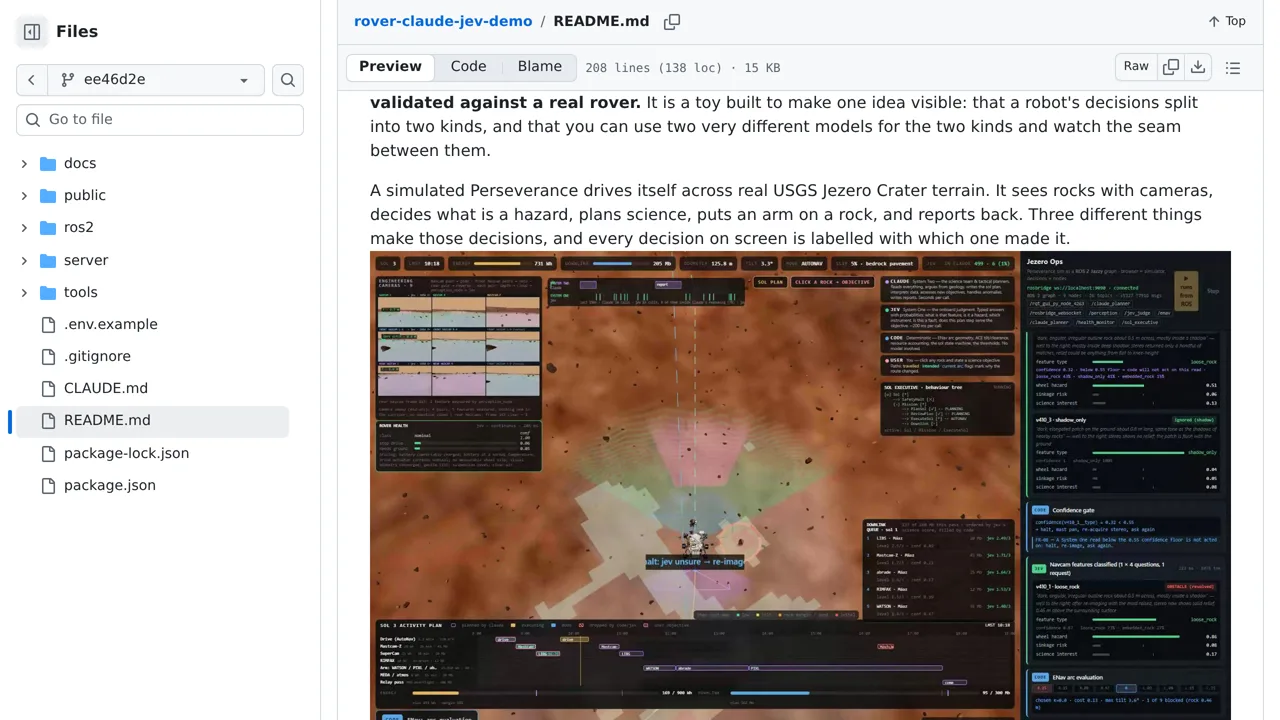
Finds real libraries on GitHub or crates.io, then ranks the candidates for fit, maturity and documentation.
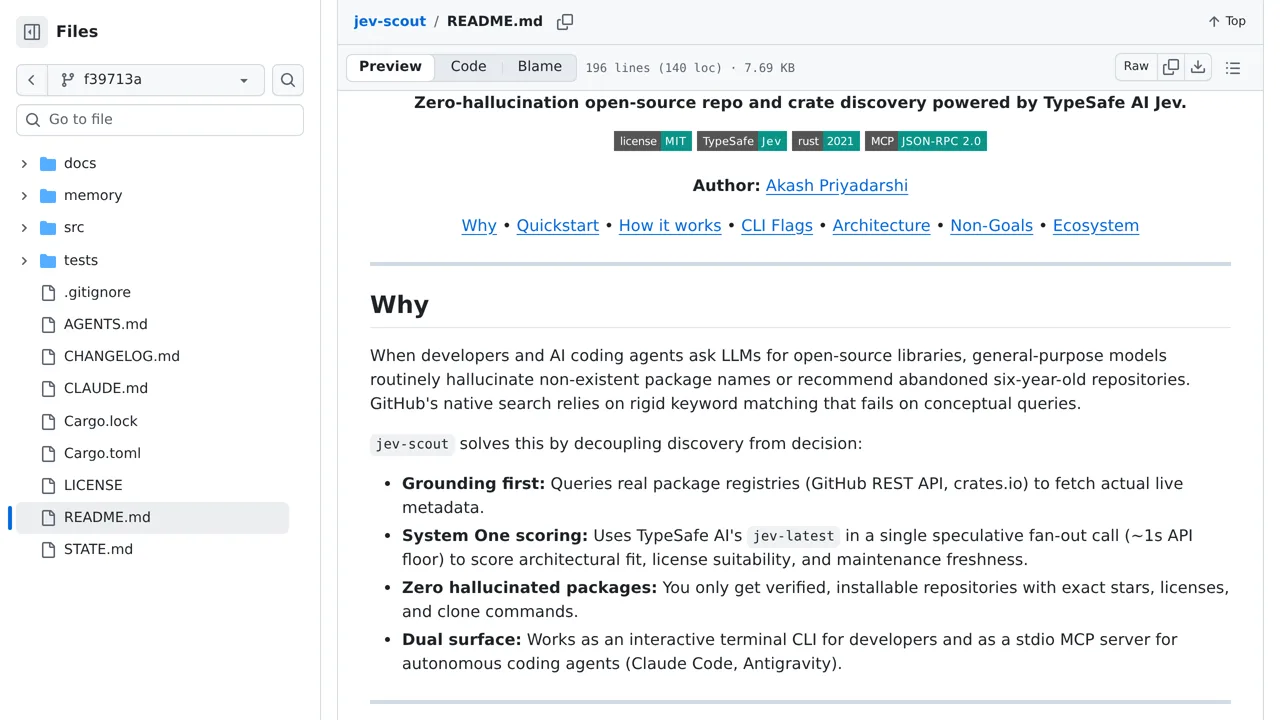
Temporarily hides older, low-value Pi messages from future requests without deleting them from the session.
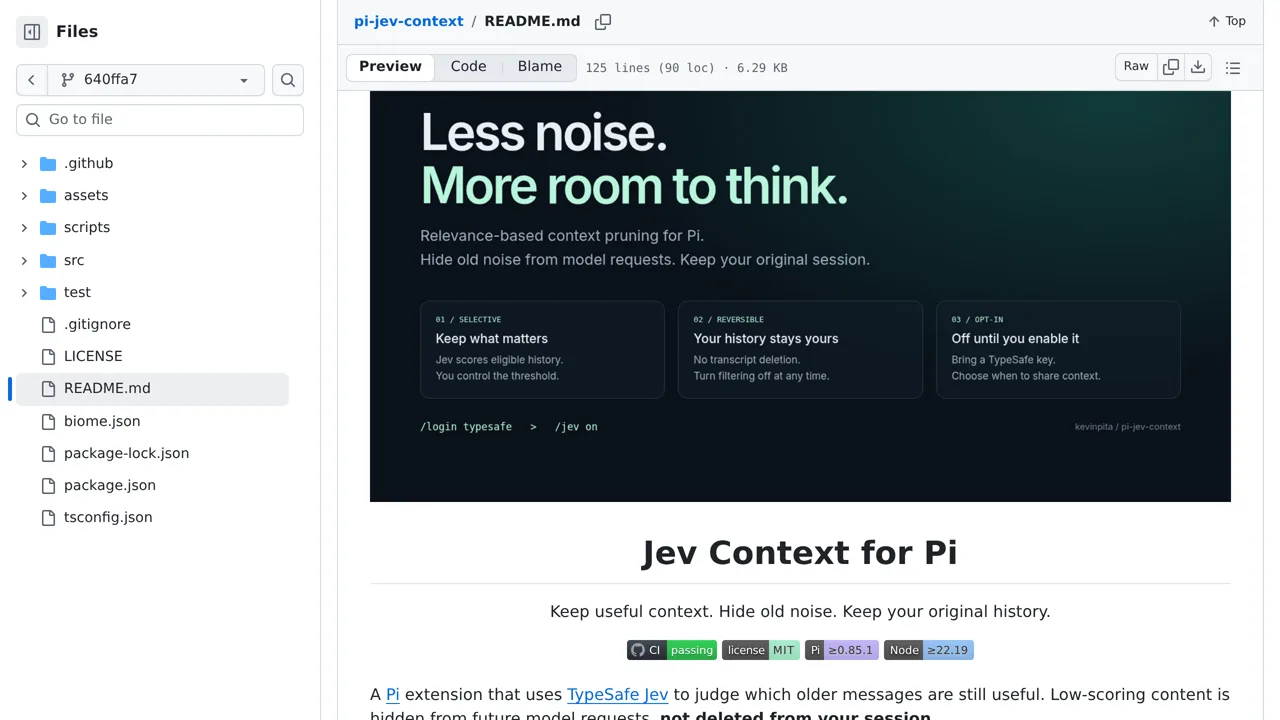
Keeps OpenCode on a lightweight cache-friendly parent model until Jev decides a turn deserves a stronger child agent.
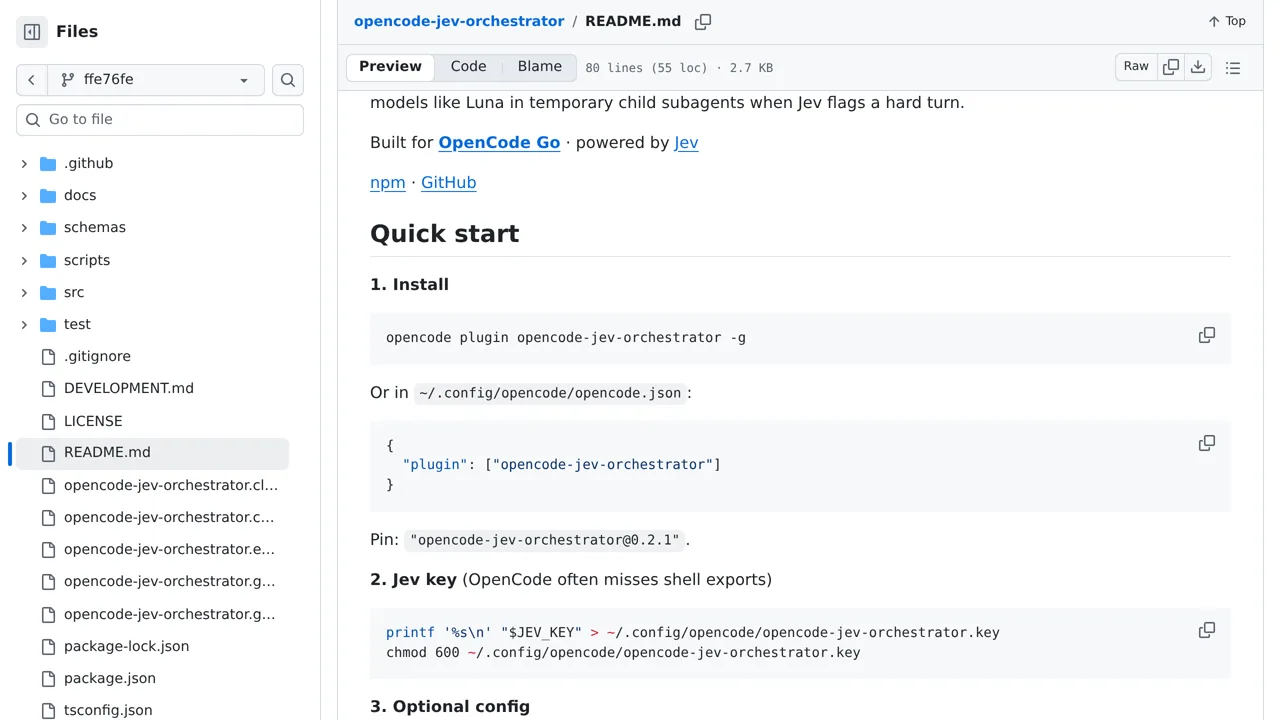
A simulated Perseverance rover where Jev classifies terrain and hazards while Claude plans the mission.
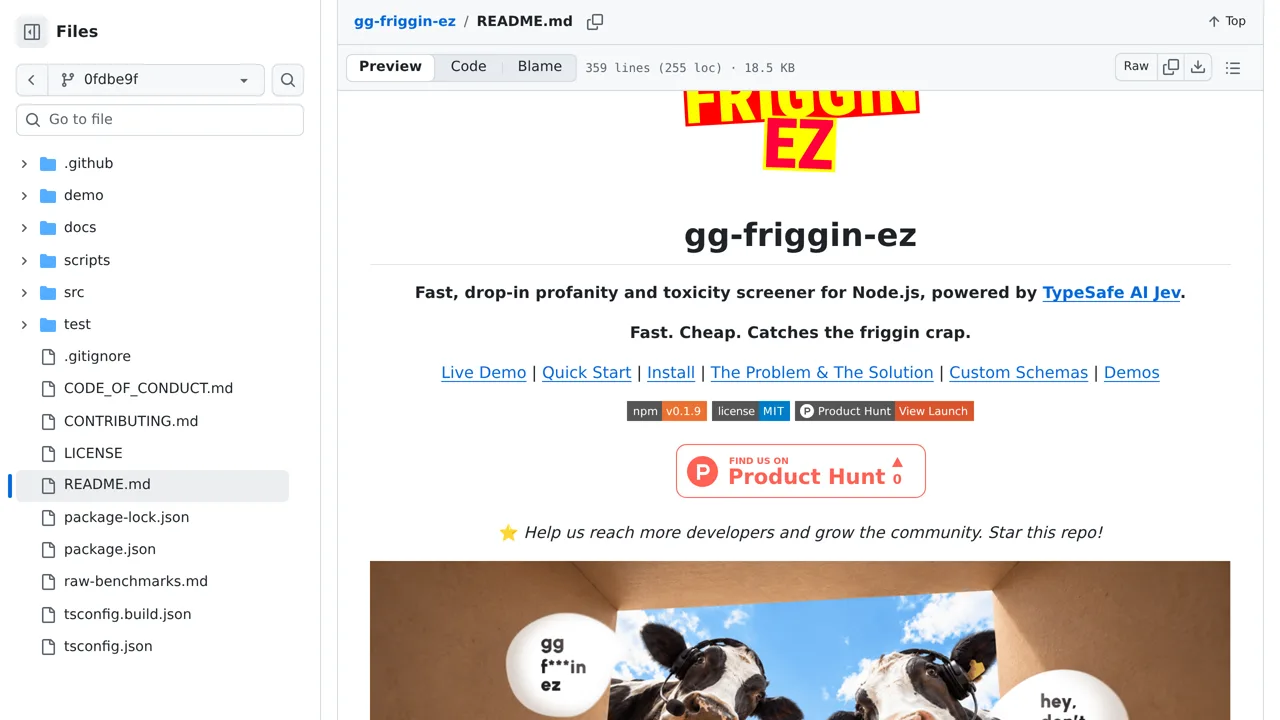
A Node.js toxicity screener tuned for romanized, code-mixed Indic text, with language and obfuscation signals beside the verdict.
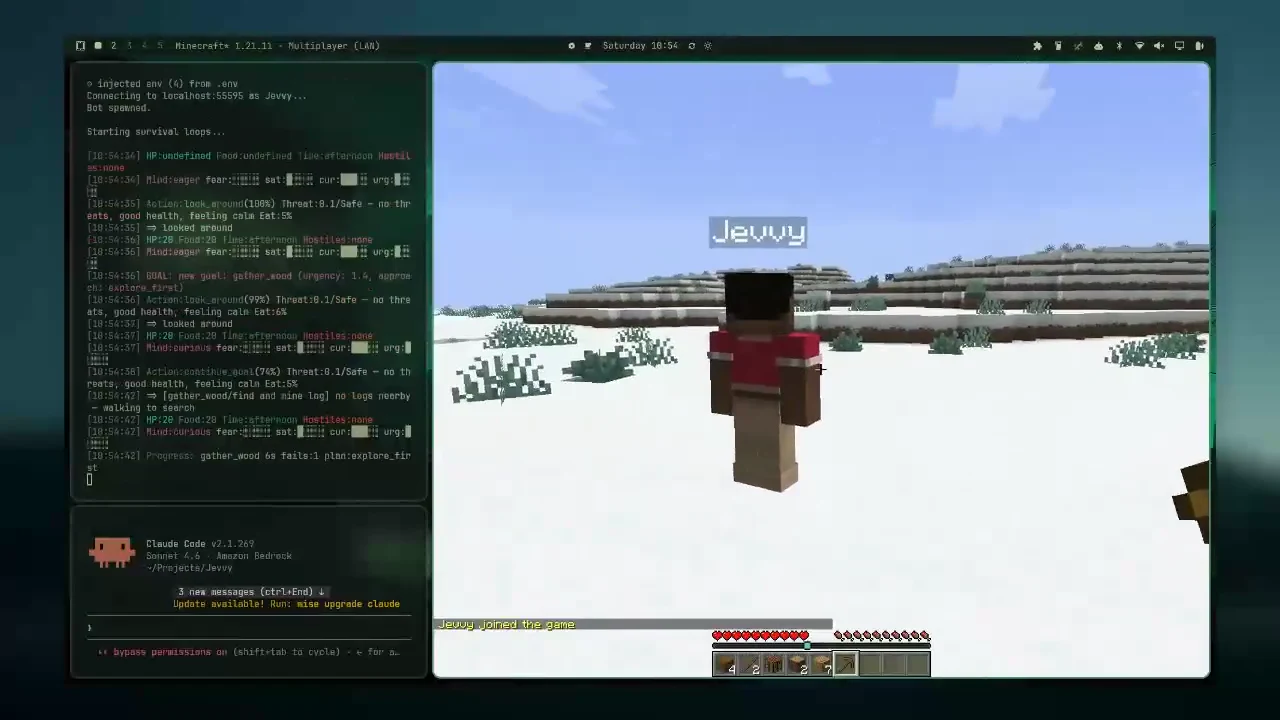
A Mineflayer survival bot where Jev chooses threats, actions, eating and escape direction from a state shaped by memory and emotion.
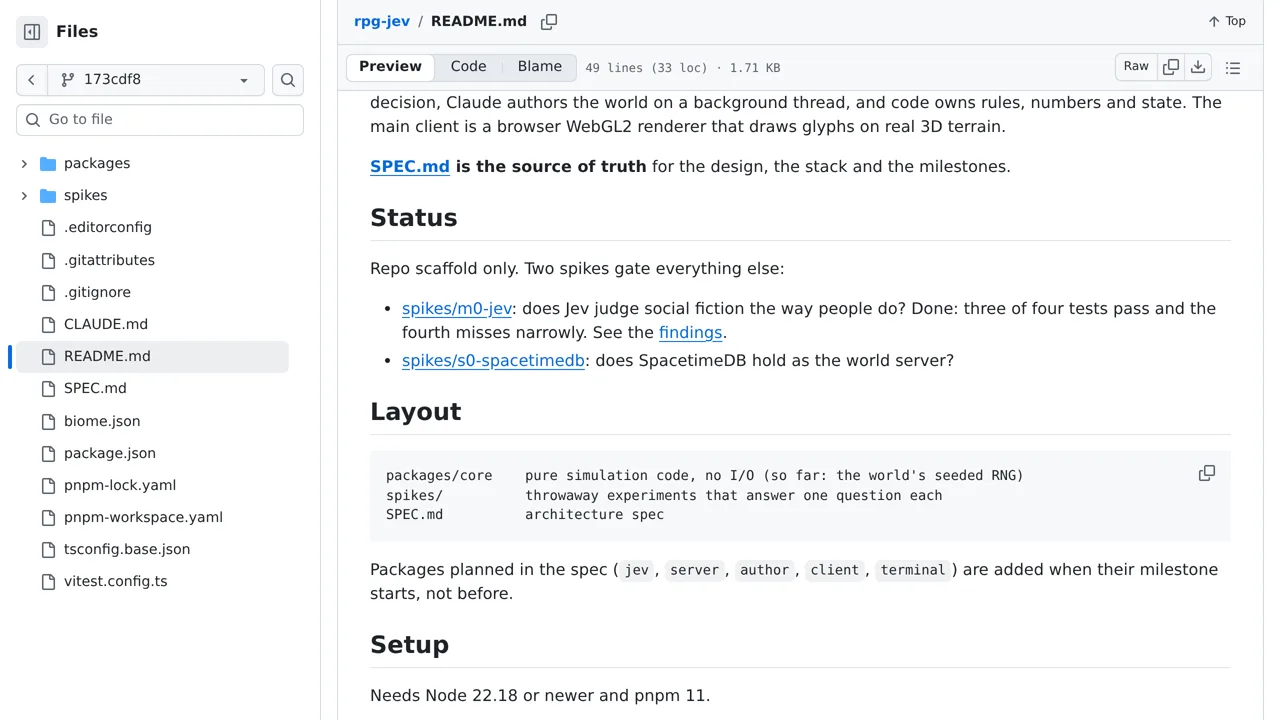
Before building an RPG, this project tests whether Jev's characters can react to context and keep a secret.
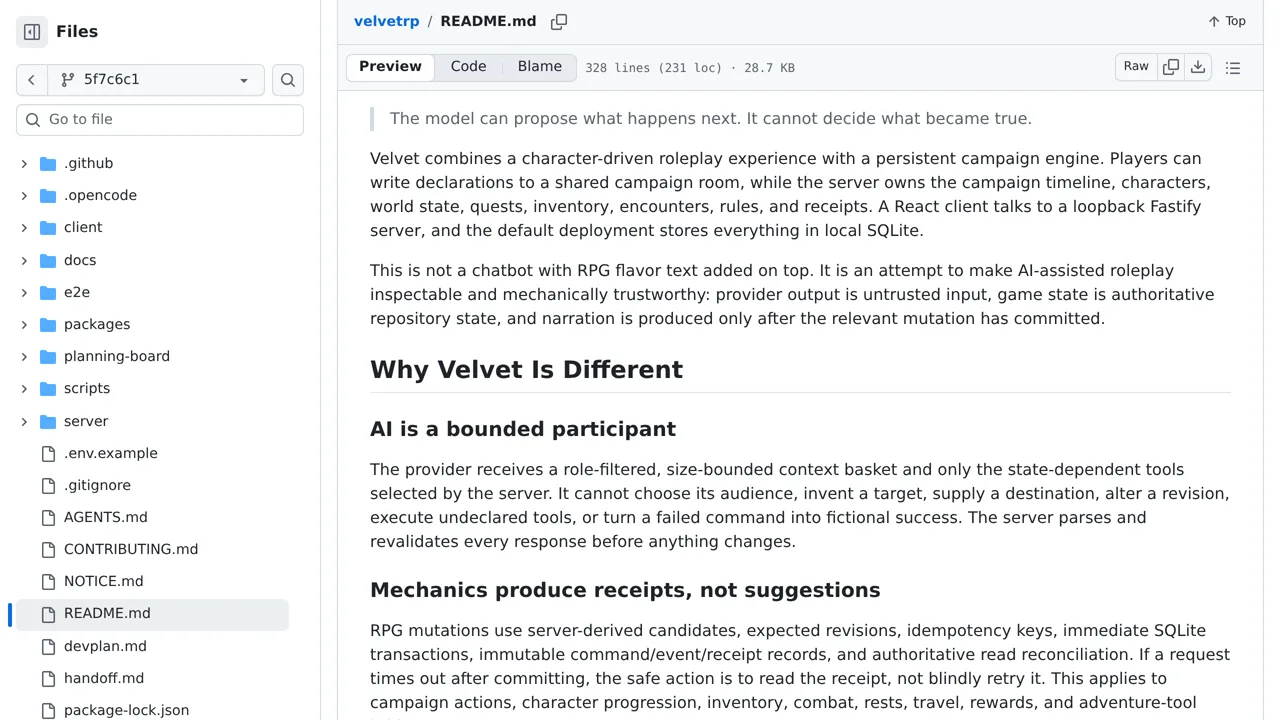
A roleplaying game that experiments with Jev choosing which story events should happen.
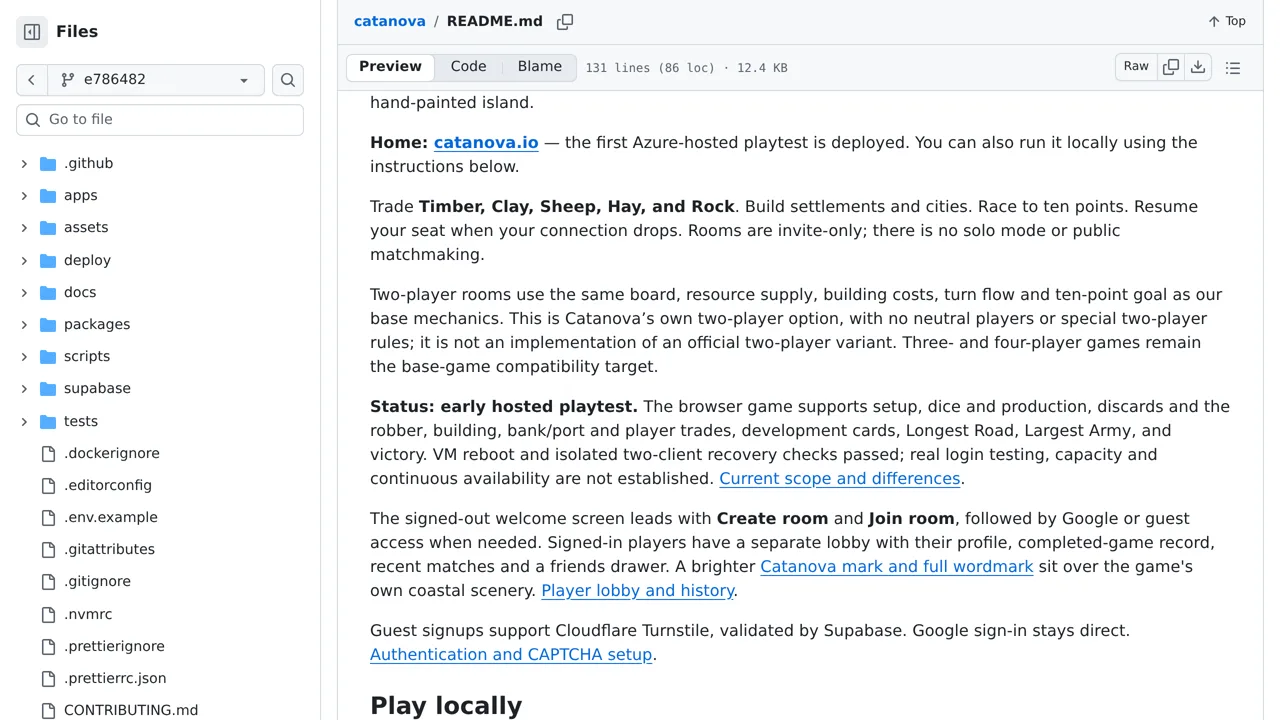
A Catan-style multiplayer game with Jev-controlled AI seats.
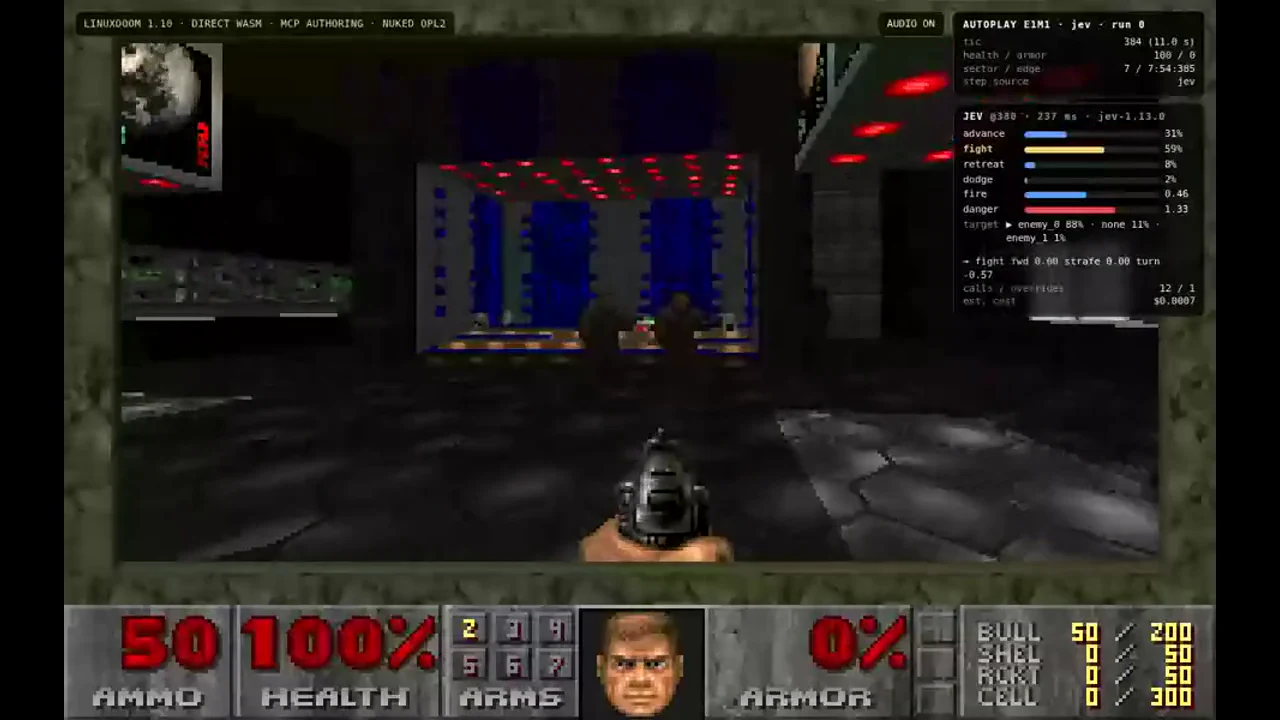
A WebAssembly DOOM port whose autoplay adds Jev tactical calls to a deterministic route follower at chosen danger points.
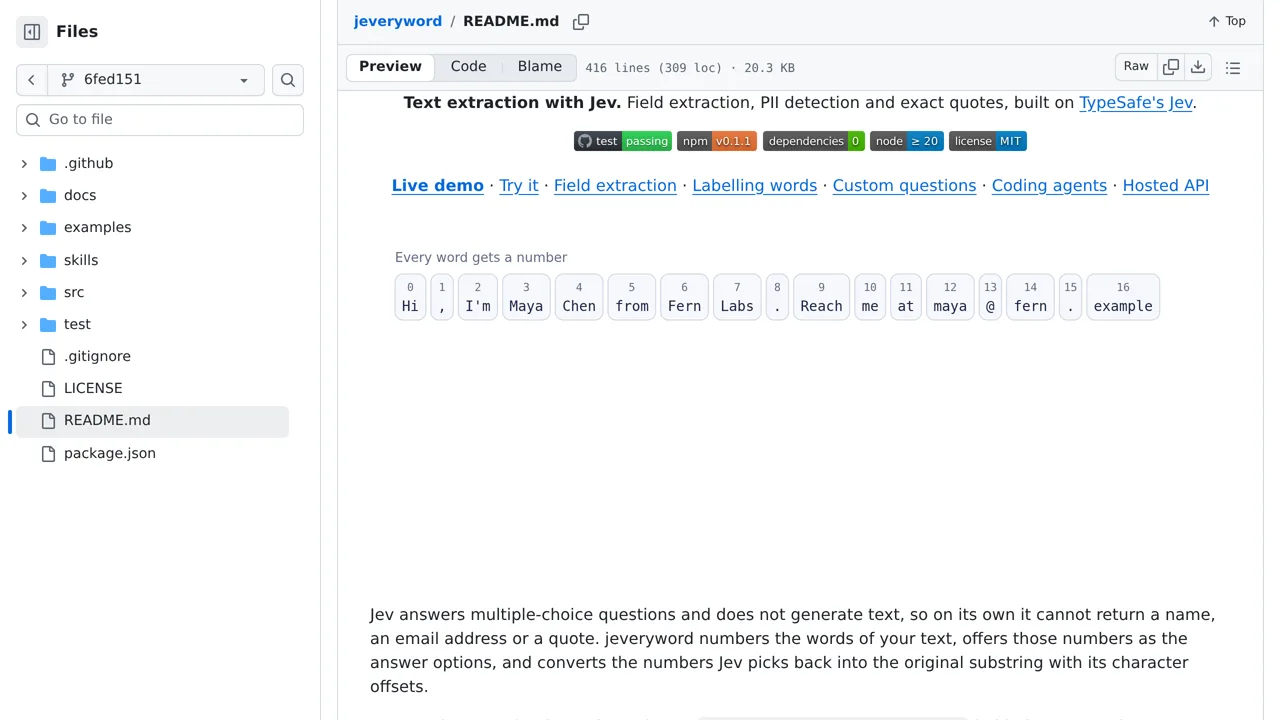
Extracts exact spans by numbering a text's words and letting Jev choose token IDs instead of generating strings.
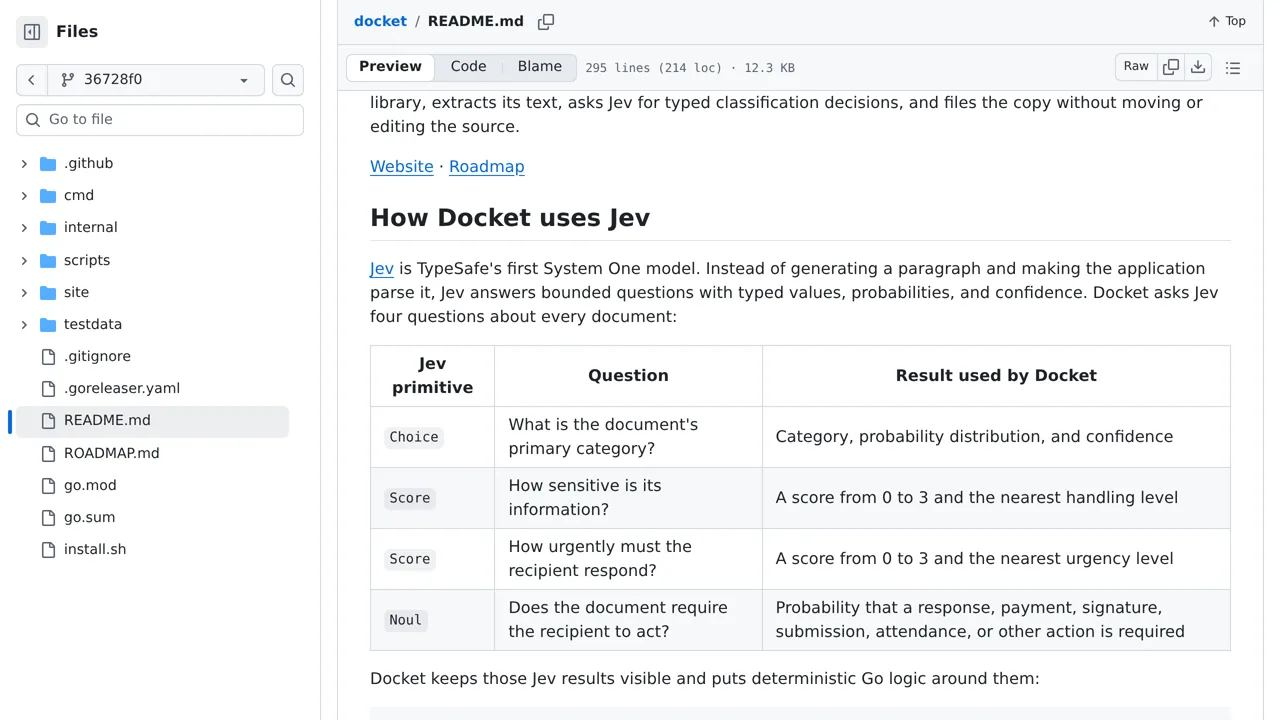
A Go terminal app that copies documents into a library, classifies them and shows Jev's raw judgments beside practical handling advice.
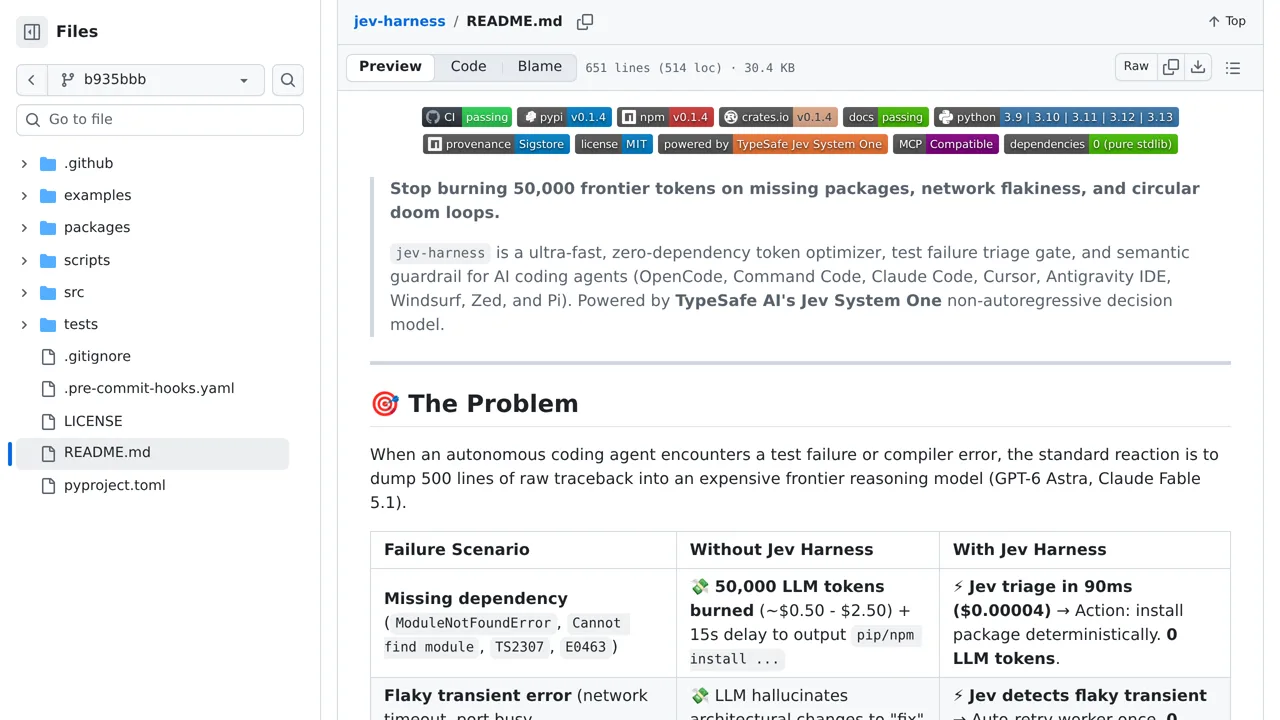
Five small gates help coding agents triage failures, stop doomed work, route models, verify steps and choose reasoning effort.
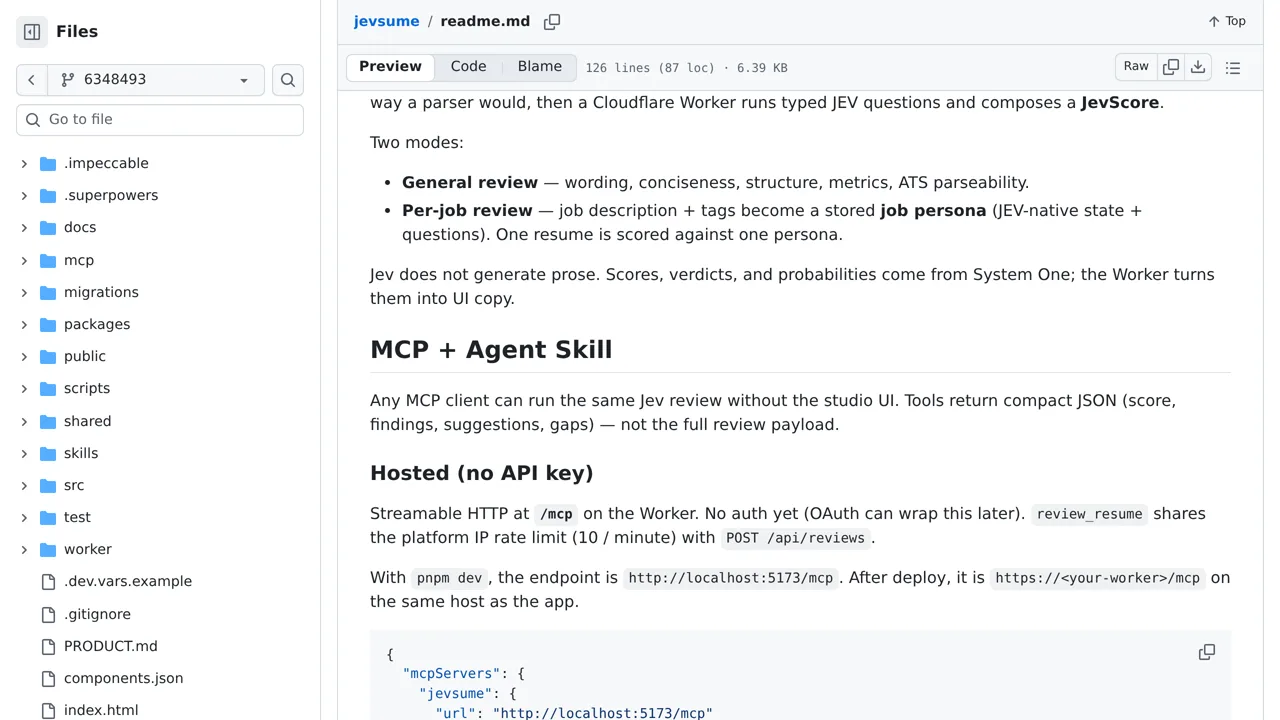
A resume reviewer that asks Jev about wording, structure and fit for a particular job.
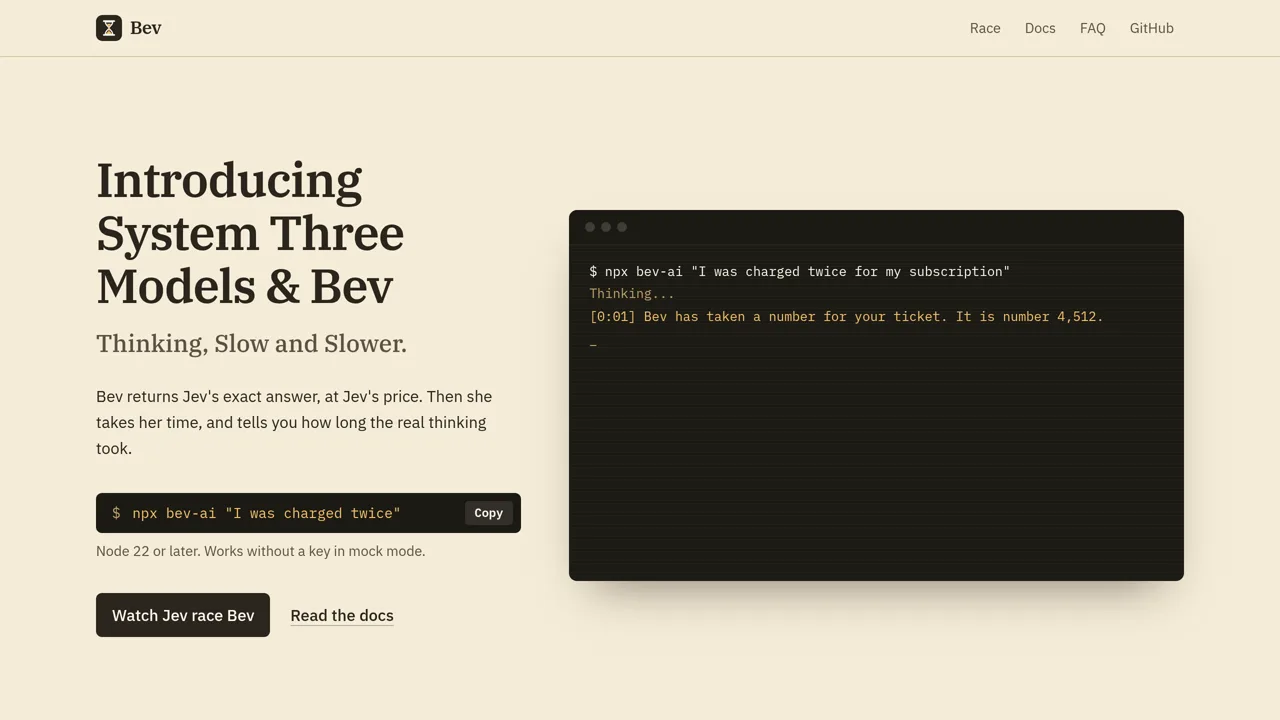
A parody of slow-thinking AI: Bev gets Jev's answer, then delays it with an elaborate paperwork routine.
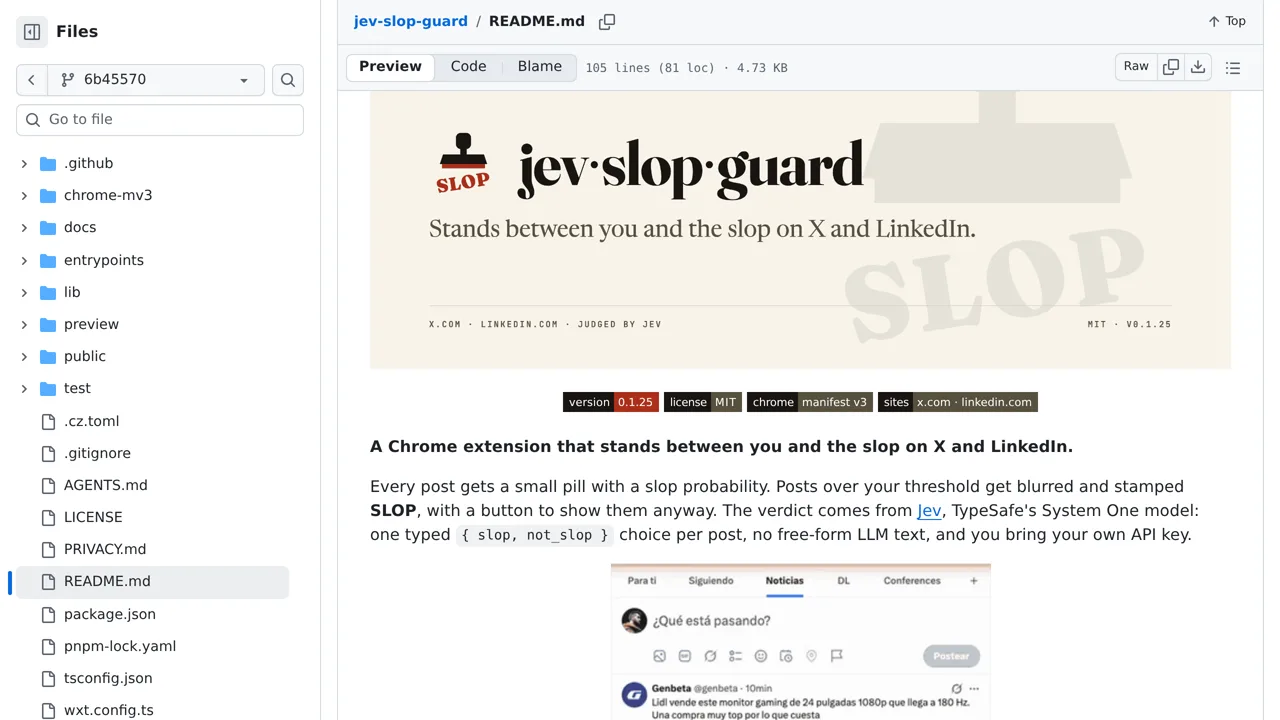
Blur posts on X and LinkedIn when a Jev judgment crosses your chosen slop threshold, with a way to reveal them.
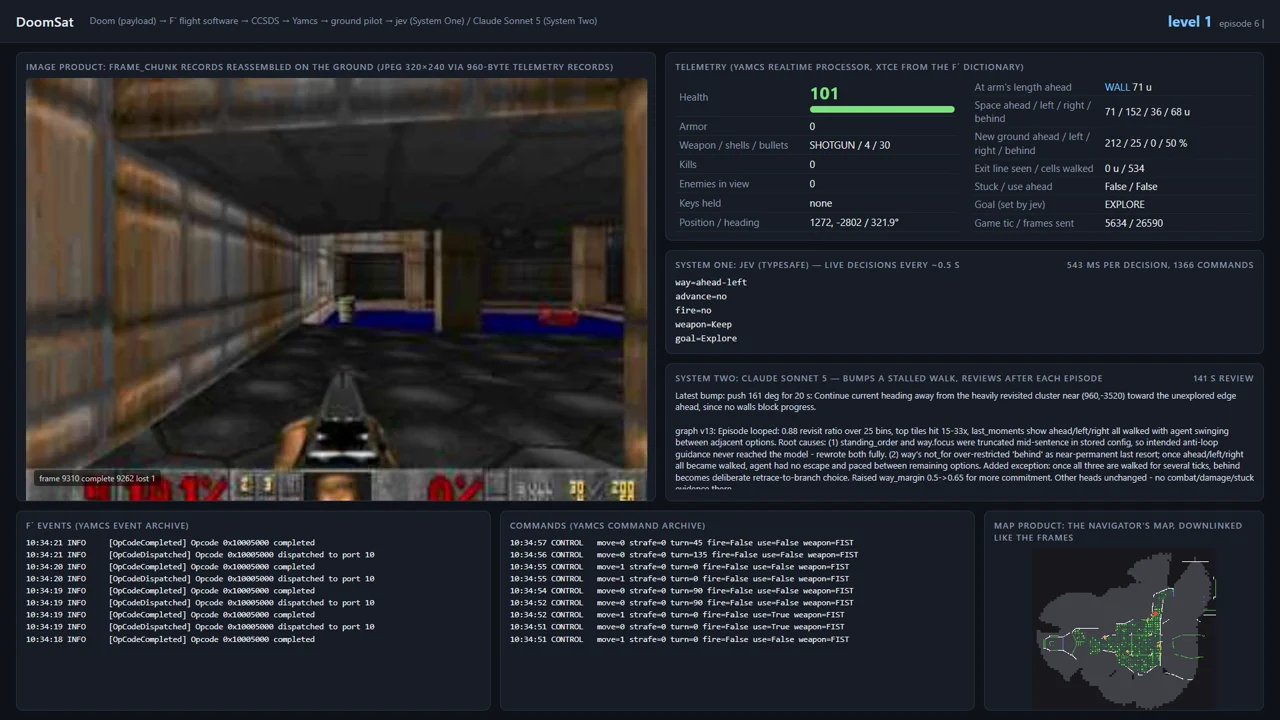
Watch Doom through a spacecraft-style mission dashboard: Jev judges where to explore while code uplinks the moves.
Jev, briefly
A chat model generates text token by token and hopes you parse it. Jev never generates a word. Your code sends the state of the world plus typed questions; Jev returns every answer in one parallel pass — typed values with calibrated probabilities and a confidence score your code can trust. About 70–500 ms end to end, $0.042 per million input tokens, output free. Trained with what TypeSafe calls Reinforcement Learning for Calibrated Decisions.
You define the options. Jev returns the chosen option, a probability for every option, and a confidence. The workhorse of routing, agents, and games — the answer space is always legal, so there is nothing to parse and nothing to hallucinate.
You describe ordered levels — say trivial / normal / critical. Jev returns the level, the probability of each, and a confidence. Scores turn fuzzy judgment (“how severe is this log line?”) into a number-free decision your code can branch on.
You assert a statement; Jev returns the probability that it is true — a noul. Moderation, verification, guardrails, “does this diff actually fix the bug?”: one question, one calibrated probability.
Official material lives at typesafe.ai and docs.typesafe.ai. JevMade is an independent community registry — not affiliated with or endorsed by TypeSafe AI.
Recurring lessons
Games, drones, trading bots, and browser agents all converge on the same loop: serialize the state, ask one decisive question, act, repeat. Jev’s latency makes the loop feel instant — the model lives inside the control loop, not outside it.
The answer says what; the confidence says whether to act. The most reliable entries threshold on confidence to route edge cases to a slower model or a human — automation with an honest escape hatch.
Makers rarely ask Jev to pick from everything. Local tactics prune 225 gomoku moves to ~40; DOM filters turn a page into an element table; code narrows options, Jev judges within them.
A recurring split: Jev makes every decision cheaply and instantly, and a small LLM is only invoked when a human-facing string must actually be written. Decision and generation are separate budgets.
Send the link — repo, live demo, post, or video — plus a line on what it does and which primitives it uses. Every entry is verified against its primary source before it ships.
Submit your experiment → hello@JevMade.com