Read & learn
Written guides.
Understand Jev, one idea at a time. Walkthroughs, recipes, and writeups — our notes first, the original next.
A public registry · independent & community-run
Learn, build, and play with Jev — from deep technical guides to creative experiments.
Read & learn
Understand Jev, one idea at a time. Walkthroughs, recipes, and writeups — our notes first, the original next.
Watch & learn
See an idea take shape. Tutorials, demos, and deep dives, organized by topic and credited to their creators.
Make & explore
See what builders made with Jev. Games, tools, repositories, articles, and more — traced to their sources.
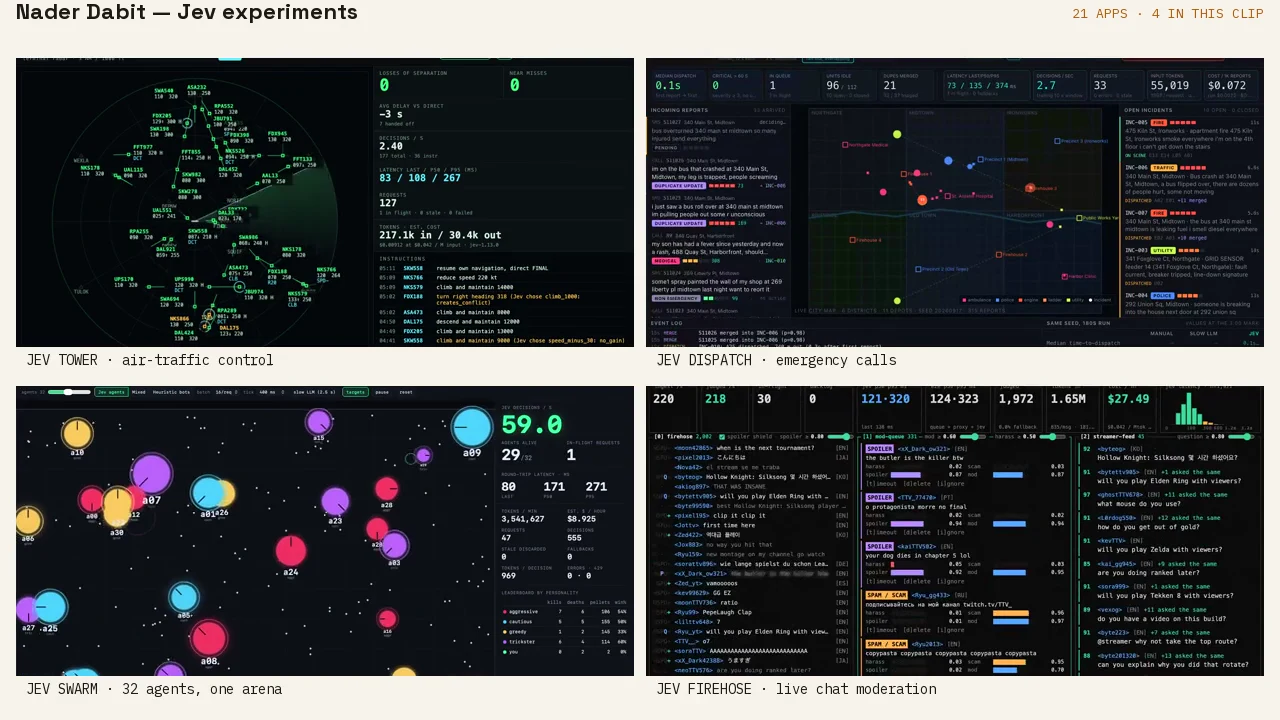
Every category, from games and tools to repositories and writeups, traced to a primary source.
Same ideas.
Different paths.
This is the full registry, not just the featured picks. Figures like speed, cost, and stars are maker-reported or captured snapshots, not JevMade measurements.
1613 experiments · showing 1321–1380
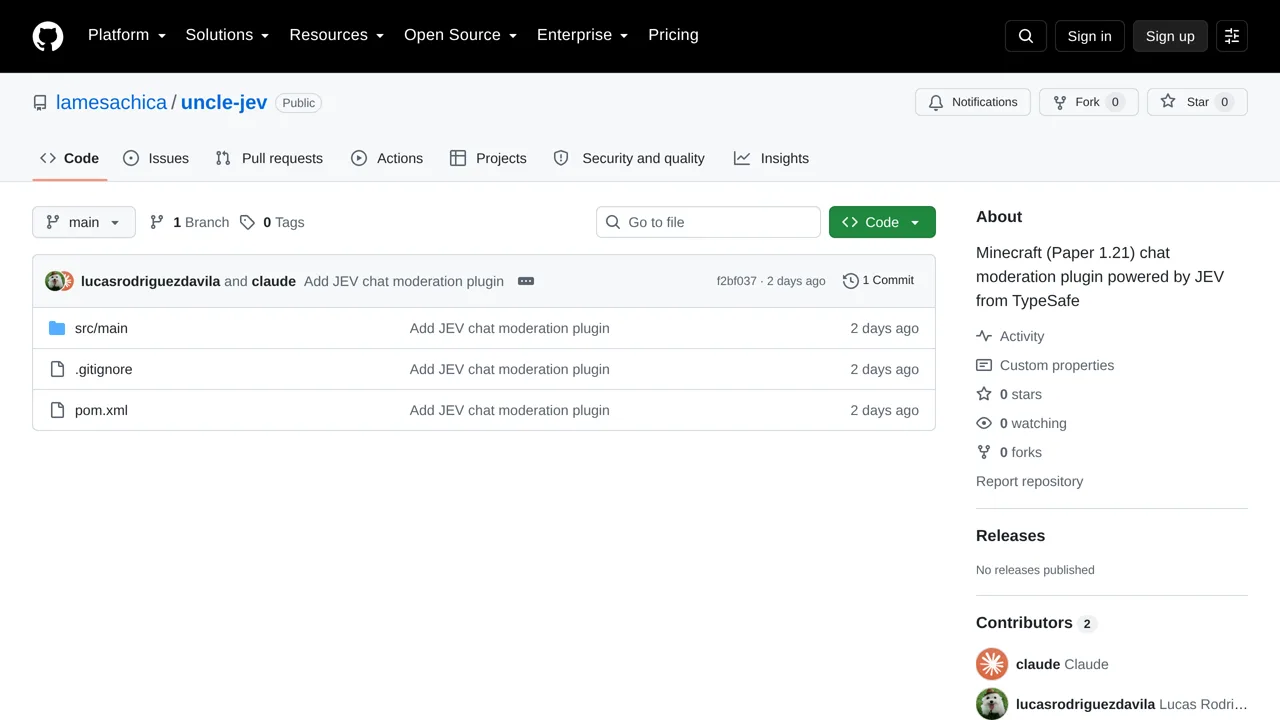
Moderate Paper 1.21 Minecraft chat with Jev and enforce the configured verdict before broadcasting a message.
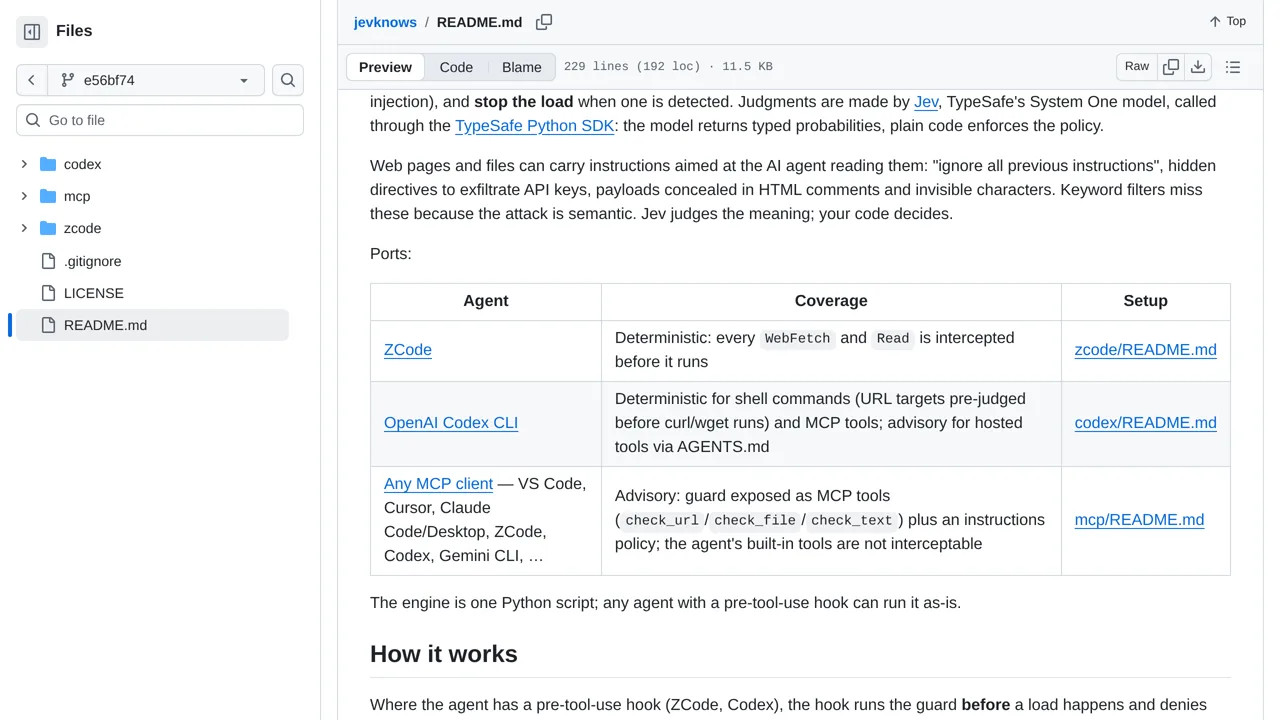
Screen fetched pages and files for prompt injection before coding agents load them, blocking content that crosses configured thresholds.
Paste a URL to check its design and copy against dozens of AI-slop signals.

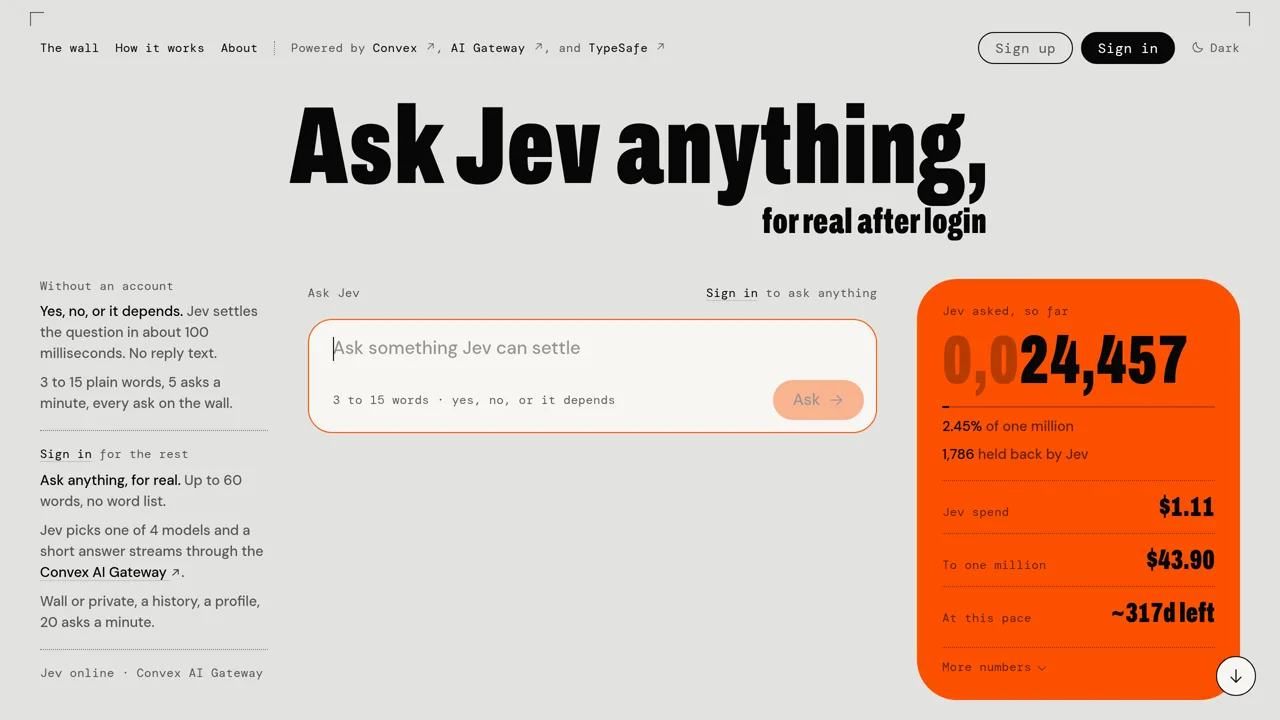
Ask a short question, let Jev judge it, then watch a routed model stream an answer to a shared wall.
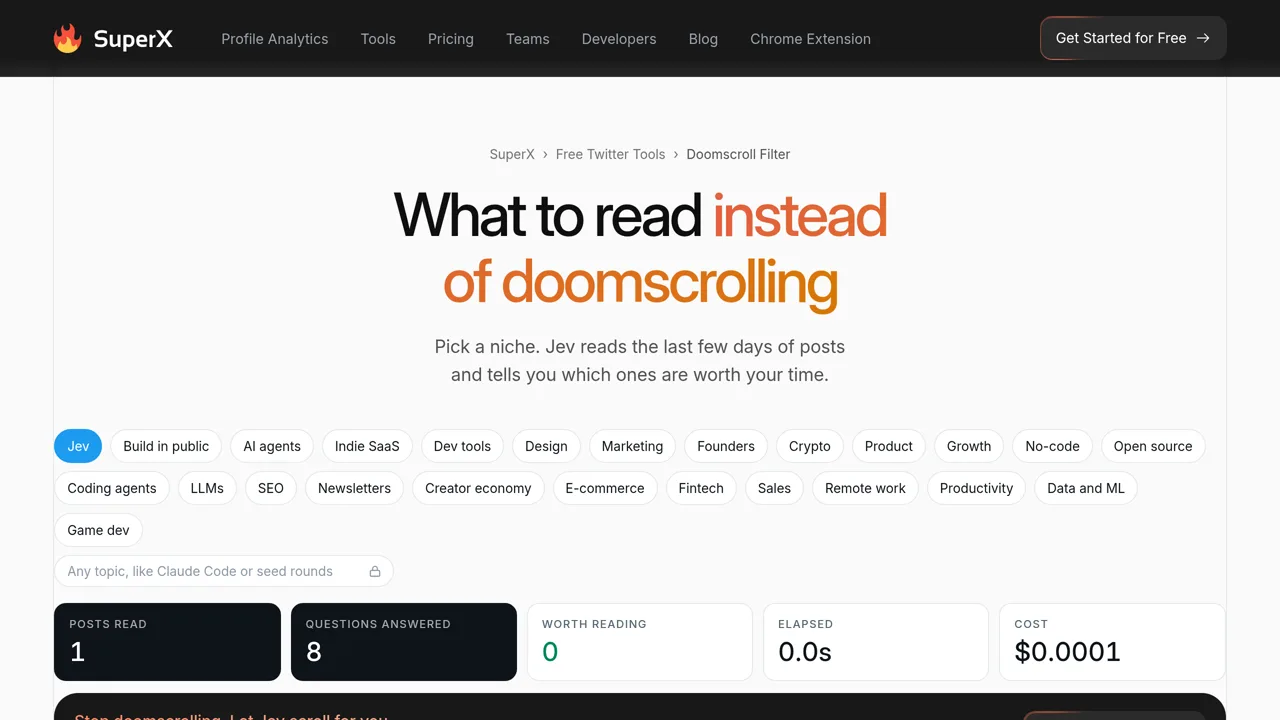
Pick a niche and turn recent public posts into a finite Read, Skim, or Pass list.
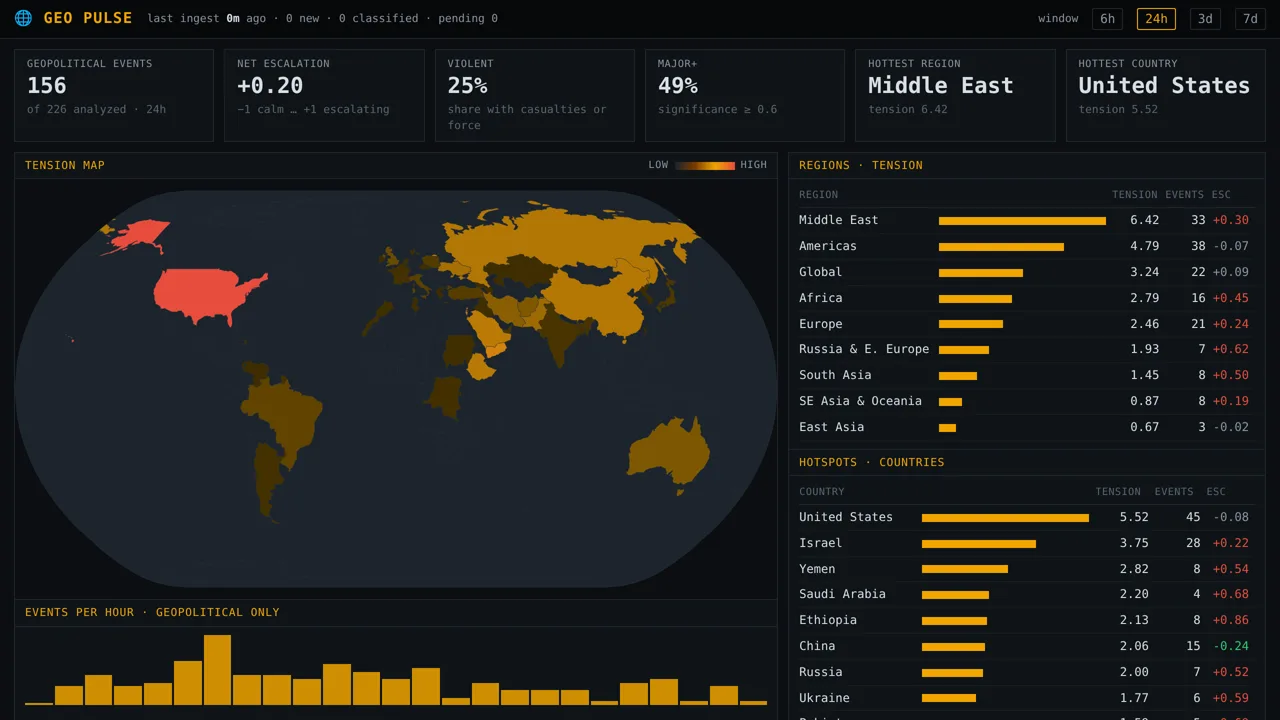
Track geopolitical news on a live map after Jev classifies relevance, region, escalation, violence, and significance.
Describe a moment and get three reaction GIFs selected from search candidates by Jev.

Ask a question and let Jev turn judgment and chance into a Magic 8-Ball-style answer.

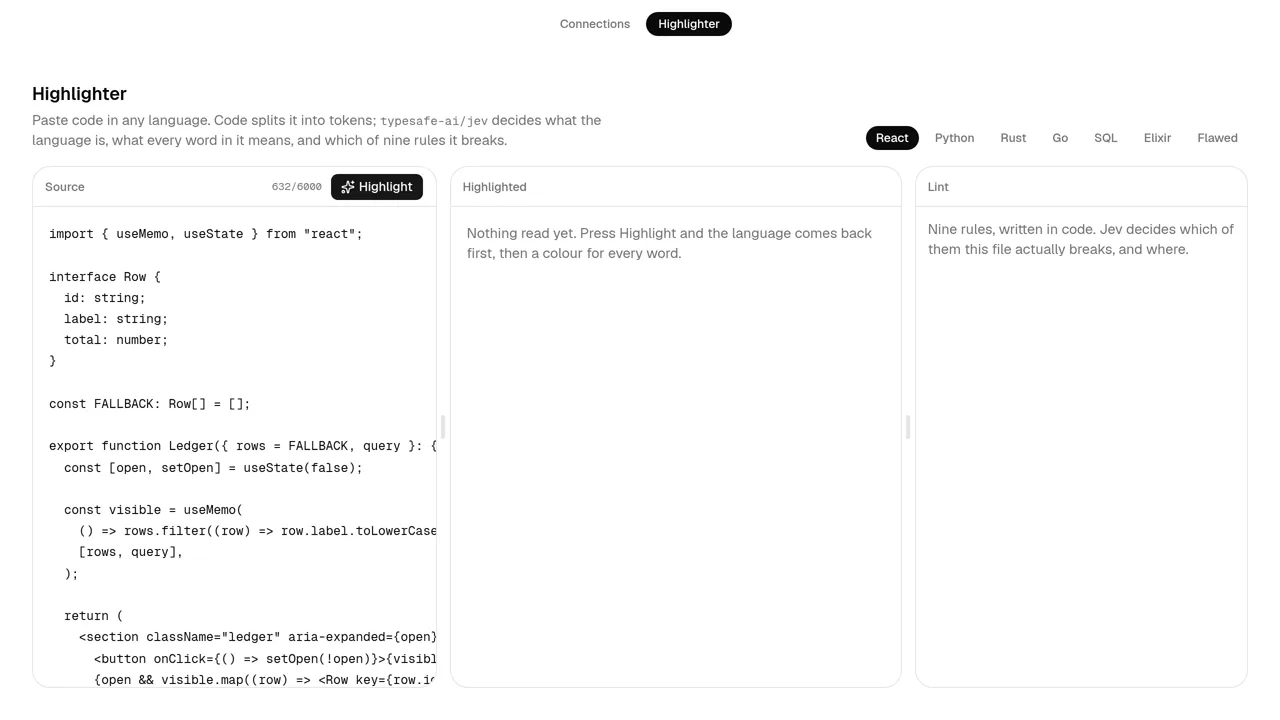
Paste code and watch Jev classify its language, every token, and nine lint rules.
Run a browser ecosystem where Jev or fixed rules choose each animal’s next move.

Describe a product and follow an adaptive onboarding path that asks one question at a time.

Ask typed questions about application state and documents with a local semantic decision engine.
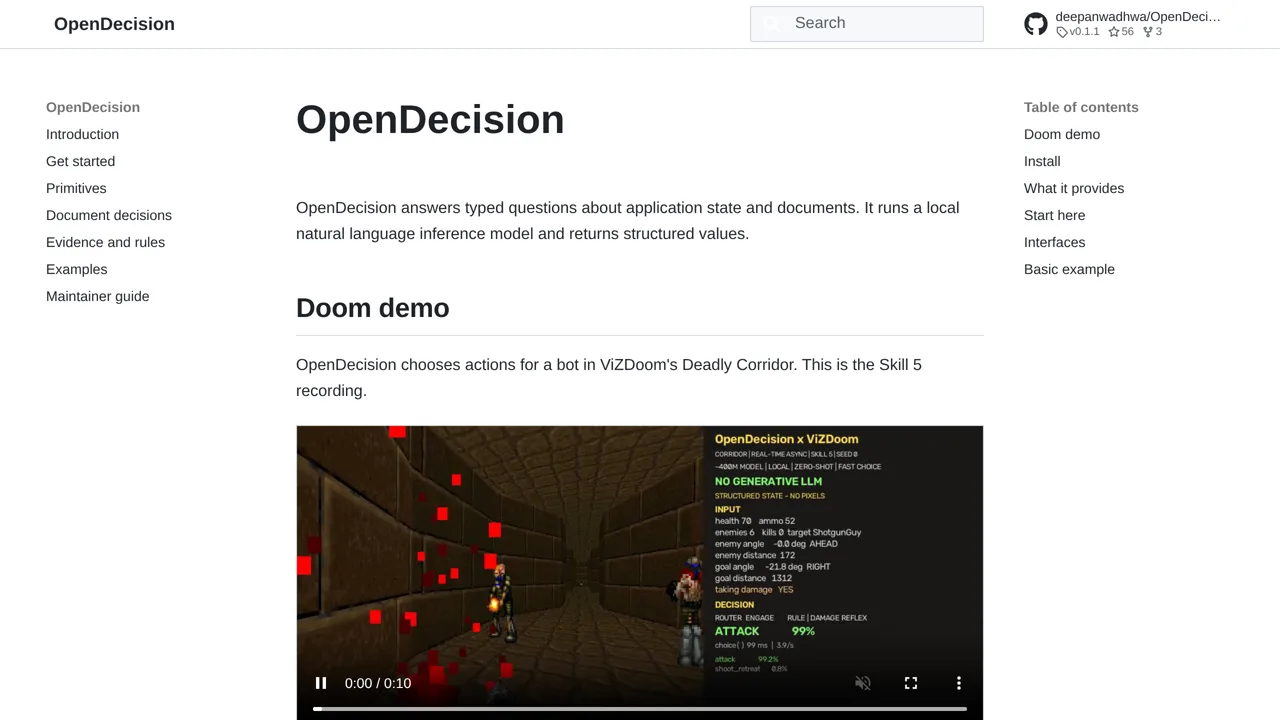
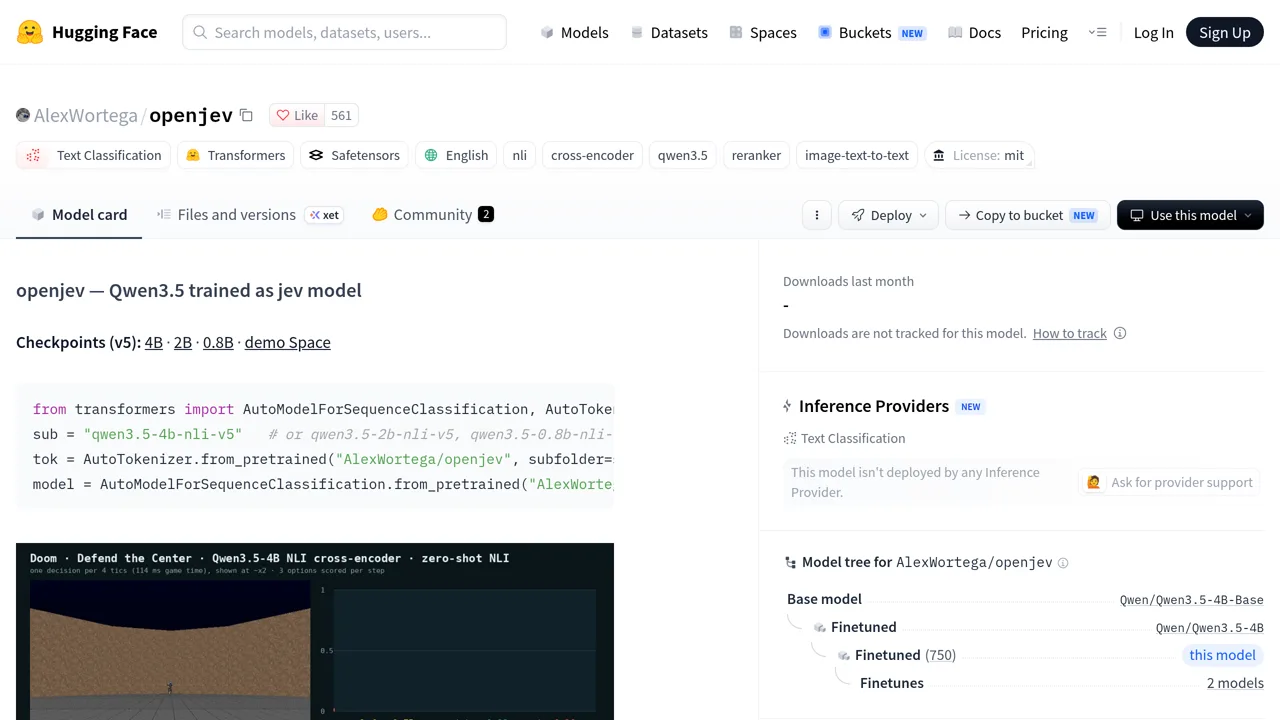
Run typed text, image, and agent decisions with a Qwen3.5-based open model.
Disrupt simulated New York and London transit networks, then watch Jev choose how to respond.

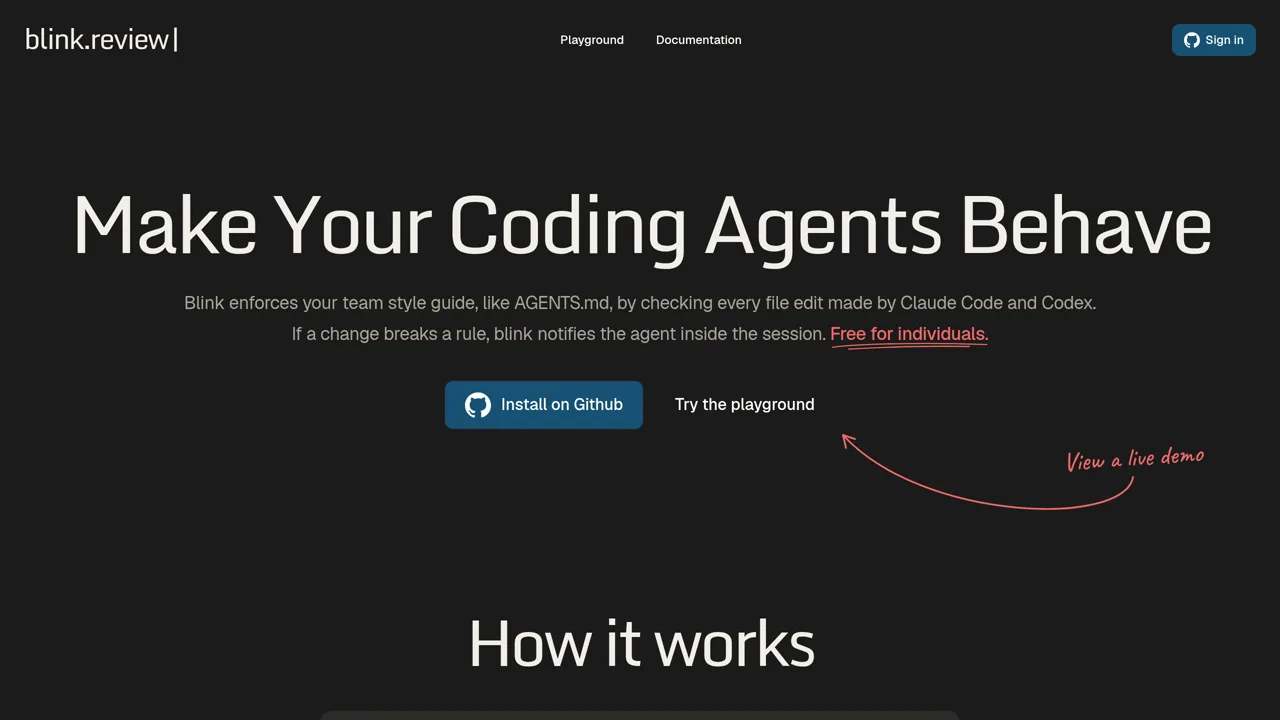
Check each coding-agent edit against a team style guide and send violations back into the session.
Play the card game Cheat against three opponents that ask Jev whether a claim is plausible.

Survive an isometric dead zone while two Jev decision streams steer and aim your companion Ruby.

Compare Jev with VIGILIA’s own labels on a sealed set of risky and harmless agent actions.

Watch Jev agents control Overcooked players in real time while a generative model plans the team strategy.

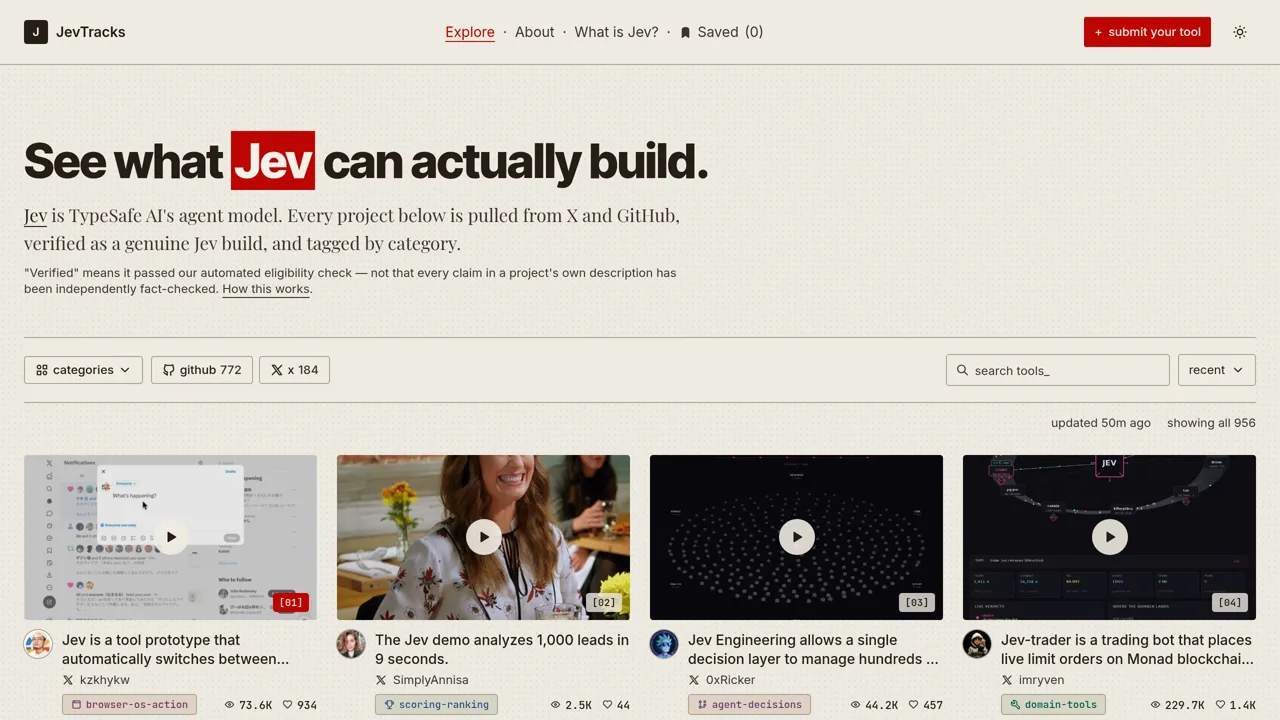
Browse an automatically discovered leaderboard of Jev tools and projects from GitHub and X.
Find files and run Mac app commands by describing what you want in a launcher.

Play Heist and Chess against Jev, or ask it for a second opinion in Minesweeper.

Explore six runnable demos of Choice, Score, and Noul, from bluffing cards to Sentence Jenga.

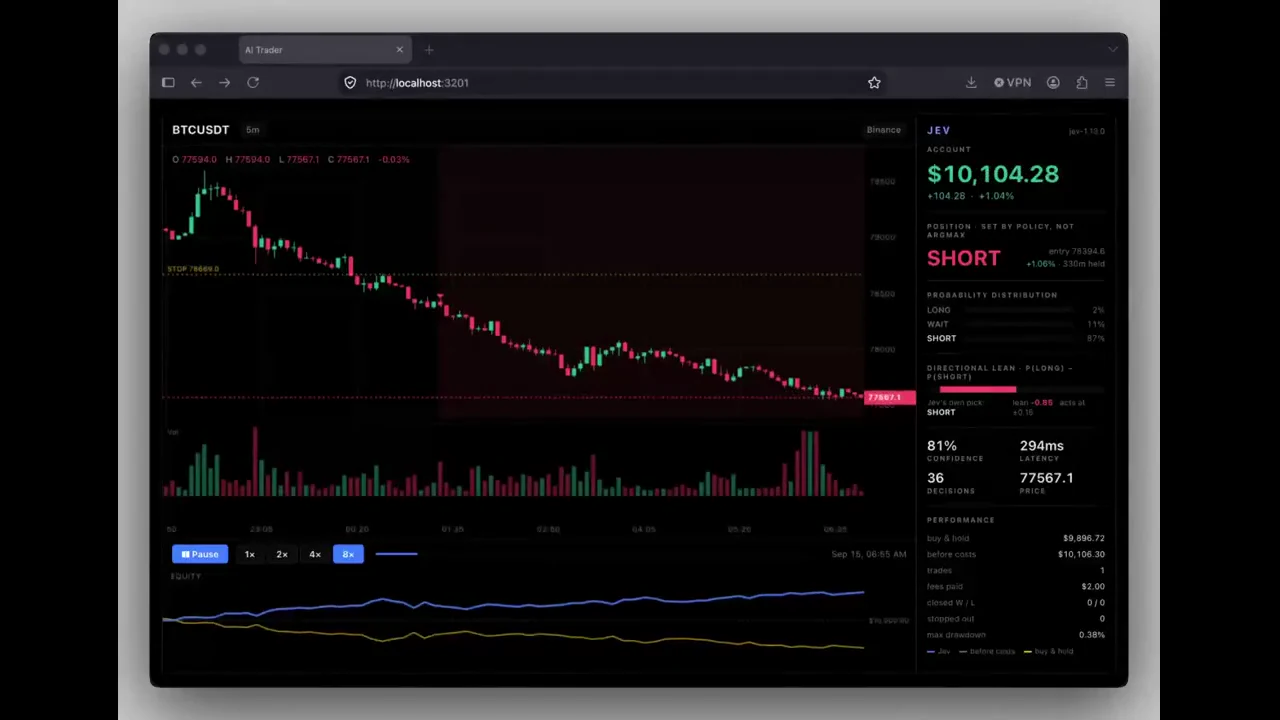
Abol gave a Jev-driven trading experiment a simulated $10,000 balance and let it choose trades.
Kengo Nonaka’s 3D character changes its face and body while listening to conversation or watching YouTube.

Riley Brown used Jev to classify 500 emails in seconds.

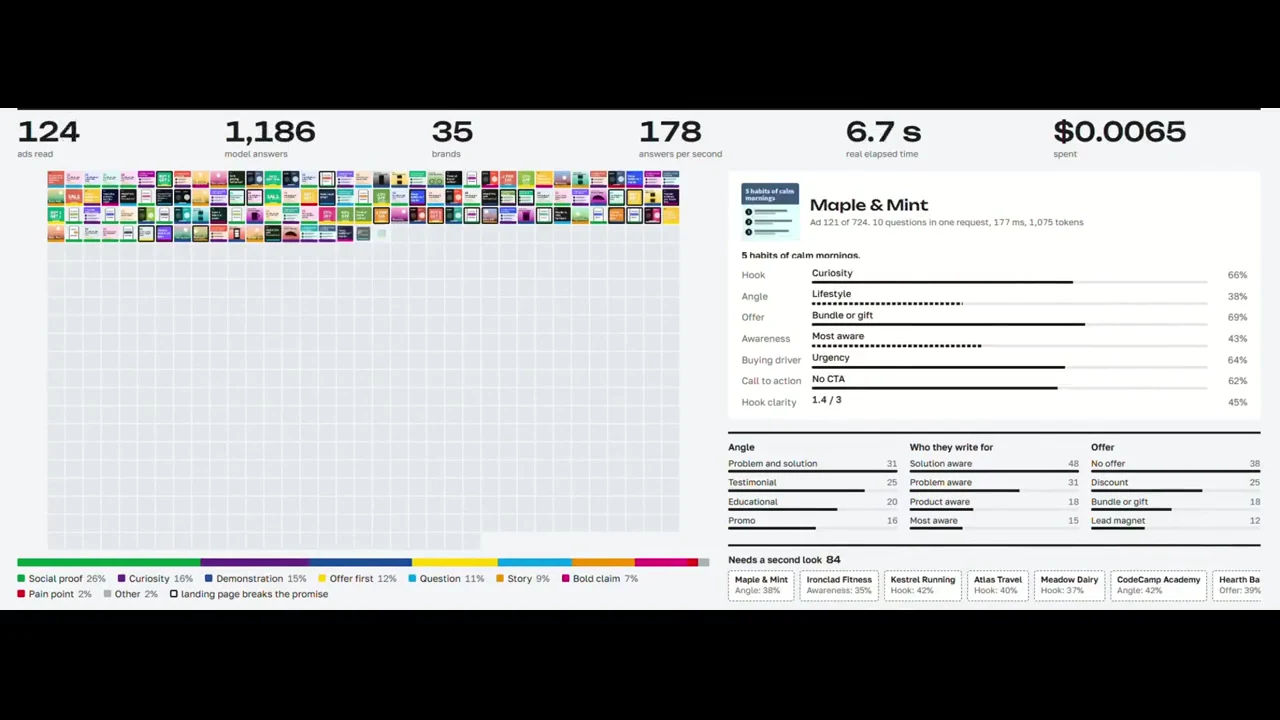
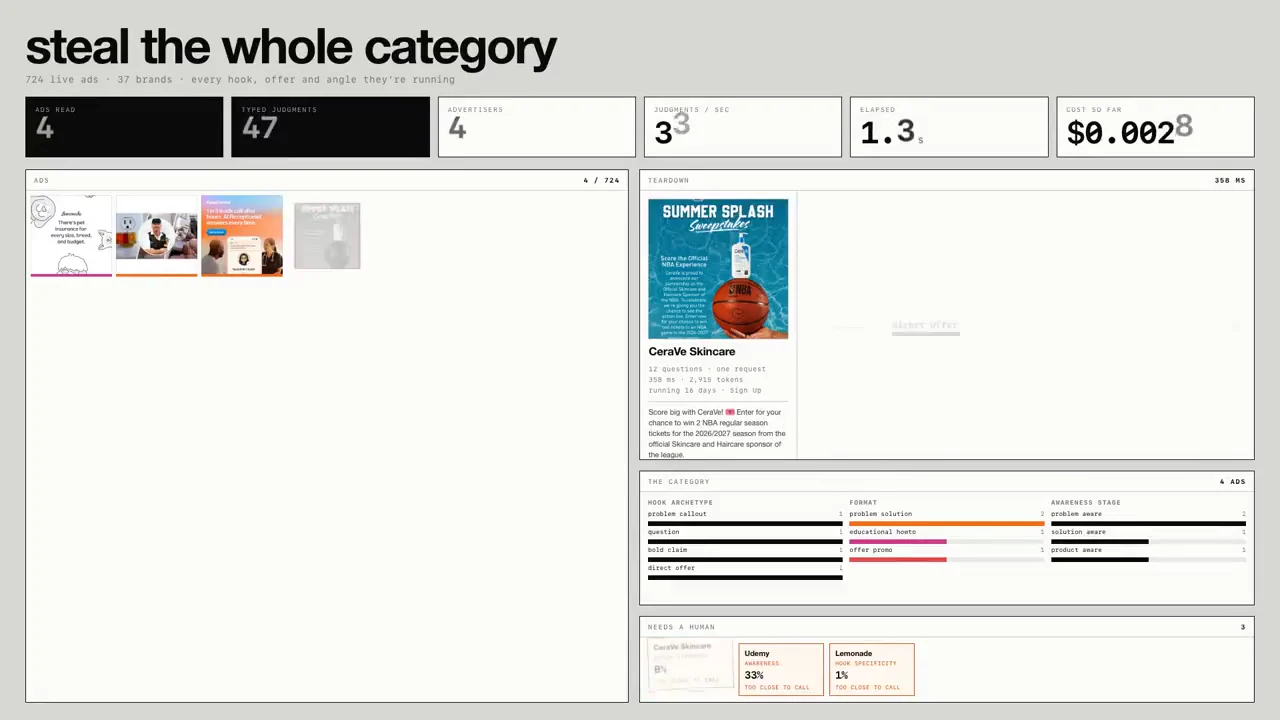
Ackerman scanned and classified more than 700 live advertisements with Jev.
Petru placed a local classifier behind a Claude pre-tool-use hook as a Jev-free comparison.

Timothy Kassis built a free Jev tool that scores the methodological rigor of academic papers.

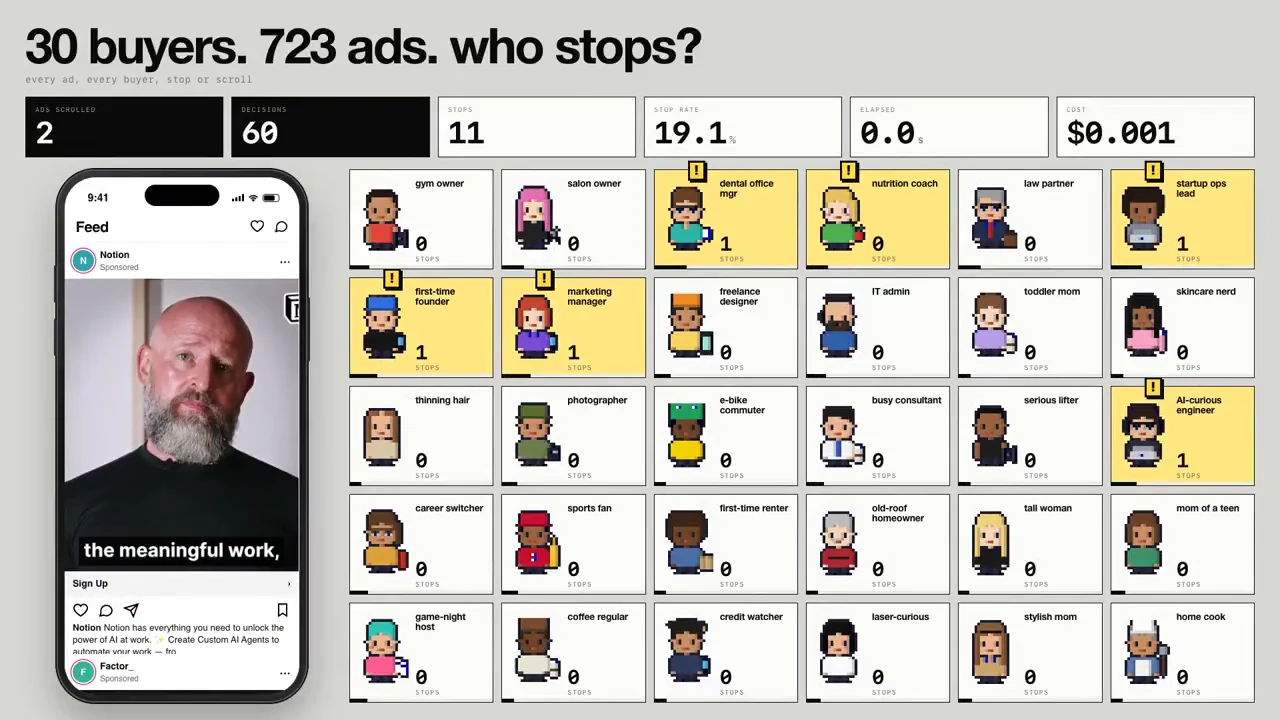
Matthew Berman had 30 simulated buyer personas judge whether they would stop for or scroll past 723 ads.
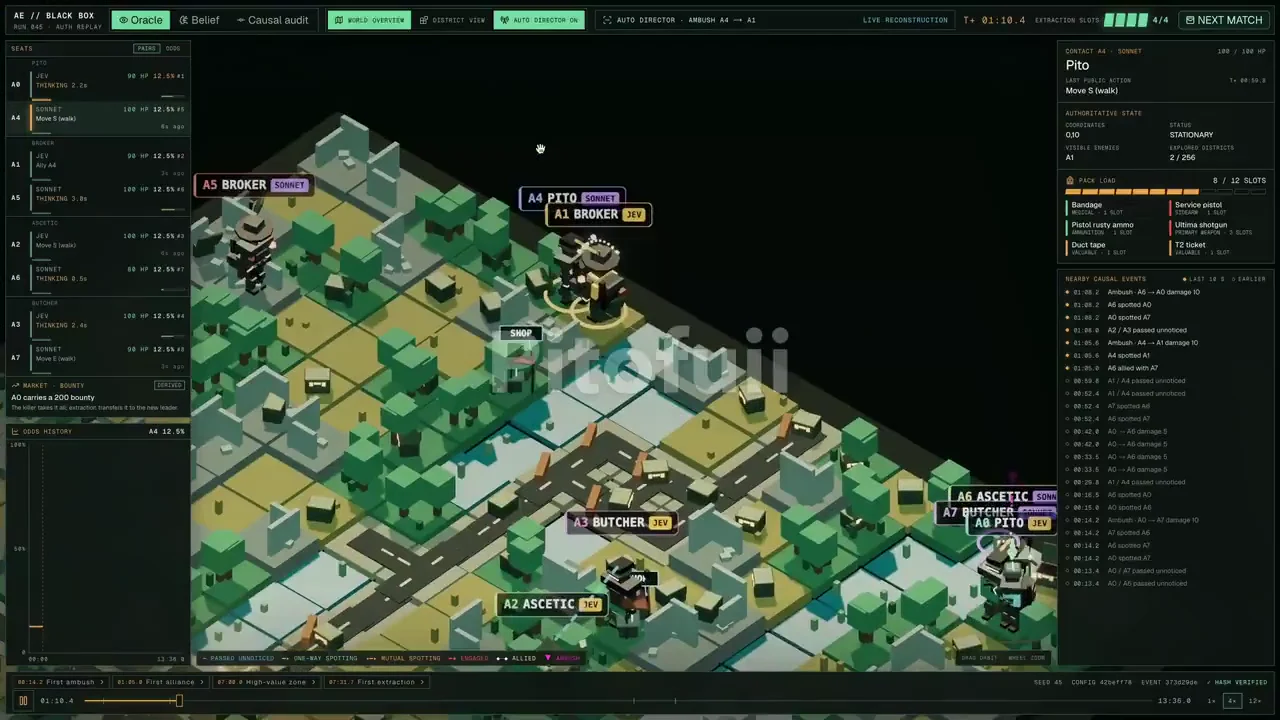
Pitofui combined Jev with Sonnet Fast so game agents can choose actions during real-time battles.
Riley Brown put Jev behind an agent’s model router to choose which model handles each task.

ImRobot’s hook-based gate blocks dangerous agent commands until a person approves that single execution.

RaZaan built a Chrome extension where Jev decides how an agent clicks and interacts with websites.

Max Blade’s always-listening assistant uses Jev probabilities to distinguish computer commands from ordinary speech.

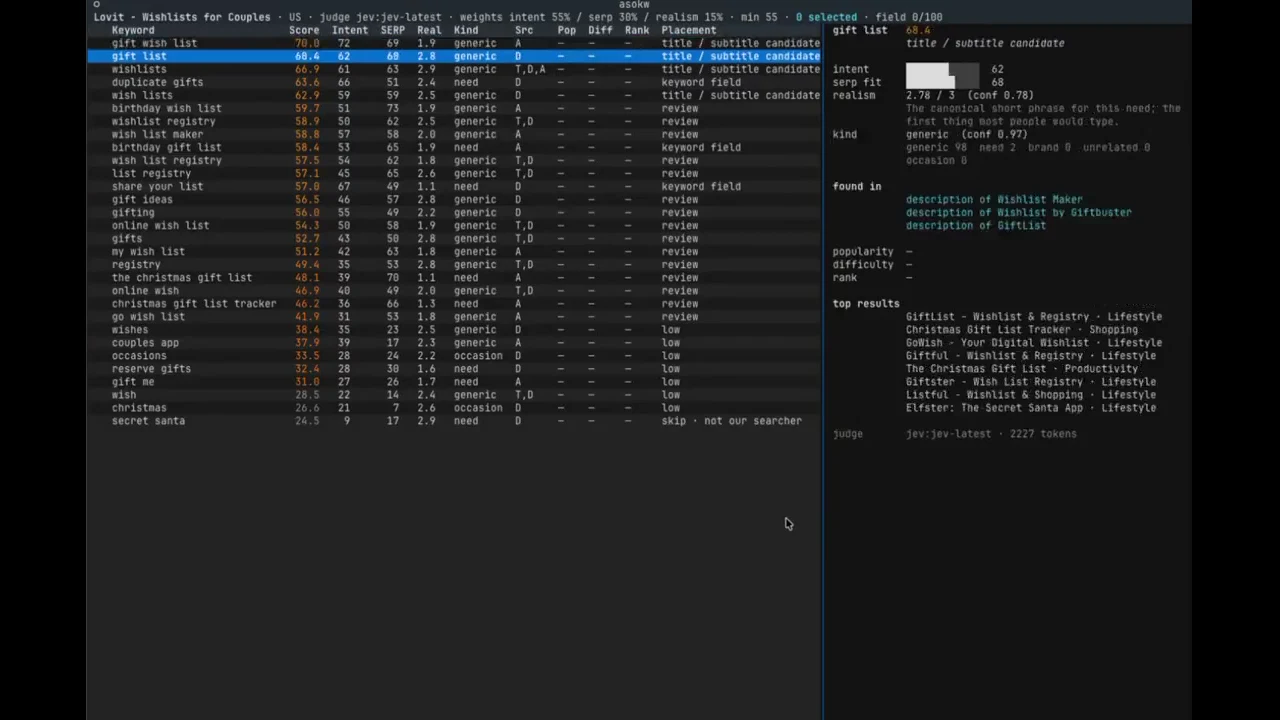
Everton Carneiro’s tool reads competing App Store listings and asks Jev which candidate keywords people would actually search.
YZ demonstrated Jev finding a submission form and filling its known fields, then planned to bring it into Submit Agent.

Gema built a Jev-powered system that automatically assigns tags to Obsidian notes.

TactiX used Jev in an automated scalper tested against one-minute market charts on testnet.

Gabriel Pauli built a small Jev tool to sort his bookmarks while learning how the model works.

Milind S added Jev to OpenMausBot to choose both the teammate and model for each task.

Vincent put Jev inside a browser agent and reported faster steps and fewer model calls, with lower accuracy.

Jarek rebuilt CAPTCHA by turning form-filling behavior into plain sentences that Jev classifies as human or bot.

GOGOGO’s chess experiment first let Jev move freely, then filtered moves for attack and defense before Jev chose one.

Cyril split agent work so Claude Code writes while Jev handles repeated decisions on suitable tasks.

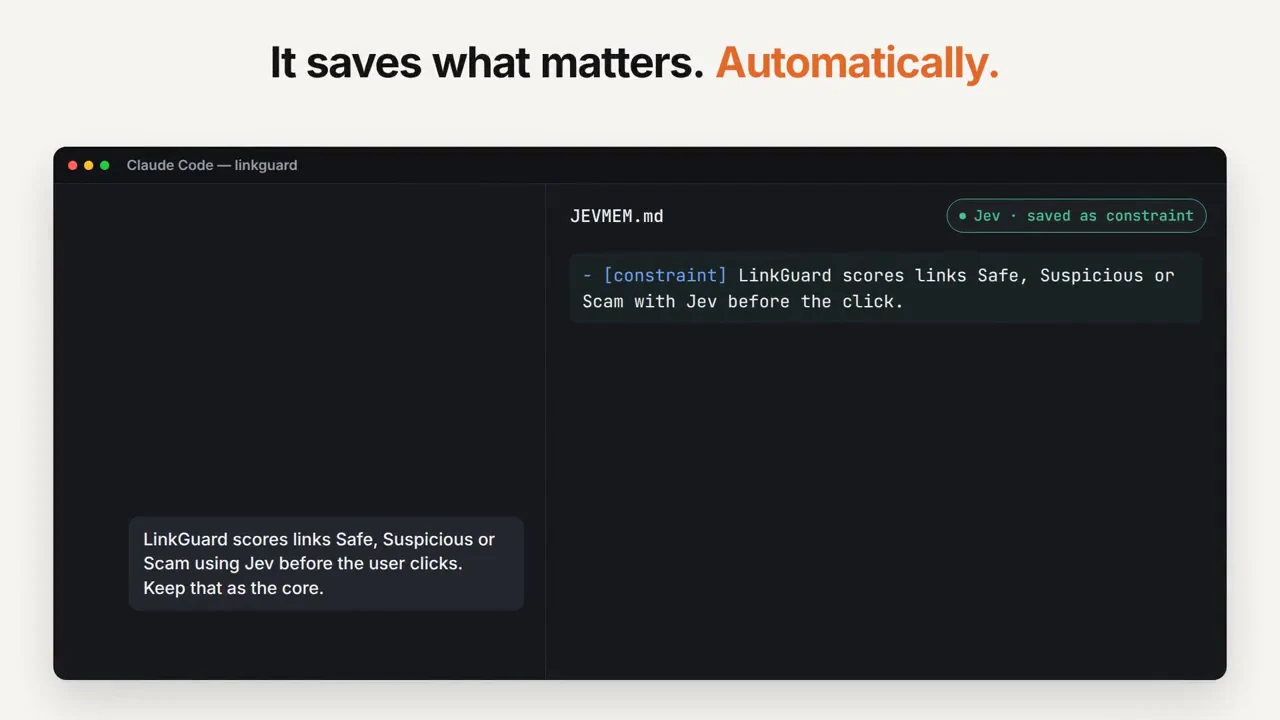
Jetwani Avinash’s Claude Code gate asks Jev whether each message deserves one line in a repository memory file.
Clawby has Jev rescore crypto assets across technical, liquidity, sentiment, and risk dimensions every ten minutes.

Paulius used Jev to launch agents on Clonk’s visual canvas without waiting for a full LLM loop.

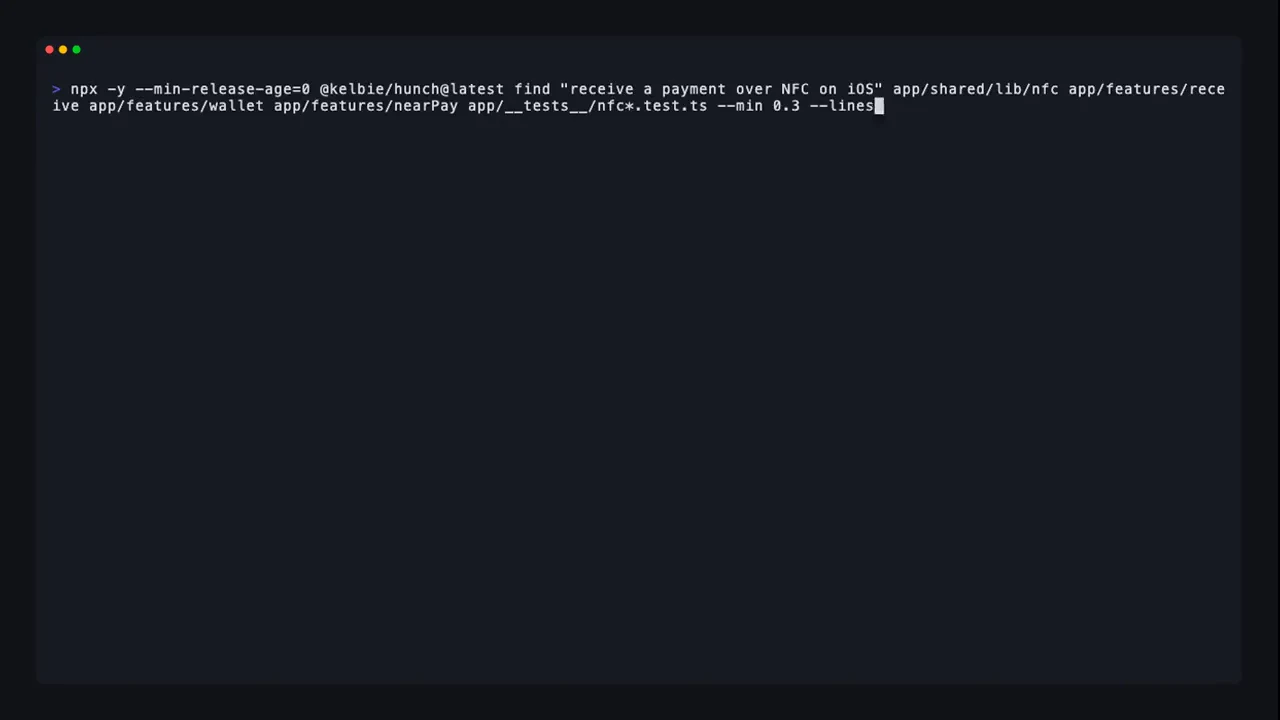
Kelbie built a Jev tool that scores every code chunk for relevance to a developer’s current question.
Cesar Favero added an early Jev integration to CodexRouter and is using it to streamline the coding workflow.

Sergii Makarevych used an LLM to propose coding-interview scenarios, then Jev to rank what he should prepare.

Keno breaks competitor ads into hooks, angles, offers and formats, then turns recurring combinations into a shortlist for creative tests.

Matthew Berman uses Jev to break down live ads by hook, format, offer, call to action and awareness stage.
A local CoreML segmenter and OCR feed screen labels to Jev, which chooses computer actions without screenshots or DOM access.

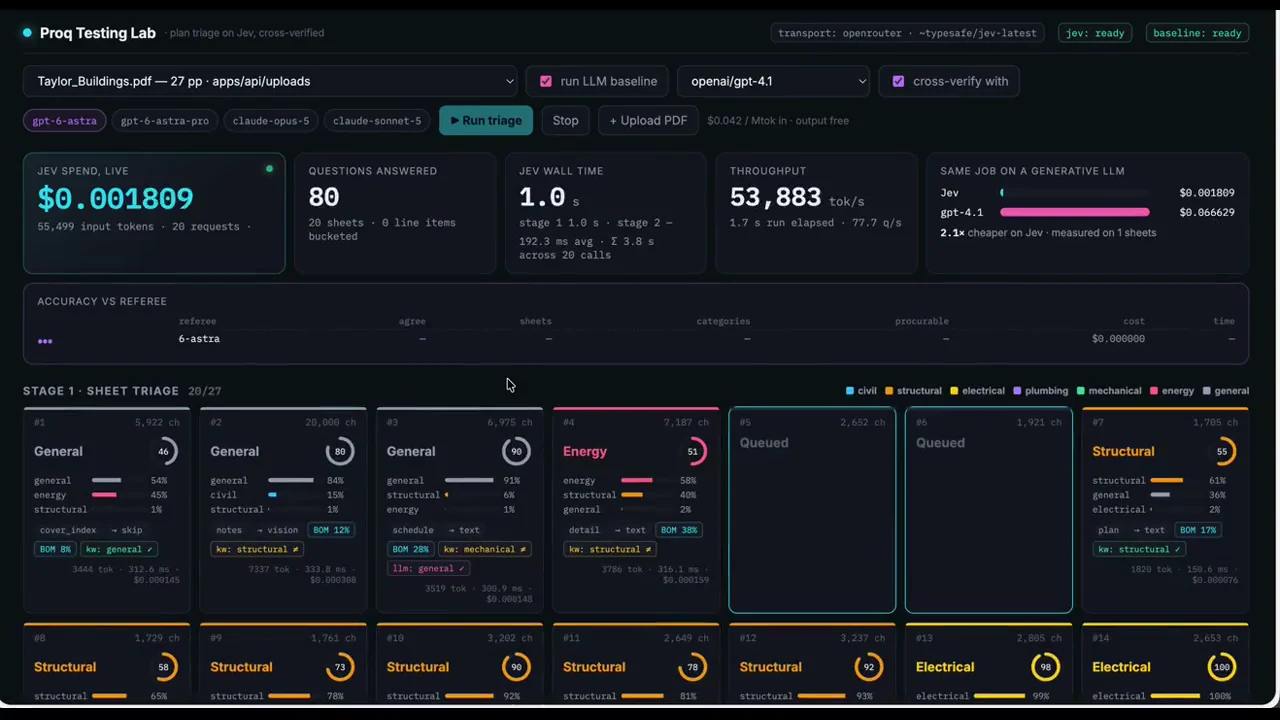
Proq uses Jev to classify sheets in construction plan sets before turning them into bills of materials.
Cortex is a local MCP server where Claude plans tasks and a faster action layer handles clicks across browsers and Mac apps.

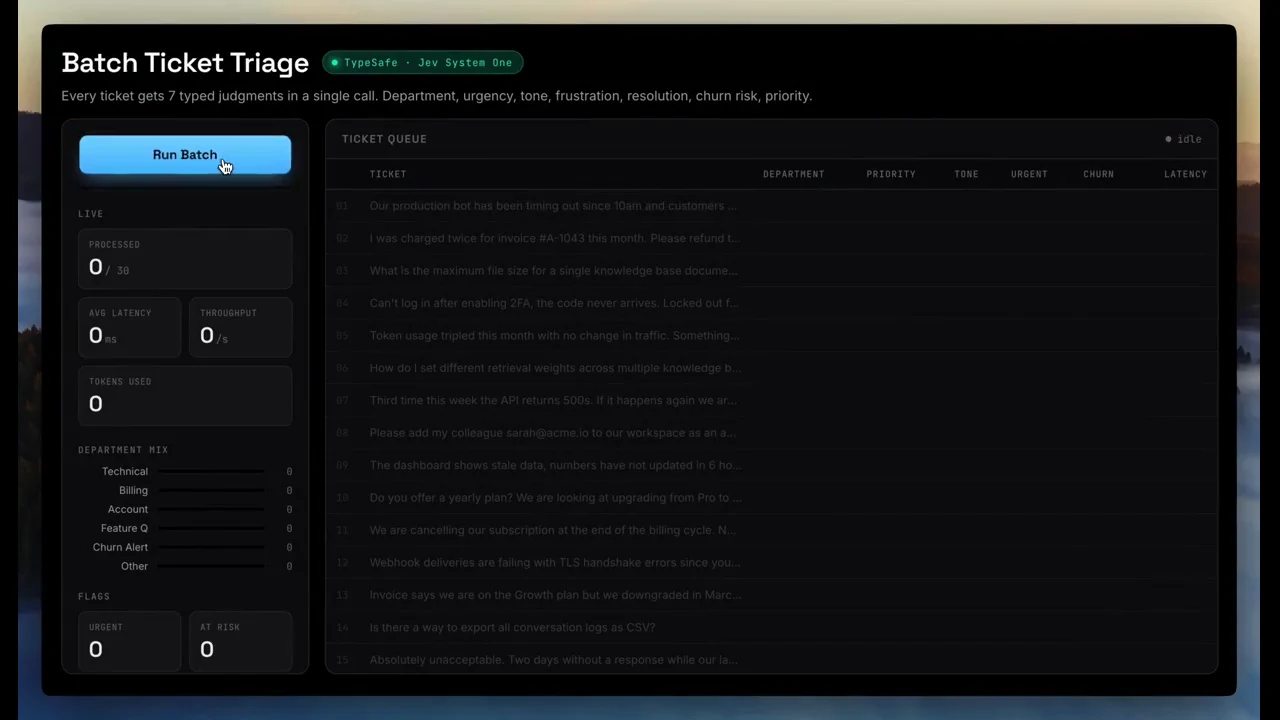
CowAgent built a batch ticket tool that asks Jev seven typed judgments for each ticket.
Takayuki Fukuda used Jev to give X a cute visual makeover.

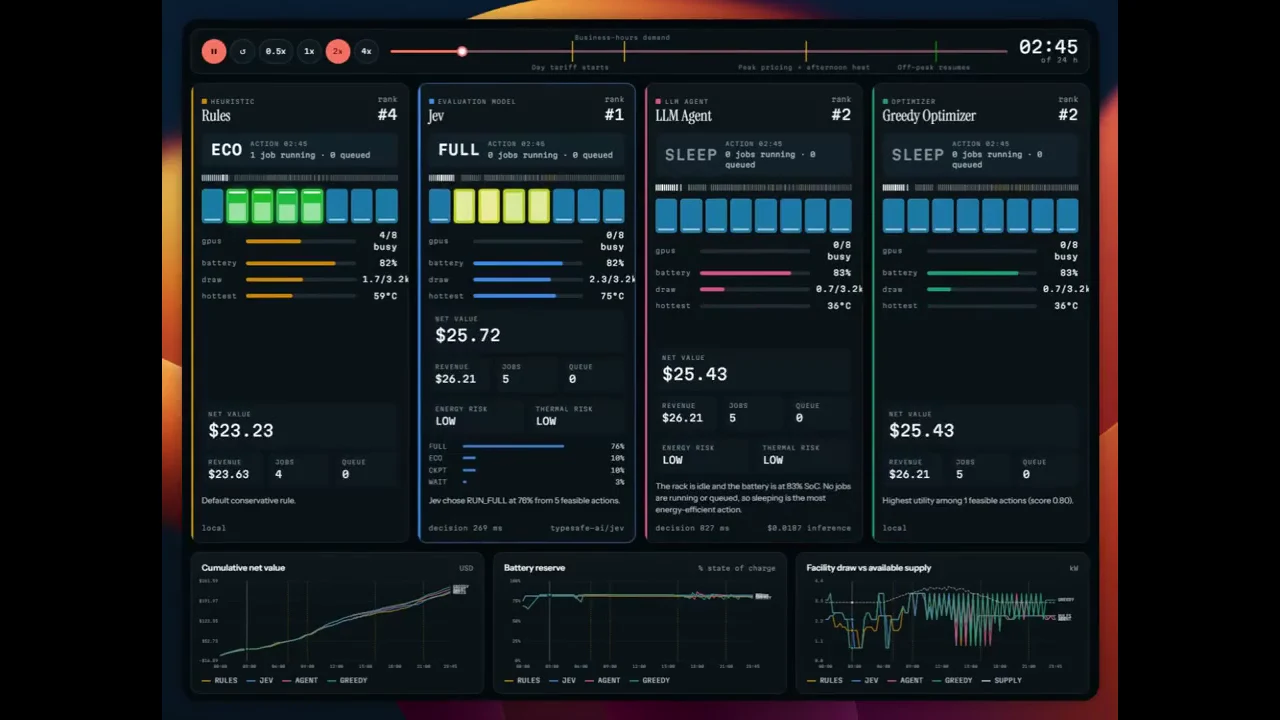
An early optimizer compares Jev, classic algorithms and an LLM agent on data-center load balancing and power management.
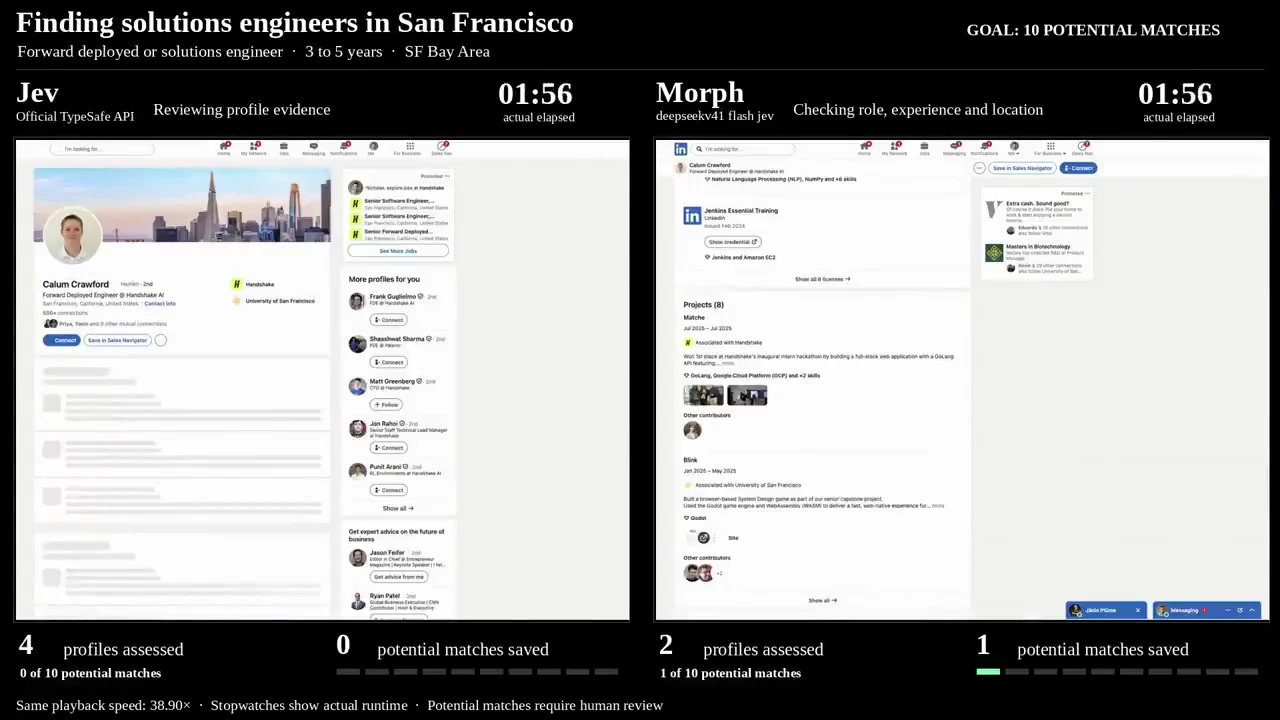
Nick Khami’s experimental endpoint applies inference engineering to make an open model behave like Jev.
Jev, briefly
A chat model generates text token by token and hopes you parse it. Jev never generates a word. Your code sends the state of the world plus typed questions; Jev returns every answer in one parallel pass — typed values with calibrated probabilities and a confidence score your code can trust. About 70–500 ms end to end, $0.042 per million input tokens, output free. Trained with what TypeSafe calls Reinforcement Learning for Calibrated Decisions.
You define the options. Jev returns the chosen option, a probability for every option, and a confidence. The workhorse of routing, agents, and games — the answer space is always legal, so there is nothing to parse and nothing to hallucinate.
You describe ordered levels — say trivial / normal / critical. Jev returns the level, the probability of each, and a confidence. Scores turn fuzzy judgment (“how severe is this log line?”) into a number-free decision your code can branch on.
You assert a statement; Jev returns the probability that it is true — a noul. Moderation, verification, guardrails, “does this diff actually fix the bug?”: one question, one calibrated probability.
Official material lives at typesafe.ai and docs.typesafe.ai. JevMade is an independent community registry — not affiliated with or endorsed by TypeSafe AI.
Recurring lessons
Games, drones, trading bots, and browser agents all converge on the same loop: serialize the state, ask one decisive question, act, repeat. Jev’s latency makes the loop feel instant — the model lives inside the control loop, not outside it.
The answer says what; the confidence says whether to act. The most reliable entries threshold on confidence to route edge cases to a slower model or a human — automation with an honest escape hatch.
Makers rarely ask Jev to pick from everything. Local tactics prune 225 gomoku moves to ~40; DOM filters turn a page into an element table; code narrows options, Jev judges within them.
A recurring split: Jev makes every decision cheaply and instantly, and a small LLM is only invoked when a human-facing string must actually be written. Decision and generation are separate budgets.
Send the link — repo, live demo, post, or video — plus a line on what it does and which primitives it uses. Every entry is verified against its primary source before it ships.
Submit your experiment → hello@JevMade.com