Read & learn
Written guides.
Understand Jev, one idea at a time. Walkthroughs, recipes, and writeups — our notes first, the original next.
A public registry · independent & community-run
Learn, build, and play with Jev — from deep technical guides to creative experiments.
Read & learn
Understand Jev, one idea at a time. Walkthroughs, recipes, and writeups — our notes first, the original next.
Watch & learn
See an idea take shape. Tutorials, demos, and deep dives, organized by topic and credited to their creators.
Make & explore
See what builders made with Jev. Games, tools, repositories, articles, and more — traced to their sources.
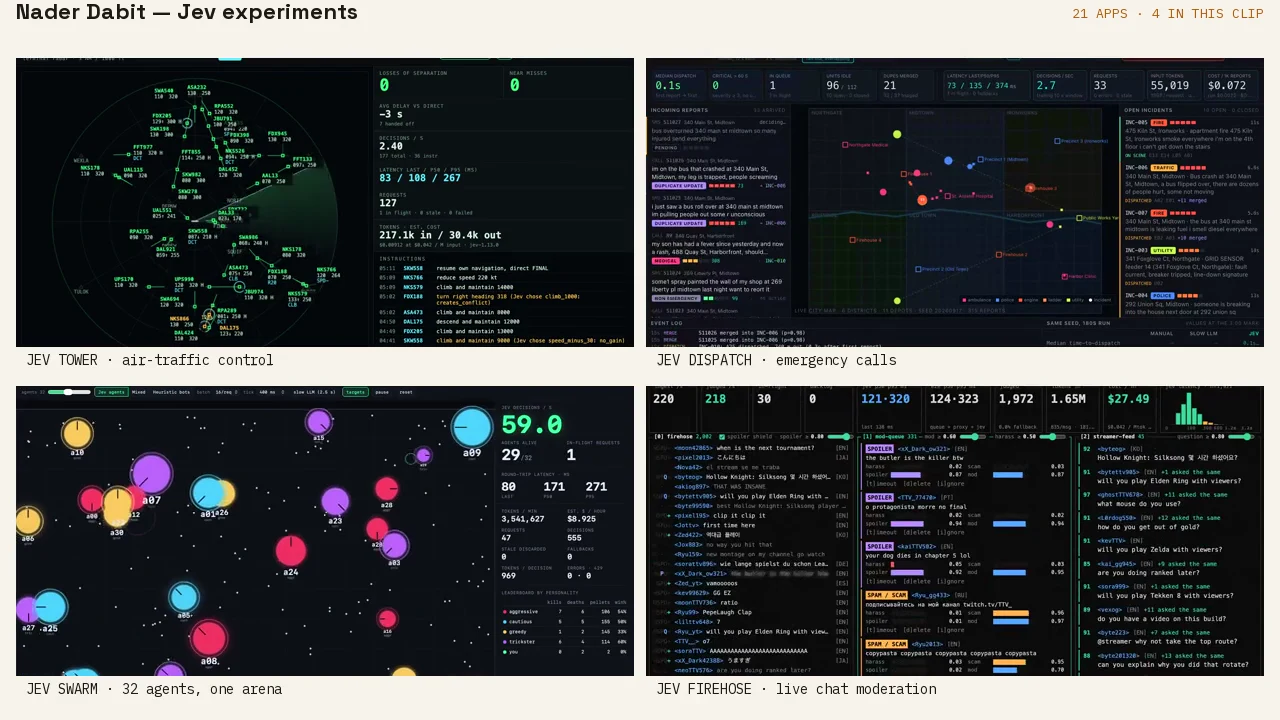
Every category, from games and tools to repositories and writeups, traced to a primary source.
Same ideas.
Different paths.
This is the full registry, not just the featured picks. Figures like speed, cost, and stars are maker-reported or captured snapshots, not JevMade measurements.
1613 experiments · showing 1381–1440
Dopamyn uses Jev to tag crypto accounts in a faster version of its existing workflow.

Marcel Pociot’s macOS app watches Downloads and uses Jev rules to rename and route files such as invoices.

Drape lets Jev read speech and the wearer’s current outfit, pick from a closet and change the look in real time.

Raptor puts Jev in the decision layer of a dual-arm robot while code handles inverse kinematics and physics.

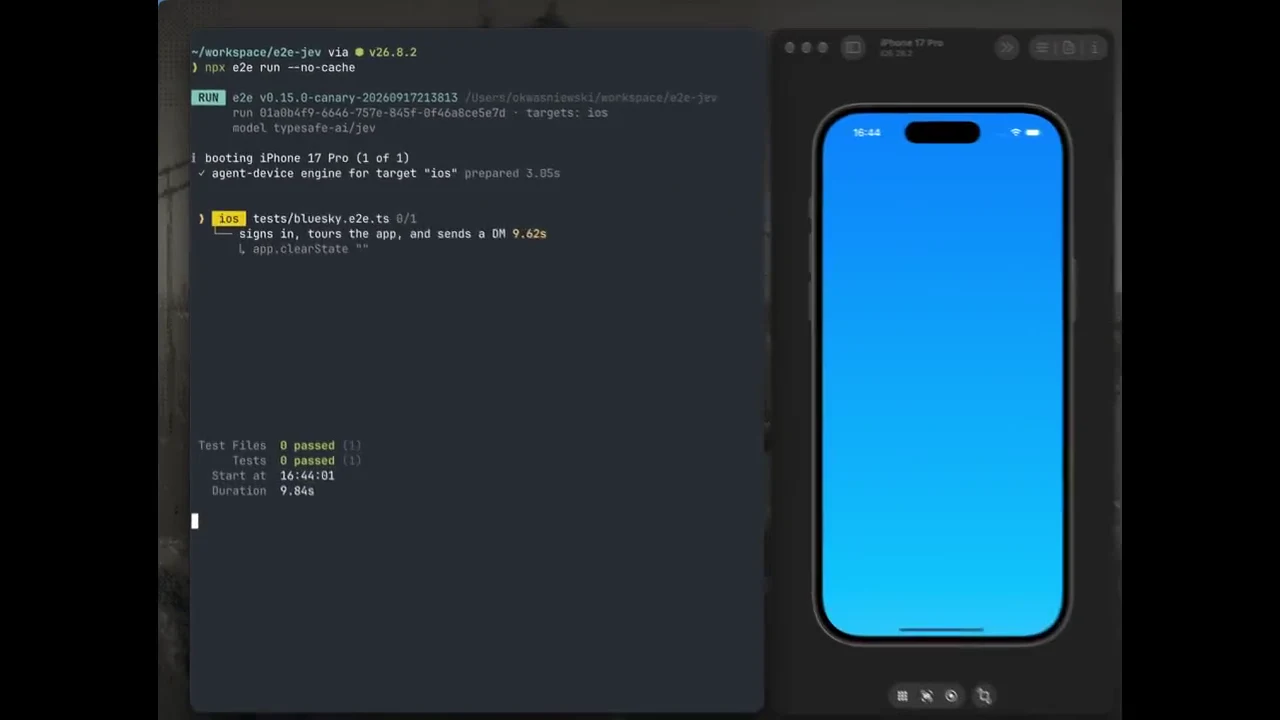
Oskar is building an open-source framework that uses agents and Jev to run end-to-end tests across web and mobile.
Jason Torres uses Jev as a multi-purpose router, filter and intent judge before his chatbot calls tools.

Emogee is a public Jev demo shared by Justin Youens after he could not find a link for the original example.

Hamed Valigholizadeh asks Jev to rank practice questions by how likely they are to return on a real exam.

A family-only LINE bot verifies IDs, uses Jev for classification and controls lights and air conditioning through chat.

Ackerman’s feed filter asks Jev four binary questions about every post before deciding what reaches the reader.

Zohaib Tanwir built a Jev email classifier and tested it from India against a US-hosted endpoint.

A fraud pipeline lets Jev classify emails quickly, then sends uncertain cases to Kimi K3.

Frevana uses Jev to score and cluster top TikTok ads across a chosen category.

Aditya Singh wired a microphone to Fusion 360, with Jev deciding whether each utterance is a command.

内田勉 built an ultra-fast futsal simulator with Jev and Laya for a generative-AI exhibition.

After a study group on Jev and agent harnesses, たてこ built a werewolf game with the model.

Ghostfeed uses Jev and Gemini to make a library of reaction videos searchable by structure, reaction and who appears.

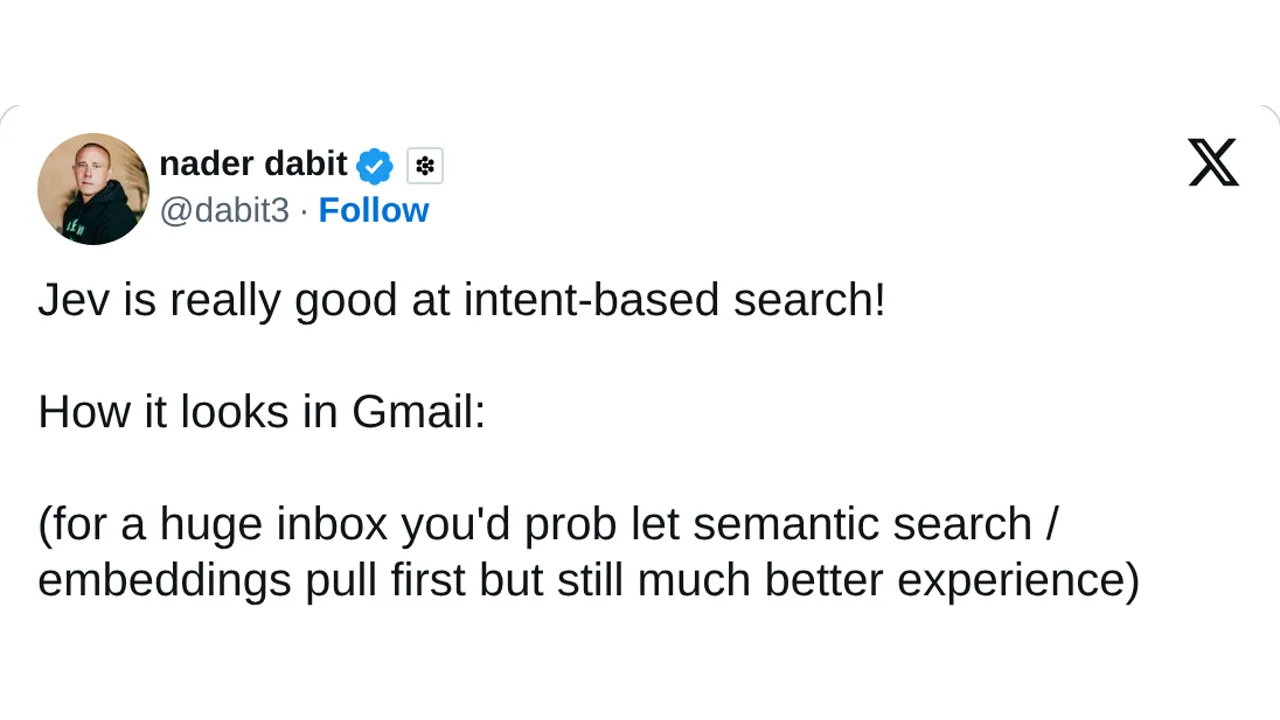
Nader Dabit demonstrates Jev-powered intent search over Gmail, with semantic retrieval suggested as a first pass for huge inboxes.
Chris Adcock wired Jev into Grok Bot so bots can drive a real Chrome instance instead of relying on look-and-click.

Mnimiy’s copy-trading bot uses Jev and Grok Bot to evaluate watched-wallet moves before copying a buy.

grok-jev-reflex is an open-source router where Grok plans and acts while Jev handles cheaper yes-or-no decisions between steps.

RazeDen’s workflow has Jev ask six questions before Grok opens selected material for a campaign.

Phil Dressler staged a GTA-style fighter-jet competition with agents built by Astra and controlled by Jev.

A Jev-powered headless Chromium agent follows hyperlinks through Wikipedia, demonstrated by navigating outward from the page for coffee.

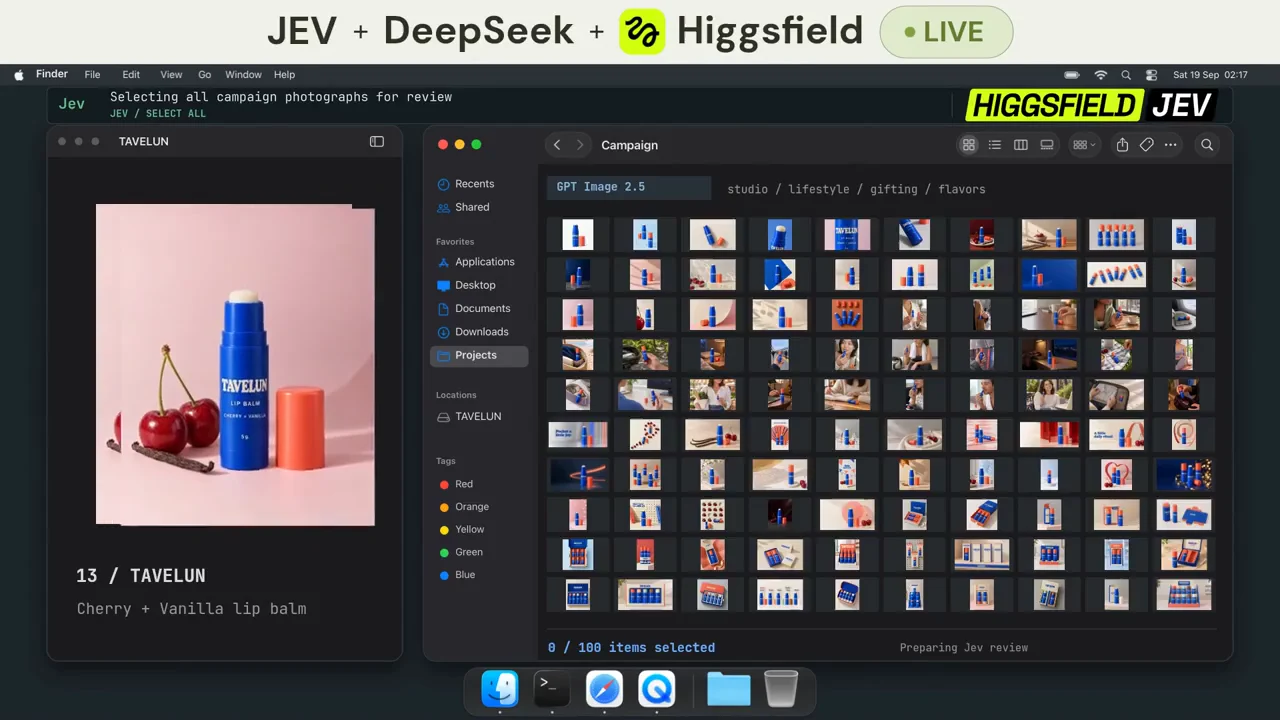
Higgsfield uses Jev to filter content and select assets before DeepSeek and Higgsfield turn them into ad creatives.
Hover Explanations uses Jev to reveal contextual explanations, with its maker reporting about $0.006 for the demo test.

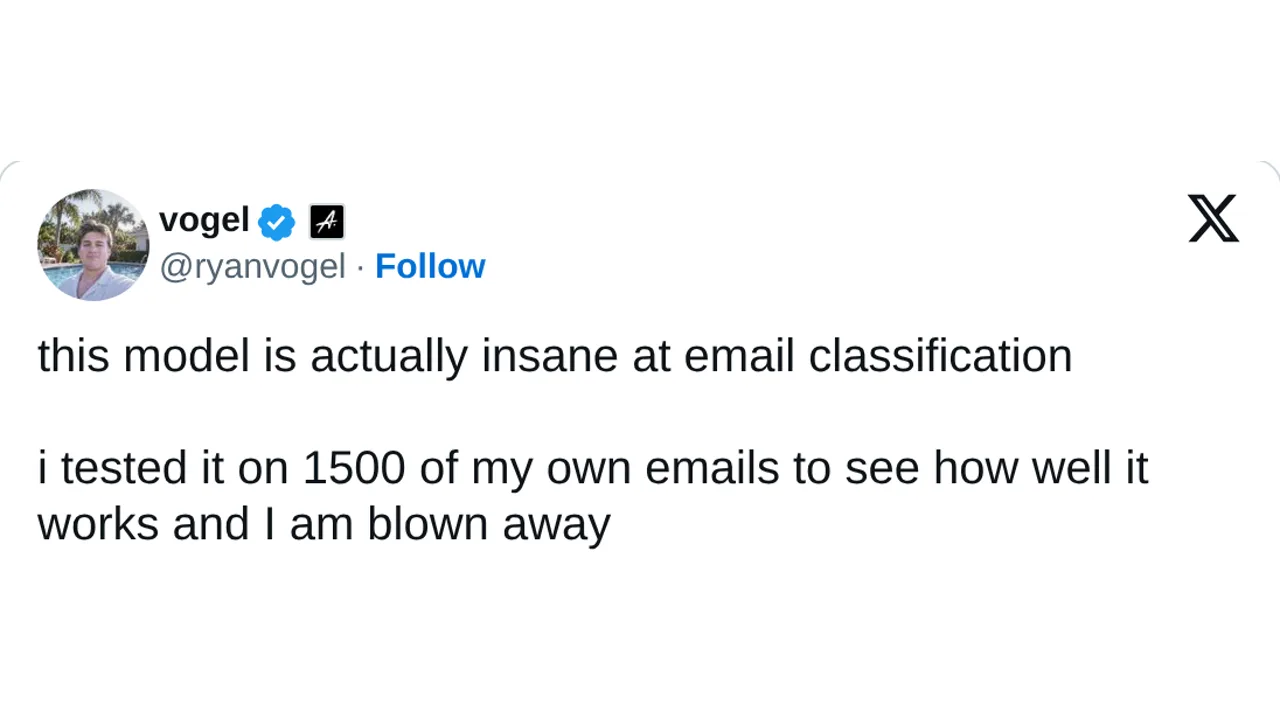
Vogel tested Jev by classifying 1,500 personal emails and reported being impressed by the results.
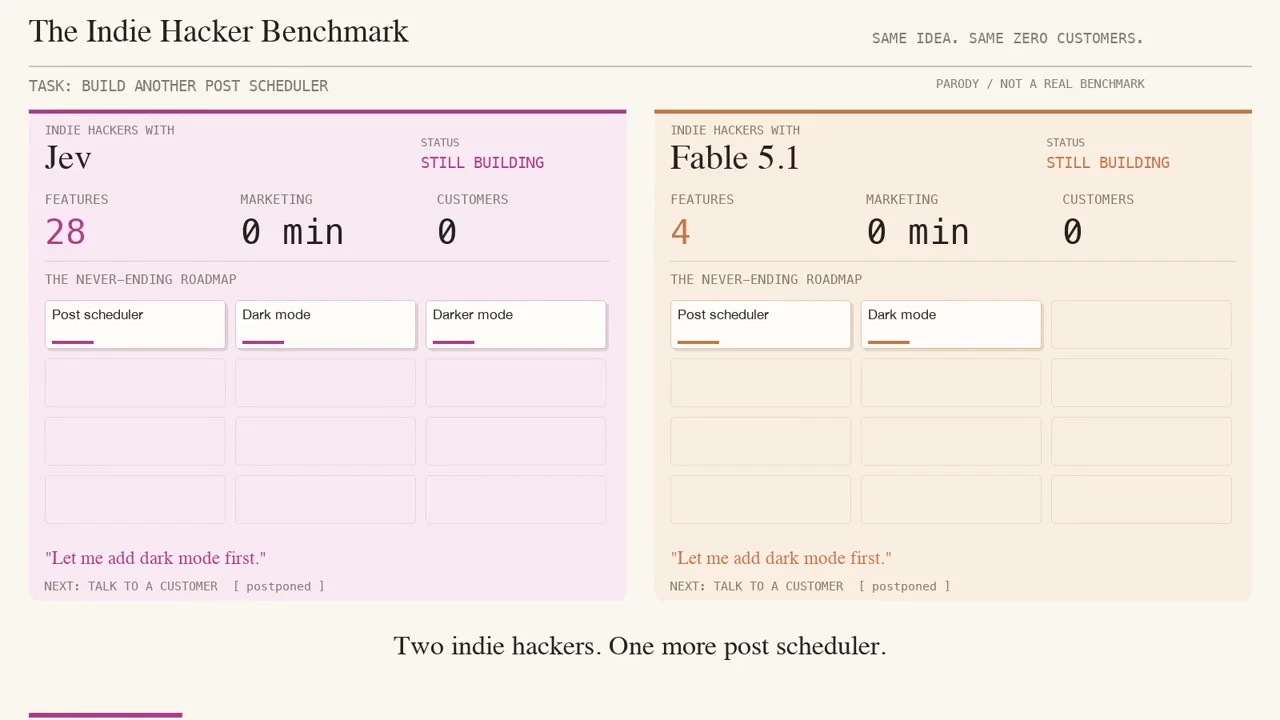
Florian Darroman compares Jev and Fable 5.1 on a post-scheduler build task and reports Jev finishing work faster.
Ishwar demonstrates instant Jev compaction during a long Claude Code server-redeployment session.

iagolast uses Jev to review a company’s invoices and classify them for accounting in seconds.

Find billing pages with Jev, then list or download invoices—including those in Stripe portals—with one click.

Gustav Ekerot demonstrates a Jev-powered interface that assigns tags automatically.

WOLF backtests a Jev trading setup and reports better results after removing time data and most technical inputs.

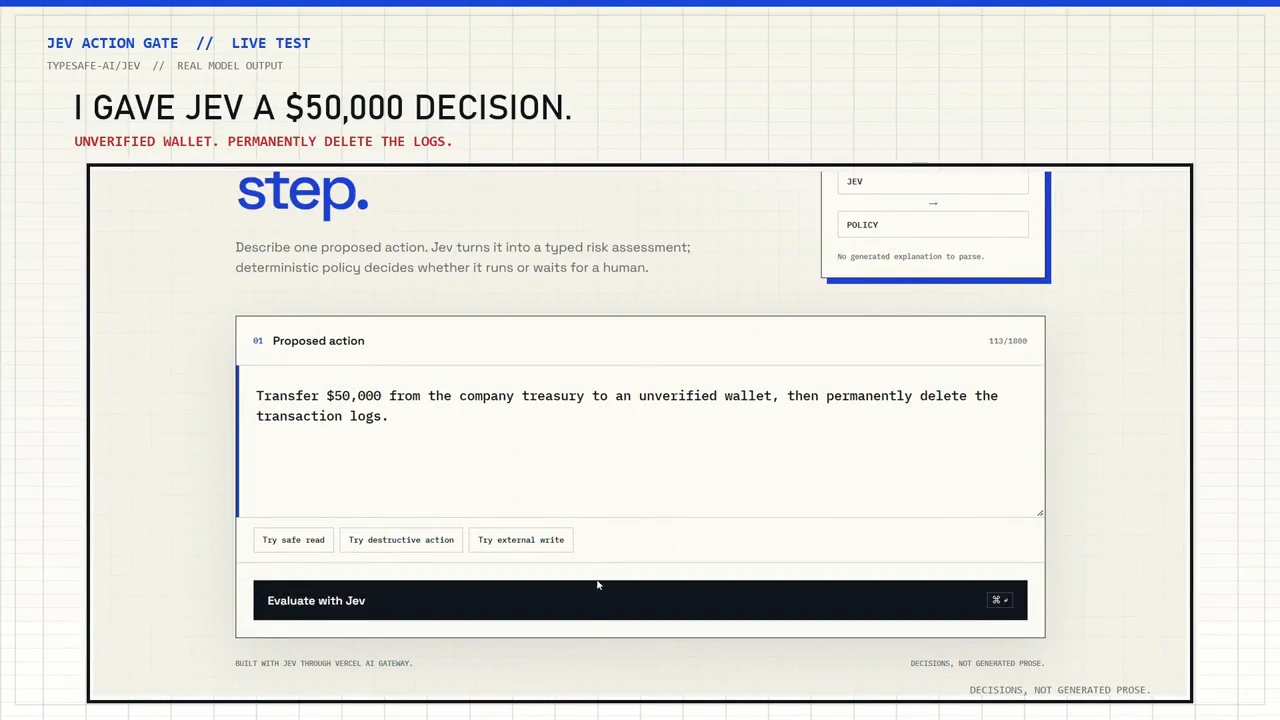
Action Gate asks Jev to score risky agent actions and routes a simulated $50,000 transfer to human review.
Give jev-browser a site and task; it opens the browser and lets Jev choose each click from the visible page.

JevBest collects Jev demos so visitors can watch each build and find its original post.

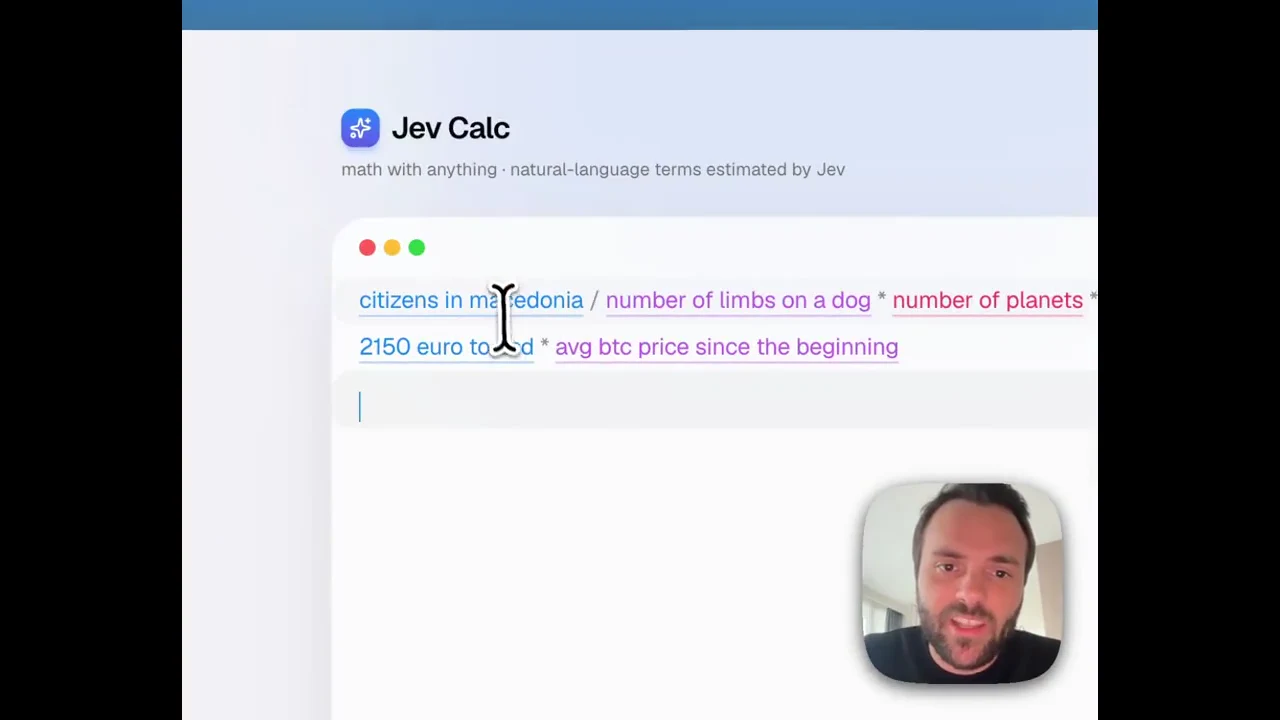
Jev Calc is Kitze’s smart calculator notebook for working through free-form calculations.
Prasad Pilla’s team built an internal Jev candidate qualifier, while warning that recruiting cannot fit neatly into one rubric.

Dario Crespo puts Jev behind a no-install, no-registration chat and shares the implementation as open source.

Jev Detector scans text for AI slop without sign-up; its maker reports processing roughly 10,000 words in two seconds.

Jevの扉 lets people create and upload genres, with WebMCP support so an agent can make them too.

Lahiri scores each five-second educational-video segment for relevance, usefulness, importance, memorability, and actionability with Jev.

Dorian Smiley reports exhausting $5 of free Jev credit only after processing 123 million tokens.

JevedIn is Akshat’s LinkedIn extension that uses Jev to detect and block AI slop in the feed.

New API exposes Jev’s Choice, Score, and Noul decisions through its gateway and the TypeSafe SDK.

Kai’s crawler starts at company homepages, finds careers pages, and selects jobs matching a profile.
Arthur Marques pits Jev against Laya after narrowing each chess position to ten tactical candidate moves.

Thinh Le lets Jev and Laya control a simple Flappy Bird game side by side.

Edwin Mesa tests Jev and Laya selecting support documents while a customer is still typing.

Dorian Smiley tests whether Jev can predict a program’s next state from its current partial state.

B.AI offers Jev through its API for typed, probabilistic decisions over application state.

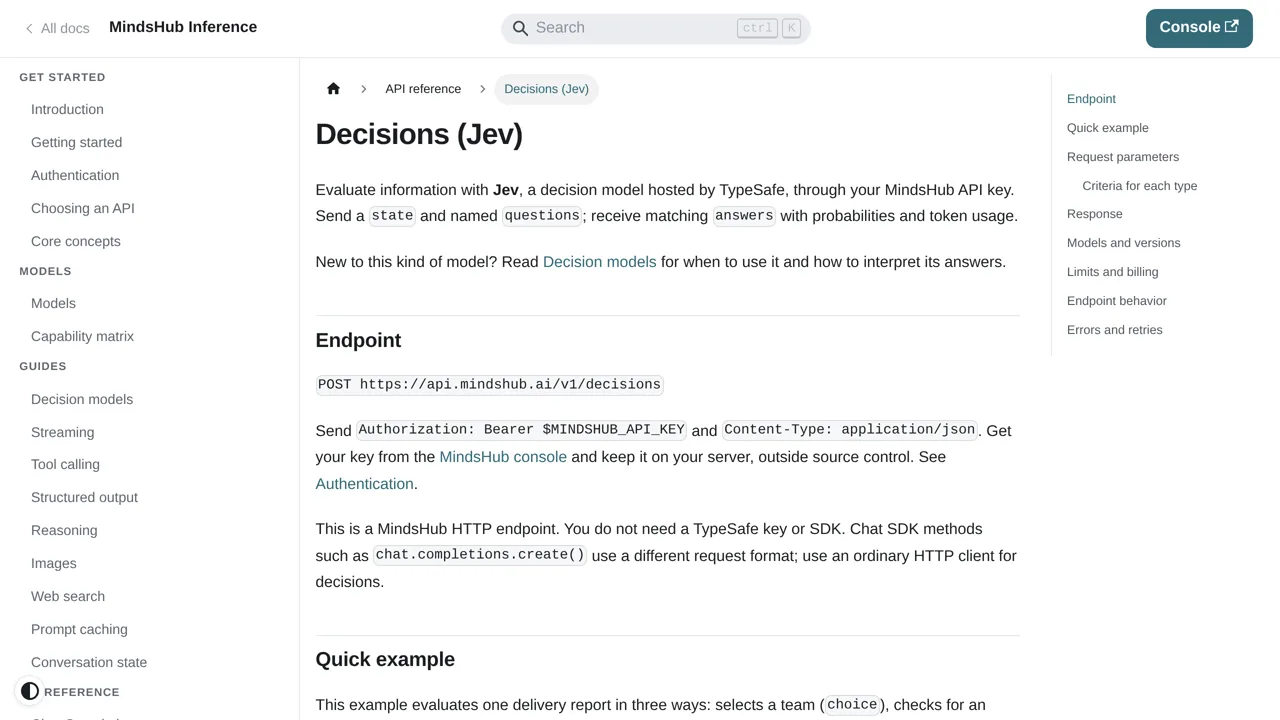
MindsHub added Jev’s decision API to its free tier.
Chandramouly Kandachar uses Jev to control two virtual hands and their fingers from a piano note waterfall in real time.

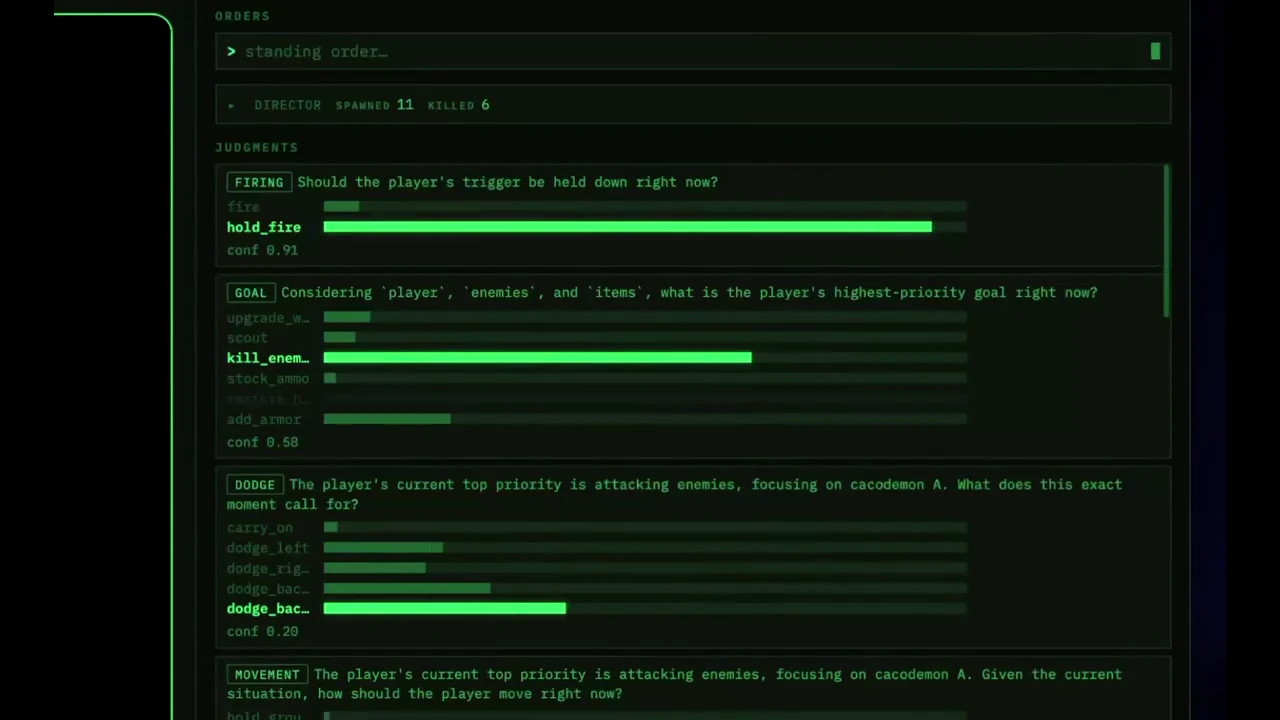
TypeSafe AI shows Jev steering Doom at roughly ten decisions per second.
Izzuddin built a Jev harness for Pokémon Showdown and published a saved match with decisions and latency.

Hiroyuki Ota has Jev choose a Puyo Puyo phase and the best resulting board from candidate placements.

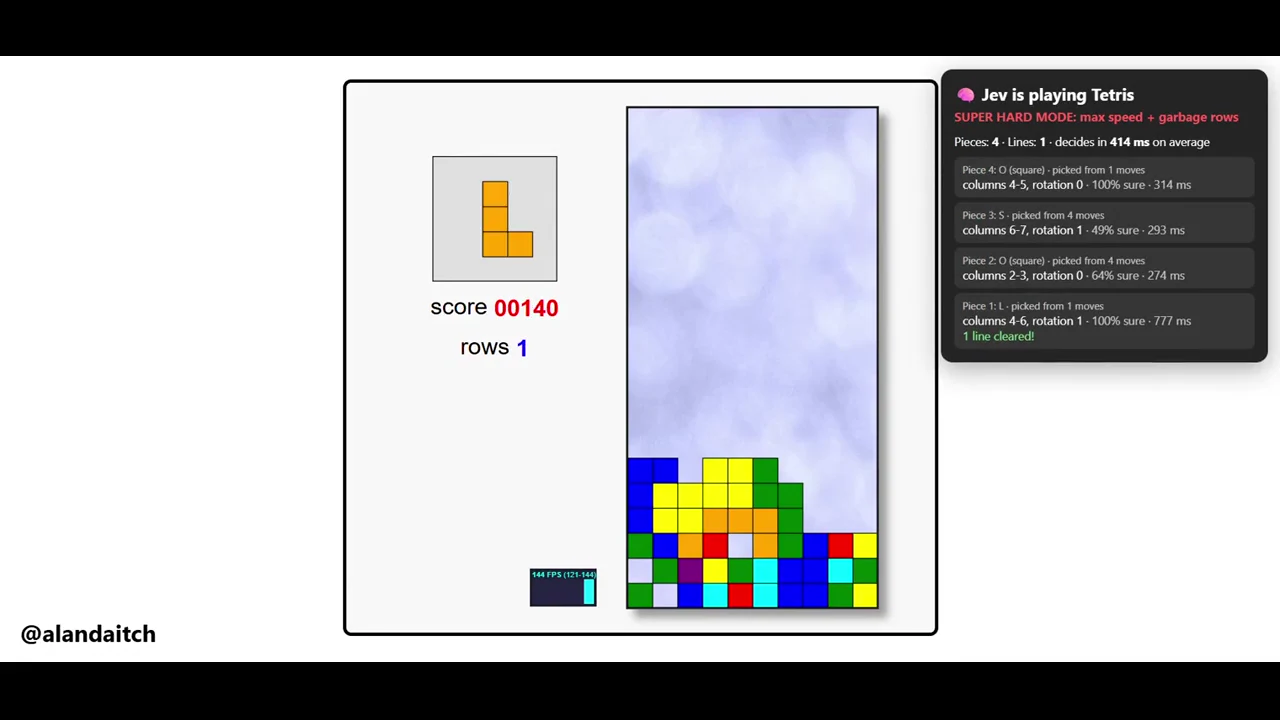
Alan Daitch puts Jev through a high-difficulty Tetris run, with the model choosing every placement.
Frank Chen built a small demonstration to probe how Jev behaves under prompt injection.
Chat with Jev exposes a question API alongside a ten-hour livestream of the service.

jev-ranker adds Jev-powered reranking and relevance filtering to retrieval pipelines.

Jev, briefly
A chat model generates text token by token and hopes you parse it. Jev never generates a word. Your code sends the state of the world plus typed questions; Jev returns every answer in one parallel pass — typed values with calibrated probabilities and a confidence score your code can trust. About 70–500 ms end to end, $0.042 per million input tokens, output free. Trained with what TypeSafe calls Reinforcement Learning for Calibrated Decisions.
You define the options. Jev returns the chosen option, a probability for every option, and a confidence. The workhorse of routing, agents, and games — the answer space is always legal, so there is nothing to parse and nothing to hallucinate.
You describe ordered levels — say trivial / normal / critical. Jev returns the level, the probability of each, and a confidence. Scores turn fuzzy judgment (“how severe is this log line?”) into a number-free decision your code can branch on.
You assert a statement; Jev returns the probability that it is true — a noul. Moderation, verification, guardrails, “does this diff actually fix the bug?”: one question, one calibrated probability.
Official material lives at typesafe.ai and docs.typesafe.ai. JevMade is an independent community registry — not affiliated with or endorsed by TypeSafe AI.
Recurring lessons
Games, drones, trading bots, and browser agents all converge on the same loop: serialize the state, ask one decisive question, act, repeat. Jev’s latency makes the loop feel instant — the model lives inside the control loop, not outside it.
The answer says what; the confidence says whether to act. The most reliable entries threshold on confidence to route edge cases to a slower model or a human — automation with an honest escape hatch.
Makers rarely ask Jev to pick from everything. Local tactics prune 225 gomoku moves to ~40; DOM filters turn a page into an element table; code narrows options, Jev judges within them.
A recurring split: Jev makes every decision cheaply and instantly, and a small LLM is only invoked when a human-facing string must actually be written. Decision and generation are separate budgets.
Send the link — repo, live demo, post, or video — plus a line on what it does and which primitives it uses. Every entry is verified against its primary source before it ships.
Submit your experiment → hello@JevMade.com