Read & learn
Written guides.
Understand Jev, one idea at a time. Walkthroughs, recipes, and writeups — our notes first, the original next.
A public registry · independent & community-run
Learn, build, and play with Jev — from deep technical guides to creative experiments.
Read & learn
Understand Jev, one idea at a time. Walkthroughs, recipes, and writeups — our notes first, the original next.
Watch & learn
See an idea take shape. Tutorials, demos, and deep dives, organized by topic and credited to their creators.
Make & explore
See what builders made with Jev. Games, tools, repositories, articles, and more — traced to their sources.
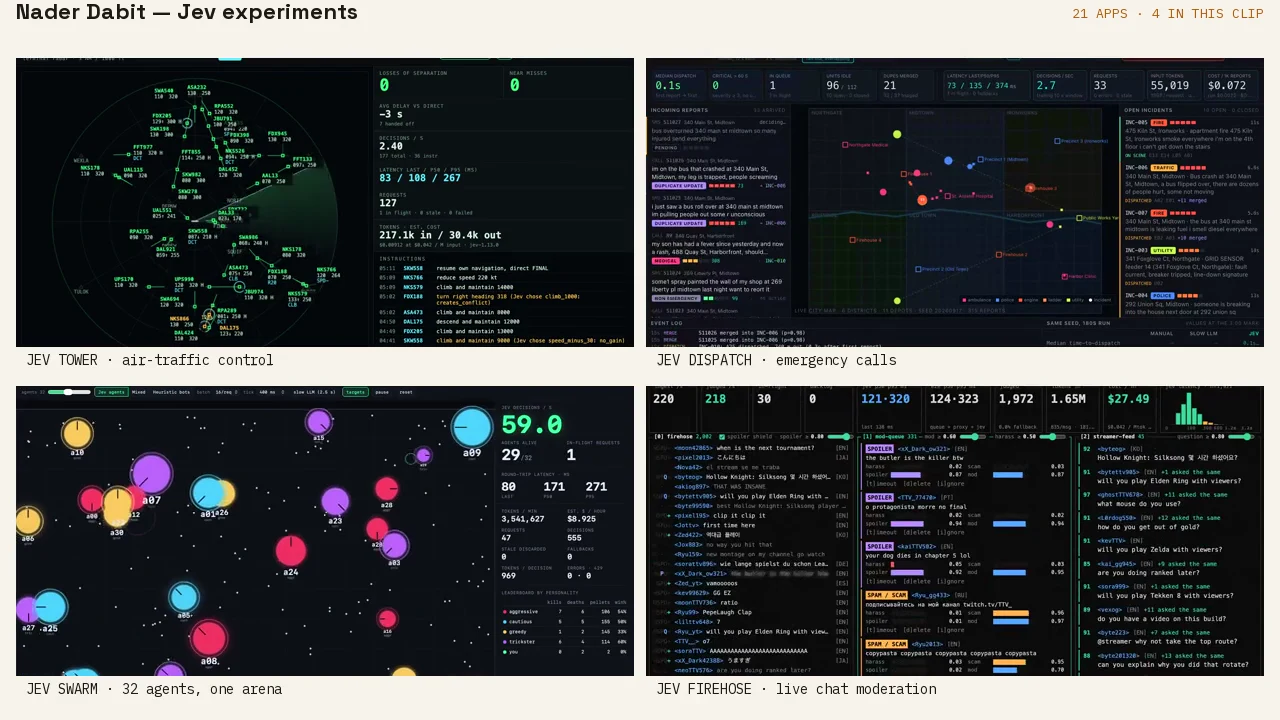
Every category, from games and tools to repositories and writeups, traced to a primary source.
Same ideas.
Different paths.
This is the full registry, not just the featured picks. Figures like speed, cost, and stars are maker-reported or captured snapshots, not JevMade measurements.
1613 experiments · showing 1441–1500
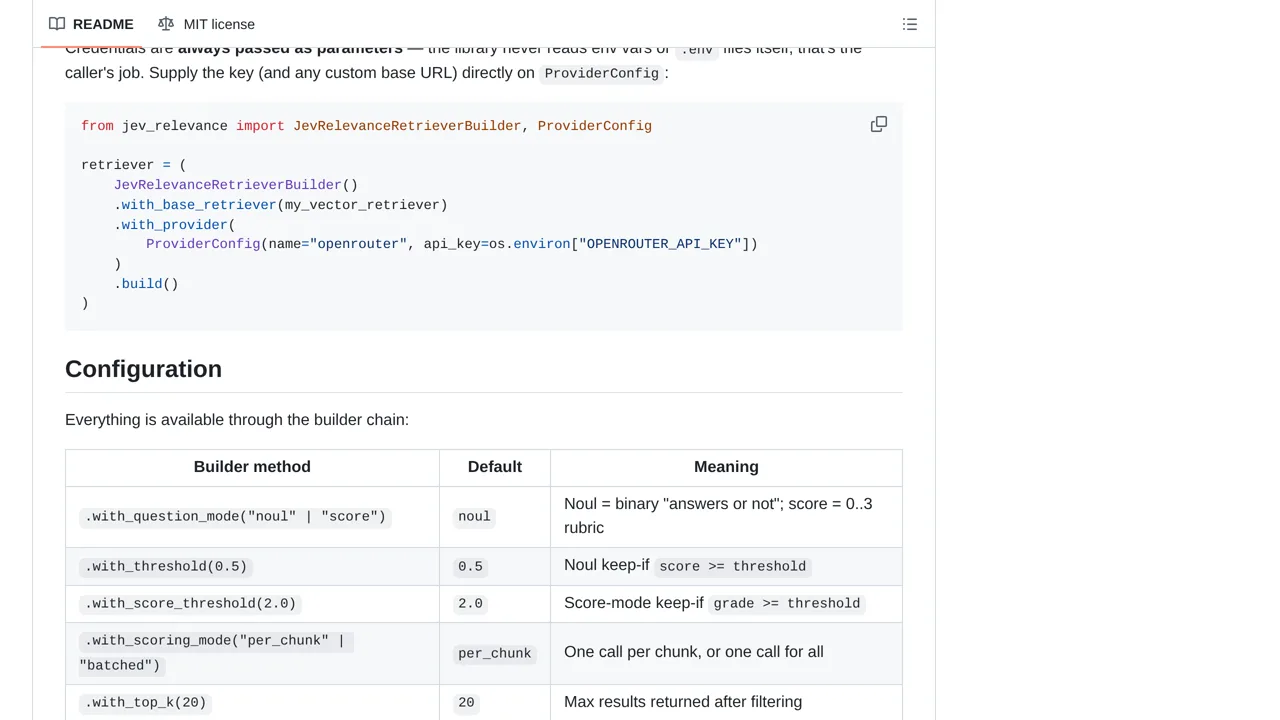
JevRelevanceRetriever is a LangChain BaseRetriever that scores relevance without requiring chain changes.
Adam Chester tests Jev selecting sensitive files from a shared drive.

tubone24 published a small web app for experimenting with Jev’s speed.

jev-studio packages Jev’s three primitives as MCP tools and a CLI with dry-run provenance.

Ed Plese built a local, Jev-inspired model that returns probabilistic judgments about images and video frames.

Adithya Thatipalli used Jev for decisions and routing inside a Hermes AI-video pipeline before comparing it with local model Laya.

echild tests Jev as a filter for selecting tools before an agent acts.

PeterY built a Telegram bot that uses Jev to judge price direction and probability for nine coins from an existing signal platform.

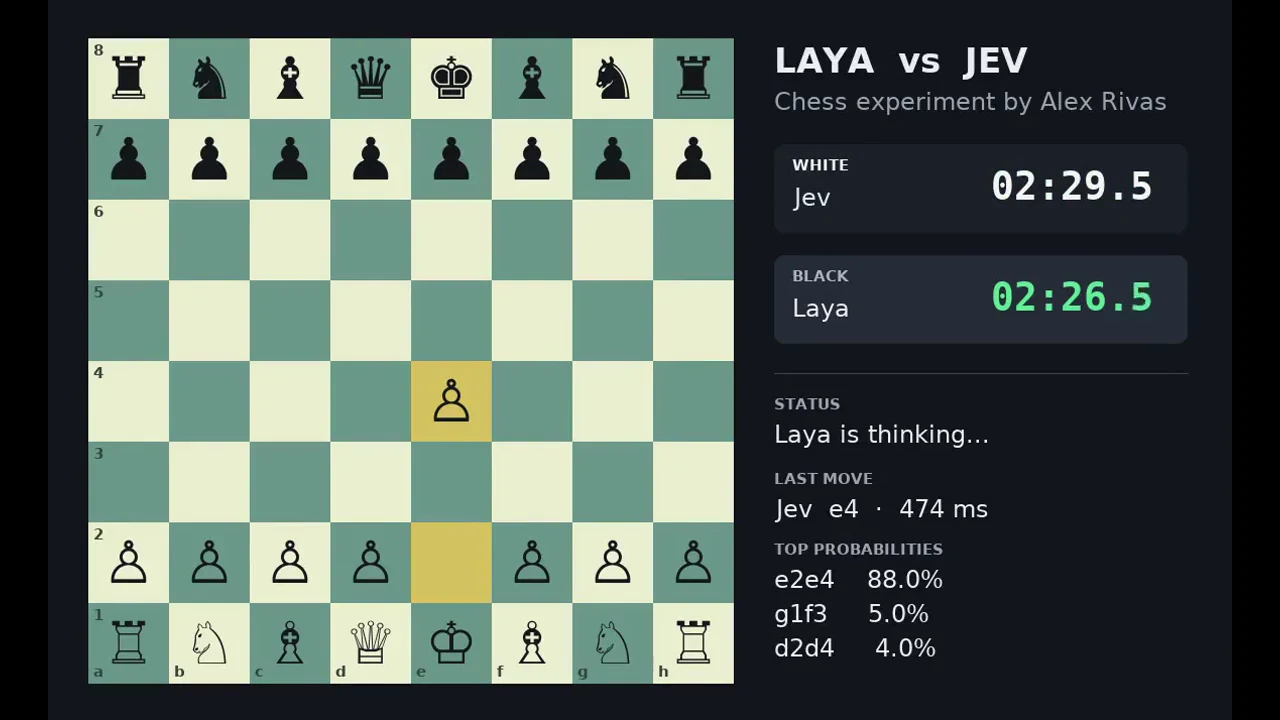
Alex Rivas pits Jev and Laya against each other over a chessboard, finding both still struggle with the game.
A small smoke test compares Jev and Laya on accuracy, calibration, latency, and per-decision cost.

Ram Vinjamuri compares Jev with fast Llama and DeepSeek models on the same labelled inputs.

Jason Alco compares Jev with Sol on a text-categorization step inside a platform he is building.

A userscript asks Jev to classify X posts and hide unwanted promotions, politics, and rage bait.

Jev ranks 400 companies against one candidate profile, scores confidence, and flags job-candidate mismatches.

A Jev-powered Kalshi bot makes live decisions in volatile 15-minute Bitcoin markets while publishing its real-time profit and loss.

keep.md uses Jev to rerank search results and tag saved content on Cloudflare Workers.

A local benchmark contrasts Laya’s on-device throughput with Jev’s API round trip.

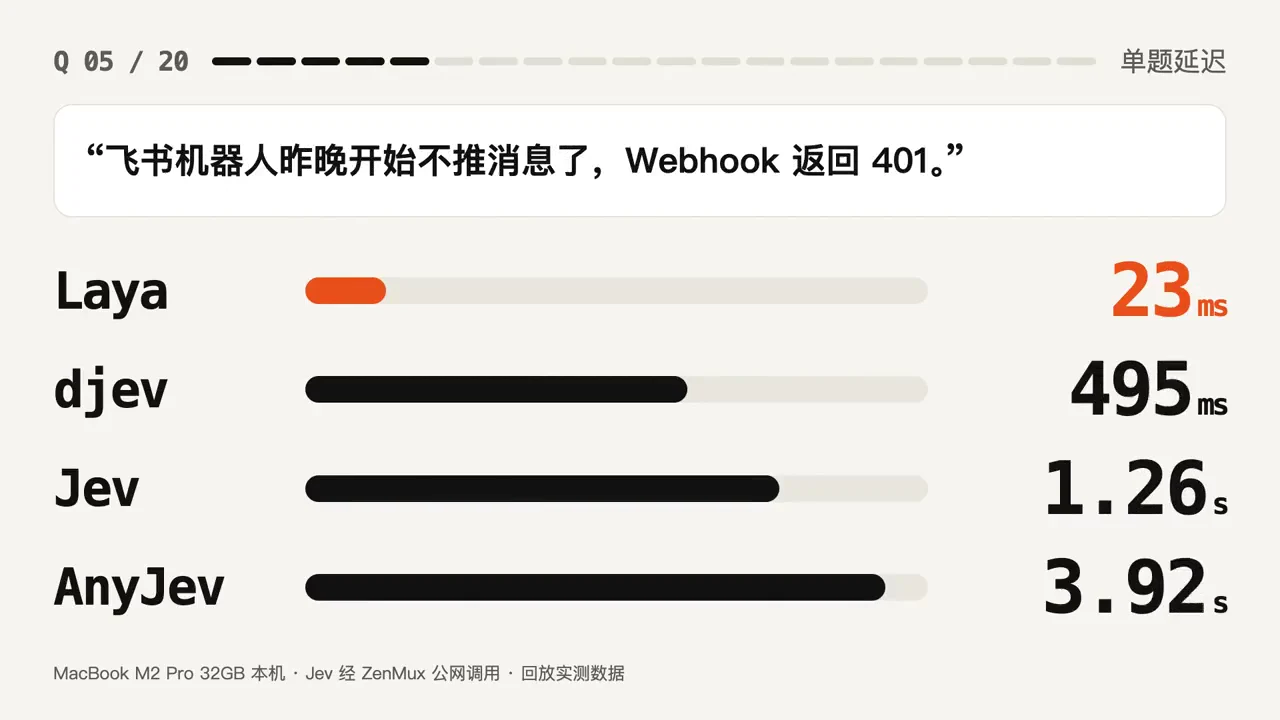
WquGuru runs Jev and three open alternatives over 20 Chinese support tickets on a MacBook.
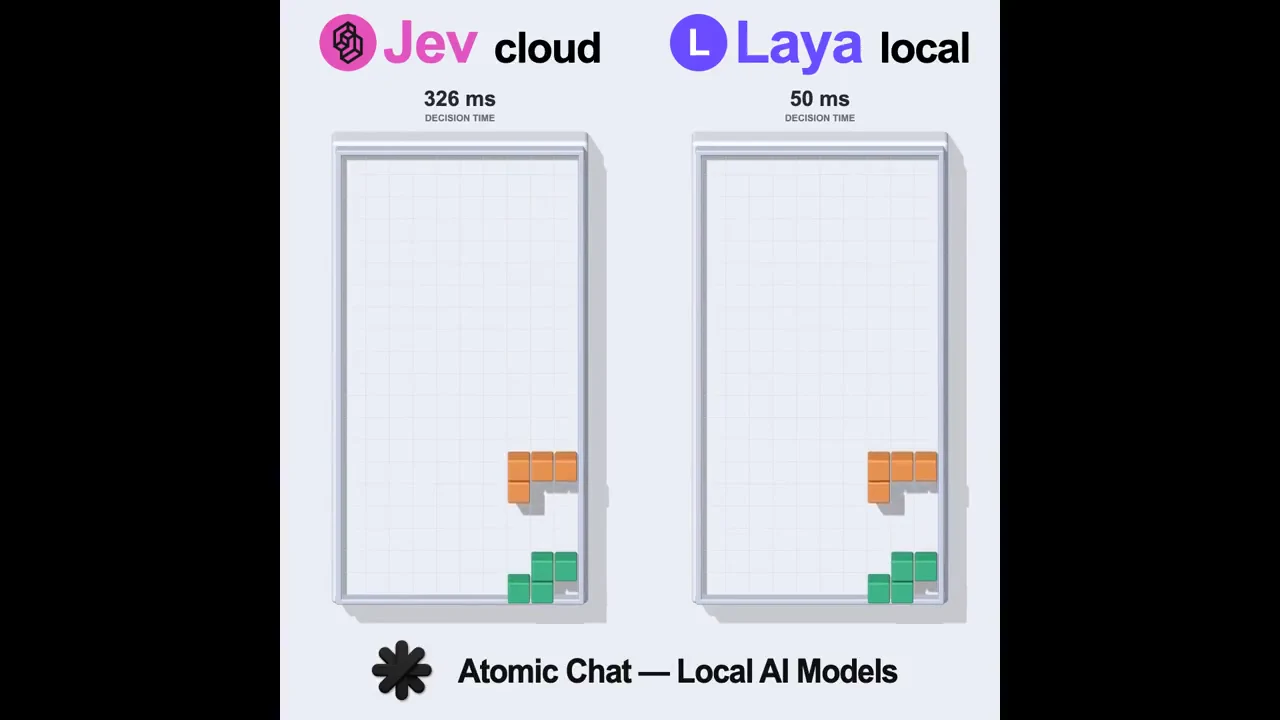
A Tetris match compares local Laya on a 16 GB MacBook Air with cloud-hosted Jev.
Laya makes typed decisions on a 12-year-old dual-core laptop without a GPU or cloud model.

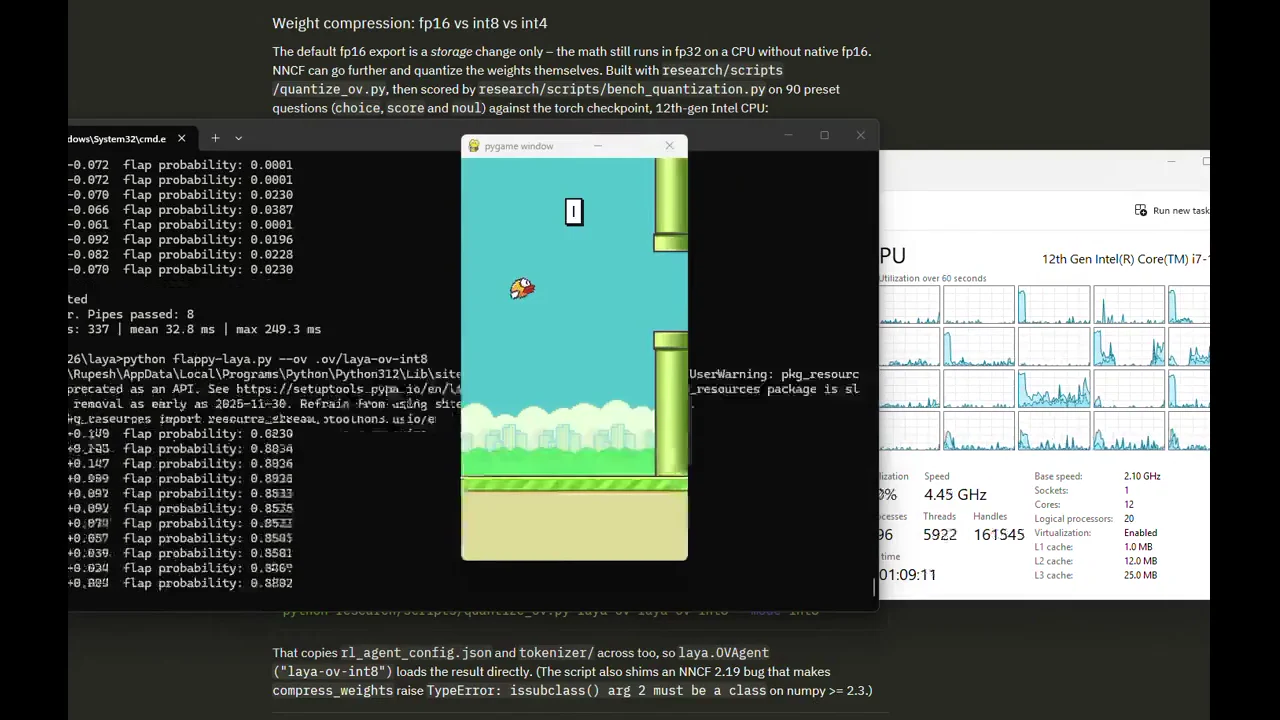
Laya plays Flappy Bird in real time on an ordinary CPU using OpenVINO INT8.
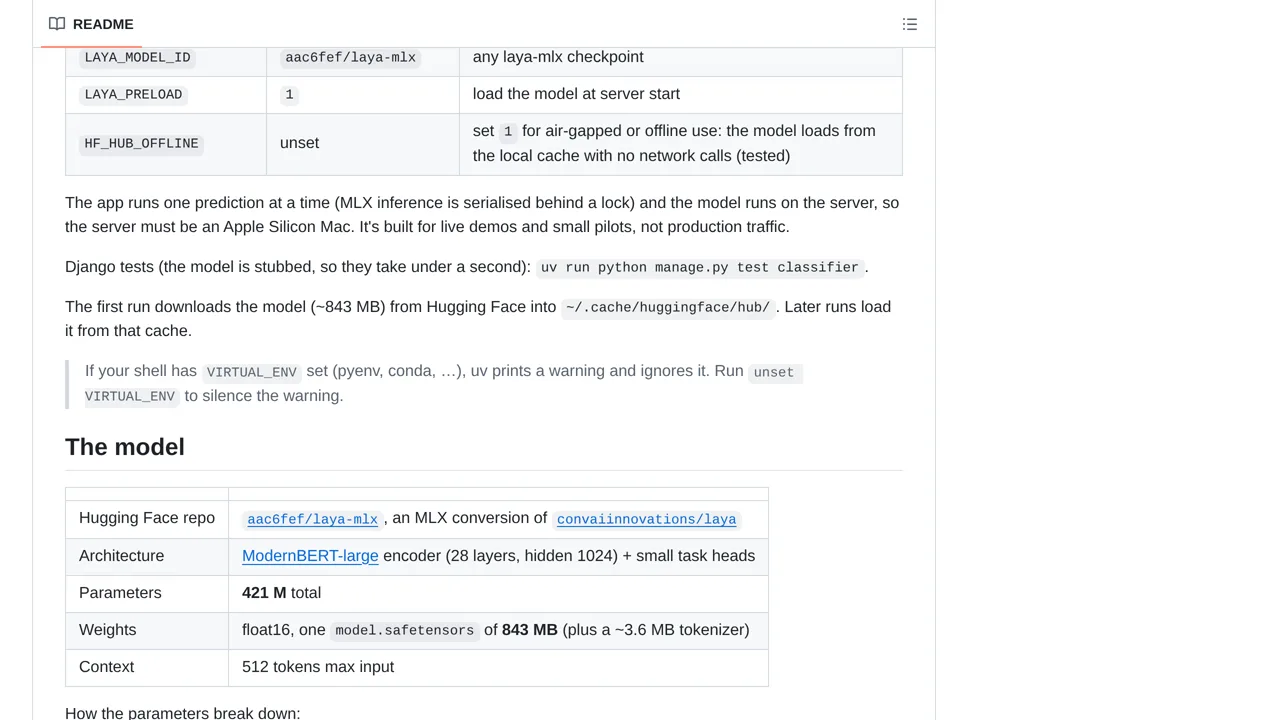
M37 Labs demonstrates an encoder-only Laya-MLX architecture as a per-turn classifier for typed decisions.
Jev predicts outreach performance for 700 leads, scores confidence, and detects lead-message mismatches.

A lead-qualification workflow uses Jev to screen an agent’s proposed steps before they enter Obsidian.

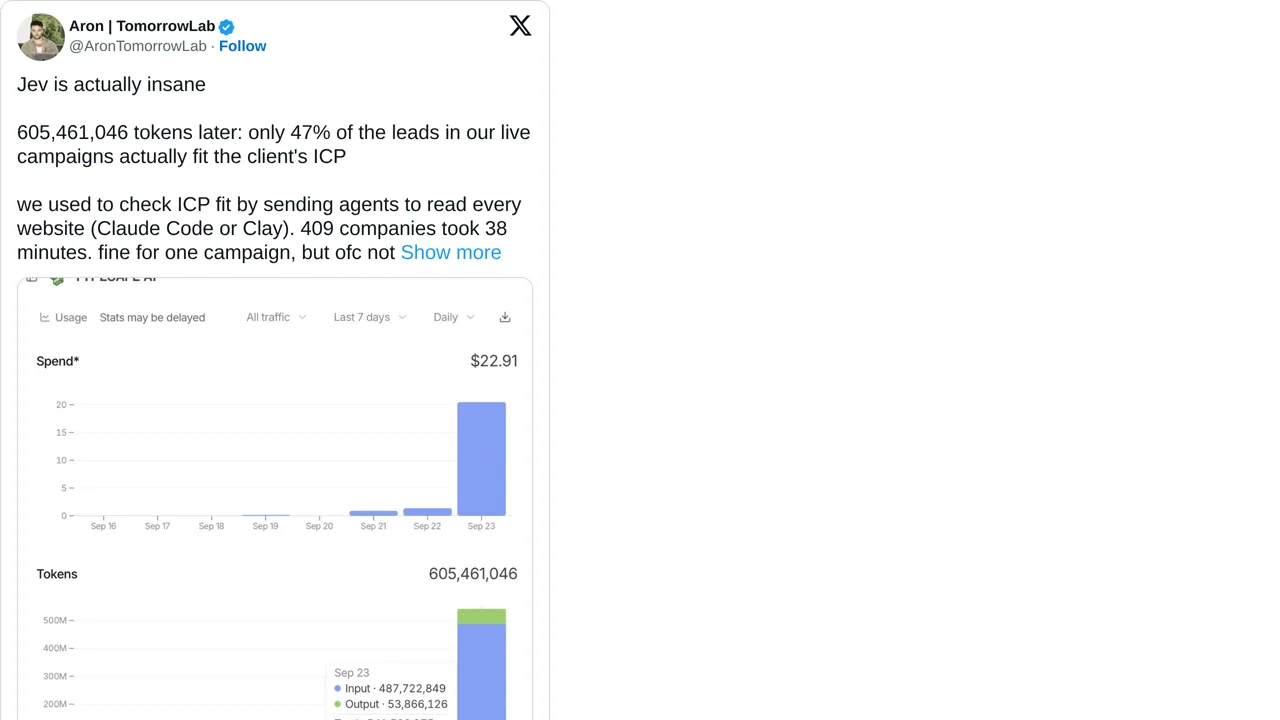
TomorrowLab uses Jev to screen live campaign leads for fit with each client’s ideal customer profile.
A live editor uses Jev to assess a post’s viral potential and category half a second after typing stops.

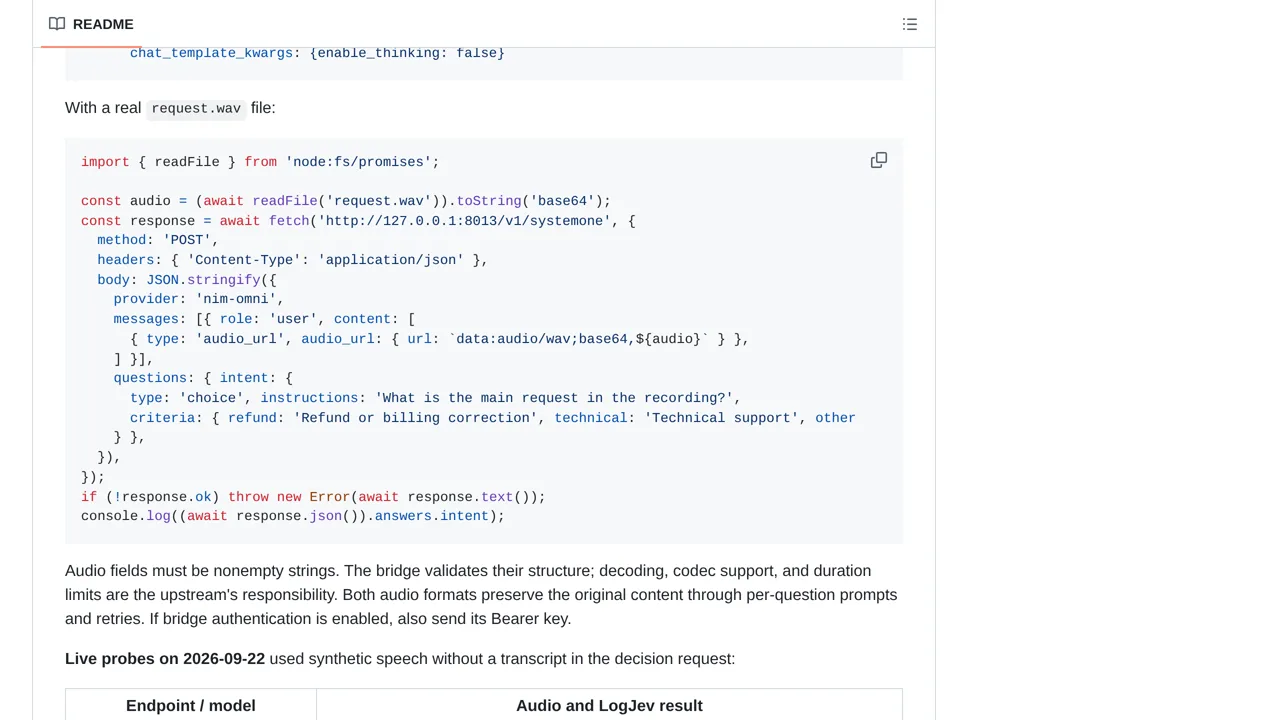
LogJev turns text, images, or audio into choices and scores using supported models’ log probabilities.
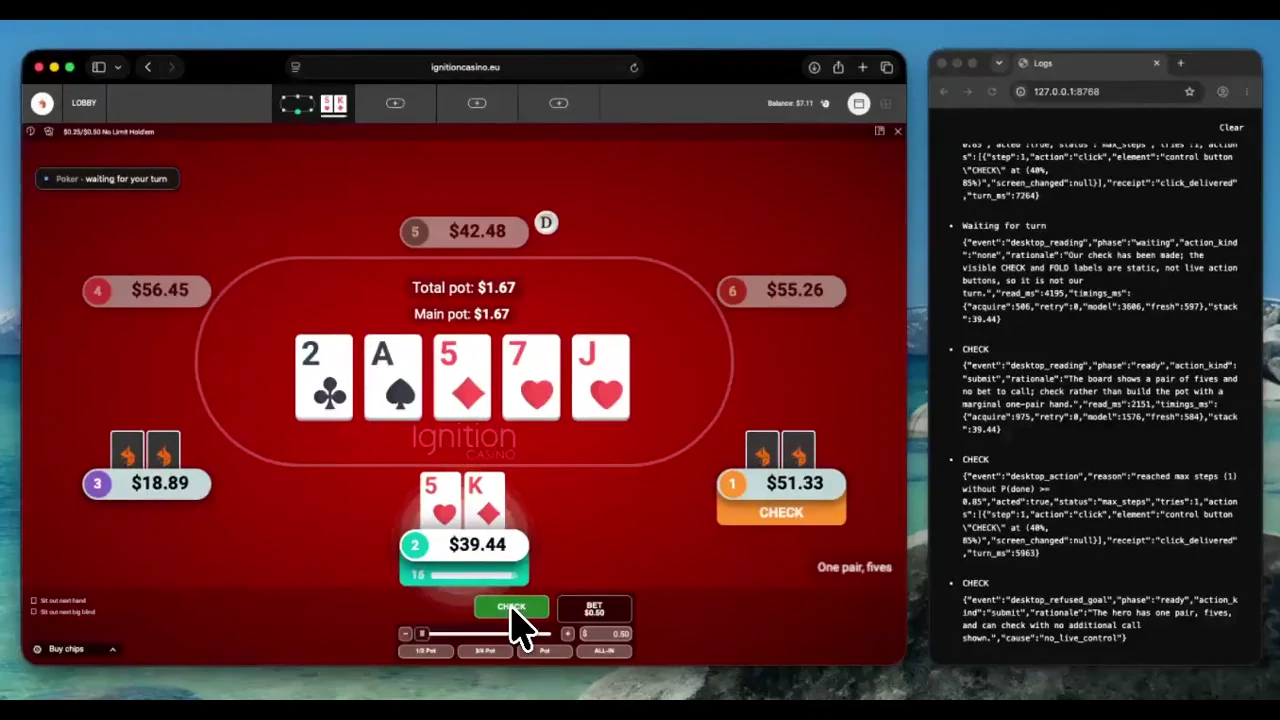
Luna plans while Jev acts in a poker-playing browser agent shown winning a hand.
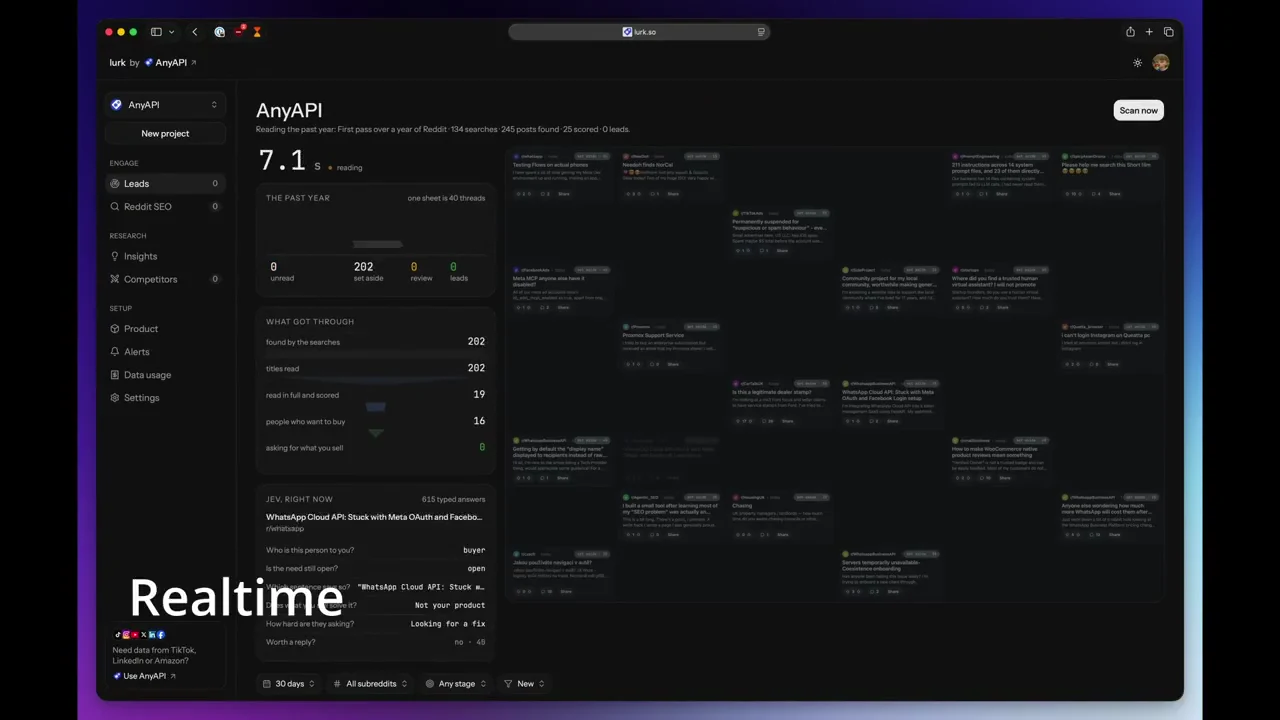
Lurk monitors Reddit threads for citation opportunities and sends matches through email, Discord, or Slack.
A Mac app uses Jev and its built-in manual to answer setup and troubleshooting questions when no other model is loaded.

A Mario-style browser test records Jev missing the first enemy and measures the full browser round trip separately from inference.

OpenMed tests Jev and Laya on prelabelled questions over four fictional clinical notes, explicitly framing it as a diagnostic rather than clinical accuracy.

Treg collects Meta ads while Jev classifies their landing pages, offers, and sales language.

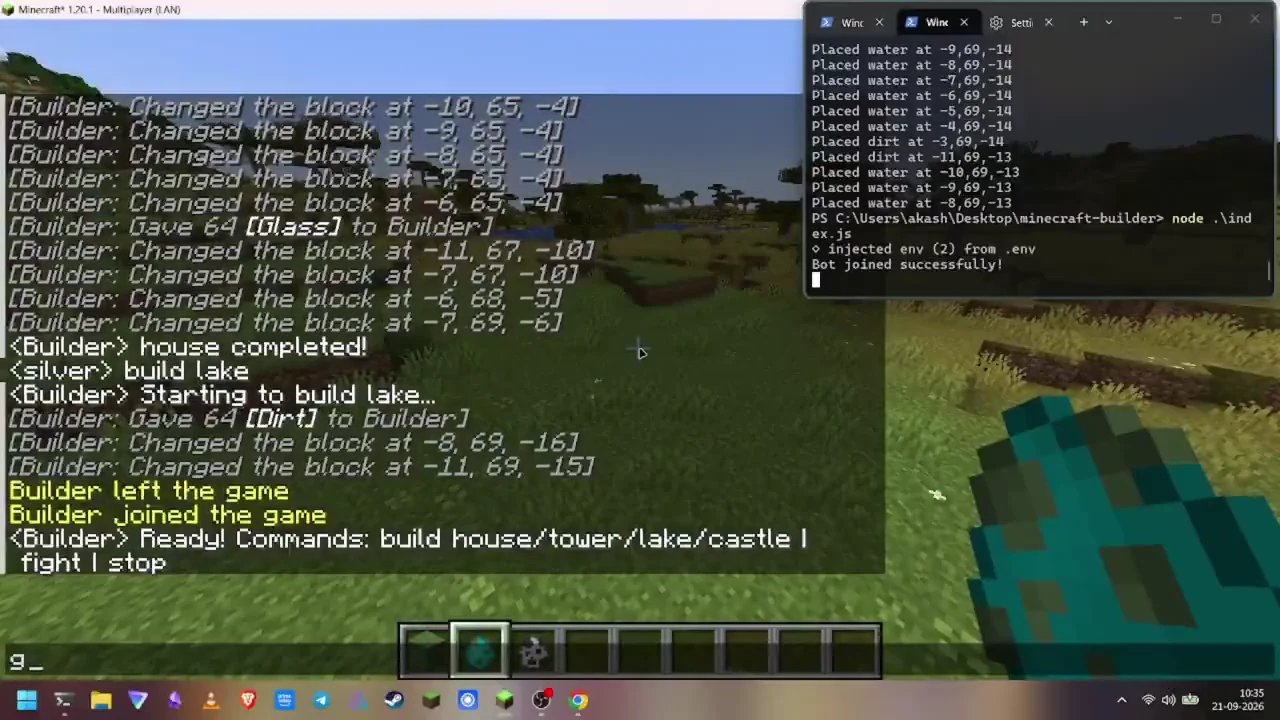
Akash Jain’s Jev bot builds requested Minecraft structures, fights mobs, and attempts to dodge skeleton arrows in real time.
Monid connects Jev and OpenRouter to a catalogue of tools for lead scoring, research, content analysis, and site audits.

Jev attempts a DOM-less, Monument Valley-style 3D puzzle but fails to open the first mechanism after 15 minutes.

gabidev used Jev to classify 50 Morpho vaults on Base by risk and rank their curators and vaults by trust.

Utkarsh Maheshwari compared the open-source Laya decision model with a Qwen reranker in his movie recommendation engine.

Artem built a Jev-powered picker that recommends OpenRouter models from a plain-language description of the task.

Youssef used Jev alongside coding agents to build a Nintendo DS game where Perry the Platypus can shove players off ledges.

Nitpicky zooms into faces, fingers, text, numbers and poses, then asks Jev to judge whether a photo was AI-generated.

CJ built a Jev chatbot that routes requests to search, Wikipedia, weather, Todoist or Home Assistant without an LLM.

Eric Yang’s browser extension uses Jev to flag suspected AI slop on LinkedIn and X as the reader scrolls.

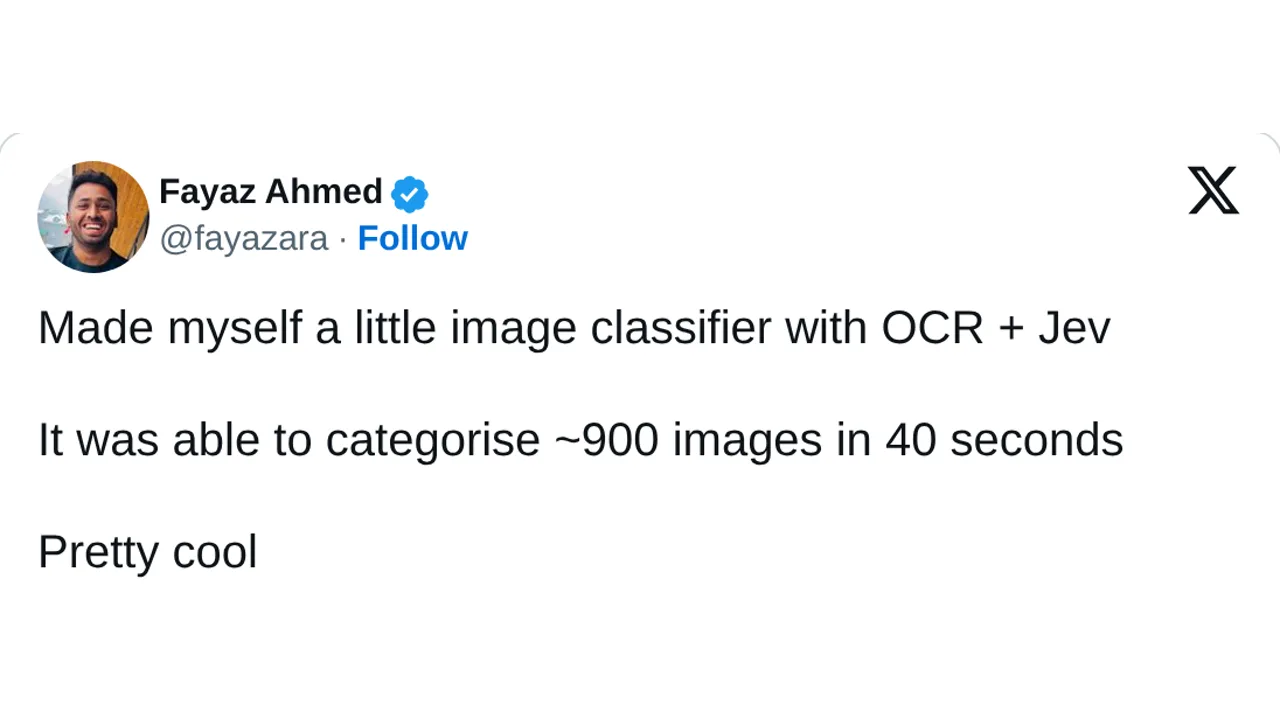
Fayaz Ahmed combined OCR with Jev to categorise roughly 900 images in a reported 40 seconds.
Desert Ant Labs chained on-device language detection, transcription and PII redaction with about 20 Jev decisions per audio file.

Hugging Models presented an open DeBERTa V3 Large classifier designed to return calibrated, typed decisions.

OpenRouter tested Jev as a judge with Ori Eval and reported it was more than five times faster than the next model.

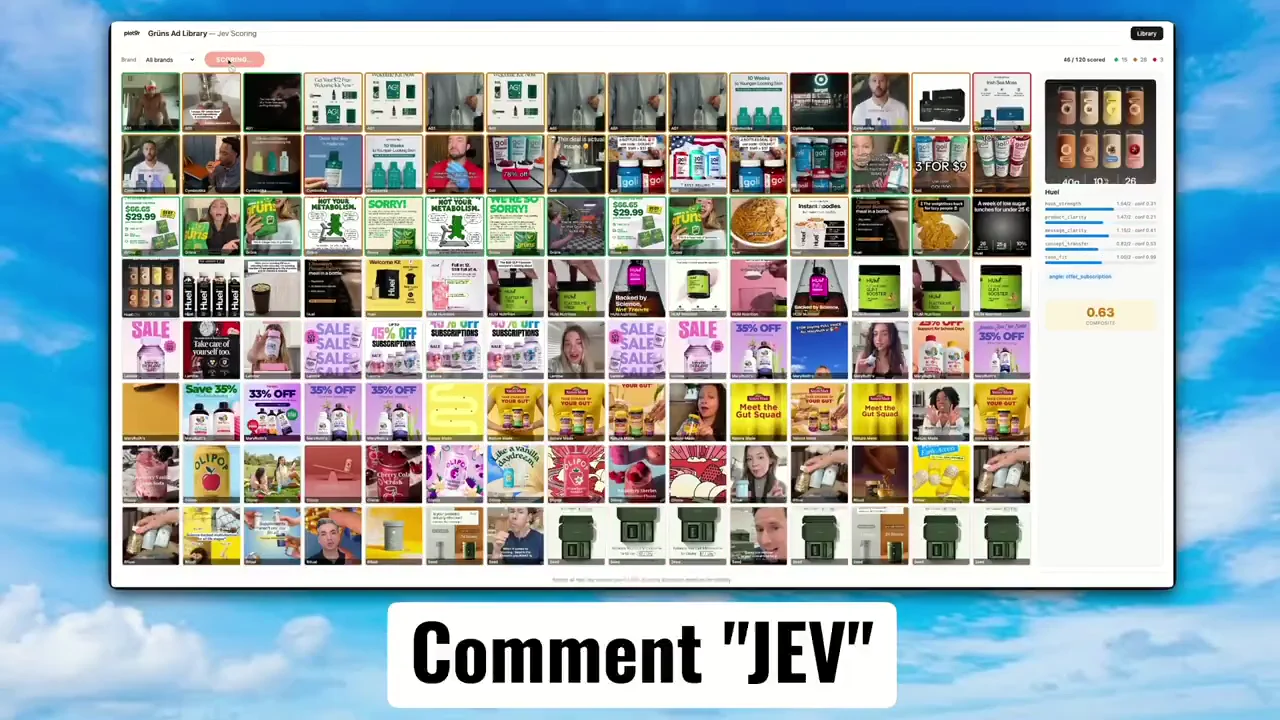
Raph Guilhem used Jev to score 120 competitor ads and shortlist ten before Opus 5.5 created adapted versions.
Kiyoro used Jev to detect that Opus 5.5’s default effort had changed from high to medium.

Pierre-Eliott Lallemant used Jev to identify which intent signals produced booked demos across thousands of outreach messages.

Sim Audience let more than 4,000 survey-participant personas vote between two launch posts in a simulated A/B test.

Choroshin Alex built a Skills IL tool that checks pasted SMS, WhatsApp and email messages for phishing with Jev.

Shashank Jha built a playable chess experiment with Jev as the opponent.

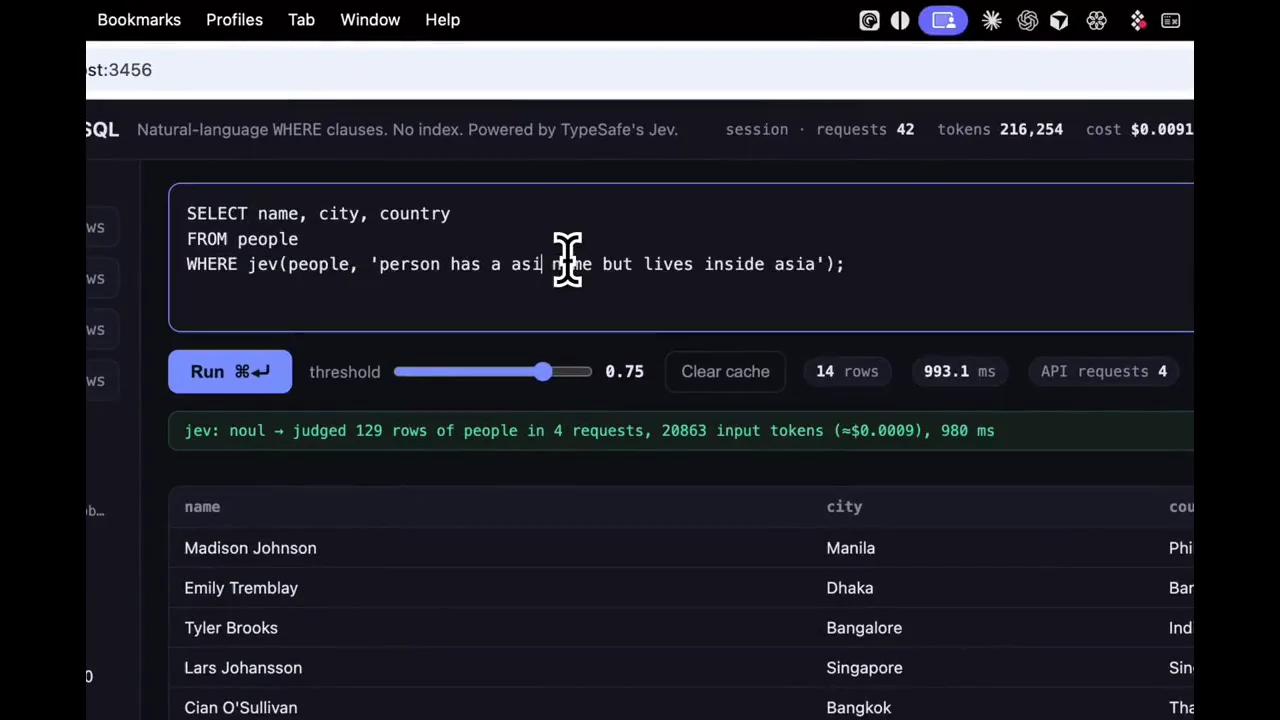
Zachi’s PostgreSQL extension uses a jev() function to filter database rows with natural-language conditions, without indexes or embeddings.
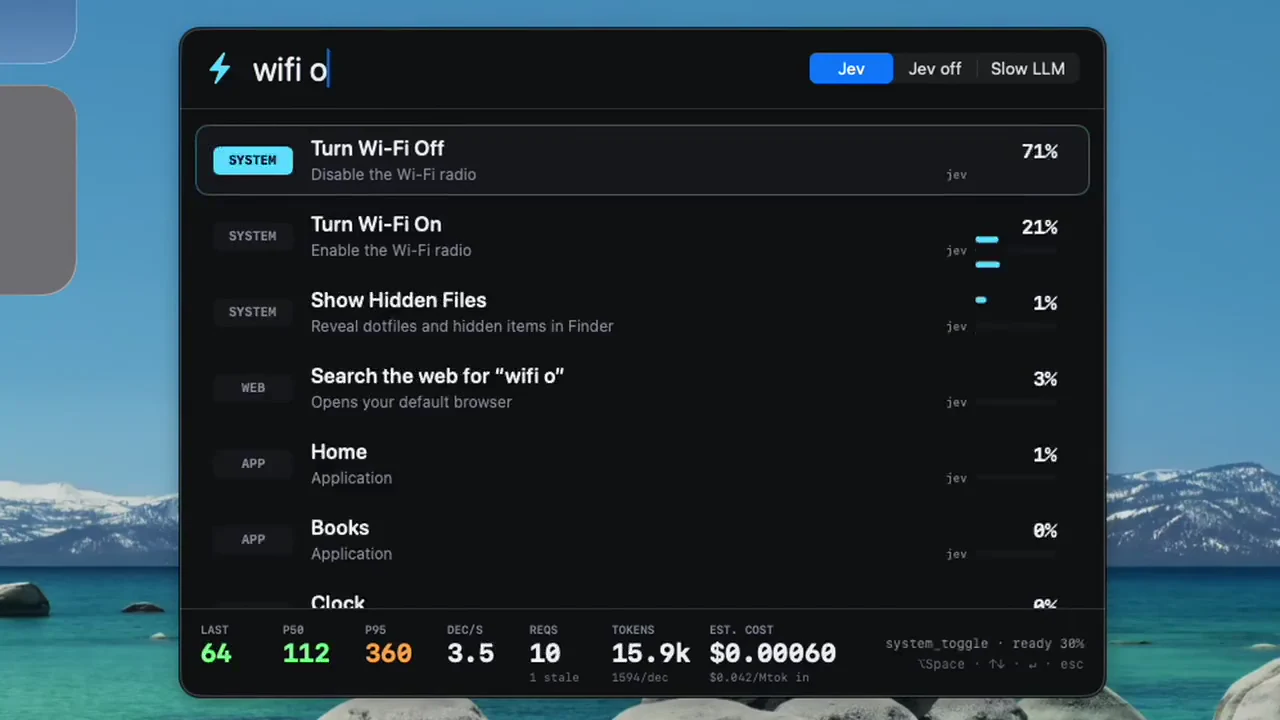
Nader Dabit’s predictive launcher combines aliases and fuzzy matching with Jev to rerank choices from each keystroke.
Nader Dabit’s spreadsheet experiment turns a column heading such as “Urgency” into live semantic ratings for every row.
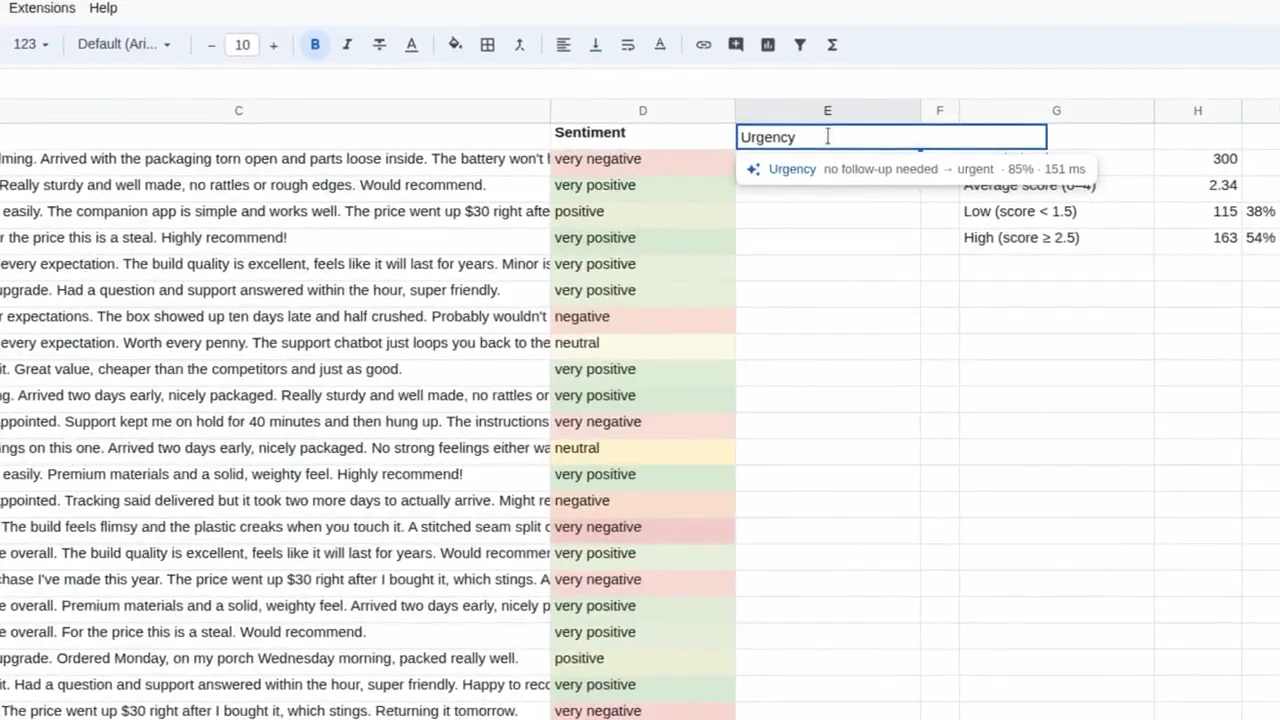
Proliquid uses Jev to label news sentiment inside its trading terminal and expose one-click trades on bullish stories.

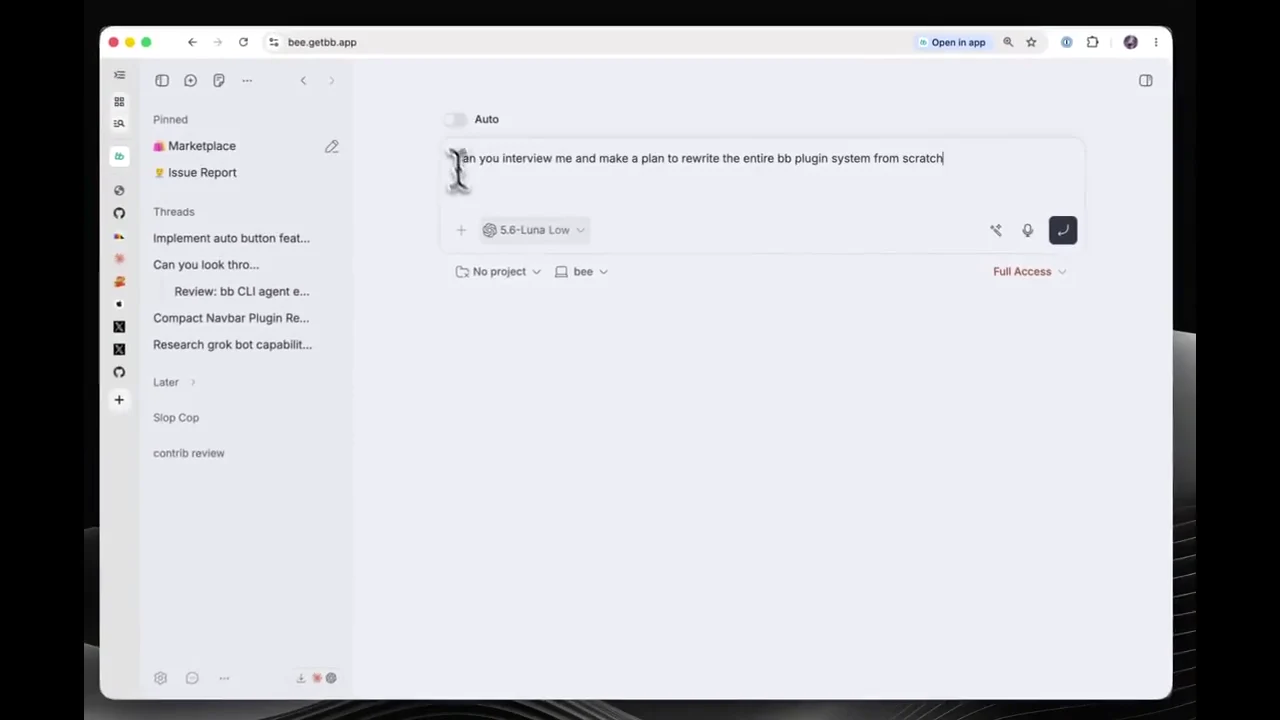
Sawyer Hood uses Jev to choose an agent, model, computer and working folder from a single prompt.
Amit Rawat’s Chrome extension labels each X post READ, MAYBE or SKIP with Jev before it reaches the viewport.

Zachi built a browser extension that asks Jev whether each DOM element is an ad and removes those classified as ads.

Jev, briefly
A chat model generates text token by token and hopes you parse it. Jev never generates a word. Your code sends the state of the world plus typed questions; Jev returns every answer in one parallel pass — typed values with calibrated probabilities and a confidence score your code can trust. About 70–500 ms end to end, $0.042 per million input tokens, output free. Trained with what TypeSafe calls Reinforcement Learning for Calibrated Decisions.
You define the options. Jev returns the chosen option, a probability for every option, and a confidence. The workhorse of routing, agents, and games — the answer space is always legal, so there is nothing to parse and nothing to hallucinate.
You describe ordered levels — say trivial / normal / critical. Jev returns the level, the probability of each, and a confidence. Scores turn fuzzy judgment (“how severe is this log line?”) into a number-free decision your code can branch on.
You assert a statement; Jev returns the probability that it is true — a noul. Moderation, verification, guardrails, “does this diff actually fix the bug?”: one question, one calibrated probability.
Official material lives at typesafe.ai and docs.typesafe.ai. JevMade is an independent community registry — not affiliated with or endorsed by TypeSafe AI.
Recurring lessons
Games, drones, trading bots, and browser agents all converge on the same loop: serialize the state, ask one decisive question, act, repeat. Jev’s latency makes the loop feel instant — the model lives inside the control loop, not outside it.
The answer says what; the confidence says whether to act. The most reliable entries threshold on confidence to route edge cases to a slower model or a human — automation with an honest escape hatch.
Makers rarely ask Jev to pick from everything. Local tactics prune 225 gomoku moves to ~40; DOM filters turn a page into an element table; code narrows options, Jev judges within them.
A recurring split: Jev makes every decision cheaply and instantly, and a small LLM is only invoked when a human-facing string must actually be written. Decision and generation are separate budgets.
Send the link — repo, live demo, post, or video — plus a line on what it does and which primitives it uses. Every entry is verified against its primary source before it ships.
Submit your experiment → hello@JevMade.com