Read & learn
Written guides.
Understand Jev, one idea at a time. Walkthroughs, recipes, and writeups — our notes first, the original next.
A public registry · independent & community-run
Learn, build, and play with Jev — from deep technical guides to creative experiments.
Read & learn
Understand Jev, one idea at a time. Walkthroughs, recipes, and writeups — our notes first, the original next.
Watch & learn
See an idea take shape. Tutorials, demos, and deep dives, organized by topic and credited to their creators.
Make & explore
See what builders made with Jev. Games, tools, repositories, articles, and more — traced to their sources.
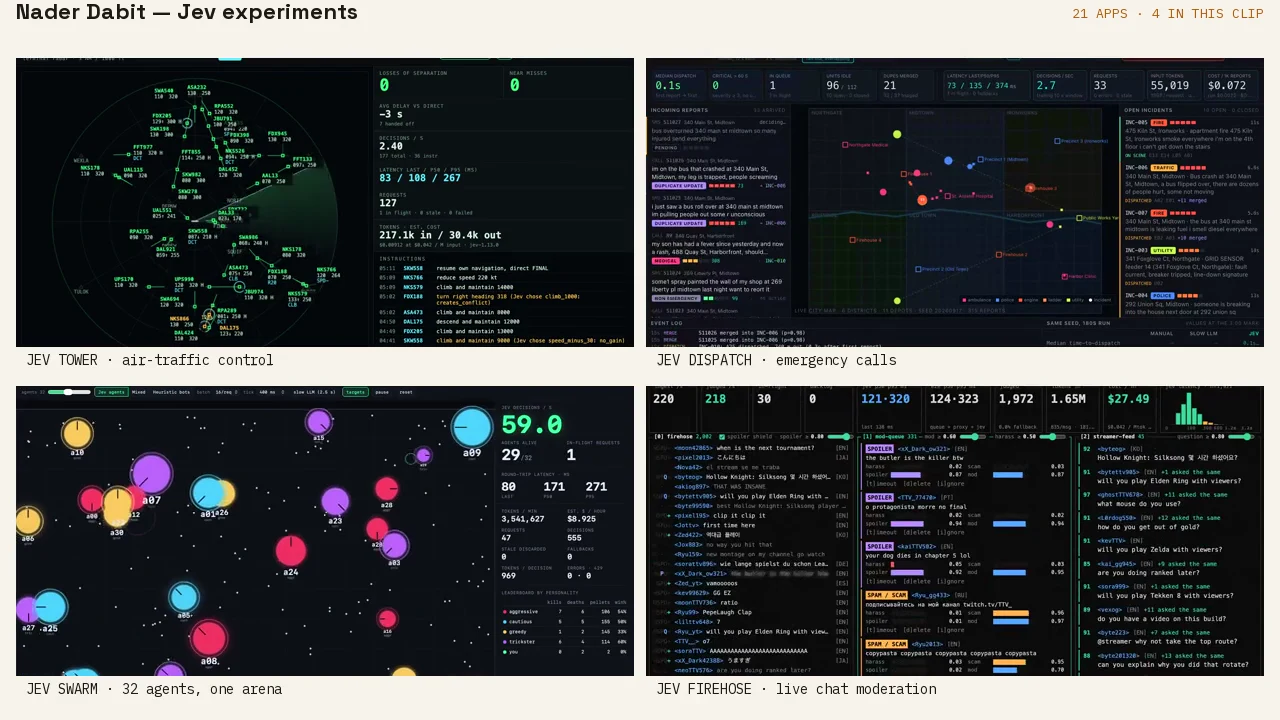
Every category, from games and tools to repositories and writeups, traced to a primary source.
Same ideas.
Different paths.
This is the full registry, not just the featured picks. Figures like speed, cost, and stars are maker-reported or captured snapshots, not JevMade measurements.
1613 experiments · showing 1501–1560
Neha Sharma built a real-time demo that uses Jev to route work among AI agents.

Marek Sotak’s Jev-powered Clippy watches product use, appears when someone seems stuck and chooses its own reaction.

Hugo Duprez demonstrated Jev selecting game-level structure in real time.

Ali built an open-source LinkedIn filter that scores visible posts against a user-editable Jev prompt in real time.

Yannis built a Jev product that scans Reddit for sales leads, though his launch post reports no traction.

erKam built a Jev check that quotes violated project rules back to Claude Code so it can rewrite its response or edit.

Ira Bodnar uses Jev to score competitor pages and automate SEO and generative-search optimisation checks and fixes.

Moritz Kremb’s Sales Copilot listens to calls and uses Jev to track stages, surface objections and suggest what to say next.

Tanav’s extension classifies visible posts as scam, slop or clean and adds a compact confidence badge to each one.

scoreboar v8 predicts which of two X posts outperformed its account-size baseline, entirely in the browser.

Alan Daitch paired Jev with Playwright to reject unsuitable listings, place offers and ask sellers for missing details.

Nicolay explains how agents can use Jev’s typed answers and calibrated probabilities as branches around an LLM.

Jeetendra built a walkable 3D map of Bay Area startup and venture-capital clusters, with Jev classifying each building.

Play Jev at chess, then share the result from a match where it weighs every legal move.

A shopping concierge combines public statistics, Jev, and an LLM, with scientific thresholds between evidence and action.

Give this scanner a URL to receive a screenshot-based pattern score and a shareable report.

Jev chooses a skill, tool, and parameters before a Slack agent acts, which its maker says doubled its speed.

Jev plays Slay the Spire 2 with maker-reported action decisions taking 0.7 seconds.

A Jev-powered 404 page corrects mistyped paths and redirects visitors to the intended page.

This Jev experiment inserts a decision step into the familiar copy-and-paste interaction.
Jev controls all four Smash Bros. characters, choosing each move while playing against itself.

A Chrome extension hides specific spoilers while leaving other posts from the same fictional universe visible.

This portfolio-aware engine uses Jev for non-mathematical analysis before scoring stocks and suggesting positions.

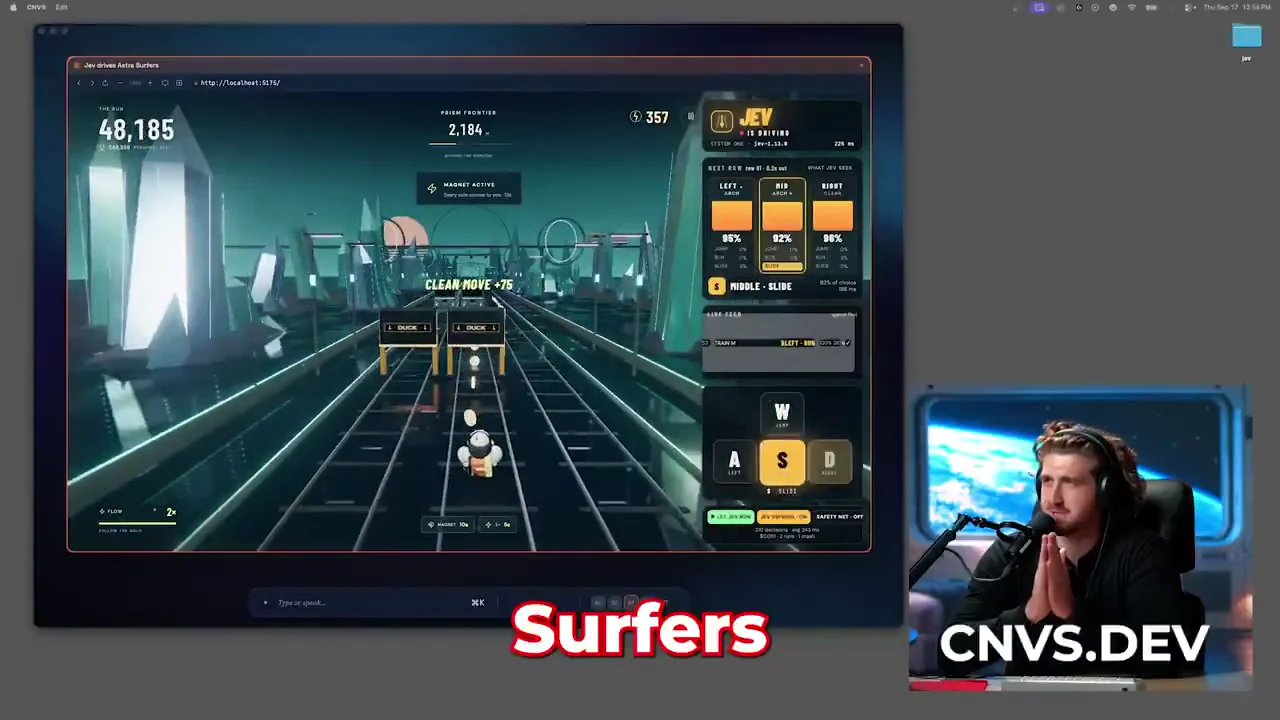
Jev plays 50 Subway Surfers games simultaneously at what its maker describes as superhuman speed.
SuperX asks 61 questions about each draft, helping writers score and revise a post before publishing.

An evolving evaluation suite tests System One models such as Jev through inexpensive, rapid iterations.

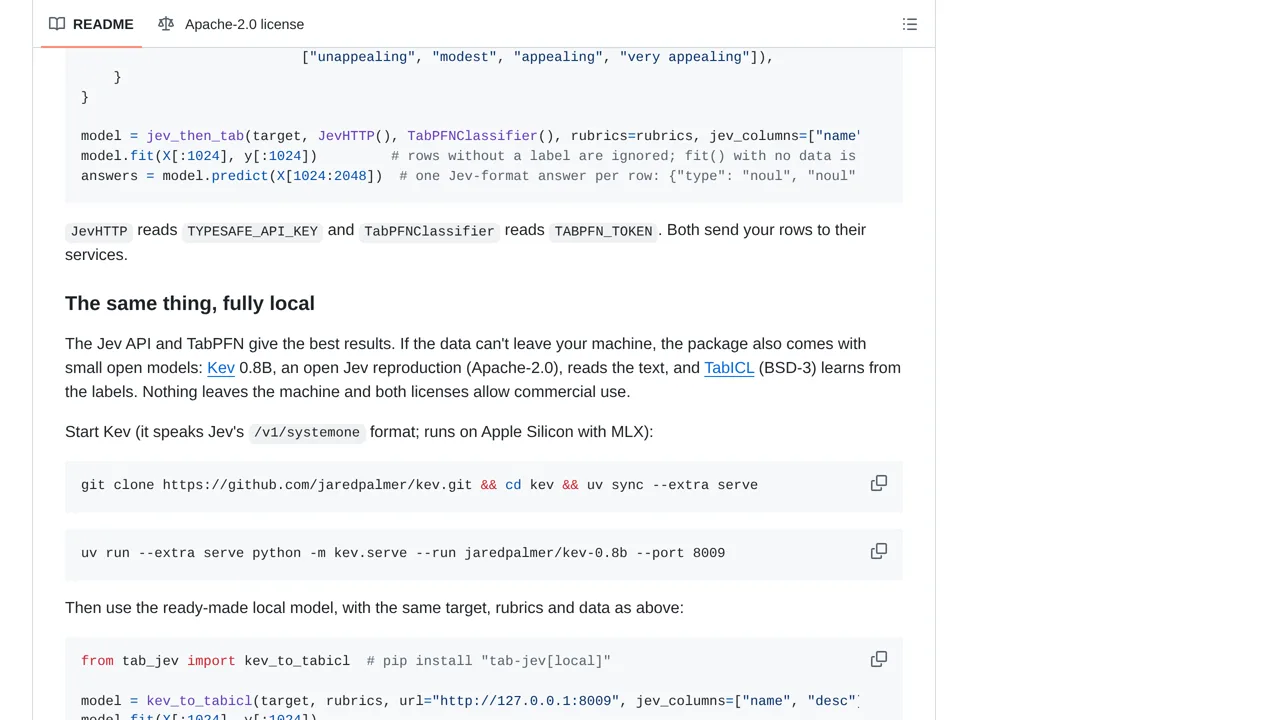
tab-jev combines a Jev-like model with a tabular foundation model for in-context learning over mixed text and tables.
Speak on a prompted topic for 30 seconds, then receive Jev-based scores and feedback on delivery.

A compact maker demo shows Jev playing Tetris.

Tev1 is a tiny Jev-like classifier demonstrated running locally through Ollama on a Mac.

Jev directs a coding agent toward relevant files and flags possible test gaps, while deterministic tests verify the result.

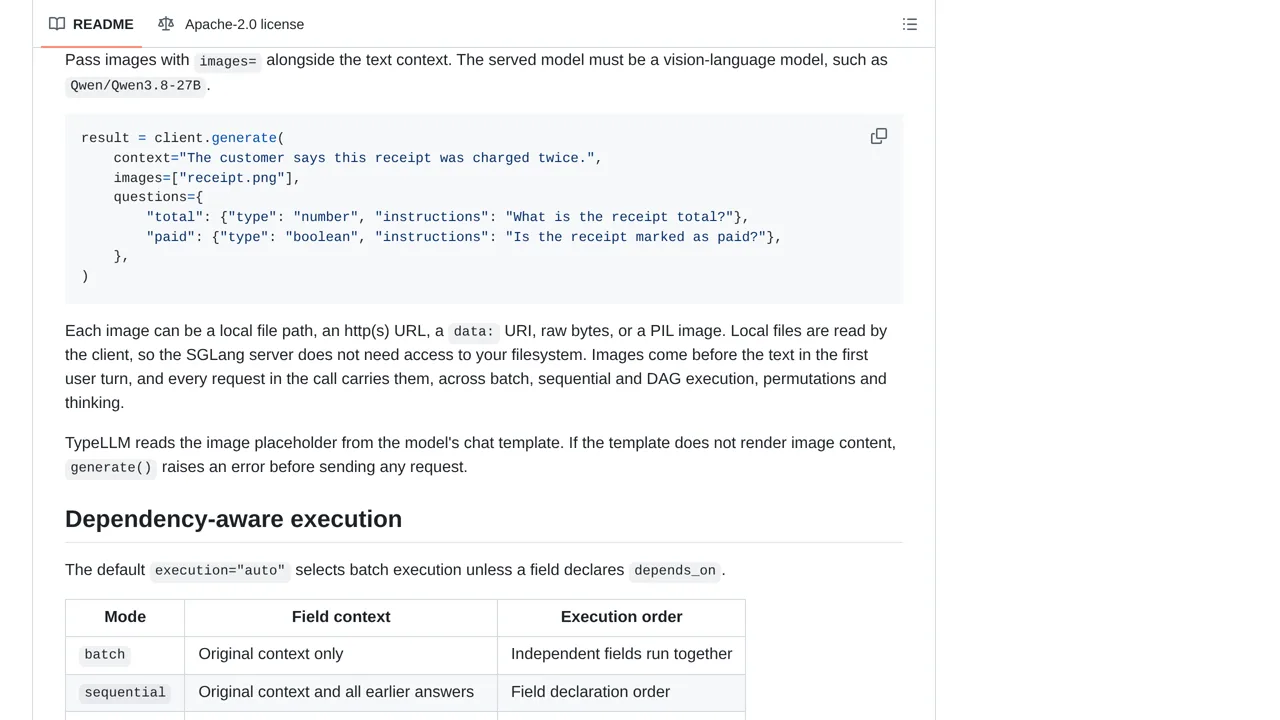
TypeLLM adds reasoning before type-safe output as an open-source alternative to Jev-style direct decisions.
Lessons from testing Jev became a simpler rule engine whose maker says responds better to outdoor temperature.

A Venice API demonstration classifies 24,000 Hacker News posts into 12 categories with Jev.

Submit a project URL for a launch-readiness score, evidence-backed issues, and Codex-ready repair prompts.

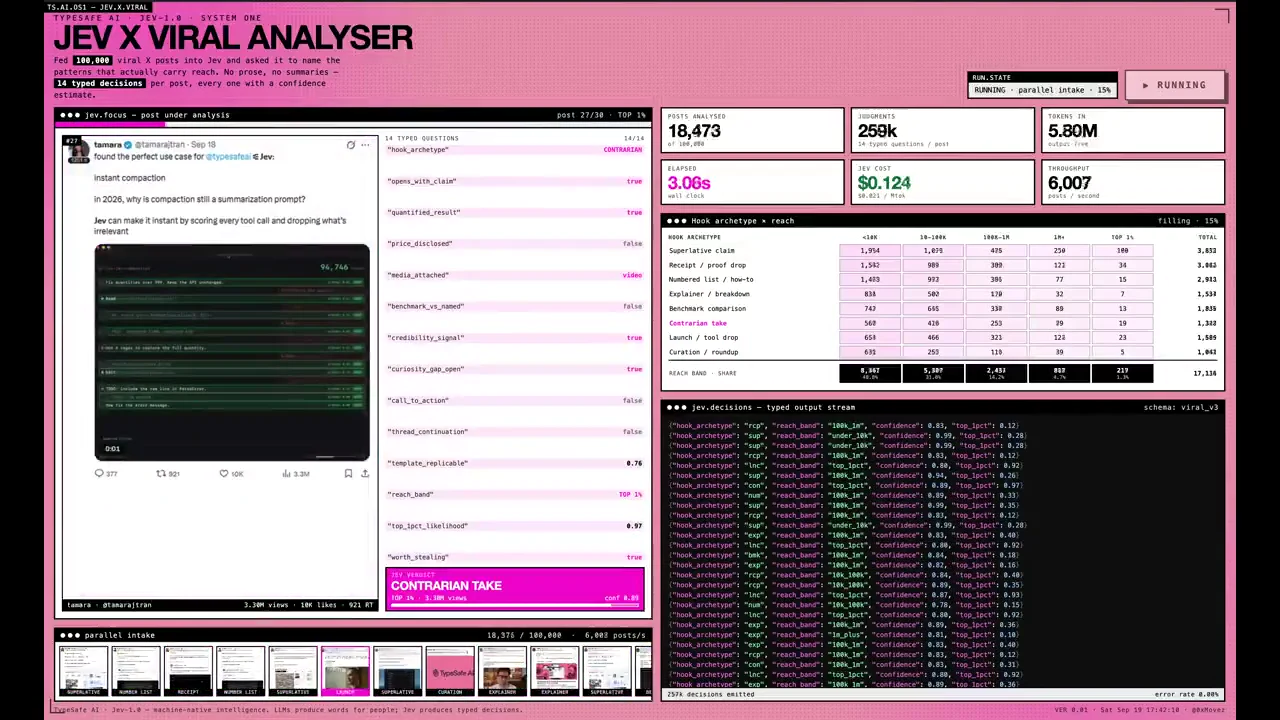
This analyser processes viral X posts with Jev and compares its throughput and cost with Claude Opus 5.
Score an X draft against 800 viral posts, then inspect the closest examples and the checks behind the result.

Jev screens videos in a niche before they reach the user, turning a content database into a ranked research feed.

One prompt gathers 100 visual references from Cosmos, NASA, and The Met for creative research.

A local Whisper listener sends speech and the Mac accessibility tree to Jev, which selects the next computer action.

Speak a Mac command and Jev begins carrying it out before the dictated sentence has finished.

Filter wallet lists for mercenary farmers before a token launch; the maker reports screening 40,000 wallets in four seconds.

A WebMCP benchmark run pairs Jev with Mercury 2.5 and reports solving every task at sharply lower model cost.

Paste a website URL and Jev decides how to rebuild it as a native mobile app before Shipper handles submission.

Jev watches client WhatsApp groups for urgent problems and unresolved orders, alerting a language model when a message matters.

A measured browser-control trial separates Jev HTTP time from the full interaction loop while noting that network time remains included.

Route each group-chat message to the agent that should answer, replacing explicit mentions or a slower generative orchestrator.

Check an X draft before publishing to judge whether the maker's girlfriend is likely to be angry about it.

Search WIP todos by meaning to find moments such as revenue gains, blockers, or switches between SaaS providers.

Simulate an X post's virality with a Jev-powered reconstruction of the feed algorithm and its published weights.

Classify an exported X archive to reveal recurring patterns without opening every saved post individually.

Analyze thousands of personal X posts across eight questions to compare which topics, hooks, and teaching styles correlate with engagement.

Tag X posts in real time as breaking news, a useful nugget, or slop.

A Chrome extension labels timeline posts as clean, engagement bait, promotion, secondhand material, or filler.

Decision Index 0.2 places XOR eighth among Jev-like text models, with comparatively strong results in arts and human taste.

Search thousands of Zillow listings for qualities its filters omit, including architecture, renovation status, and freeway proximity.

Find product conversations that match goals supplied by the user.

A Minecraft server plugin blocks severe chat content and flags harassment or grooming before players send it.

Type a request into one text box and watch the field transform into the interface the request describes.

Turn a product URL into a Markdown repository covering features, audience, messaging, pricing strategy, and business logic.

Jev, briefly
A chat model generates text token by token and hopes you parse it. Jev never generates a word. Your code sends the state of the world plus typed questions; Jev returns every answer in one parallel pass — typed values with calibrated probabilities and a confidence score your code can trust. About 70–500 ms end to end, $0.042 per million input tokens, output free. Trained with what TypeSafe calls Reinforcement Learning for Calibrated Decisions.
You define the options. Jev returns the chosen option, a probability for every option, and a confidence. The workhorse of routing, agents, and games — the answer space is always legal, so there is nothing to parse and nothing to hallucinate.
You describe ordered levels — say trivial / normal / critical. Jev returns the level, the probability of each, and a confidence. Scores turn fuzzy judgment (“how severe is this log line?”) into a number-free decision your code can branch on.
You assert a statement; Jev returns the probability that it is true — a noul. Moderation, verification, guardrails, “does this diff actually fix the bug?”: one question, one calibrated probability.
Official material lives at typesafe.ai and docs.typesafe.ai. JevMade is an independent community registry — not affiliated with or endorsed by TypeSafe AI.
Recurring lessons
Games, drones, trading bots, and browser agents all converge on the same loop: serialize the state, ask one decisive question, act, repeat. Jev’s latency makes the loop feel instant — the model lives inside the control loop, not outside it.
The answer says what; the confidence says whether to act. The most reliable entries threshold on confidence to route edge cases to a slower model or a human — automation with an honest escape hatch.
Makers rarely ask Jev to pick from everything. Local tactics prune 225 gomoku moves to ~40; DOM filters turn a page into an element table; code narrows options, Jev judges within them.
A recurring split: Jev makes every decision cheaply and instantly, and a small LLM is only invoked when a human-facing string must actually be written. Decision and generation are separate budgets.
Send the link — repo, live demo, post, or video — plus a line on what it does and which primitives it uses. Every entry is verified against its primary source before it ships.
Submit your experiment → hello@JevMade.com