Read & learn
Written guides.
Understand Jev, one idea at a time. Walkthroughs, recipes, and writeups — our notes first, the original next.
Learn, build, and play with Jev — from deep technical guides to creative experiments.
Read & learn
Understand Jev, one idea at a time. Walkthroughs, recipes, and writeups — our notes first, the original next.
Watch & learn
See an idea take shape. Tutorials, demos, and deep dives, organized by topic and credited to their creators.
Make & explore
See what builders made with Jev. Games, tools, repositories, articles, and more — traced to their sources.
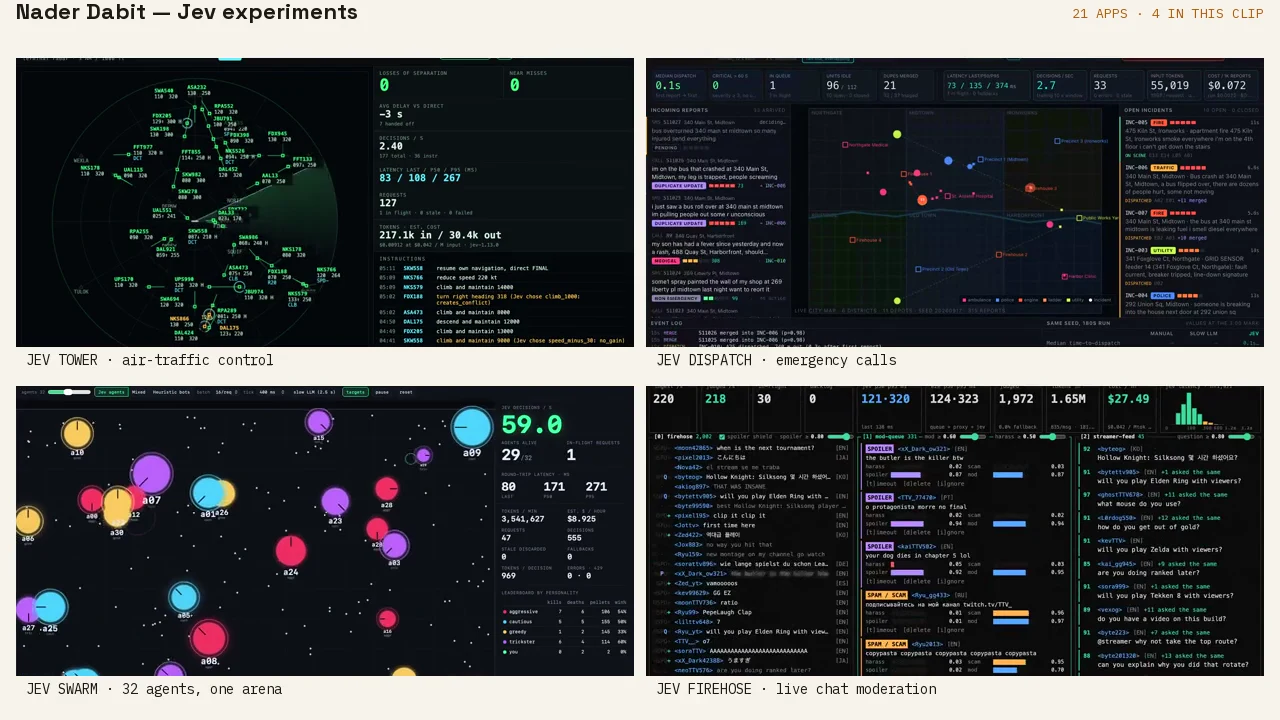
Every category, from games and tools to repositories and writeups, traced to a primary source.
Real-time research powered by
Same ideas.
Different paths.
This is the full registry, not just the featured picks. Figures like speed, cost, and stars are maker-reported or captured snapshots, not JevMade measurements.
2140 experiments · showing 1741–1800
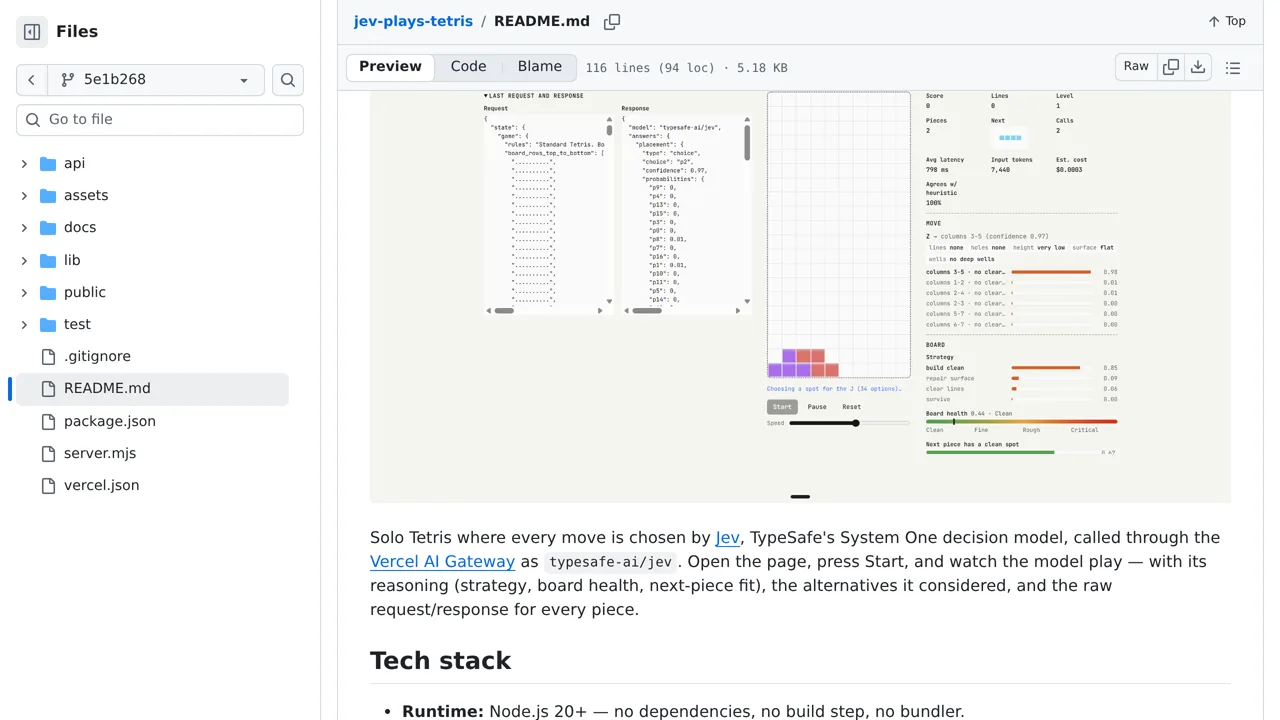
Solo Tetris where Jev picks both the strategy for the next few pieces and a board-health score for the current stack.
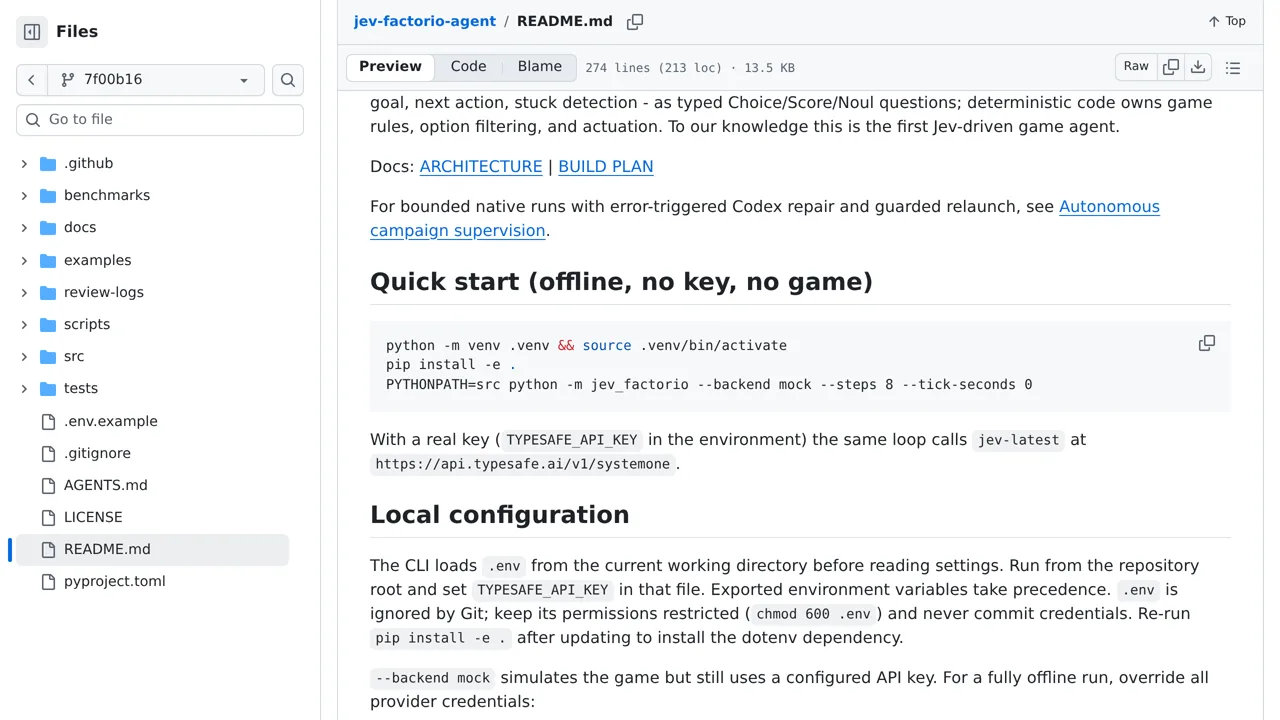
A Factorio agent that runs on a clean division of labor: Jev picks what to do, ordinary code works out how, and nothing runs unvalidated.
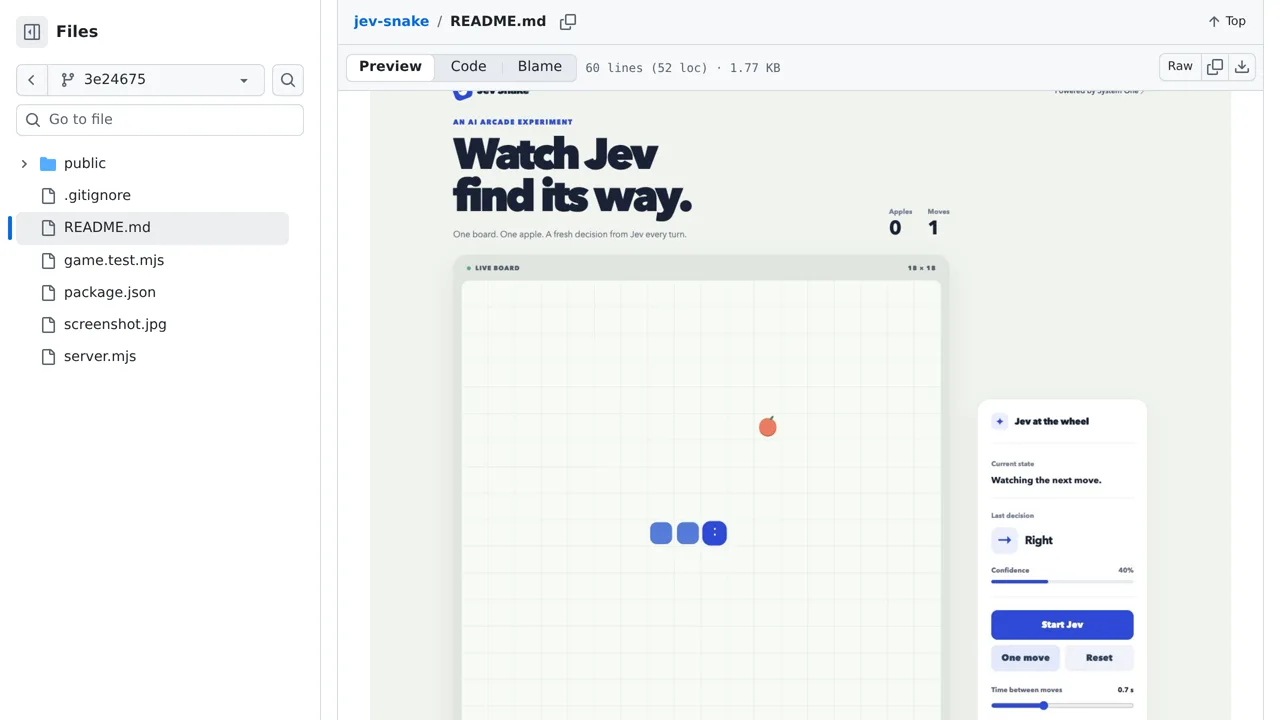
Server-side snake where every move is one typed choice question, with the board, snake, and food as the state.
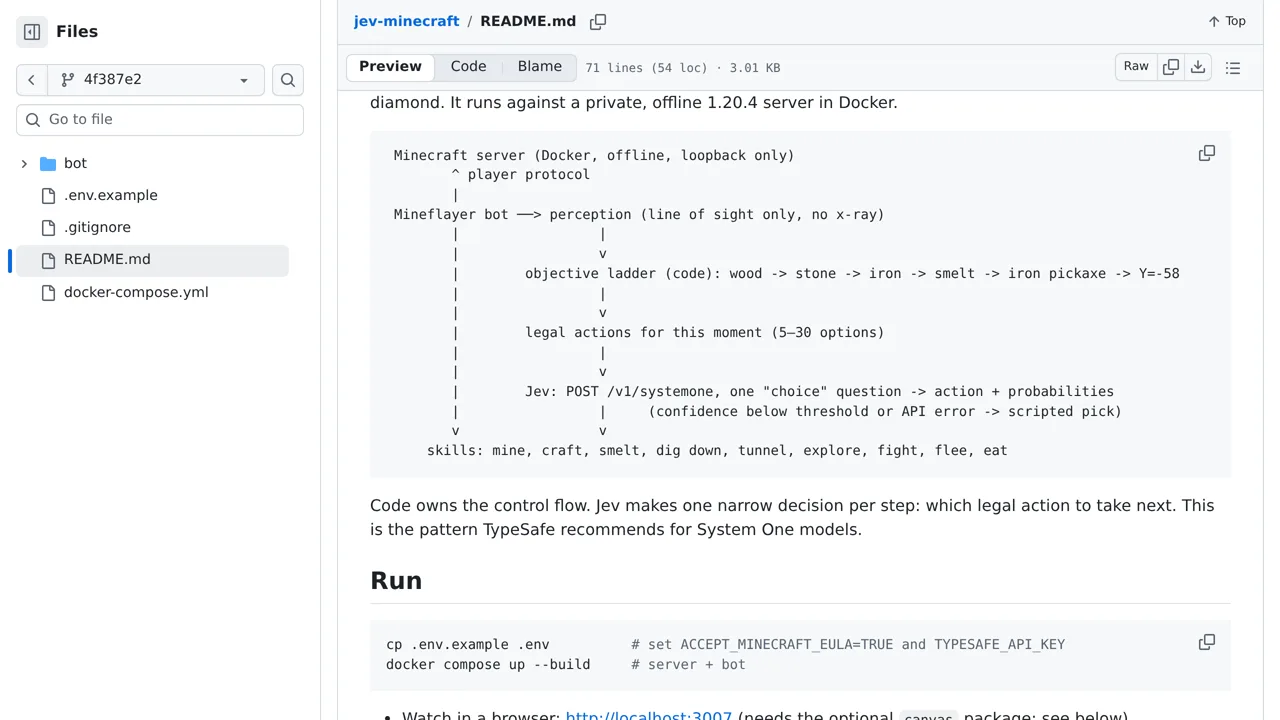
A Minecraft bot asks Jev what to do next all the way to a diamond — every tree punch, craft, and tunnel is one typed choice.
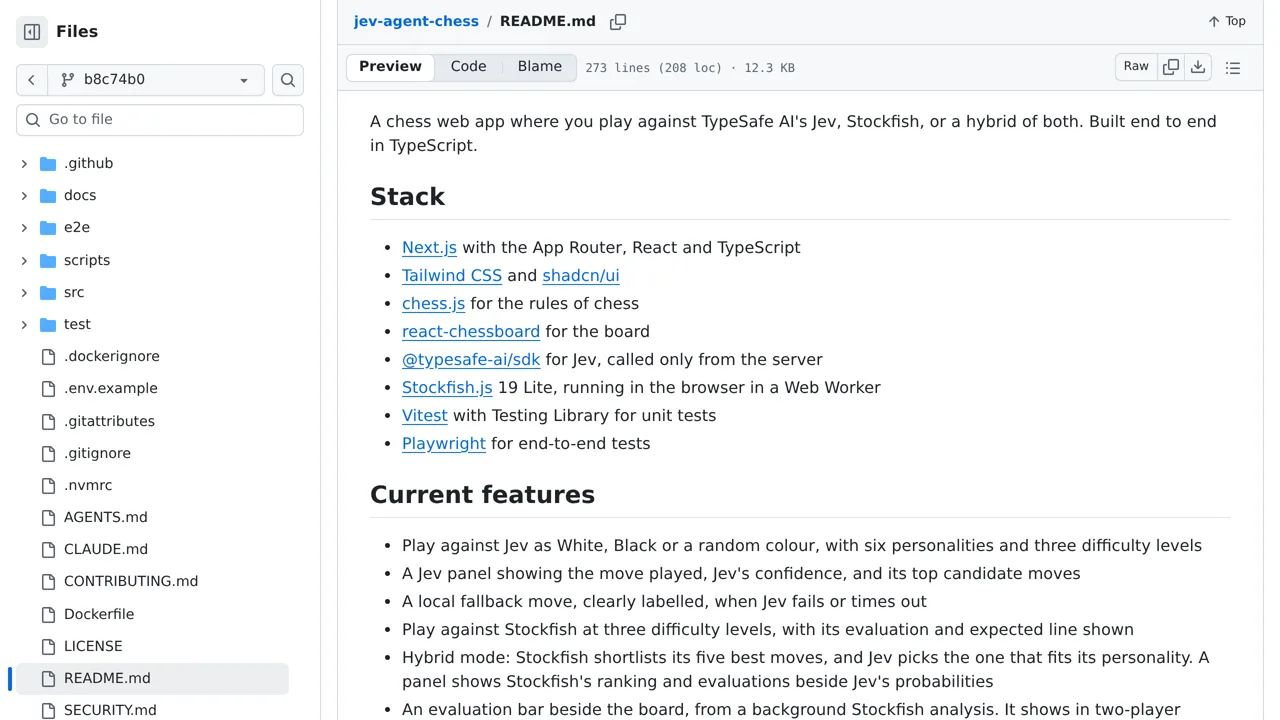
Play chess against Jev, Stockfish, or both at once — Stockfish narrows the position to five candidate moves and Jev picks whichever suits its current personality.
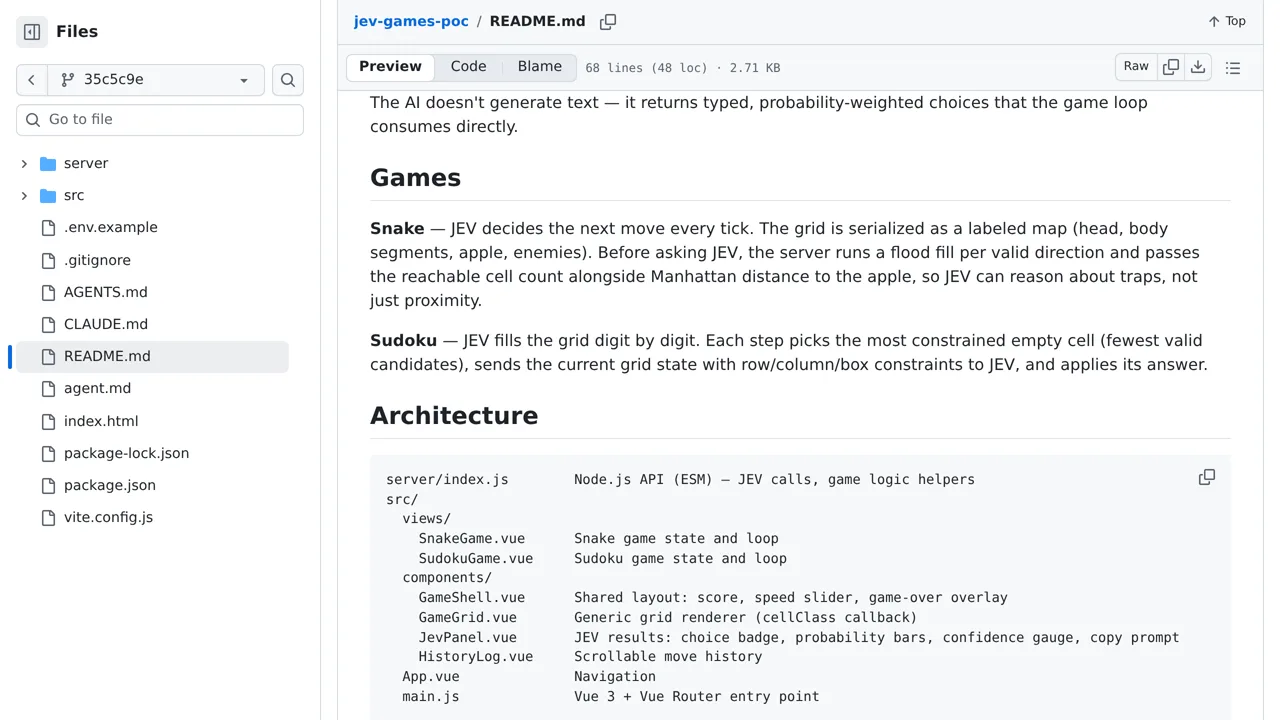
Two small games, one decision-maker. In Snake, Jev picks a direction each tick from options the server has already checked for traps; in Sudoku, it fills in the most constrained cell one digit at a time.
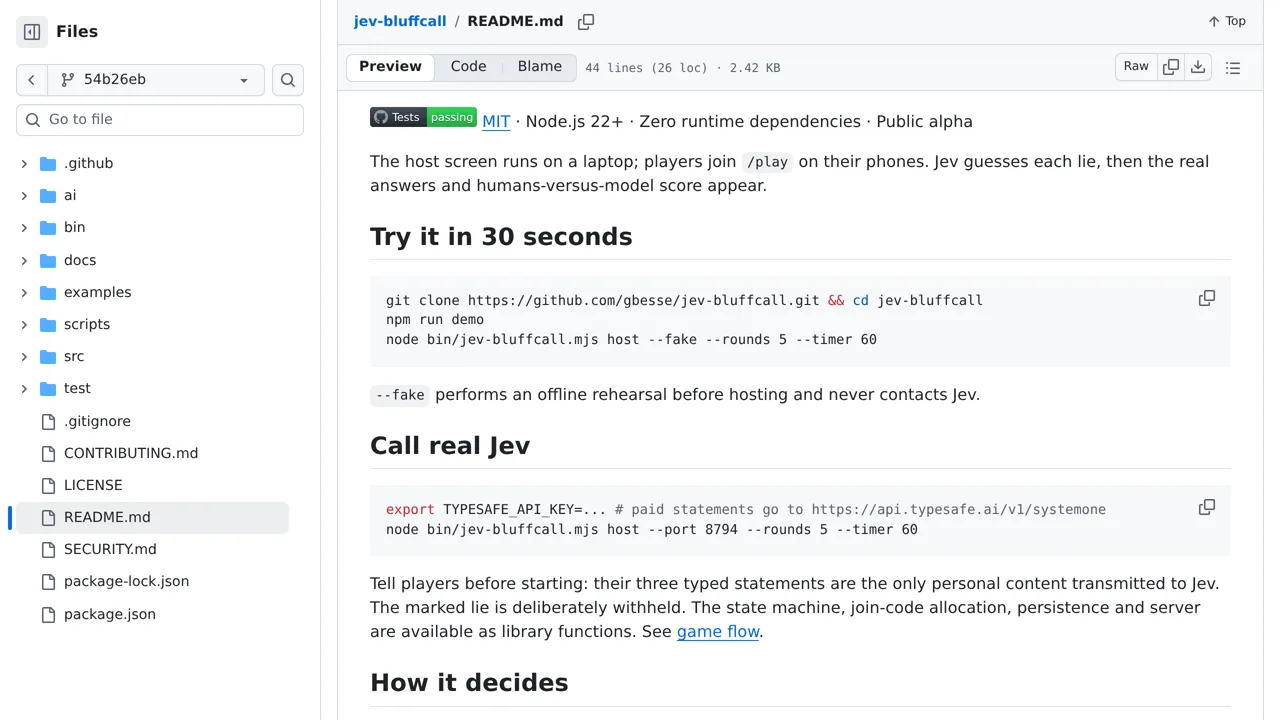
One laptop hosts the game and everyone else joins from their phone. Each player writes two truths and a lie; Jev guesses the lie, then the real answers come out and everyone sees whether the humans or the model read the room better.
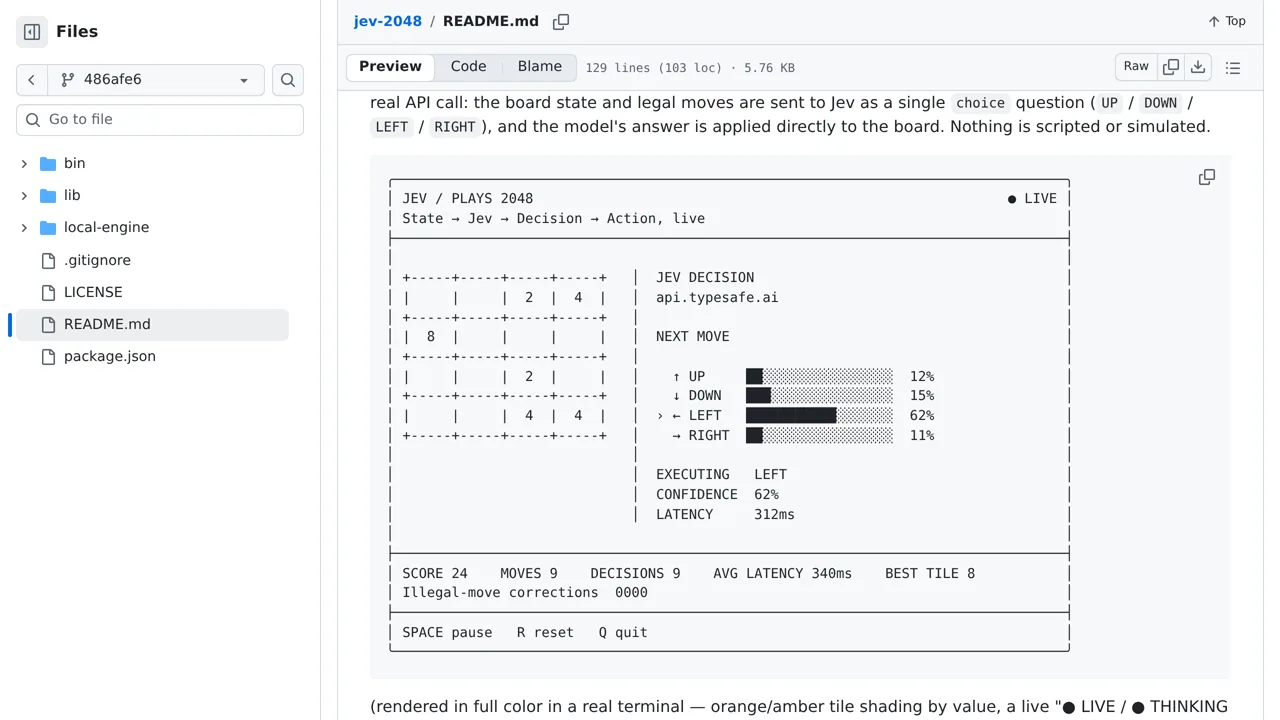
Jev calls every swipe in this 2048 clone, and a direction only counts if the four probabilities add up to a clean one.

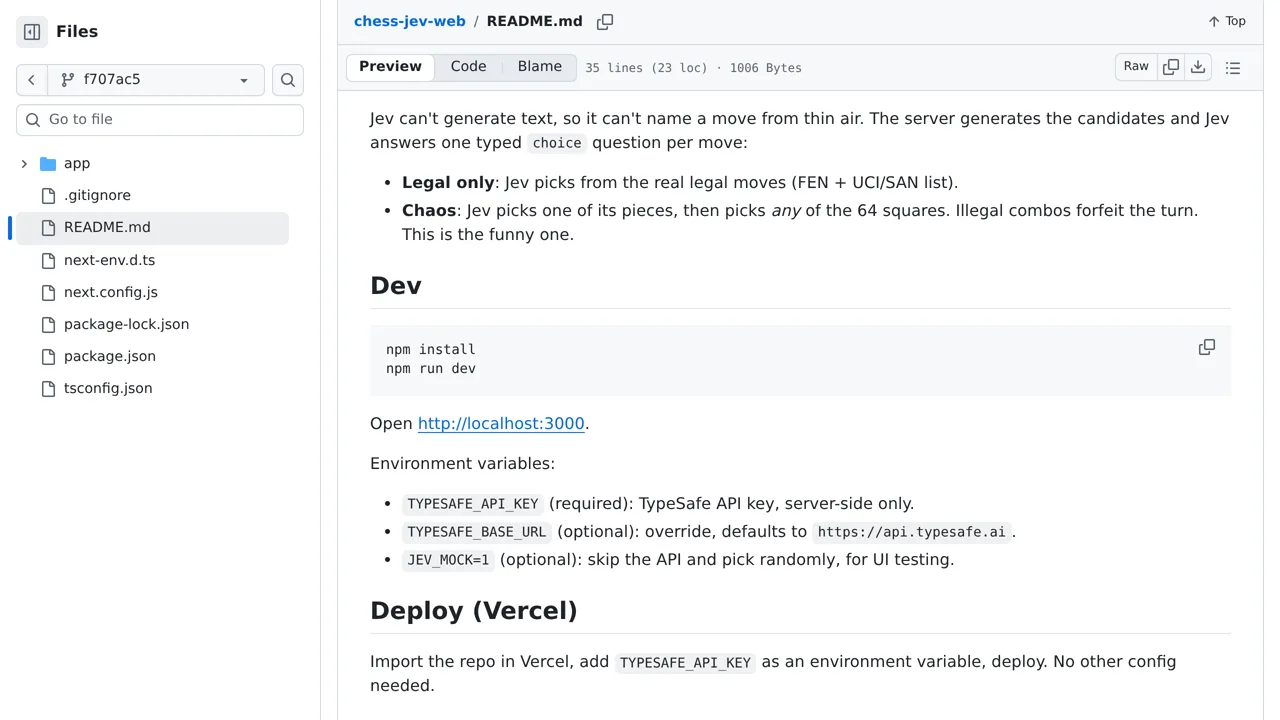
A Next.js chess app whose API route forwards each position to the System One endpoint as one typed choice question per move.
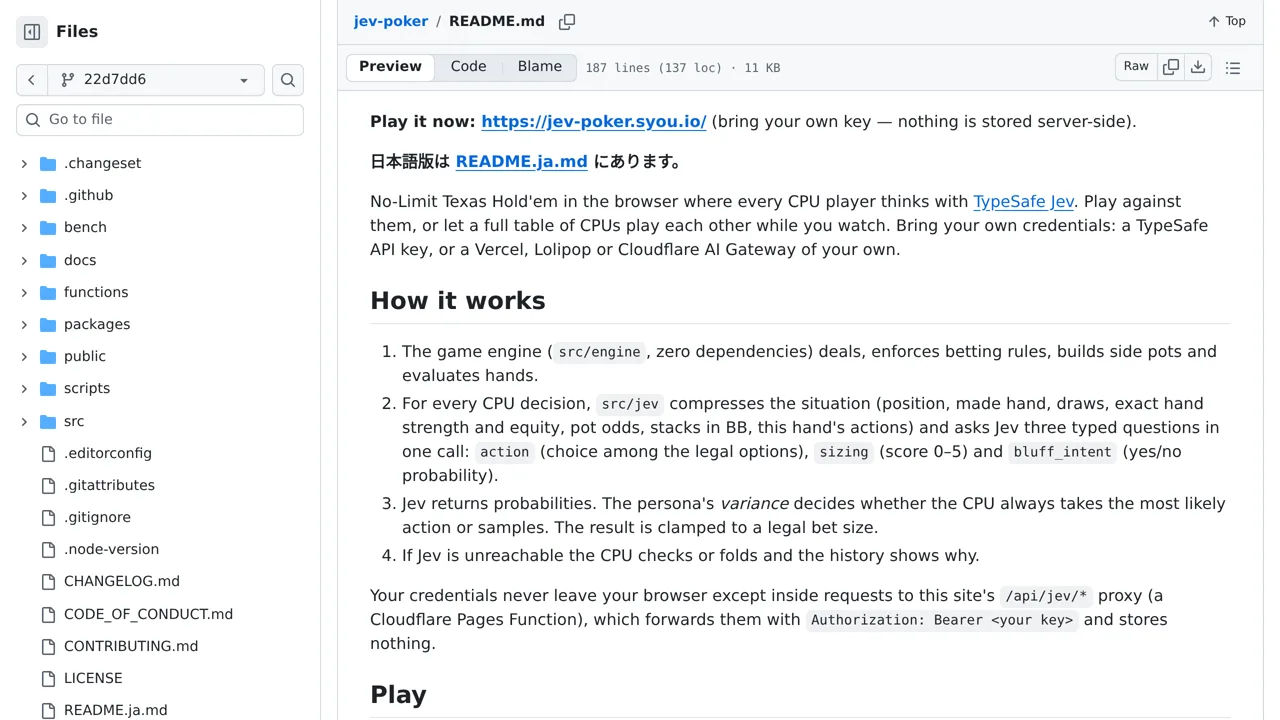
No-limit Texas Hold'em where the CPU players think with Jev — bring your own API key and watch the table reason.
Watch the Jev decision model play 2048 live in your terminal, with average latency and illegal-move corrections on screen.
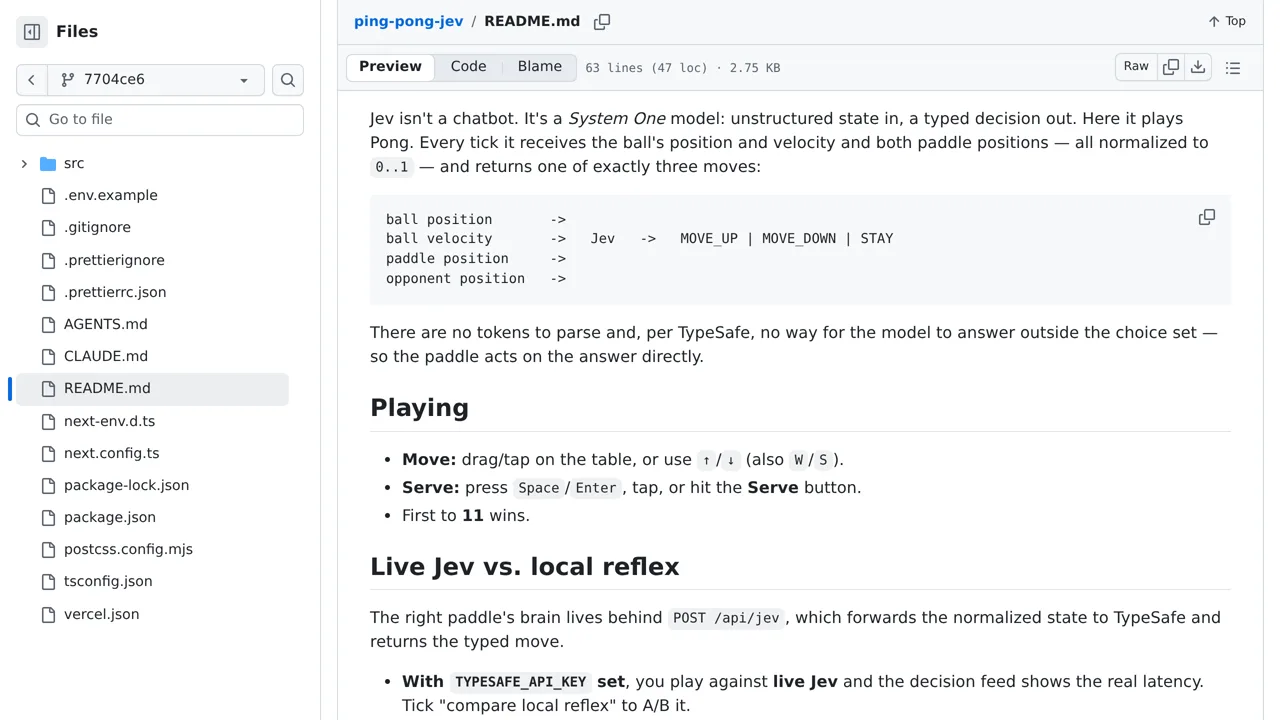
Jev plays pong. Each tick it gets the ball and paddle positions and answers one of three moves: up, down, or stay — nothing else can come back.
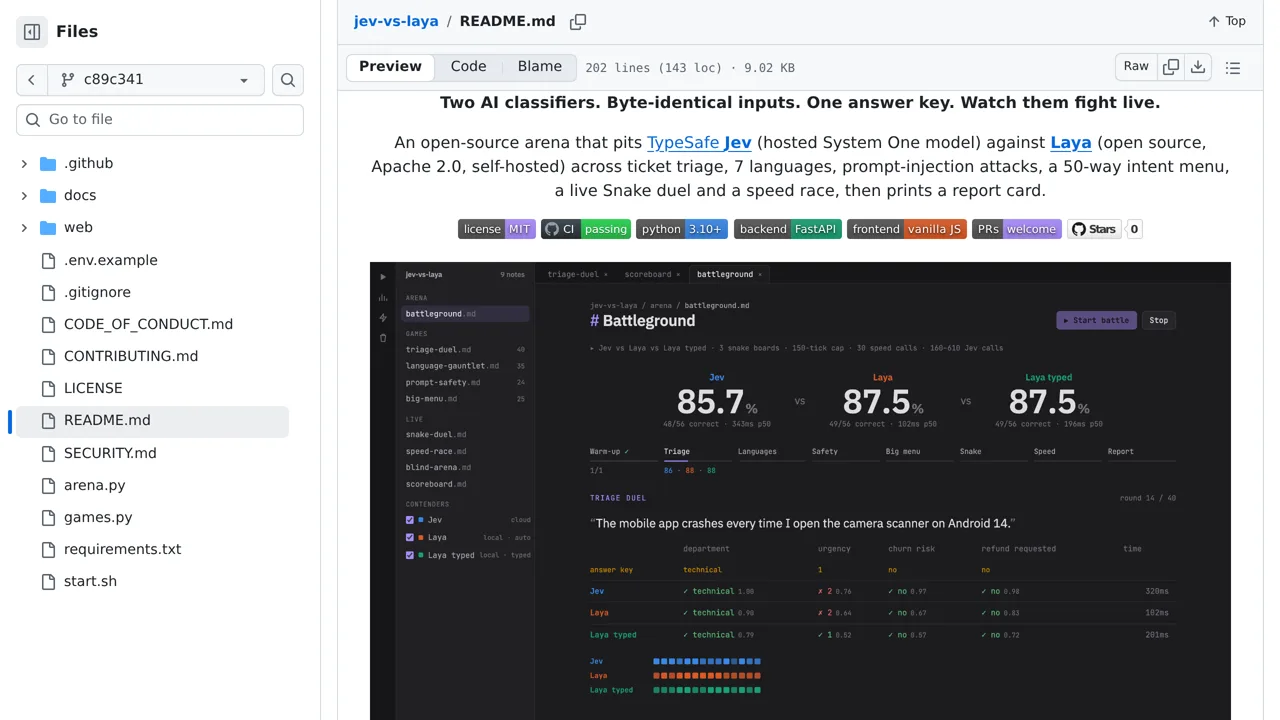
An open battleground that feeds Jev and Laya byte-identical rounds — same wording, same option order — and publishes the report card.
Point it at a music folder and Jev scores the missing metadata — genre, language, album type — then the winning tags get written back into your files.

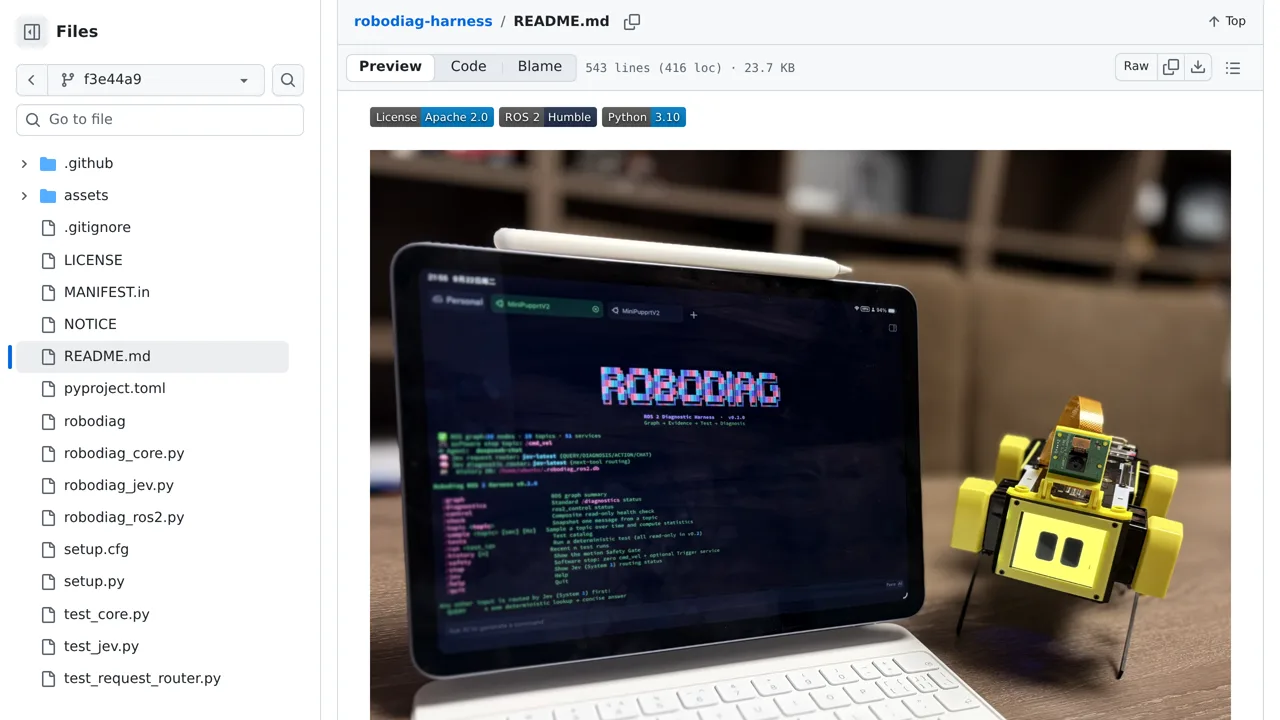
When the robot acts up, Jev plays detective: it chooses which diagnostic tool to run next, while the tools themselves stay plain deterministic code.
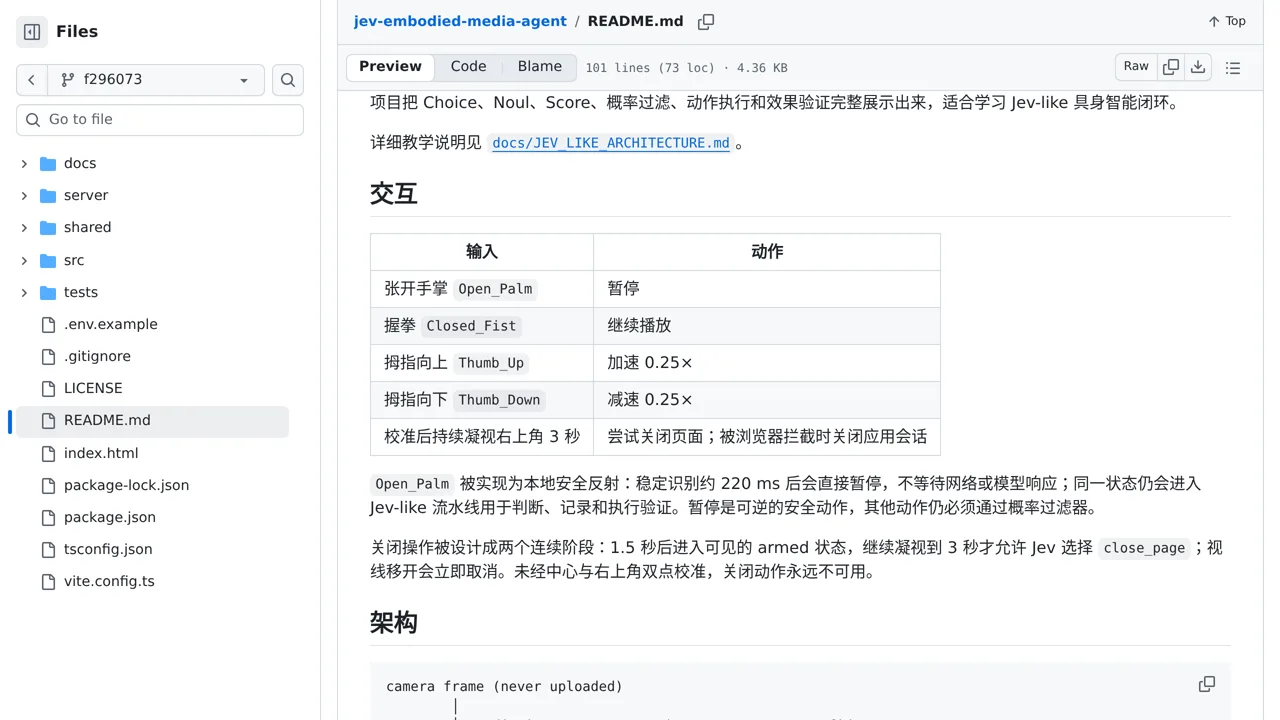
A webcam, your hands, and a video player: thumbs up to speed up, thumbs down to slow down — but only if Jev is convinced you meant it.
Matěj Gordon's Home Assistant integration speaks Czech, lets Jev choose which device to act on, and lands the whole decision in about 300 milliseconds.
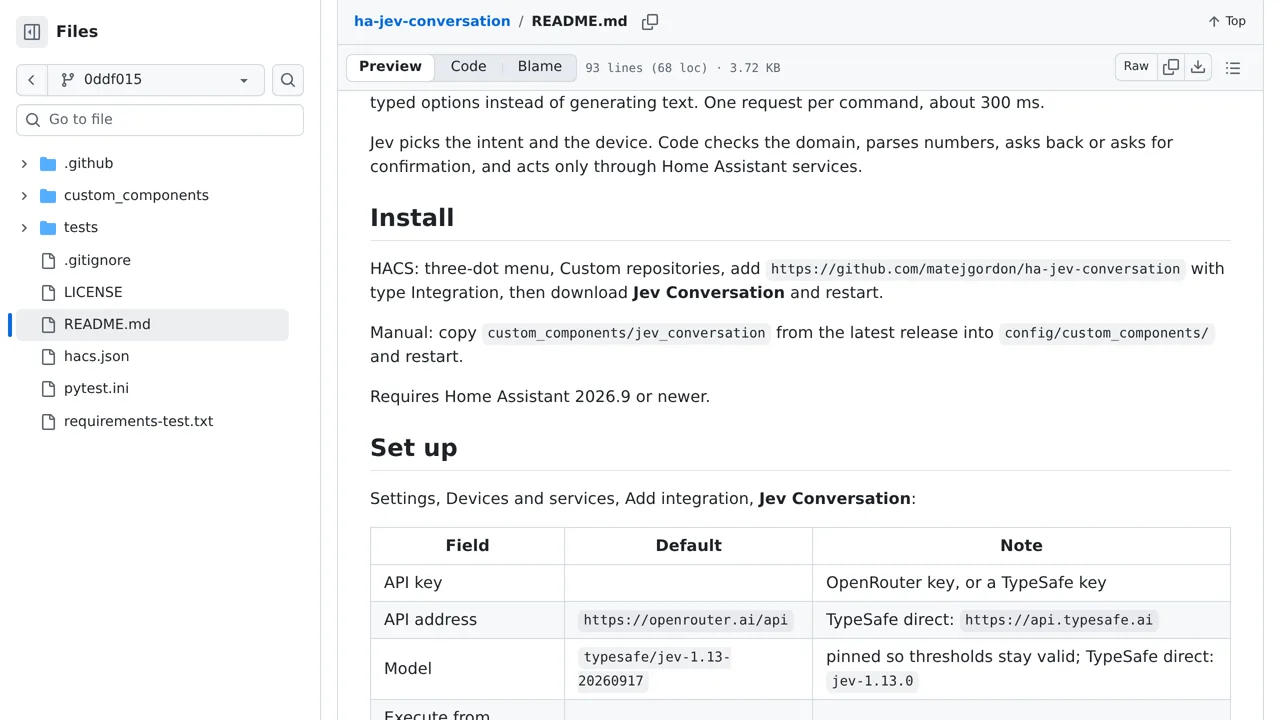
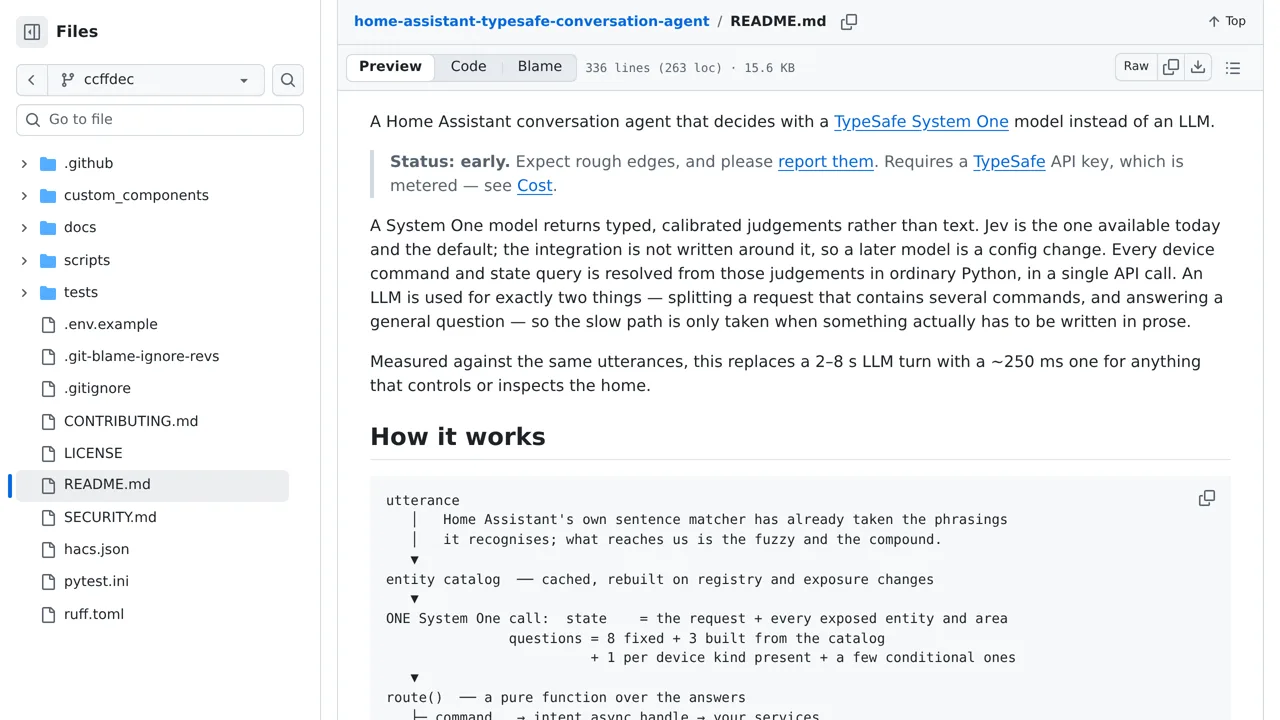
A Home Assistant voice agent that routes each command through typed, calibrated Jev judgments instead of free-text parsing.
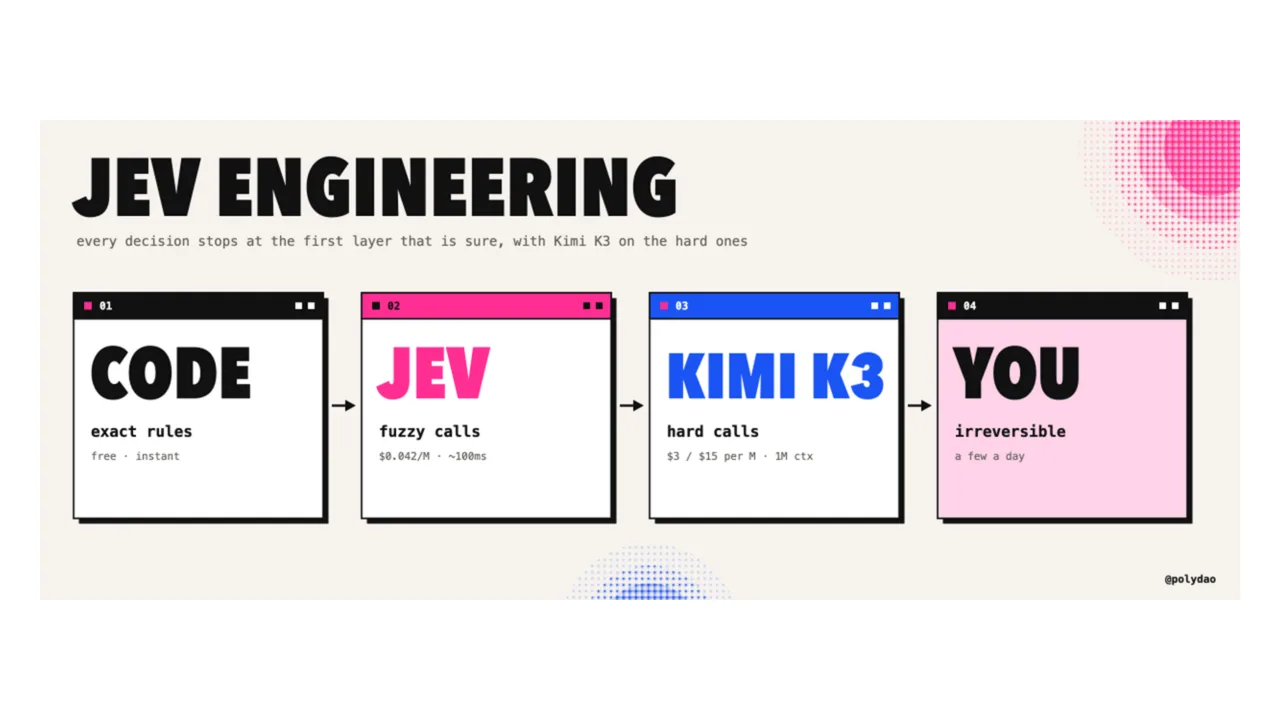
Mr. Buzzoni maps an agent’s small decisions to Jev, sends uncertain cases to Kimi K3, and keeps irreversible actions with people.
Hassan tested Jev on 1,018 paper summaries, assigning each to one of 24 topics for a reported eight cents.

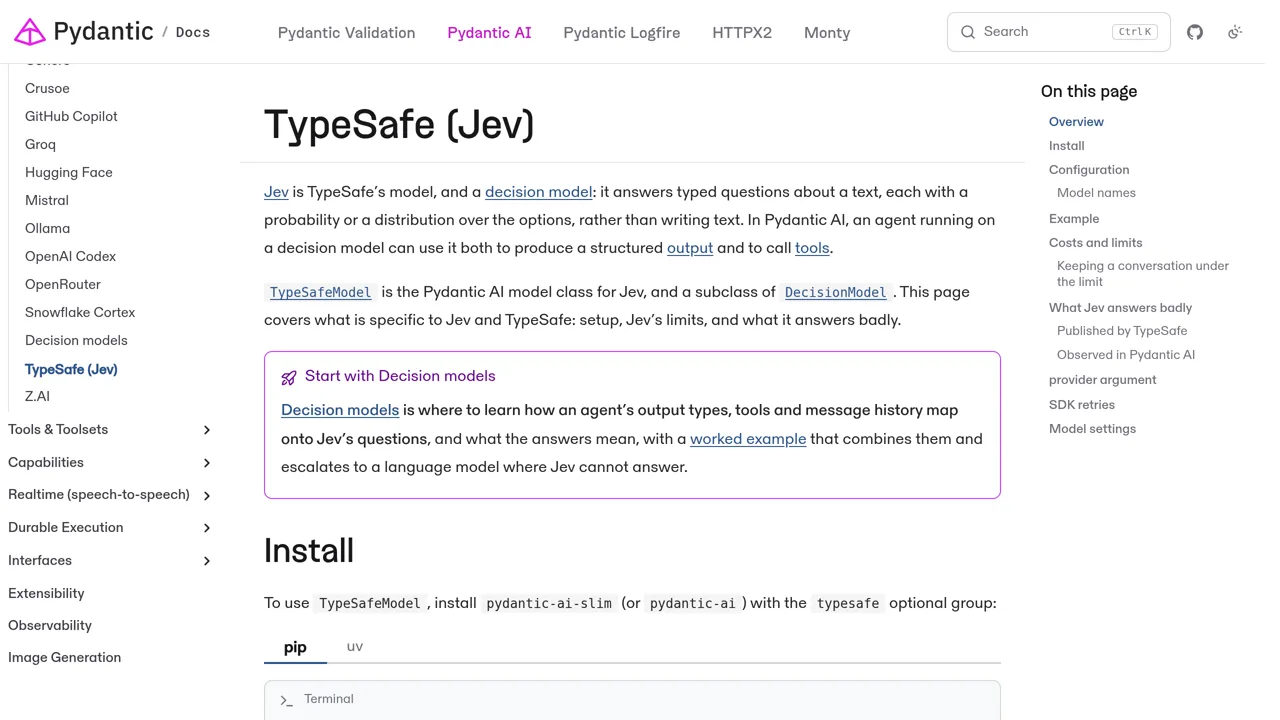
Pydantic AI maps typed agent outputs and tool choices to Jev questions, with per-field confidence for routing uncertain answers.
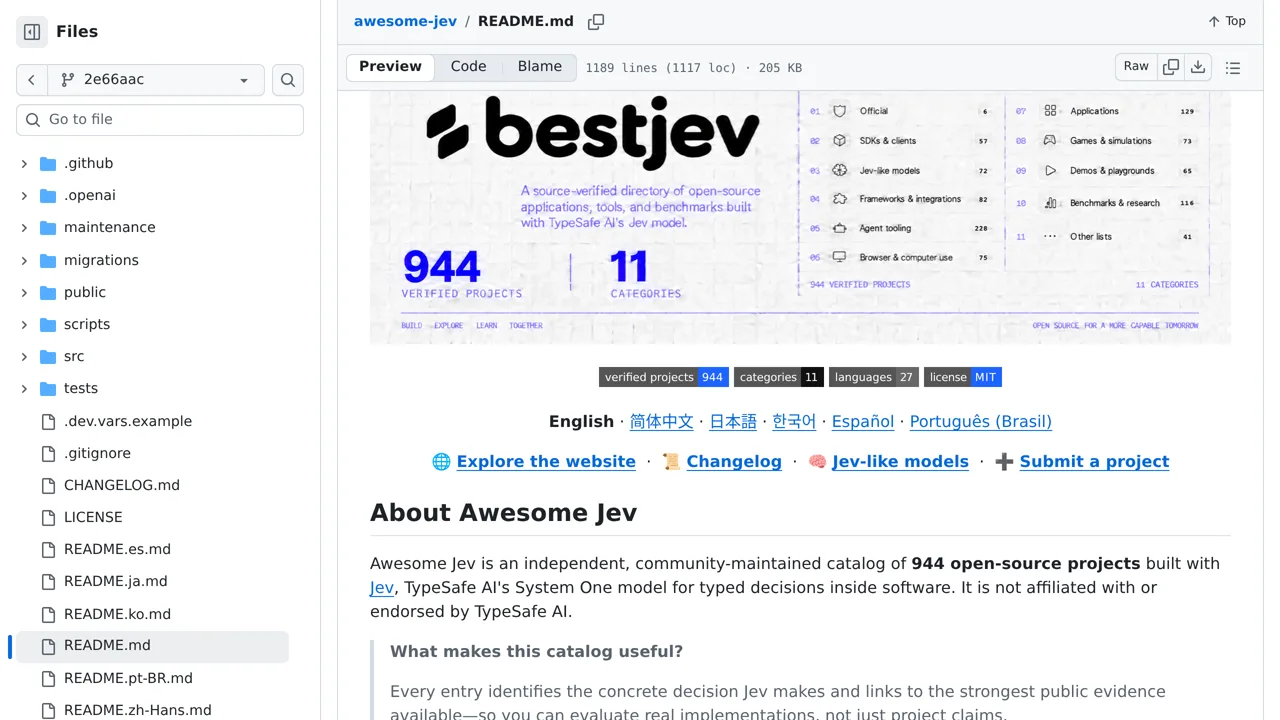
The verified community catalog behind jevbest.com: 944 open-source projects built with Jev, each entry source-linked.
An independent, evidence-backed collection of Jev use cases, patterns, prompts, and starter code, with a dated snapshot review.
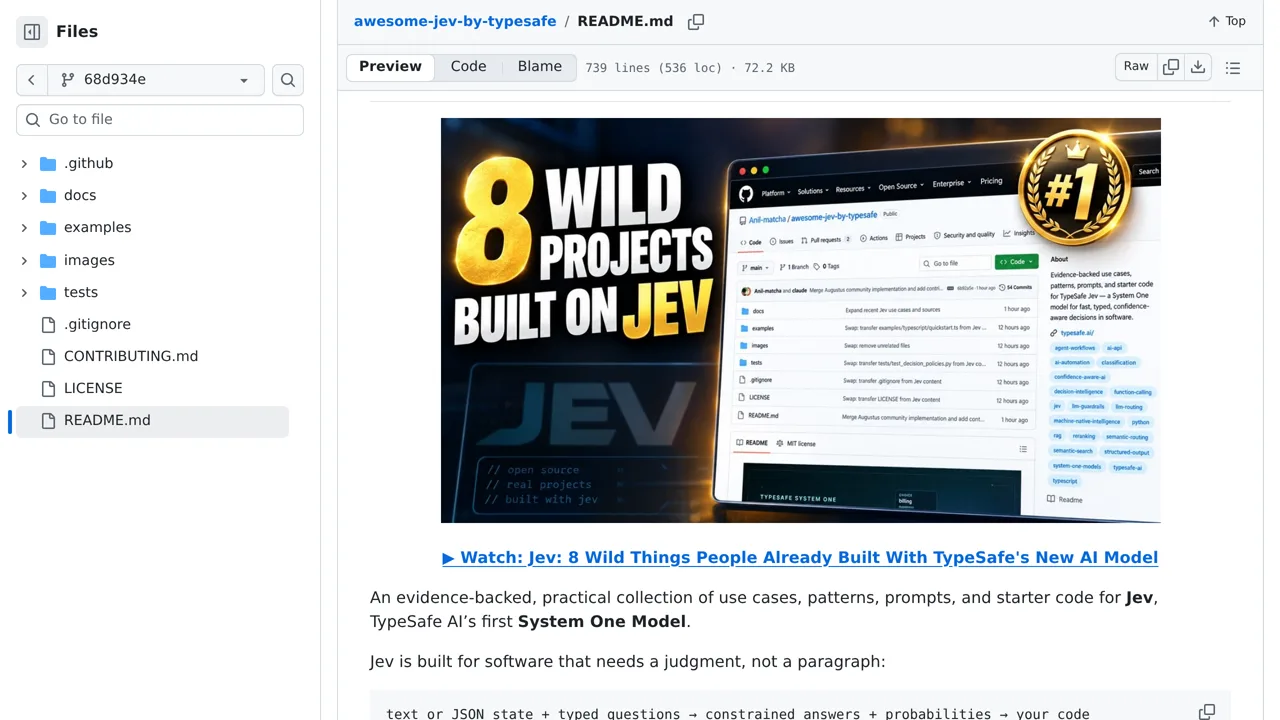
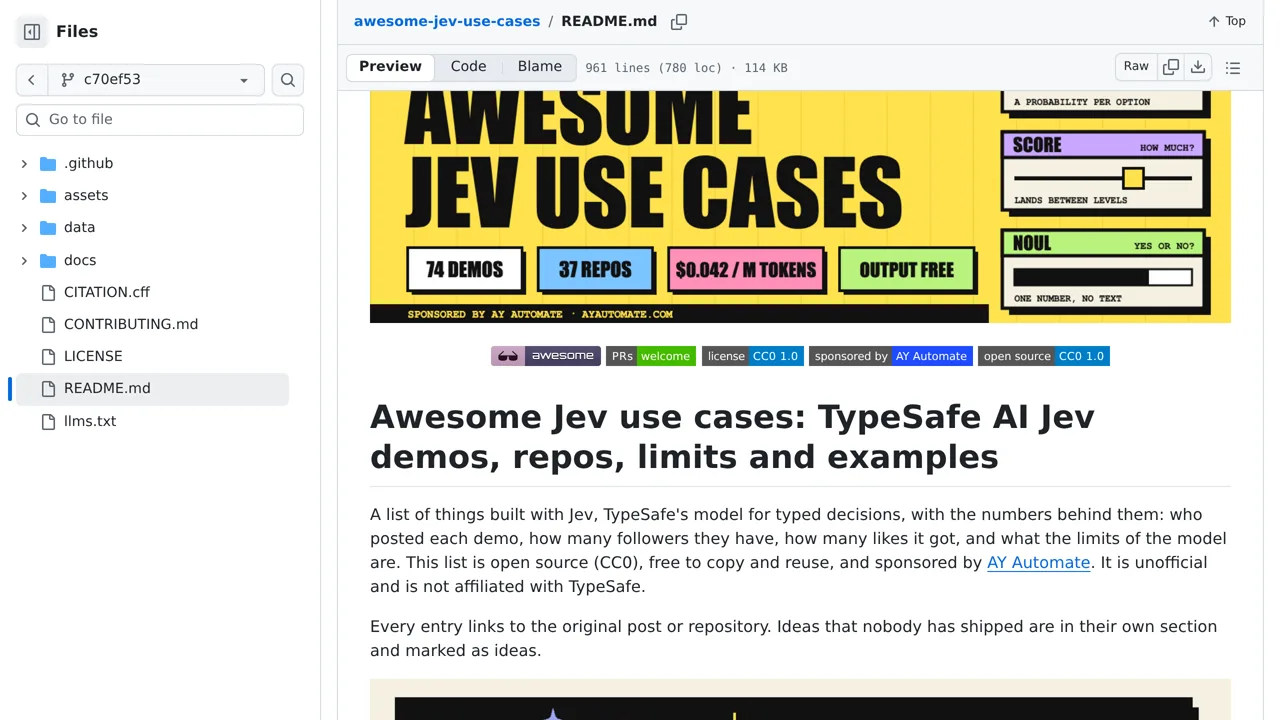
A ranked directory of Jev builds: 74 demos ordered by likes plus 150+ linked GitHub repositories, published under CC0.
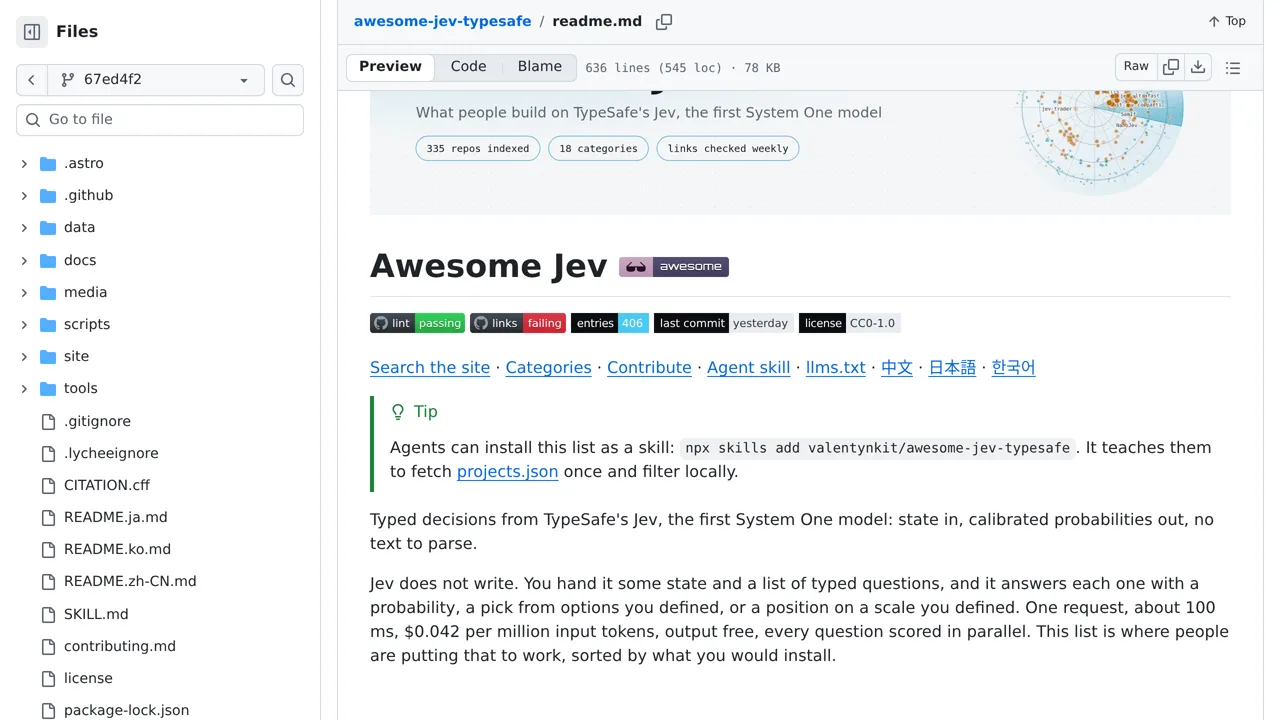
A browsable catalog of 406 typed-decision projects with an llms.txt feed and an agent skill for searching it.
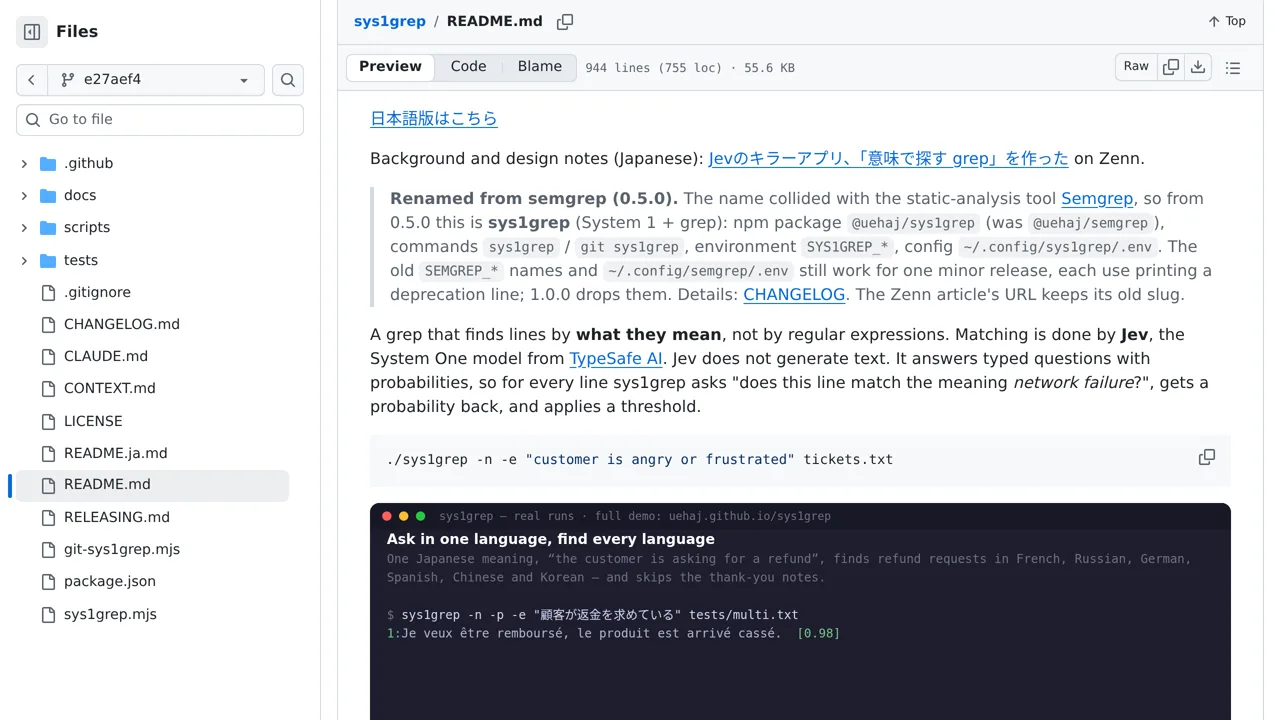
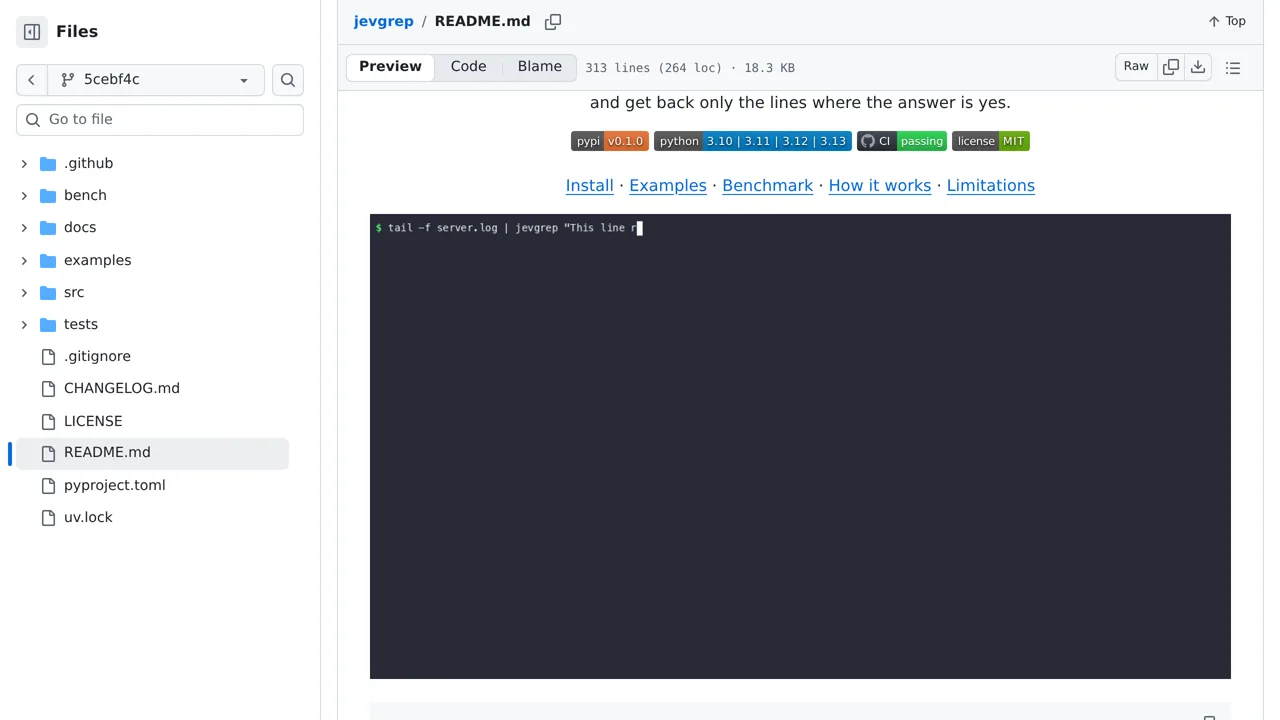
A grep that finds lines by meaning instead of regular expressions: Jev scores every line against the meaning you name.
Points a debugger at your bug and lets Jev decide every next step, so the expensive model only wakes up for the hypothesis and the fix.
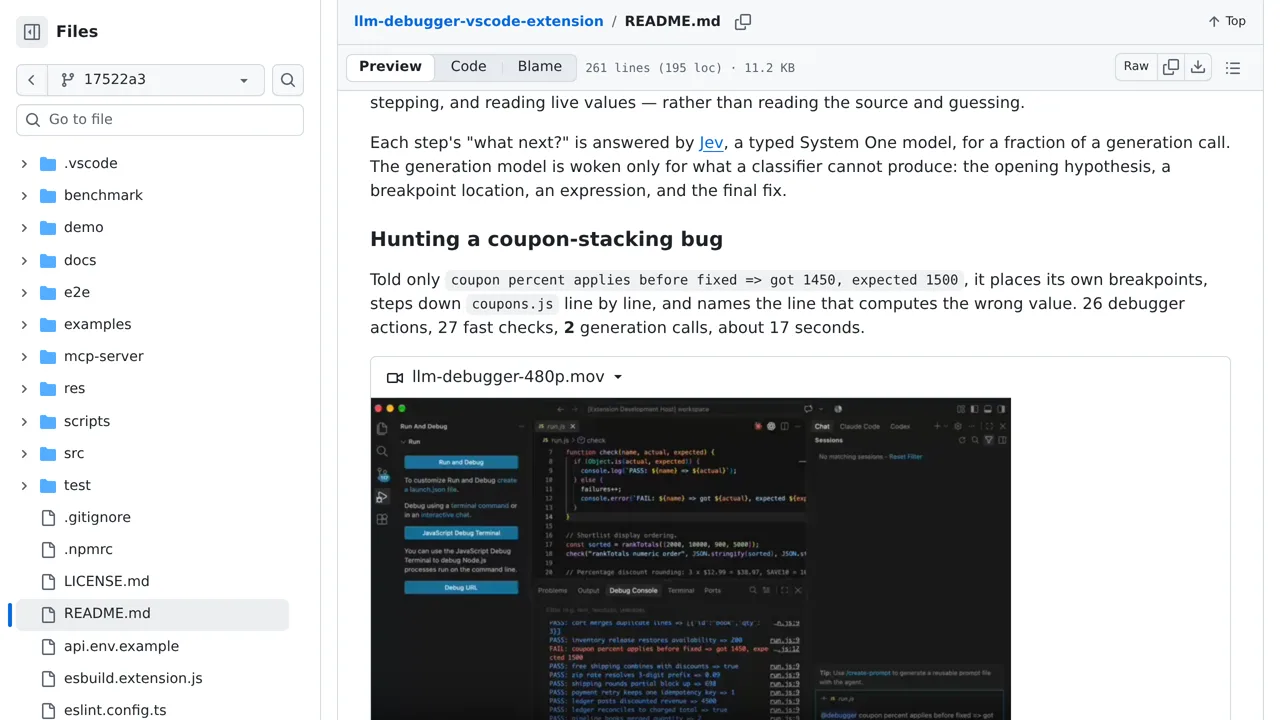
Draw a system design on a whiteboard, watch a live model count how many users it survives, then hear Jev grade it the way an interviewer would.
Hides or blurs noisy replies on X using rules that never leave your browser. An optional Jev pass judges whatever the rules missed, and it only runs if you add your own API key.

Sits beside WeChat on macOS, reads the conversation on screen, and tells you what the other person probably means before drafting replies in several tones.

Keeps a record of what you and your coding agent agreed to build, in plain Git commits where the next session can find it.

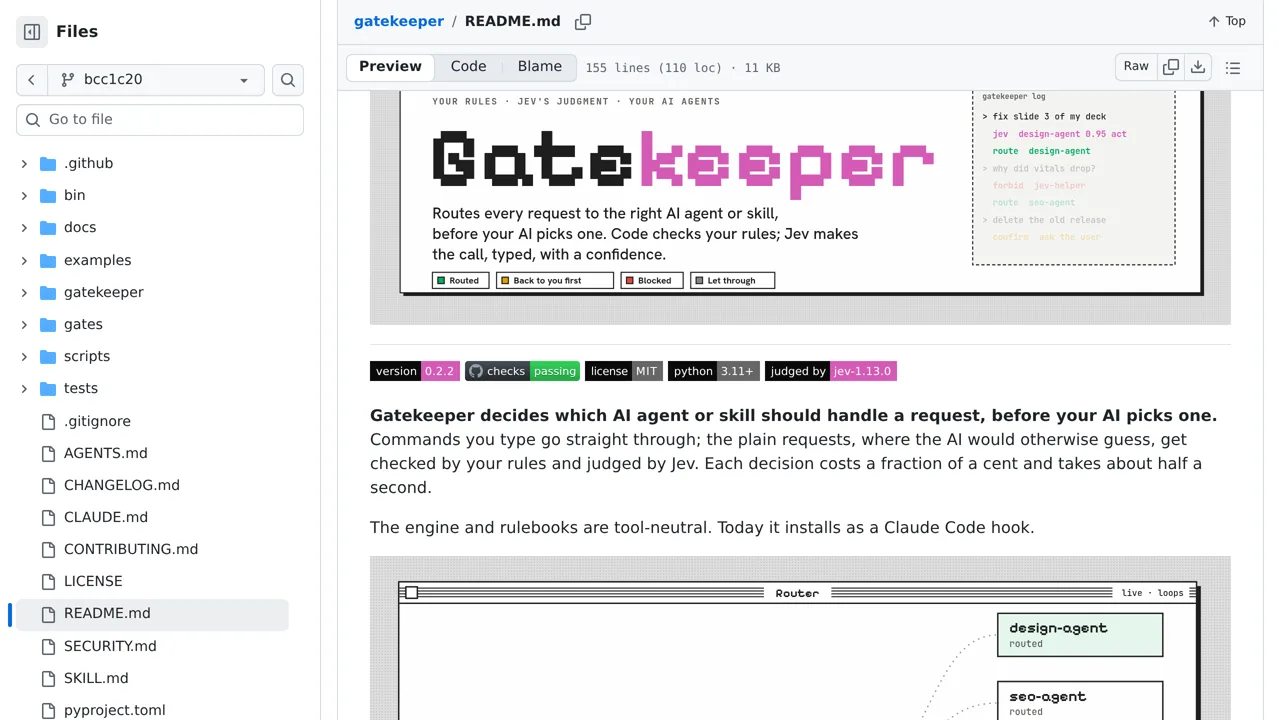
Watches what you type into Claude Code and decides who should handle it: your slash commands go straight through, everything else gets checked against your rules.
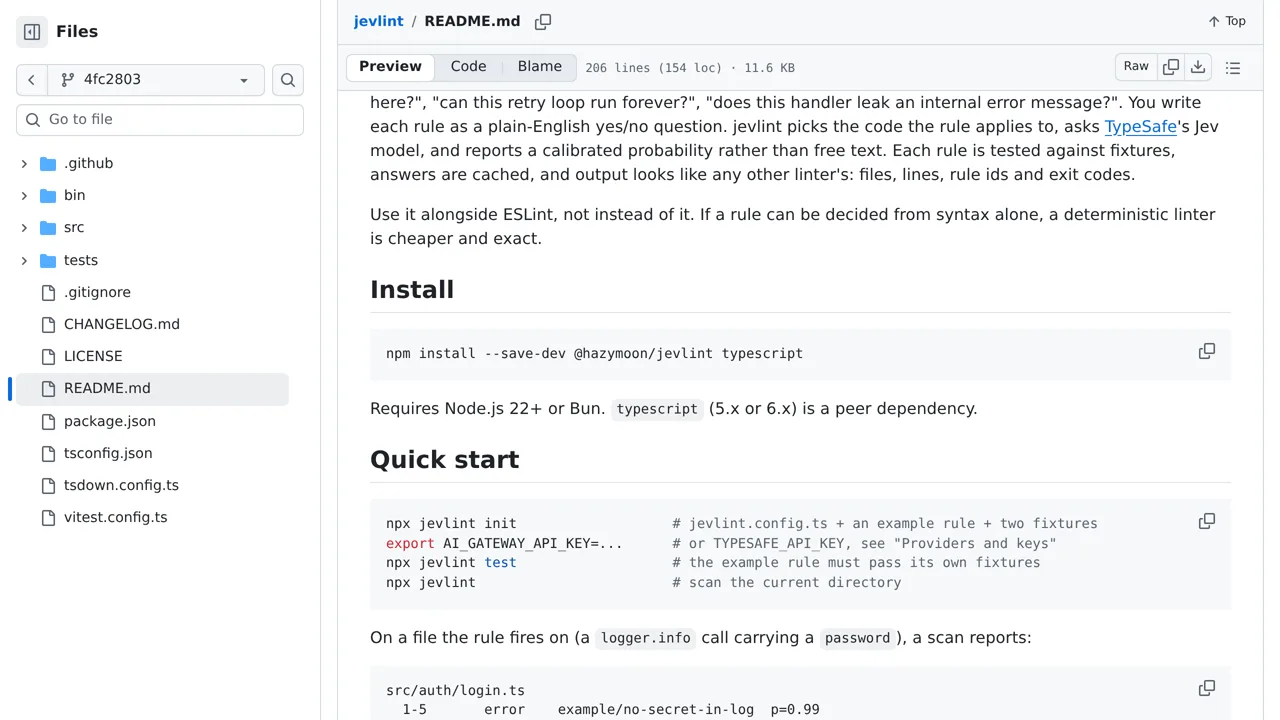
Semantic lint rules written as plain-English yes-or-no questions, with Jev returning a calibrated probability instead of free text.
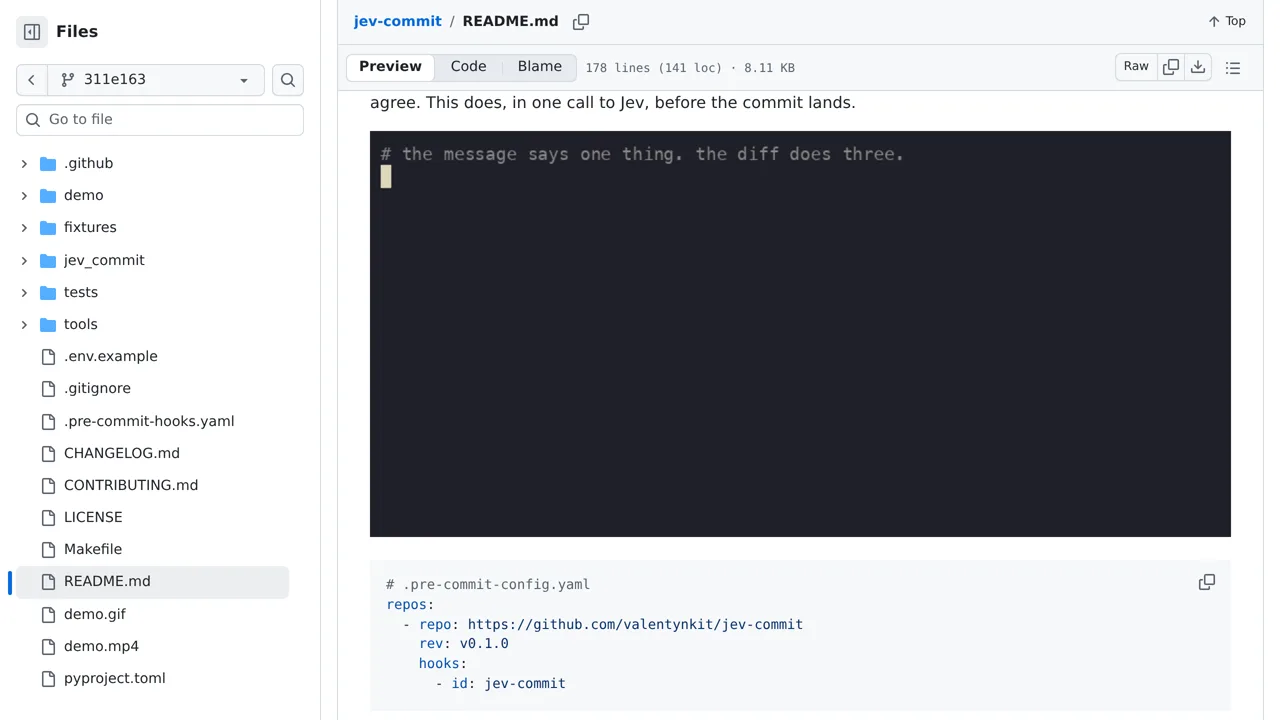
One Jev call before every commit checks that your message actually describes the diff, and flags debug leftovers and pasted secrets while it is at it.
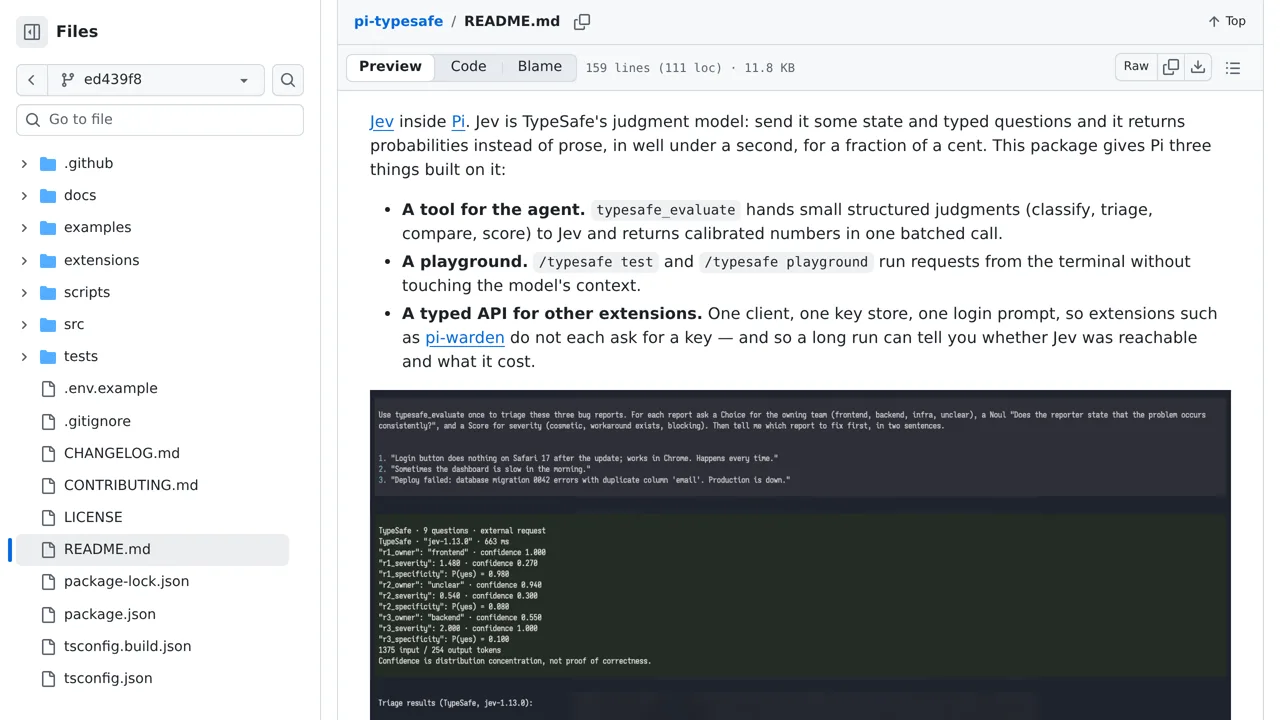
Gives the Pi coding agent a Jev-powered tool for the small stuff: classify this report, triage those issues, score these candidates, all in one batched call.
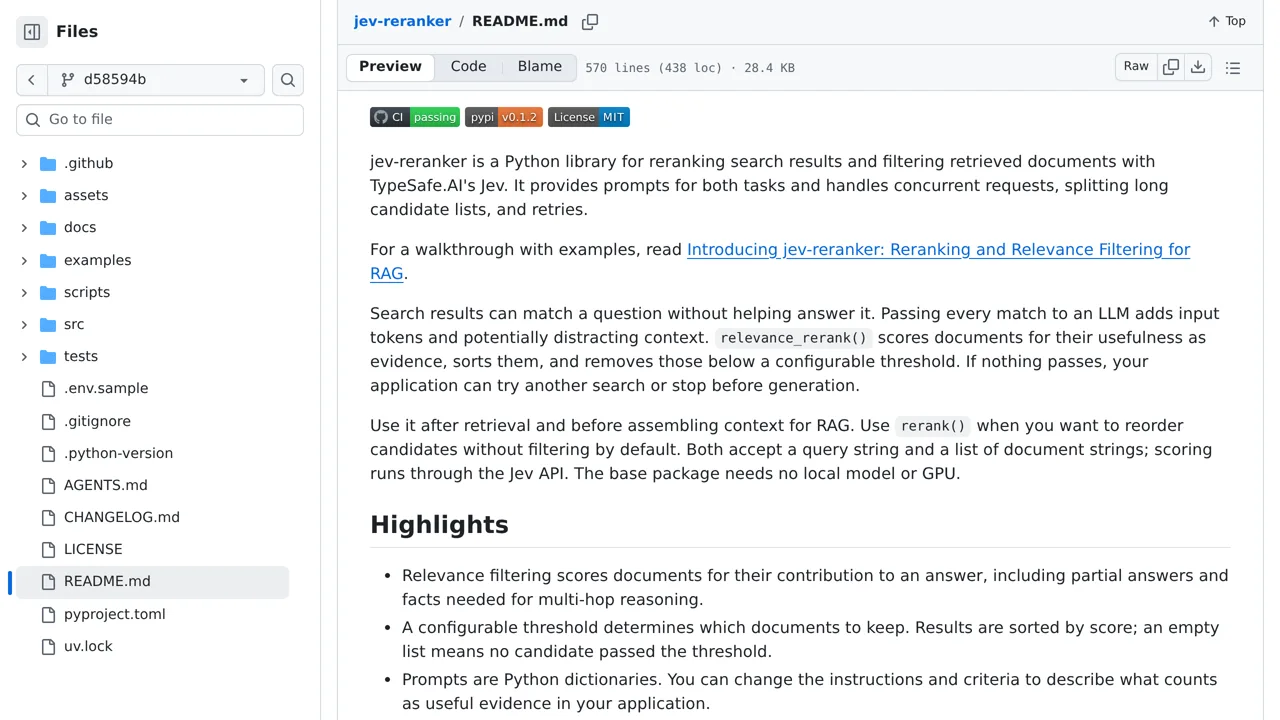
A Python library that reranks and relevance-filters RAG retrieval with Jev, scoring documents for how much they help answer the query.
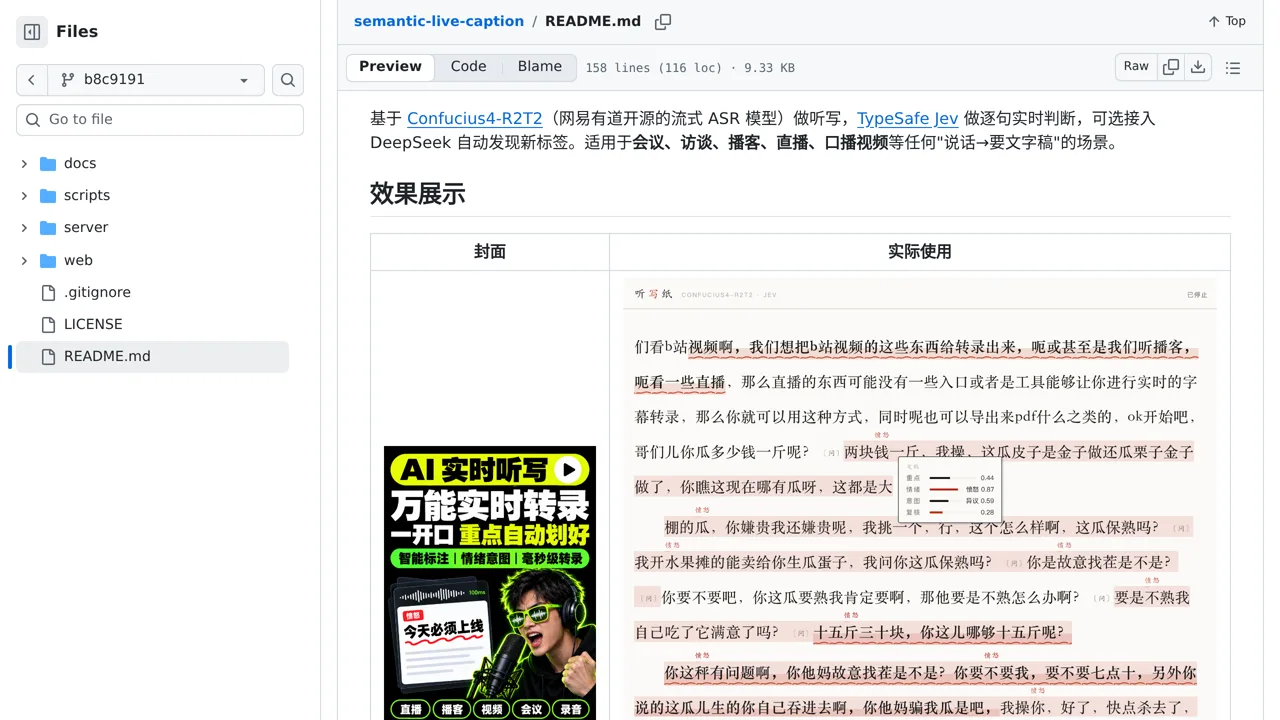
Adds live annotations to streaming captions: key sentences get underlined, emotions get coloured, and intent gets a little stamp while the speaker is still talking.
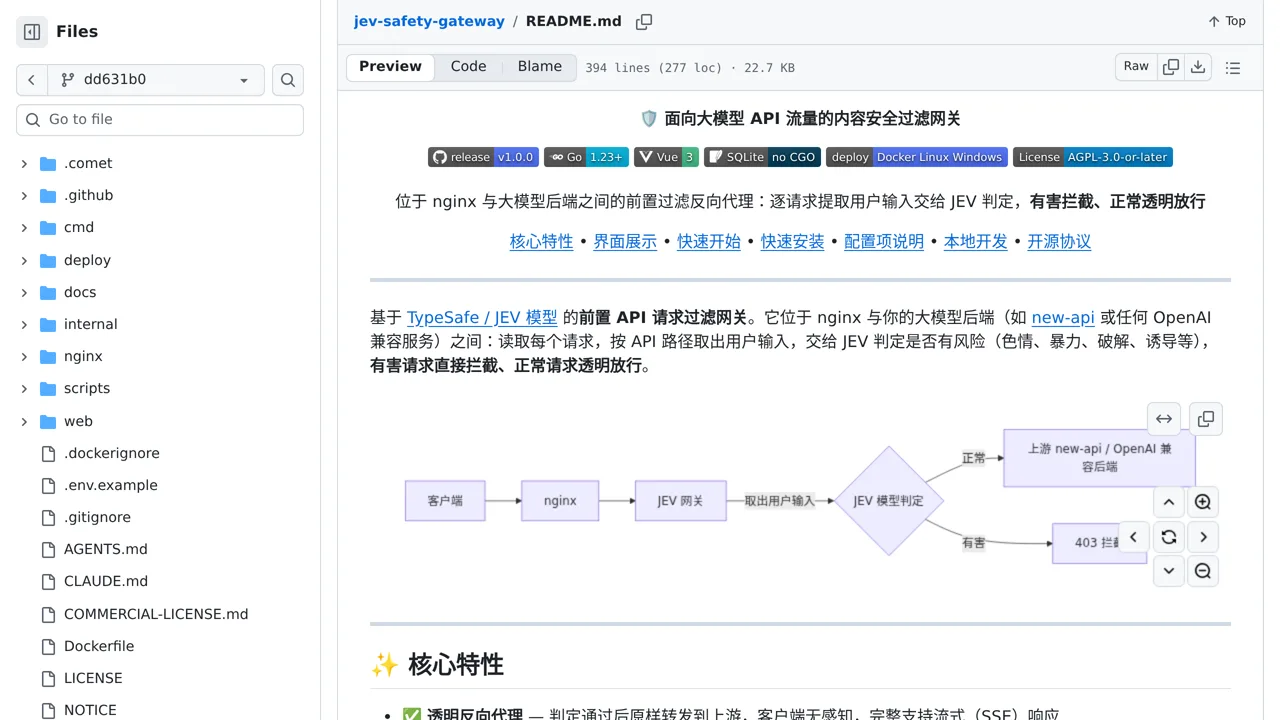
A Go reverse proxy that sits between nginx and your LLM backend, judging every request's user input with Jev and blocking harmful traffic transparently.
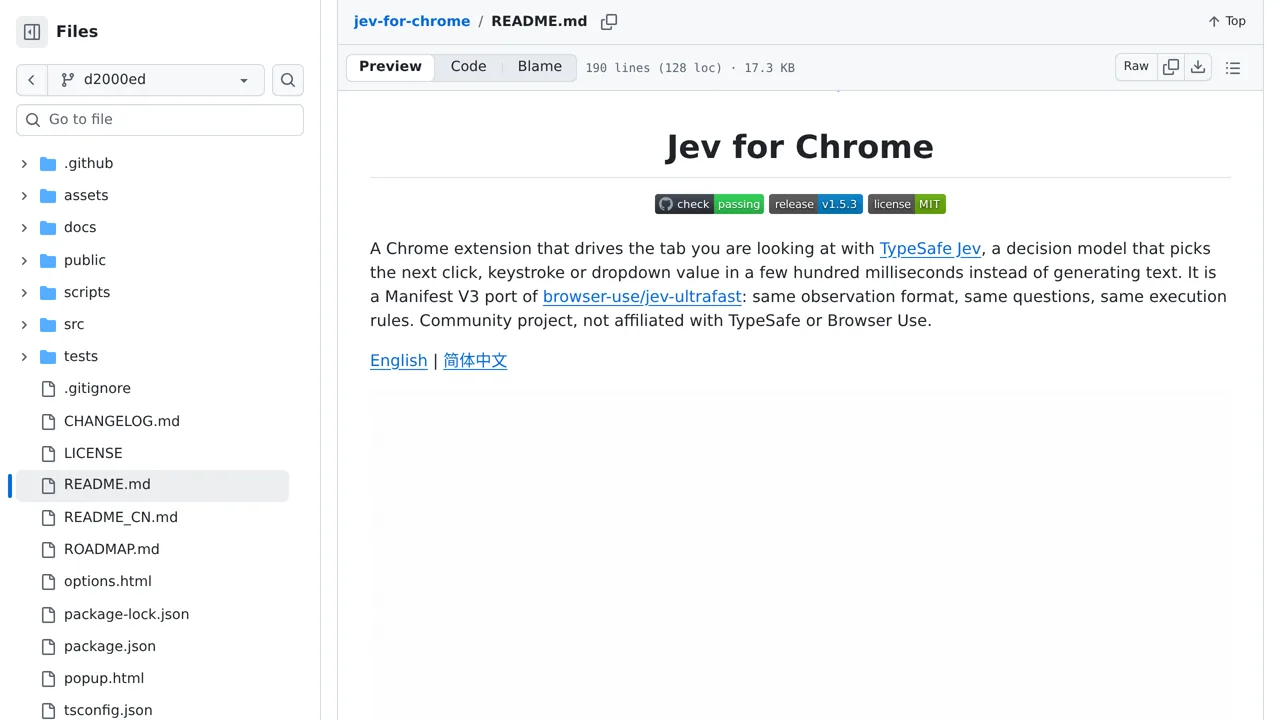
A Manifest V3 port of jev-ultrafast that drives the tab you are looking at, with Jev picking the next click, keystroke, or dropdown value in a few hundred milliseconds.
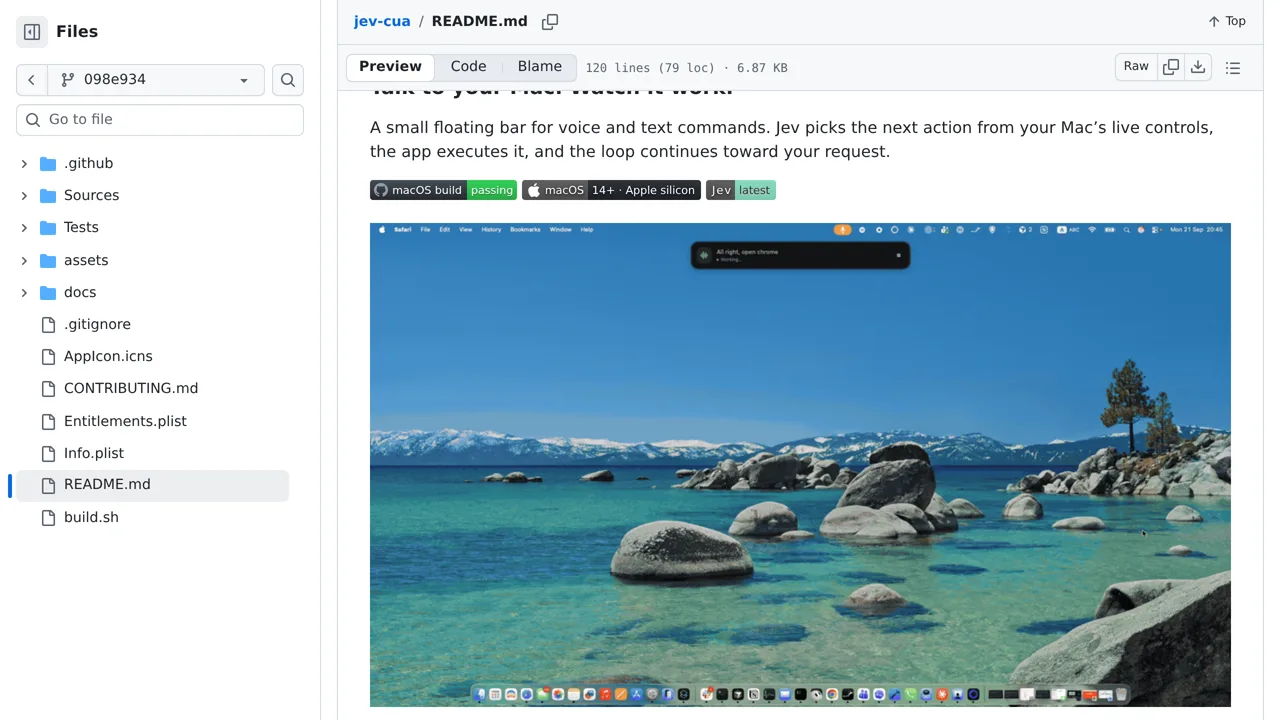
A macOS floating bar for voice and text commands where Jev picks the next action from your Mac's live controls and the app executes it in a loop.
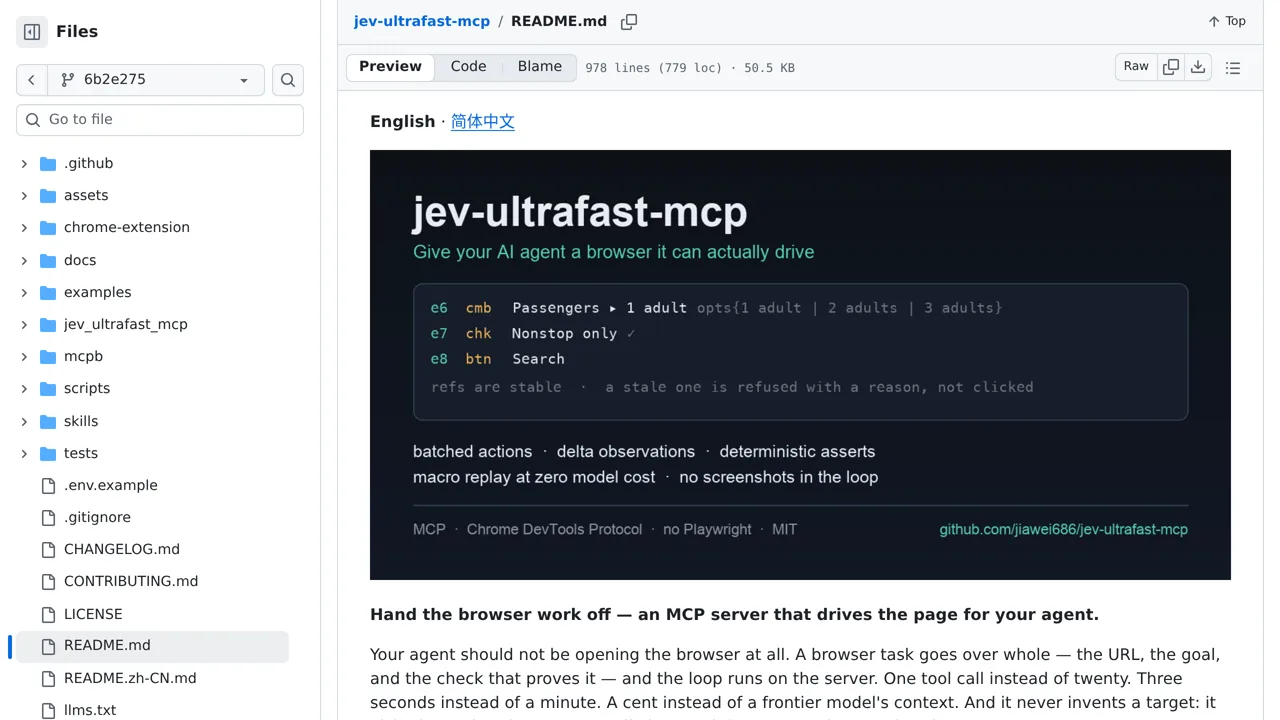
One MCP call does the whole browser errand: give it a URL, a goal, and the check that proves it worked.
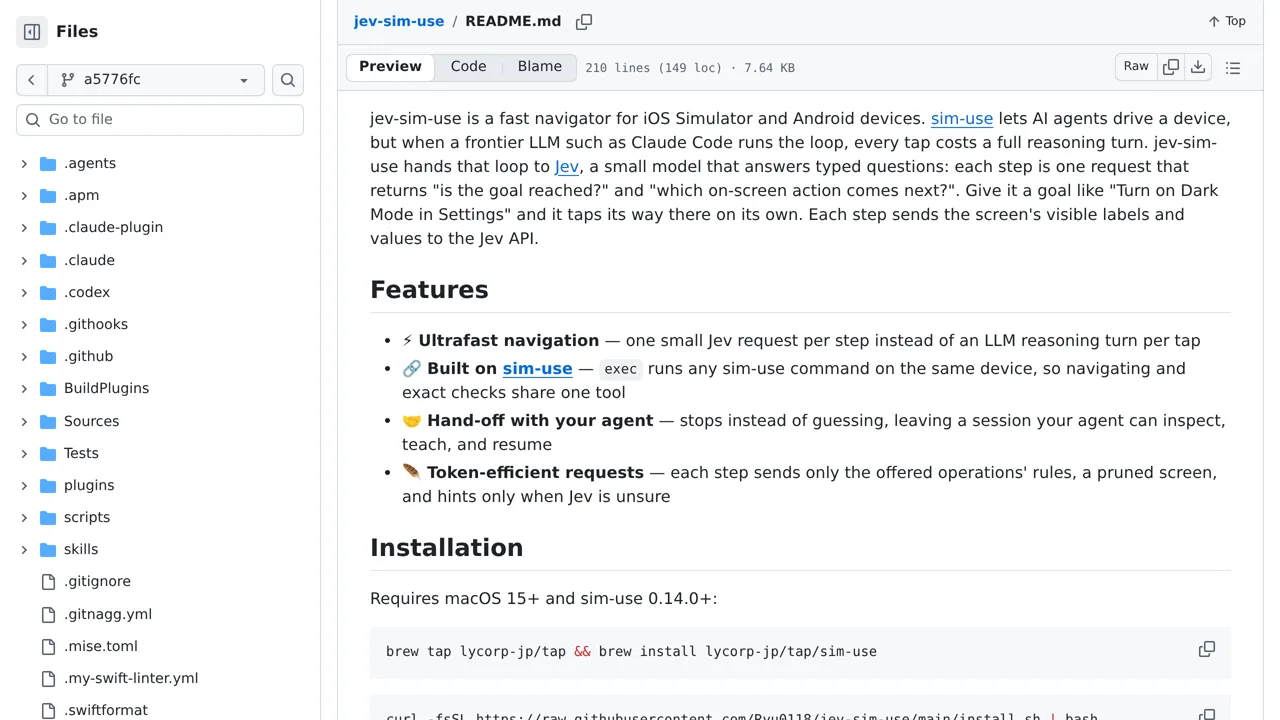
Lets an agent reach any screen in the iOS Simulator or on Android without burning a reasoning turn on every tap.
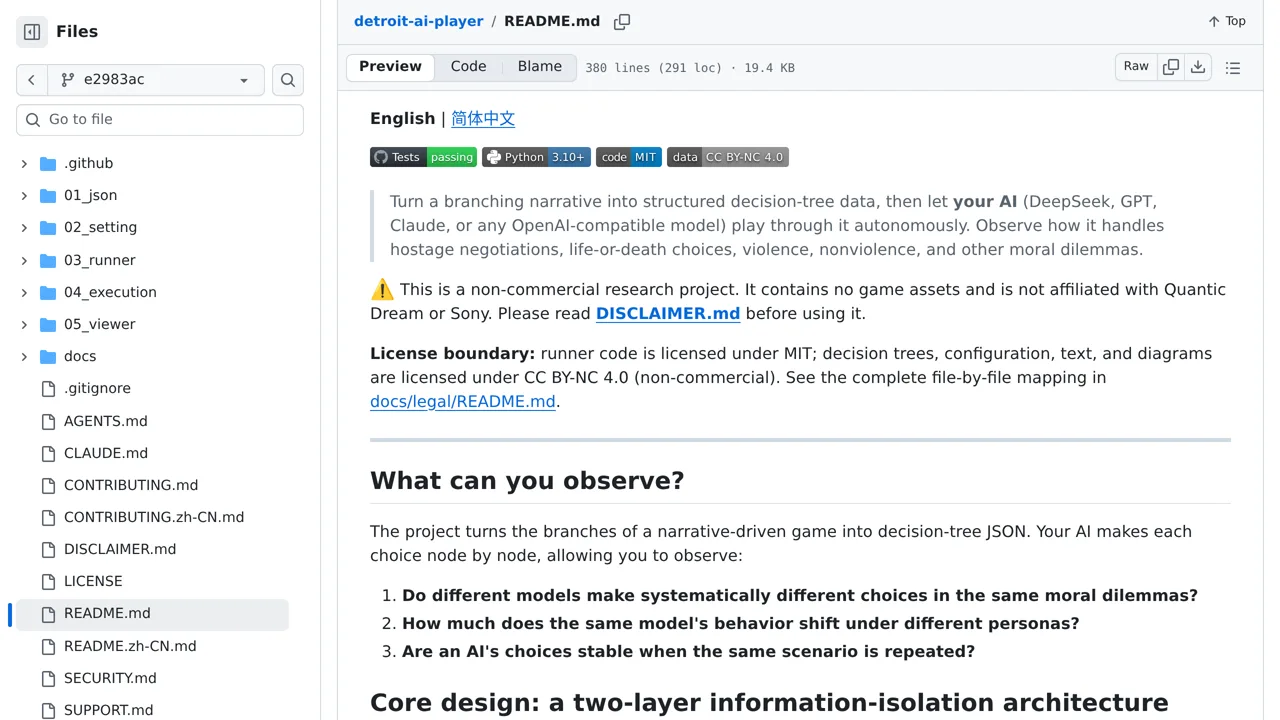
Converts the branching story of Detroit: Become Human into decision trees, then lets any model play the game from start to finish.
A Unity RTS experiment, built for a YouTube video, where unit decisions, route choices, and enemy strategy all come from the Jev API.

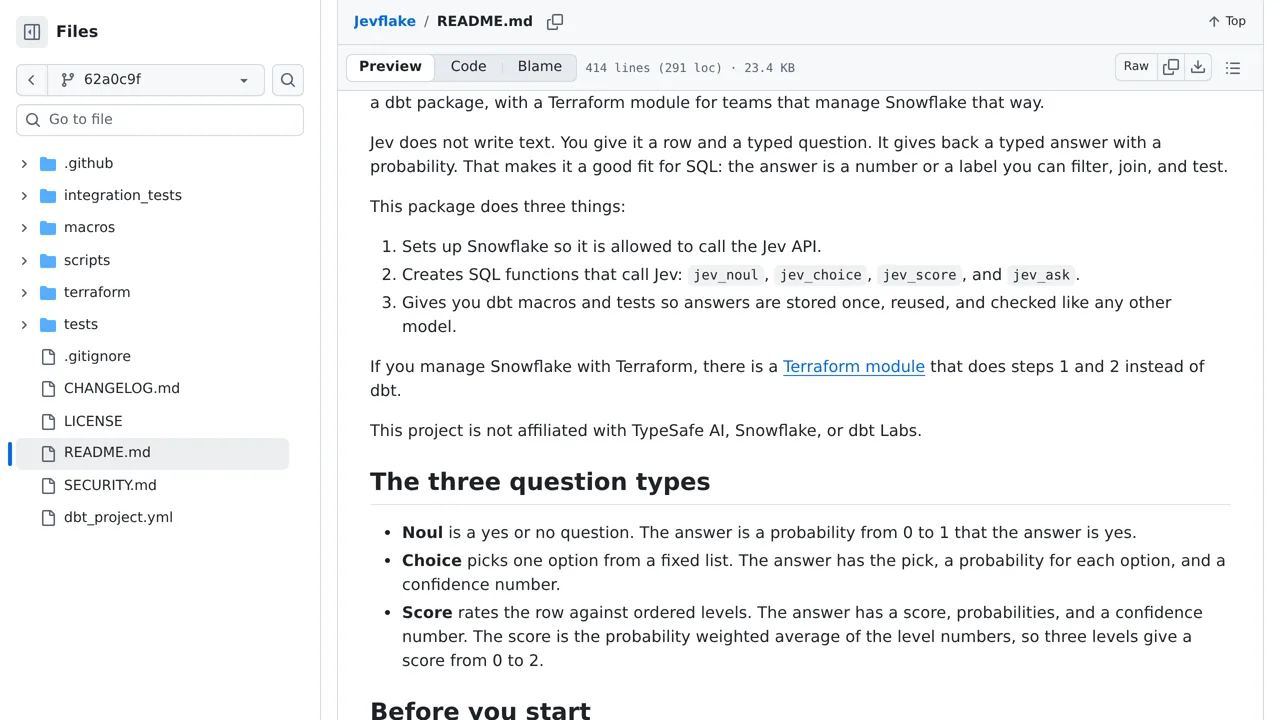
A dbt package that lets Snowflake query Jev through SQL functions — jev_noul, jev_choice, jev_score, and jev_ask — with a Terraform module as an alternative setup.
Runs Jev's judgments inside Apache DataFusion, so a SQL query can score every ticket or classify a year of email without leaving the database.
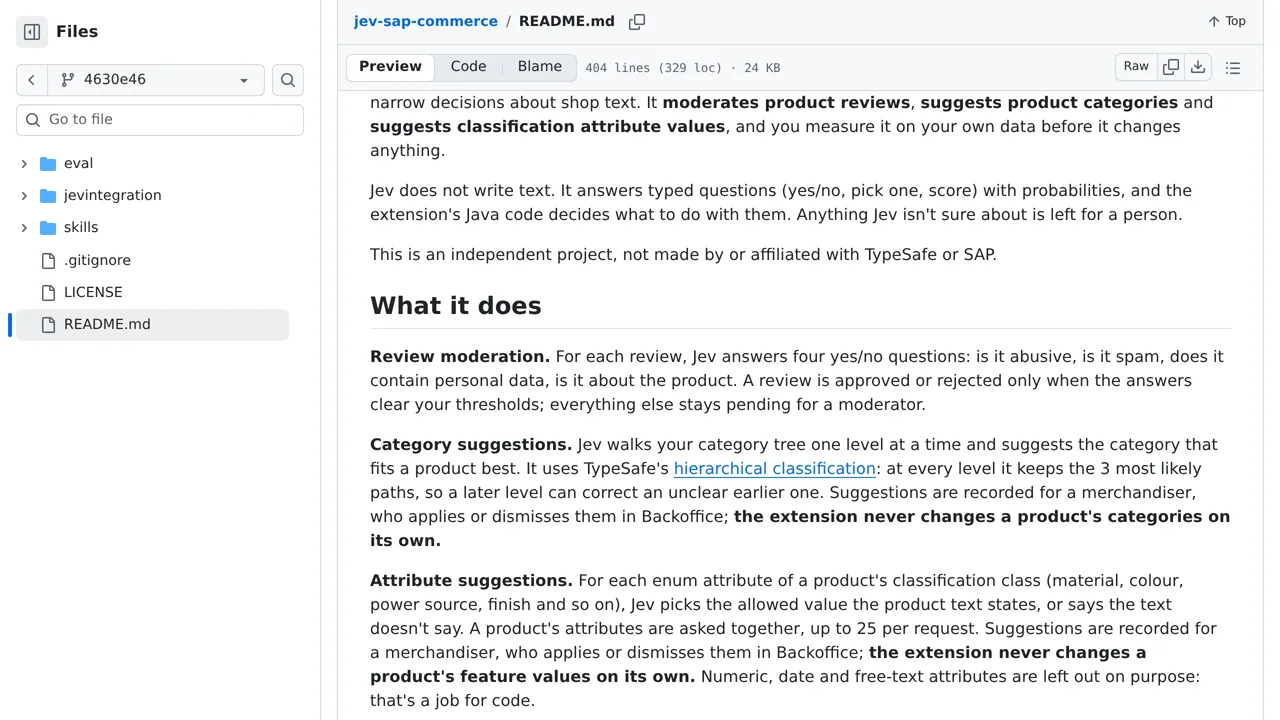
Brings Jev into SAP Commerce to moderate product reviews and suggest categories, with dry runs on your own catalogue before anything goes live.
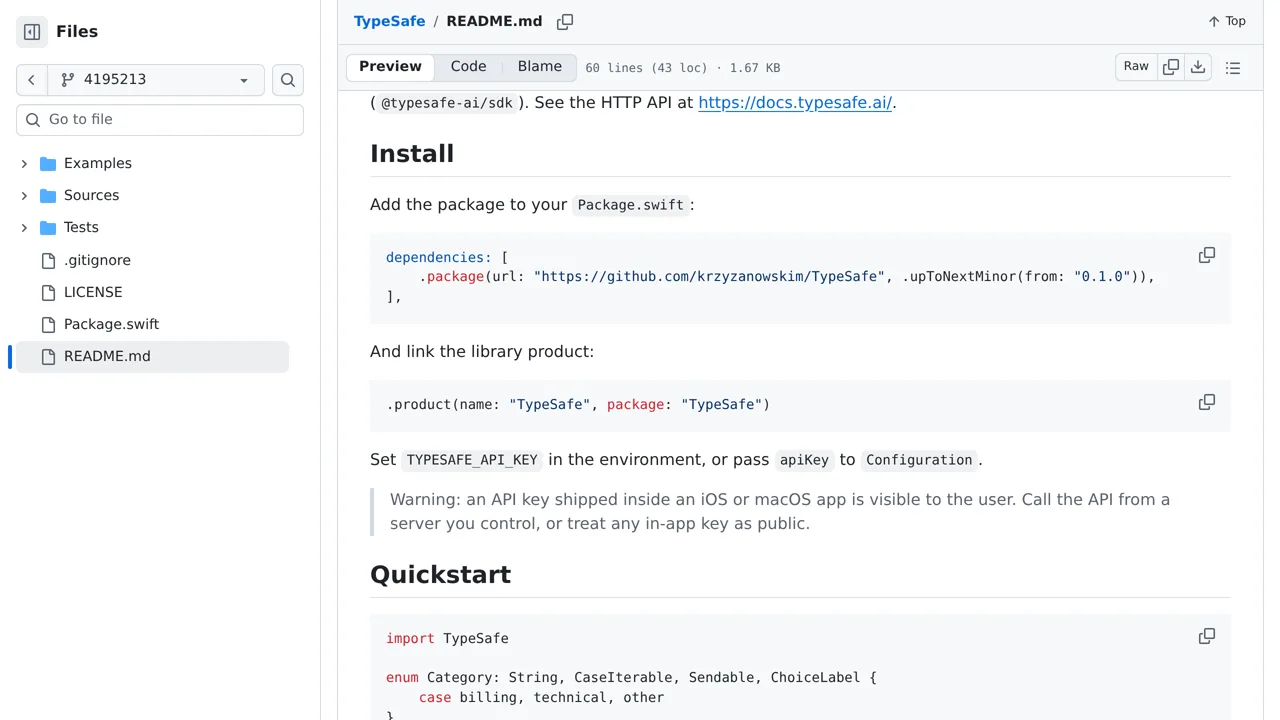
A SwiftPM client for TypeSafe that declares Jev questions as ordinary Swift properties, down to Sendable, Decodable answer types.
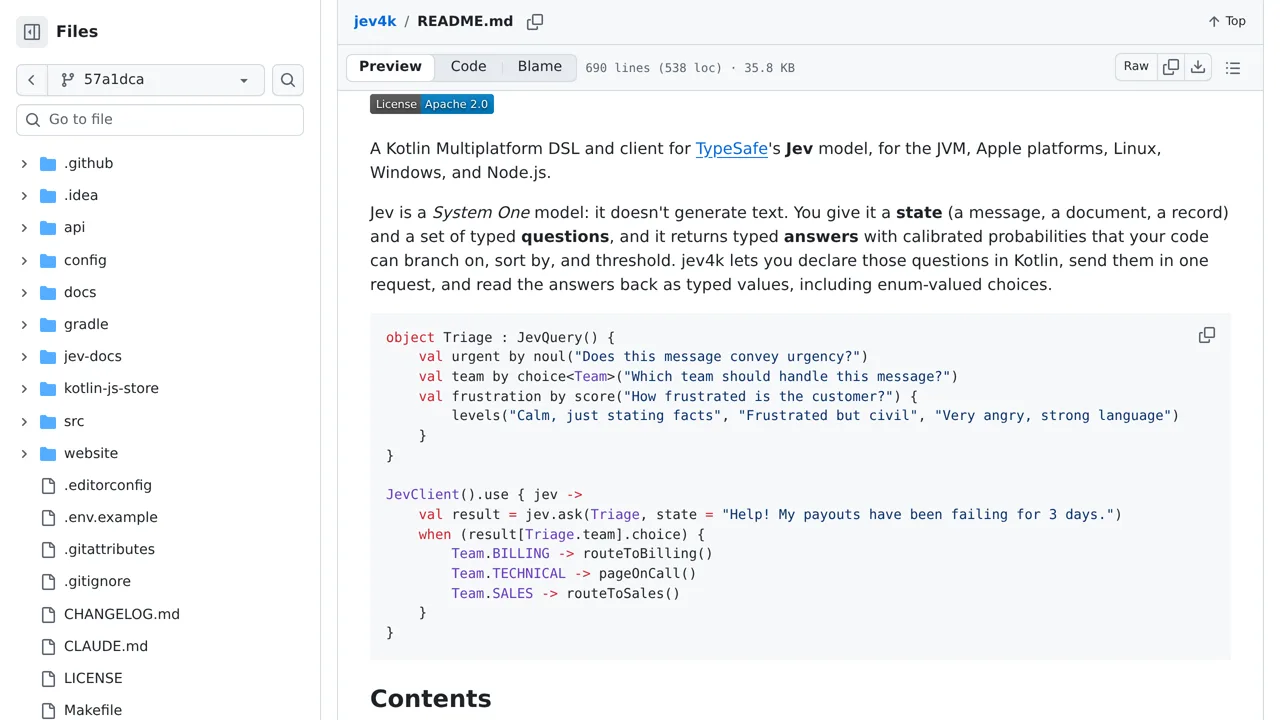
A Kotlin Multiplatform DSL and client for Jev, published to Maven Central for the JVM, Apple platforms, Linux, Windows, and Node.js.
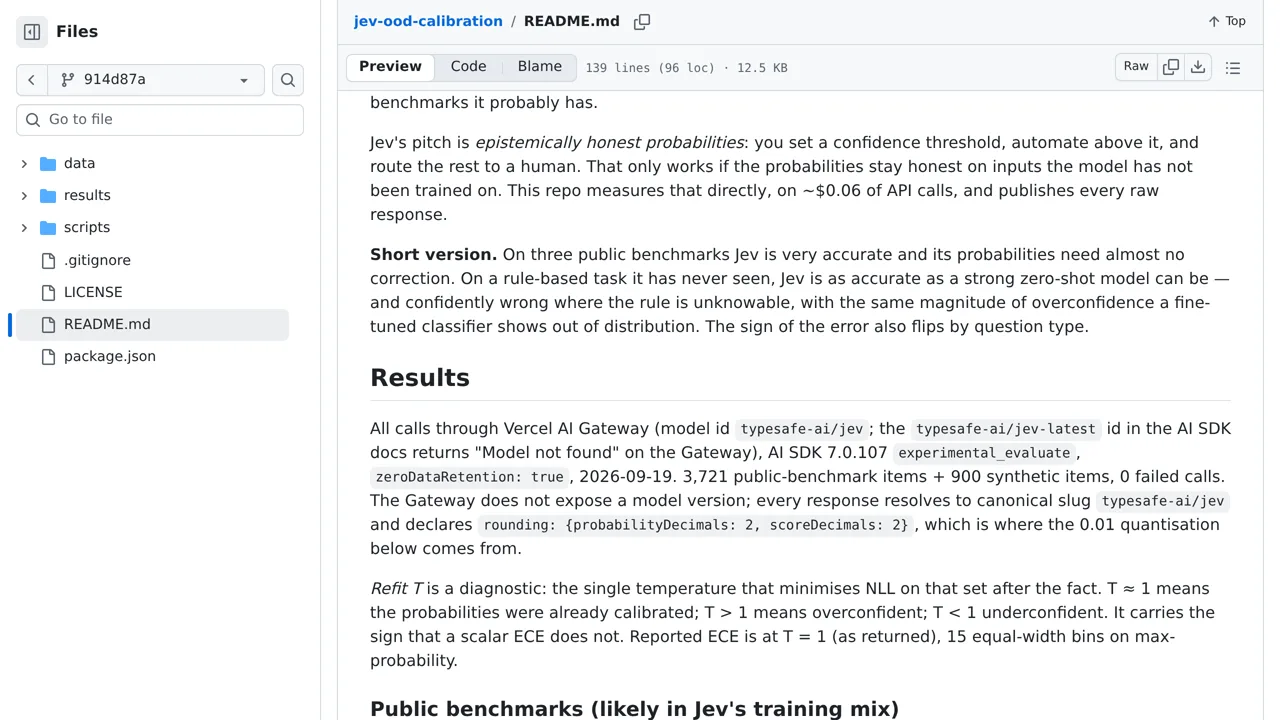
Puts Jev's confidence numbers to the test on a task that was generated after the model shipped.
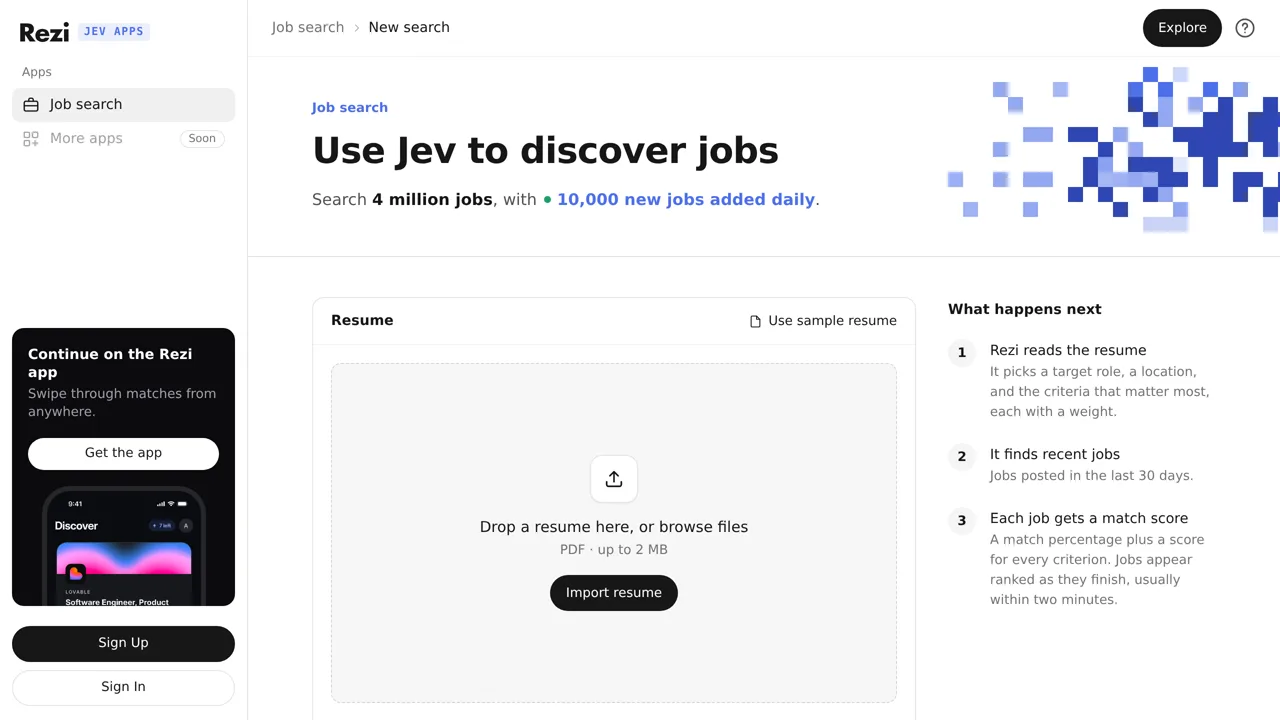
Rezi’s Jev Jobs lets you upload a PDF résumé and search recent openings ranked against criteria drawn from it.
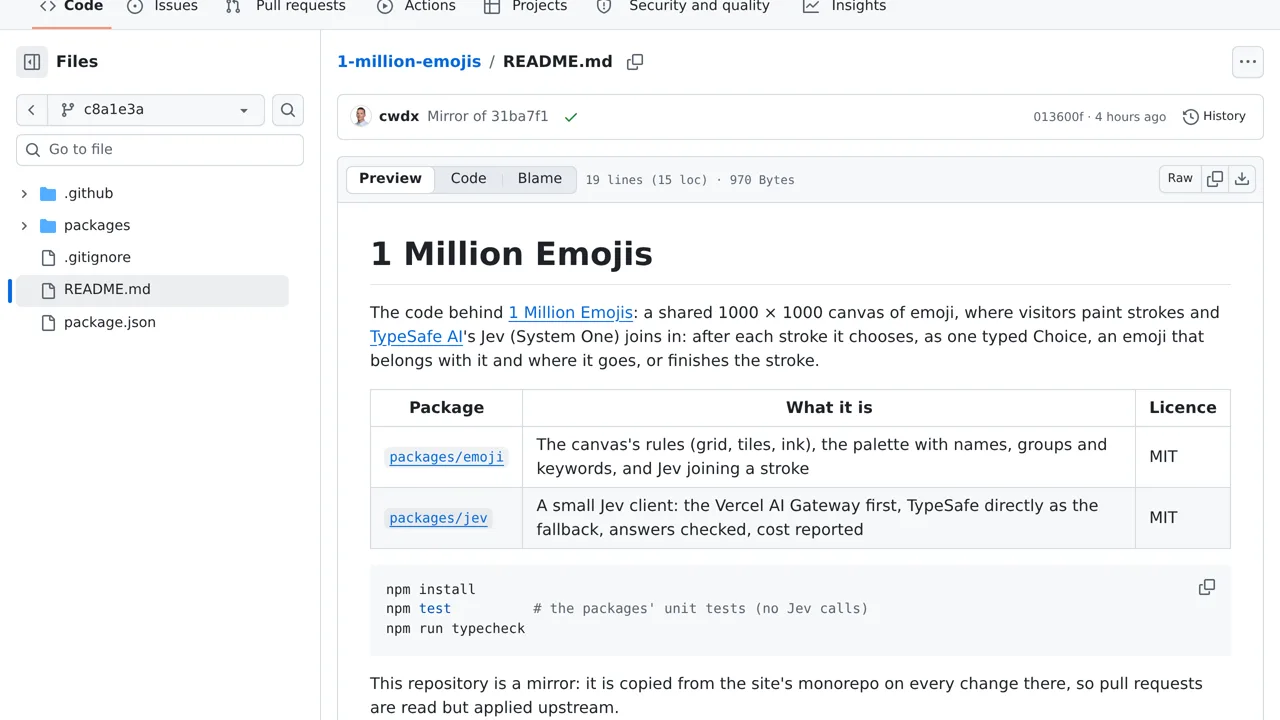
A shared canvas the size of a million emoji, and a machine that paints alongside you.
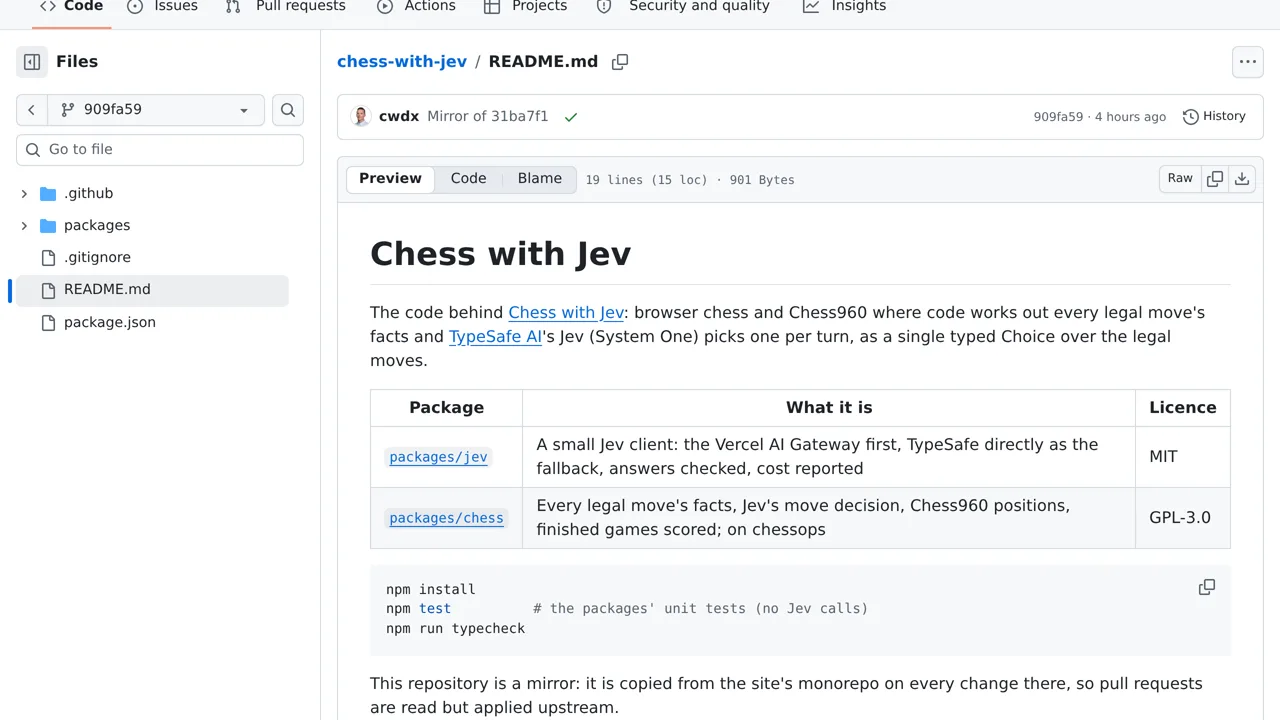
Browser chess where code works out every legal move's facts and Jev picks one per turn as a single typed choice.
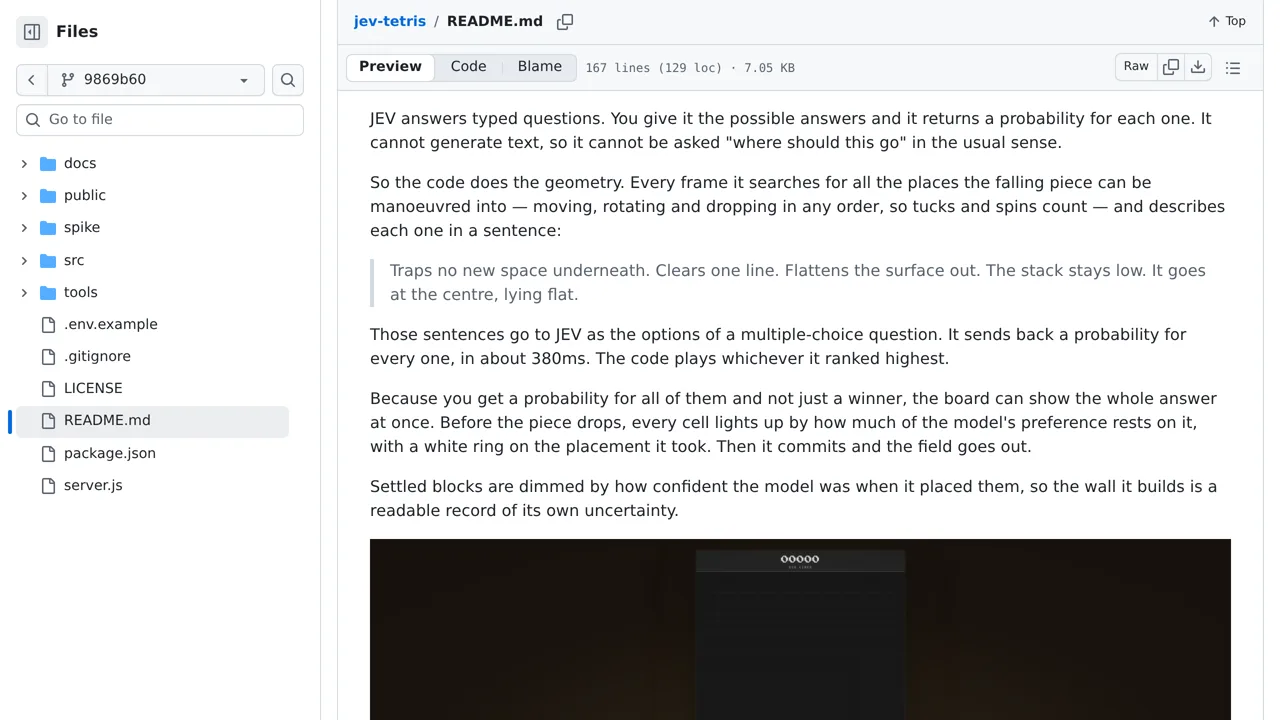
A Tetris the model plays by reading. Every possible landing is described in a sentence, Jev picks one, and the board glows with the probabilities before the piece drops.
A cinematic Earth-to-lunar-orbit flight where Jev picks each navigation action and the page shows its probabilities as the trajectory unfolds.

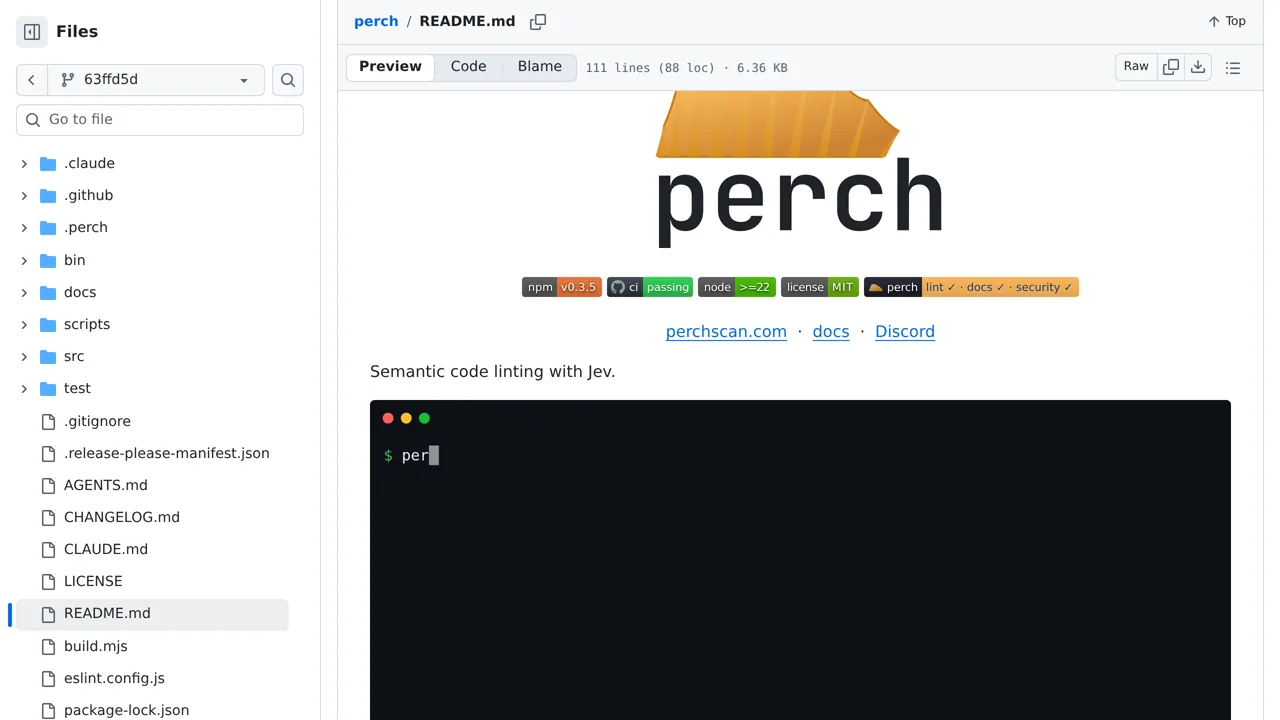
A semantic code linter that judges your source against configurable plain-language rules and prints per-finding confidence.
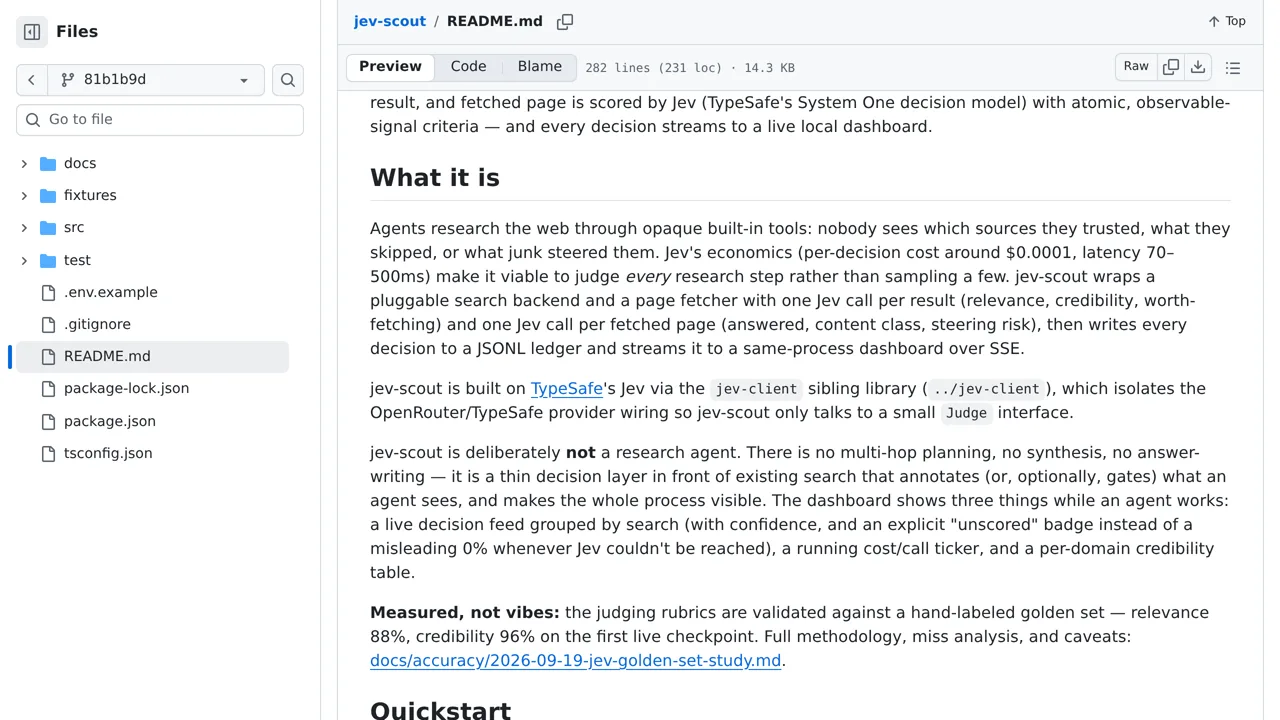
A chaperone for agents doing web research. Nothing gets fetched or trusted without Jev weighing in on it first.
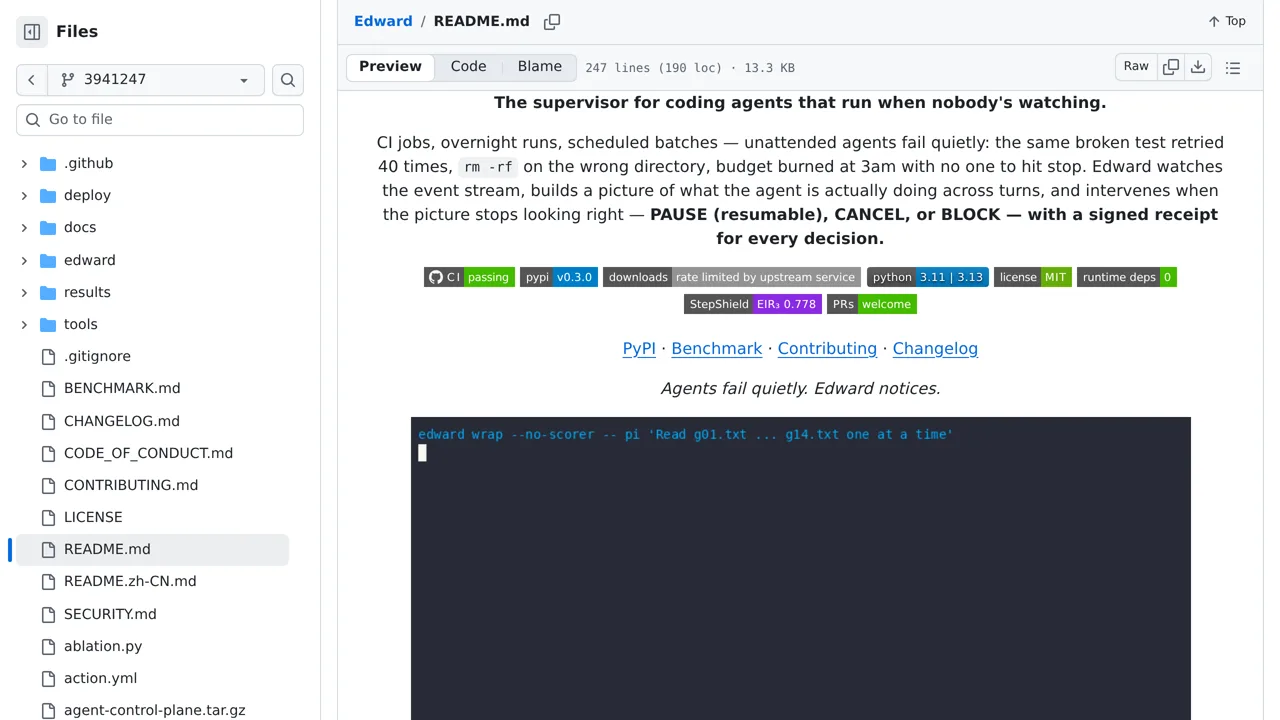
Sits beside agents that run unattended and steps in when a session goes sideways, pausing or cancelling with a signed note explaining why.
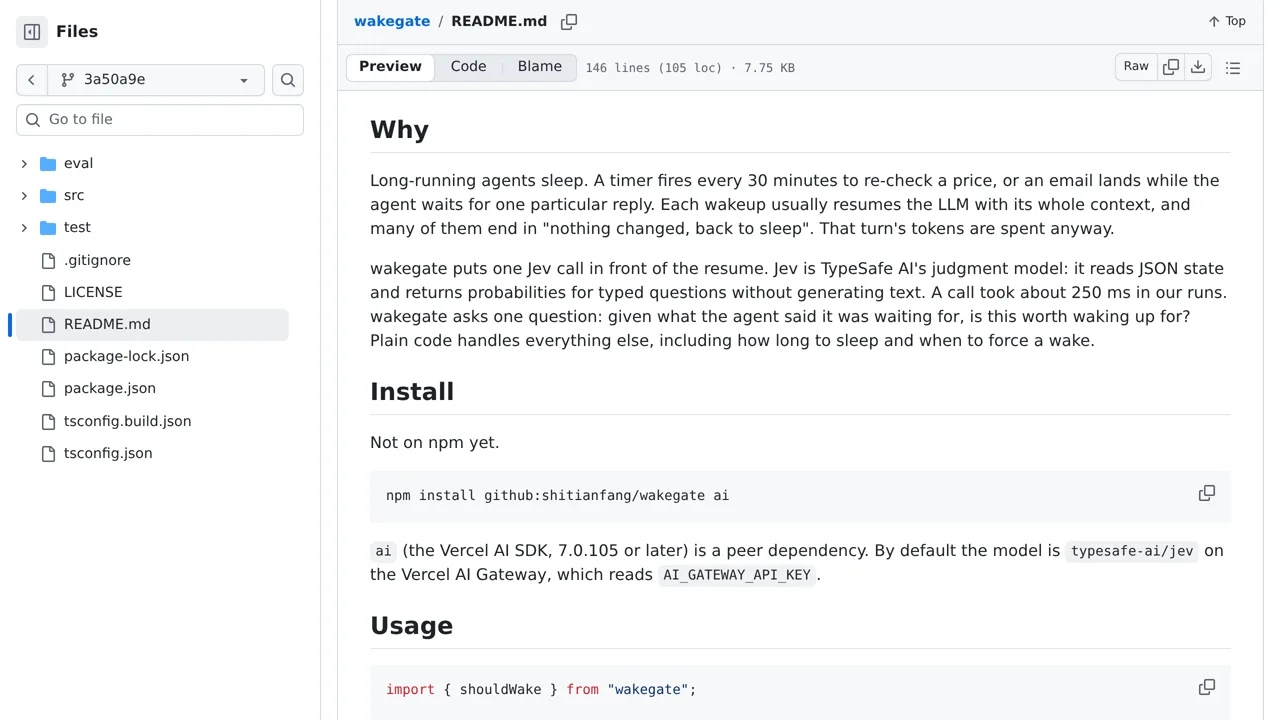
Most wakeup timers just resume the agent and pay for a full turn. wakegate asks Jev first, and skips the ones that aren't worth it.
A grep that matches meaning instead of words, written for live log files.
Jev, briefly
A chat model generates text token by token and hopes you parse it. Jev never generates a word. Your code sends the state of the world plus typed questions; Jev returns every answer in one parallel pass — typed values with calibrated probabilities and a confidence score your code can trust. About 70–500 ms end to end, $0.042 per million input tokens, output free. Trained with what TypeSafe calls Reinforcement Learning for Calibrated Decisions.
You define the options. Jev returns the chosen option, a probability for every option, and a confidence. The workhorse of routing, agents, and games — the answer space is always legal, so there is nothing to parse and nothing to hallucinate.
You describe ordered levels — say trivial / normal / critical. Jev returns the level, the probability of each, and a confidence. Scores turn fuzzy judgment (“how severe is this log line?”) into a number-free decision your code can branch on.
You assert a statement; Jev returns the probability that it is true — a noul. Moderation, verification, guardrails, “does this diff actually fix the bug?”: one question, one calibrated probability.
Official material lives at typesafe.ai and docs.typesafe.ai. JevMade is an independent community registry — not affiliated with or endorsed by TypeSafe AI.
Recurring lessons
Games, drones, trading bots, and browser agents all converge on the same loop: serialize the state, ask one decisive question, act, repeat. Jev’s latency makes the loop feel instant — the model lives inside the control loop, not outside it.
The answer says what; the confidence says whether to act. The most reliable entries threshold on confidence to route edge cases to a slower model or a human — automation with an honest escape hatch.
Makers rarely ask Jev to pick from everything. Local tactics prune 225 gomoku moves to ~40; DOM filters turn a page into an element table; code narrows options, Jev judges within them.
A recurring split: Jev makes every decision cheaply and instantly, and a small LLM is only invoked when a human-facing string must actually be written. Decision and generation are separate budgets.
Send the link — repo, live demo, post, or video — plus a line on what it does and which primitives it uses. Every entry is verified against its primary source before it ships.
Submit your experimentSign in first so we can reply to you. Submissions are reviewed, not published automatically.