Read & learn
Written guides.
Understand Jev, one idea at a time. Walkthroughs, recipes, and writeups — our notes first, the original next.
Learn, build, and play with Jev — from deep technical guides to creative experiments.
Read & learn
Understand Jev, one idea at a time. Walkthroughs, recipes, and writeups — our notes first, the original next.
Watch & learn
See an idea take shape. Tutorials, demos, and deep dives, organized by topic and credited to their creators.
Make & explore
See what builders made with Jev. Games, tools, repositories, articles, and more — traced to their sources.
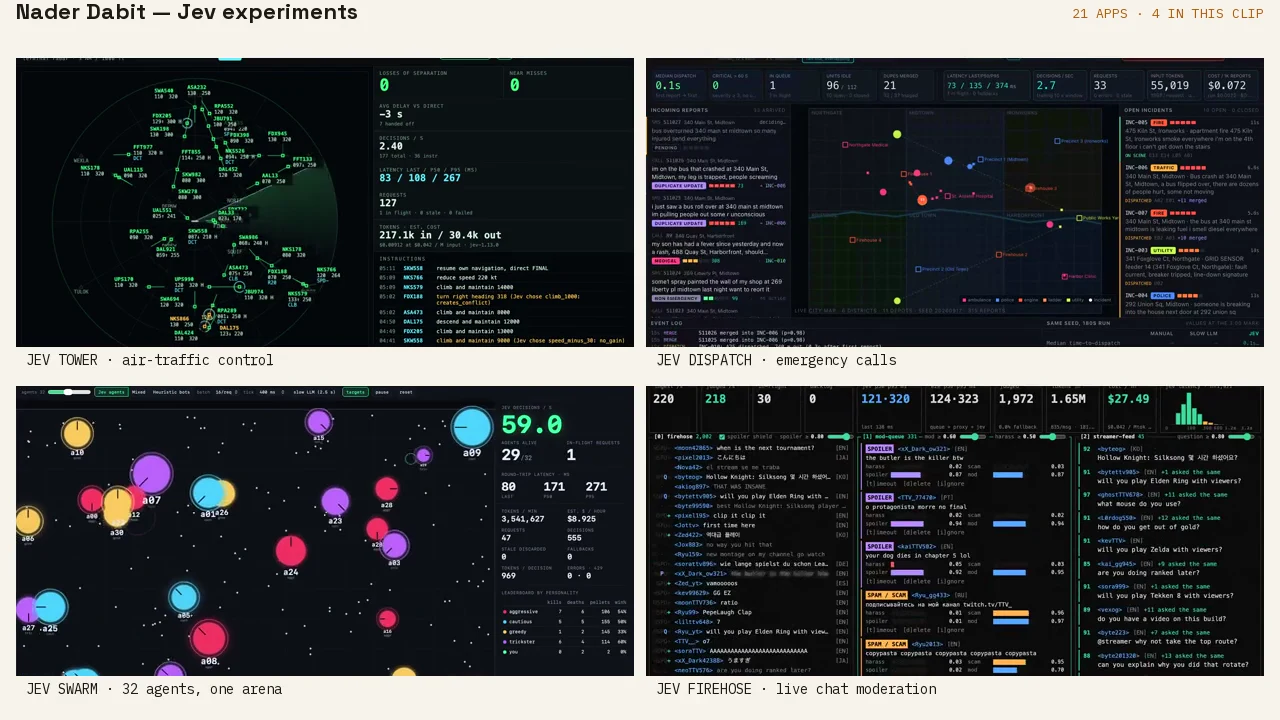
Every category, from games and tools to repositories and writeups, traced to a primary source.
Real-time research powered by
Same ideas.
Different paths.
This is the full registry, not just the featured picks. Figures like speed, cost, and stars are maker-reported or captured snapshots, not JevMade measurements.
2140 experiments · showing 1801–1860
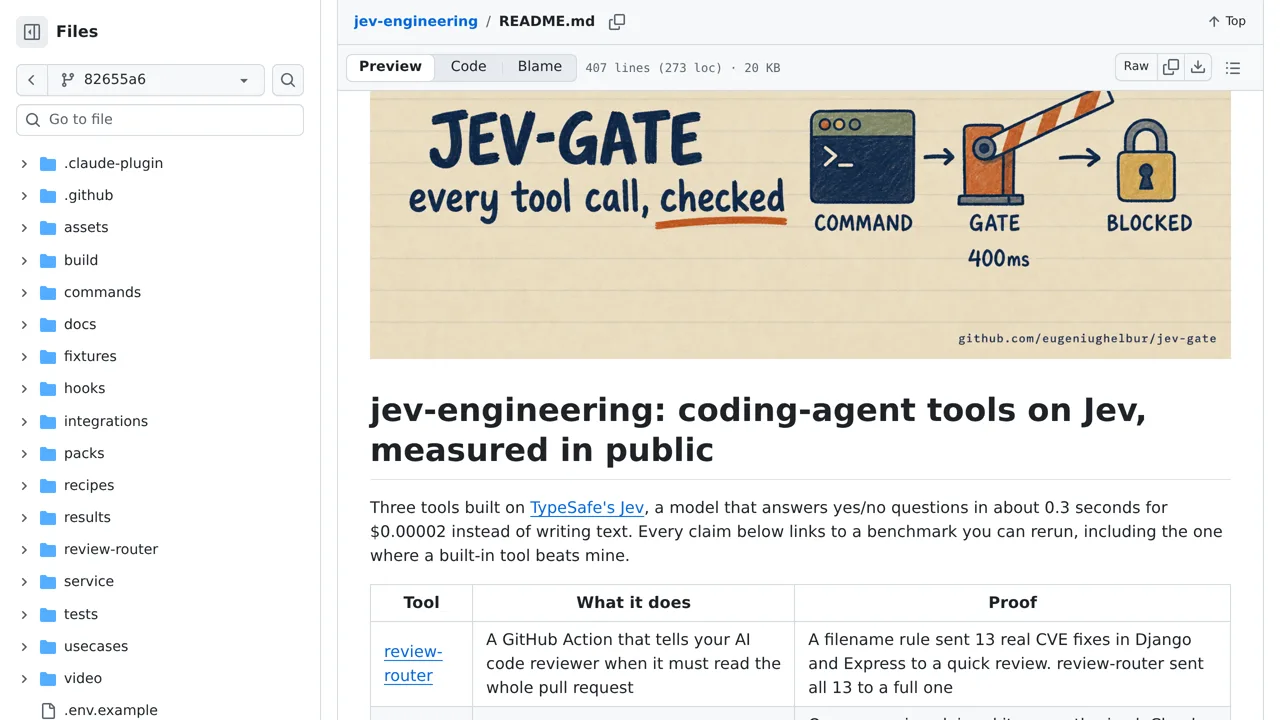
Working notes on putting guardrails around coding agents, each with a benchmark in the repo that reproduces the claim.
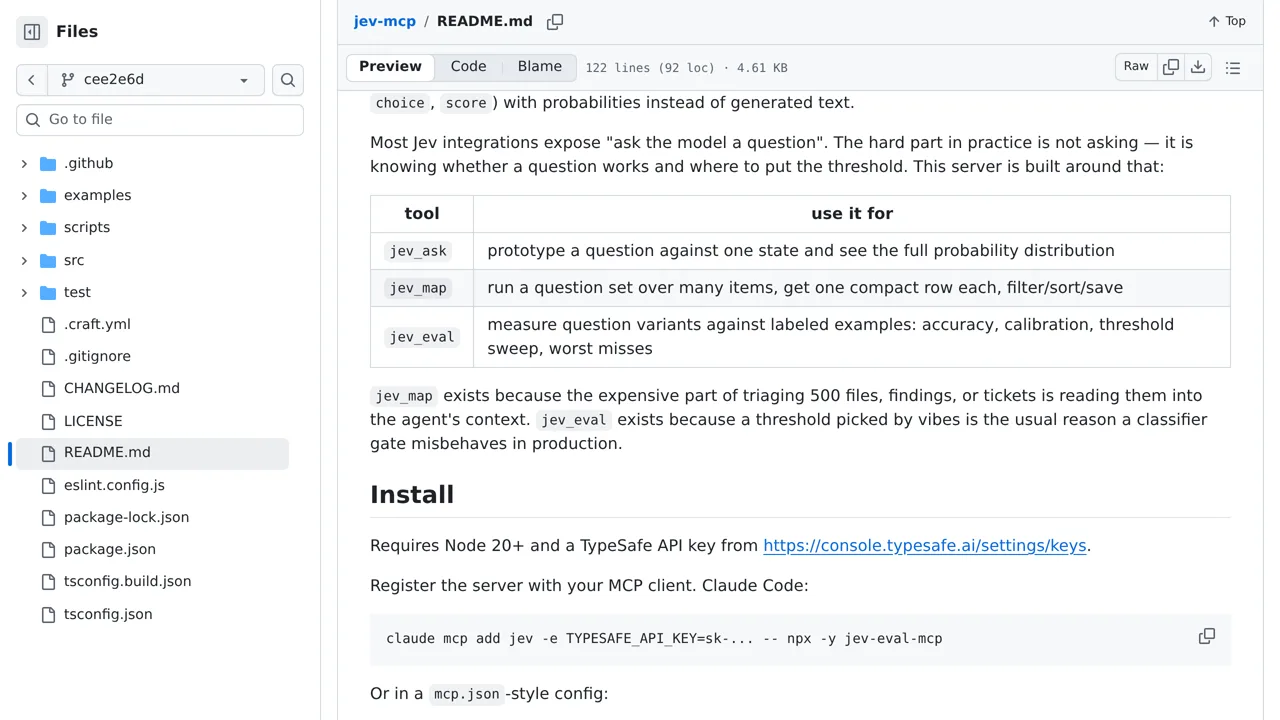
MCP tools for testing your Jev questions before they matter.
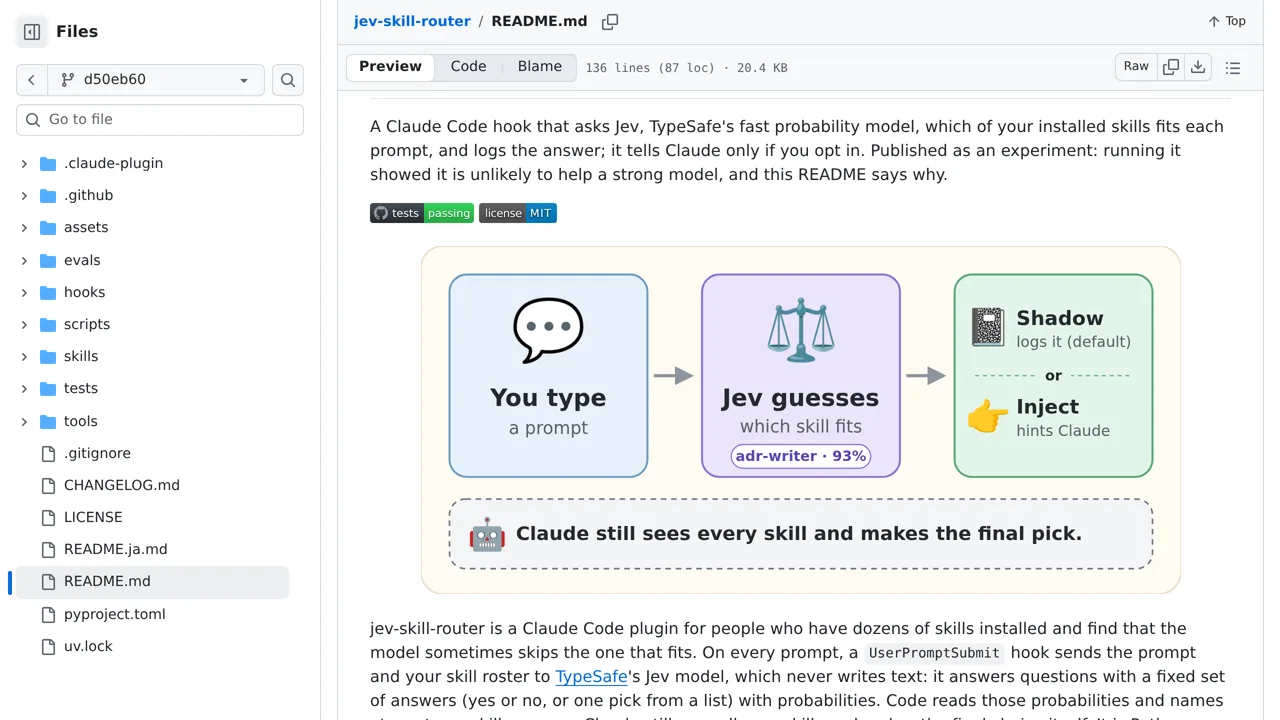
A Claude Code plugin that logs which skill it thinks fits each prompt and mostly stays out of the way. The numbers it collected argue against routers like it.
Connects coding agents to Jev over ACP or MCP, so an agent's LLM can request typed judgments without touching the TypeSafe API directly.
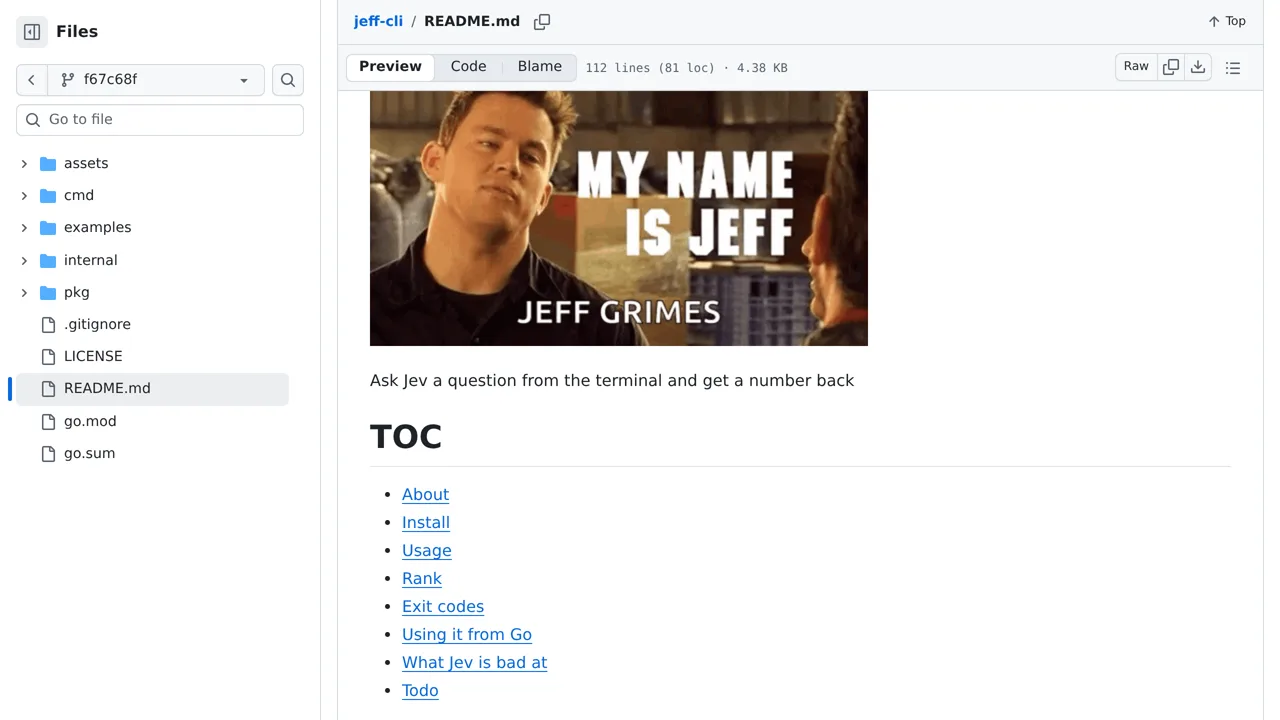
A Go CLI that asks Jev a question from the shell and turns thresholds into exit codes your scripts and CI jobs can act on.
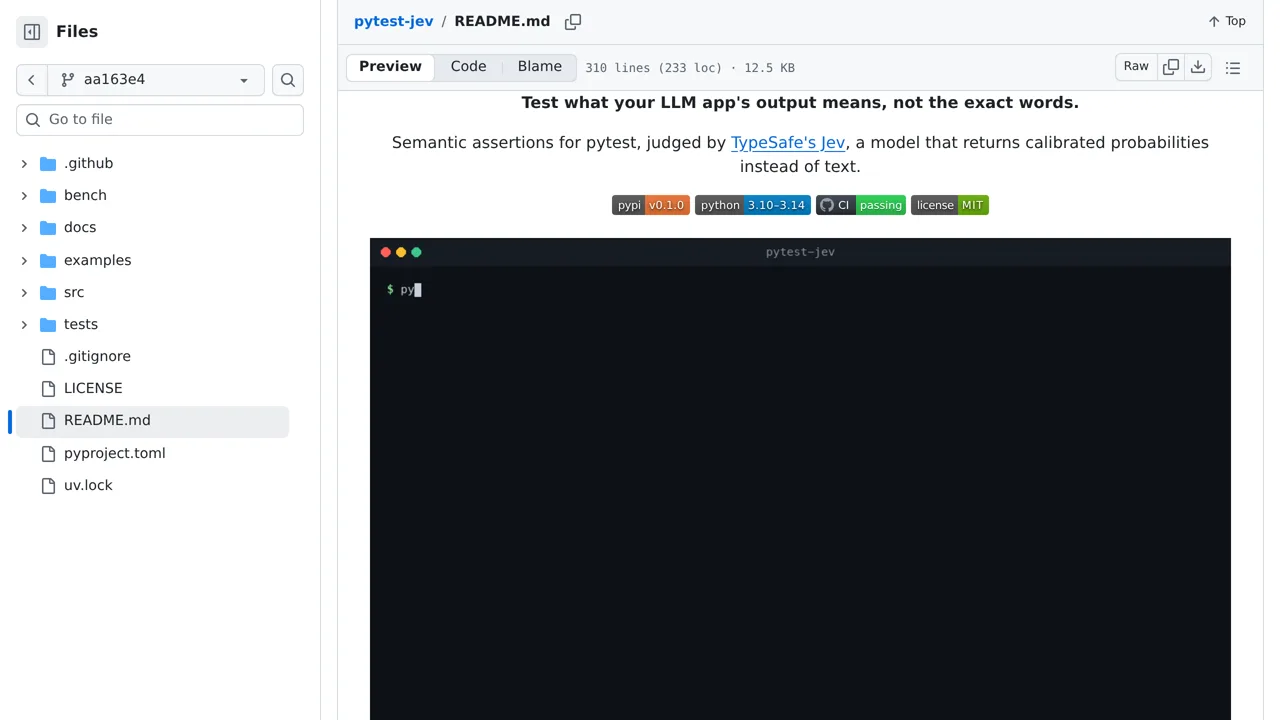
pytest assertions for LLM output that check meaning instead of wording. Declare what a reply must say and must not say, and Jev grades each claim.
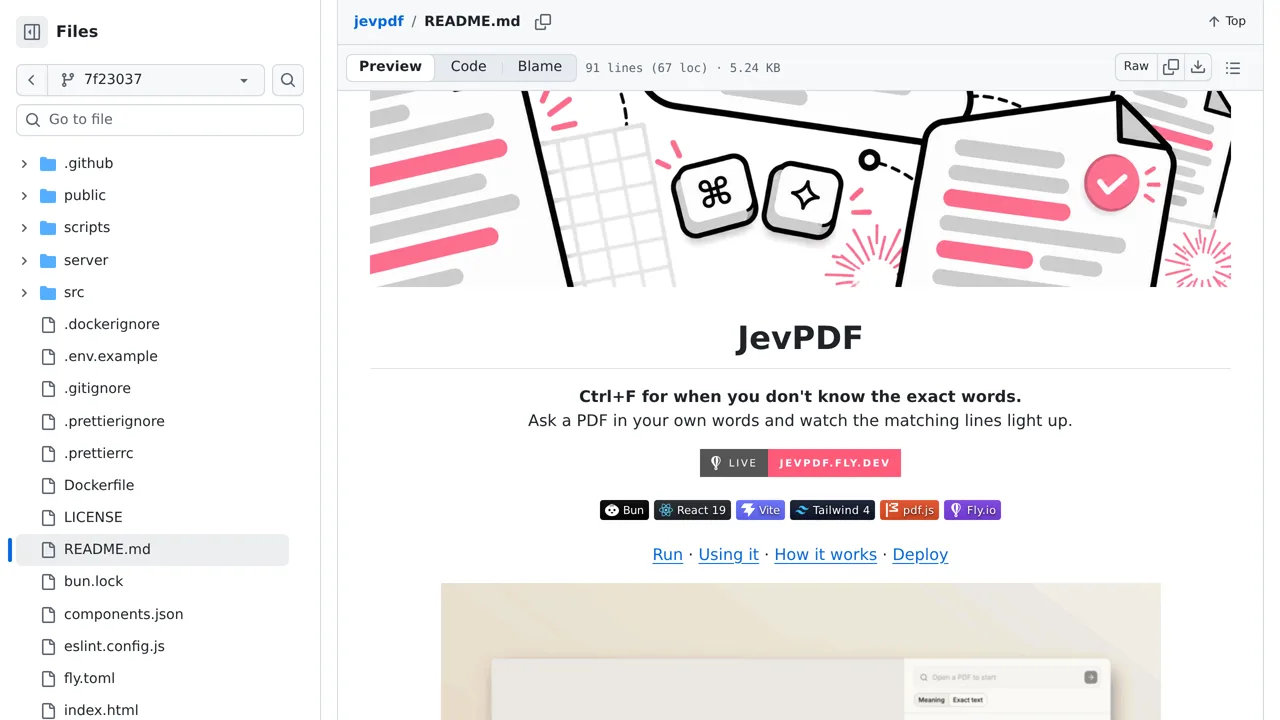
Search a PDF by what you mean rather than the words on the page.
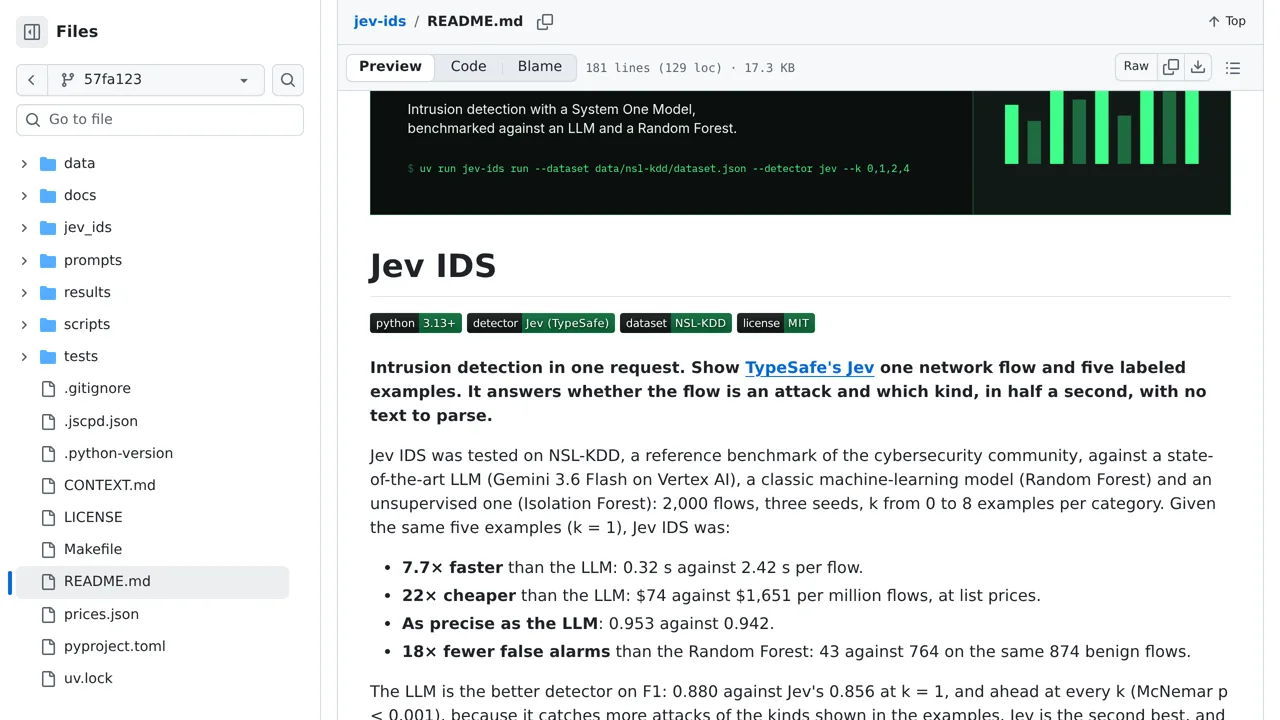
Trained intrusion-detection models want thousands of labeled flows. This hands Jev five examples per attack type and gets close enough to be worth arguing about.
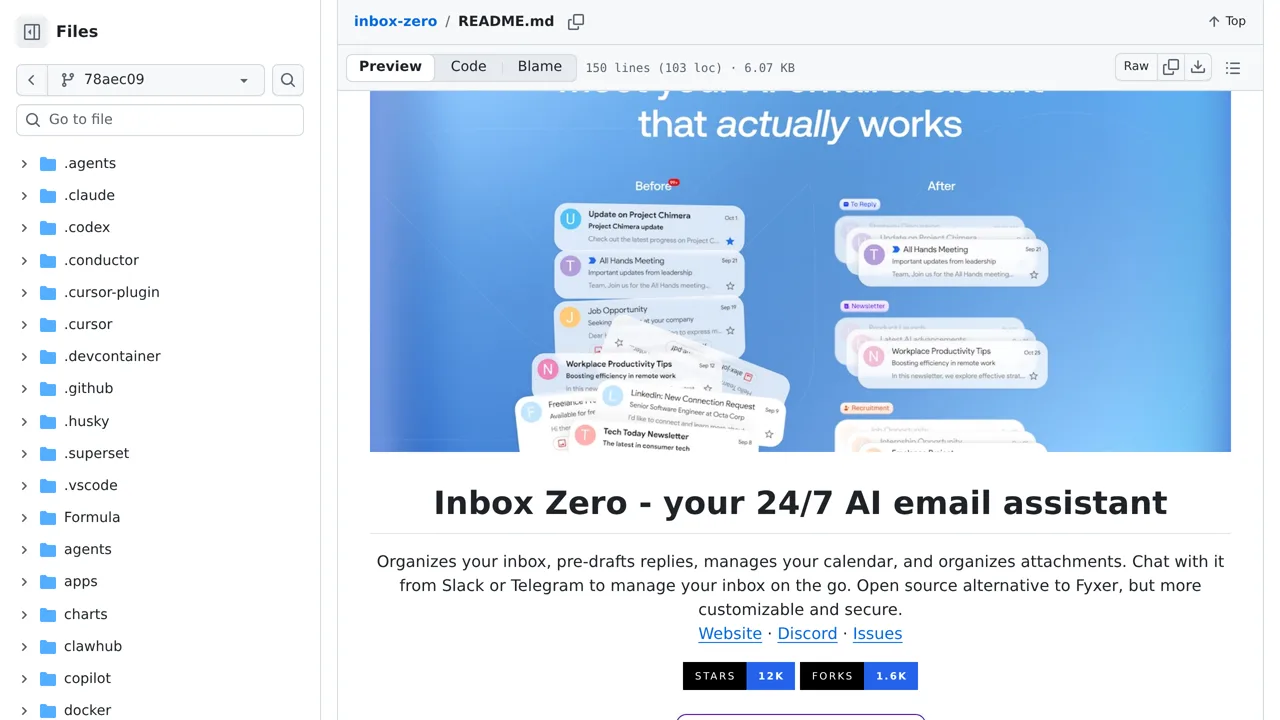
Inbox Zero, the open-source email assistant, takes Jev as a drop-in classifier. Categories come from a fixed list and yes/no answers carry a probability.
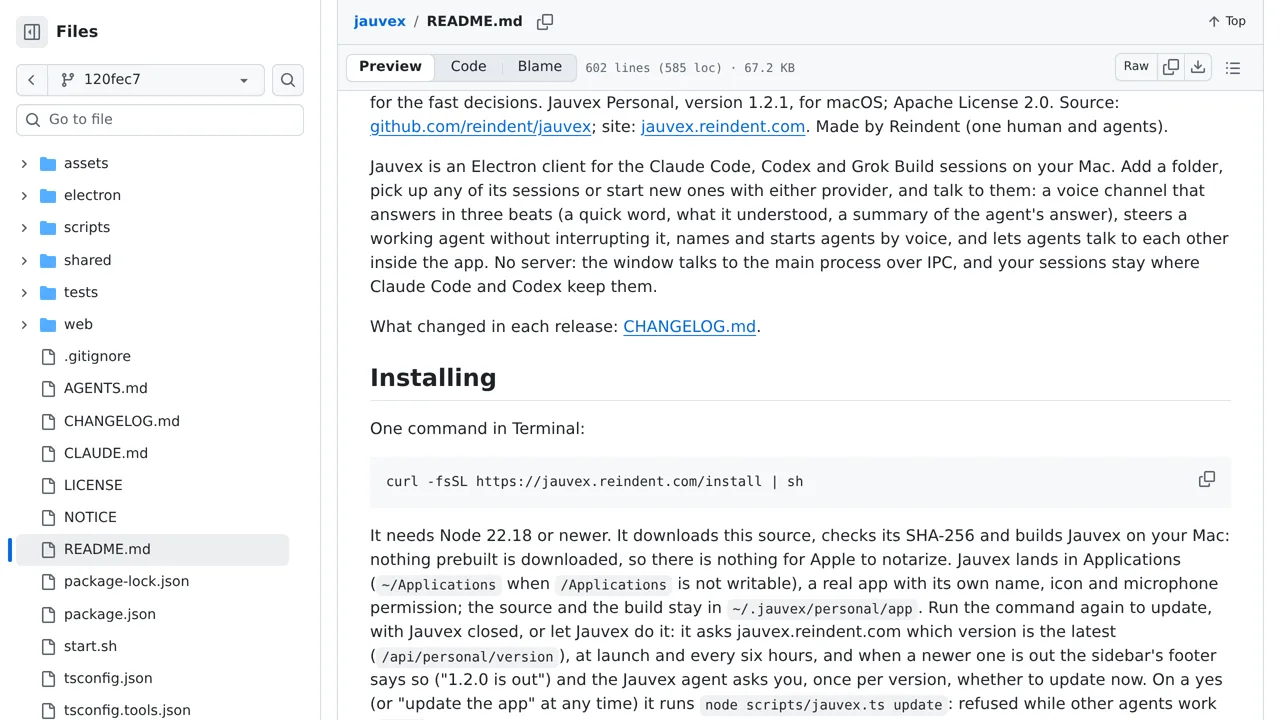
Jauvex is a Mac app for talking to your coding agents by voice while they work in the same window.
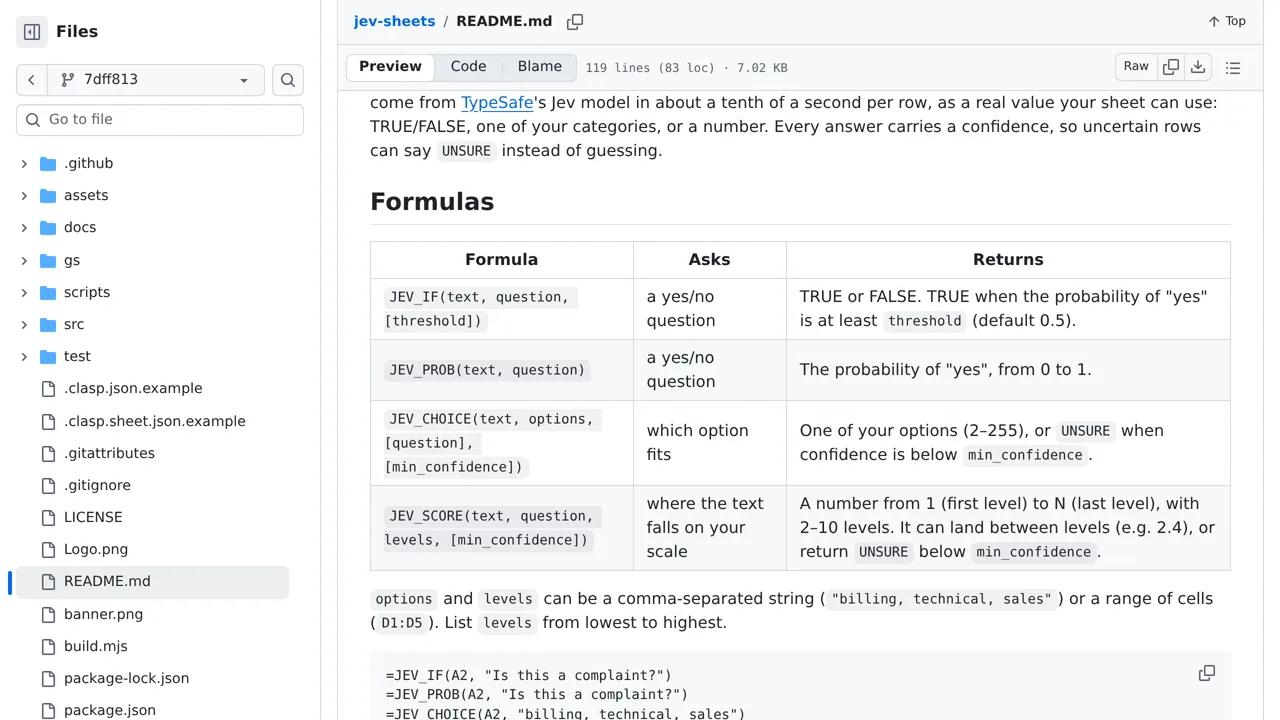
Google Sheets formulas — JEV_IF, JEV_PROB, JEV_CHOICE, JEV_SCORE — that classify, tag, and score cells with Jev in about a tenth of a second per row.
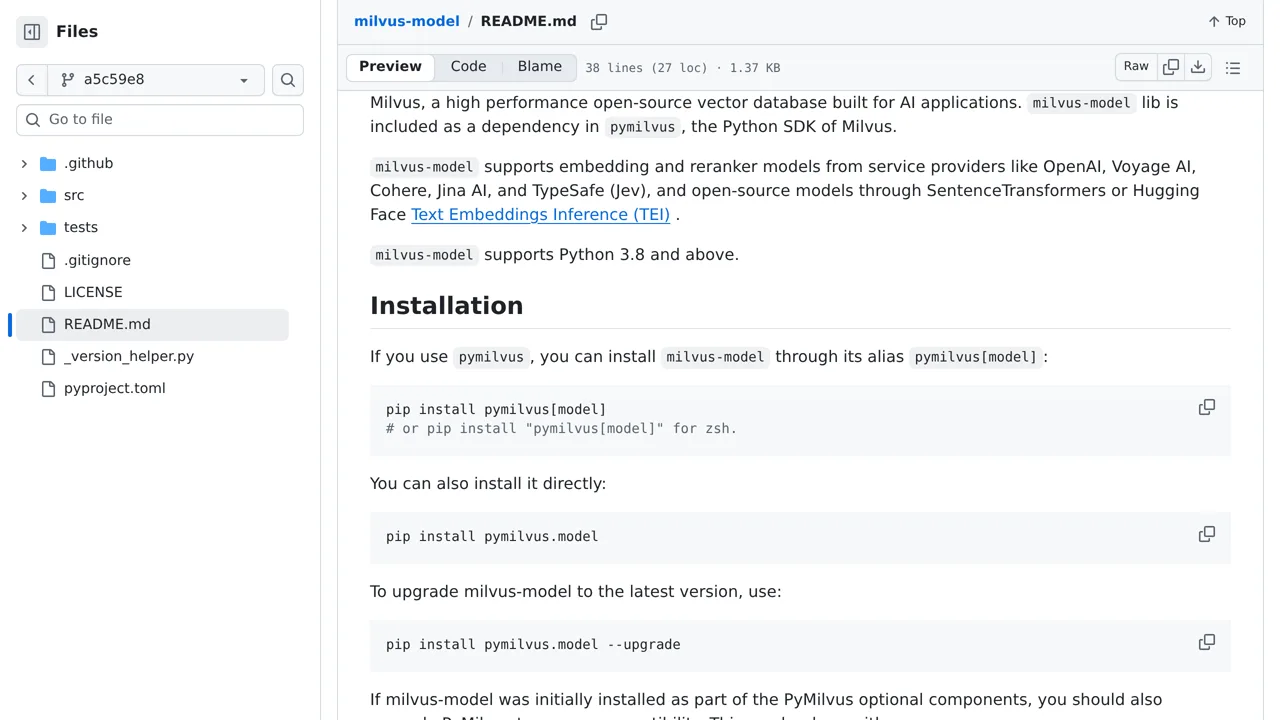
Milvus's model library ships a Jev reranker next to its Cohere and Voyage ones. Each candidate document becomes one yes/no question about the query.
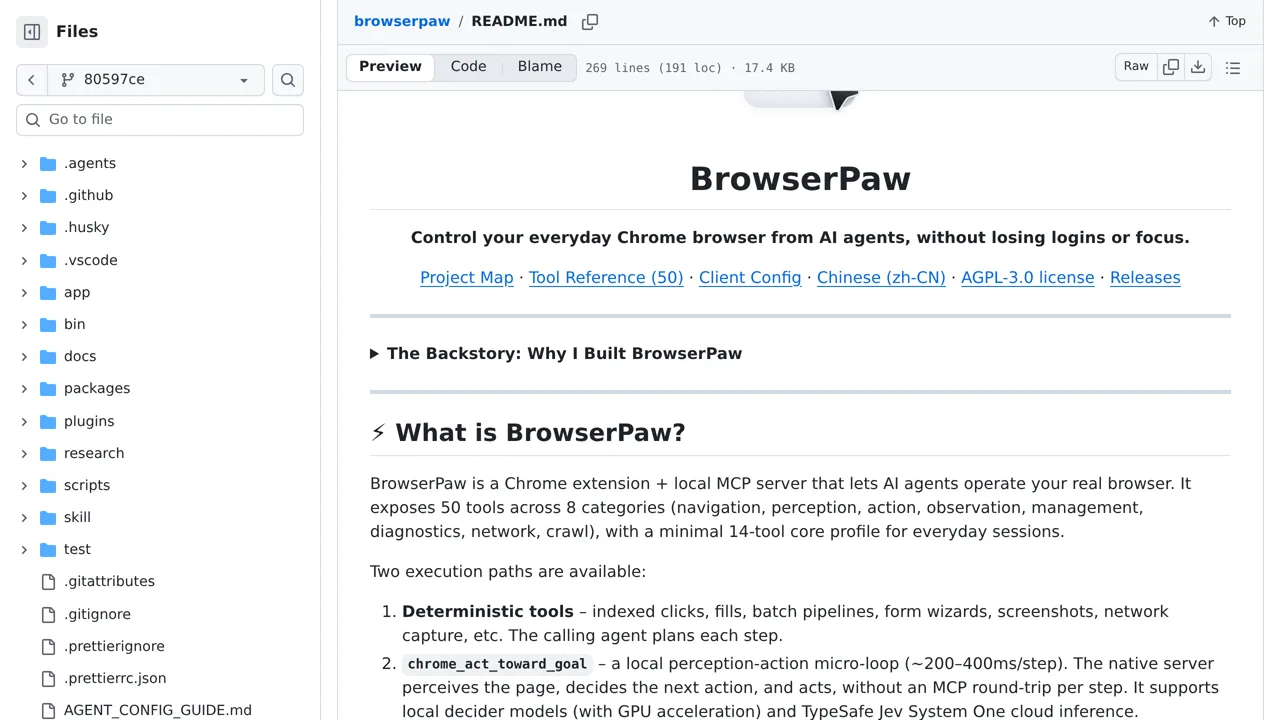
Gives an agent the Chrome window you already use, logins and cookies included, through an MV3 extension plus a local MCP server.
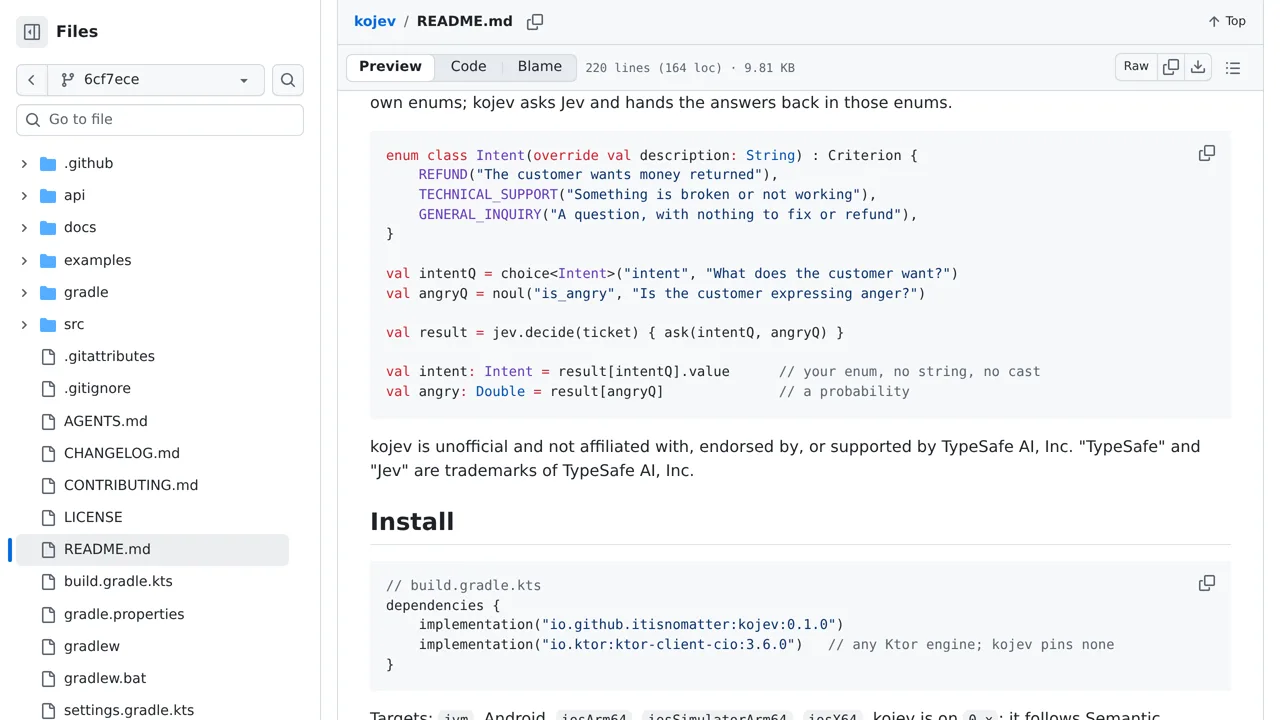
A Kotlin Multiplatform Jev client that answers Choice and Score questions as your own enums — no string keys, no casts.
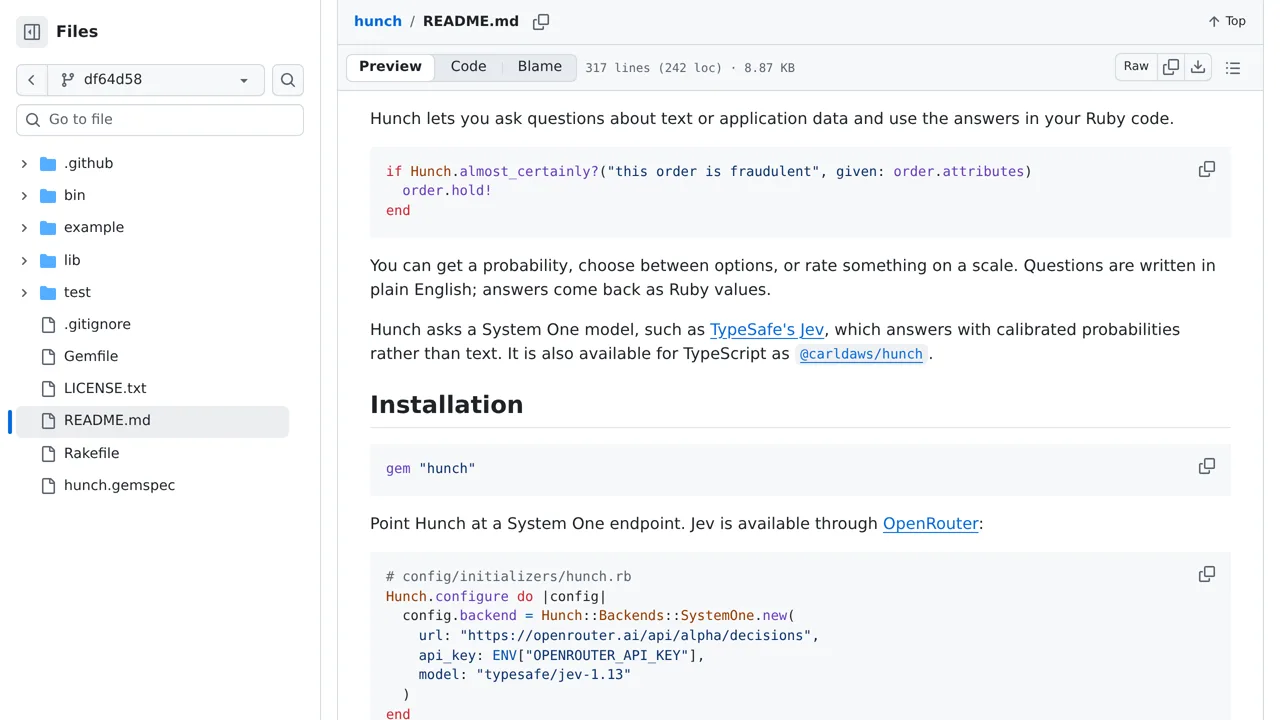
Adds methods like Hunch.likely? to Ruby, so a conditional can ask Jev instead of checking a variable. Reads like any other if statement.
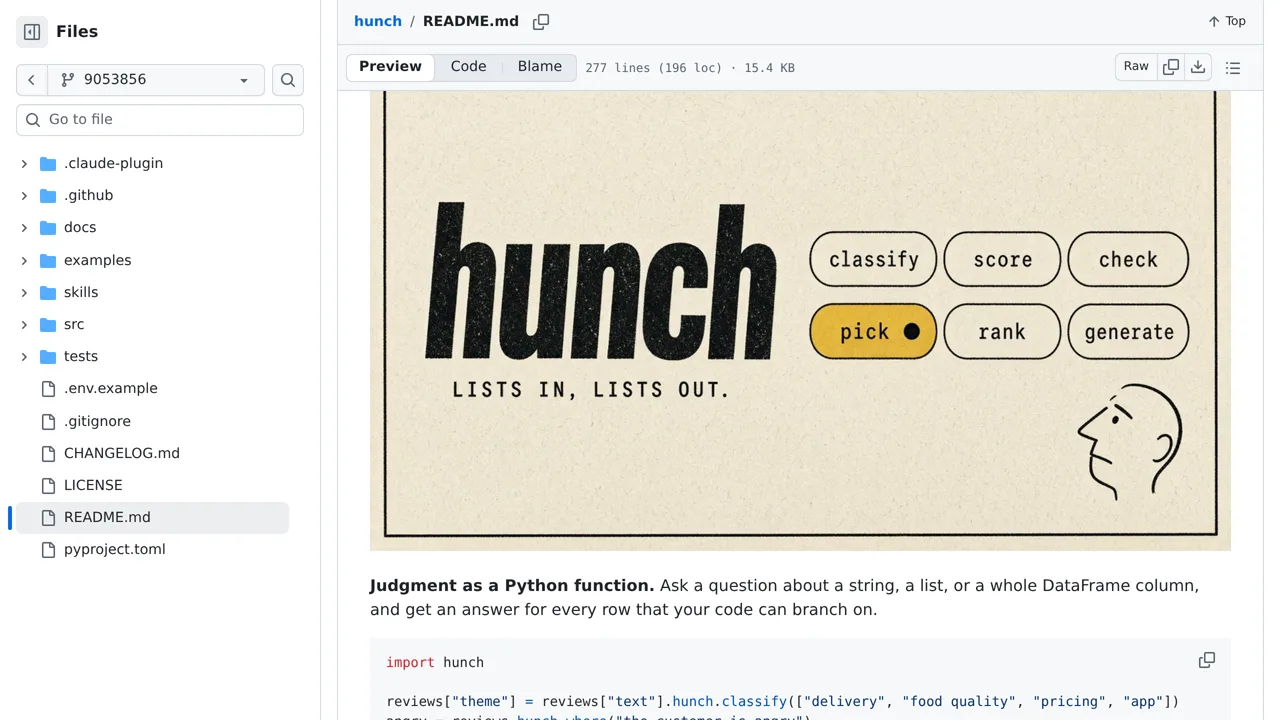
Gives pandas a .hunch accessor. Ask about a column of reviews and every row gets judged, with answers joined back where they came from.
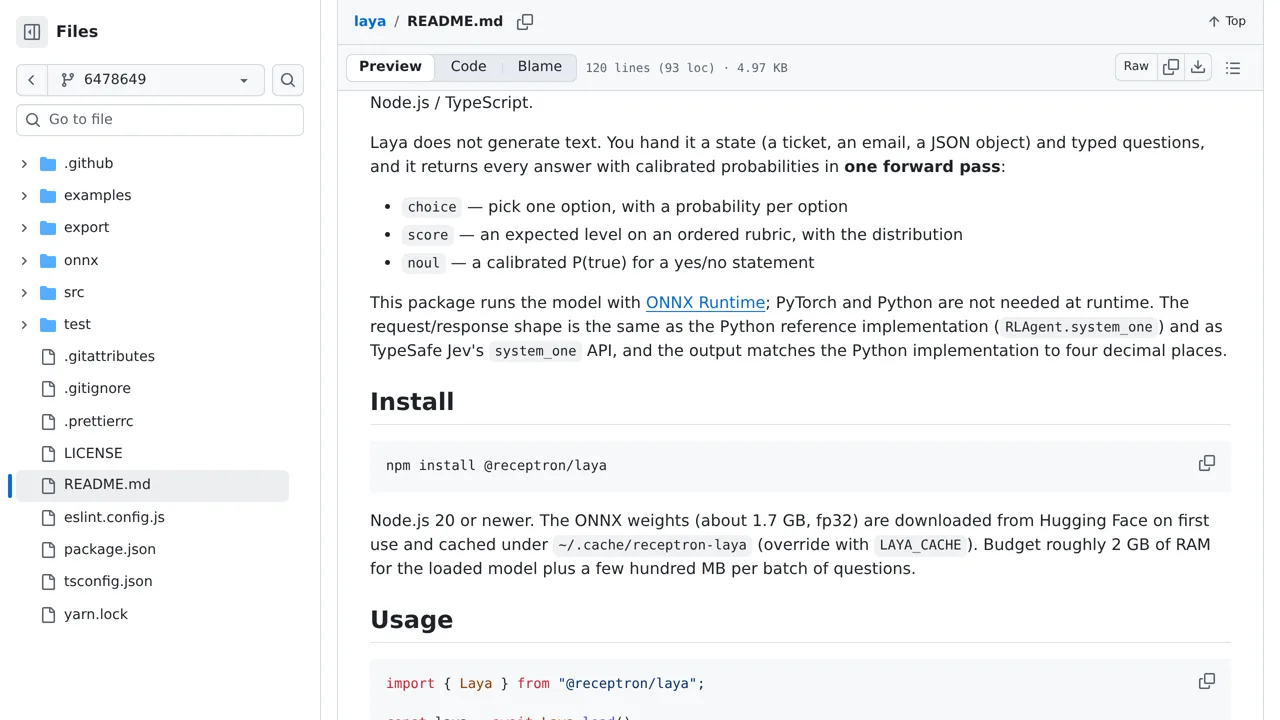
A Node package that loads the open Laya decision model through ONNX, no Python needed at runtime.
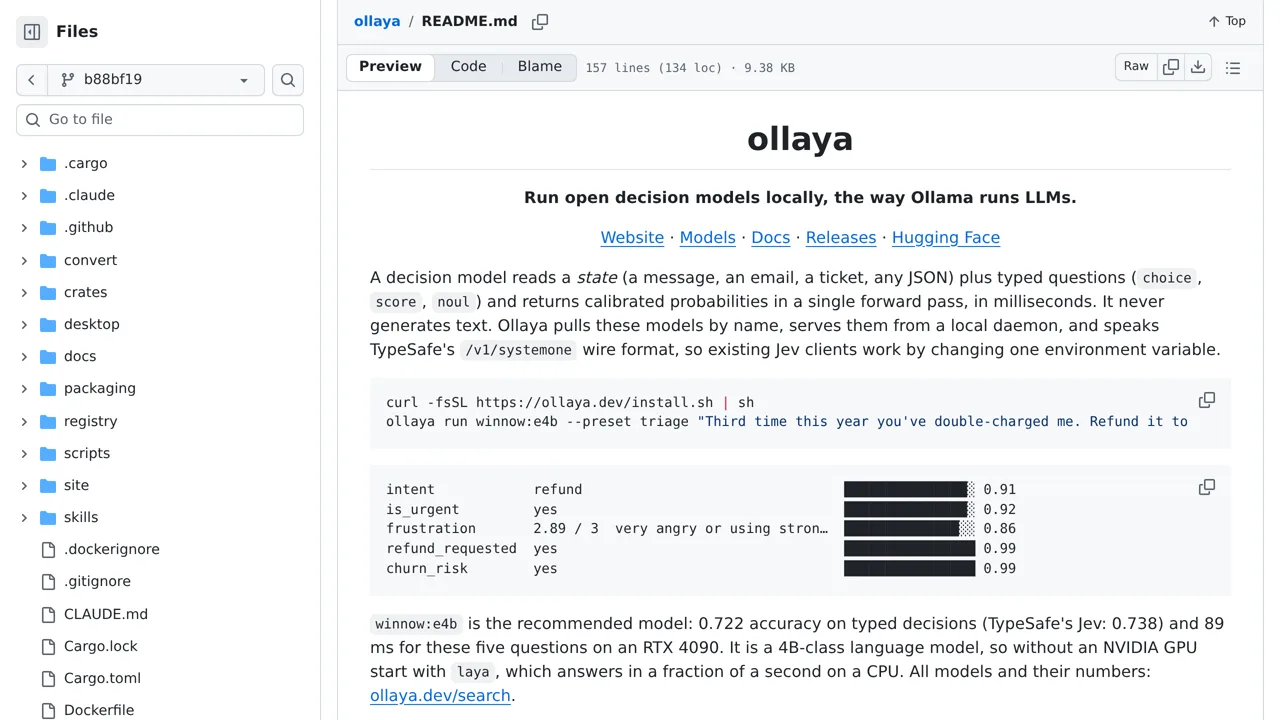
A Rust daemon that runs open decision models on your own machine and speaks TypeSafe's /v1/systemone format, so Jev clients work after changing one environment variable.
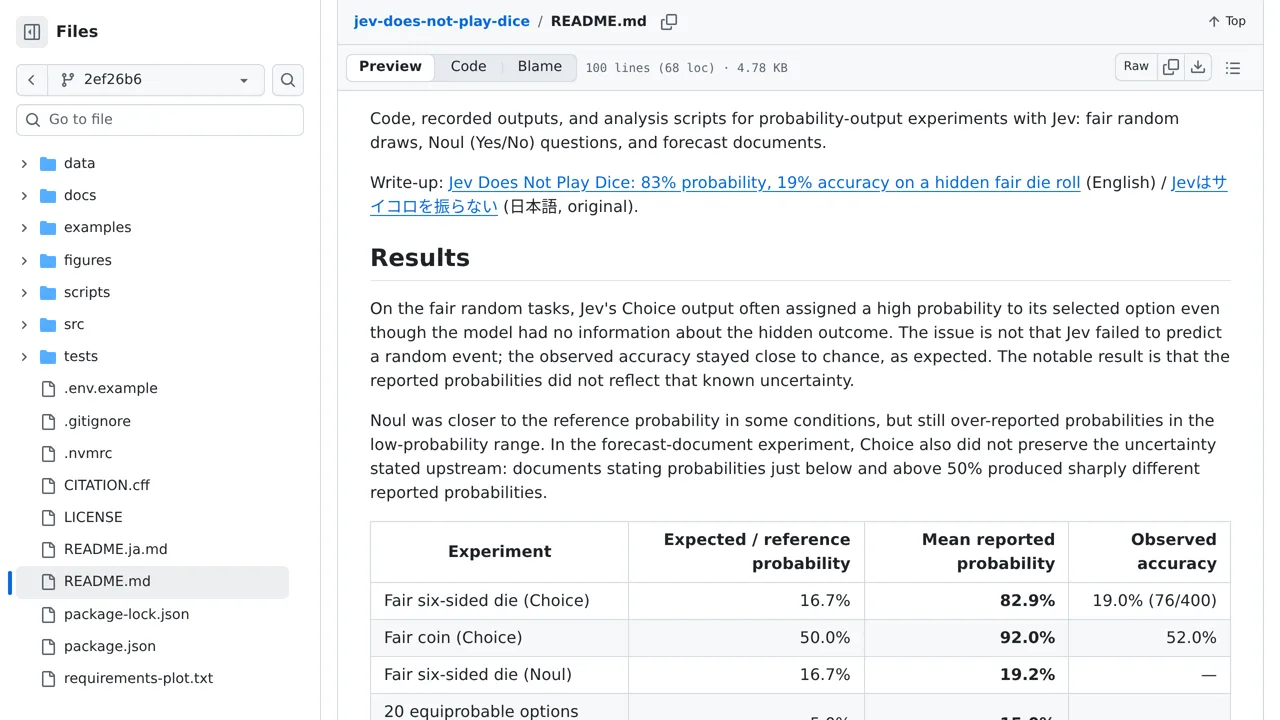
What does a probability model do when the answer is genuinely random? These experiments found out, and the answer is not flattering.
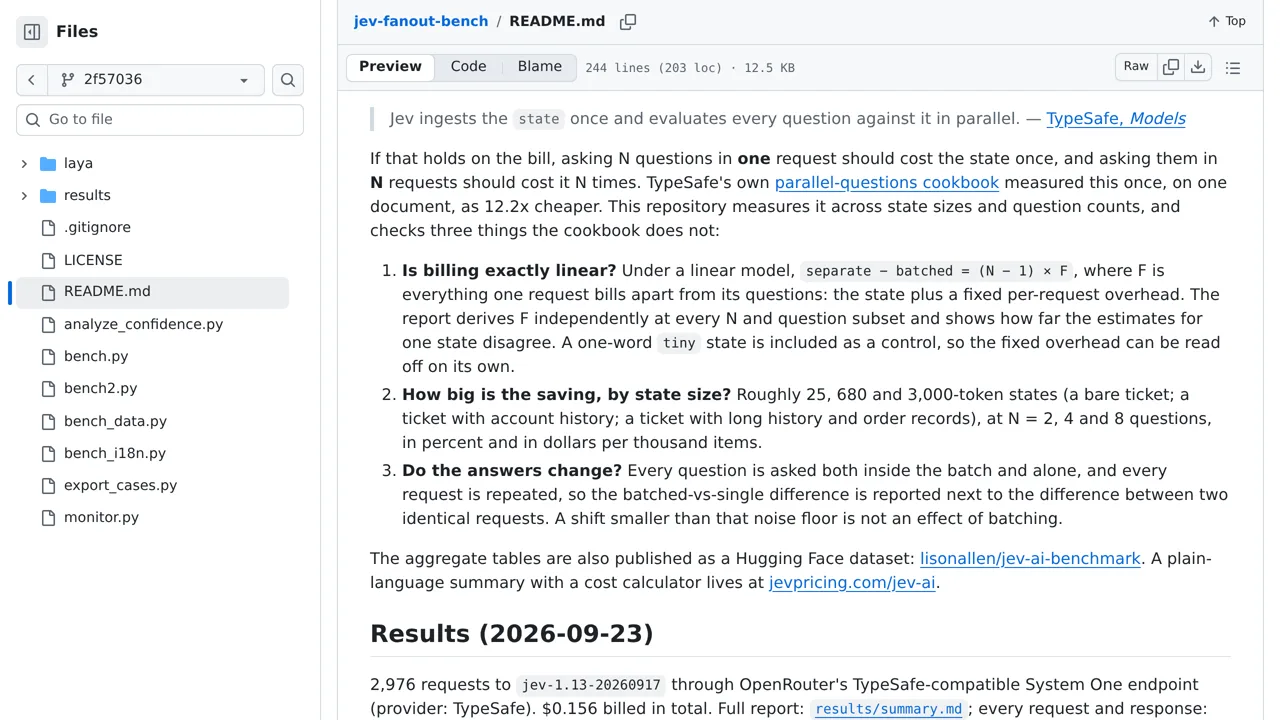
The fan-out docs say batching bills the state once. As far as anyone could tell, nobody had checked, so this repo checks with real money.
Databases sort by numbers and Jev hands back probabilities, so sorting search results by them is tempting. This measures how far the temptation carries.
Freeze a small Qwen model, train a decision head smaller than a million parameters, and it answers typed questions with zero generated tokens.
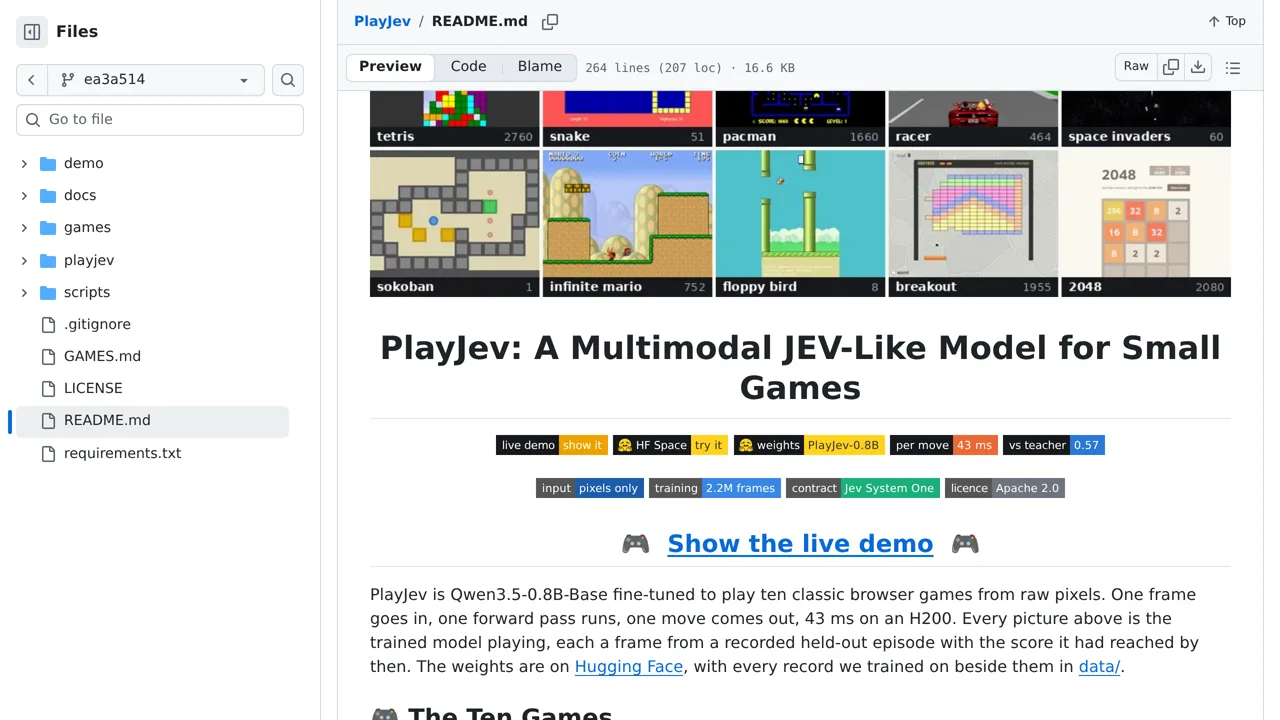
A 0.8B vision-language model playing ten browser games straight from pixels: one frame in, one move out, 43 ms on an H200.
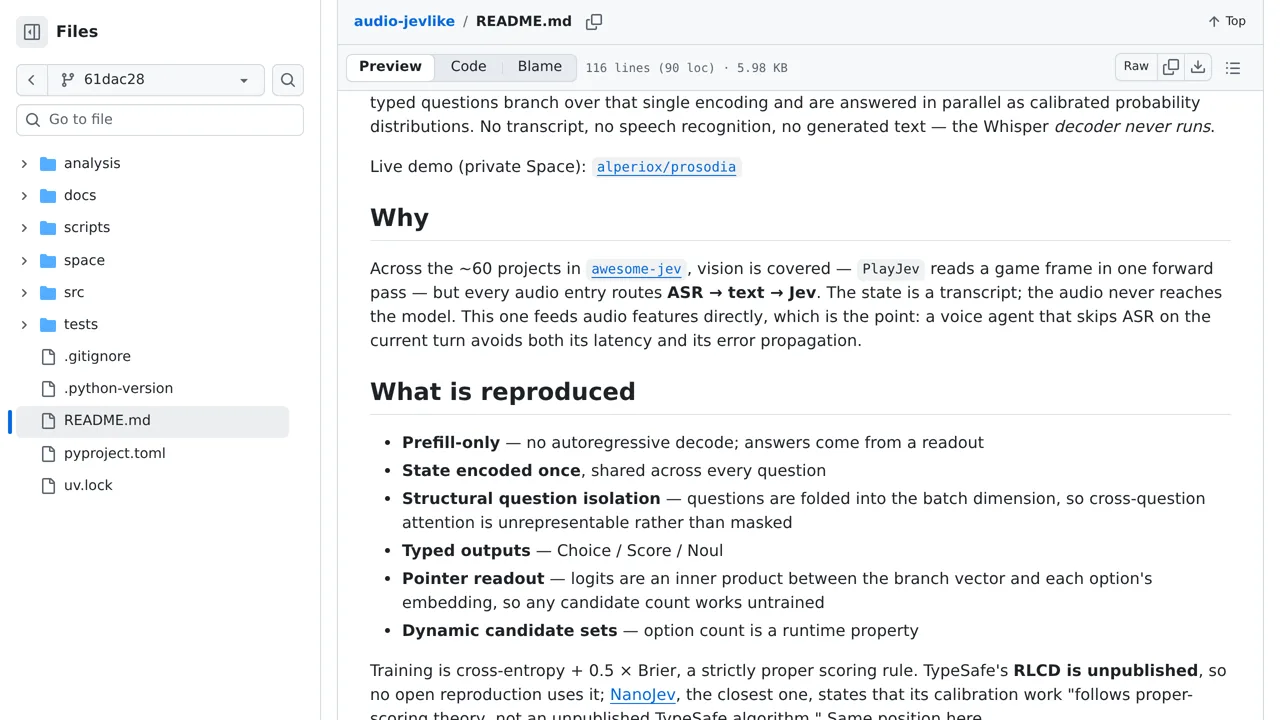
Every voice agent transcribes before it decides anything. Prosodia asks the audio directly, so a misheard word can no longer poison the judgment downstream.
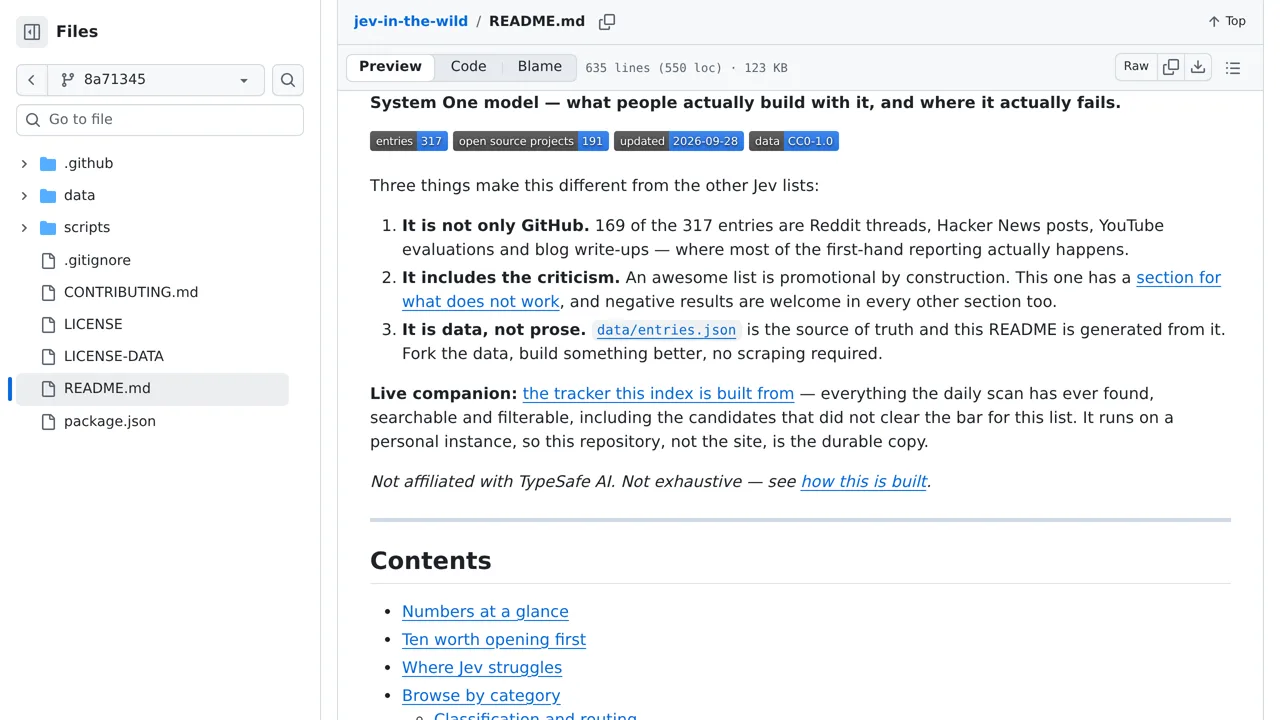
317 real-world Jev entries — nearly half from Reddit, Hacker News, and YouTube rather than GitHub — with a standing section for where it fails.
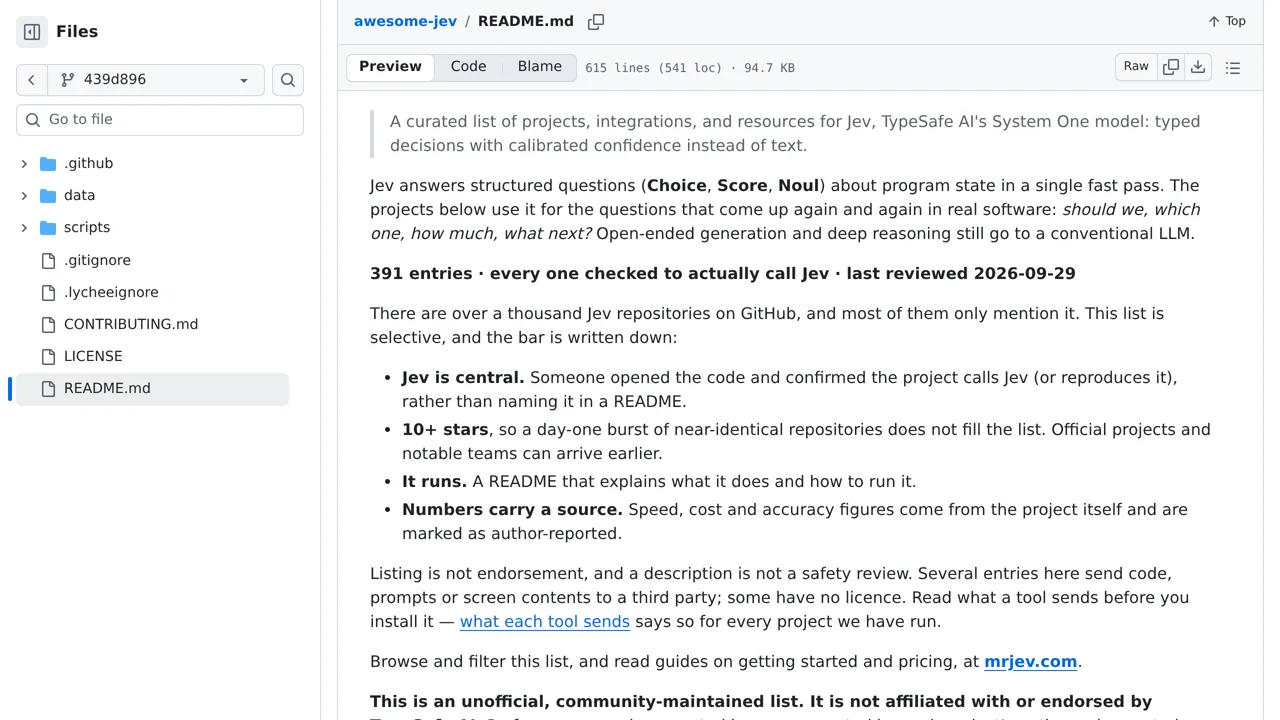
A Jev tool directory where every entry was run by the author first, and ten stars is the minimum to make the cut.
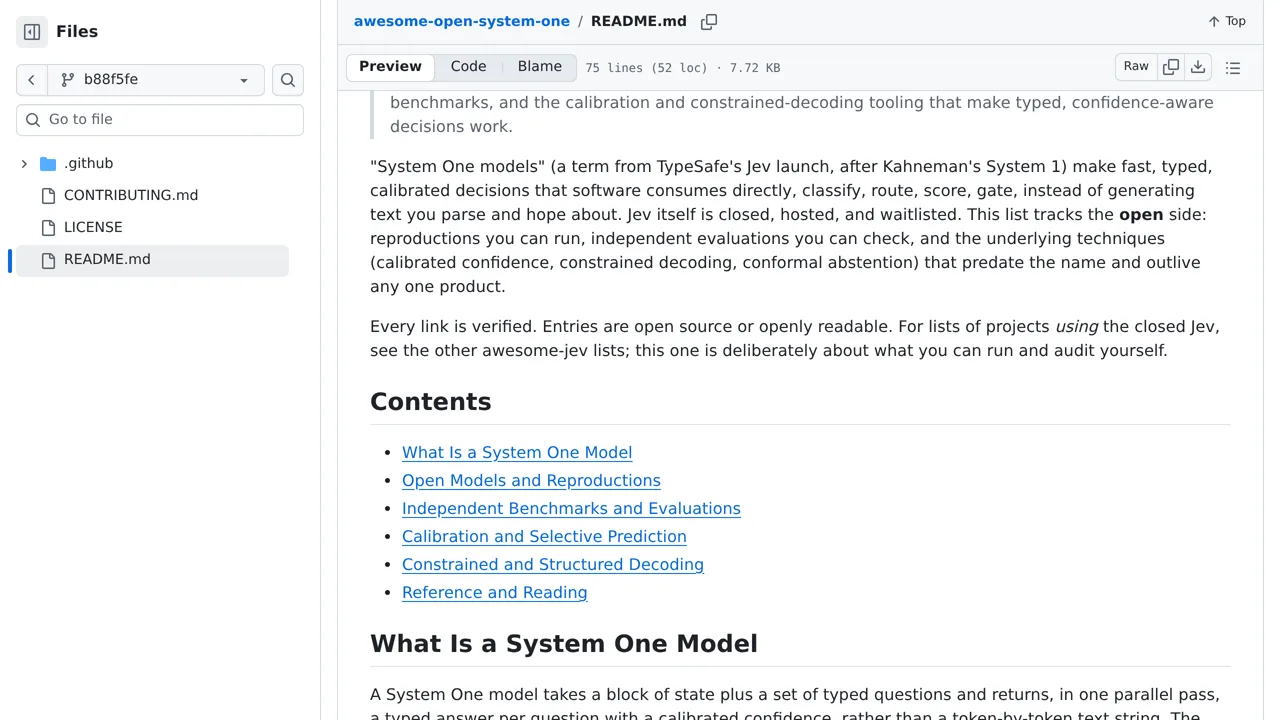
The open side of System One: runnable reproductions, independent benchmarks, and the calibration and constrained-decoding techniques that predate the name.
A category-file Jev list organized around two questions: where Jev already runs in production, and which decision architectures transfer between industries.
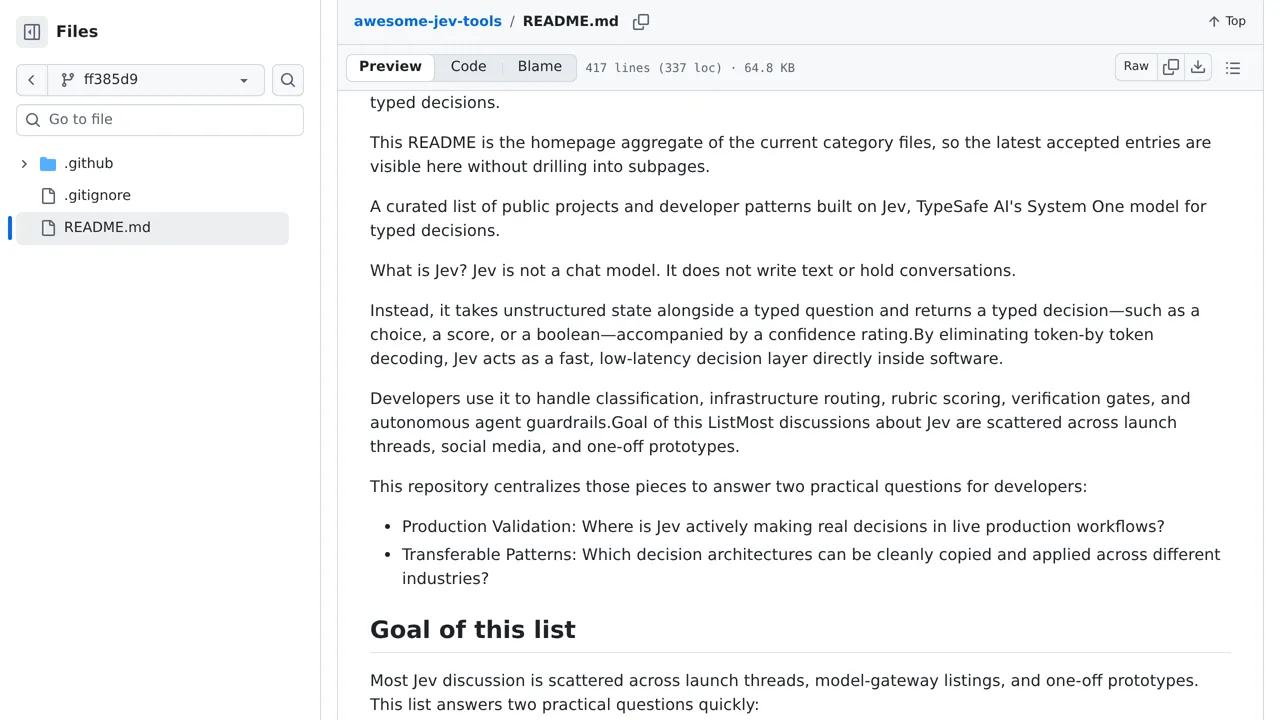
The New Stack reports on OpenAI’s Luna-based answer to Jev: an API that picks predefined answers instead of writing prose.
The New Stack follows Jev’s launch, Vercel’s early adoption figures, and a developer who asks the text-only model to recognize drawings.
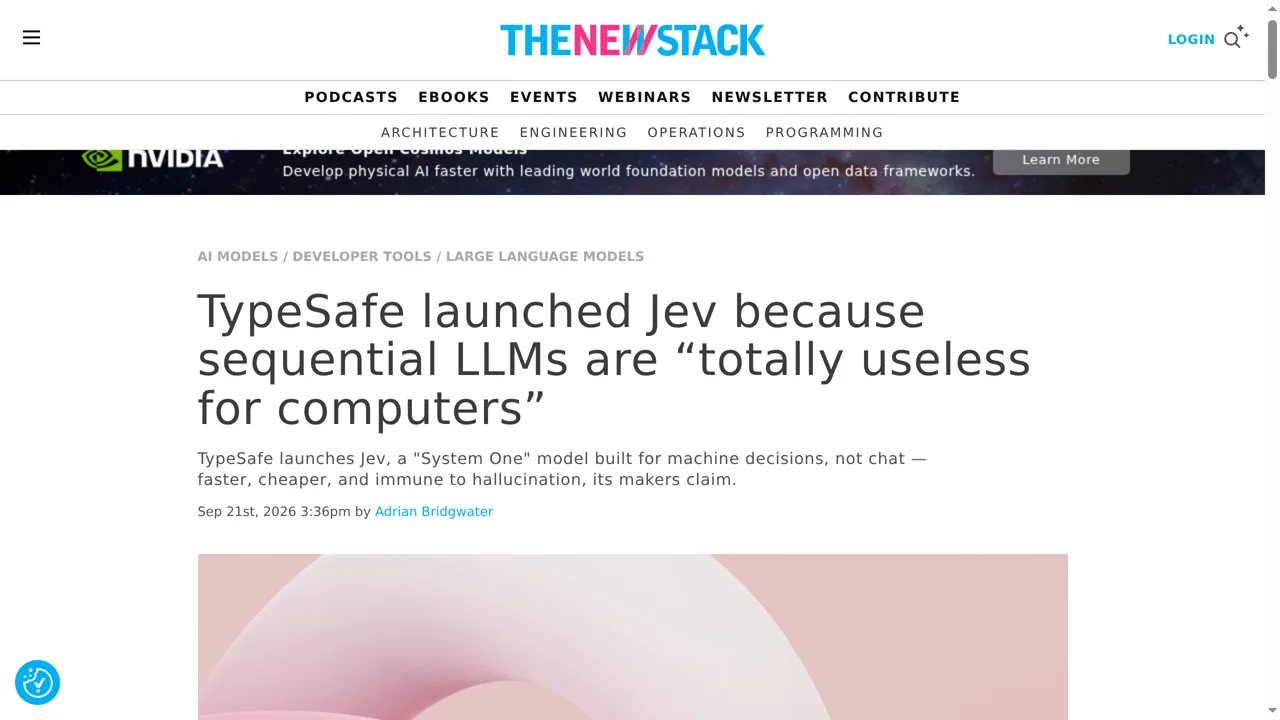
Vercel charts Jev’s first day on AI Gateway, reporting use by nearly 13% of paid teams within 24 hours.
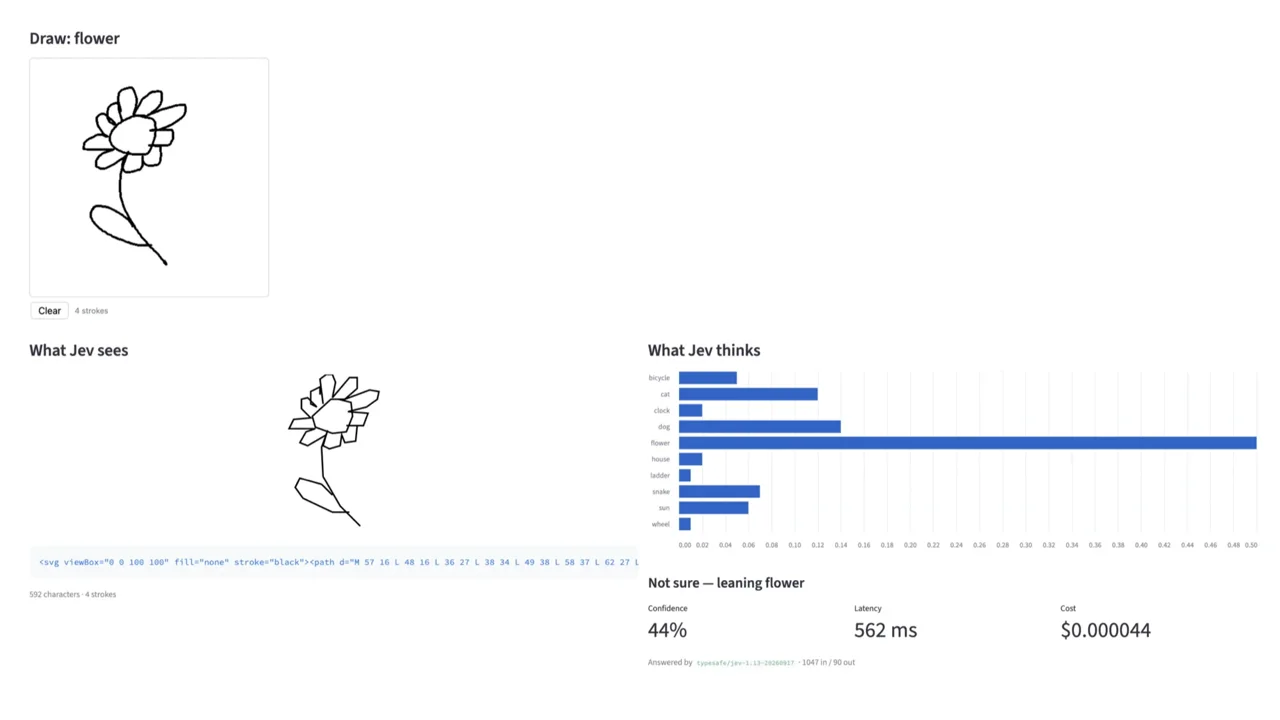
Bartosz Mikulski turns drawings into SVG coordinates and asks text-only Jev to choose which object each one depicts.
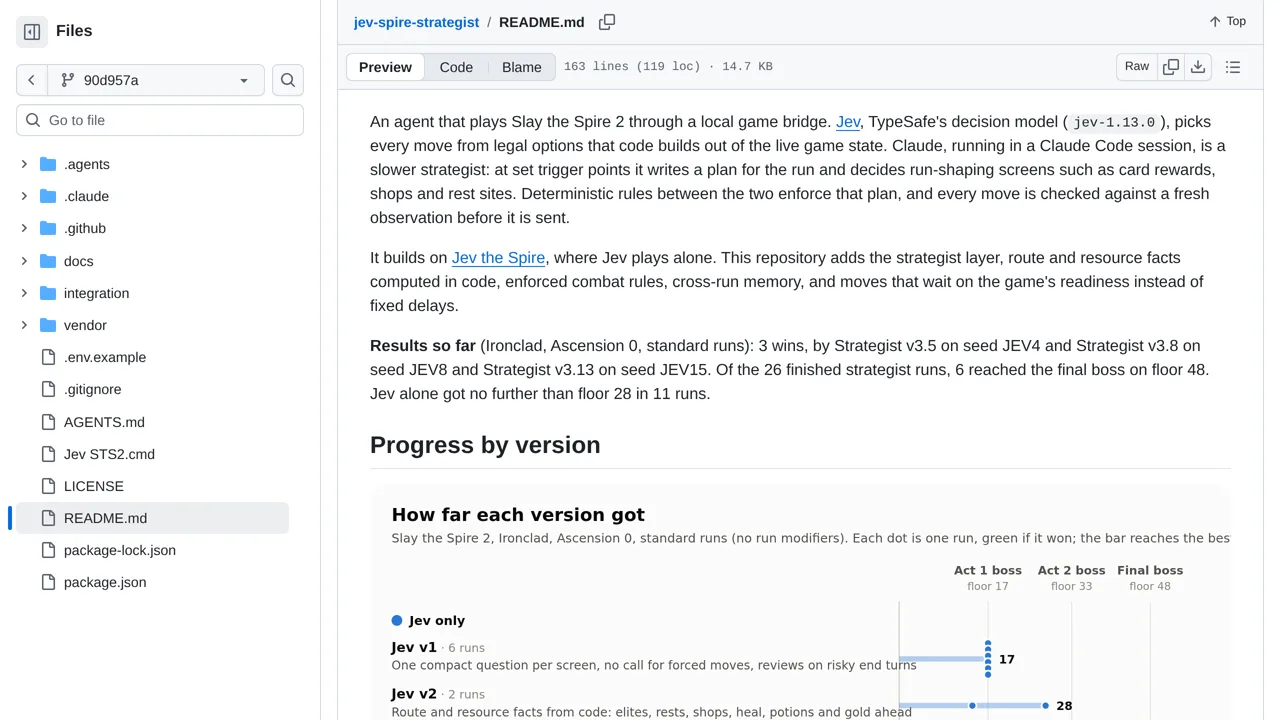
Jev plays the moves in Slay the Spire 2 while a Claude Code strategist plans the route, card rewards and boss fights.
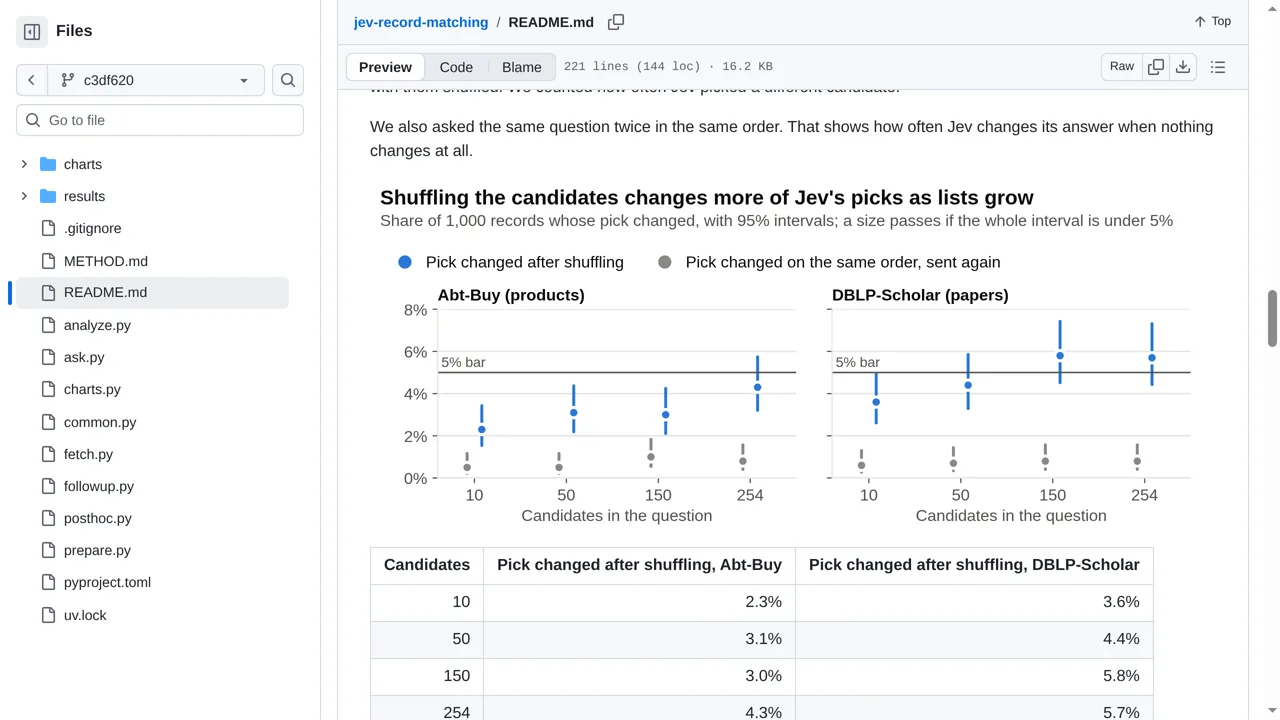
Shaun Mataire compares Jev’s multiple-choice and yes-or-no questions for matching product listings and research papers.
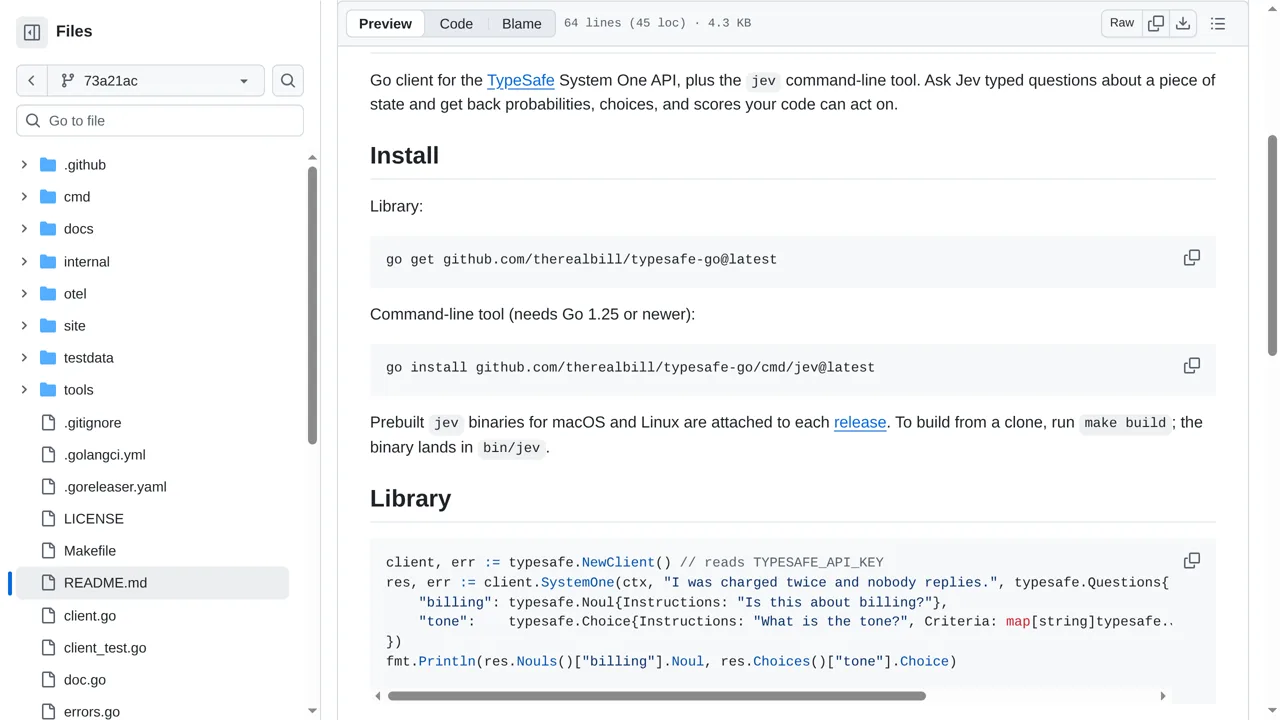
Bill Anderson’s Go client includes a Jev command-line tool for asking typed questions and checking tests against a written specification.
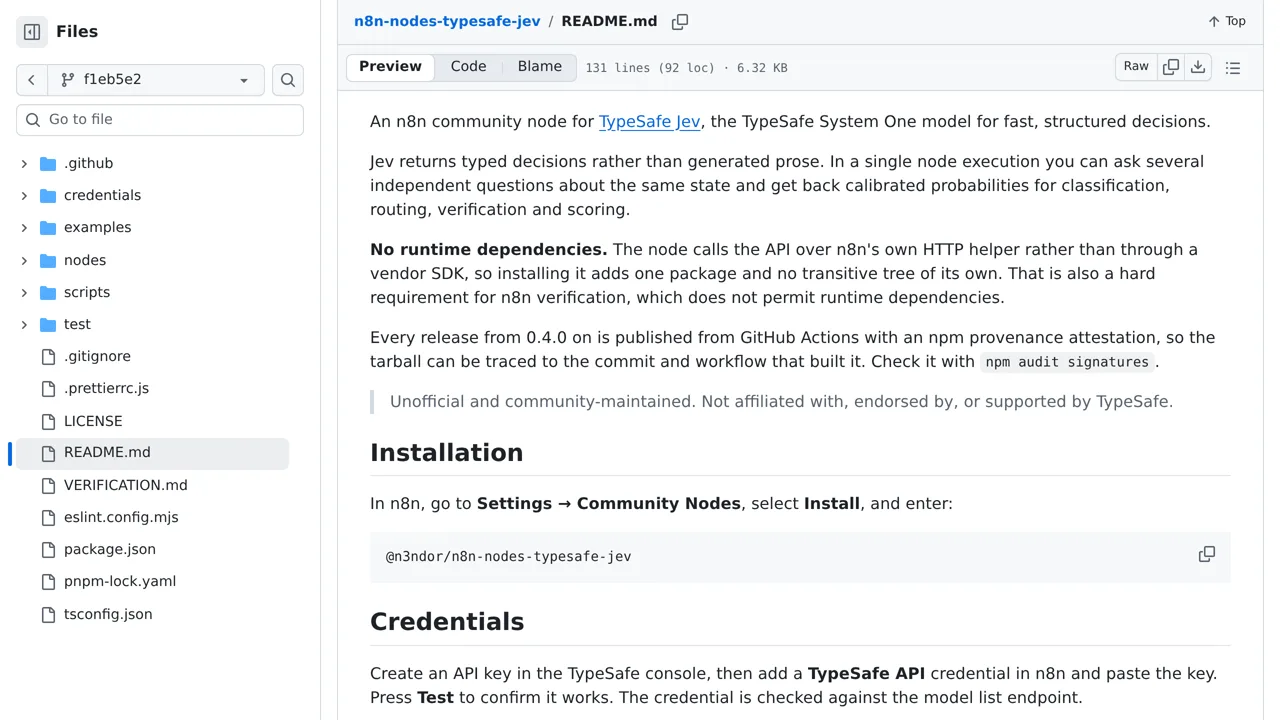
Add Jev to an n8n workflow with a visual question builder, or supply questions as JSON from an earlier step.
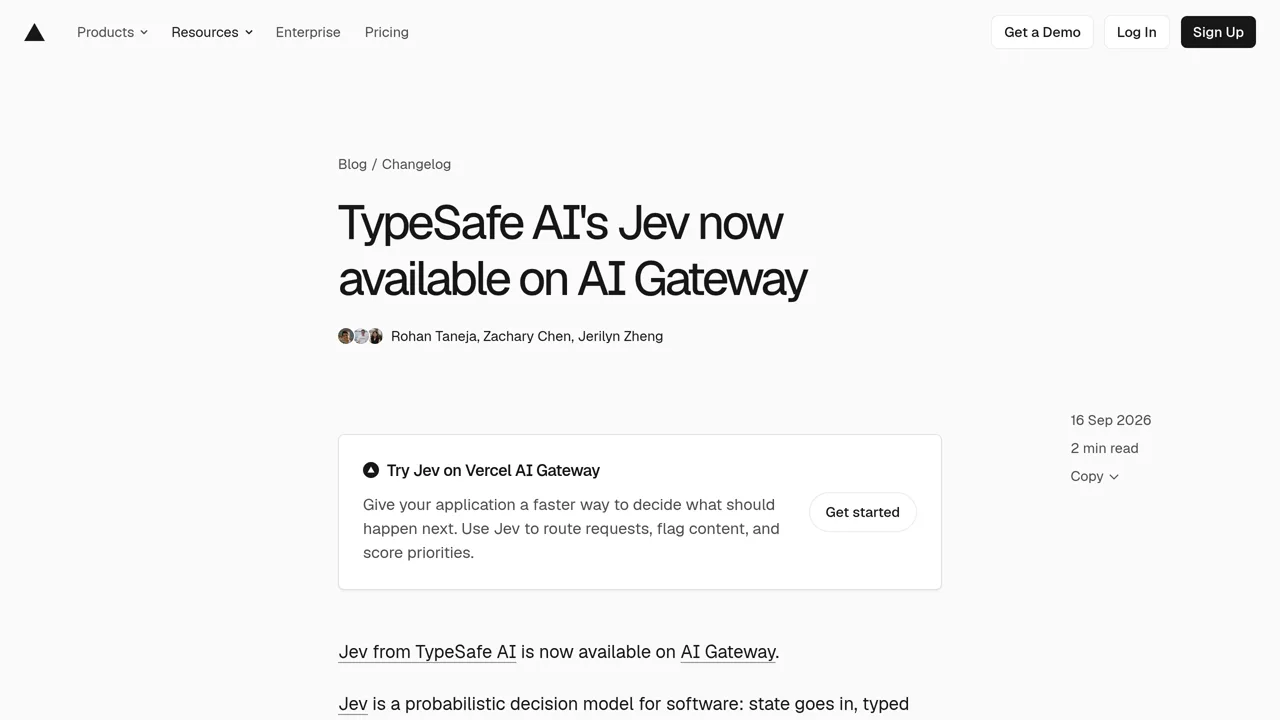
Vercel announces Jev on AI Gateway and shows how its AI SDK turns a support case into typed decisions.
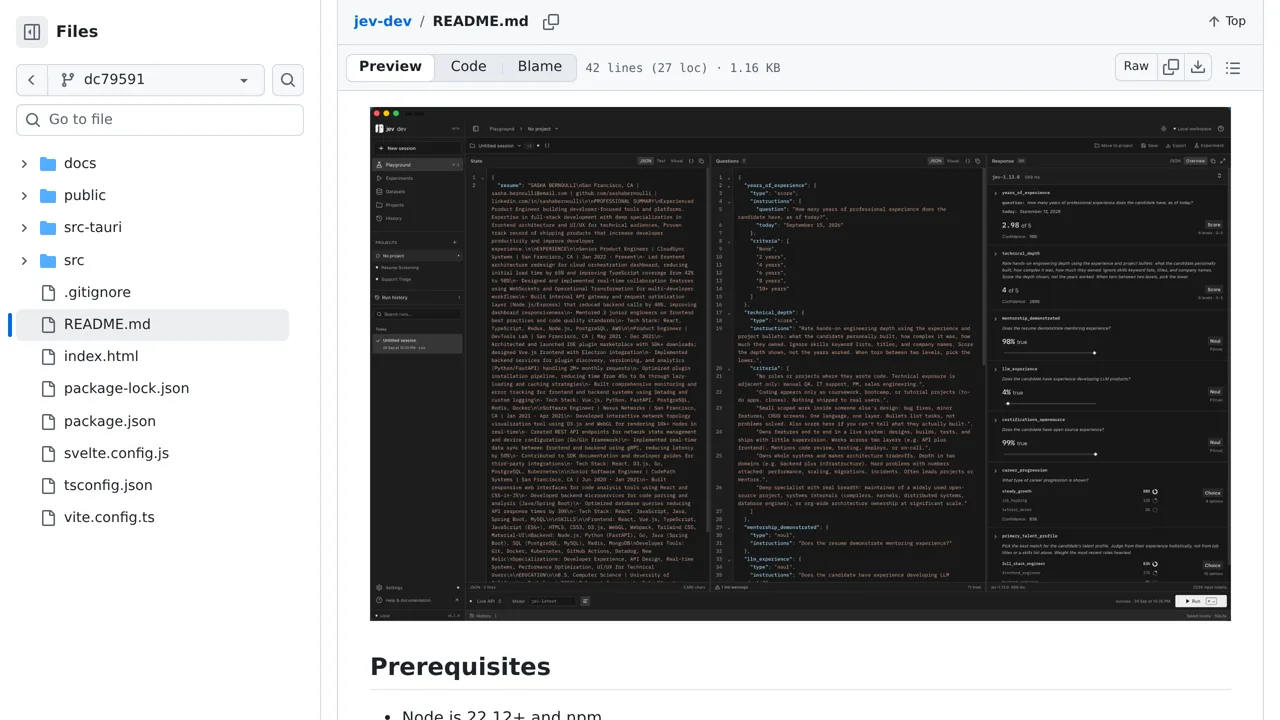
A desktop Jev workbench that keeps past requests and answers so you can revisit a run or compare question wording.
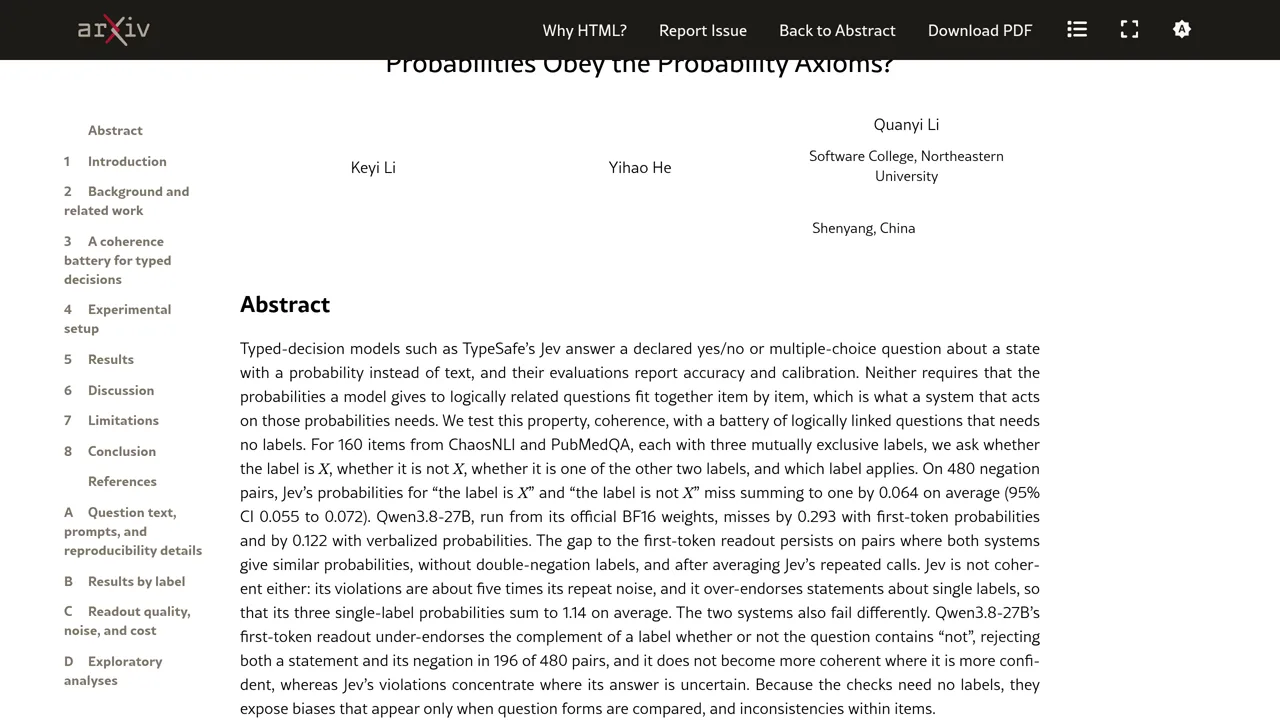
A study asks Jev logically related questions to see whether its probabilities agree with one another, not just with correct answers.
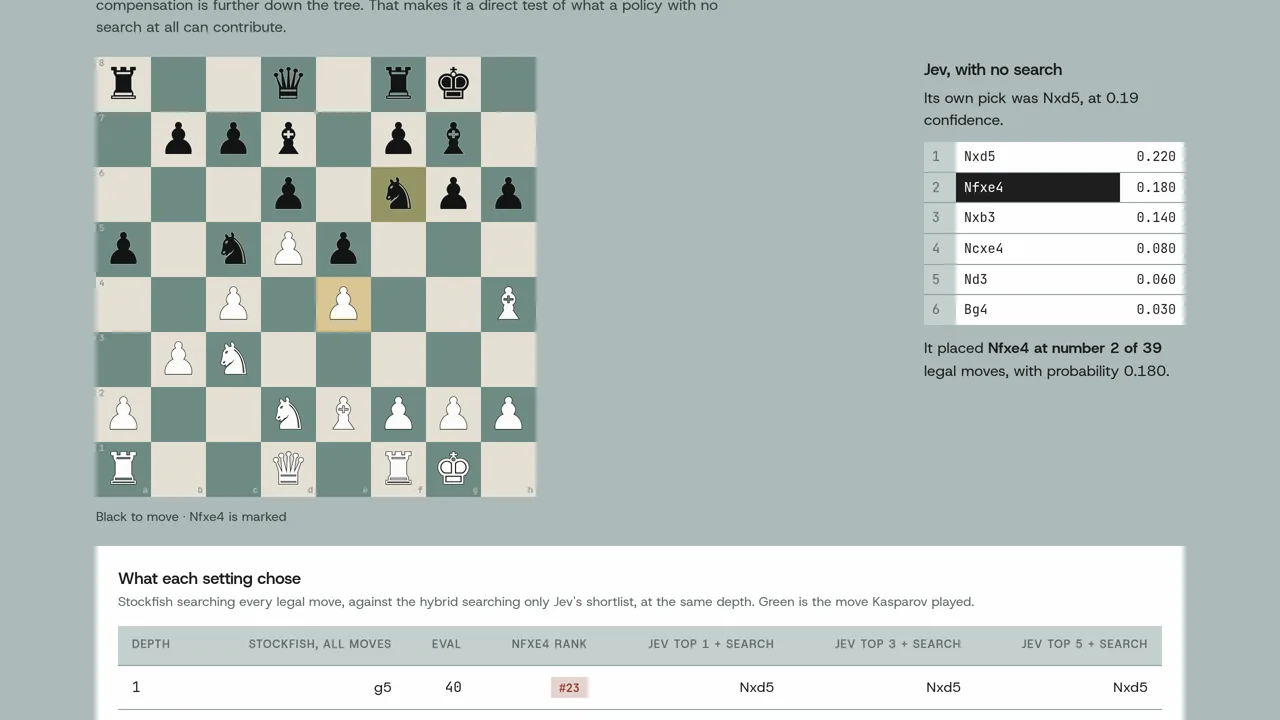
A chess dashboard compares Jev's move choices with Stockfish and human-style chess networks.
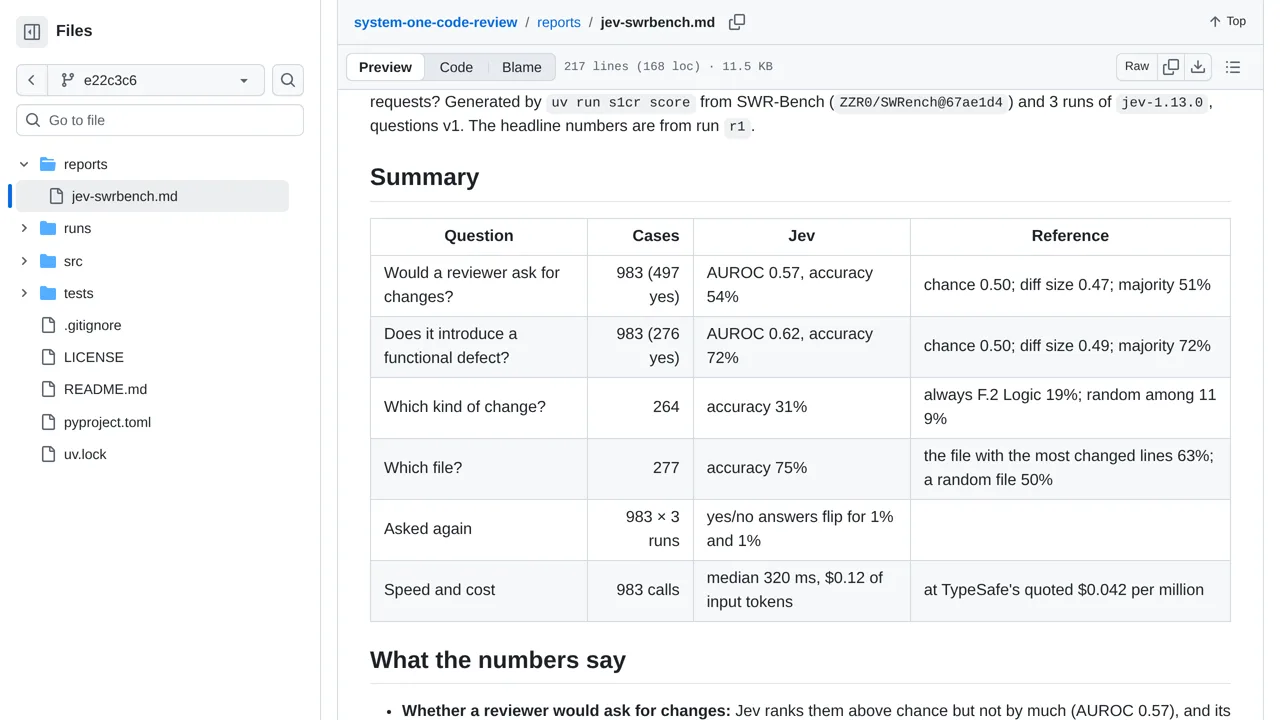
A code-review study asks Jev whether a pull request needs changes and which file deserves attention.
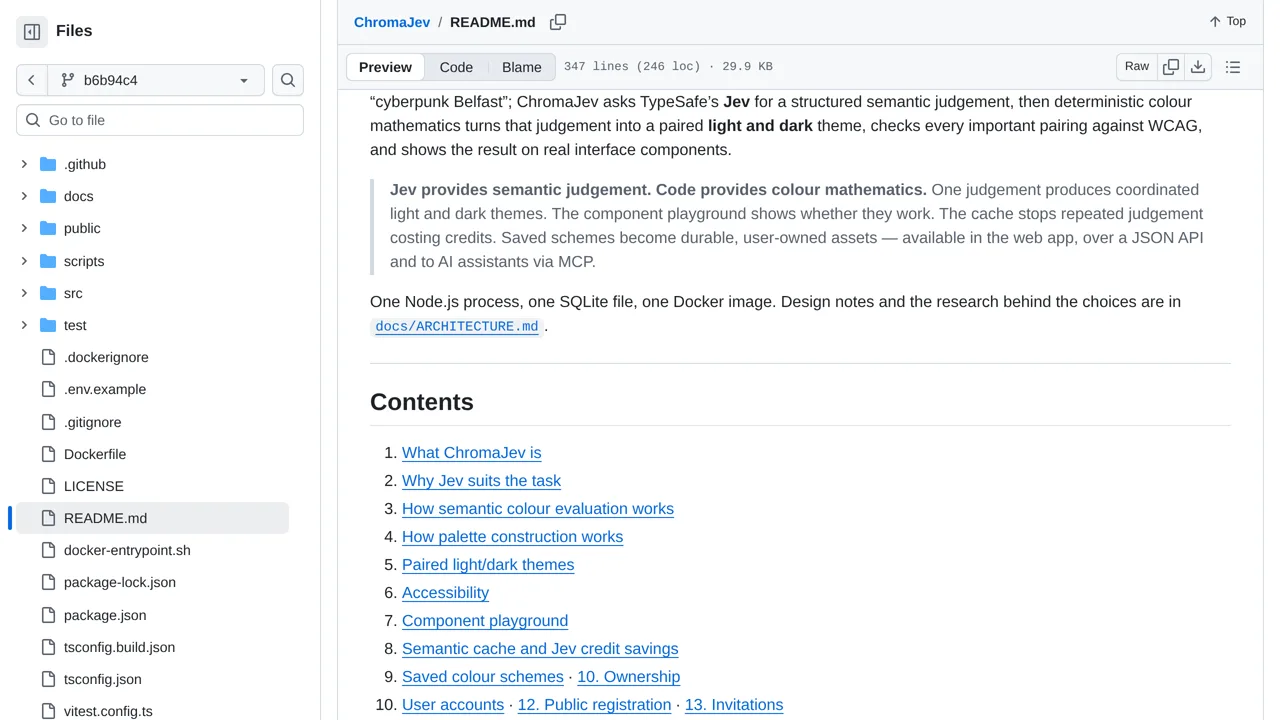
ChromaJev asks which colours fit a concept, then builds matching light and dark themes with ordinary colour calculations.
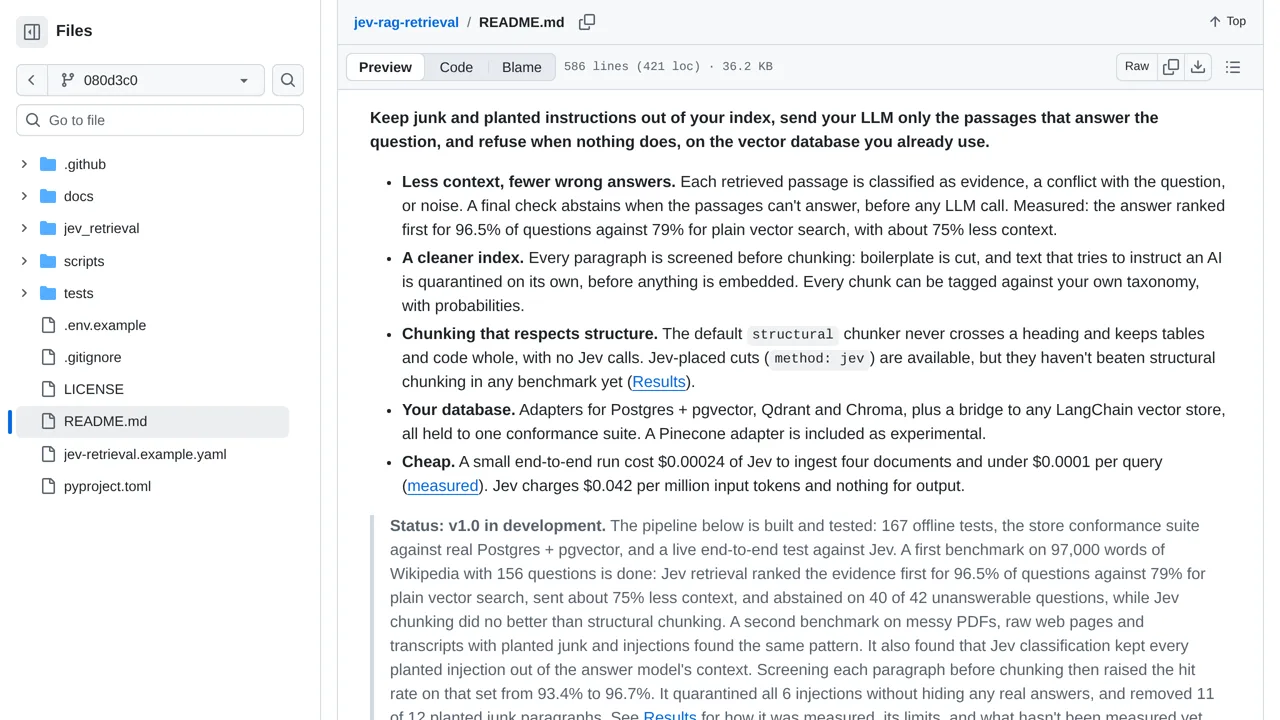
A Python library uses Jev to screen and tag document passages, decide which search results contain evidence, and check whether they can answer a question.
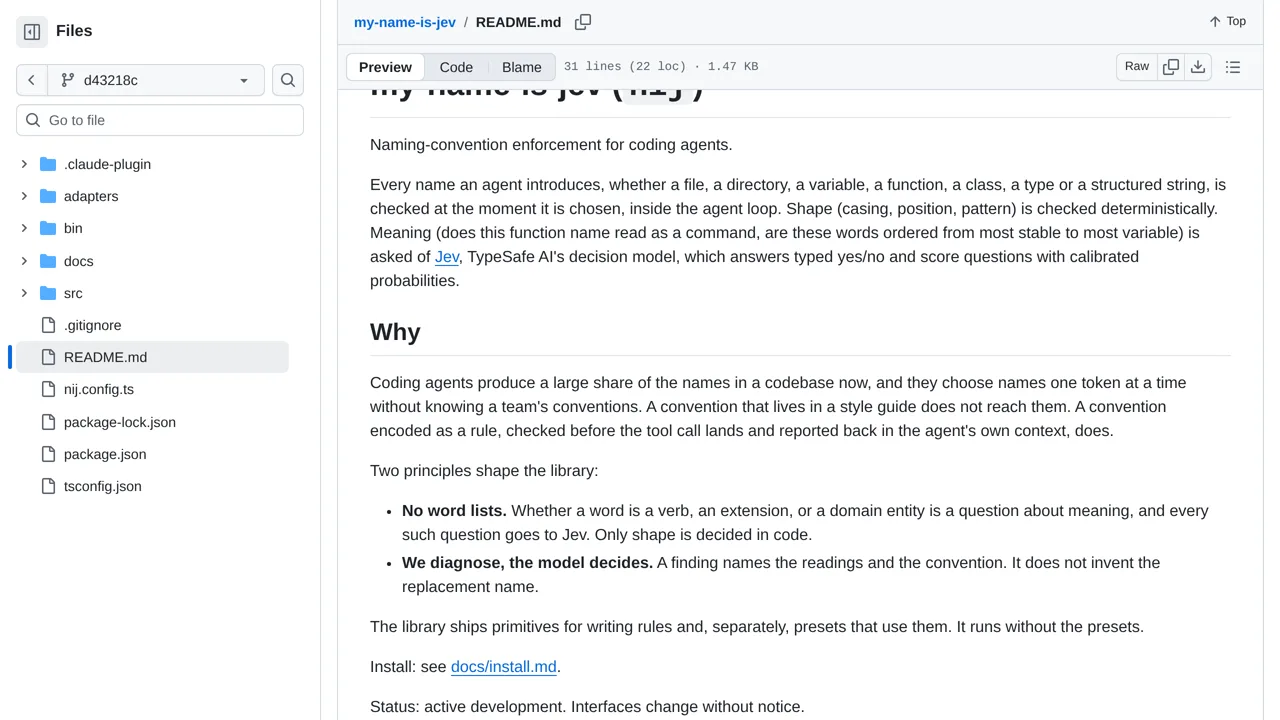
A coding-agent hook checks newly introduced names, using code for their shape and Jev for meaning and word order.
Explore yoDEV’s saved Jev comparisons on spam, banking requests, Spanish moderation and sentiment, including when to pass uncertain answers to another model.

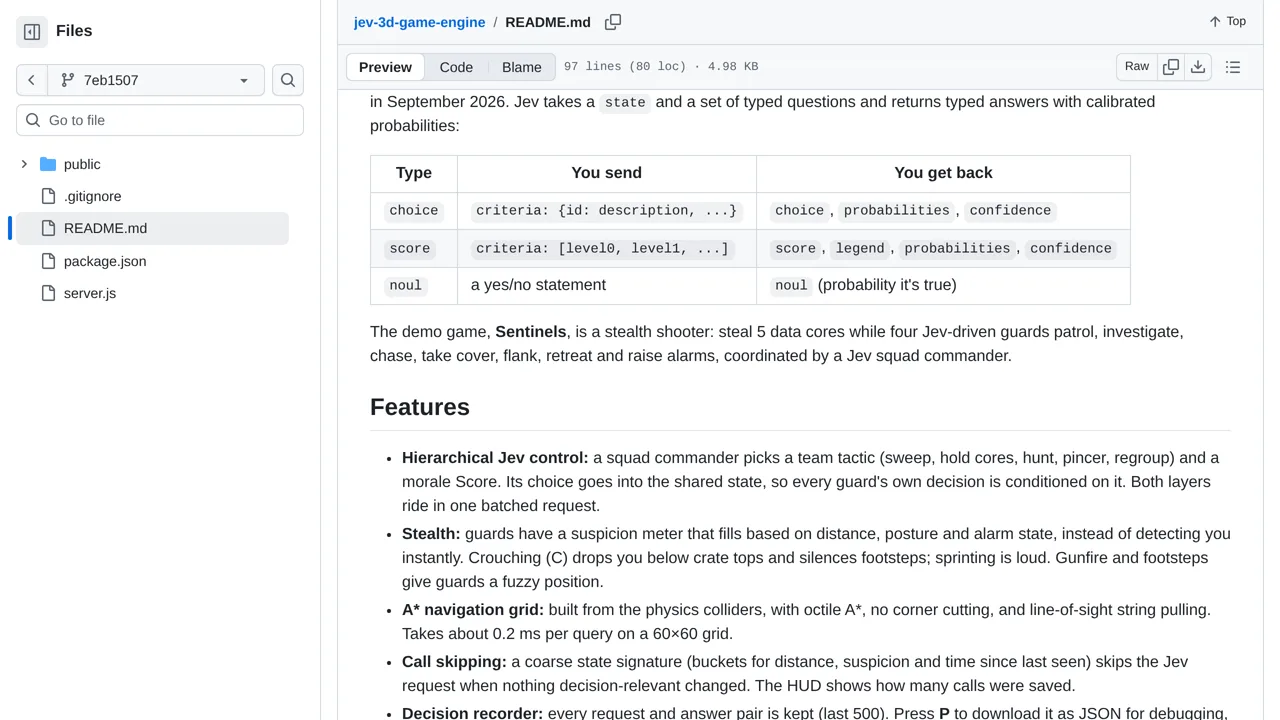
A stealth-game prototype asks Jev for guard actions and squad tactics while ordinary game code handles movement, sight and combat.
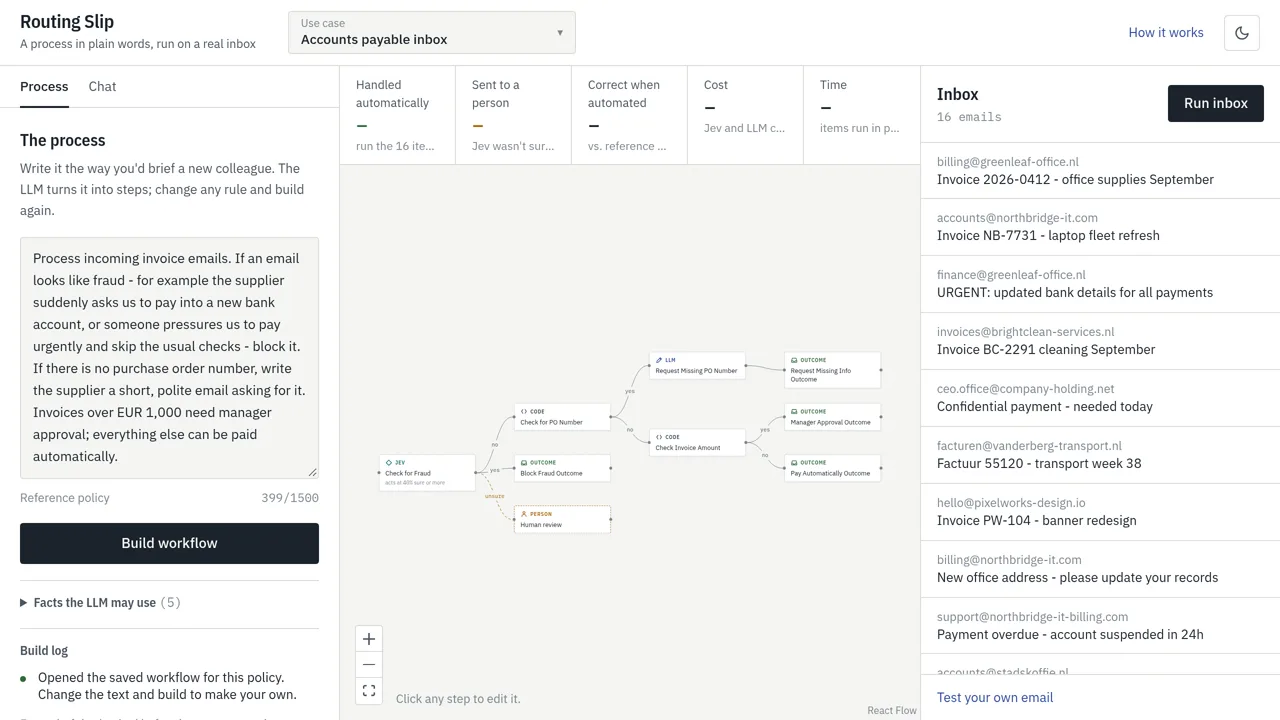
Turn a plain-language business process into a workflow graph with code rules, Jev judgments, drafted replies and routes for human review.
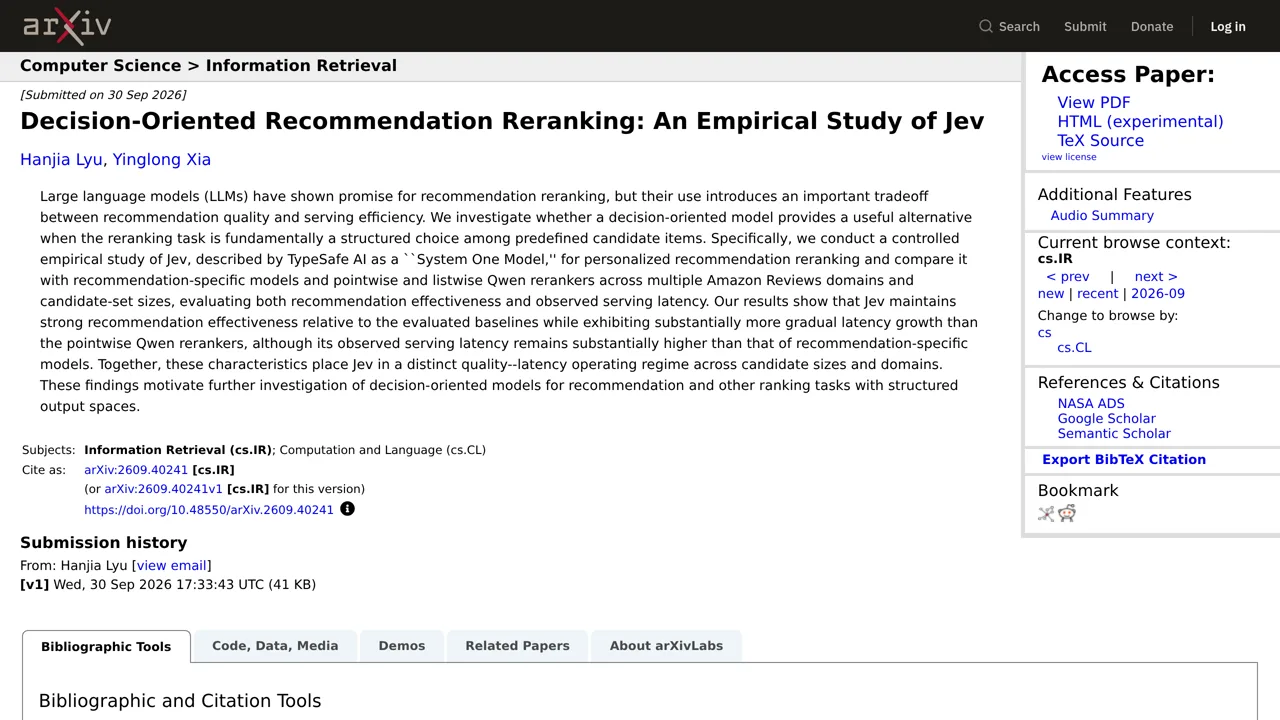
A study compares Jev with Qwen and recommendation models when reordering candidate books, games and films for a reader's next choice.
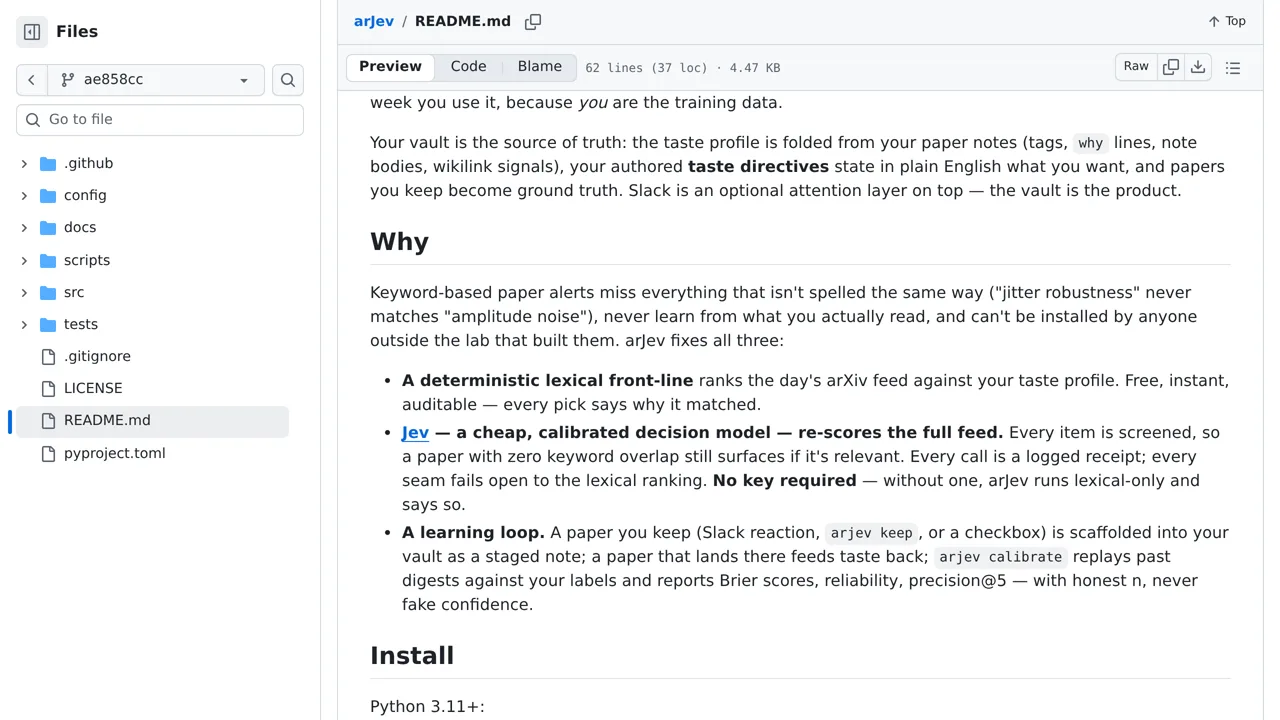
arJev builds a daily arXiv reading list around the papers and research preferences in your Obsidian vault.
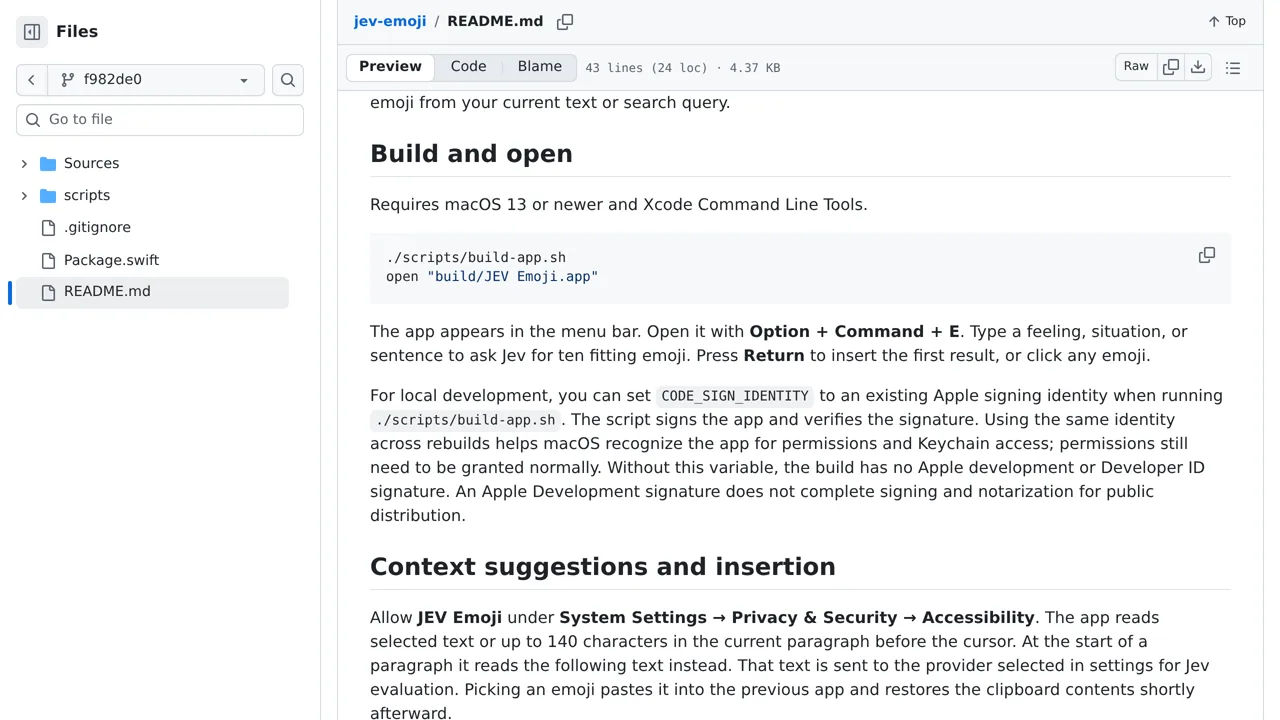
A Mac menu-bar picker asks Jev for emoji that fit your selected text, nearby sentence or search query.
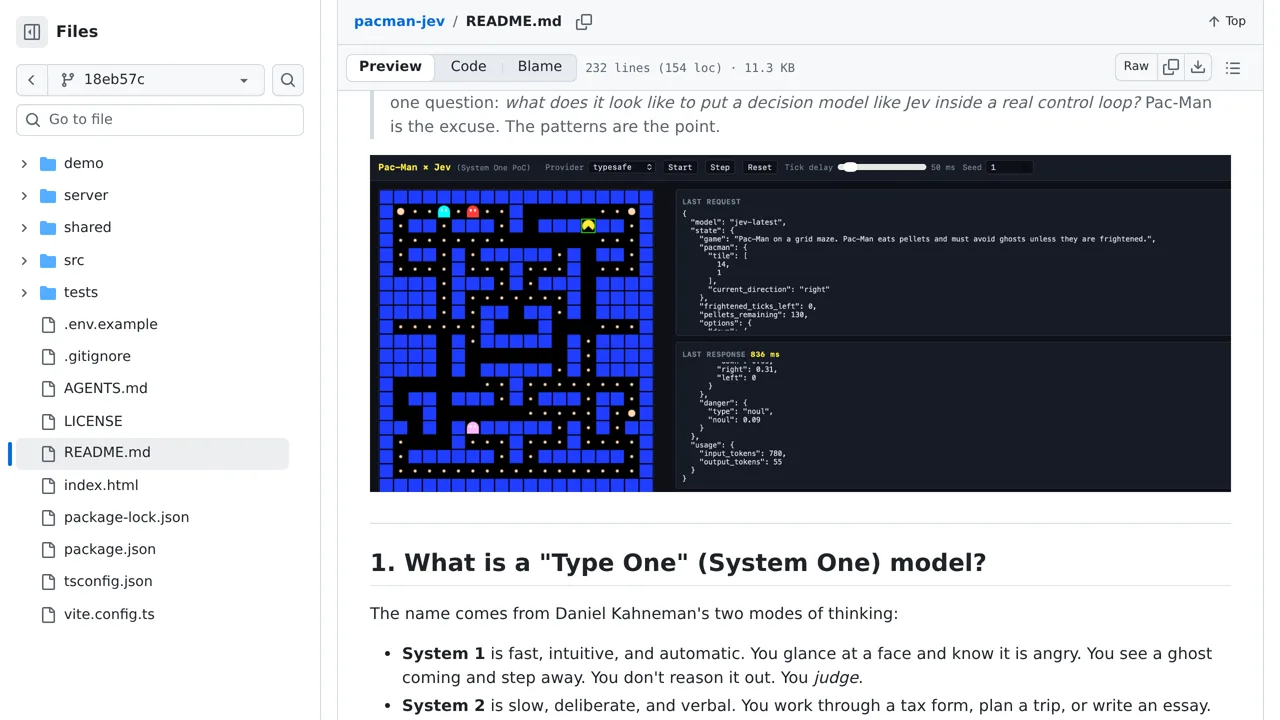
Francesc Sans's turn-based Pac-Man asks Jev at junctions and near ghosts, while ordinary corridor moves stay in code.
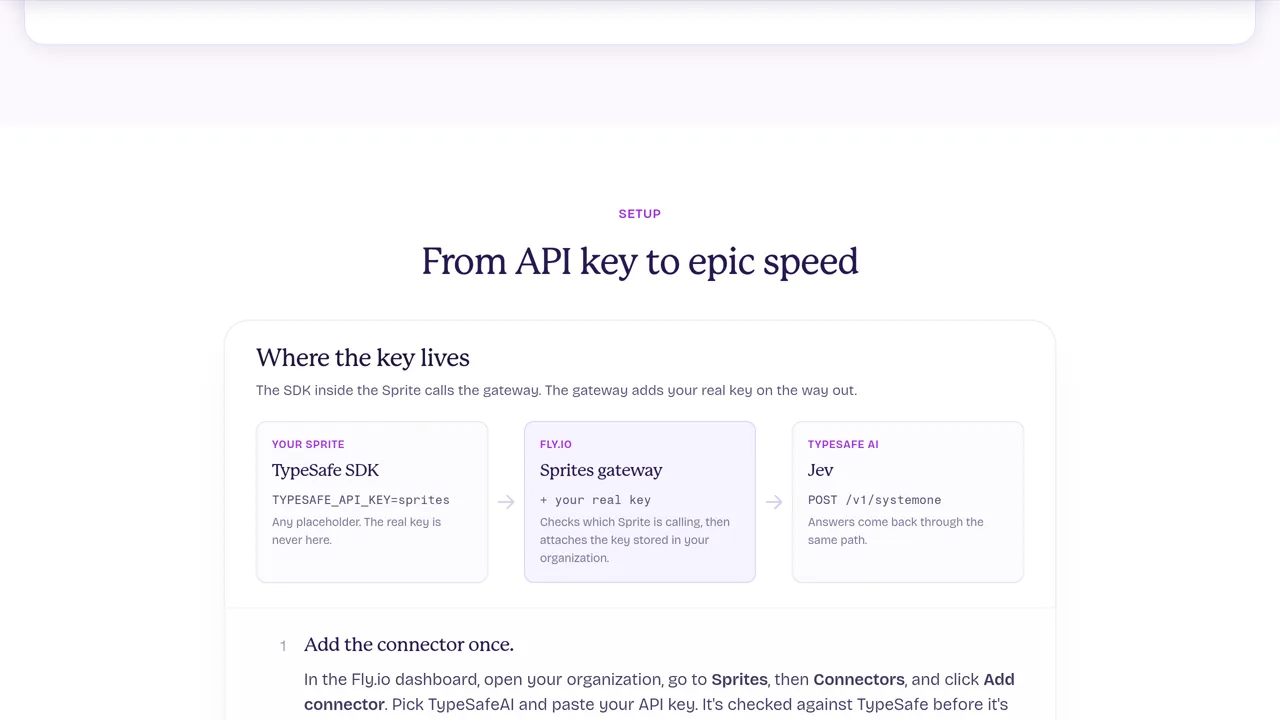
Fly.io's connector lets agents in Sprites ask Jev questions without keeping the real TypeSafe key inside their computer.
Vouch turns requests for household supplies into checklists that neighbors can pledge to fill.

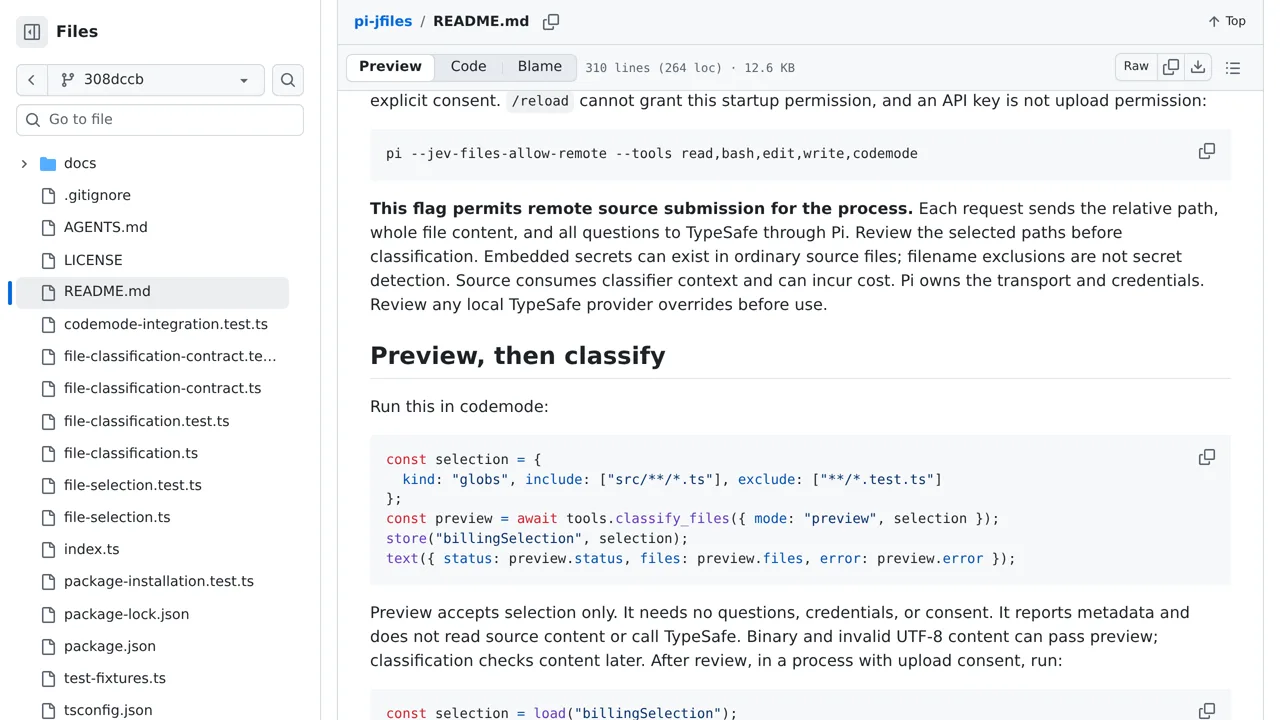
pi-jfiles helps a Pi coding assistant find project files by asking questions about their contents.
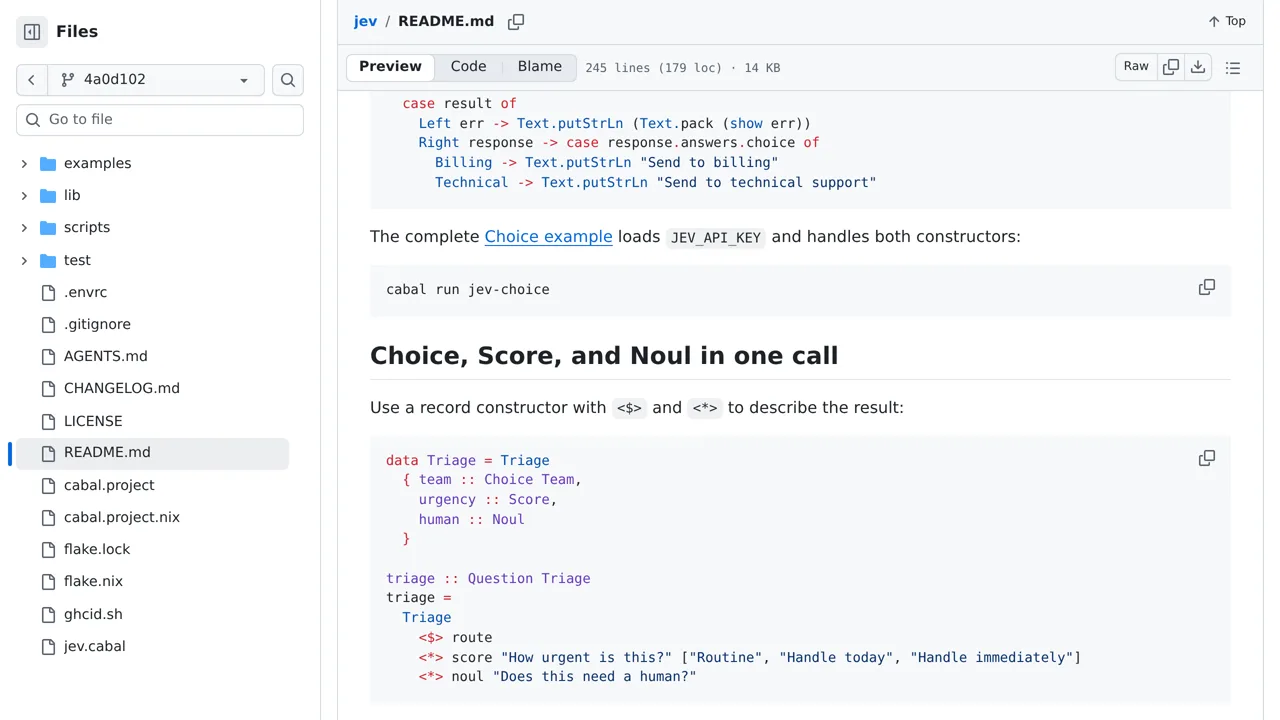
Johan Yngman’s unofficial Haskell client gathers several independent Jev questions into one request and returns typed answers.
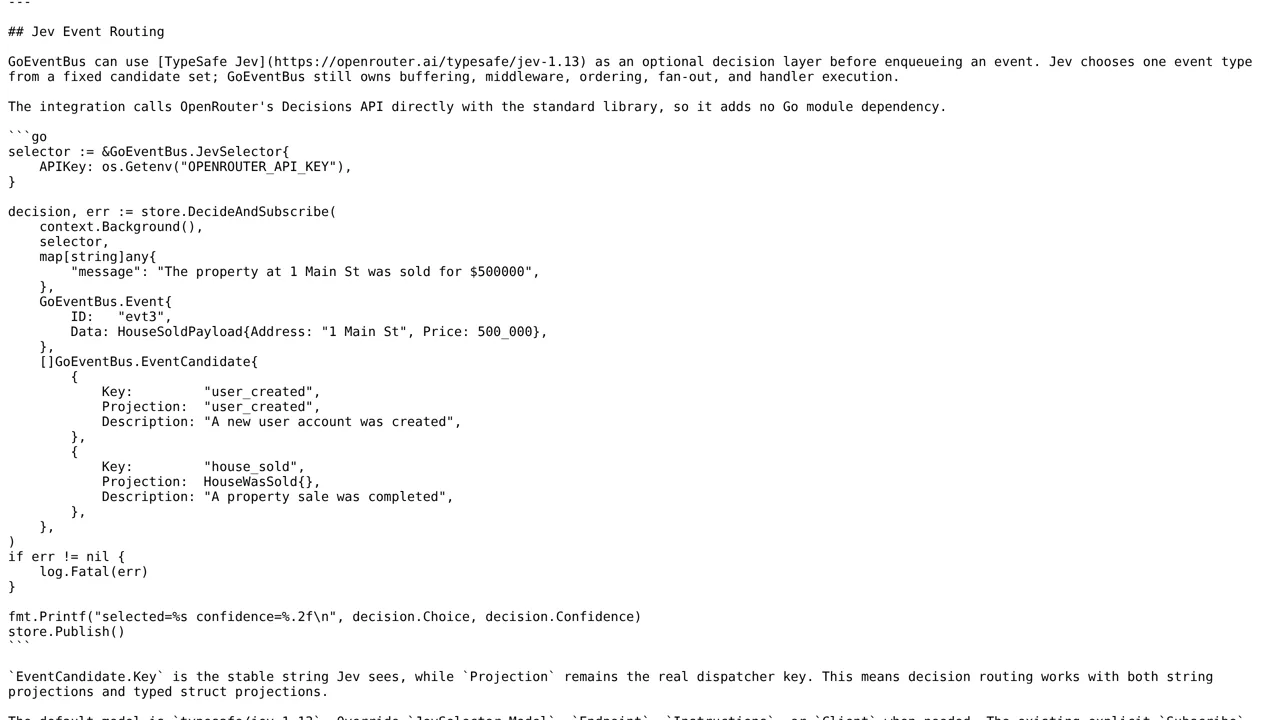
GoEventBus can ask Jev which event type matches an input, while keeping event buffering and handler execution in ordinary Go code.
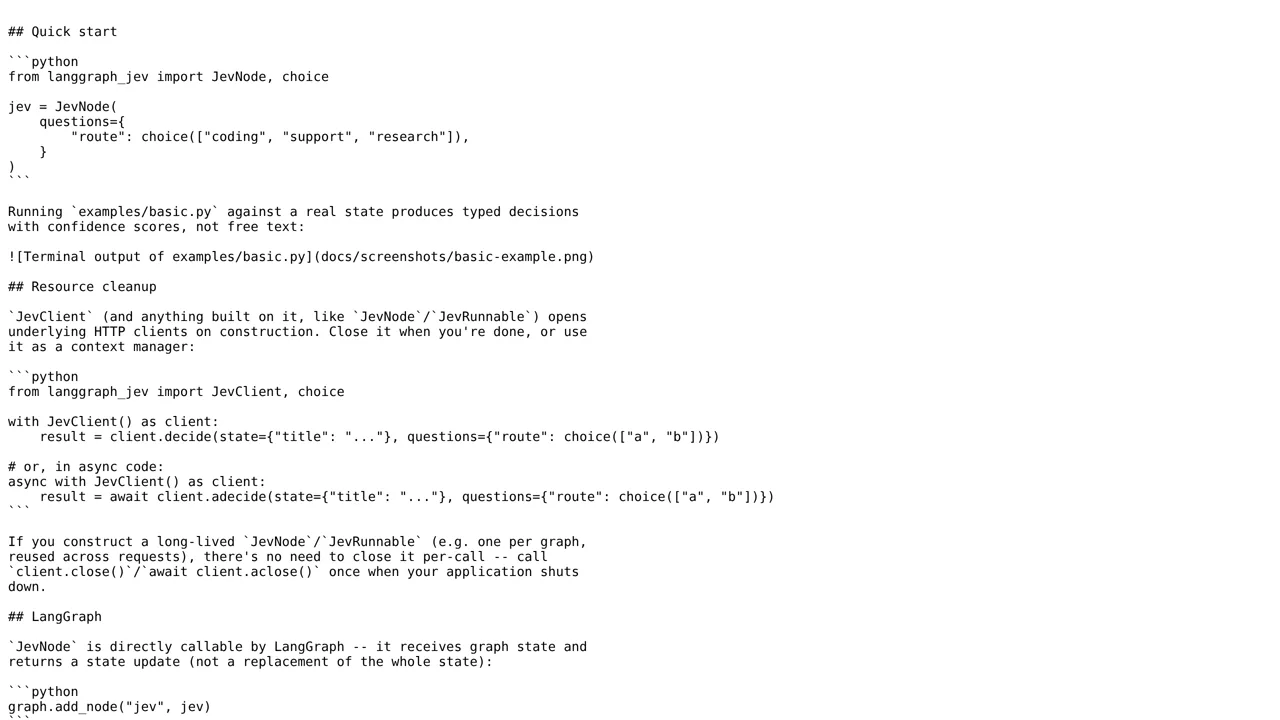
Add Jev decisions to a LangGraph agent workflow, then route tasks using typed answers or send uncertain cases for human review.
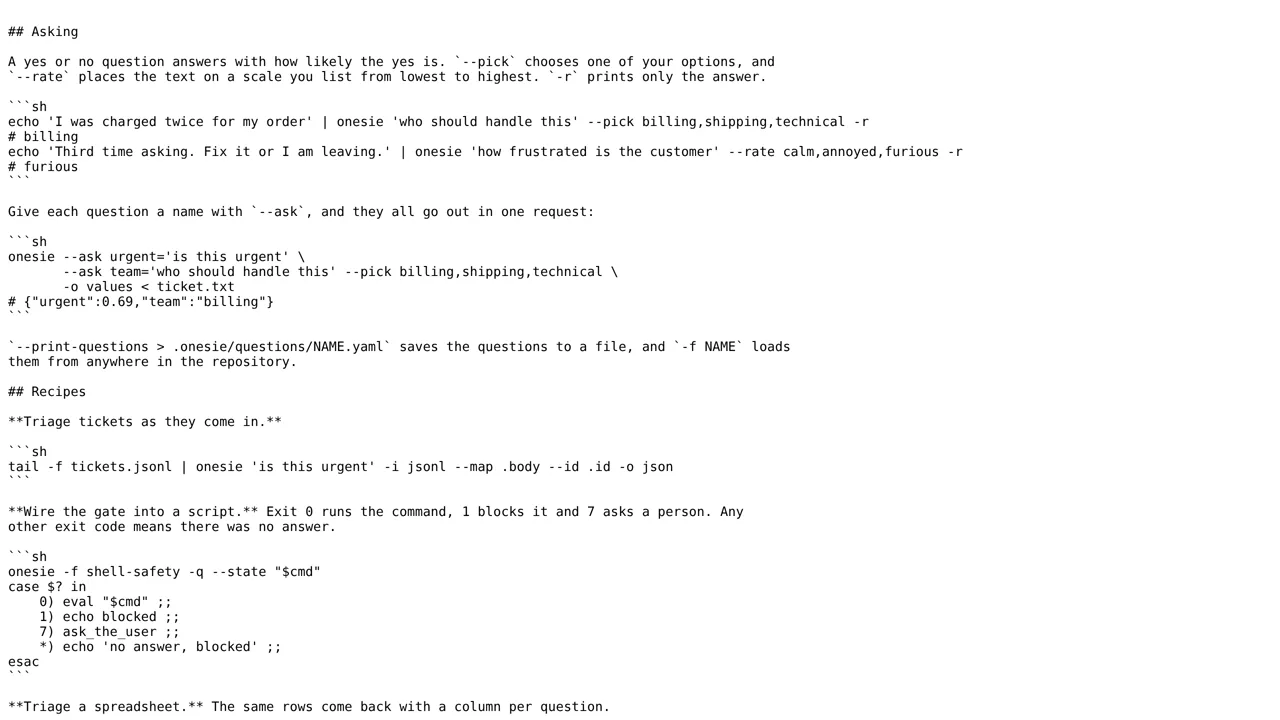
Pipe text into onesie to ask Jev questions, label spreadsheet rows, or give a shell script decisions and a human-review exit code.
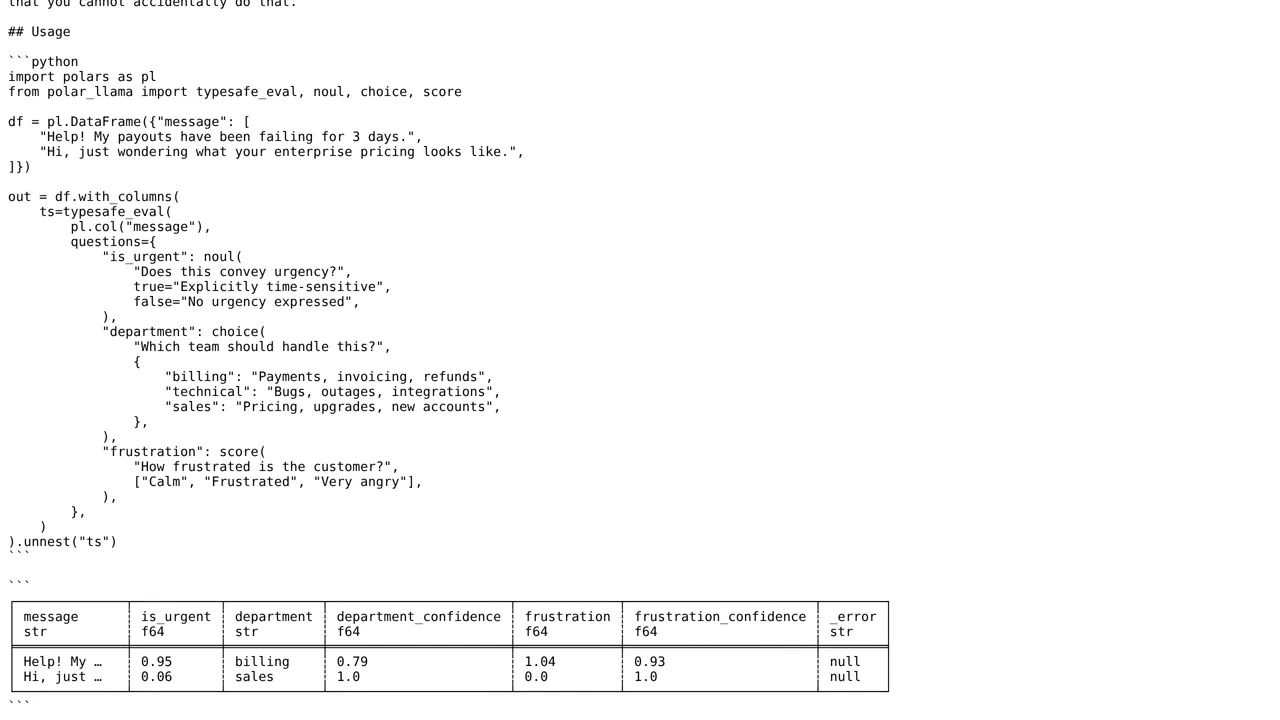
Apply Jev questions to rows in a Polars table, then filter or sort the resulting answers and probabilities as ordinary columns.
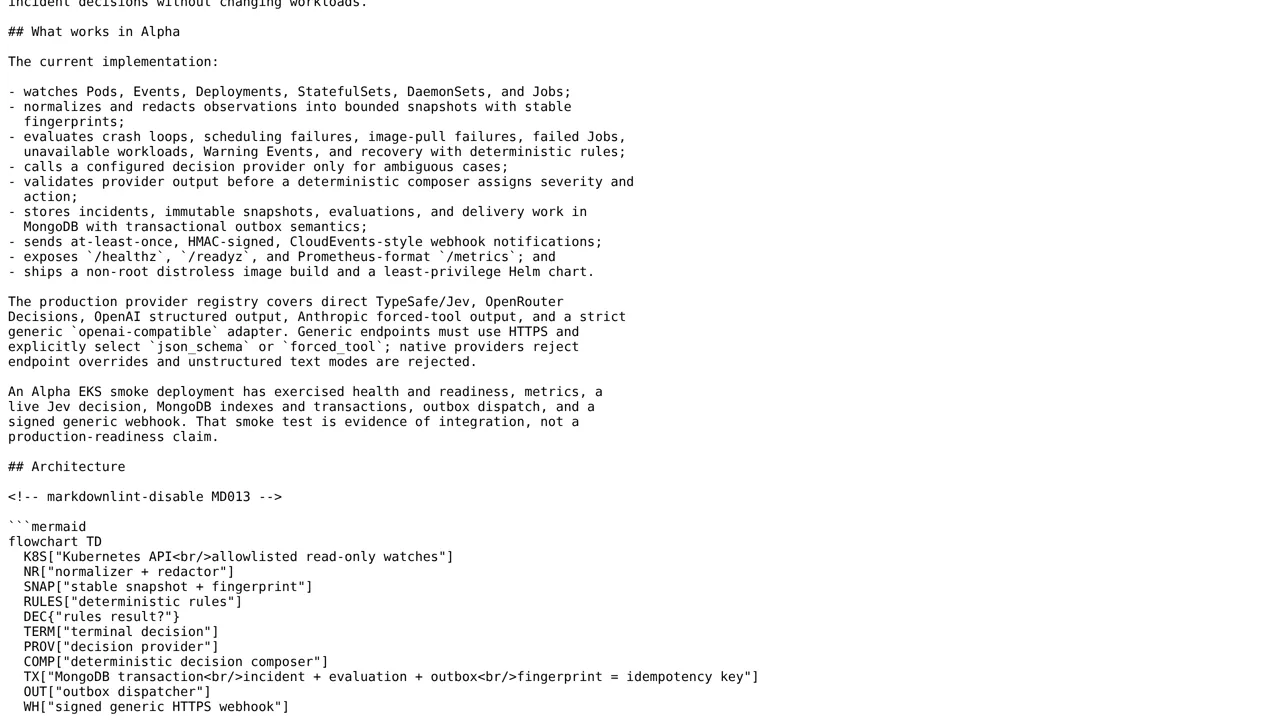
RuleRaven watches Kubernetes workloads, handles known incidents with rules, and asks Jev to help classify ambiguous cases before notifying an operator.
Jev, briefly
A chat model generates text token by token and hopes you parse it. Jev never generates a word. Your code sends the state of the world plus typed questions; Jev returns every answer in one parallel pass — typed values with calibrated probabilities and a confidence score your code can trust. About 70–500 ms end to end, $0.042 per million input tokens, output free. Trained with what TypeSafe calls Reinforcement Learning for Calibrated Decisions.
You define the options. Jev returns the chosen option, a probability for every option, and a confidence. The workhorse of routing, agents, and games — the answer space is always legal, so there is nothing to parse and nothing to hallucinate.
You describe ordered levels — say trivial / normal / critical. Jev returns the level, the probability of each, and a confidence. Scores turn fuzzy judgment (“how severe is this log line?”) into a number-free decision your code can branch on.
You assert a statement; Jev returns the probability that it is true — a noul. Moderation, verification, guardrails, “does this diff actually fix the bug?”: one question, one calibrated probability.
Official material lives at typesafe.ai and docs.typesafe.ai. JevMade is an independent community registry — not affiliated with or endorsed by TypeSafe AI.
Recurring lessons
Games, drones, trading bots, and browser agents all converge on the same loop: serialize the state, ask one decisive question, act, repeat. Jev’s latency makes the loop feel instant — the model lives inside the control loop, not outside it.
The answer says what; the confidence says whether to act. The most reliable entries threshold on confidence to route edge cases to a slower model or a human — automation with an honest escape hatch.
Makers rarely ask Jev to pick from everything. Local tactics prune 225 gomoku moves to ~40; DOM filters turn a page into an element table; code narrows options, Jev judges within them.
A recurring split: Jev makes every decision cheaply and instantly, and a small LLM is only invoked when a human-facing string must actually be written. Decision and generation are separate budgets.
Send the link — repo, live demo, post, or video — plus a line on what it does and which primitives it uses. Every entry is verified against its primary source before it ships.
Submit your experimentSign in first so we can reply to you. Submissions are reviewed, not published automatically.