Read & learn
Written guides.
Understand Jev, one idea at a time. Walkthroughs, recipes, and writeups — our notes first, the original next.
Learn, build, and play with Jev — from deep technical guides to creative experiments.
Read & learn
Understand Jev, one idea at a time. Walkthroughs, recipes, and writeups — our notes first, the original next.
Watch & learn
See an idea take shape. Tutorials, demos, and deep dives, organized by topic and credited to their creators.
Make & explore
See what builders made with Jev. Games, tools, repositories, articles, and more — traced to their sources.
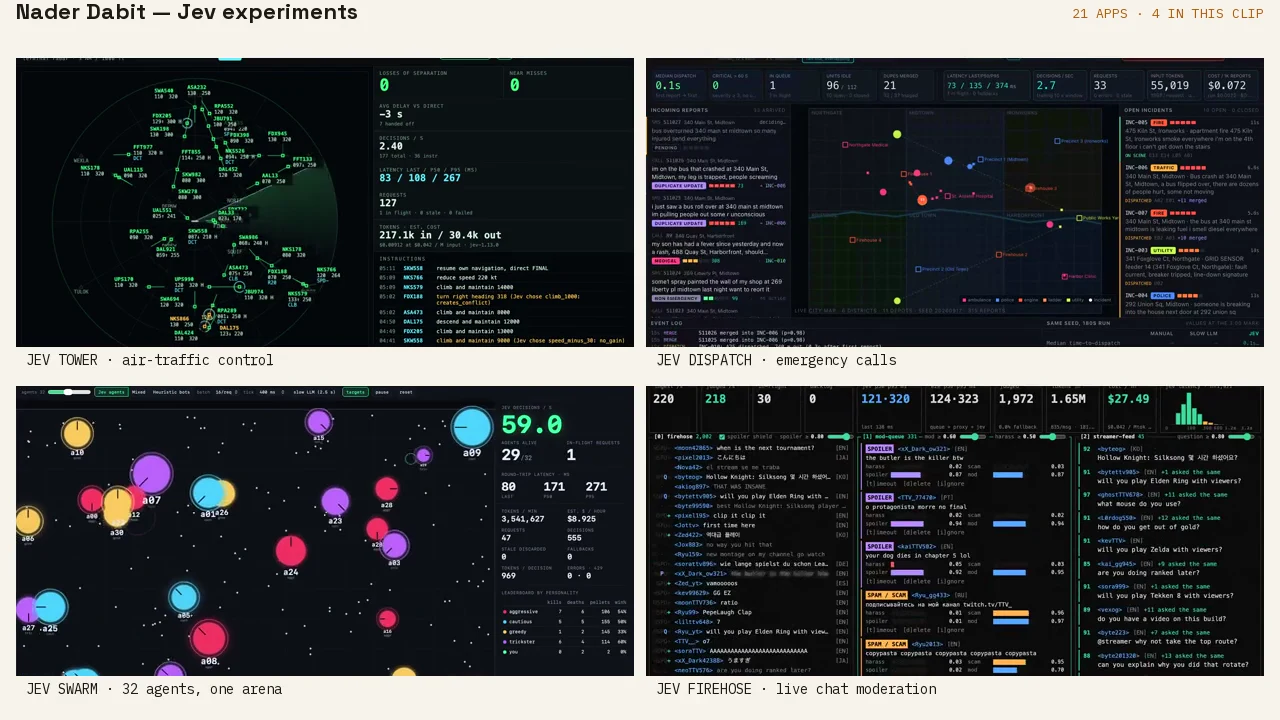
Every category, from games and tools to repositories and writeups, traced to a primary source.
Real-time research powered by
Same ideas.
Different paths.
This is the full registry, not just the featured picks. Figures like speed, cost, and stars are maker-reported or captured snapshots, not JevMade measurements.
2140 experiments · showing 1861–1920
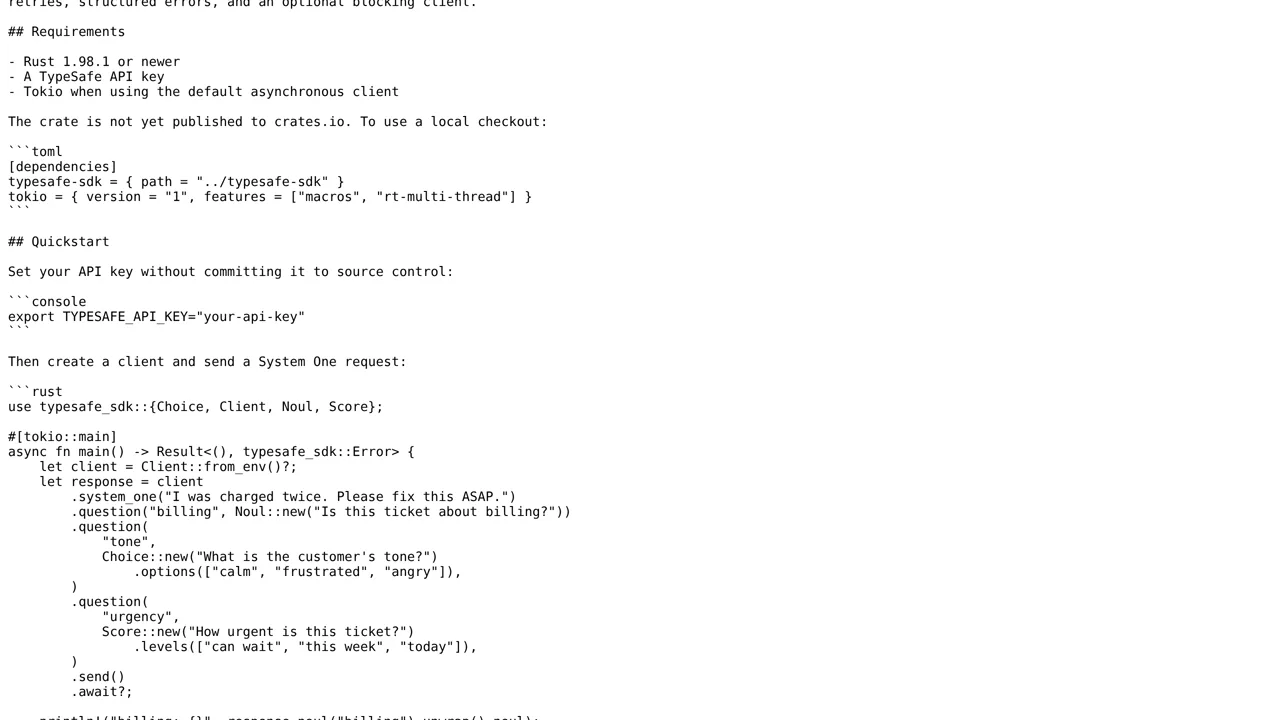
Send typed Jev questions from Rust and read typed answers through an asynchronous client or an optional blocking client.
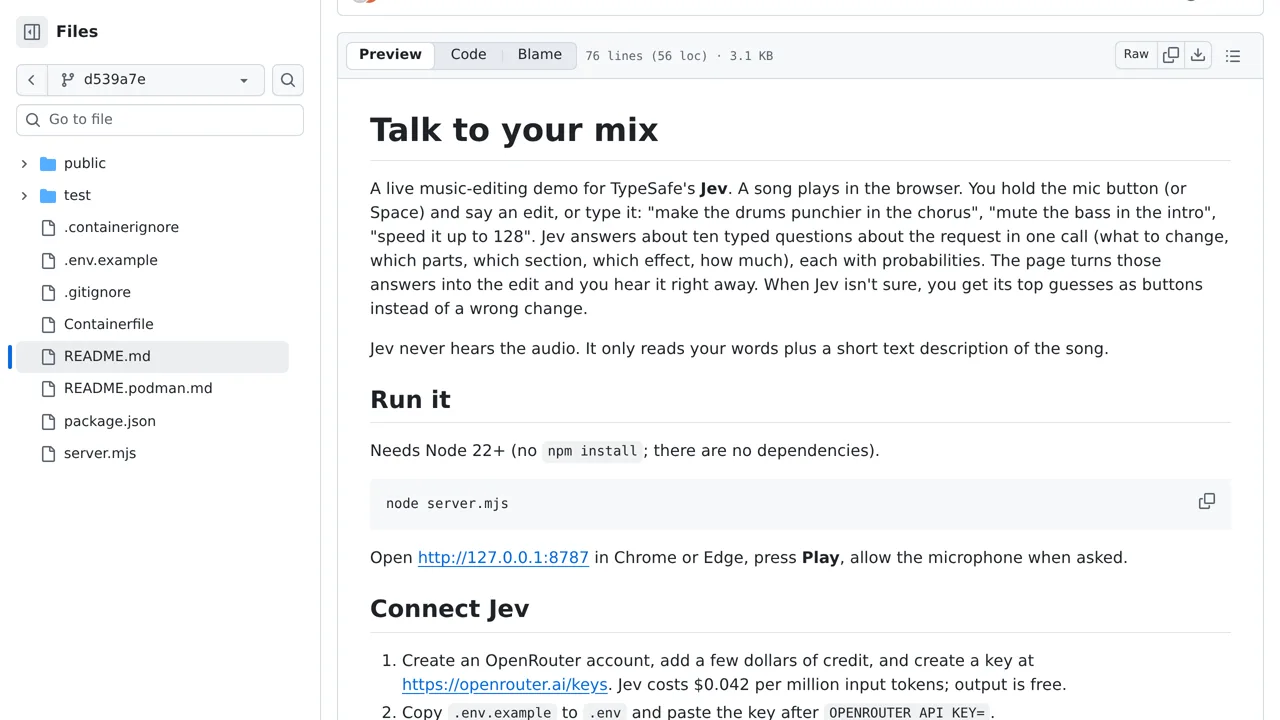
Tell a four-track synth song to mute the bass, brighten the keys or speed up, and Jev picks the edit.
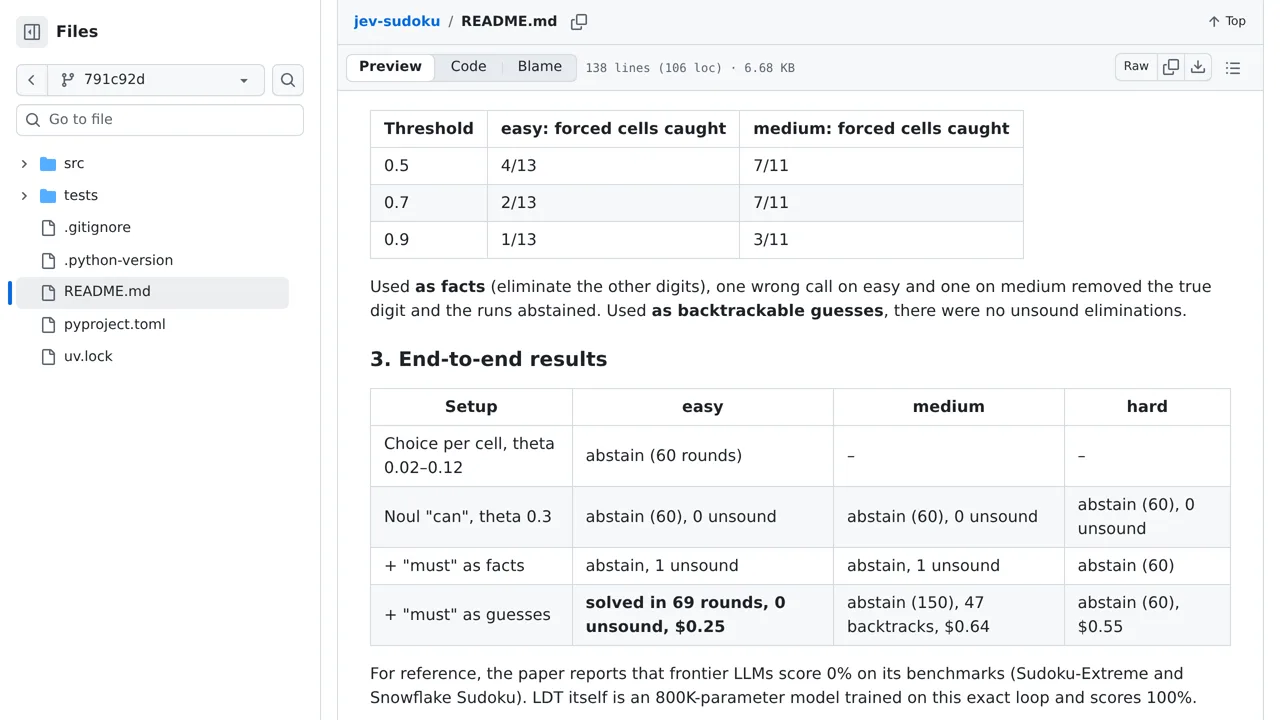
Mark Santolucito tests whether Jev can rule out Sudoku candidates, comparing multiple-choice questions with separate yes-or-no questions.
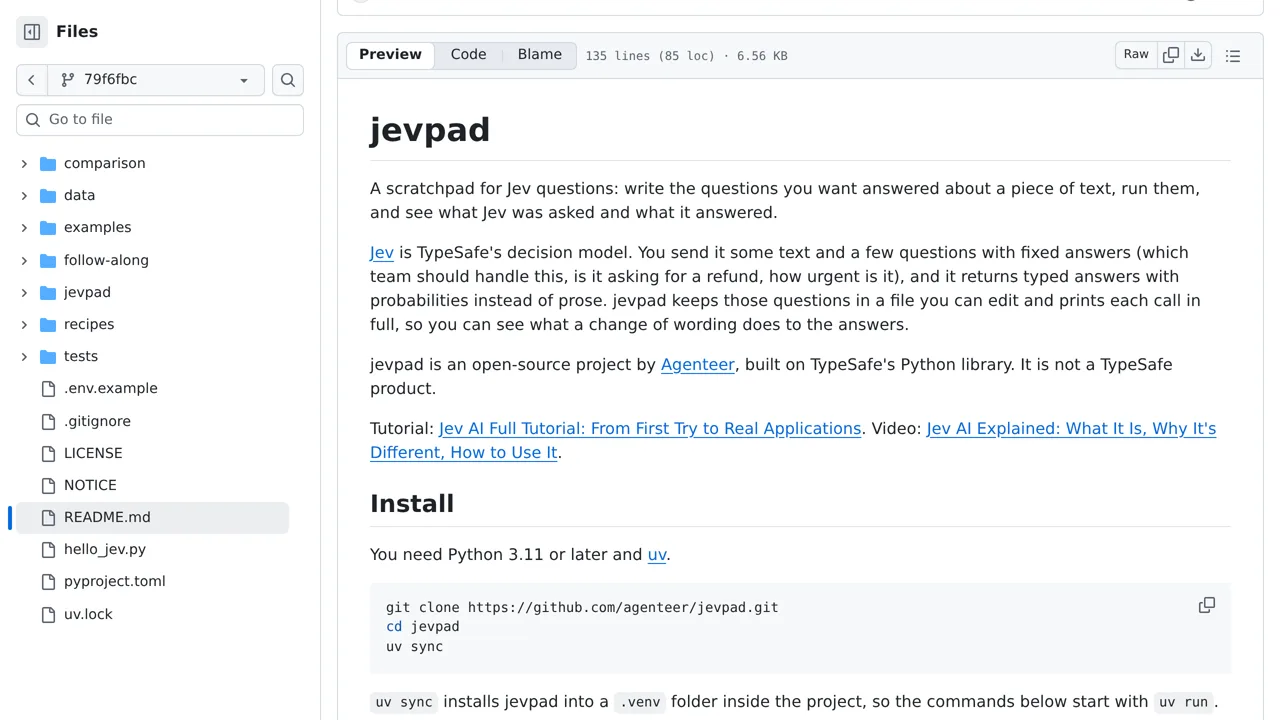
Write questions about a message, see exactly what Jev answered, and keep live calls, practice answers and replays clearly apart.
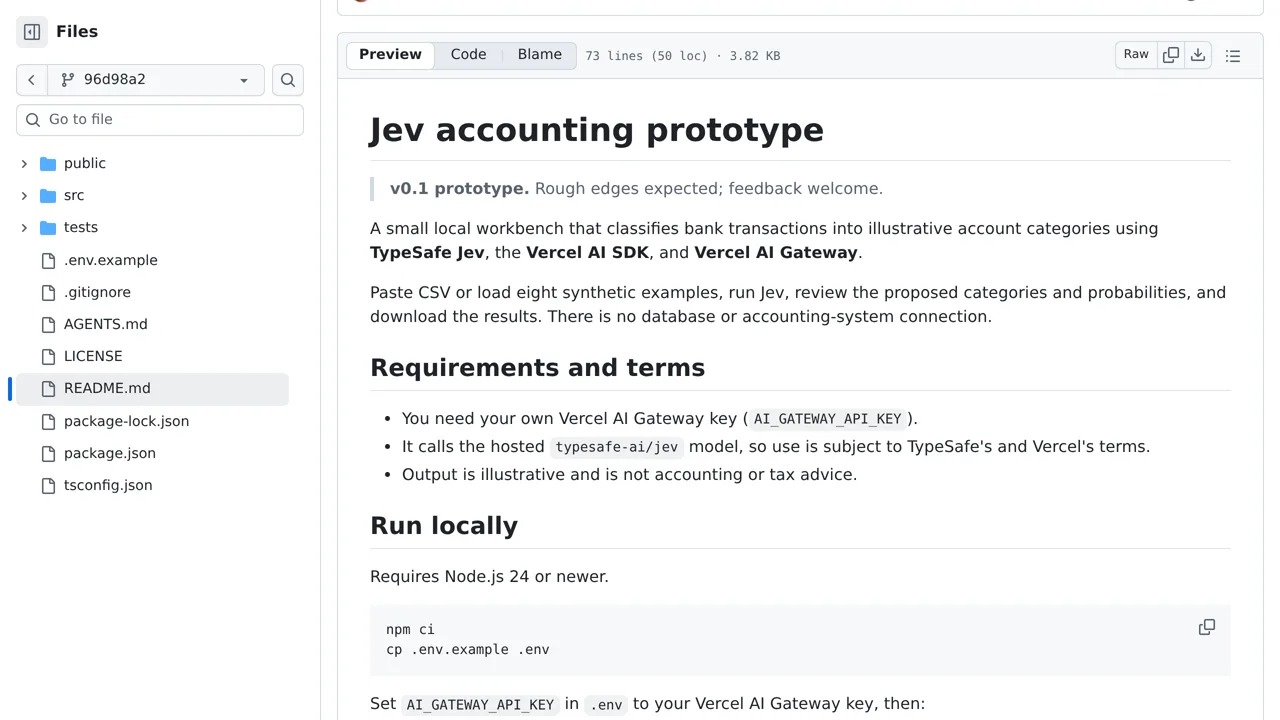
Paste bank transactions into a local workbench and review Jev’s suggested account categories before downloading the results.
Browse Jev projects by use case and follow the sources behind demonstrations, integrations and reported claims.

Classify GitHub changelog titles with Jev, then compare the answers with labels GitHub already supplies.

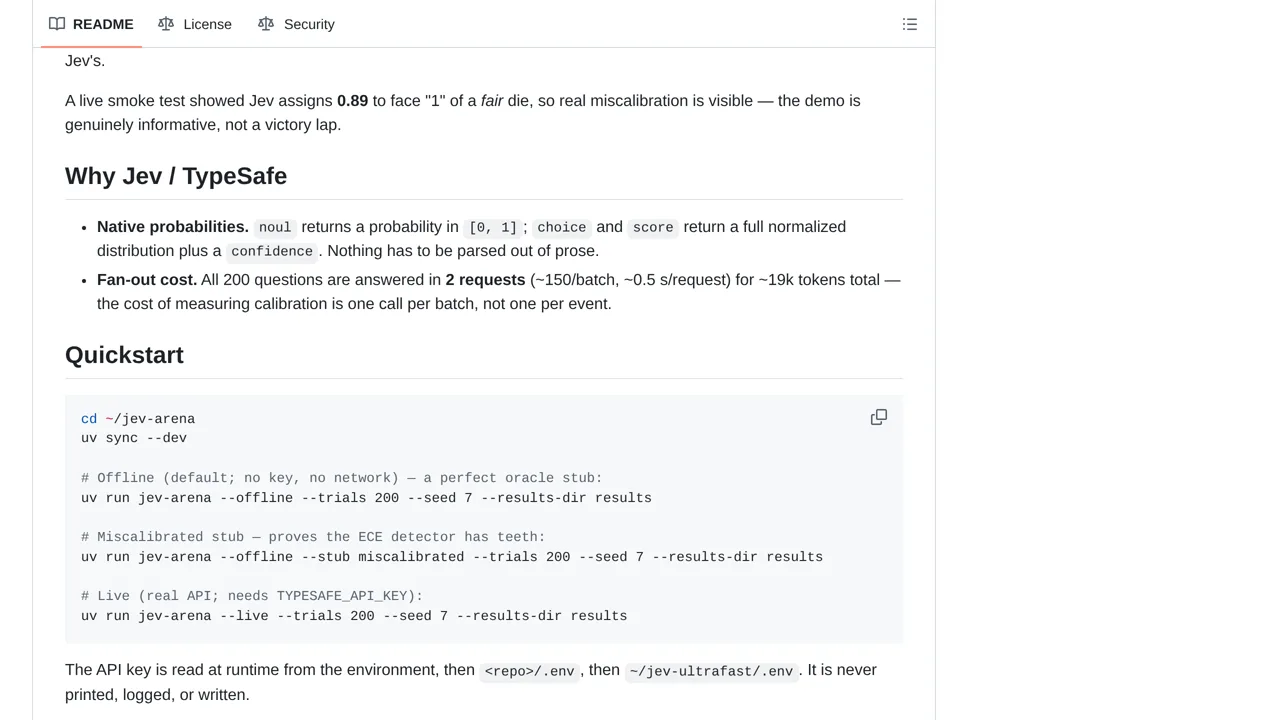
Compare Jev's answers about coins, dice and other synthetic worlds with probabilities that can be calculated exactly.
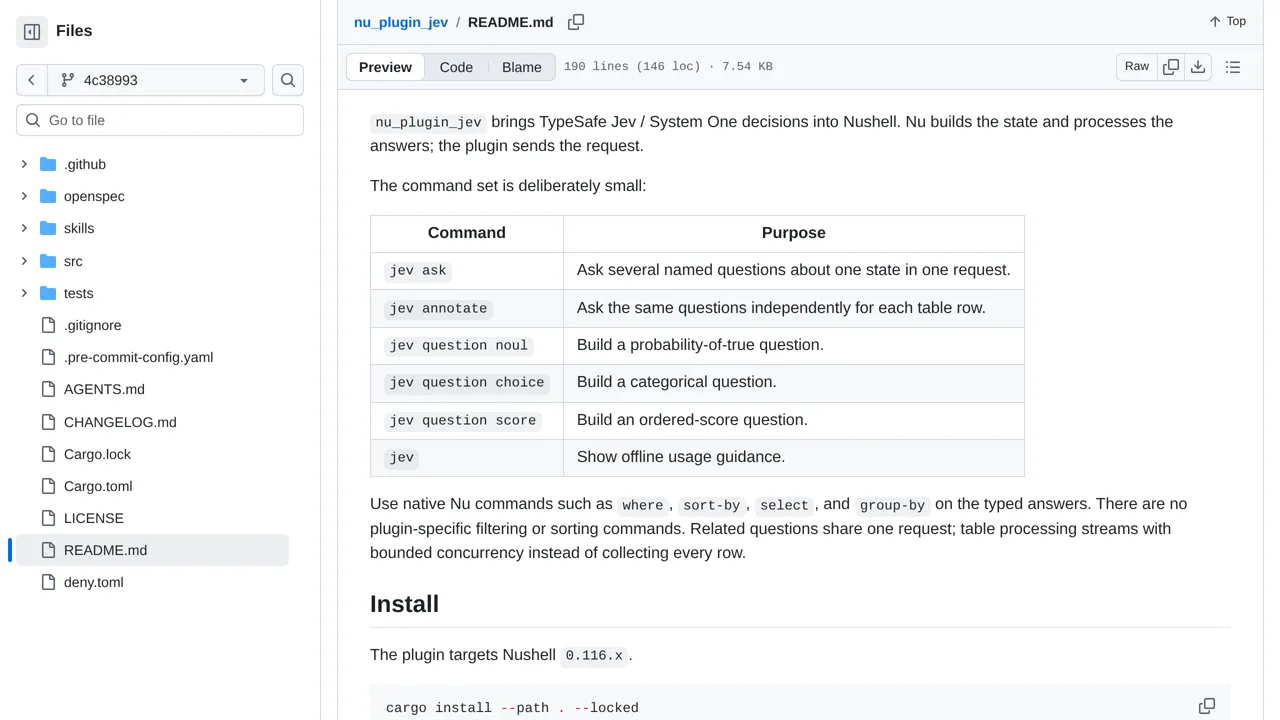
Ask Jev questions about rows of data in Nushell, a command-line shell that works with tables.
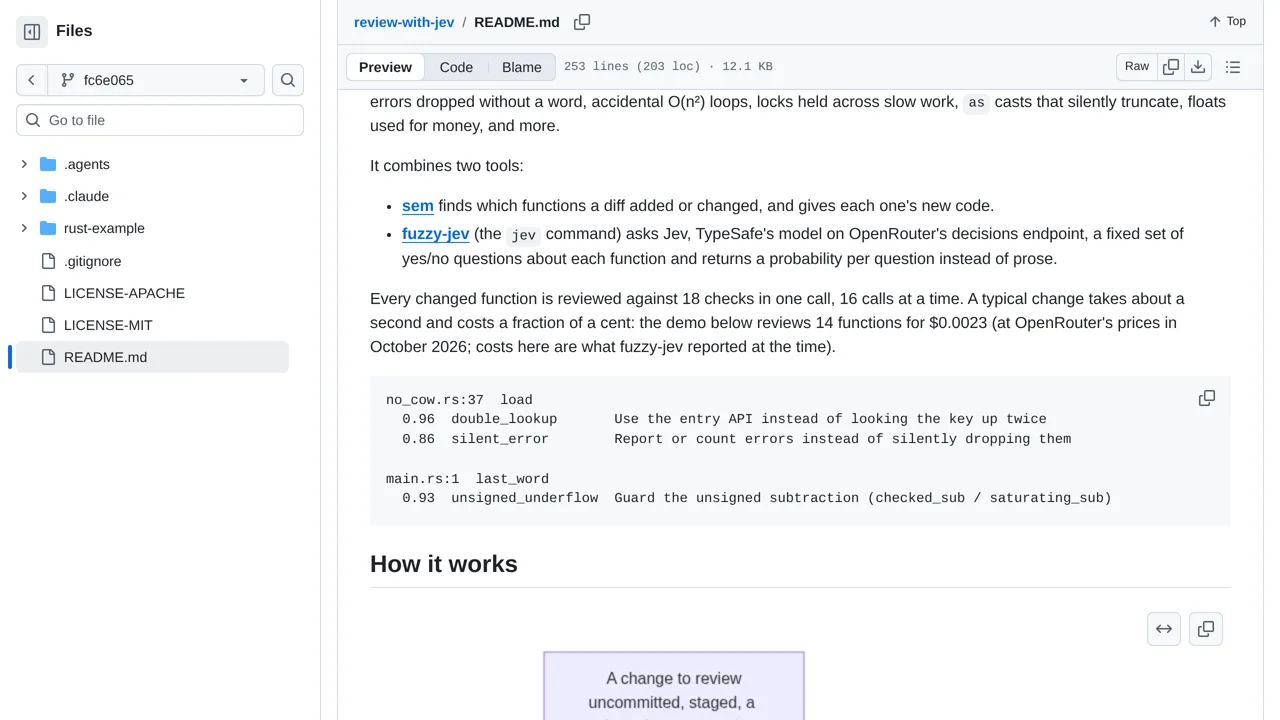
Review changed Rust functions with 18 Jev yes-or-no checks and fixed hints about possible problems.
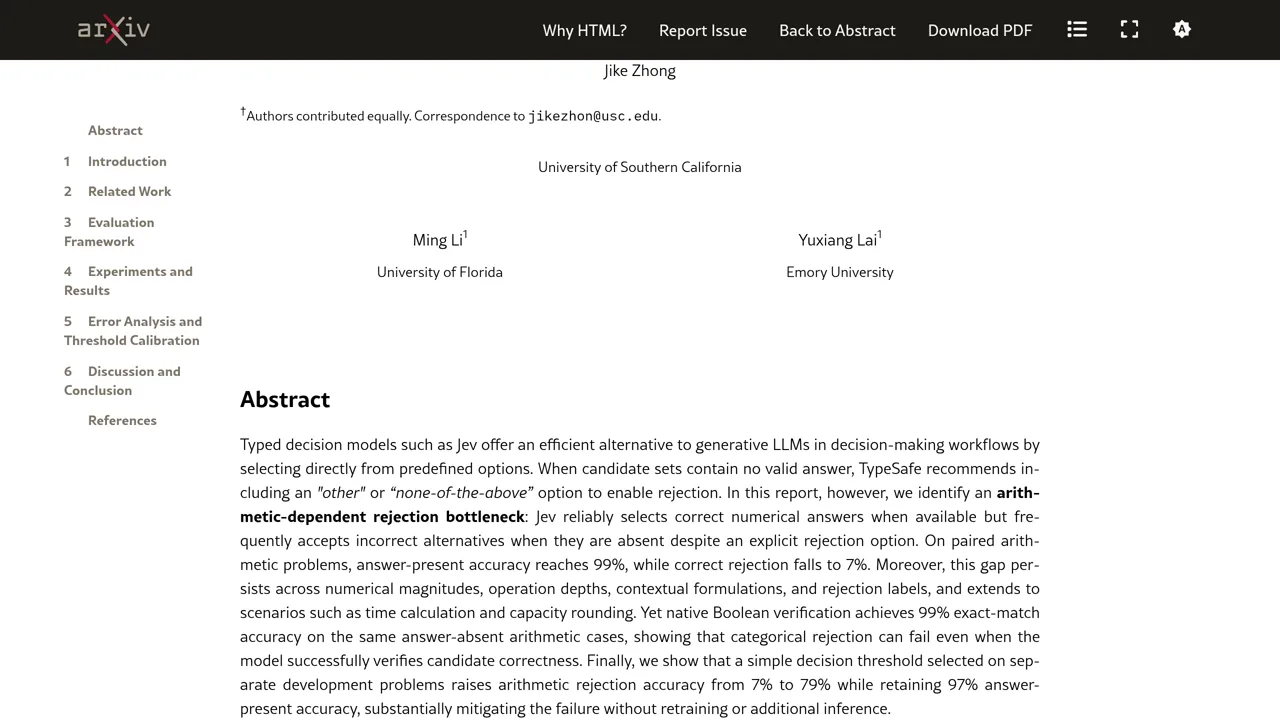
A paired arithmetic study tests whether Jev can reject a menu when every numerical answer is wrong.
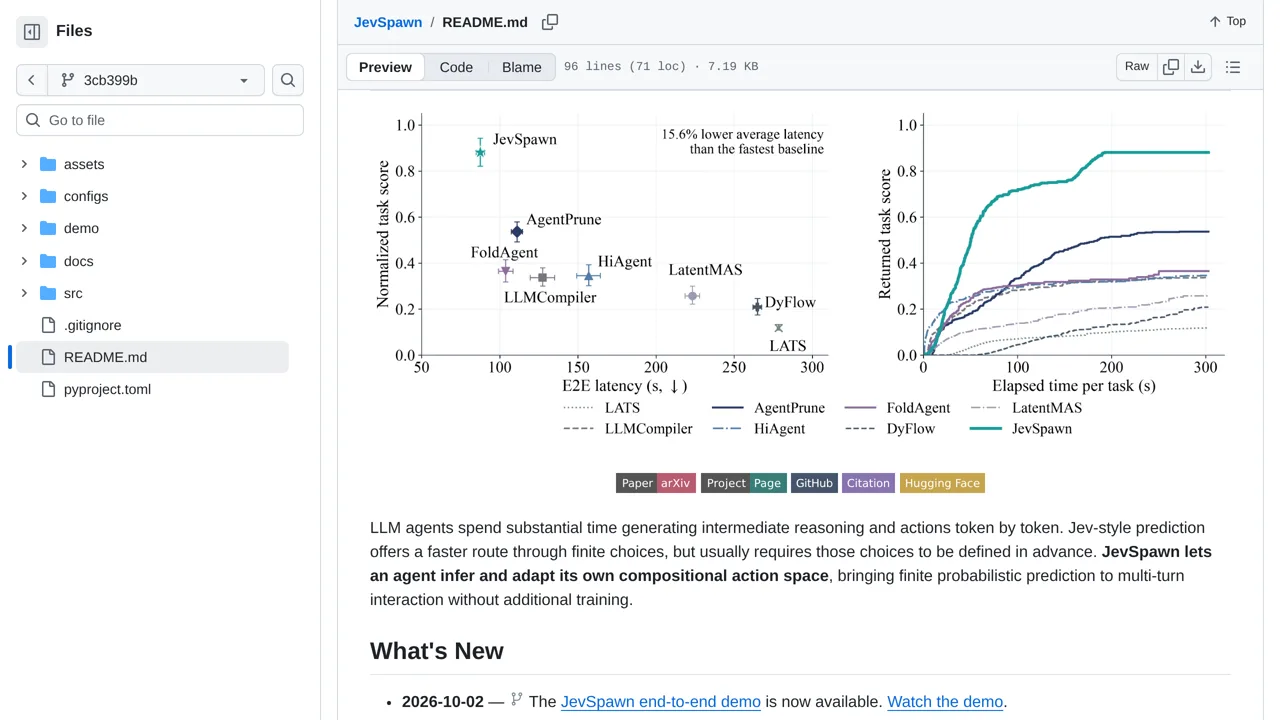
Solve puzzles by keeping alternative paths and changing the available moves after feedback instead of committing to one route.
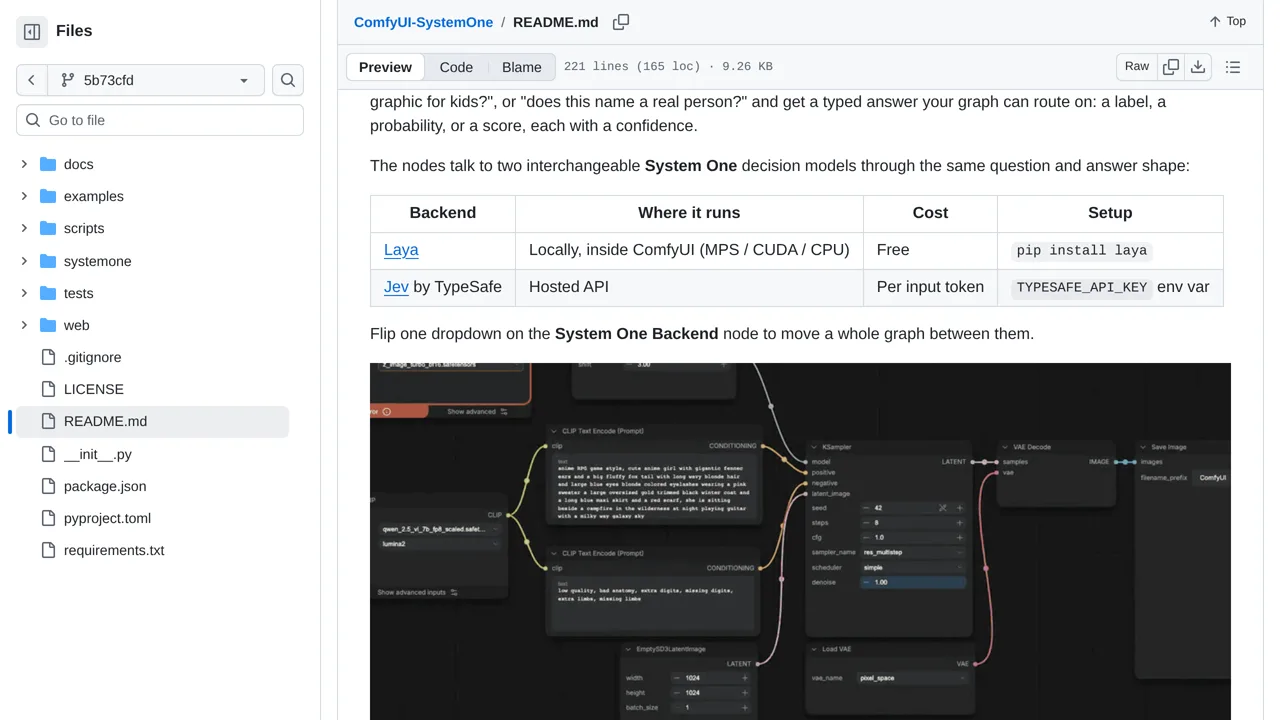
Let AI judgments about text choose how a ComfyUI image-making workflow continues, using hosted Jev or Laya on your computer.
Gather selected code excerpts from GitNexus, a local map of a project, before asking Jev a question about that code.
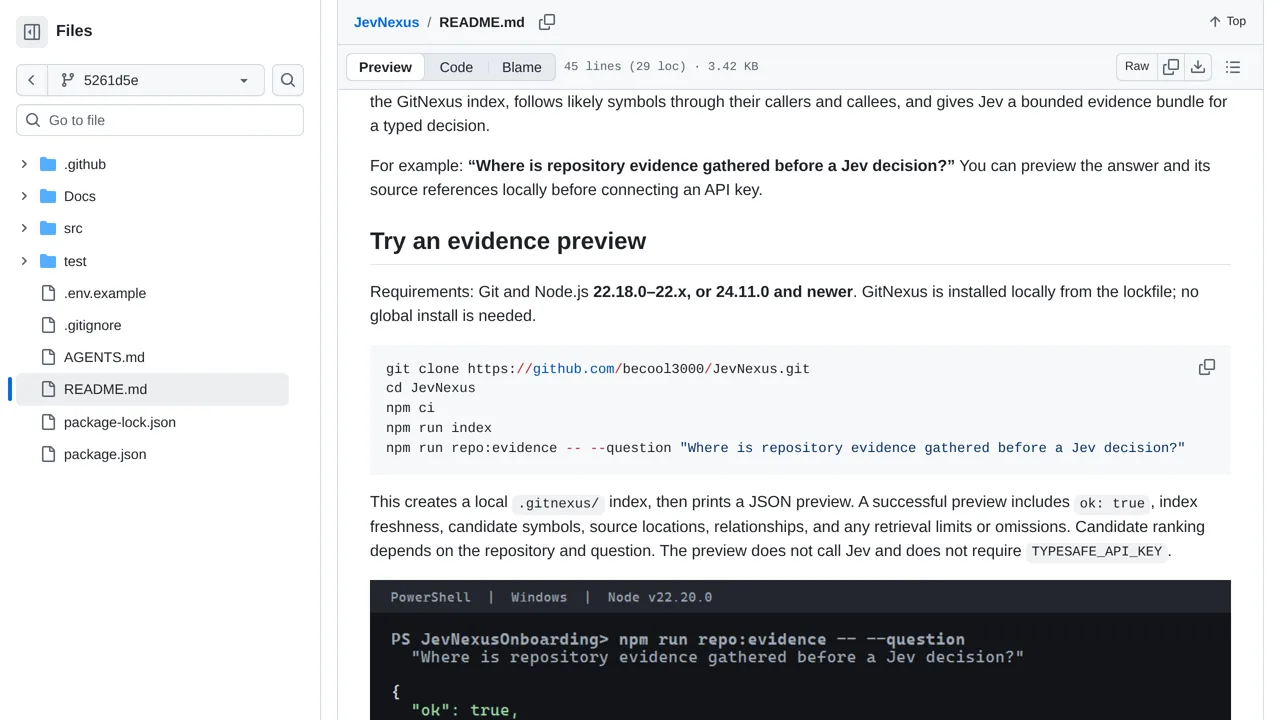
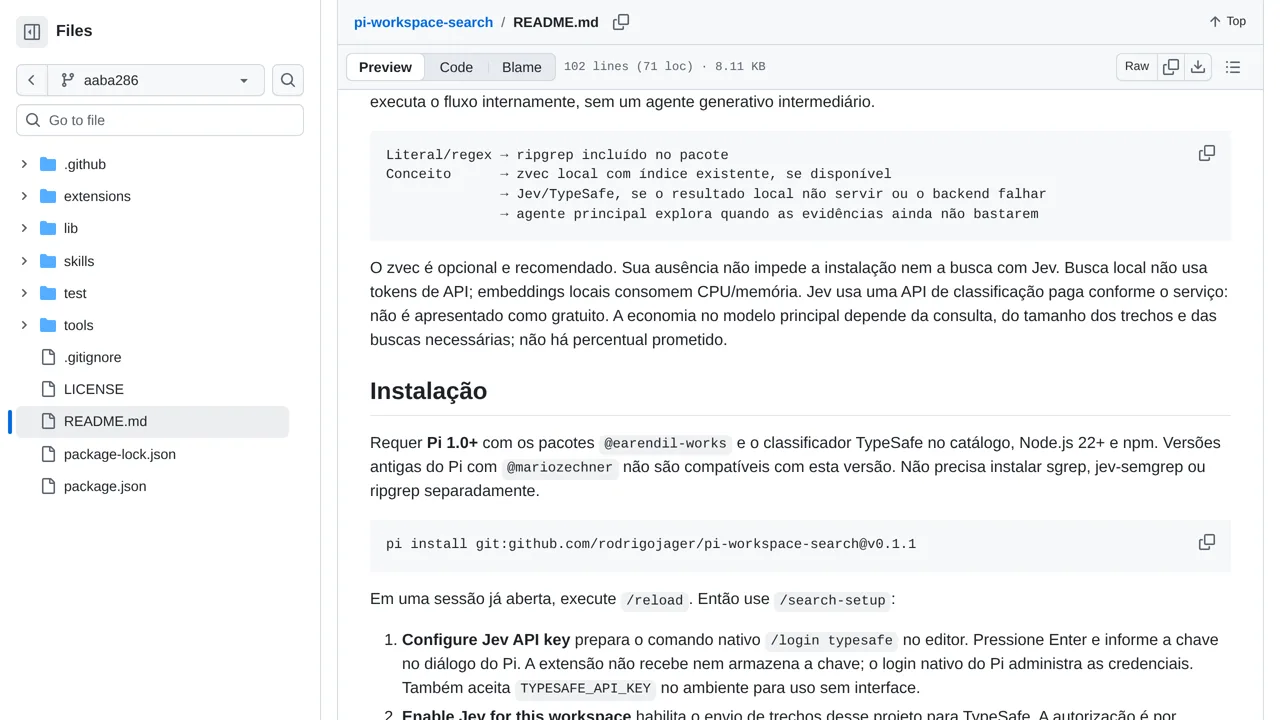
Search code locally in Pi, a coding assistant, or let Jev judge excerpts after that workspace permits remote checks.
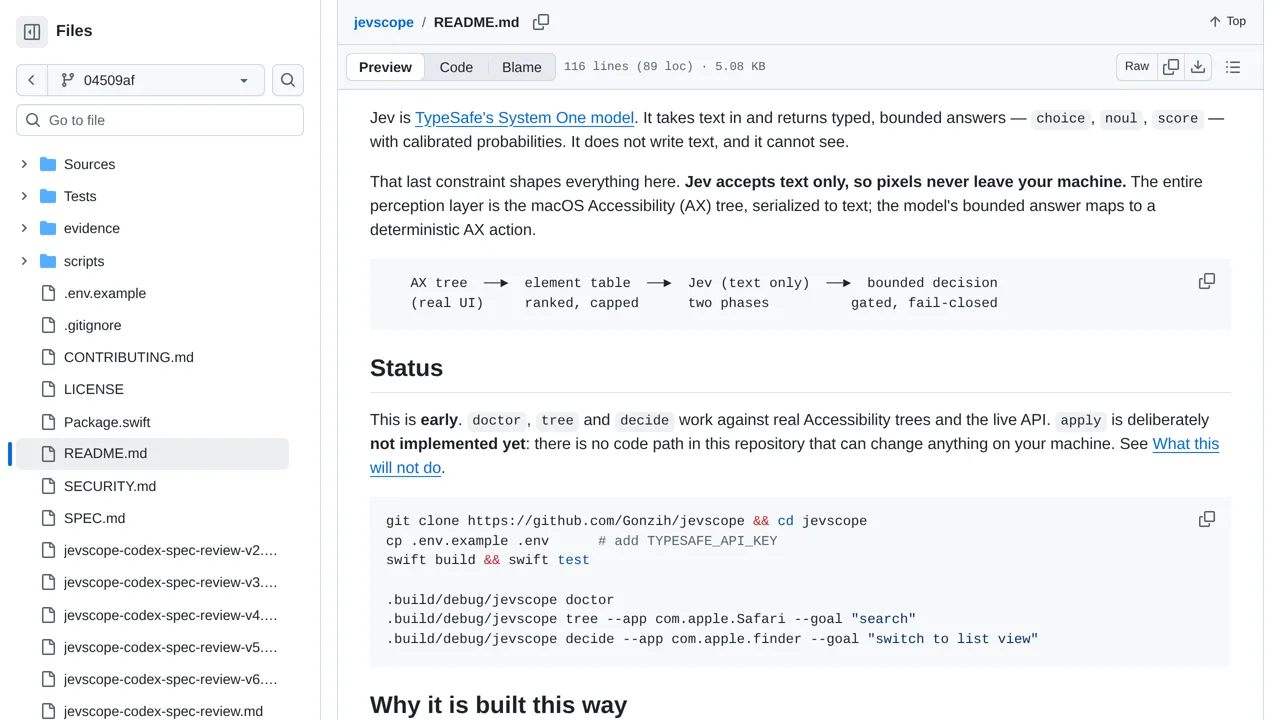
Turn macOS screen controls into a text description and ask Jev to propose an action and target without operating the computer.
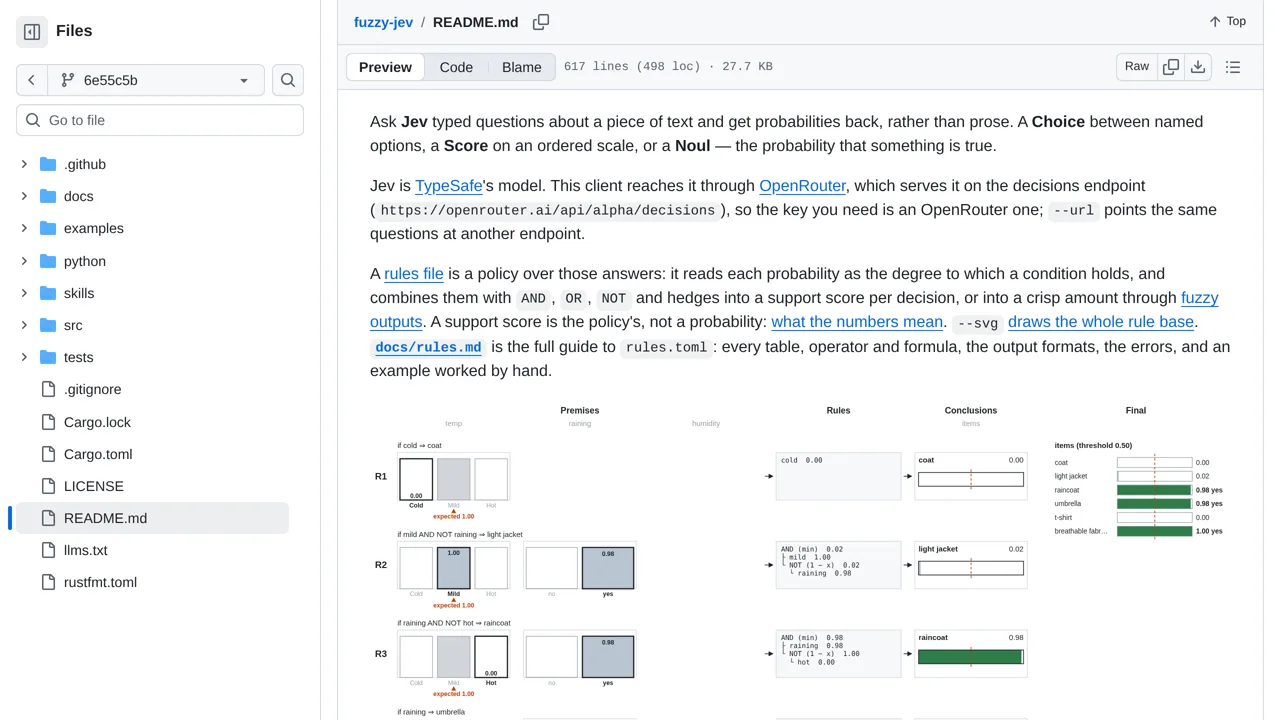
Combine Jev answers with written rules that run locally, producing scores for outcomes such as alerting a support team.
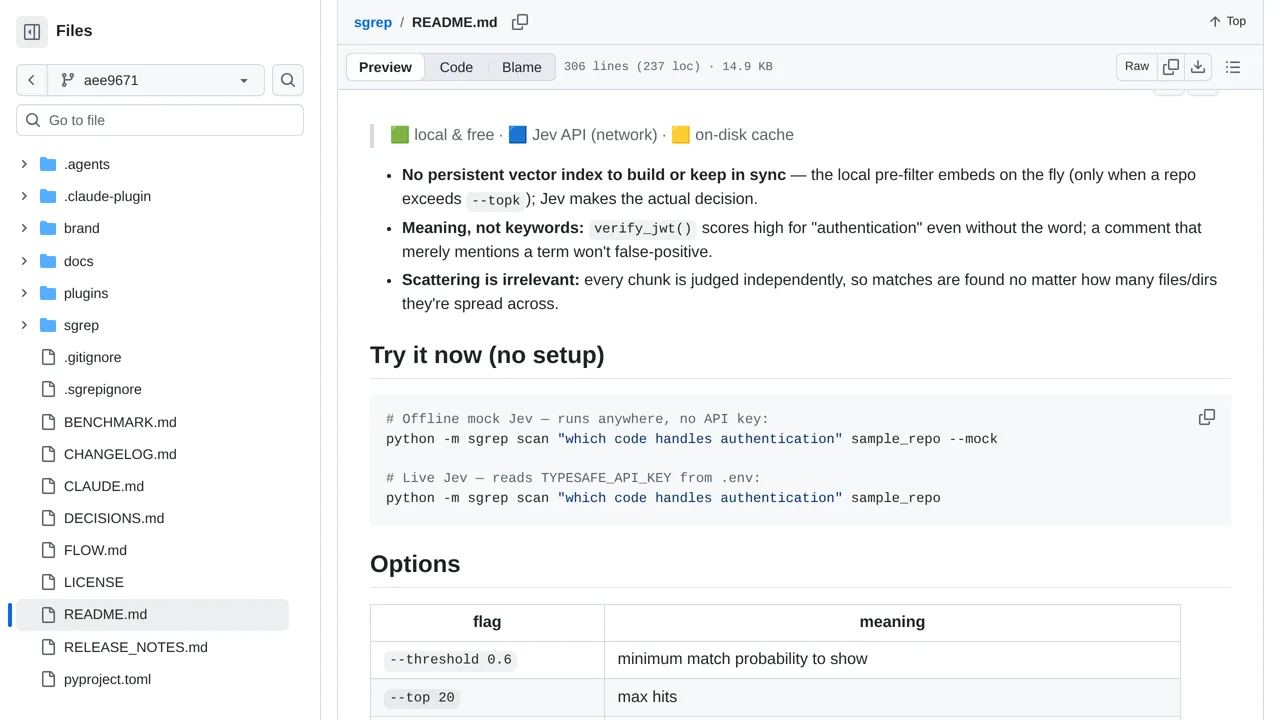
Search chunks of code by meaning, then follow a local map of which pieces call other pieces.
Test whether a contract supports a statement, then check how answers change when the request changes but the contract does not.

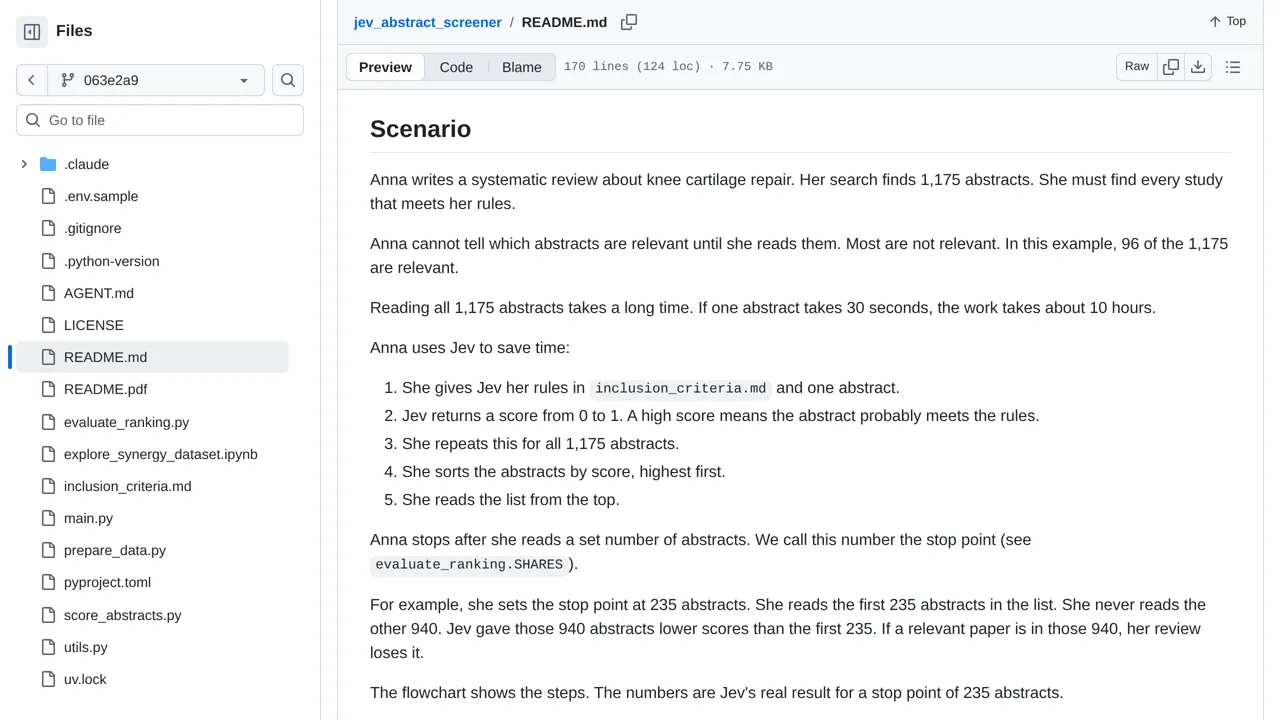
A paper-screening experiment ranks research abstracts with Jev, then checks how many relevant studies a shorter reading list would miss.
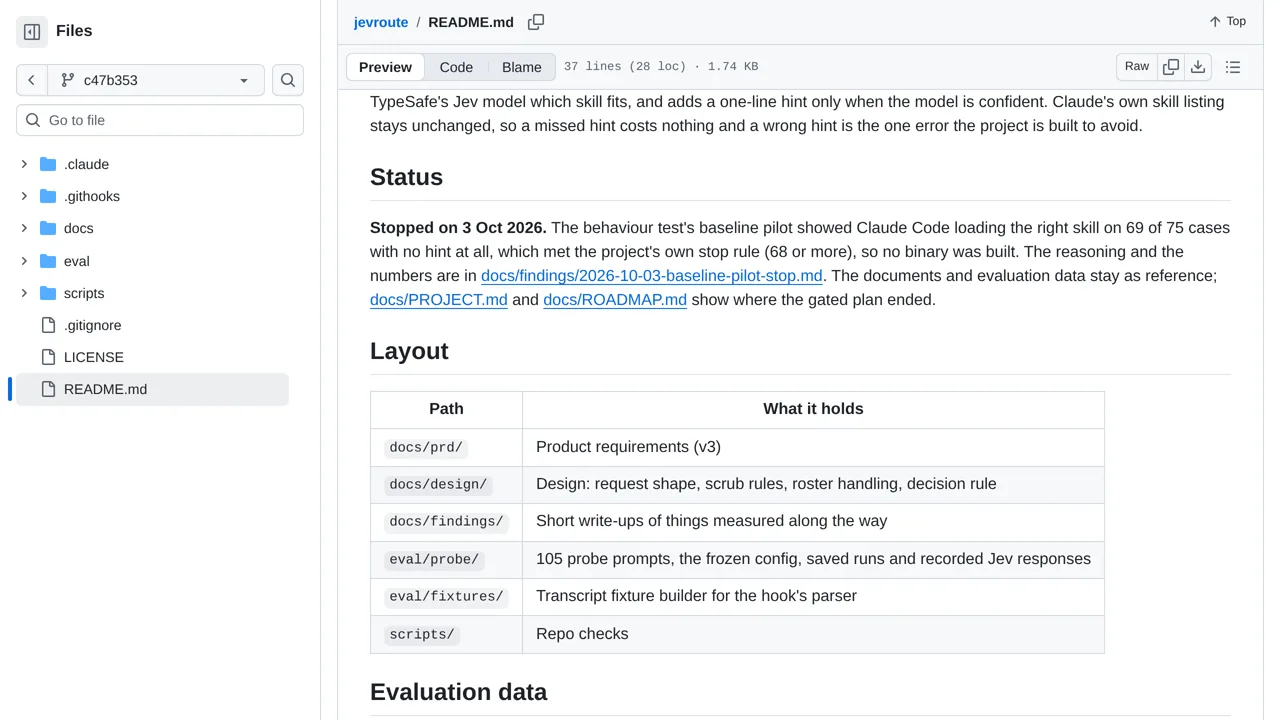
Jevroute stopped before its planned Rust tool was built: Claude Code already chose the right skill in 69 of 75 author-tested cases.
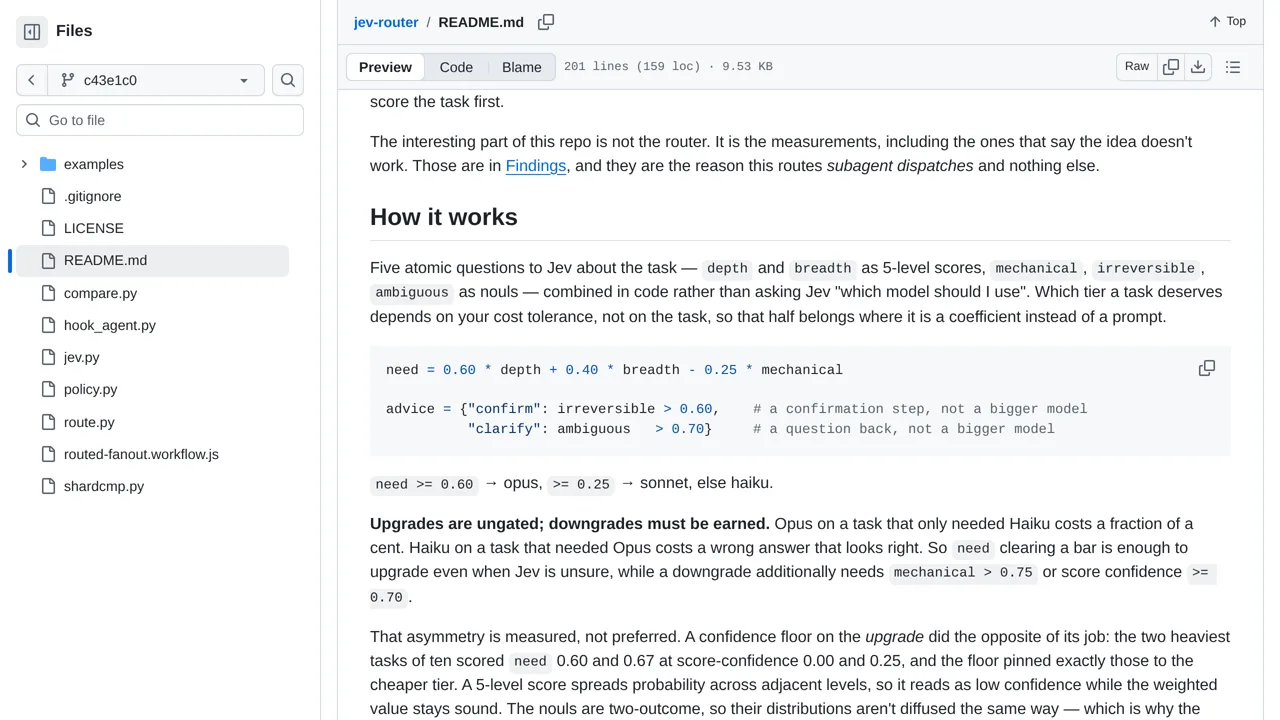
A Claude Code hook uses Jev to choose a model for each subagent task, with stricter checks before choosing a cheaper one.
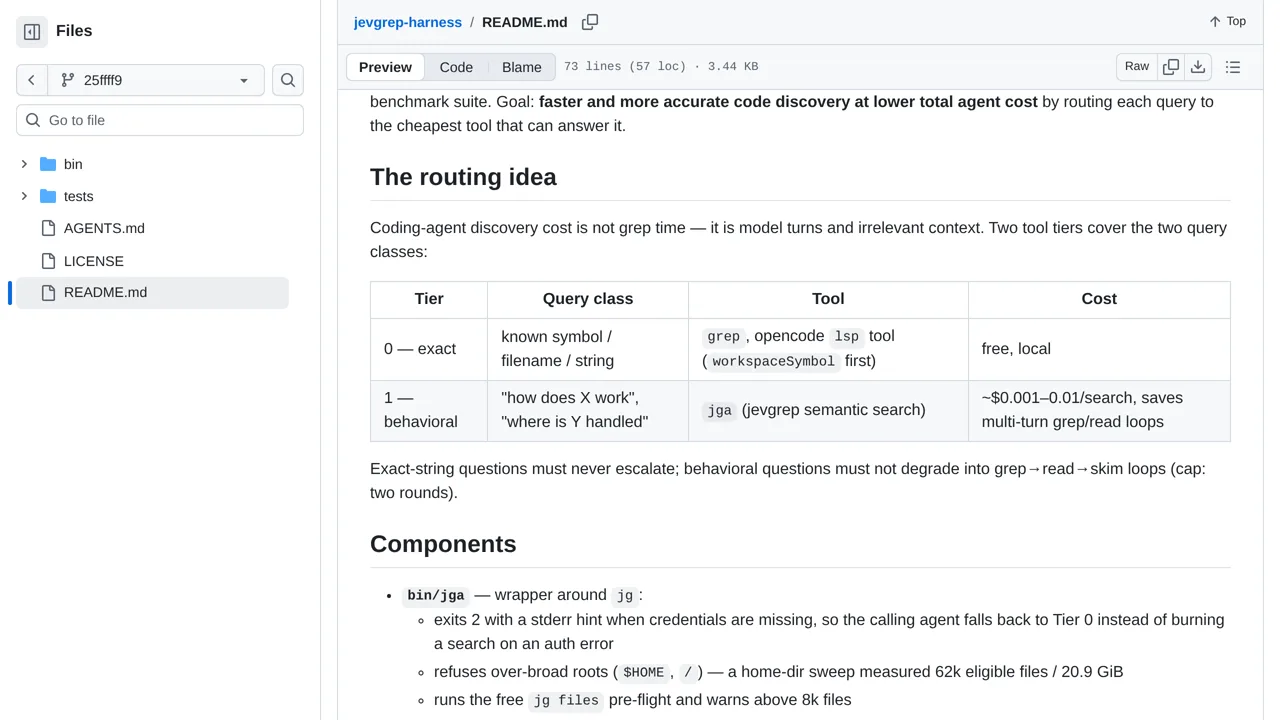
A wrapper helps OpenCode choose between ordinary text search and upstream jevgrep, warning when a search covers too many files.
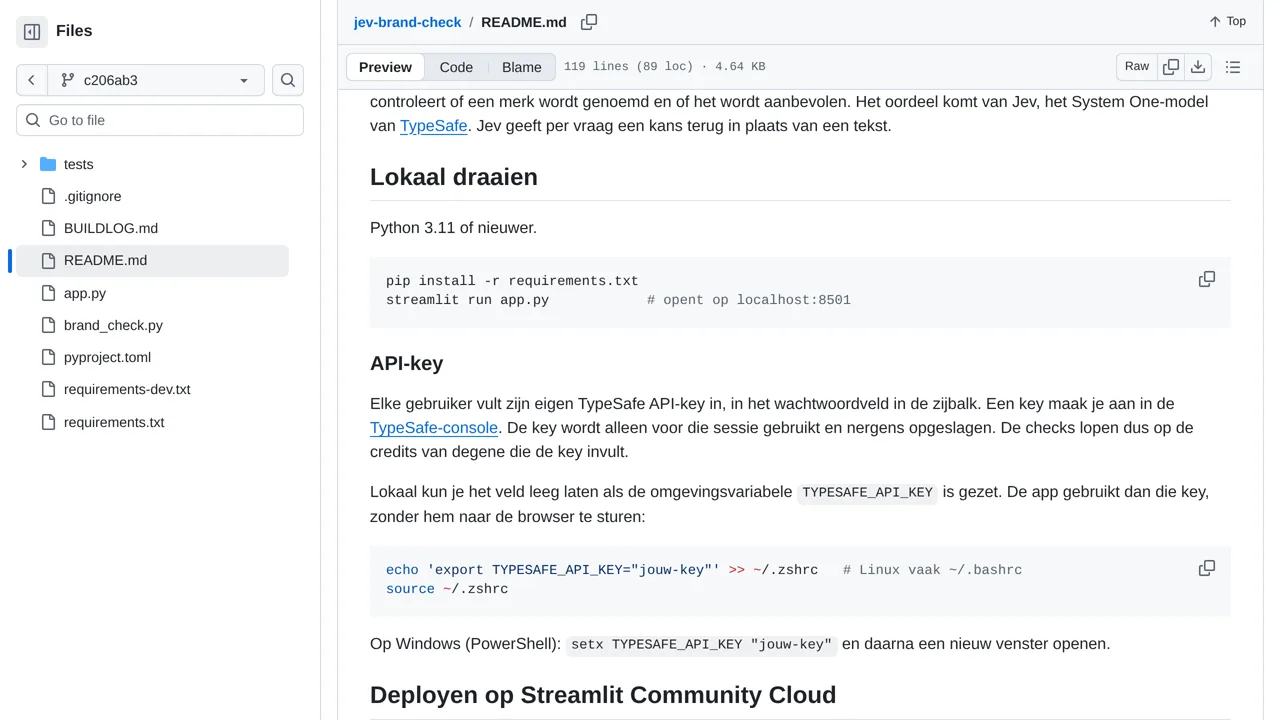
A Dutch-language app checks text for brand mentions and recommendations, showing Jev’s judgments in a table you can export.
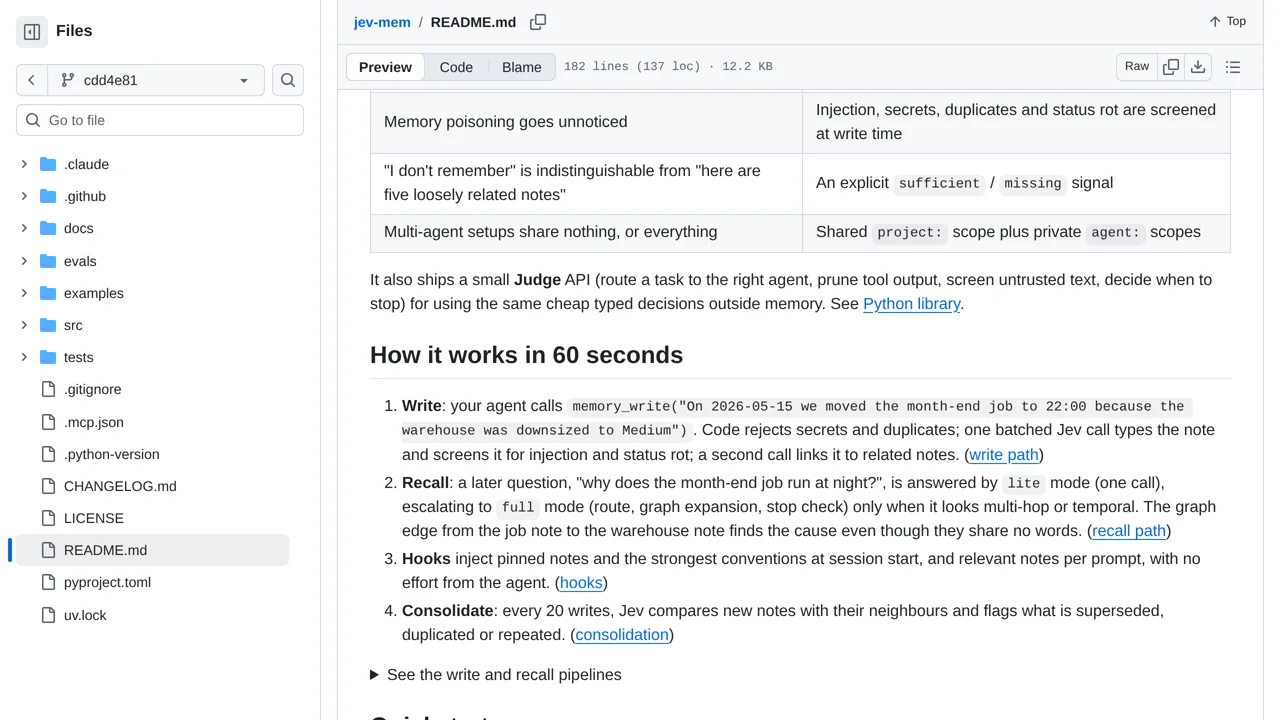
Give an AI assistant lasting notes it can find by relevance, with Jev deciding what to keep, link and bring back.
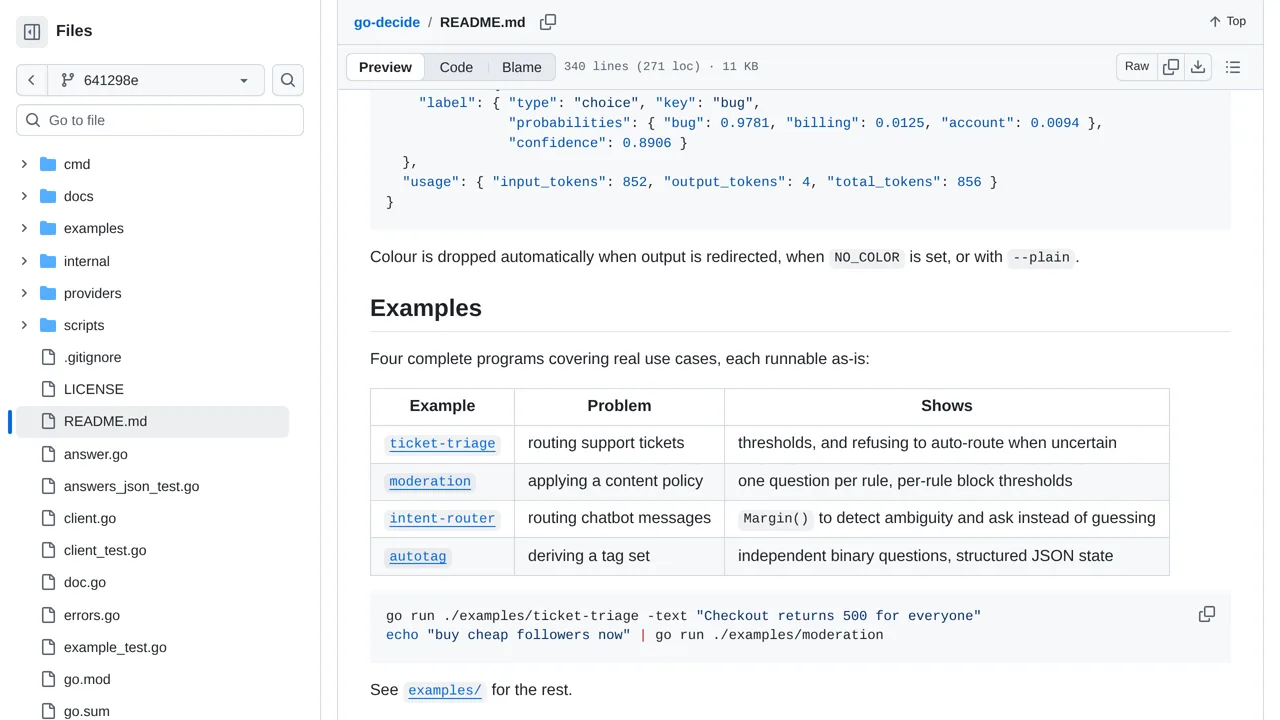
Ask a local or hosted decision model to sort tickets, flag content or rate urgency through the same Go interface.
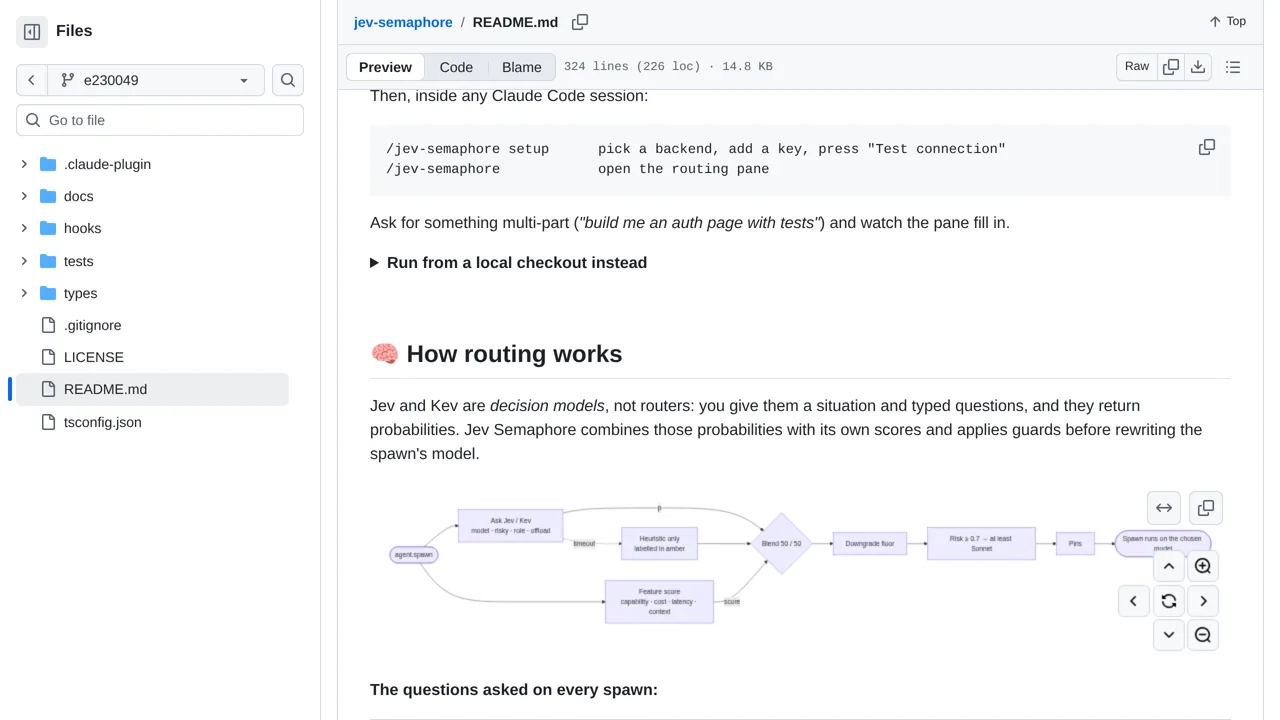
Choose models for Claude Code subagents and follow routing decisions in a live pane.
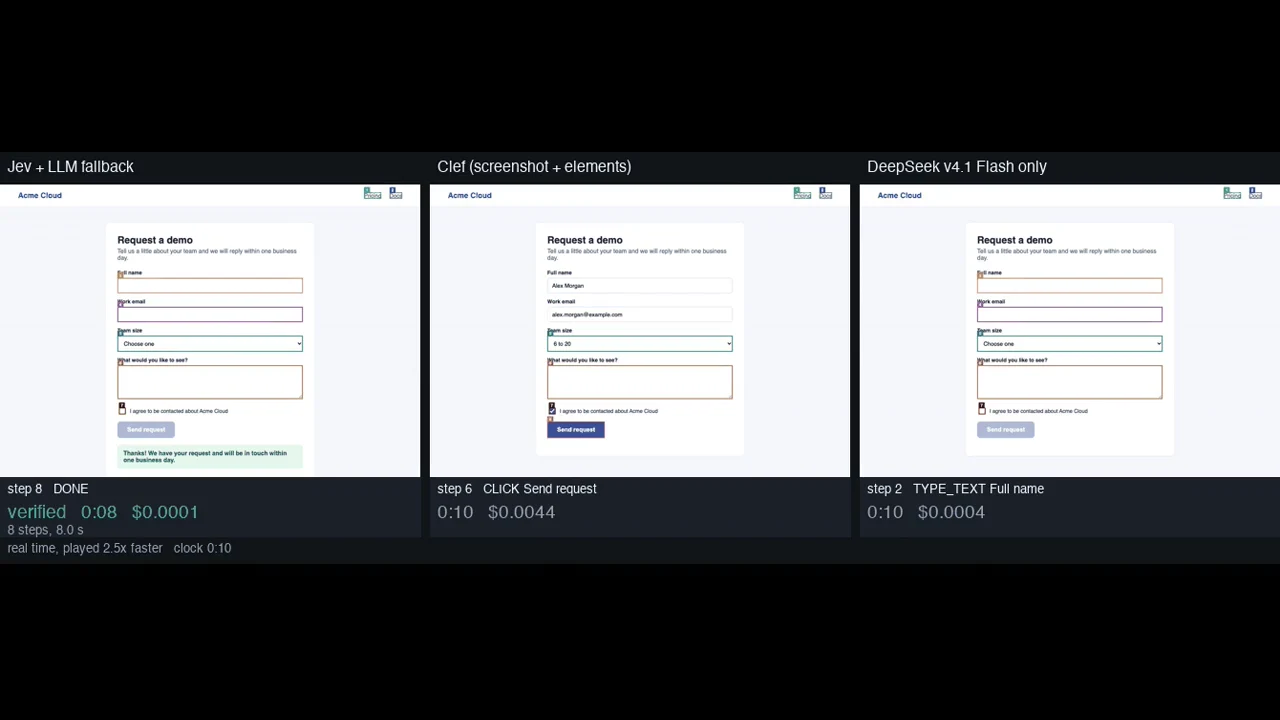
A browser agent uses Jev for routine steps and asks a separate vision model for help when it gets stuck.
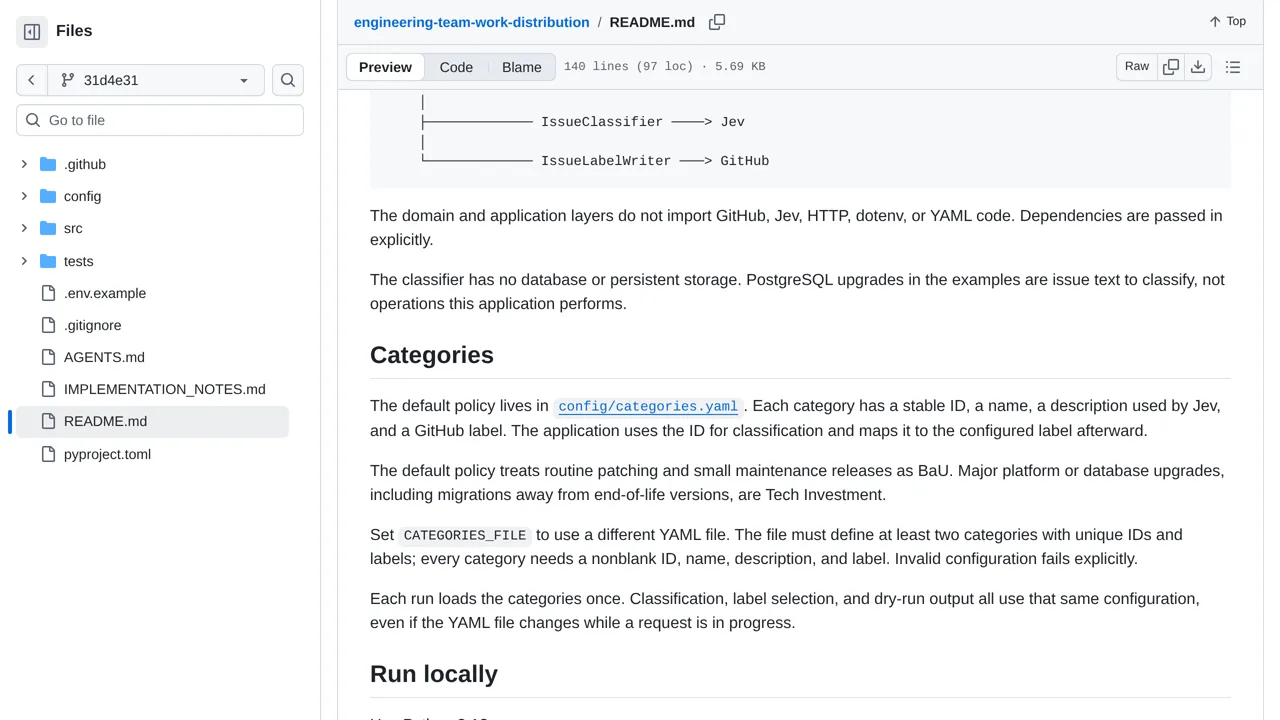
Sort new GitHub issues into routine maintenance, technical investment or product work, and add the matching label.
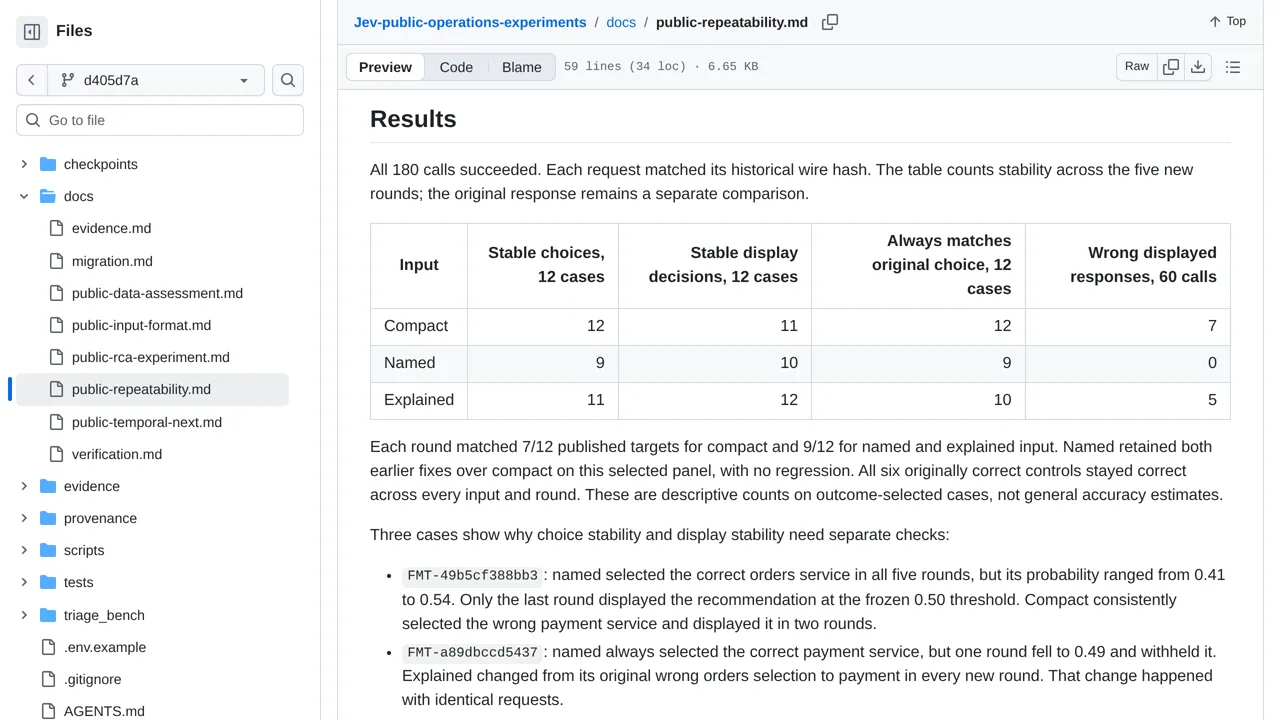
Explore how Jev picks a faulty service from public telemetry, and how changing the input changes its answer.
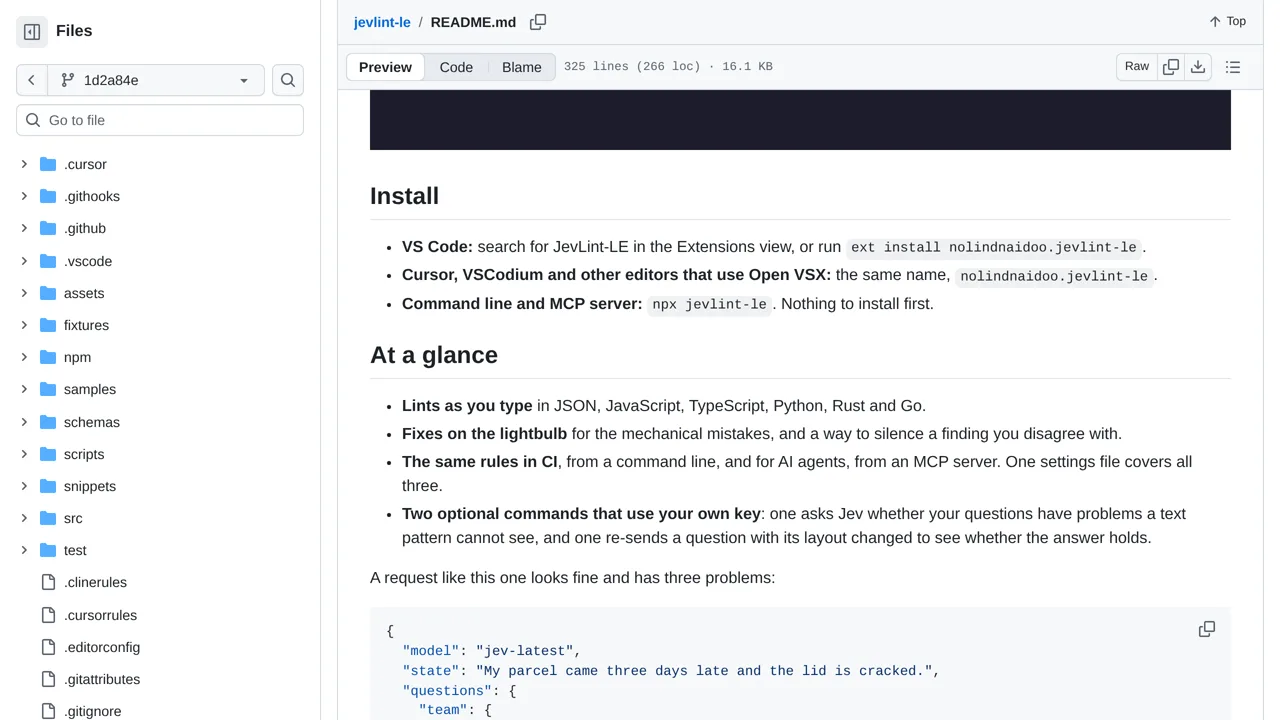
Check Jev questions as you write code, then optionally test their meaning and sensitivity to reordered answer options.
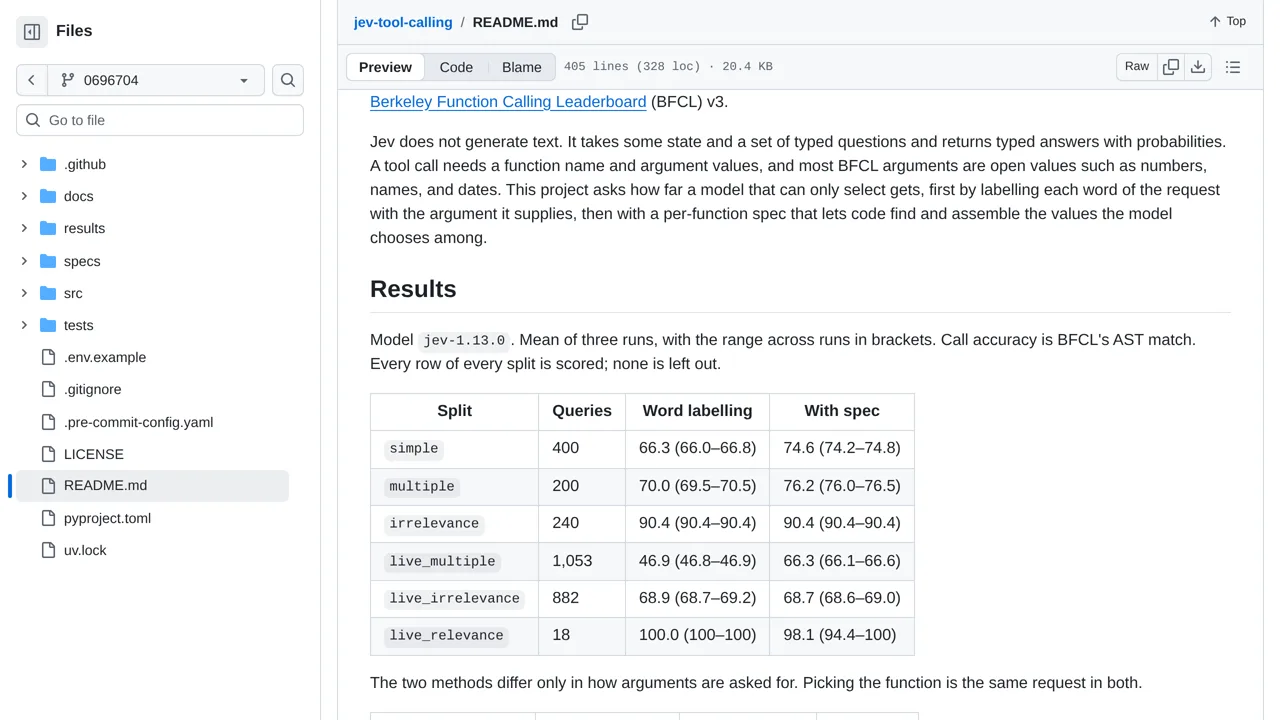
Let Jev pick a tool and the values it needs, then have code assemble the call.
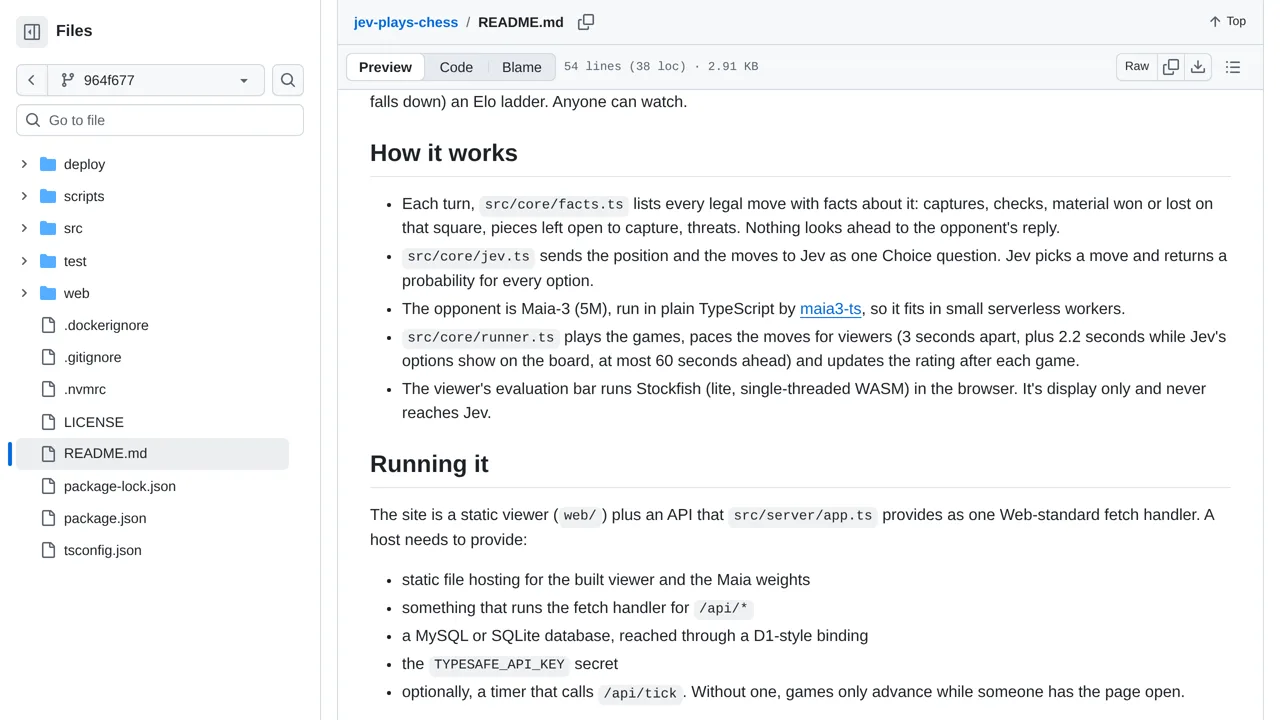
Follow Jev choosing chess moves against human-like Maia-3 opponents, with its alternatives and probabilities displayed on the board.
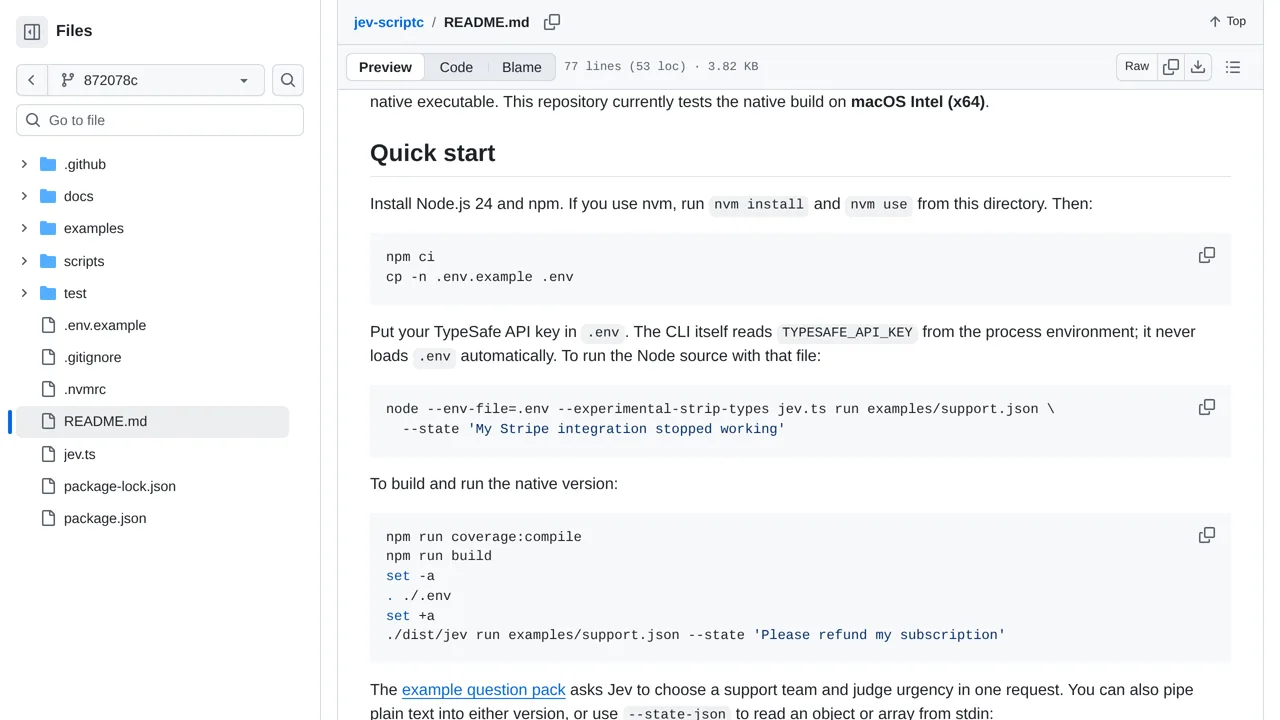
Send typed Jev question packs from a small command-line tool that runs with Node or compiles to a native executable.
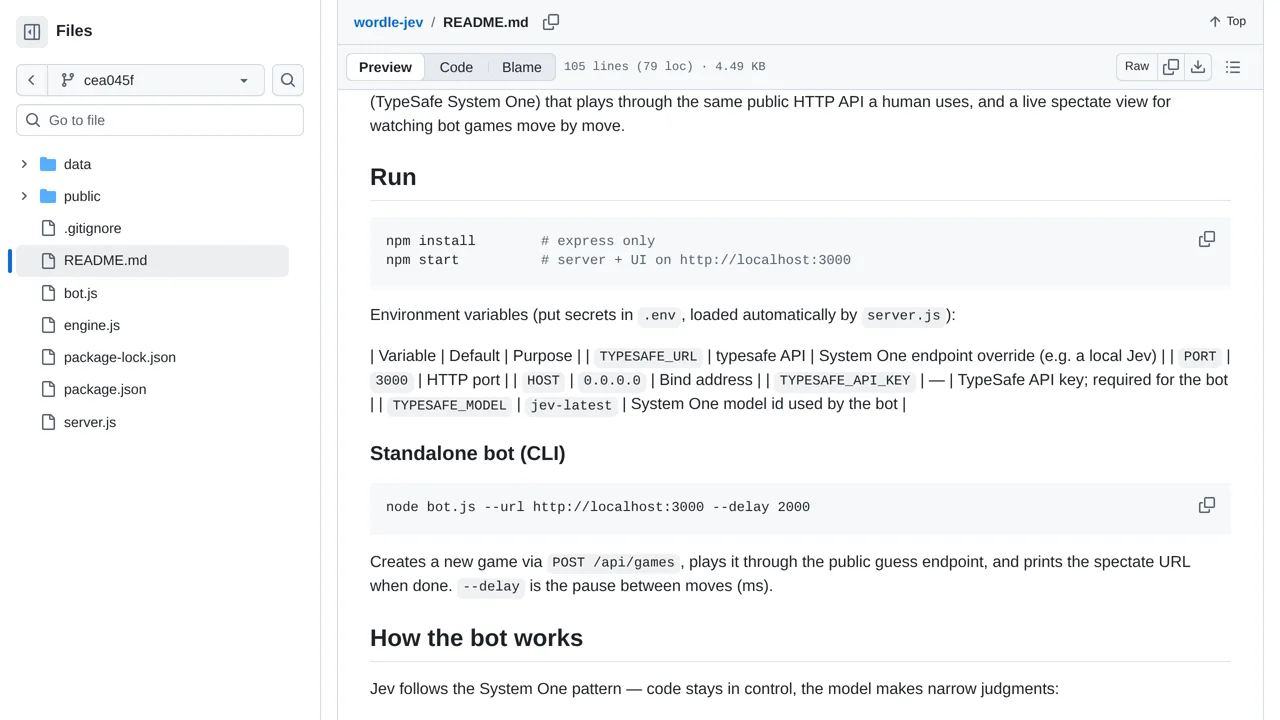
Declare Jev questions as C# types, then try routing, guardrails and search ranking with saved answers before making live calls.
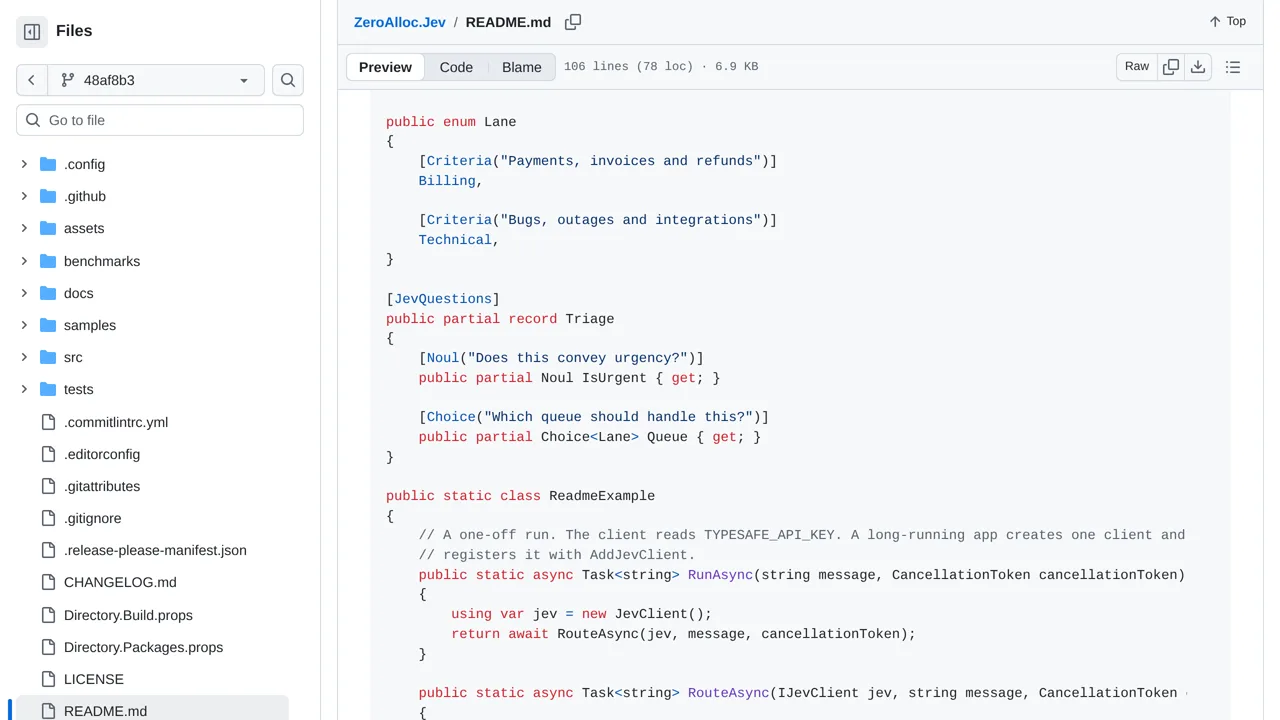
Give a Power Automate flow named Jev answers it can use to route a support message or flag one for review.
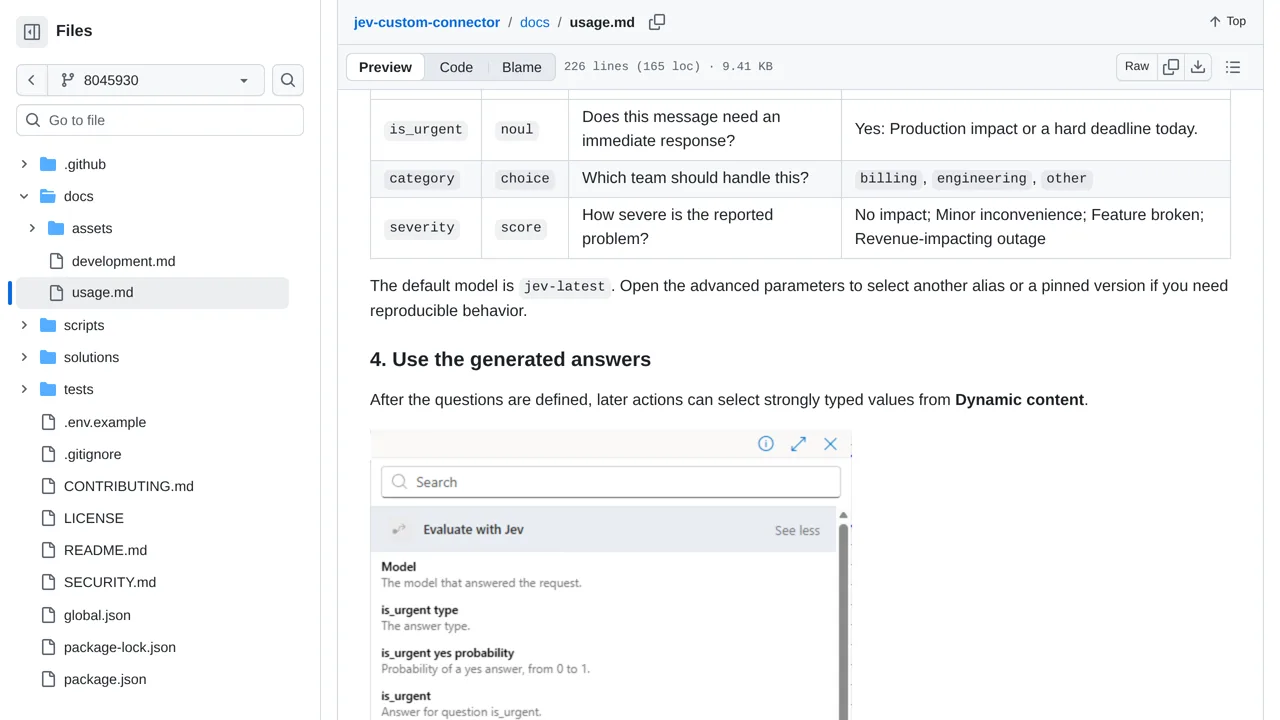
Find films resembling a favourite by choosing what matters: style, cast, release year or story.
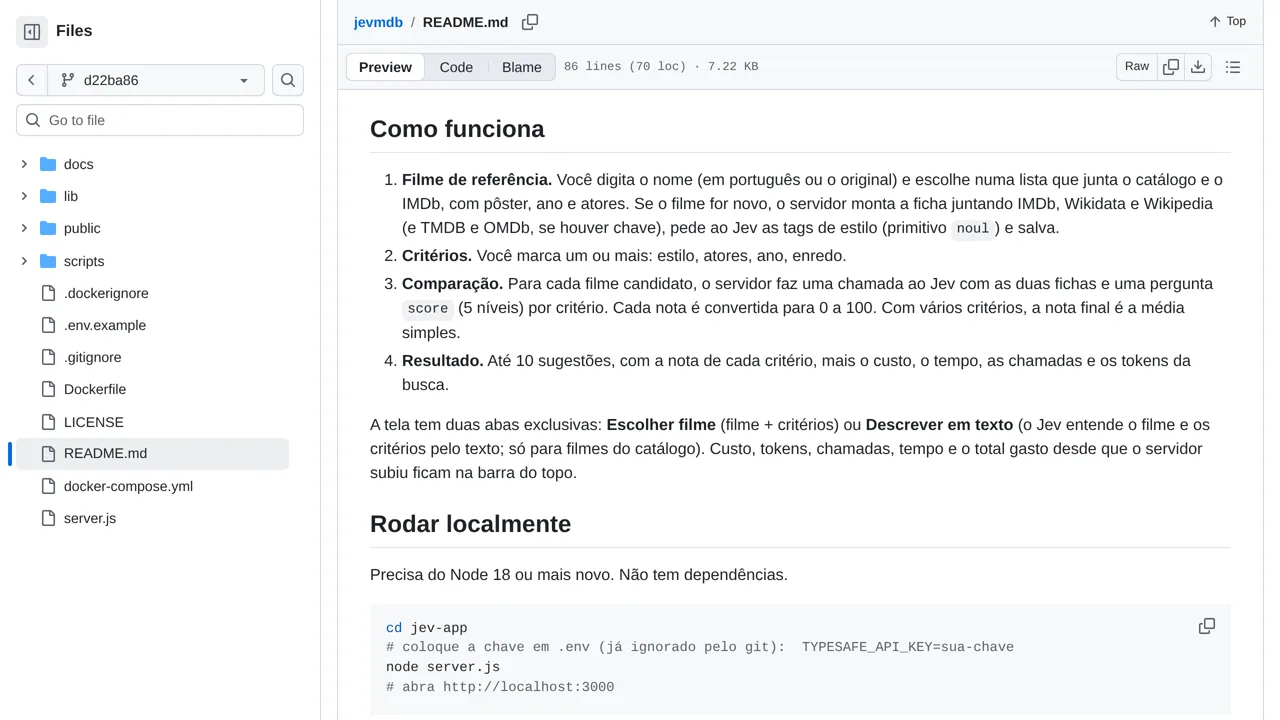
Play a Wordle clone or watch a Jev bot choose guesses from a shortlist that code has checked against the clues.
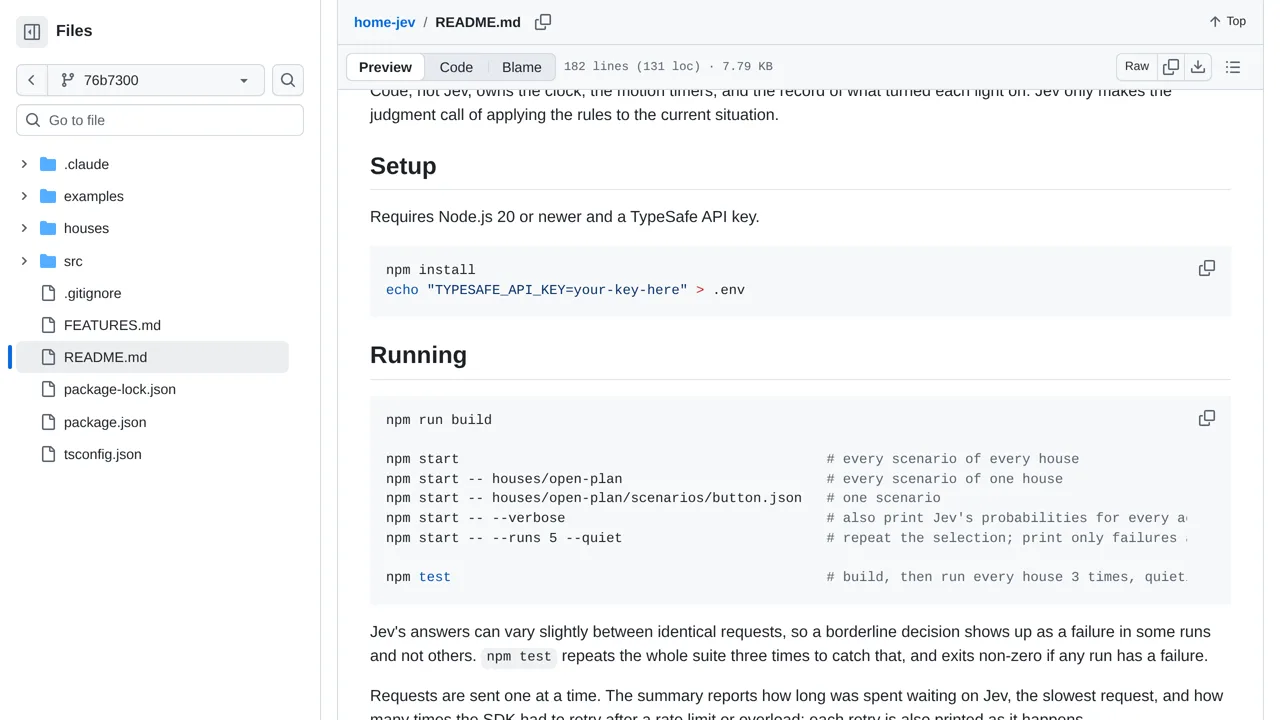
Write household lighting rules in ordinary English, then replay events to see how Jev applies them to simulated lights and blinds.
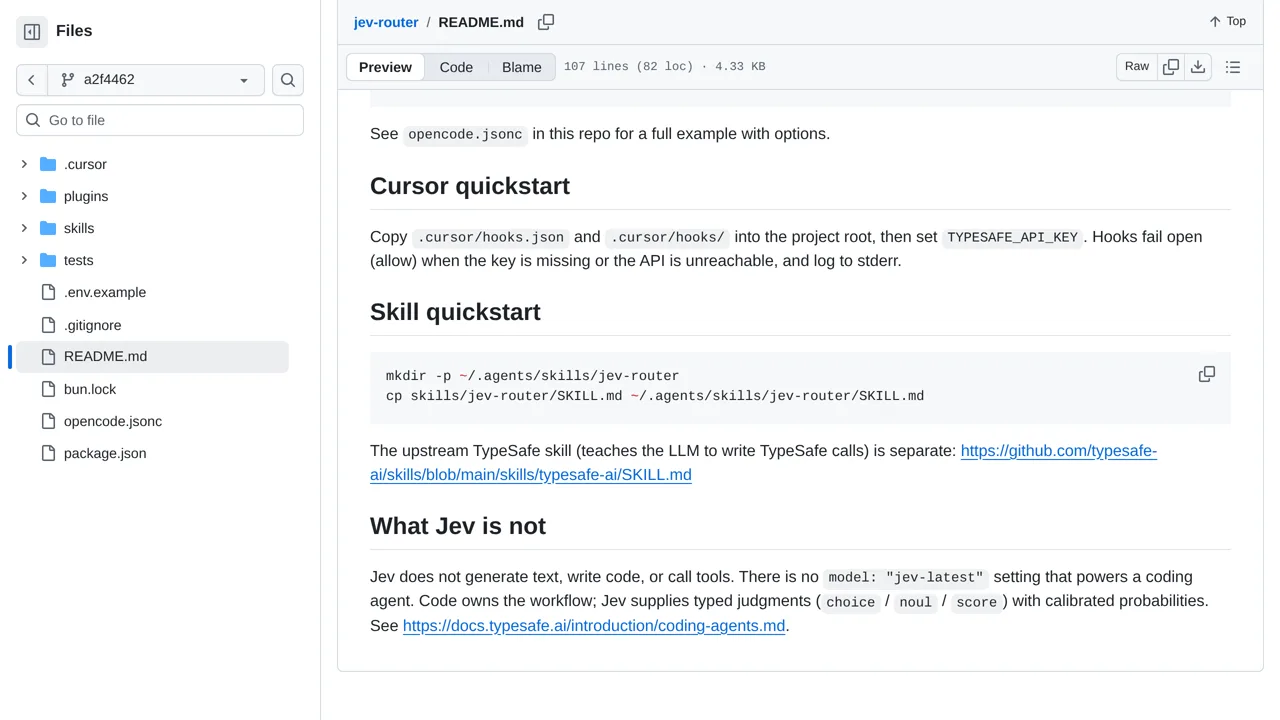
Suggest a relevant skill before a coding-agent turn, with optional Jev judgments on pending actions and completed work.
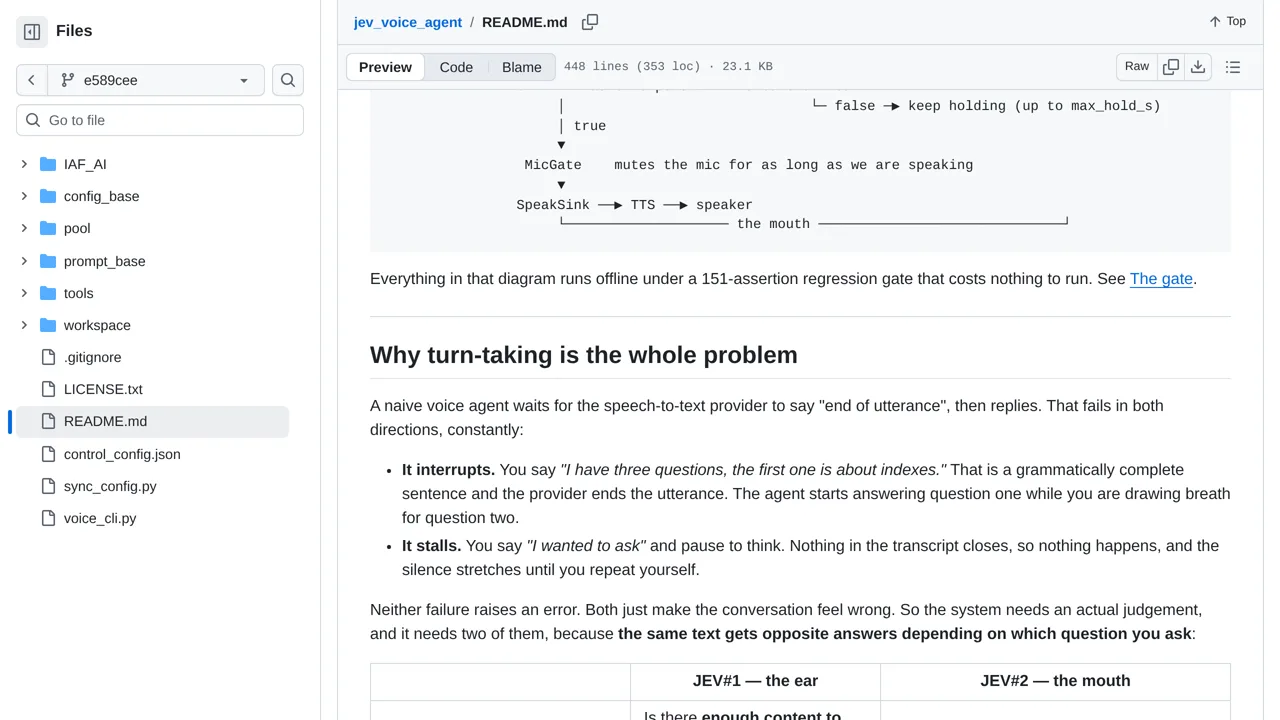
A voice agent asks separately whether it has enough to answer and whether the person has finished speaking.
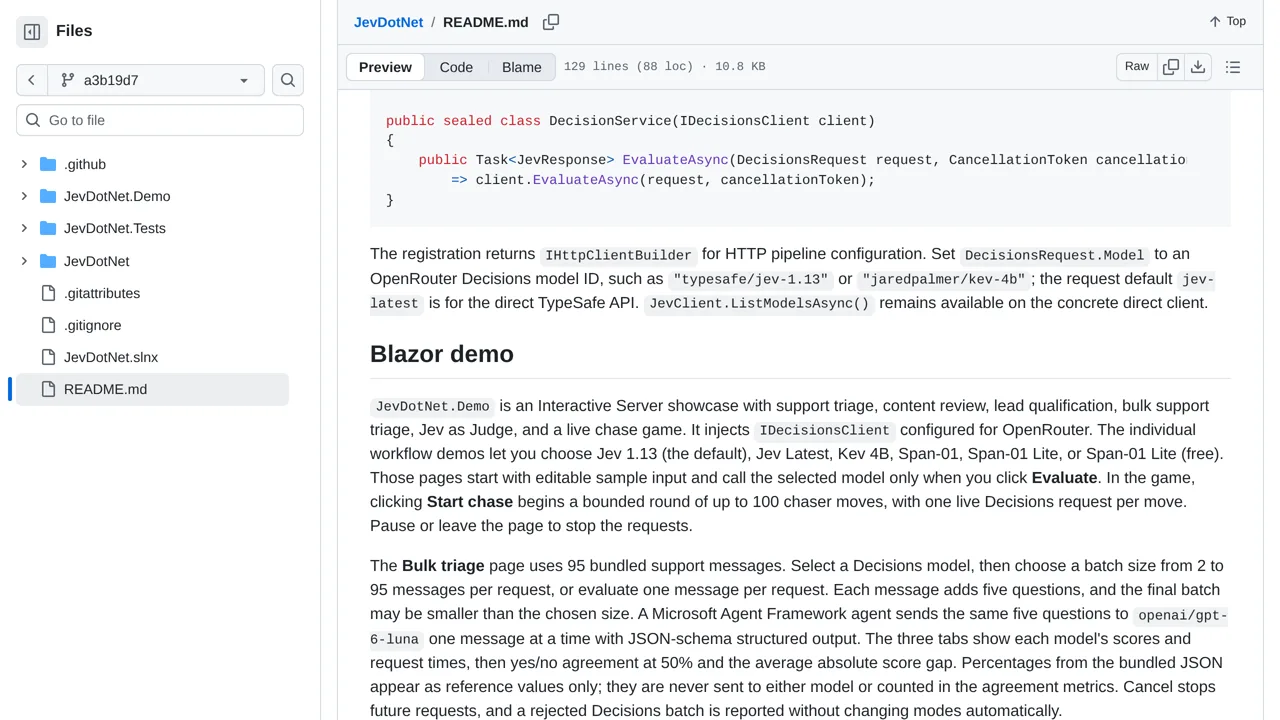
Add Jev decisions to a C# application, with examples for sorting support messages, judging answers and chasing a player around a grid.
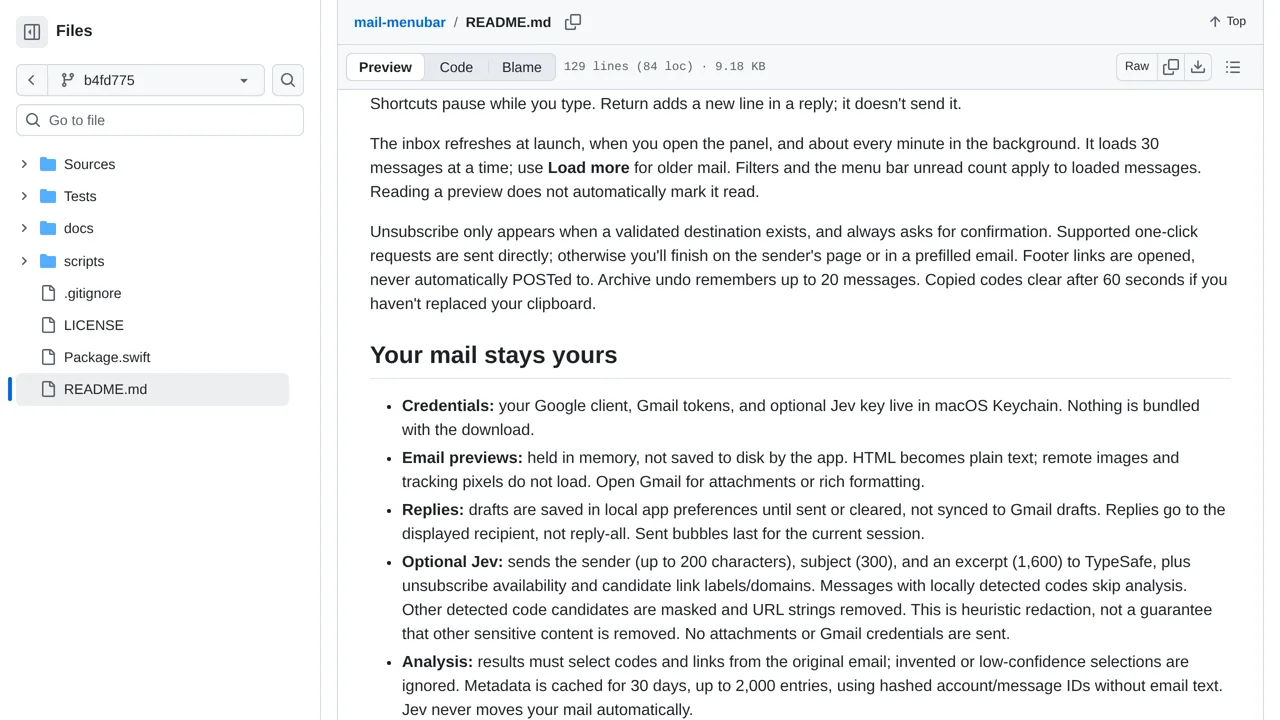
Read and reply to Gmail from your Mac’s menu bar, with optional Jev labels and help choosing existing codes or unsubscribe links.
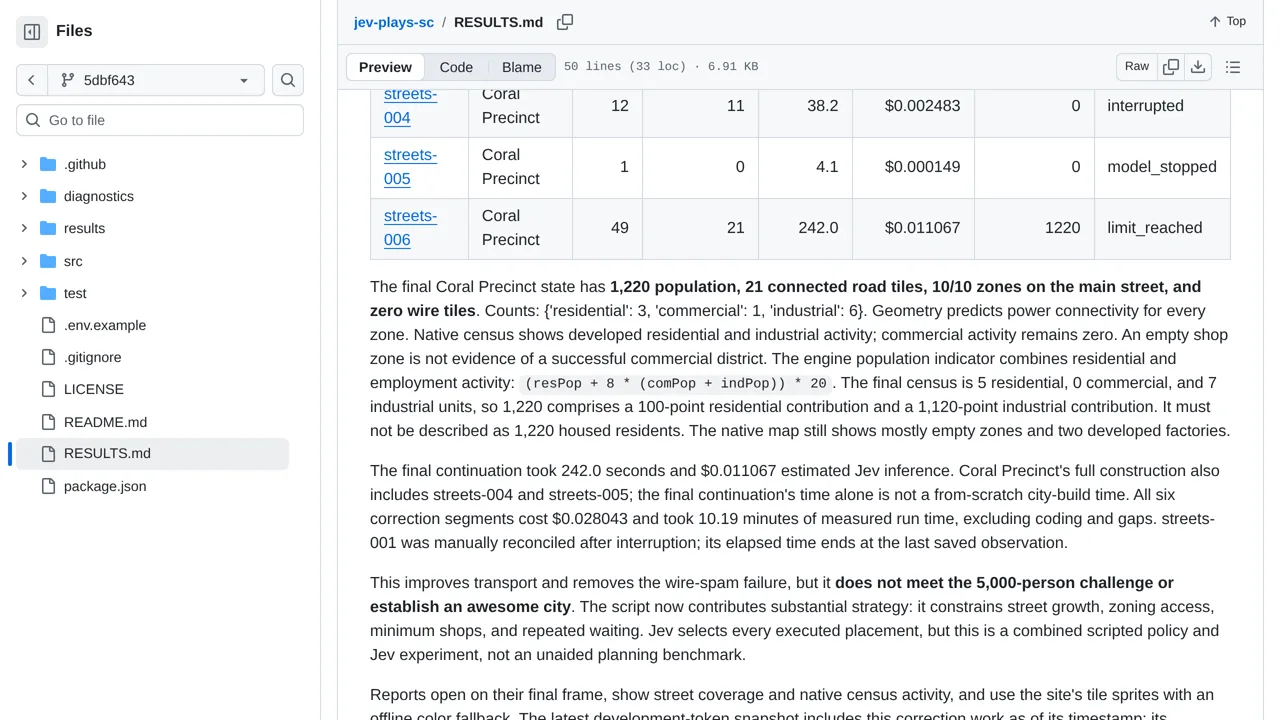
Watch saved city-building runs where Jev picks actions and locations from menus prepared by a scripted Micropolis strategy.
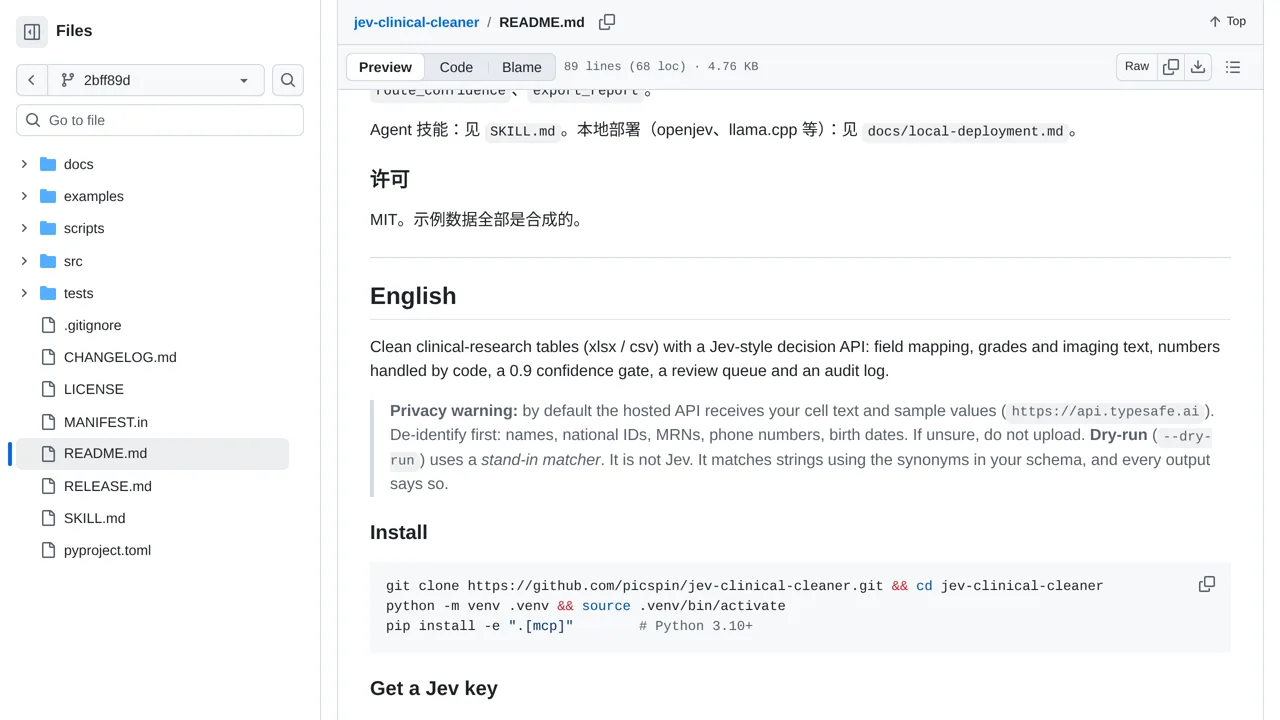
Turn inconsistent research spreadsheets into standard columns, with code handling numbers and uncertain Jev suggestions flagged for human review.
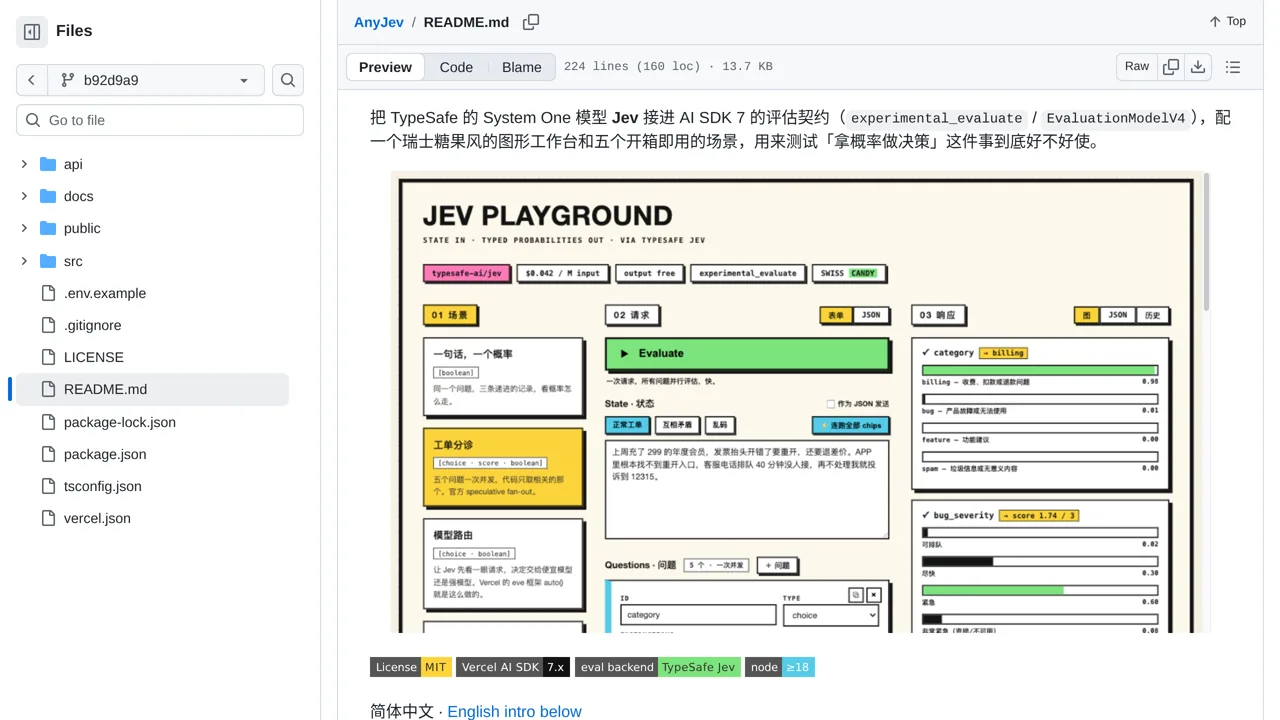
Connect Jev to the Vercel AI SDK and explore its questions in a local workbench with probability charts and result history.
Compare simulated traders that sample tactics from Jev probabilities with random traders, using a dashboard and saved market results.

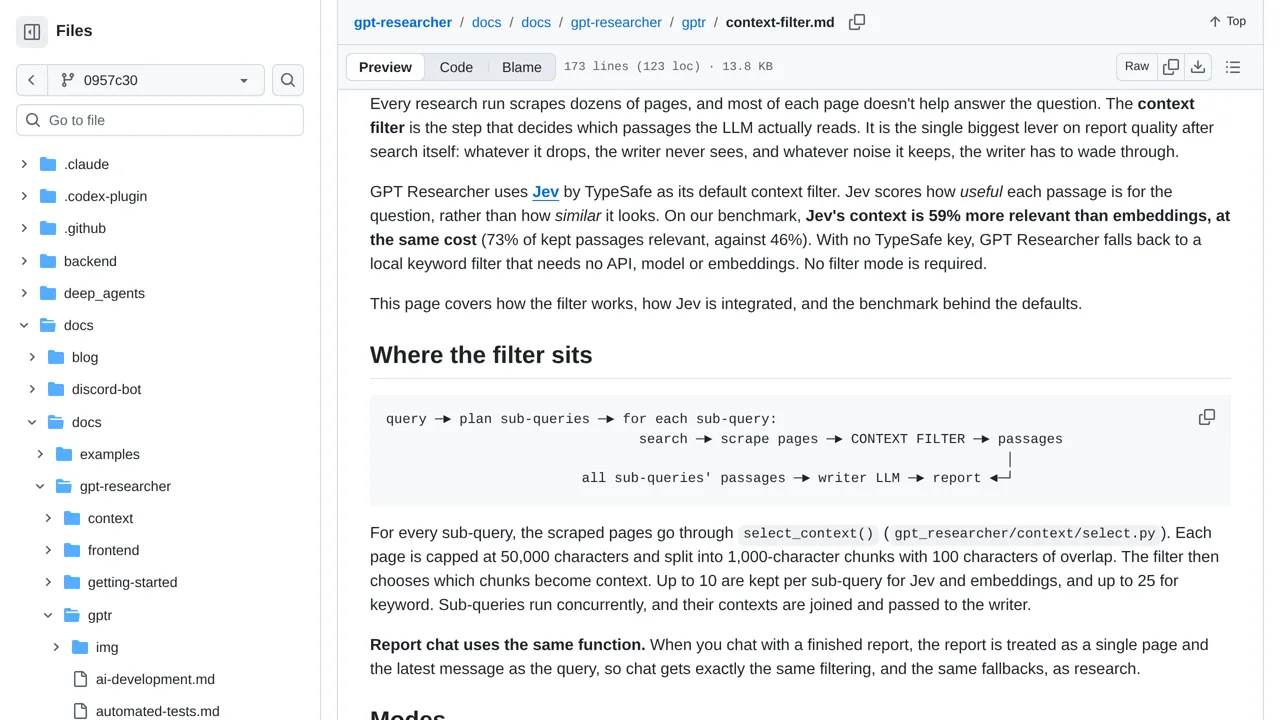
Let Jev choose useful passages from scraped pages before GPT Researcher sends them to the model that writes its report.
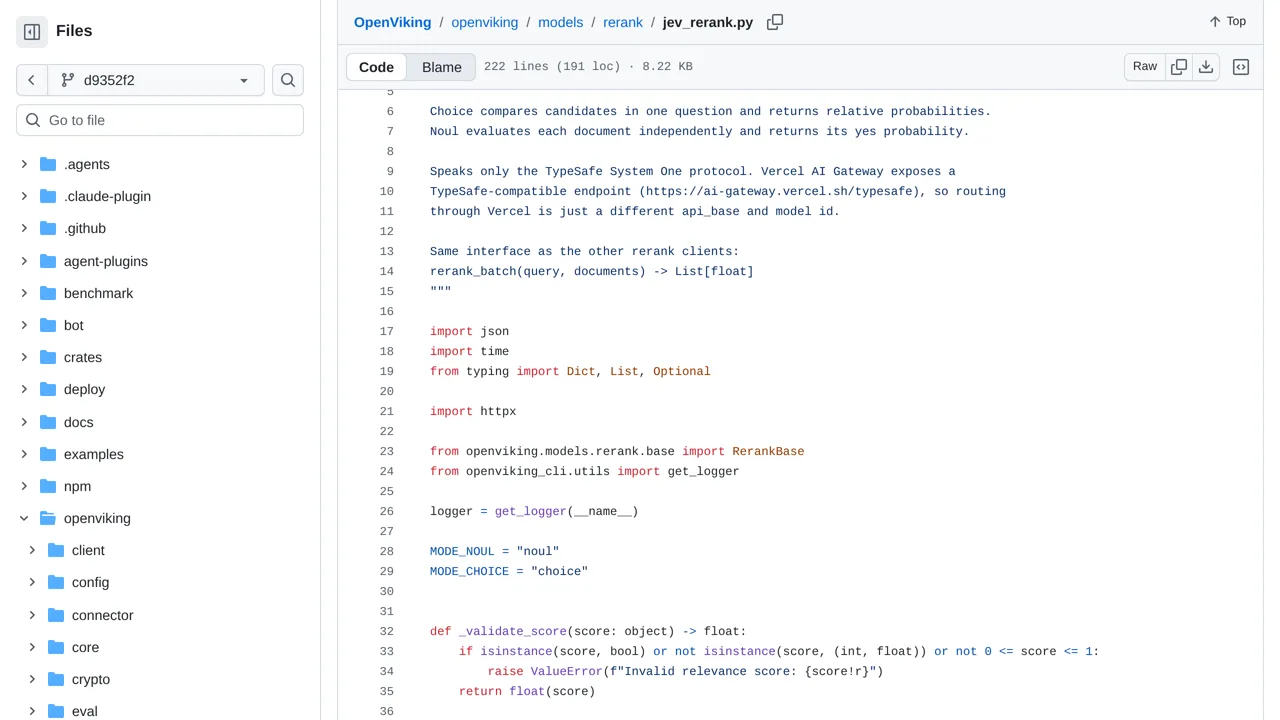
Reorder OpenViking search results by asking Jev whether each candidate's abstract answers the query, or by comparing the candidates together.
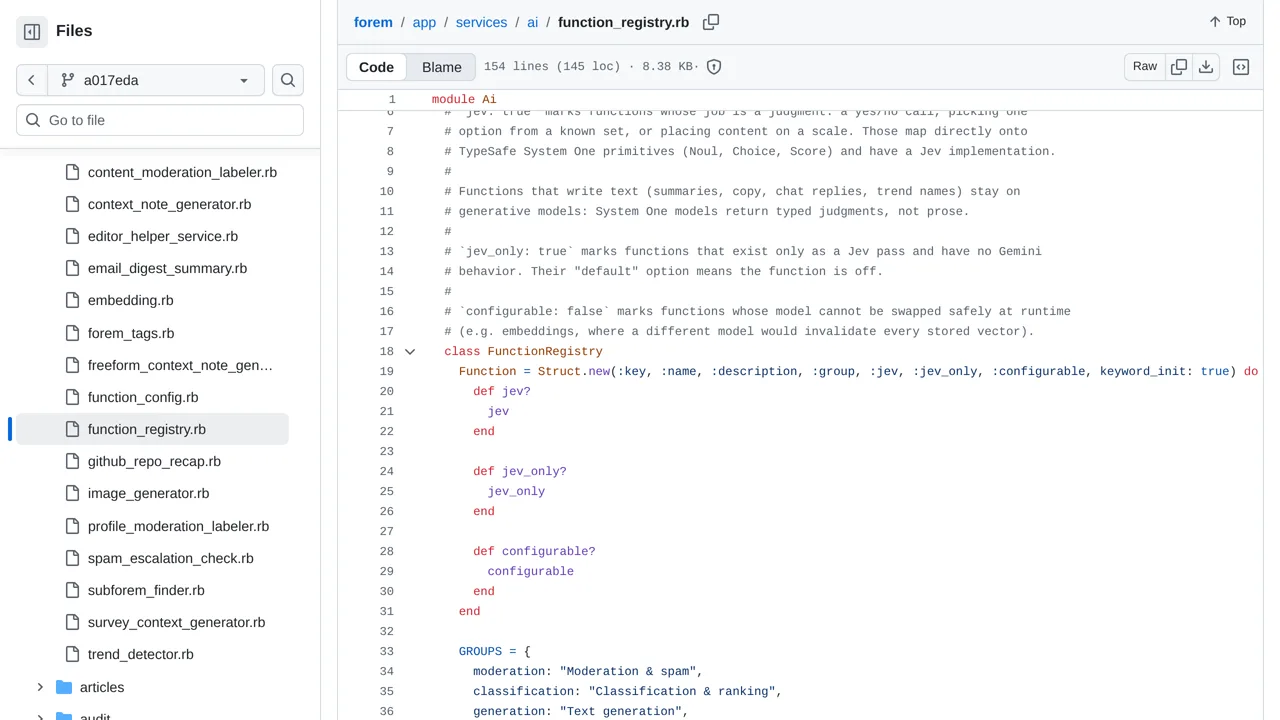
Choose Jev for individual Forem tasks, including spam screening, article tags, clickbait ratings and code-language labels.
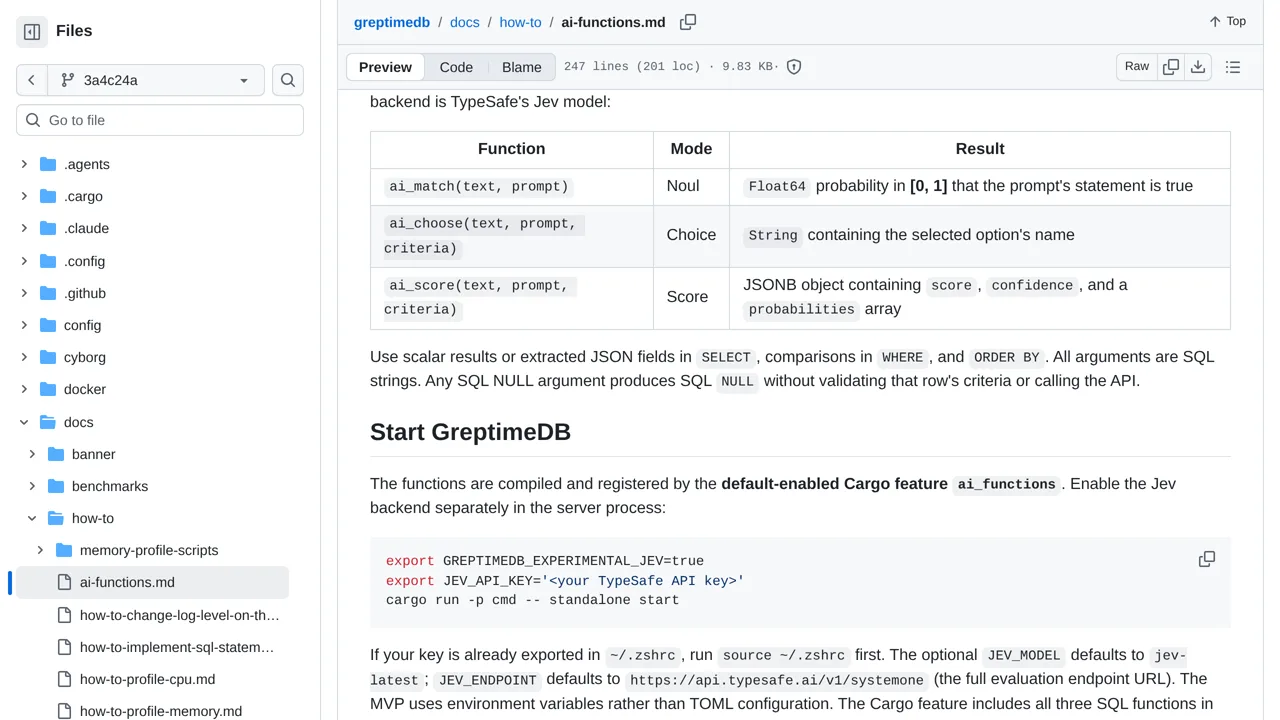
Filter, label and rate database rows with Jev, directly inside GreptimeDB SQL queries.
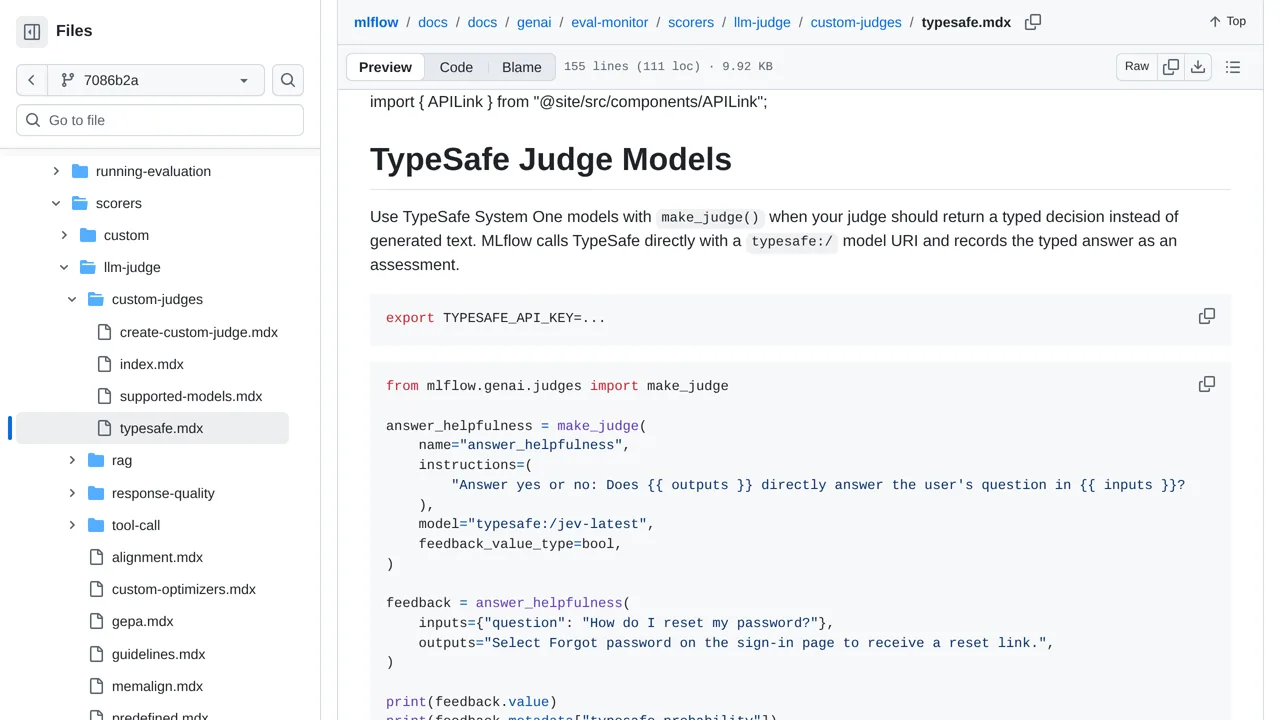
Evaluate application answers in MLflow with Jev-backed yes-or-no or category judgments, retaining probability information alongside each result.
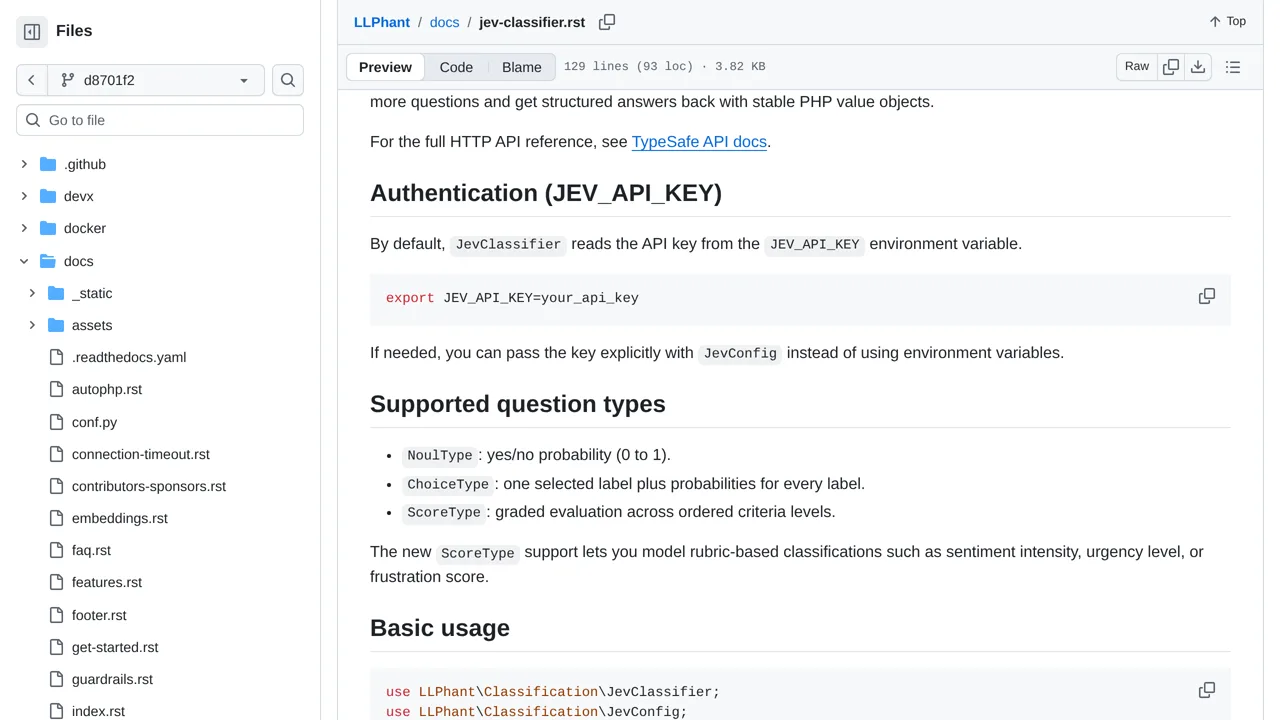
Ask several Jev questions about the same text from a PHP application and receive typed answer objects.
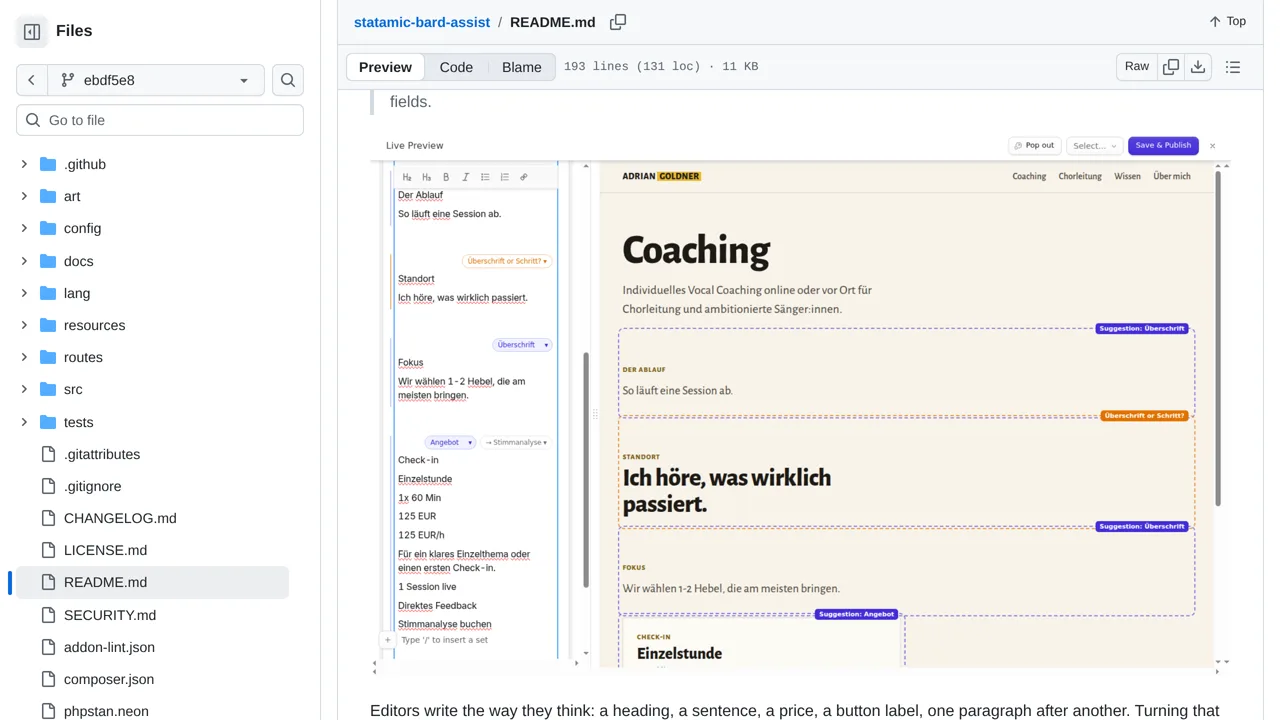
Turn your own paragraphs into Statamic page blocks with Jev suggestions for the block, its fields and internal links.
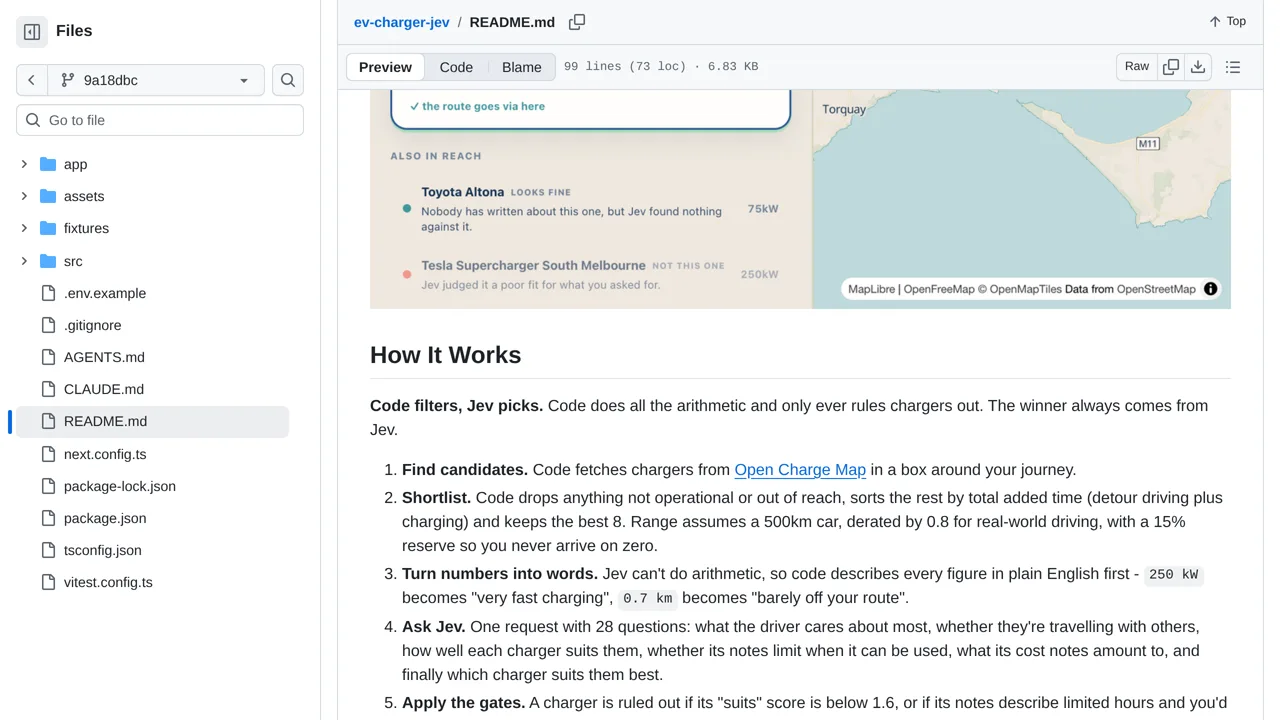
Describe the charging stop you want, and this Australian EV prototype asks Jev to weigh the notes for nearby chargers.
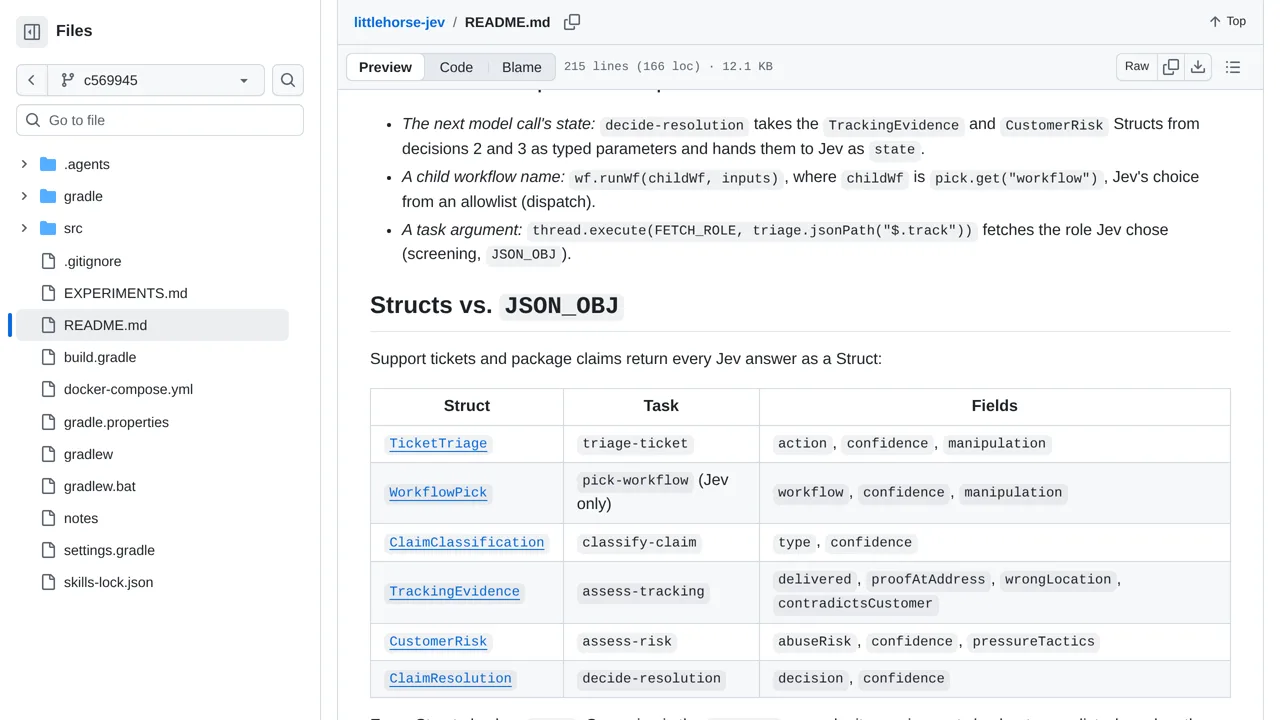
Follow a support ticket or missing-package claim through LittleHorse workflows that branch on Jev answers or escalate for review when needed.
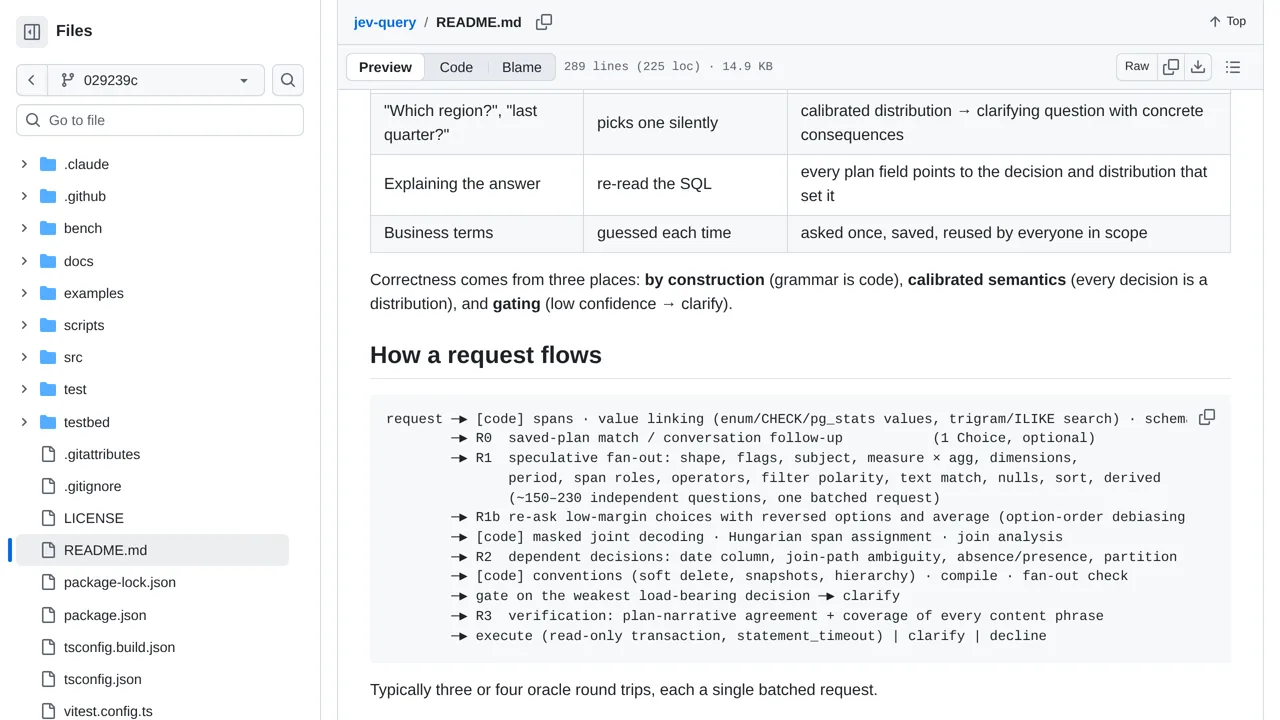
Ask a database question in plain language while Jev chooses pieces of a query plan instead of writing SQL.
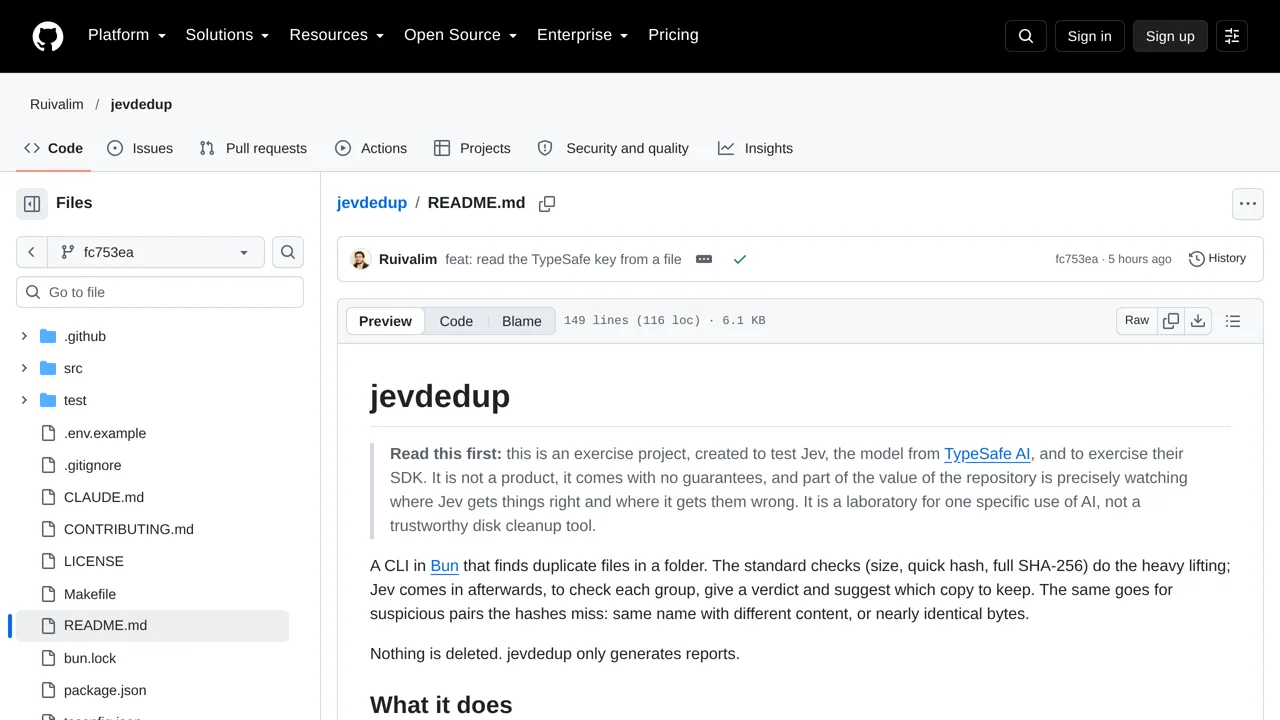
Find exact file copies with hash checks, then ask Jev which copy to keep and whether suspicious text pairs contain the same content.
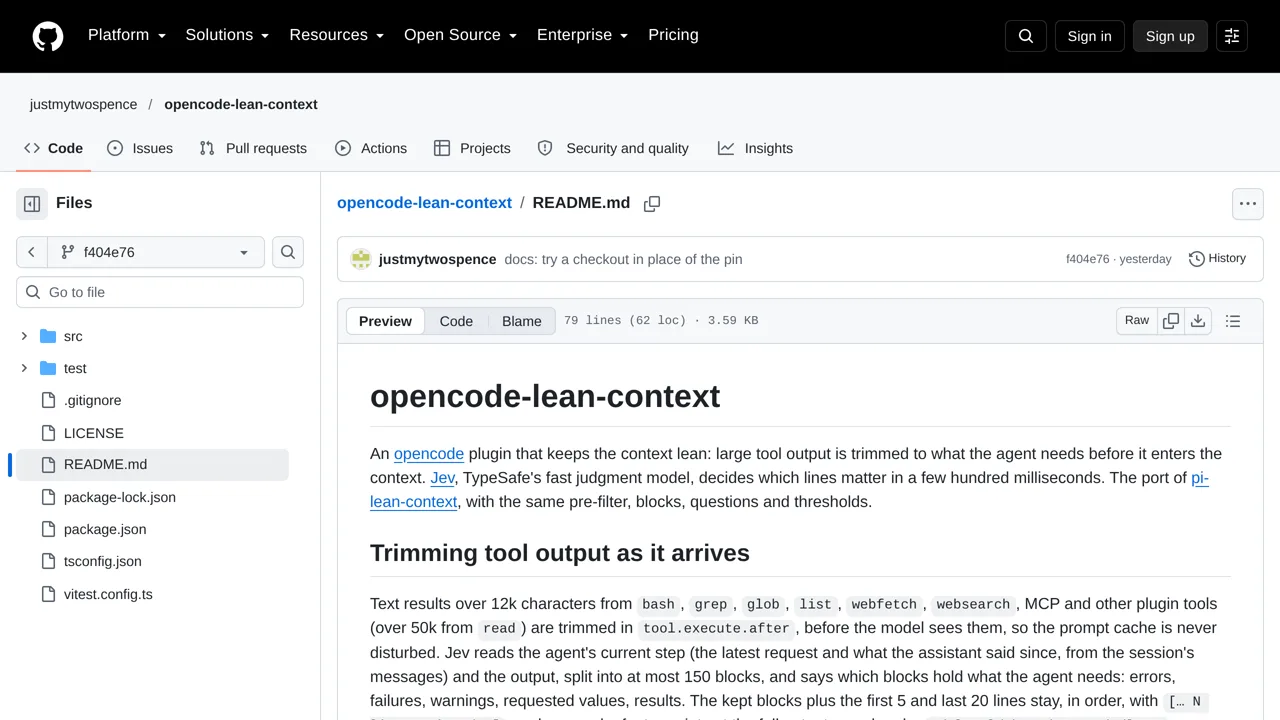
Let Jev pick useful blocks from large tool output before an OpenCode coding assistant reads it.
Compare Jev with human reference labels and language models across seven political-science replications, including annotation, scaling and probability calibration.

Jev, briefly
A chat model generates text token by token and hopes you parse it. Jev never generates a word. Your code sends the state of the world plus typed questions; Jev returns every answer in one parallel pass — typed values with calibrated probabilities and a confidence score your code can trust. About 70–500 ms end to end, $0.042 per million input tokens, output free. Trained with what TypeSafe calls Reinforcement Learning for Calibrated Decisions.
You define the options. Jev returns the chosen option, a probability for every option, and a confidence. The workhorse of routing, agents, and games — the answer space is always legal, so there is nothing to parse and nothing to hallucinate.
You describe ordered levels — say trivial / normal / critical. Jev returns the level, the probability of each, and a confidence. Scores turn fuzzy judgment (“how severe is this log line?”) into a number-free decision your code can branch on.
You assert a statement; Jev returns the probability that it is true — a noul. Moderation, verification, guardrails, “does this diff actually fix the bug?”: one question, one calibrated probability.
Official material lives at typesafe.ai and docs.typesafe.ai. JevMade is an independent community registry — not affiliated with or endorsed by TypeSafe AI.
Recurring lessons
Games, drones, trading bots, and browser agents all converge on the same loop: serialize the state, ask one decisive question, act, repeat. Jev’s latency makes the loop feel instant — the model lives inside the control loop, not outside it.
The answer says what; the confidence says whether to act. The most reliable entries threshold on confidence to route edge cases to a slower model or a human — automation with an honest escape hatch.
Makers rarely ask Jev to pick from everything. Local tactics prune 225 gomoku moves to ~40; DOM filters turn a page into an element table; code narrows options, Jev judges within them.
A recurring split: Jev makes every decision cheaply and instantly, and a small LLM is only invoked when a human-facing string must actually be written. Decision and generation are separate budgets.
Send the link — repo, live demo, post, or video — plus a line on what it does and which primitives it uses. Every entry is verified against its primary source before it ships.
Submit your experimentSign in first so we can reply to you. Submissions are reviewed, not published automatically.