Read & learn
Written guides.
Understand Jev, one idea at a time. Walkthroughs, recipes, and writeups — our notes first, the original next.
Learn, build, and play with Jev — from deep technical guides to creative experiments.
Read & learn
Understand Jev, one idea at a time. Walkthroughs, recipes, and writeups — our notes first, the original next.
Watch & learn
See an idea take shape. Tutorials, demos, and deep dives, organized by topic and credited to their creators.
Make & explore
See what builders made with Jev. Games, tools, repositories, articles, and more — traced to their sources.
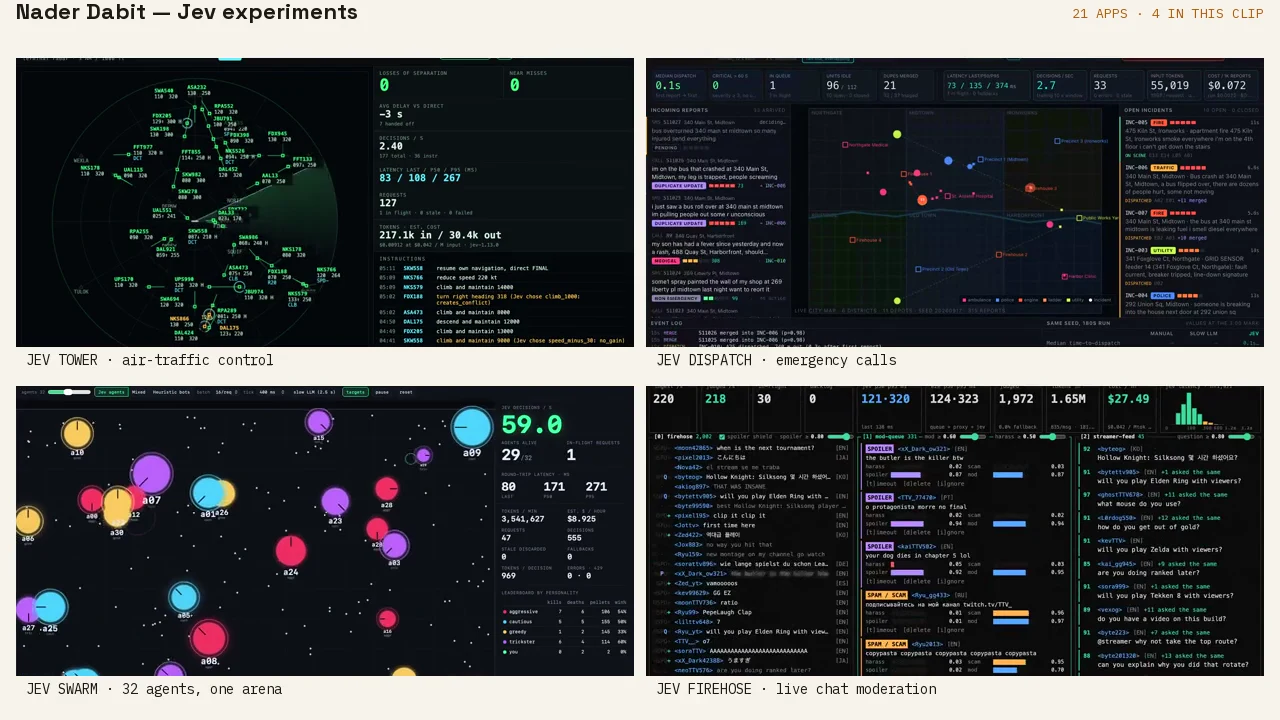
Every category, from games and tools to repositories and writeups, traced to a primary source.
Real-time research powered by
Same ideas.
Different paths.
This is the full registry, not just the featured picks. Figures like speed, cost, and stars are maker-reported or captured snapshots, not JevMade measurements.
2140 experiments · showing 1921–1980
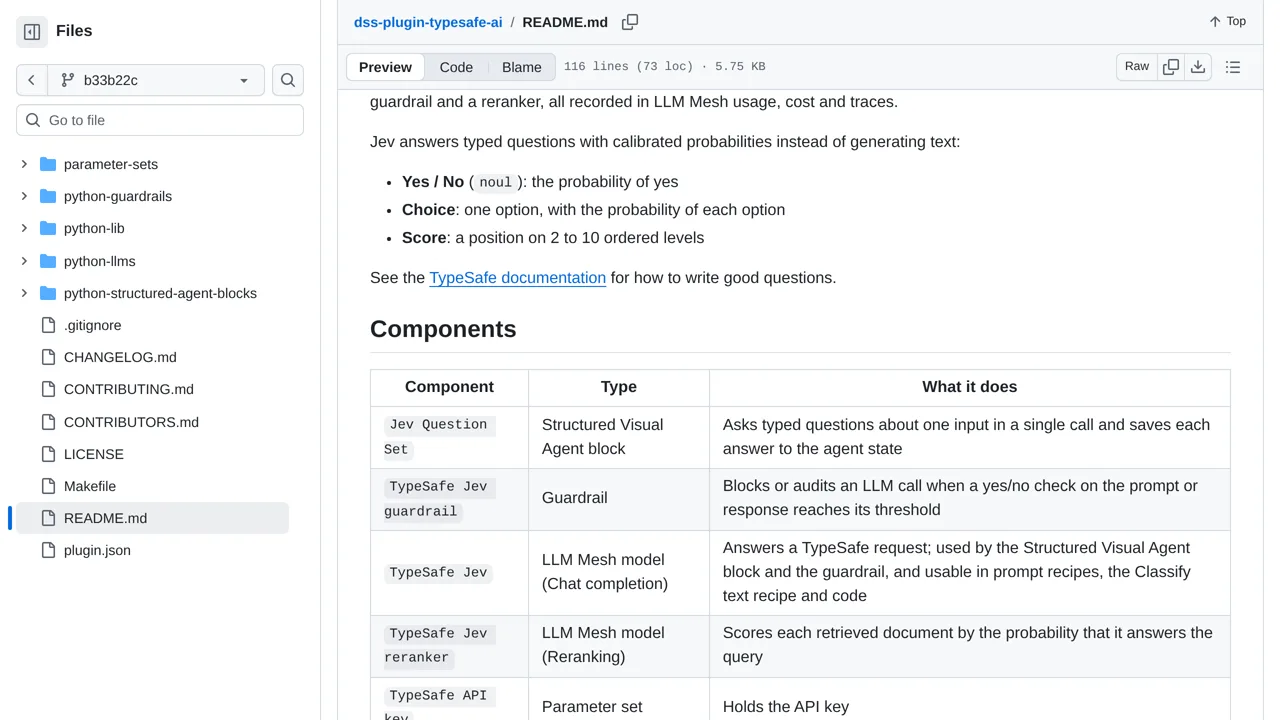
Bring Jev decisions into Dataiku workflows to route requests, check prompts and responses, and rank retrieved documents.
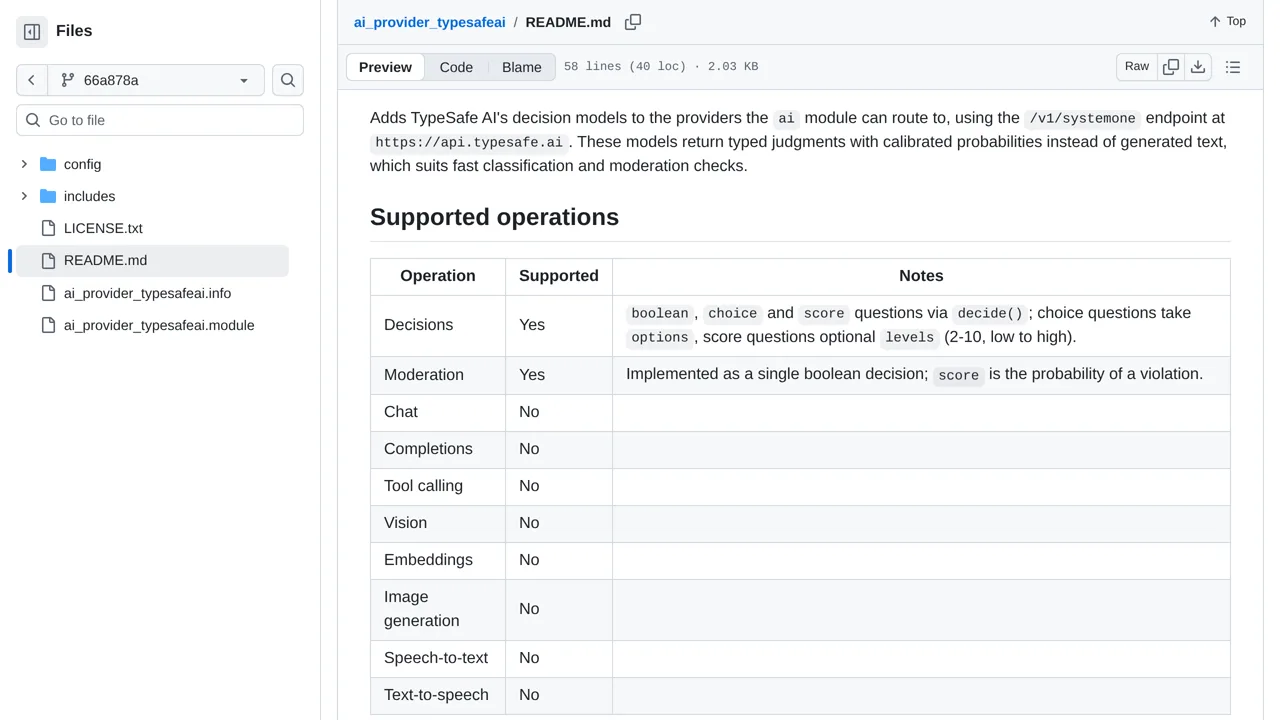
Connect Backdrop CMS to TypeSafe’s decision models for text classification and moderation checks.
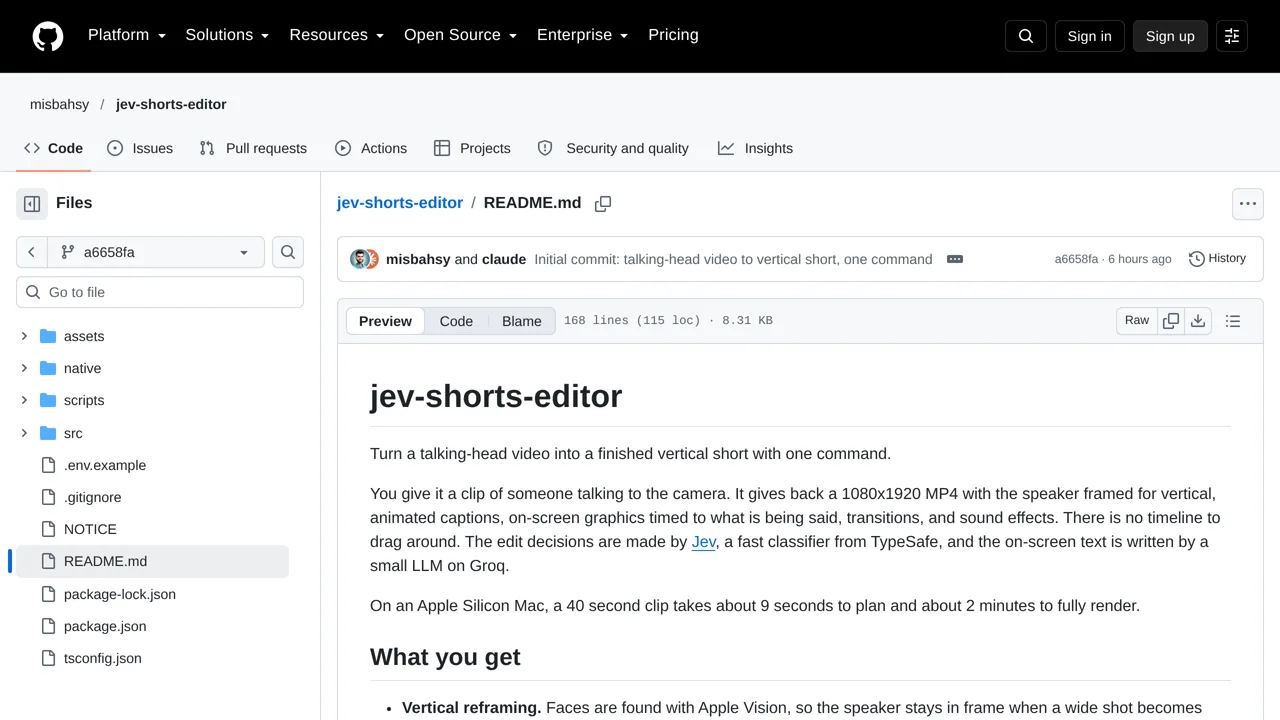
Turn a talking-head clip into a vertical short, with Jev choosing caption styles, graphics and transitions from fixed menus.
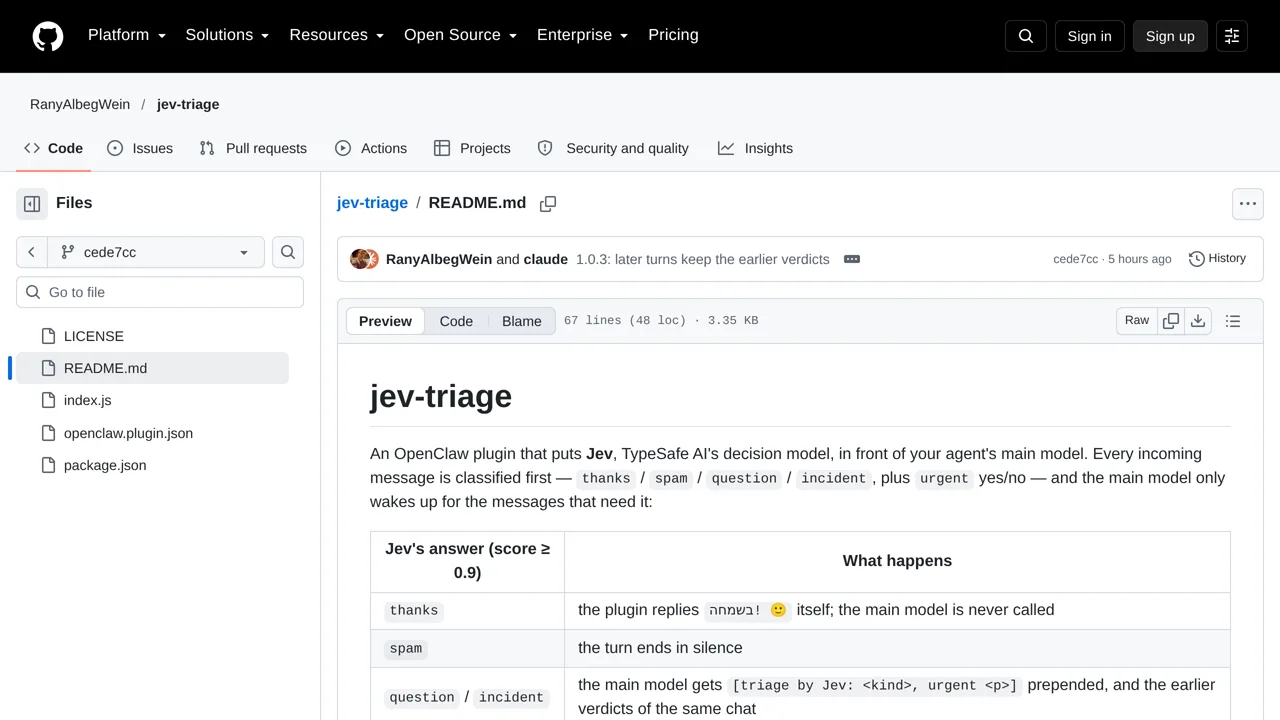
Let Jev sort incoming OpenClaw messages before the main model runs, replying to thanks and silently dropping confident spam judgments.
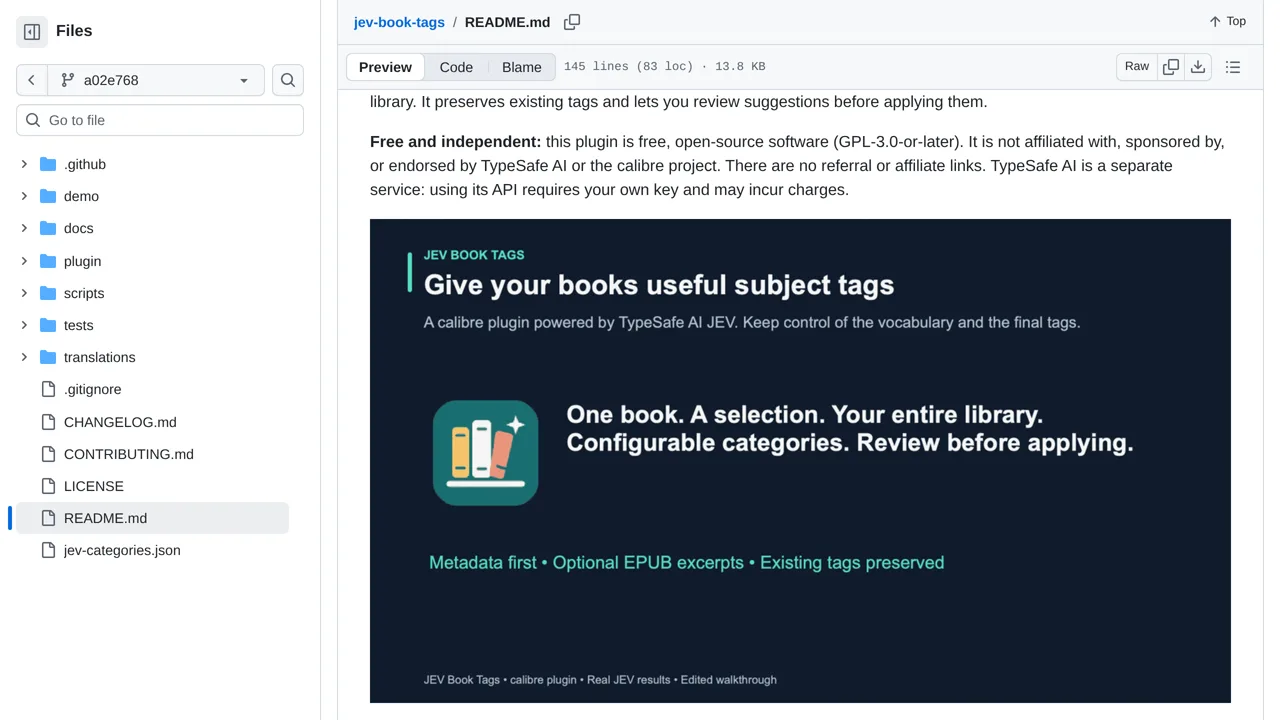
Suggest subject and genre tags for a calibre library, with independent category checks and a chance to review each book.
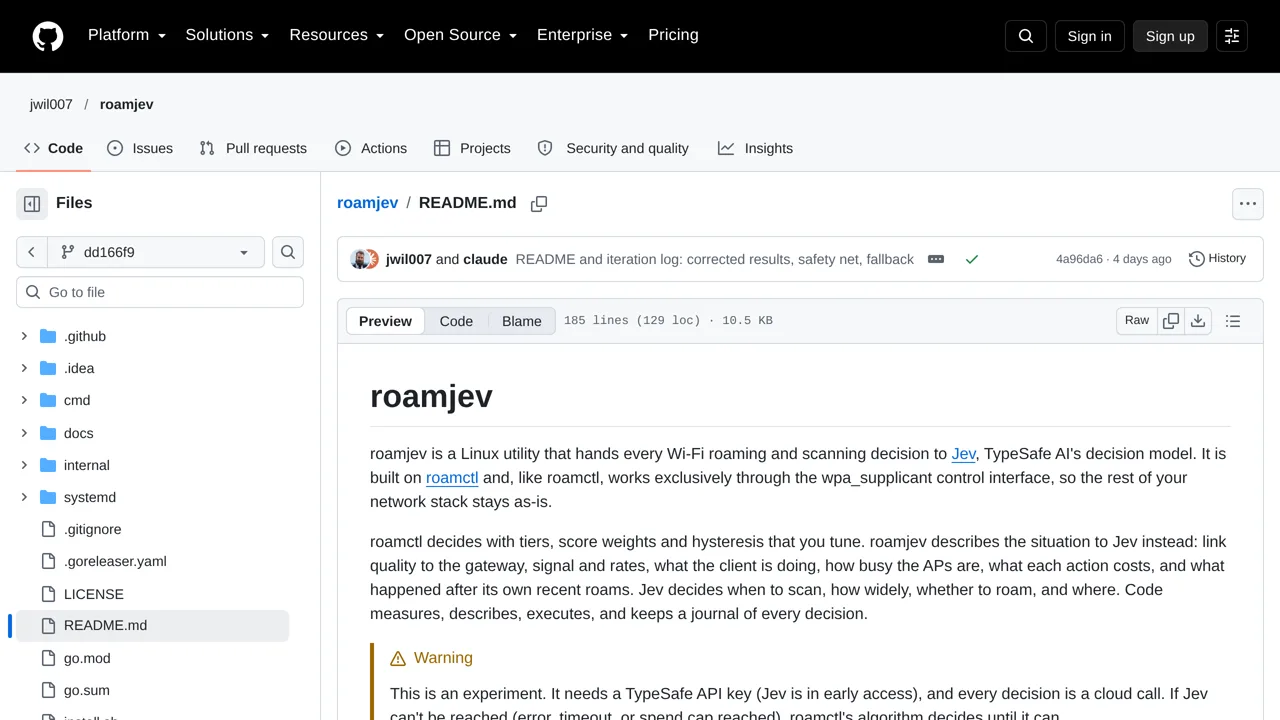
Let Jev choose when a Linux Wi-Fi client scans or switches access points, with a dashboard for inspecting decision inputs and probabilities.
GraphDecide tests whether fast decision models can read graphs and turn legal choices into good solutions.

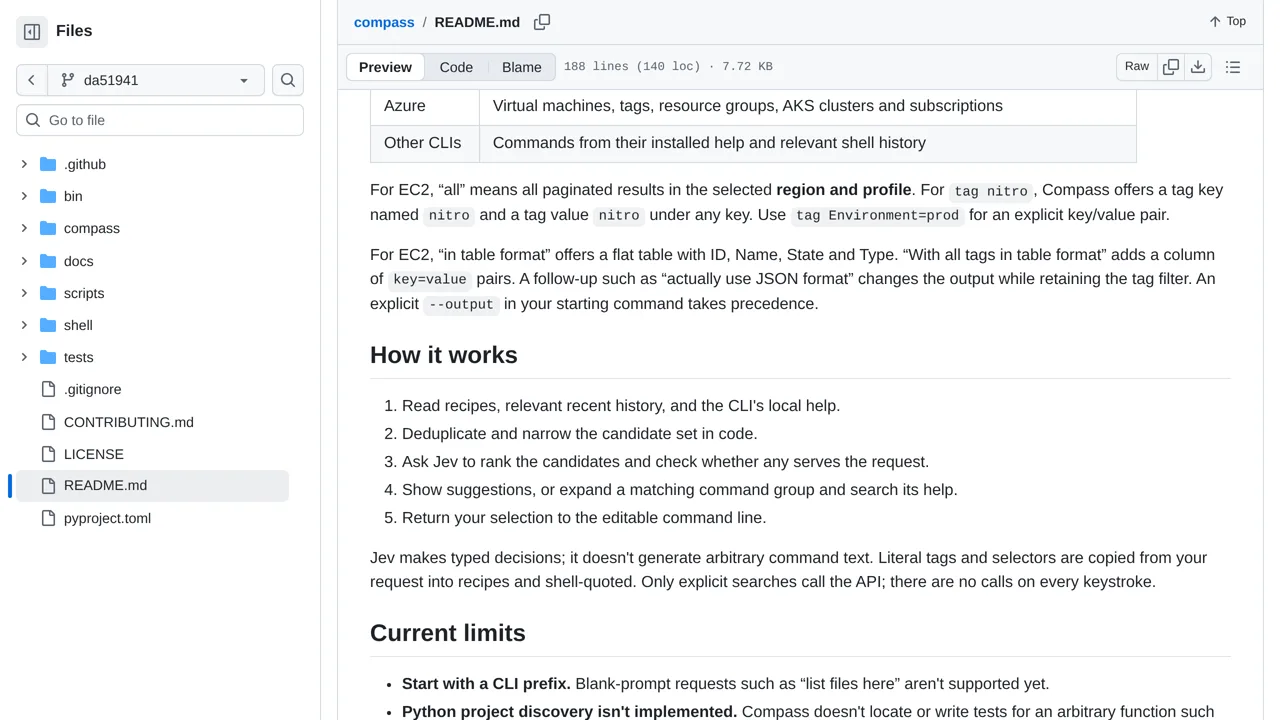
Describe a terminal task, and Compass suggests commands you can review in your shell before running.
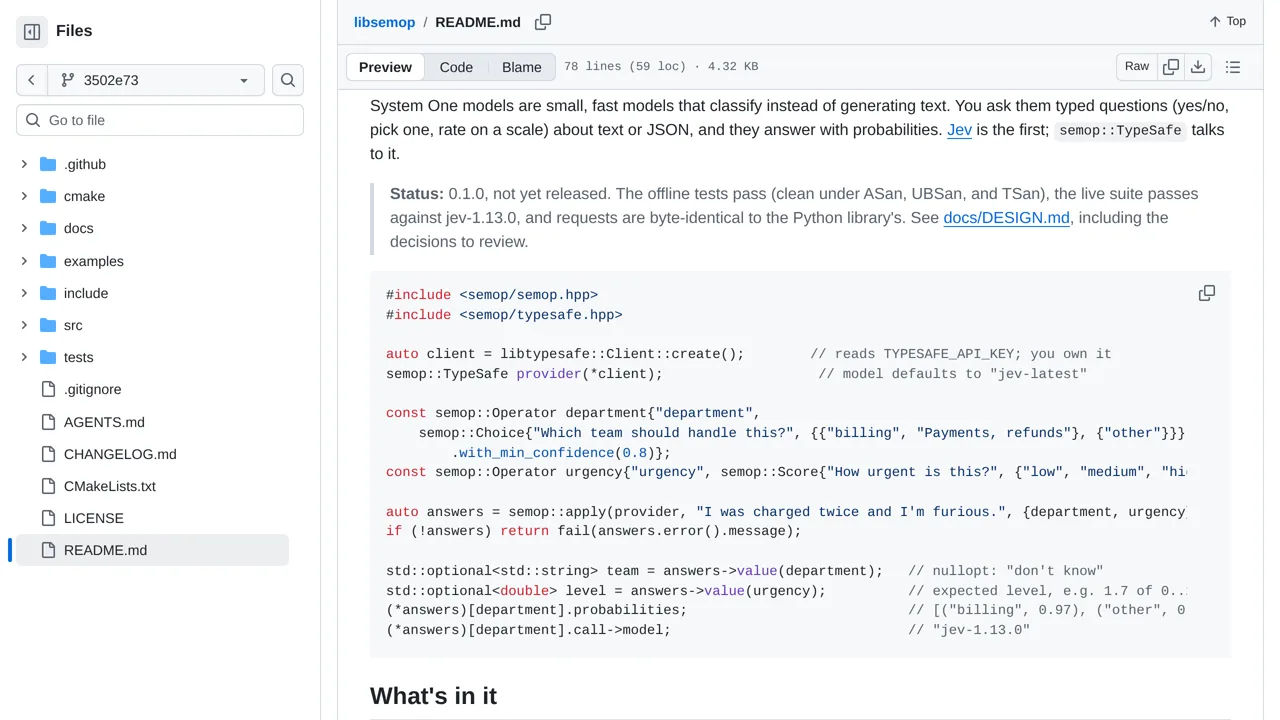
libsemop brings typed AI decisions to C++, including an empty answer when the model is unsure.
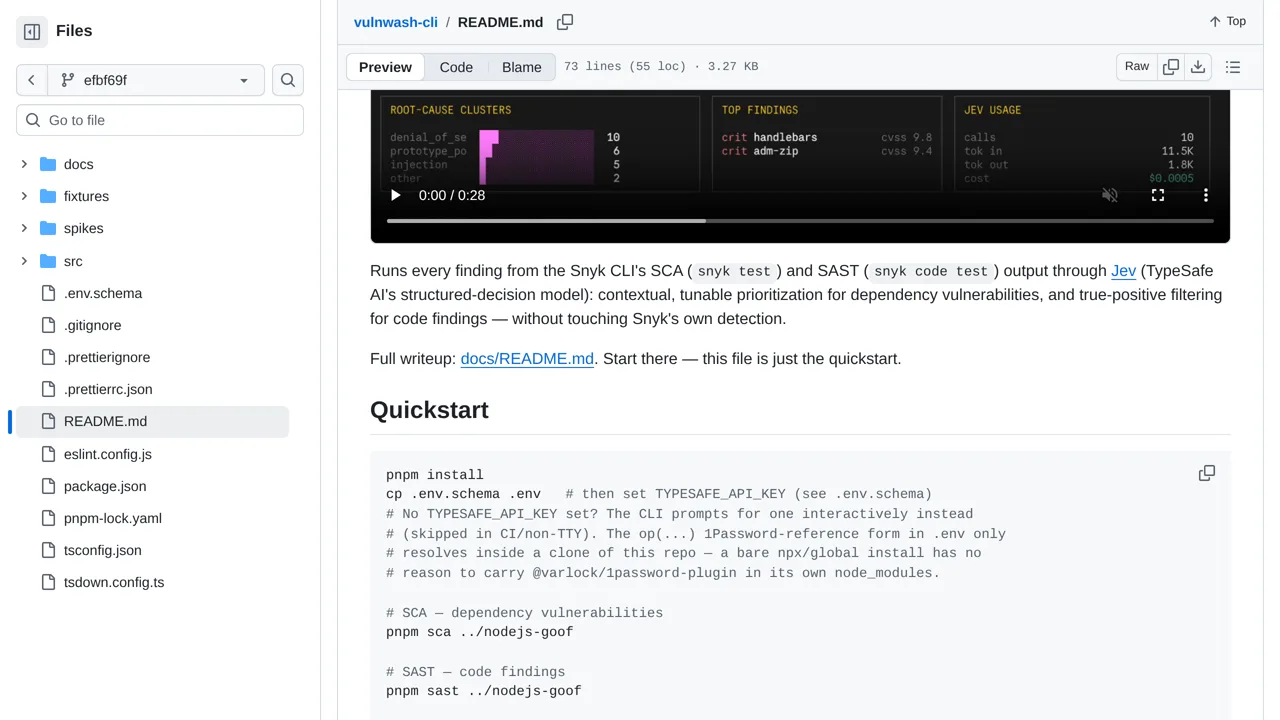
vulnwash sorts Snyk security findings into review buckets, combining fixed dependency rules with Jev’s judgments about risk and code.
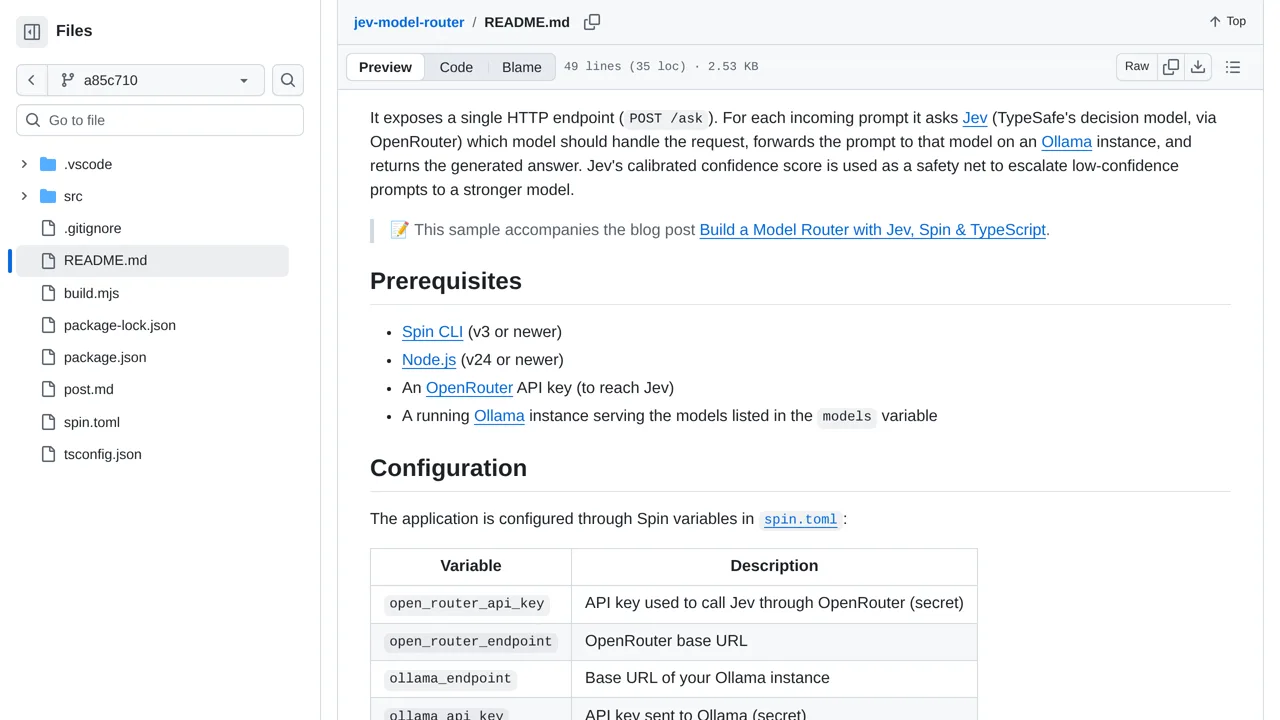
This WebAssembly sample asks Jev which model should answer a prompt, then forwards that prompt to Ollama.
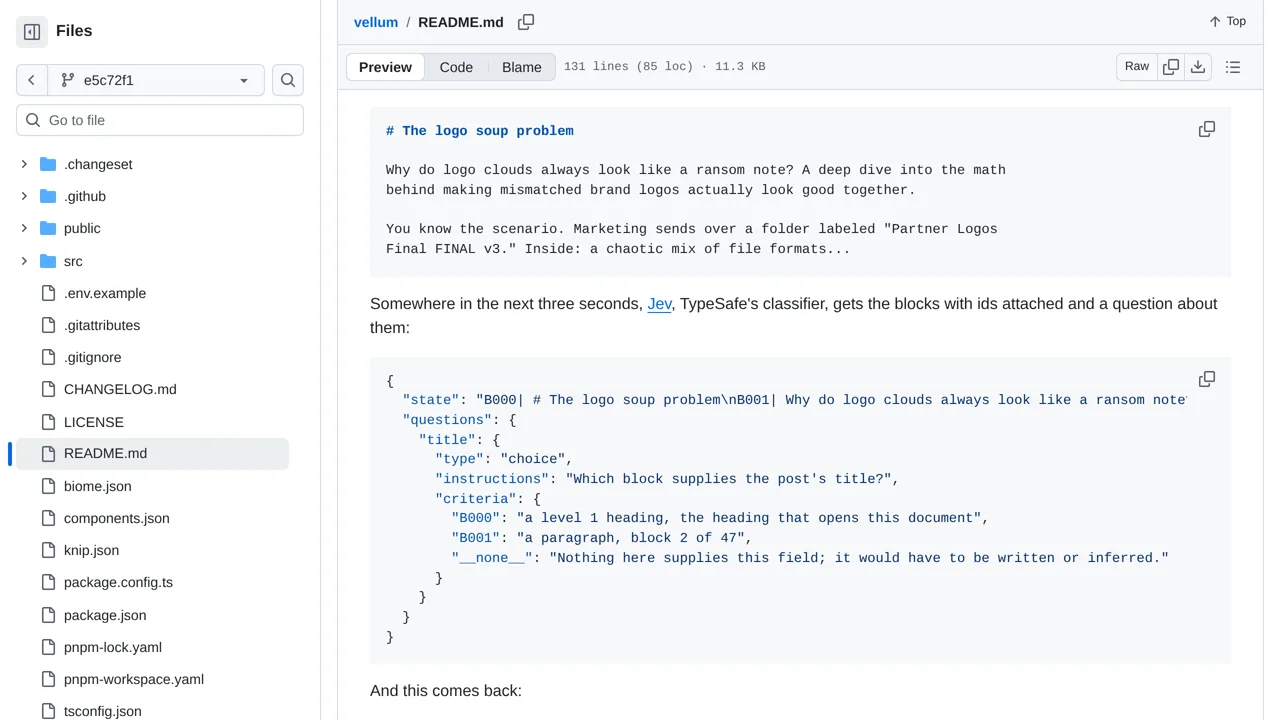
Vellum asks Jev which Markdown blocks belong in a Sanity document, then copies and validates those source values in ordinary code.
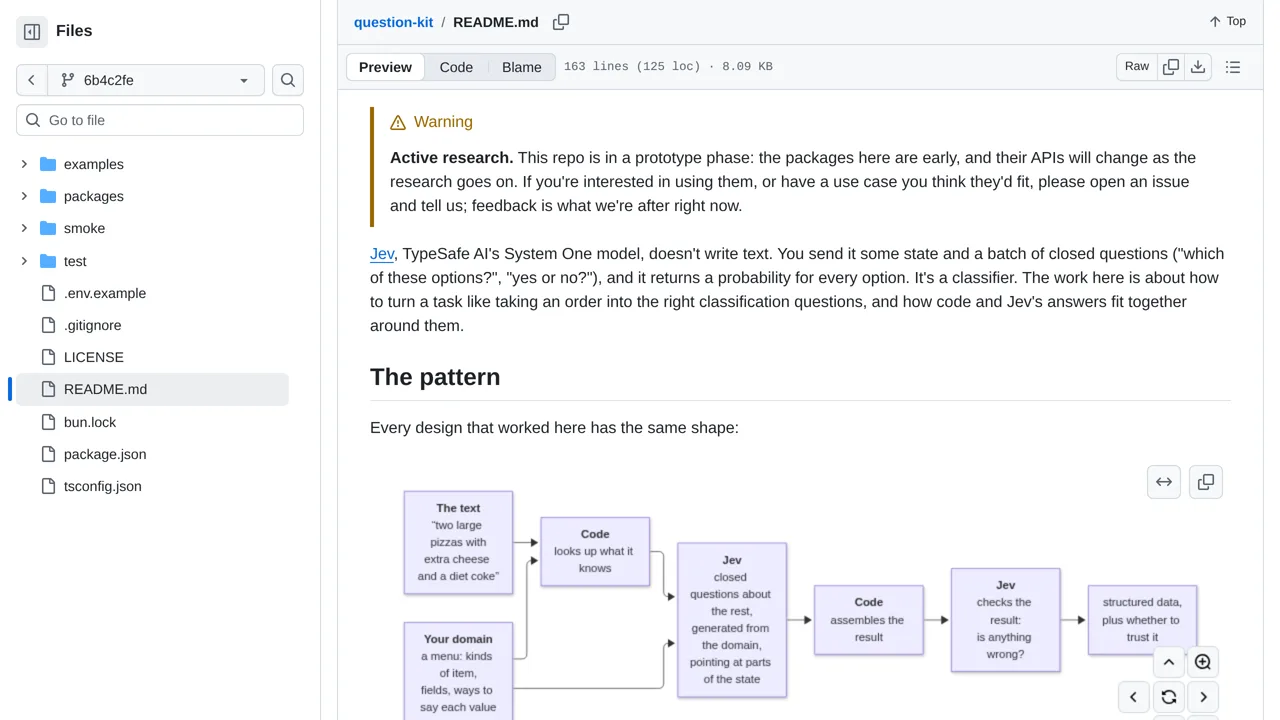
Describe a workflow as a decision tree: Jev chooses branches and checks conditions, while code runs tools and a local viewer shows what happened.
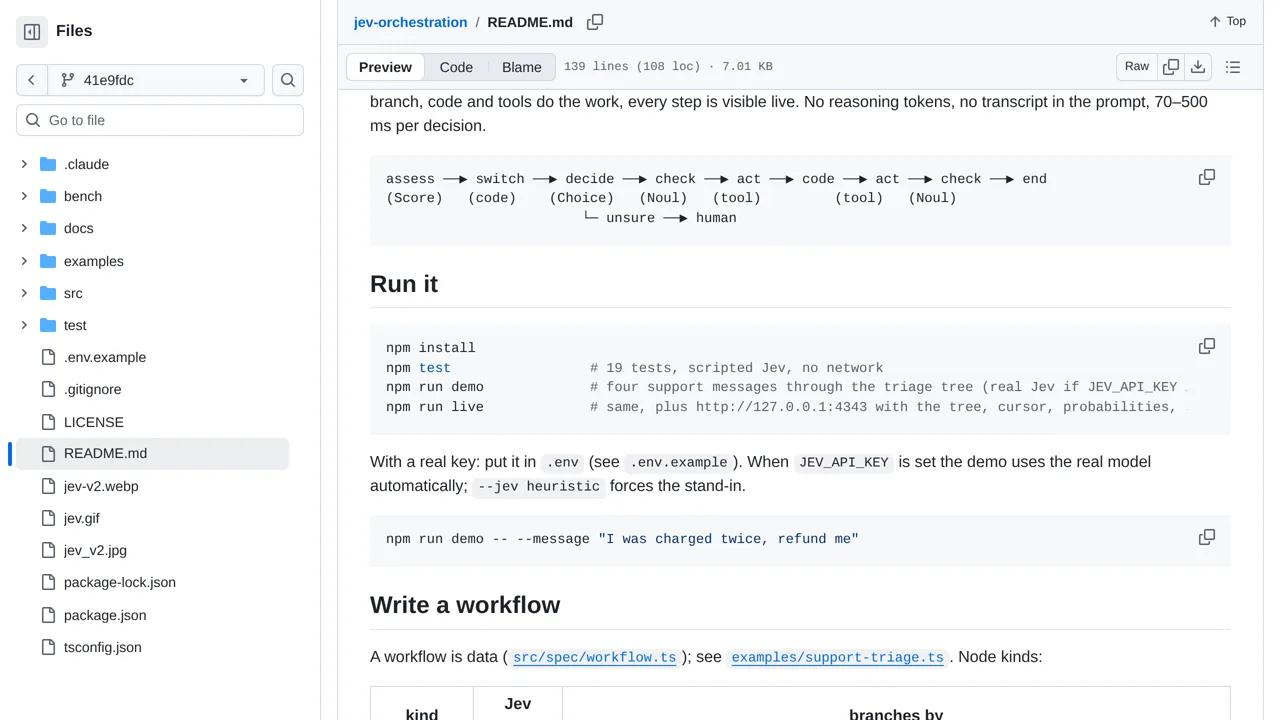
Ask questions about each source file and turn Jev’s answers into a codebase map, with views for file roles, complexity and areas worth investigating.
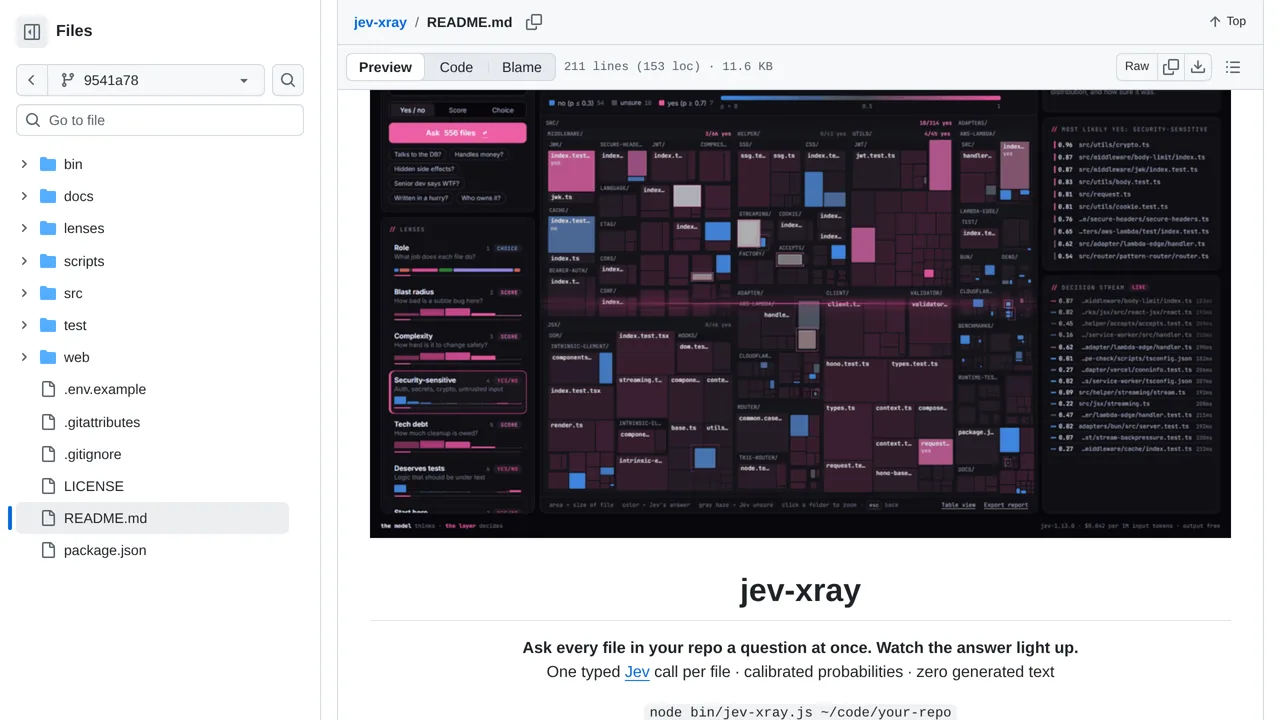
Build a mine-cart track and write a clue that guides the cart through Jev-controlled switches across five levels.
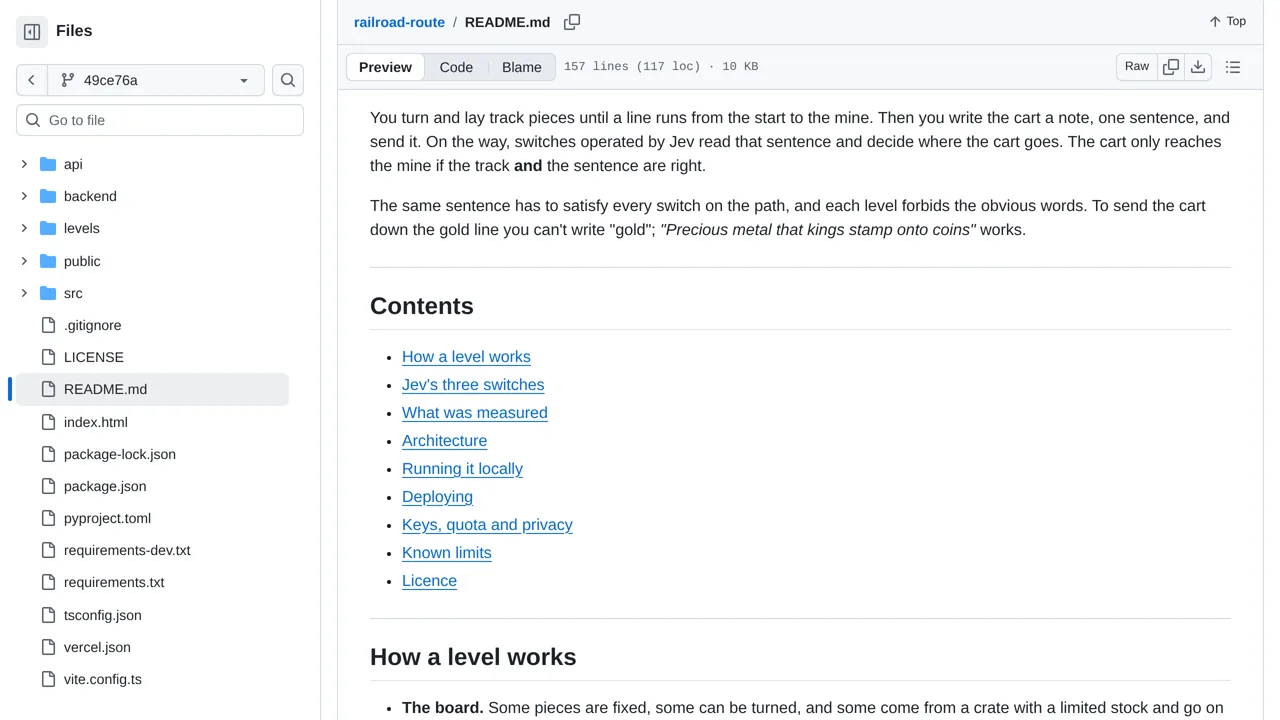
Question-kit turns a domain definition into bounded Jev questions, with an order-taking prototype that combines menu rules, uncertain judgments and a final completeness check.
Song and Lee use Jev to predict a text game’s next state, then feed those probabilities to a fixed planner and compare against writing-model predictions.

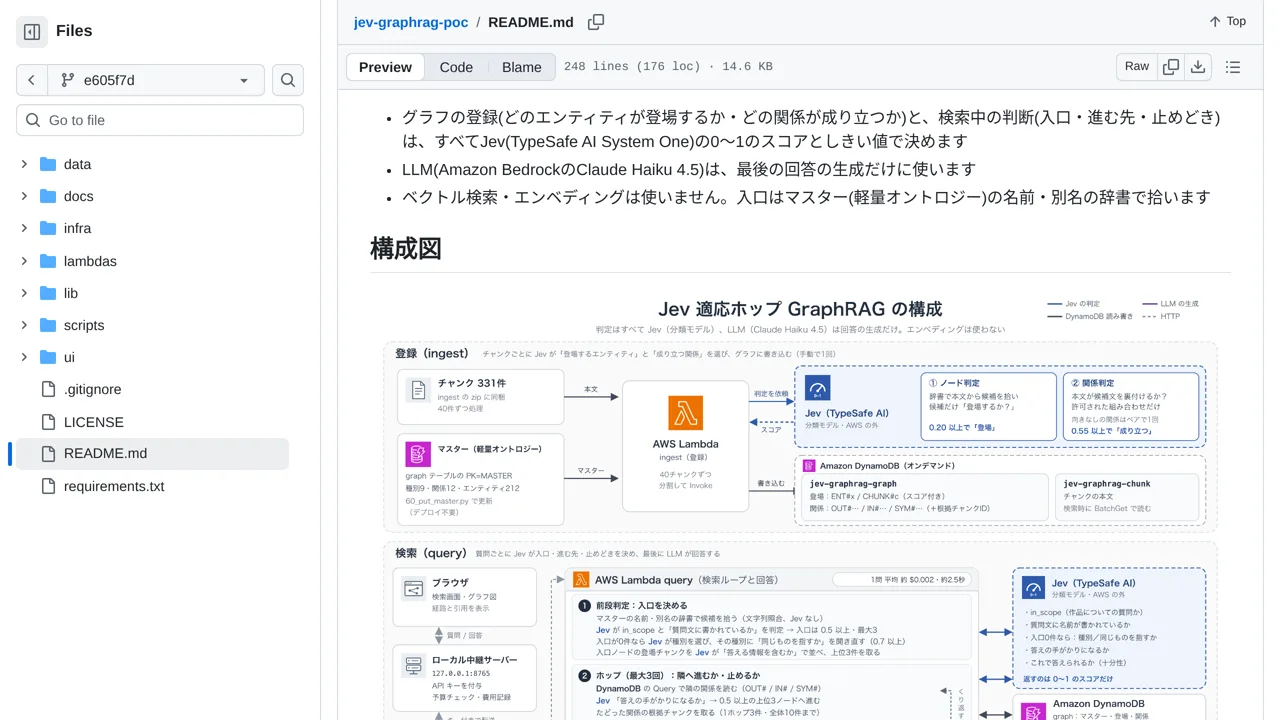
Build a small knowledge graph without embeddings: Jev checks mentions and links, retrieval follows the graph, and Claude Haiku writes a cited answer.
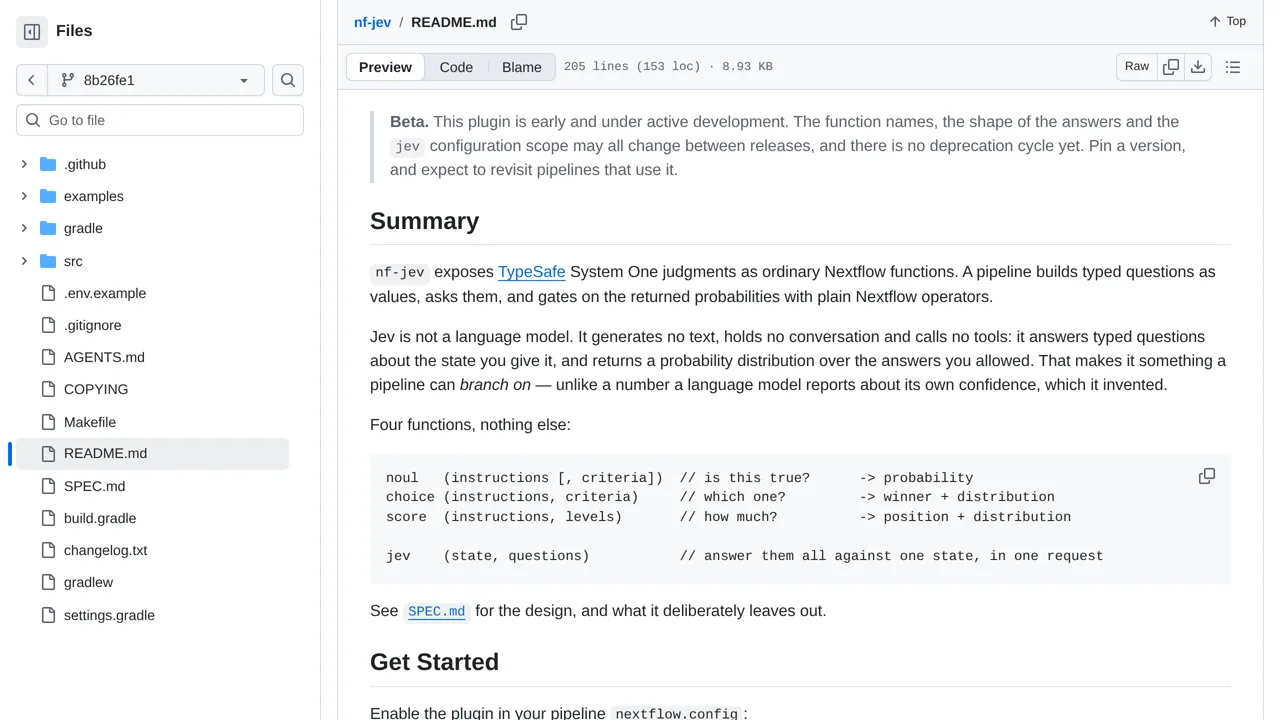
Ask Jev to label sample metadata or choose a pipeline branch from Nextflow, with ordinary code deciding what happens when the answer is uncertain.
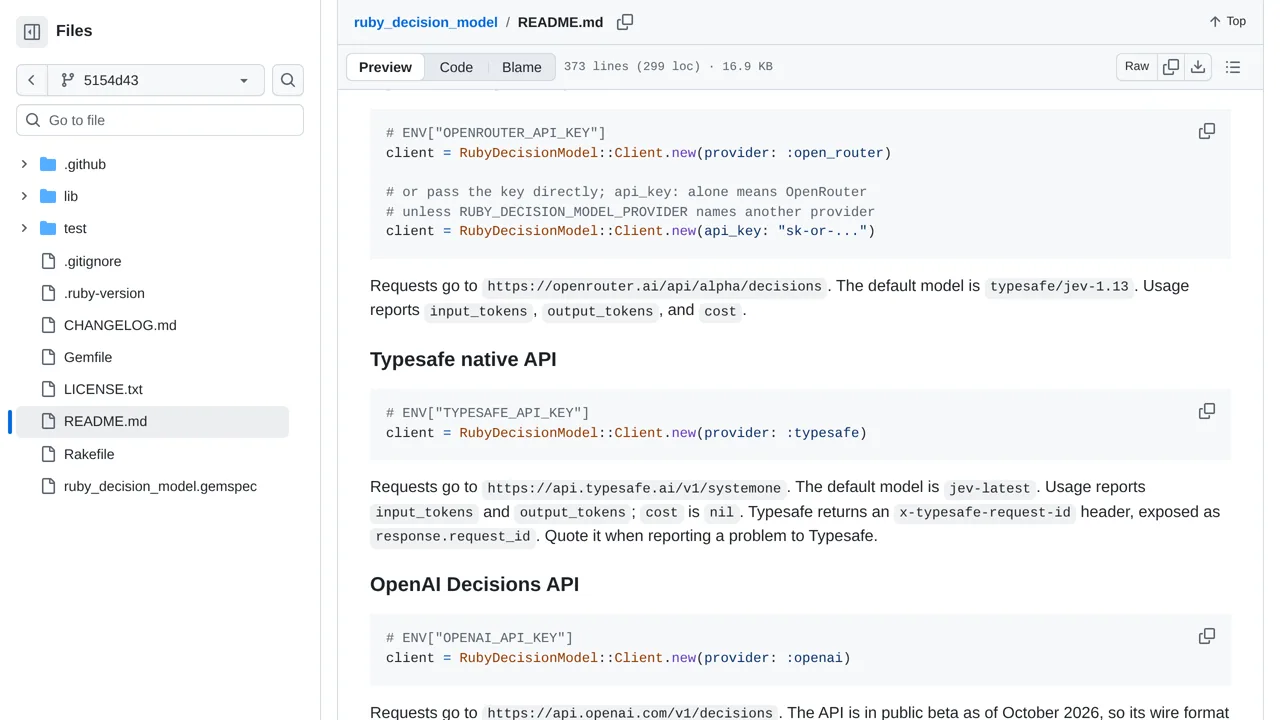
Ask typed decision questions from Ruby through one client, whether Jev runs through TypeSafe, OpenRouter or another configured decision provider.
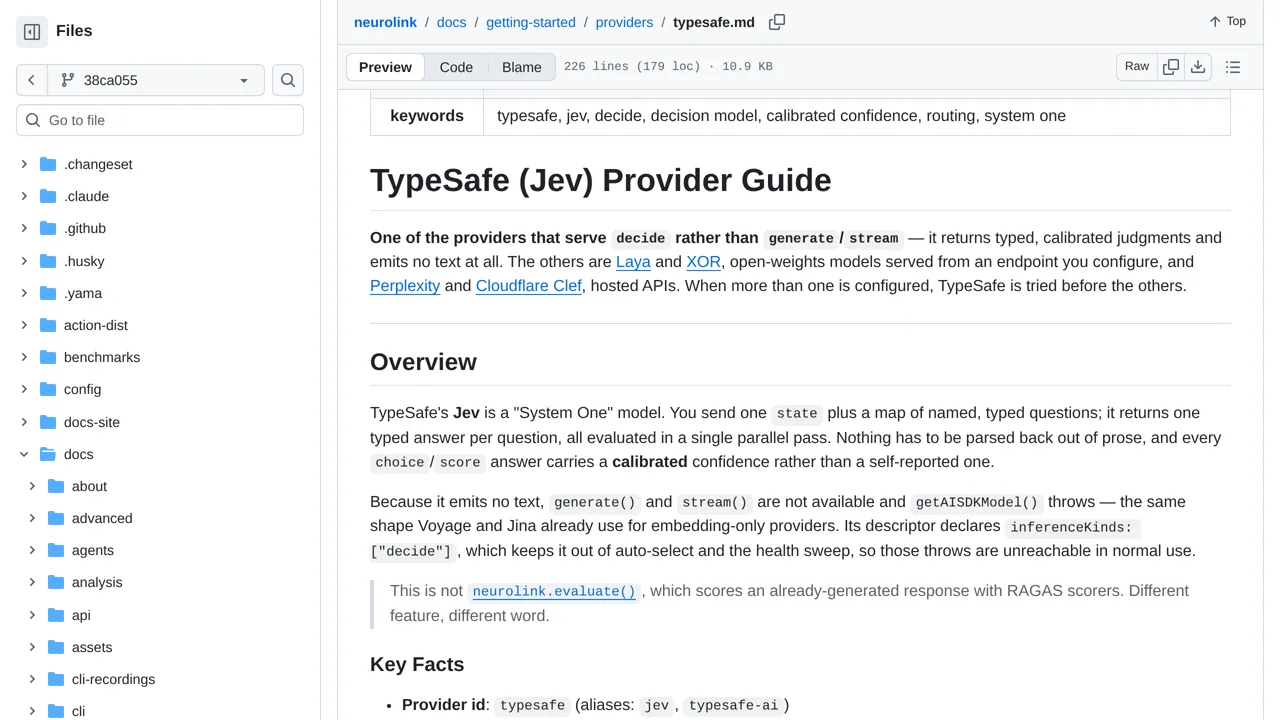
Use Jev decisions alongside text generation in NeuroLink, a TypeScript toolkit with a shared interface for yes/no, choice and ordered-rating questions.
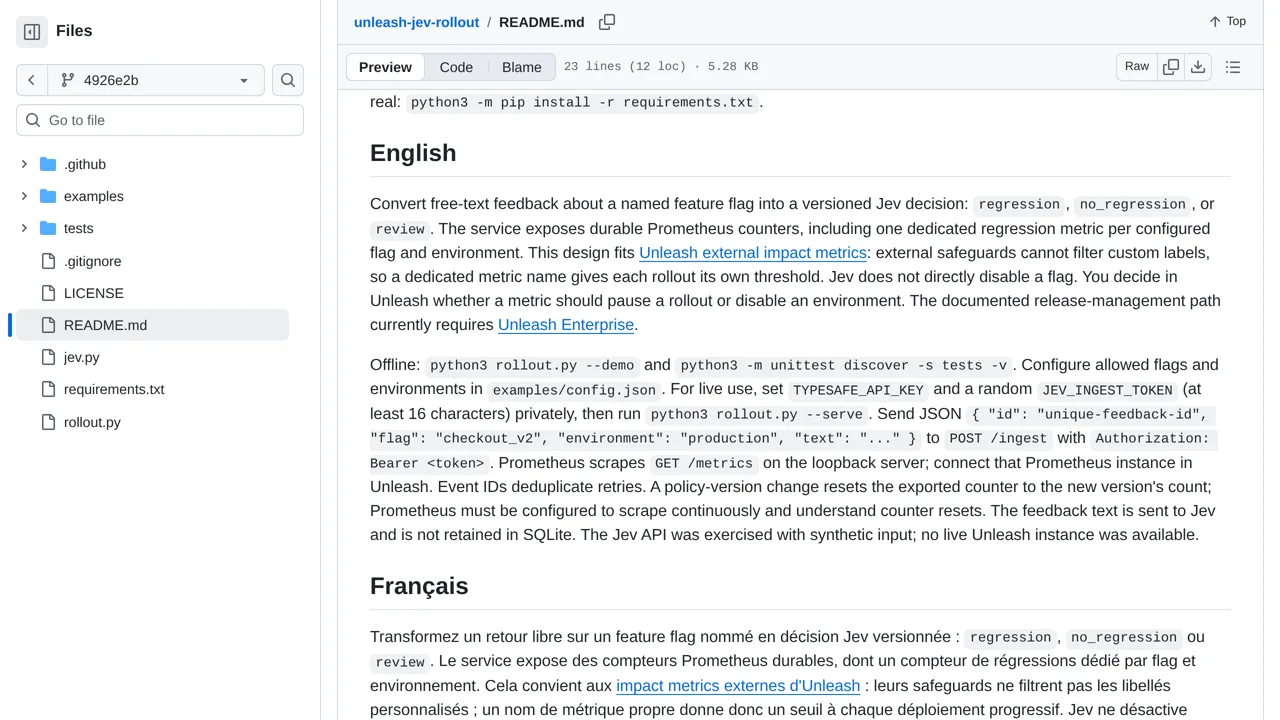
Turn feedback about a feature rollout into Jev labels and durable Prometheus counters that an Unleash rollout policy can monitor.
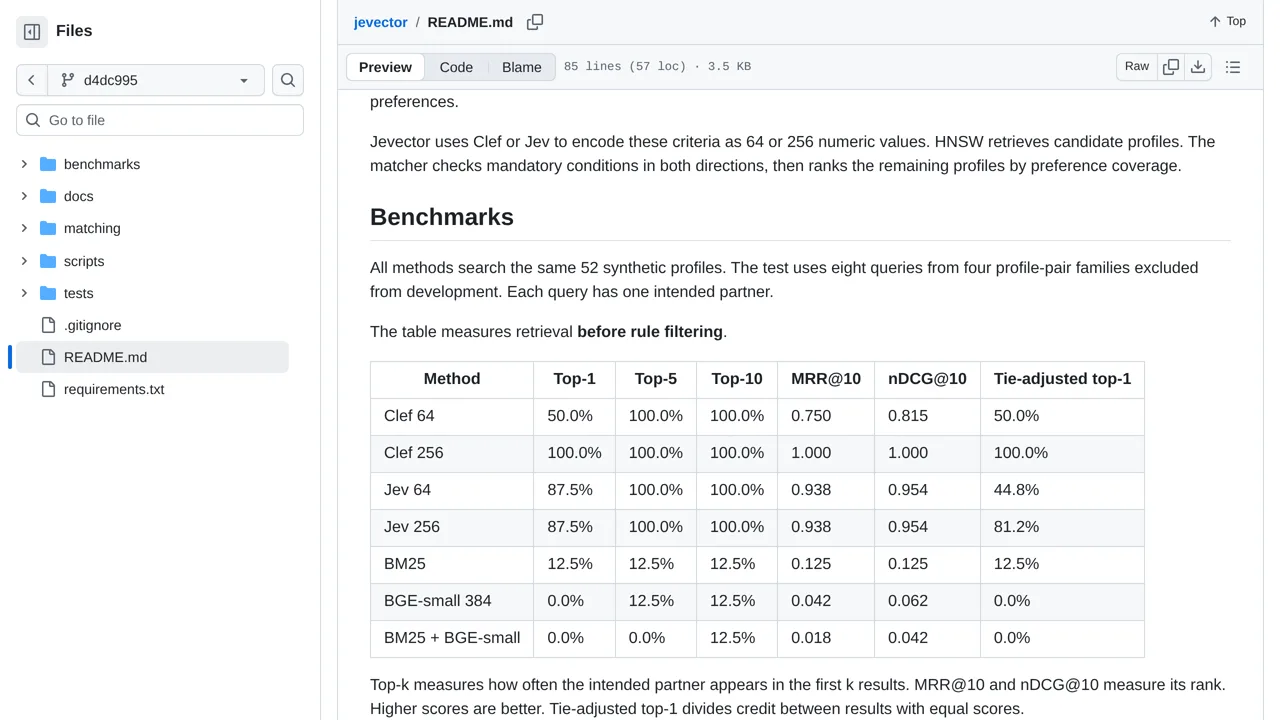
Match profiles using Jev or Clef decisions about explicit traits, retrieve candidates, then check both people’s required conditions before ranking preferences.
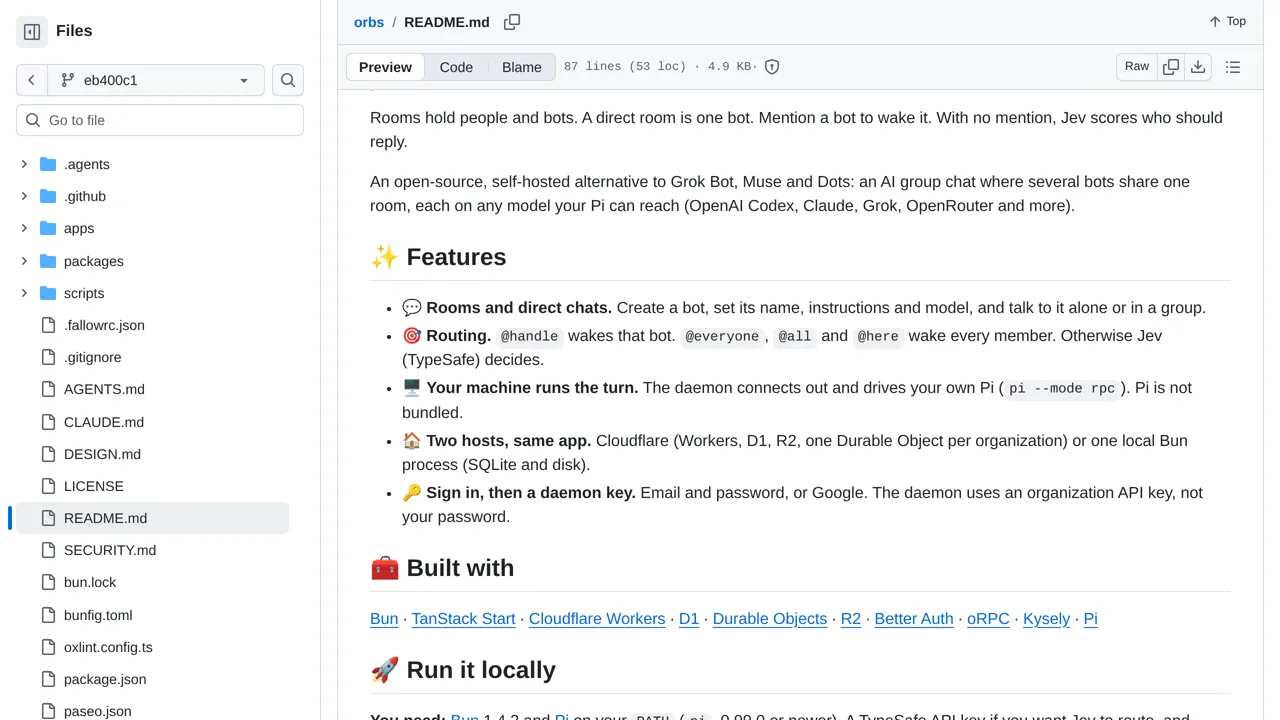
Choose who replies in a shared chat: name a bot directly, or let Jev judge which bot’s job fits the message.
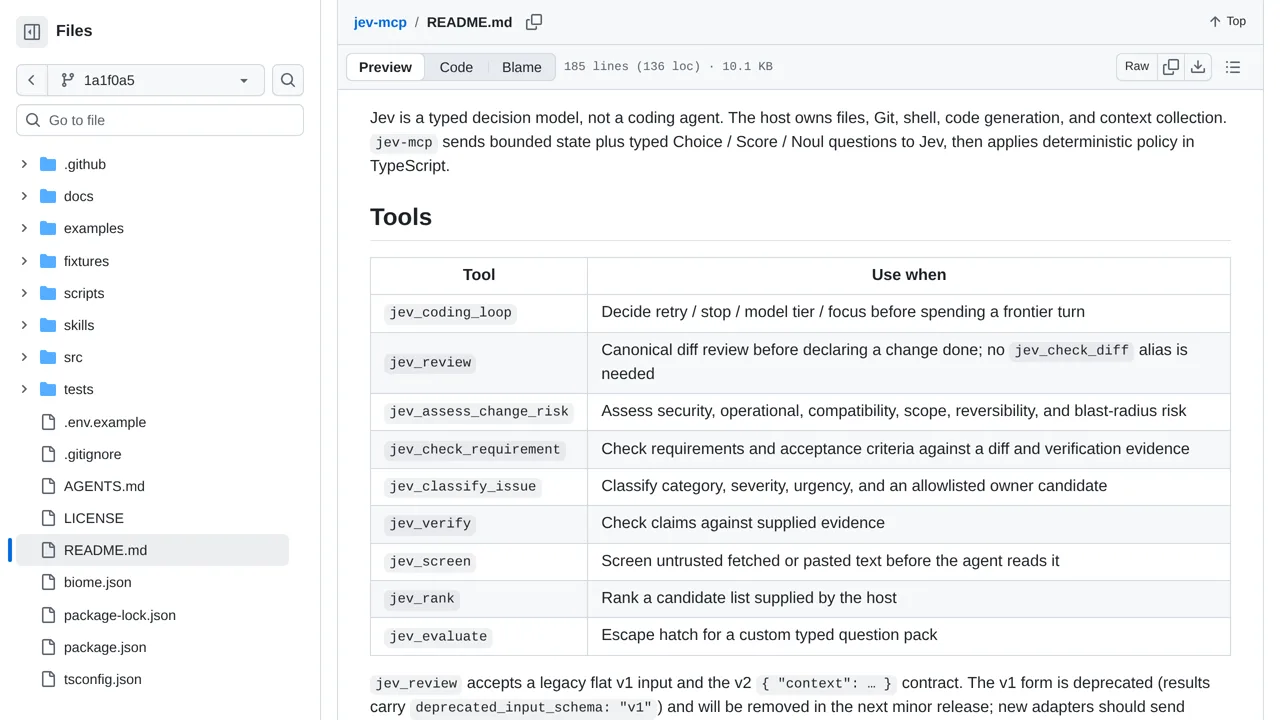
Give coding agents a shared Jev decision layer for review evidence, change risk and next steps, while the host keeps control of files, tools and final actions.
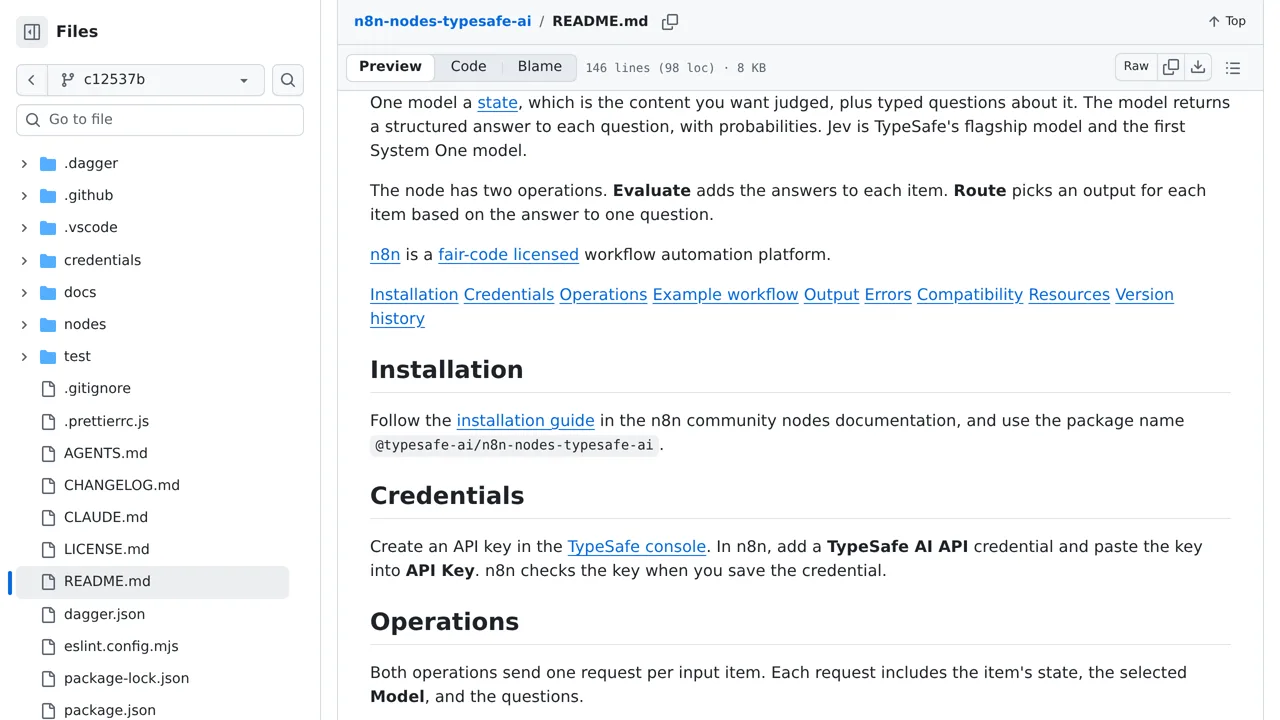
TypeSafe’s own n8n node asks Jev typed questions and routes incoming items to workflow branches, with an optional fallback for uncertainty.
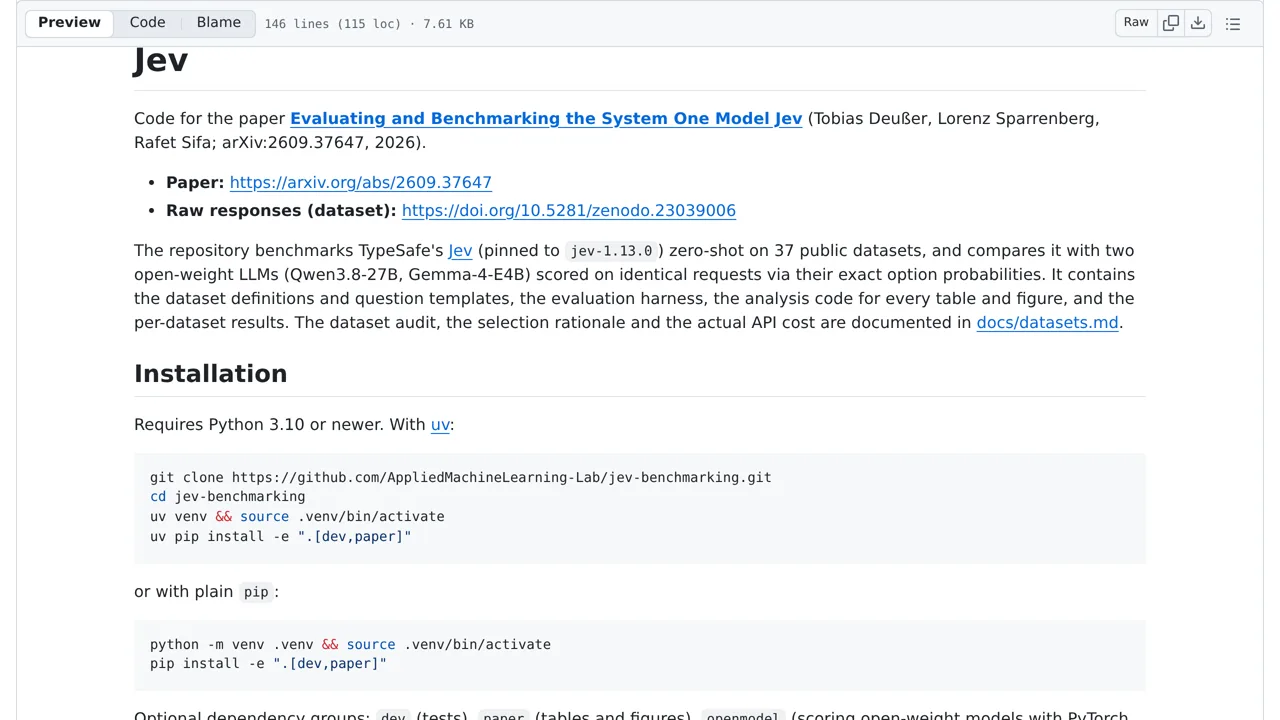
In 2026, Tobias Deußer and colleagues evaluated the Jev 1.13.0 model without task-specific training across 37 datasets, comparing it to direct answer probabilities from two open models.
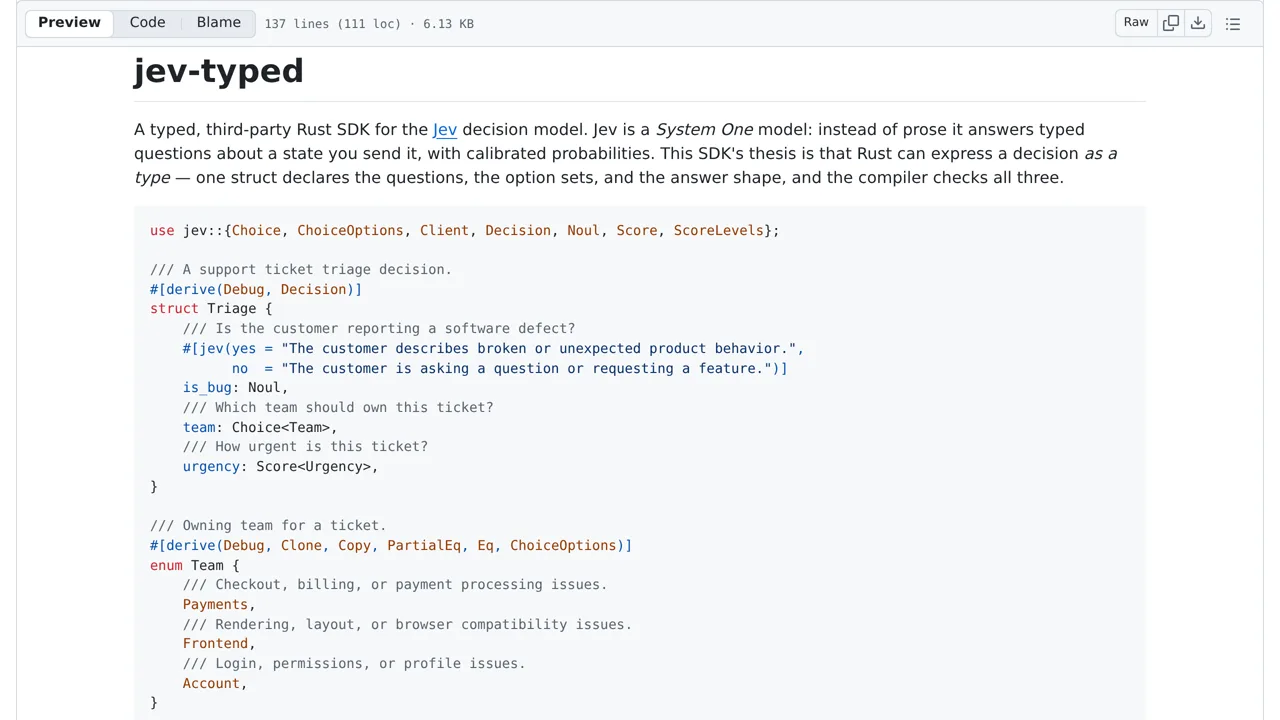
Tyr Chen created a third-party software kit that connects Jev decision models to the Rust programming language by turning questions into standard code structures.
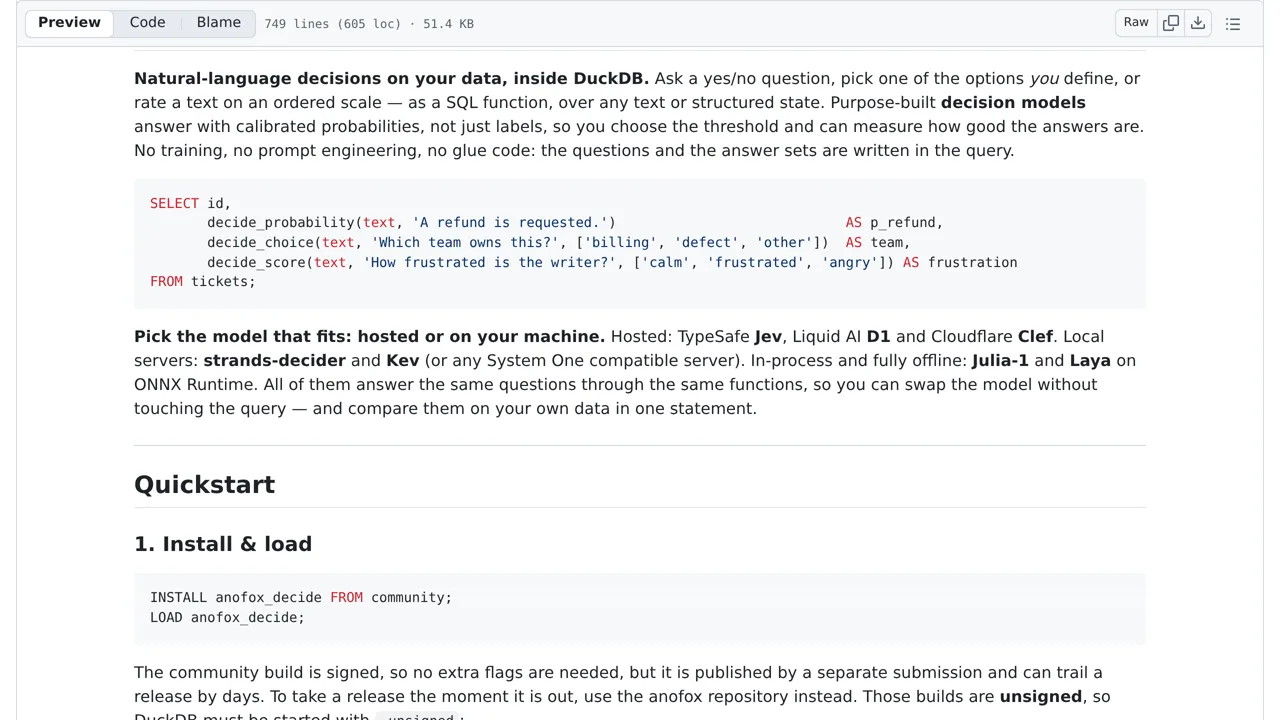
An early DuckDB extension for evaluating natural-language predicates and defined answer sets from SQL.
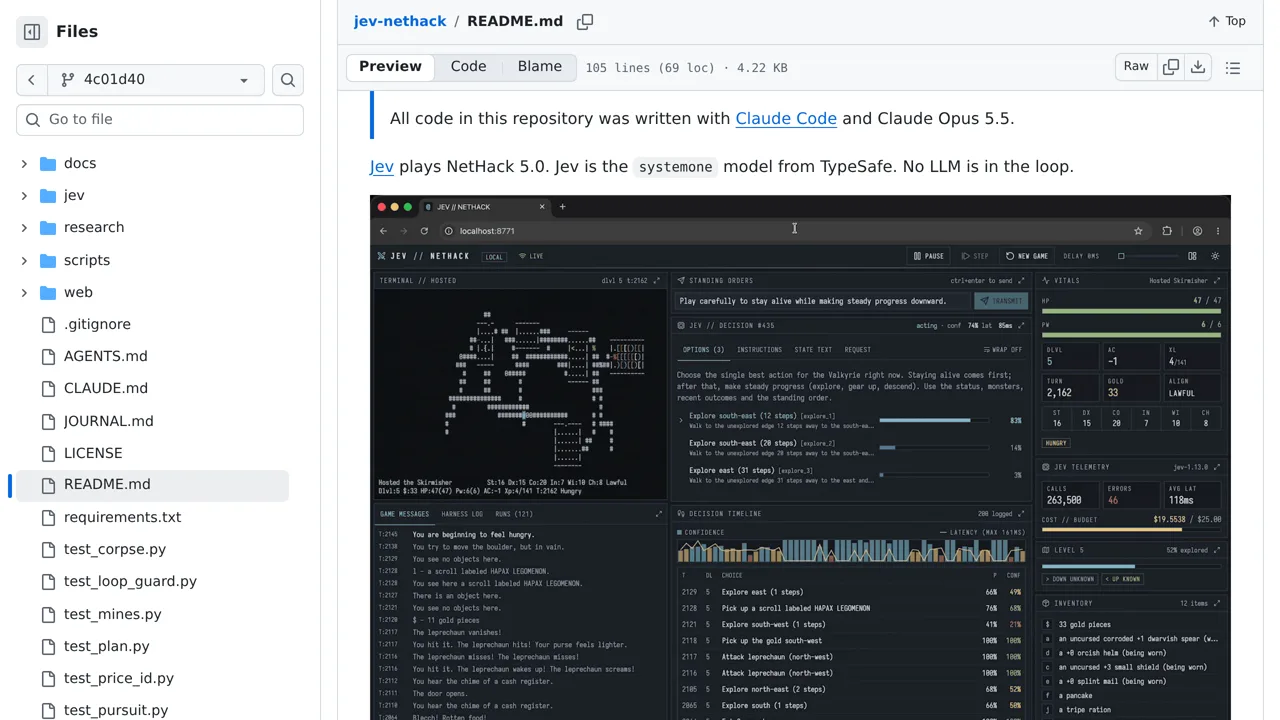
Jev chooses legal moves in NetHack 5.0 while ordinary code reads the terminal screen and presses the keys.
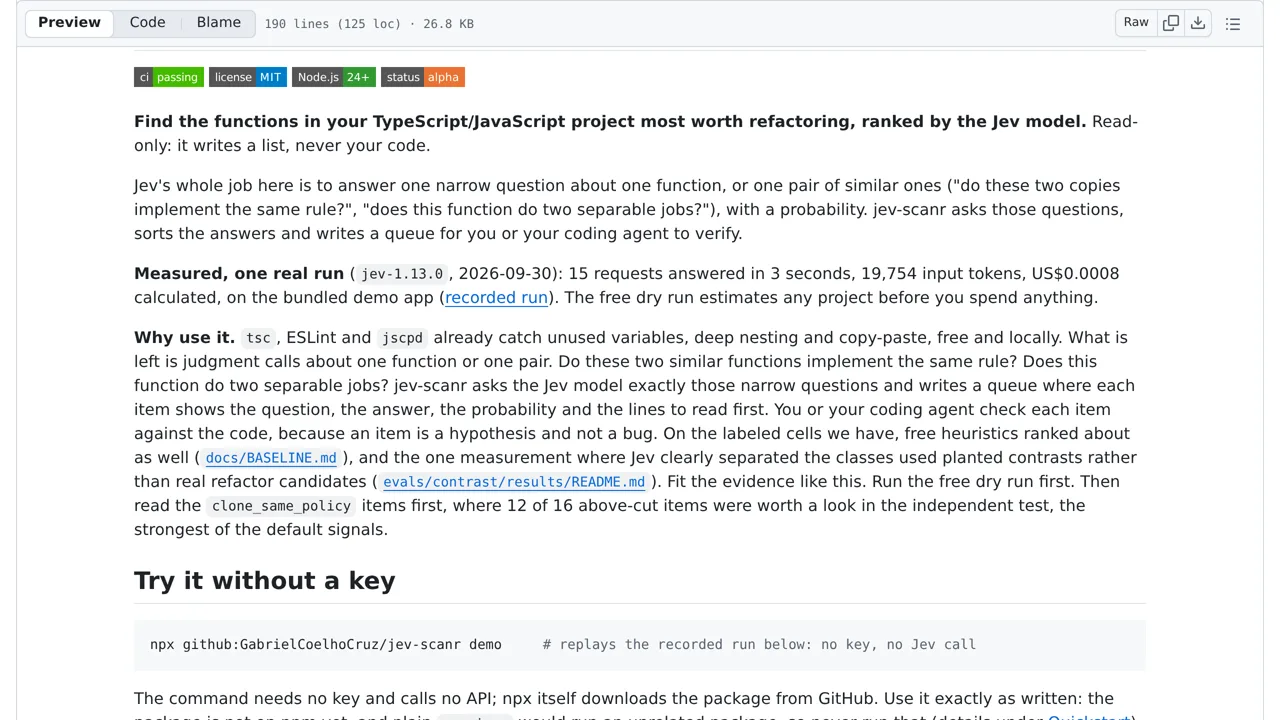
A read-only command-line tool that uses the Jev model to rank TypeScript and JavaScript functions for potential refactoring.
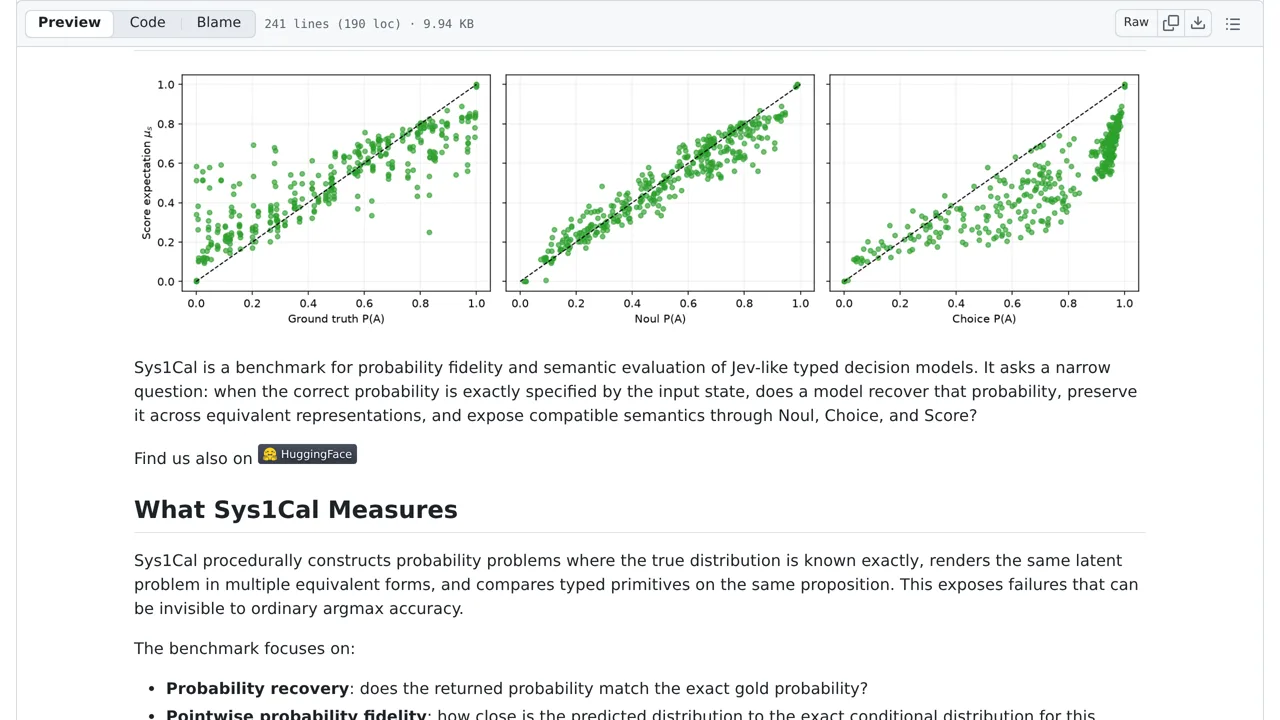
Sys1Cal-v1 is a synthetic benchmark by Riccardo Porcedda that tests if decision models can accurately recover exact probabilities across different but equivalent question formats.
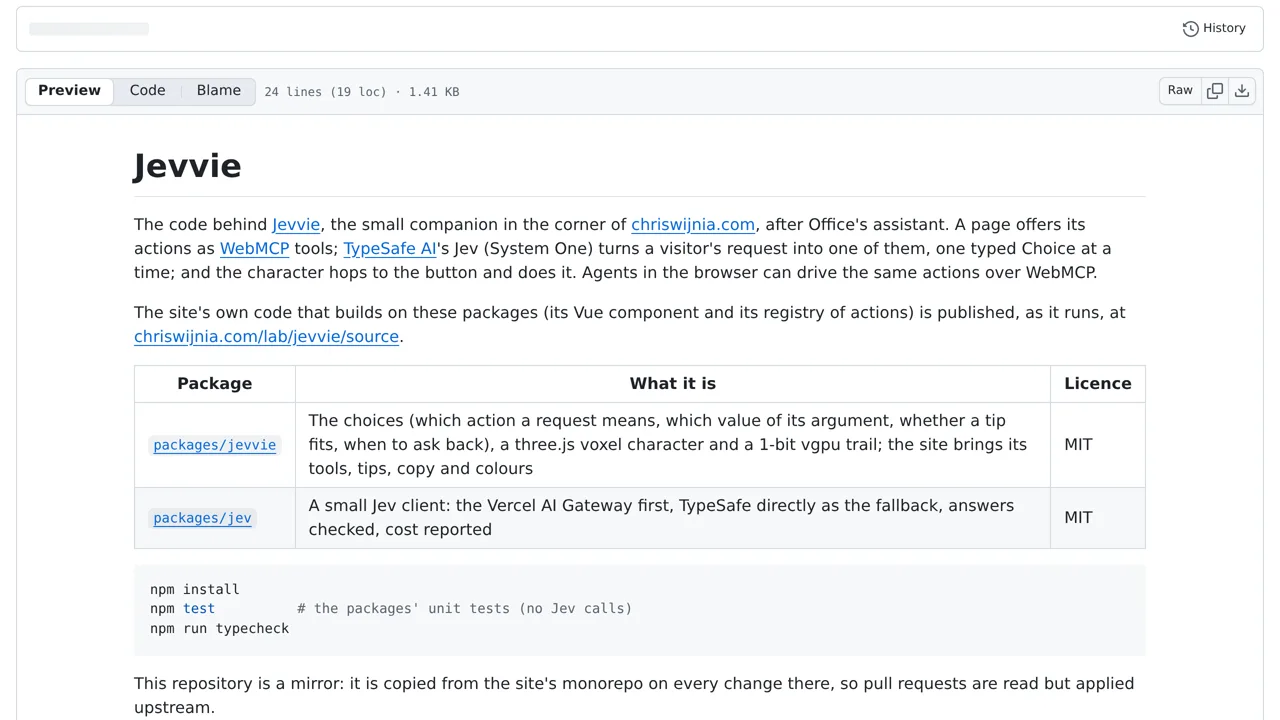
Chris Wijnia created Jevvie, a small website assistant that uses an artificial intelligence model to match visitor requests with specific actions the website can perform.
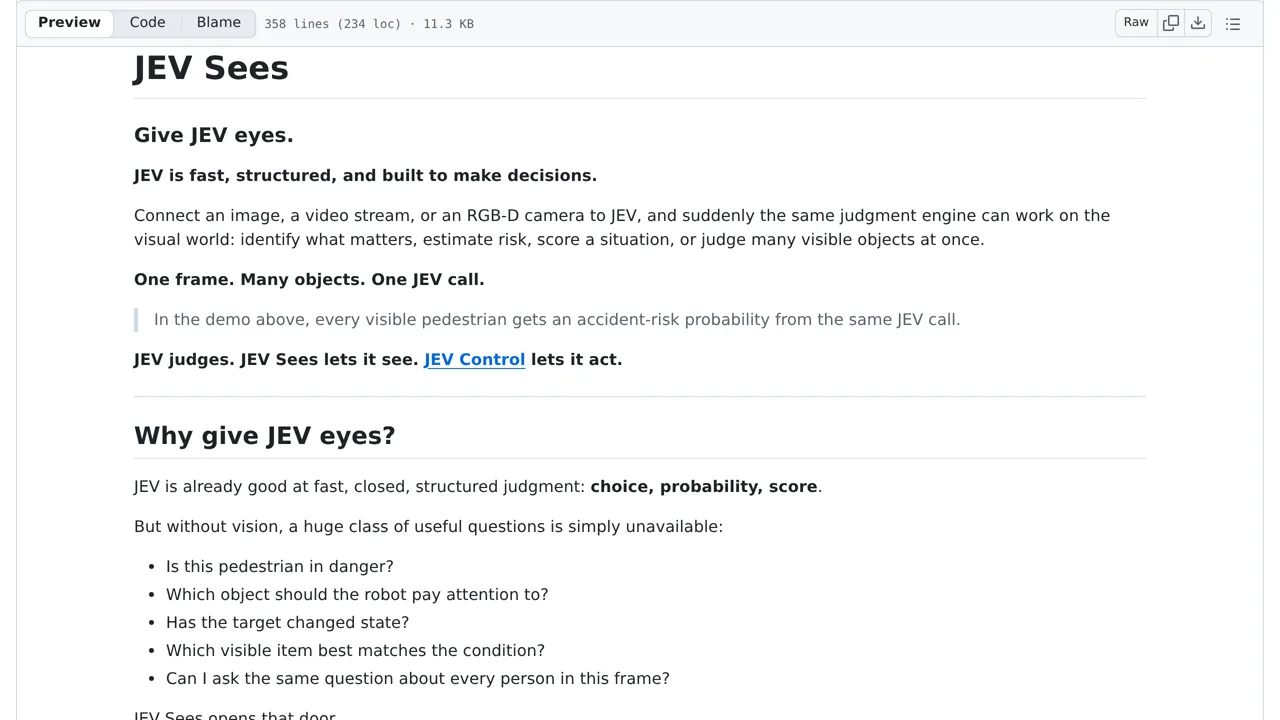
JEV Sees adds a visual front end to JEV, converting local YOLO, CLIP, and RGB-D perception into scene text for structured decisions.
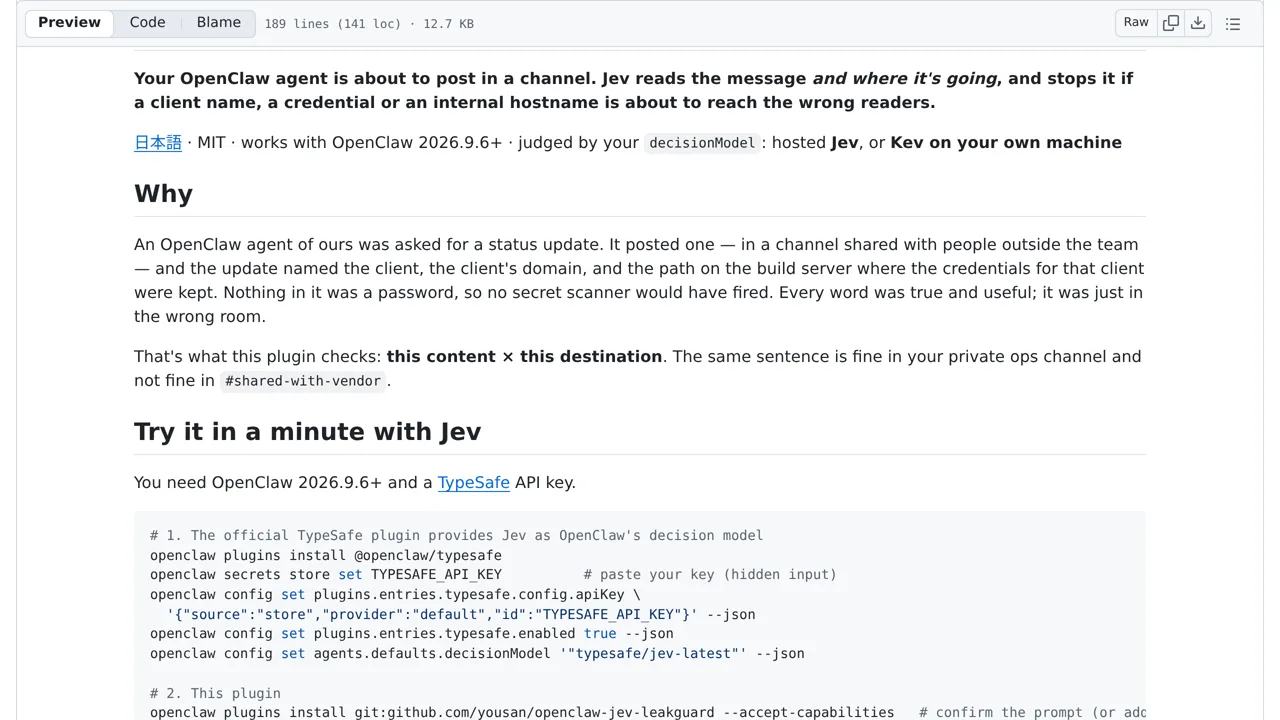
This OpenClaw plugin checks outgoing message text against destination rules and can hold back suspected leaks. OpenClaw's delivery hooks can still send messages if a handler throws or takes too long.
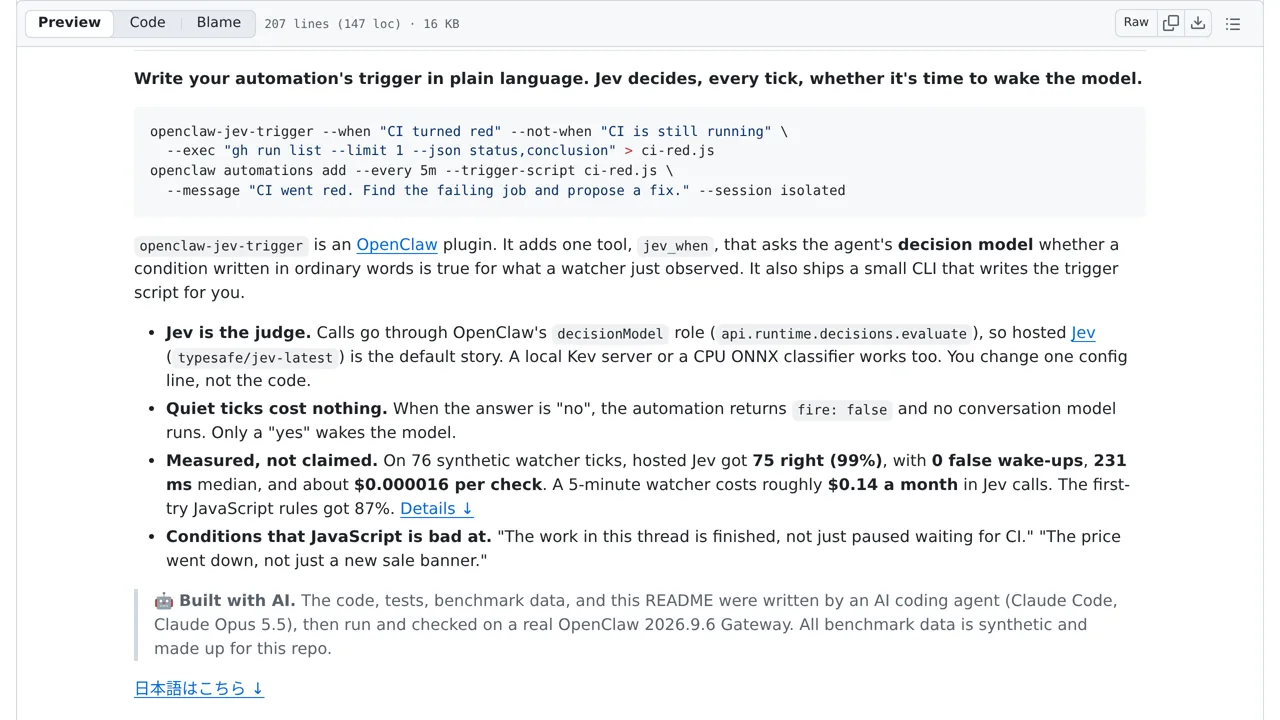
This OpenClaw plugin uses Jev to evaluate plain-language conditions for automation triggers, waking the agent only when necessary.
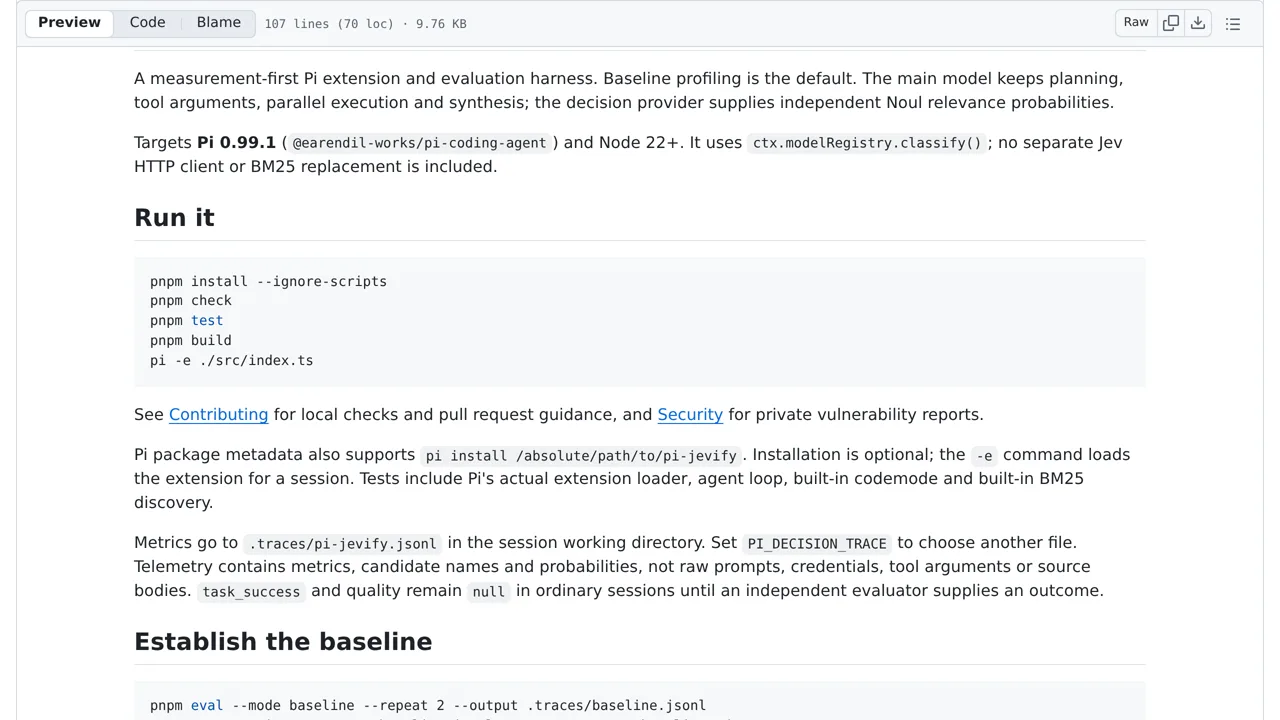
The prandelicious pi-jevify project uses Noul judgments to filter tools, skills, and evidence for the Pi coding agent before running tasks.
A pre-registered study comparing Jev with 7B language models for second-pass rescoring in a speech neuroprosthesis.
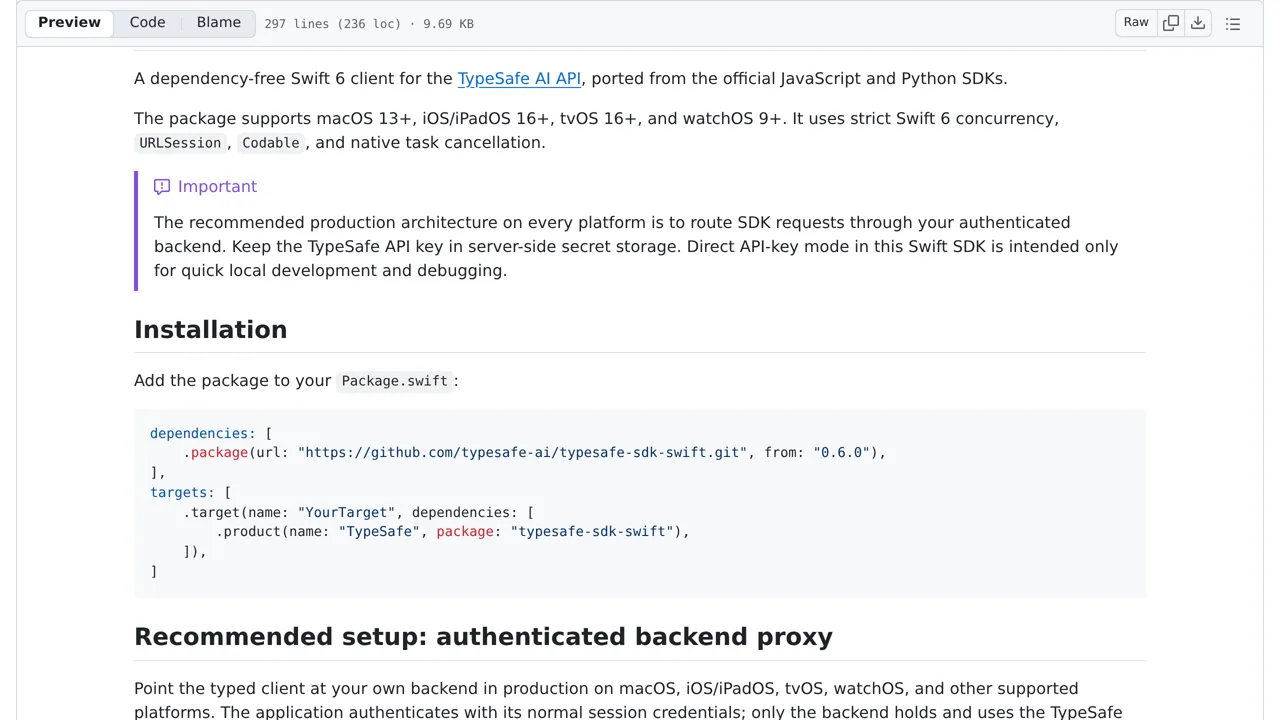
An unofficial Swift 6 client provides typed requests, model discovery, retries, cancellation, and backend-proxy authentication for the TypeSafe API.
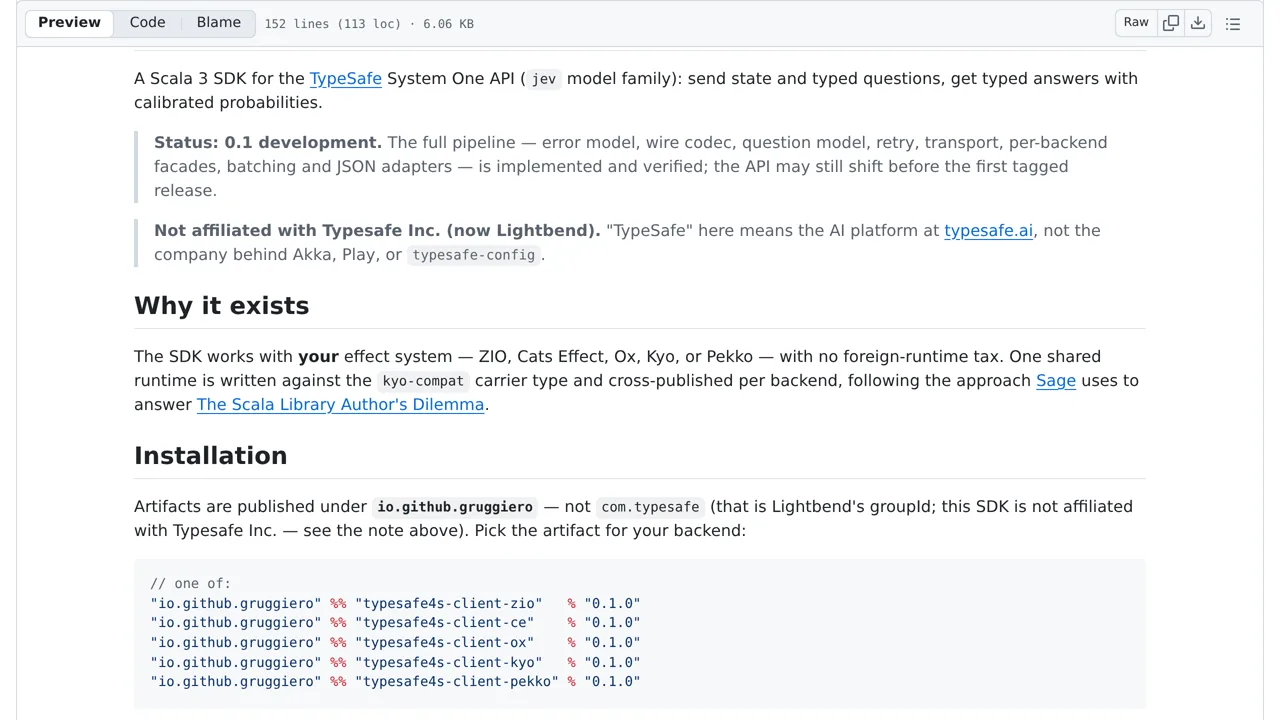
Giovanni Ruggiero's early Scala 3 toolkit connects applications to the TypeSafe System One service using shared network requests and automatic retries.
A Python tool by Query.Farm lets users ask TypeSafe AI models questions directly within DuckDB database queries to categorize text and calculate confidence scores.
An agent skill scores a task prompt, asks the host coding agent to revise its weakest part, and rechecks it up to three times.

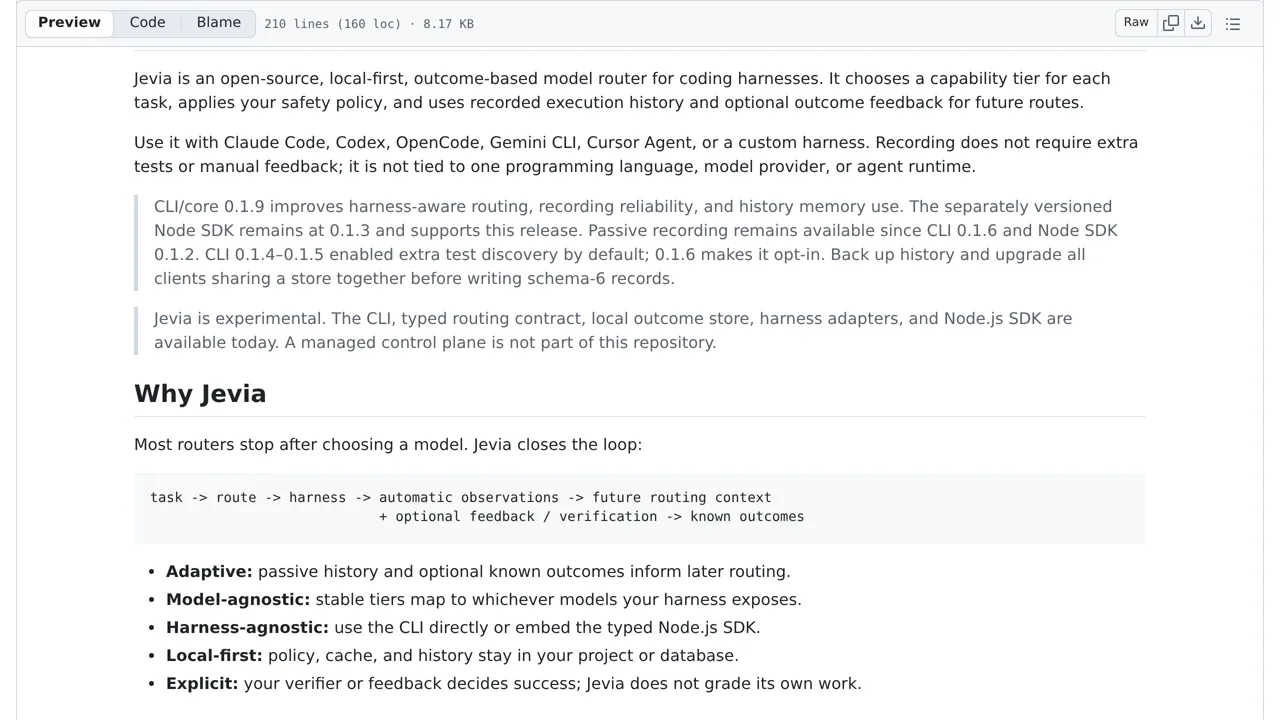
An experimental local tool selects a model level for coding tasks, uses a backup choice if unsure, and saves observations or explicit outcomes as context for later decisions. Improvement from that history is unmeasured.
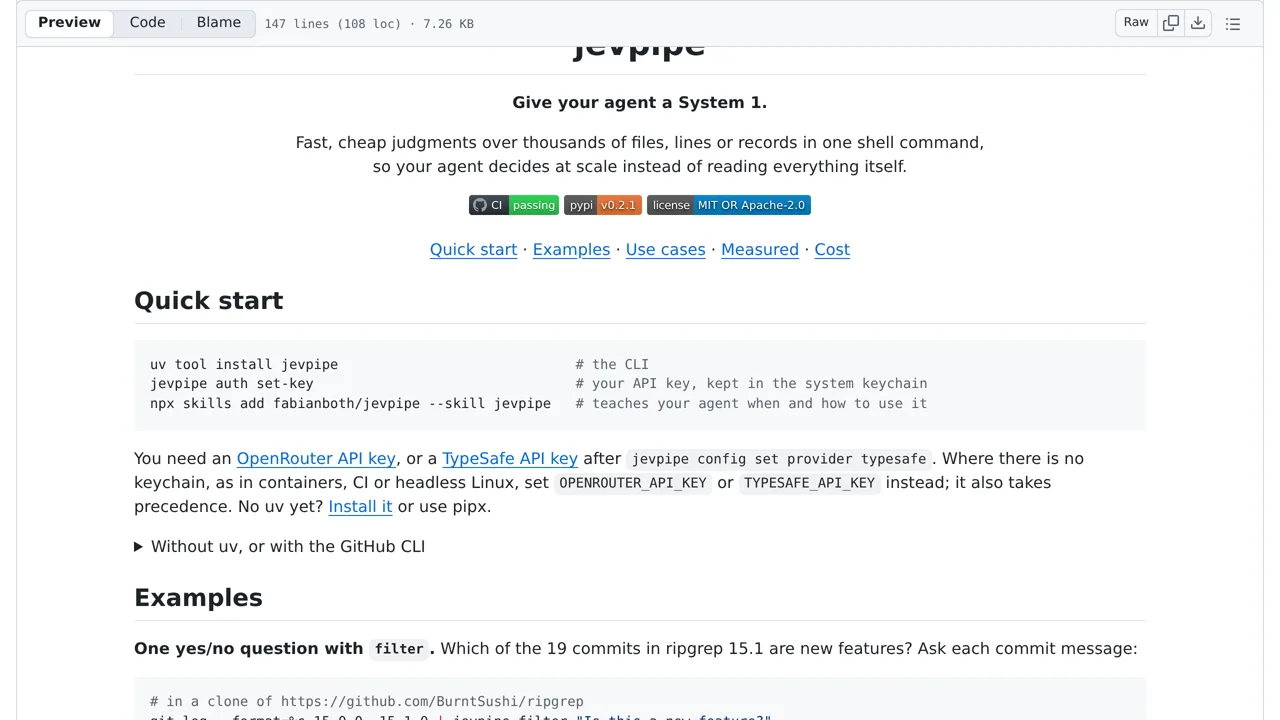
A shell filter for semantic decisions over lines, records or files.
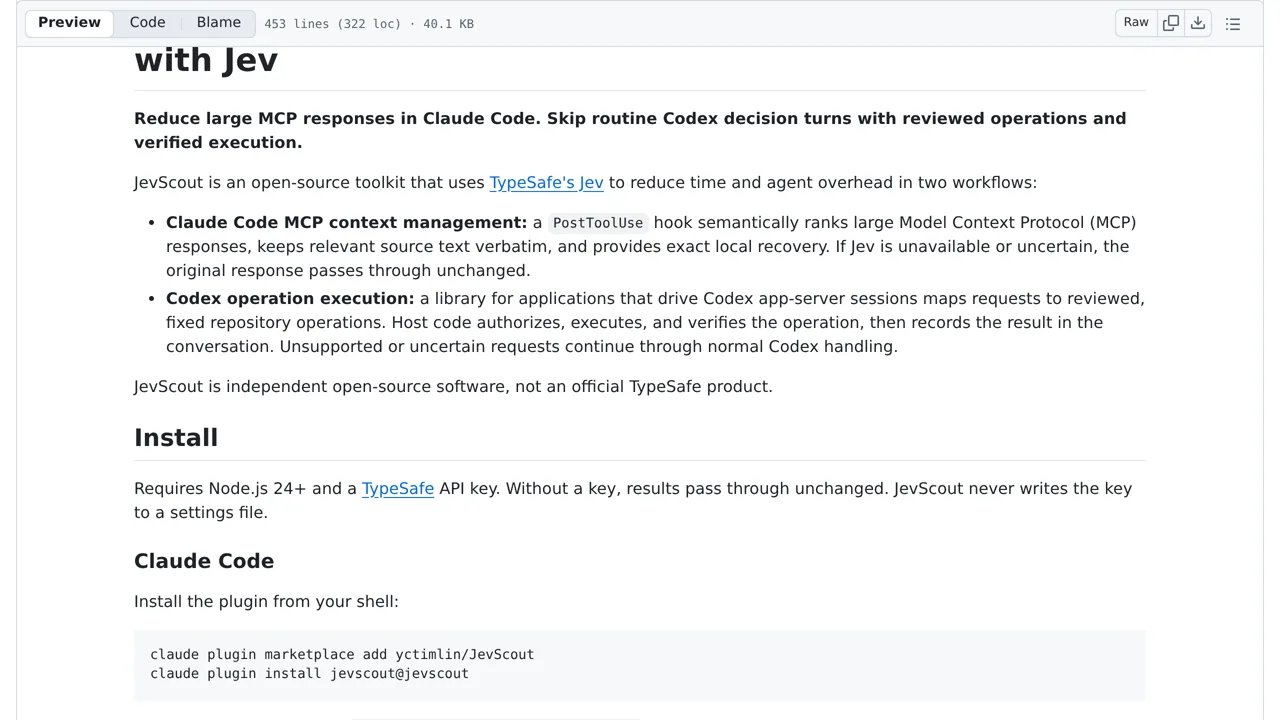
JevScout is a tool that shortens large text responses for the Claude Code AI assistant and helps the Codex AI skip routine decision steps by using pre-approved commands.
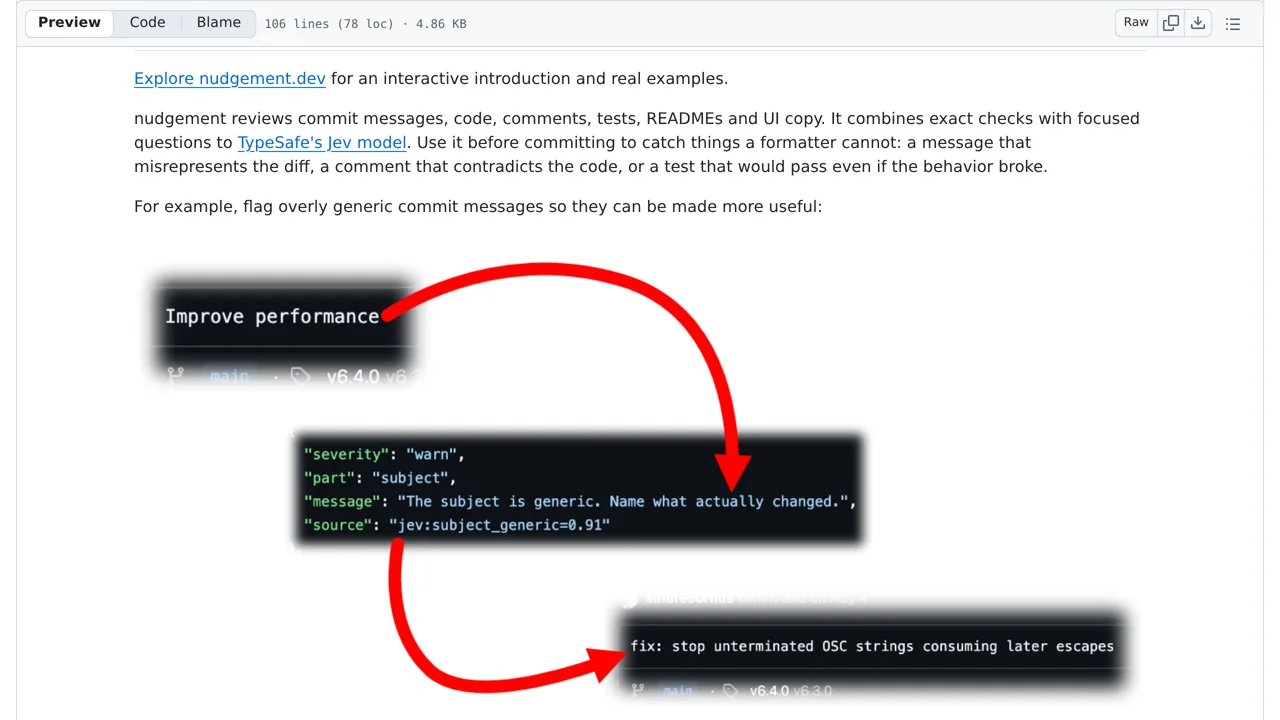
nudgement is a command-line tool that combines exact rules and artificial intelligence to review code, tests, and documentation for clarity and accuracy.
This extension adds optional safety checks to a Pi search tool, reordering results and hiding suspected harmful content.
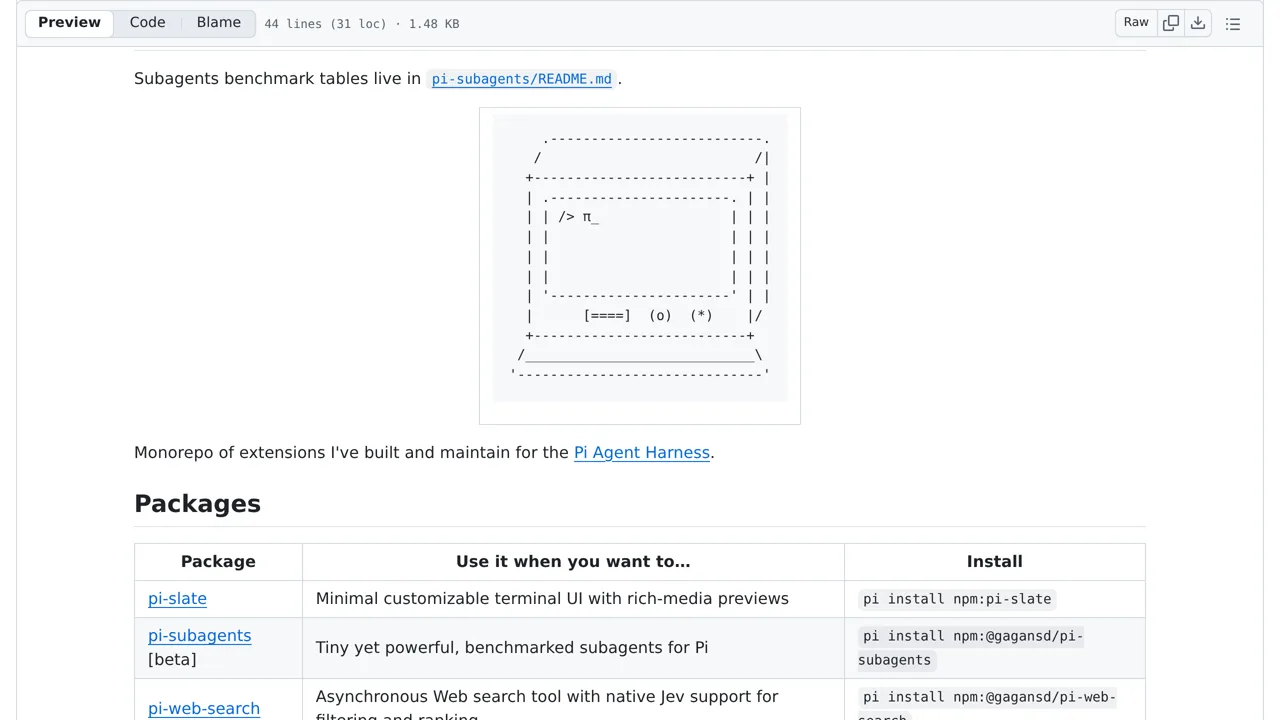
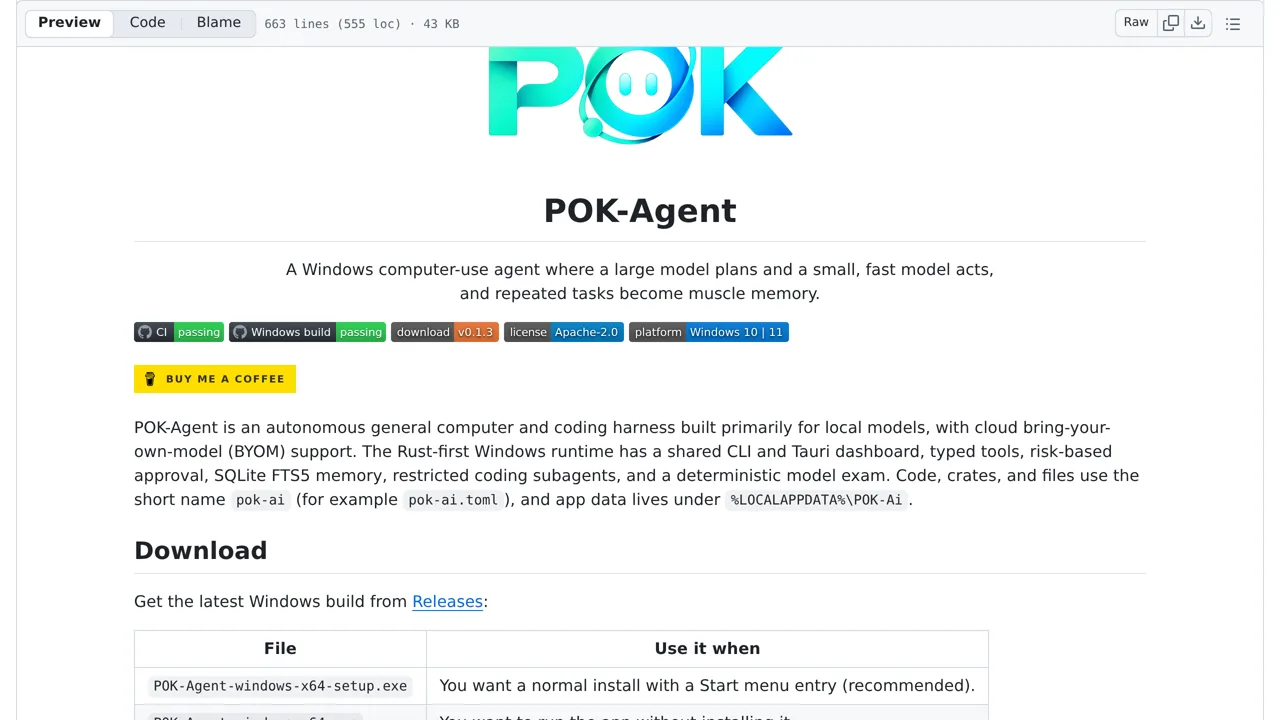
POK-Agent is a Windows computer-use harness that pairs a large planning model with a fast local or hosted decision router to execute and replay desktop actions.
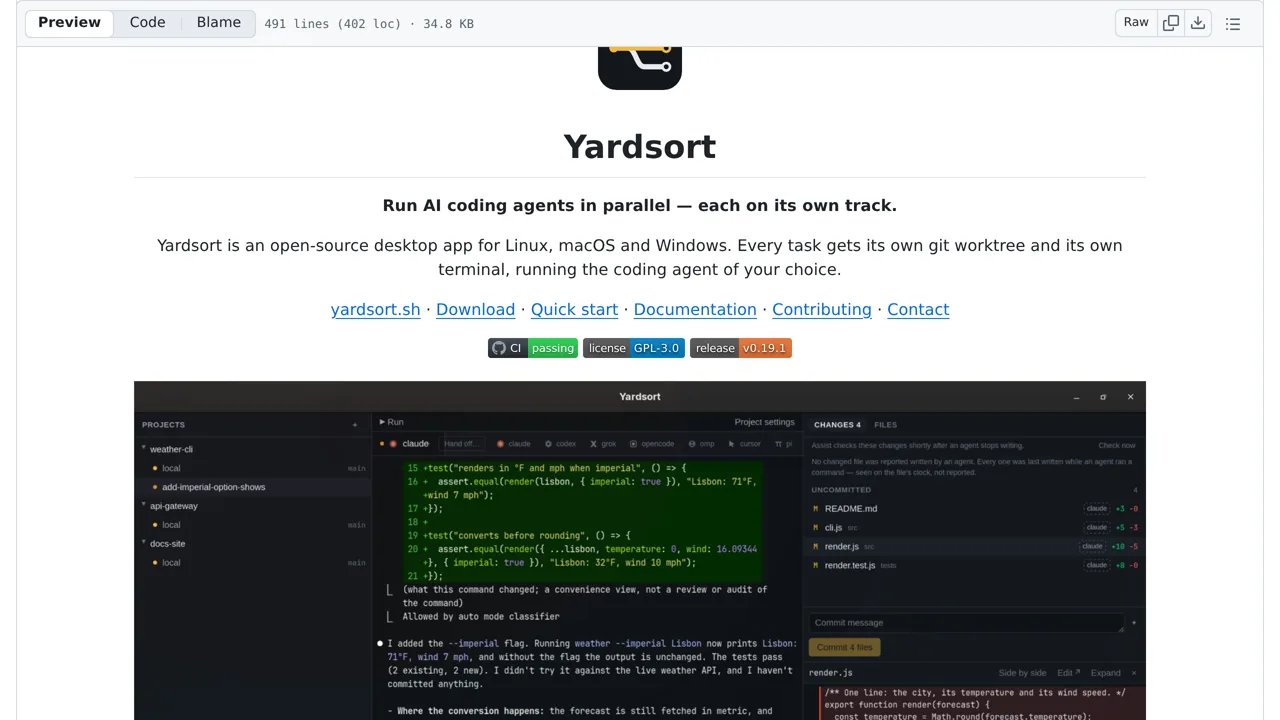
Yardsort Assist uses the Jev model to review changed files for risks, flag unrelated work, and suggest agent settings within a parallel coding workspace.
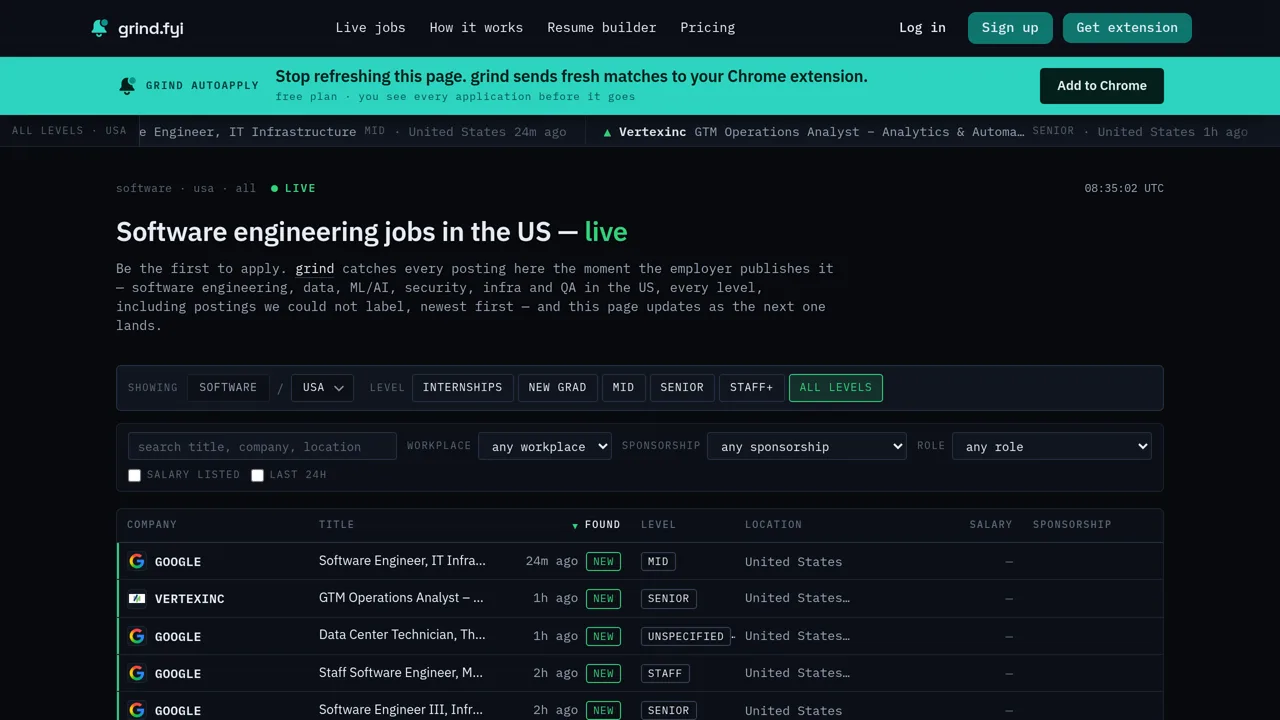
A job-discovery website and Chrome extension that ranks matches and fills known application fields using a provided resume.
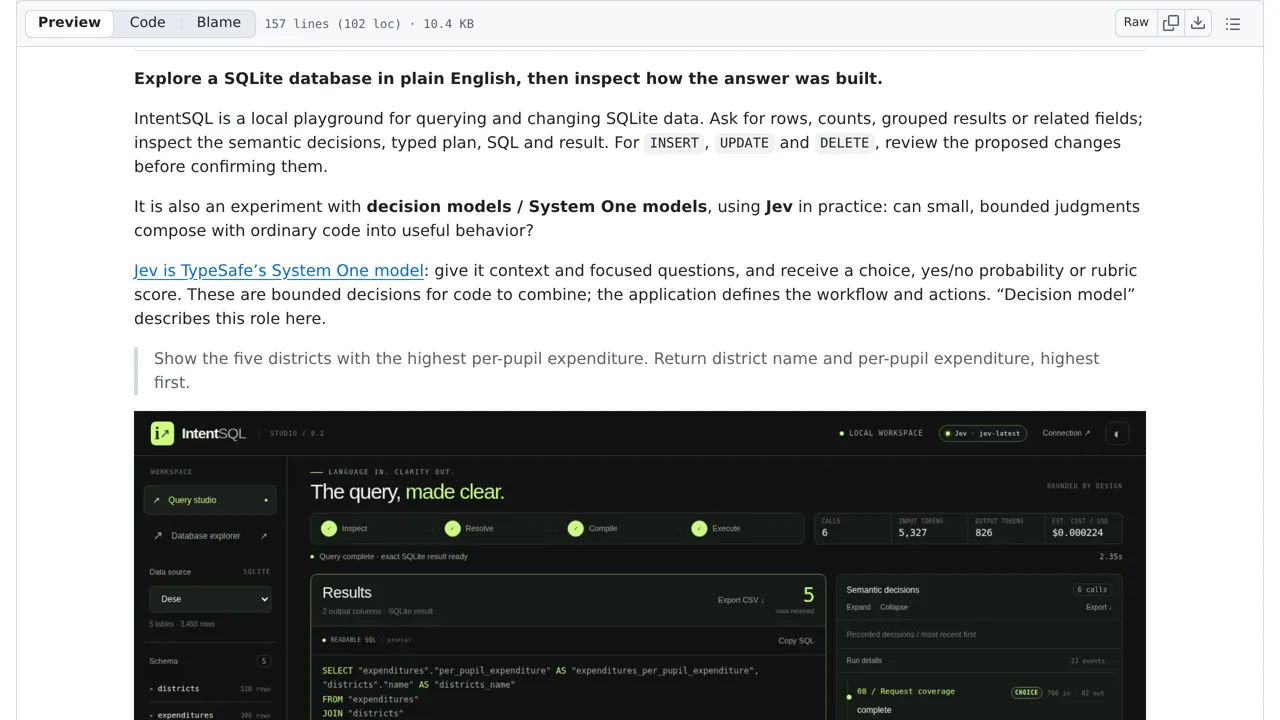
IntentSQL is a local tool that translates plain-English questions into database searches and lets you review the exact steps before making any changes.
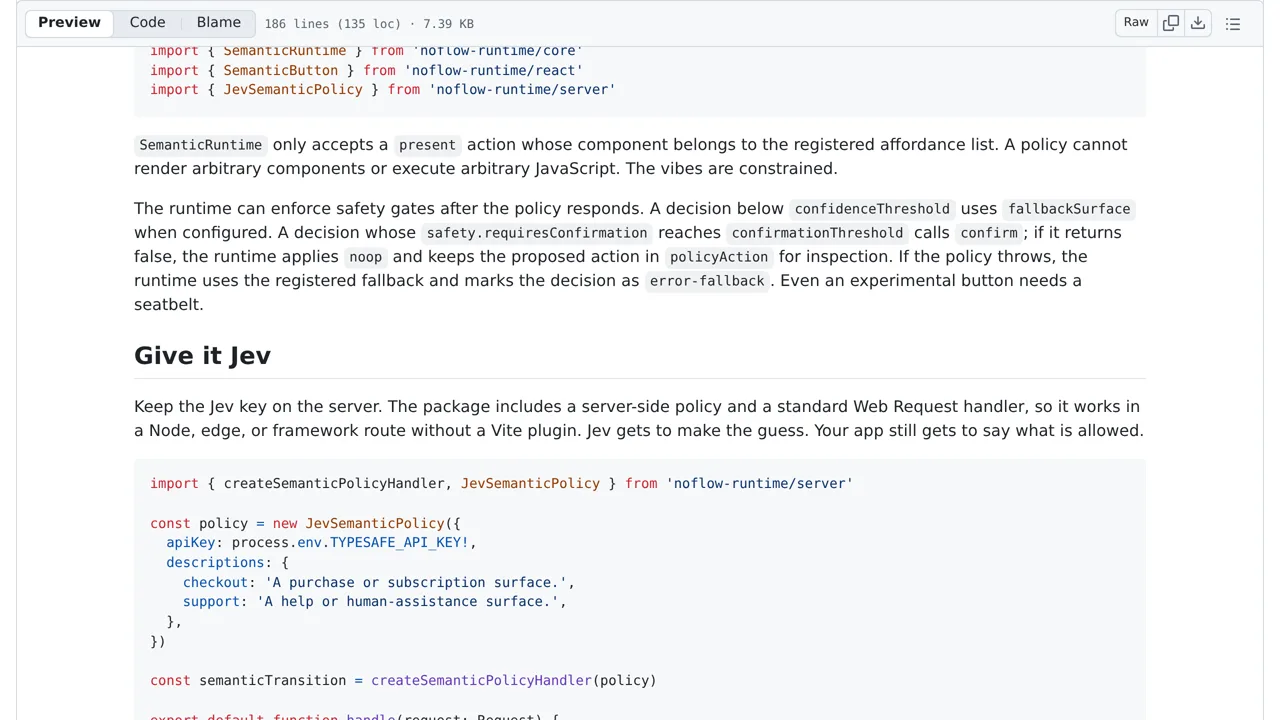
A user interface tool that sends button clicks and app context to a server, which chooses the next screen from a pre-approved list.
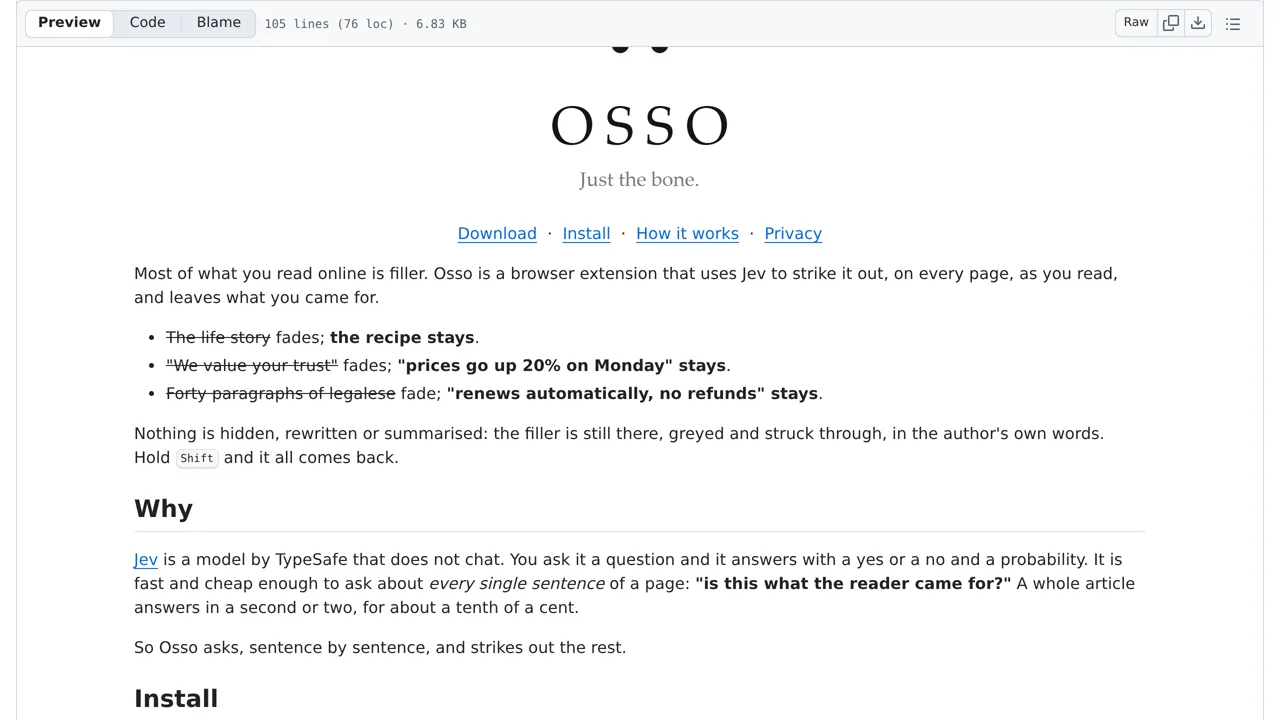
Osso asks Jev which web-page sentences contain useful information, then fades likely filler while letting readers reveal the original text.
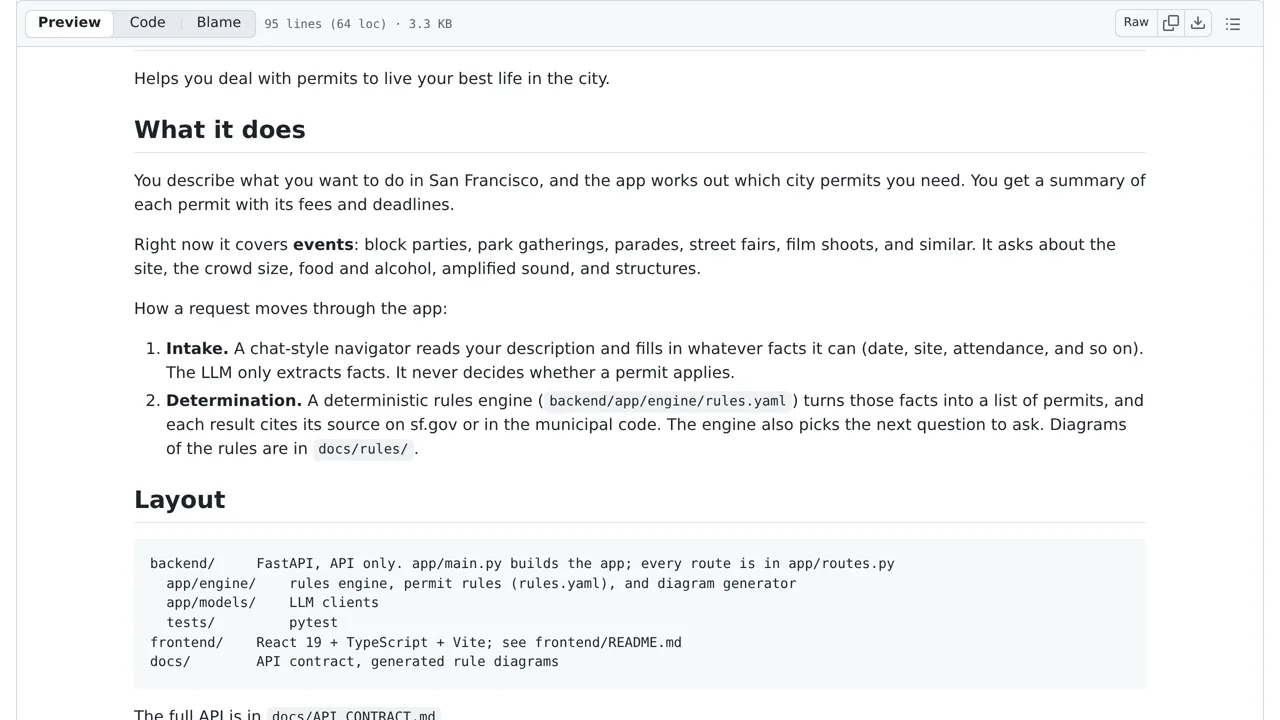
San Francisco Permit Helper uses Jev to extract event facts from a description, asks the user for missing details, and evaluates a deterministic permit rule graph.
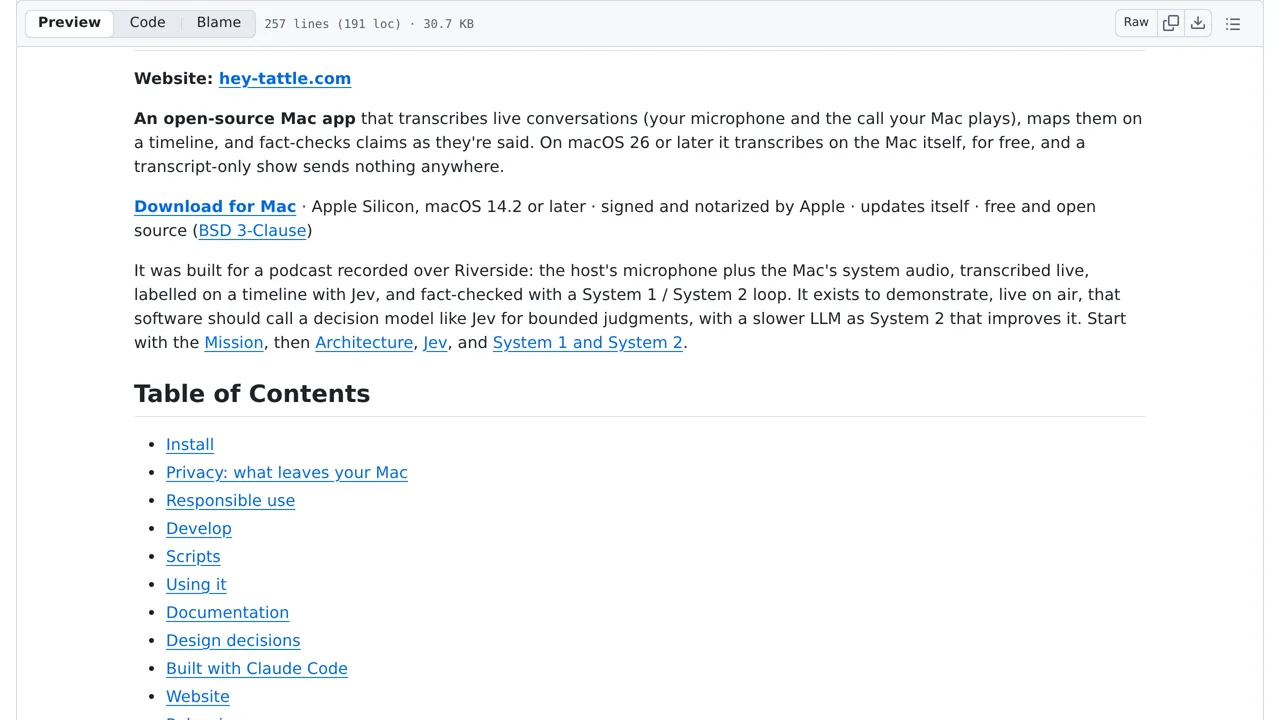
Tattle transcribes Mac conversations and maps them on a timeline, using a fast model to label speech and a slower model to research spoken claims.
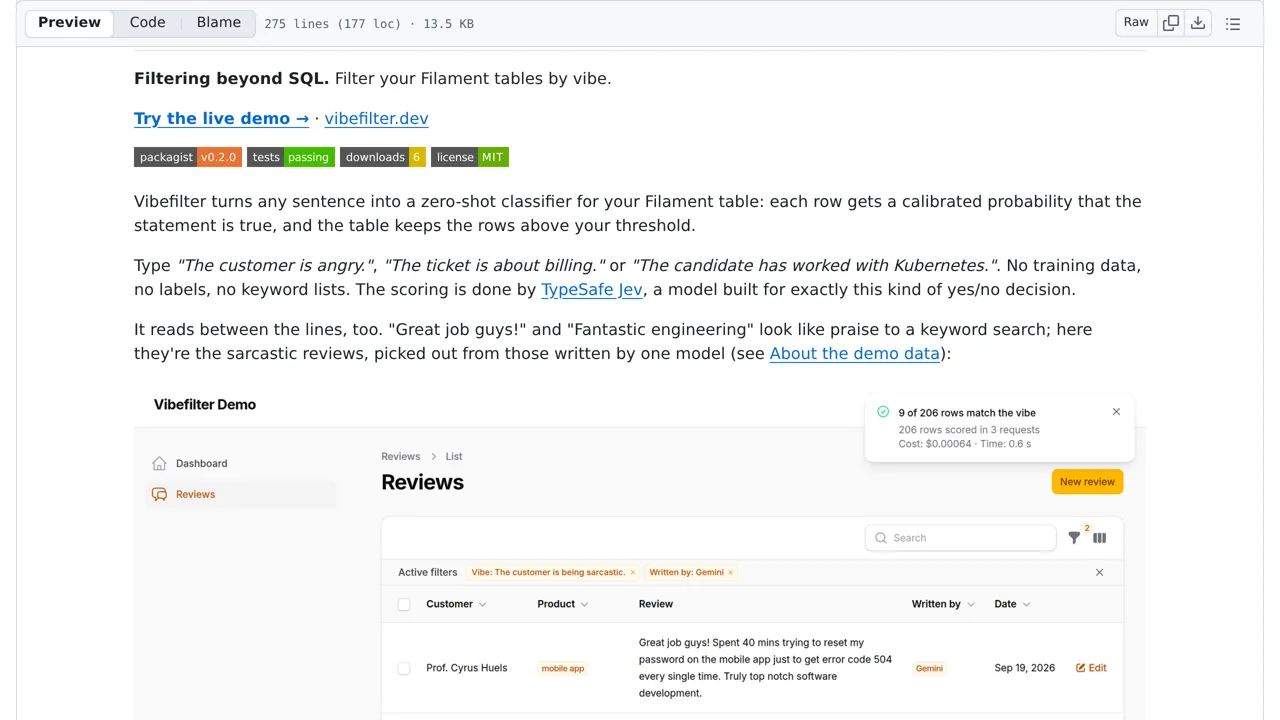
Vibefilter is a plugin for Filament tables that uses natural language to filter rows by scoring how well they match a user's statement.
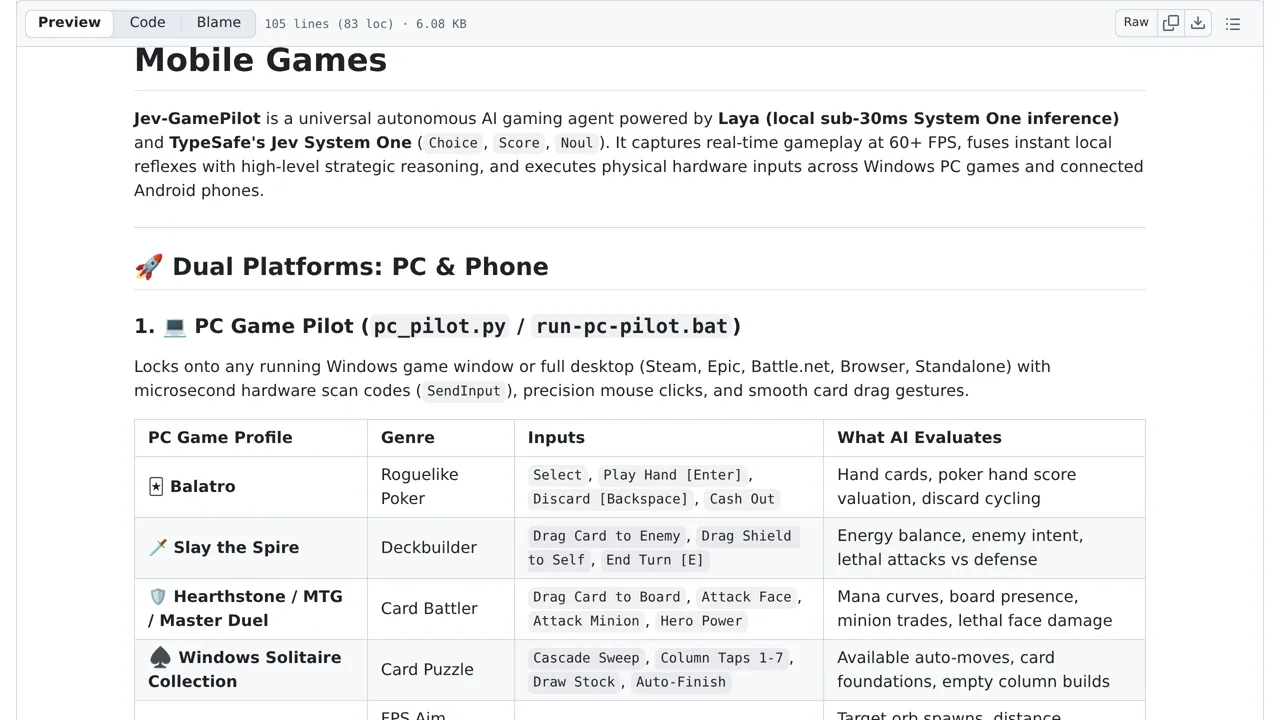
Jev-GamePilot is an experimental autonomous gaming agent that combines local screen capture, computer vision reflexes, and Jev System One decisions to control PC and Android games.
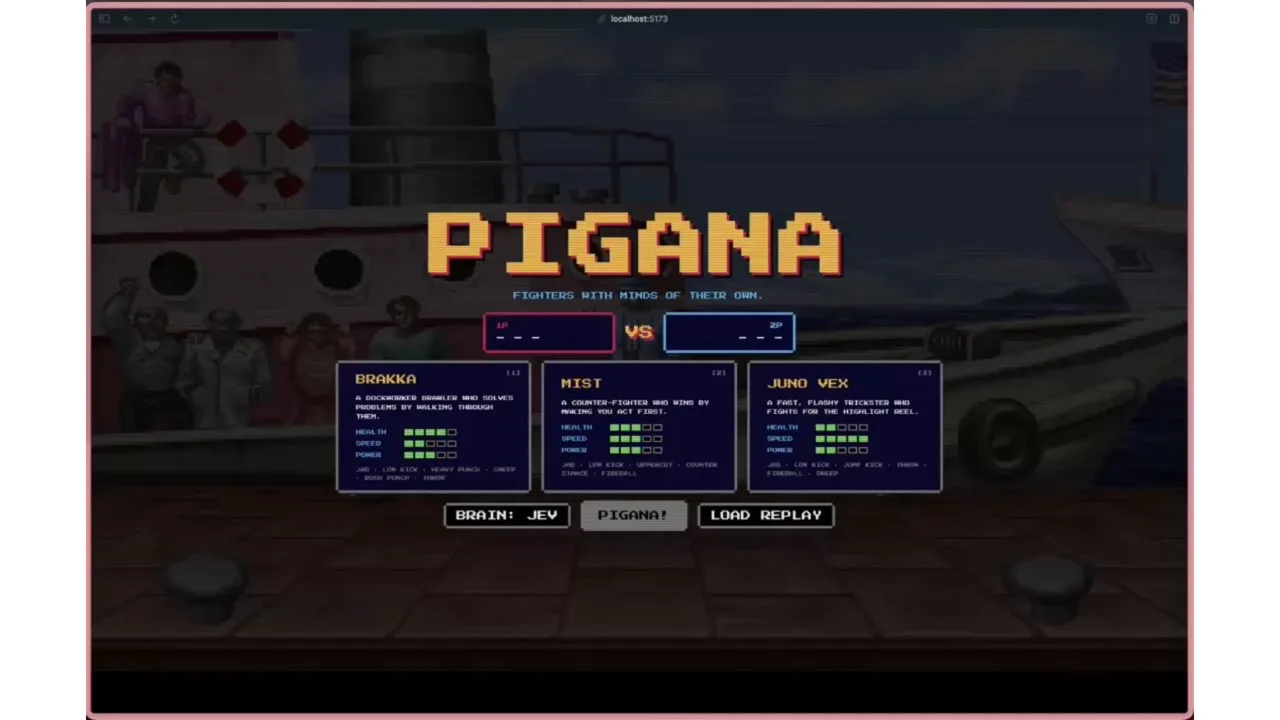
A creator showcase features a 2D fighting game where two Jev-powered agents select moves and adapt strategies in real time.
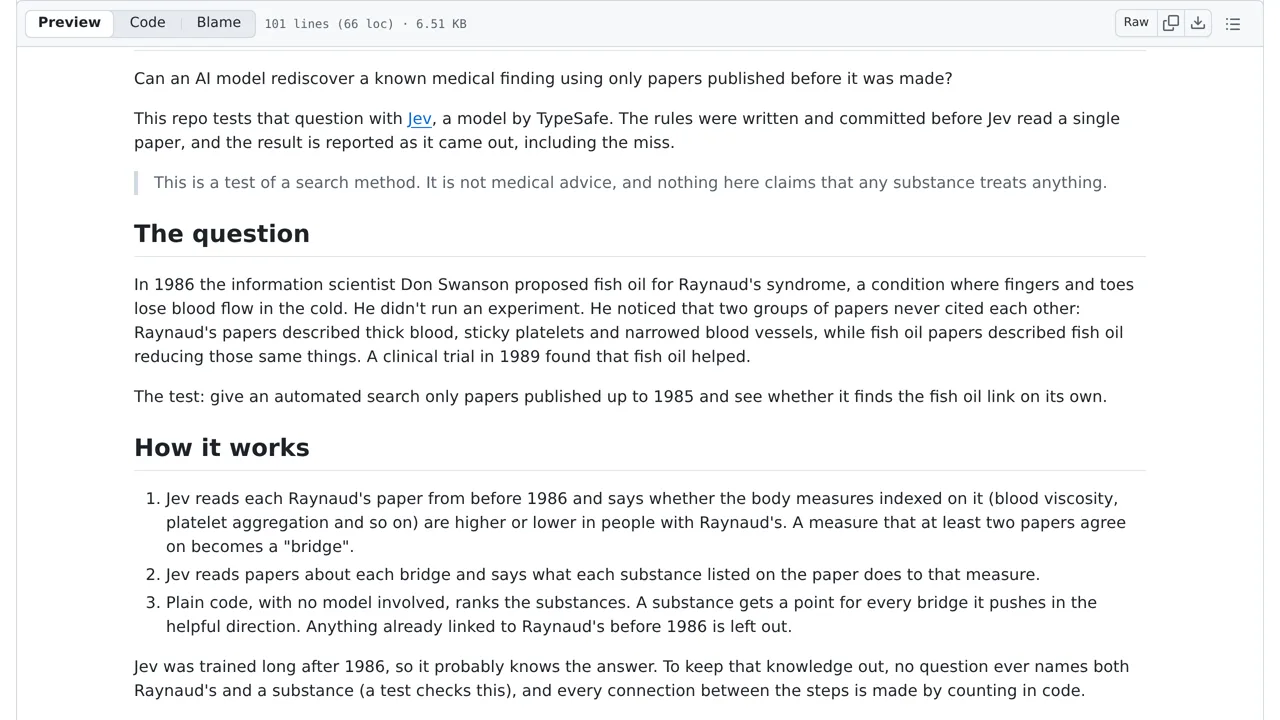
A historical PubMed experiment classifies literature links and ranks candidate substances in code, explicitly reporting that it missed its fish-oil rediscovery target.
CompleteTech LLC provides an offline tool that scans code repositories to find and prepare specific places where an AI decision might be useful.

Jev, briefly
A chat model generates text token by token and hopes you parse it. Jev never generates a word. Your code sends the state of the world plus typed questions; Jev returns every answer in one parallel pass — typed values with calibrated probabilities and a confidence score your code can trust. About 70–500 ms end to end, $0.042 per million input tokens, output free. Trained with what TypeSafe calls Reinforcement Learning for Calibrated Decisions.
You define the options. Jev returns the chosen option, a probability for every option, and a confidence. The workhorse of routing, agents, and games — the answer space is always legal, so there is nothing to parse and nothing to hallucinate.
You describe ordered levels — say trivial / normal / critical. Jev returns the level, the probability of each, and a confidence. Scores turn fuzzy judgment (“how severe is this log line?”) into a number-free decision your code can branch on.
You assert a statement; Jev returns the probability that it is true — a noul. Moderation, verification, guardrails, “does this diff actually fix the bug?”: one question, one calibrated probability.
Official material lives at typesafe.ai and docs.typesafe.ai. JevMade is an independent community registry — not affiliated with or endorsed by TypeSafe AI.
Recurring lessons
Games, drones, trading bots, and browser agents all converge on the same loop: serialize the state, ask one decisive question, act, repeat. Jev’s latency makes the loop feel instant — the model lives inside the control loop, not outside it.
The answer says what; the confidence says whether to act. The most reliable entries threshold on confidence to route edge cases to a slower model or a human — automation with an honest escape hatch.
Makers rarely ask Jev to pick from everything. Local tactics prune 225 gomoku moves to ~40; DOM filters turn a page into an element table; code narrows options, Jev judges within them.
A recurring split: Jev makes every decision cheaply and instantly, and a small LLM is only invoked when a human-facing string must actually be written. Decision and generation are separate budgets.
Send the link — repo, live demo, post, or video — plus a line on what it does and which primitives it uses. Every entry is verified against its primary source before it ships.
Submit your experimentSign in first so we can reply to you. Submissions are reviewed, not published automatically.