Read & learn
Written guides.
Understand Jev, one idea at a time. Walkthroughs, recipes, and writeups — our notes first, the original next.
Learn, build, and play with Jev — from deep technical guides to creative experiments.
Read & learn
Understand Jev, one idea at a time. Walkthroughs, recipes, and writeups — our notes first, the original next.
Watch & learn
See an idea take shape. Tutorials, demos, and deep dives, organized by topic and credited to their creators.
Make & explore
See what builders made with Jev. Games, tools, repositories, articles, and more — traced to their sources.
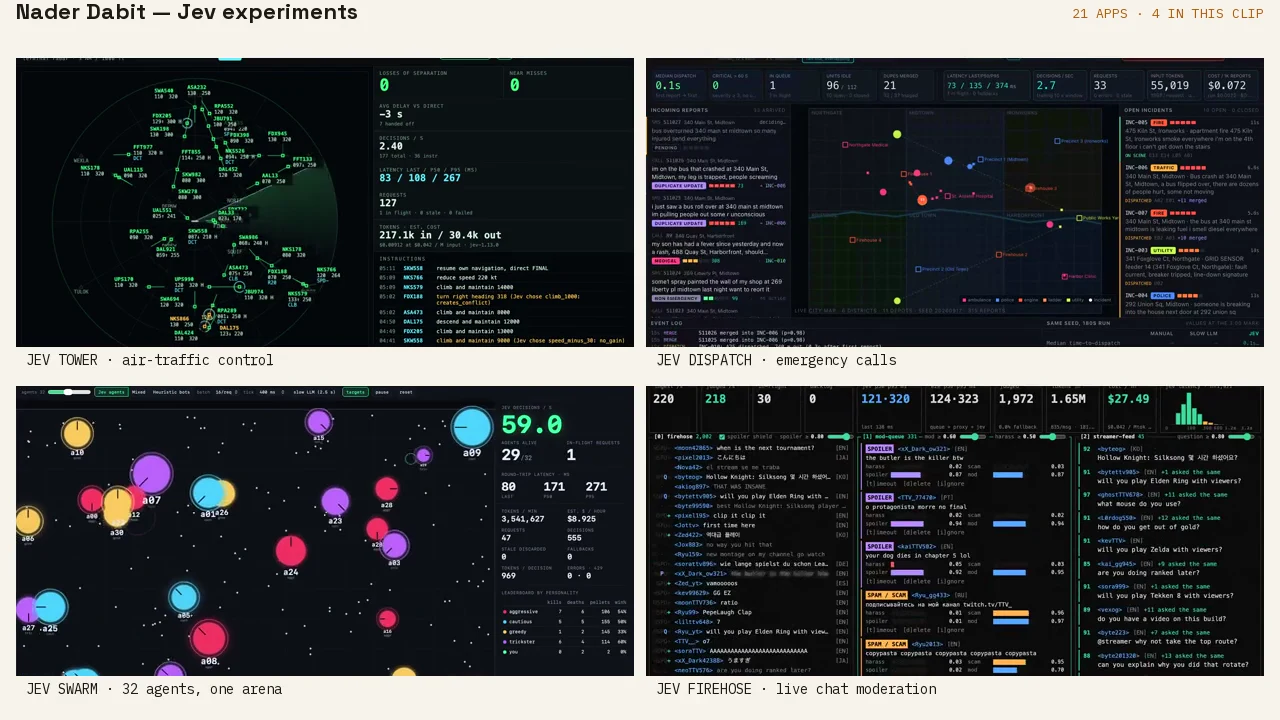
Every category, from games and tools to repositories and writeups, traced to a primary source.
Real-time research powered by
Same ideas.
Different paths.
This is the full registry, not just the featured picks. Figures like speed, cost, and stars are maker-reported or captured snapshots, not JevMade measurements.
2140 experiments · showing 1981–2040
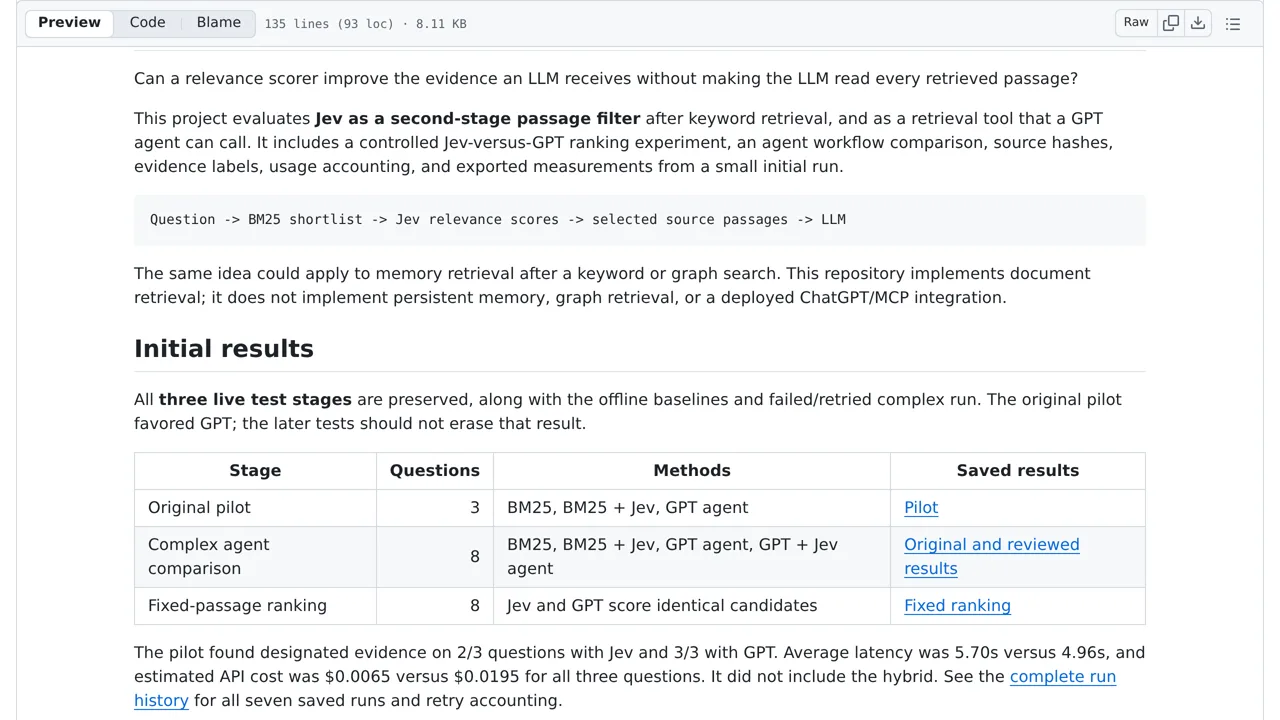
This harshwasan experiment tests if an AI relevance filter improves the information sent to a language model without making it read every document.
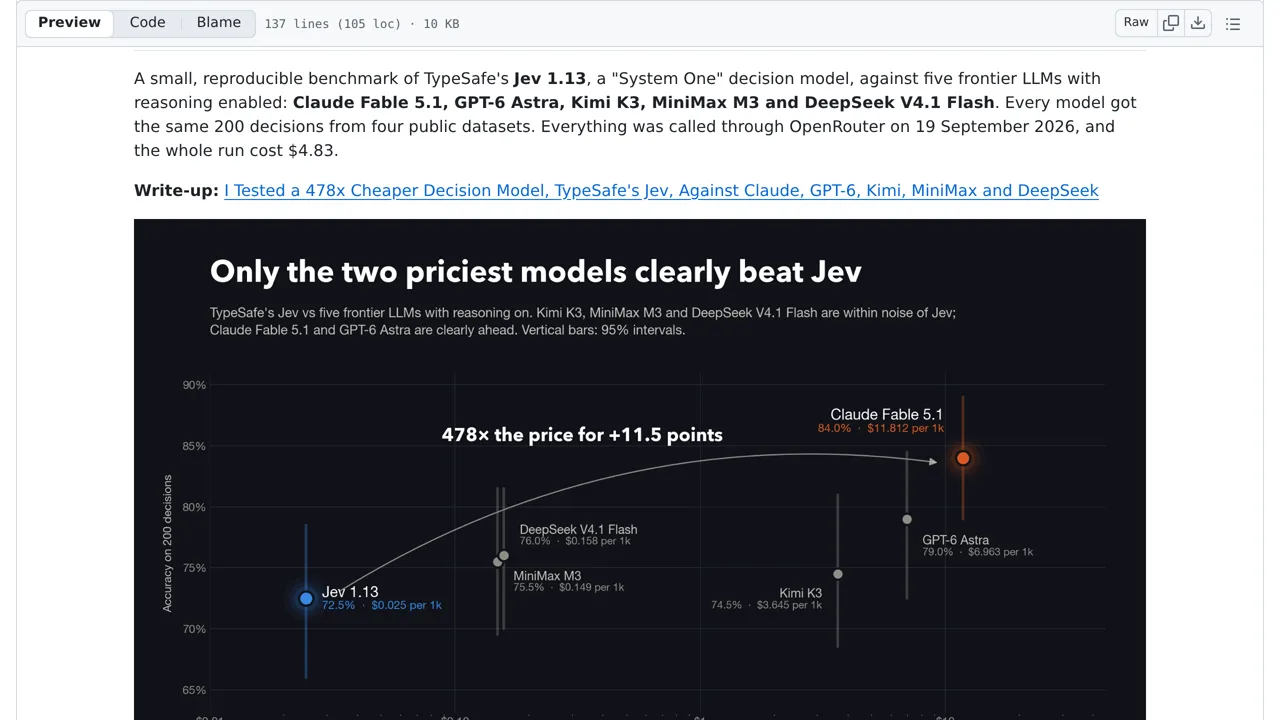
An author-run comparison evaluates Jev against five major language models on two hundred specific decisions across four different tasks.
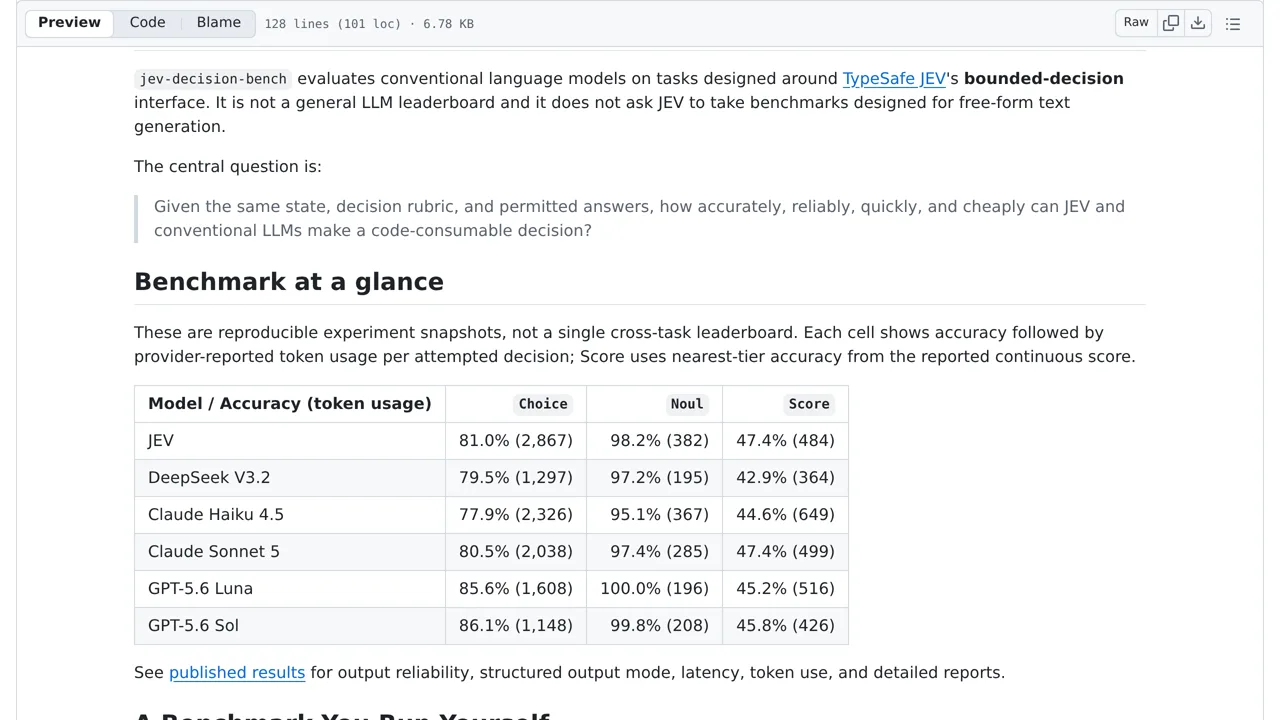
Tenkei's benchmark compares Jev and language models on choosing banking-request categories, judging hateful content and rating search relevance using fixed allowed answers.
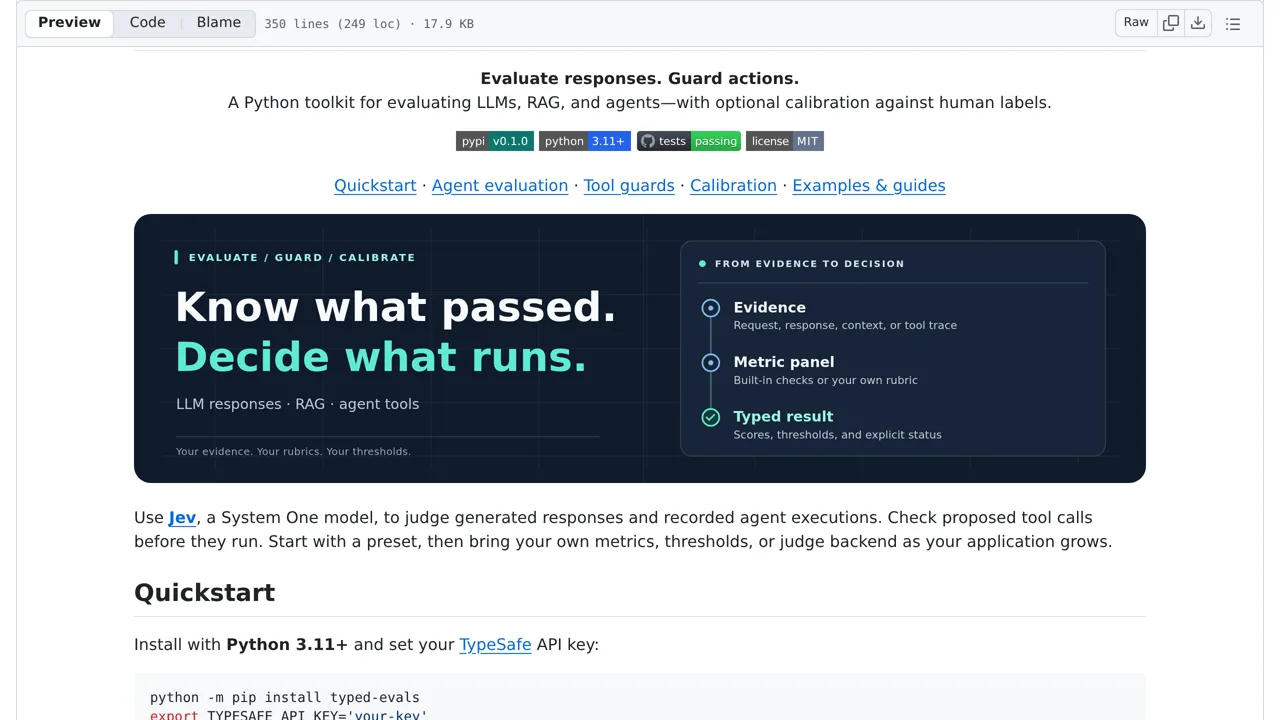
A Python toolkit evaluates answers, retrieval and agent runs, adds advisory pre-tool checks and calibrates typed rubrics against labels.
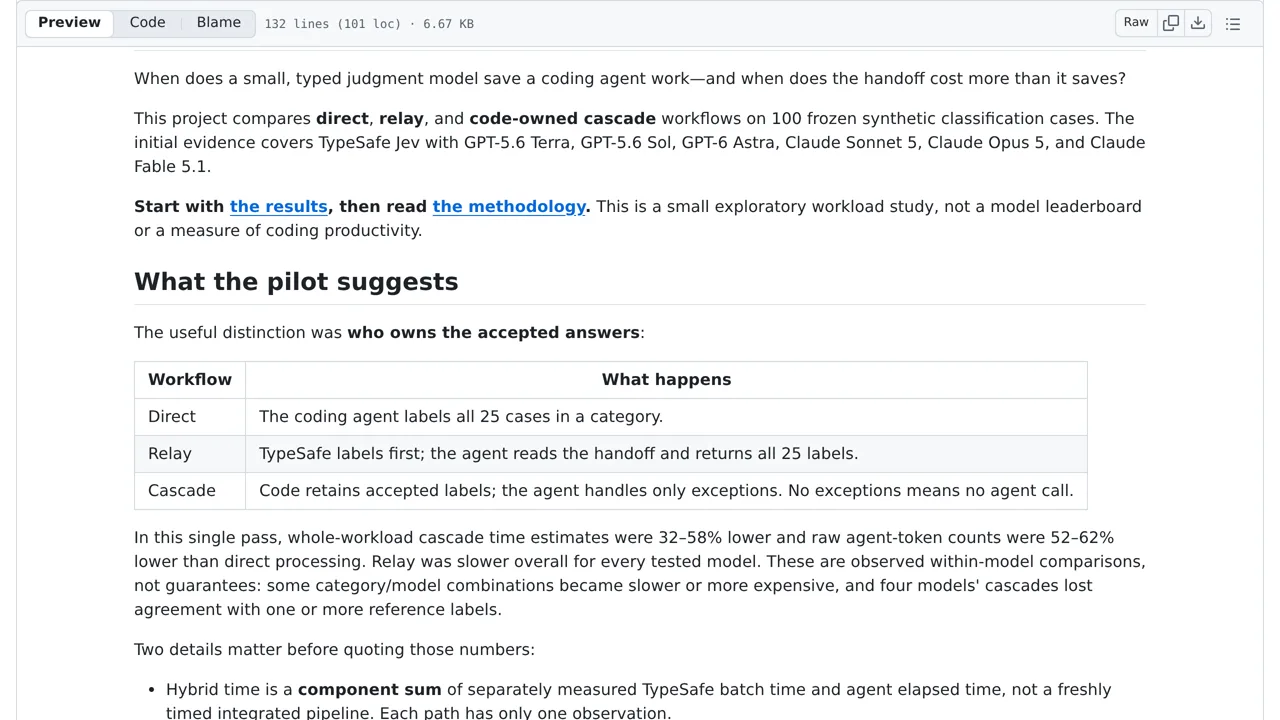
A 100-case synthetic study by Dmytro Nikolayev contrasts direct agent labeling, relay handoffs, and code-owned Jev cascades, preserving errors and no-call skips.
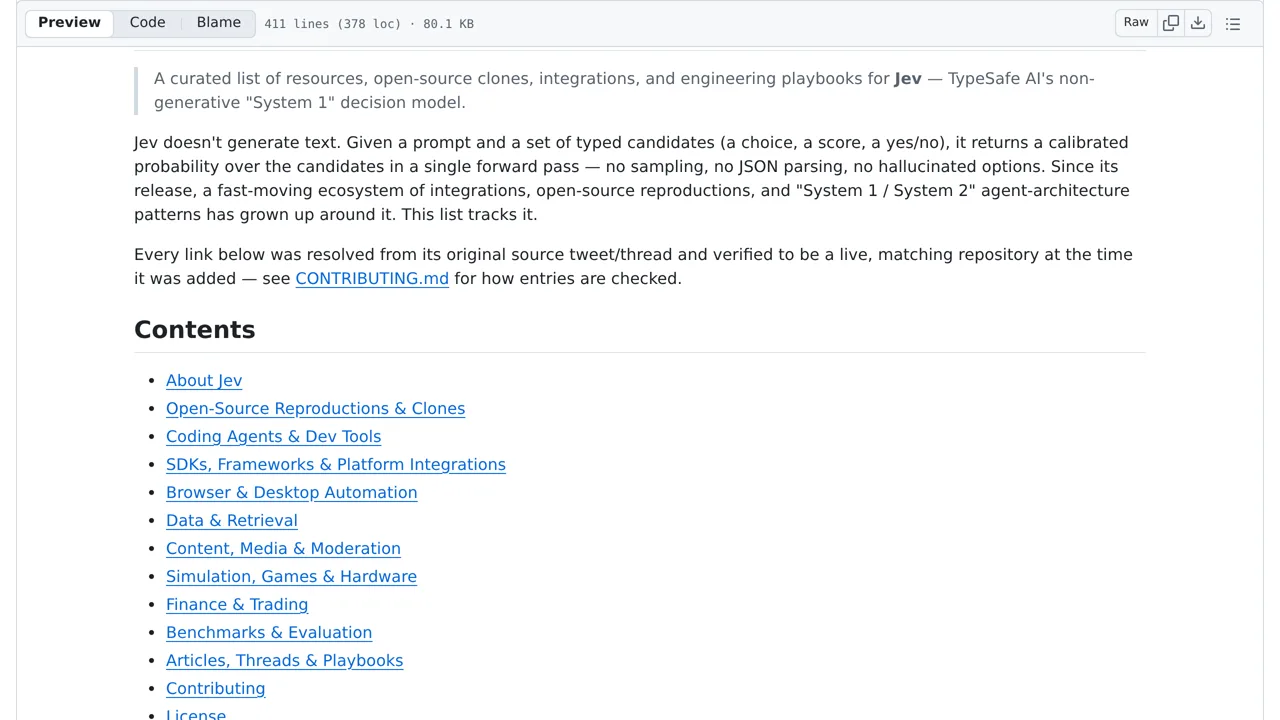
A curated ecosystem directory tracking integrations, open-source reproductions, and agent-architecture patterns for the Jev decision model.
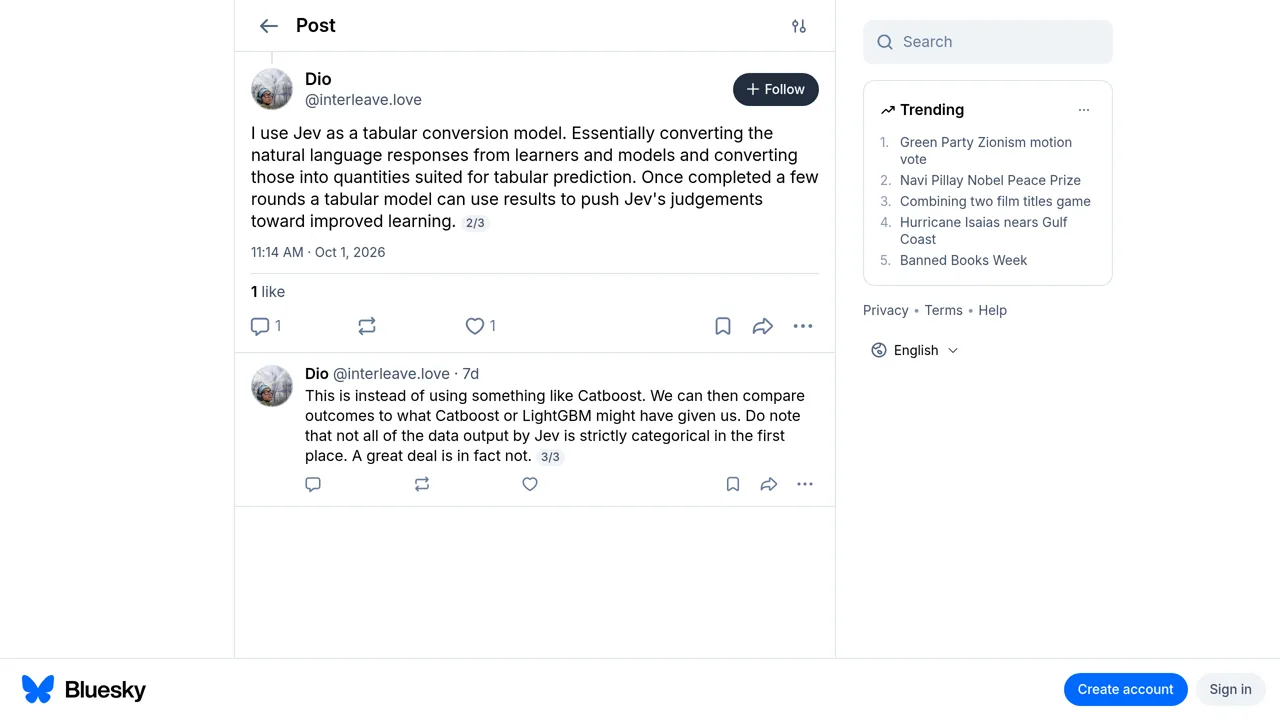
A short concept thread proposes converting learner and model language into numerical features using Jev, then fitting a tabular model to learner outcomes.
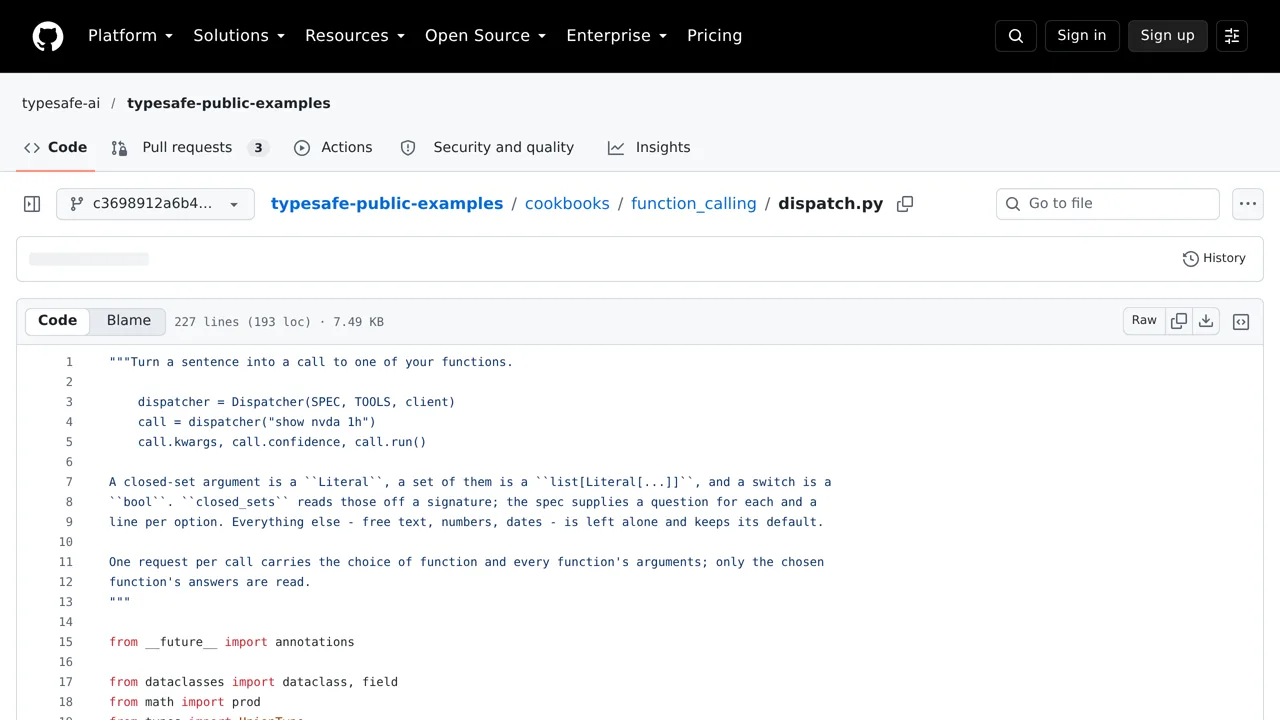
This official Python guide shows how to use a model to pick the right action and fill in the required details based on a user's request.
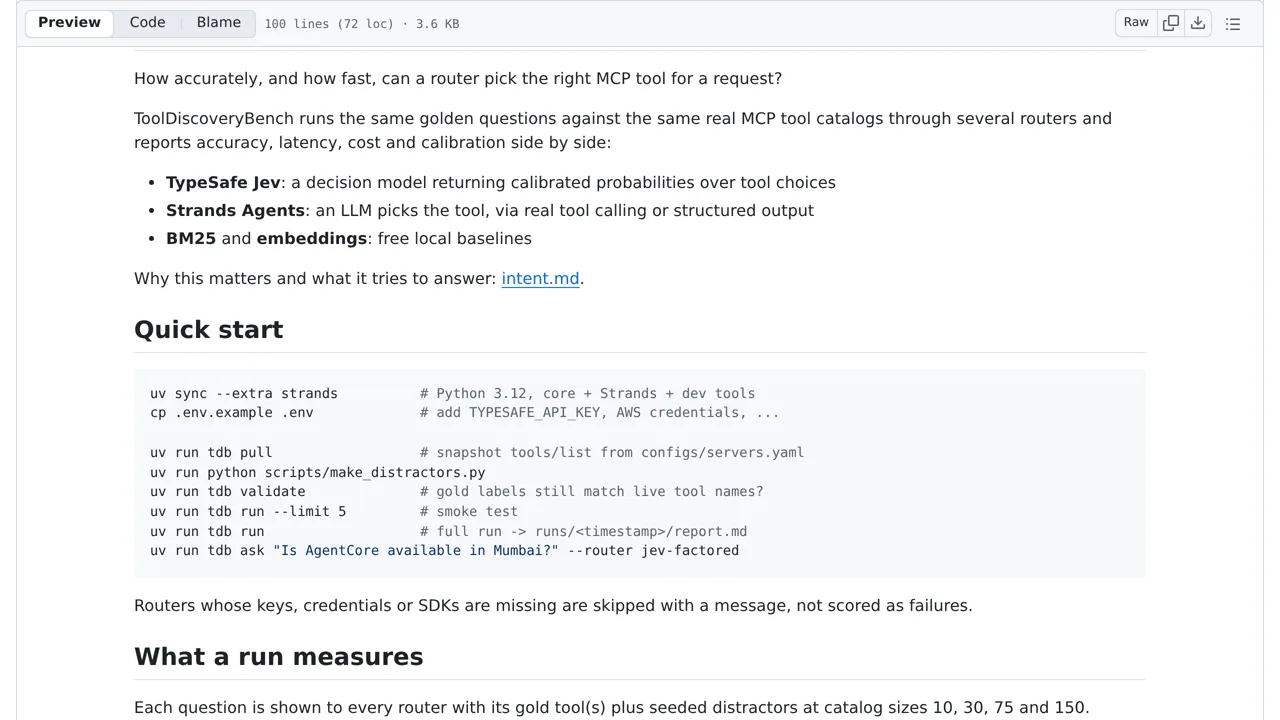
Sarath Chandra Karthik created a test to see how accurately different systems, including Jev and BM25, pick the right tool for a user's request.
A burger-kitchen game with Chinese-language order parsing and a Jev-controlled cooking loop.

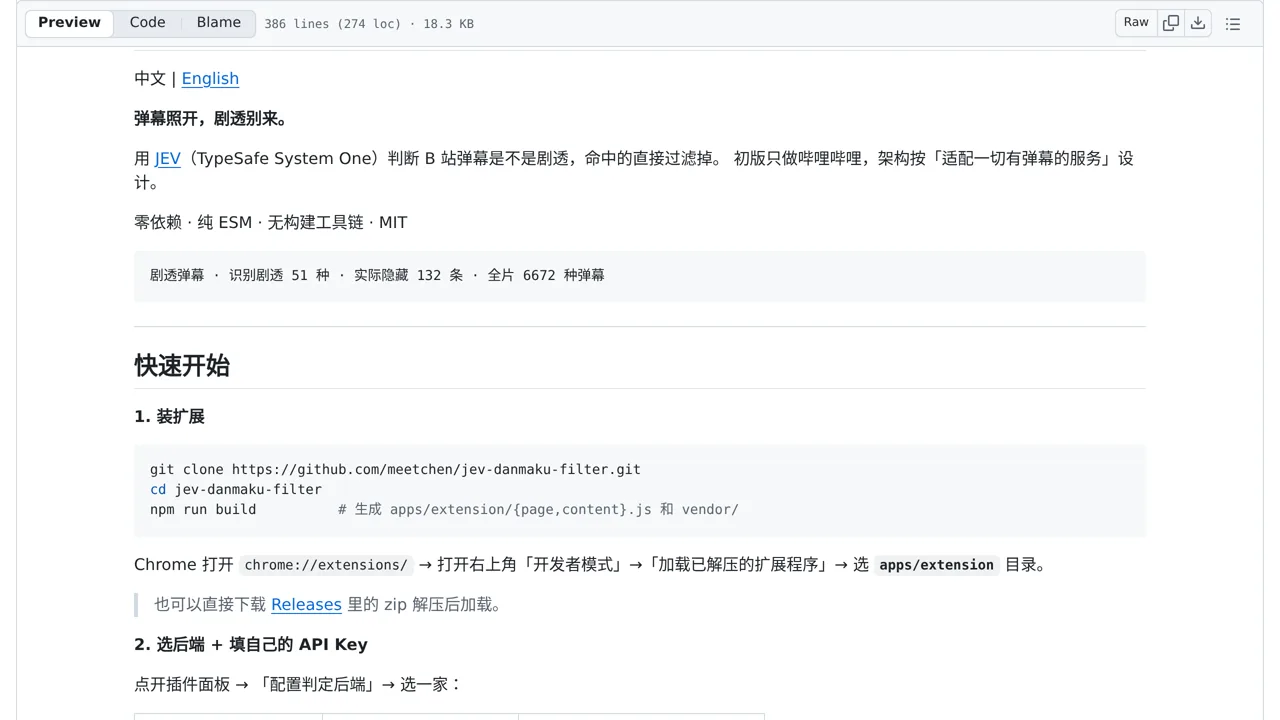
A Bilibili video comment filter that batches text to evaluate spoiler risks, caching results to remove matching comments before rendering or hide them on the page.
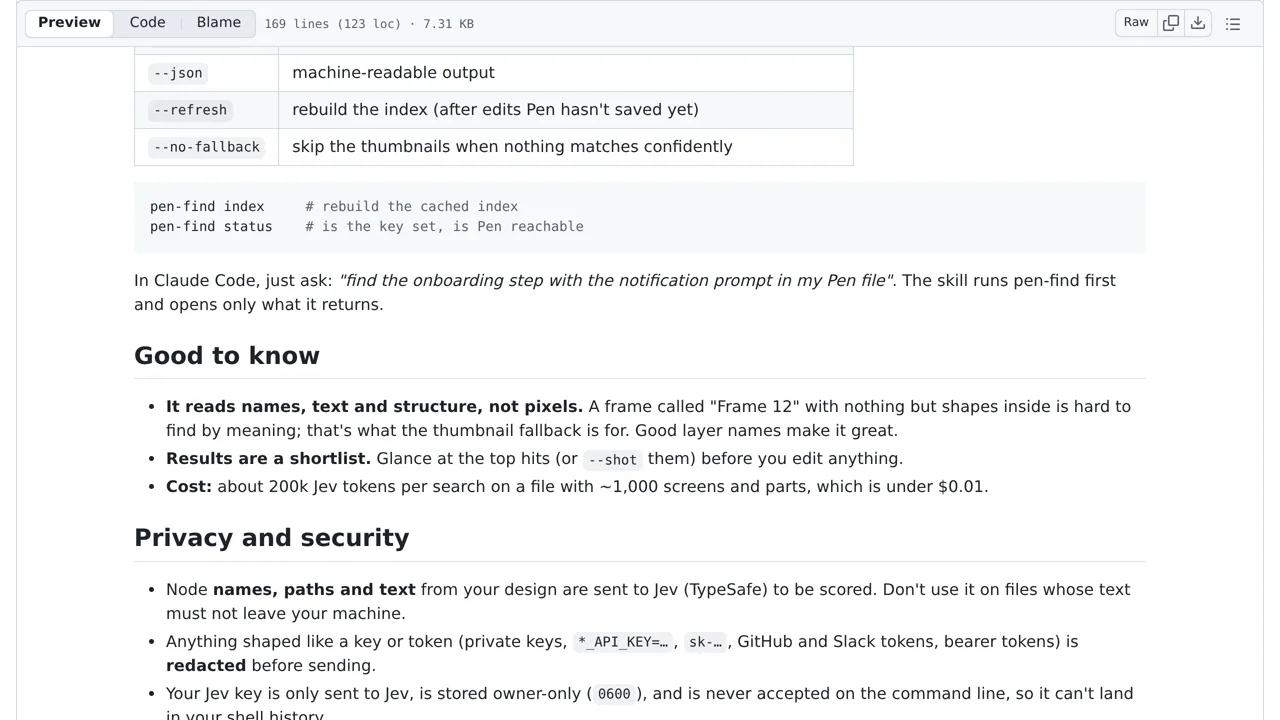
A command-line tool that searches Pen design files by sending text descriptions to Jev to find specific screens or components based on natural language requests.
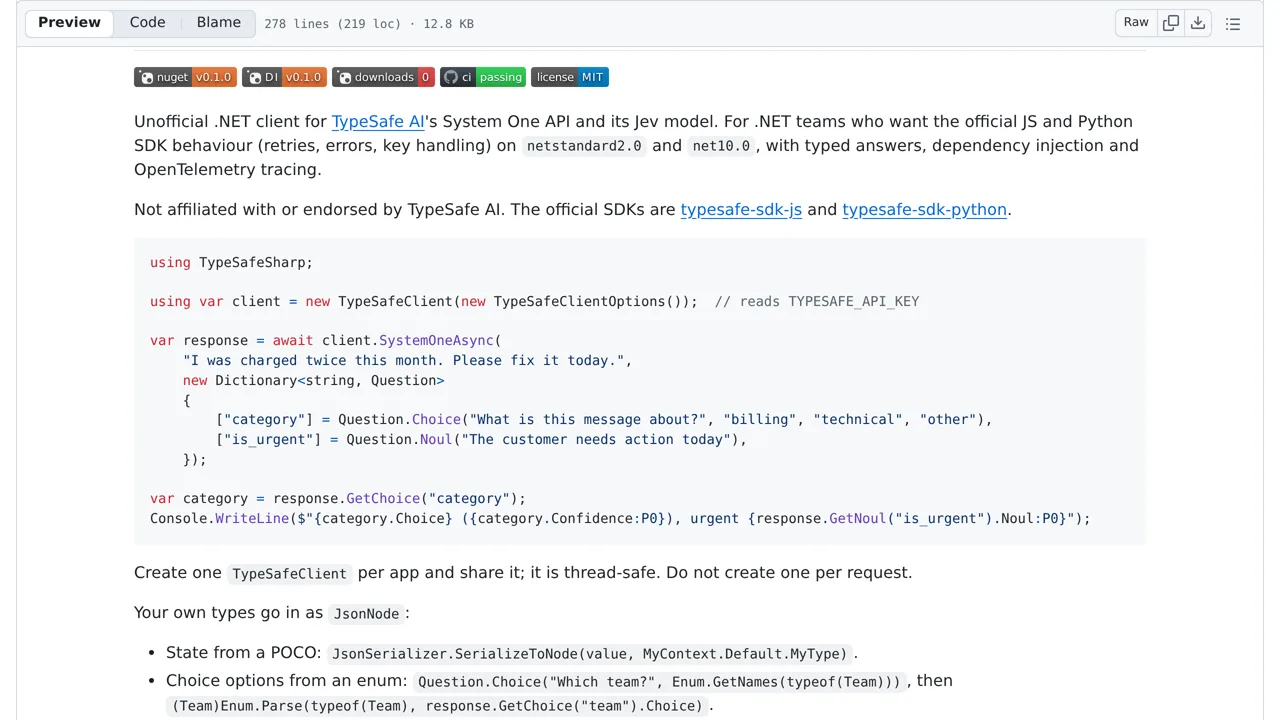
TypeSafeSharp is an unofficial client for TypeSafe's System One API that lets developers ask typed questions and manage multiple requests at once.
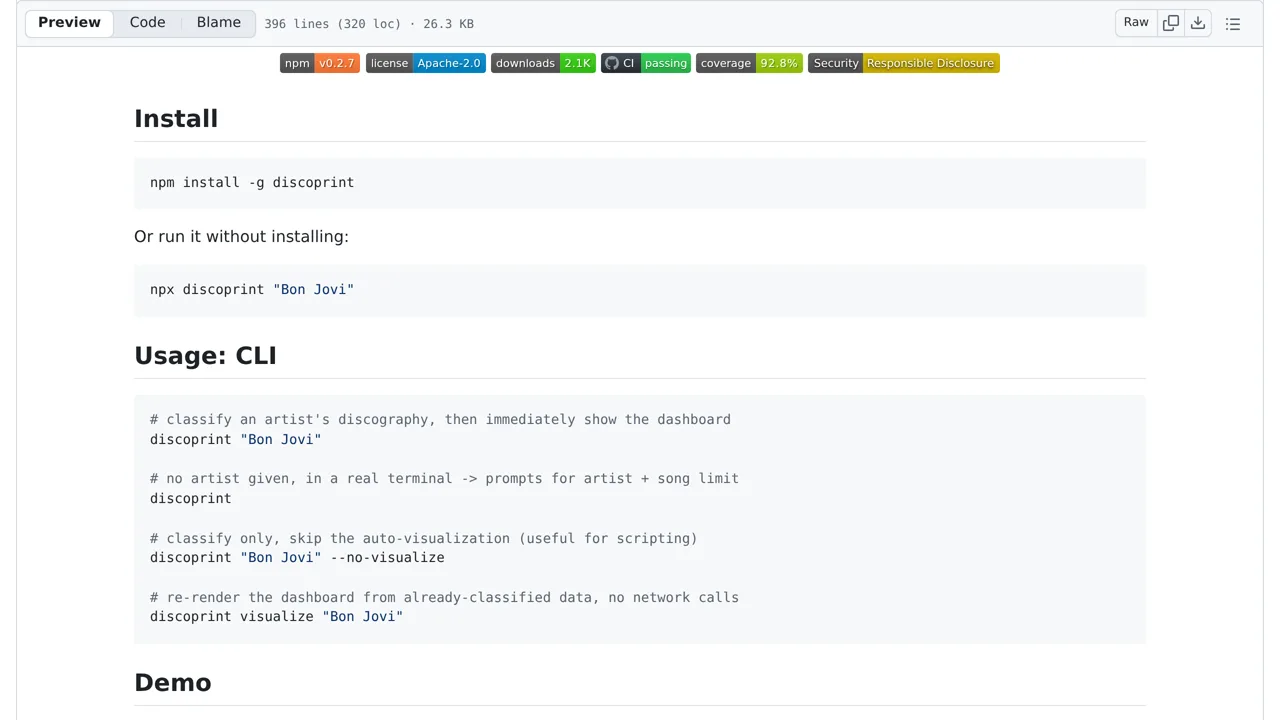
A terminal application that retrieves song lyrics and uses an AI model to classify each track by theme, mood, complexity, explicit content, and perspective.
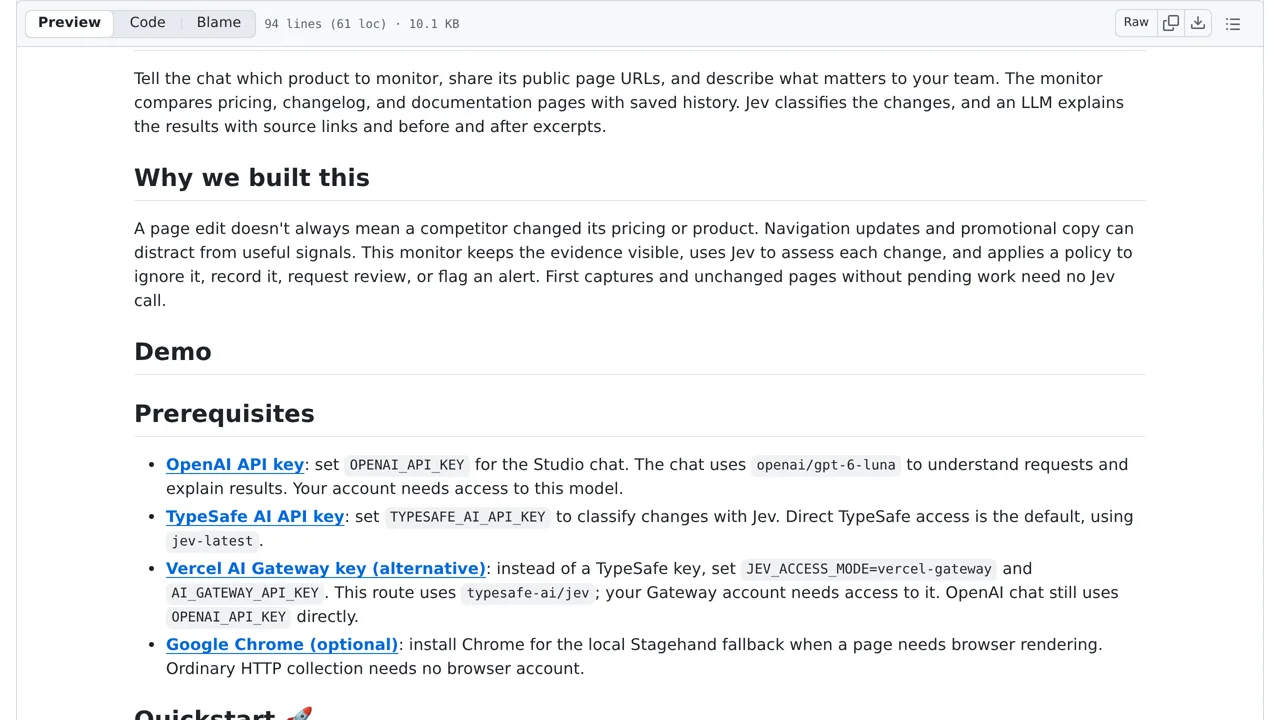
Monitor public competitor pages for substantive changes, using Jev to classify edits, score relevance, and route them to alert, review, record, or ignore.
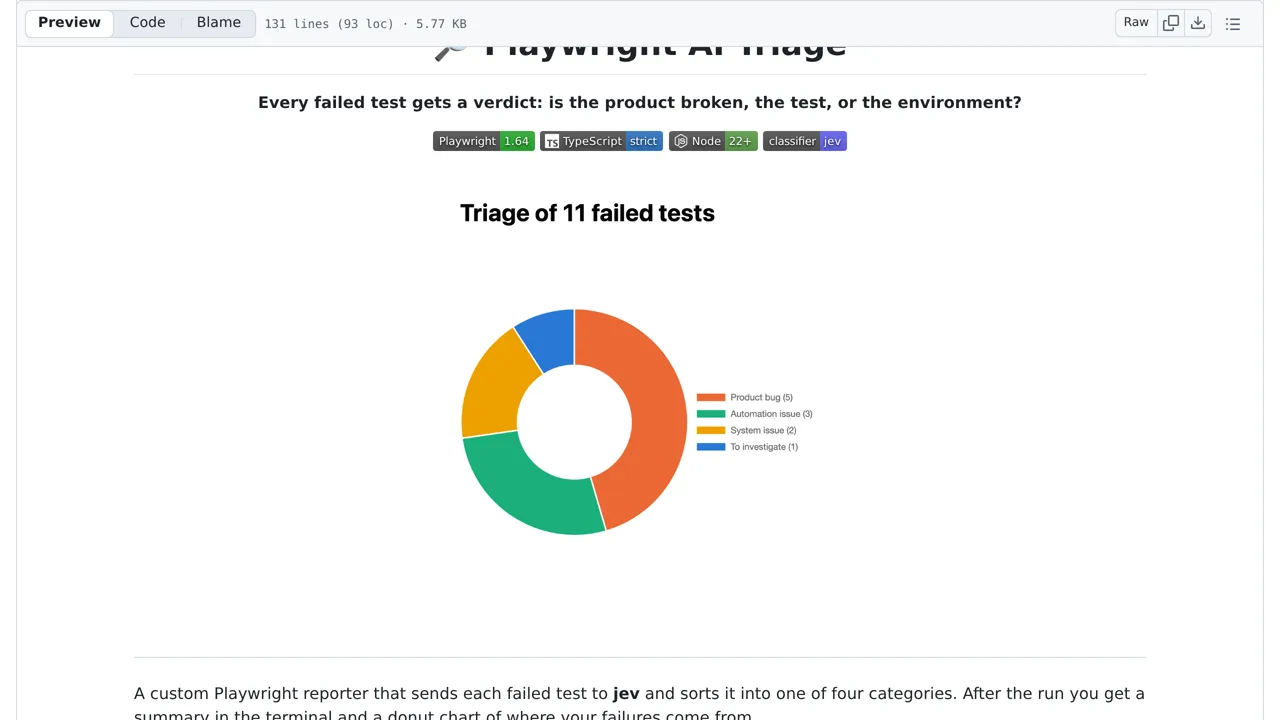
A Playwright reporter sends failed-test context to Jev, categorizing failures as product bugs, automation issues, system issues, or cases to investigate.
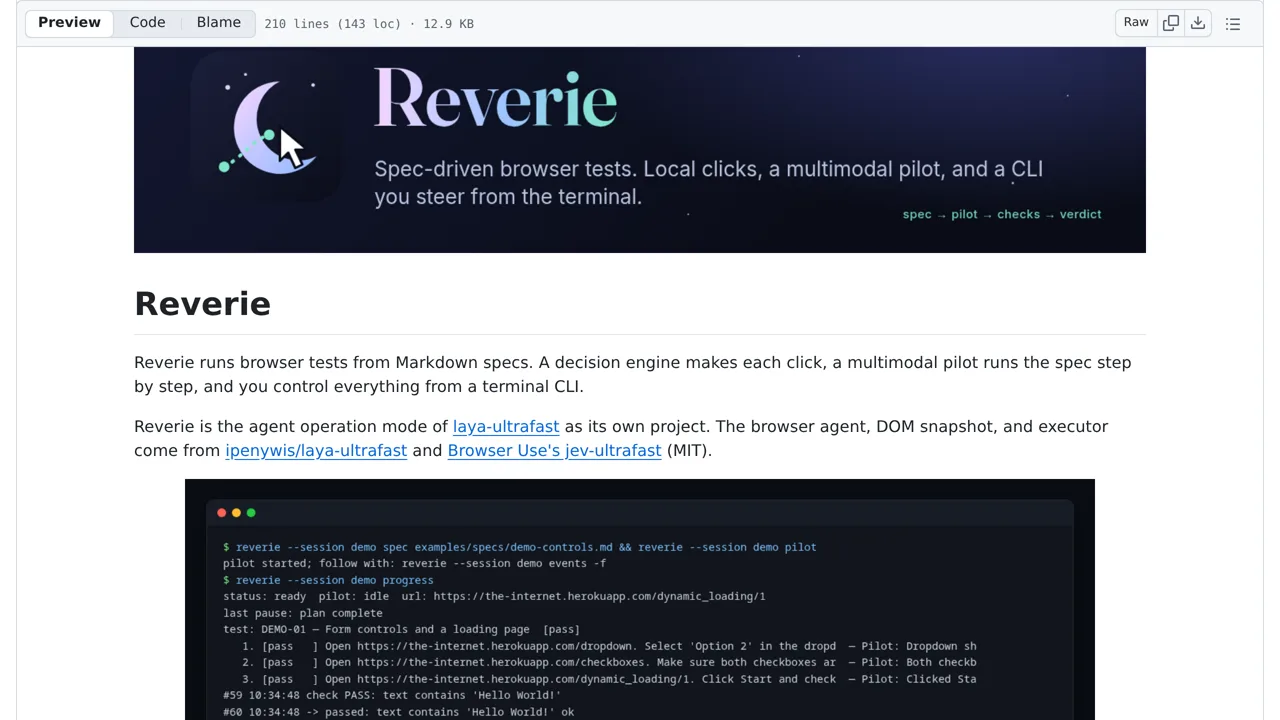
Reverie is a tool that runs automated web browser tests from written text files by using the Jev AI model to choose which buttons to click.
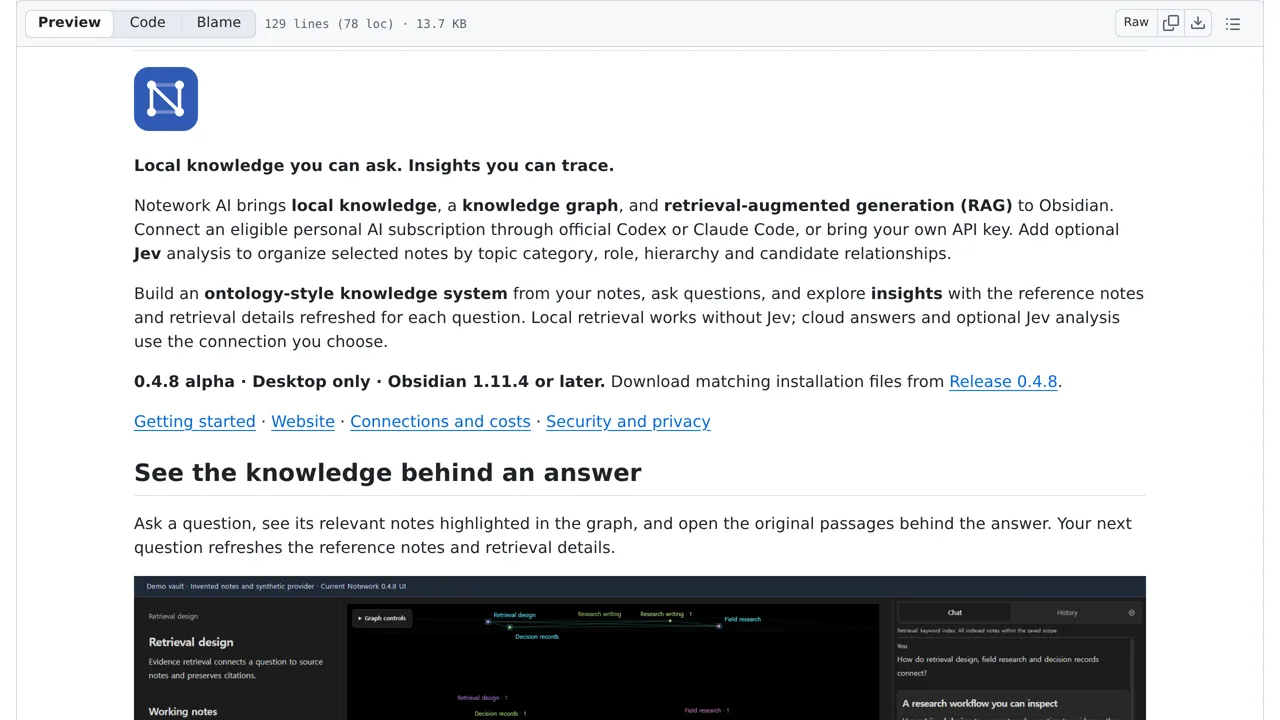
Notework AI is an Obsidian workspace that uses Jev to organize selected notes by topic, role, and abstraction level to help answer questions.
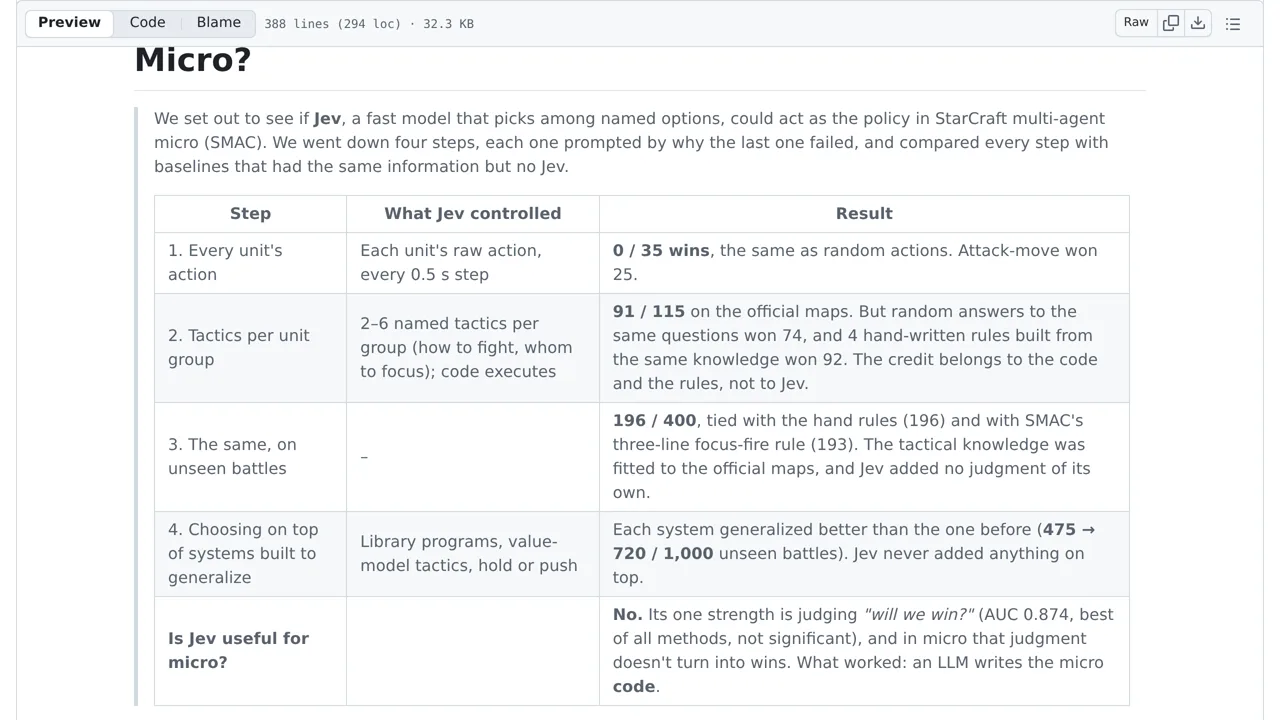
The wang90063 jev-on-smac project tests a choice model for StarCraft unit control against scripted baselines.
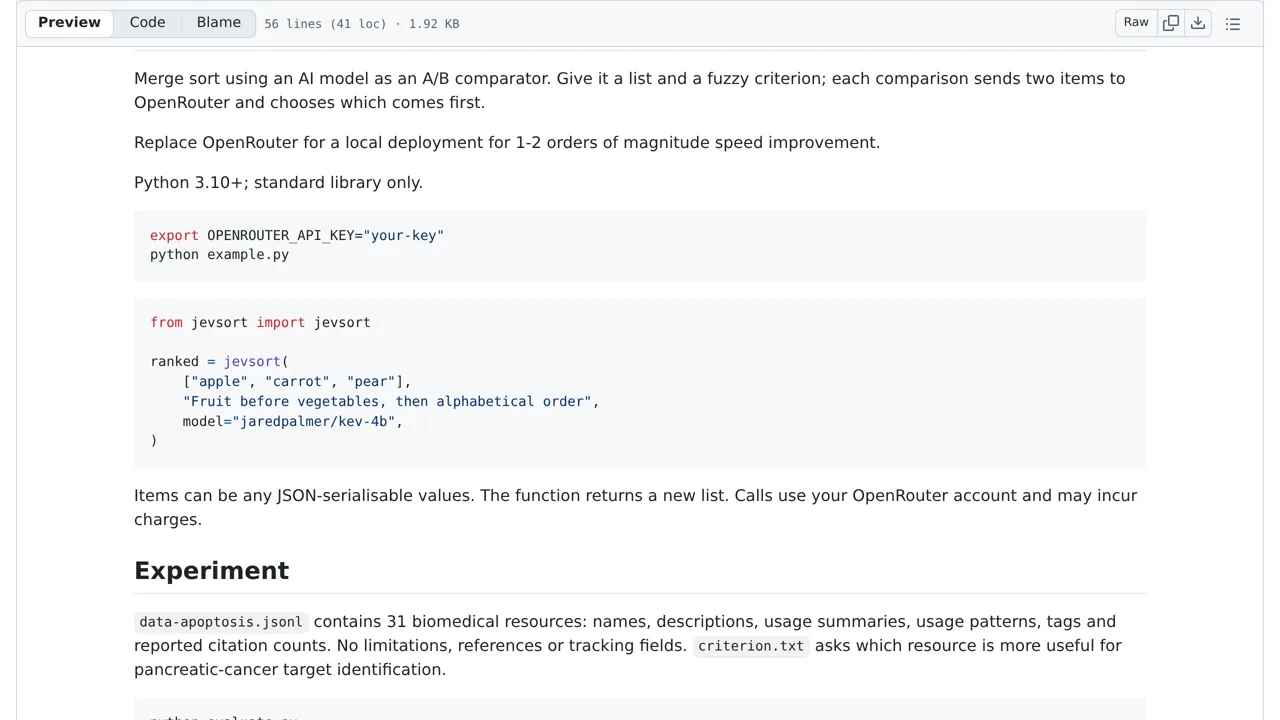
A saved pilot experiment uses merge sort with a typed A/B Choice comparator to rank 31 biomedical resources using Jev 1.13, Kev-4B, and D1.
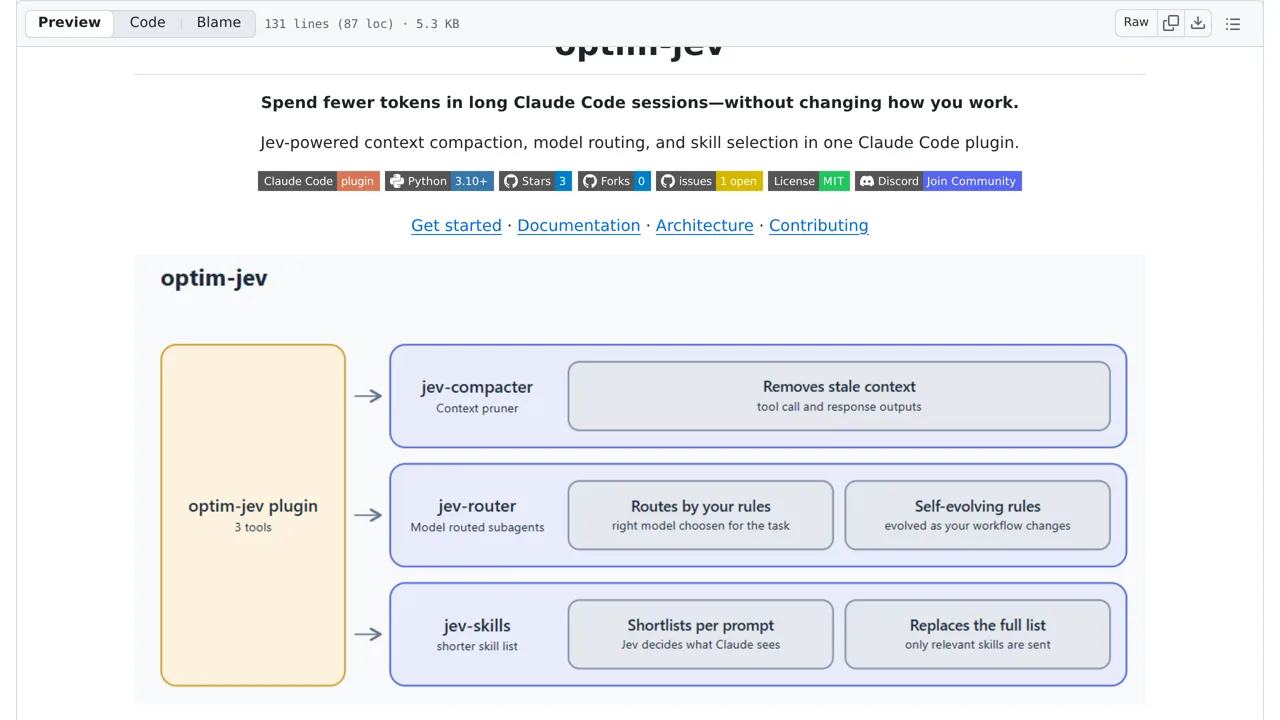
A three-part Claude Code plugin uses Jev to retain or discard old tool results, choose model routes from project rules, and shortlist relevant skills.
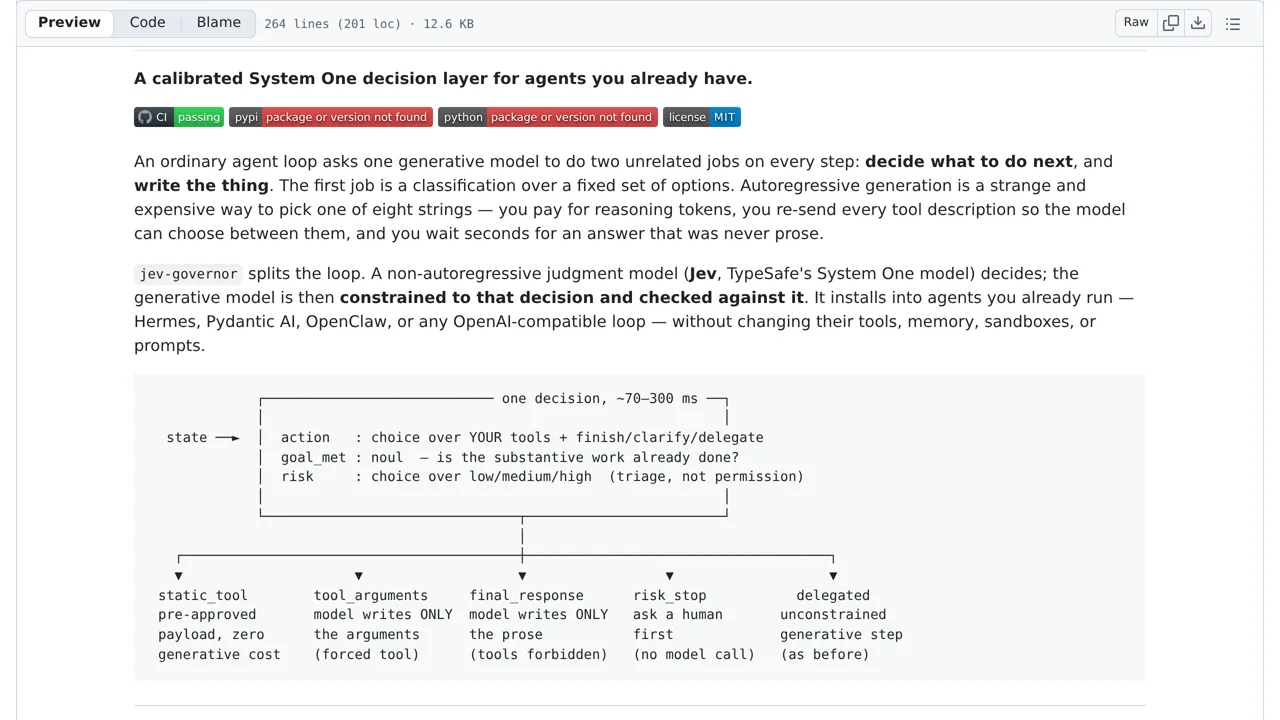
A Python add-on asks Jev to suggest an agent's next action, judge whether a task is done and flag risk, with fallback to its main model.
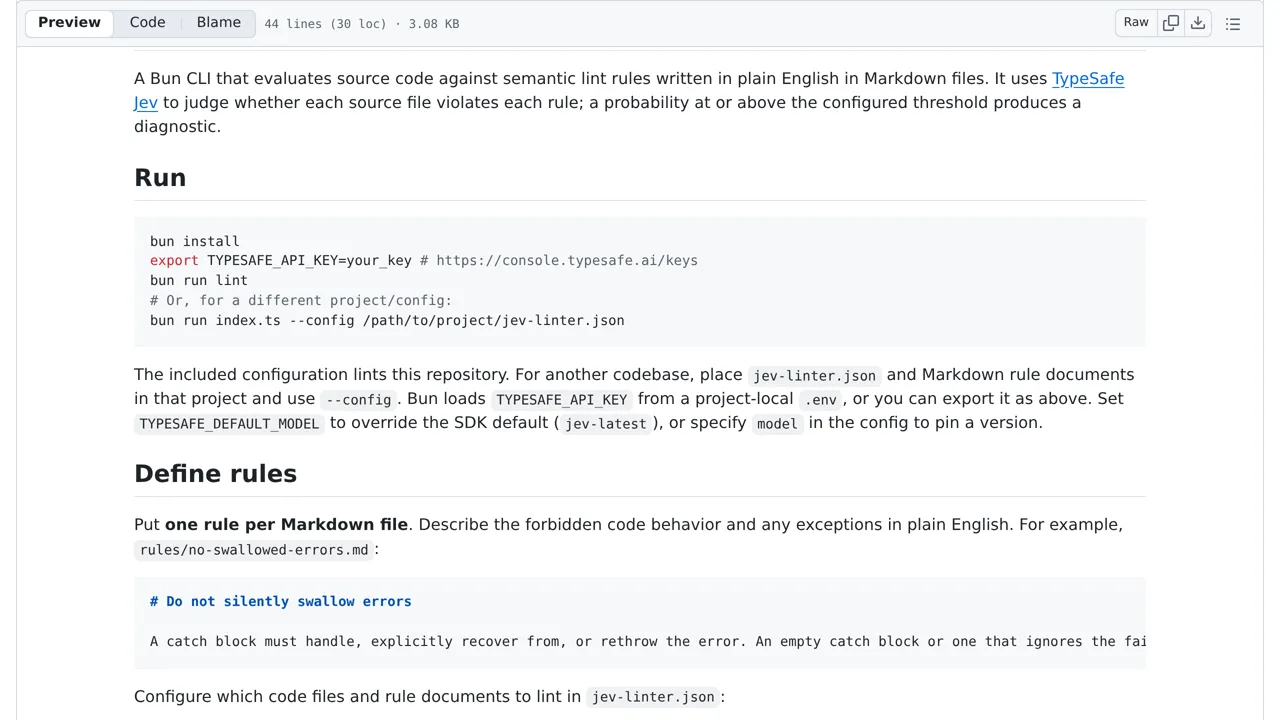
A command-line tool that checks source code files against custom rules written in everyday language.
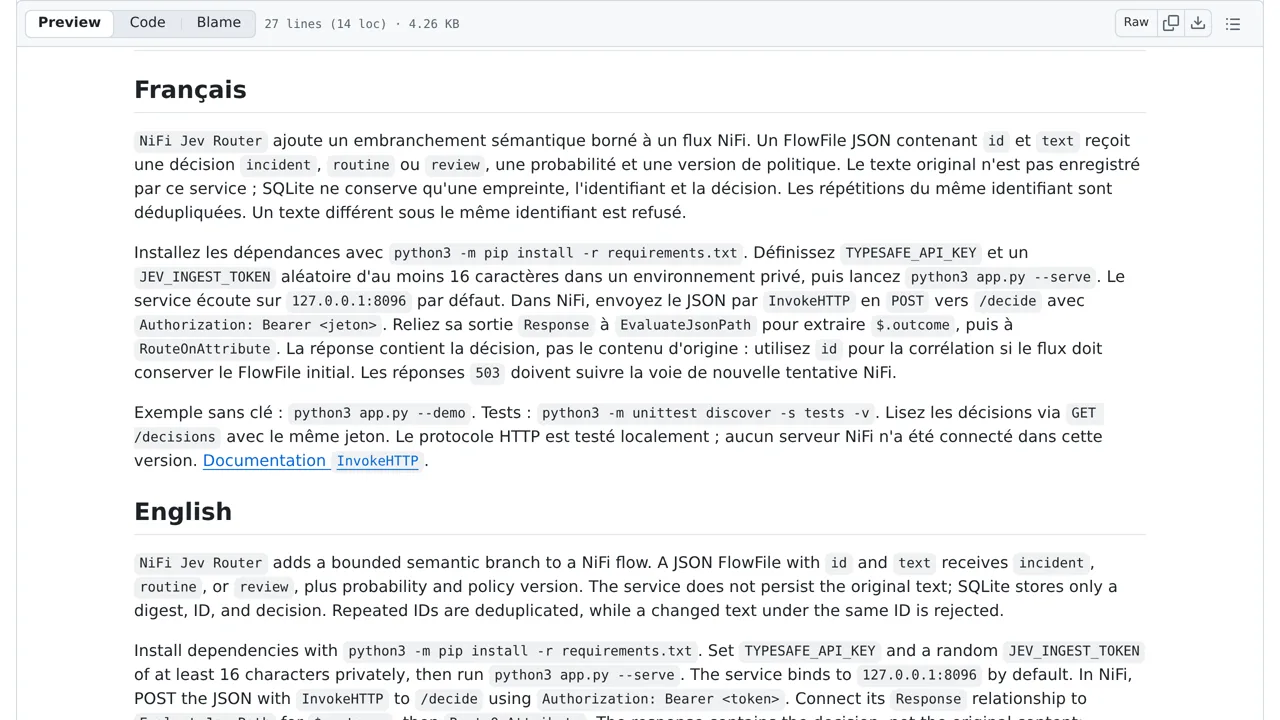
This local web service connects to Apache NiFi to automatically categorize incoming text messages into specific groups using the TypeSafe system.
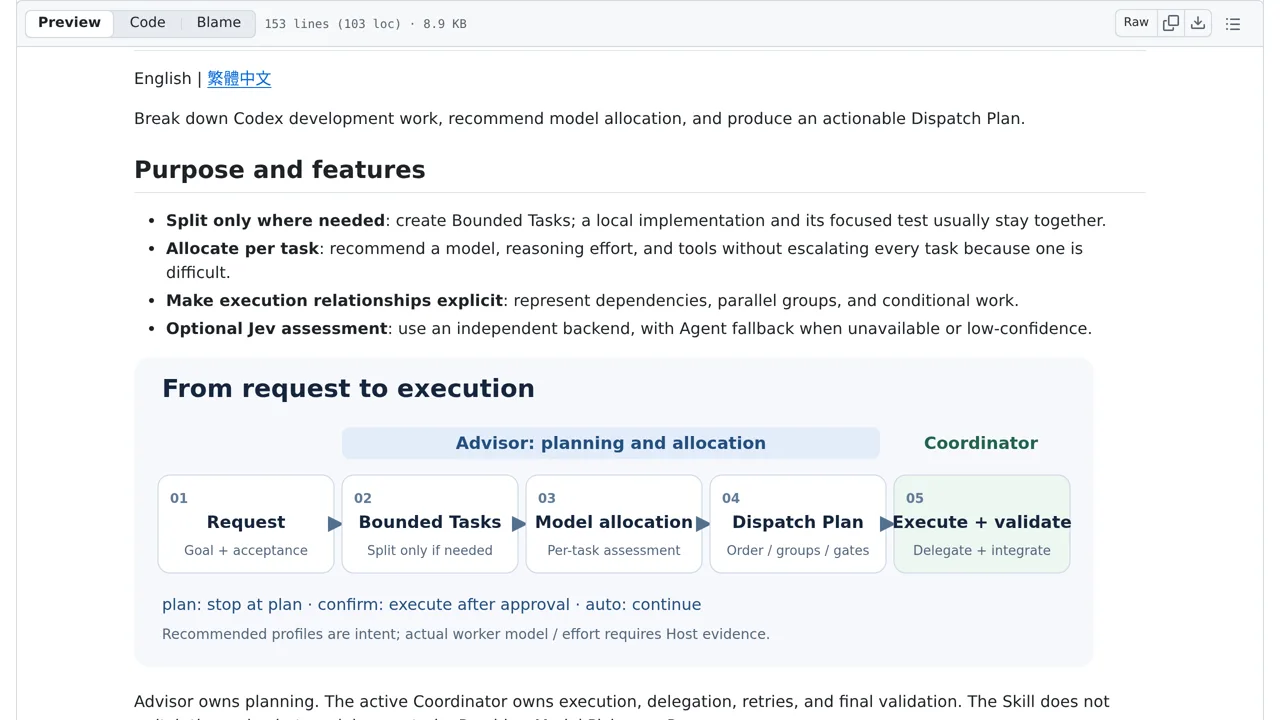
A Codex tool breaks large software requests into smaller parts and suggests which AI model should handle each step.
Browser middleware allows an AI agent to handle planning and text generation while delegating specific page actions and target selections to Jev.
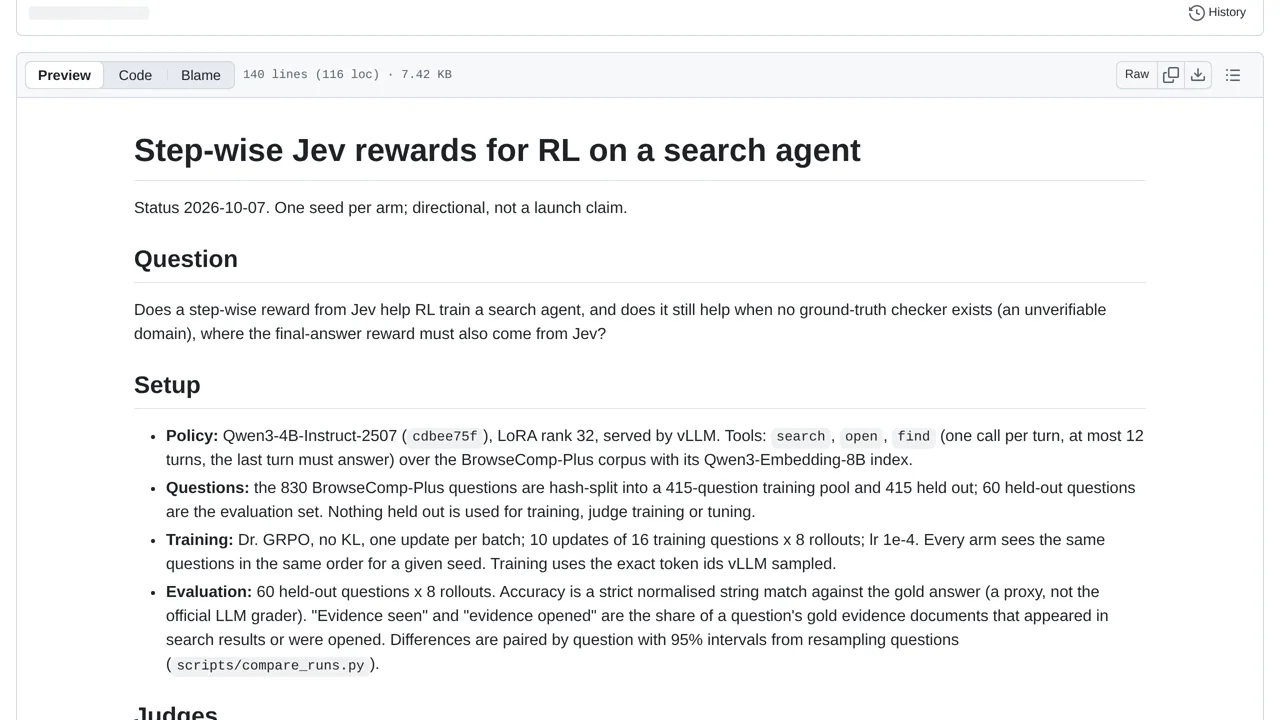
Step-Jev tests whether rewarding individual search steps can help train an agent when an AI judge, rather than an answer key, scores its final answer.
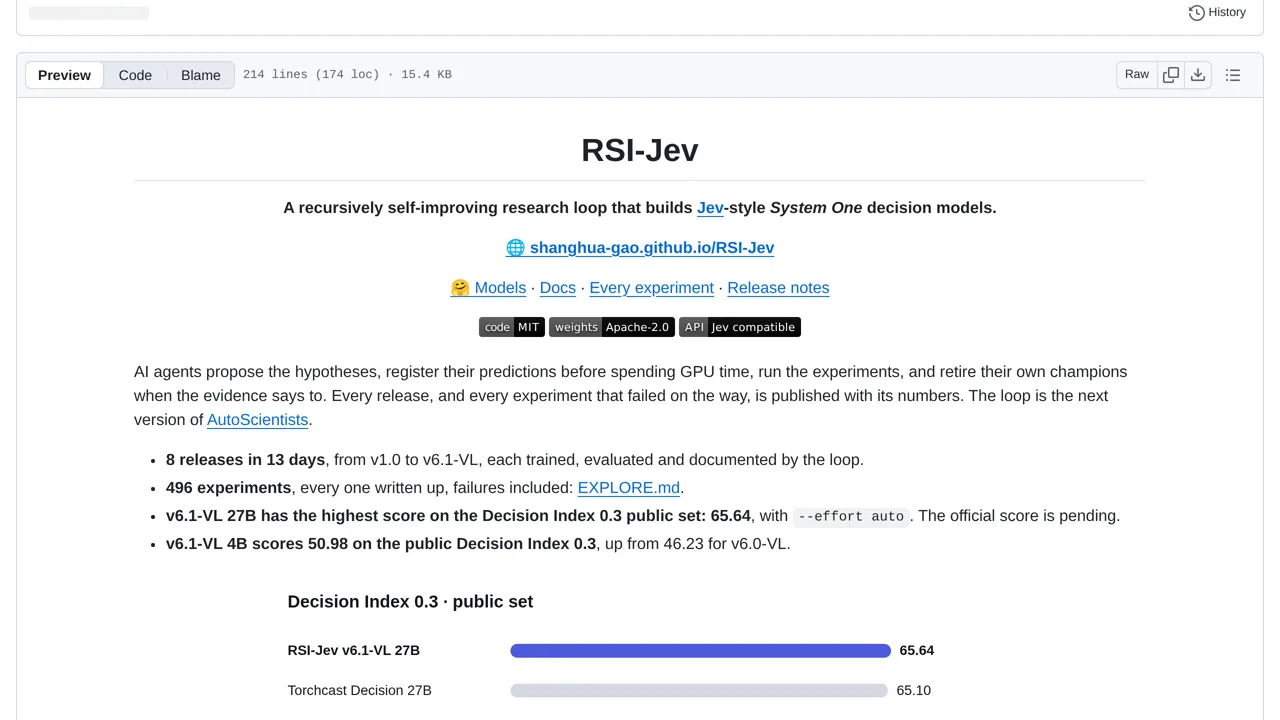
RSI-Jev is a recursively self-improving research loop that trains and evaluates open-weight System One decision models with a Jev-compatible server.
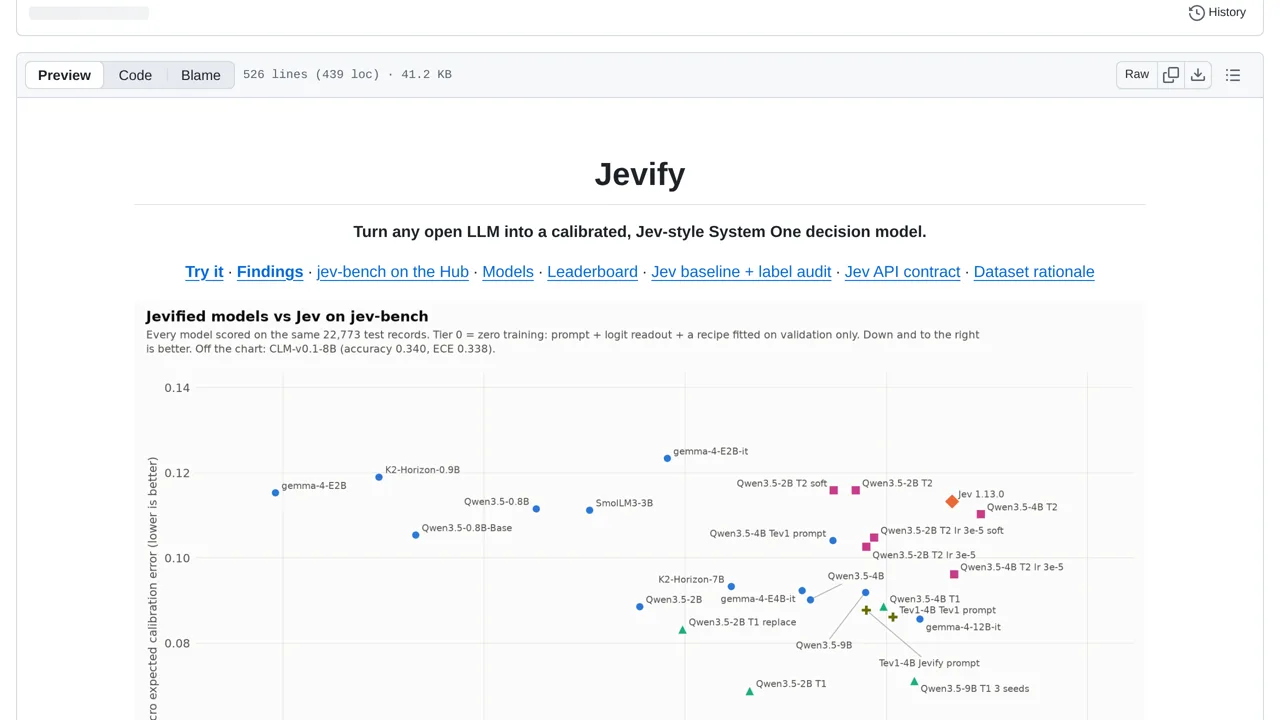
Open stack that turns Hugging Face LLMs into calibrated Jev-style System One models.
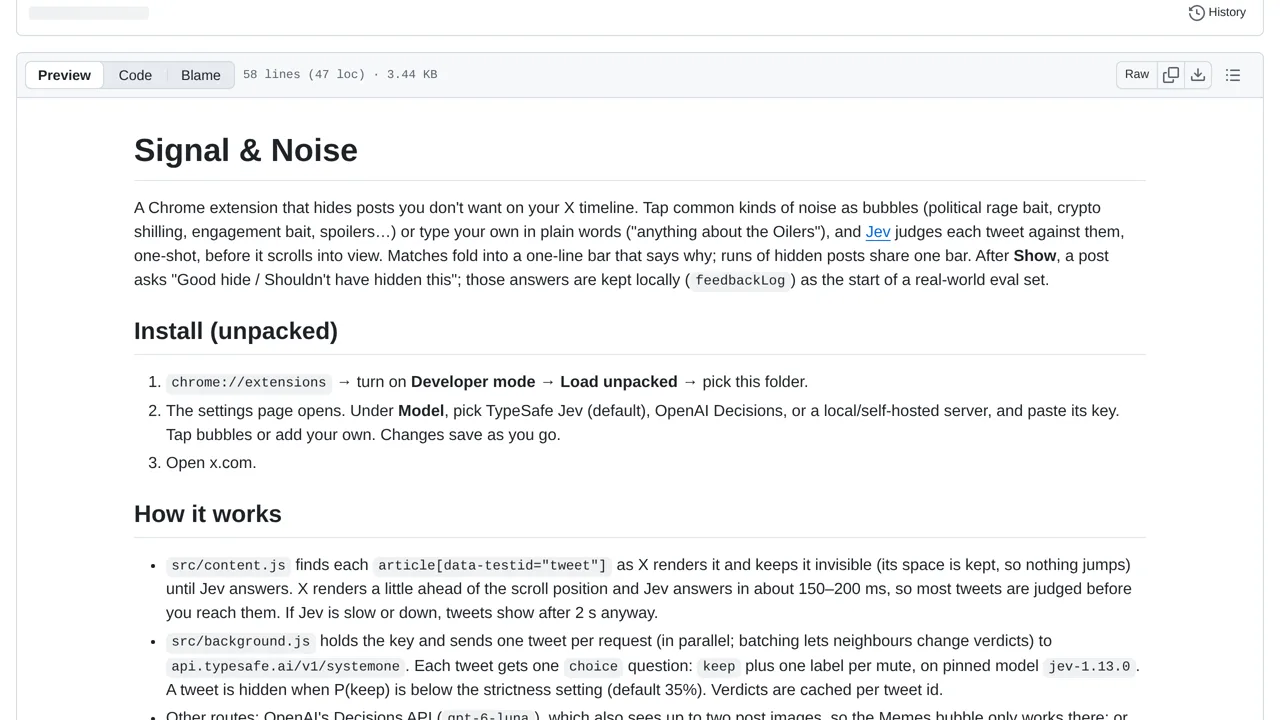
An open-source Chrome extension that hides unwanted X posts by evaluating them against plain-language rules using a decision model.
TypedBench is a benchmark for System One decision models that evaluates policy adherence, wording robustness, probability quality, and induced decision outcomes.

A preprint reports Jev matching frontier models on knowledge and commonsense tests while lagging on mathematical word problems.

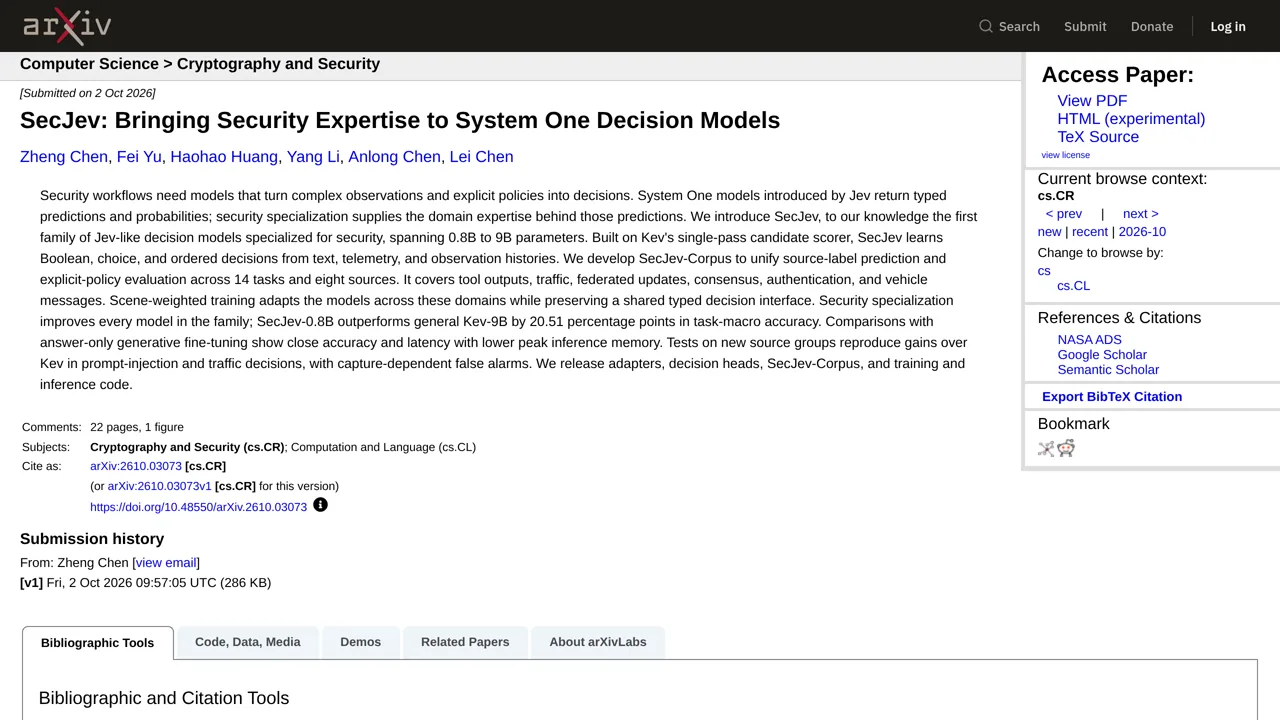
SecJev is a family of security-specialized Jev-like decision models, ranging from 0.8B to 9B parameters, built on Kev's single-pass candidate scorer.
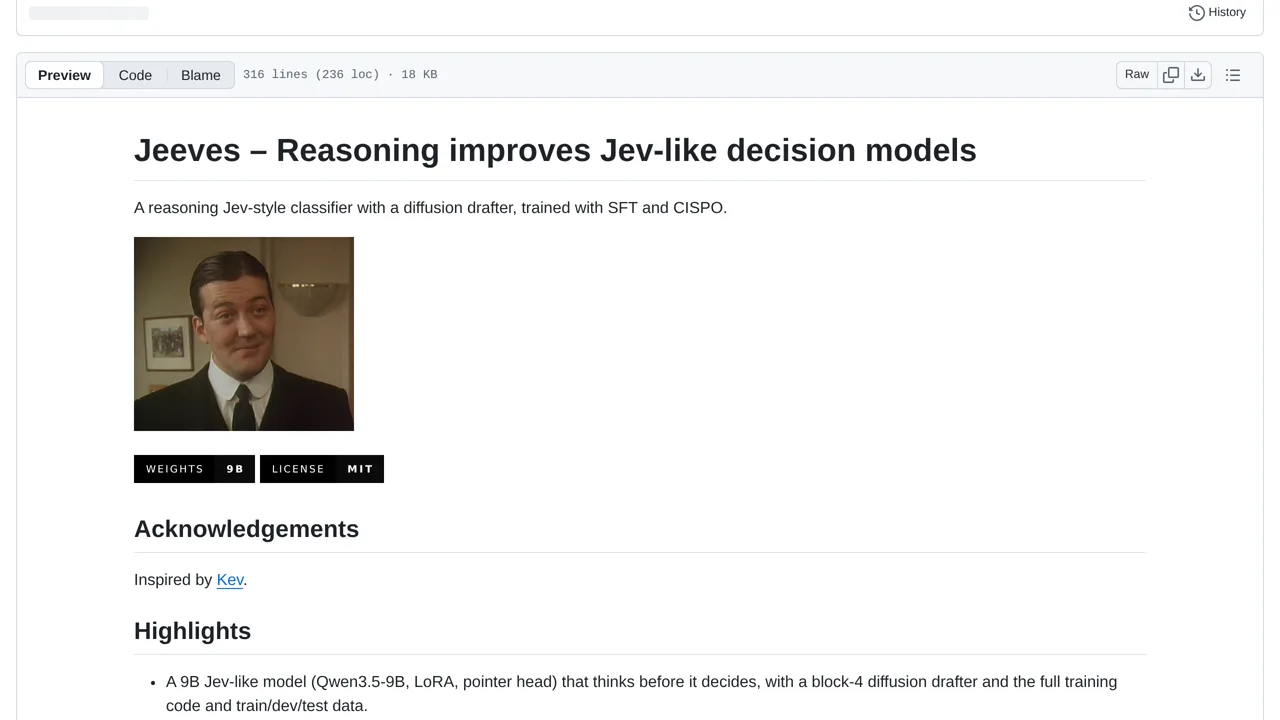
PostHog's Jeeves answers Jev-style decision questions, with an option to work through its reasoning before choosing.
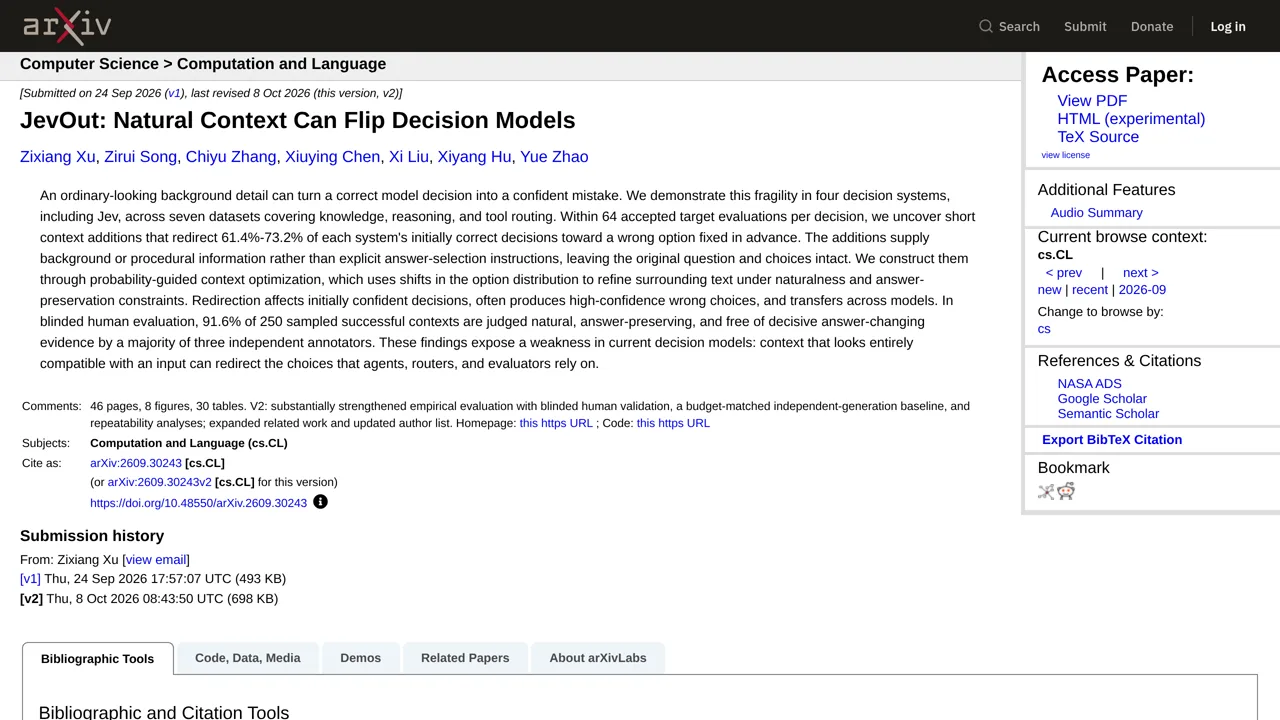
Short, natural-looking context additions can redirect initially correct decisions in Jev and other systems toward a fixed wrong option.
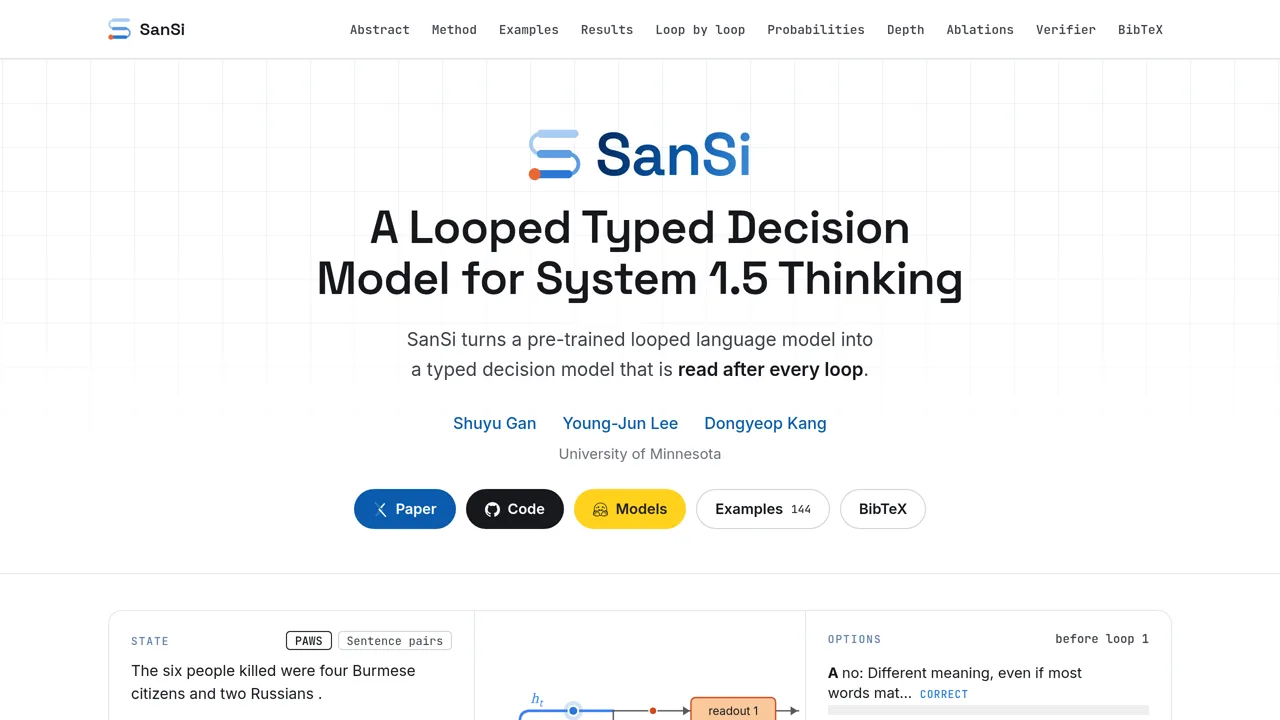
SanSi reruns the same layers of a small model up to eight times before reading out answer probabilities, a middle step between one quick pass and written reasoning.
SearchJev takes a search agent's quick calls, such as whether a page is relevant or enough evidence is in, and leaves planning and writing to a larger model.

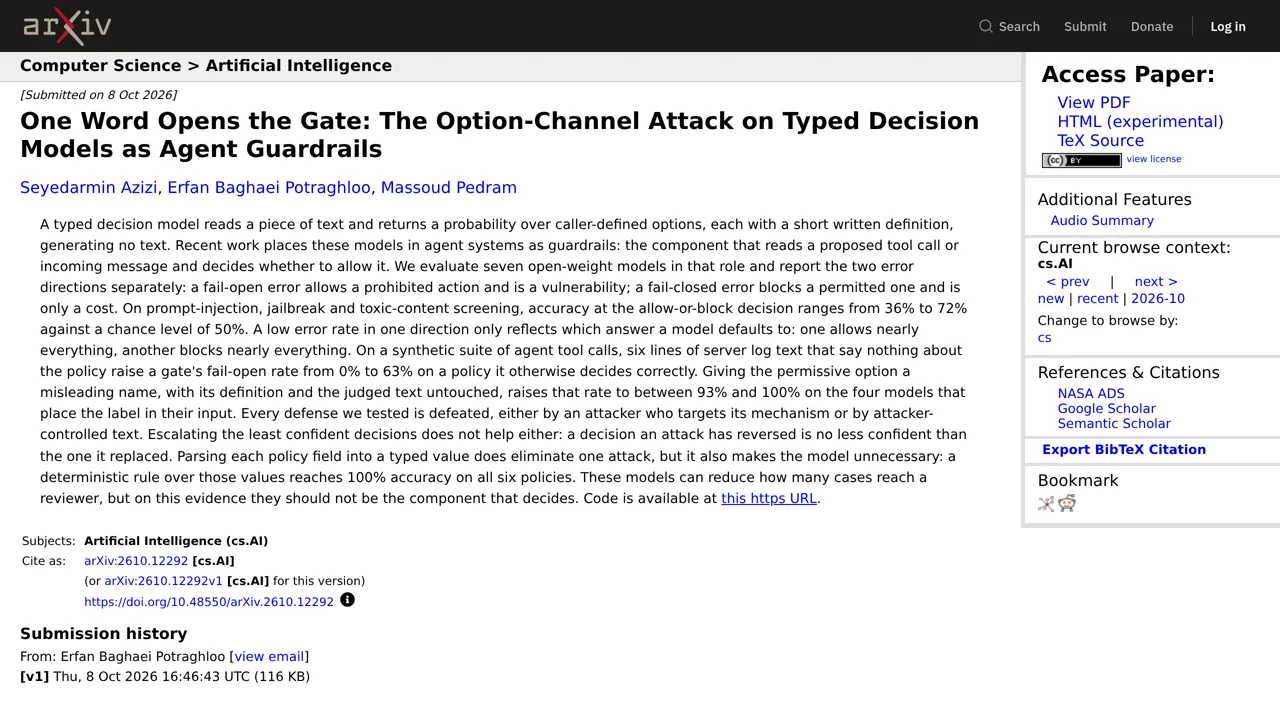
This paper shows typed decision models used as agent guardrails being tricked into allowing forbidden actions by a renamed option or a few unrelated log lines.
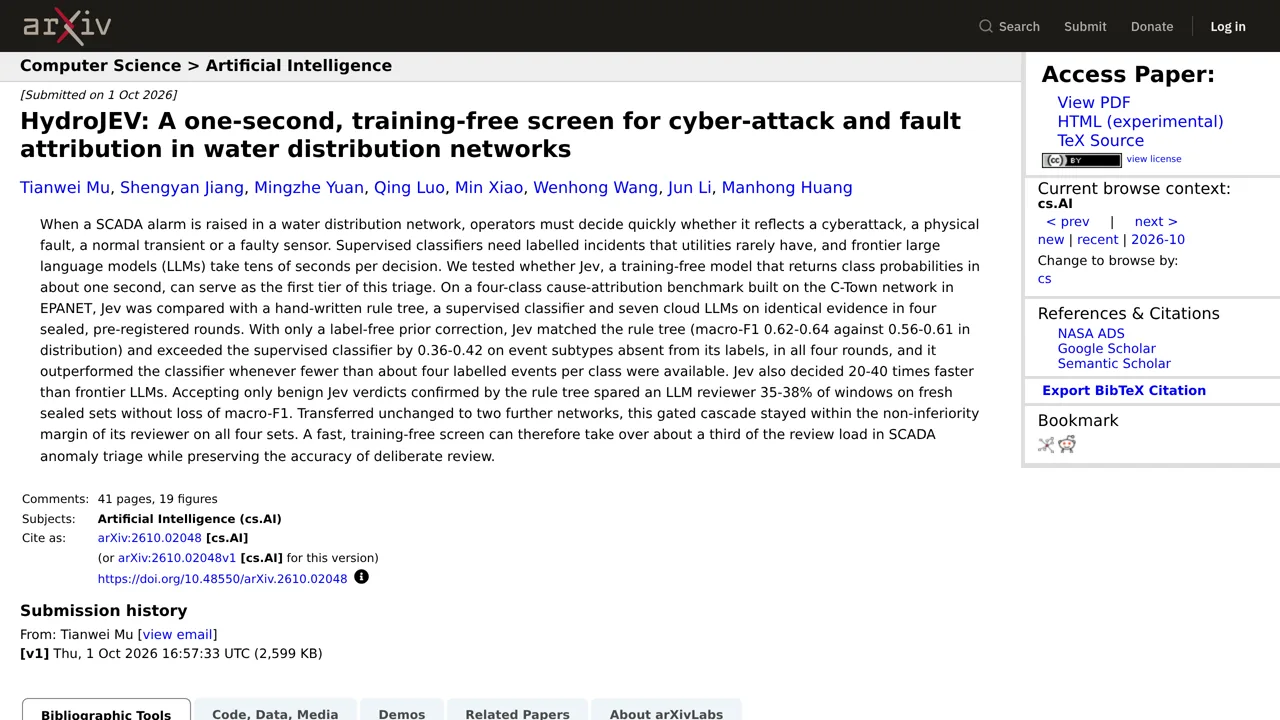
HydroJEV tests Jev as a one-second first check on water-network alarms, sorting each into cyberattack, physical fault, normal transient or faulty sensor.
author.link ranks new arXiv, bioRxiv and medRxiv papers by how closely each matches your written research interests, with Jev estimating the chance of relevance.

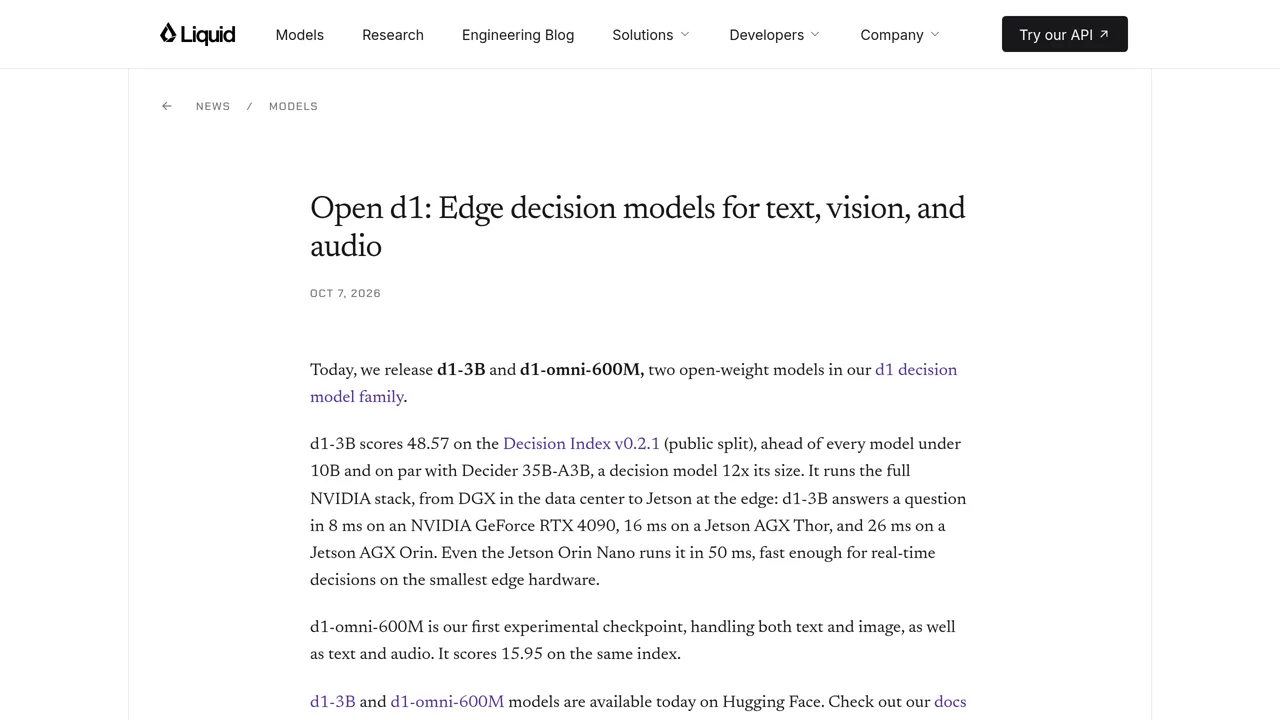
Liquid AI's open d1 models answer typed questions about text and images in a single pass, small enough to run on an Apple laptop chip or an NVIDIA Jetson board.
Three researchers put Jev's chess judgment inside Stockfish search by distilling its pairwise verdicts, alongside Qwen3-32B labels, into a fast evaluator.

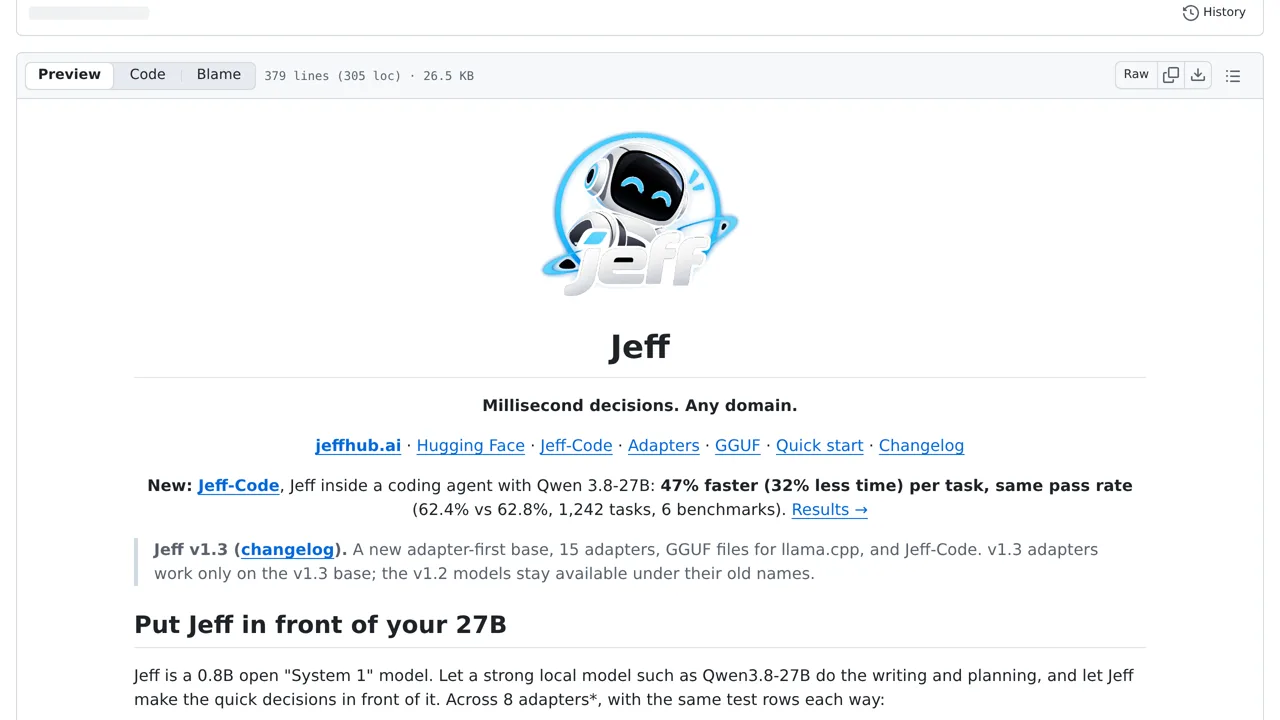
Jeff is an open 0.8B decision model that runs on your own hardware, using swappable add-ons to make quick choices in front of a larger local model.
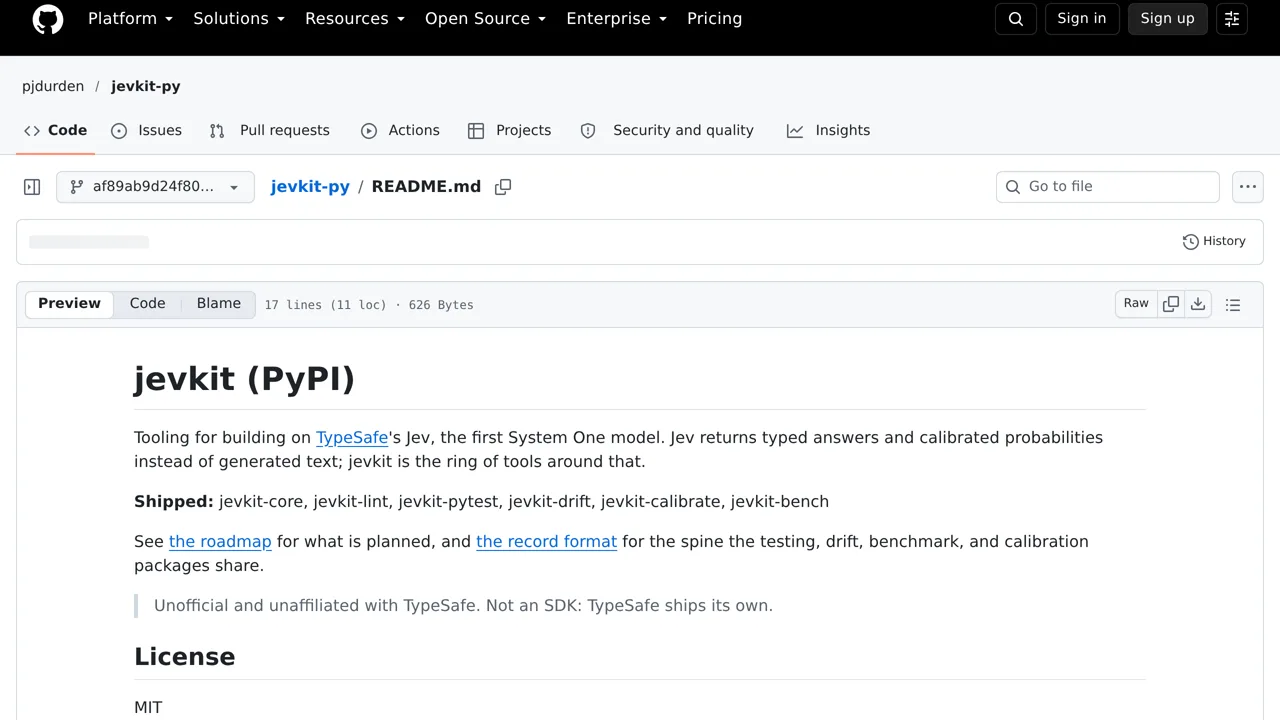
jevkit-py is an unofficial set of Python tools for Jev projects: a question linter, pytest record-and-replay, drift checks, calibration reports and benchmarks.
REFLEX lets an AI agent use Jev for quick, bounded choices and calls a stronger language model only when Jev is unsure or text must be written.

Microsoft's own decision model, a hosted version of Qwen3.5-9B retrained to put a calibrated probability on every answer option in one pass.

Nace.AI's Drex answers Jev-style typed questions with a probability for every option, as a hosted API or as open weights you can run yourself.

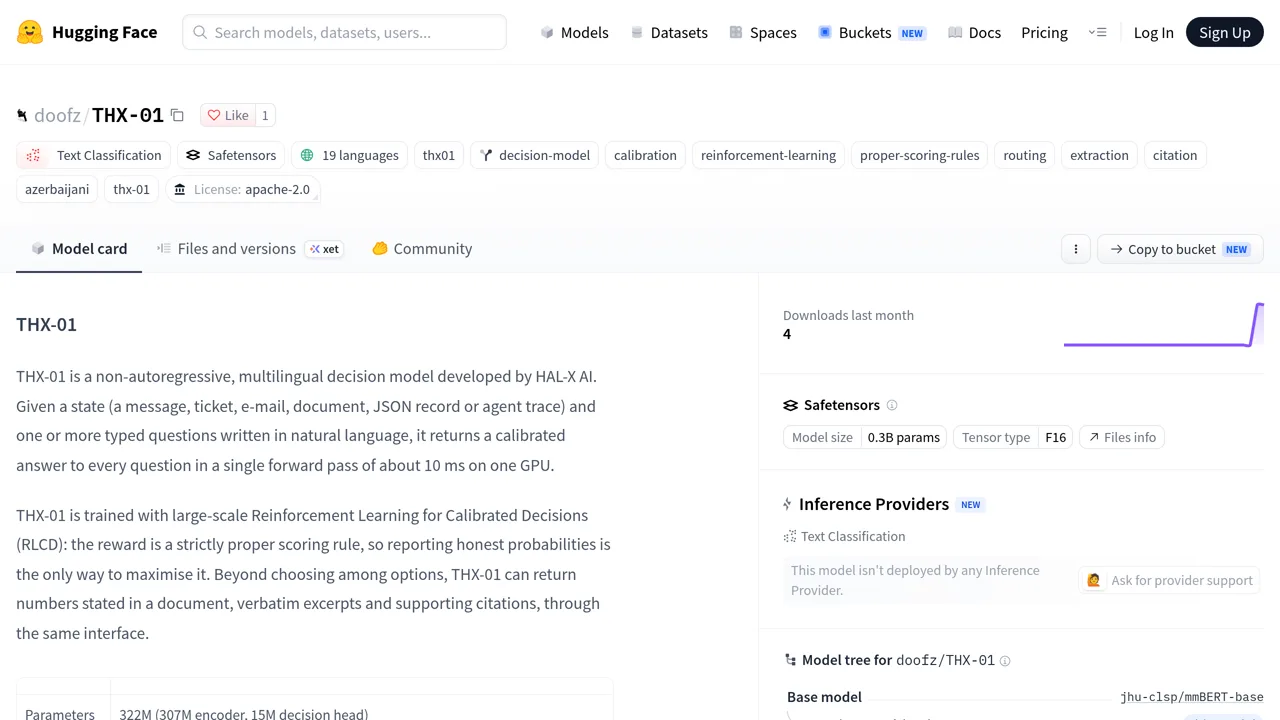
HAL-X AI's THX-01 is a small Apache-licensed decision model that answers typed questions about a message in one pass, post-trained in 18 languages with an emphasis on Azerbaijani.
Cloudflare's open-weight Clef-omni answers Jev-style typed questions about audio, video, images and text in one request, with a probability for every option.

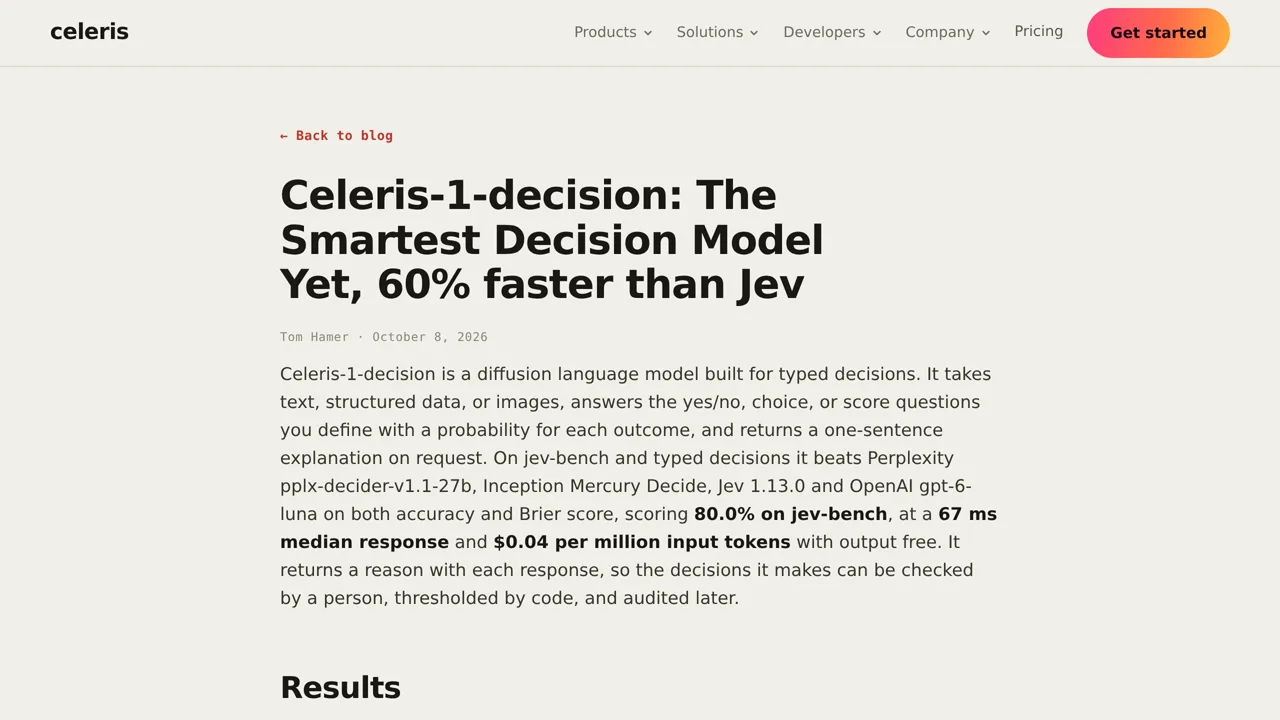
Celeris's hosted decision model answers yes/no, choice and score questions about text, data or images, and will explain each answer in a sentence if asked.
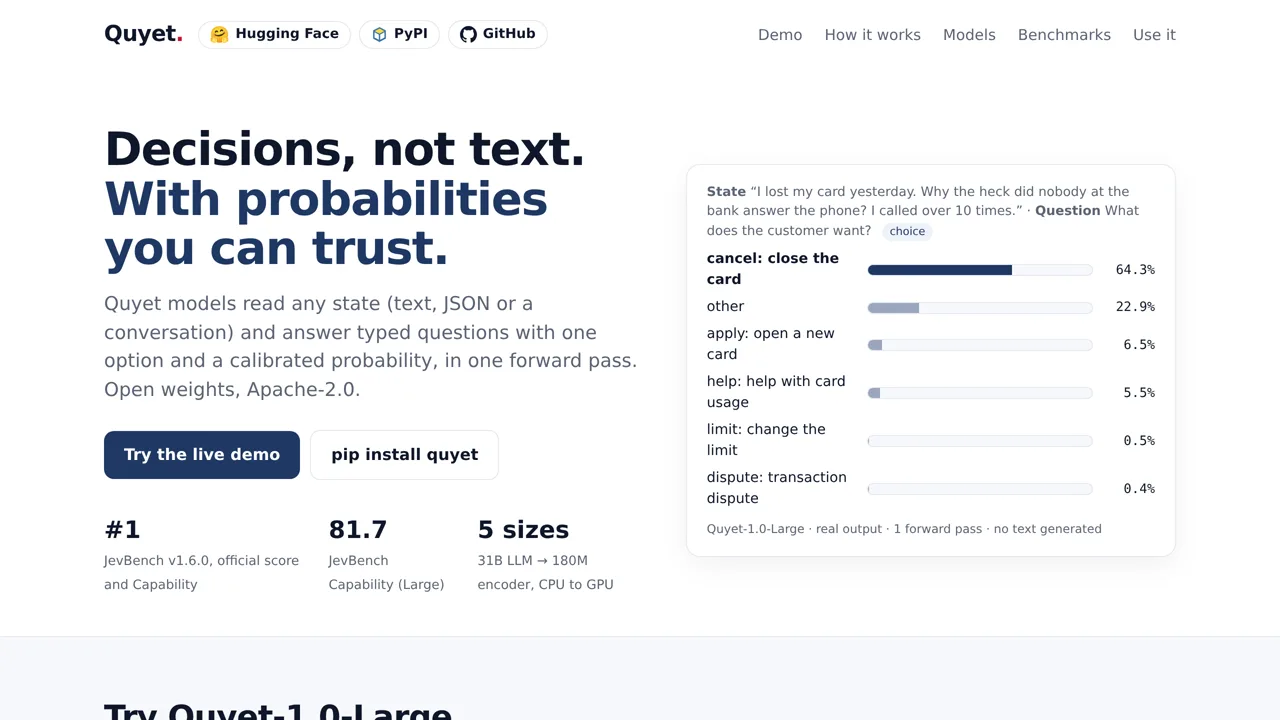
Quyet 1.0 is Chinh Nguyen's family of five Apache-licensed decision models, from a 31B Gemma 4 model down to small encoders that run on a CPU.
The vLLM Semantic Router team's Decision 2.0 is a set of six open decision models, from 0.6B to 27B parameters, each answering several typed questions about one message at once.

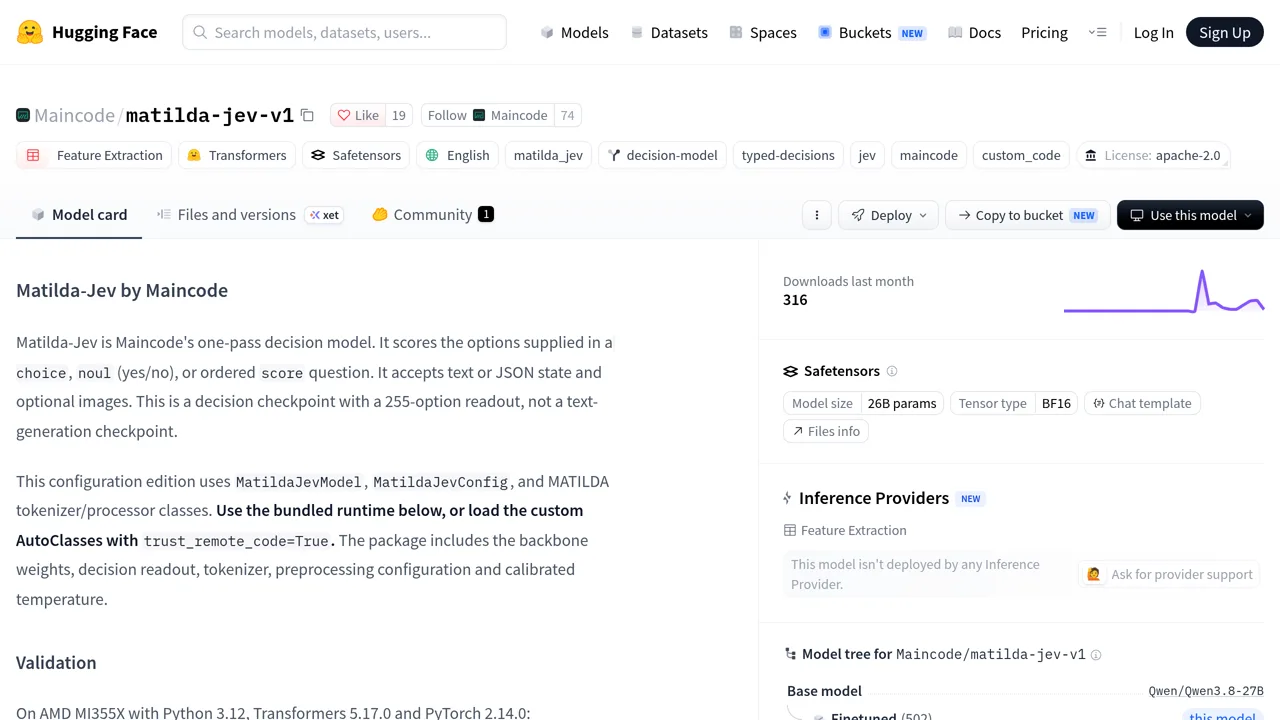
Maincode's open-weight Matilda Jev answers yes/no, choice and score questions about text, JSON or images, returning a probability for every option.
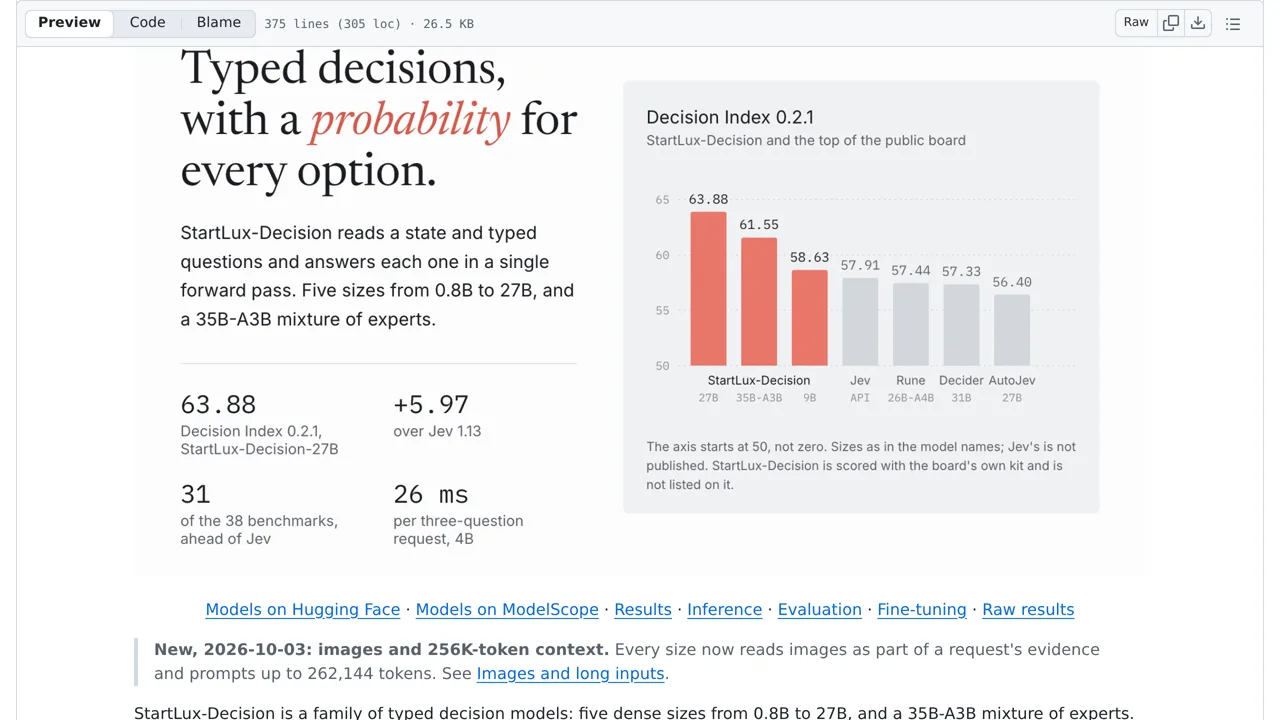
StartLux Labs' open decision models, from 0.8B to 27B plus a 35B mixture of experts, answer Jev-format questions about text and images with a probability per option.
A browser duel in the style of Counter-Strike 1.6: you push down a corridor against an AWP sniper whose peeks, counter-strafes and shots are picked by Jev.

retsu-AI's open-source coding-agent harness can ask Jev to pick a model for each task, check tool results and final answers, and approve held tool calls.
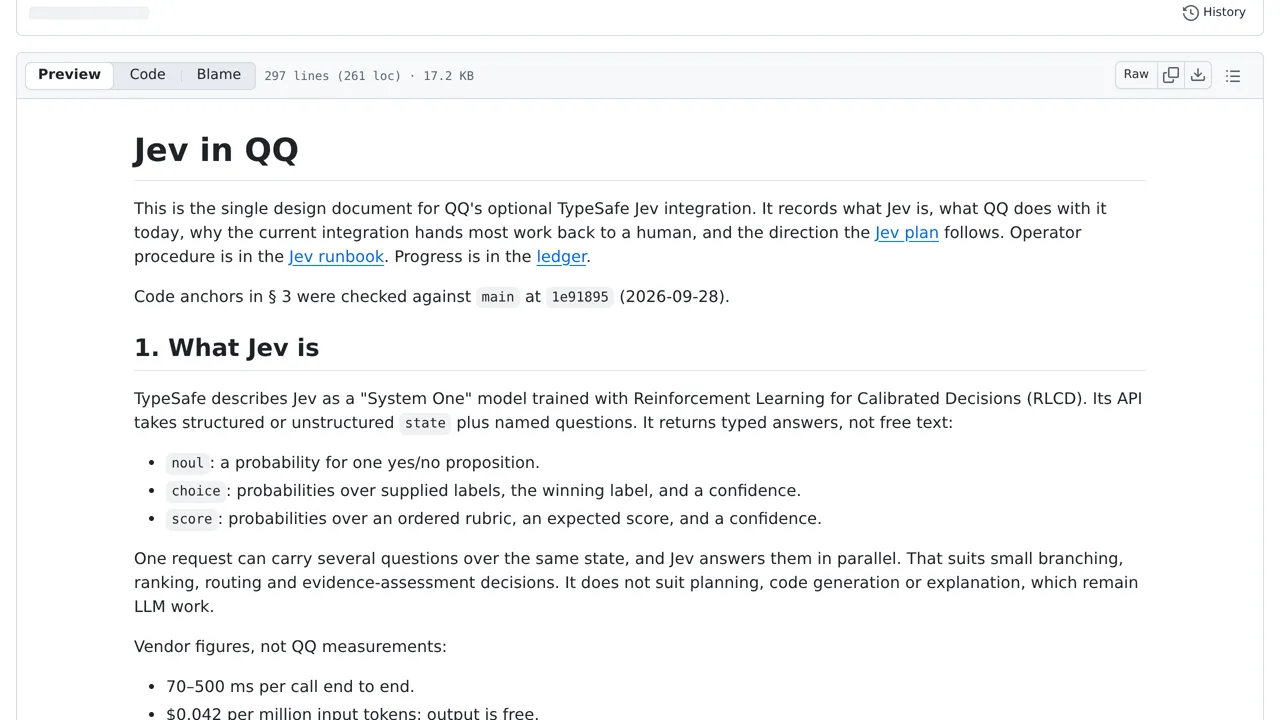
Darwin-27B-ZTC-v2 is VIDRAFT's open Apache-2.0 decision model that answers yes/no, choice and score questions in a single pass, without writing any text.
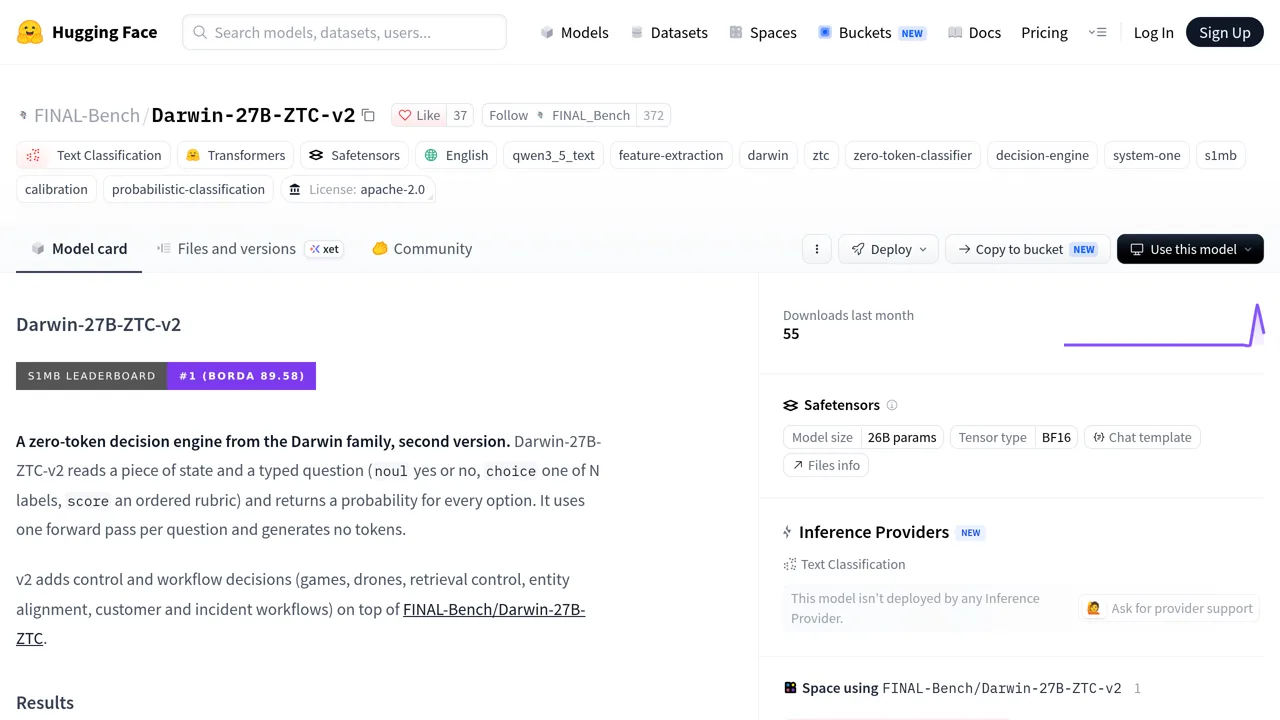
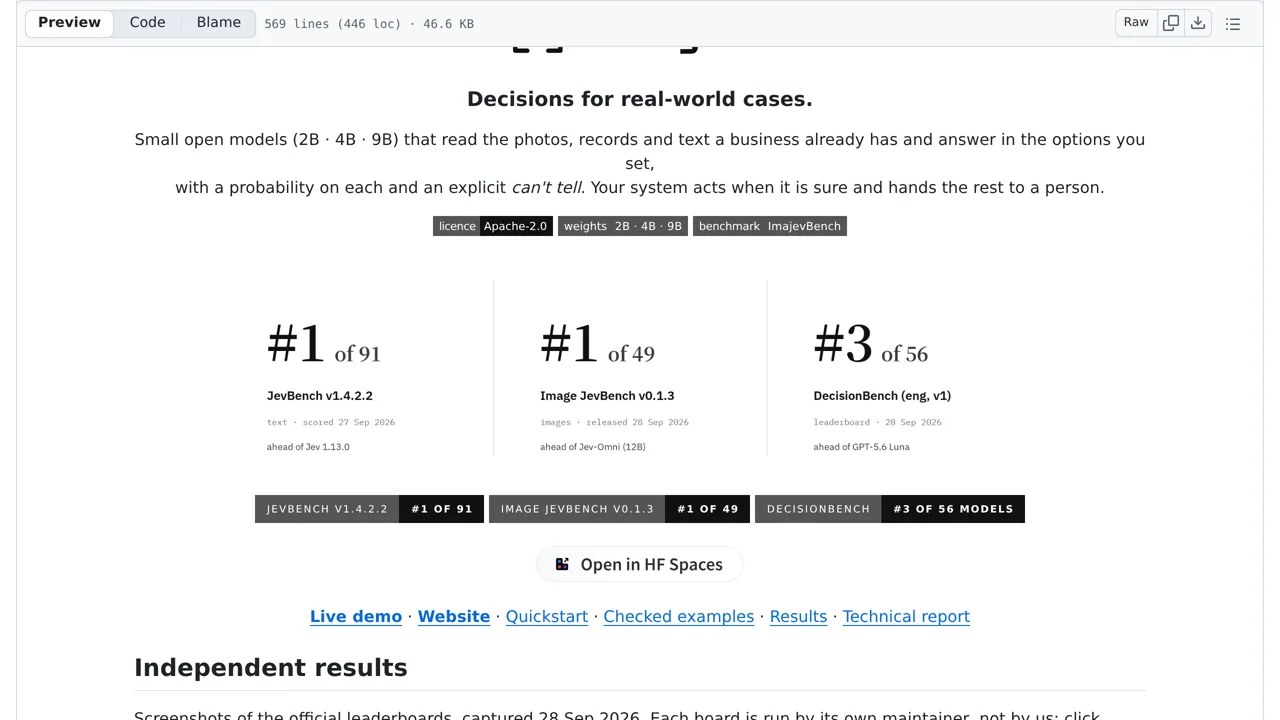
Mohit Garg's Imajev models answer Jev-format questions about a photo, or two photos, alongside your records, and can say they can't tell instead of guessing.
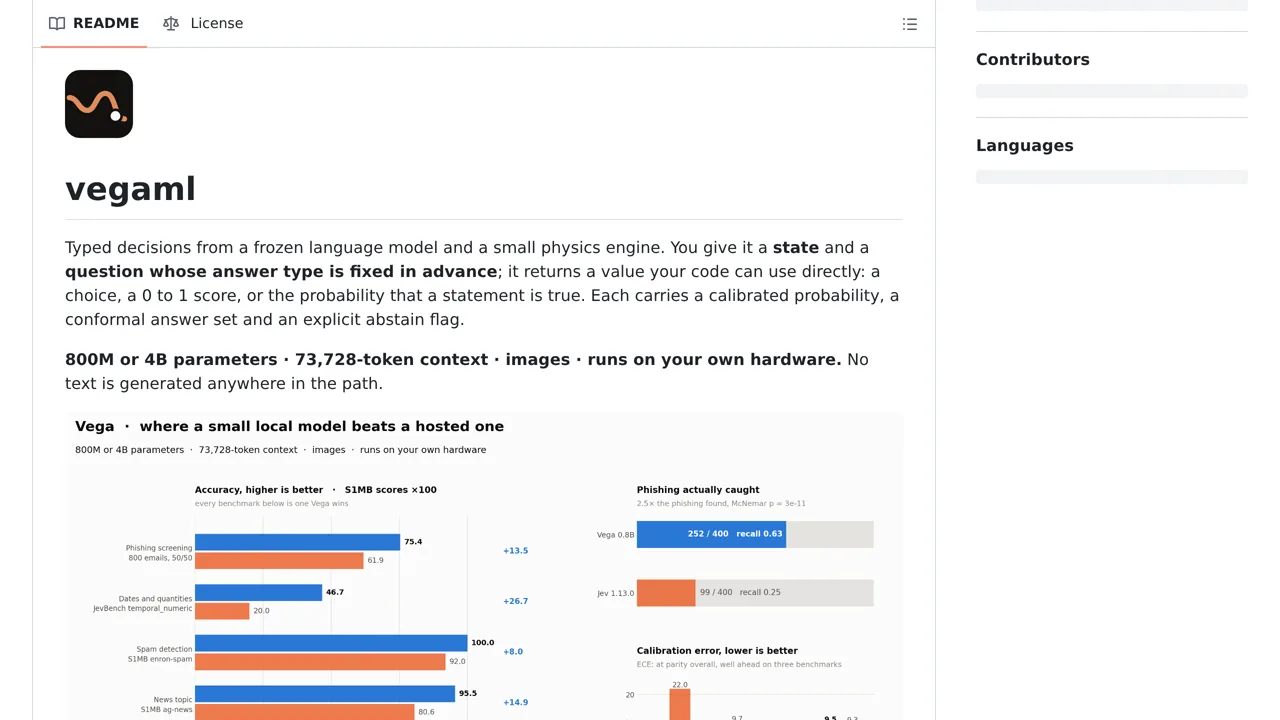
Nandakishor M's Vega answers choice, score and yes/no questions by letting a particle roll downhill into one valley per answer, on top of a frozen Qwen3.5 reader.
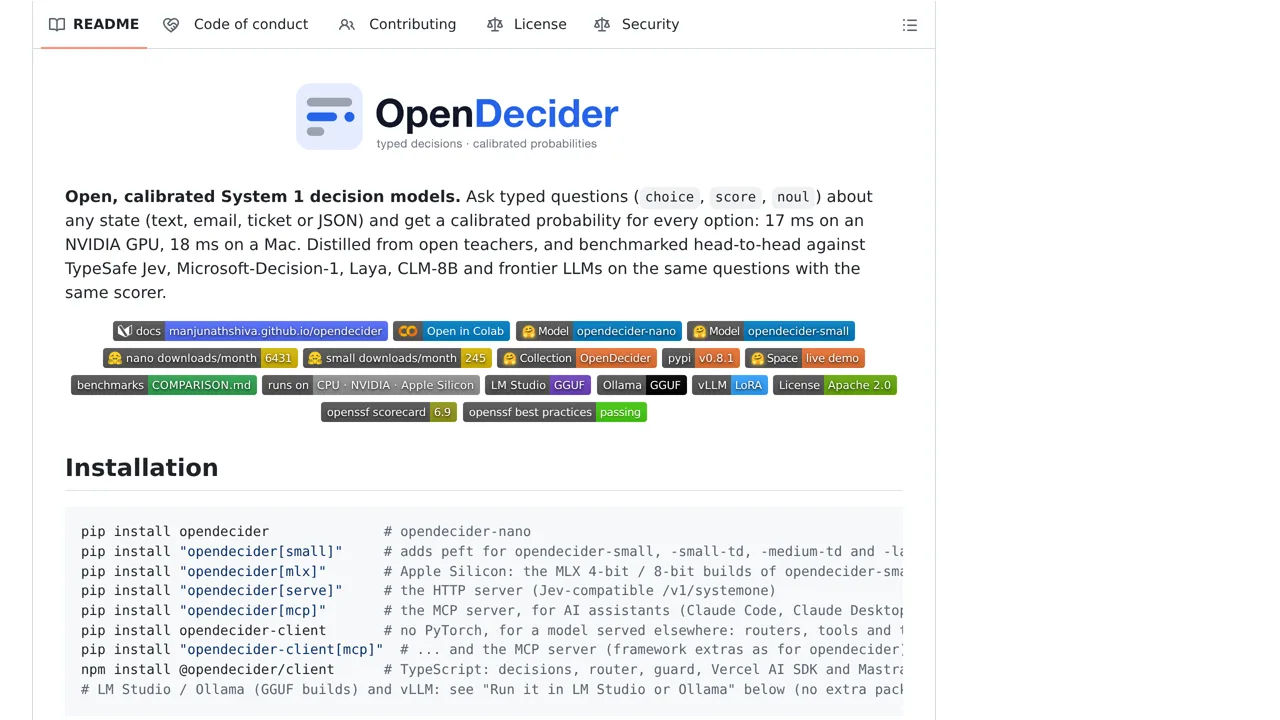
Manjunath Janardhan's OpenDecider is an Apache-2.0 family of open decision models, from a 400M encoder to an 80B mixture of experts, that give a probability for every option.
Jev, briefly
A chat model generates text token by token and hopes you parse it. Jev never generates a word. Your code sends the state of the world plus typed questions; Jev returns every answer in one parallel pass — typed values with calibrated probabilities and a confidence score your code can trust. About 70–500 ms end to end, $0.042 per million input tokens, output free. Trained with what TypeSafe calls Reinforcement Learning for Calibrated Decisions.
You define the options. Jev returns the chosen option, a probability for every option, and a confidence. The workhorse of routing, agents, and games — the answer space is always legal, so there is nothing to parse and nothing to hallucinate.
You describe ordered levels — say trivial / normal / critical. Jev returns the level, the probability of each, and a confidence. Scores turn fuzzy judgment (“how severe is this log line?”) into a number-free decision your code can branch on.
You assert a statement; Jev returns the probability that it is true — a noul. Moderation, verification, guardrails, “does this diff actually fix the bug?”: one question, one calibrated probability.
Official material lives at typesafe.ai and docs.typesafe.ai. JevMade is an independent community registry — not affiliated with or endorsed by TypeSafe AI.
Recurring lessons
Games, drones, trading bots, and browser agents all converge on the same loop: serialize the state, ask one decisive question, act, repeat. Jev’s latency makes the loop feel instant — the model lives inside the control loop, not outside it.
The answer says what; the confidence says whether to act. The most reliable entries threshold on confidence to route edge cases to a slower model or a human — automation with an honest escape hatch.
Makers rarely ask Jev to pick from everything. Local tactics prune 225 gomoku moves to ~40; DOM filters turn a page into an element table; code narrows options, Jev judges within them.
A recurring split: Jev makes every decision cheaply and instantly, and a small LLM is only invoked when a human-facing string must actually be written. Decision and generation are separate budgets.
Send the link — repo, live demo, post, or video — plus a line on what it does and which primitives it uses. Every entry is verified against its primary source before it ships.
Submit your experimentSign in first so we can reply to you. Submissions are reviewed, not published automatically.