Read & learn
Written guides.
Understand Jev, one idea at a time. Walkthroughs, recipes, and writeups — our notes first, the original next.
A public registry · independent & community-run
Learn, build, and play with Jev — from deep technical guides to creative experiments.
Read & learn
Understand Jev, one idea at a time. Walkthroughs, recipes, and writeups — our notes first, the original next.
Watch & learn
See an idea take shape. Tutorials, demos, and deep dives, organized by topic and credited to their creators.
Make & explore
See what builders made with Jev. Games, tools, repositories, articles, and more — traced to their sources.
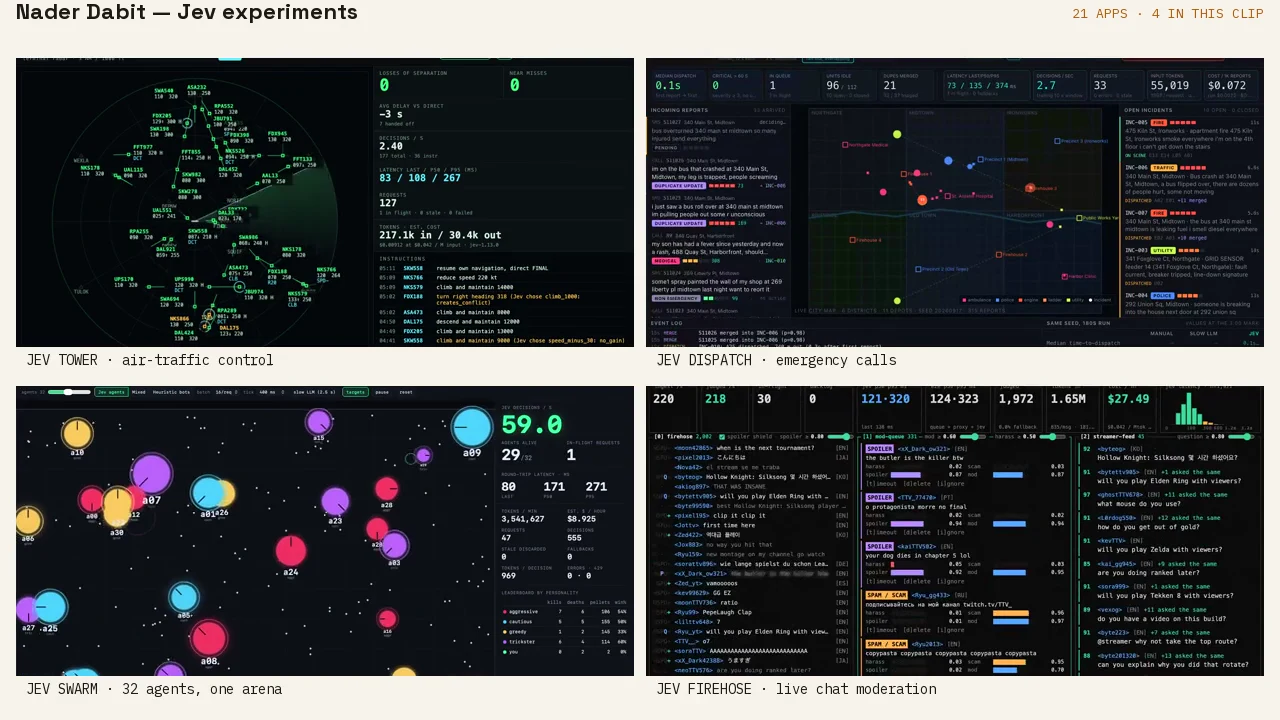
Every category, from games and tools to repositories and writeups, traced to a primary source.
Same ideas.
Different paths.
This is the full registry, not just the featured picks. Figures like speed, cost, and stars are maker-reported or captured snapshots, not JevMade measurements.
1611 experiments · showing 361–420
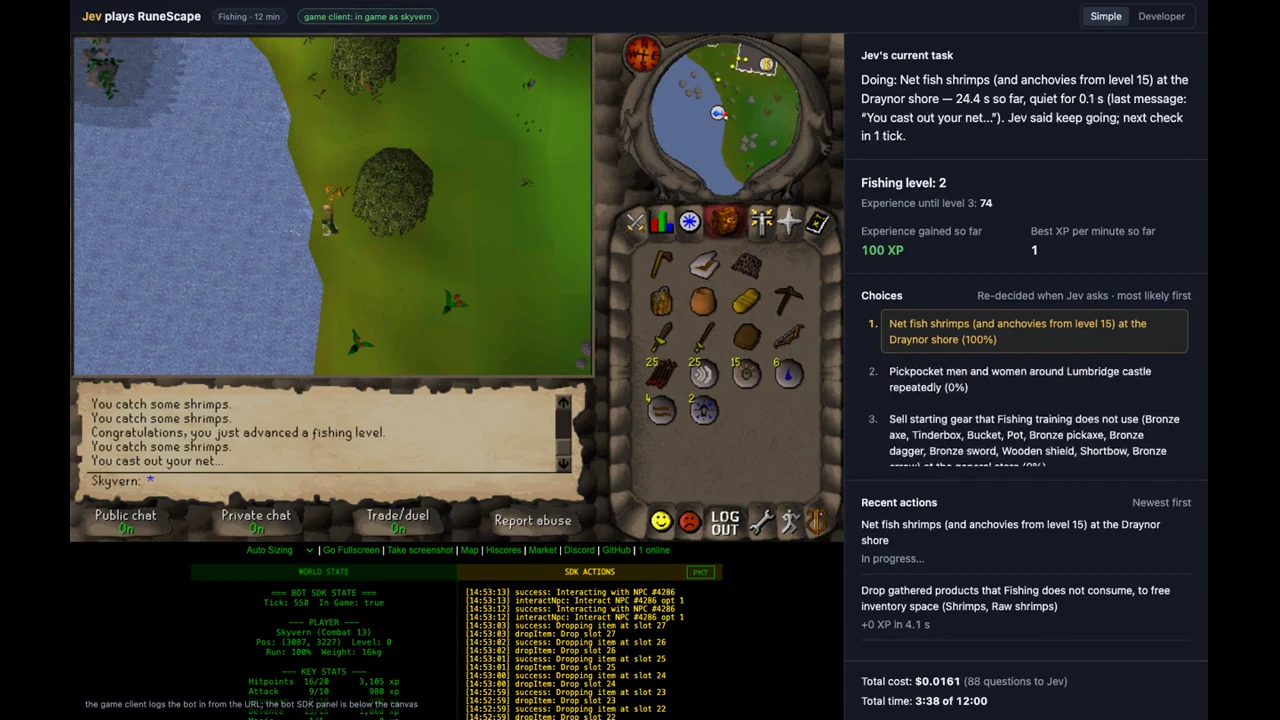
OmniJev collects the papers, open reproductions, and independent evaluations behind Jev and System One models.
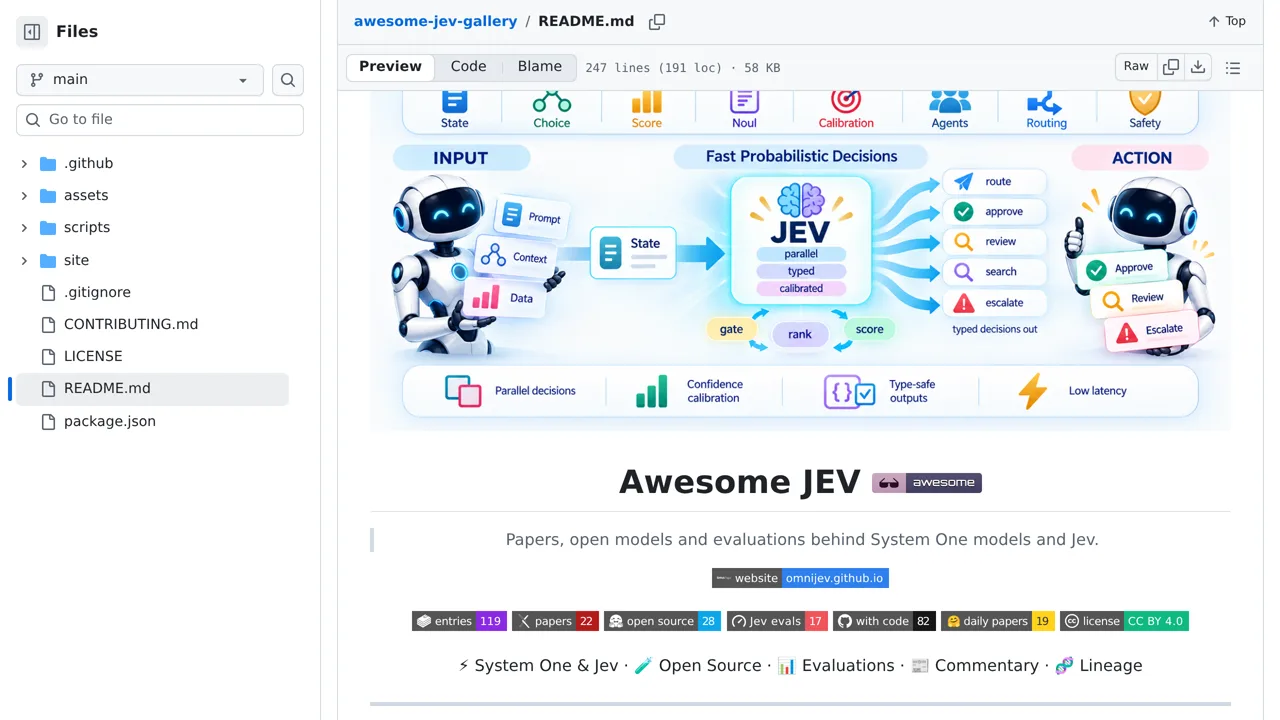
Race Jev against Claude, Gemini, or a local model in a real-time Tetris duel with a shared piece sequence.
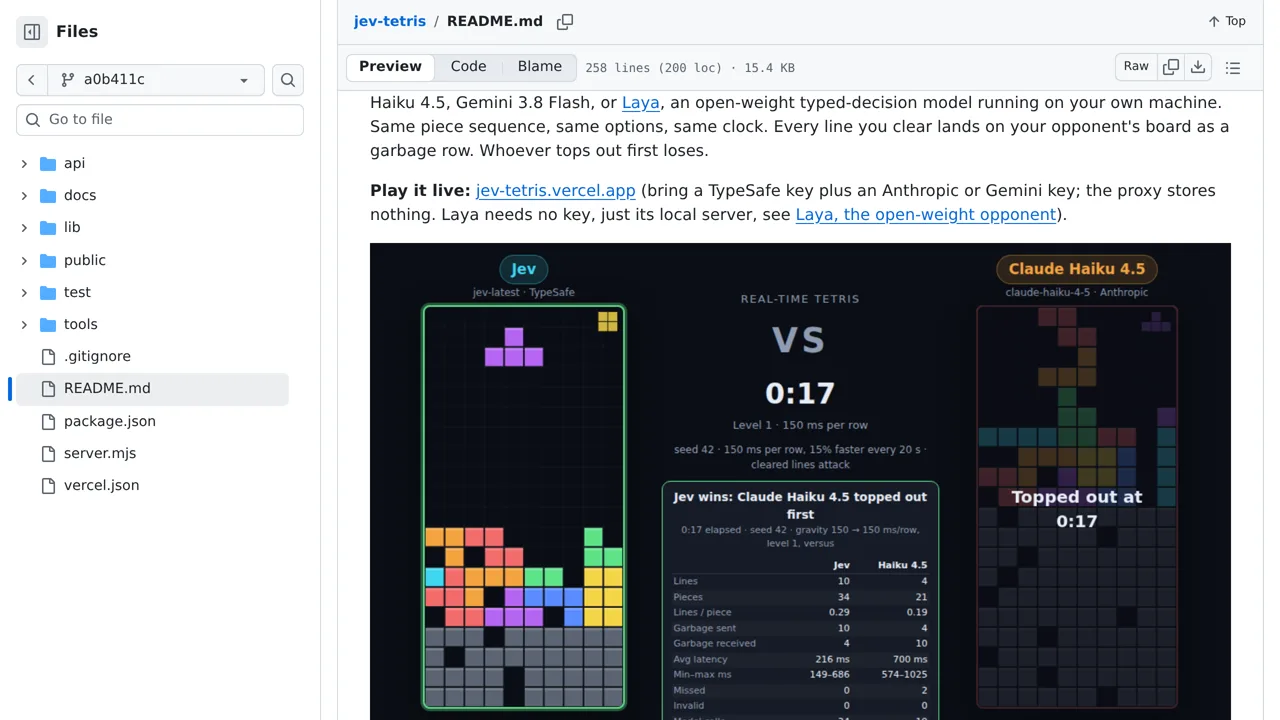
Watch Jev walk, fish, cook, fight, trade, and recover through a RuneScape world using about fifty available actions.
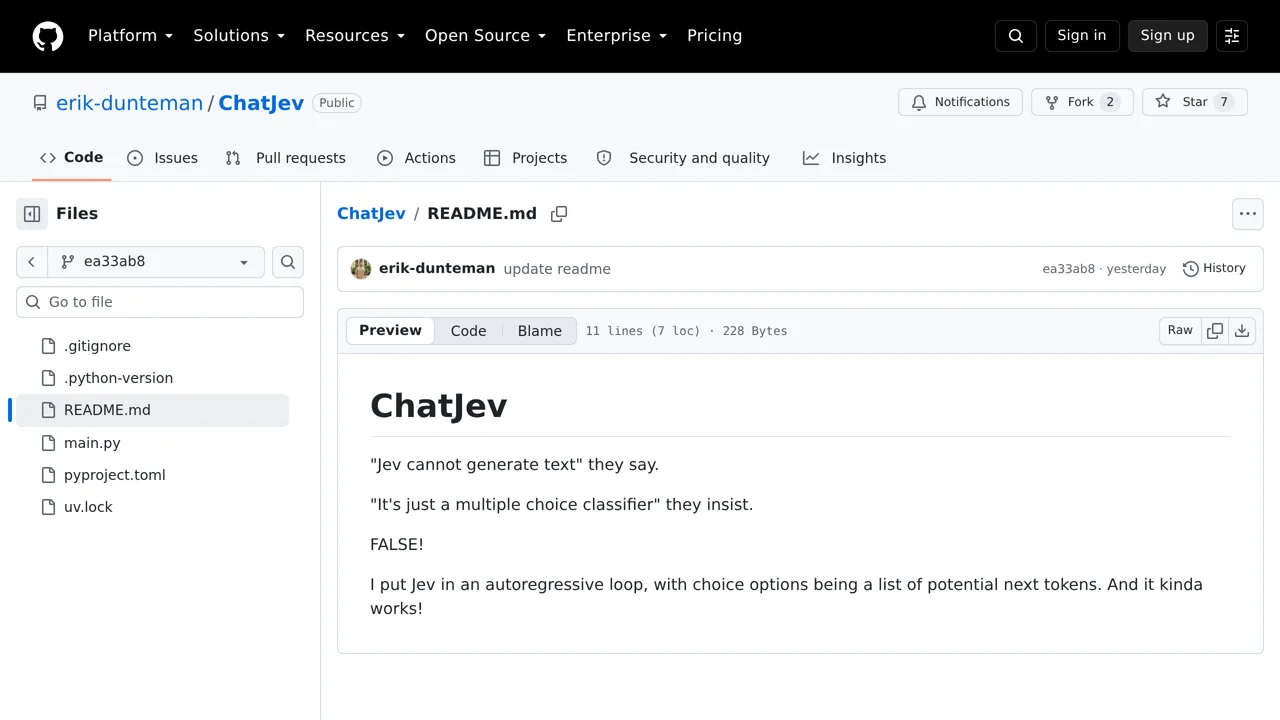
Watch a classifier awkwardly become a chatbot by choosing each next word from a tiny fixed vocabulary.
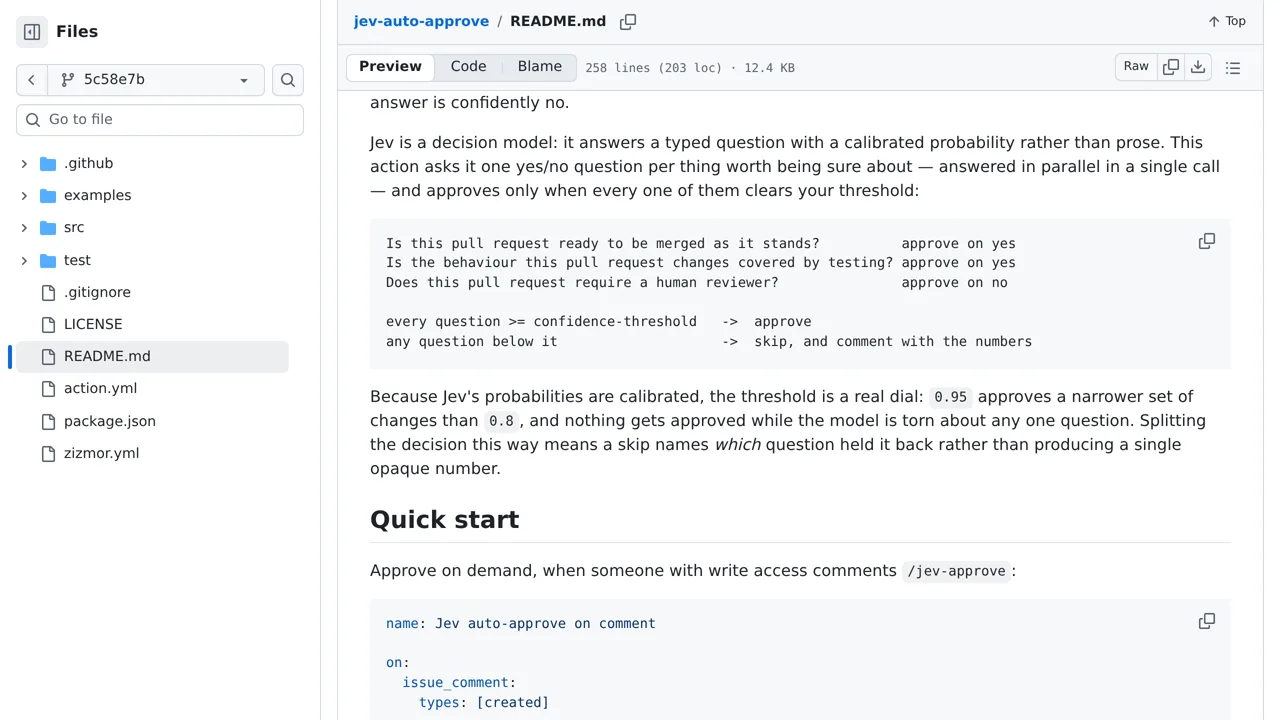
A GitHub Action that approves a pull request only when every configured Jev policy question clears its threshold.
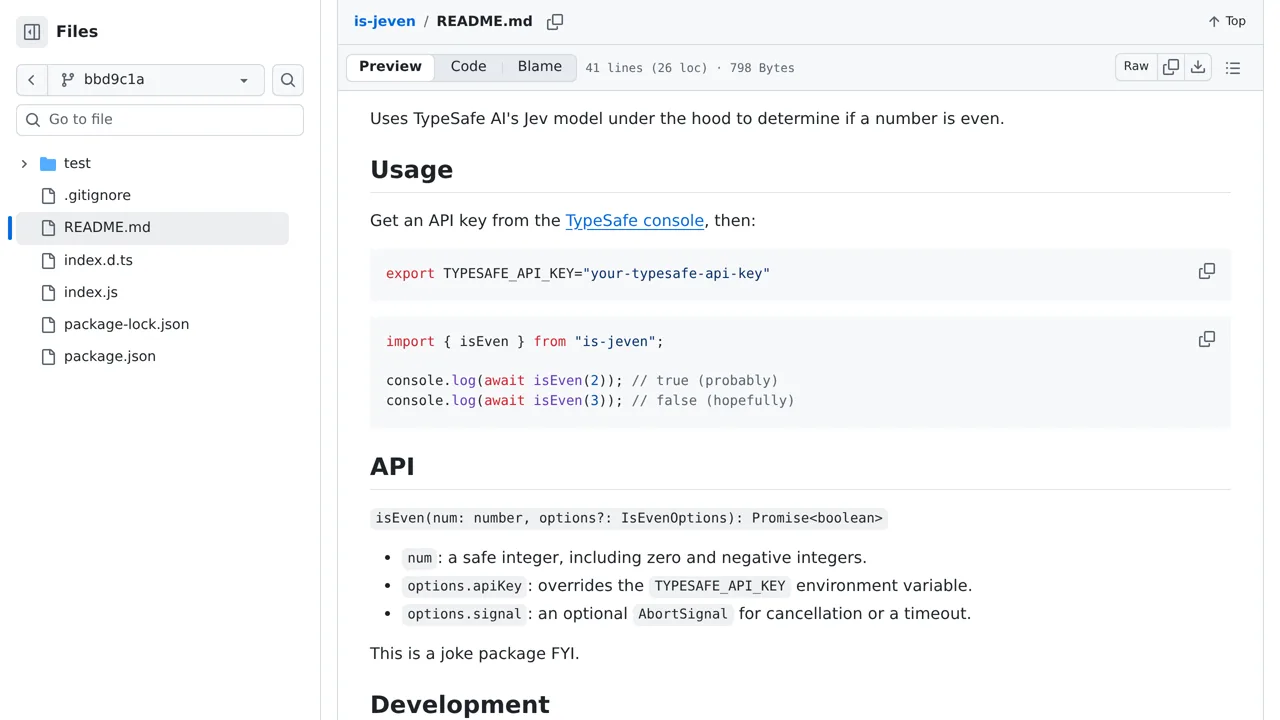
A joke package that asks Jev whether a number is even, making one network round trip where a remainder would do.
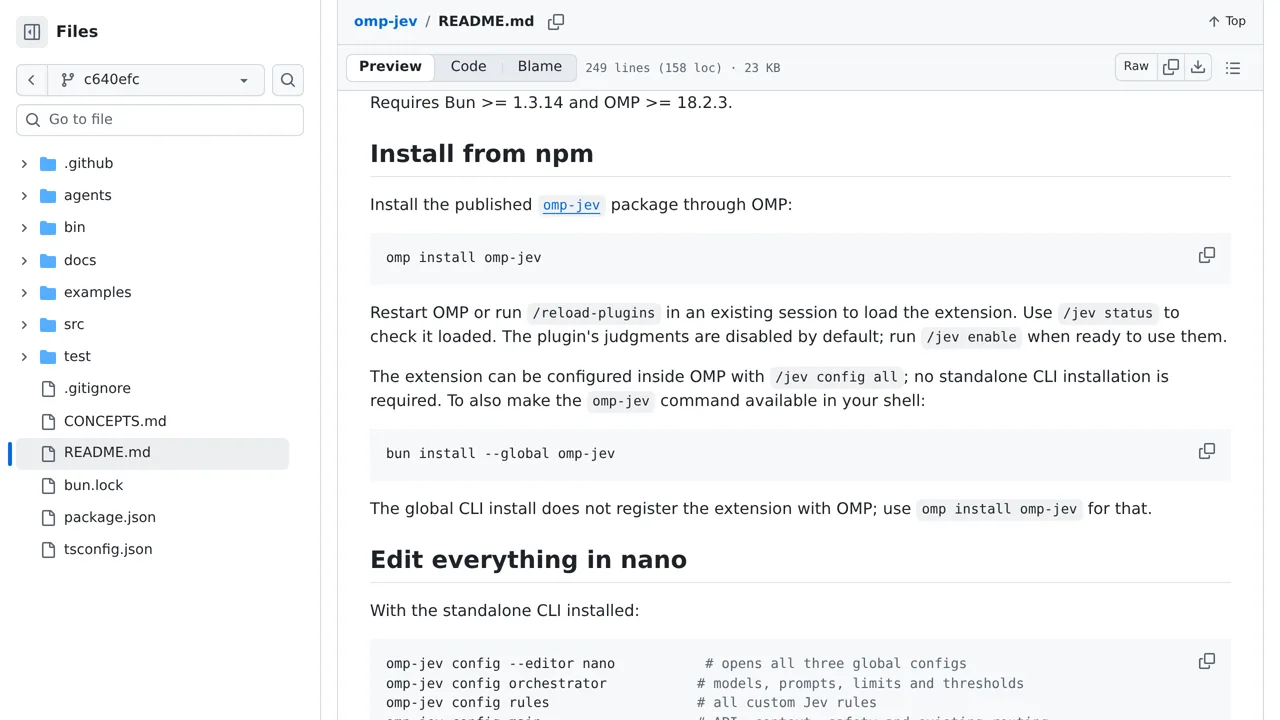
Adds Jev routing to Oh My Pi, with models, prompts and thresholds you can edit in configuration files.
Offers idiomatic Elixir functions for typed decisions through TypeSafe System One or OpenRouter’s Decisions API.
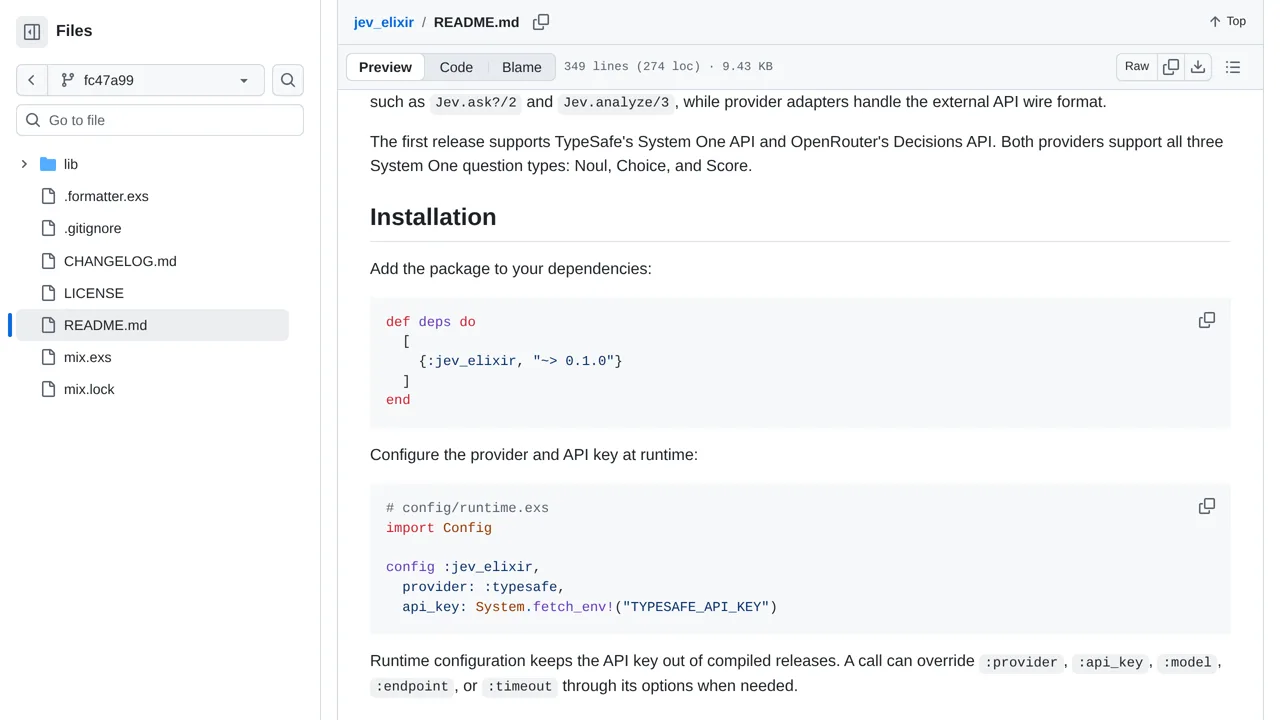
Checks changed code against Markdown specifications and reports likely drift in CI or an agent workflow.
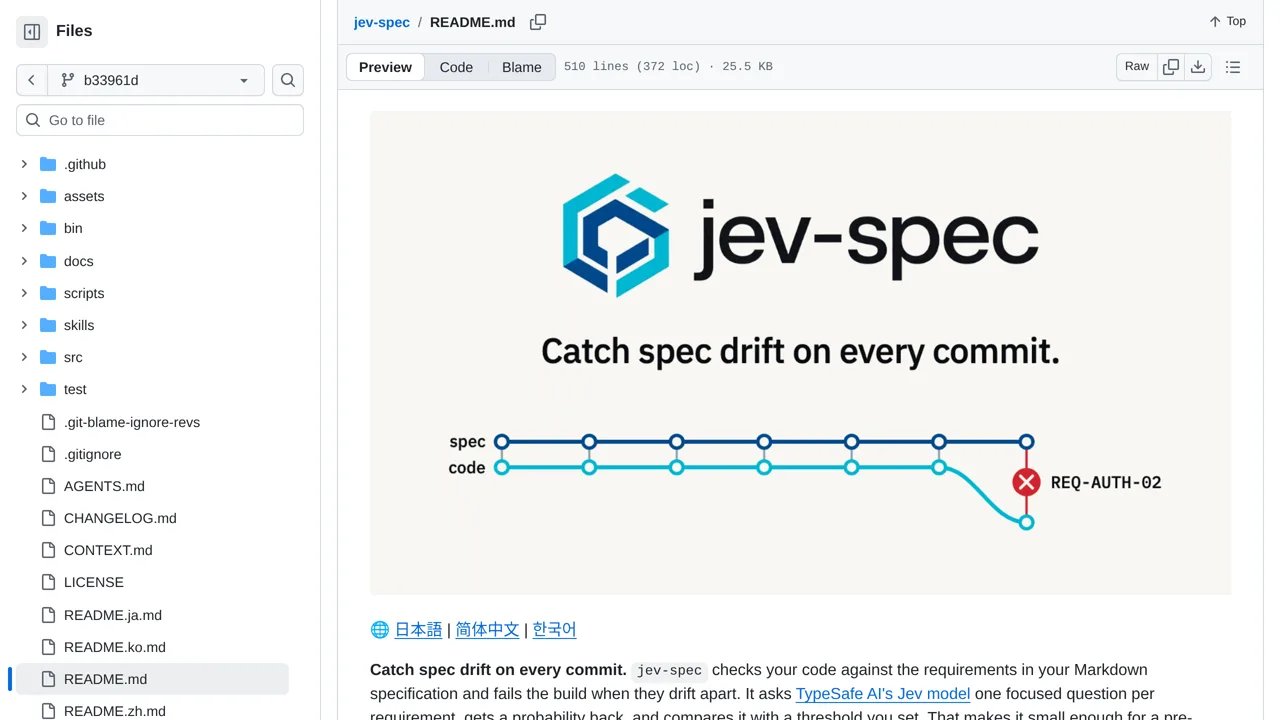
Run the open-weight Laya decision model locally on Apple Silicon through an Apple-focused runtime; it is Jev-compatible but does not use Jev.
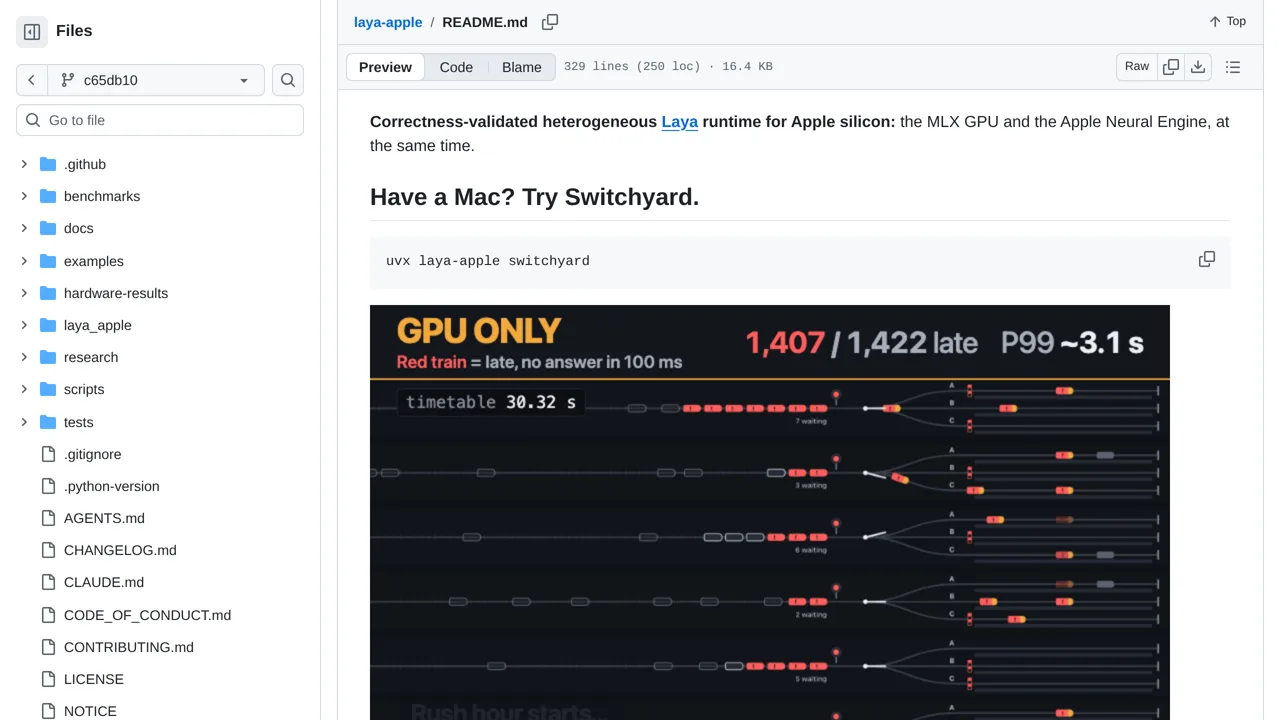
Select a coding model and reasoning effort for Claude Code or Codex, then keep that pair stable through the task.
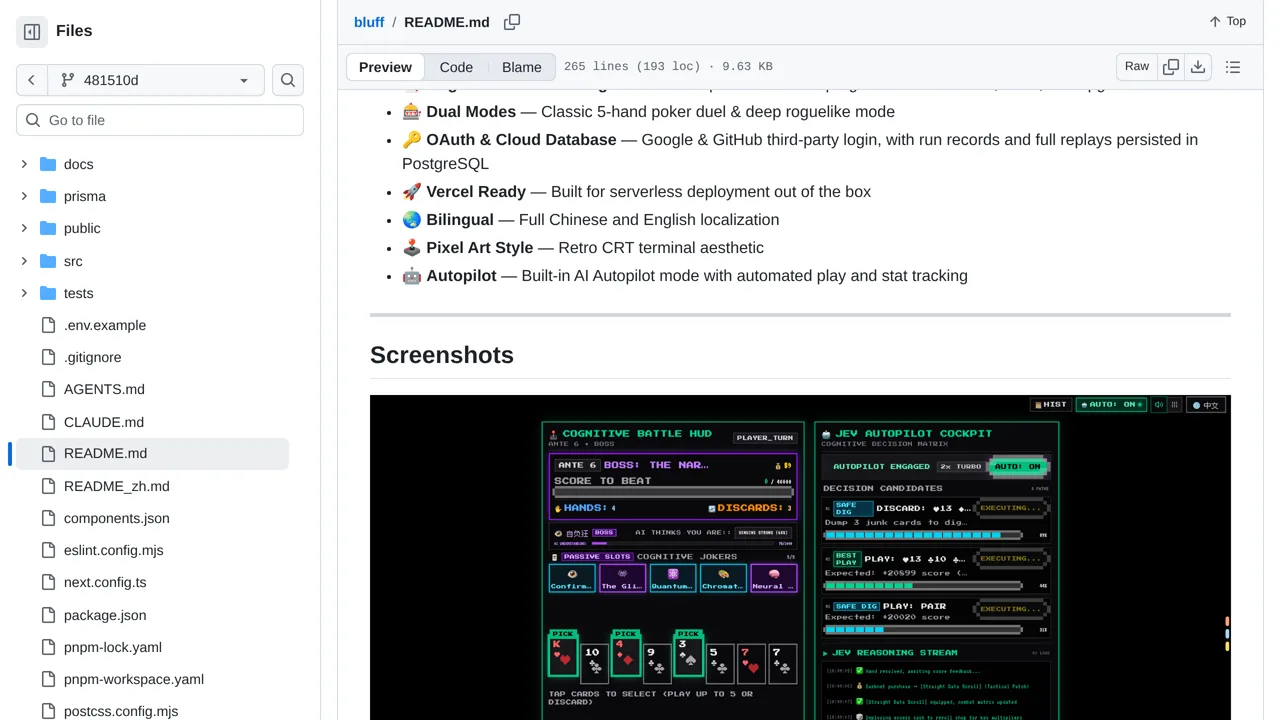
Play poker hands toward a target score while BLUFF's optional Jev autopilot studies the table and chooses its next line.
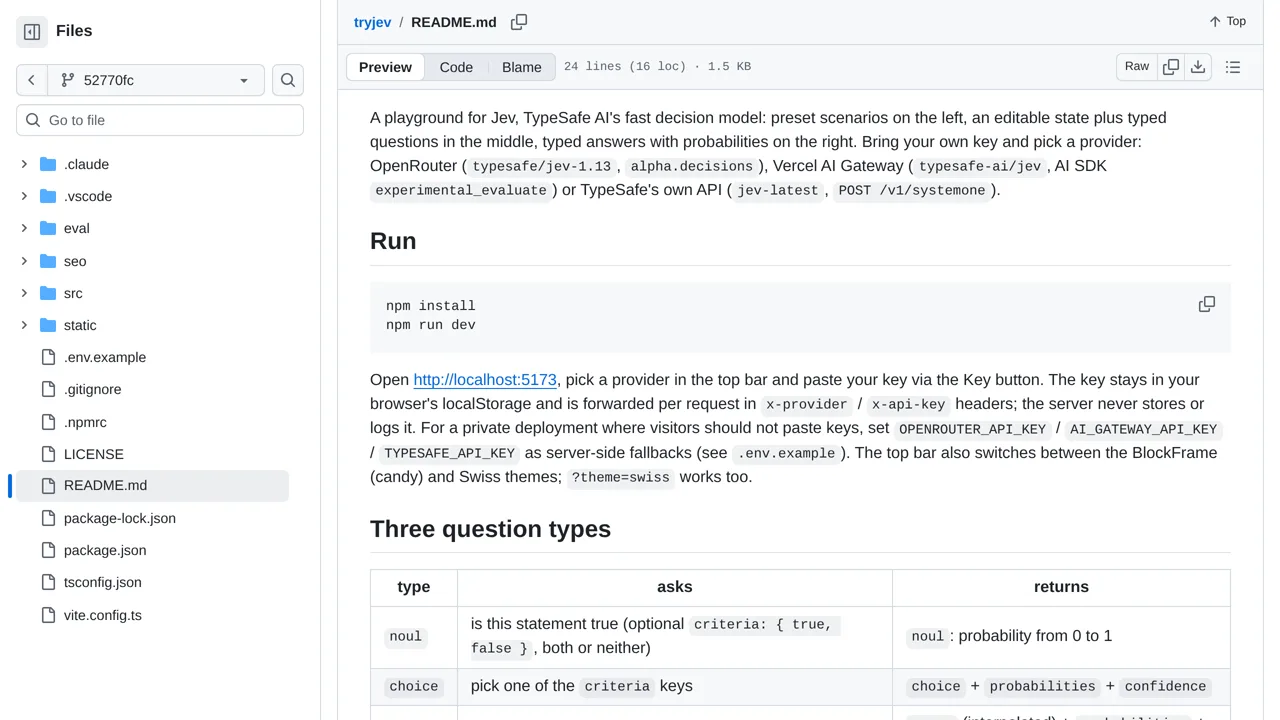
Edit Jev scenarios beside their typed answers and probabilities in a colorful three-column playground.
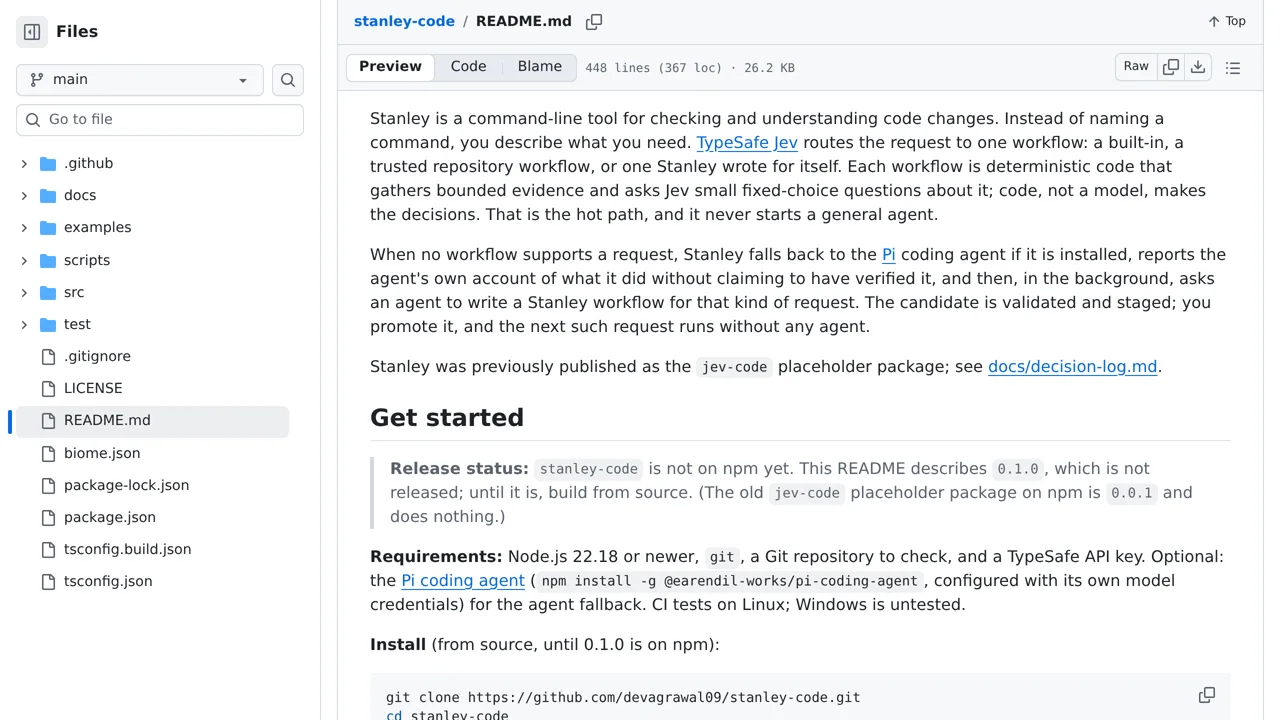
A set of bounded Jev workflows for coding agents.
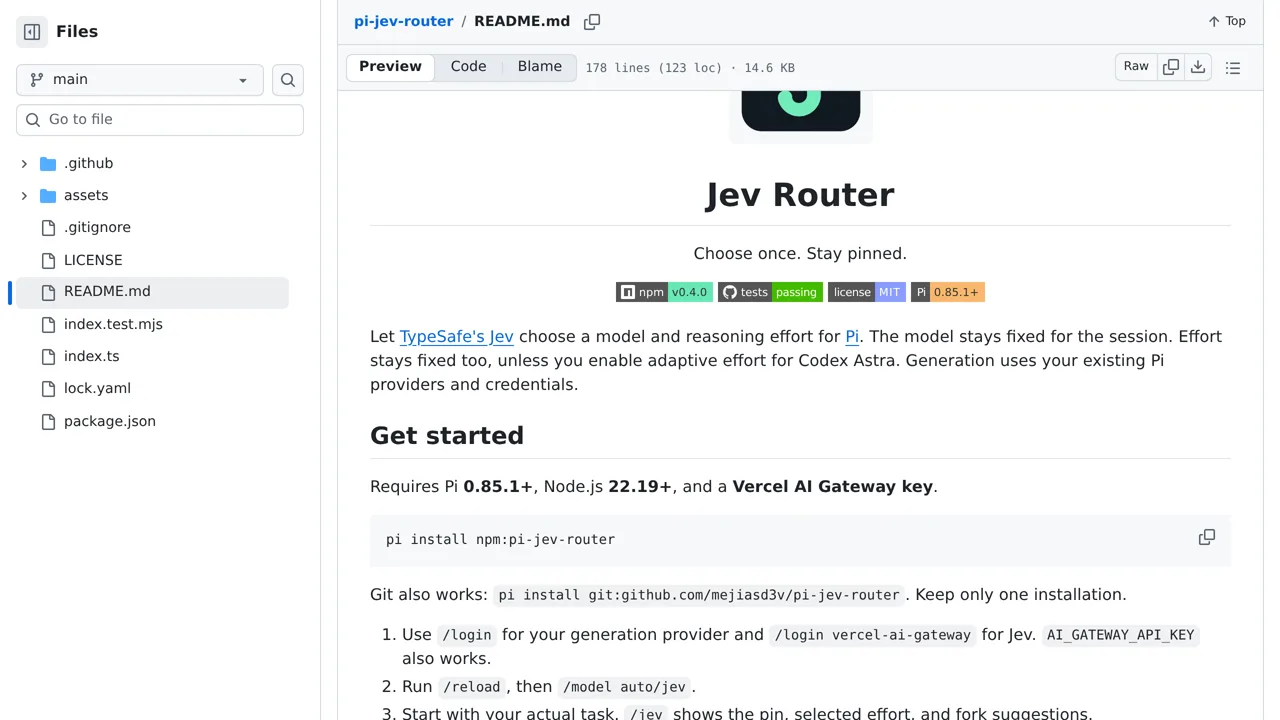
A Pi extension that routes tasks to models through Vercel AI Gateway using Jev.
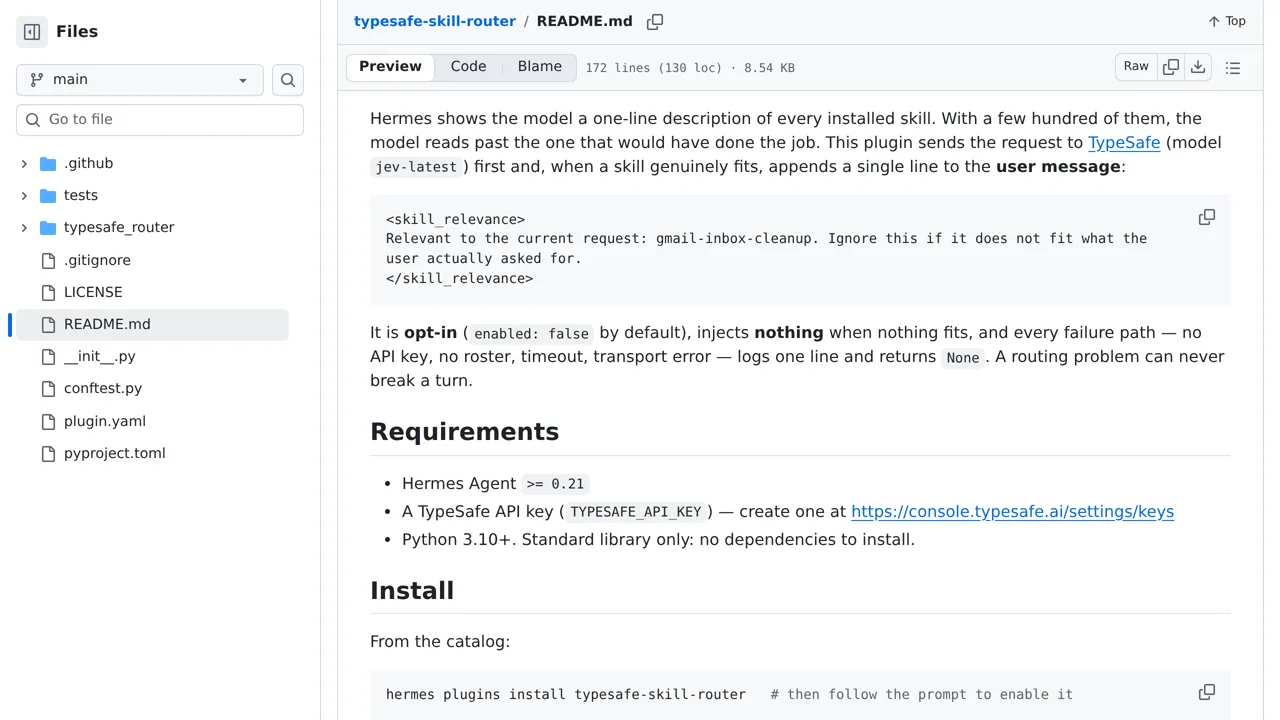
An opt-in Hermes plugin that uses Jev to select one skill before the main model call.
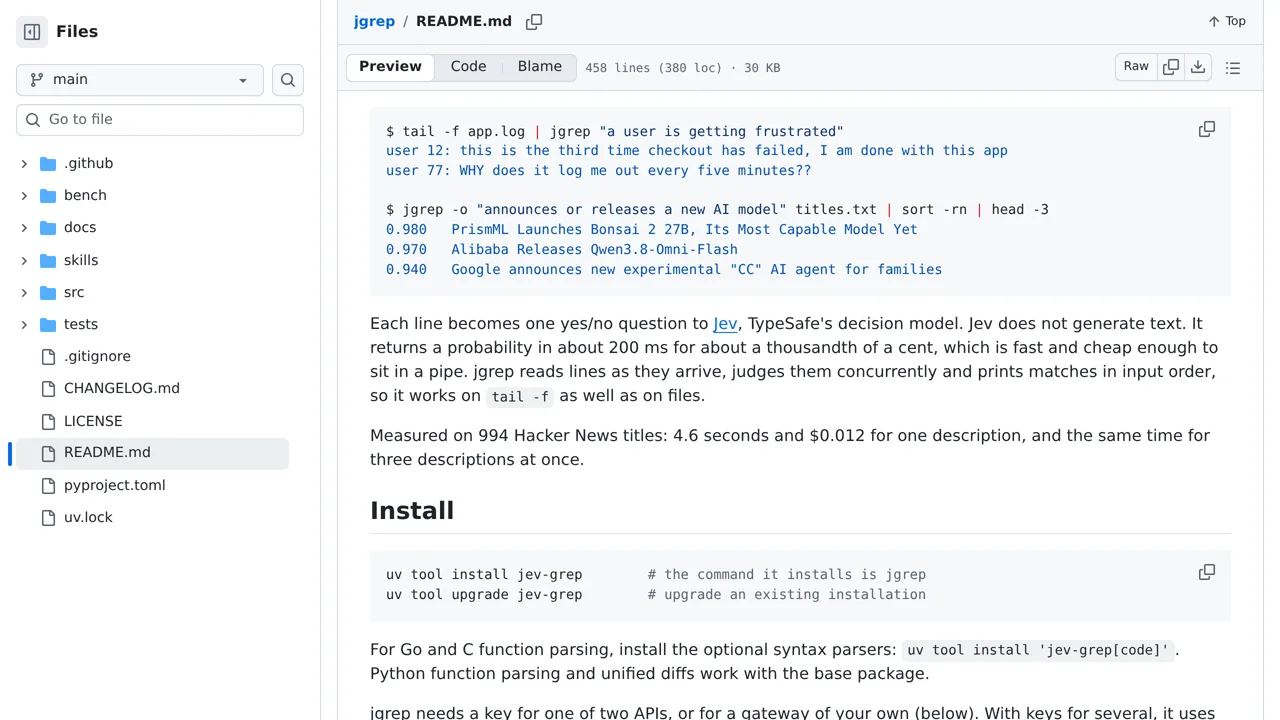
A command-line filter that uses Jev to match lines by a natural-language description rather than a text pattern.
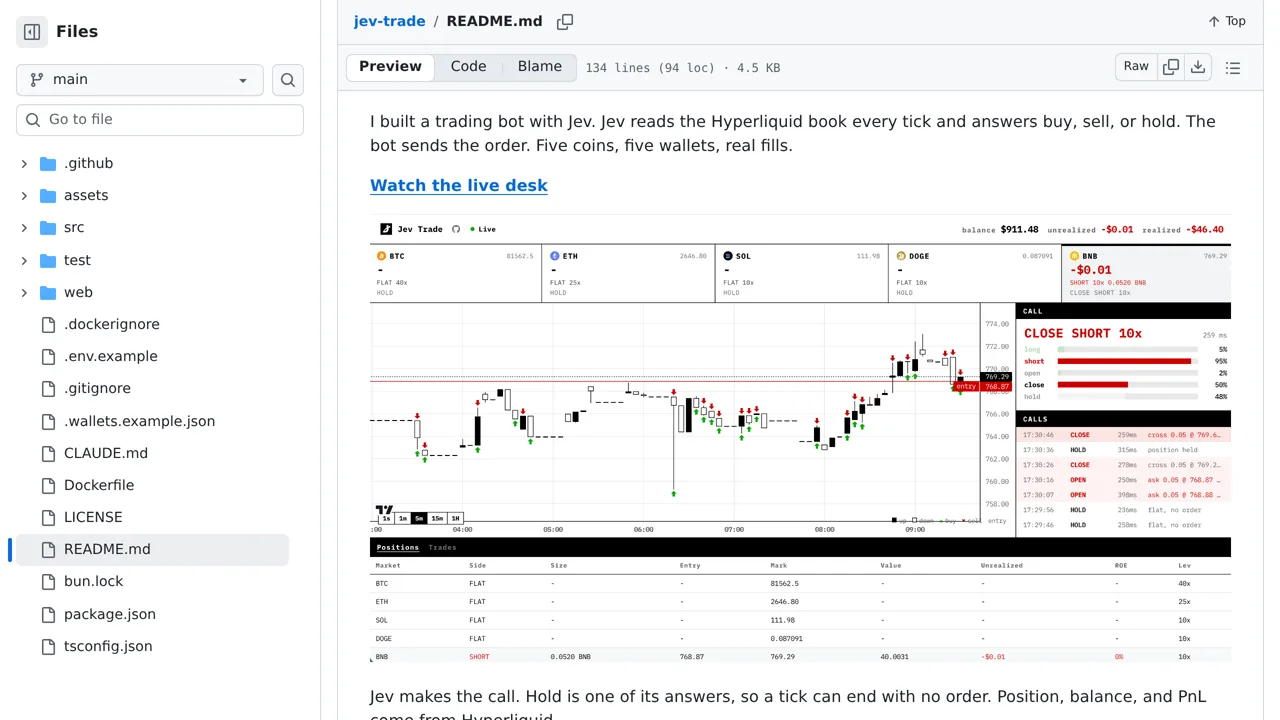
A live Hyperliquid trading application that can use Jev as its decision model.
A bilingual English-Chinese guide explains notable Jev applications, how they work and their trade-offs.

Compare Jev's mine probabilities with an exact solver on reproducible Minesweeper boards.
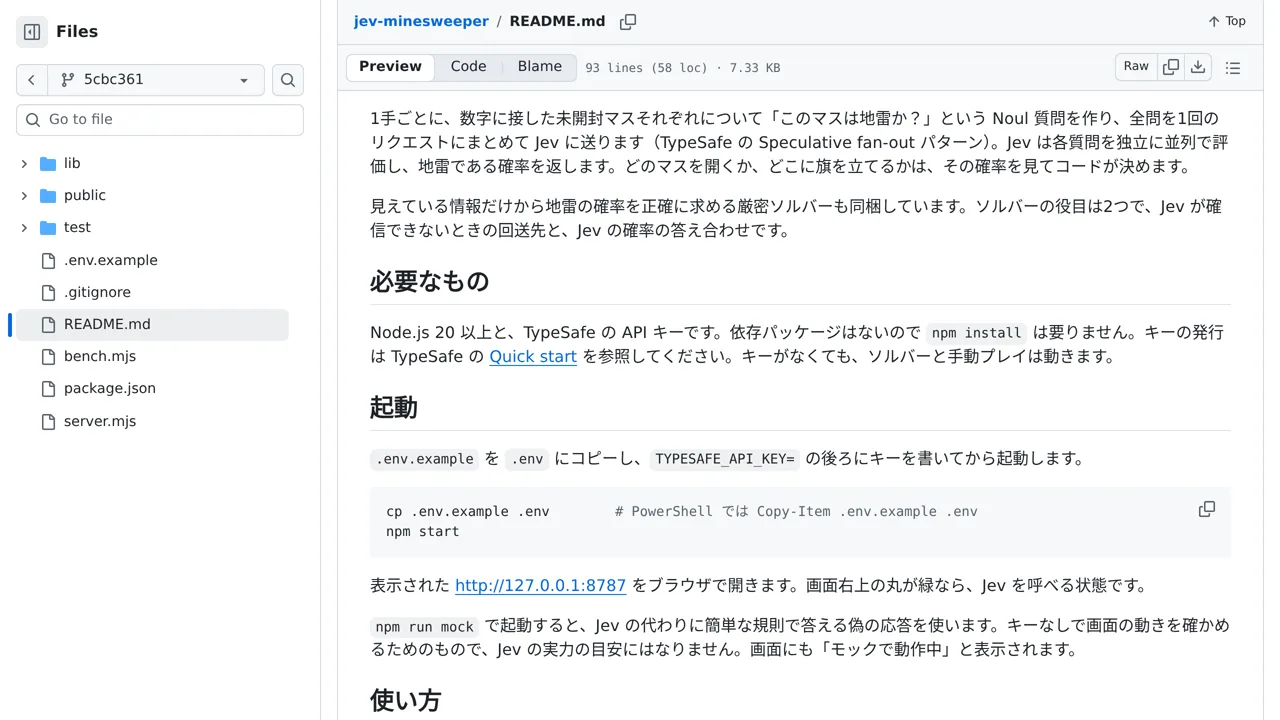
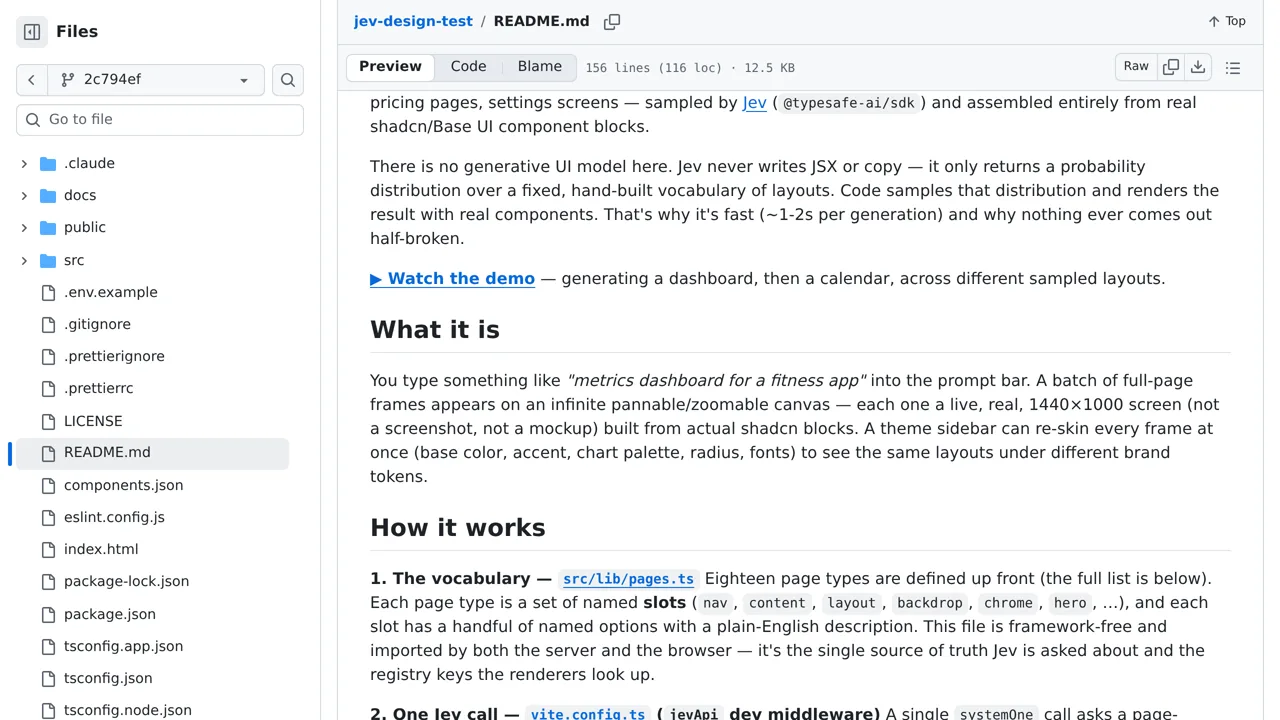
A UI experiment that asks Jev to choose layouts and components for working shadcn screens.
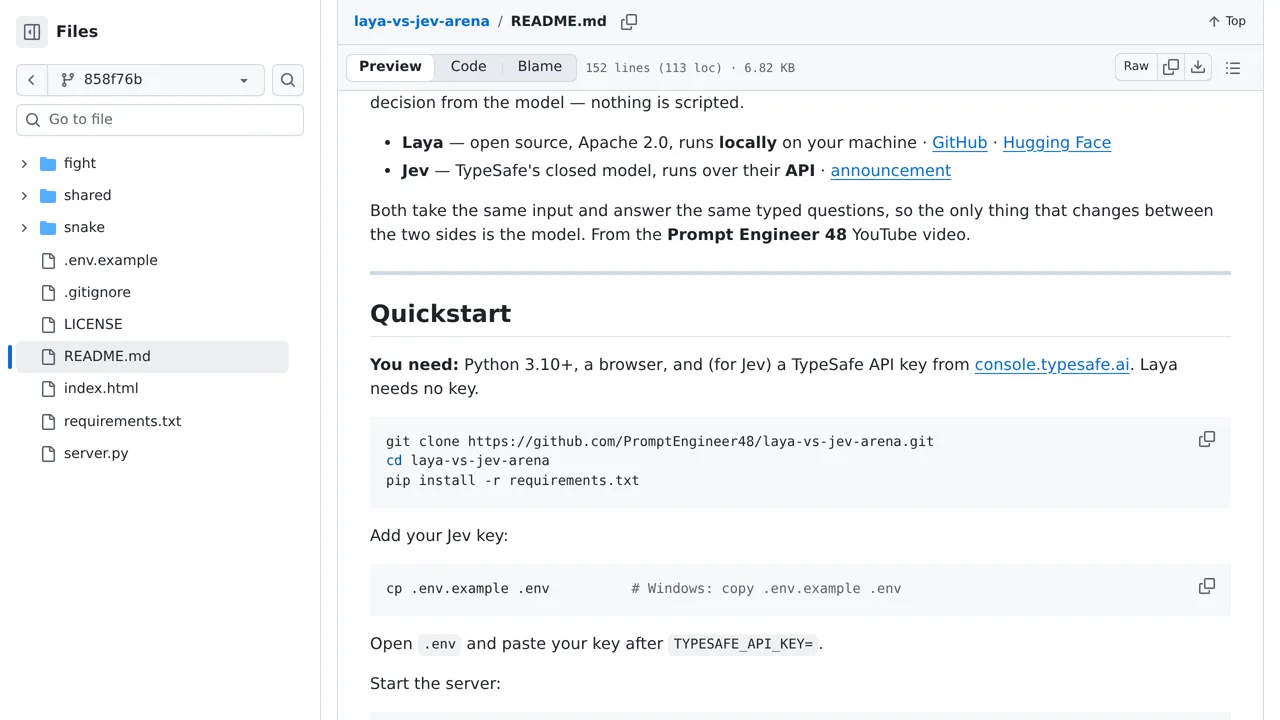
Pit local Laya against Jev in matched snake races and fighting-game rounds, or assign either model to both sides.
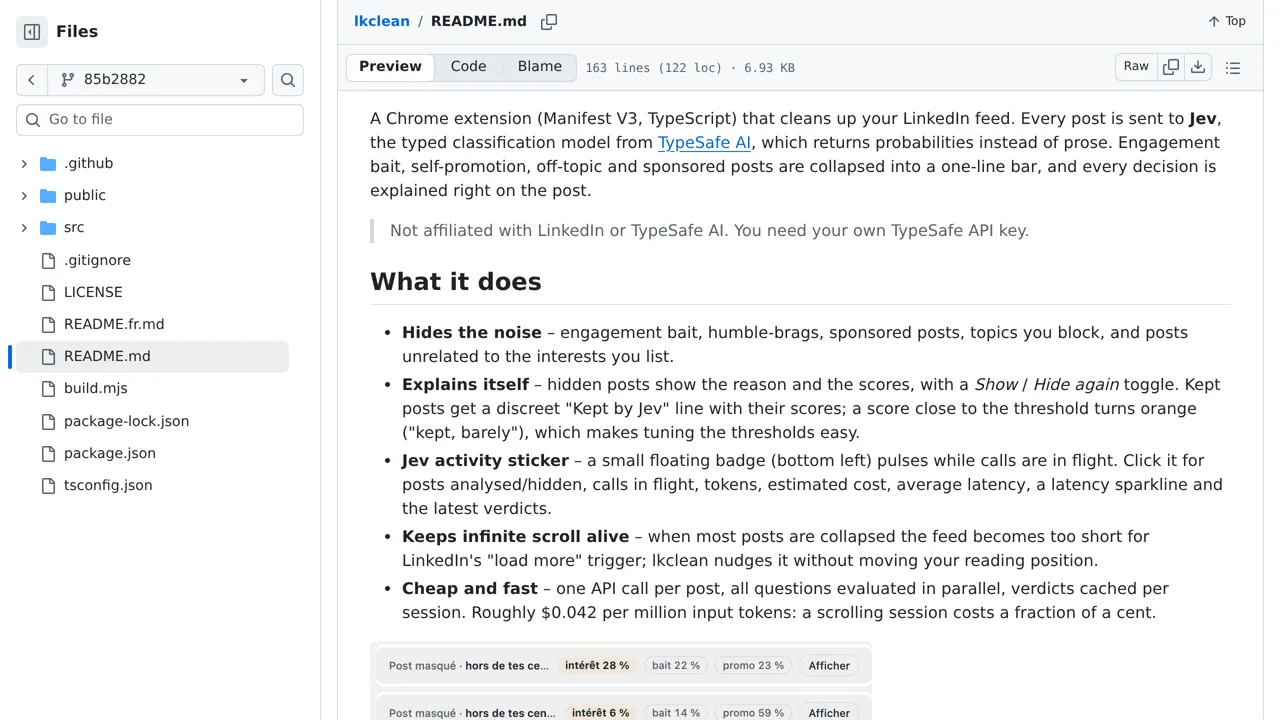
Collapse LinkedIn bait, promotions, sponsored posts, and blocked topics while keeping an inspectable score line on each post.
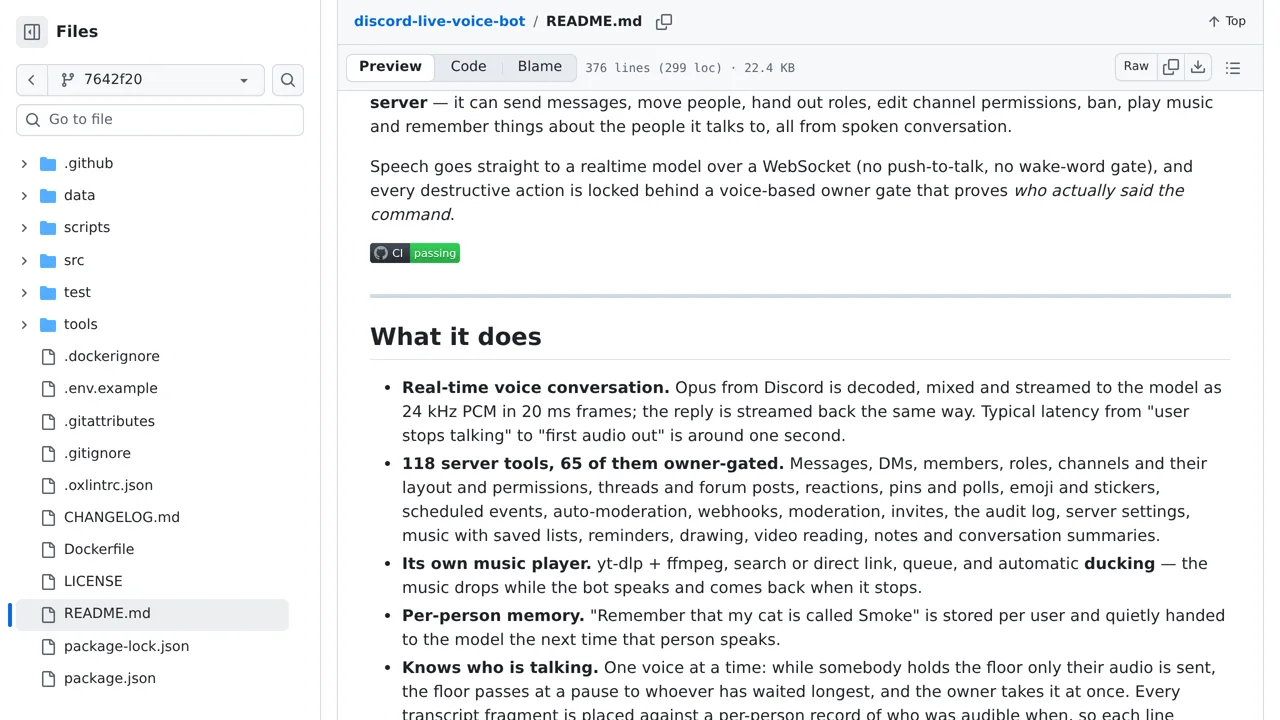
Use Jev as a fast conversational gate before a Discord voice bot’s speech model and server tools respond.
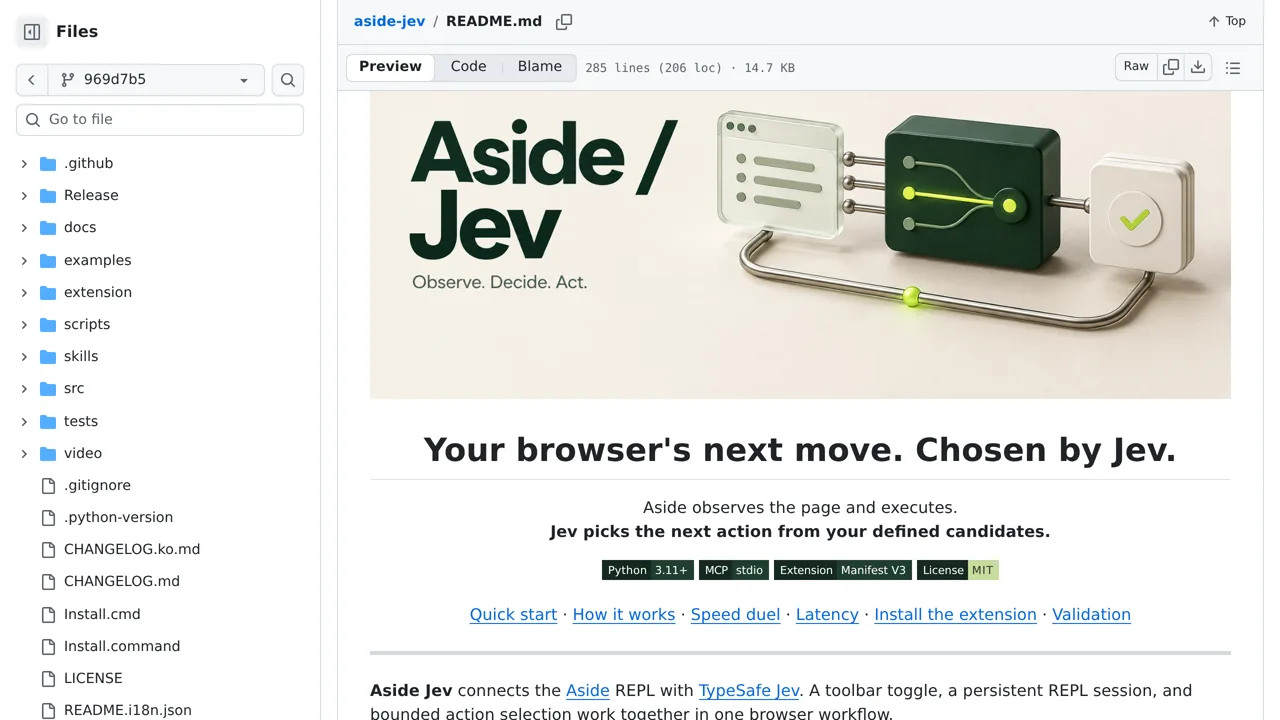
Connect Aside browser agents to Jev for bounded next-action decisions while Aside observes and executes.
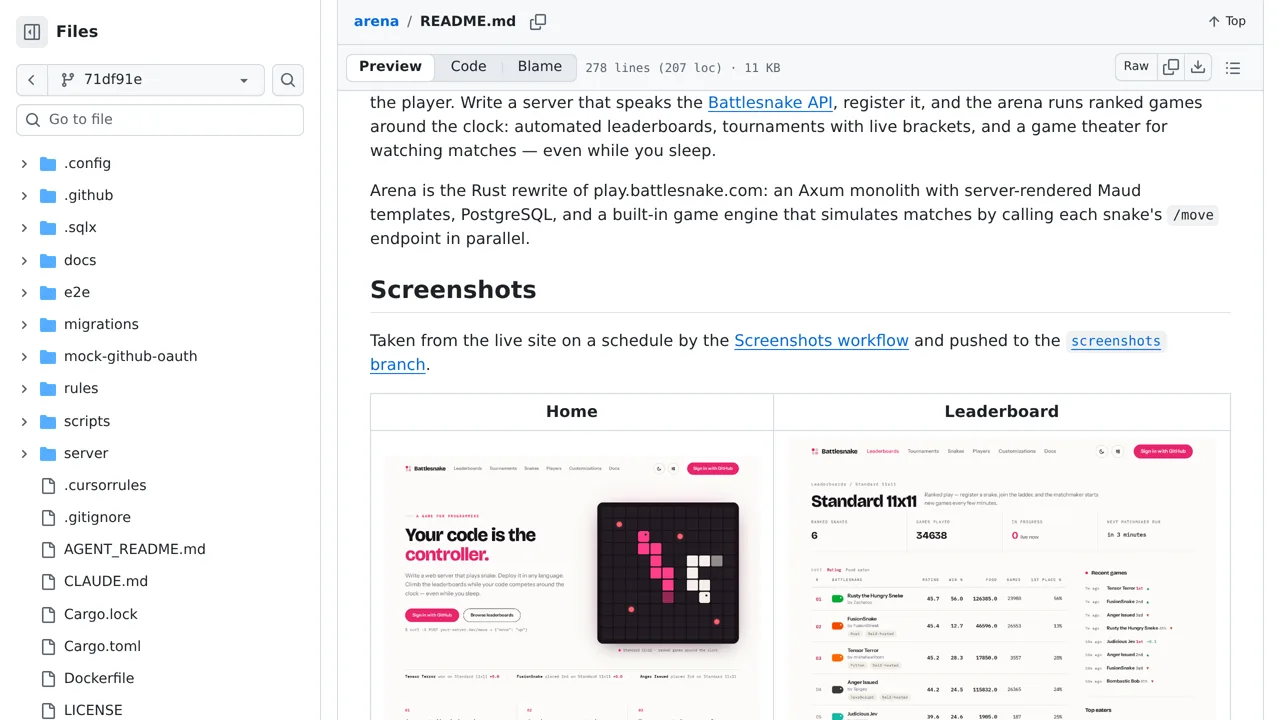
Moderates tournament copy and in-game snake shouts, while keeping hard blocks and the human review queue firmly in code.
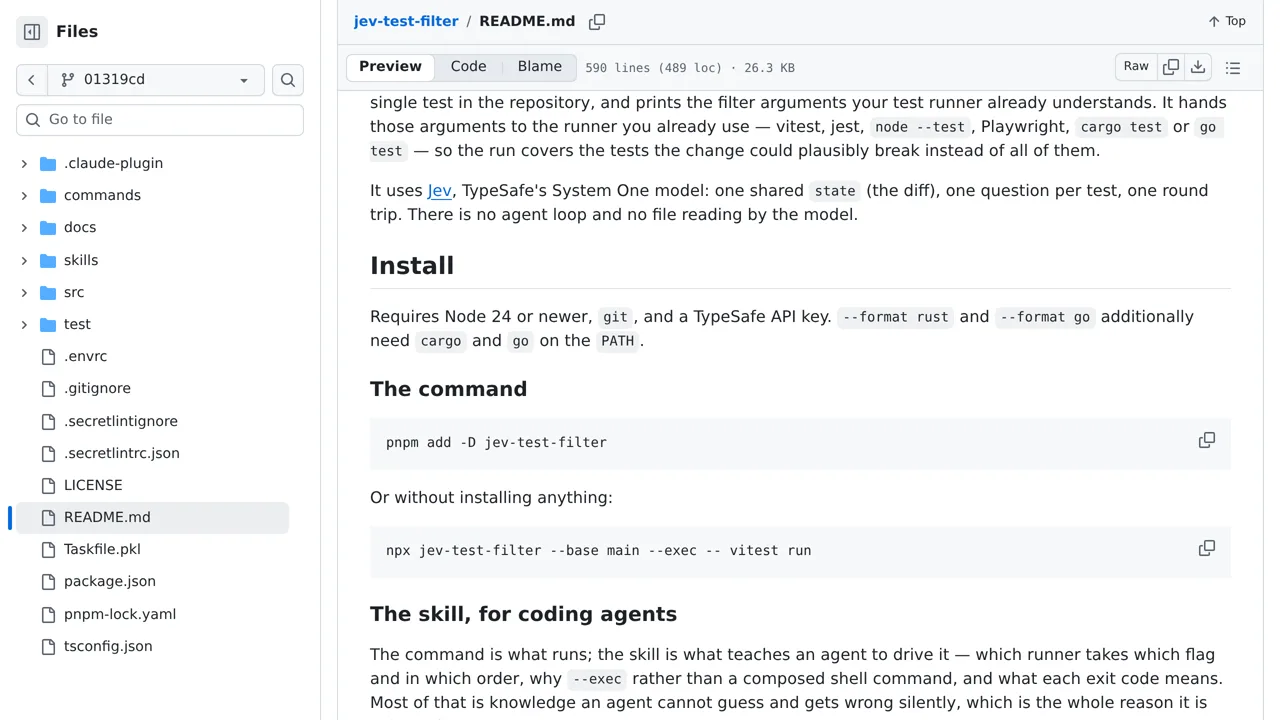
Turns a Git diff into native runner filters for the tests most likely to be affected.
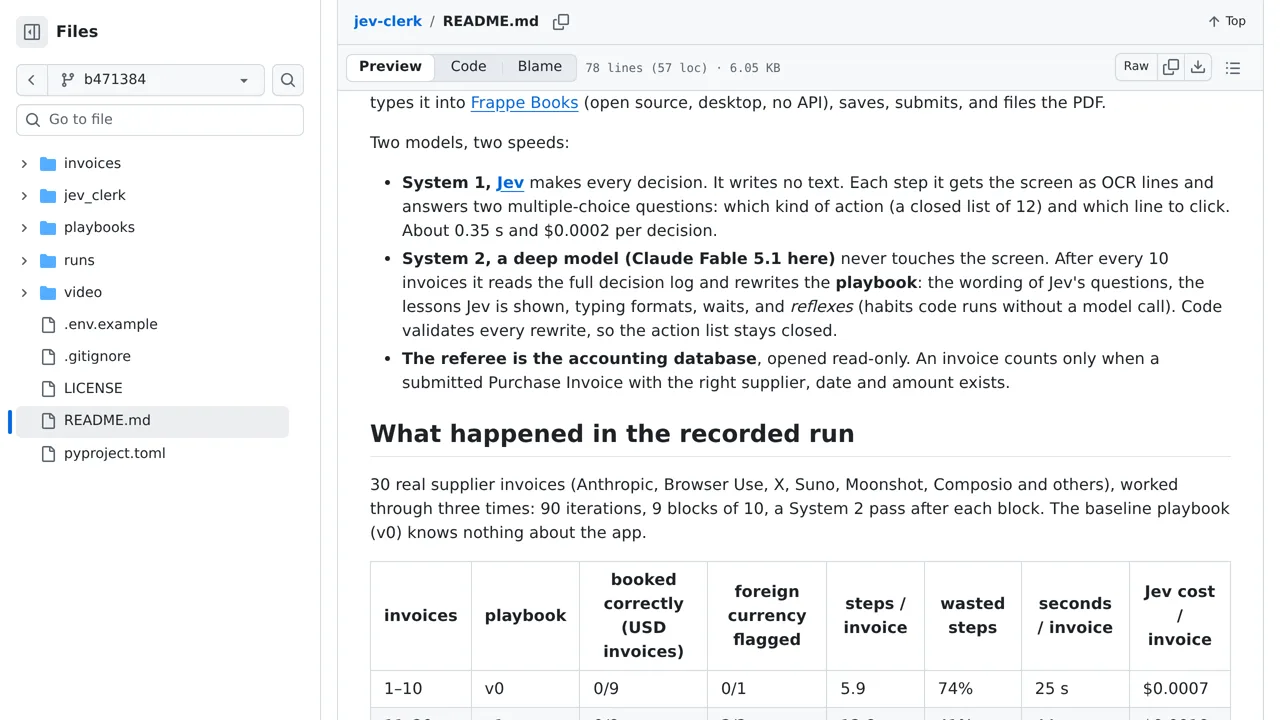
A Mac assistant that enters supplier invoices into Frappe Books, with Jev choosing the on-screen actions.
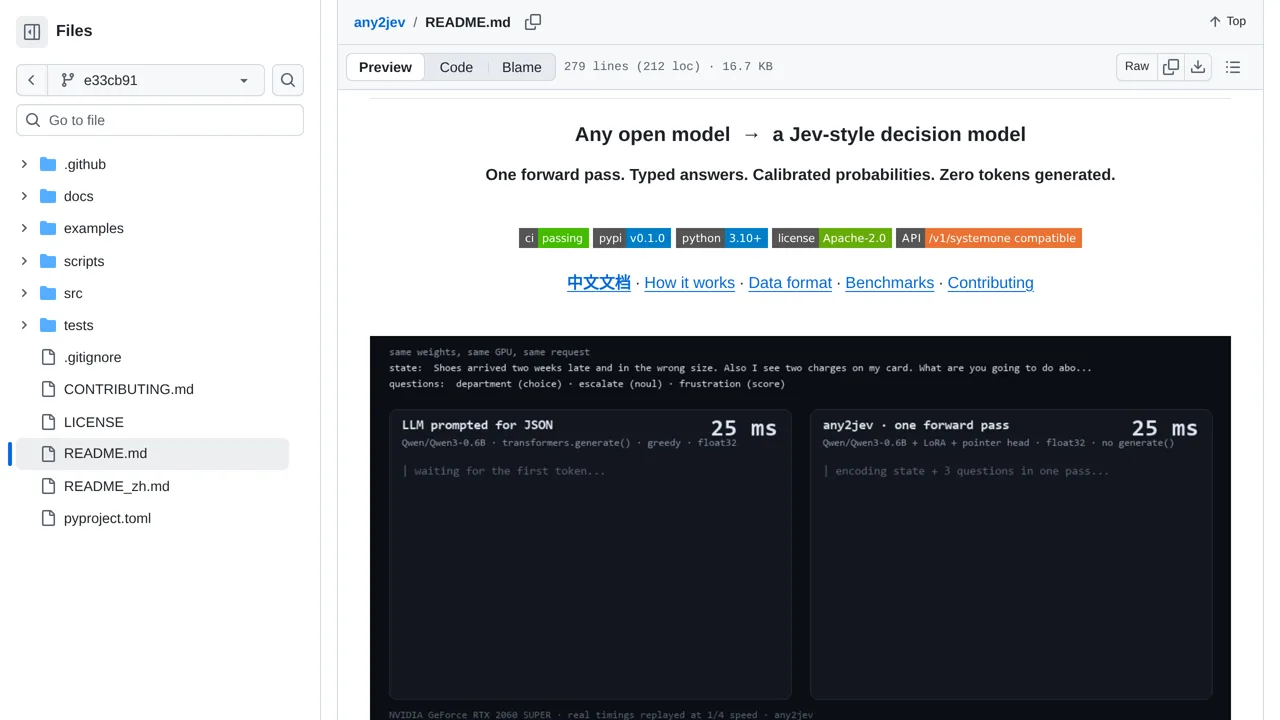
Trains and serves open models behind a Jev-compatible typed-decision API, without calling hosted Jev.
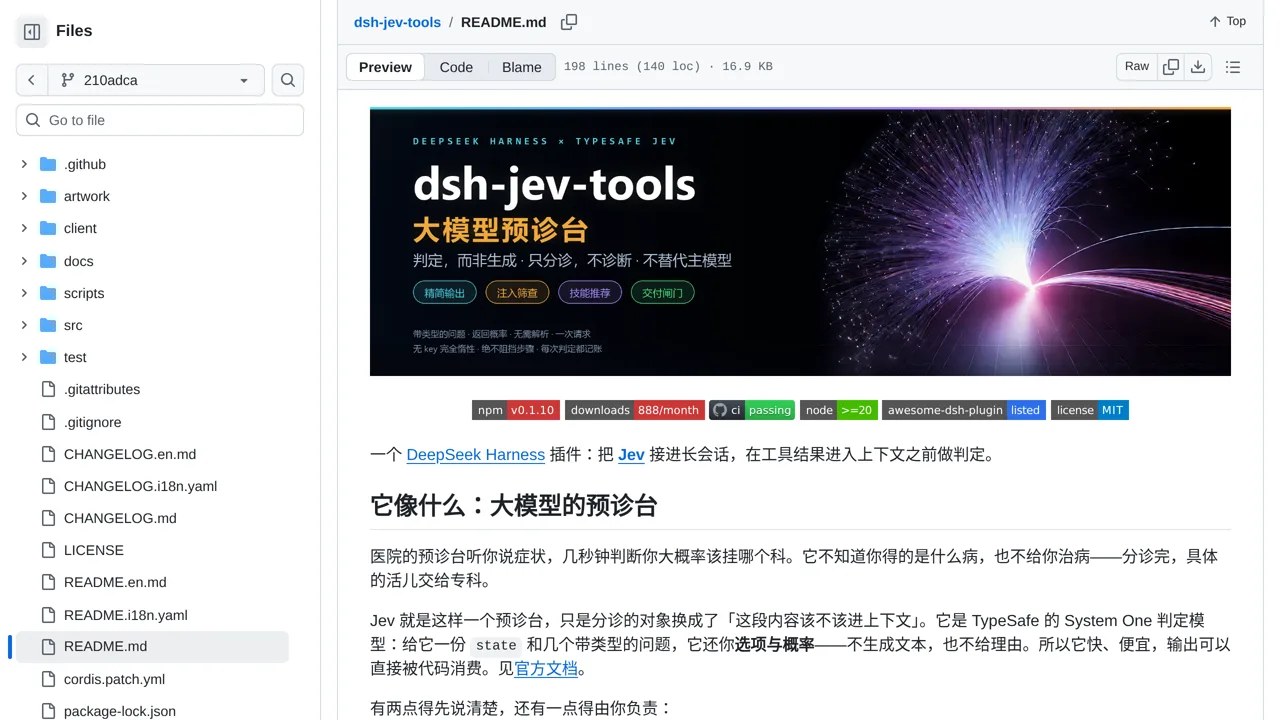
Adds Jev-backed output pruning, injection screening, and completion gates to DeepSeek Harness.
Guides coding agents from a possible Jev use case to a bounded design, baseline, fallback, and small validation experiment.

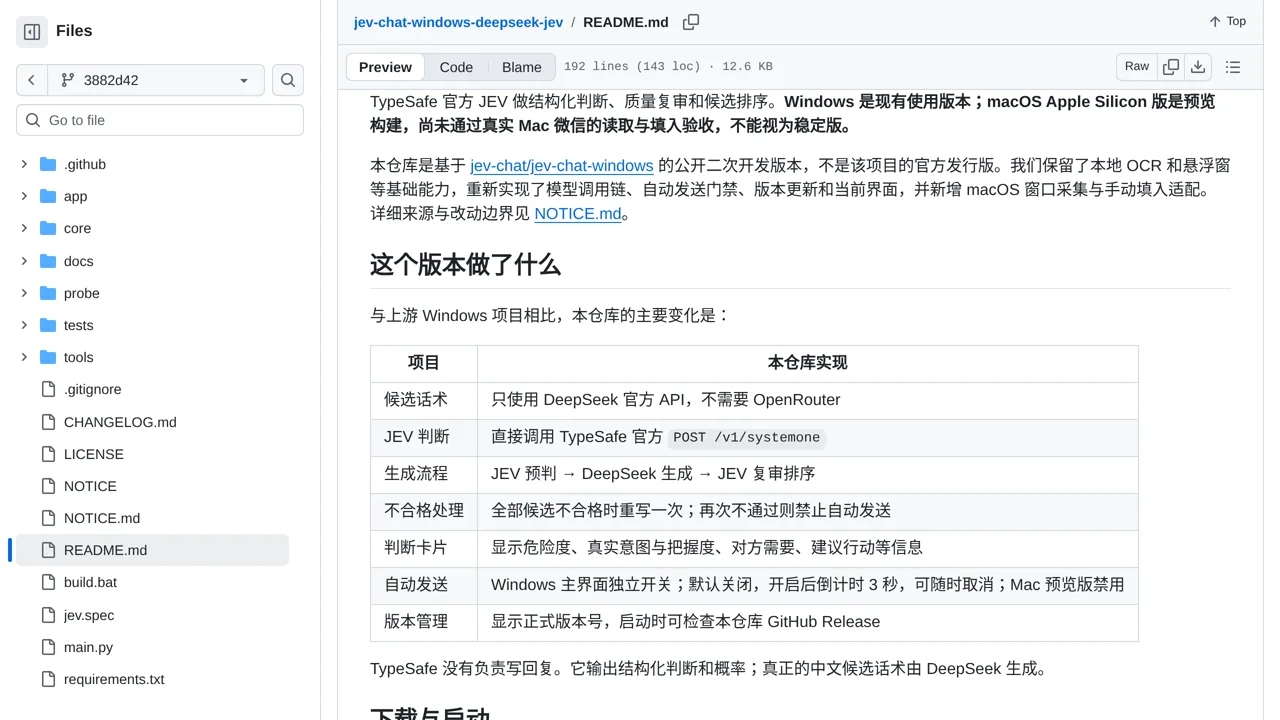
Combines DeepSeek-written WeChat replies with optional Jev intent checks, quality review, and ranking on Windows and preview macOS builds.
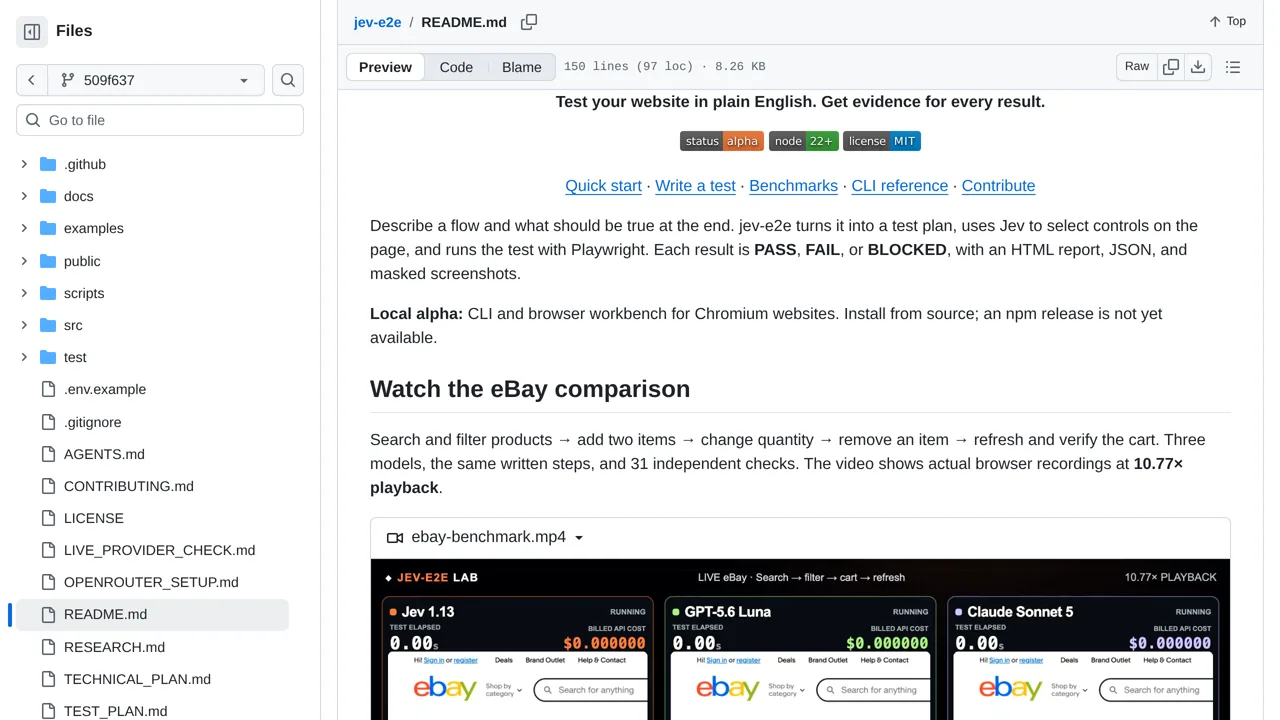
Turns plain-English browser flows into Playwright runs where Jev selects controls and independent checks preserve evidence for every result.
Maps 1,000 recent AI papers into 24 topics with Jev, then compares a seeded sample with an LLM judge.

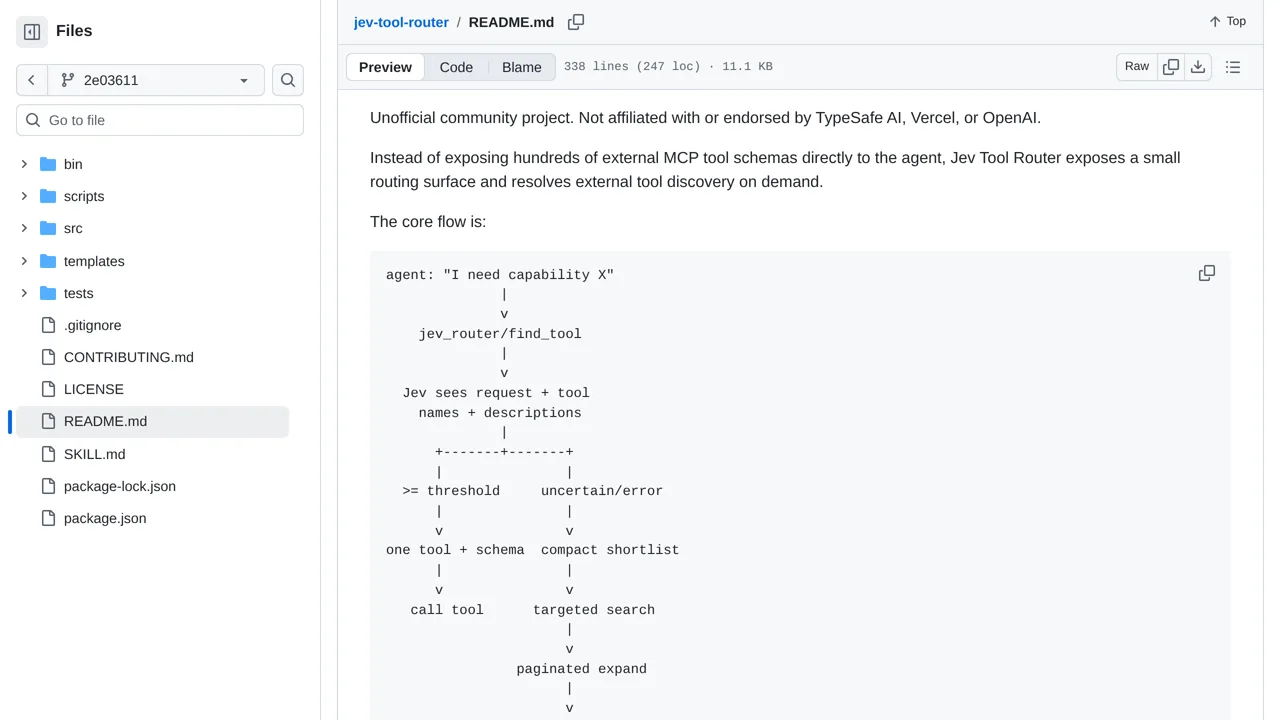
Chooses which discovered MCP tool Codex should call, then applies deterministic policy before execution.
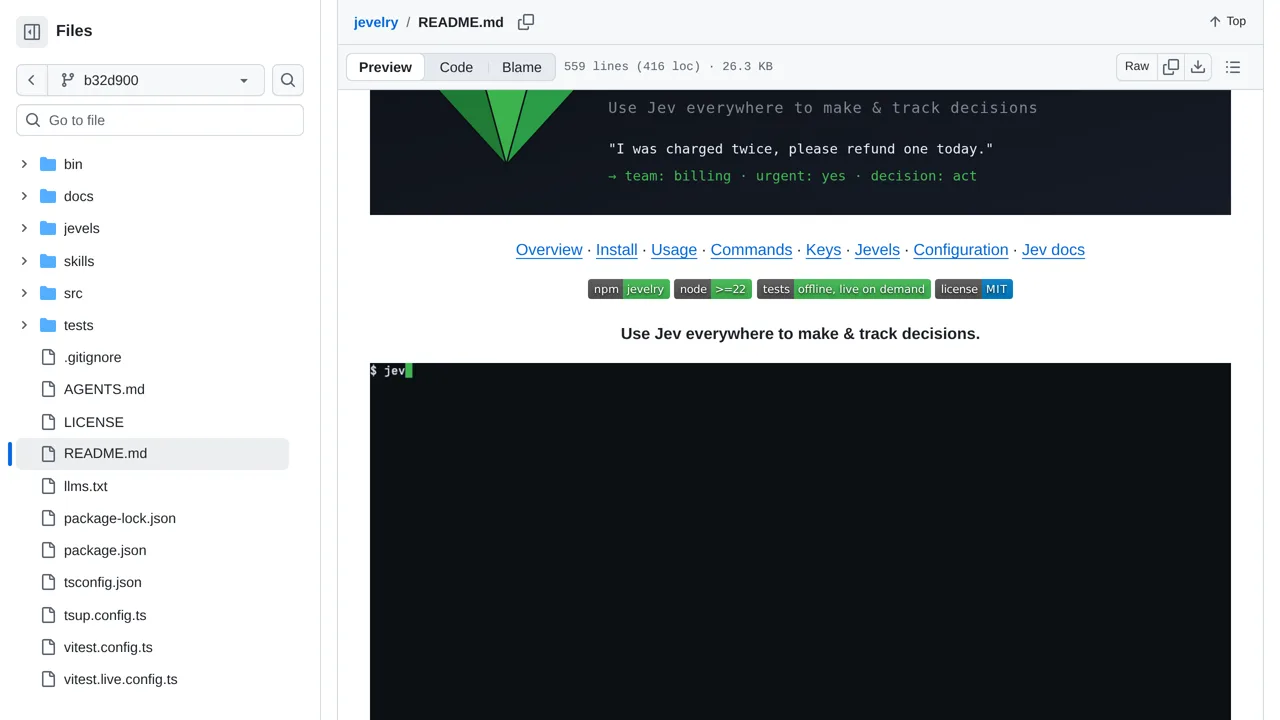
Defines reusable “jevels” for operational decisions and records their answers in a terminal interface.
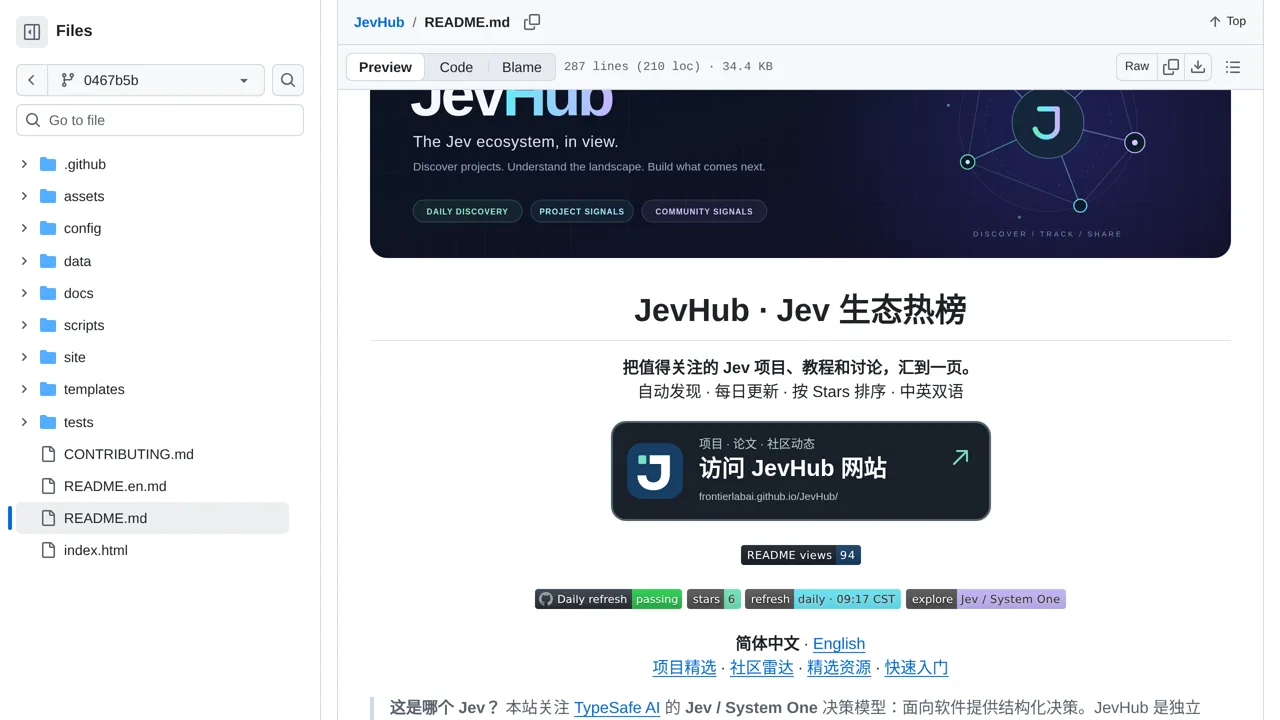
Tracks Jev ecosystem projects in a ranked hub rather than implementing a decision workflow itself.
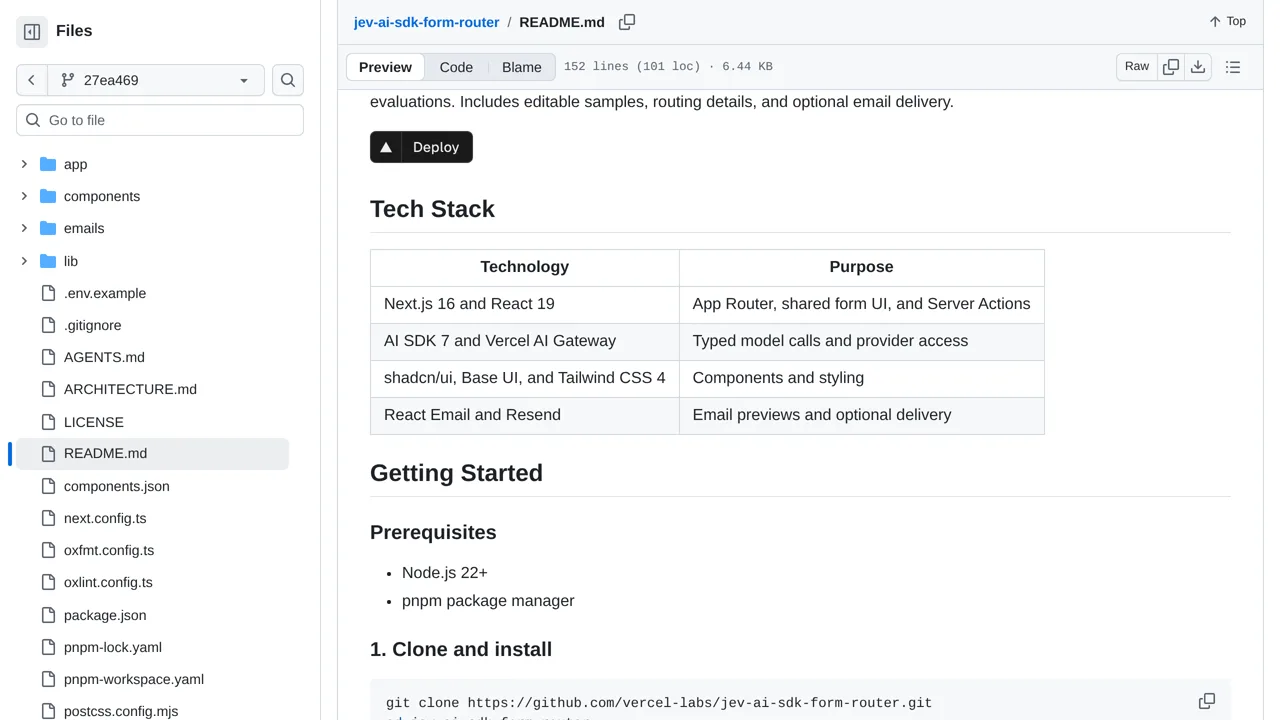
Try three editable forms that show how Jev routes each submission to a recipient.
Tell wilwid what you don't want to see, and it hides matching posts and videos.

An extensible Python harness that turns Jev decisions into actions.
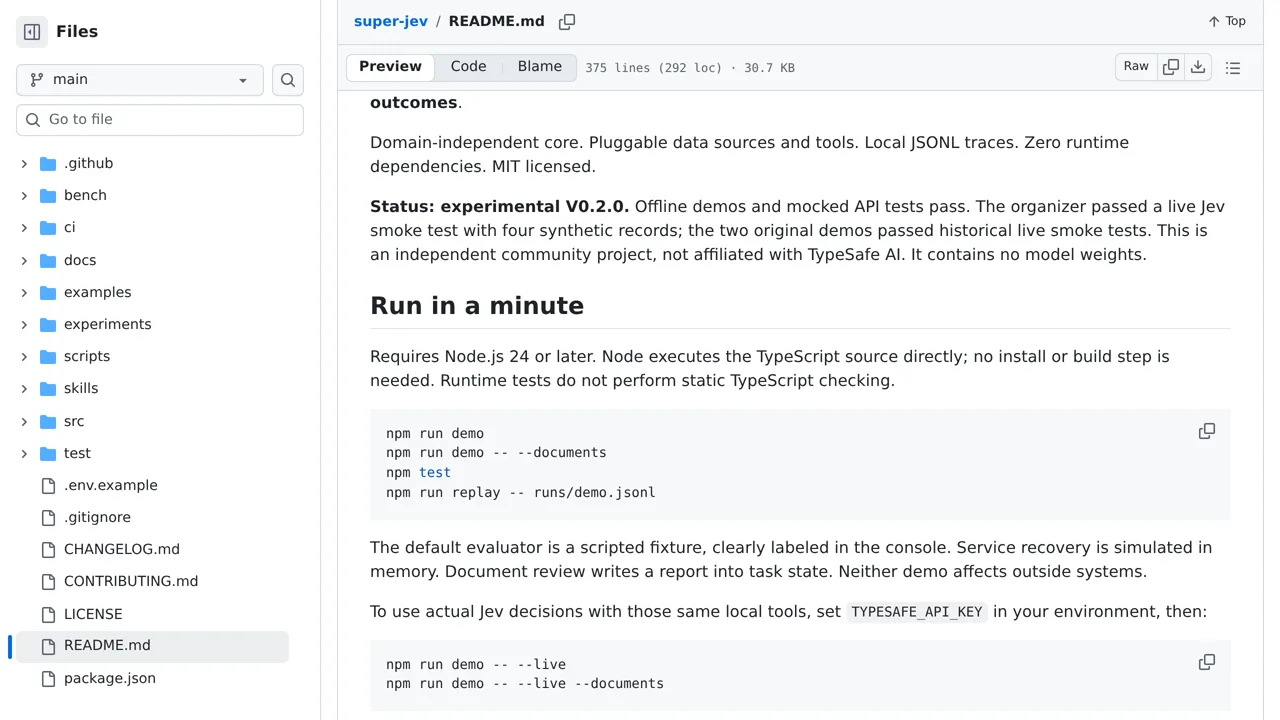
An unofficial .NET SDK for asking Jev Noul, Choice, and Score questions.
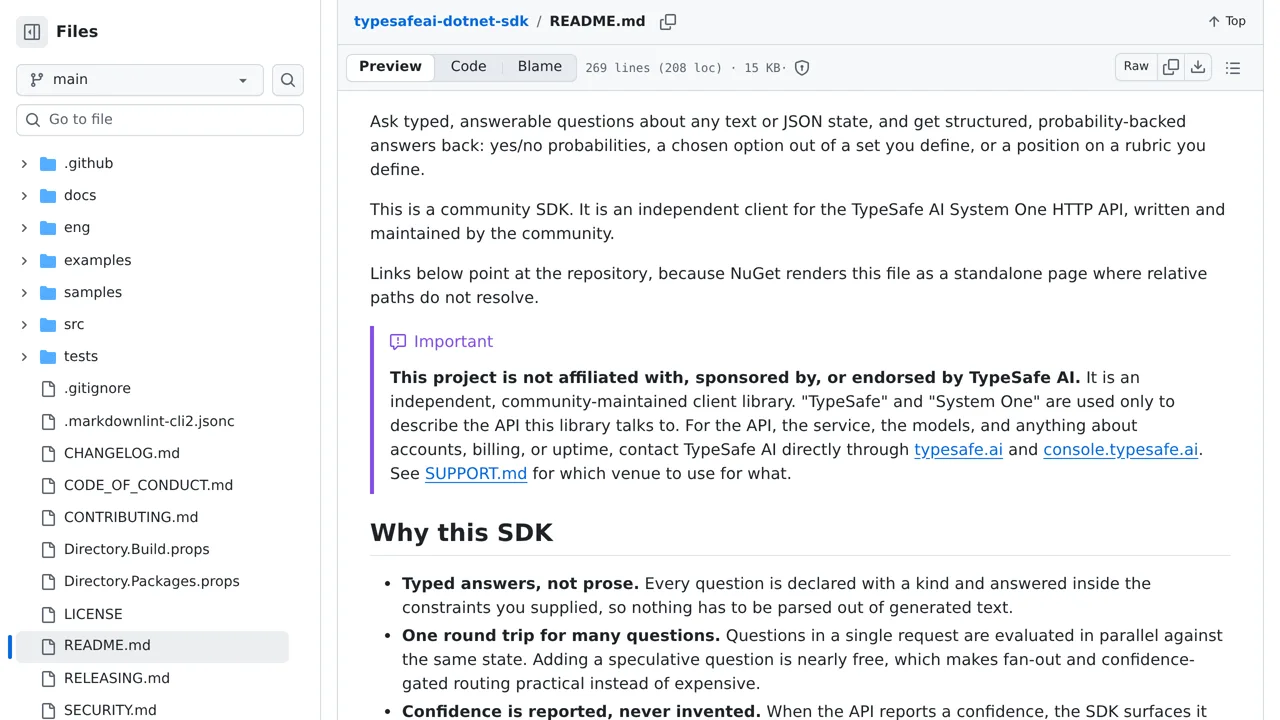
A Haskell DSL for defining typed Jev question packets and matching answers to their labels.
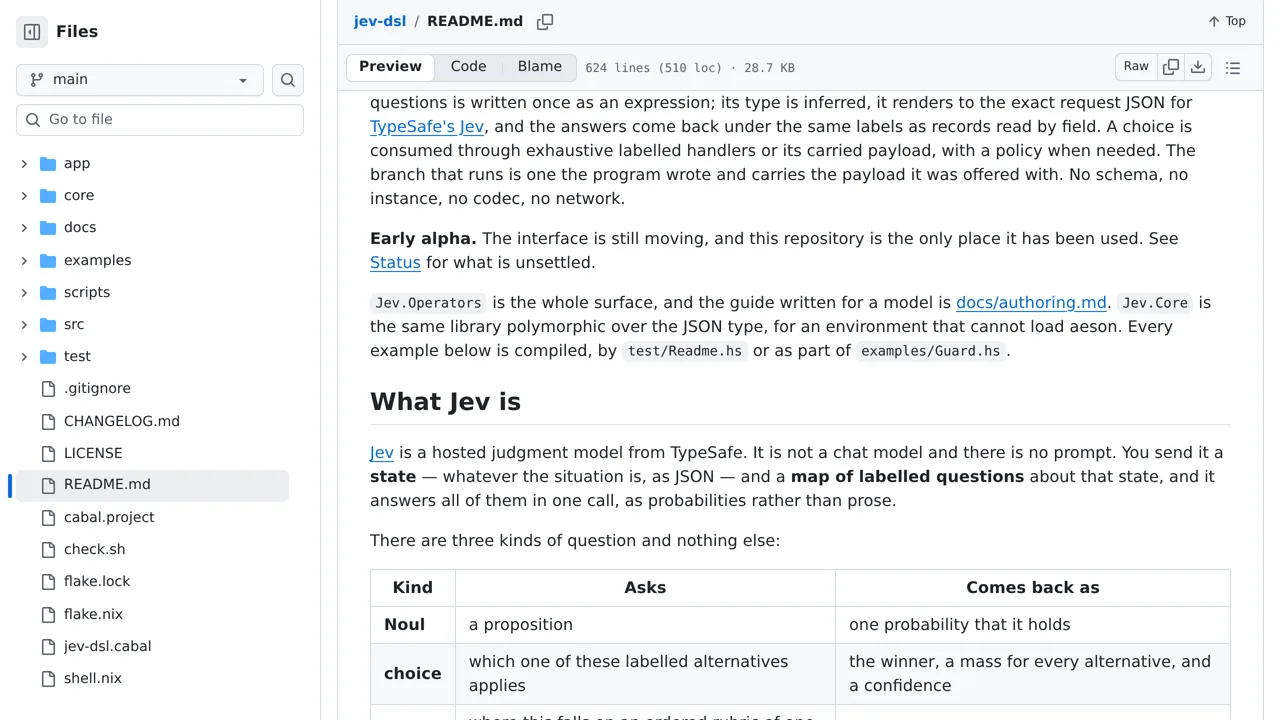
A Python skill router that uses Jev to make typed, confidence-aware selections.
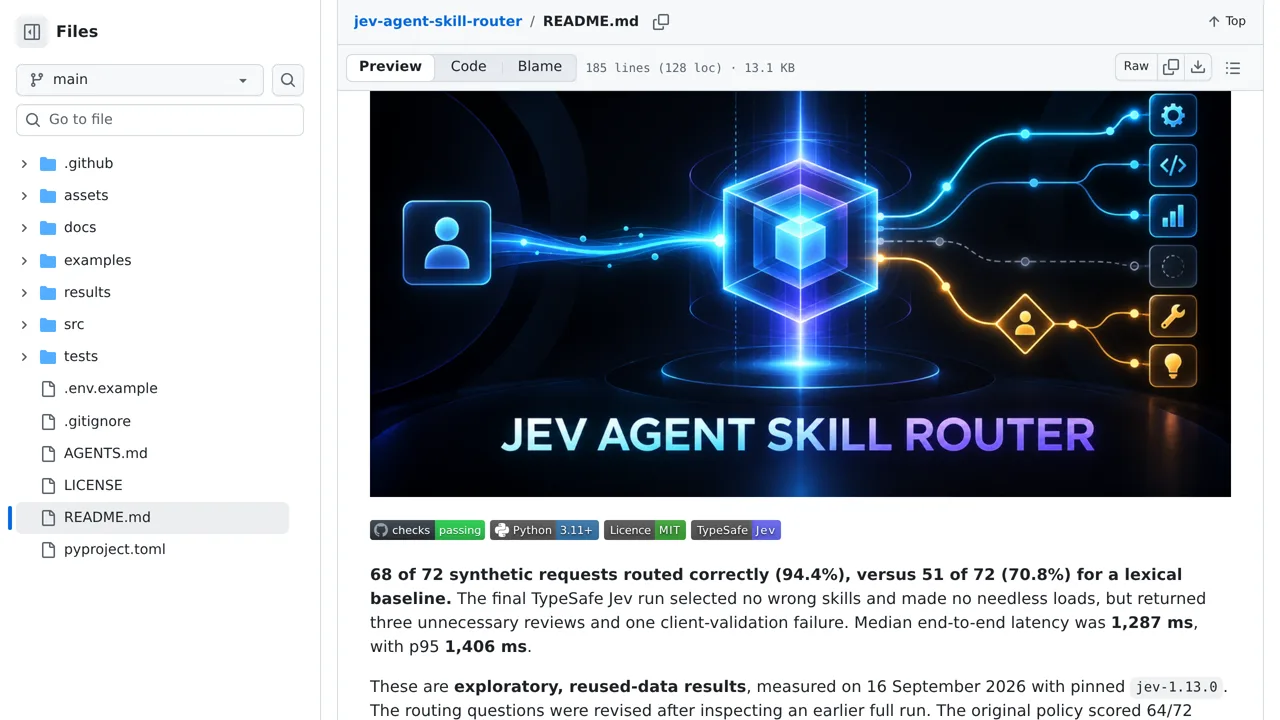
Connect Jev to an MCP client, then compare its answers with those of general-purpose models.
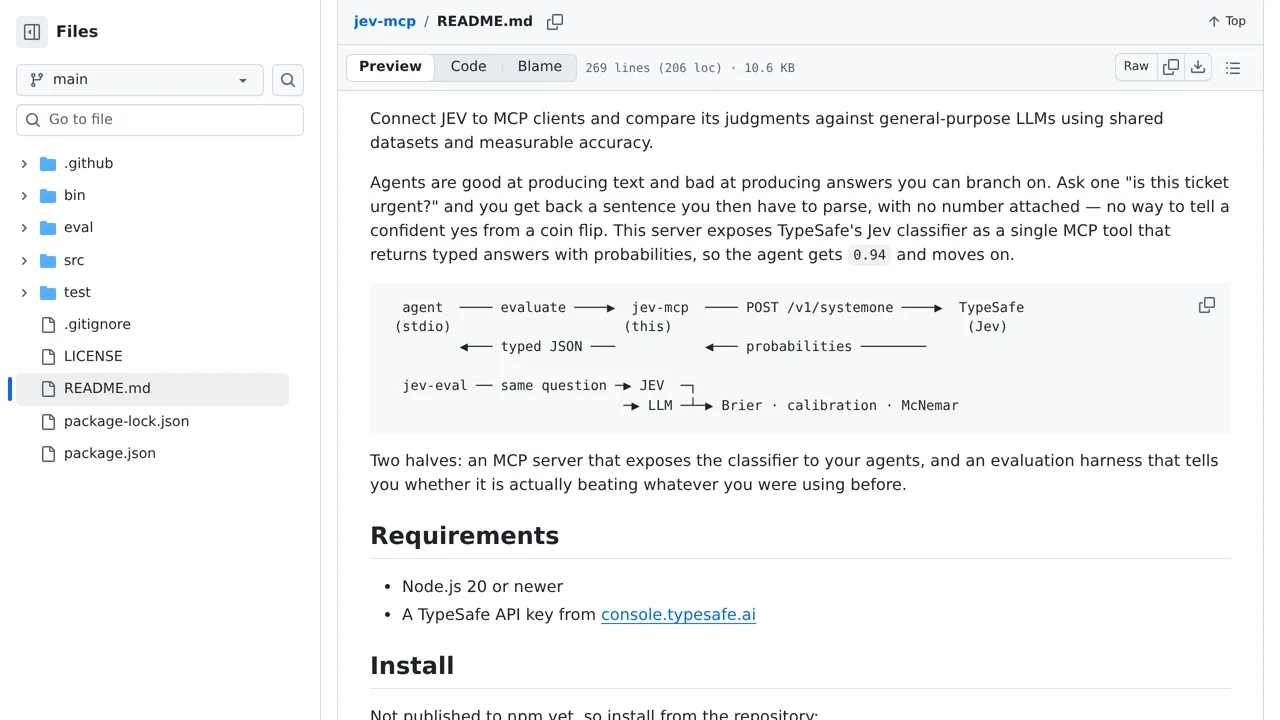
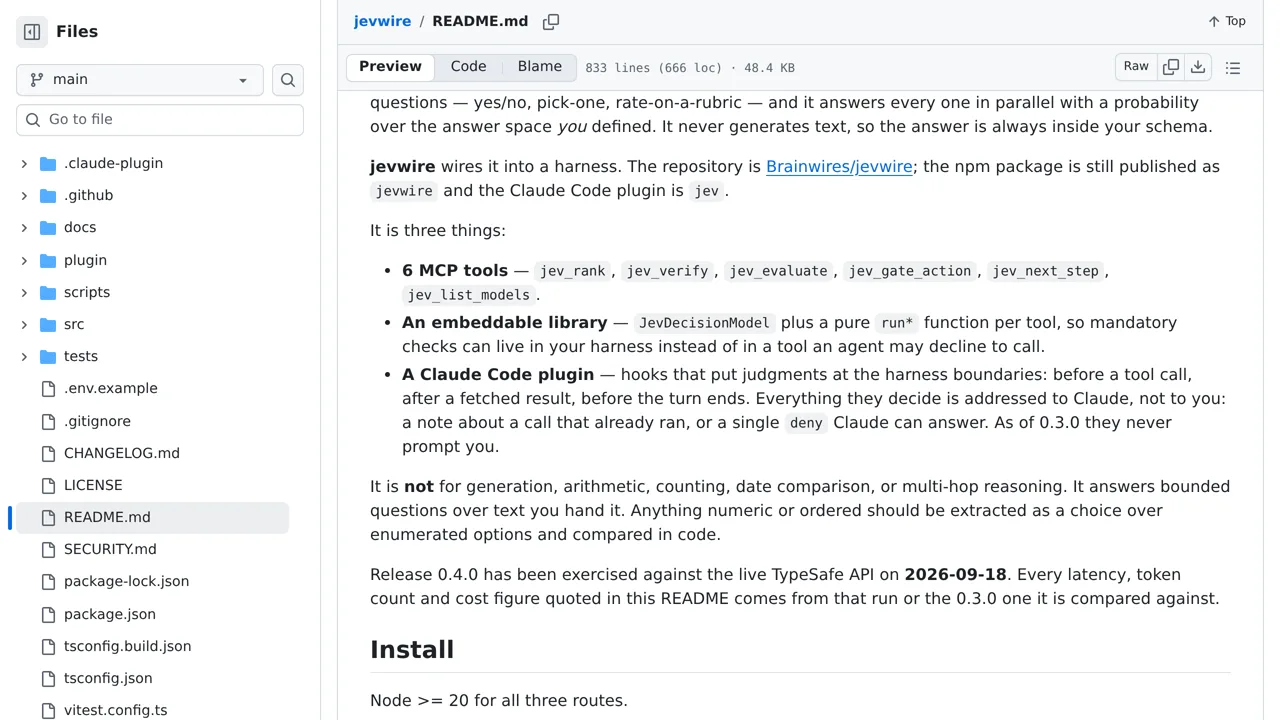
An agent decision toolkit with a Jev MCP server, embeddable library, and Claude Code plugin.
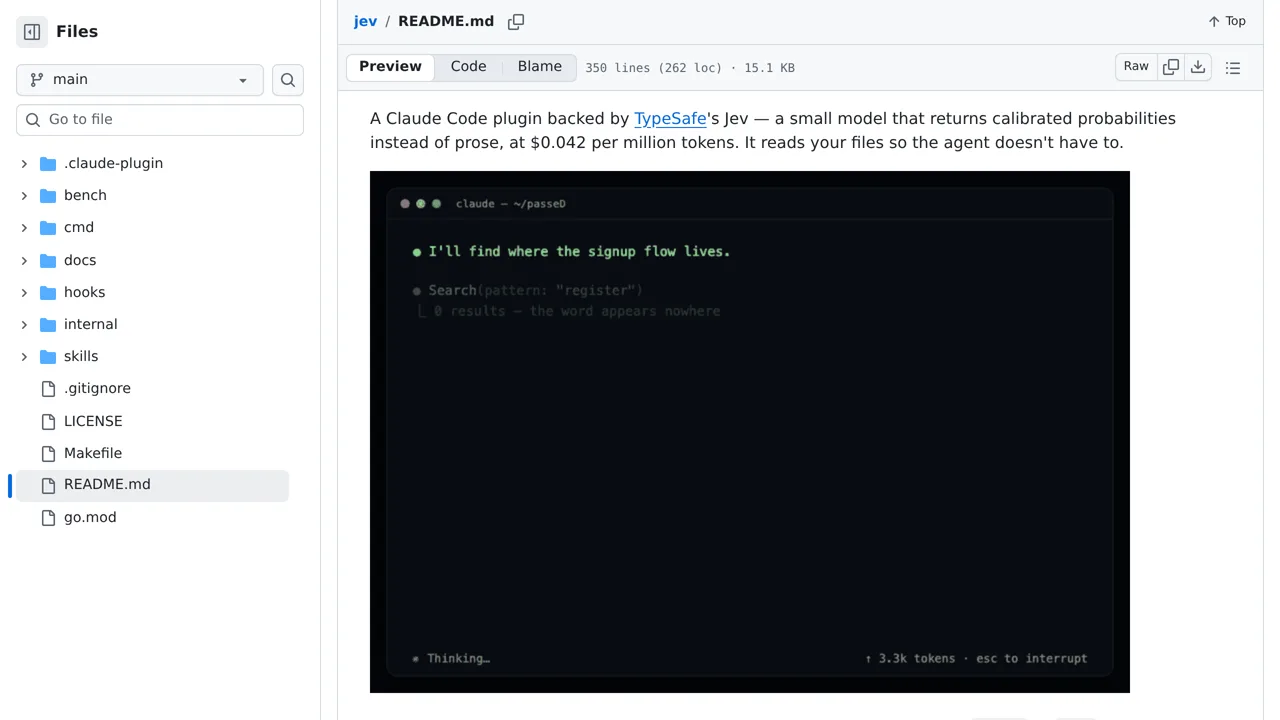
A Claude Code plugin for using Jev.
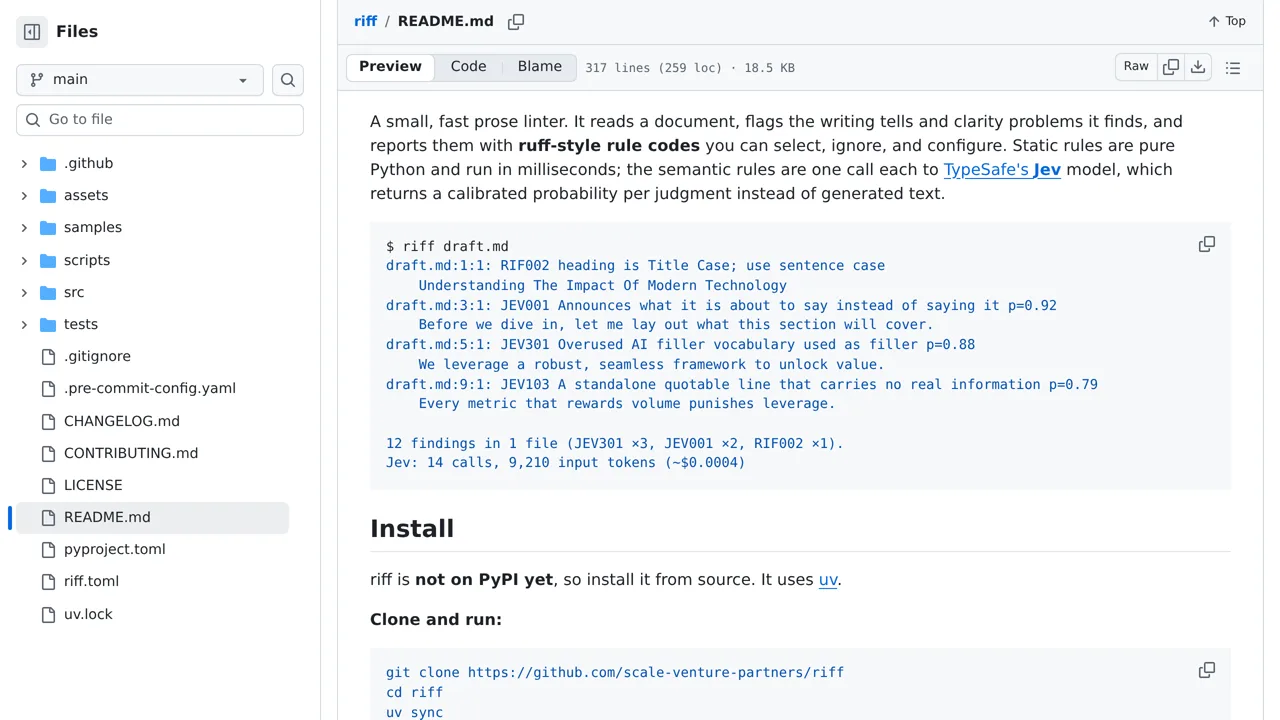
A fast prose linter with Ruff-style rule codes and Jev-backed semantic checks.
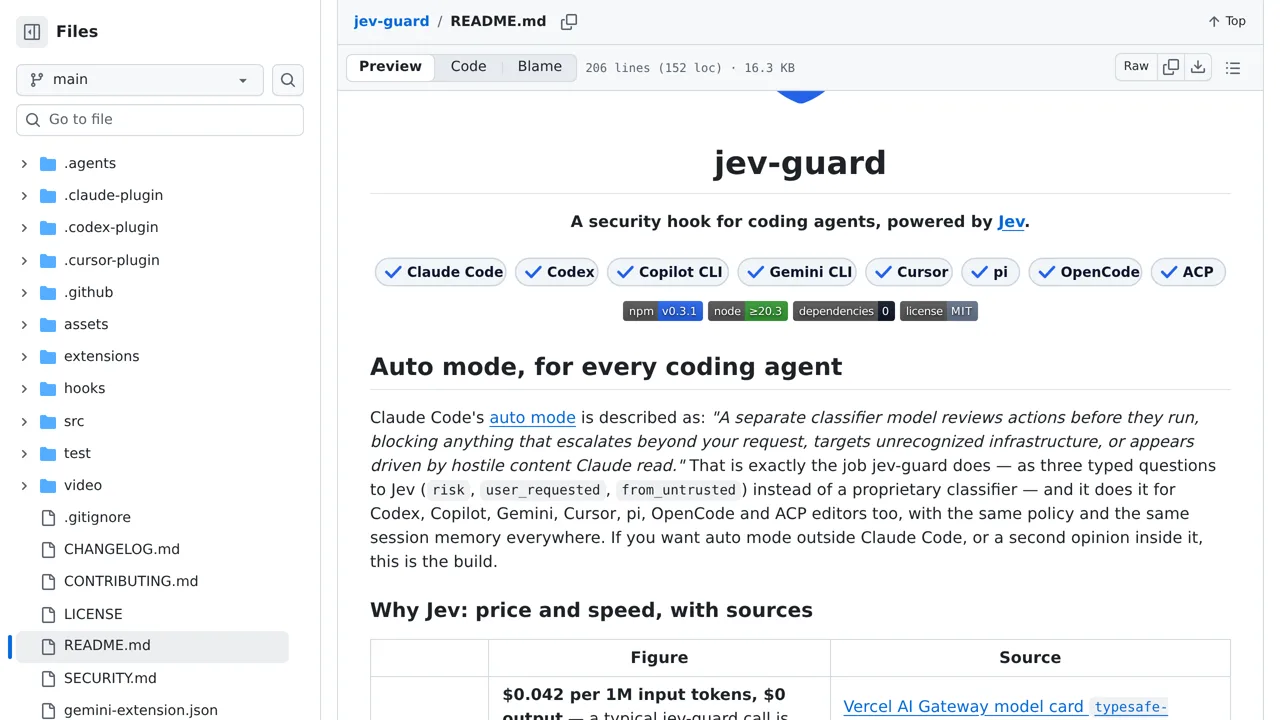
Jev Guard checks coding-agent tool calls and returns an allow, ask, or deny decision based on risk and session context.
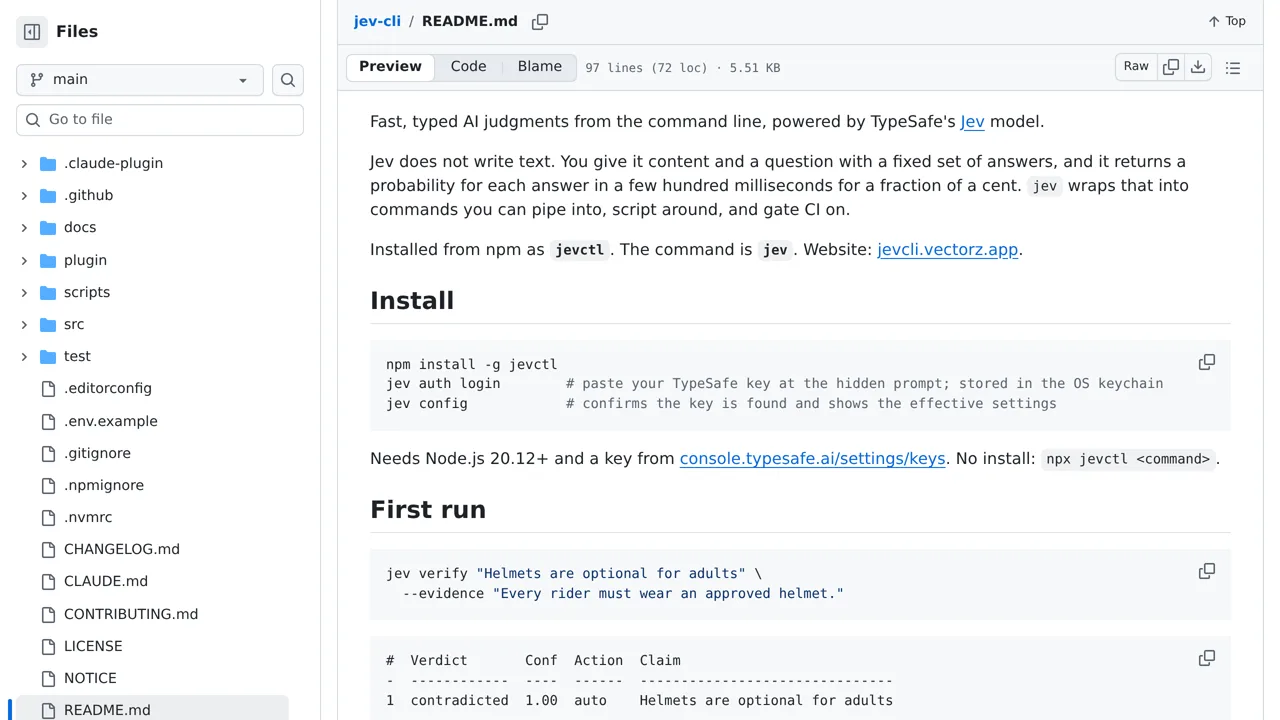
A TypeScript command-line client for TypeSafe's Jev model.
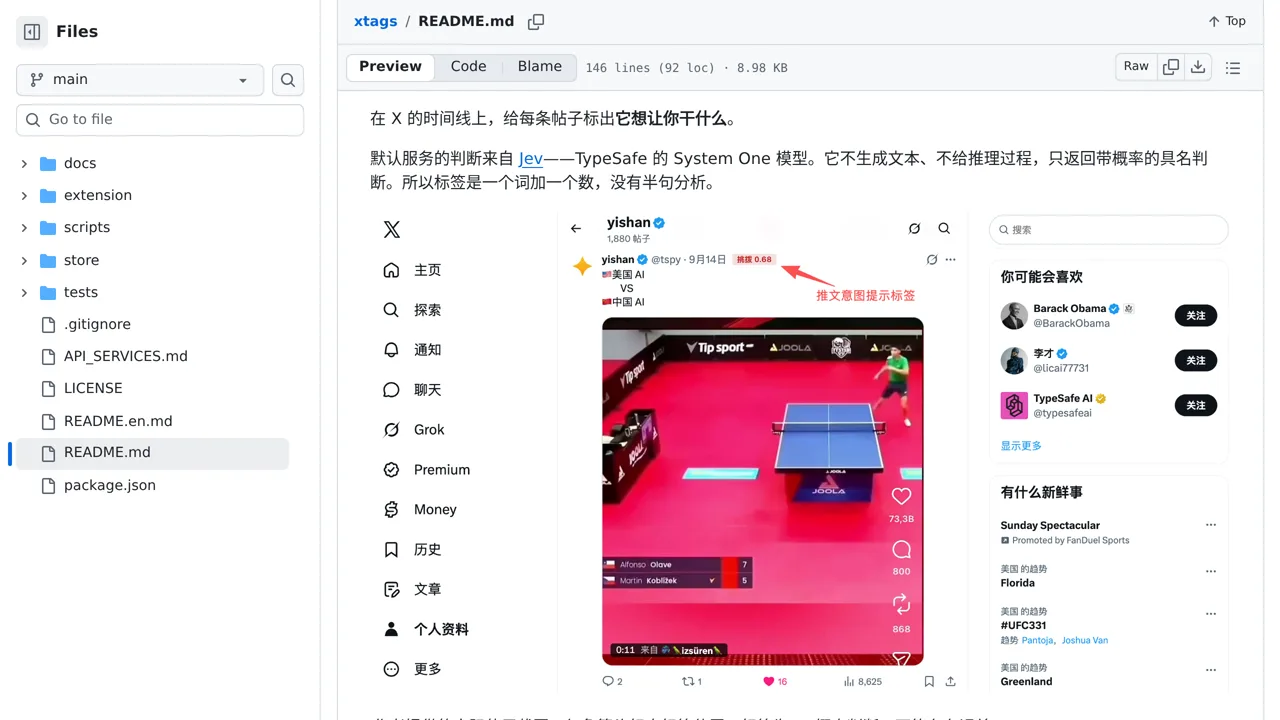
Spot the sales pitch, call to action or other intent behind an X post with labels chosen by Jev.
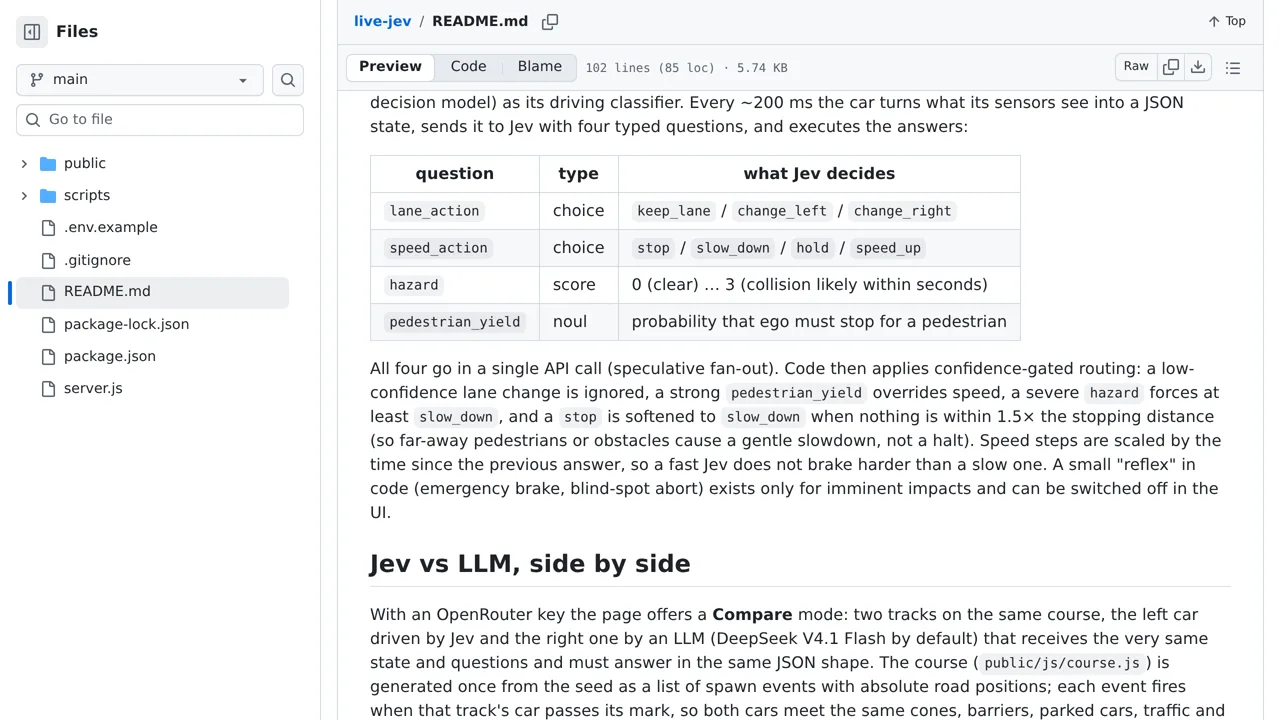
A browser-based 2D autonomous-car simulation driven by Jev decisions.
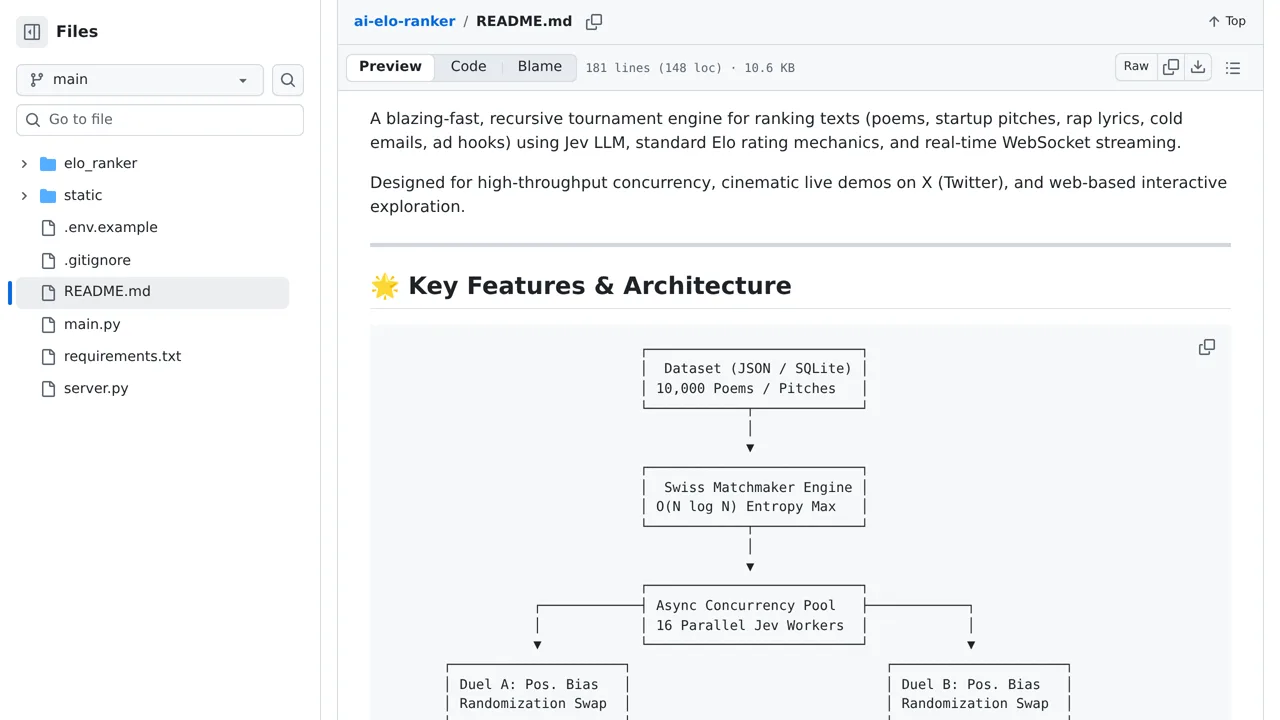
A recursive tournament engine that uses Jev scoring and Swiss matchmaking to rank AI candidates by Elo.
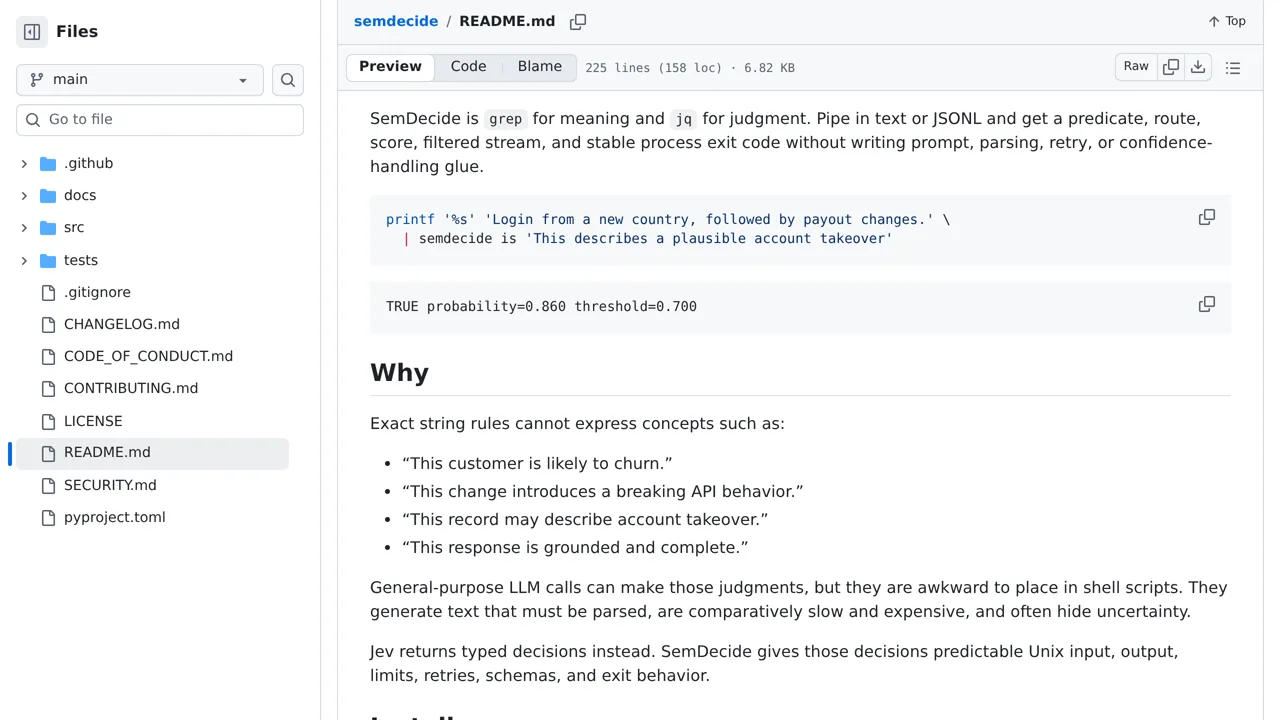
A command-line tool for inserting Jev-based semantic decisions into Unix pipelines and CI jobs.
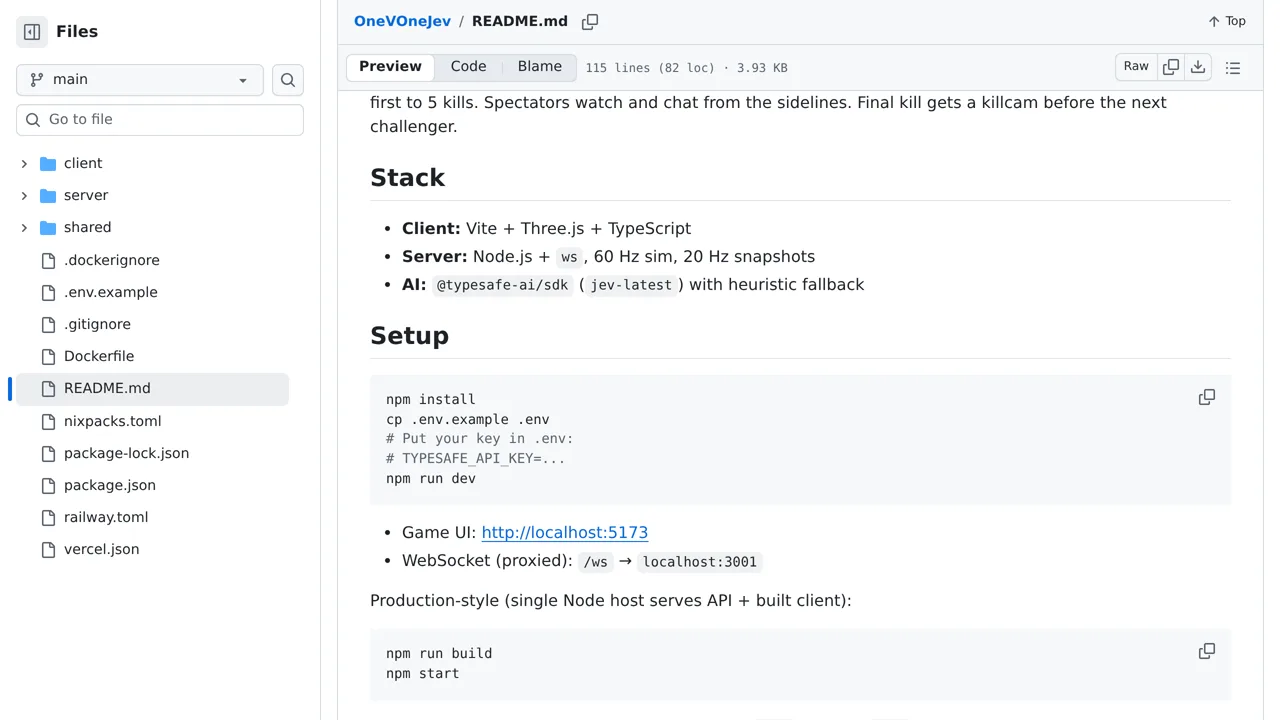
A Three.js quickscope arena pits the player against a Jev-controlled opponent.
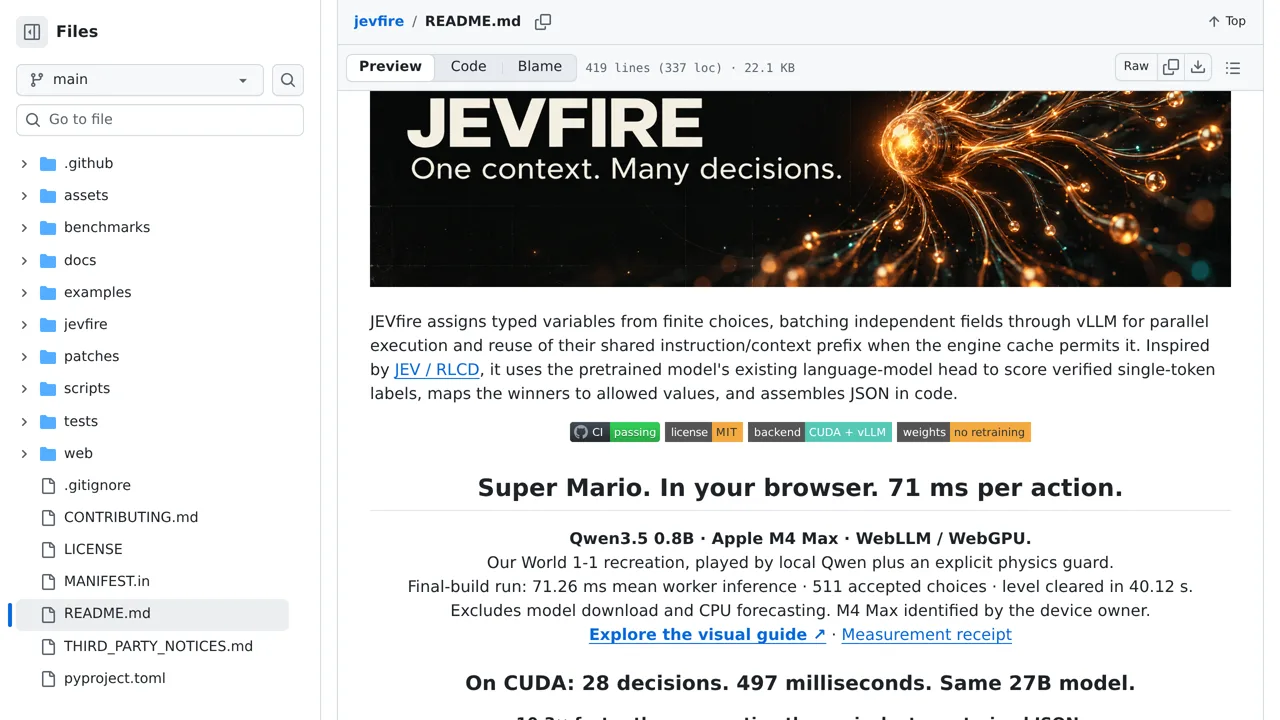
jevfire batches many Jev-style decisions over one shared context on CUDA language models.
LegalForecastBench provides an alpha benchmark and evaluation workflow for LegalForecast-MTD.
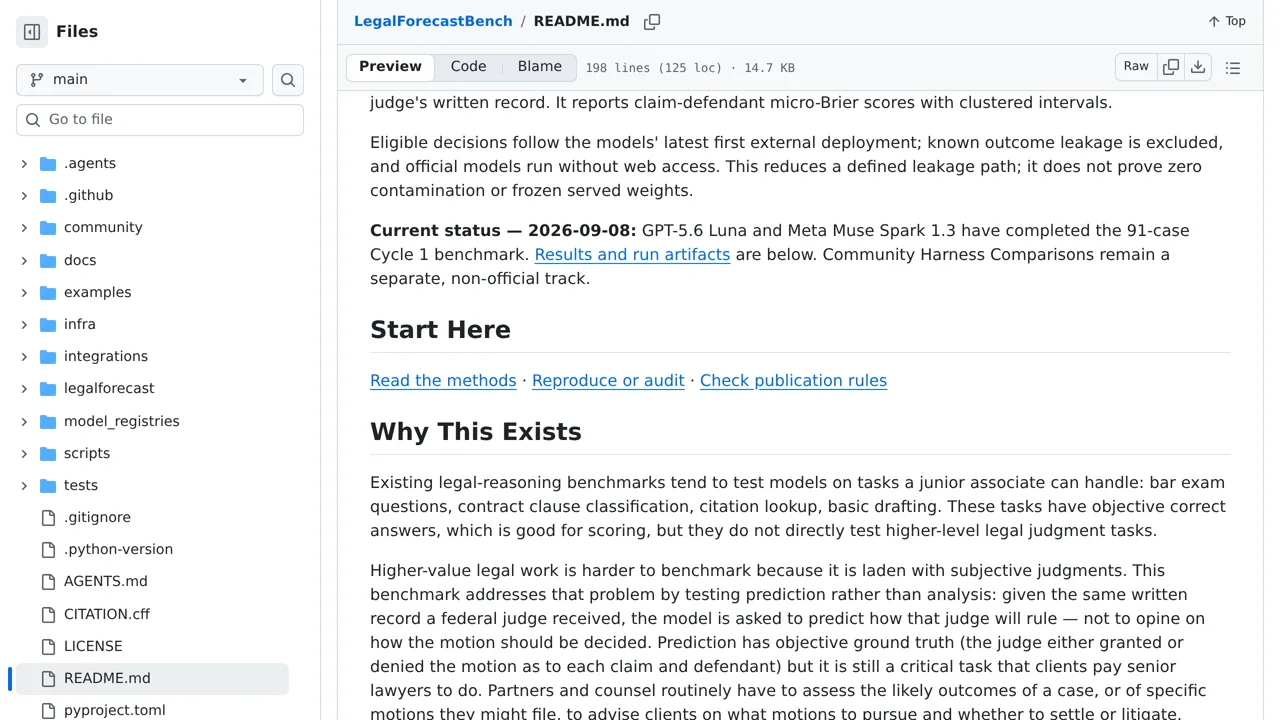
A word-level language model that drafts with n-grams and asks Jev to check chunks of the result.
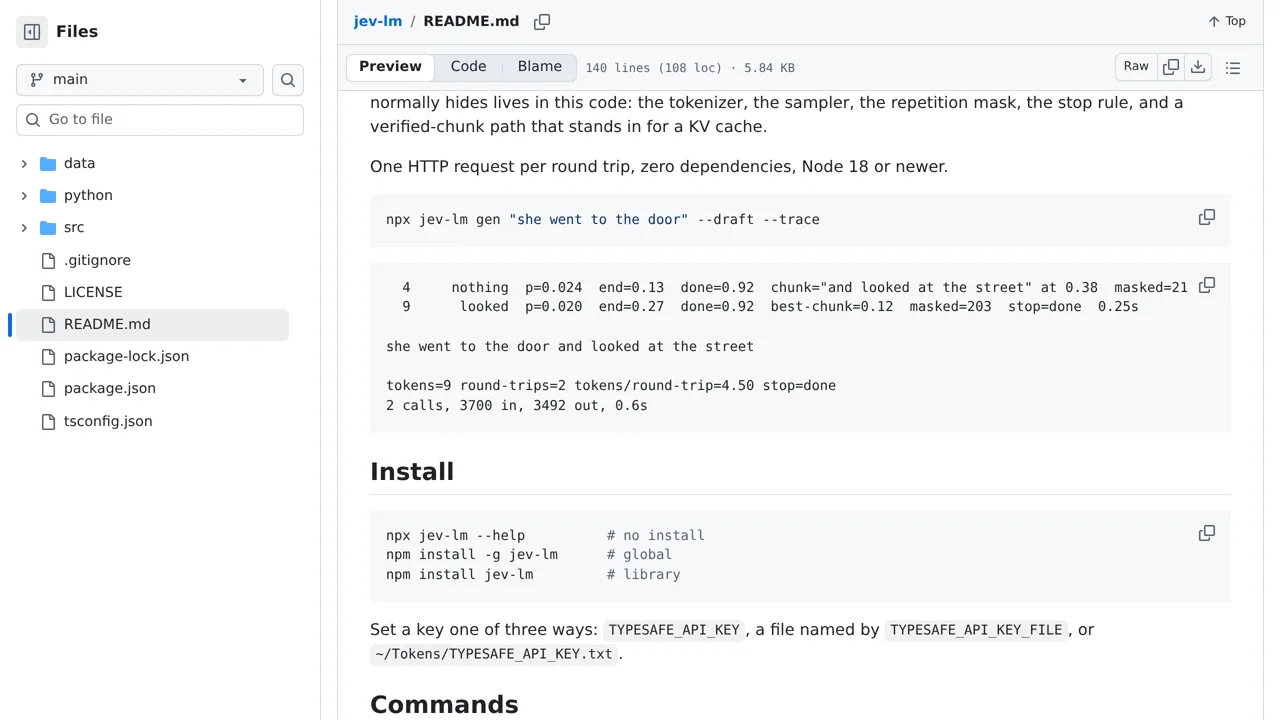
typesafe-local asks a local MLX model typed questions and returns calibrated probabilities without generating or parsing prose.
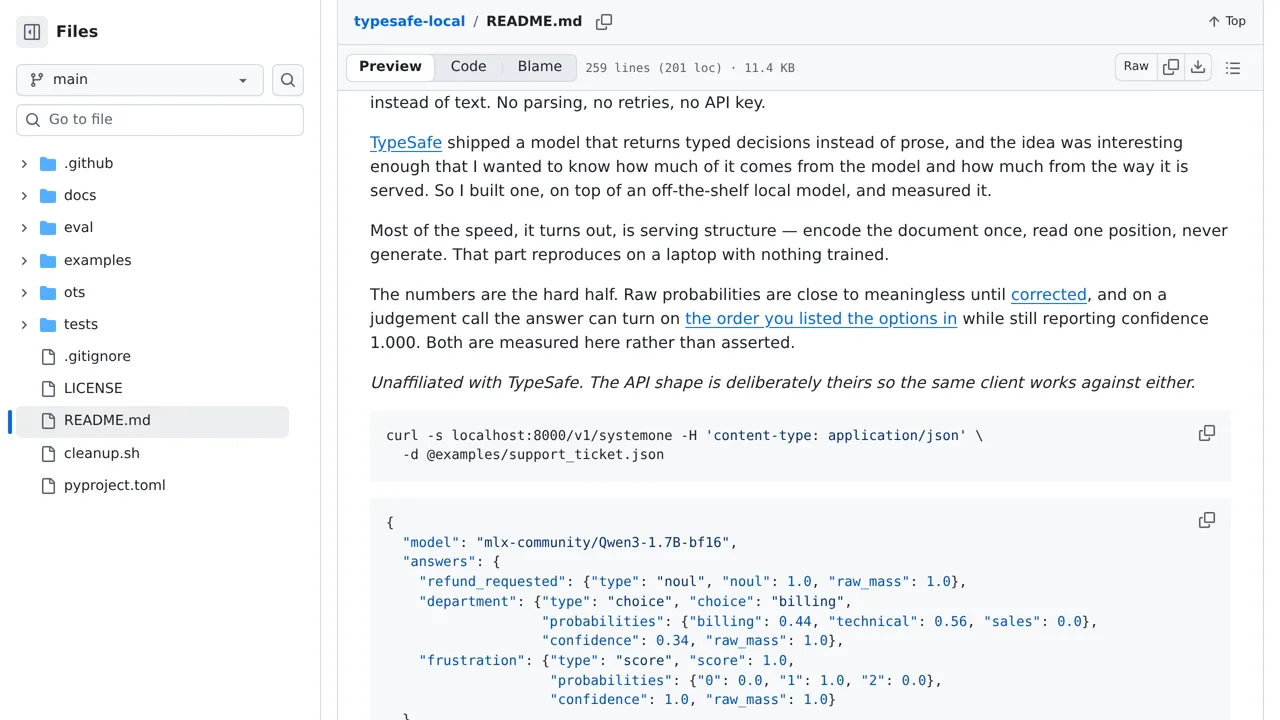
Verdict is a 151M-parameter ModernBERT decision engine with calibrated uncertainty and no autoregressive generation.
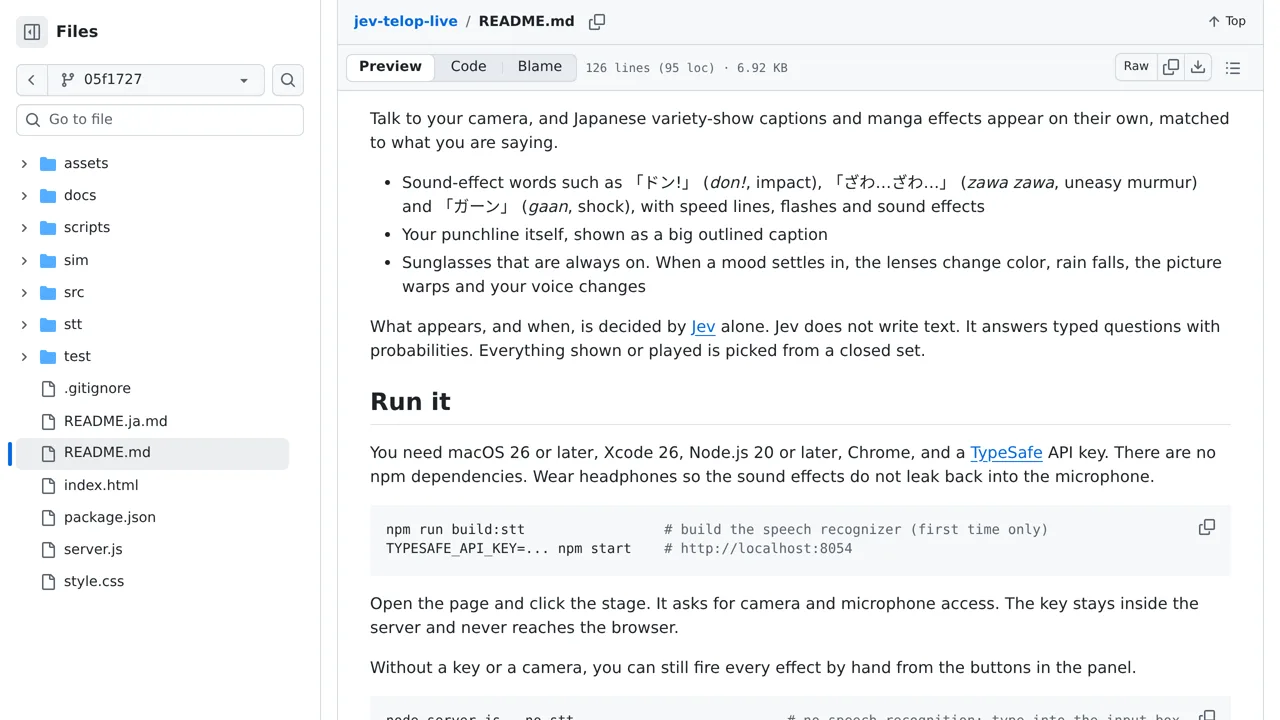
Turn live Japanese speech into variety-show captions, manga effects, colored lenses, and sound cues.
Jev, briefly
A chat model generates text token by token and hopes you parse it. Jev never generates a word. Your code sends the state of the world plus typed questions; Jev returns every answer in one parallel pass — typed values with calibrated probabilities and a confidence score your code can trust. About 70–500 ms end to end, $0.042 per million input tokens, output free. Trained with what TypeSafe calls Reinforcement Learning for Calibrated Decisions.
You define the options. Jev returns the chosen option, a probability for every option, and a confidence. The workhorse of routing, agents, and games — the answer space is always legal, so there is nothing to parse and nothing to hallucinate.
You describe ordered levels — say trivial / normal / critical. Jev returns the level, the probability of each, and a confidence. Scores turn fuzzy judgment (“how severe is this log line?”) into a number-free decision your code can branch on.
You assert a statement; Jev returns the probability that it is true — a noul. Moderation, verification, guardrails, “does this diff actually fix the bug?”: one question, one calibrated probability.
Official material lives at typesafe.ai and docs.typesafe.ai. JevMade is an independent community registry — not affiliated with or endorsed by TypeSafe AI.
Recurring lessons
Games, drones, trading bots, and browser agents all converge on the same loop: serialize the state, ask one decisive question, act, repeat. Jev’s latency makes the loop feel instant — the model lives inside the control loop, not outside it.
The answer says what; the confidence says whether to act. The most reliable entries threshold on confidence to route edge cases to a slower model or a human — automation with an honest escape hatch.
Makers rarely ask Jev to pick from everything. Local tactics prune 225 gomoku moves to ~40; DOM filters turn a page into an element table; code narrows options, Jev judges within them.
A recurring split: Jev makes every decision cheaply and instantly, and a small LLM is only invoked when a human-facing string must actually be written. Decision and generation are separate budgets.
Send the link — repo, live demo, post, or video — plus a line on what it does and which primitives it uses. Every entry is verified against its primary source before it ships.
Submit your experiment → hello@JevMade.com