What it does
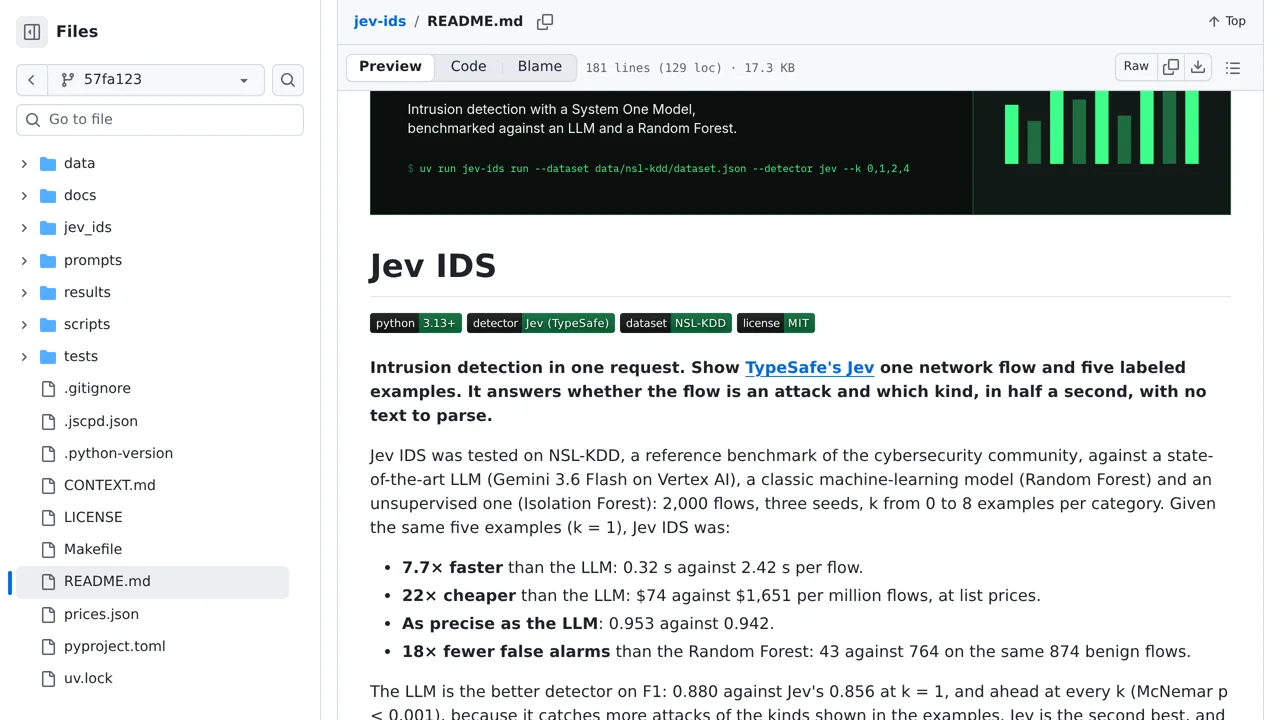
Full accuracy, precision, recall, and F1 sit beside a Gemini baseline in the README, and the baseline wins on F1. What Jev buys is latency, cost, and recall on attack types that were never in the examples.
Apps & data pipelines
Trained intrusion-detection models want thousands of labeled flows. This hands Jev five examples per attack type and gets close enough to be worth arguing about.
Only you can see your notes.
Screenshot unavailable. Open the experiment ↗
Full accuracy, precision, recall, and F1 sit beside a Gemini baseline in the README, and the baseline wins on F1. What Jev buys is latency, cost, and recall on attack types that were never in the examples.
Gather a few network activity records labeled as normal or suspicious traffic. Write brief descriptions for each attack category you want to spot. A developer can package each new connection record alongside your notes and sample records, then send them to the TypeSafe service.
The service returns an estimated chance of an attack and names the matching category. Your developer can feed these numbers into your security dashboards to flag unusual connections for review, though they remain automated estimates rather than guaranteed proof.