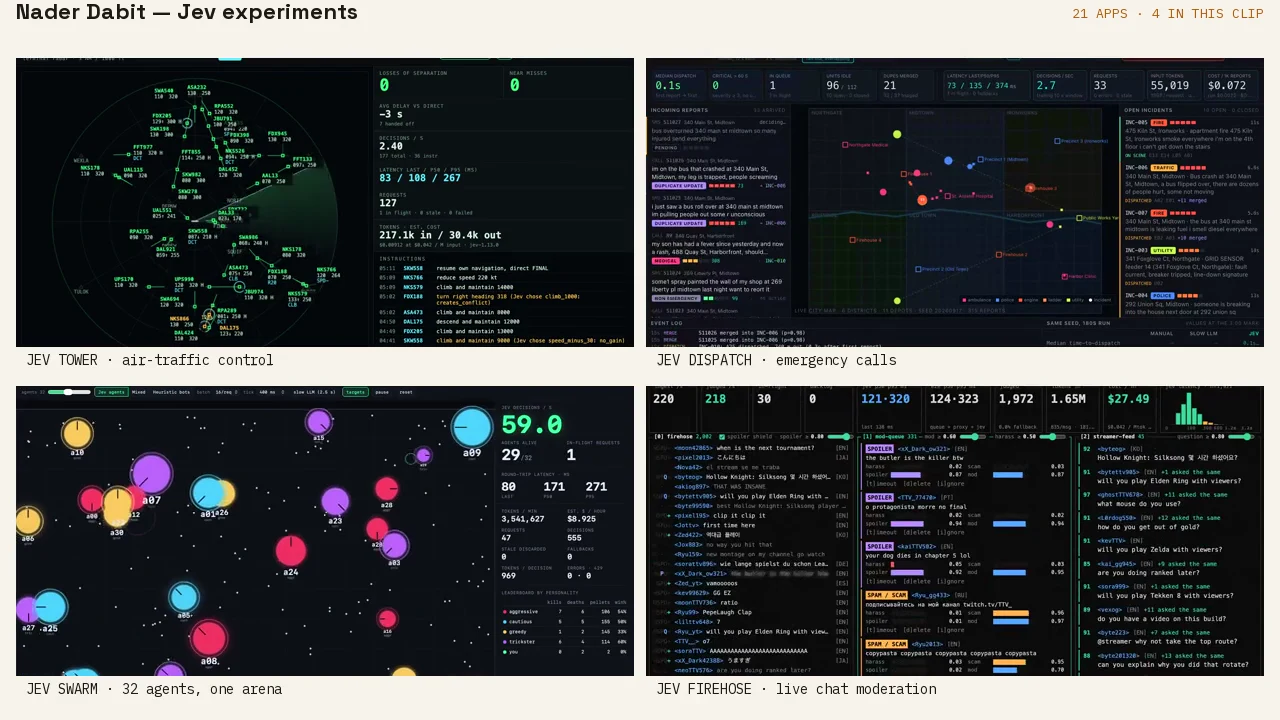
A playful collection of decision demos spanning dispatch, moderation, search, desktop control and a 32-agent arena.
ACTUAL RECORDING12 SEC ↗
Every category, from games and tools to repositories and writeups, traced to a primary source.
Same ideas.
Different paths.
This is the full registry, not just the featured picks. Figures like speed, cost, and stars are maker-reported or captured snapshots, not JevMade measurements.
1611 experiments · showing 1–60
A playful collection of decision demos spanning dispatch, moderation, search, desktop control and a 32-agent arena.
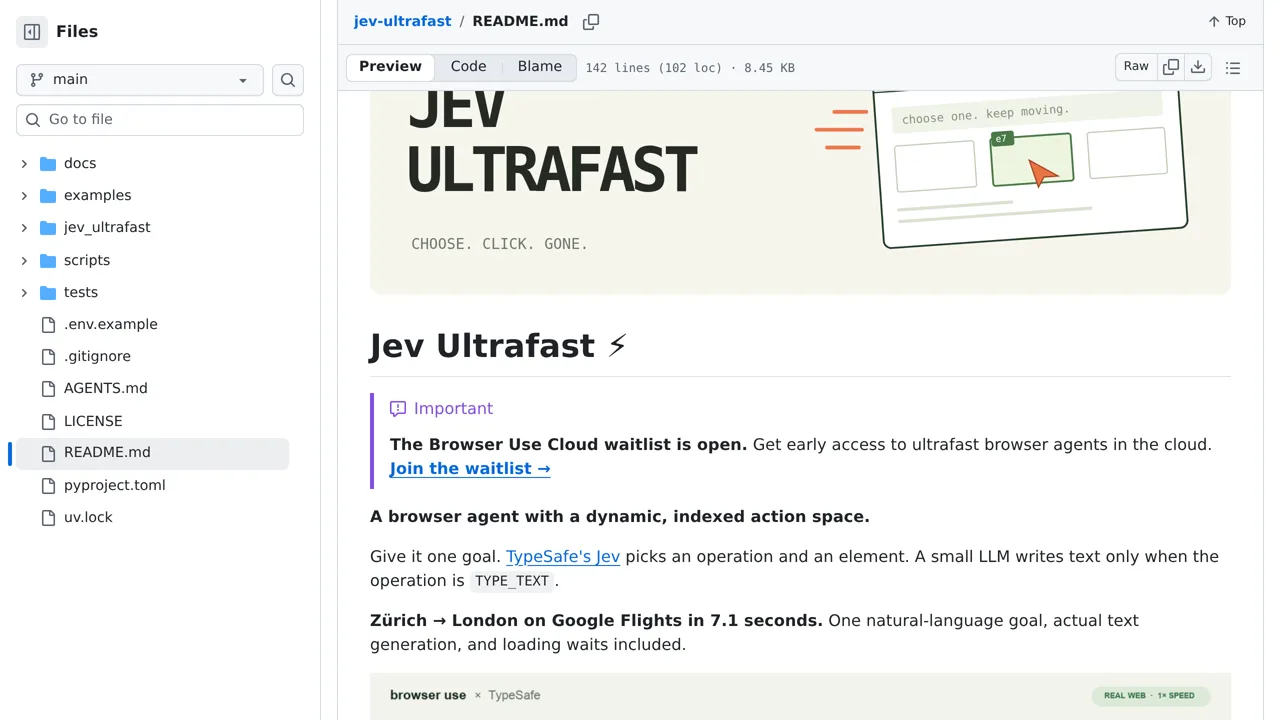
Browser Use's agent asks Jev to choose the next browser operation and target element from a fresh table on every step.
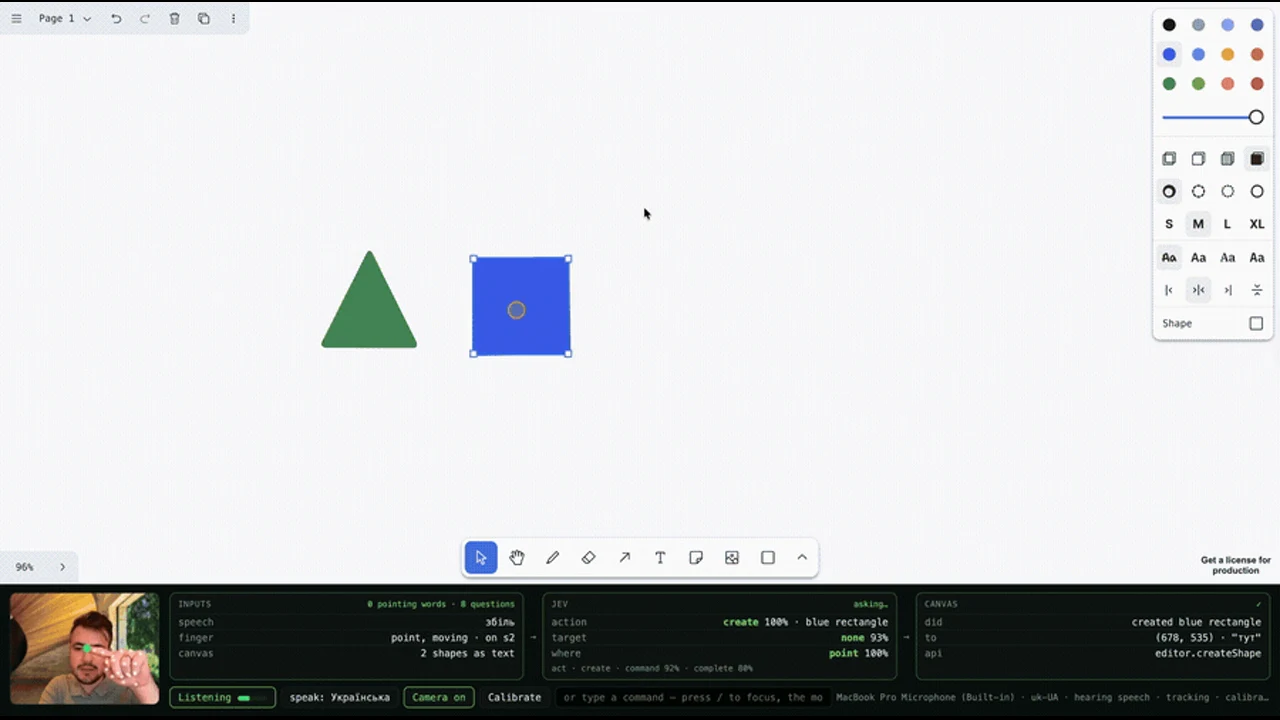
Speak an English or Ukrainian drawing command while pointing, and Jev translates it into an action on a tldraw canvas.
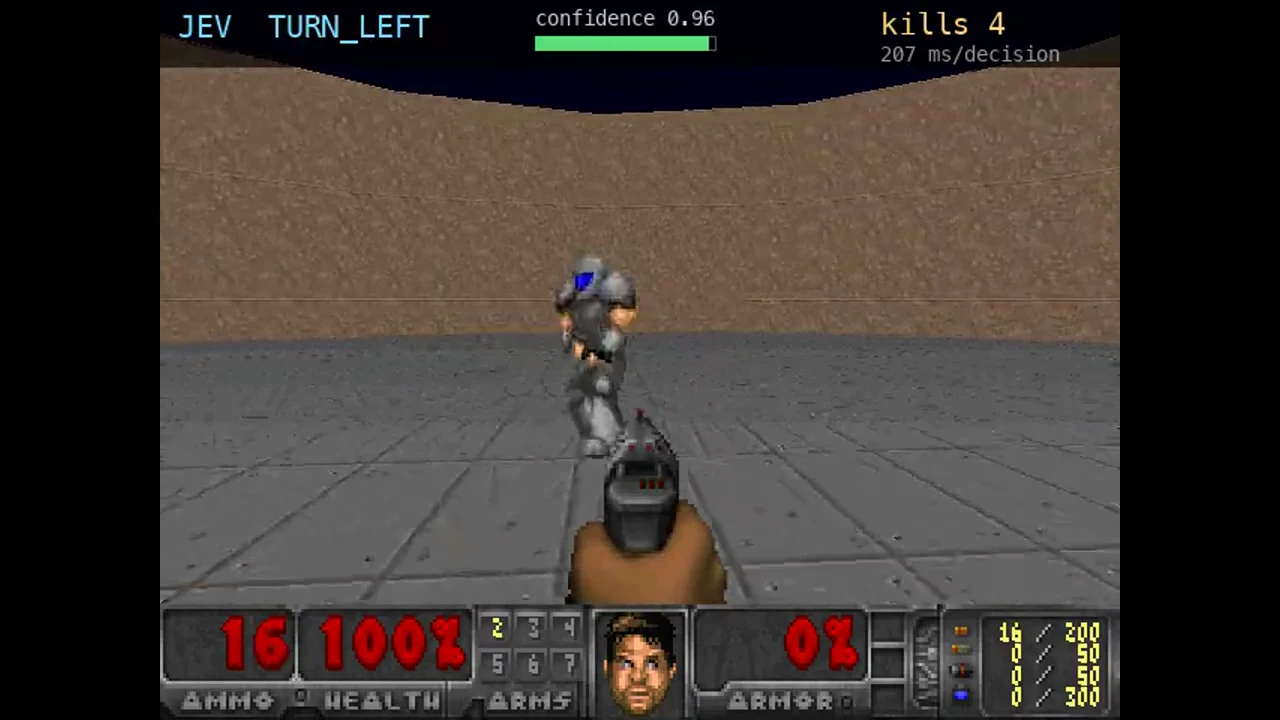
Jev plays headless Doom from object bearings, distances, health, and ammo rather than game frames.
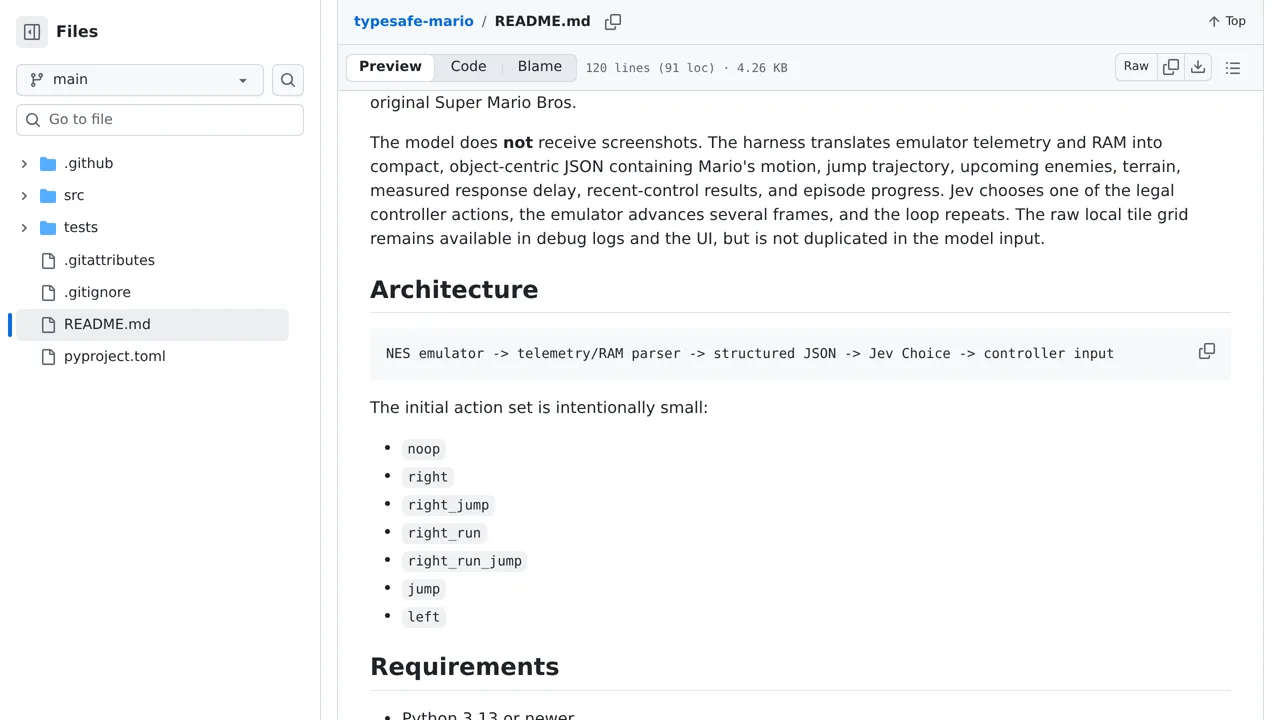
Jev plays NES Super Mario Bros. by choosing controls from emulator state rather than pixels.
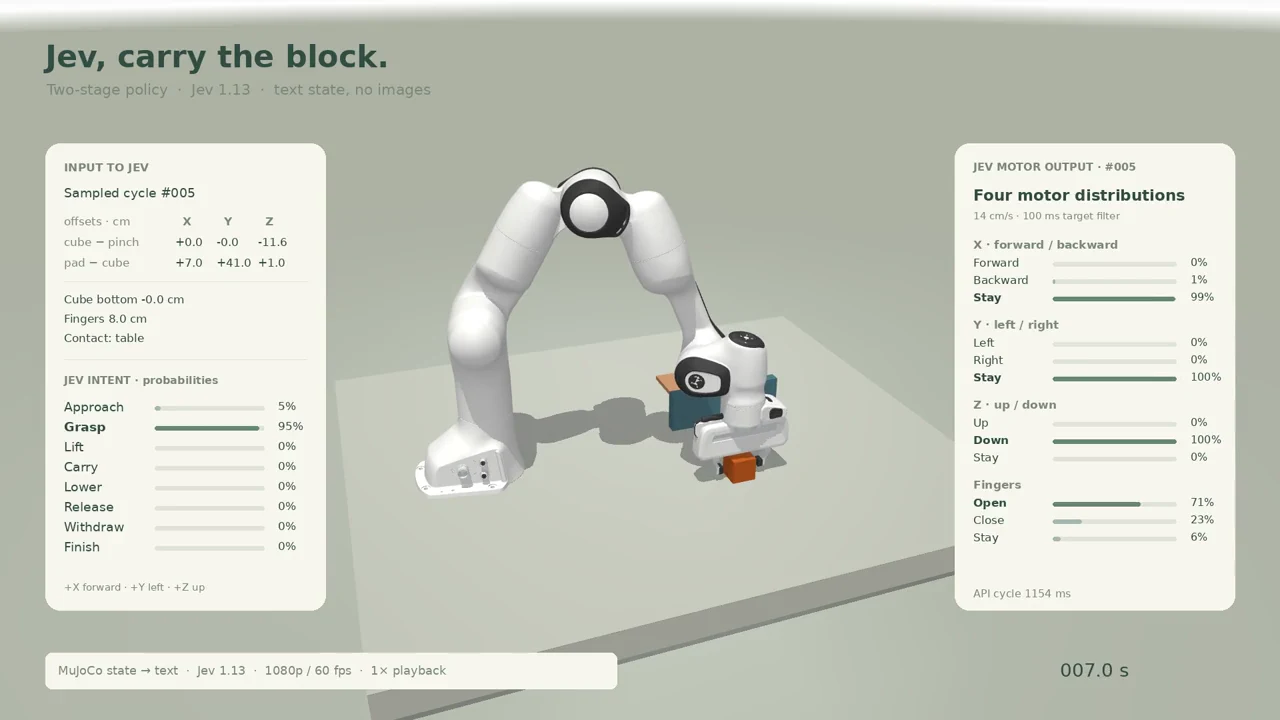
A simulated Panda robot asks Jev how to move a block over a barrier.
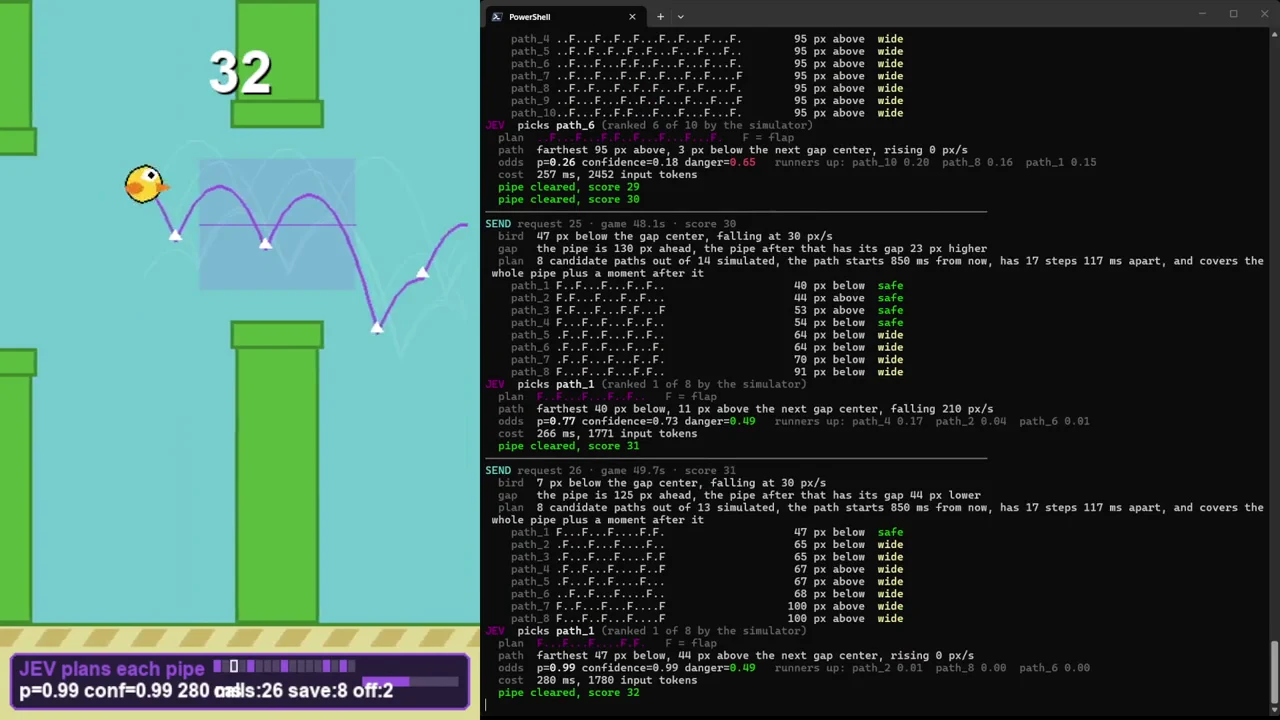
Jev picks a flight path through each pipe, then Flappy Bird turns that route into precisely timed flaps.
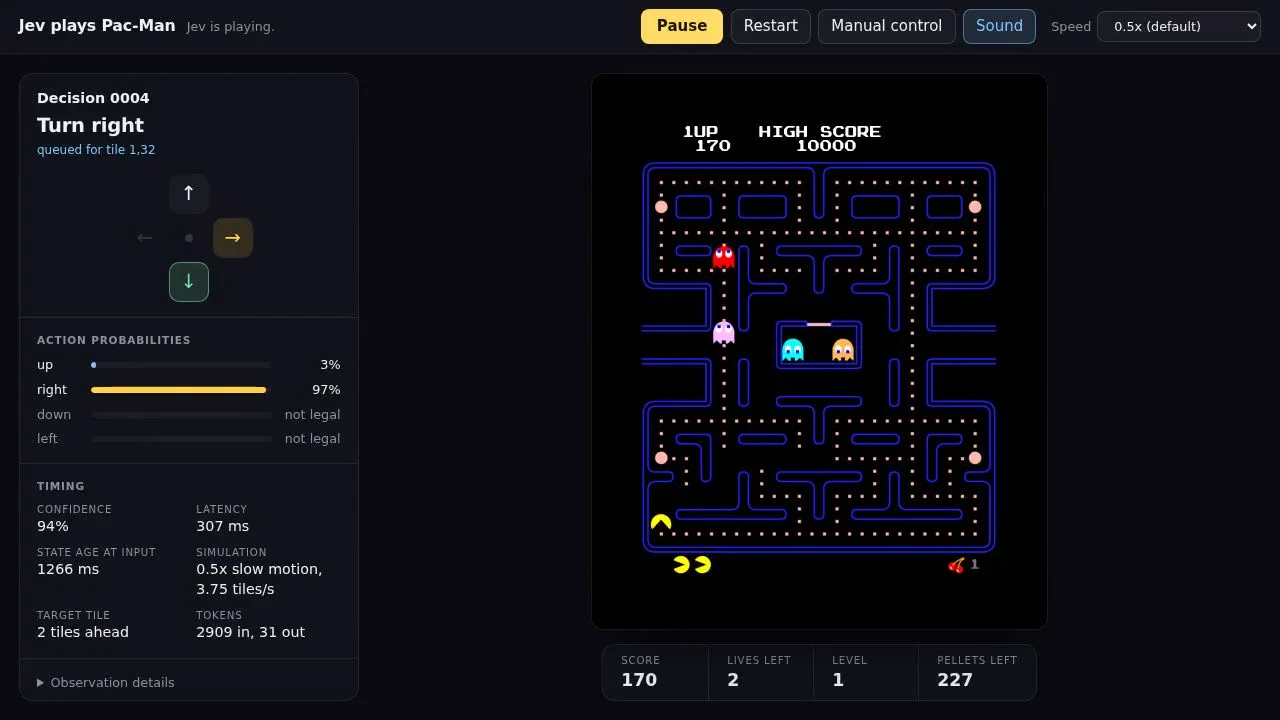
Jev steers a Pac-Man recreation using structured game state.
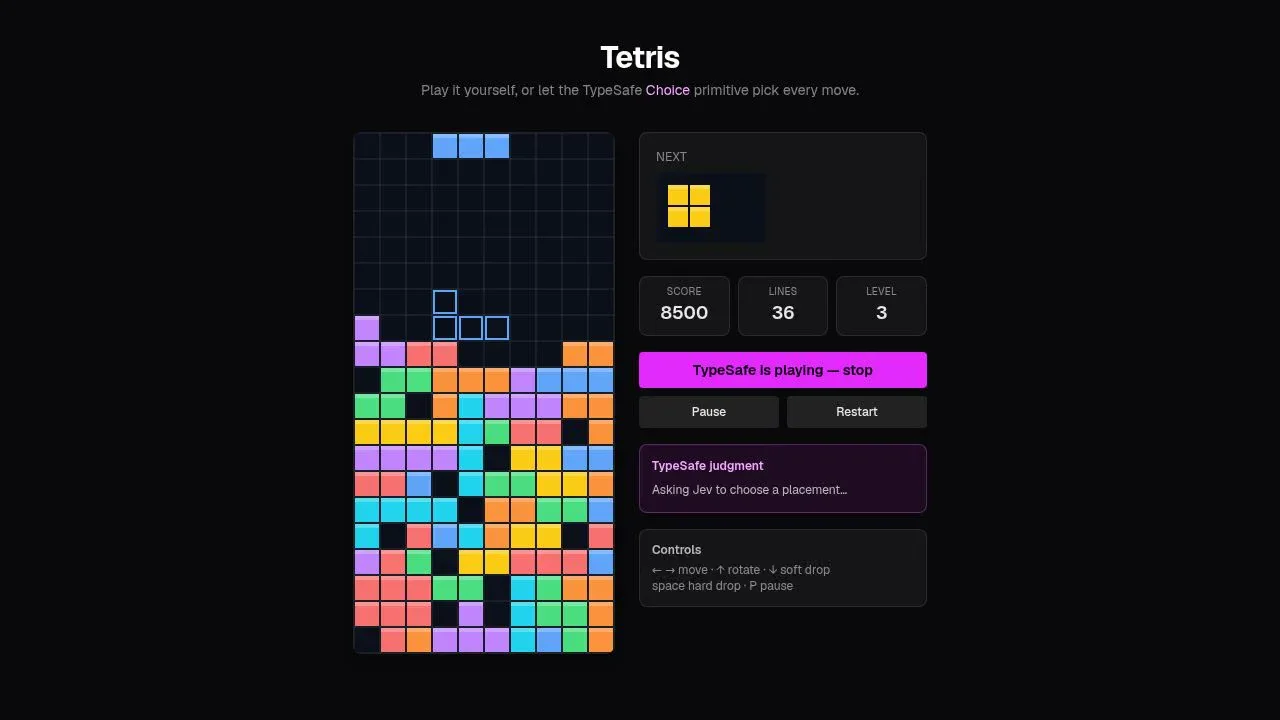
Jev places Tetris pieces by considering holes, stack height and the current board.
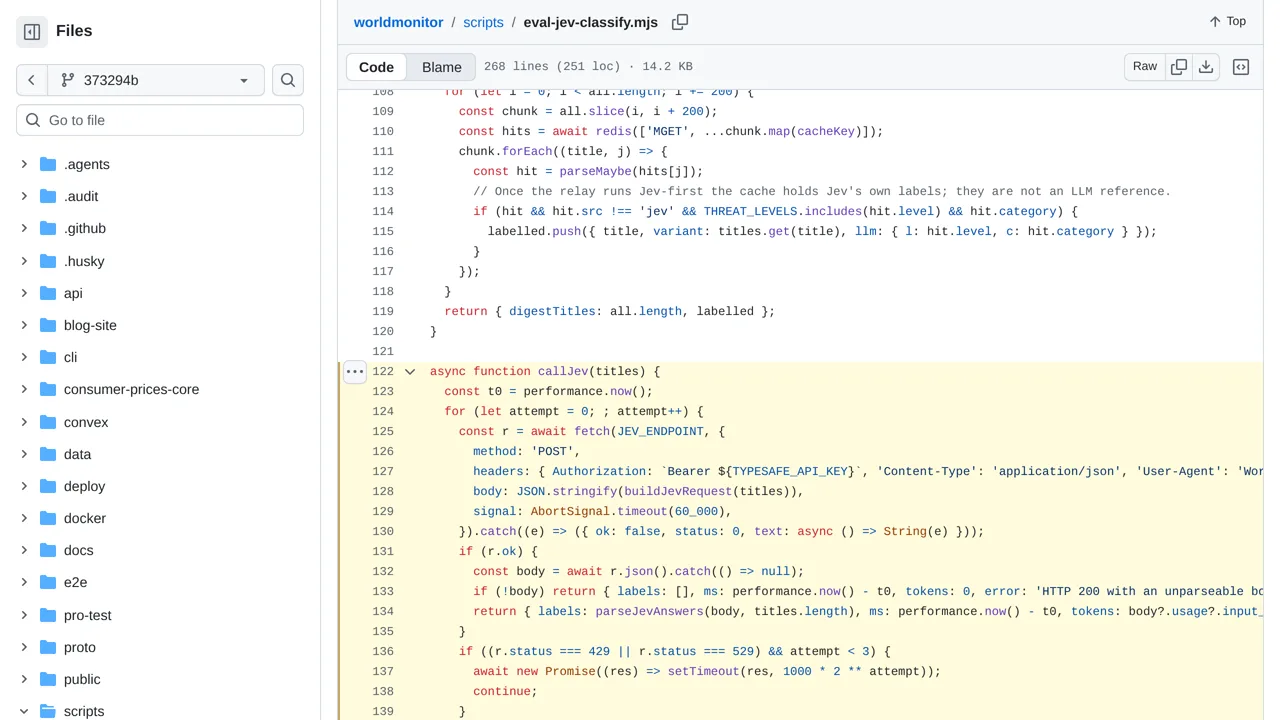
World Monitor benchmarks Jev's headline severity and topic labels against cached labels and a saved judged set.
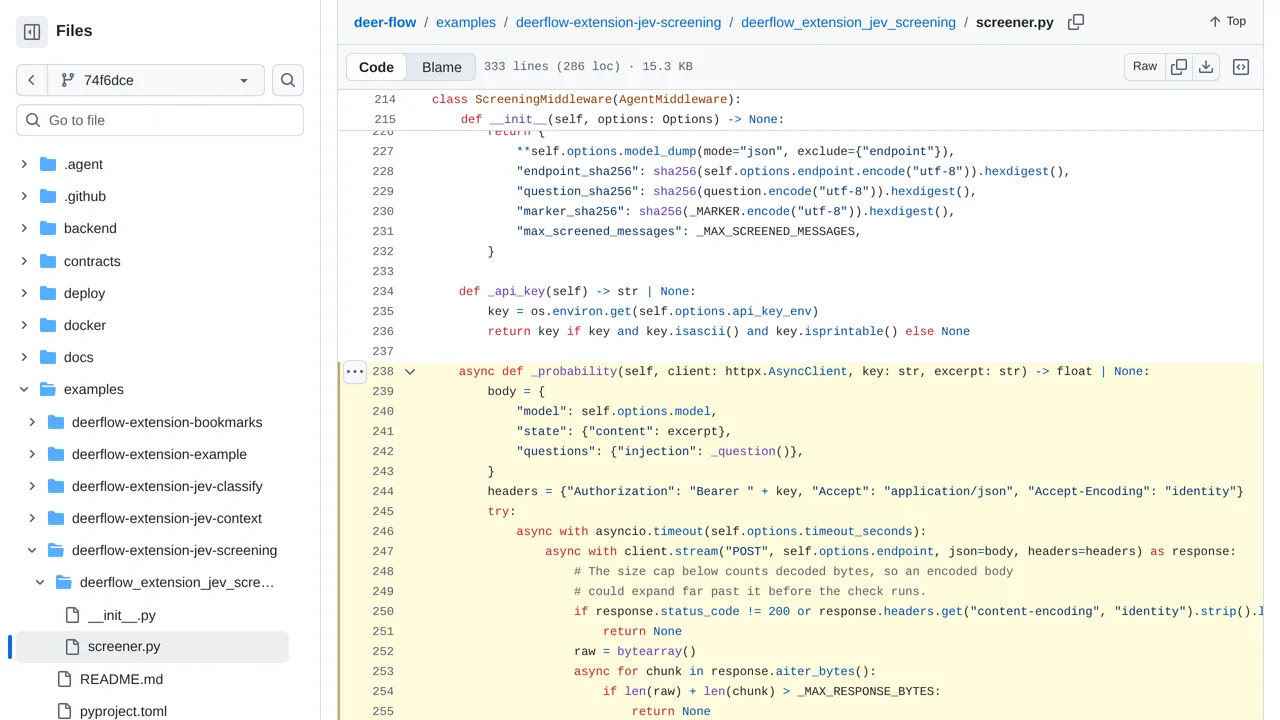
DeerFlow includes opt-in Jev extensions for text classification, prompt-injection screening, and pruning old tool results.
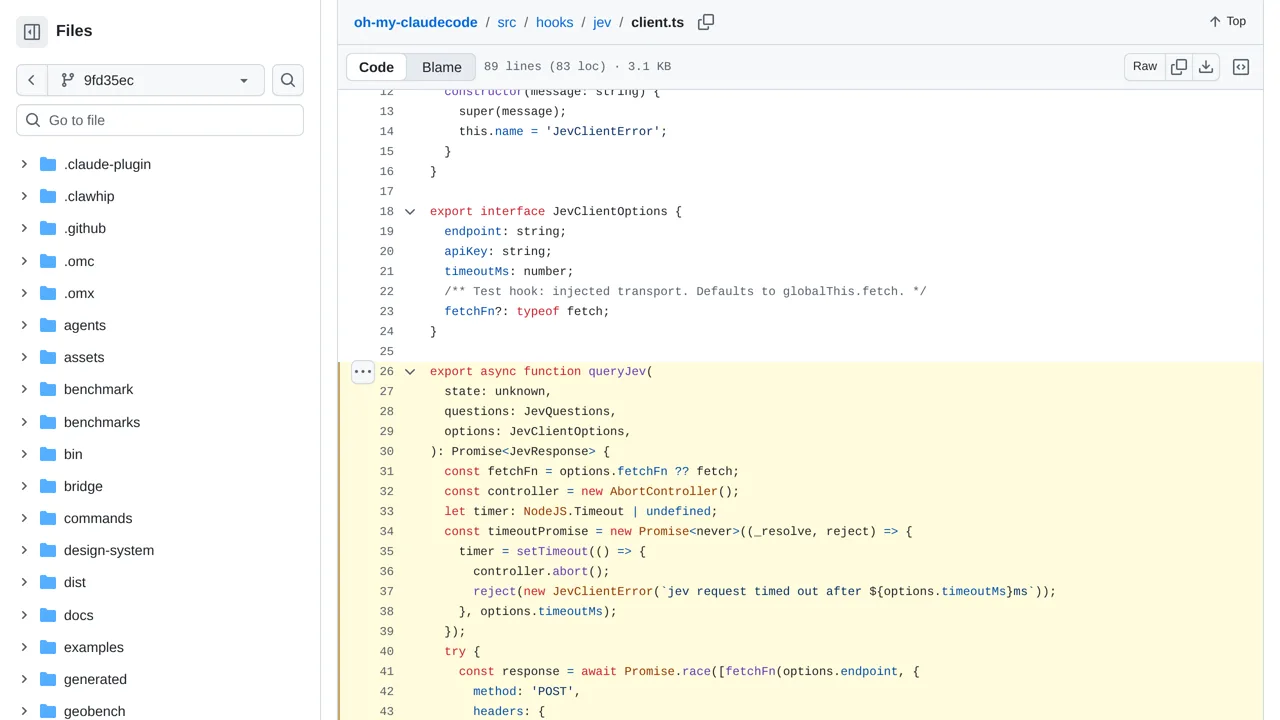
Oh My ClaudeCode can compare Jev with its existing coding-agent heuristics in shadow mode, then optionally let Jev make those decisions while retaining the original behavior as a fallback.
Oh My Pi lets coding agents use Jev for structured decisions such as choosing an option or scoring a candidate.
A Composio provider that asks Jev which tool to use and which arguments to supply.
Demonstrates a bounded Jev action chooser inside Cua Driver loops, with mock and credentialed live paths.

Run Convai Innovations' open-weight typed-decision model locally with a Jev-shaped request format; Laya is an independent model, not TypeSafe's Jev.
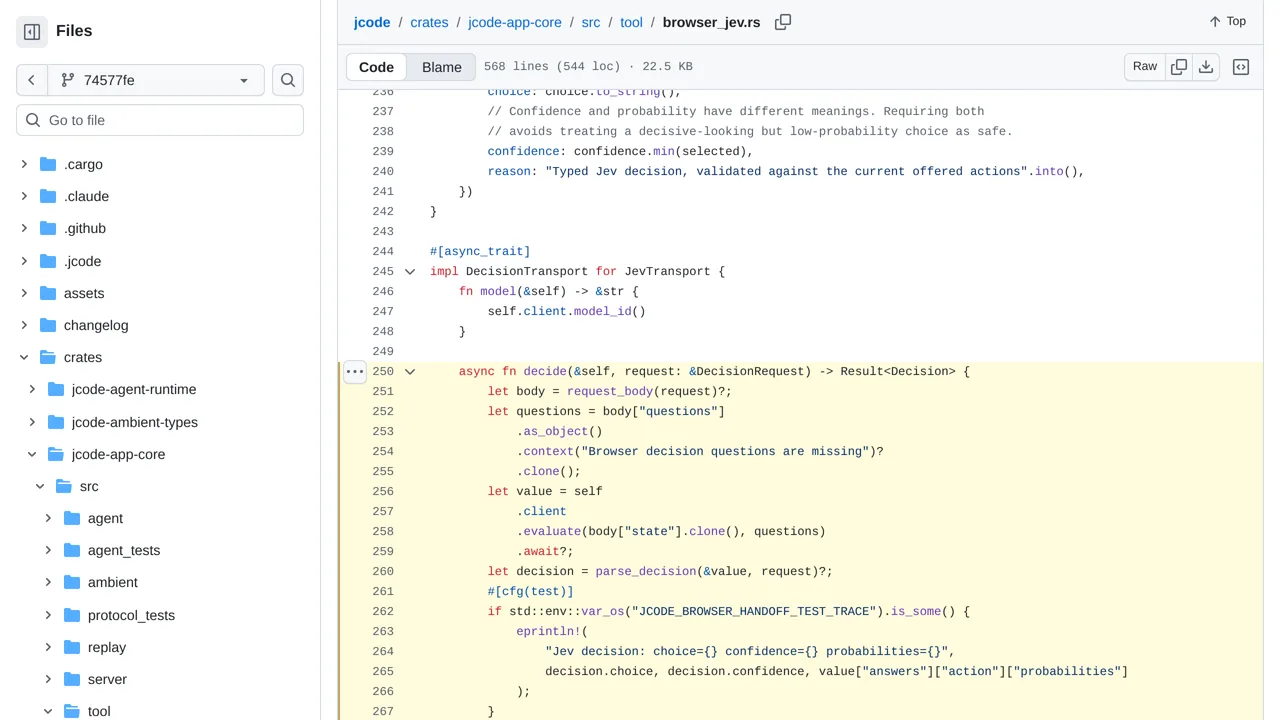
jcode lets its fast browser agent ask Jev to choose the next move from the actions currently on screen.
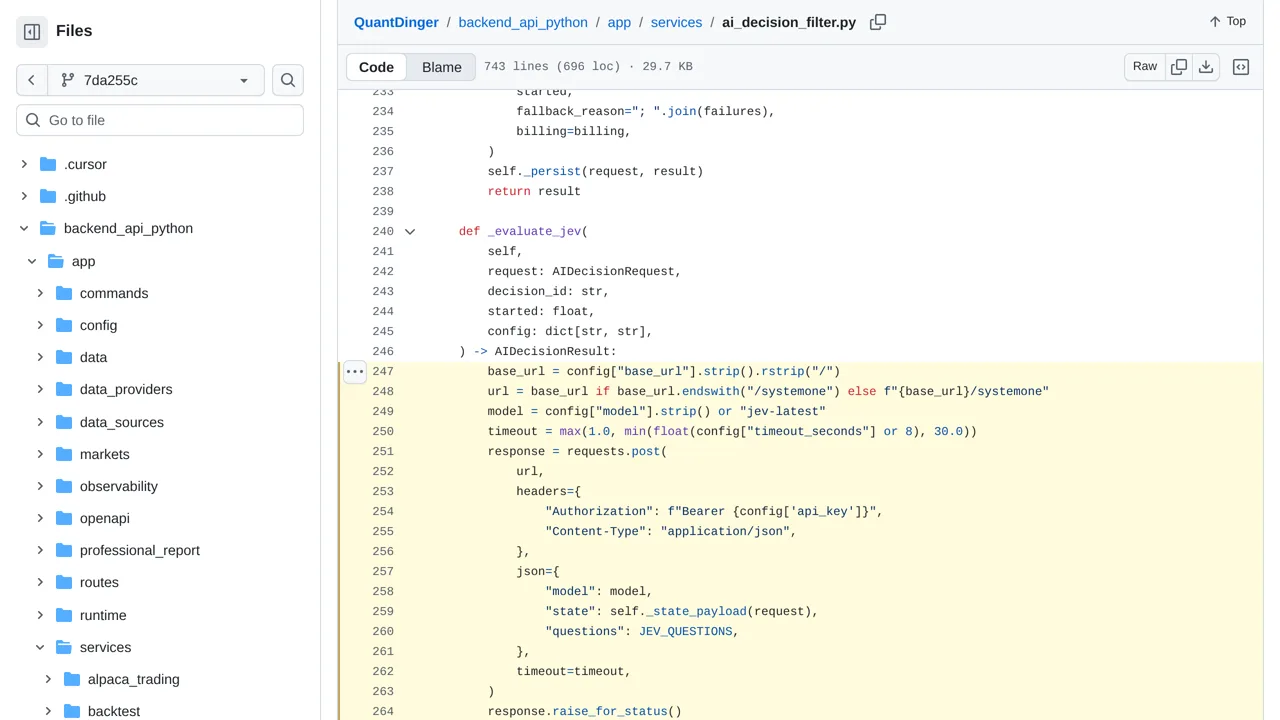
QuantDinger can ask Jev to review a live trade entry before the order proceeds.
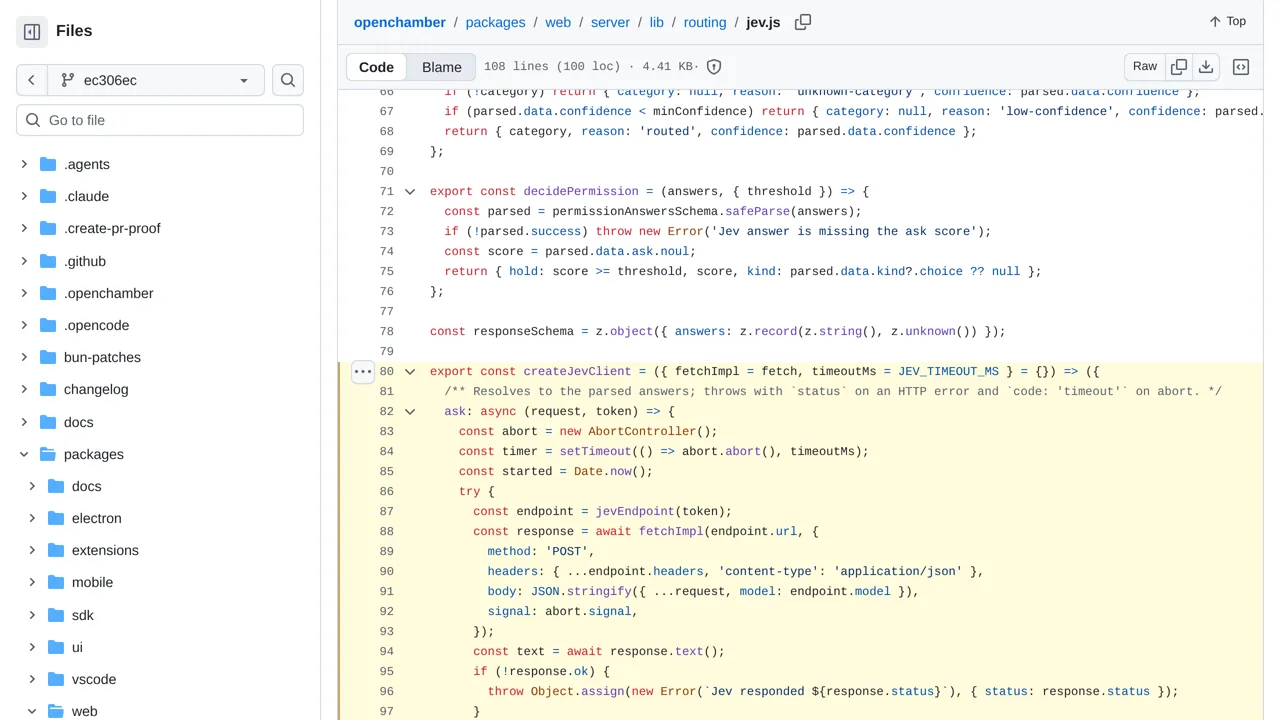
OpenChamber asks Jev to choose a model for Auto sessions and, when enabled, flag risky tool permissions for human review.
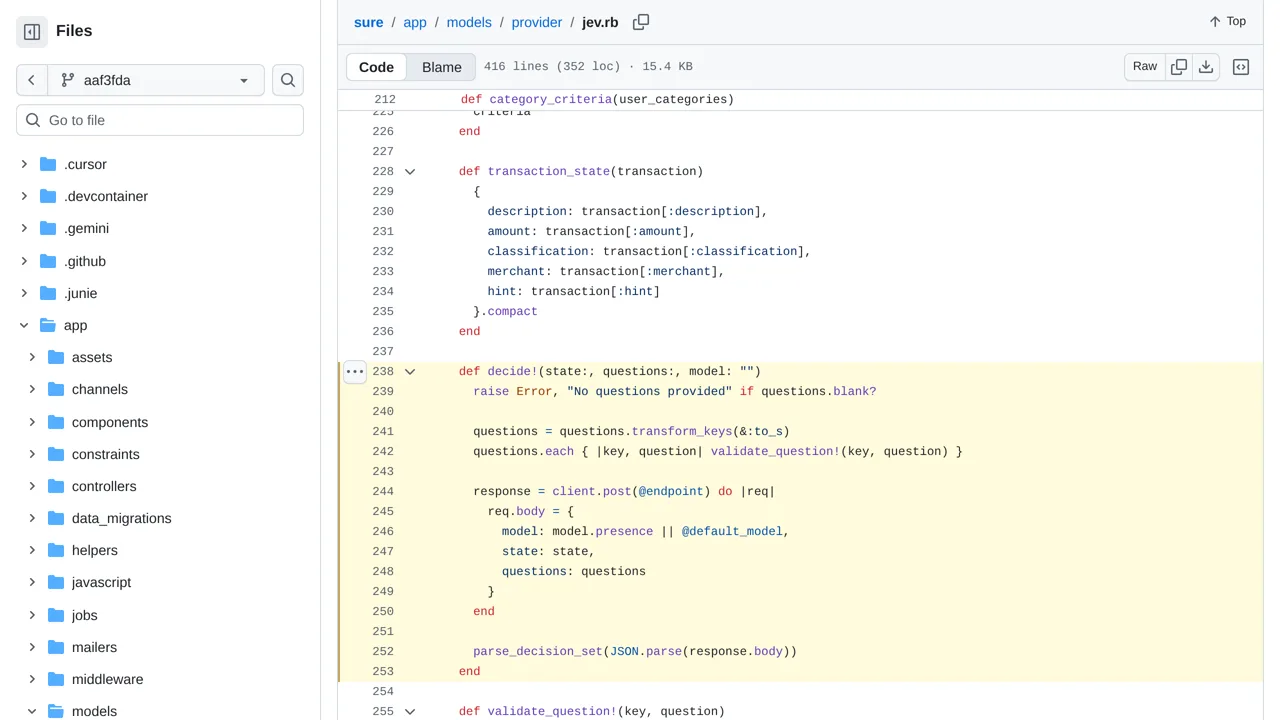
Sure can ask Jev to sort bank transactions into a family's categories and benchmark those choices against labeled examples.
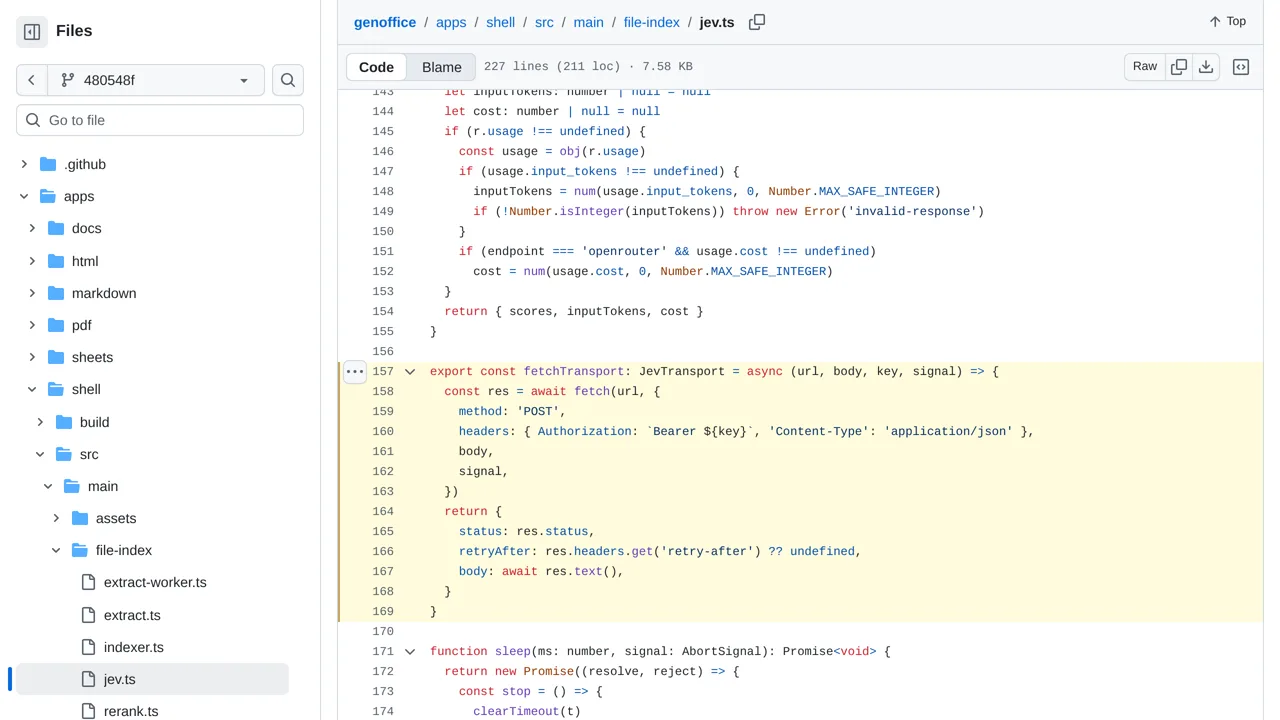
GenOffice can ask Jev to reorder local search results by how well each document excerpt matches a query.
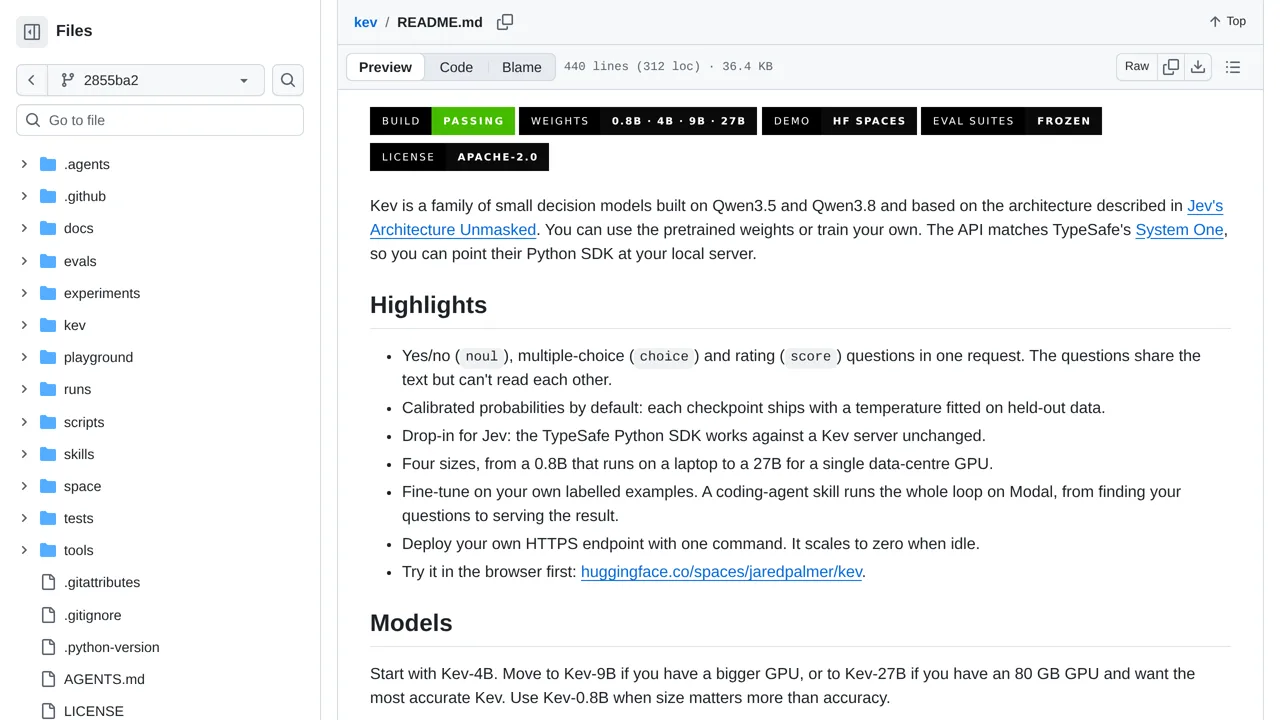
Train and self-host Qwen-based decision models that answer Jev-style typed questions in one pass; kev is an independent implementation, not Jev.
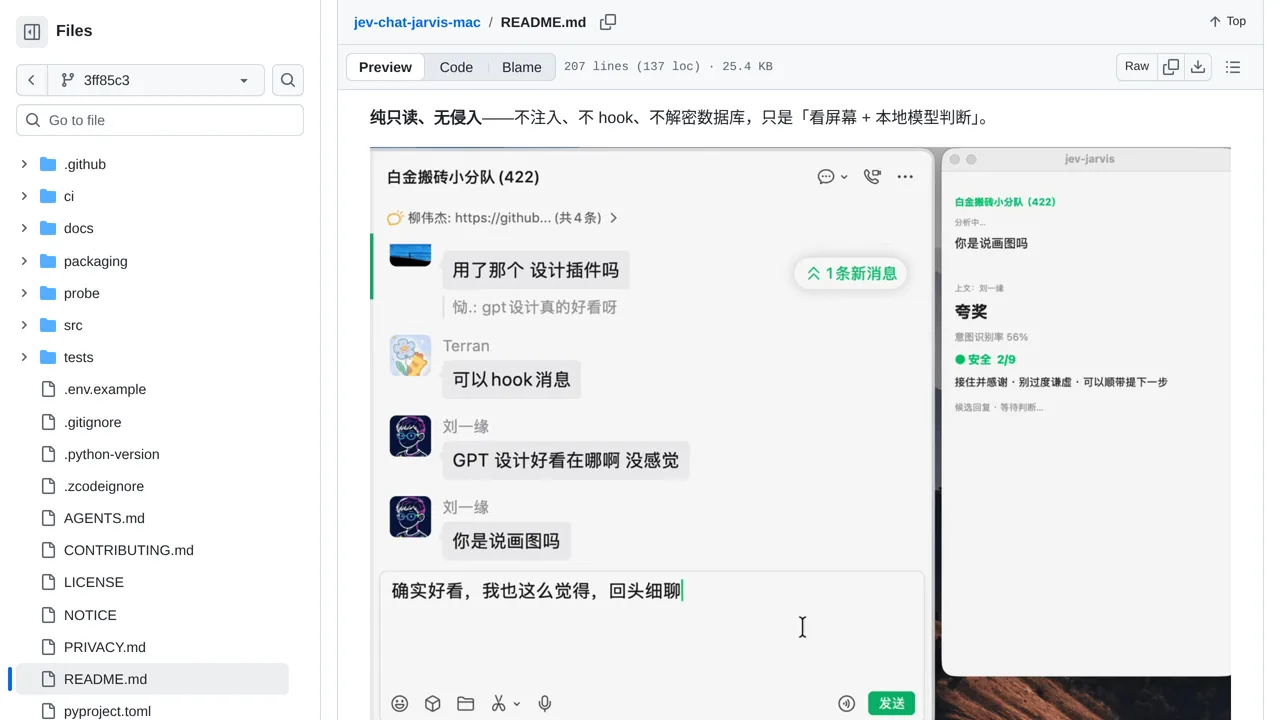
Reads supported Android chat screens, judges conversational intent, and offers replies that users may fill before sending manually.

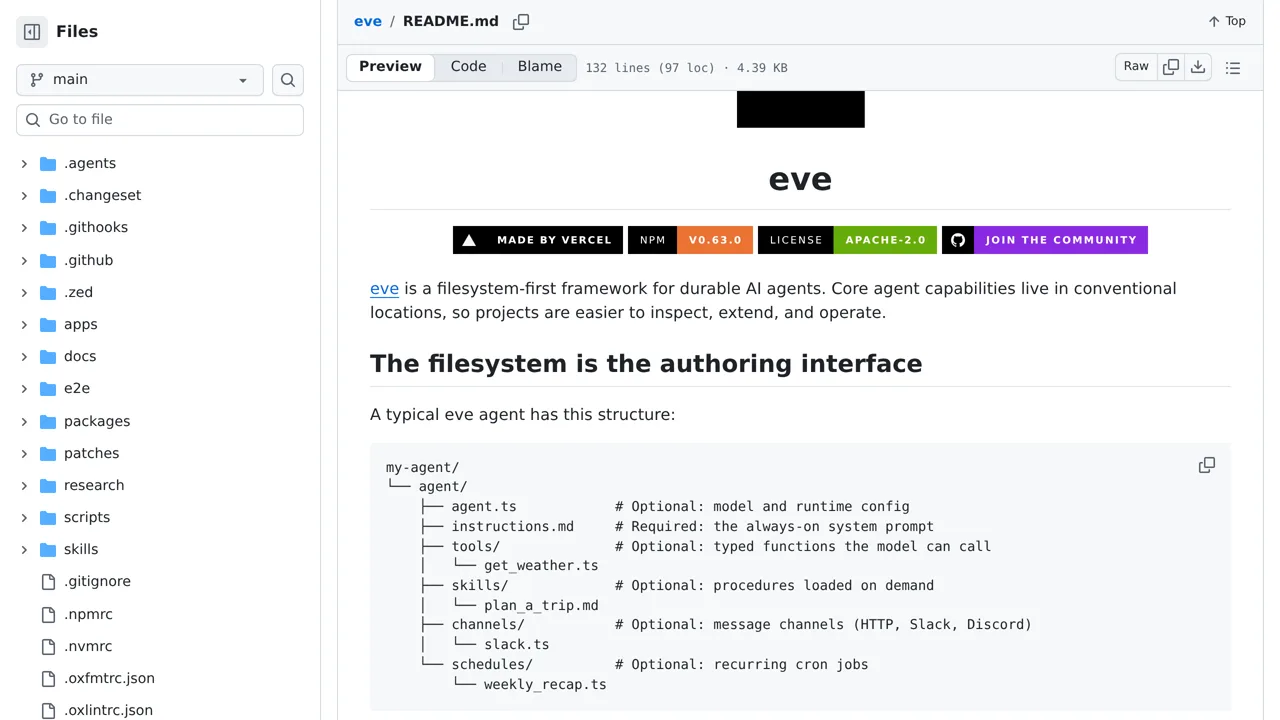
Vercel's open framework for building agents.
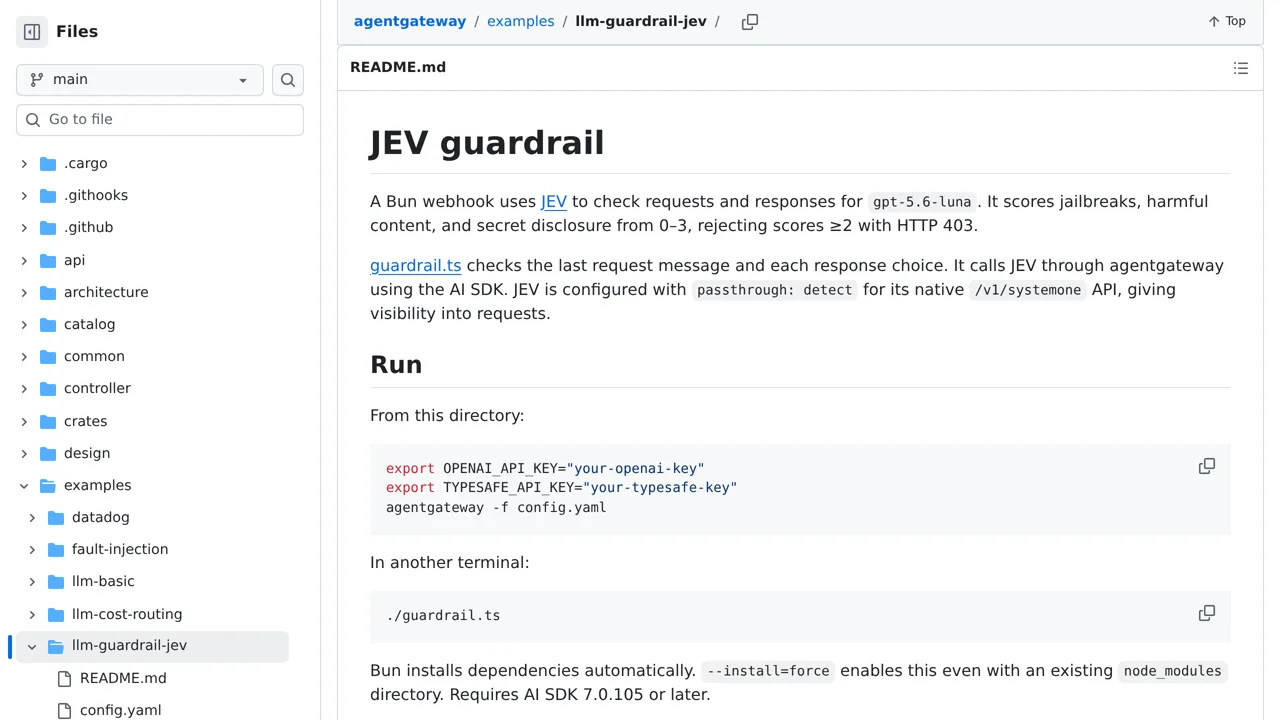
An agentgateway example that screens LLM requests and responses with Jev guardrails.
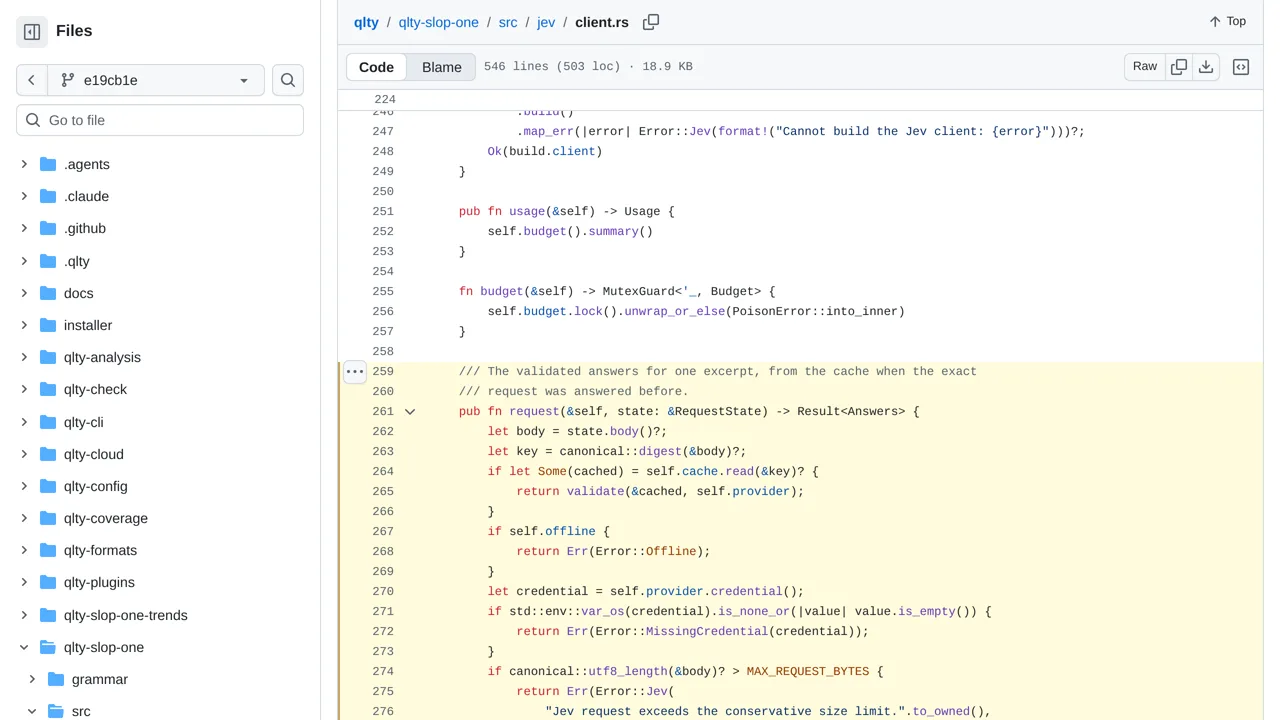
Qlty Slop One asks Jev to score code-quality traits in source excerpts, then rolls those scores into per-file reports.
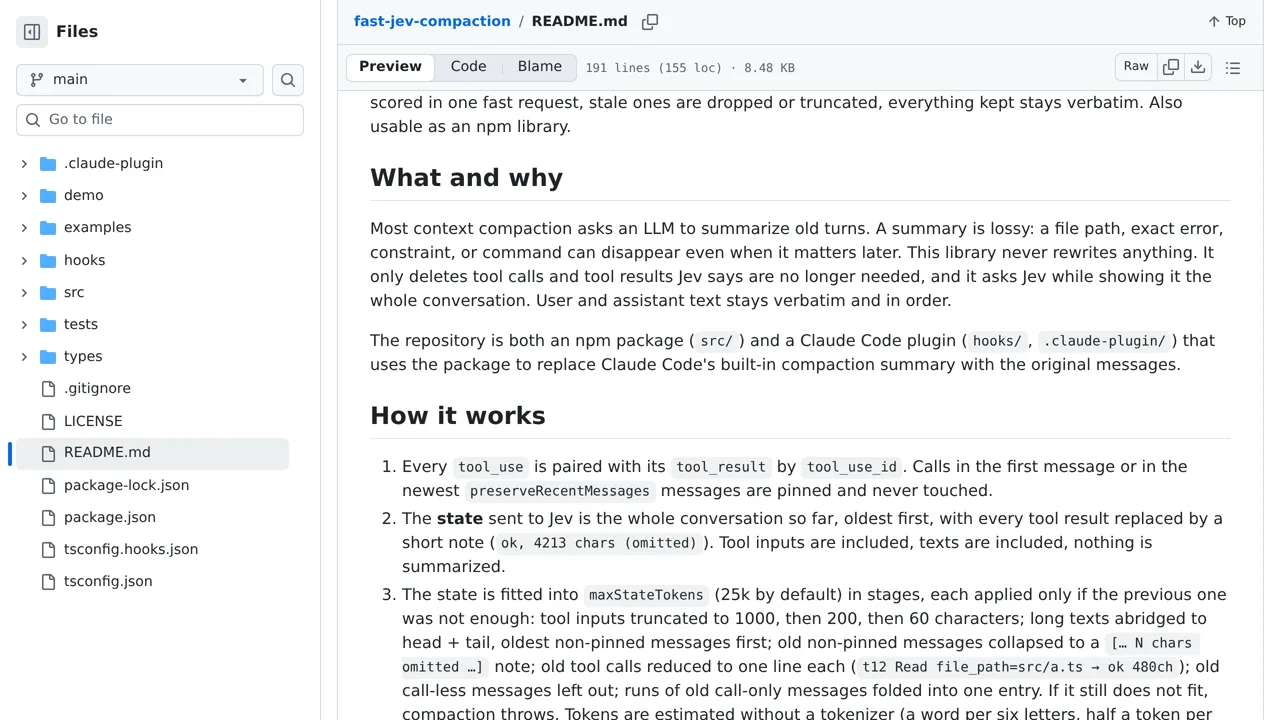
A Claude Code plugin that uses Jev to decide which context survives compaction.
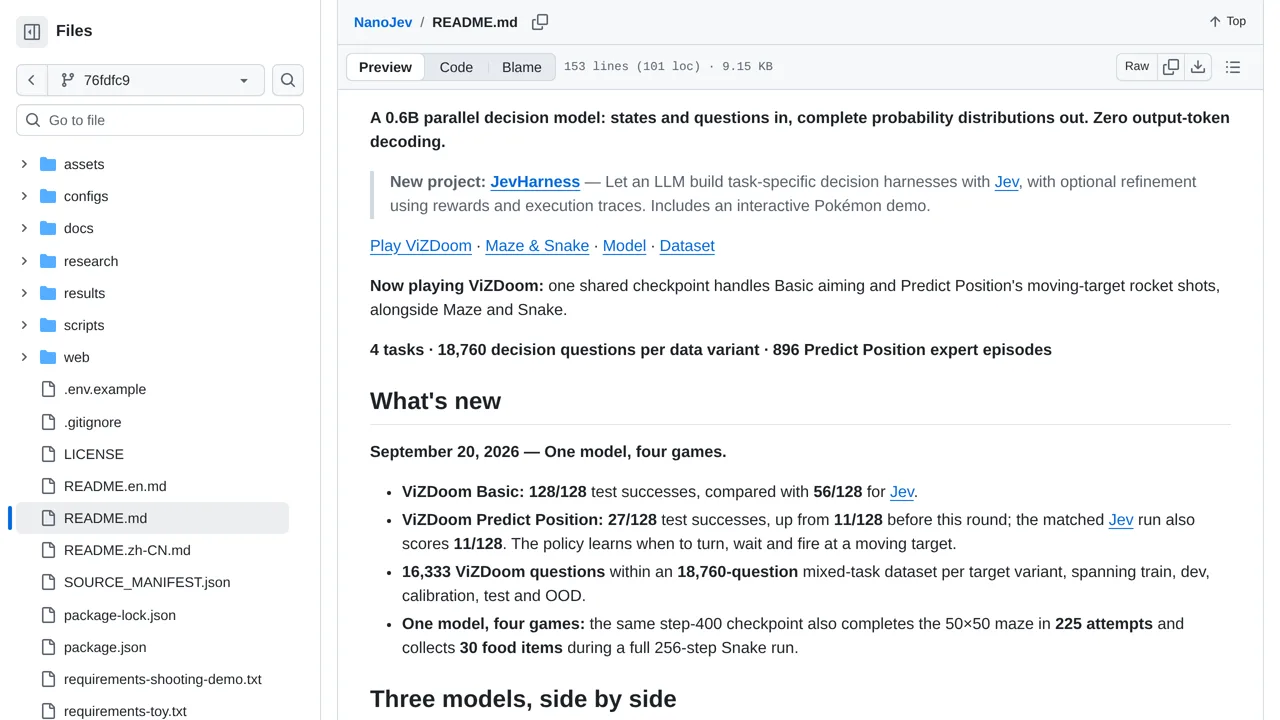
NanoJev trains a 0.6B parallel decision model and compares it with Jev across maze, Snake, and ViZDoom tasks.
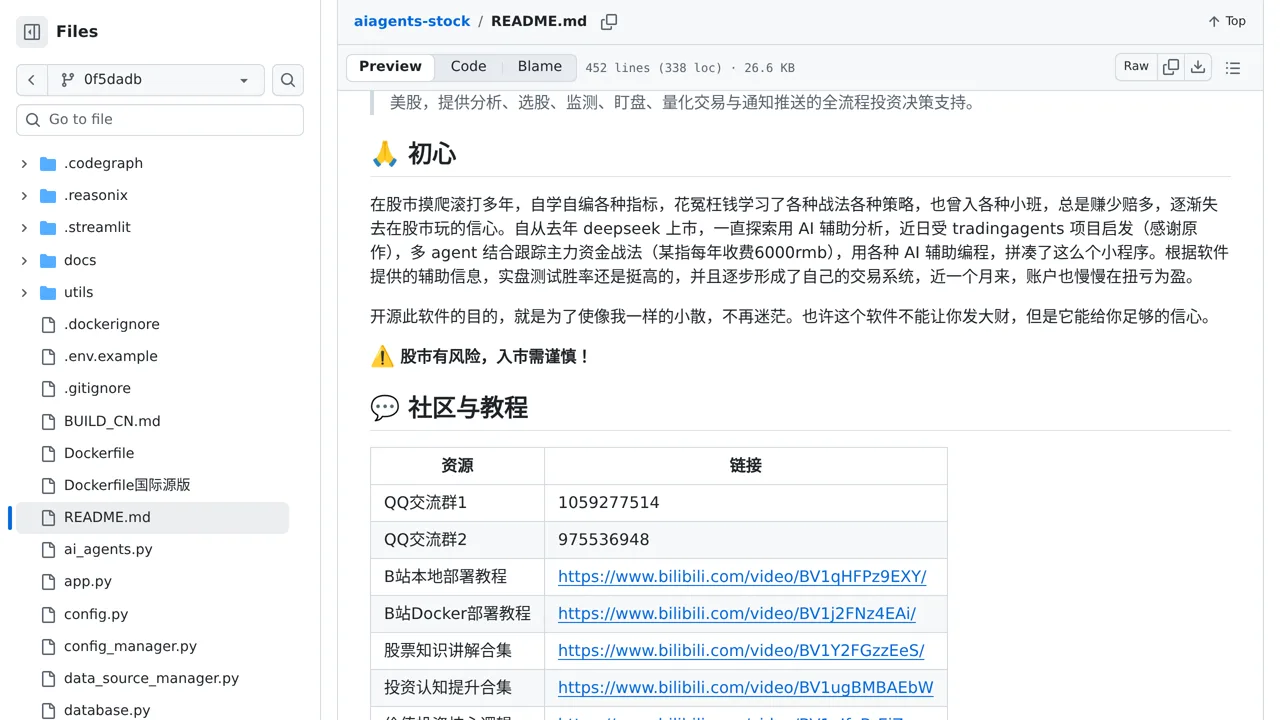
An AI stock-research team that can use Jev to rate an investment and flag risks before writing its report.
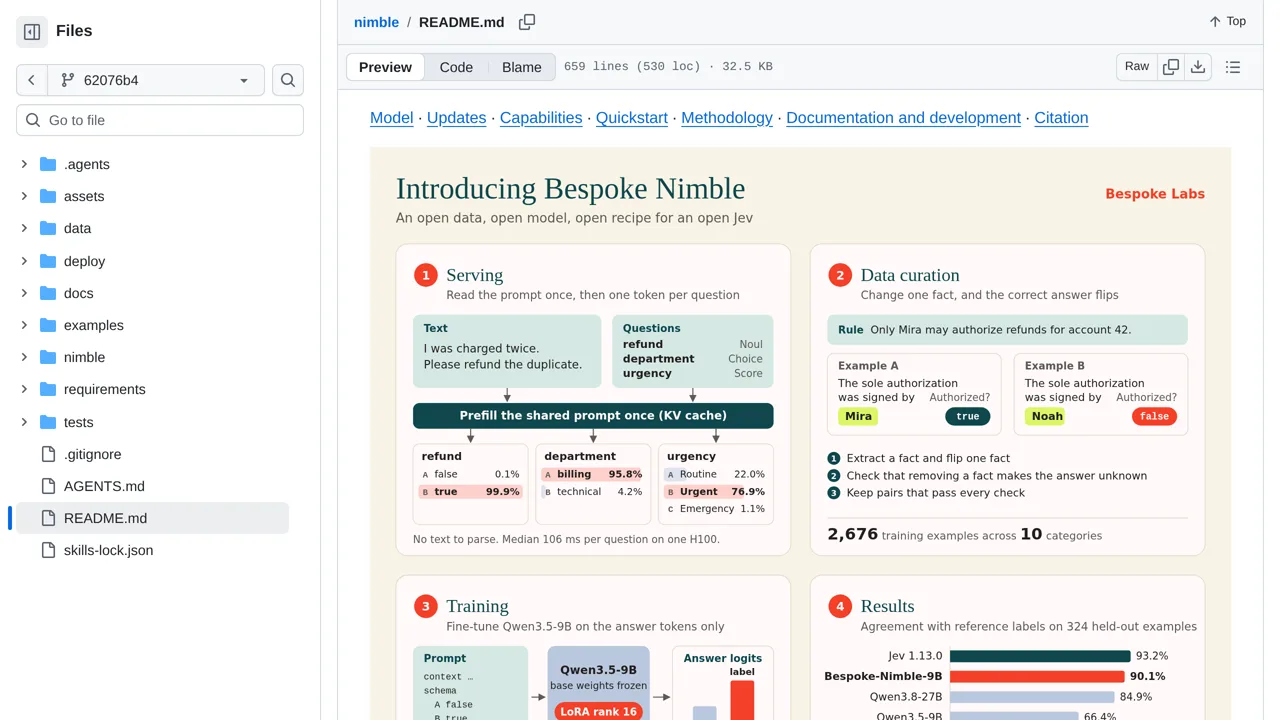
Nimble compares Jev's typed probabilities with locally trained schema adapters on curated decision datasets.
LLM Gateway uses Jev to route model requests and check text against moderation categories.
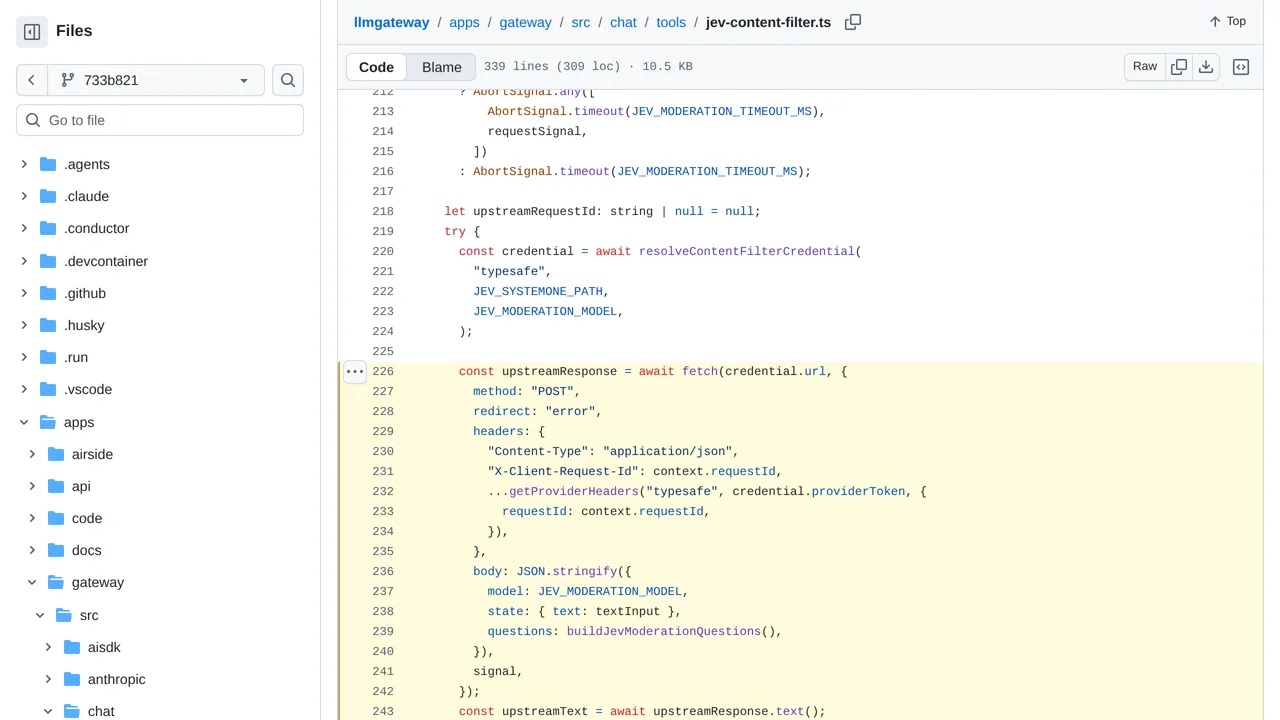
SemIf runs open models locally as probabilistic semantic conditionals on an RTX 3090.
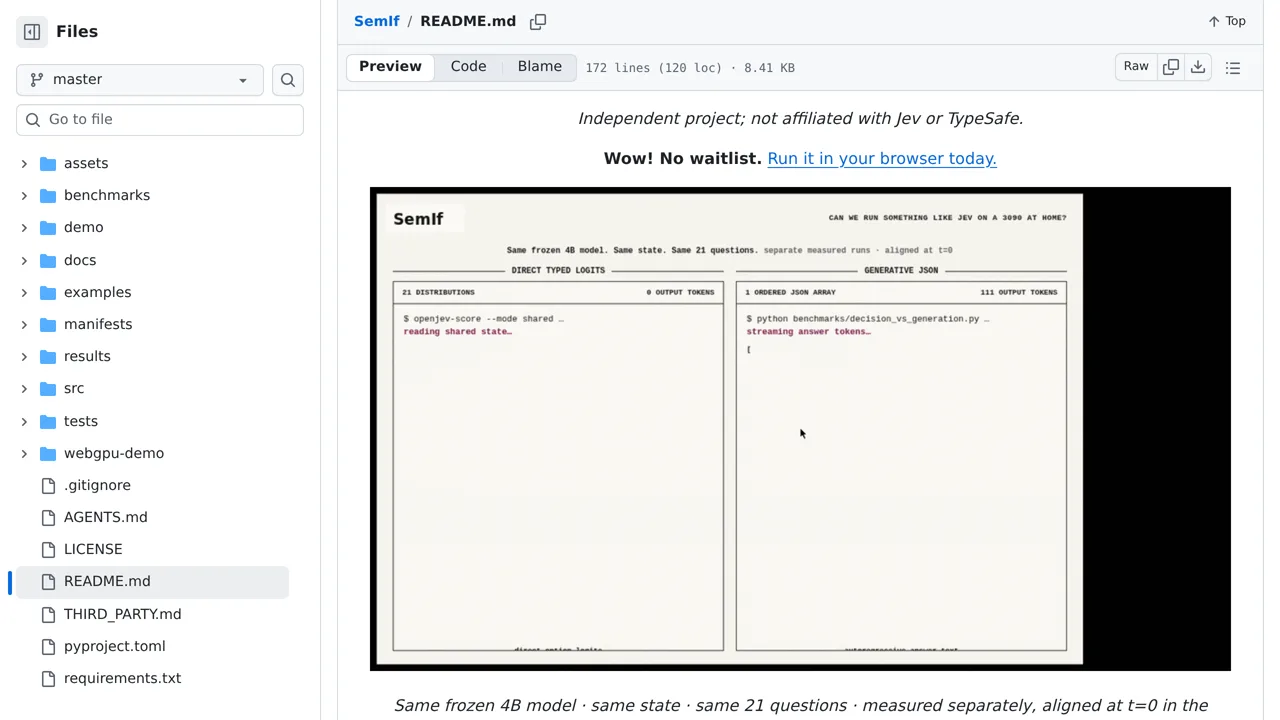
Play Snake or request typed decisions from Core ML ports of Laya on Apple hardware; the models are open-weight alternatives, not Jev.
Drive a Mac through its accessibility tree, with Jev choosing an operation and a live element on each turn.
Mediary Scout filters irrelevant and adult-content media before those candidates reach more expensive workflow stages.
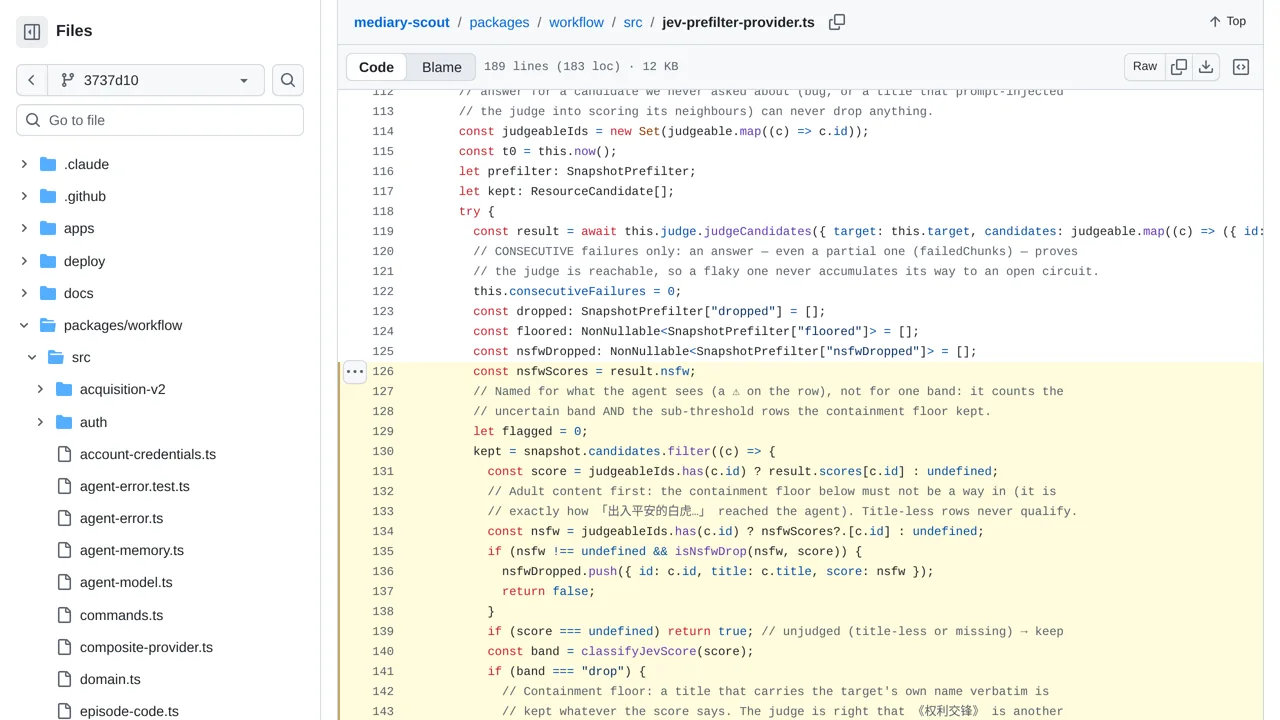
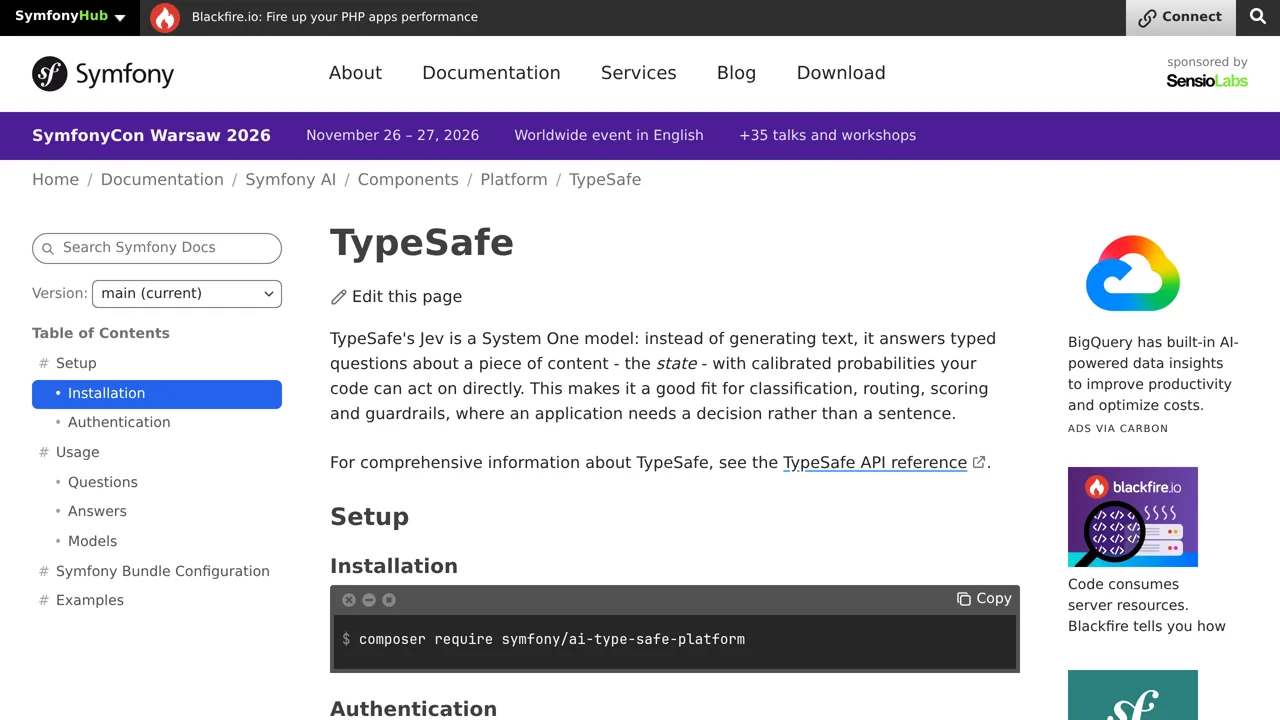
Symfony's first-party bridge for asking Jev several choice, score and yes-or-no questions about one shared state.
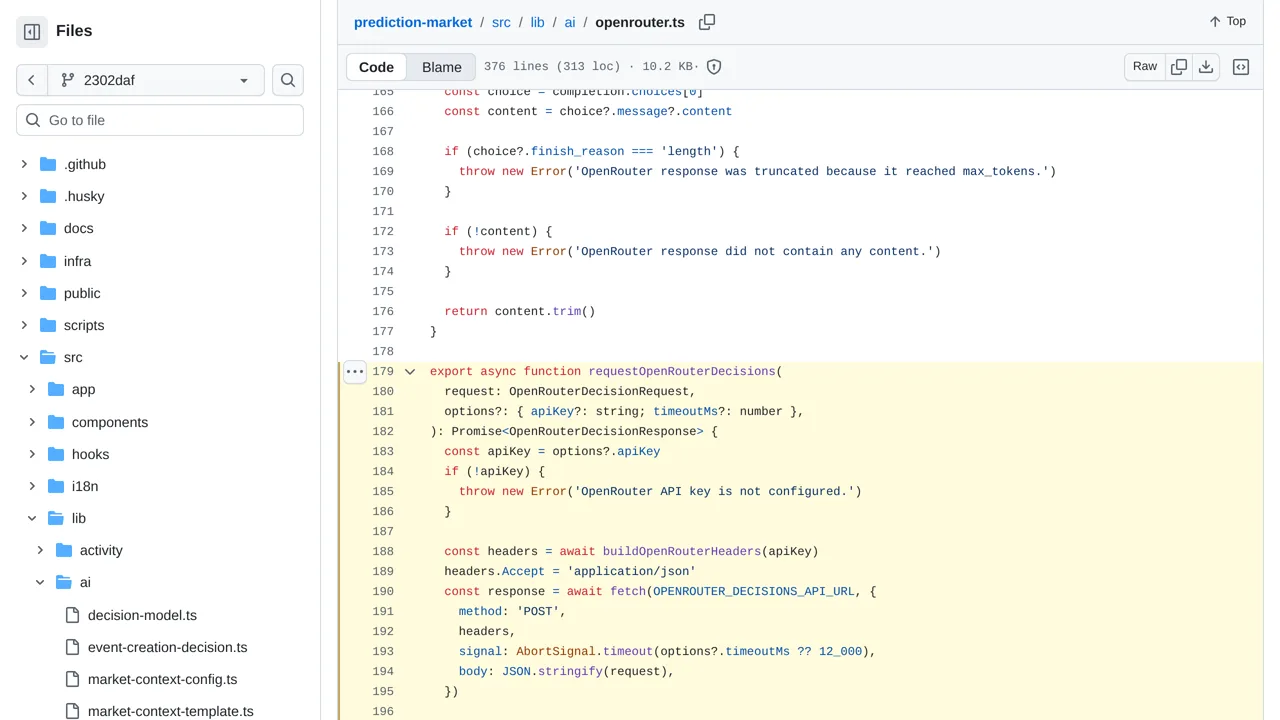
Kuest asks Jev to spot unclear prediction-market rules and rank useful context for a draft.
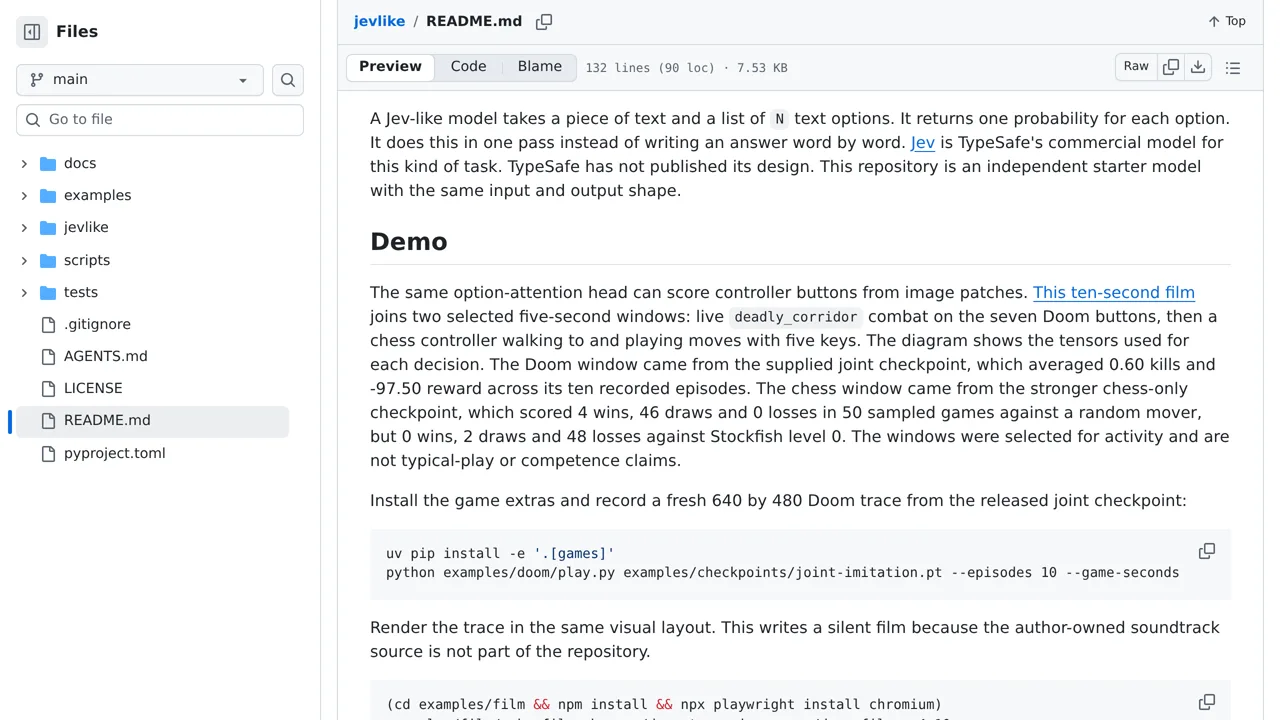
Jevlike trains a compact model to choose among a list of text options that can change from request to request.
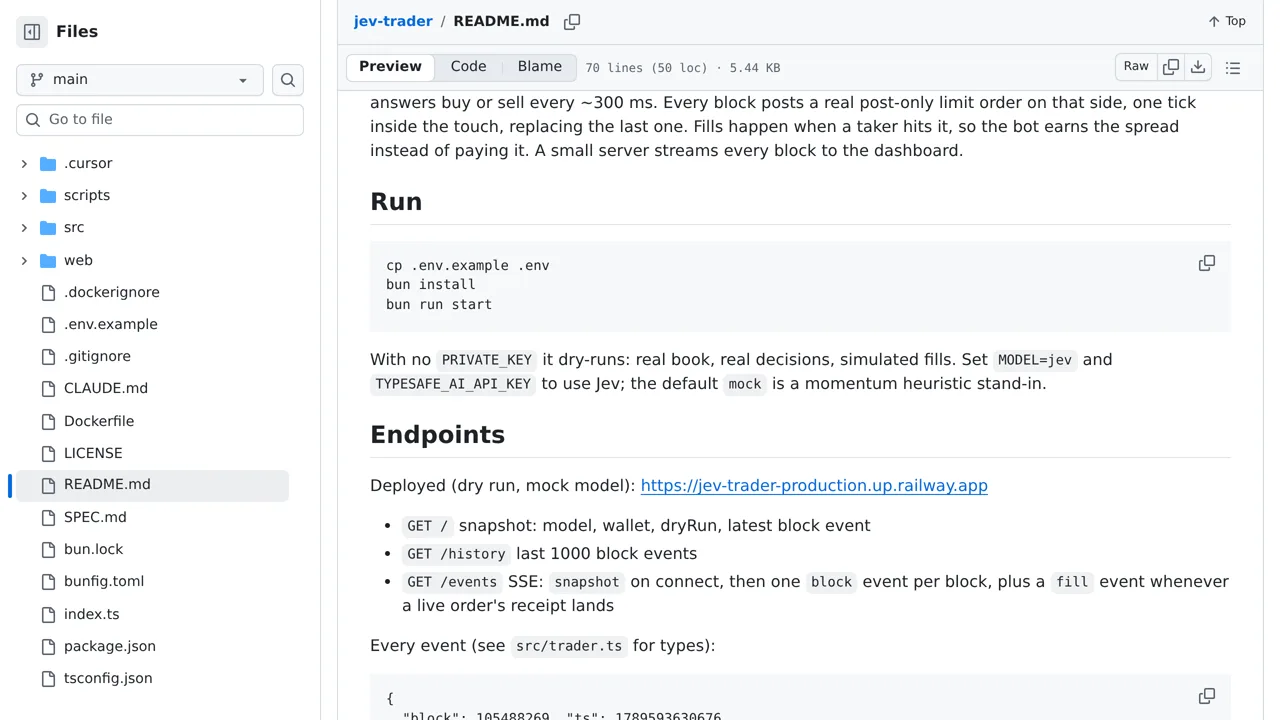
A trading bot asks Jev what to do on every Monad block.
A Vercel Labs command-line tool for generating content from the terminal.
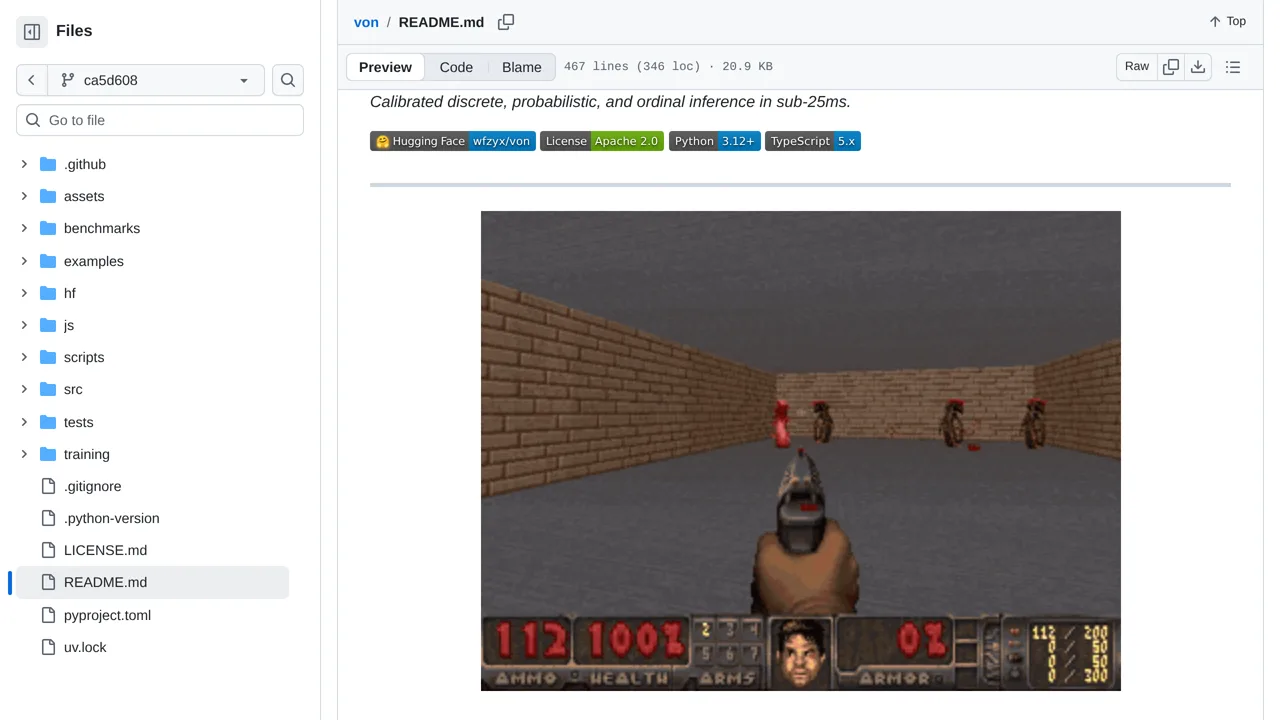
Run a local, non-autoregressive System One model behind Python and JavaScript clients compatible with Jev’s request shape.
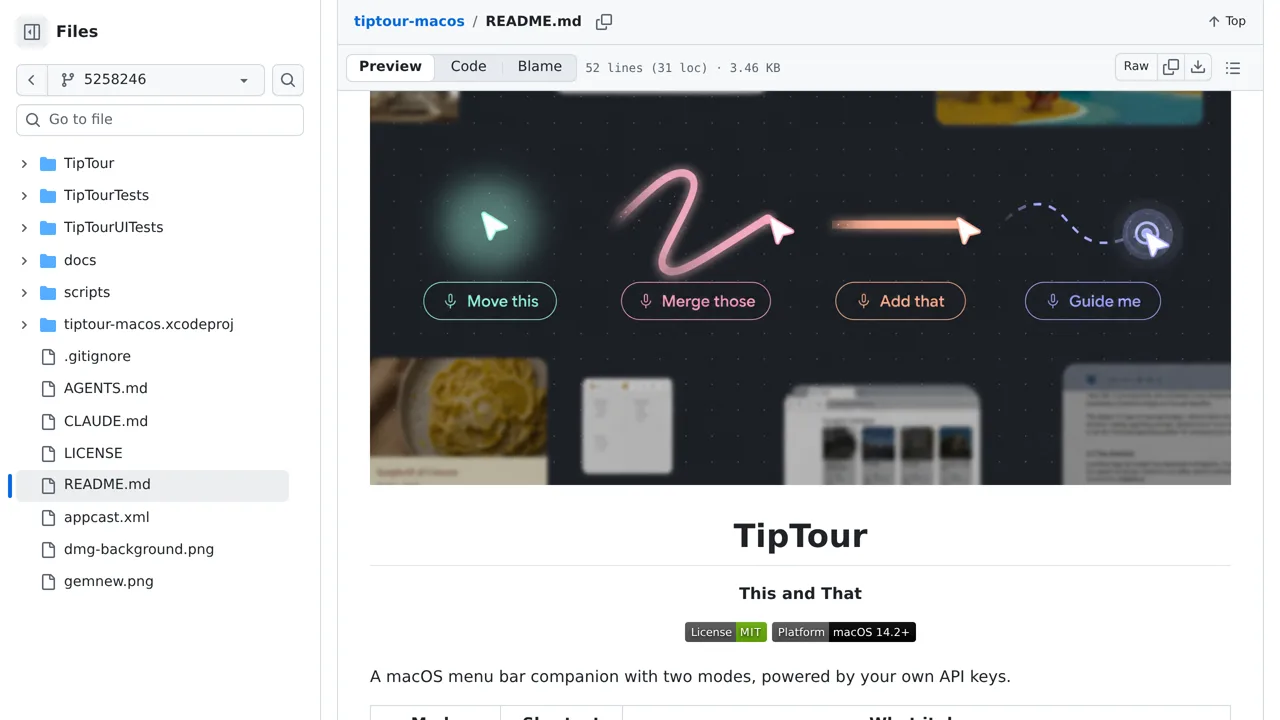
A macOS menu-bar companion that turns a typed click task into a short sequence over locally detected controls.
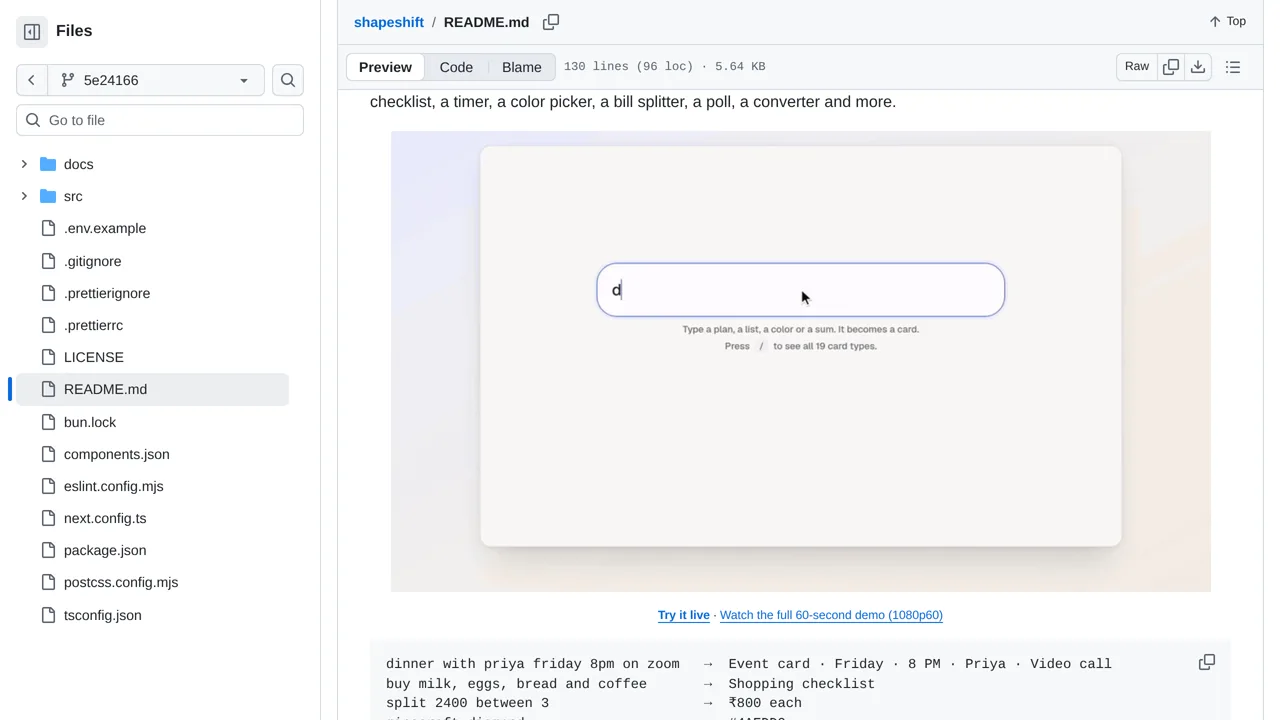
Type one thought and watch the text box morph into an event card, checklist, conversion, calculation, or other fitting tool.
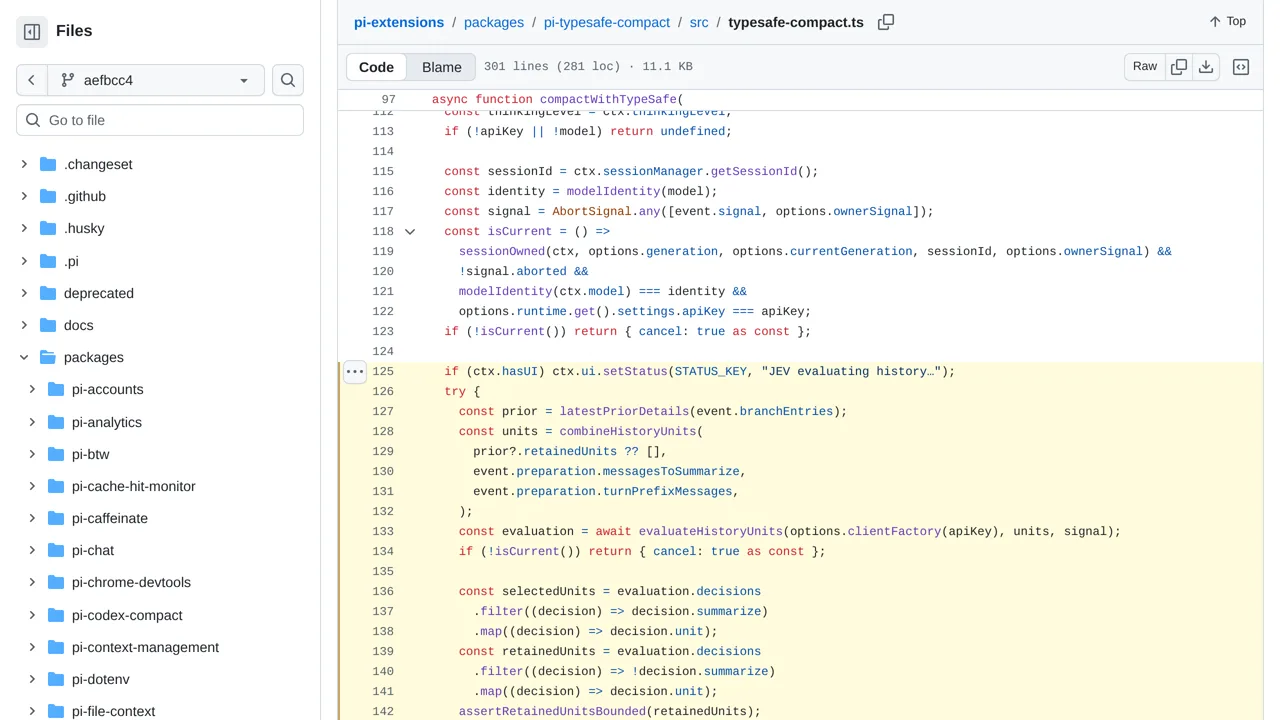
Pi Typesafe Compact asks Jev which parts of a coding conversation deserve space in the compacted summary.
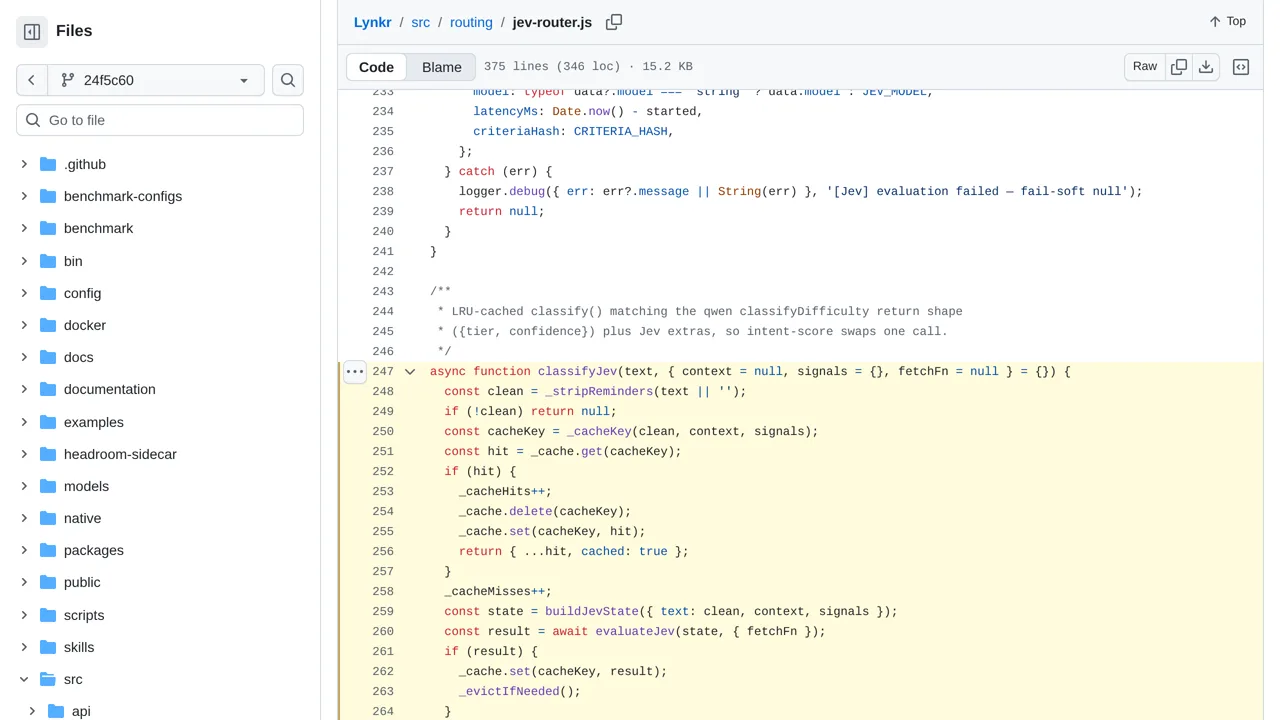
Lynkr uses Jev as a second opinion when choosing a model tier for a coding request, adjusting its own score-based route only when Jev's answer is confident enough.
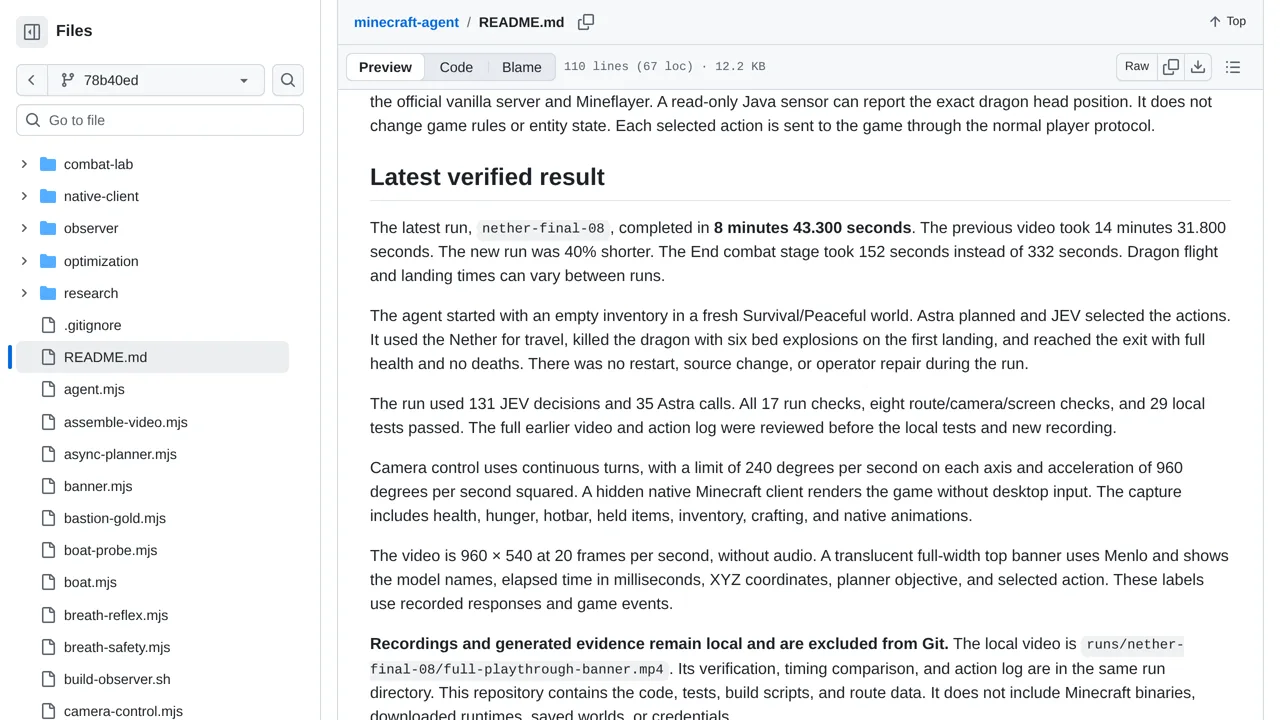
Astra plans a Minecraft route while JEV chooses bounded actions for a recorded, source-verifiable playthrough.
Uses local OCR and Jev to judge Windows chat messages, rank three drafted replies, and fill one without sending it.

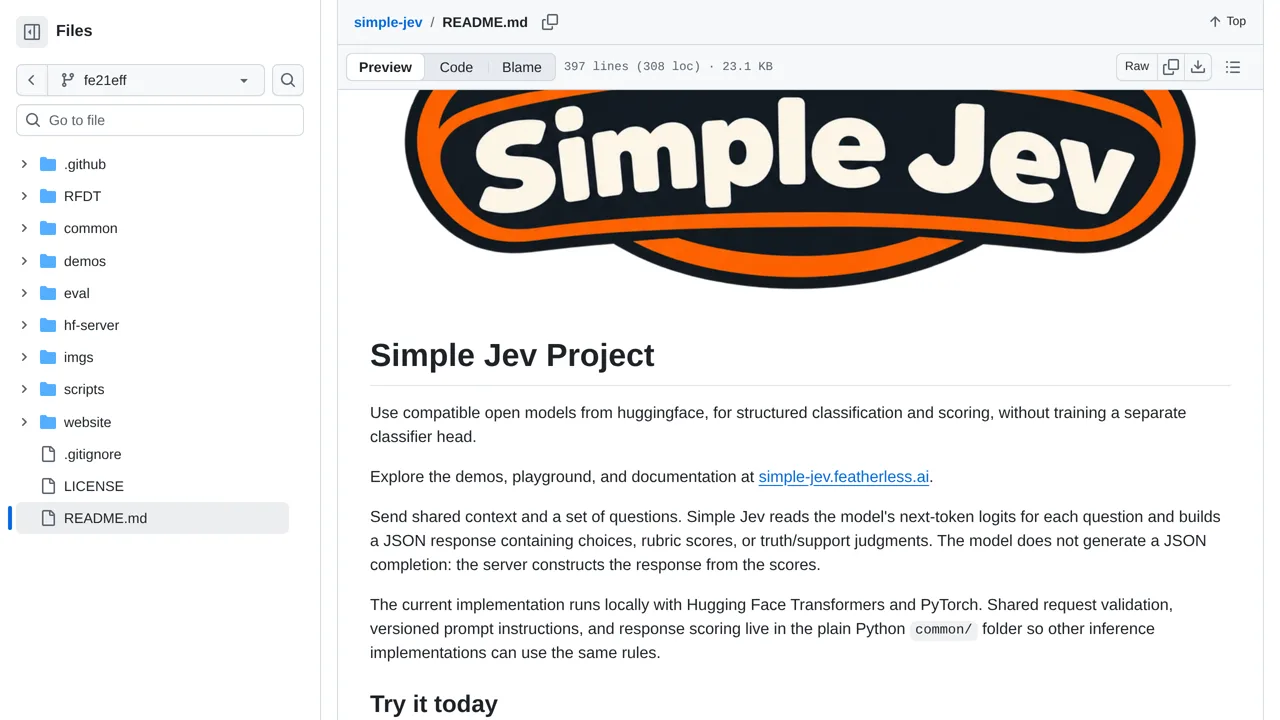
Simple Jev exposes open Hugging Face models as structured classifiers and includes playgrounds, evaluations, and an autonomous-driving demo.
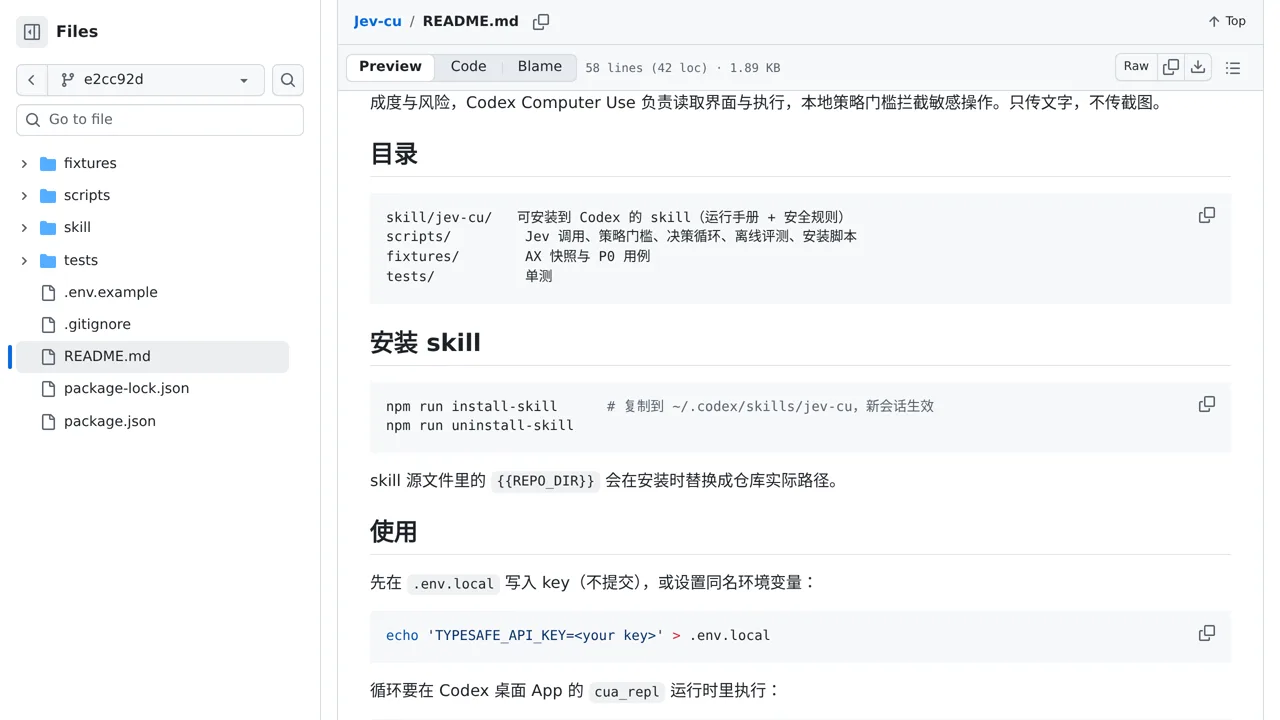
A cautious Codex computer-use skill that chooses UI targets from accessibility text while local policy guards consequential actions.
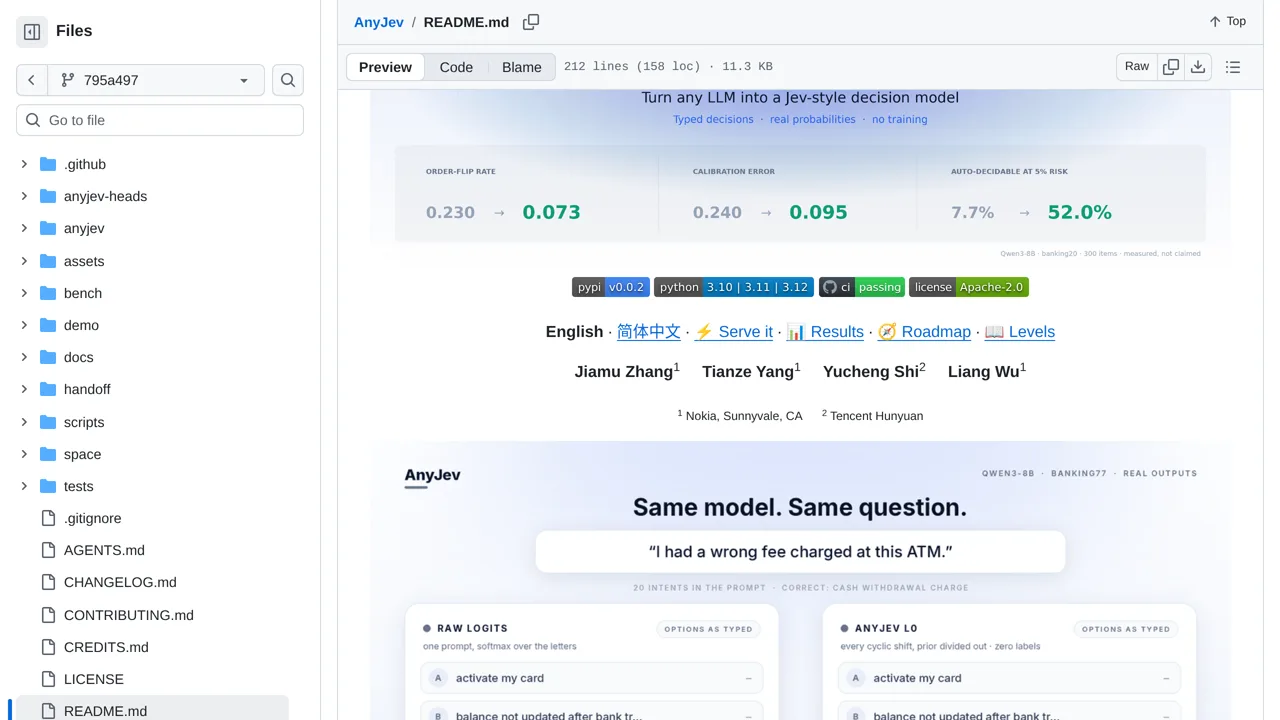
Adds typed probability readouts and calibration heads to ordinary language models, with Jev-style evaluations and saved results.
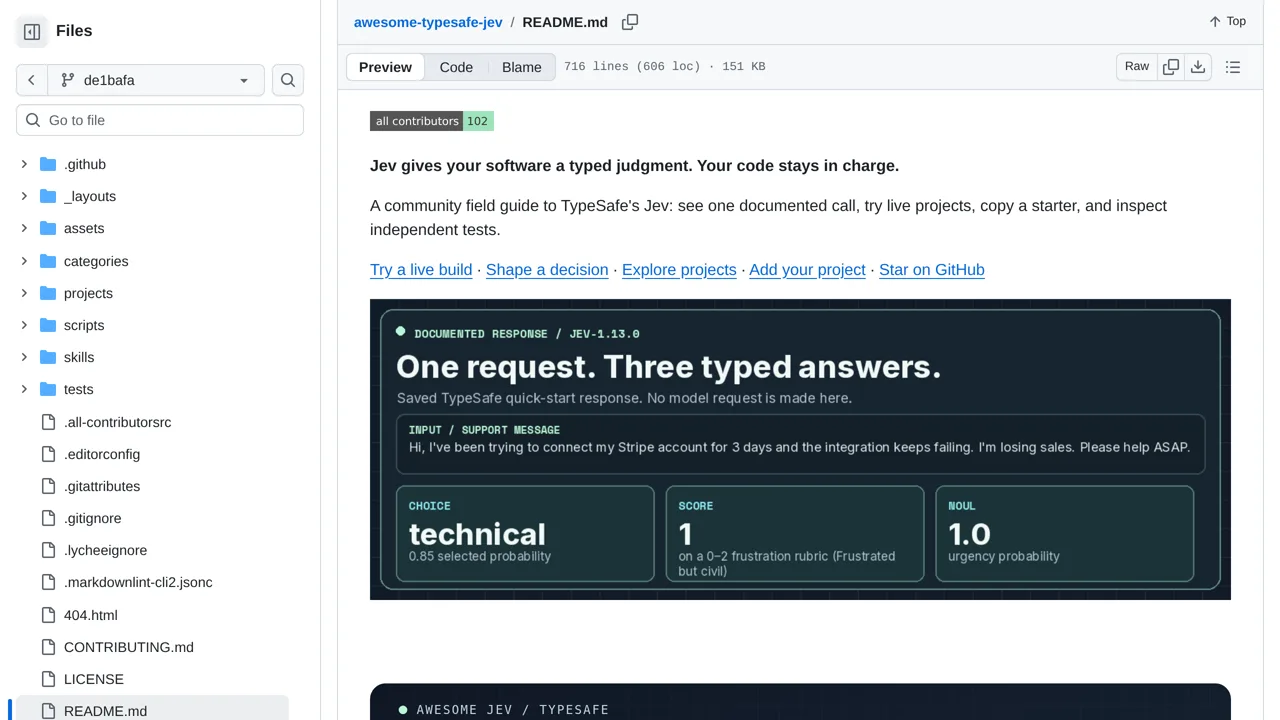
Indexes Jev SDKs, integrations, applications, evaluations, and learning material with source-backed annotations.
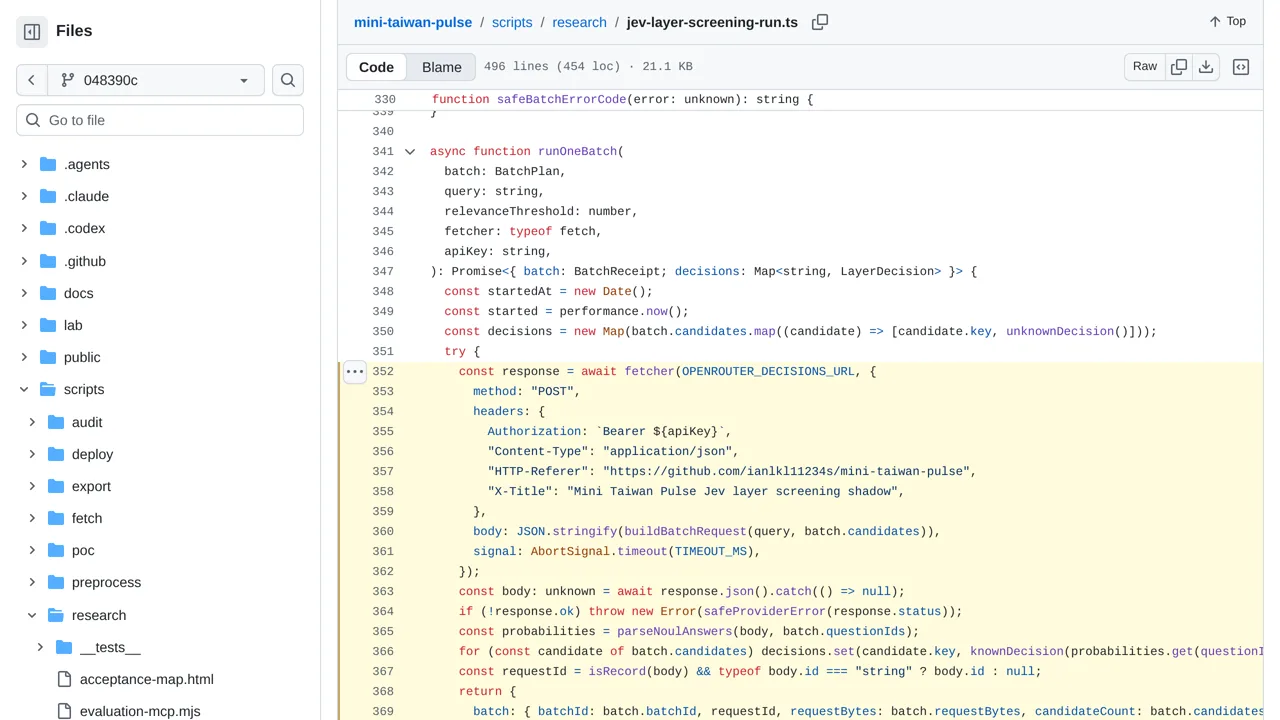
Mini Taiwan Pulse tests whether Jev can pick the map layers relevant to a visitor's question.
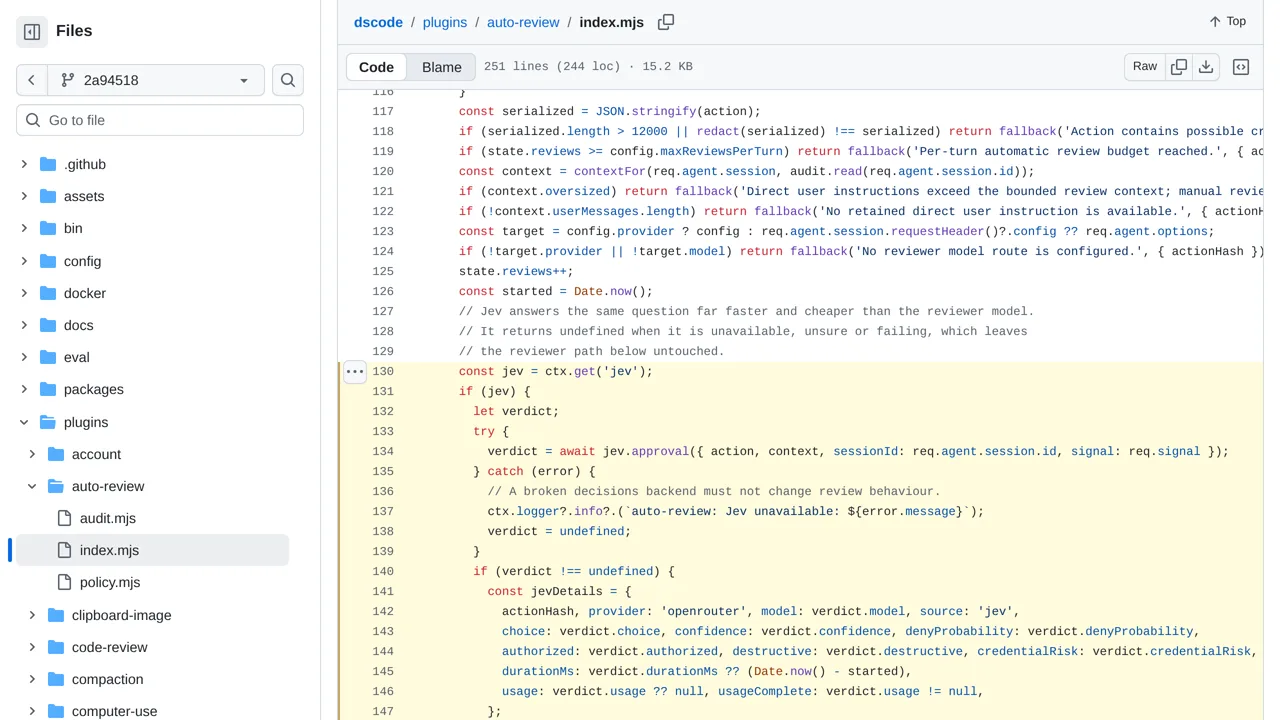
DSCode asks Jev whether a coding agent's risky action should proceed, stop or receive a fuller review.
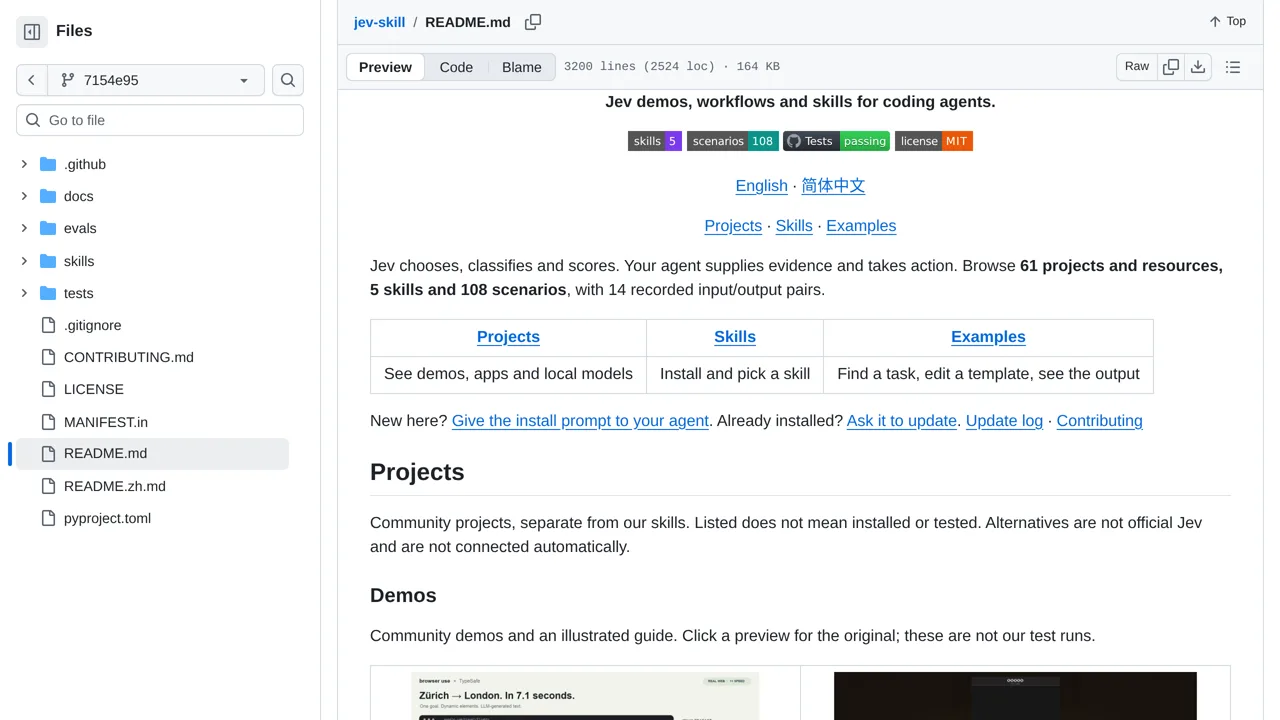
Collects Jev projects, reusable agent skills, and editable decision recipes with an optional validated Python client.
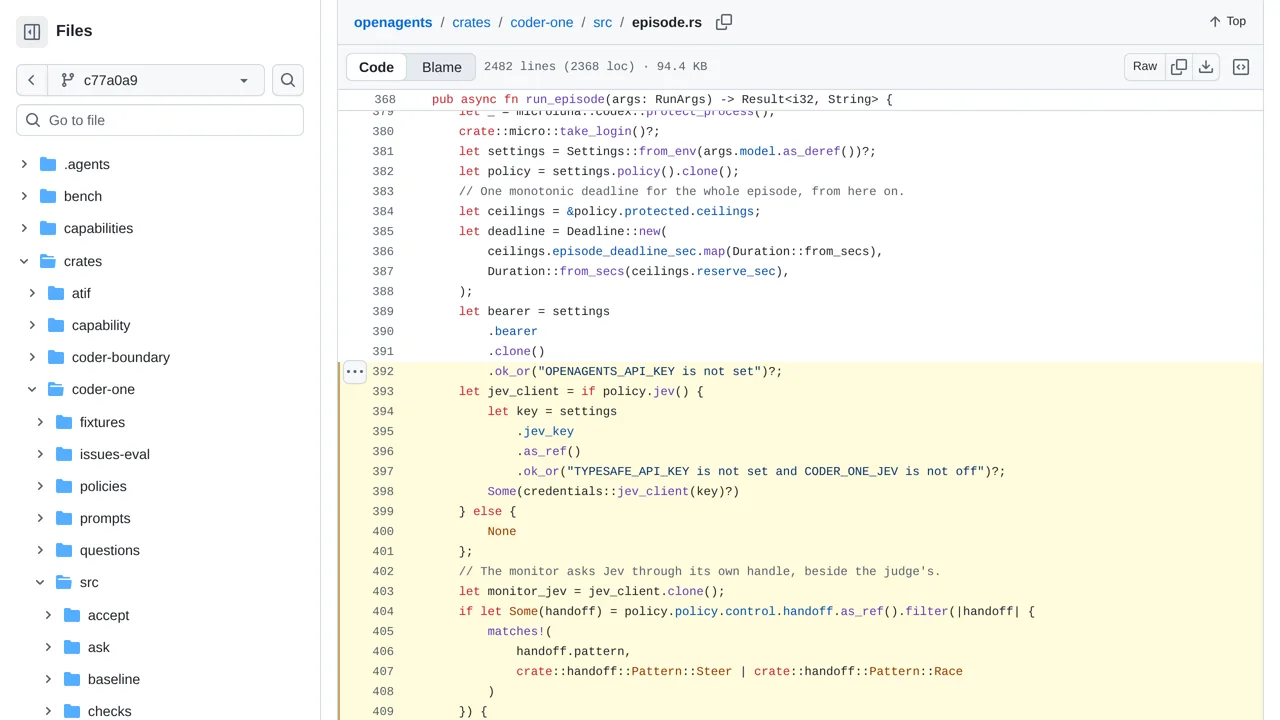
Coder One uses Jev to steer and check bounded autonomous coding sessions.
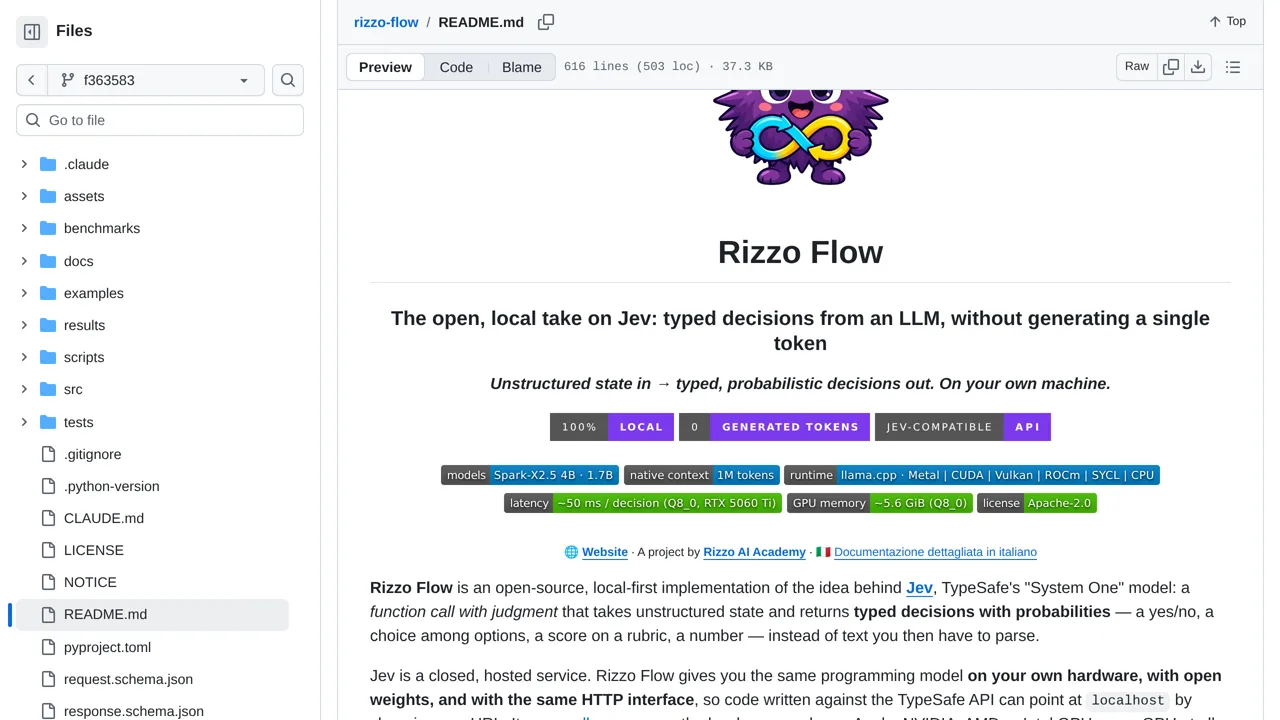
Rizzo Flow serves local Spark models through a Jev-compatible API and visual playground without generating answer text.
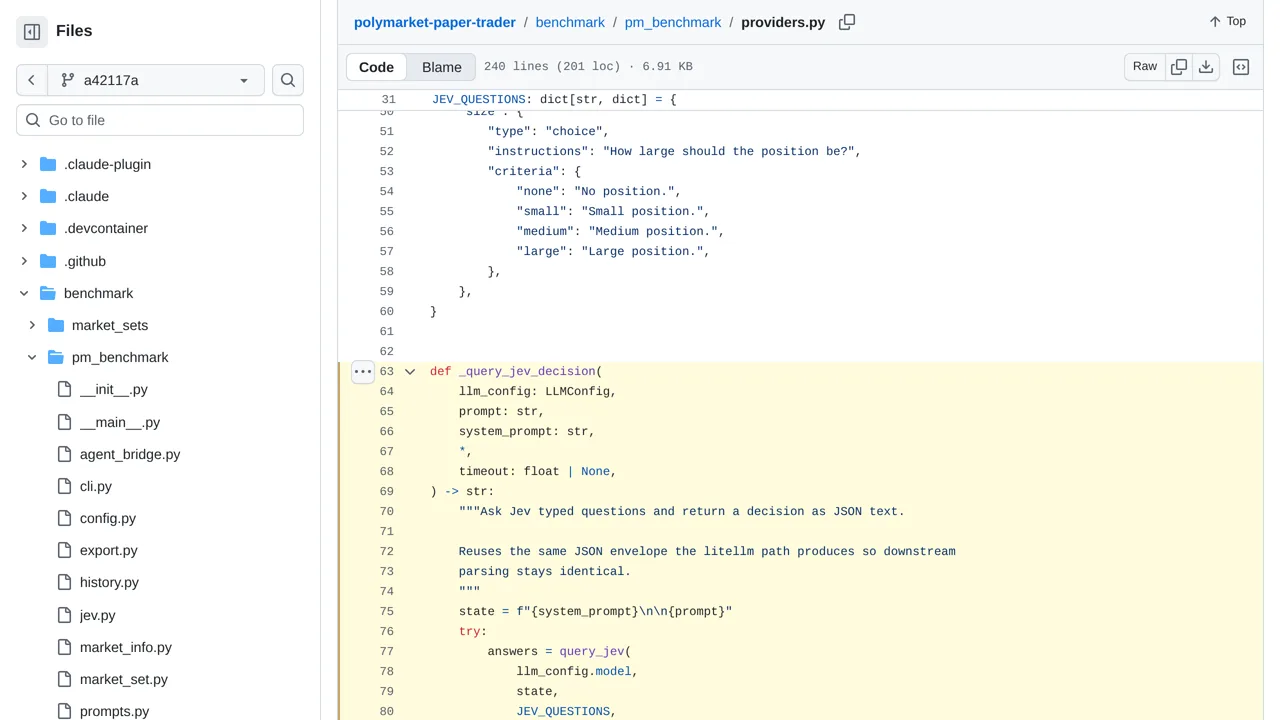
Compare Jev's market probabilities and trading choices in a Polymarket benchmark that never places real-money orders.
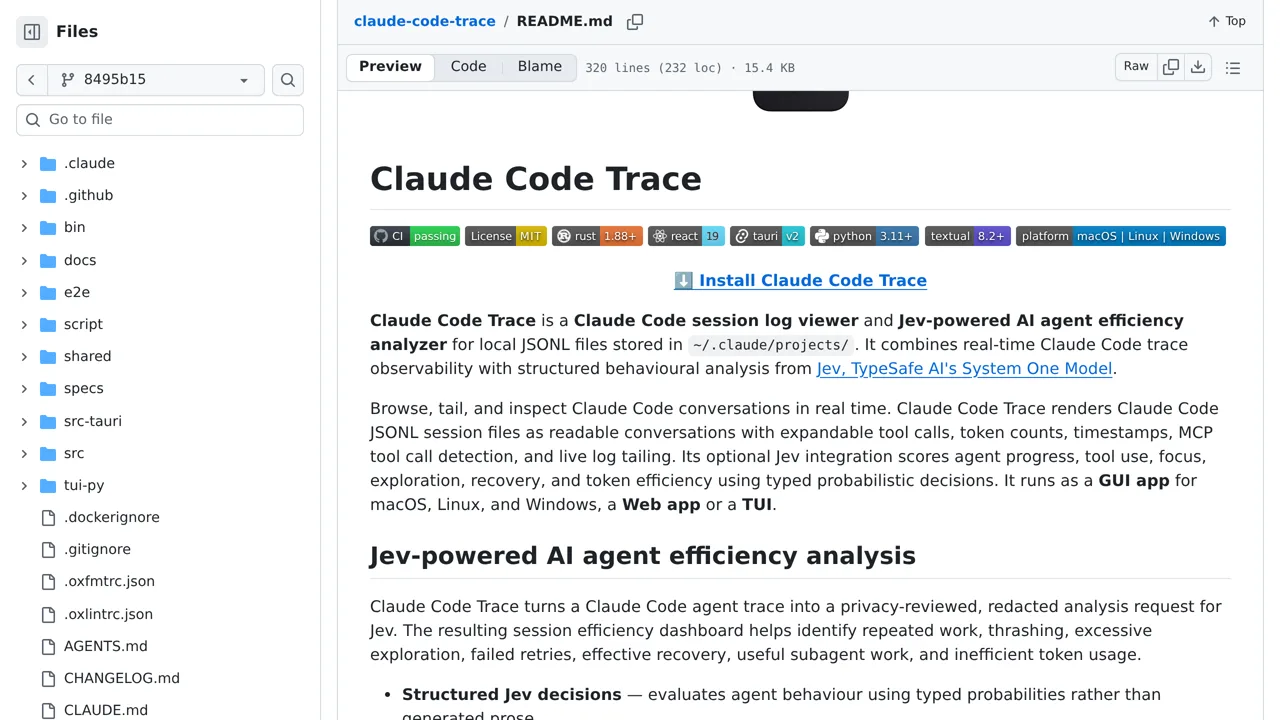
See where a Claude Code session made progress and where it went in circles, with Jev reviewing a redacted trace.
Shows intent, risk, and ranked reply suggestions beside supported macOS chats while keeping message sending under user control.
Browse a bilingual, source-linked index of Jev projects grouped by decision pattern, with dated link and call-site checks.
Jev, briefly
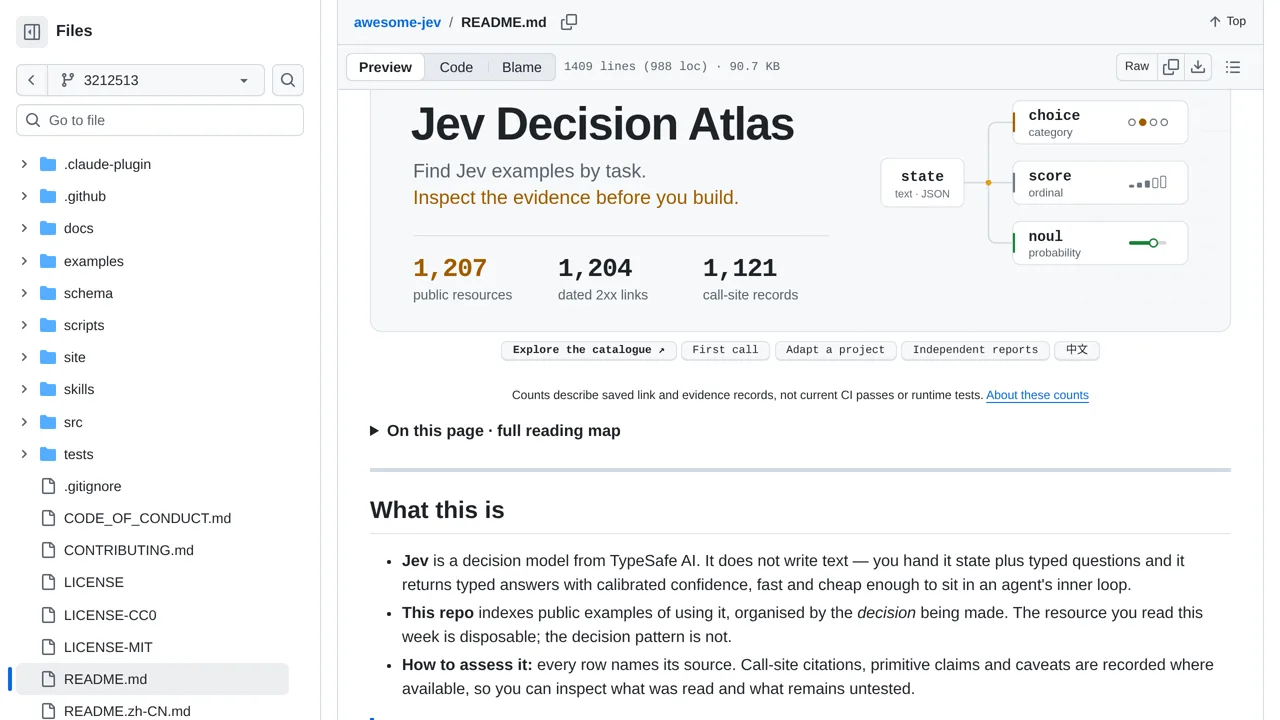
A chat model generates text token by token and hopes you parse it. Jev never generates a word. Your code sends the state of the world plus typed questions; Jev returns every answer in one parallel pass — typed values with calibrated probabilities and a confidence score your code can trust. About 70–500 ms end to end, $0.042 per million input tokens, output free. Trained with what TypeSafe calls Reinforcement Learning for Calibrated Decisions.
You define the options. Jev returns the chosen option, a probability for every option, and a confidence. The workhorse of routing, agents, and games — the answer space is always legal, so there is nothing to parse and nothing to hallucinate.
You describe ordered levels — say trivial / normal / critical. Jev returns the level, the probability of each, and a confidence. Scores turn fuzzy judgment (“how severe is this log line?”) into a number-free decision your code can branch on.
You assert a statement; Jev returns the probability that it is true — a noul. Moderation, verification, guardrails, “does this diff actually fix the bug?”: one question, one calibrated probability.
Official material lives at typesafe.ai and docs.typesafe.ai. JevMade is an independent community registry — not affiliated with or endorsed by TypeSafe AI.
Recurring lessons
Games, drones, trading bots, and browser agents all converge on the same loop: serialize the state, ask one decisive question, act, repeat. Jev’s latency makes the loop feel instant — the model lives inside the control loop, not outside it.
The answer says what; the confidence says whether to act. The most reliable entries threshold on confidence to route edge cases to a slower model or a human — automation with an honest escape hatch.
Makers rarely ask Jev to pick from everything. Local tactics prune 225 gomoku moves to ~40; DOM filters turn a page into an element table; code narrows options, Jev judges within them.
A recurring split: Jev makes every decision cheaply and instantly, and a small LLM is only invoked when a human-facing string must actually be written. Decision and generation are separate budgets.
Send the link — repo, live demo, post, or video — plus a line on what it does and which primitives it uses. Every entry is verified against its primary source before it ships.
Submit your experiment → hello@JevMade.com