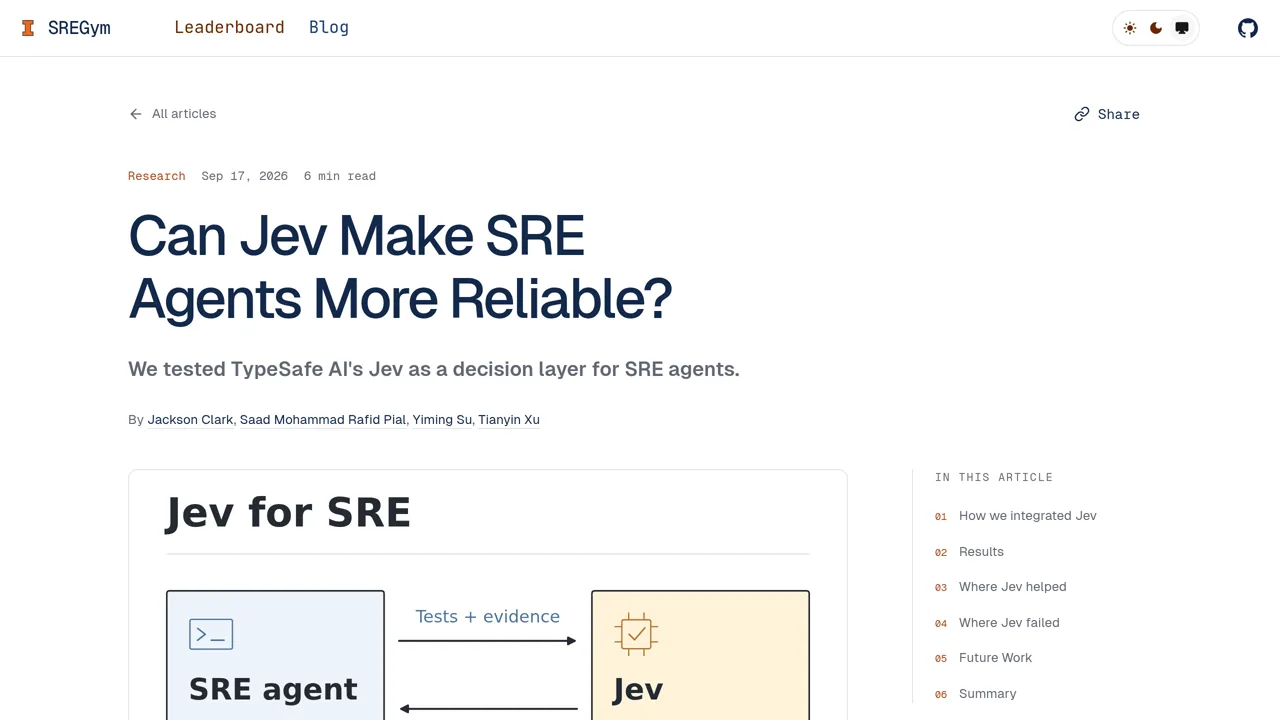
SREGym gave its incident-solving agent a hesitant reviewer: before any diagnosis gets submitted, Jev has to agree the evidence supports it, and when a test is proposed, Jev ranks which one is worth running first. Pass rate moved from 20 to 24 out of 50.
The honest parts make this one worth citing: two problems got worse with Jev in the loop, five attempts per problem is a small sample, and nobody measured whether diagnosis got faster. The gate itself is strict — every question needs 0.70 probability, and a rejection sends the agent hunting for new evidence rather than letting it reword the same claim.
How you can use it
When testing an AI that repairs your app, ask it to do another test if its explanation lacks proof. Borrow this study's rule: collect new evidence, not just new wording. Some repairs in the study got the app working but left the cause in place. Test that the cause is fixed too.