Read & learn
Guides.
Understand Jev, one idea at a time. Walkthroughs, recipes, and writeups — our notes first, the original next.
A public registry · independent & community-run
Learn, build, and play with Jev — from deep technical guides to creative experiments.
Read & learn
Understand Jev, one idea at a time. Walkthroughs, recipes, and writeups — our notes first, the original next.
Make & explore
See what builders made with Jev. Games, tools, repositories, articles, and more — traced to their sources.
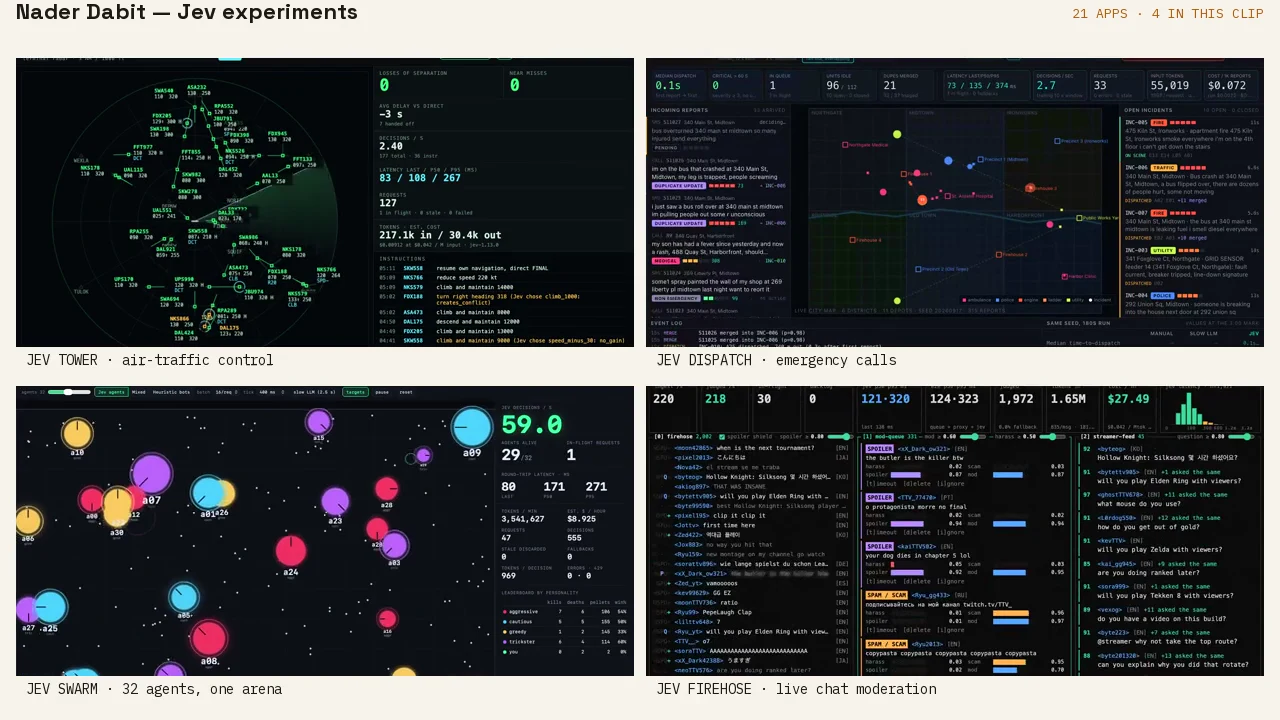
Every category, from games and tools to repositories and writeups, traced to a primary source.
Same ideas.
Different paths.
This is the full registry, not just the featured picks. Figures like speed, cost, and stars are maker-reported or captured snapshots, not JevMade measurements.
1507 experiments · showing 181–240
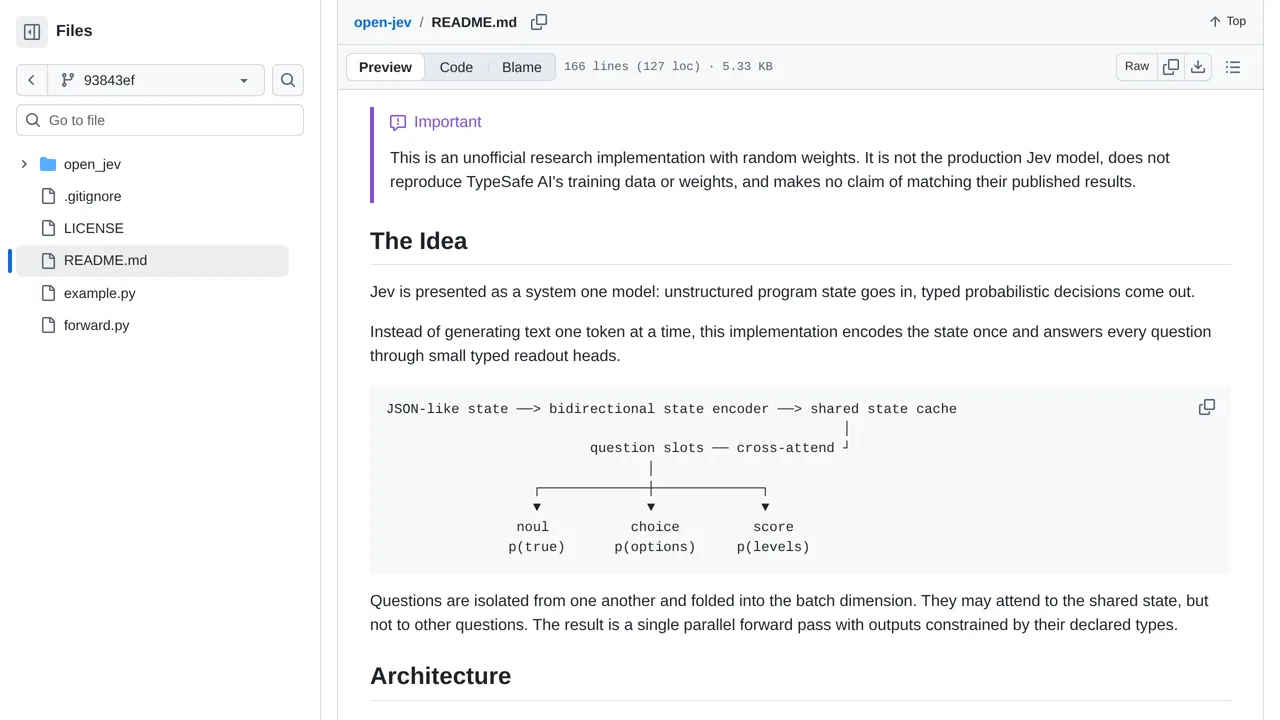
A compact PyTorch teaching implementation explores a Jev-inspired encoder, shared state cache, and typed readout heads.
Jev guides a simulated Franka Panda through manipulation tasks by choosing its intent, movement, and gripper commands.

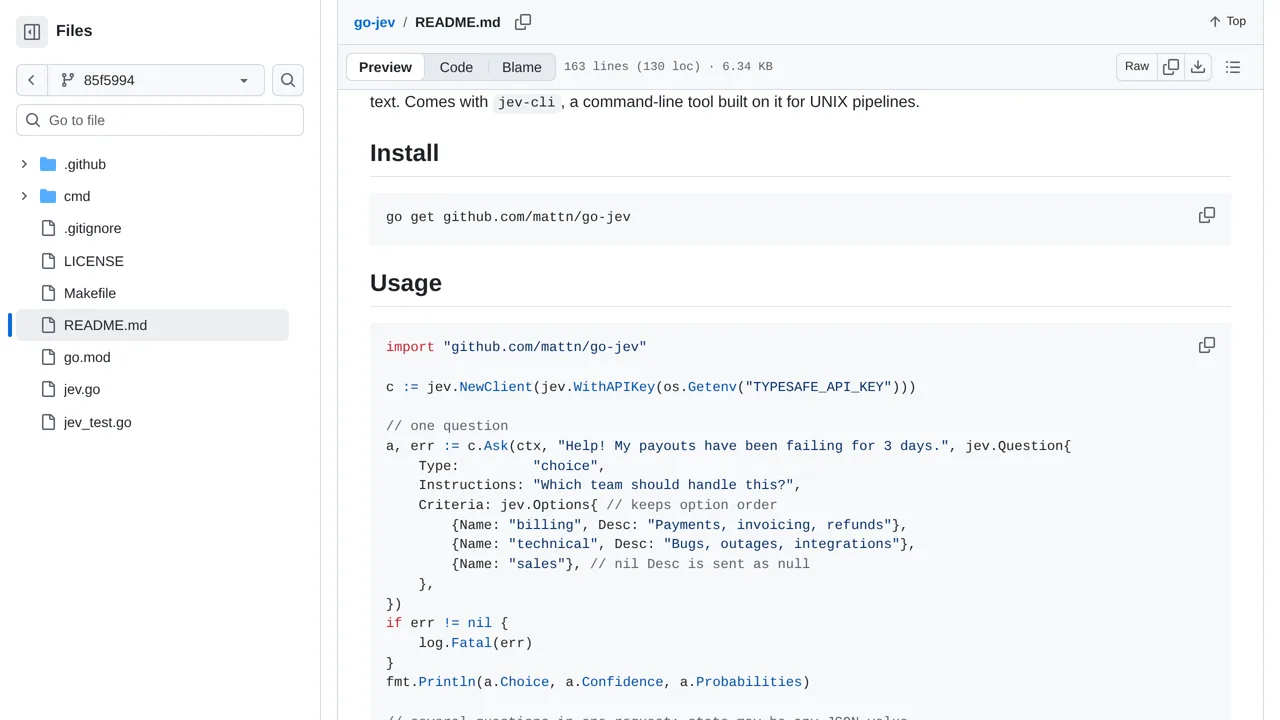
Provides a Go client and Unix-friendly CLI for Jev Noul, choice, and score requests.
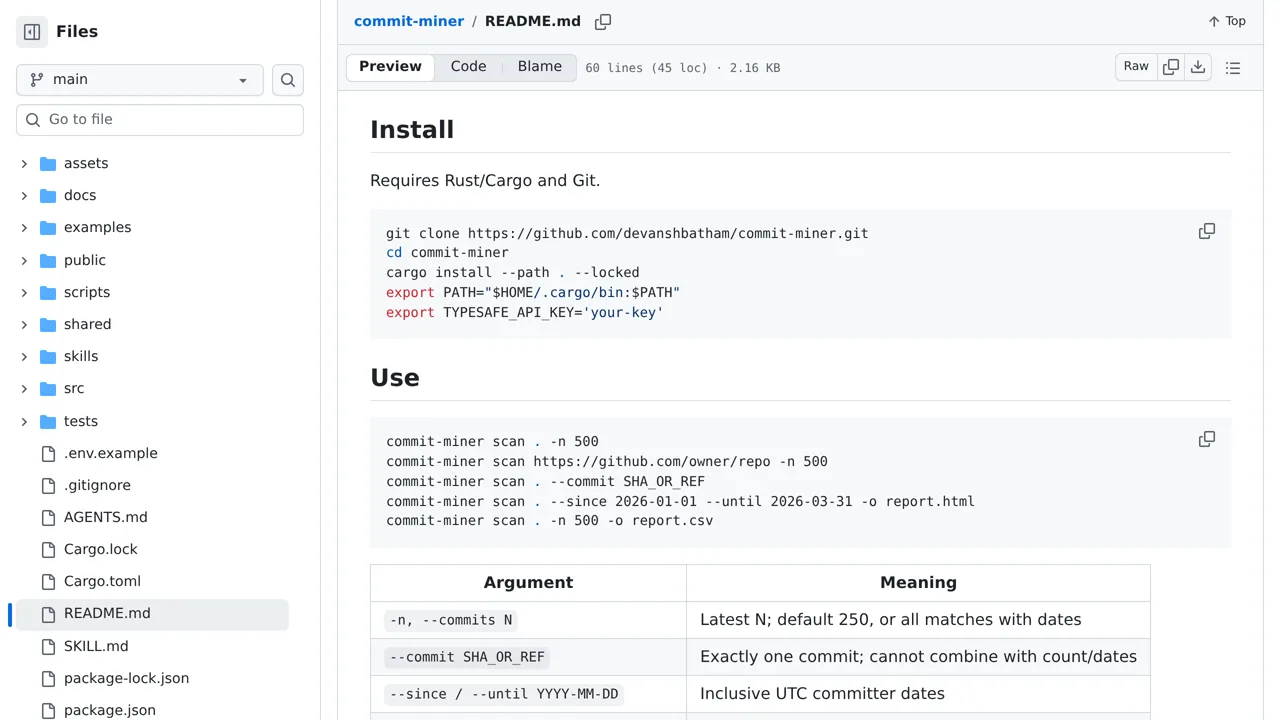
A Rust tool that uses Jev to classify Git commits by change type, bug-fix status, and security relevance.
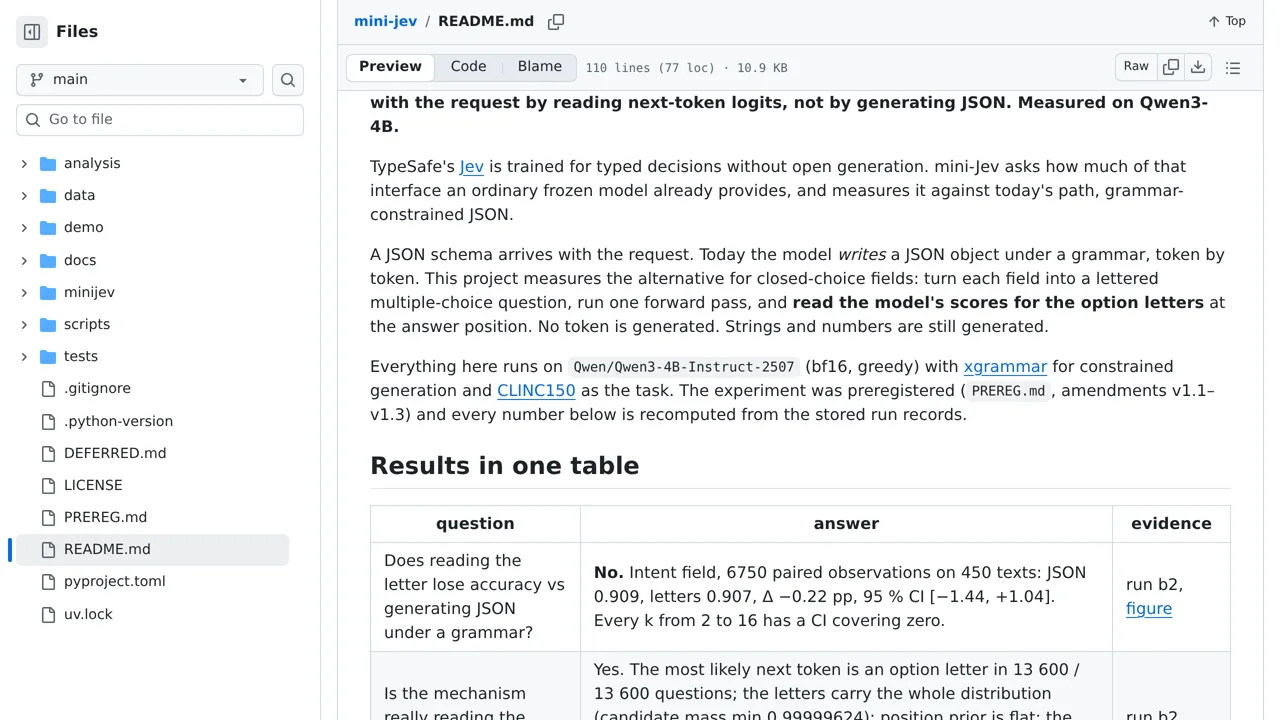
Mini-Jev reads option-letter logits from a frozen Qwen3-4B instead of asking the model to generate JSON.
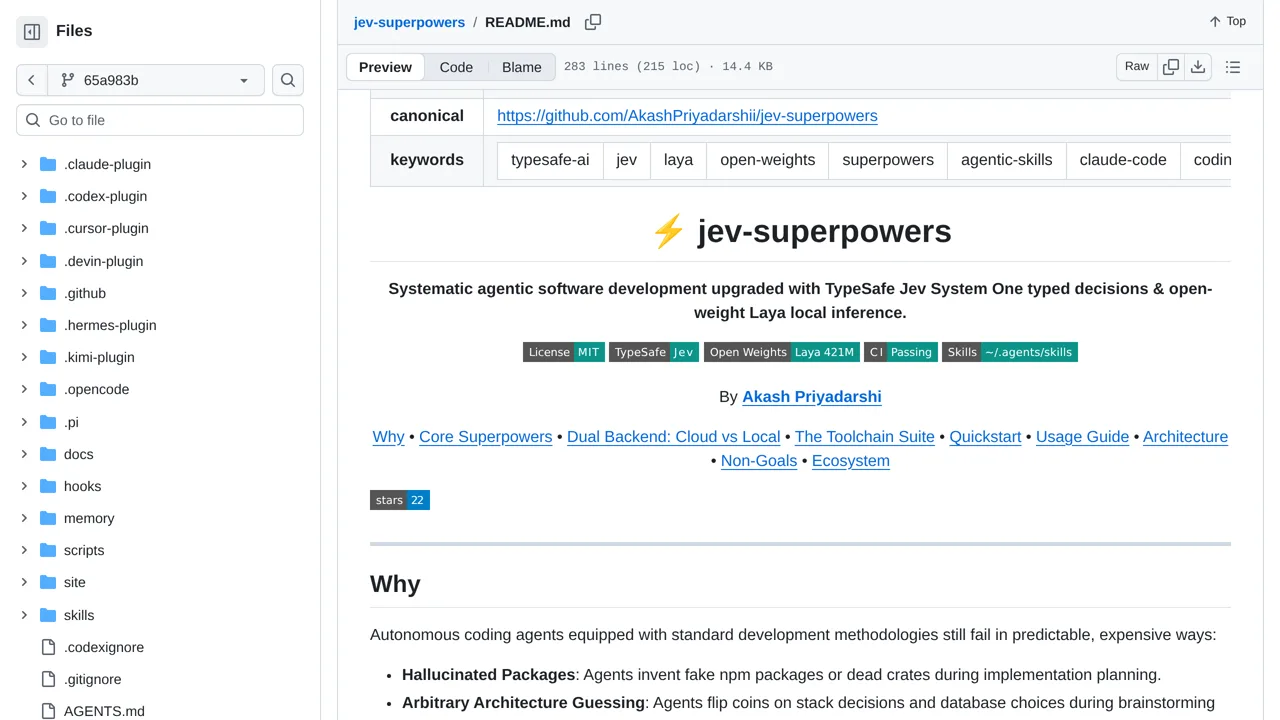
Adds typed decision gates and review steps to a skills-based workflow for coding agents.
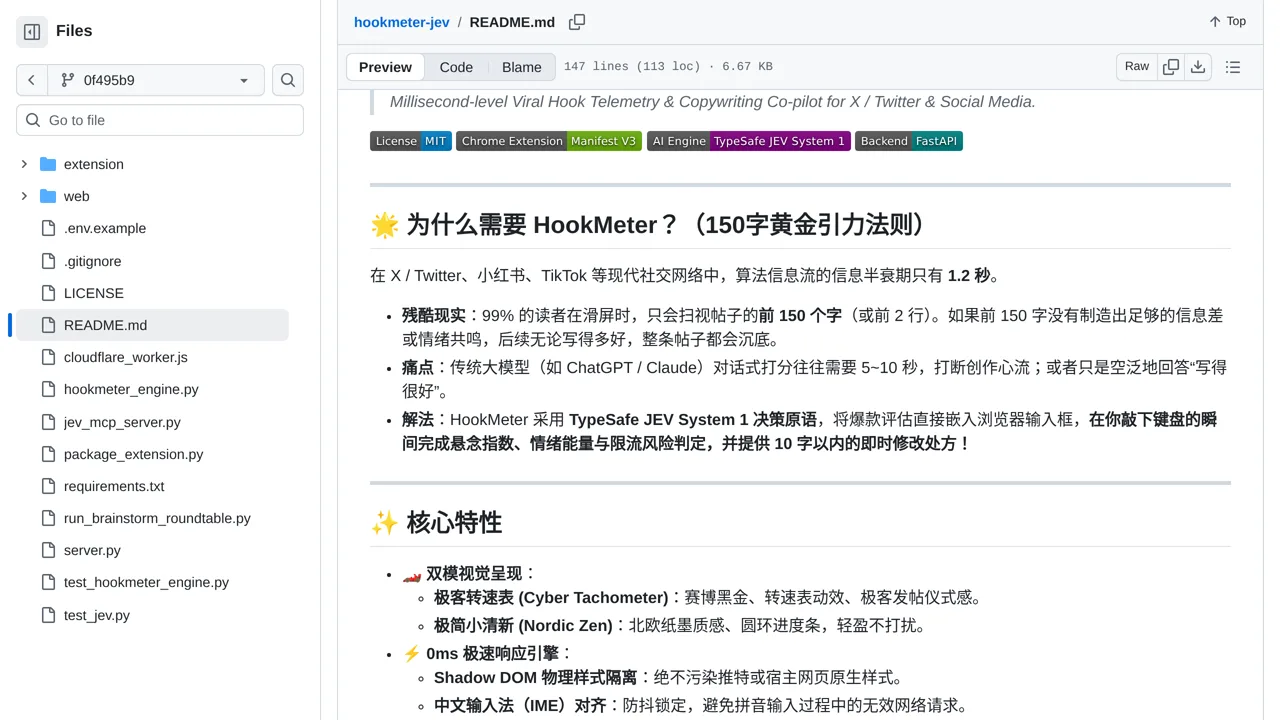
Scores social posts for hook strength and lets creators compare rewrites inside a Chrome extension.
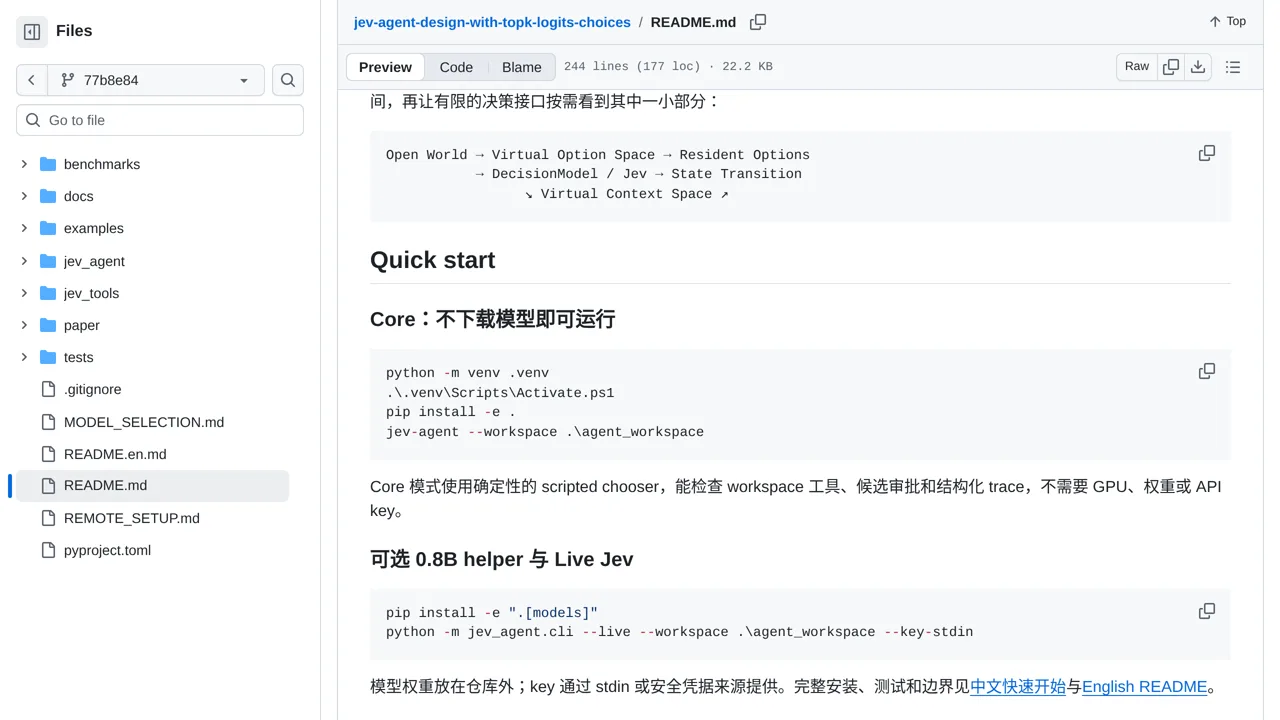
Explores an agent runtime where Jev selects from bounded, pageable actions while local code manages context and execution.
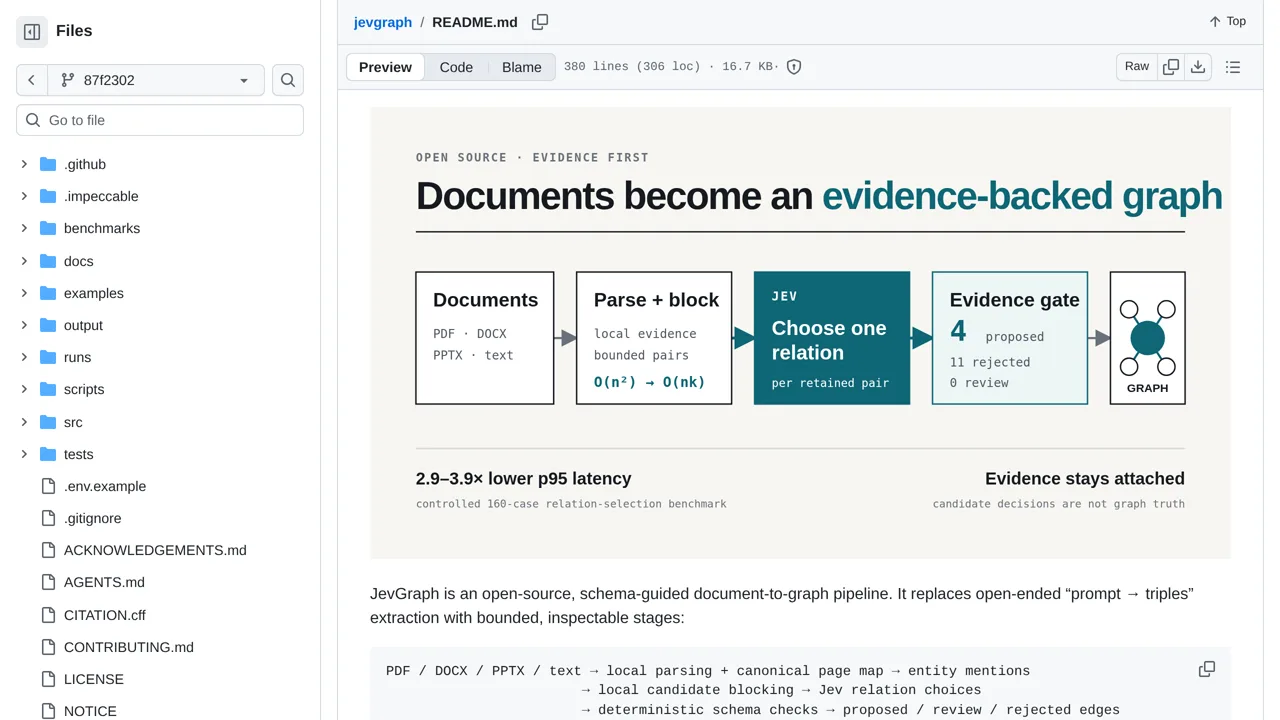
Builds knowledge-graph relations from extracted evidence and typed Jev decisions, retaining provenance for each edge.
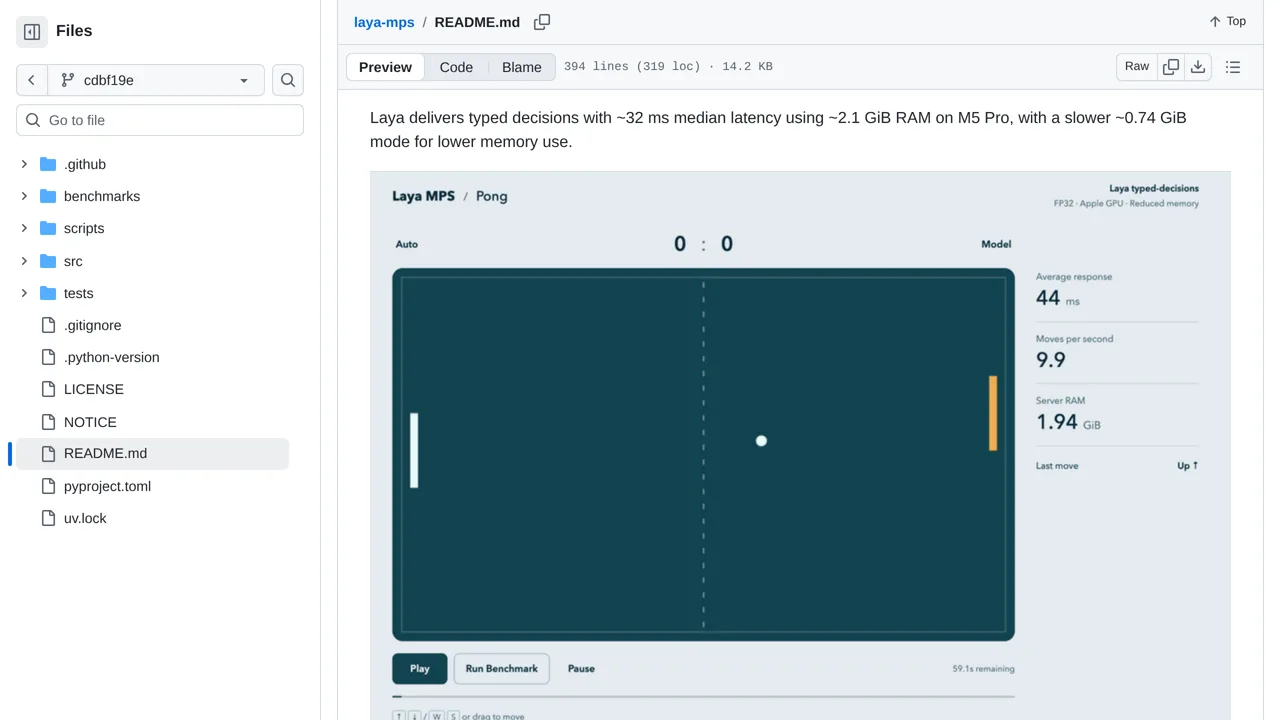
Run Laya's typed-decision model on Apple Silicon with selectable memory modes and a Pong latency demo; this is not TypeSafe's Jev.
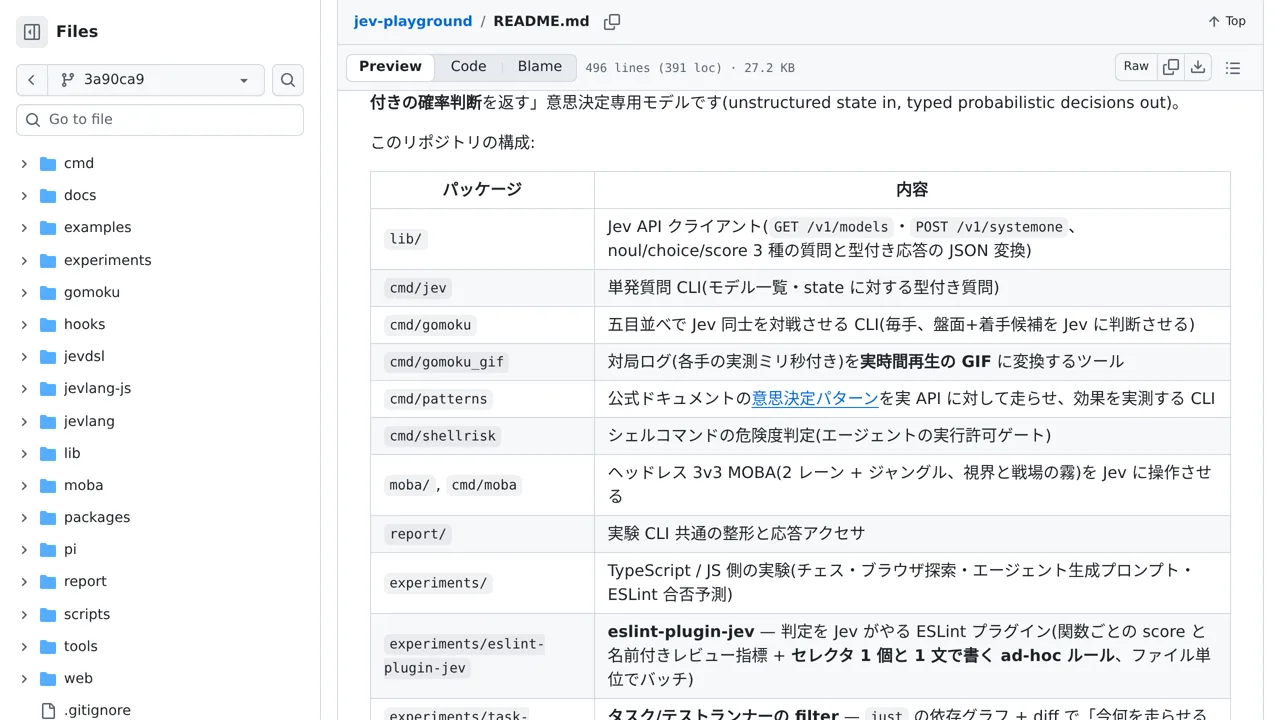
Experiment with Jev from MoonBit through a typed client, command-line tools, games, policy gates, and reproducible reports.
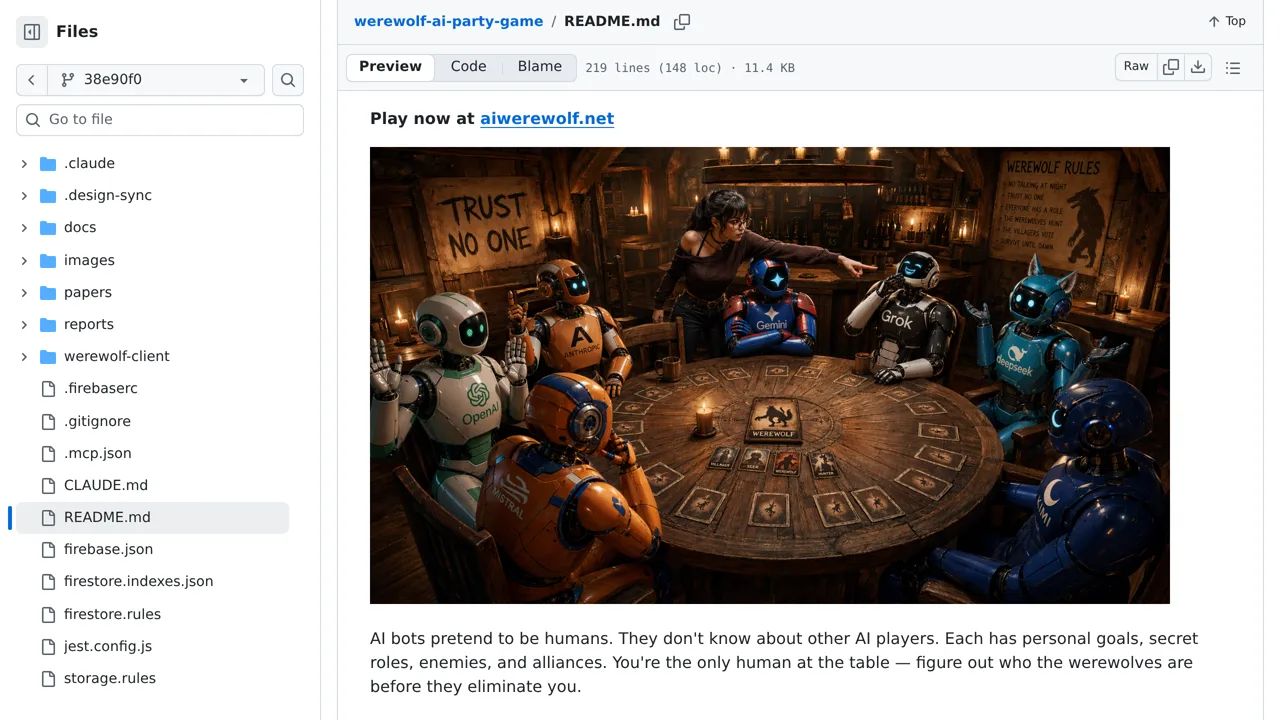
A social-deduction game where Jev chooses which bot speaks next and separately screens text written by human players.
A Pi extension that turns four semantic risk checks into allow, warn, confirm or block for each tool call.
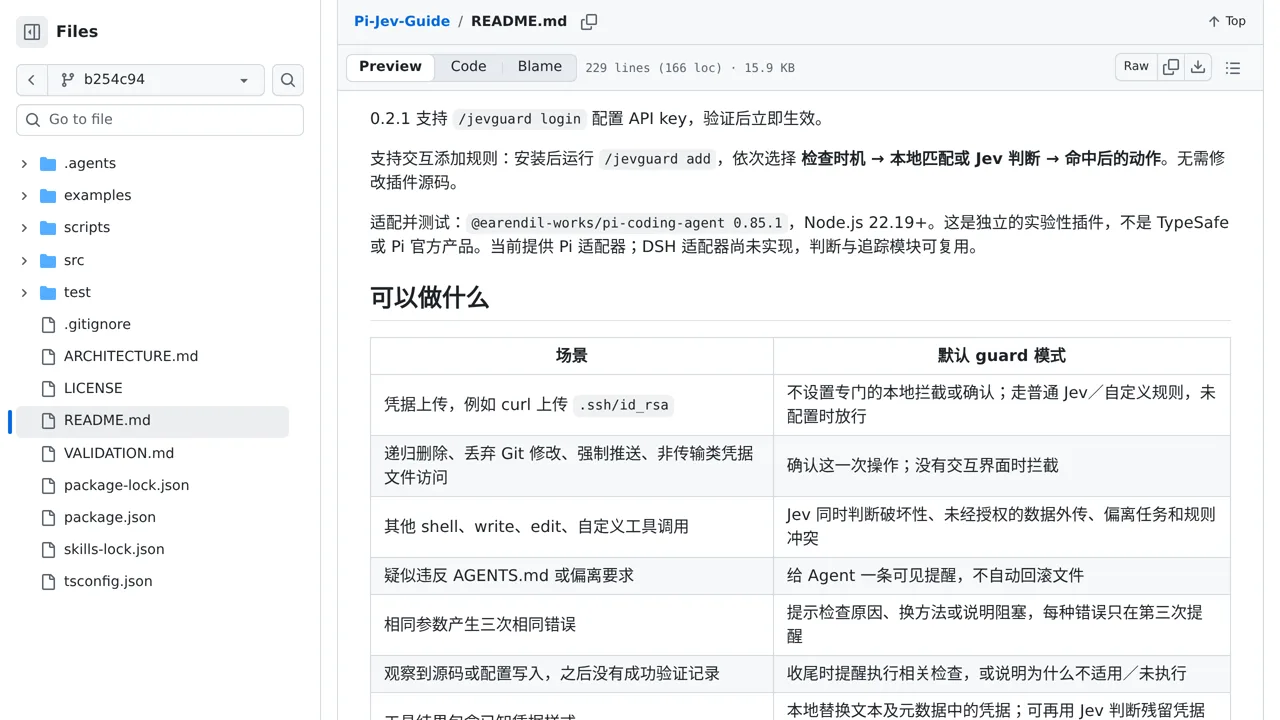
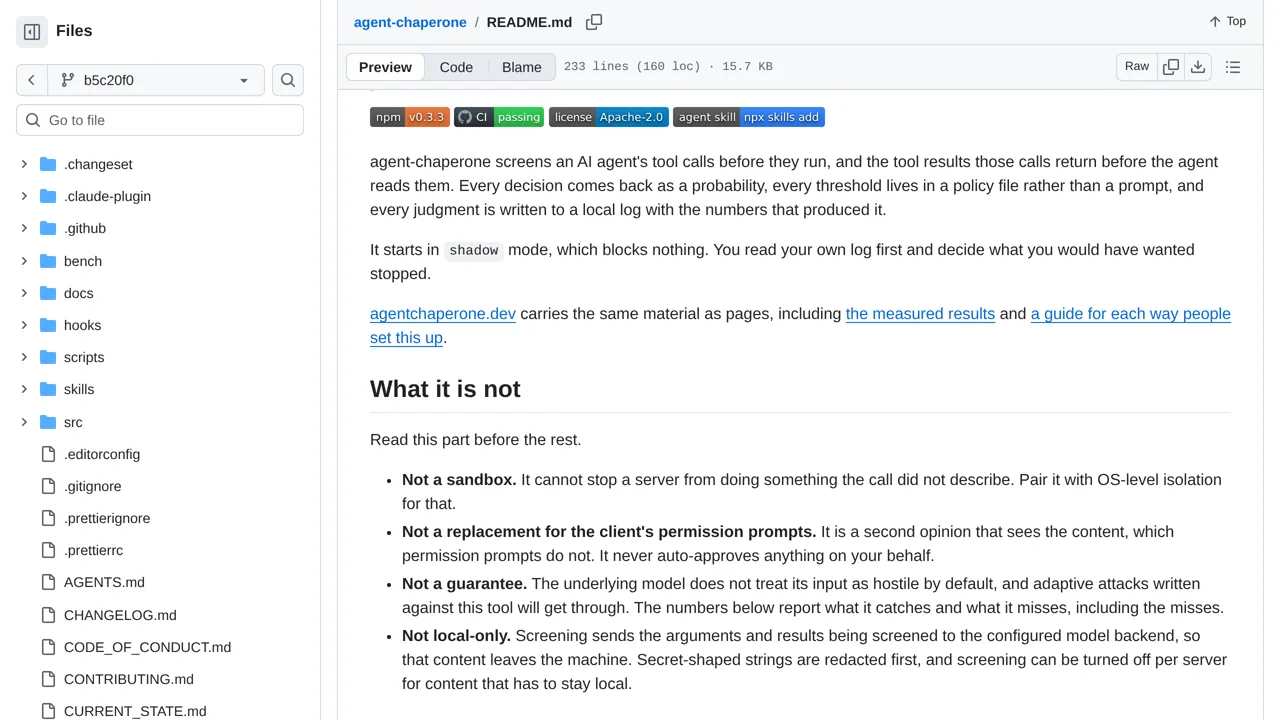
Screen agent tool calls and returned content with Jev, then review the judgments in shadow mode before enabling enforcement.
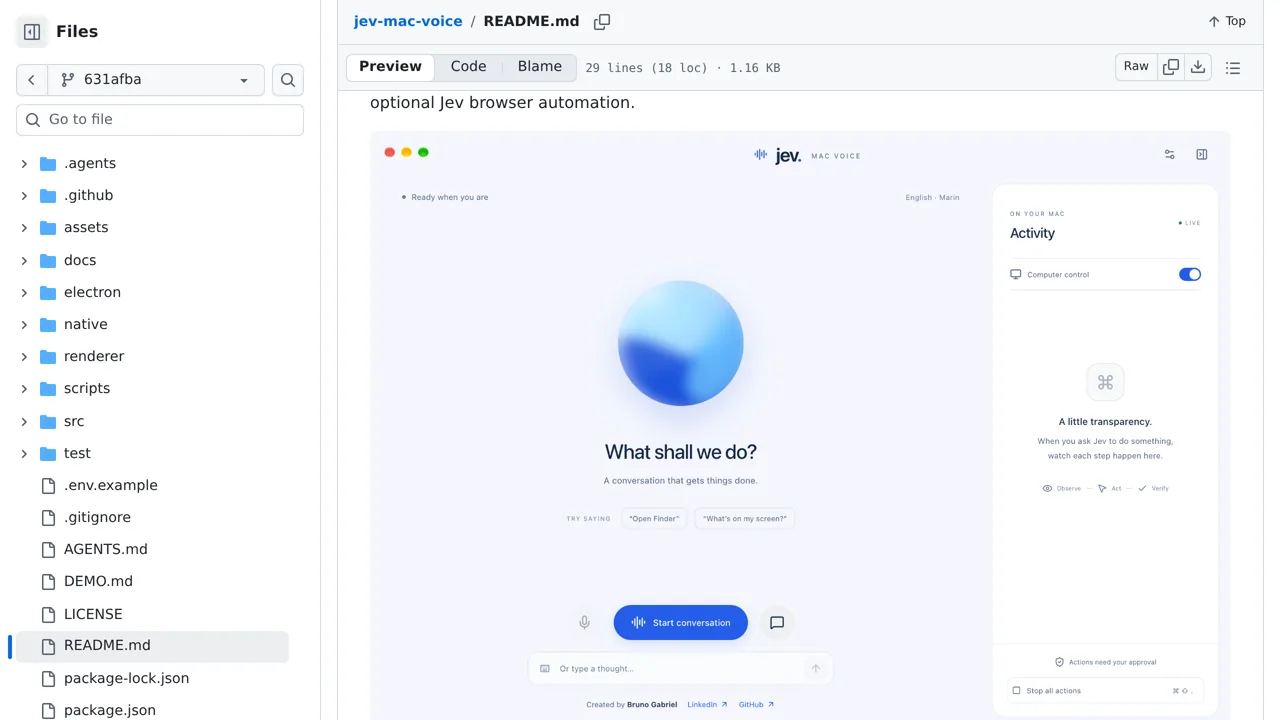
Talk to a macOS desktop app that combines realtime voice conversation with optional Jev-guided browser actions.
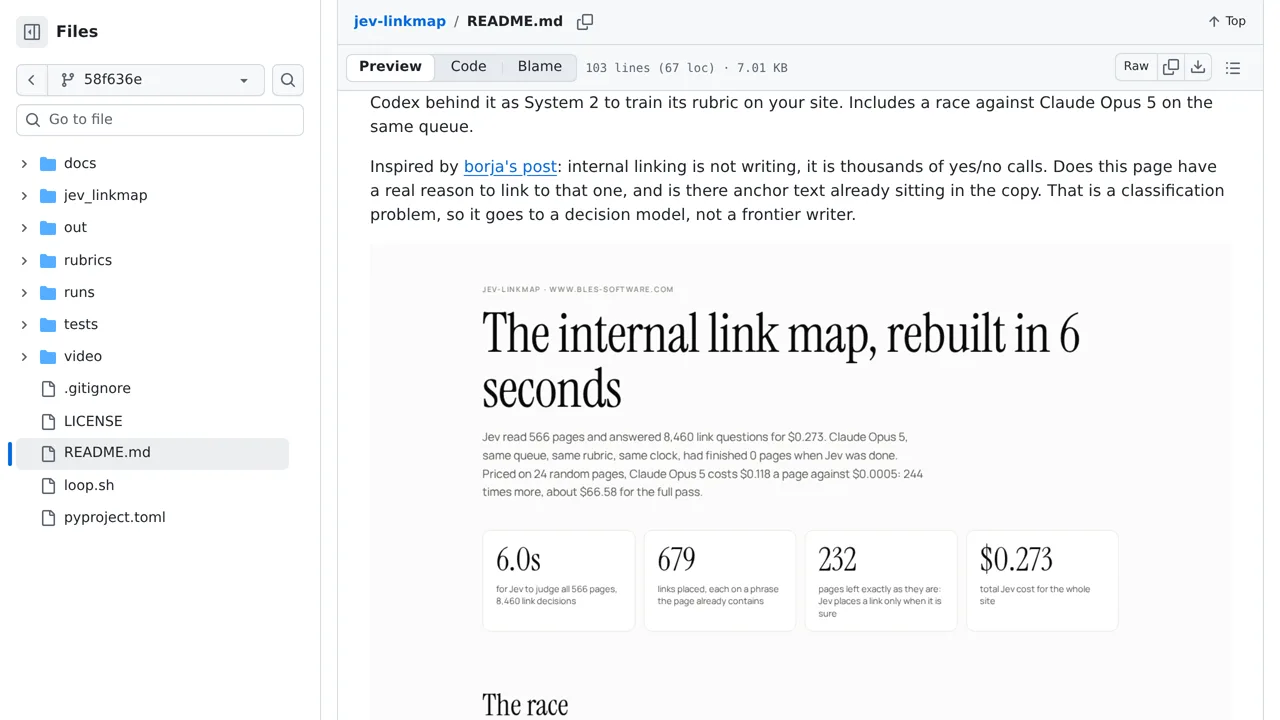
Suggests internal links by judging candidate target pages and choosing honest anchor phrases already present in the copy.
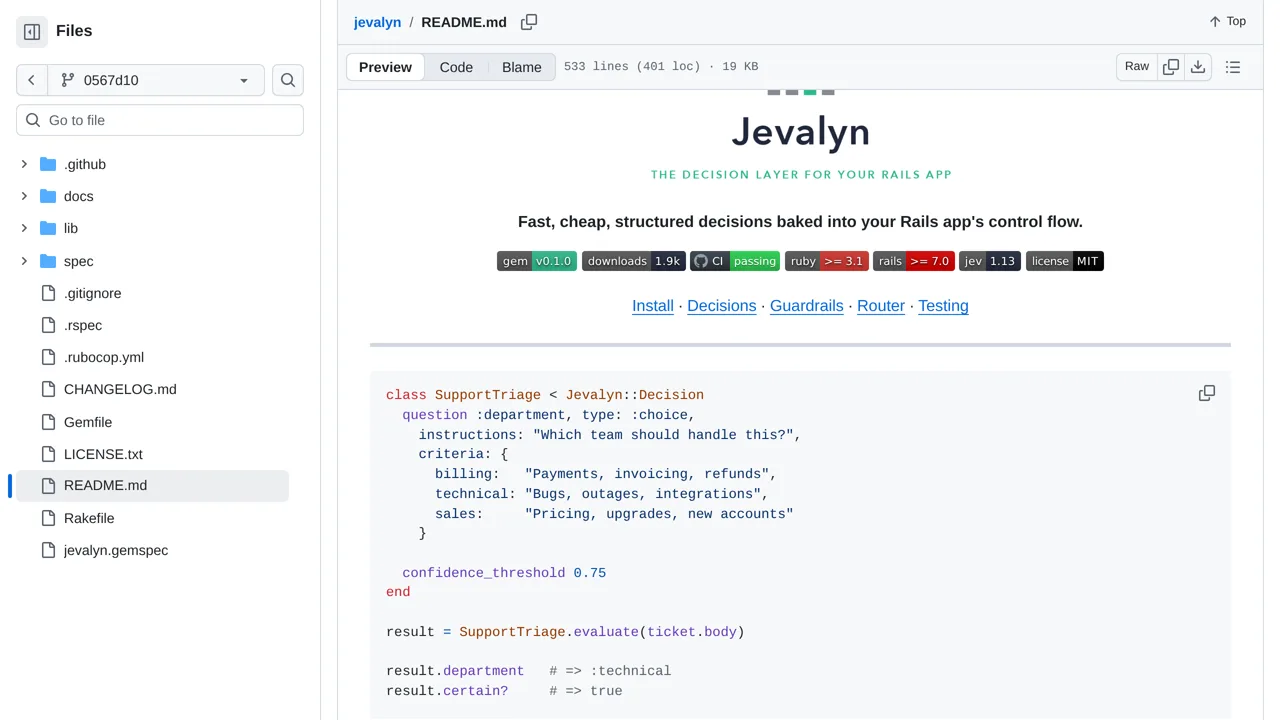
Brings typed Jev decisions into Rails control flow, with jobs, guardrails, and test helpers.
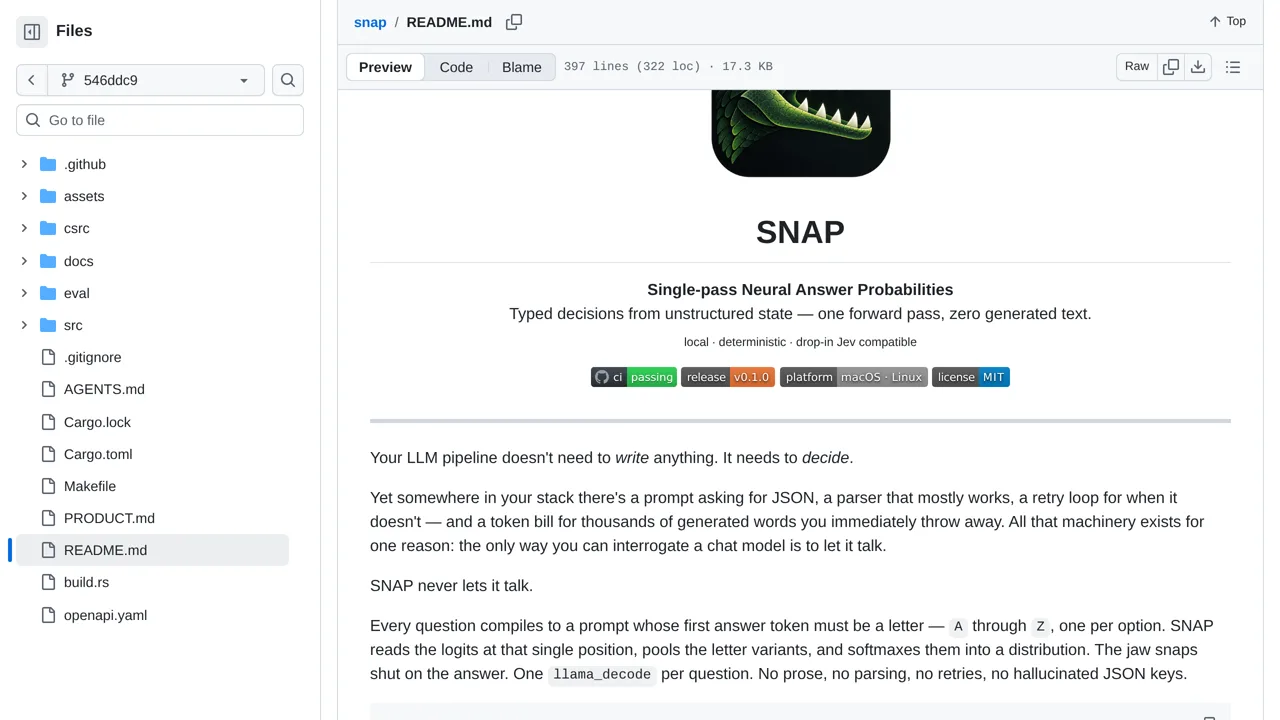
A local Rust server turns answer-letter logits into typed probabilities through a drop-in Jev-compatible endpoint.
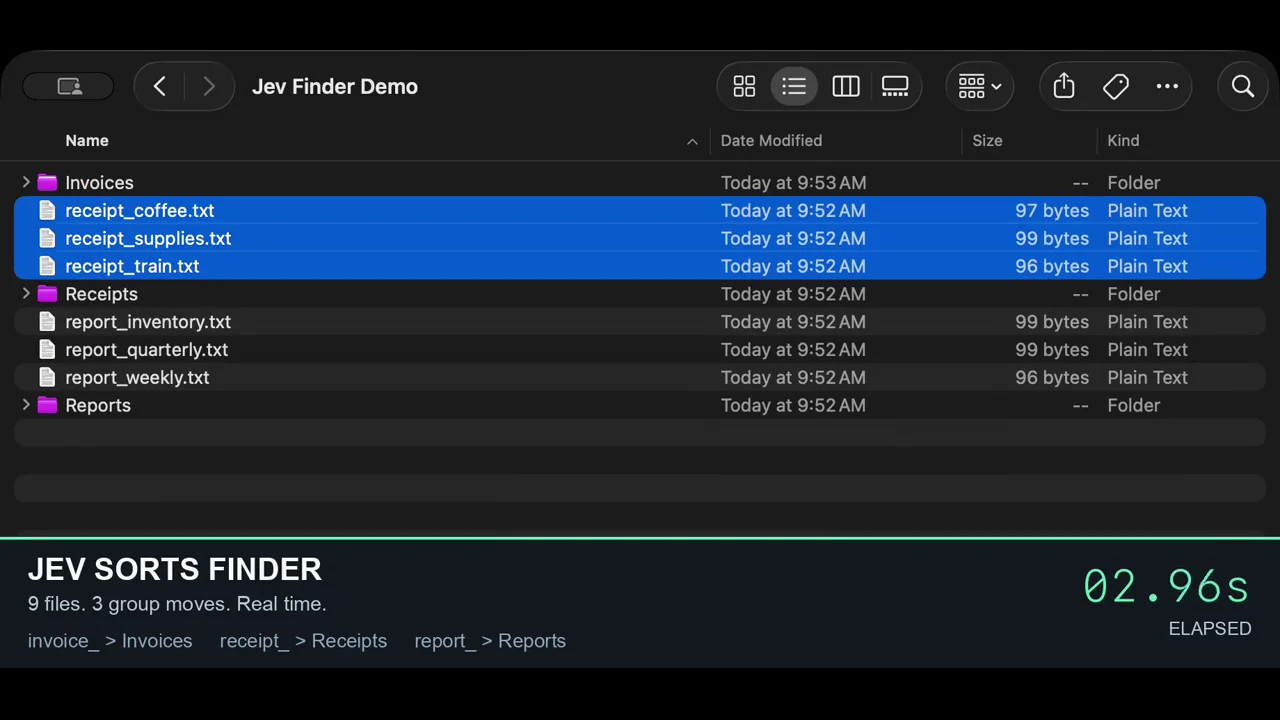
Give this native macOS agent a goal and watch it choose guarded clicks and drags from controls detected on your screen.
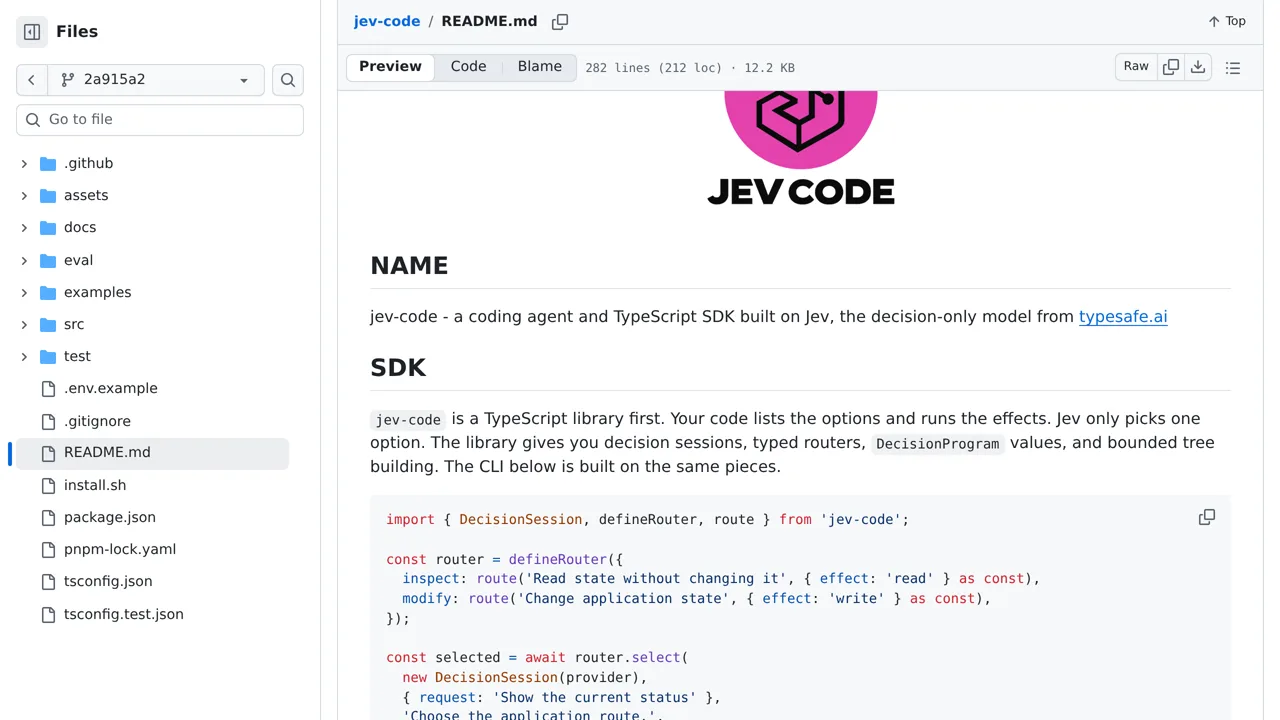
Build programs and shell commands as chains of bounded Jev decisions through a TypeScript SDK and coding CLI.
Run a local agent where Jev chooses a tool and its arguments, sees the real result and repeats until it can answer.
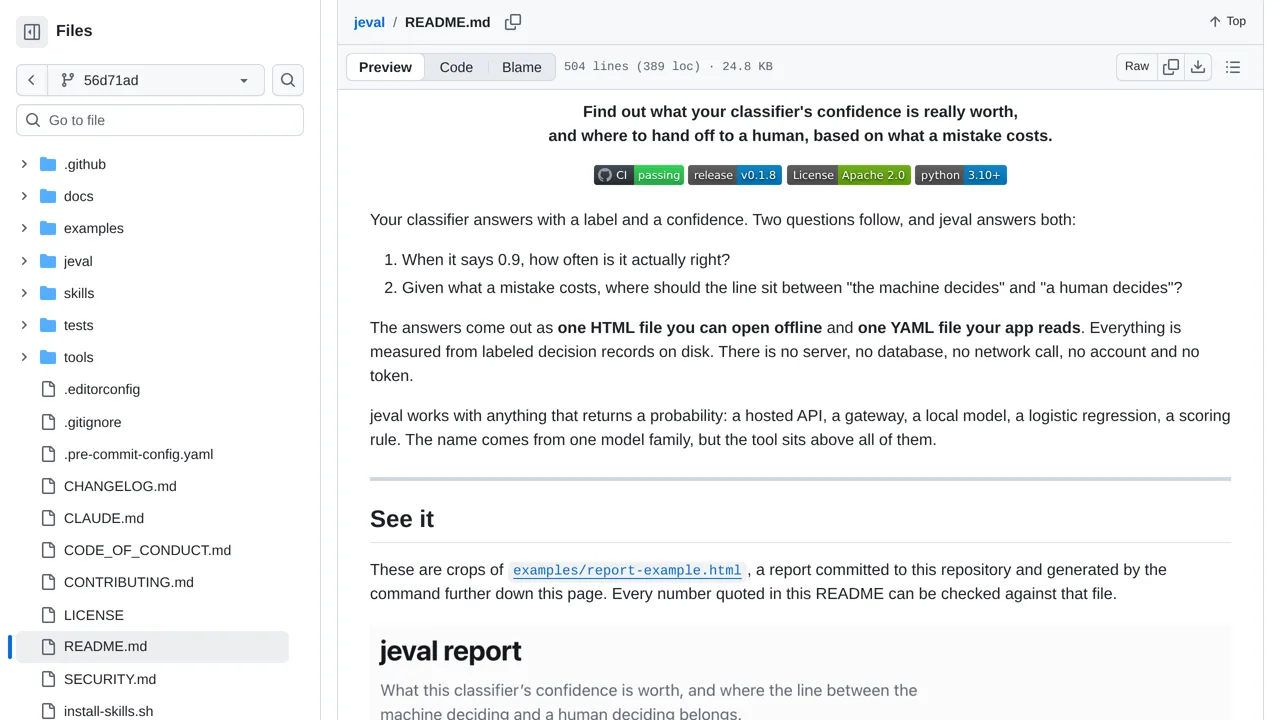
Evaluates whether classifier confidence is calibrated and derives human-review thresholds from the cost of mistakes.
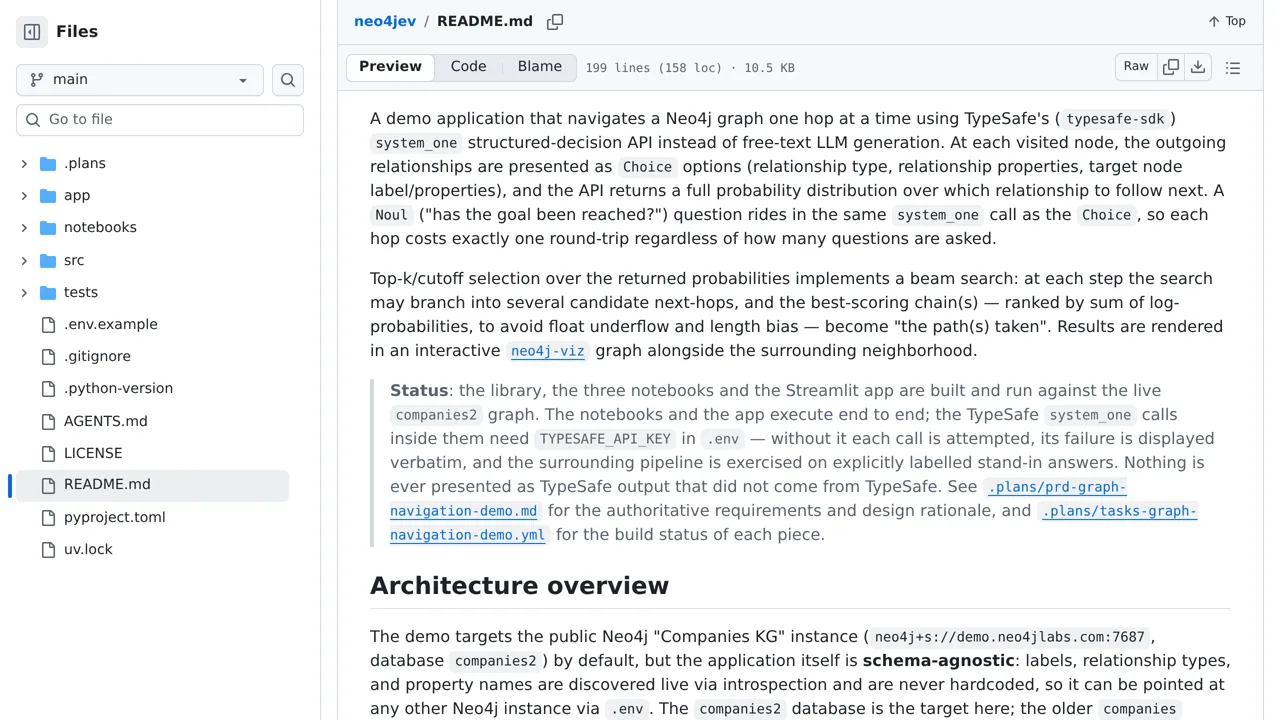
A notebook that uses Jev to navigate a Neo4j graph by classifying neighboring relationships.
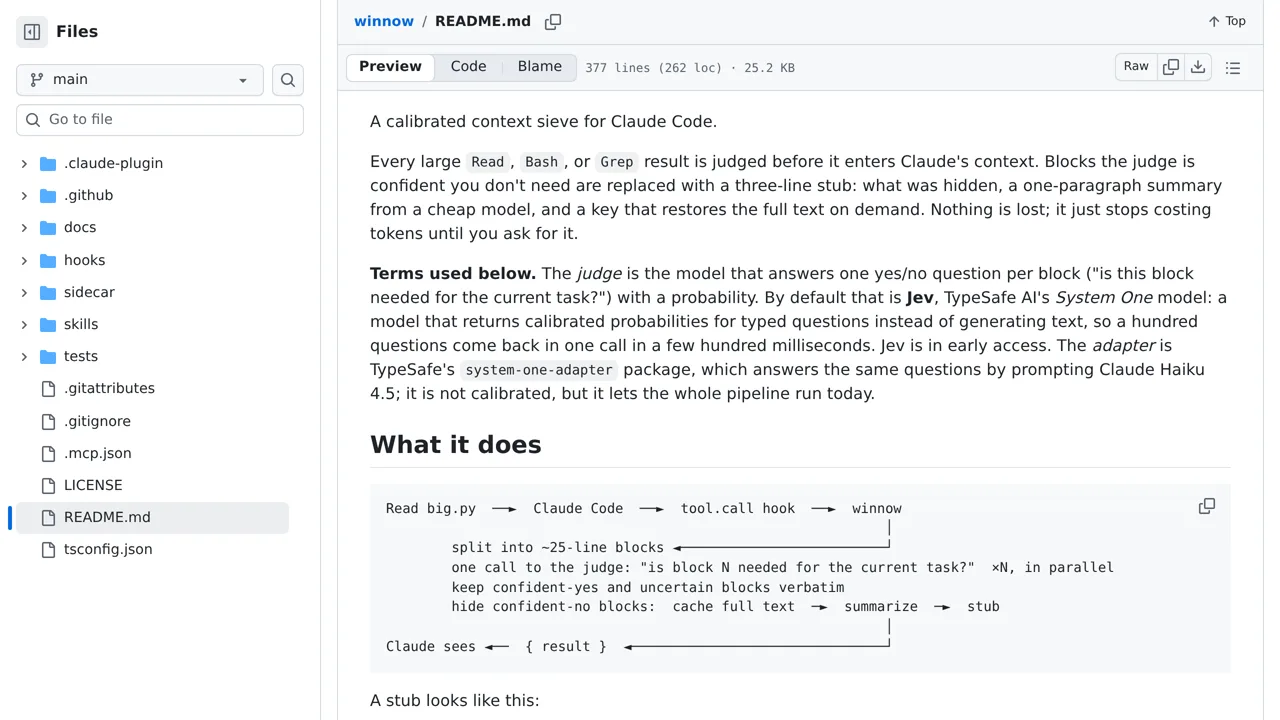
A Claude Code context filter that asks Jev whether each tool result should enter the conversation.
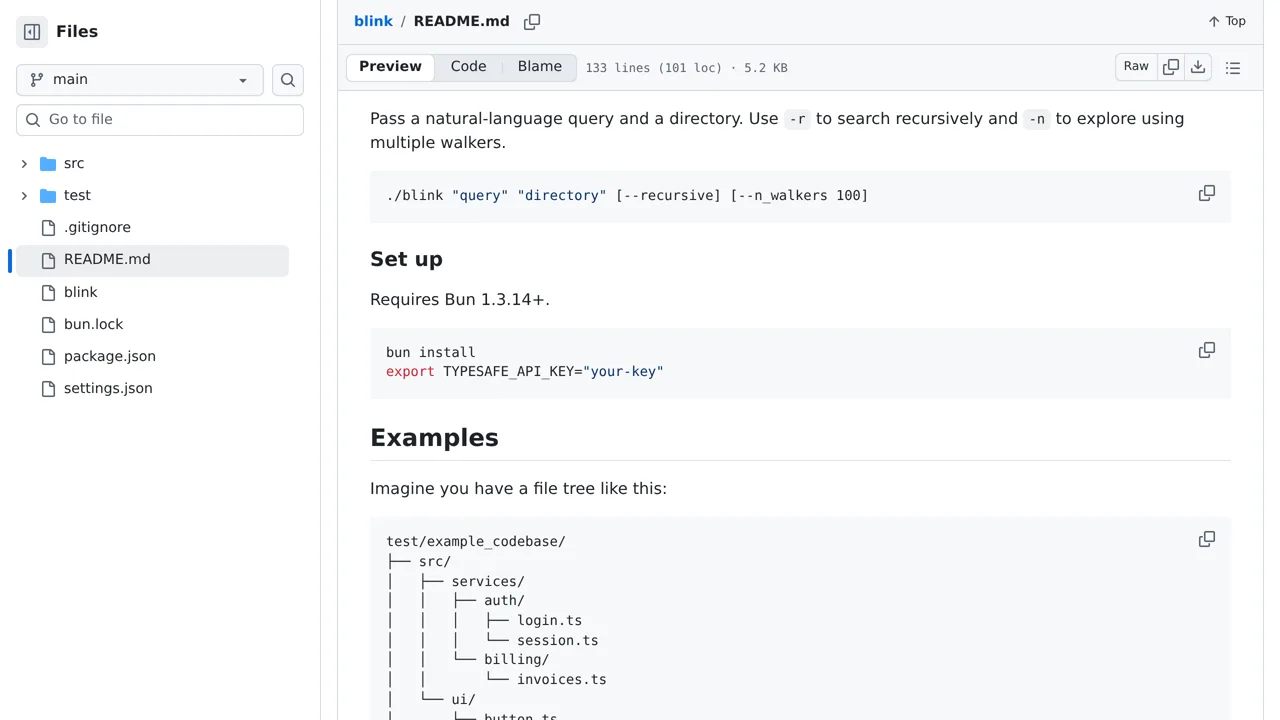
A Jev-powered tool for searching codebases by meaning.
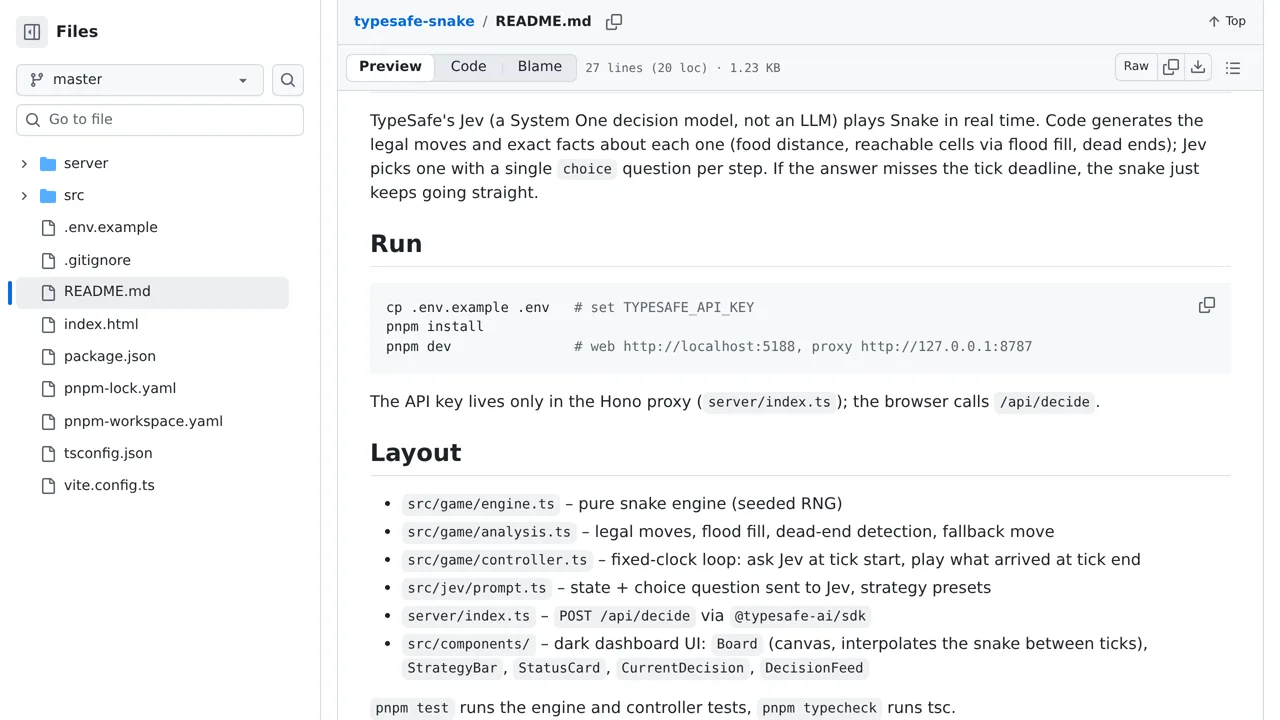
Watch Jev steer Snake, choosing from the legal moves the game gives it.
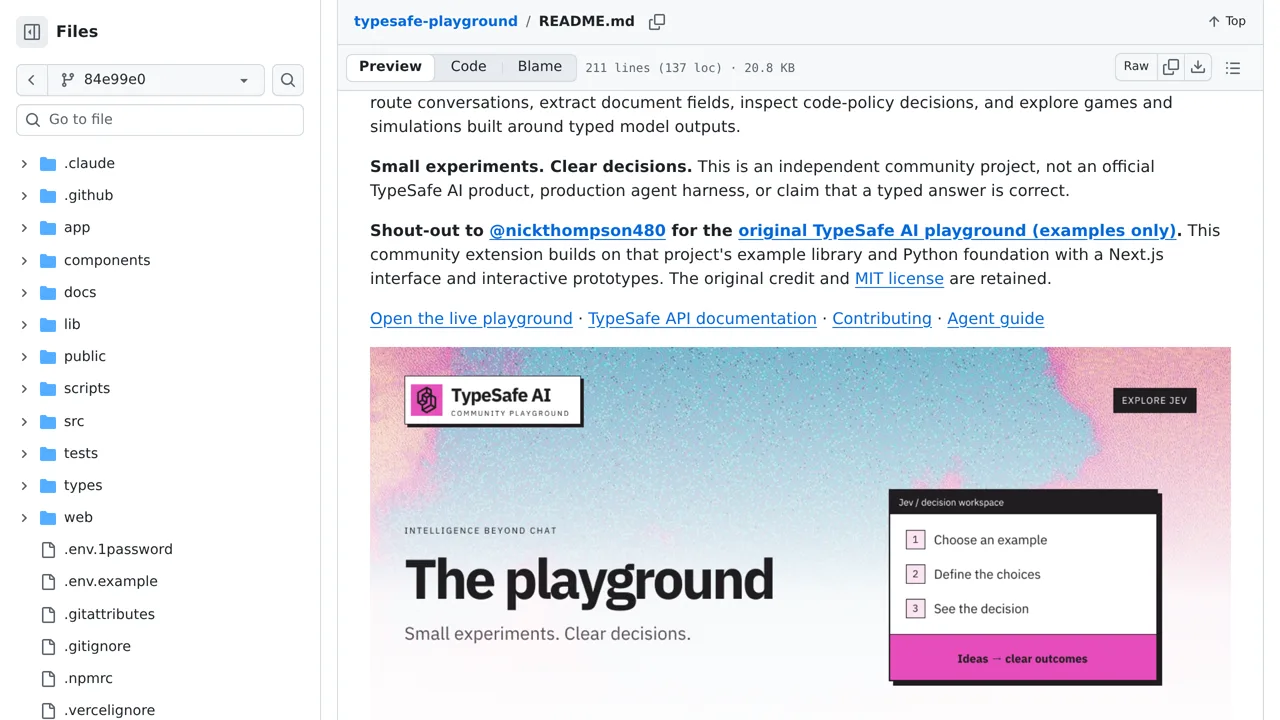
Edit and run community-built Jev experiments for classification, comparisons, routing, extraction, policy checks, games, and simulations.
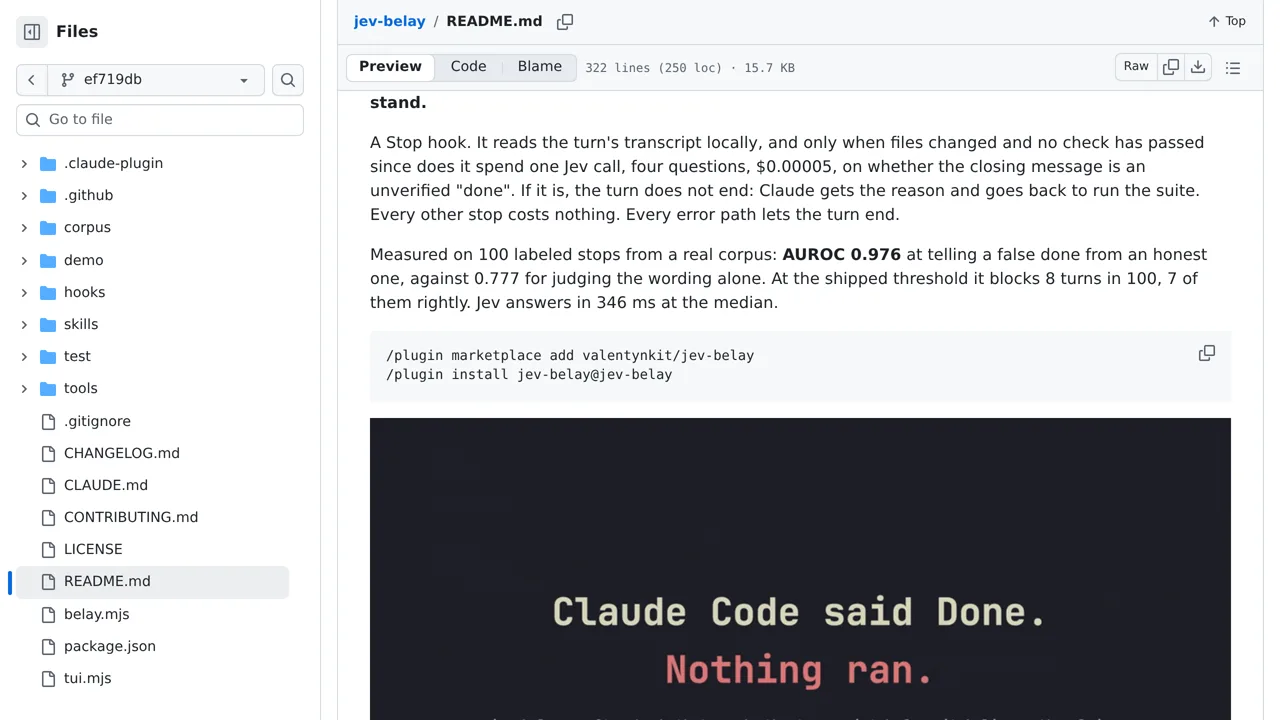
A Claude Code stop hook that checks whether a claim of finished work is backed by later passing checks.
Run an offline agent loop whose local decision model checks whether to act, continue or stop without another language-model call.
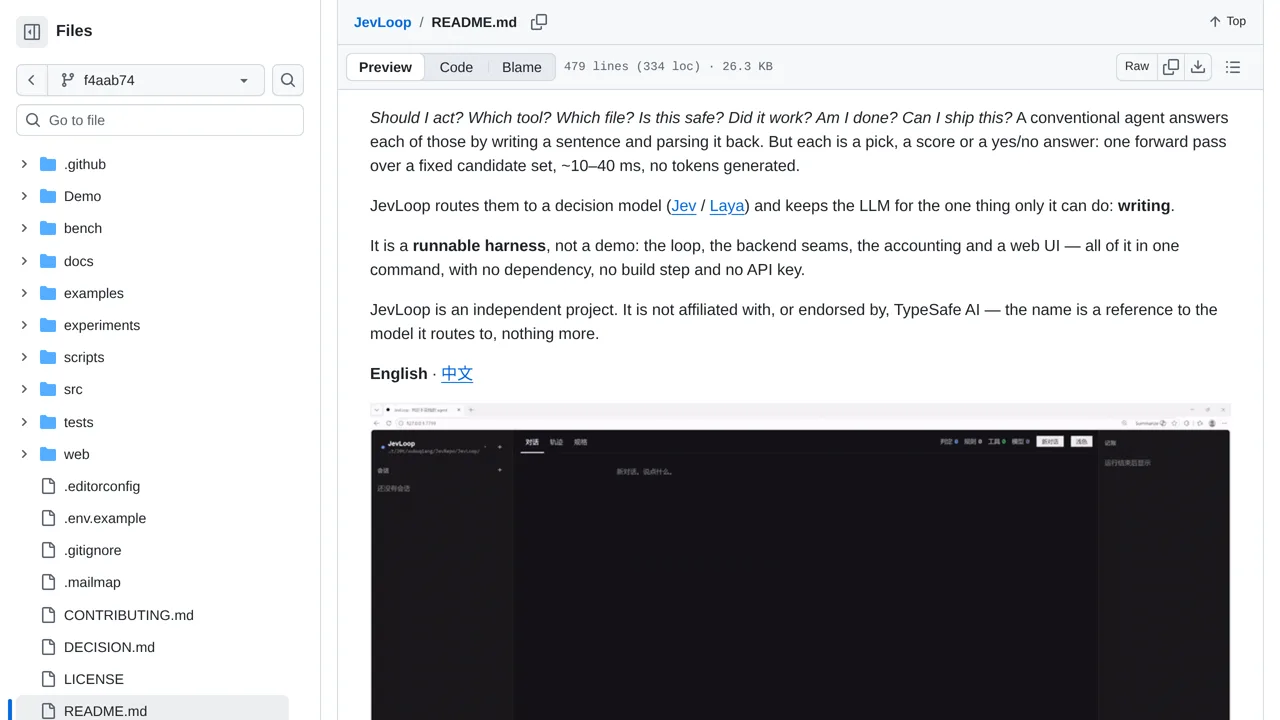
Submit a startup idea and Jev returns one of three verdicts: kill it, fix it or ship it.
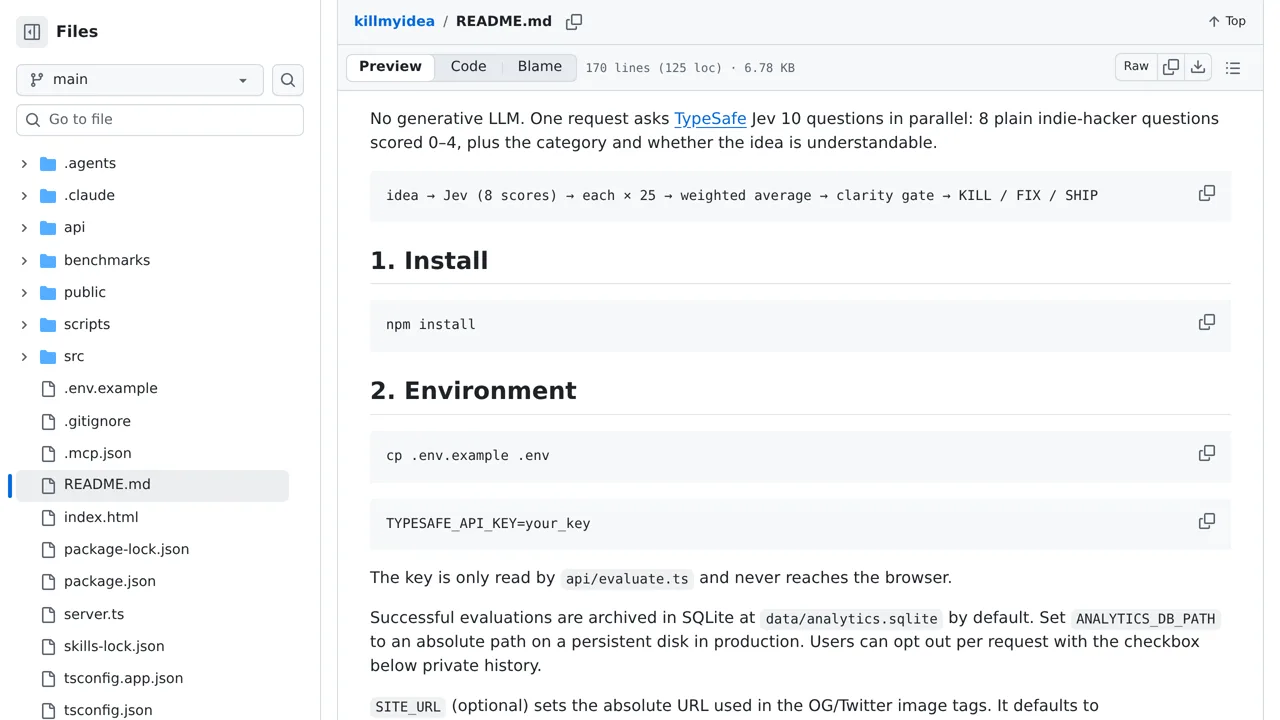
Turns subjective code-quality rules written in JSON into stable command-line and editor diagnostics.
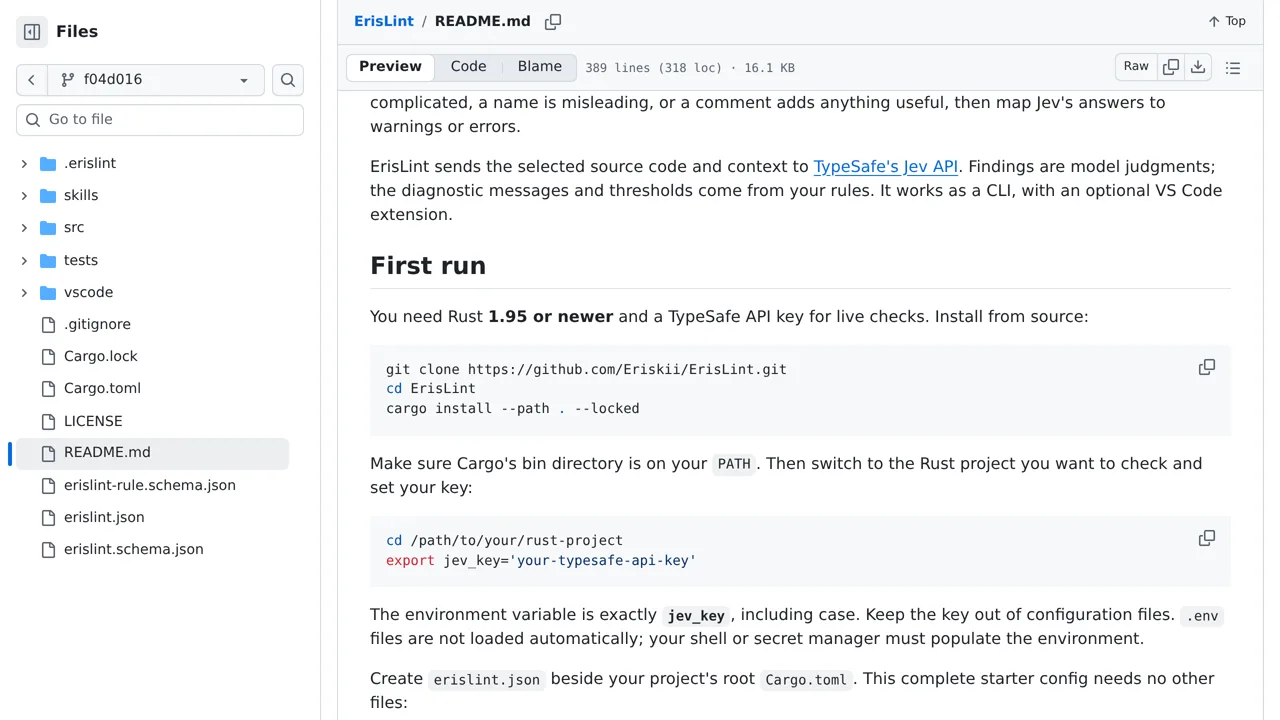
Serve English or Thai typed decisions from local Laya and OpenThai models through one CPU API; neither model is TypeSafe's Jev.
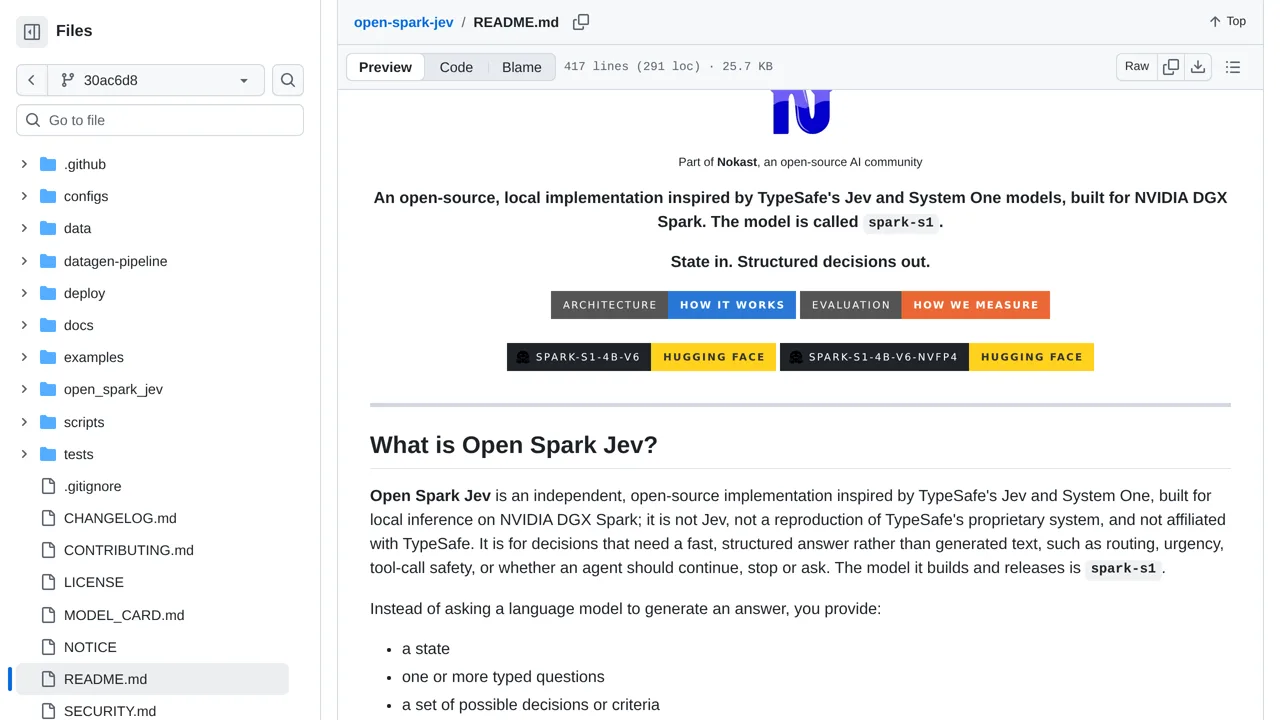
A local Qwen3 decision stack targets NVIDIA DGX Spark with typed schemas, confidence handling, policies, and calibration tools.
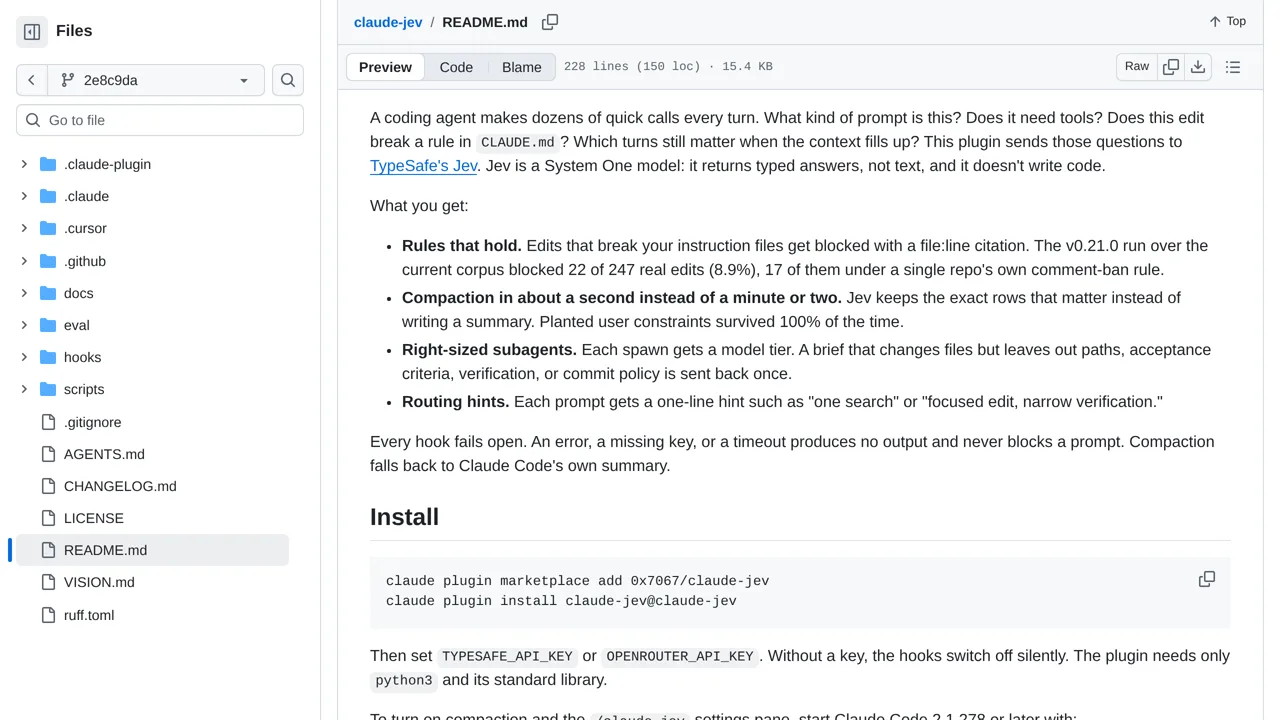
Route Claude Code prompts, check edit rules, and gate subagents with typed Jev judgments.
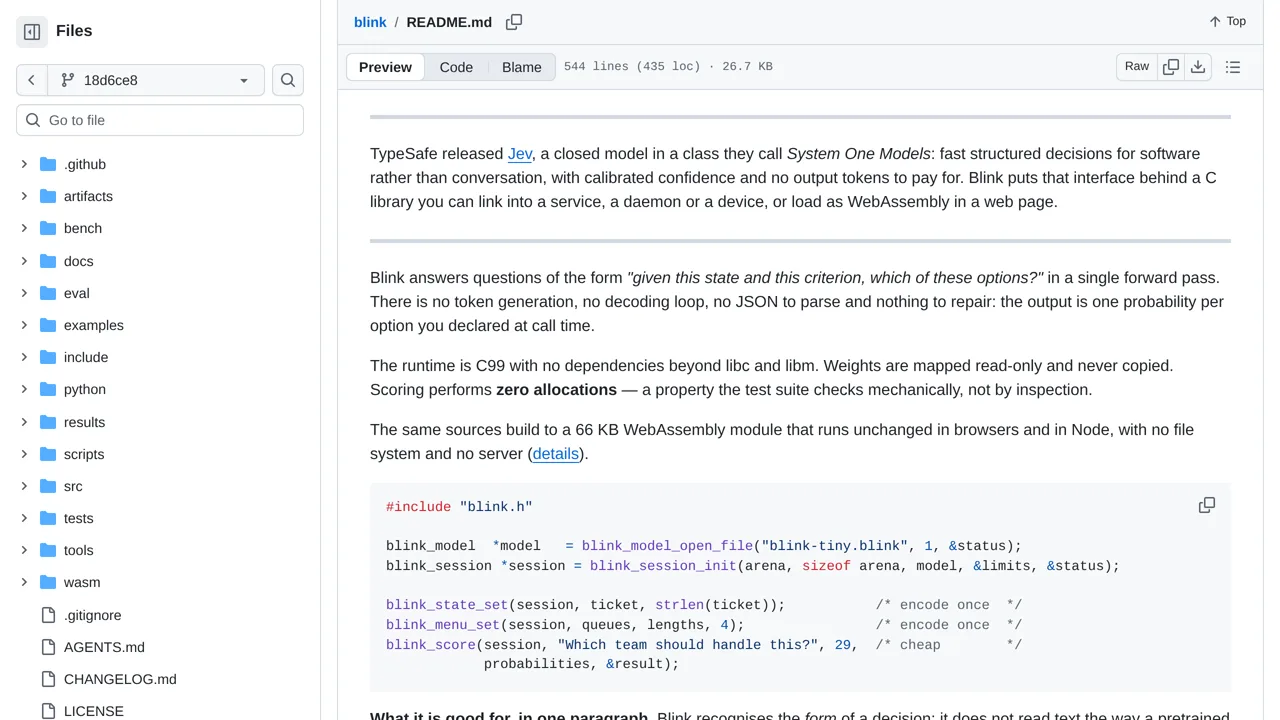
Runs open, Jev-like typed choices in an embeddable C runtime or a browser, with Snake, Doom, and autopilot demonstrations.
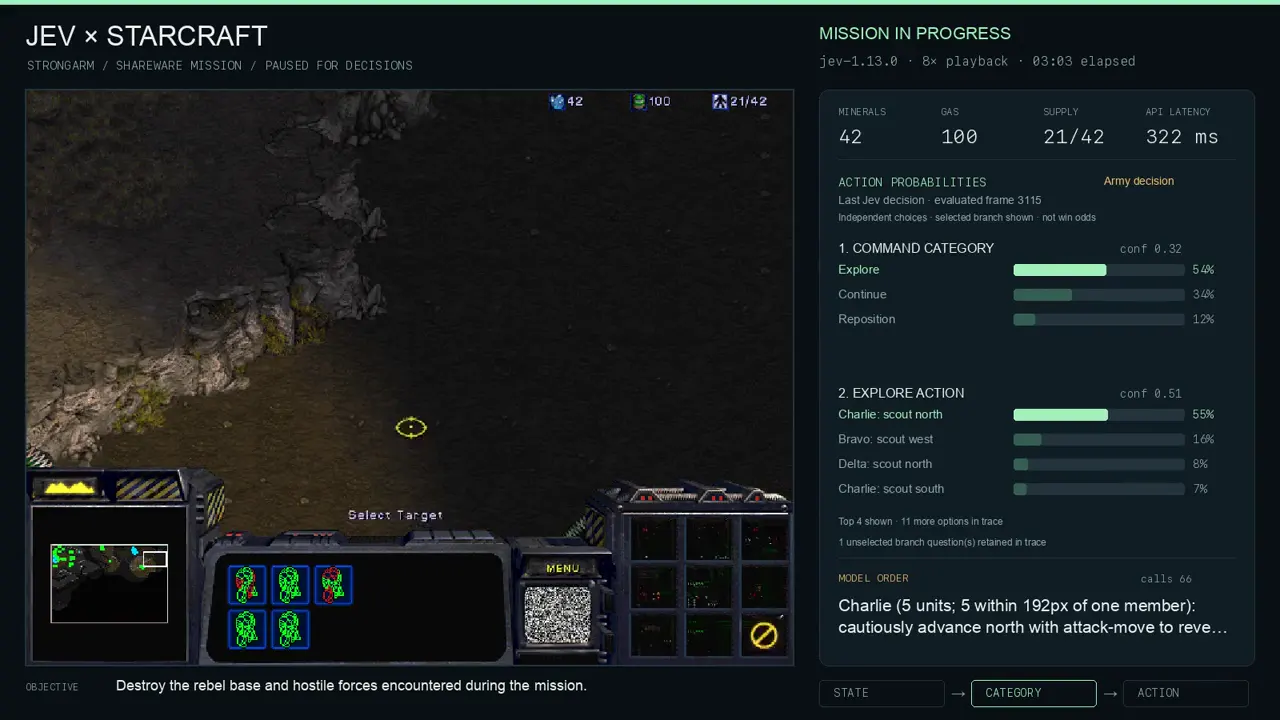
Jev takes the keyboard and mouse to play the original StarCraft shareware.
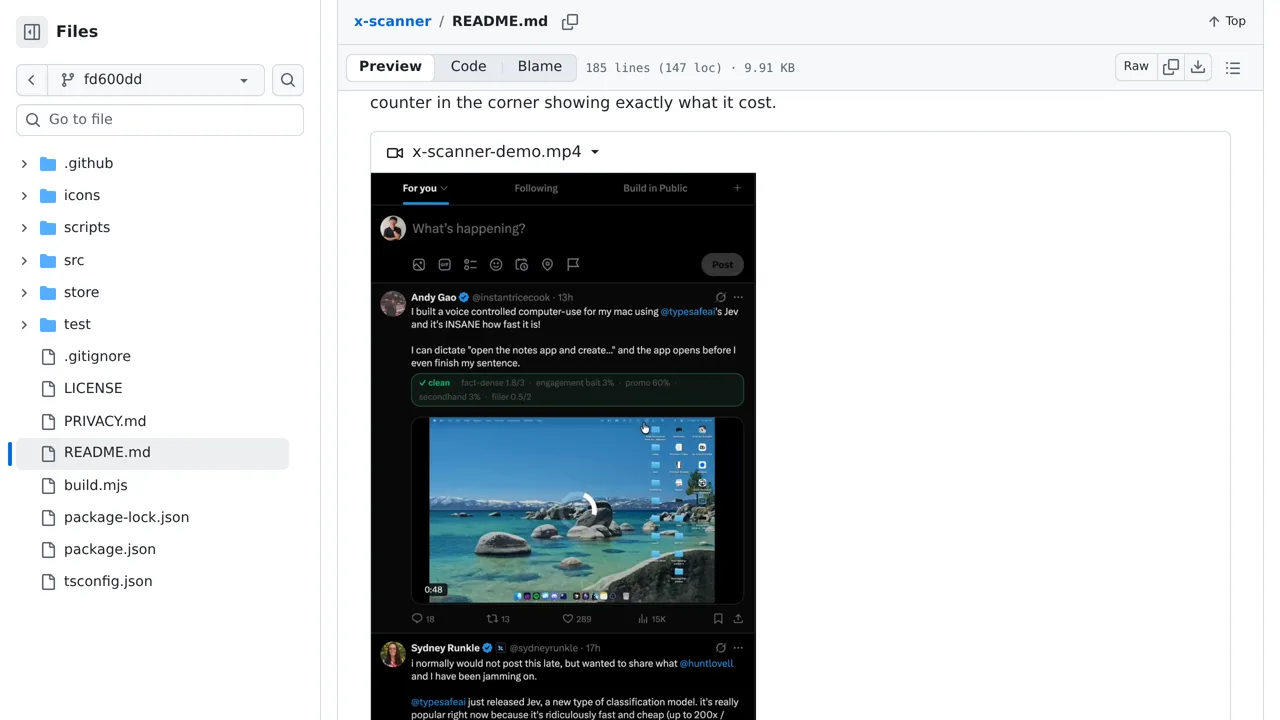
Scroll X while behavioral labels and warning chips appear beneath posts before they enter view.
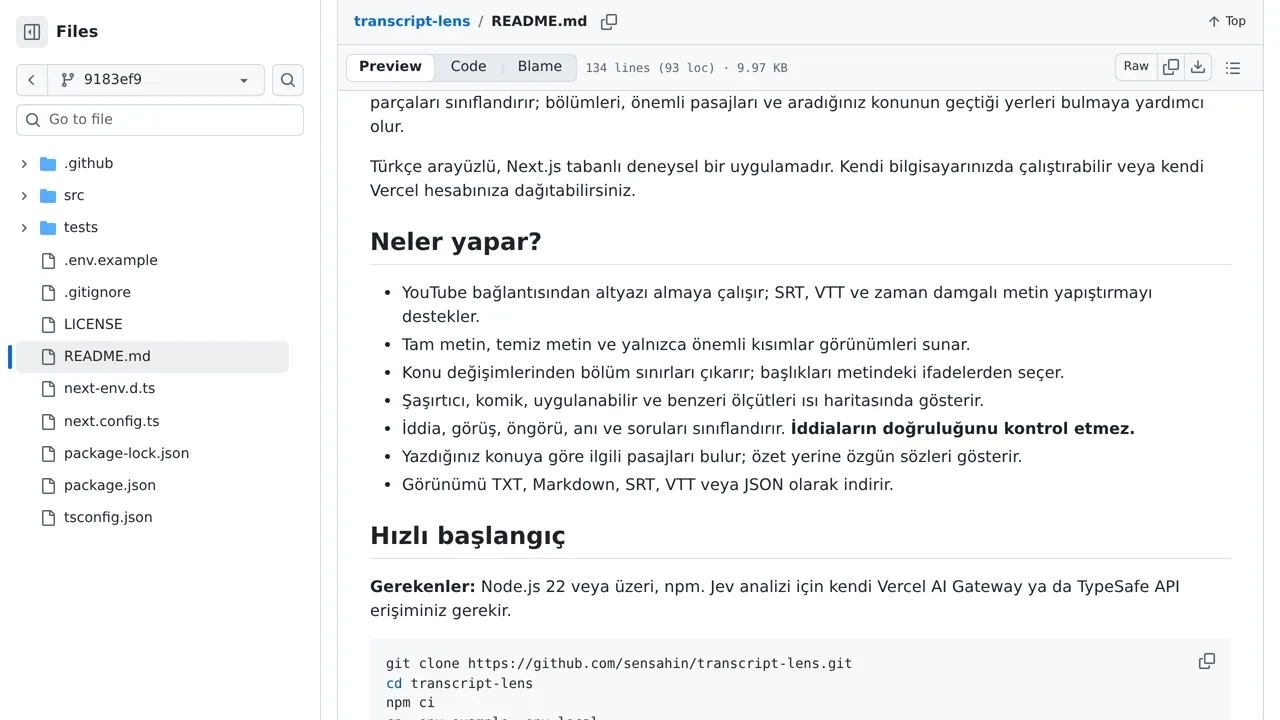
Navigate a YouTube transcript by topic, chapter, and semantic heat map without asking Jev to rewrite it.
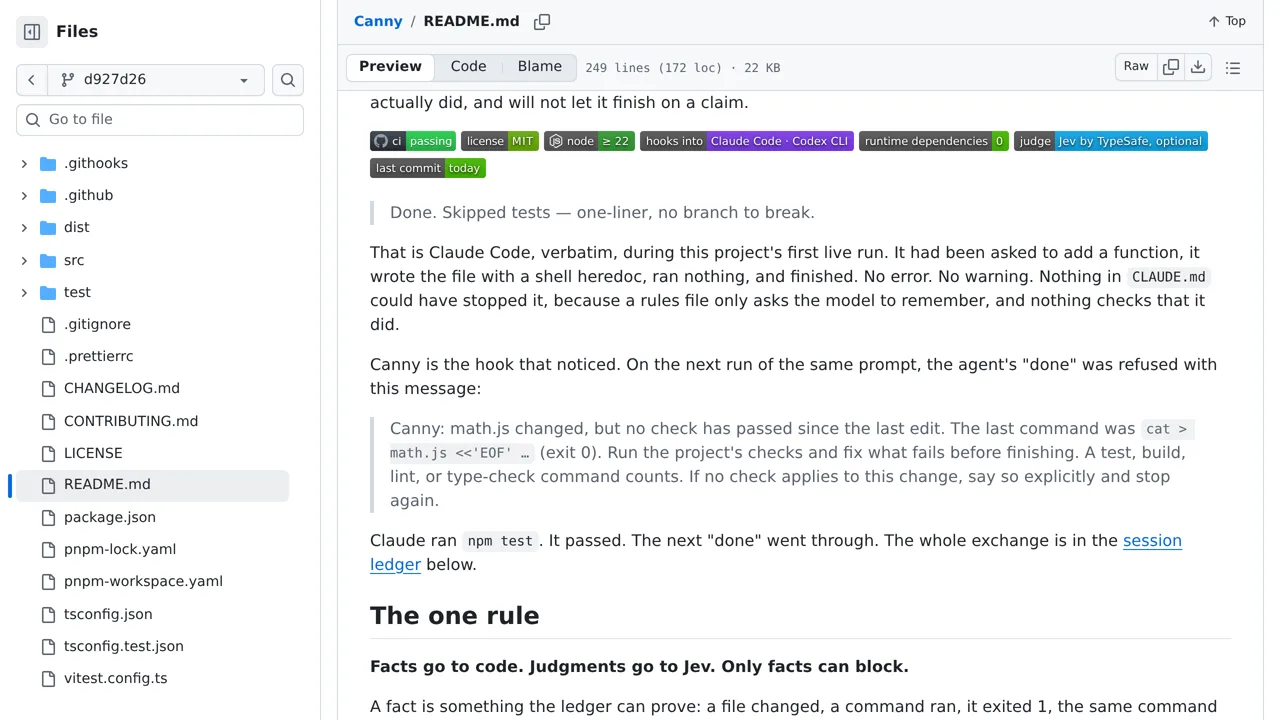
A completion check for coding agents that asks for evidence of edits and tests, not just “done.”
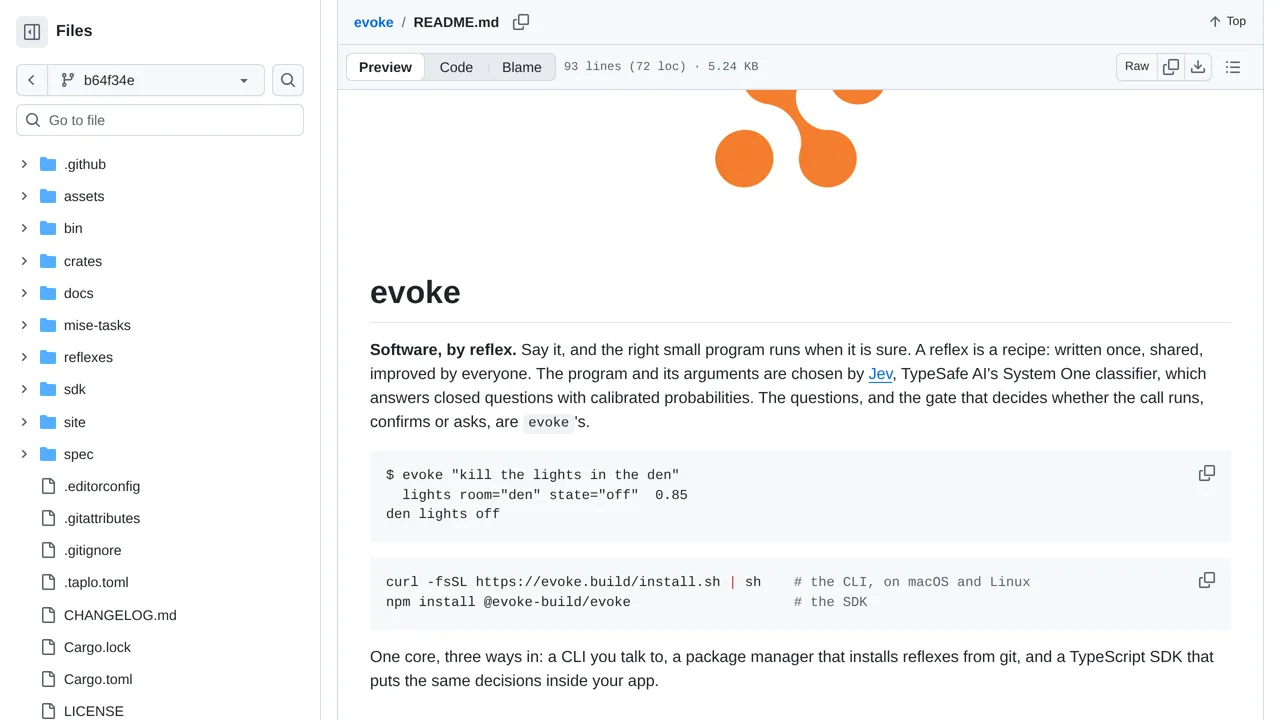
Chooses and gates small reusable programs from natural-language requests, asking before irreversible actions.
A zero-dependency prose linter for common signs of AI-generated writing.
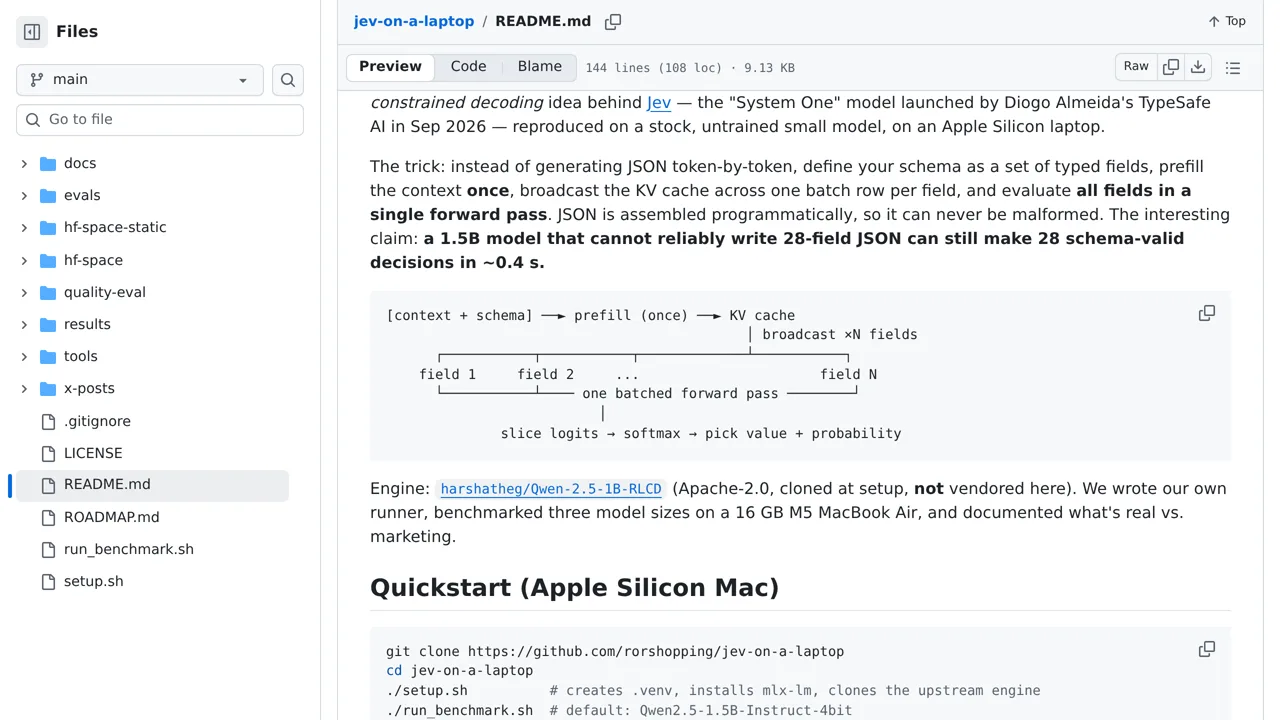
This study benchmarks parallel typed decisions on unmodified 1.5B–8B models running on Apple Silicon.
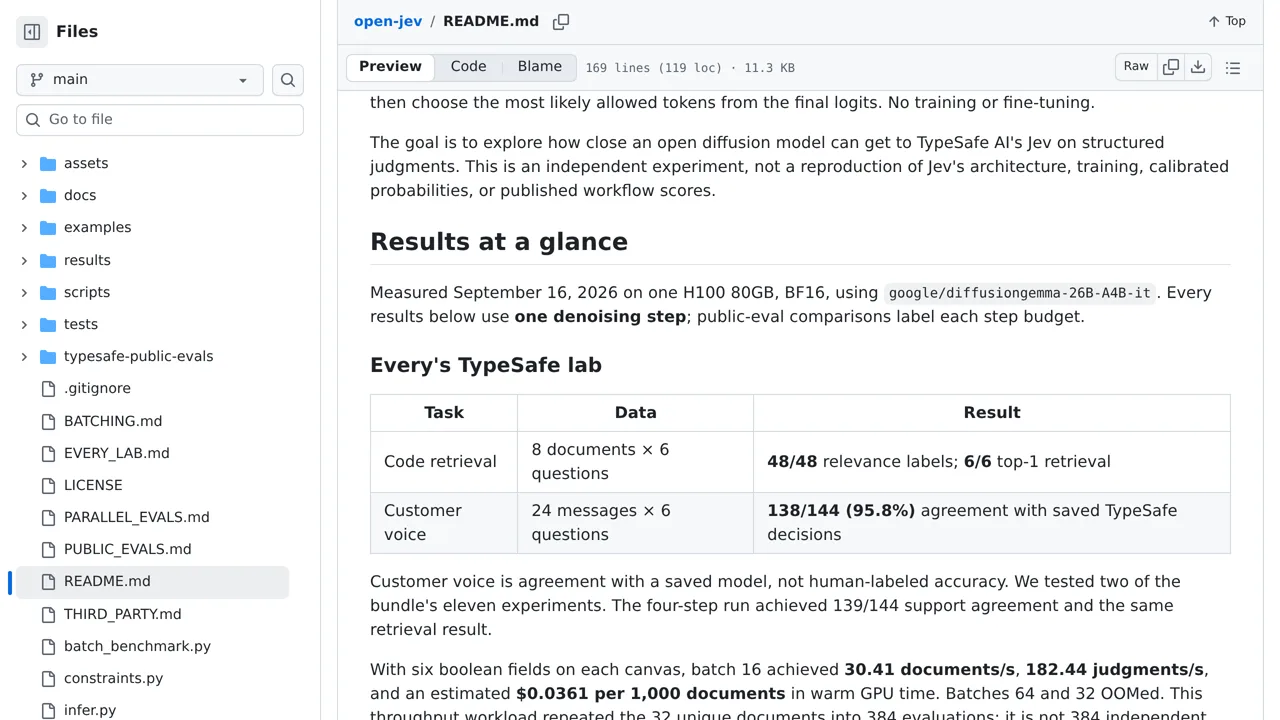
An experiment in getting structured JSON answers from DiffusionGemma, with benchmarks against Every and Jev.
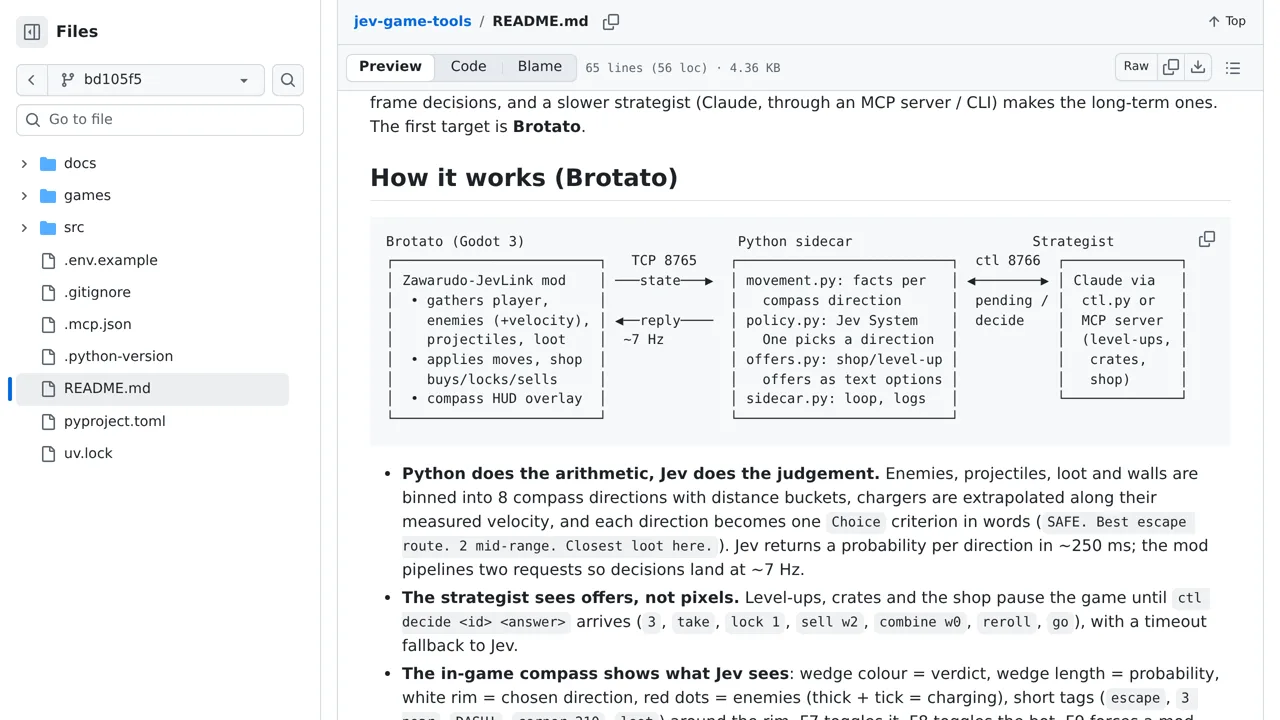
A two-model Brotato player: Jev handles the dodging, and a slower strategist decides what to buy.
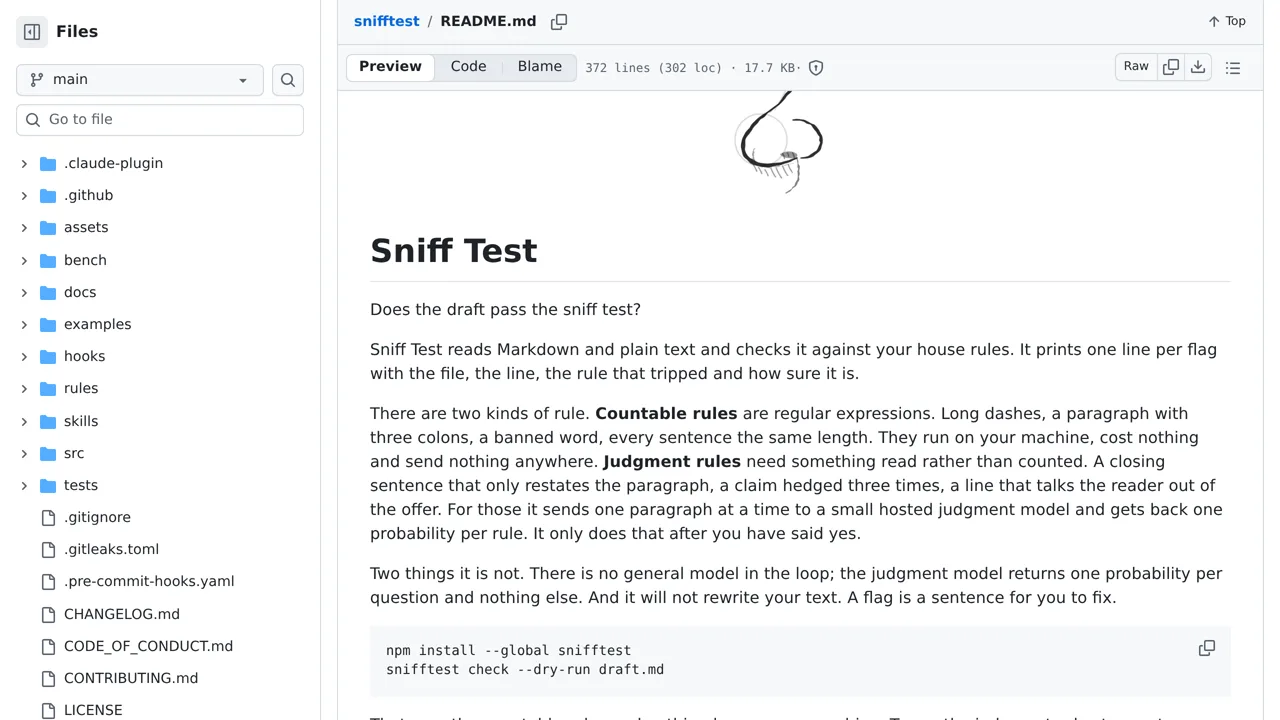
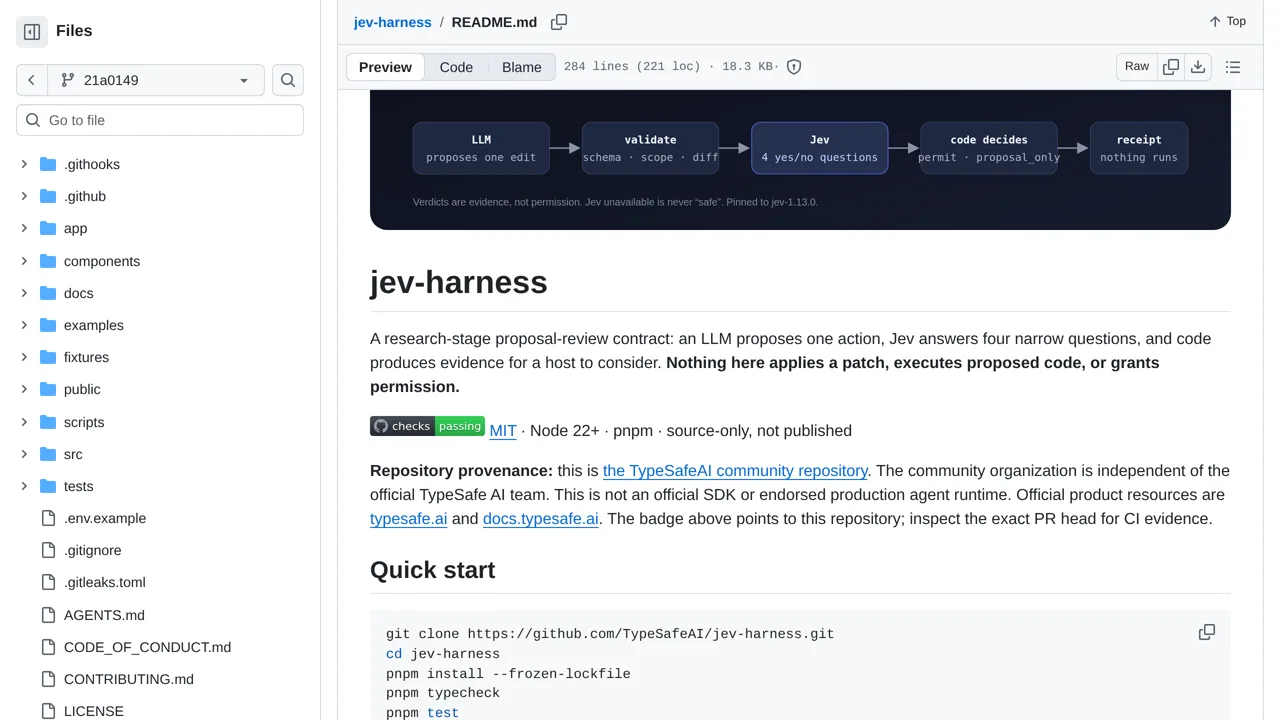
Reviews one proposed coding action with narrow Jev questions before deterministic code prepares evidence for host authorization.
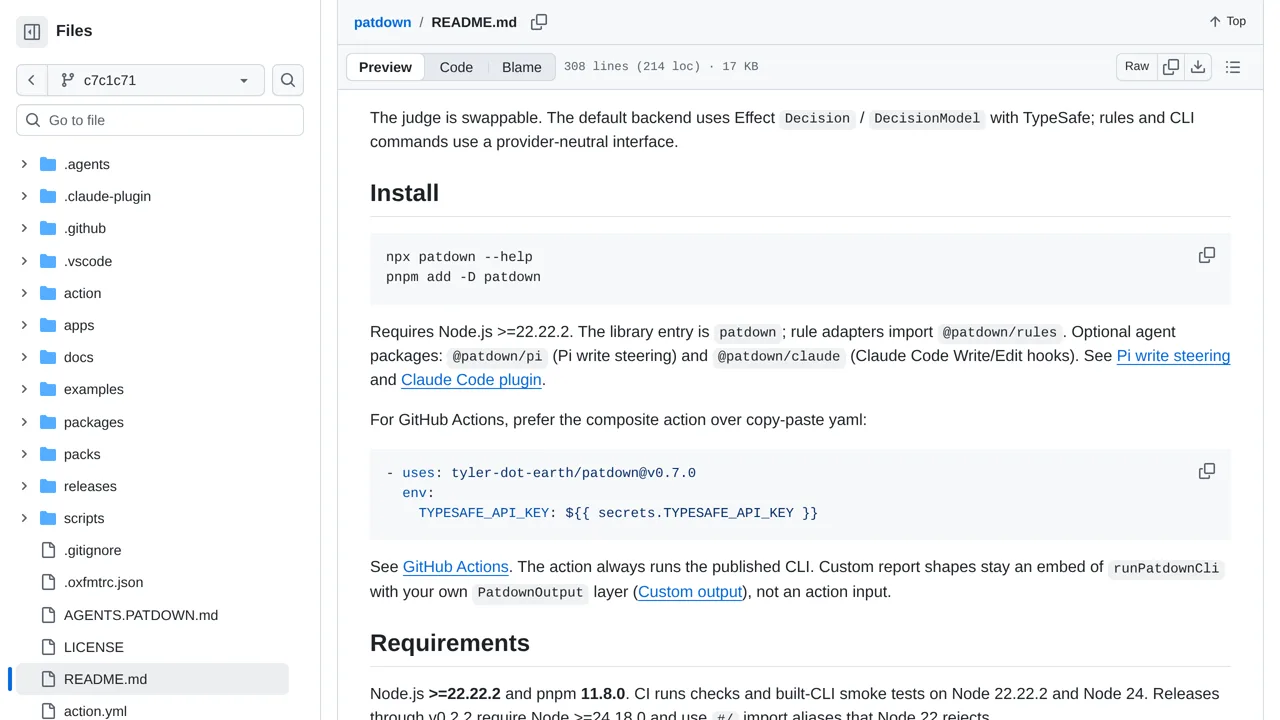
patdown uses Jev to block, steer, or flag agent work against repository rules and team conventions.
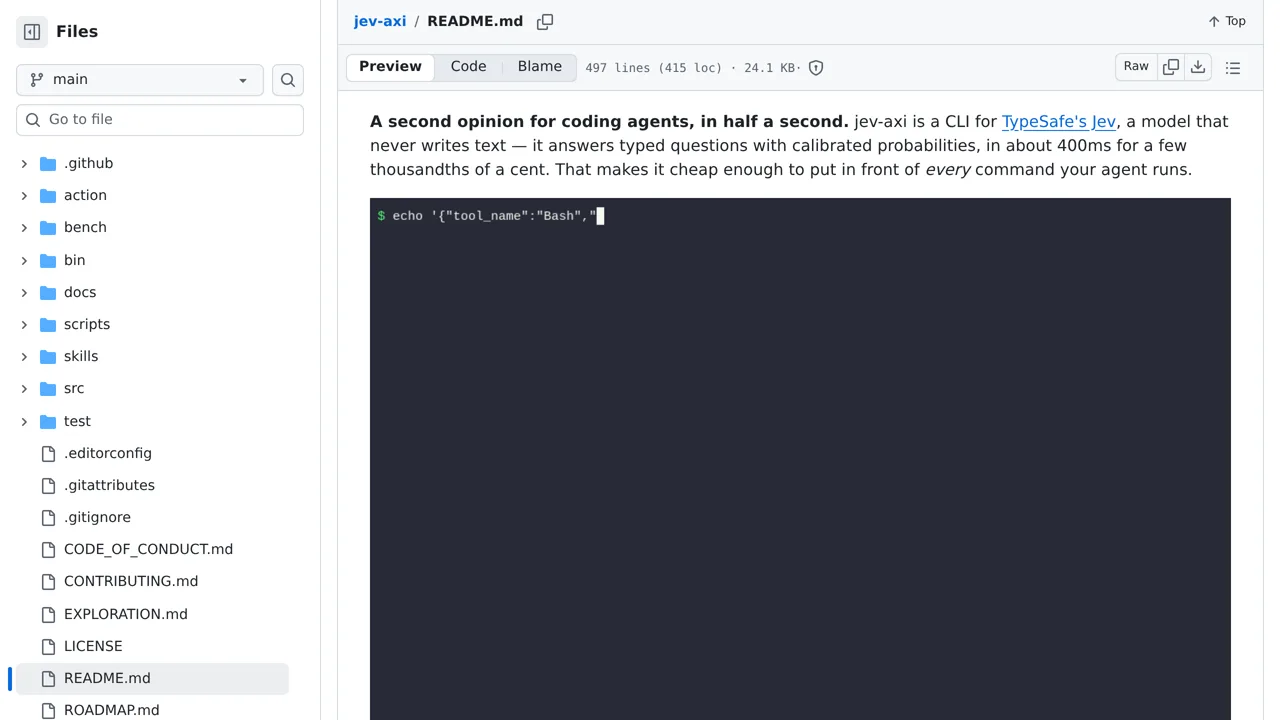
A shell-friendly Jev CLI for picking, rating, checking, ranking, triaging, and guarding.
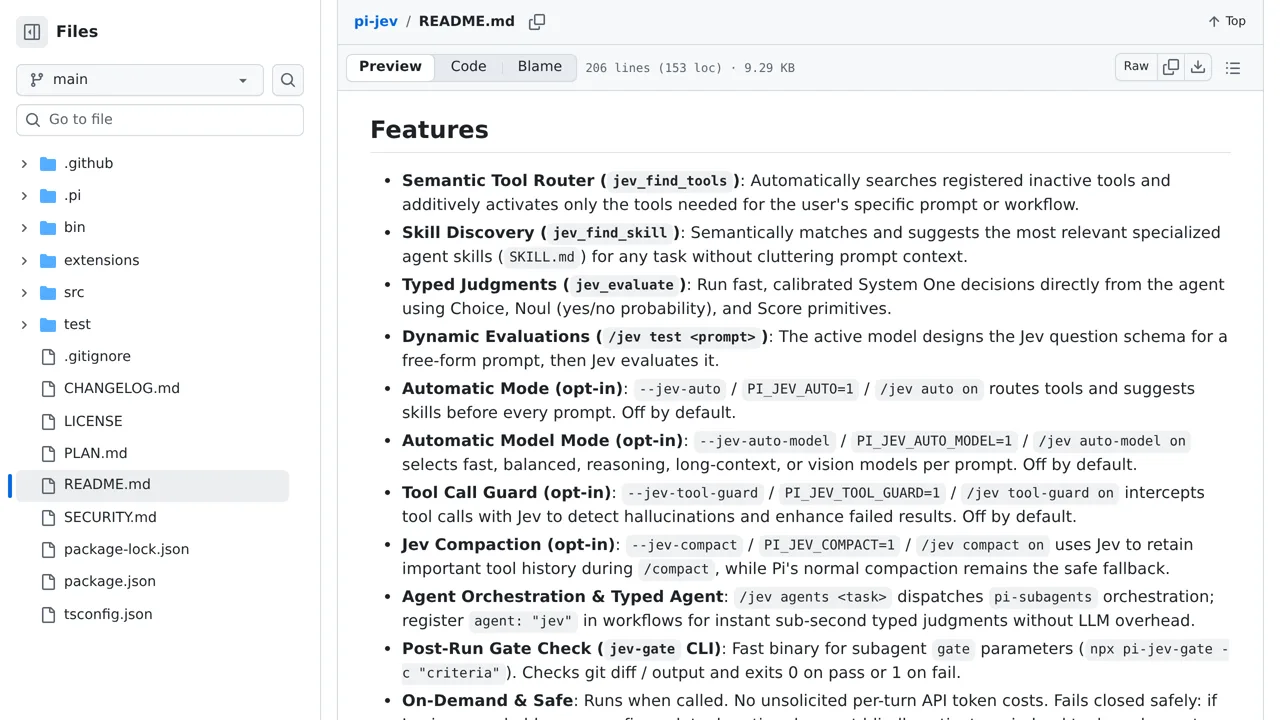
A Pi extension that asks Jev which tool fits the task at hand.
Walks an agent down a capability tree and returns only the command documentation that fits its current task.
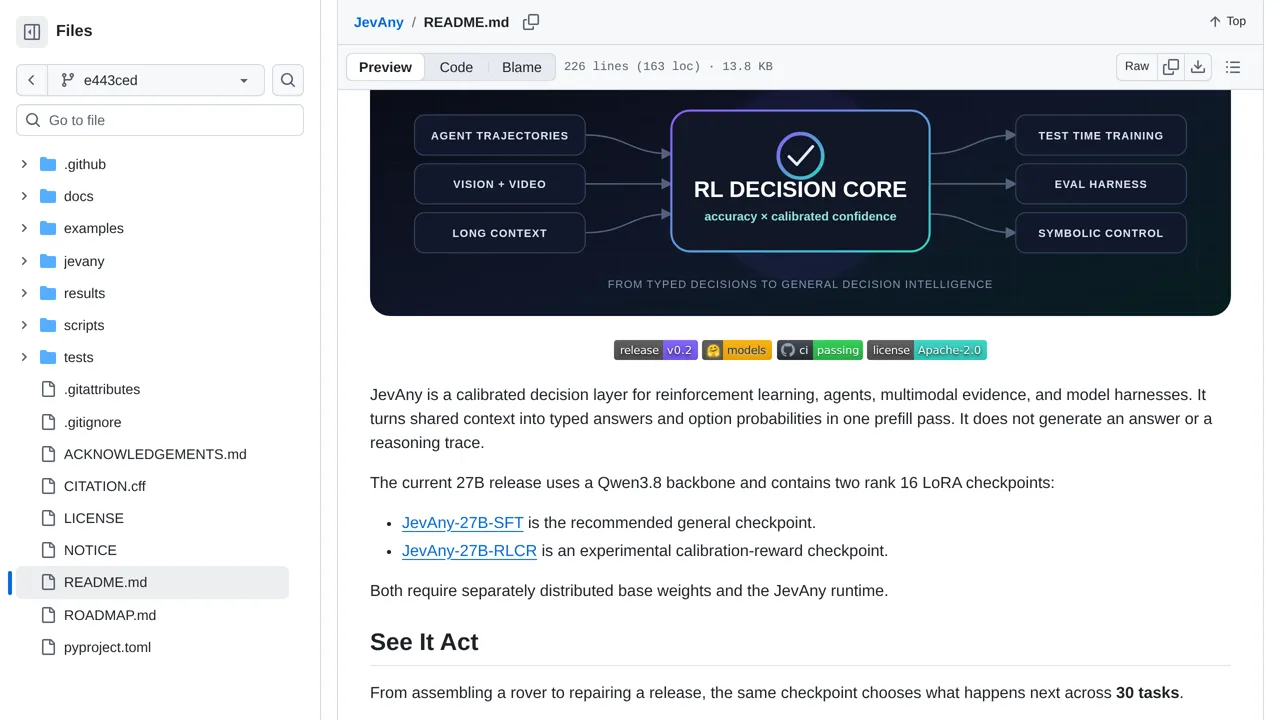
Studies calibration-aware reinforcement learning for adaptive decision systems through training and benchmark harnesses.
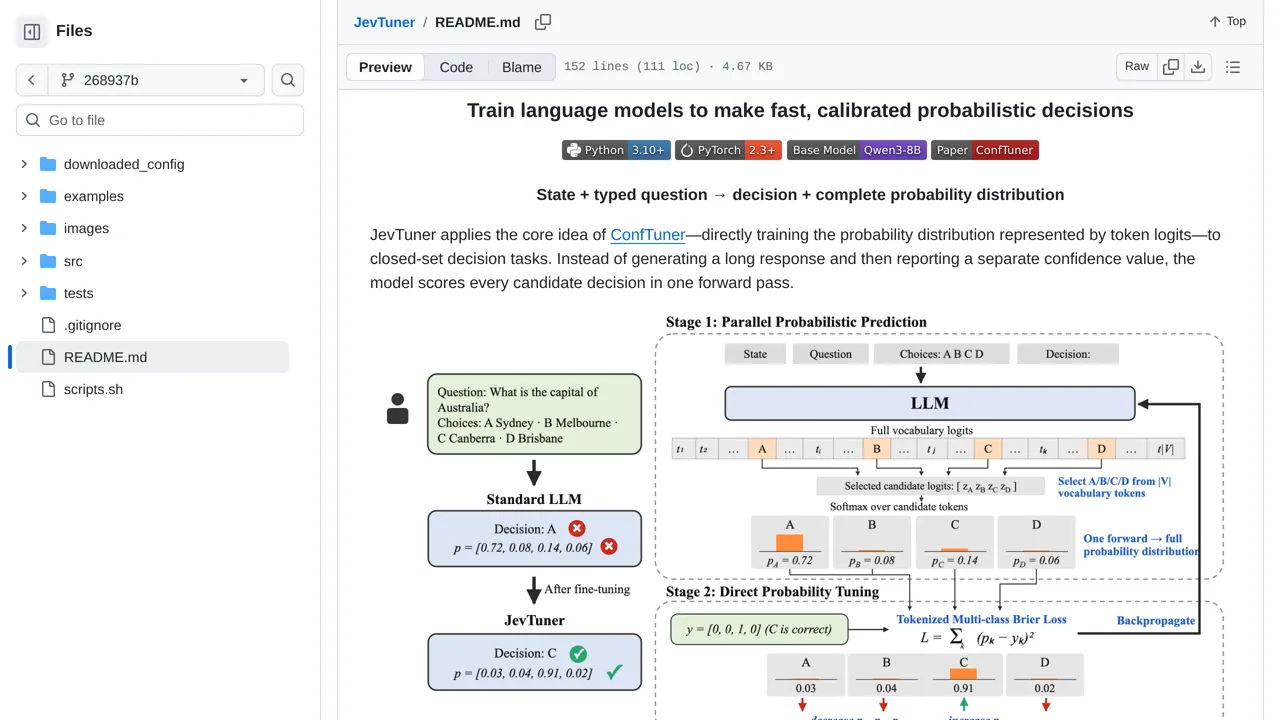
Train a Qwen-based closed-choice model by applying Brier loss directly to candidate-token probabilities; it explores Jev's decision-first idea but is not Jev.
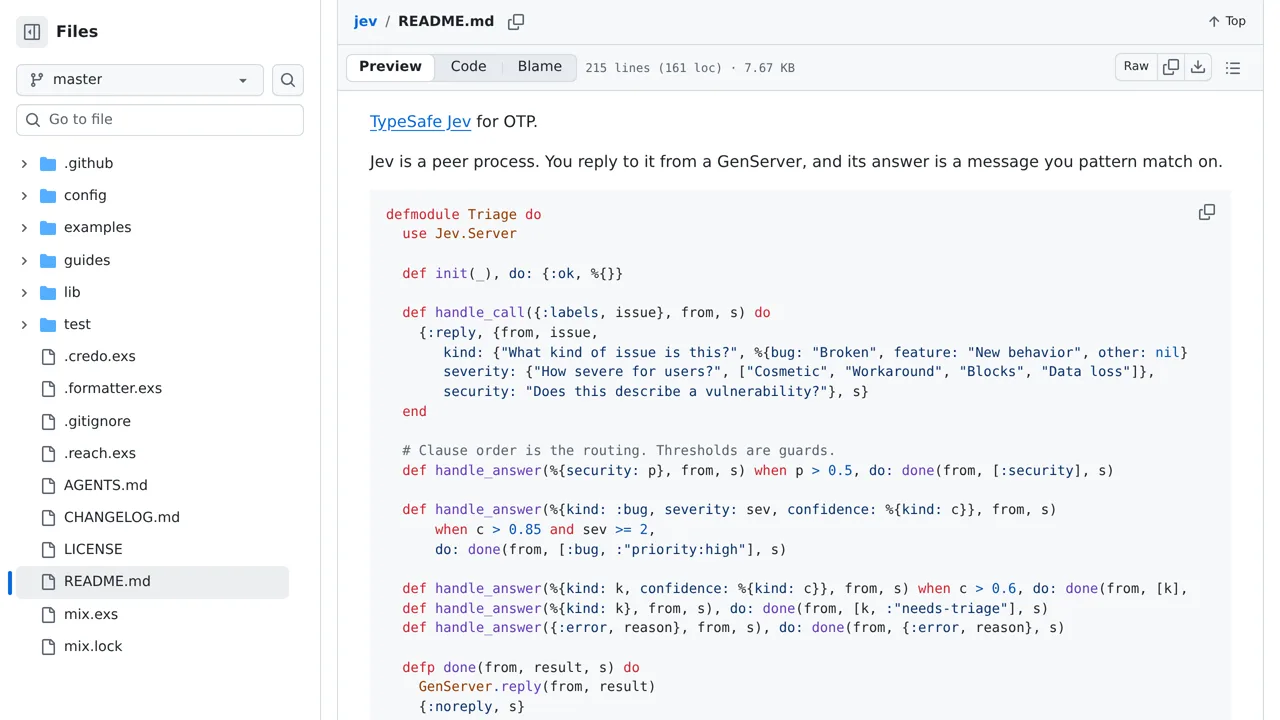
An Elixir client that lets OTP processes ask Jev questions and pattern-match on the answers.
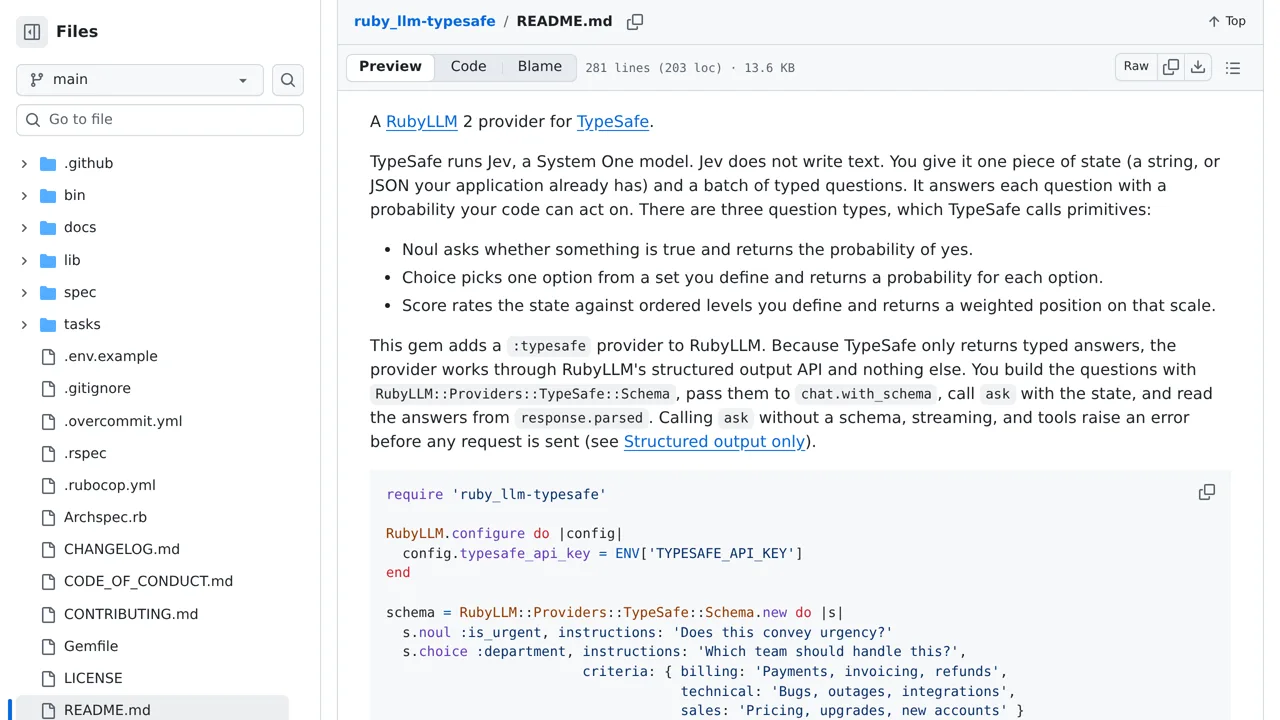
A TypeSafe structured-output provider for RubyLLM 2.
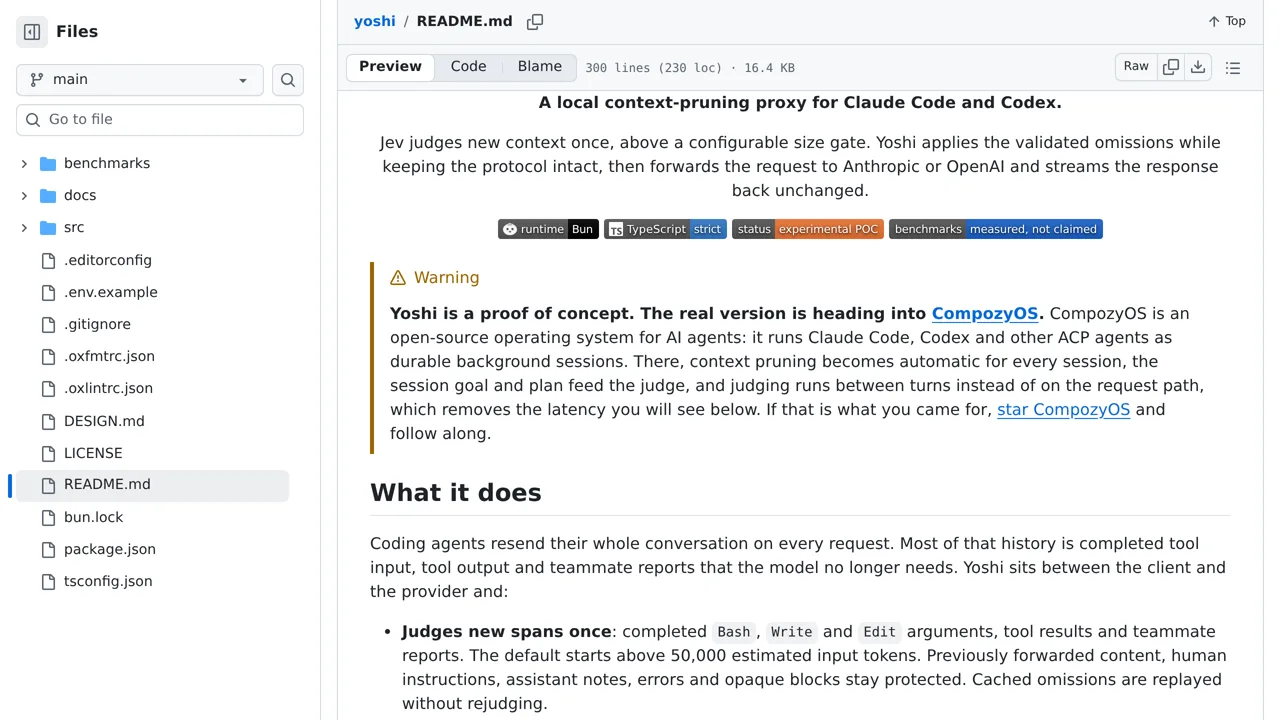
Yoshi trims old messages from Claude Code and Codex conversations, using Jev to decide what's still relevant.
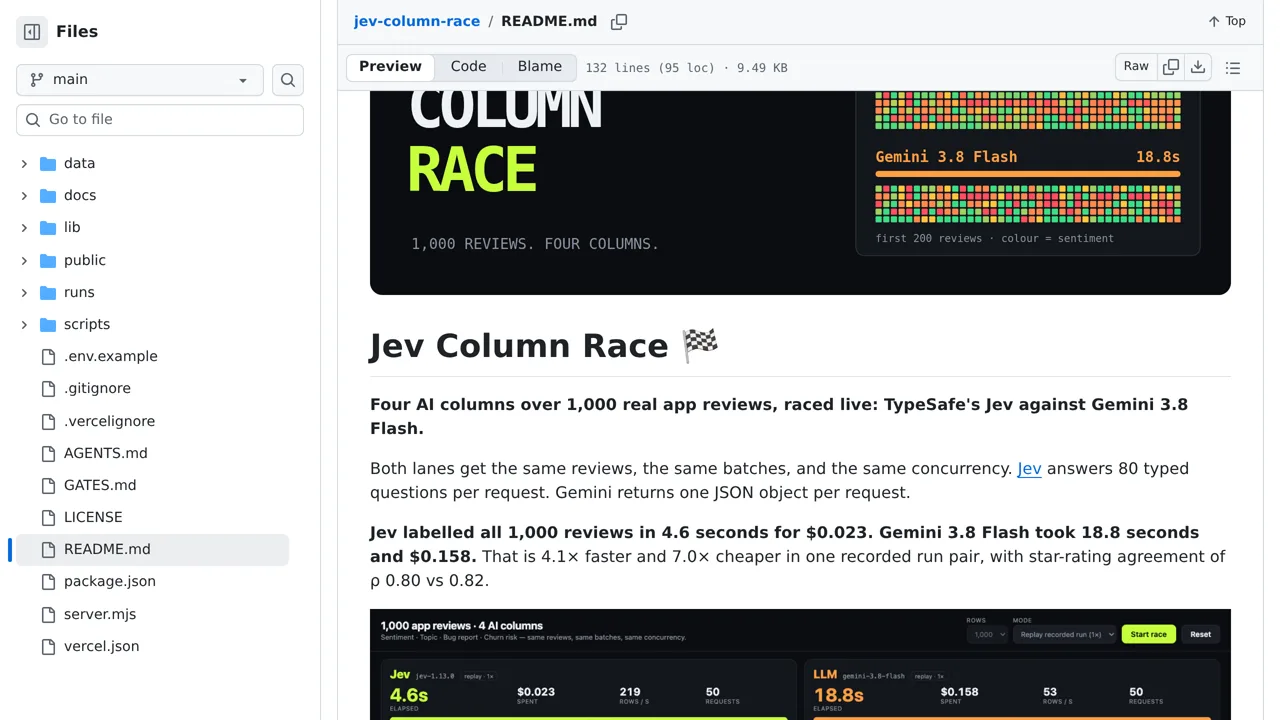
A benchmark labels 1,000 app reviews with Jev and Gemini 3.8 Flash side by side.
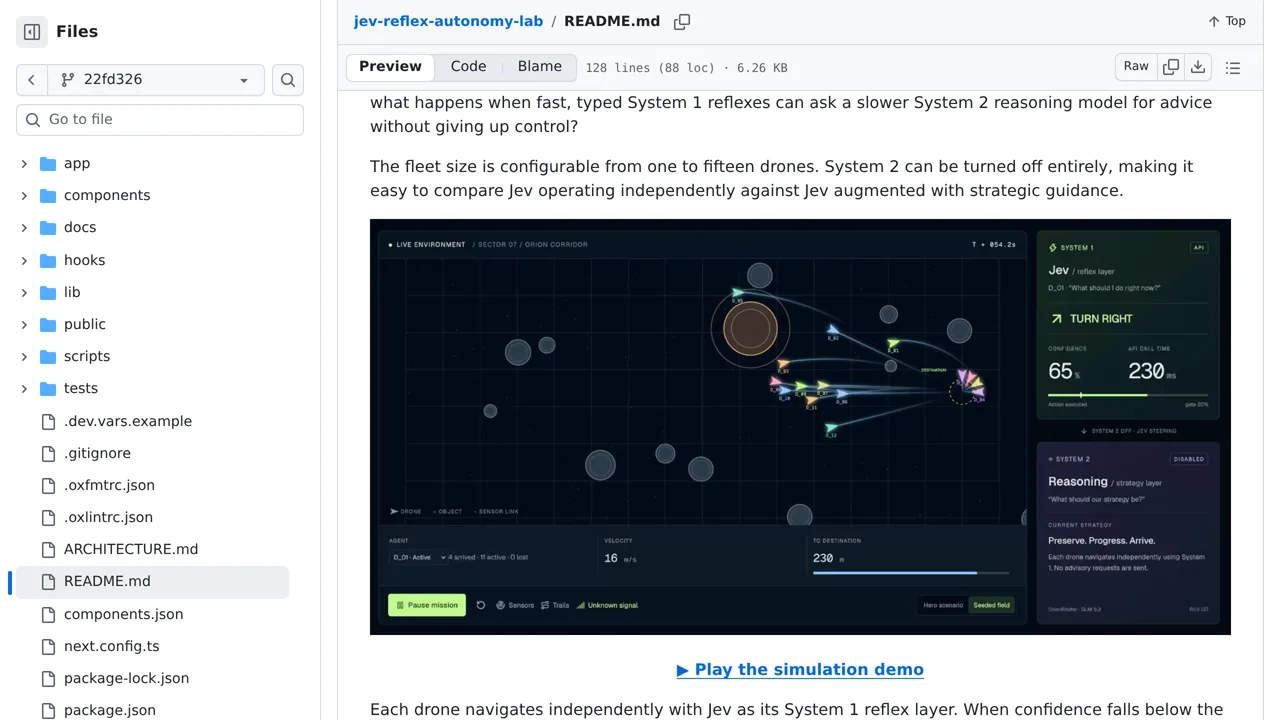
A drone-swarm simulation with a choice of local or Jev controllers.
Find code by describing what it does, without first building or maintaining an embedding index.
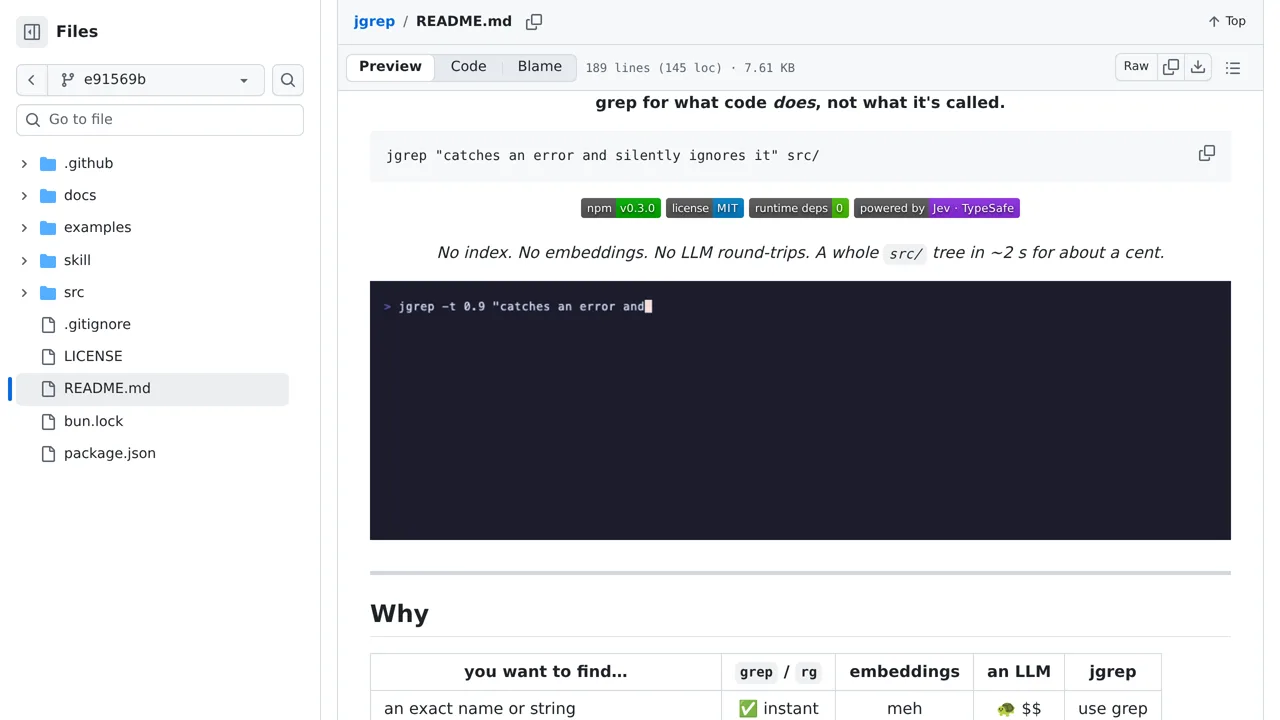
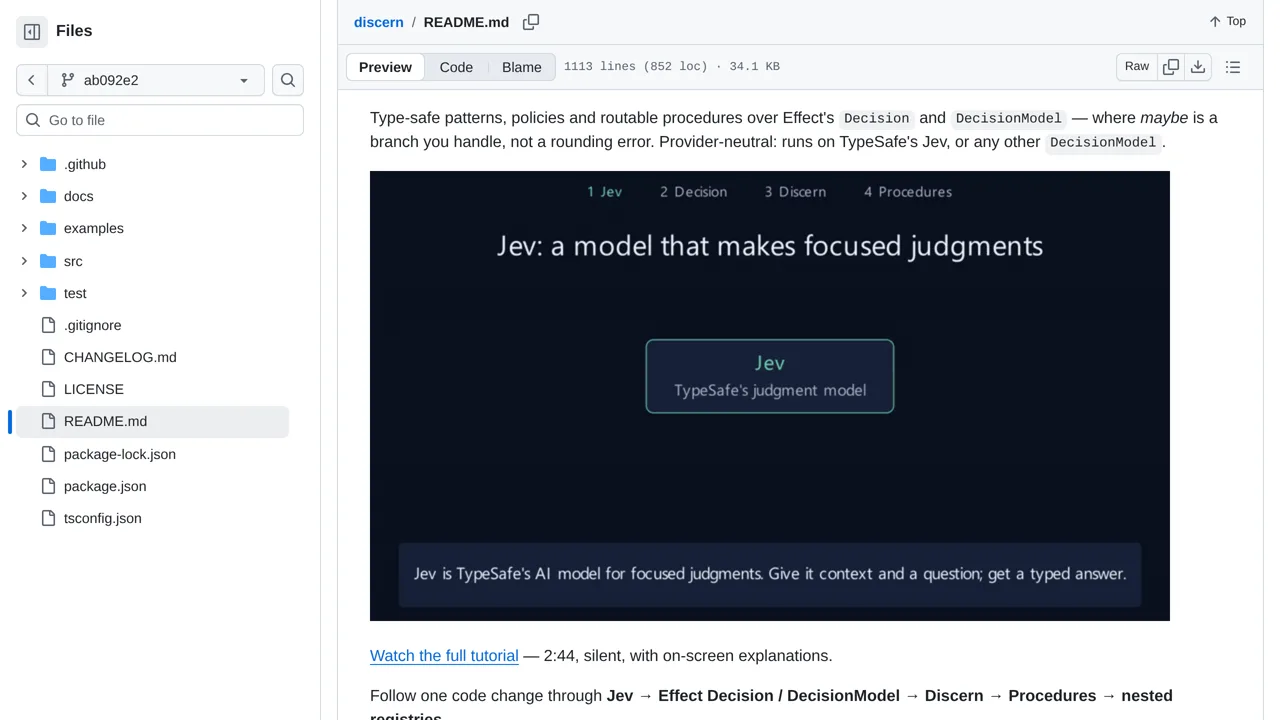
Adds uncertainty-aware pattern matching, policies, and procedures above Effect DecisionModel providers including Jev.
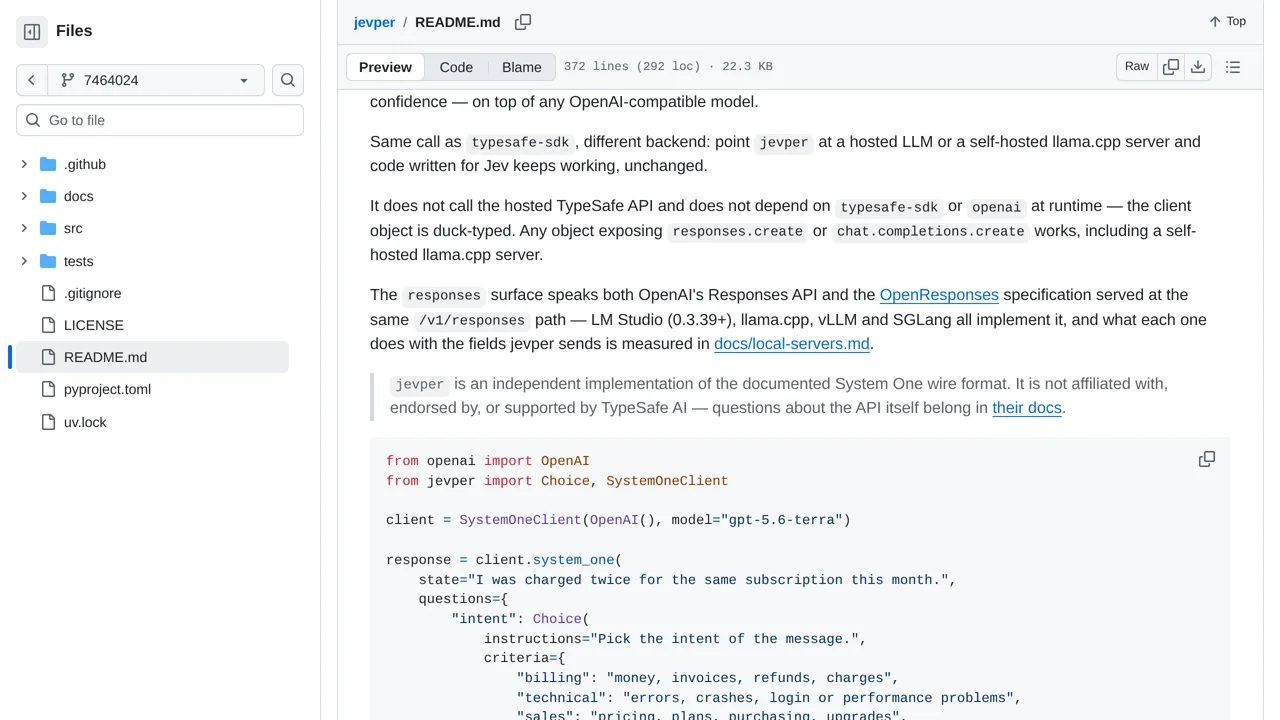
Use a Jev-shaped typed-decision interface with OpenAI-compatible models, receiving labels, scores and probabilities rather than free-form prose; it does not call Jev.
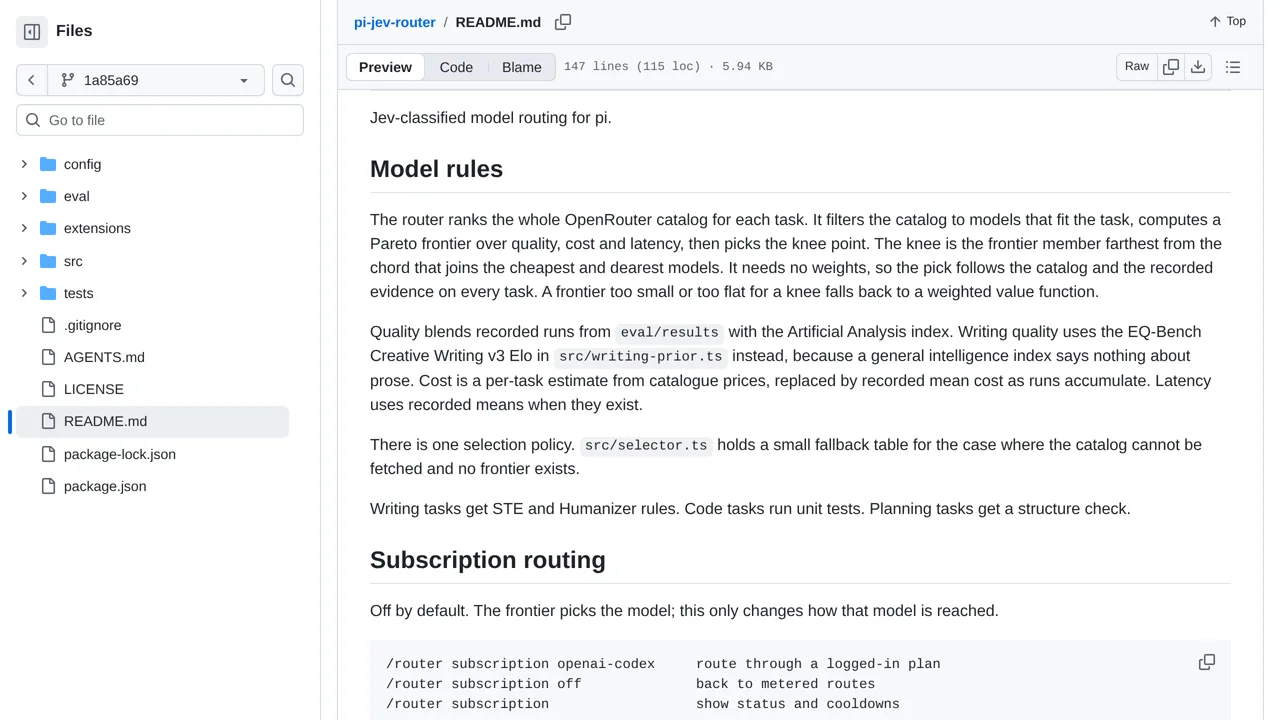
A Pi extension asks Jev about task characteristics, then applies a deterministic Pareto policy to recommend an OpenRouter model.
Jev, briefly
A chat model generates text token by token and hopes you parse it. Jev never generates a word. Your code sends the state of the world plus typed questions; Jev returns every answer in one parallel pass — typed values with calibrated probabilities and a confidence score your code can trust. About 70–500 ms end to end, $0.042 per million input tokens, output free. Trained with what TypeSafe calls Reinforcement Learning for Calibrated Decisions.
You define the options. Jev returns the chosen option, a probability for every option, and a confidence. The workhorse of routing, agents, and games — the answer space is always legal, so there is nothing to parse and nothing to hallucinate.
You describe ordered levels — say trivial / normal / critical. Jev returns the level, the probability of each, and a confidence. Scores turn fuzzy judgment (“how severe is this log line?”) into a number-free decision your code can branch on.
You assert a statement; Jev returns the probability that it is true — a noul. Moderation, verification, guardrails, “does this diff actually fix the bug?”: one question, one calibrated probability.
Official material lives at typesafe.ai and docs.typesafe.ai. JevMade is an independent community registry — not affiliated with or endorsed by TypeSafe AI.
Recurring lessons
Games, drones, trading bots, and browser agents all converge on the same loop: serialize the state, ask one decisive question, act, repeat. Jev’s latency makes the loop feel instant — the model lives inside the control loop, not outside it.
The answer says what; the confidence says whether to act. The most reliable entries threshold on confidence to route edge cases to a slower model or a human — automation with an honest escape hatch.
Makers rarely ask Jev to pick from everything. Local tactics prune 225 gomoku moves to ~40; DOM filters turn a page into an element table; code narrows options, Jev judges within them.
A recurring split: Jev makes every decision cheaply and instantly, and a small LLM is only invoked when a human-facing string must actually be written. Decision and generation are separate budgets.
Send the link — repo, live demo, post, or video — plus a line on what it does and which primitives it uses. Every entry is verified against its primary source before it ships.
Submit your experiment → hello@JevMade.com